The 30 Worst Christmas Decorating Trends That Make Your Home Look Dated
You have probably decorated your home for Christmas many times, and you likely have a few favorite traditions you return to each year. Even so, decorating styles change over time, and some looks that once felt fresh can start to feel tired. A few small updates are often enough to bring a familiar room back to life.
This list walks through 30 Christmas decorating trends that can make a home look dated, from the aluminum trees of the 1960s to the farmhouse signs and gnomes of the last few years. Some may be things you have already noticed in your own living room, and others may surprise you. If you enjoyed our look at the worst decorating trends that make your home look older, think of this as the holiday edition.
Keep in mind that your home should still feel like yours. The goal is not to follow every trend, but to help you spot what may be holding your decor back so you can keep what you love and refresh the rest.
1. Overly coordinated trees with matching ornaments
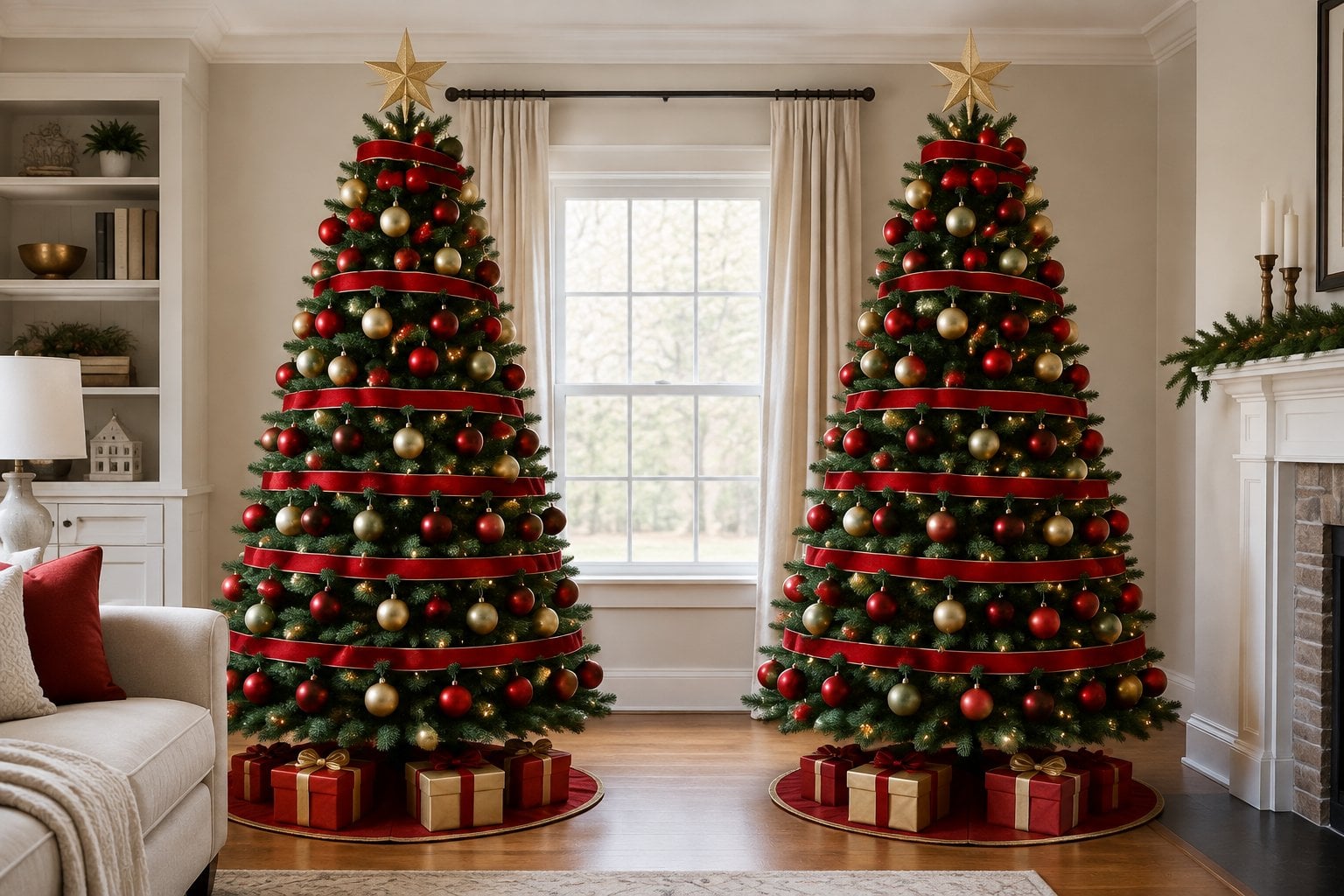
You may remember the era of the “designer tree,” when magazines and department stores showed trees dressed in a single color scheme. Every ball, ribbon, and garland matched, often in silver and blue or red and gold. It was especially popular in the late 1990s and 2000s, and it still shows up today.
The look can feel dated now because it leaves little room for personality. A tree trimmed entirely from one boxed set tends to resemble a store display more than a home.
Try loosening things up gently. Keep your main color, but add a few pieces that have a story, like a handmade ornament, a gift from a friend, or a glass bauble passed down in your family.
Mixing finishes, such as shiny, matte, and glittered, adds depth without taking over. Your tree will end up looking collected over time, which is exactly the charm many people want back.
2. Excessive red-and-green color blocking
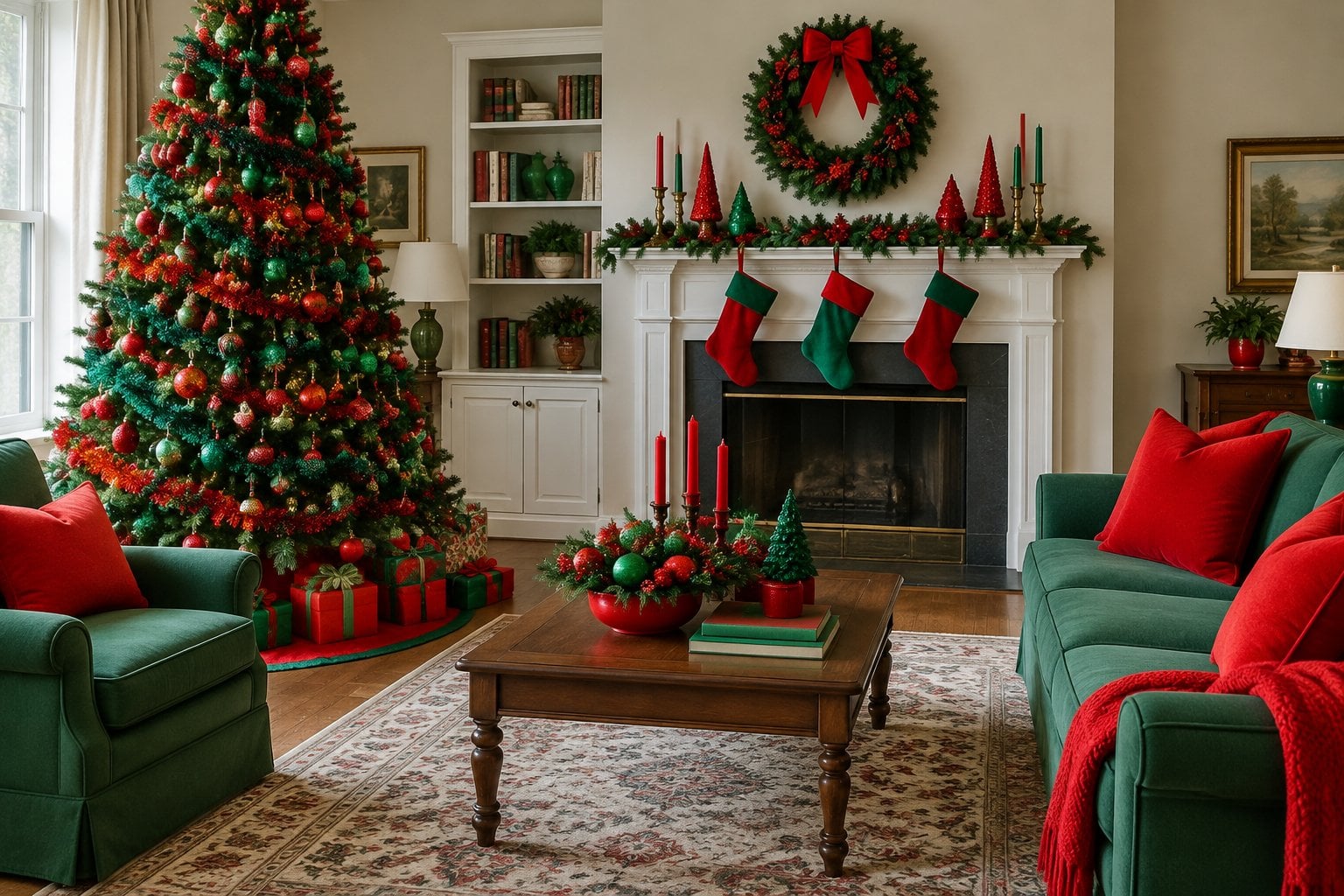
You probably remember the era when everything in the house matched in red and green. Red tablecloths, green garlands, red ribbons, green candles, and a tree trimmed in the same two shades all appeared together. It was especially popular through the 1980s and 1990s, and many of us decorated that way with pride.
The look feels dated today because it leaves no room to breathe. When every surface repeats the same two colors at full strength, the rooms can feel heavy and a bit like a store display. Mass-produced matching sets often add to that impression.
You don’t need to give up your favorite colors. Try letting one of them lead and using the other as a small accent, such as mostly red with a few sprigs of greenery. You could also add soft neutrals like cream, wood tones, or gold to calm things down. Your cherished ornaments can stay right where they are.
3. Burlap tree skirts and burlap-heavy accents
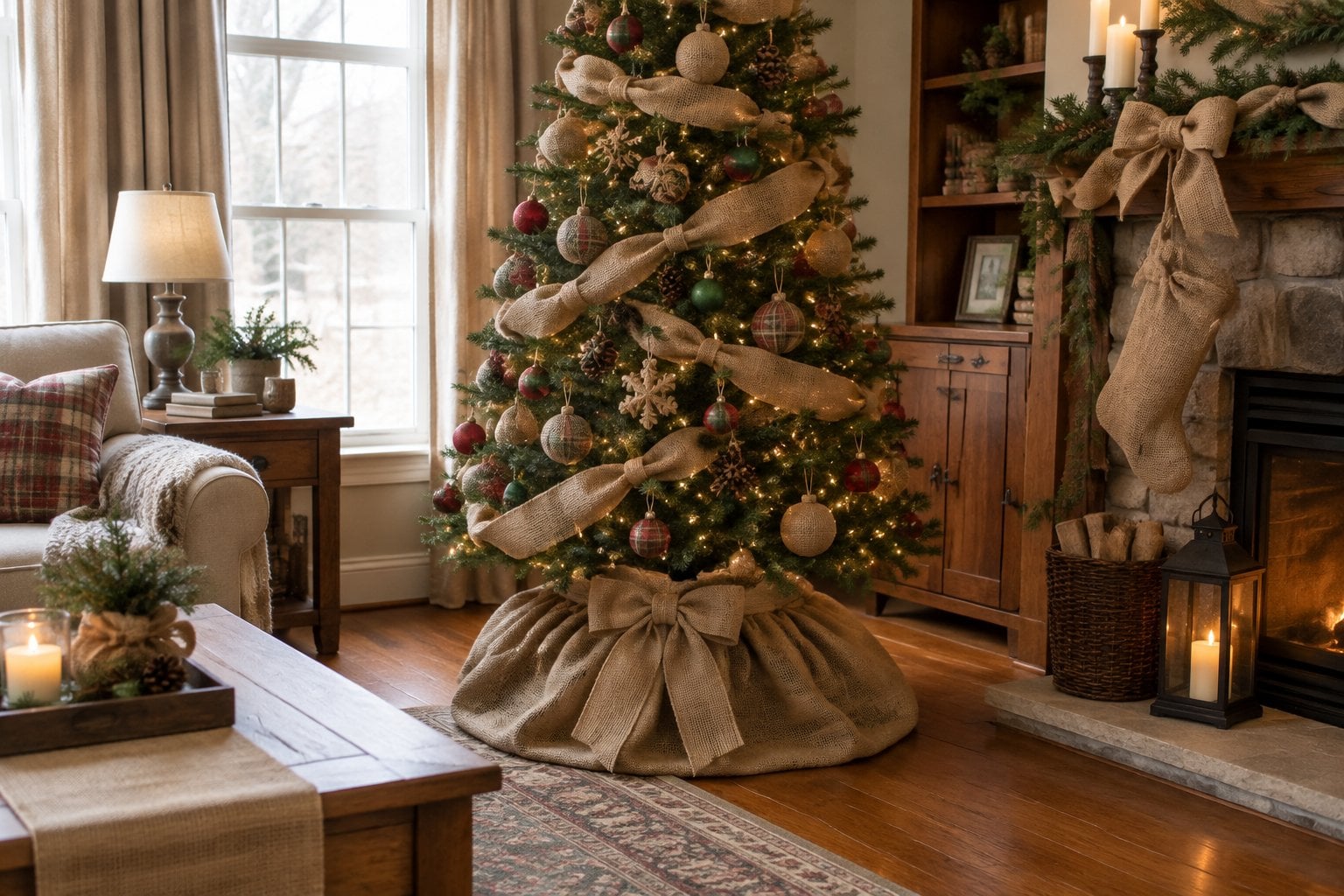
If you decorated in the early 2010s, you probably remember when burlap showed up everywhere. Tree skirts, table runners, wreath bows, and stocking cuffs all came in that rough, tan weave, usually paired with red plaid and mason jars. It was part of the rustic farmhouse look that took over holiday decorating for several years.
Today, a lot of burlap feels like a leftover from that moment. The scratchy texture tends to look flat next to soft, layered trees, and it can make a room feel more country craft fair than cozy Christmas.
You don’t need to toss everything, though. Try swapping a burlap tree skirt for a slim collar in woven natural fiber, painted metal, or soft wool. If you love the earthy feel, keep one small burlap touch, like a ribbon, and let warmer fabrics like velvet, flannel, or knit carry the rest.
4. Rustic signs with generic holiday slogans
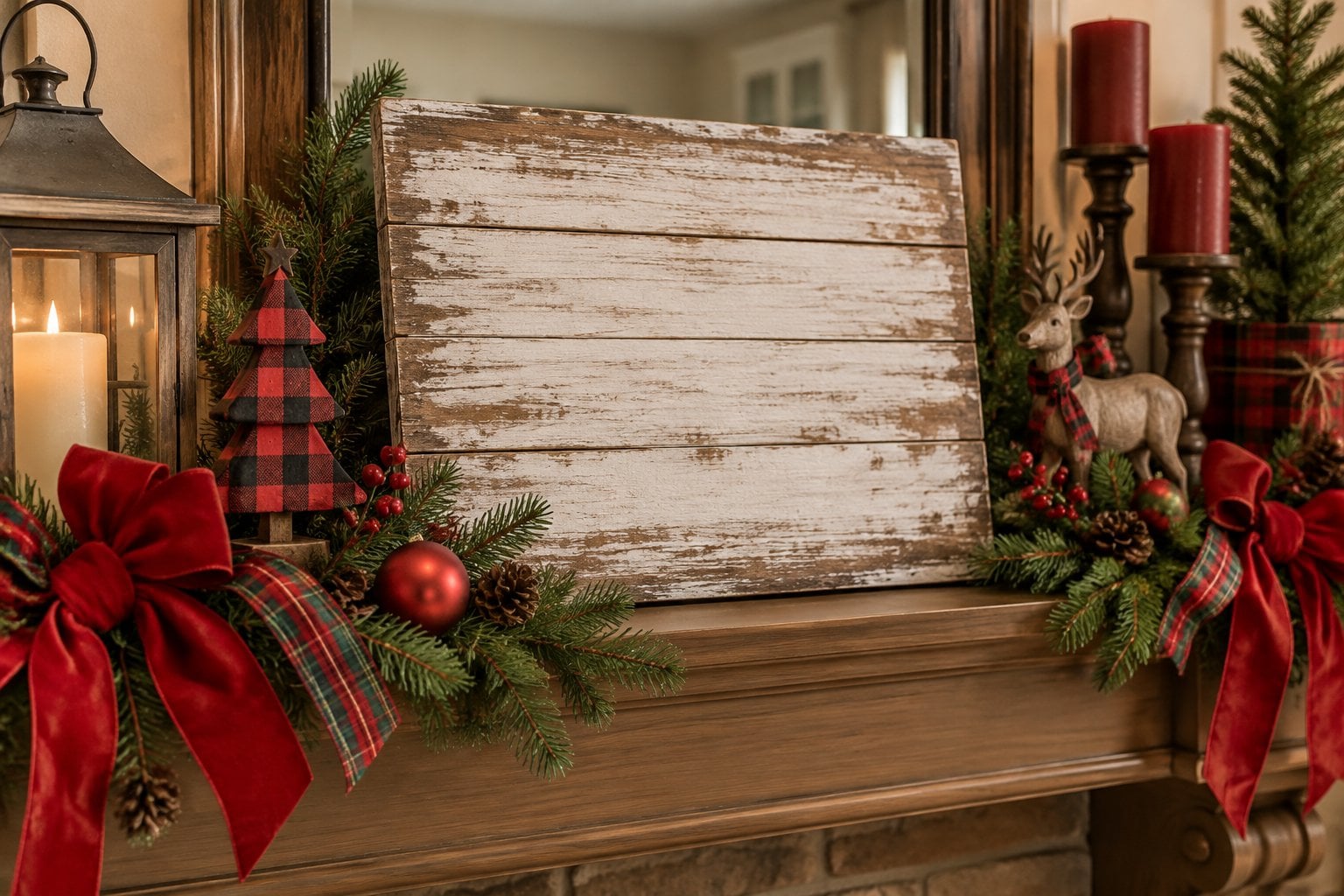
If you walked into a home store anytime in the 2010s, you probably saw them everywhere. Weathered wood boards and wooden rounds stamped with “Merry Christmas,” “Joy,” or “Let It Snow” in looping script became a staple of the farmhouse look.
They were easy to buy and easy to hang, which is part of why they spread so widely. Now that so many homes have the same sign, the style tends to read as a mass-produced trend rather than something personal to you. The message is usually so general that it could hang in any house on the street.
You don’t have to throw yours out. Try moving it from the front and center of the mantel to a quieter spot, like a bookshelf or a hallway table.
For something fresher, consider swapping in a handwritten card from a loved one, a framed drawing from a grandchild, or a sign painted with a phrase your family actually says each December.
5. Oversized ornaments that overwhelm the tree
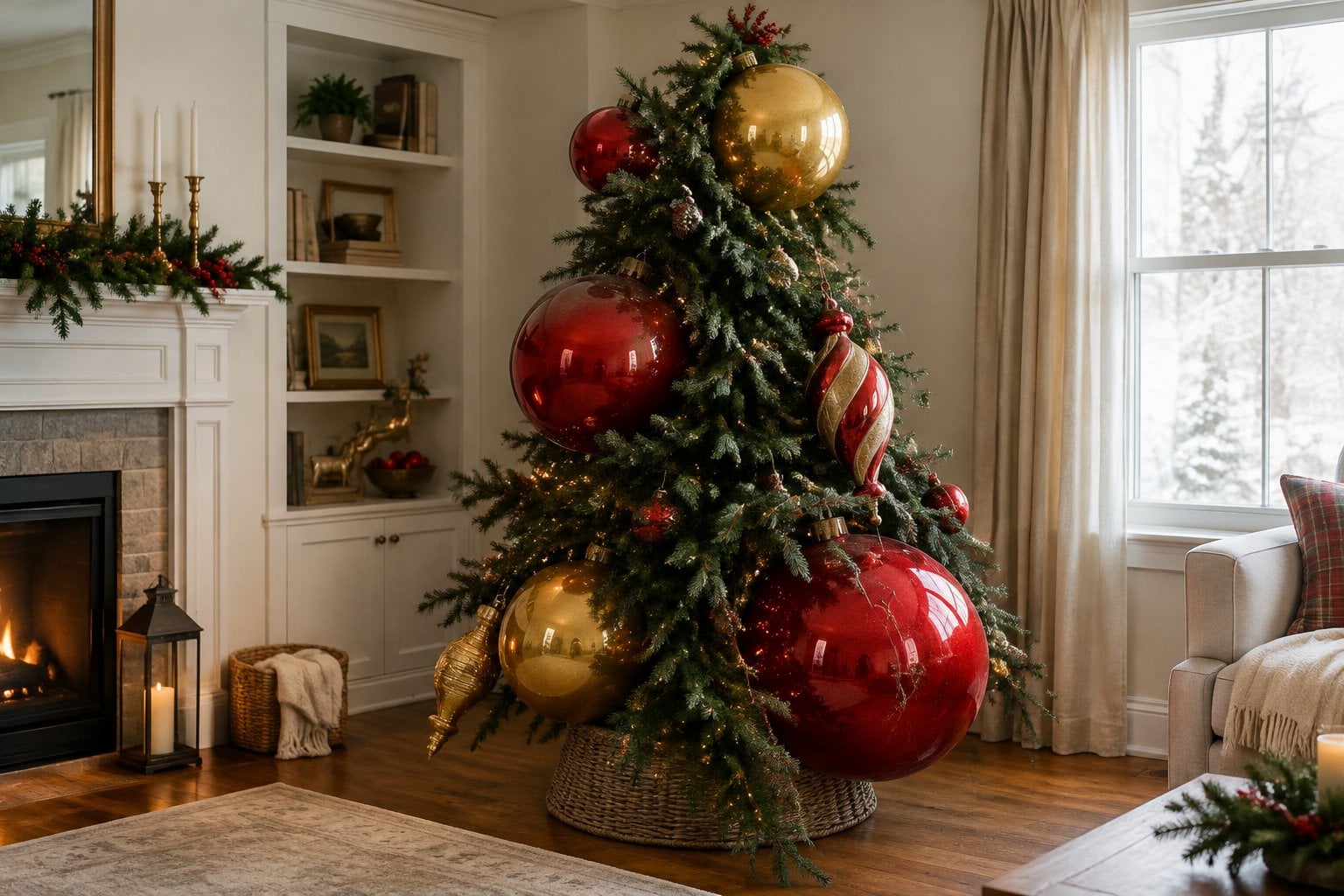
If you decorated in the 1990s or 2000s, you may remember when bigger meant better. Jumbo glass balls, giant bows, and large satin-finish baubles filled trees across the country, and you probably hung a few yourself.
The trouble is that oversized pieces now tend to crowd a tree rather than flatter it. When the ornaments are as big as the branches can bear, the tree itself disappears, and the whole display can feel heavy.
Designers today lean toward a mix of sizes, with smaller ornaments tucked between a few larger ones. That variety gives the eye places to rest and lets the greenery show through.
You don’t need to toss your favorites. Try keeping a handful of the big ones and hanging them deeper in the branches, closer to the trunk.
Then fill in with smaller baubles, ribbon, or simple picks around them. You may find the tree looks fuller, softer, and more welcoming than before.
6. Tinsel covering every branch
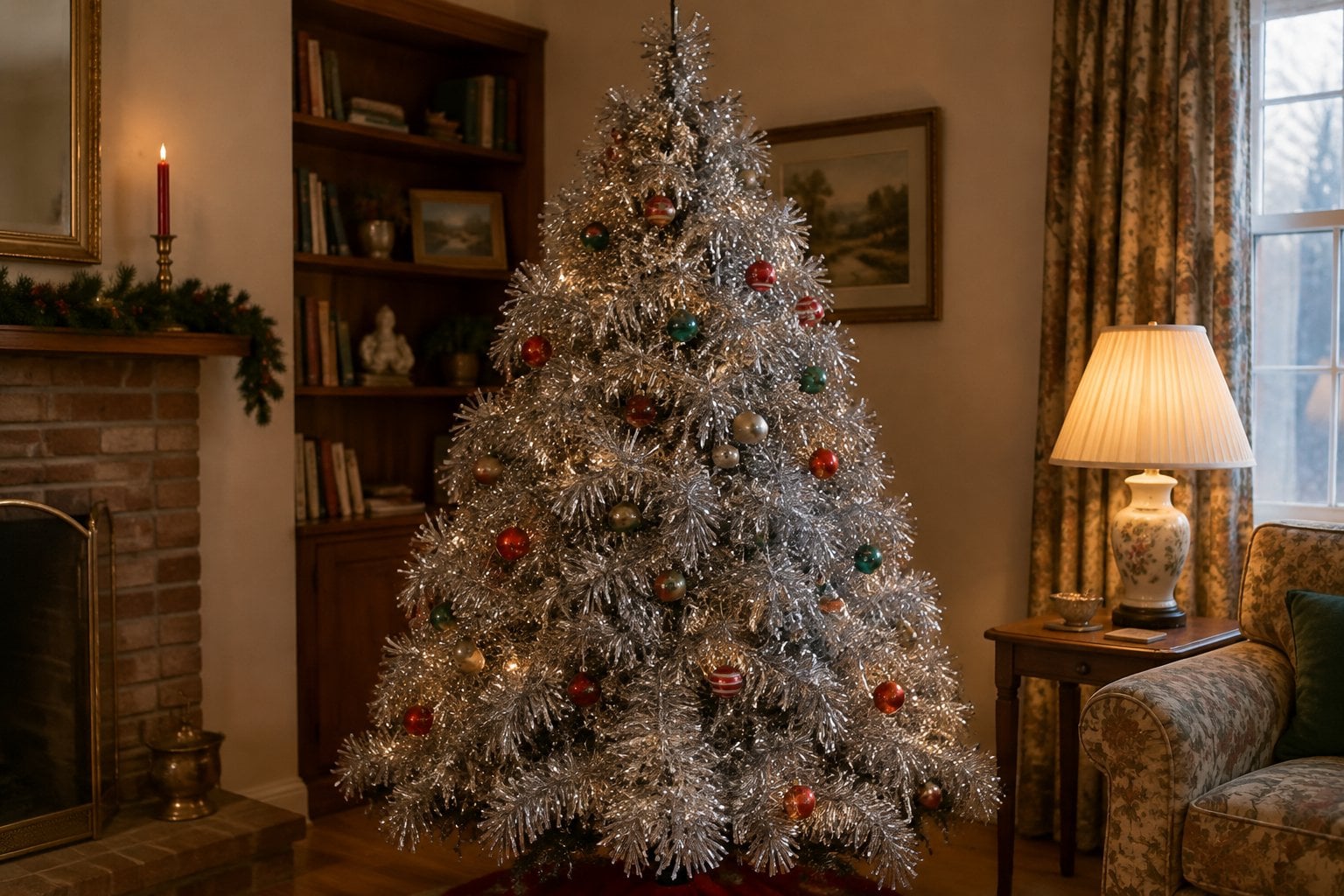
If you grew up in the 1950s or 60s, you probably remember trees dripping with silver strands. Tinsel was a staple for decades, and many families hung it one strand at a time, row after row, until every branch shimmered. It’s one of the Christmas traditions 1970s moms kept that has quietly faded.
The tinsel itself changed along the way. Much of the older shiny kind was made with lead, and in the early 1970s, after the FDA raised concerns about the risk to children, makers moved to plastic. That’s why the tinsel sold today is usually thin plastic with a metallic finish.
Even so, a tree fully covered in tinsel tends to read as dated now. It can hide the ornaments you’ve collected over the years, which are the real stars of your tree, and it can feel heavy and busy next to the softer, more natural styles many people prefer.
You don’t have to give up the sparkle entirely. Try a few strands placed with care, or swap in a garland of beads, ribbon, or dried orange slices draped loosely from branch to branch. If you love the glow, string warm white lights deeper into the tree so the light does the shimmering.
7. Inflatable characters crowding the front yard

Giant inflatable Santas, snowmen, and cartoon characters became a common sight on lawns in the early 2000s. Gemmy Industries, the company behind the Big Mouth Billy Bass, introduced its first Airblown inflatable in 2001: an eight-foot Santa. Within a few years, they were stacked by the door at nearly every big-box store.
They were affordable and quick to set up, and if you tried one, you probably enjoyed how fast the yard filled with color. The trouble is that a crowd of them can now look more cluttered than cheerful. They slump into a heap of nylon when the fan is off, tip over in the wind, and show their power cords and stakes. Bright cartoon figures also tend to clash with the rest of a home’s exterior.
You don’t have to give up the fun entirely. Try keeping just one favorite inflatable and placing it off to the side, rather than lining up a whole parade.
Then let the rest of the yard feel calmer. A wreath on the door, a few lit evergreen pots on the porch, and warm white string lights along the roofline will give your home a polished look that still feels festive.
8. Blinking multicolor lights on every strand
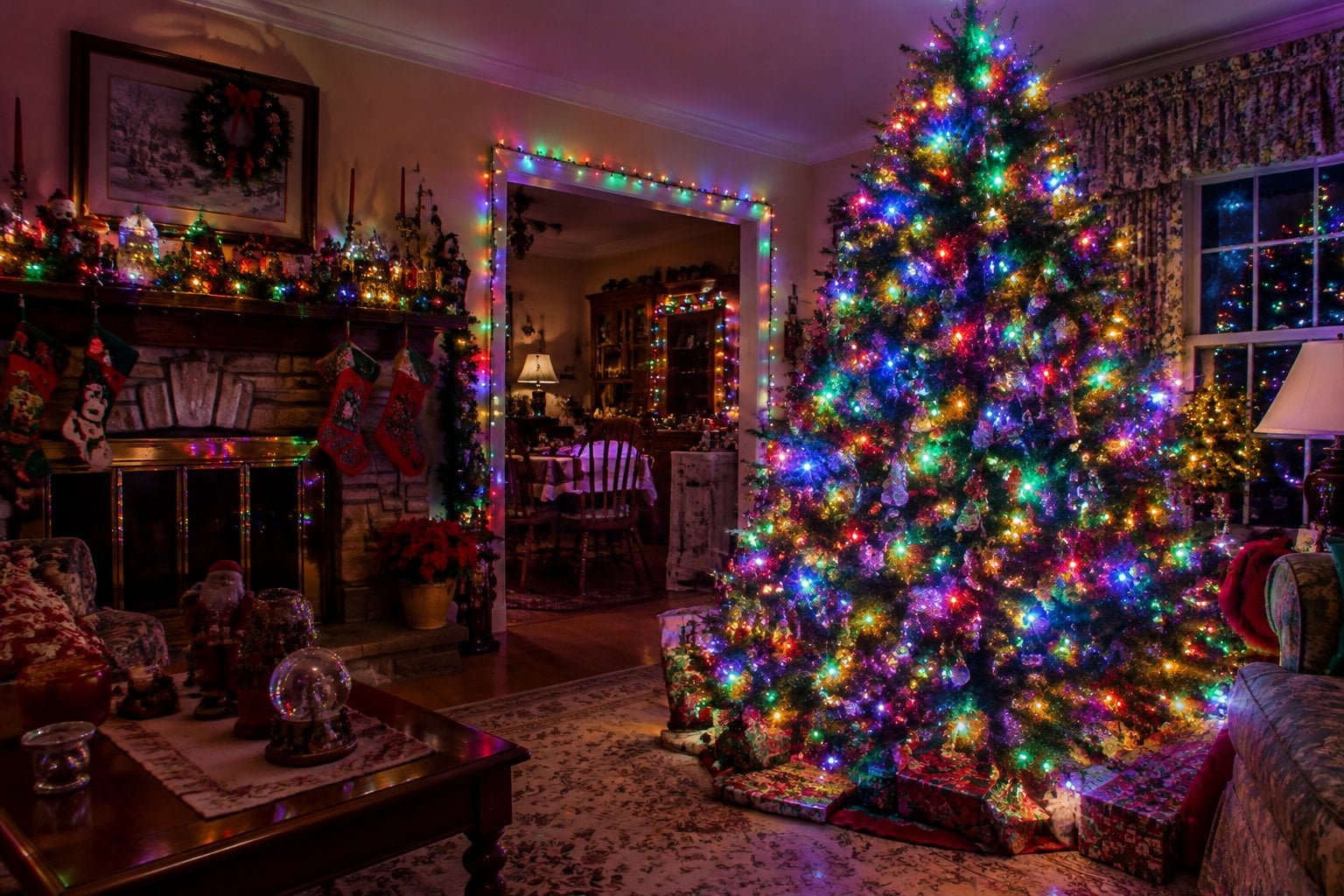
If you decorated in the 1970s, 80s, or 90s, you probably remember the cheerful glow of multicolor bulbs on the tree, the porch rail, and every window. Strands that blinked, chased, or twinkled in random patterns were a familiar part of the season.
Today, that look can feel a little busy. When every strand flashes at its own pace, the effect tends to compete with the rest of your decor instead of setting a calm mood. Many homes now lean toward warm white or soft amber bulbs that stay steady, which make ornaments, garlands, and ribbon easier to see.
If some of your strands go back decades, there’s a safety reason to retire them, too. The Consumer Product Safety Commission recommends lights tested by a recognized lab such as UL or ETL, and newer sets with thicker wiring and safety fuses that keep the wires from overheating.
You don’t have to give up color entirely. Try keeping one multicolor strand on a tree that holds your family’s keepsake ornaments, and set it to a steady glow. Switching the rest of your strands to warm white can give the room a quieter, more current feel.
9. Aluminum Christmas trees with a rotating color wheel
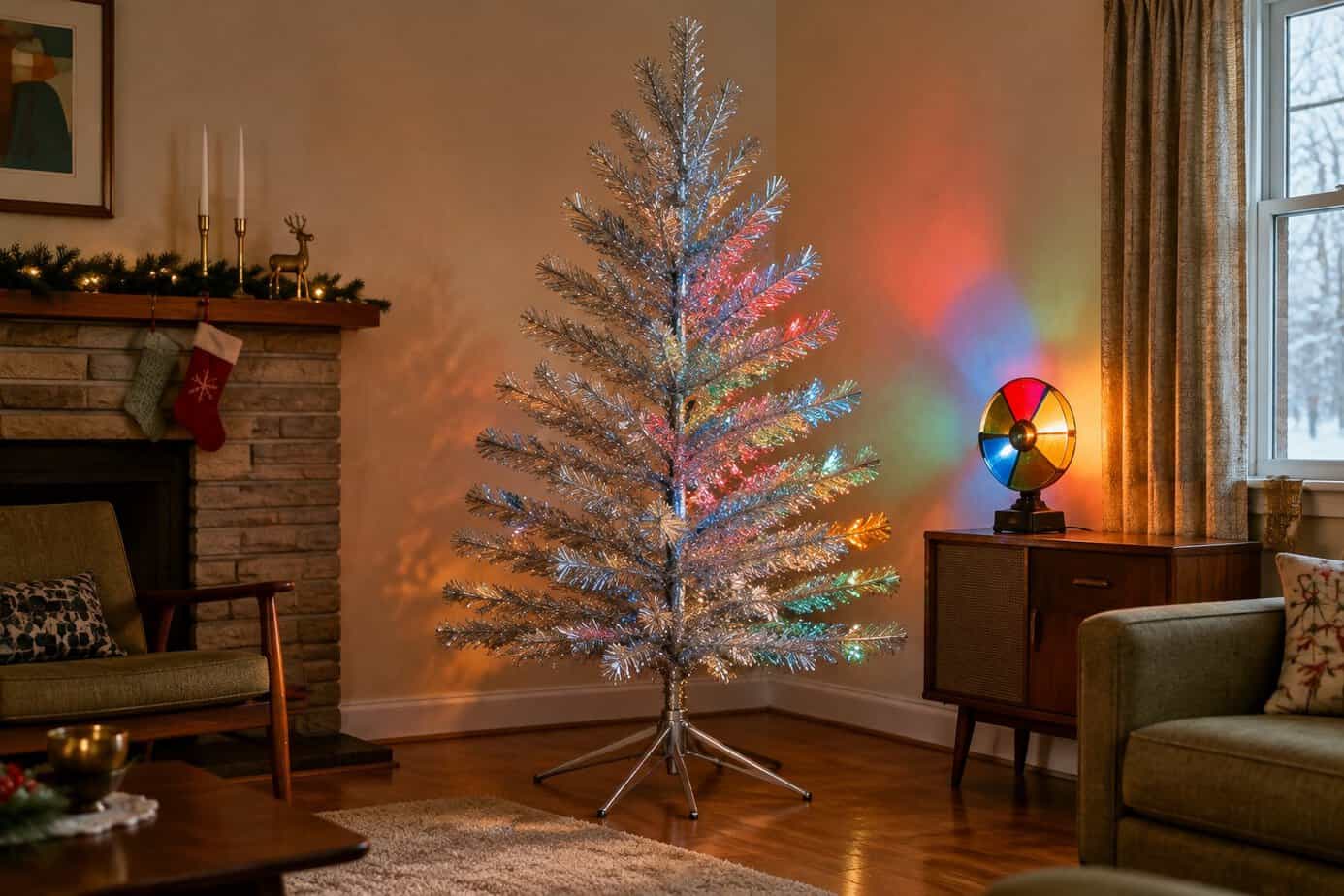
If you were decorating in the late 1950s or 1960s, you probably remember these trees. The best known was the Evergleam, made by the Aluminum Specialty Company in Manitowoc, Wisconsin. It debuted in 1959, and the company went on to make more than a million aluminum trees in the 1960s, according to the Wisconsin Historical Society.
Stringing electric lights on metal branches was a shock risk, so the trees were lit by a spinning color wheel set on the floor nearby. Red, blue, green, and amber light drifted across the shiny needles. Then in 1965, A Charlie Brown Christmas poked fun at aluminum trees, and the craze faded within a few years.
Today a full-size silver tree bathed in a rotating glow tends to signal one specific decade rather than your own style. Original Evergleams have become collector’s pieces, though, so if you still have one tucked in the attic, don’t toss it.
Try a small tabletop aluminum tree on a sideboard or in a corner instead of making it the main event. Skip the wheel, add a handful of glass ornaments in soft colors, and let the shine of the metal do the talking.
10. Plastic garlands with sparse, shiny needles
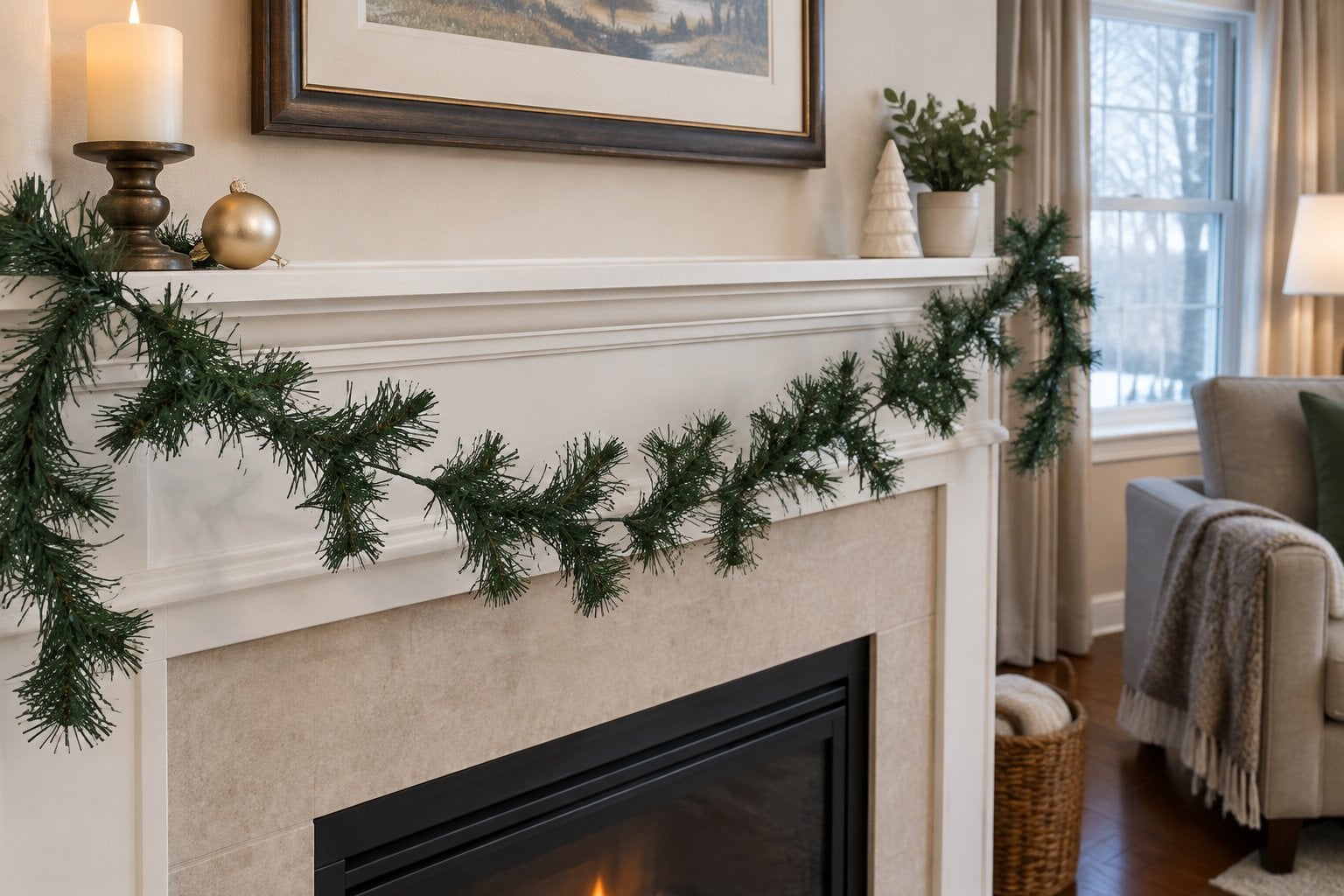
If you’ve been decorating for decades, you probably remember when a long strand of plastic garland draped across the mantel was the easy, affordable way to add some holiday cheer. Many of us bought one every few years and thought nothing of it.
These garlands were especially common from the 1990s through the 2010s. The trouble is that the needles are often thin and spaced far apart, with a glossy finish that catches the light in a way real greenery never does.
On a mantel or banister, that shine can give away that it’s artificial. Sparse spots also let the wire core show through, which makes the whole strand look tired.
You don’t need to start over. Try fluffing each branch by hand, then weaving two or three strands together for a fuller look.
Adding fresh cuttings of pine, cedar, or magnolia leaves hides the thin patches. Dried orange slices, pinecones, or a simple velvet ribbon also help, and they draw the eye away from the plastic.
11. Fiber-optic Christmas trees that change color
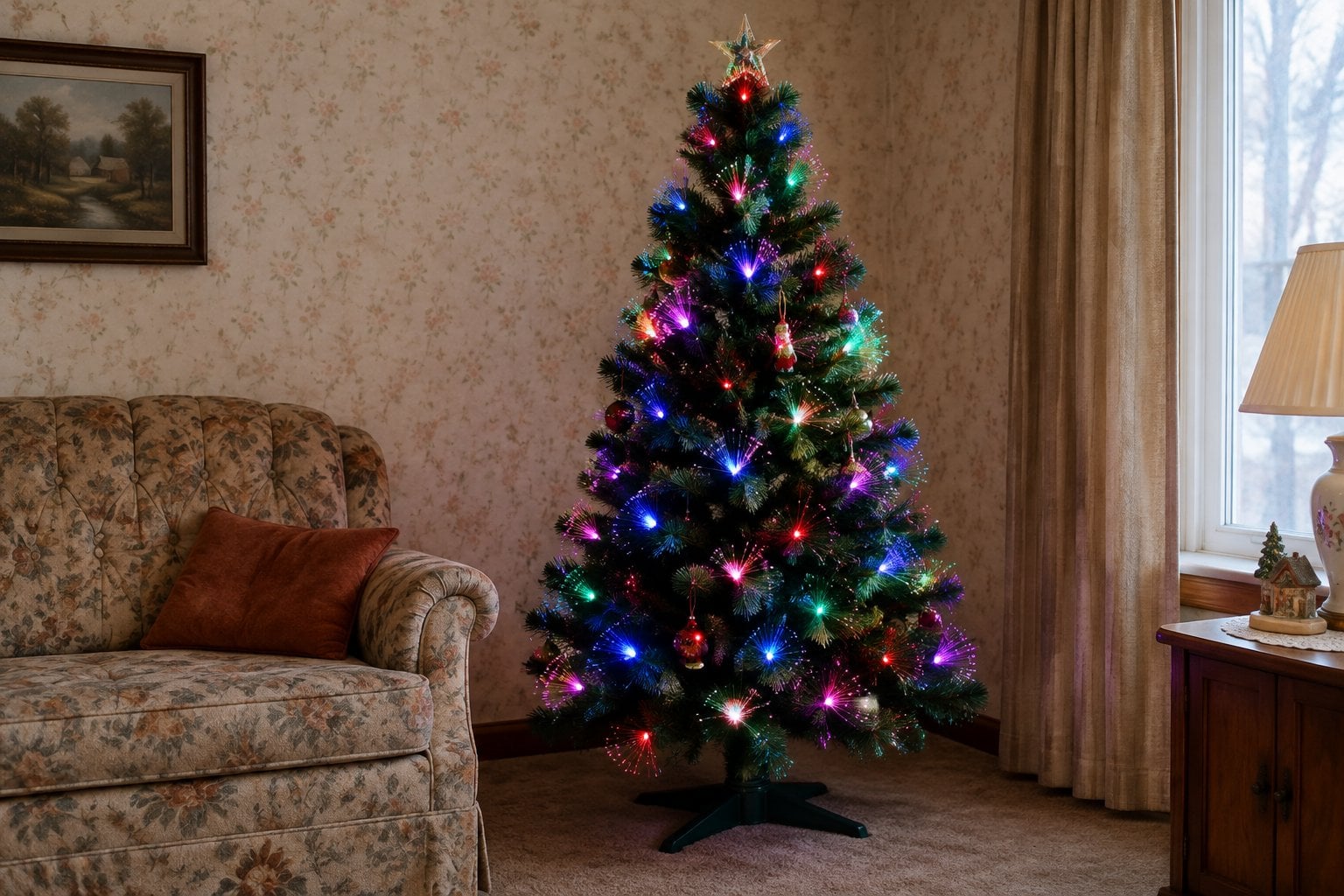
You probably remember the fiber-optic tree in the corner of a department store or a relative’s living room. Thin strands glowed at the tips and slowly shifted from red to green to blue, often on a silver or white tree.
Fiber-optic decorations first appeared in the 1970s, and the trees were a common sight through the 1990s and early 2000s. They felt modern and easy, since the lights were built in and nothing needed untangling.
Today, they tend to look dated for a few reasons. The rapid color changes can feel more like a novelty lamp than a holiday tree, and the plastic look of the branches stands out next to the realistic artificial trees now available.
If you still love yours, you can keep it and give it a softer look. Set the lights to a single steady color, such as warm white, if your model allows it. Then add a few wooden or glass ornaments and a simple ribbon so the tree feels cozy rather than flashy.
12. Flocked trees shedding artificial snow
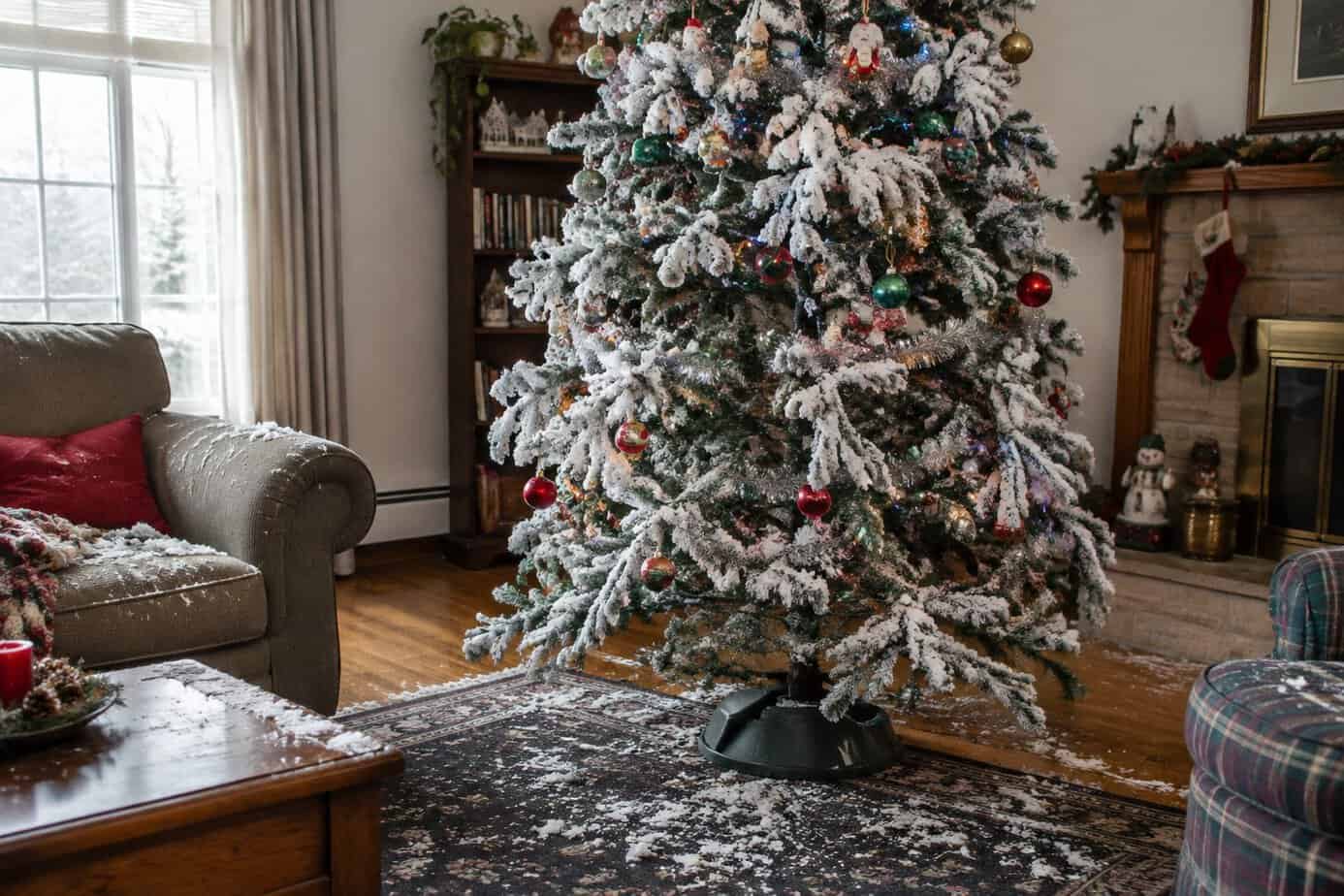
Flocked trees became a popular choice in the mid-twentieth century, when a dusting of white powder promised a snowy look without stepping outside. Many of us remember the sprayed-on versions from the 1960s and 70s, and they’ve come back around in recent years.
The trouble is what happens after the tree is up. Flocking tends to flake off as you set it up, move it, or brush past it, leaving white bits on your carpet, tree skirt, and presents. Over the years, the branches can start to look patchy and bare in spots.
If you love the snowy effect, try a lightly flocked tree with a sturdy finish, and place a large tree mat underneath to catch the fallout. Or choose a plain green tree and add white ribbon, pearl garland, and glass ornaments for a frosted feel without the mess.
13. Gel window clings on every pane
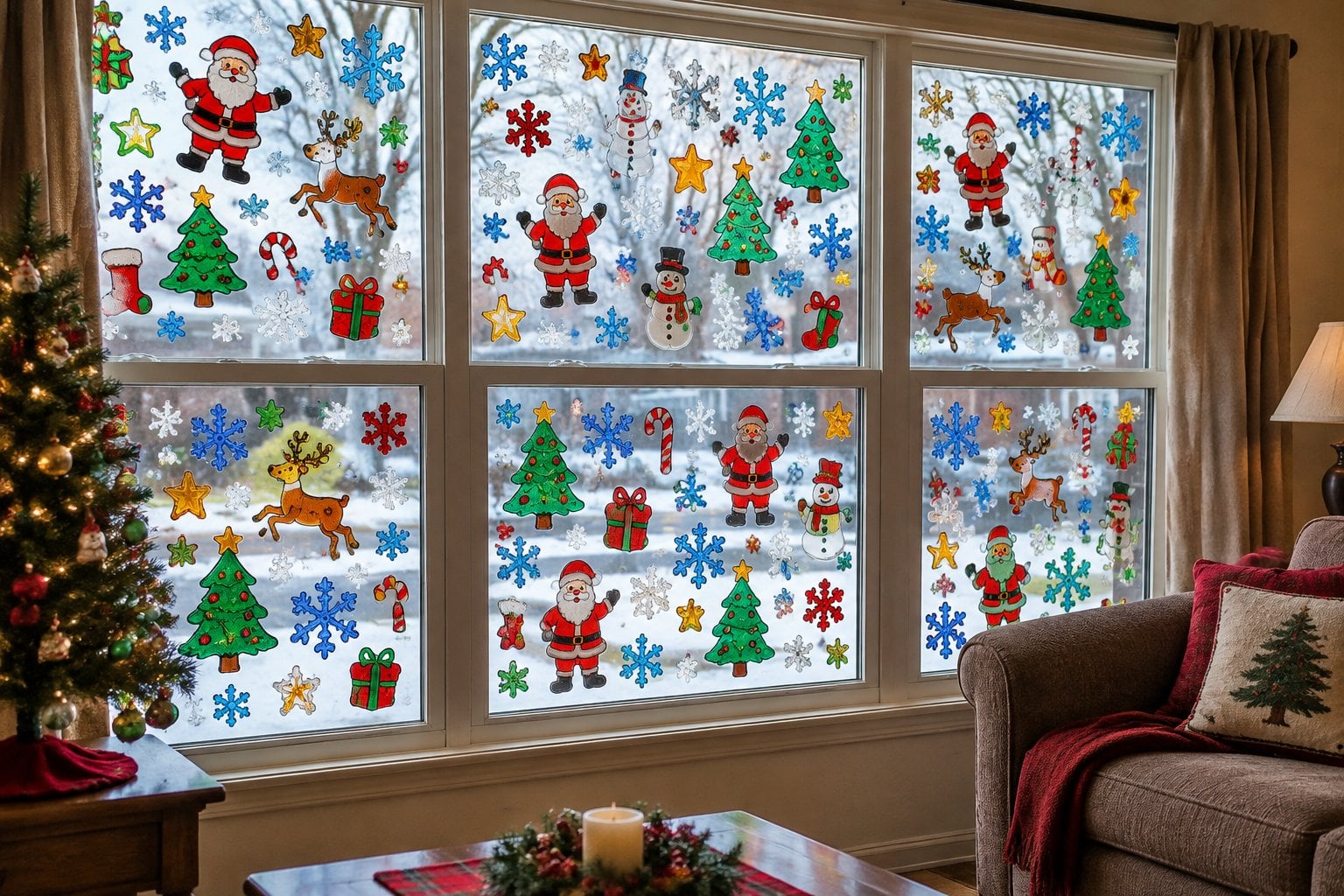
If you had little ones at home in the 1990s, you probably remember the gel window clings. Snowmen, reindeer, and holly shapes pressed onto the glass, one on nearly every pane. They were cheap, cheerful, and easy to stick up with little ones helping.
Today, a full set of clings across every window can make a room feel busy. The glossy, translucent colors tend to look a bit like craft-store sticker sheets, and they can block the soft glow of your lamps and tree at night.
You don’t have to give them up entirely. Try keeping just one or two in a window where the grandchildren can enjoy them, and leave the rest of the glass clear.
For a more current look, consider a simple evergreen wreath hung with ribbon in each window, or a single candle lamp on the sill. Fewer touches let your windows feel calm and welcoming from the street.
14. Lighted plastic blow-mold yard figures
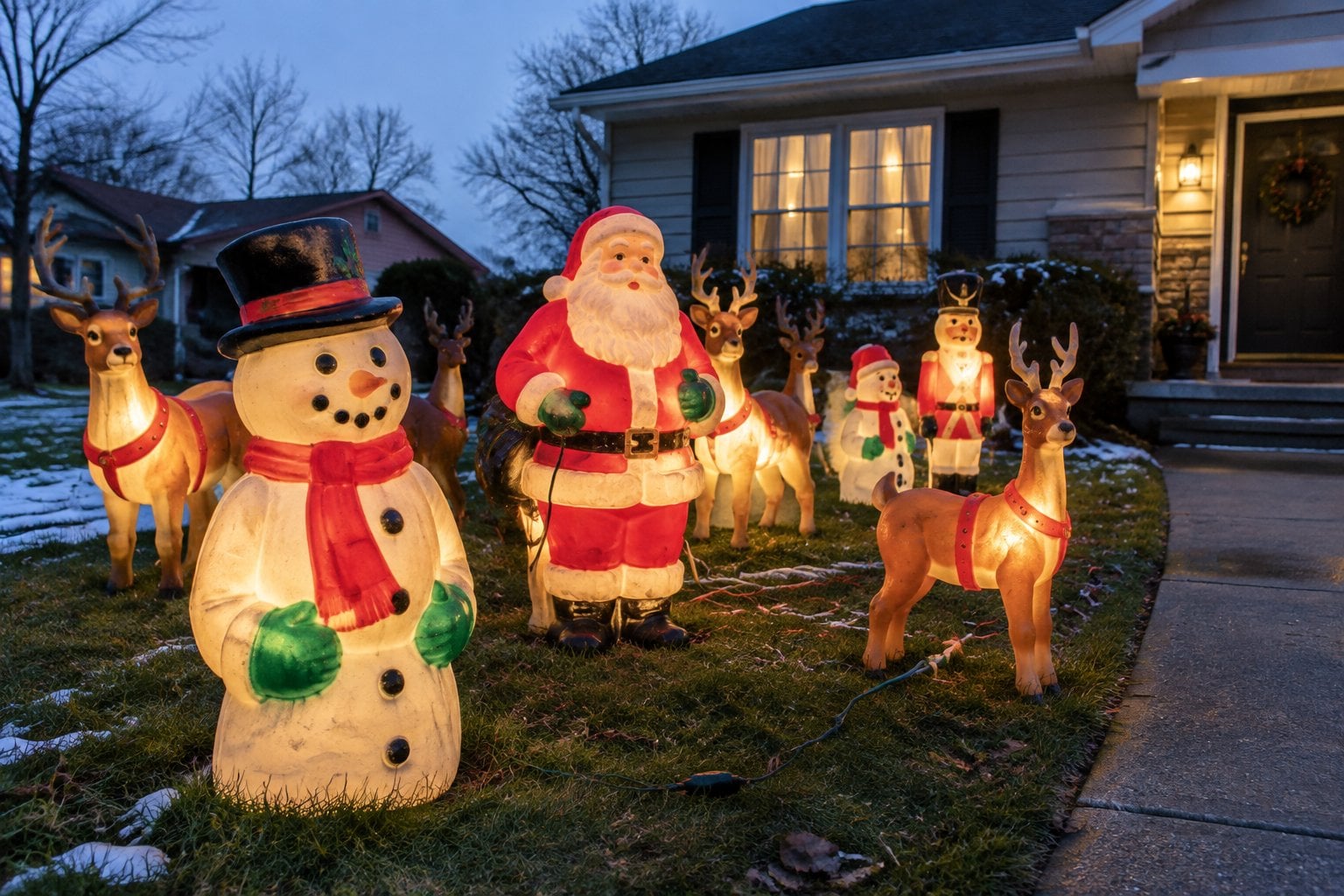
If you grew up in the 1960s or 70s, you probably remember the glow of a plastic Santa or candy cane on a neighbor’s lawn. These hollow, light-up figures were common across American yards for decades, and many families still have a few in the garage.
The trouble is that a full lineup can start to look worn rather than charming. Colors fade in the sun, cords fray, and cracked plastic is hard to ignore. A yard crowded with figures can also feel busy, especially next to modern, simple lighting.
You don’t have to give them up. Choose one or two favorites in good shape and let them stand on their own, perhaps beside the front steps or near a tree. Wipe them clean, swap in a fresh bulb, and tuck a few warm white string lights around the base.
15. Laser light projectors aimed at the house
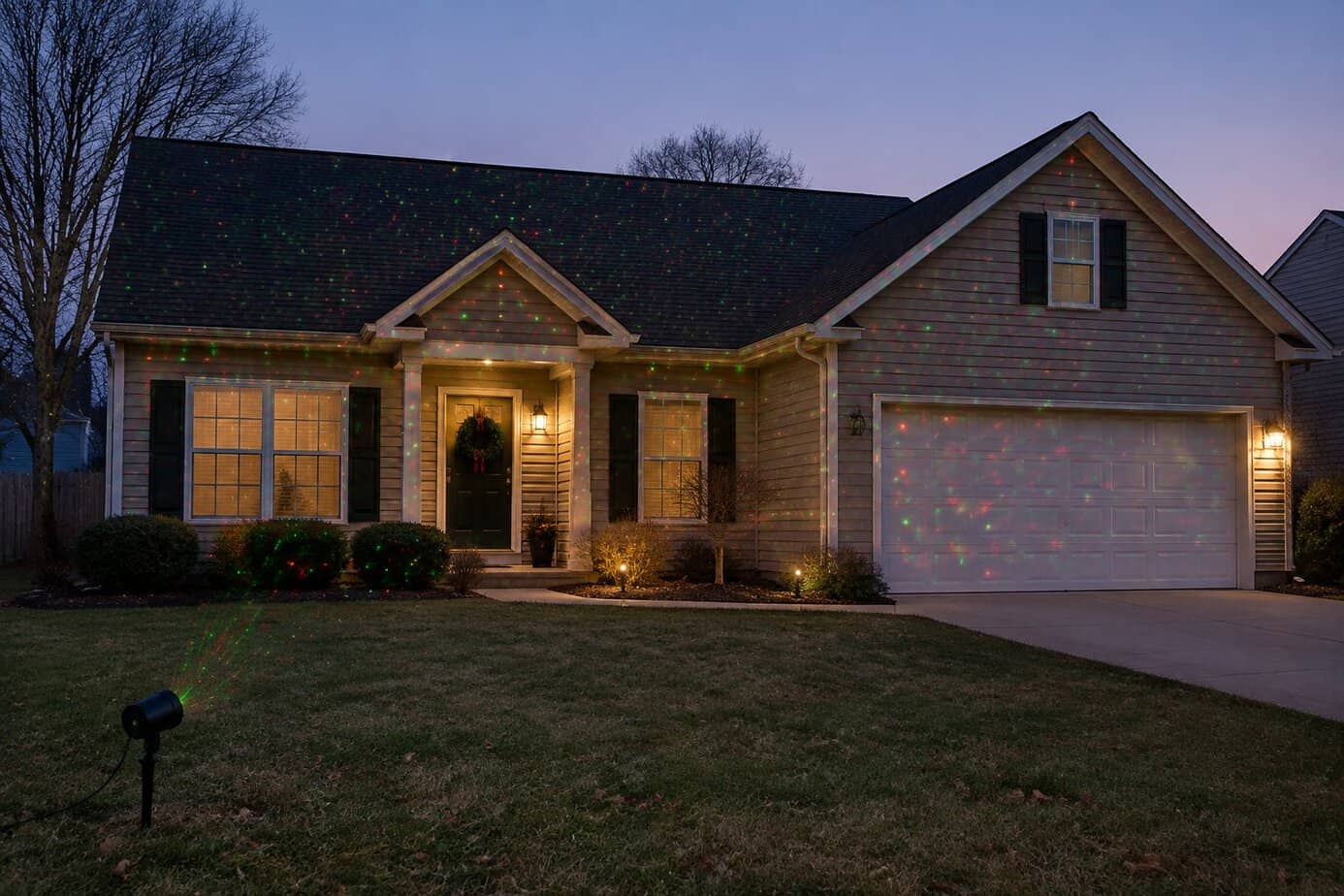
Laser projectors took off in 2015, when the Star Shower, an “As Seen on TV” gadget, sold out in stores across the country. You simply plug one in, aim it at the front of your home, and thousands of tiny red and green dots cover the siding, windows, and roof.
The appeal was easy to understand. Stringing lights along the gutters takes time, and a projector takes about two minutes. But the effect often reads as a speckled blur rather than anything you would call classic, and it can hide the lovely lines of your home instead of showing them off.
There’s a safety side, too. The Federal Aviation Administration has warned that holiday laser displays aimed into the sky can distract or even temporarily blind pilots, so if you keep one, point it at the house and not above the roofline.
If you still want the quick setup, aim it at a section of wall or a single tree rather than the whole house. Even better, outline your porch rail or front door with warm white lights, which look polished and stay in style year after year.
16. Icicle lights dripping from every gutter
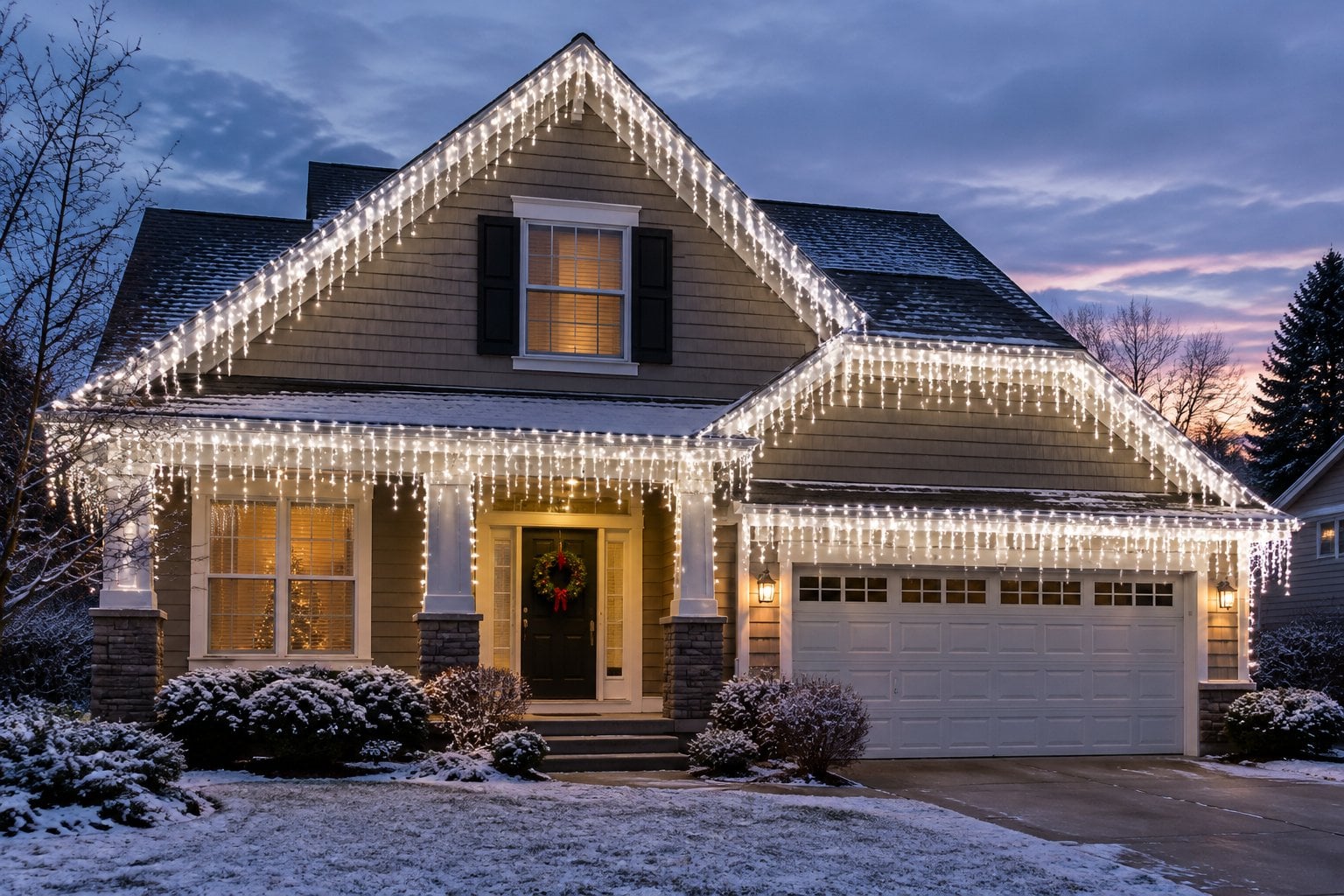
If you decorated in the 1990s, you probably remember the look. Strands of white icicle lights hung along every roofline, gutter, and porch edge, and the whole house glowed like a frozen waterfall.
It felt fresh and festive then, and plenty of neighbors did the same. Today, a roofline lined edge to edge with identical strands can read as a bit dated, mostly because the effect is so uniform. Current styling leans toward softer, more selective lighting.
You don’t have to take your icicle lights down for good. Try using them on just one spot, such as the front porch overhang or a single window, so they become an accent instead of the main event.
You might also mix in warm white string lights on wreaths, garlands, or a favorite shrub. A little contrast adds depth, and your home still gets that cozy glow you’ve always loved coming home to.
17. Net lights draped unevenly over shrubs
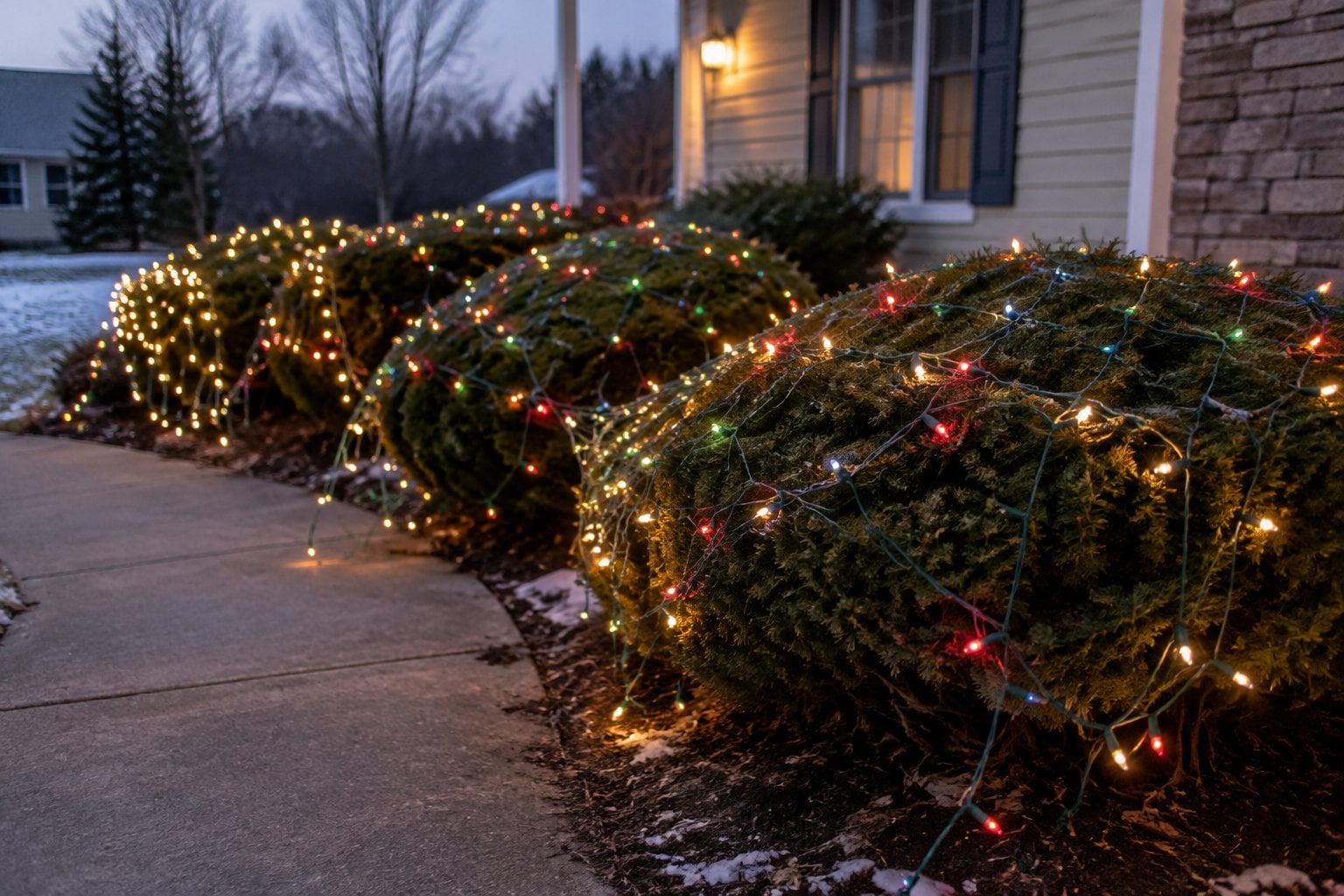
Net lights became popular in the 1990s as a quick way to dress up the bushes by the front door. You could unfold one, toss it over a shrub, and call the job done in minutes. It felt like a clever shortcut, and plenty of us used it.
The trouble is how it looks when the netting sits crooked. Bunched corners, bare patches, and visible green wire can make a shrub look like it has a tangled blanket thrown over it. Over time, the look reads as hurried rather than festive.
A gentler update is to work with the shape of the plant. Wrap mini lights or a string of warm white bulbs around the branches, moving slowly from the base to the top. If you still like your nets, stretch them flat and smooth, tuck the edges in, and pin them in place.
18. Deco mesh wreaths and oversized bows
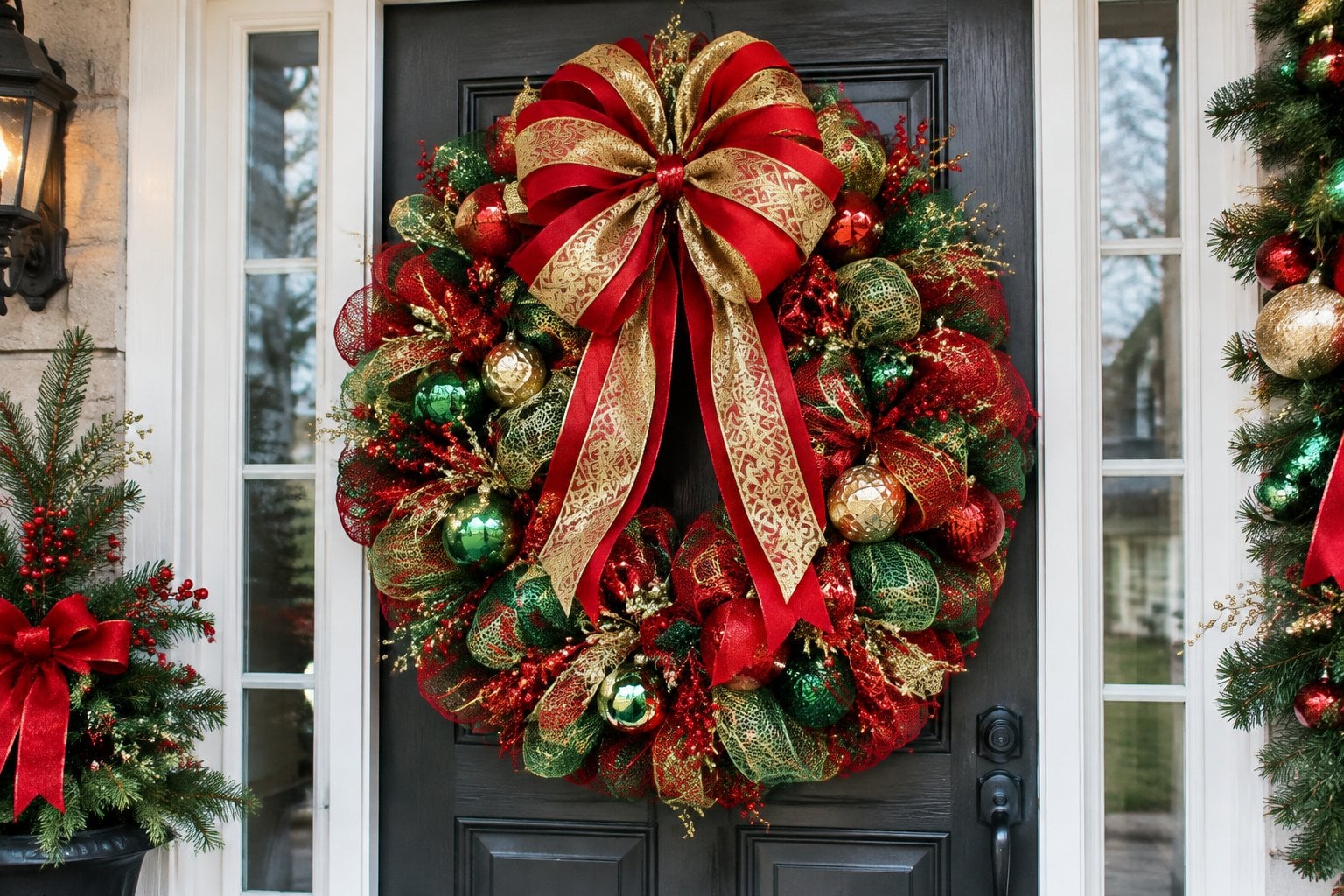
If you remember the years when deco mesh wreaths filled every craft store aisle, you probably made one yourself or received one as a gift. They took off in the 2010s, with ruffled mesh in bright colors, curly ribbon, and sparkly picks poking out in every direction. Oversized bows, often as wide as the wreath itself, were a popular companion.
Today, these pieces tend to look busy and a little crowded. Designers are leaning toward calmer, more natural looks, and the big, bold style can overwhelm a front door or a tree.
You don’t have to toss yours out. Try pulling the bow down to a modest size, using a narrower velvet or plaid ribbon in one or two colors. A wreath of real or good-quality faux greenery with a single neat bow often feels fresh and welcoming.
If you love your mesh wreath, consider hanging it in a spot where it can be admired up close, like a hallway.
19. Santa toilet seat covers and holiday bathroom sets
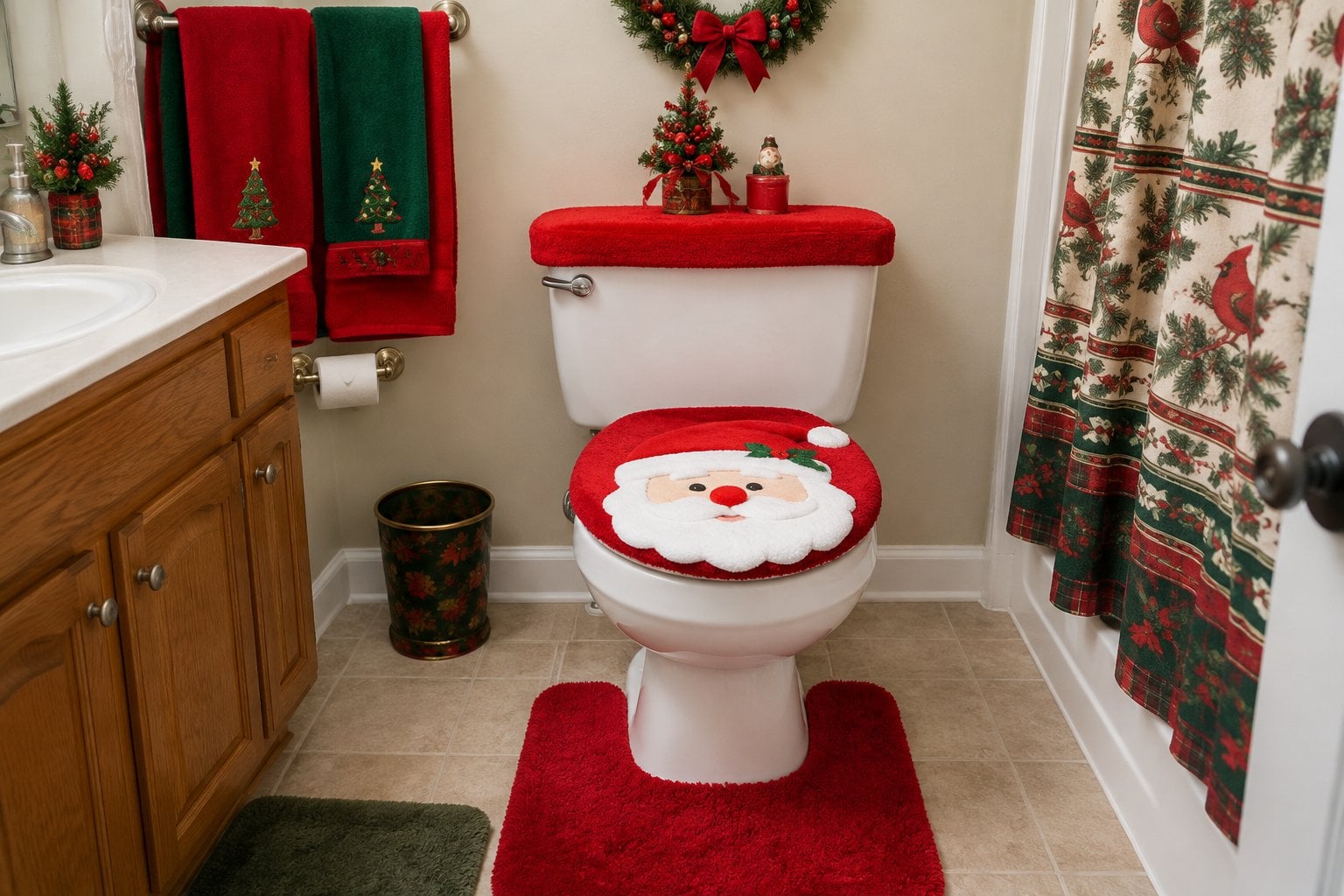
If you decorated a bathroom for Christmas in the 1990s or early 2000s, you probably remember the matching sets. A plush Santa cover for the toilet seat, a tank lid cover, and a non-slip rug in red and white were a common sight in holiday catalogs and big-box stores. They were meant to be cheerful, and for many families they were.
These sets now tend to read as dated for a few reasons. The bright red polyester fabric and cartoon faces feel a bit costume-like in a room that is usually small and quiet. A full five-piece set can also leave the bathroom looking crowded, with every surface covered at once.
You can keep the spirit without the matching set. Try a pair of plain white hand towels with a simple red stripe, a small evergreen sprig in a jar by the sink, or a single festive guest towel. A scented candle placed safely away from the towels brings warmth without covering up the room.
20. Glitter-covered décor used excessively
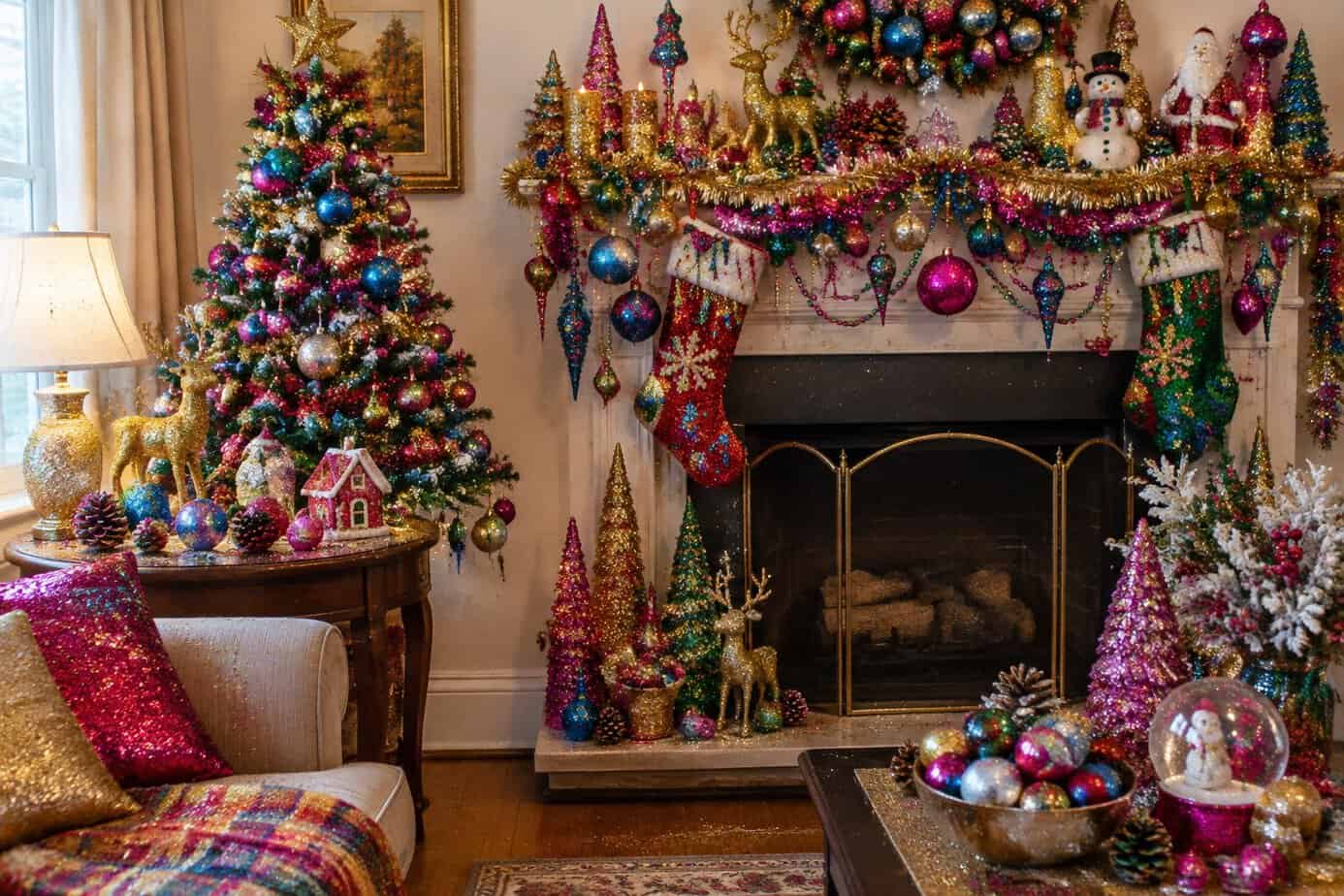
If you decorated for Christmas in the late 1990s or 2000s, you probably remember the sparkle phase. Glitter-dusted pinecones, glittery garlands, shimmering wreaths, and ornaments coated in sparkle were everywhere, often all in the same room.
A little shine still feels festive. The trouble comes when nearly every surface sparkles, because the look can feel busy and a bit dated now.
Glitter also sheds. You may still be finding bits of it in January, tucked into carpet fibers and the corners of drawers.
Today’s popular holiday looks lean toward a calmer mix of textures. Think wood, wool, ceramic, velvet, and natural greenery, with a few shiny pieces mixed in for contrast.
An easy update is to pick two or three favorite glittery items and let them stand out. Pack away the rest, or replace a few with softer finishes like brushed gold, aged brass, or mercury glass.
21. Upside-down Christmas trees
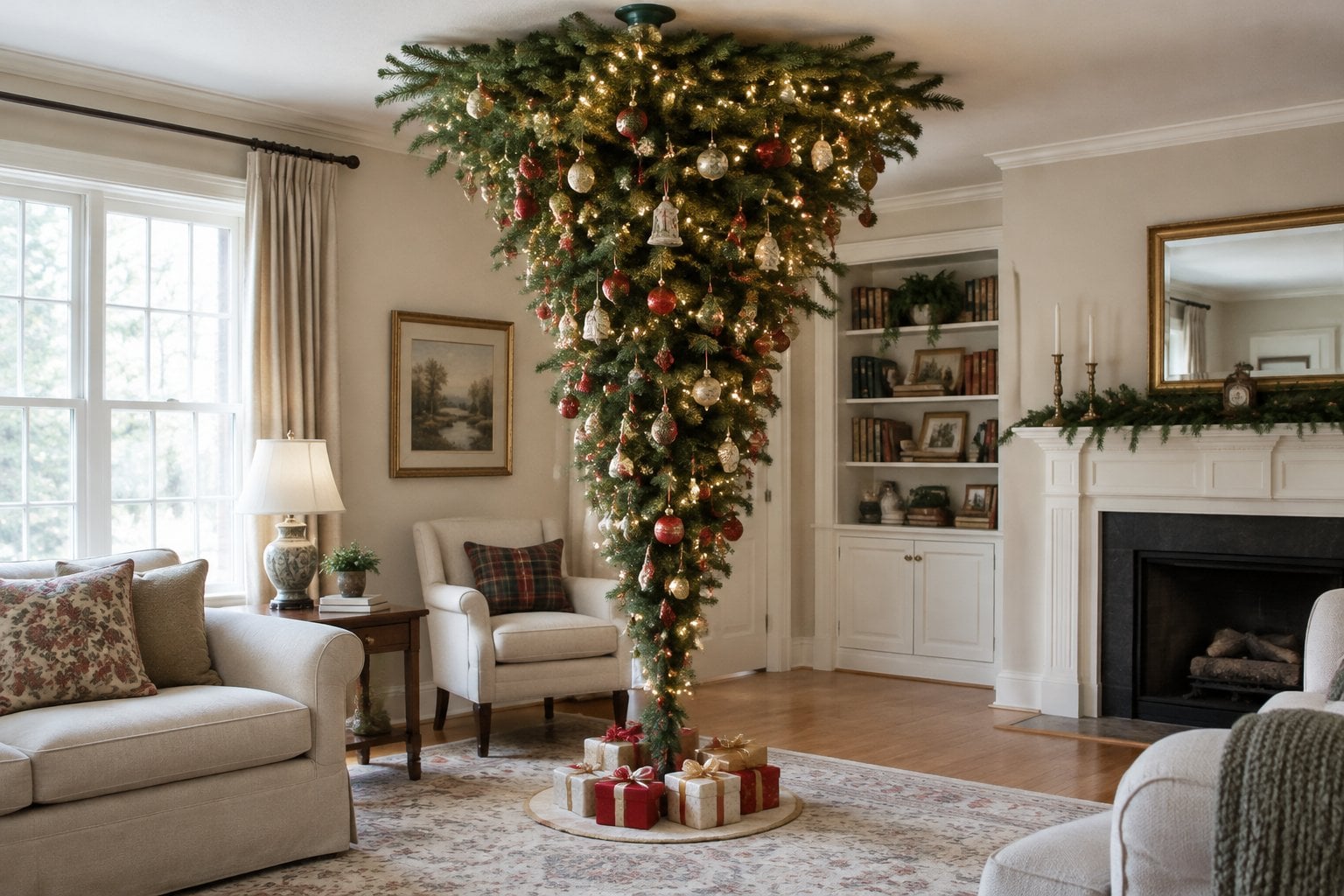
You may have spotted an upside-down Christmas tree in a store or on a friend’s social media feed. The tree hangs from the ceiling or stands on its narrow tip, with the wide branches reaching toward the room. Stores first used them as a display trick to save floor space, and they became a shopper’s fad in 2005. They came back around 2017, when big retailers stocked them again.
The look is playful, but it can feel more like a passing novelty than a lasting tradition. Many people find the shape confusing, and an inverted tree can leave the space beneath it awkward for gifts.
If you’re curious about the idea, you don’t have to give up your classic tree. Try hanging a small upside-down tree in an entryway or a sunroom, where it can be a fun accent rather than the main event.
22. Pink and rose-gold Christmas trees
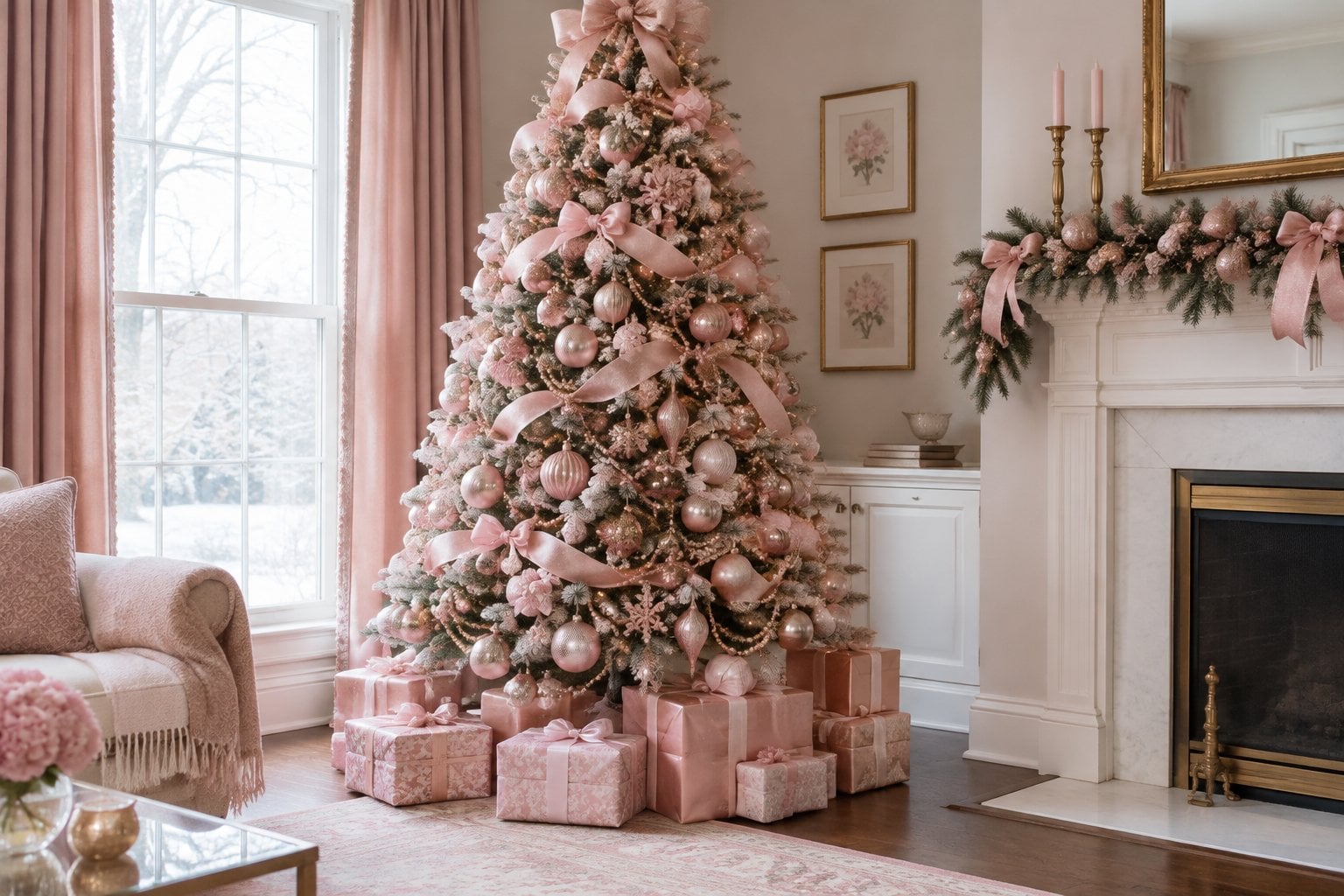
If you remember the pink tree craze of the 1950s and 60s, you know it had a certain playful charm. Aluminum trees in pink and silver felt modern and cheerful back then. Today, pink and rose-gold trees tend to look more like a passing fashion than a lasting tradition.
The blush and rose-gold versions that spread through the 2010s have a similar story. They looked soft and glamorous in photos, but a tree that is all one color can feel flat once the season ends. It also leaves little room for the ornaments you have collected over the years.
If you love the pink glow, you do not have to give it up. Try a classic green tree and tuck in a few blush ribbons or rose-gold baubles alongside your family ornaments. That way you keep a touch of softness while the tree still feels warm and personal.
23. Gnomes with long beards in every corner
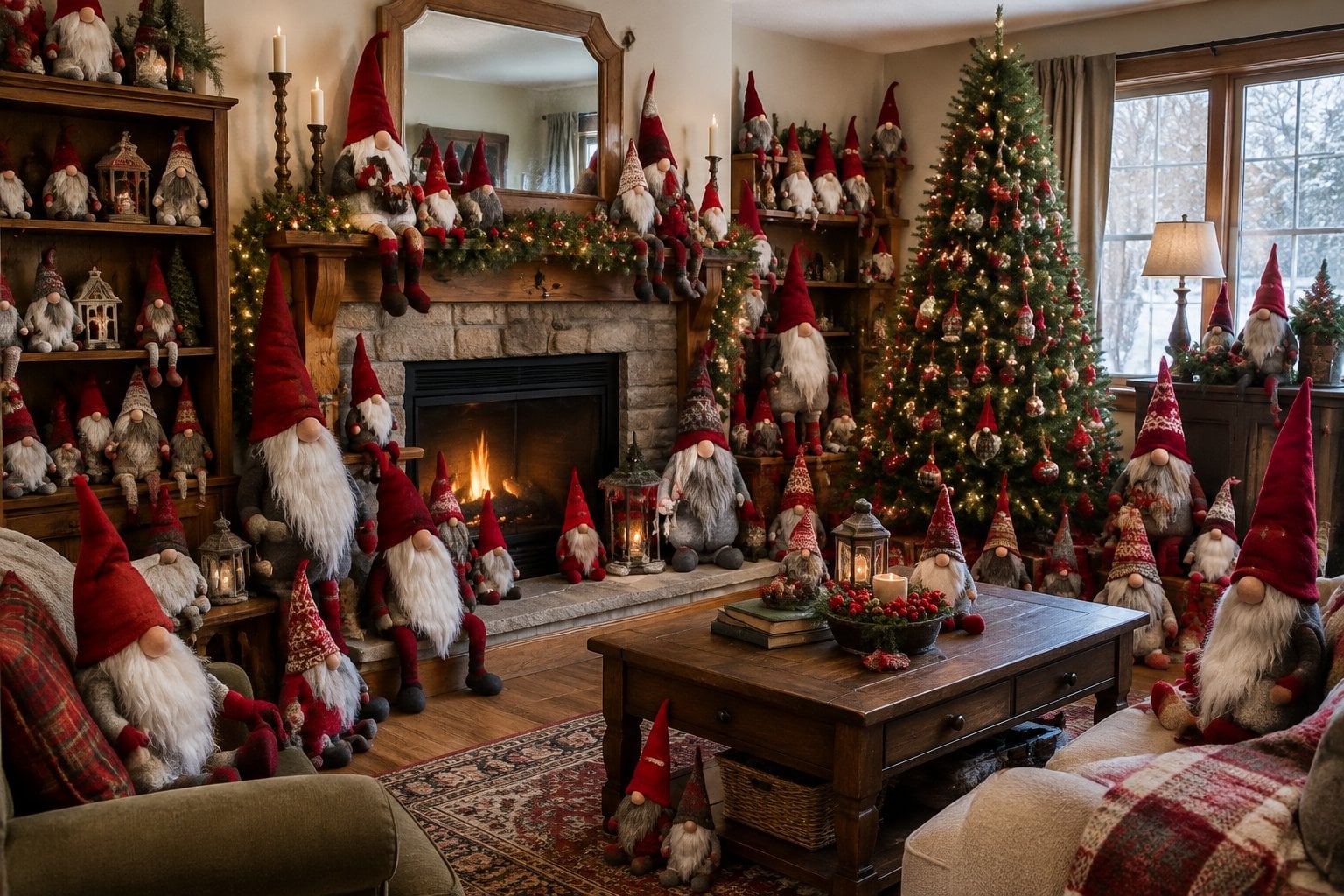
If you’ve walked through a craft store or scrolled through holiday decor lately, you’ve probably noticed the gnomes. Tall felt hats, long fluffy beards, and little round noses seem to be sitting on every shelf, mantel, and porch step.
Christmas gnomes grew popular in the late 2010s and carried well into the 2020s, partly because of their Scandinavian folklore roots and the farmhouse style that was so common at the time. They were charming at first. Now that so many homes have a whole crowd of them, the look can feel a bit repetitive.
The trouble isn’t the gnome itself. It’s having one in every corner, all in the same gray, red, and white palette.
If you own a few, you don’t need to toss them. Try keeping your favorite one or two and giving them a spot with some personality, like beside a family nativity or a treasured ornament collection. A smaller, more meaningful display tends to feel warmer than a gnome on every surface.
24. Chalkboard Christmas countdown signs
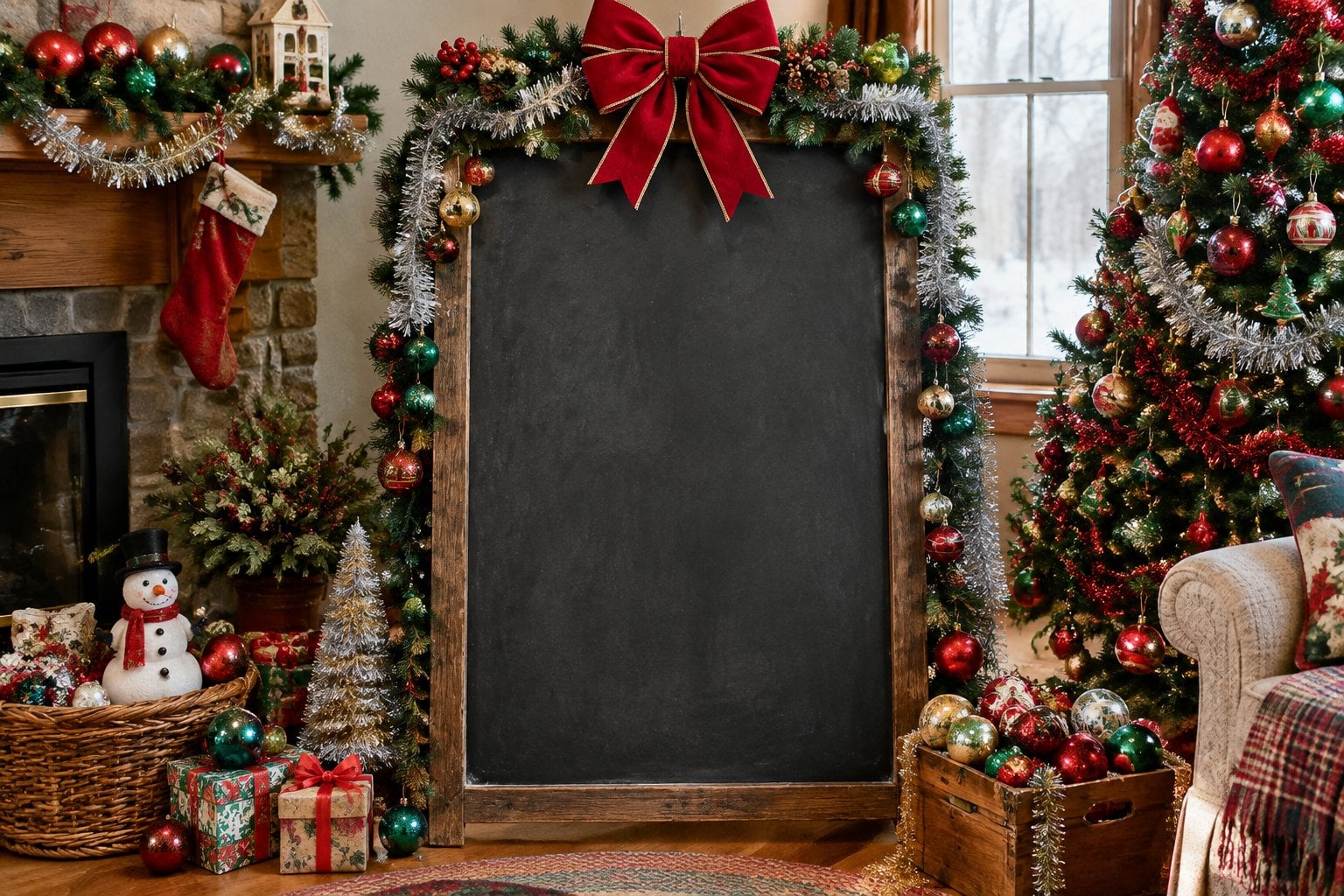
Chalkboard countdown signs became a familiar sight in the 2010s, when farmhouse style and hand-lettered decor were everywhere. A little board by the door or on the mantel, with “12 days until Christmas” written in white chalk, felt cozy and handmade.
These days, the look can read as a bit dated, especially when the sign is a store-bought, tree-shaped board with a plastic stand. The same goes for boards with stenciled lettering that never changes. If the number has been stuck for weeks, the sign tends to look forgotten rather than festive.
You don’t need to retire the idea completely. Try a countdown that feels more personal, such as a wooden advent garland with small tags you open each day, or a simple framed card where you swap the number by hand. If you love the chalkboard, keep it fresh by writing a new greeting or a family tradition for each day.
25. Mason jar Christmas decorations
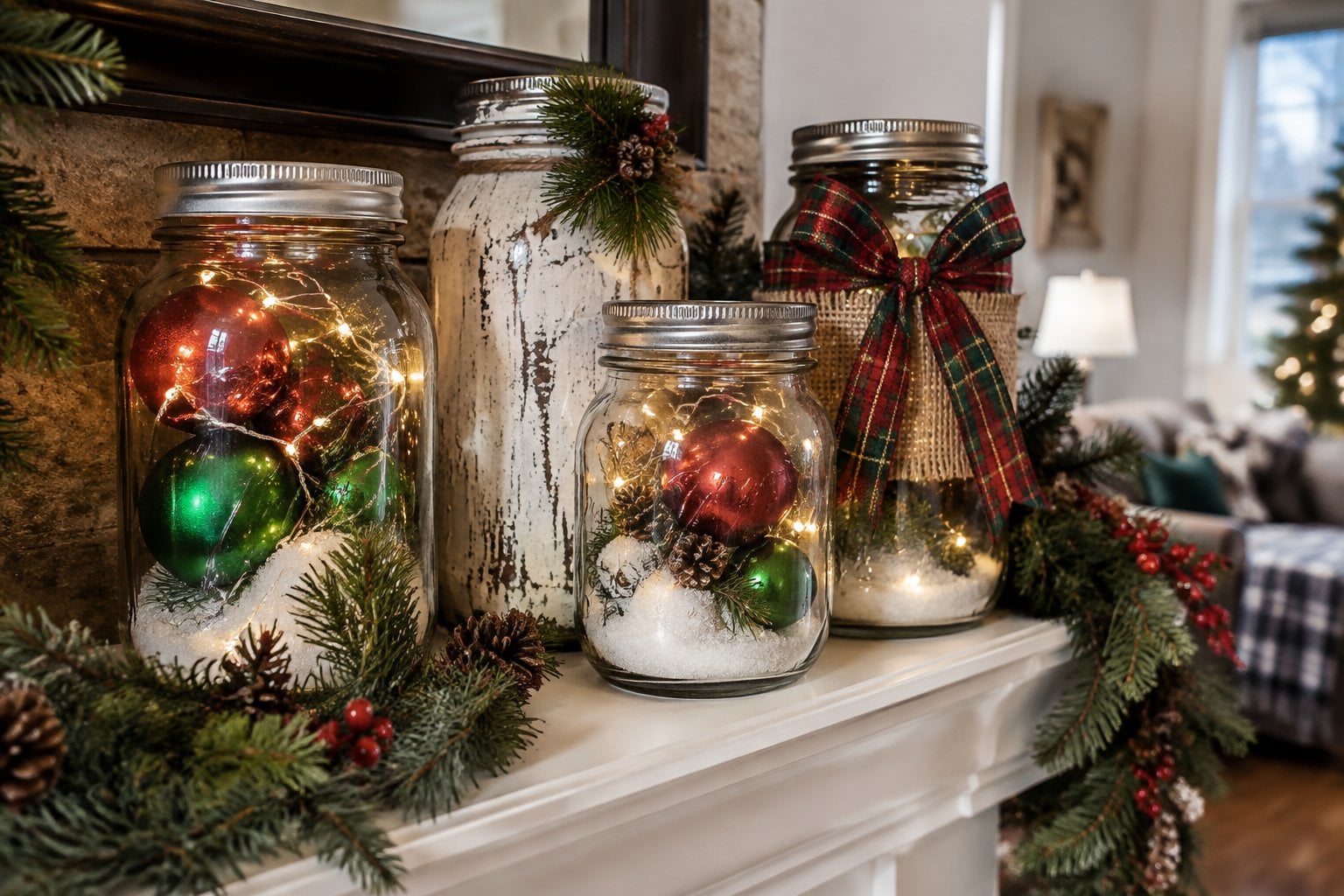
If you decorated for Christmas anytime in the 2010s, chances are you filled a few mason jars. They showed up everywhere, holding fairy lights, faux snow, candy canes, or a sprig of greenery tied with twine. The look grew out of the rustic farmhouse and DIY craft wave, and Pinterest helped it spread.
These days, a row of mason jars can read as a trend that has already had its moment. The jars themselves are not the problem. It is the crowded mix of burlap, chalkboard tags, and glitter that tends to feel dated.
You do not need to toss your collection. Try using just one or two jars on a mantel or side table, filled with real pine clippings or a single pillar candle.
Swap the twine for a velvet ribbon in a color you already use elsewhere. A little restraint lets the jars feel fresh, not themed.
26. Wooden pallet Christmas trees
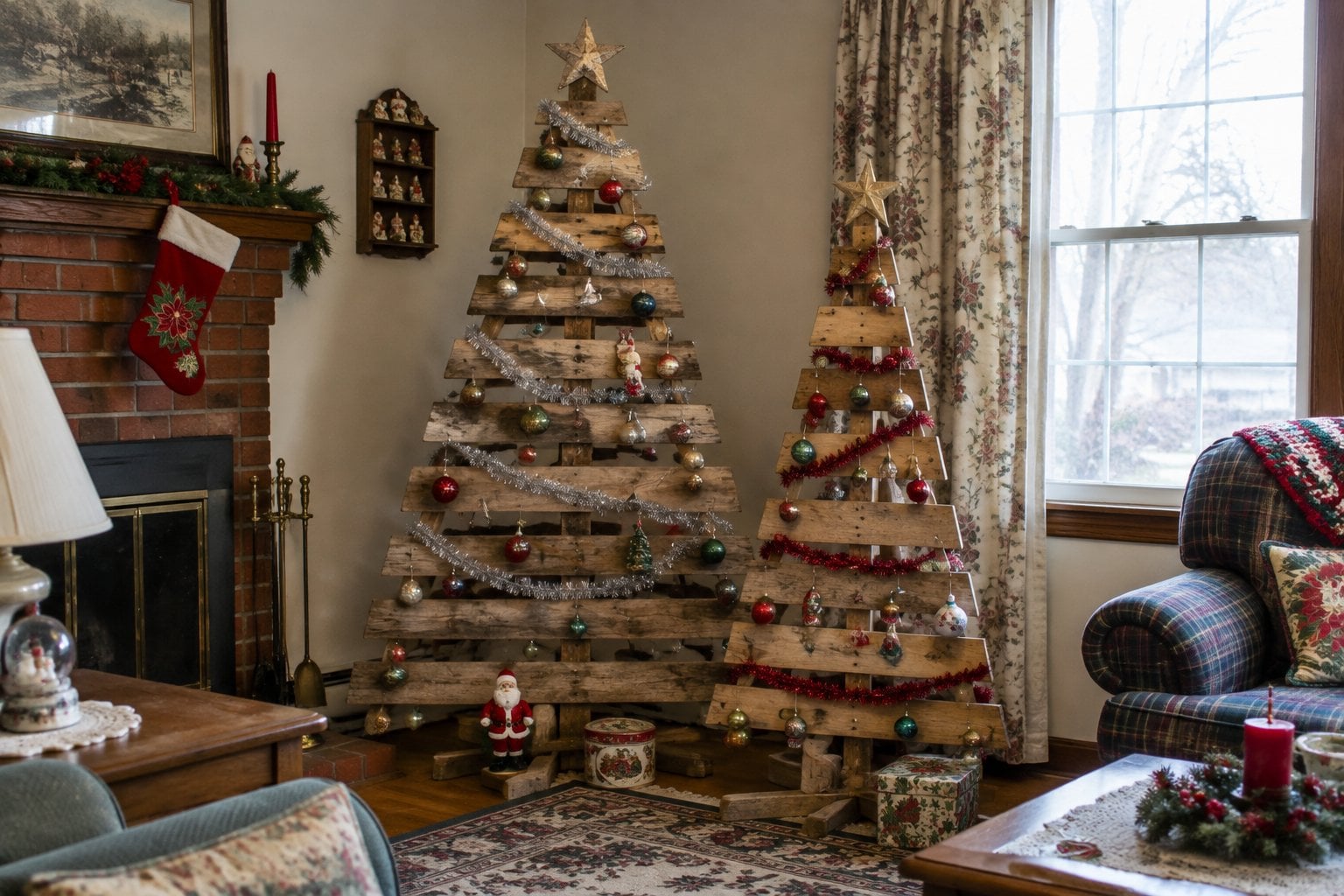
Around the early to mid 2010s, craft sites and social media filled with Christmas trees made from salvaged wooden pallets. Boards were cut into a triangle, stacked or leaned against a wall, and often painted green or left rustic and weathered. They fit the do-it-yourself farmhouse look that was everywhere at the time.
You may have admired a few of them, or even been tempted to build one. Today, they tend to read as a craft-project trend rather than a lasting holiday style. The rough boards and flat shape can feel stiff next to the warmth of a real or full artificial tree.
If you still love the rustic spirit, you can keep it in a gentler way. Try a small wooden tree with a smooth finish on a side table, or use a few plain wood slices as ornaments on your regular tree.
A simple wreath of fresh greenery on a wooden crate can also bring in that natural feel without the pallet look.
27. Singing and dancing animated Santas
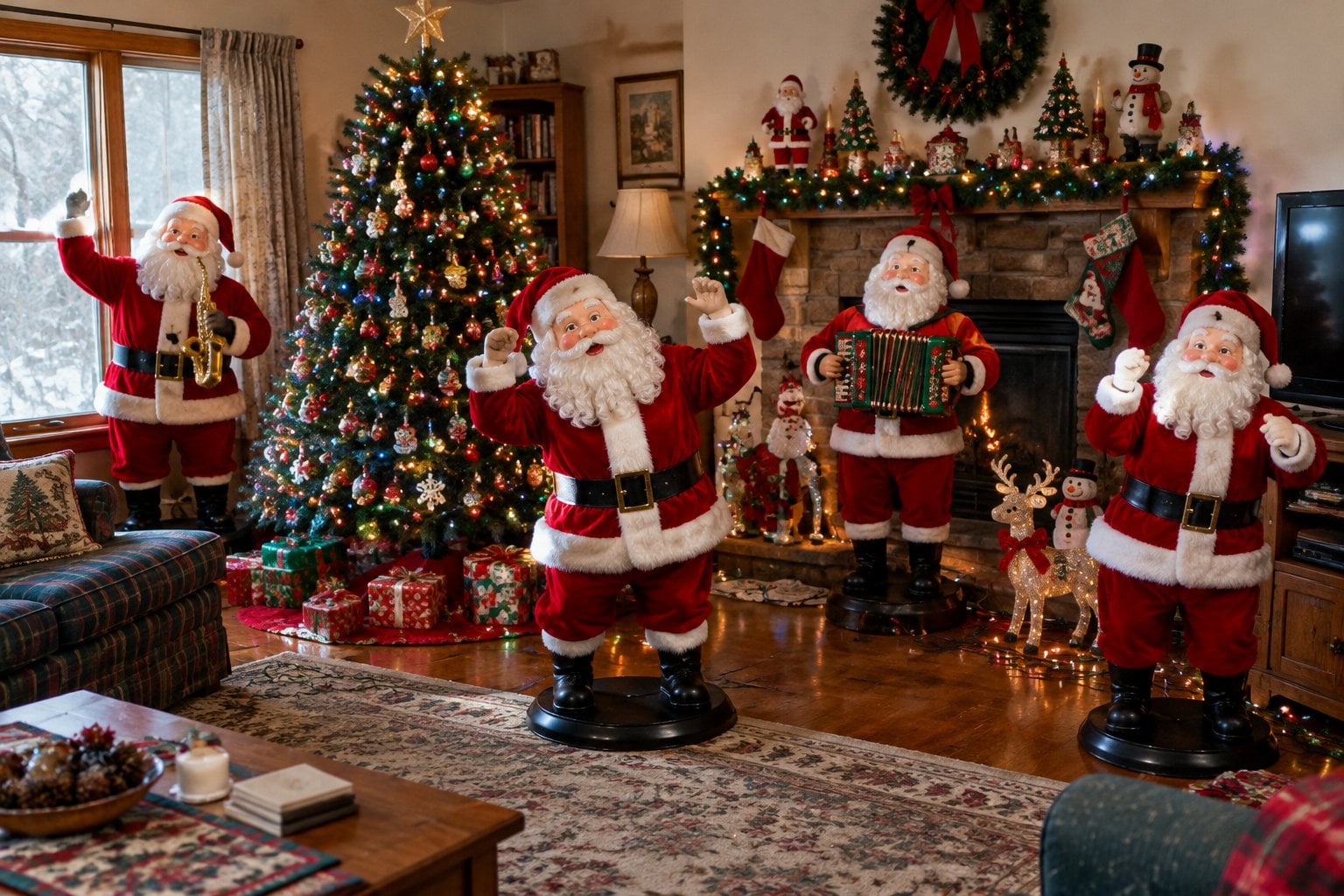
If you remember the first time a battery-powered Santa started swiveling his hips and belting out a holiday tune, you likely remember the laughs that came with it. These figures became popular in the late 1990s and 2000s, and they showed up on mantels, shelves, and store displays everywhere. They were meant to be playful, and for a while they were exactly that.
These days, they can make a room feel stuck in a particular era. The plastic faces, the shiny synthetic fabric, and the repeating motion and song tend to stand out against calmer, more natural holiday looks. A tune that loops every few seconds can also wear thin when guests are trying to chat.
You don’t have to say goodbye to your favorite one. Try keeping it for a special spot, like a basement shelf or a grandchild’s room, where the fun fits better. In your main living areas, a classic wooden or cloth Santa can offer the same warmth without the noise.
28. Fake poinsettias with visibly plastic leaves
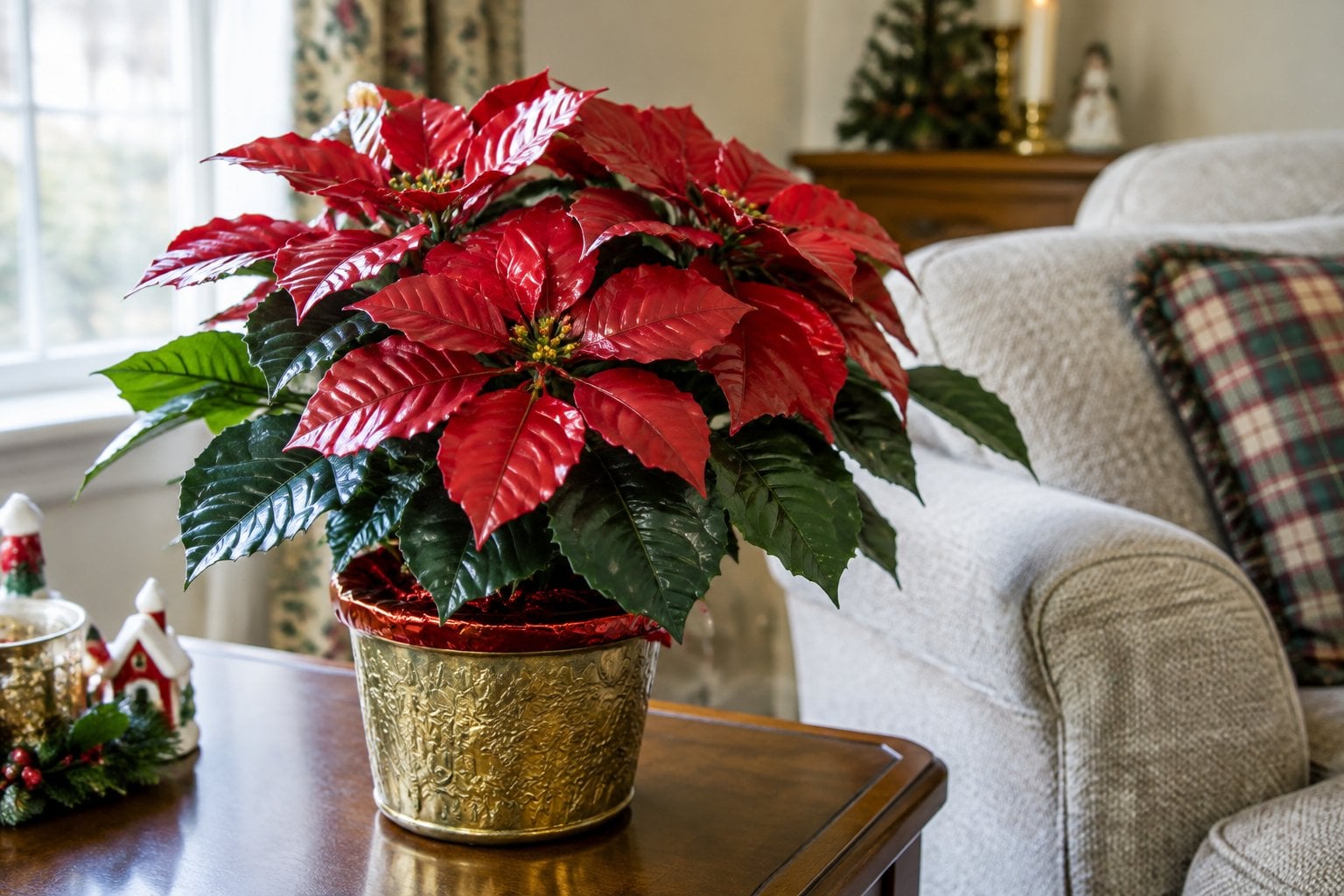
If you decorated in the 1980s or 1990s, you probably remember the poinsettia picks and bushes that filled craft stores each November. They were a staple of wreaths, mantels, and church altars, and many of them were made of stiff plastic with shiny, uniform leaves.
Today, those glossy petals and wire-thick stems tend to stand out for the wrong reasons. The deep, flat red and the molded veins give away the material from across the room, and they can make a lovely holiday display feel a little tired.
You don’t have to give up poinsettias, though. Newer versions made of fabric or velvet have softer edges and more natural color variation, and they look much closer to the real plant.
If you’d like to keep your older stems, try tucking them into fresh greenery like pine or cedar so the leaves are partly hidden. A few real or realistic pinecones nearby can help the whole arrangement feel more natural.
29. Lighted wire reindeer that move their heads
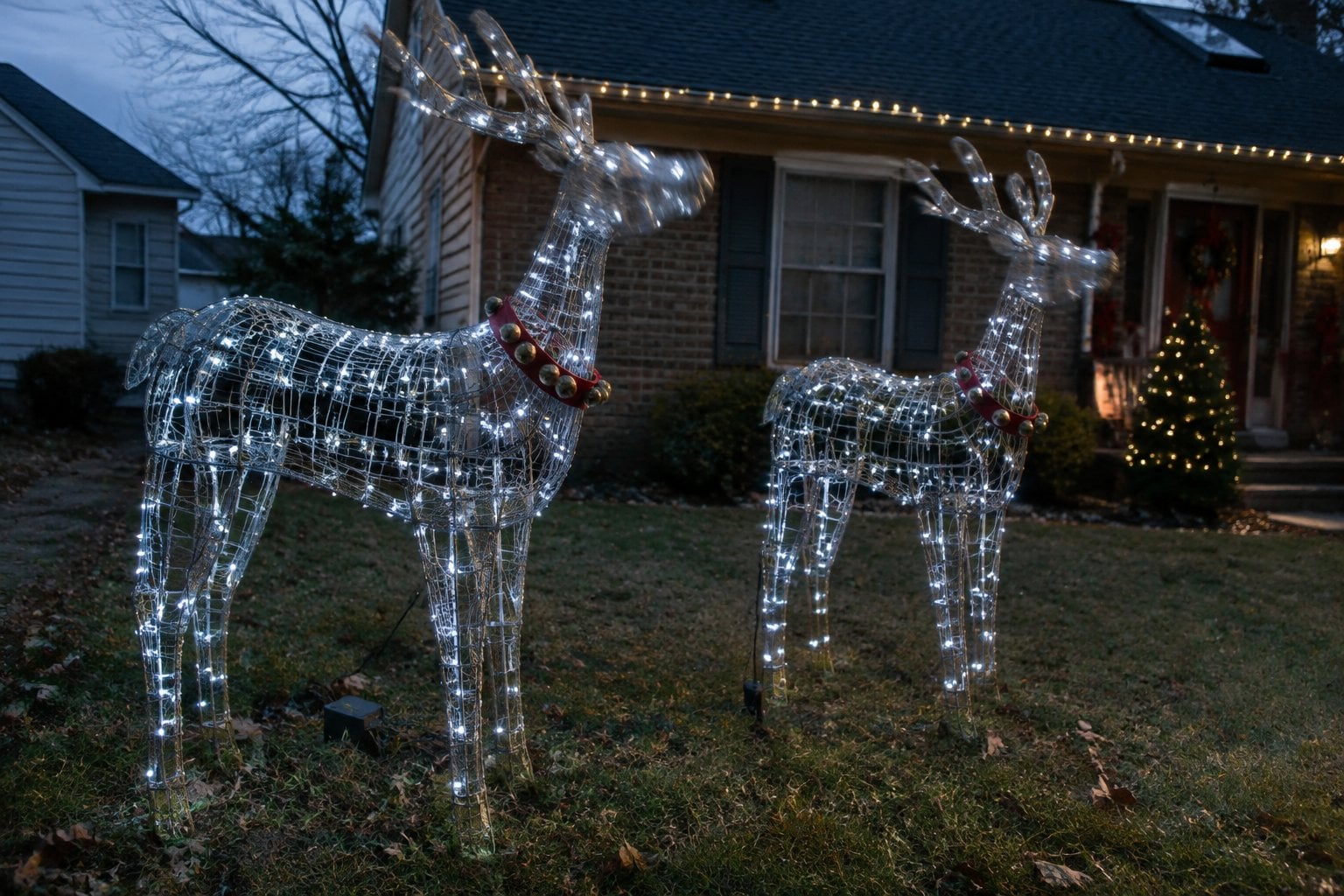
If you decorated a yard in the 1990s or early 2000s, you probably remember these. Wire-frame reindeer wrapped in clear incandescent lights, standing on the lawn and slowly turning their heads from side to side, were a familiar sight on many streets.
They were popular because they brought a bit of motion to a yard display, and they felt a little magical when the neighborhood lit up at dusk. Over time, though, they started to look dated. The thin wire frames, the warm clear bulbs, and the same stiff head turn can read as a look from another era.
If yours still hold a special place in your heart, you don’t have to retire them. Try placing a single reindeer near a wreathed door or beside a lit evergreen, rather than lining several up across the grass.
A simple swap to warm white LED strands can also freshen the look, and a bit of real greenery or a plaid ribbon at the neck can help it feel more current.
30. Oversized tree toppers that dwarf the tree
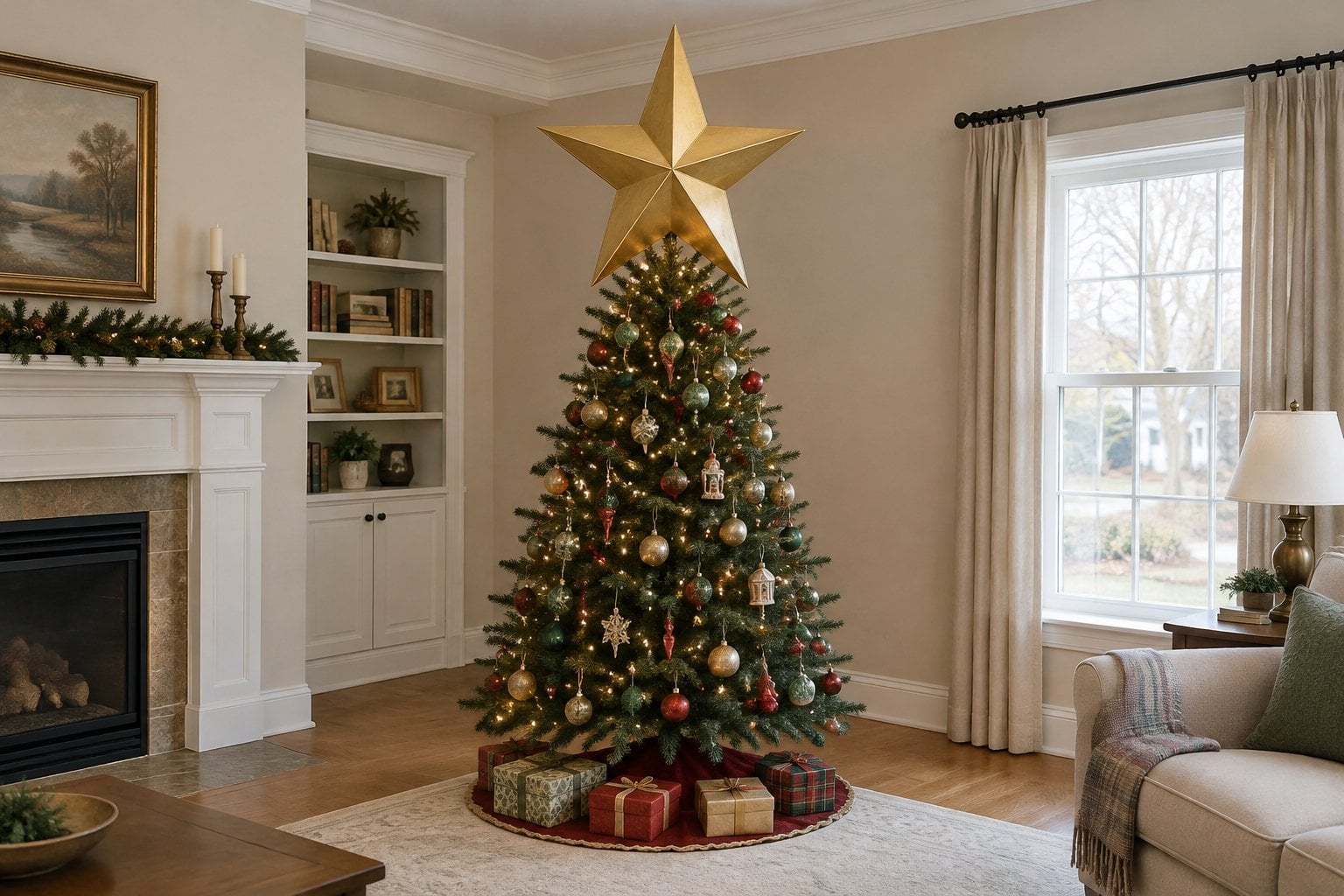
You may remember when a tree topper was a modest star or a small angel, tucked neatly at the very top. In recent years, giant bows, huge stars, and extra-large angels have taken over, and some of them are nearly as wide as the upper branches of the tree.
The trouble is that a topper this big can pull the eye away from everything you have spent hours arranging below it. It can also make a tree look top-heavy, and a heavy topper may lean or bend the tip over time.
A gentler approach is to choose a topper that fits the tree. As a rough guide, a topper that is about as wide as the top foot or so of branches tends to look balanced.
If you love a big bow, you can tie a smaller one in ribbon that matches your ornaments. You might also pass a longer ribbon down through the branches, so the topper feels connected to the rest of the tree.
What Makes Christmas Decor Feel Timeless
Decor that lasts tends to rest on personal history, a restrained color palette, and pieces sized to fit your space. Getting those three things right keeps a room looking intentional from one December to the next.
The Difference Between Nostalgic and Dated
Nostalgic decor tells a story, while dated decor simply repeats a look that has run its course. A glass ornament your grandmother hung on her tree feels warm because it carries a memory. A bargain-bin tree skirt in a neon print from a decade ago feels stale because nothing about it belongs to you.
Think about where each piece came from and why you keep it. Heirloom ornaments, hand-knit stockings, and a nativity set passed down in your family are easy to justify. Mass-produced novelty items bought only because they were trending rarely earn a second season.
Condition matters too. A vintage ornament with a little patina reads as charming, but chipped paint, faded ribbon, and tangled tinsel read as neglect. Give your treasured pieces a proper spot, like the front of the tree, and retire the ones that look worn out.
How to Refresh Your Holiday Style Without Starting Over
You can update your Christmas look by choosing a limited color palette, grouping sentimental pieces with intention, and shopping your own storage bins first. Small changes in placement, lighting, and texture often do more than buying a whole new set of decorations.
Making Budget-Friendly Changes With What You Already Own
Before you buy anything, pull out every box and lay your decorations on a table. You will often find pieces that feel fresh once you see them next to each other, and others that you can happily donate.
Try moving things to new places. A string of lights that usually goes on the tree can wrap around a mirror or a bookshelf. Ornaments can fill a large bowl or a glass hurricane vase for a centerpiece, and your tree skirt could be swapped for a basket or a folded wool blanket you already have.
Fresh greenery from your yard or a grocery store adds natural texture for very little money. A few cut branches of pine or cedar tucked into a pitcher, along with a handful of the ornaments you already own, can replace a tired-looking garland. Dimming overhead lights and using lamps or candles will also make everything look warmer and more current.