31 Christmas Traditions 1970s Moms Kept That Have Quietly Disappeared
Christmas in the 1970s didn’t just happen in your house. You made it happen, one list, one batch of cookies and one late night of wrapping at a time.
You strung the garlands, addressed the cards, sewed the pageant costumes and filled the stockings, usually while keeping the rest of the house running too.
A lot of what you did back then has quietly faded away. Here are 31 Christmas traditions you probably kept up as a young wife and mom, and why so few families still do them today.
1. Handmade popcorn-and-cranberry garlands
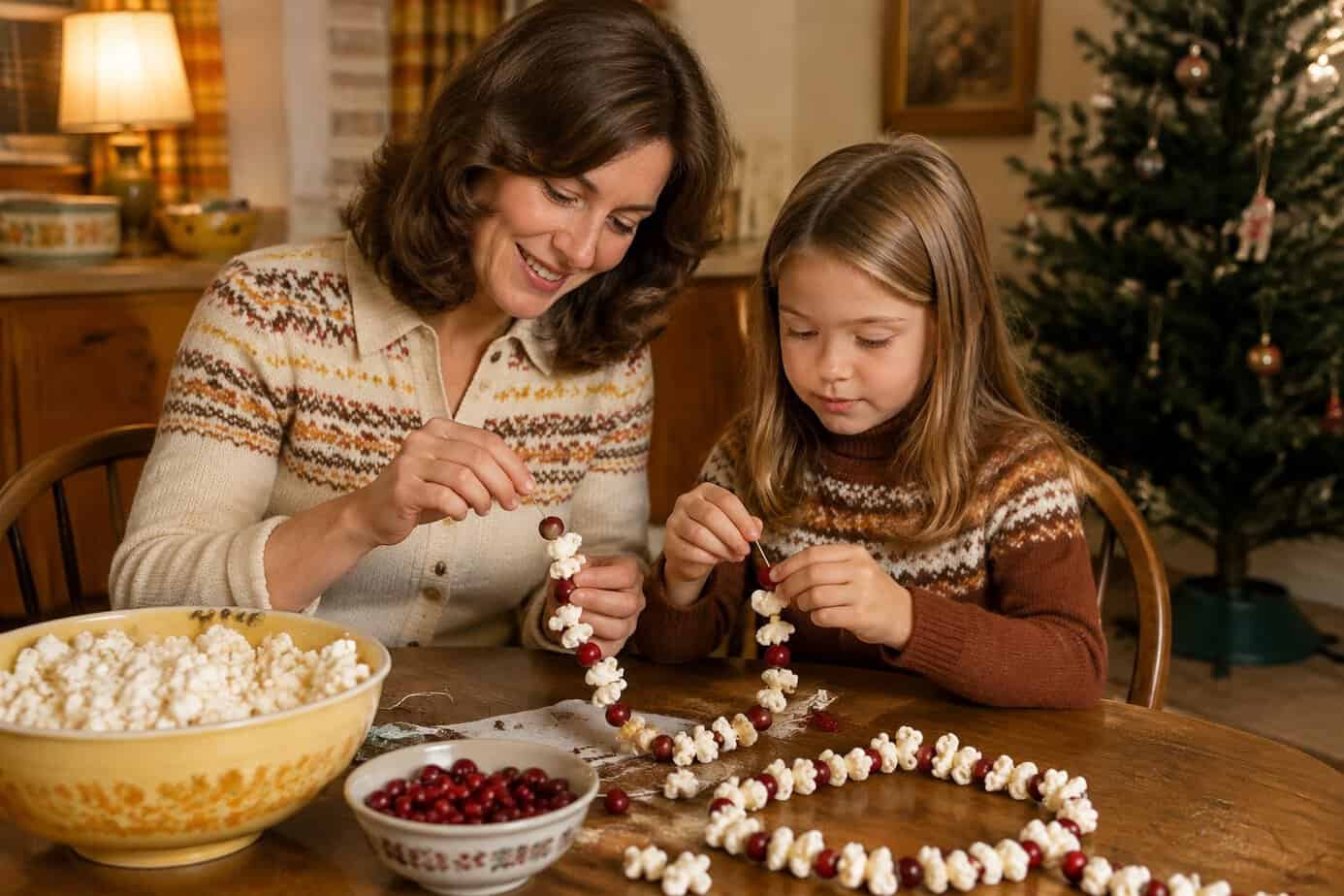
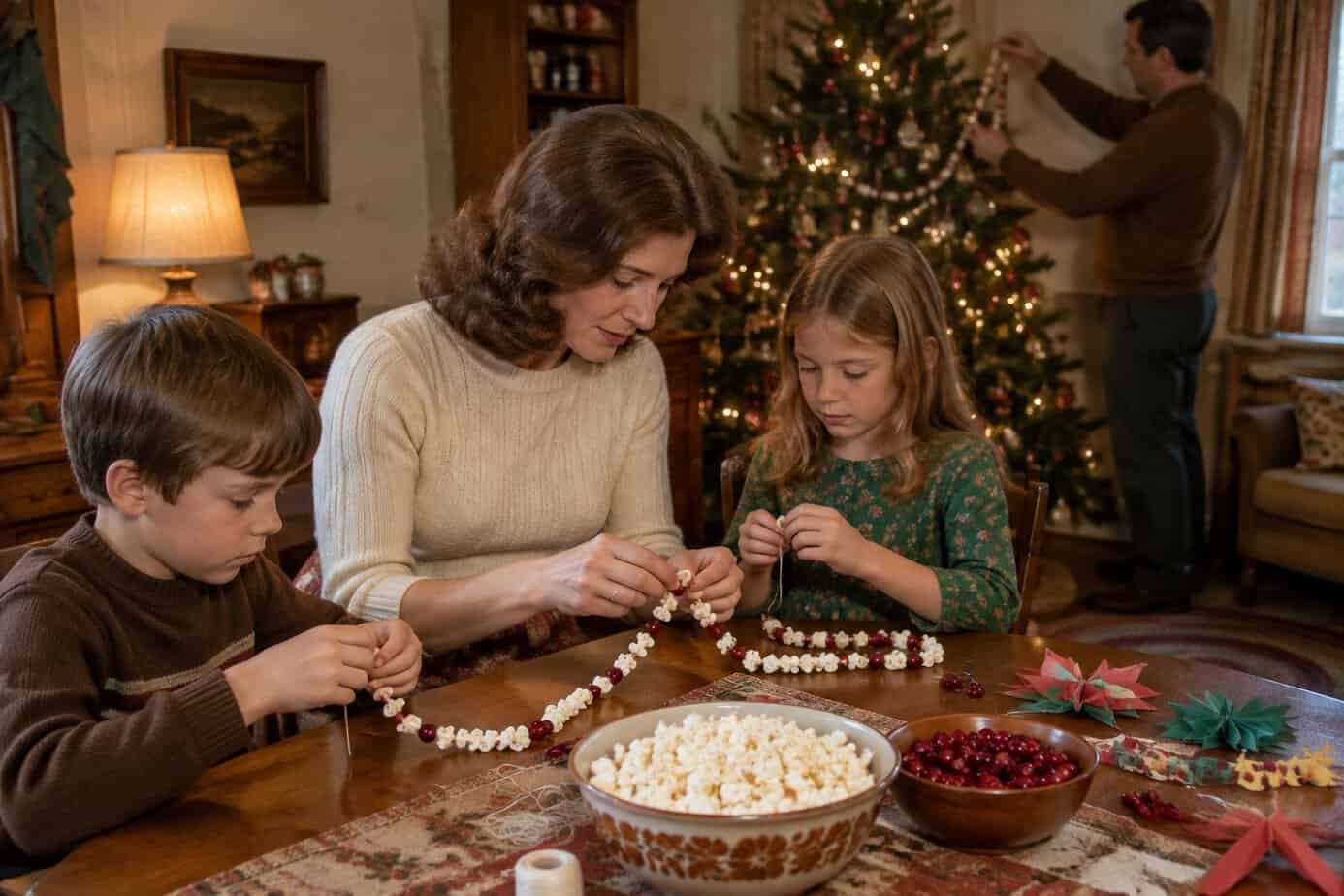
You probably spent at least one evening every December popping corn on the stove, then letting it cool in a big bowl while you threaded a needle with heavy-duty thread. Stringing popcorn and cranberries was something you could do while sitting in front of the television with your husband and kids nearby, talking about the day.
It wasn’t fancy, but it didn’t need to be. The popcorn gave you something soft to work with, and the cranberries added that bright red color against the white, so the tree looked full without spending much money.
You probably remember your fingers getting a little sore after a while, and the cranberries staining your fingertips. If you had little ones helping, you kept the needles for yourself and let them handle the popcorn, since cranberries could roll right off the table.
By the time you wrapped the finished garland around the tree, it felt like something you had truly made together, not something bought off a shelf. It rarely lasted past New Year’s without the birds finding it outside, but that never seemed to matter much.
2. Tinsel strands draped one at a time
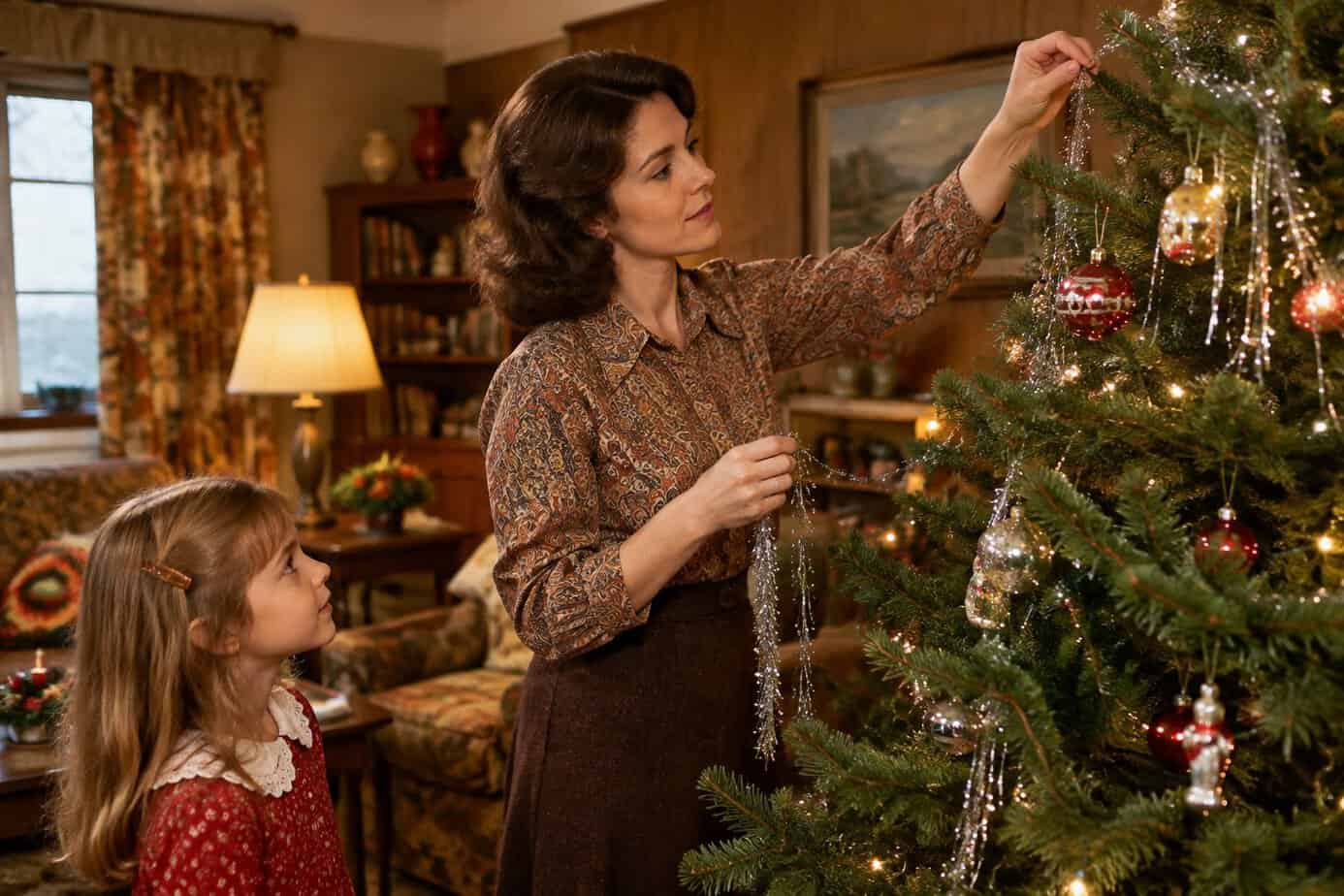
You remember kneeling by the tree with a handful of tinsel, placing each strand carefully over the branches instead of tossing it on in clumps. It took patience, but you wanted the tree to catch the light just right, shimmering like something out of a magazine.
Your husband probably teased you for taking so long, but you didn’t mind. It was quiet, focused work, the kind you could do after the kids went to bed or while a holiday record played softly in the background.
Getting the tinsel even mattered to you. Too much in one spot looked messy, and you knew it. So you worked methodically, branch by branch, until the whole tree glistened evenly from top to bottom.
At the end of the season, you probably saved what you could, pulling strands off gently to use again next year. It felt wasteful to throw it all away, even though peeling tinsel off dry branches was never fun.
That slow, careful tradition has mostly disappeared now. Most trees today use tinsel garland or skip it altogether, but you still remember the quiet satisfaction of doing it the old way, one strand at a time.
3. The ceramic Christmas tree she painted in ceramics class
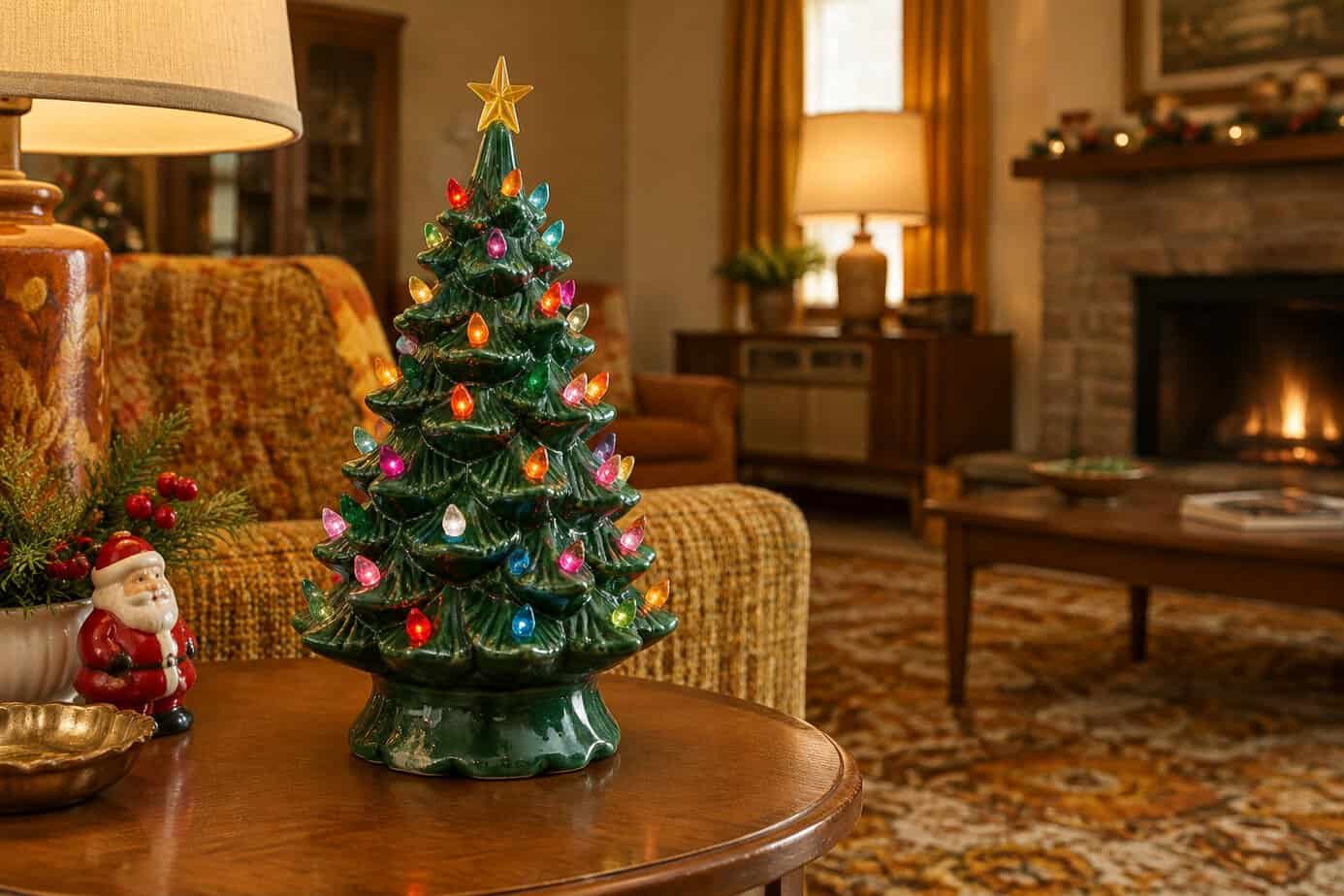
You signed up for ceramics class on a weeknight, probably through the community center or a neighbor who already went. Somewhere between the greenware and the kiln firing, you ended up with your own small Christmas tree, painted by hand with whatever colors felt right that year.
Getting it ready took real patience. You dabbed on the green paint carefully, then went back with a tiny brush to fill each hole with color so the little bulb inserts would glow when lit. Red, orange, blue, and yellow dots covered every branch by the time you finished.
That tree held a spot on your table or sideboard every December after that. You plugged it in each evening, and it gave off a soft, warm light that felt different from the big tree in the living room.
It never had a lot of ornaments or fuss around it, but it mattered just the same. It represented hours spent away from the house, learning something new, and making an object that would outlast the season it was made for.
4. Bubble lights on the tree
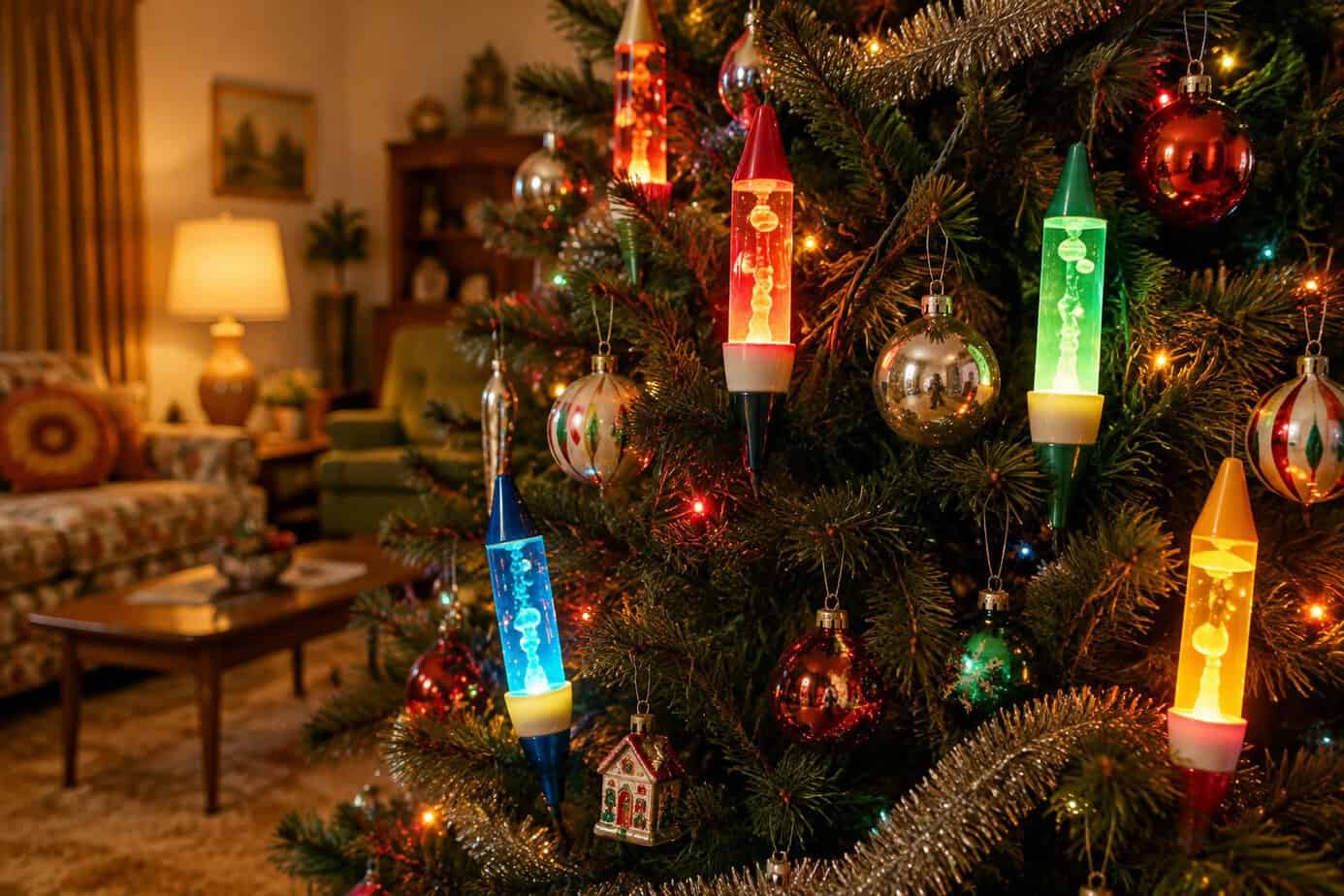
You remember clipping those glass tubes onto the tree branches, then waiting for them to warm up enough to start bubbling. The liquid inside would take a few minutes to heat, and you always checked back to see which ones had started first.
You probably had a mix of colors, and you made sure to space them out evenly so the bubbling effect spread across the whole tree. Getting the placement right mattered to you, since a clump of bubble lights in one spot looked uneven compared to a tree where they were scattered just so.
You likely worried a little about the heat they gave off, especially with small children or pets nearby. Still, you kept using them year after year because the gentle bubbling felt festive in a way that regular lights never quite matched.
Replacing the bulbs became part of your yearly setup routine, since the strands didn’t always survive storage well. When newer, safer lighting came along, you probably set the bubble lights aside, but you never forgot how mesmerizing they looked glowing on the tree in a dim living room.
5. Hand-painted glass ornaments brought out each year
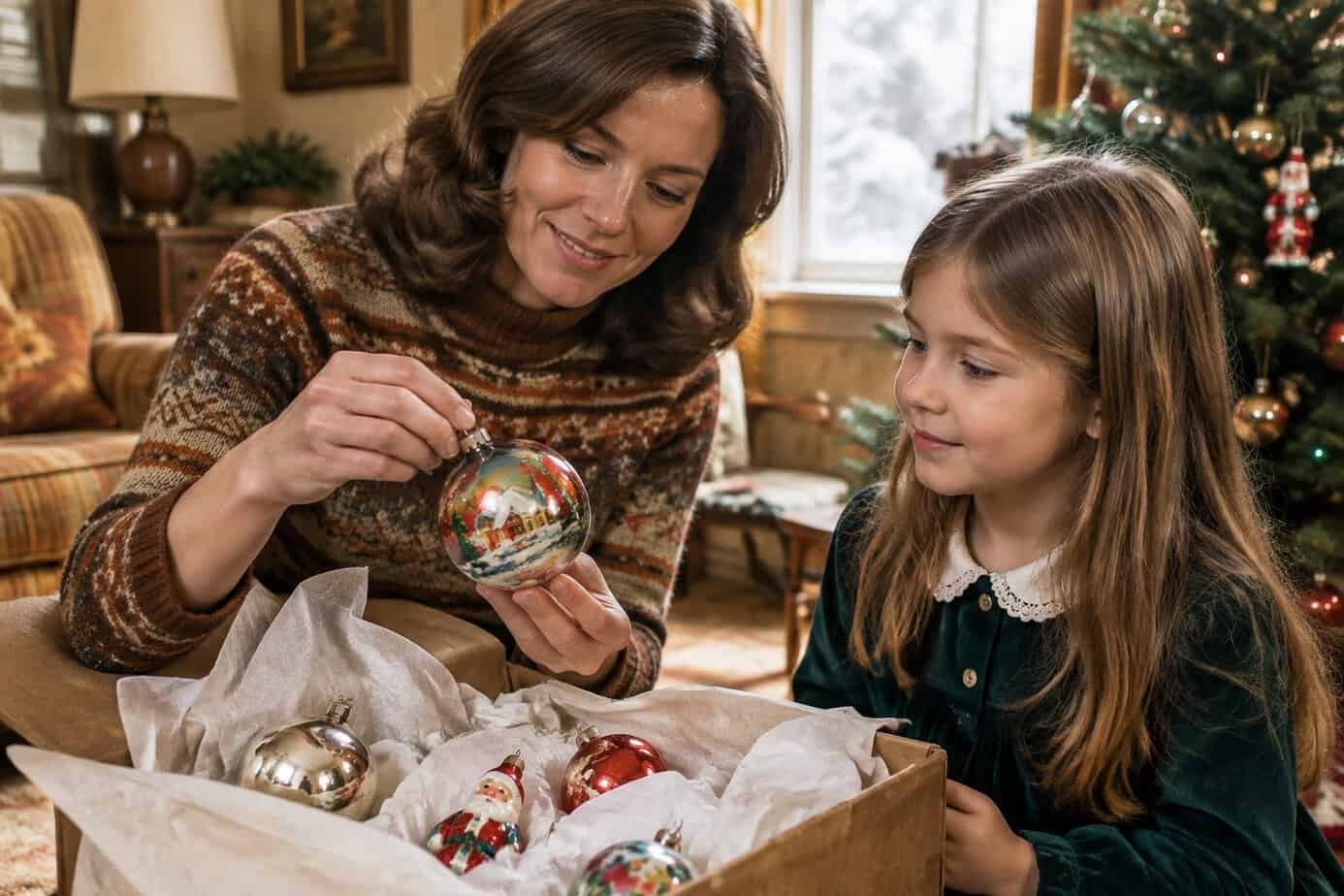
You kept those glass ornaments wrapped carefully in tissue paper, tucked into a box that came out of the closet once a year. Many of them were hand-blown and hand-painted, often made in West Germany, with details so delicate you held your breath while hanging them. You probably inherited a few from your own mother or received them as wedding gifts, so each one carried a little history before it ever touched your tree.
Unwrapping them was almost a ceremony in itself. You checked each ornament for new cracks or chipped paint, setting aside the ones too fragile for small hands to be near. The silvered insides caught the light in a way that newer plastic ornaments never quite managed, and you remember noticing that difference even then.
You likely had a system for hanging them, saving the nicest ones for eye level where guests would see them. Replacing a broken one wasn’t simple since the exact match rarely existed, so you treated the whole box like something worth protecting, year after year.
6. Paper-chain decorations made with the kids
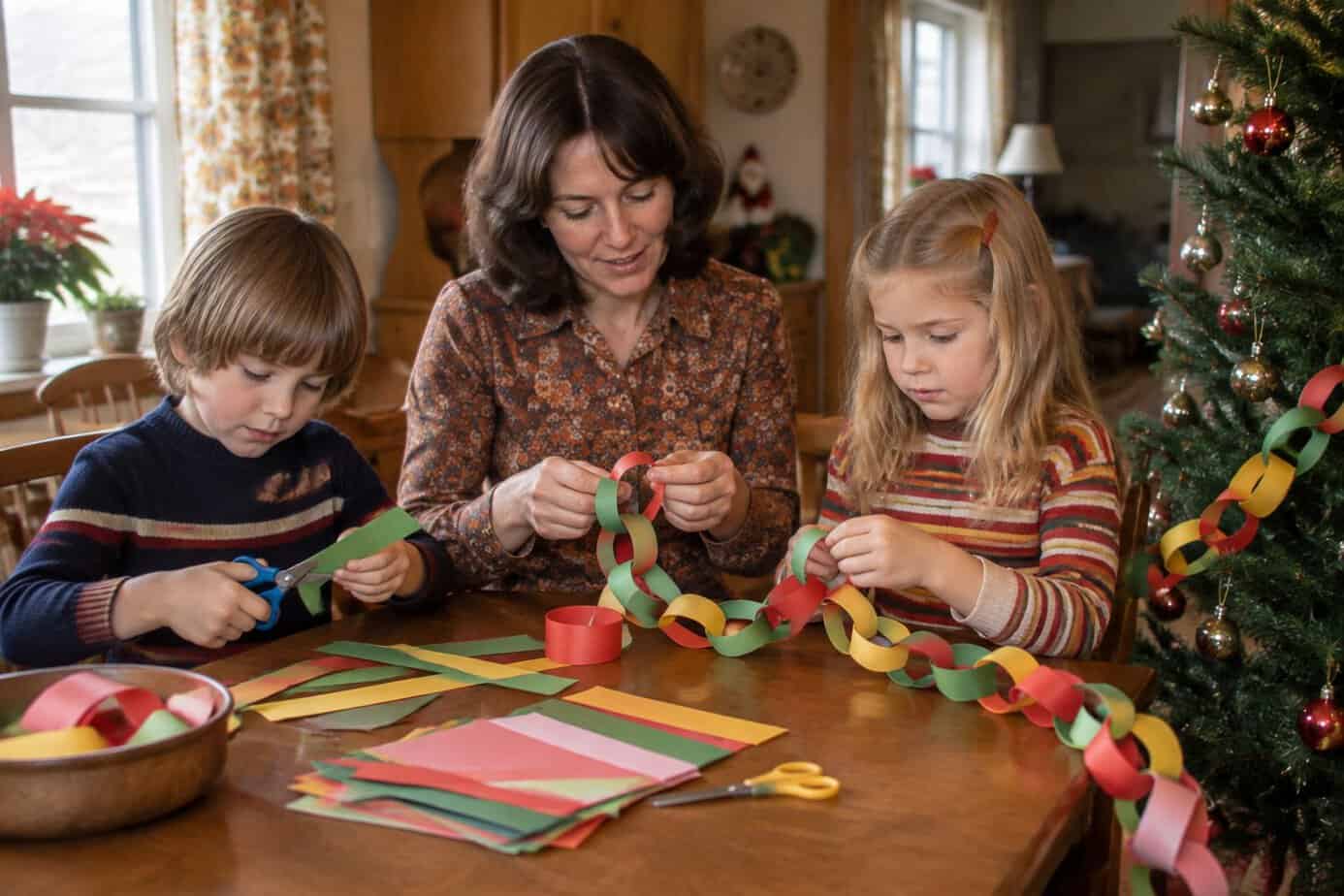
You kept construction paper and a bottle of school glue in a kitchen drawer every December, ready for the evening you’d spread newspaper across the table and let the kids cut strips while you supervised the scissors. It wasn’t fancy, but it was yours, something you put together with your own hands rather than bought at the store.
You probably remember looping each strip through the last one, pressing the glue tabs down, and watching the chain grow longer across the table. The kids liked counting how many loops it took to reach from one end of the table to the other, and you let them pick the colors even when they clashed.
Once it was long enough, you’d drape it around the tree or tack it along the mantel, and it stayed up through New Year’s without much fuss. It didn’t need special storage or careful wrapping, so when the season ended, you simply let it go.
That simplicity was part of the appeal. You weren’t trying to impress anyone with it, just giving your kids something to do with their hands on a cold evening while the radio played carols in the background.
7. Spray-snow stencils on the front windows
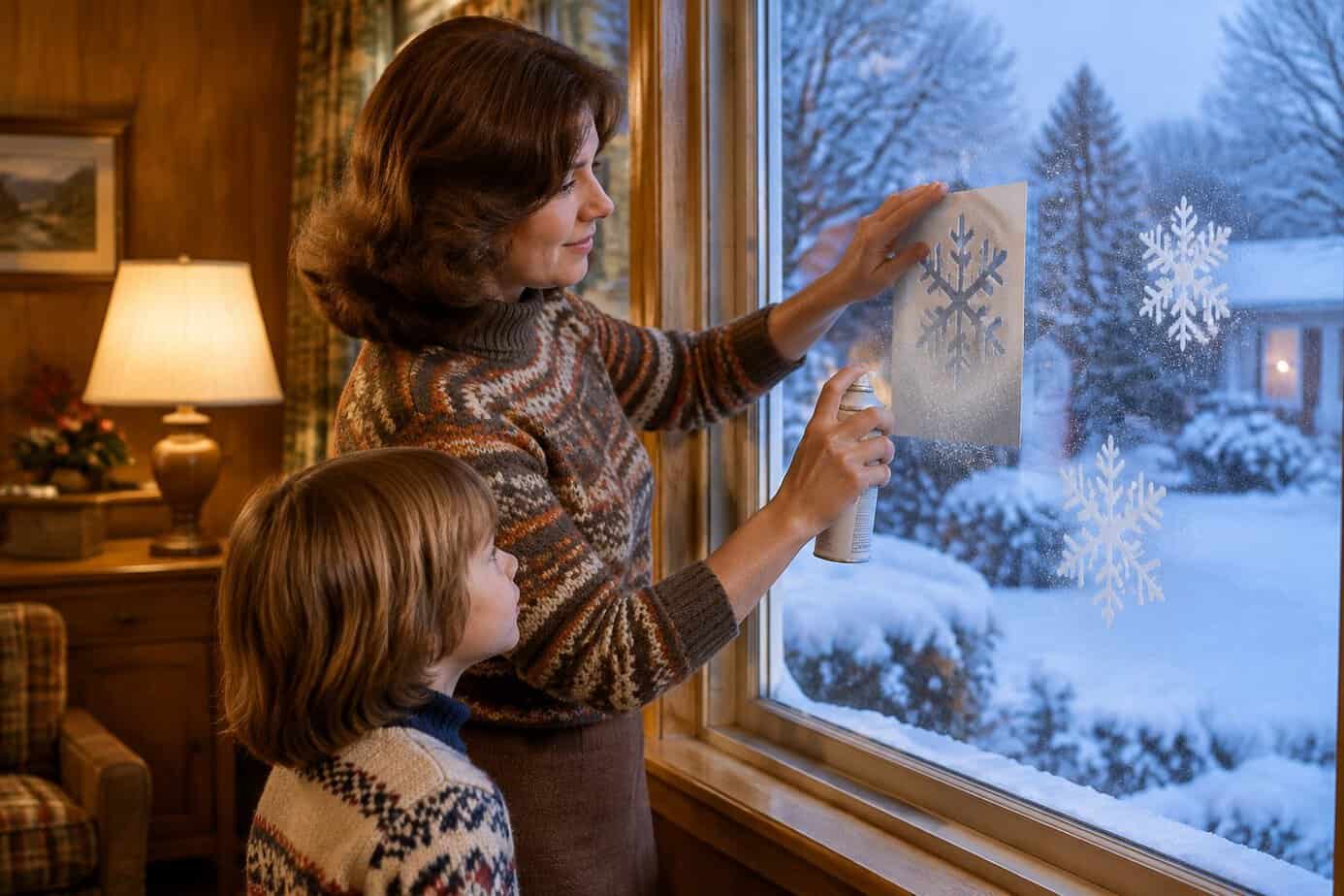
You probably kept a can of that spray snow in the hall closet, right next to the extension cords and the box of ornament hooks. Every December you would pull out the cardboard stencils, the ones shaped like holly, bells, or a snowman, and press them flat against the front window glass.
You had to hold the stencil steady with one hand while you sprayed with the other, and if you moved even a little, the edges came out fuzzy. Most moms figured out pretty quickly that short bursts worked better than one long spray, otherwise you ended up with drips running down the glass.
You usually did this on a Saturday afternoon while the kids napped or played outside, so you could concentrate without little hands grabbing at the stencils. It was a small job, but it made the whole front of the house look ready for the season.
Wiping it off the glass in January was its own kind of chore, one you never really minded because it meant Christmas had come and gone again, safely, the way you had planned it.
8. Homemade salt-dough ornaments
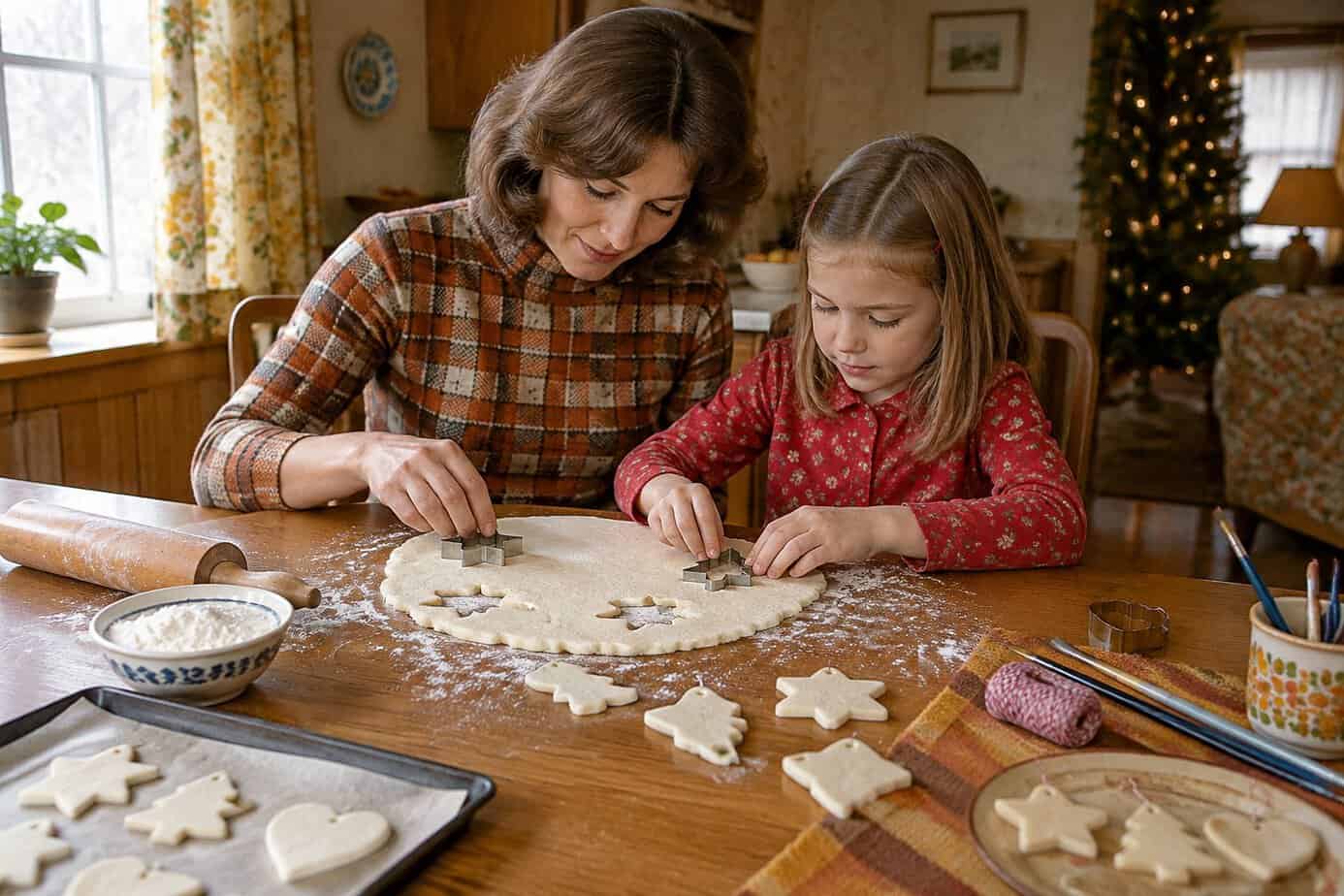
You probably mixed up your first batch of salt dough right at the kitchen table, flour and salt and water, nothing fancy. It cost almost nothing, and that mattered when the budget was tight and you still wanted the tree to look like you’d put thought into it.
You rolled out the dough and let the kids press cookie cutters into it, stars and bells and little trees. Some ornaments came out lopsided, and you kept them anyway.
Baking them took patience, since you learned quickly that too high an oven temperature meant puffing and cracking. You figured out the timing through trial and error, not a recipe card.
Once they cooled, you’d let everyone paint them at the table, newspaper spread out to catch the mess. A little hole poked before baking meant you could loop string through later and hang them right on the tree.
Those ornaments weren’t polished, but they were yours, made with your own hands during a season when homemade still meant something. You tucked them away carefully each January, hoping they’d survive to come out again.
9. A real tree decorated together as a family
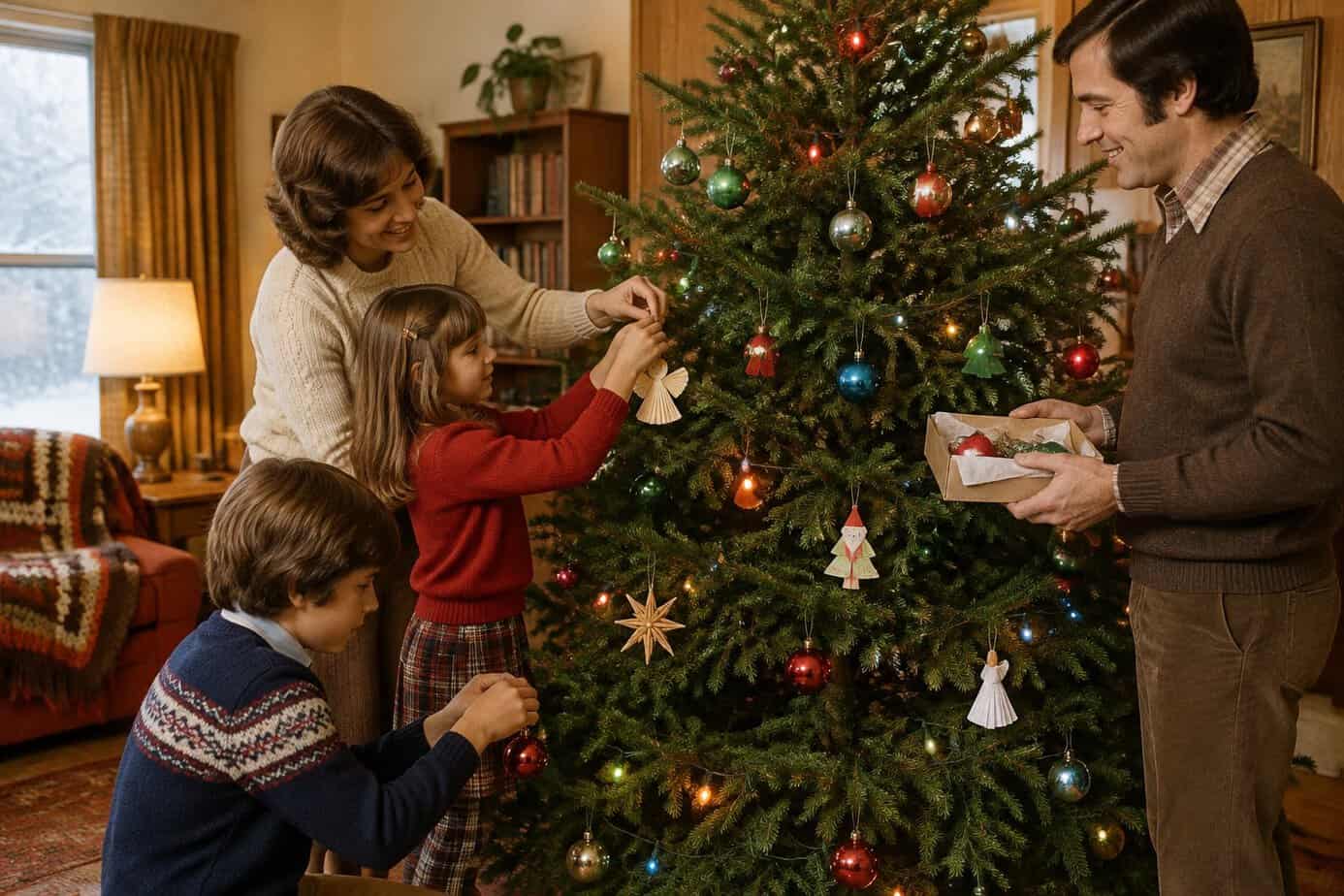
You remember the smell most of all, that sharp pine scent that filled the living room the moment you brought the tree inside. You and your husband probably picked it out together at a lot on the corner, judging each one for fullness and a straight trunk. Getting it to stand up straight in the stand was its own small battle every single year.
Once it was up, decorating became a family event rather than something you did alone. You untangled the lights first, usually the big colorful bulbs that got warm to the touch. The kids hung ornaments wherever they could reach, and you quietly rearranged a few later without saying anything.
You probably had a mix of store-bought ornaments and ones the children made at school, glued together from paper and glitter. Tinsel went on strand by strand if you were patient, or thrown in handfuls if the kids were in charge. By the end, you stood back together to look at it, proud of what you had built as a family.
10. Tree skirts sewn or knitted by hand
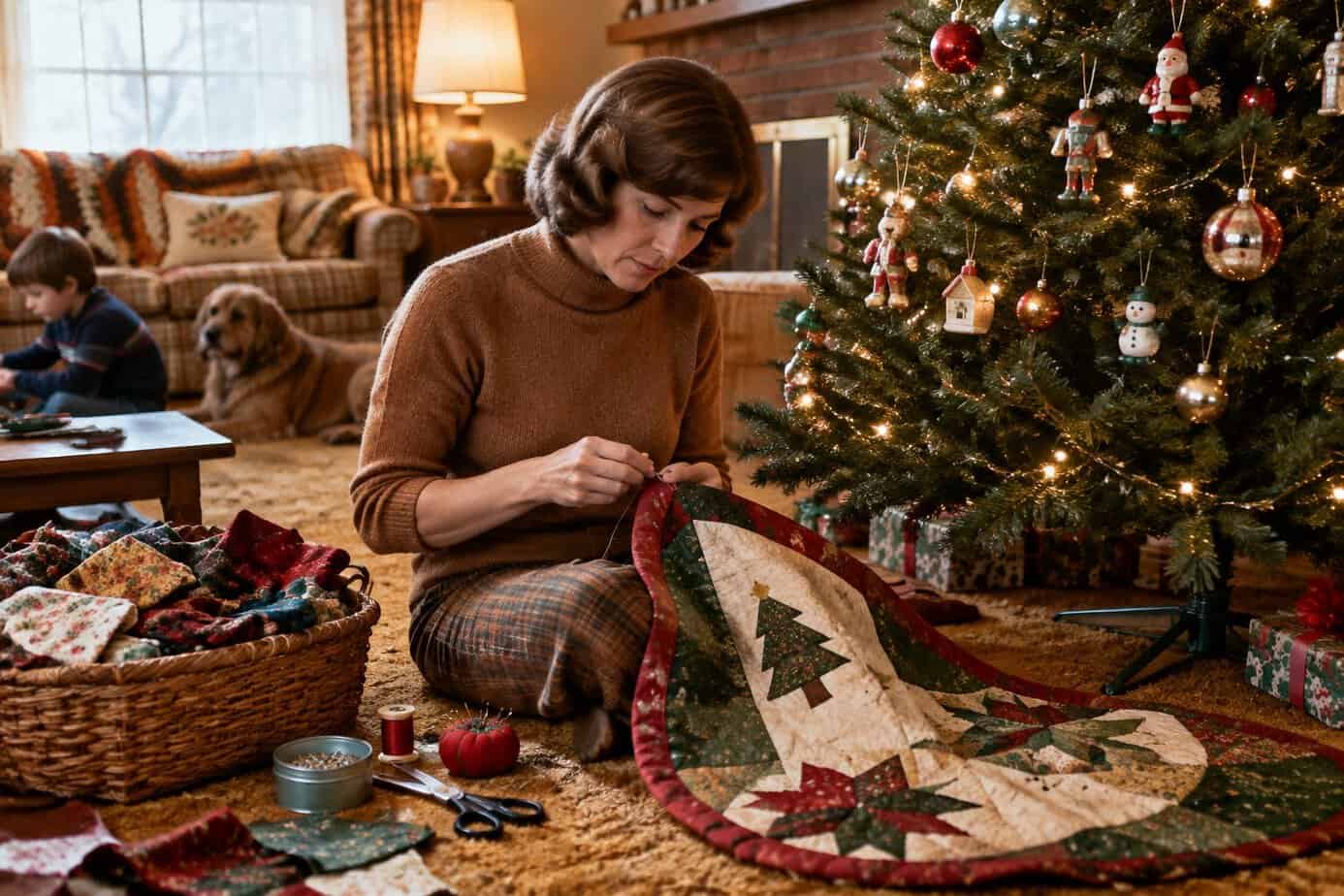
You probably made your own tree skirt because buying one felt like an unnecessary expense when you already had a sewing machine and a stack of fabric scraps. Felt was the easy choice, and you likely cut out holly leaves or little Santas to glue or stitch around the edge. If you knew how to crochet, you might have made a round one instead, working in red and green yarn until it was big enough to circle the base of the tree.
The buttons on the back closure were a practical touch, since zippers were harder to manage and buttons let you adjust the fit around the trunk. You kept that skirt folded away with the other decorations every January, pulling it back out each year a little more worn but still useful.
It never had to be fancy. What mattered was that it was yours, made during an evening or two while the kids were asleep, and it did its job hiding the tree stand and catching fallen needles for another season.
11. Christmas cards displayed along a doorway
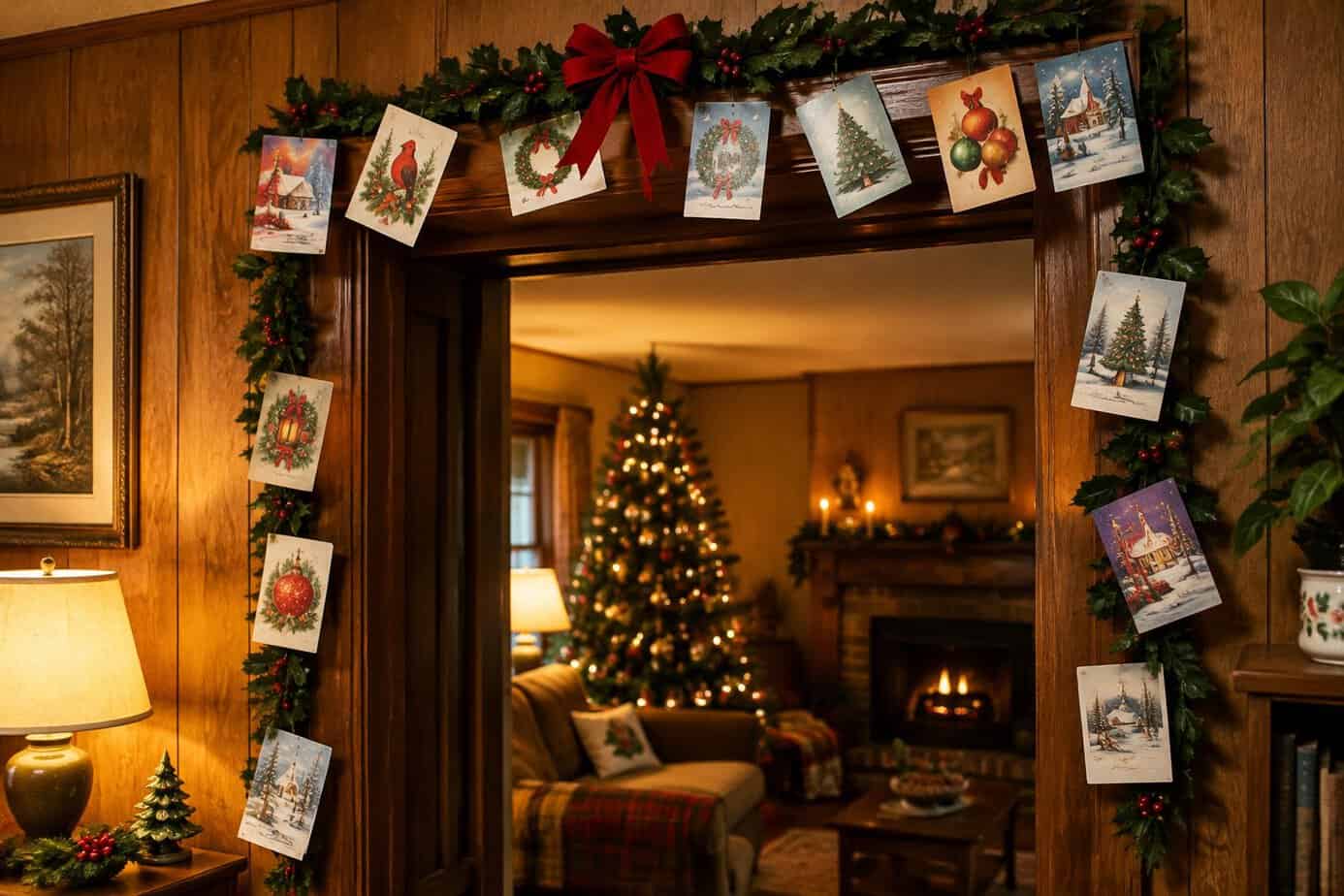
You probably remember standing by the mailbox each December, sorting through bills and catalogs to find the familiar envelopes with handwritten addresses. Every card that arrived got taped or pinned around a doorway in your house, usually near the front entrance or between the kitchen and living room.
By the time Christmas Eve rolled around, that doorway was covered edge to edge. You likely grouped them by family, keeping your side and your husband’s side together, and added new strips of tape as the collection grew.
Reading each card mattered to you. You knew whose handwriting belonged to whom, and you noticed when someone included a little note about their year. Some families sent photos, which felt special back then since film development cost money and people chose their pictures carefully.
Taking the cards down after New Year’s Day felt like closing out the season. You’d often save a few favorites in a drawer, planning to look at them again next December when the new batch arrived.
12. Christmas Eve candlelight service or Midnight Mass
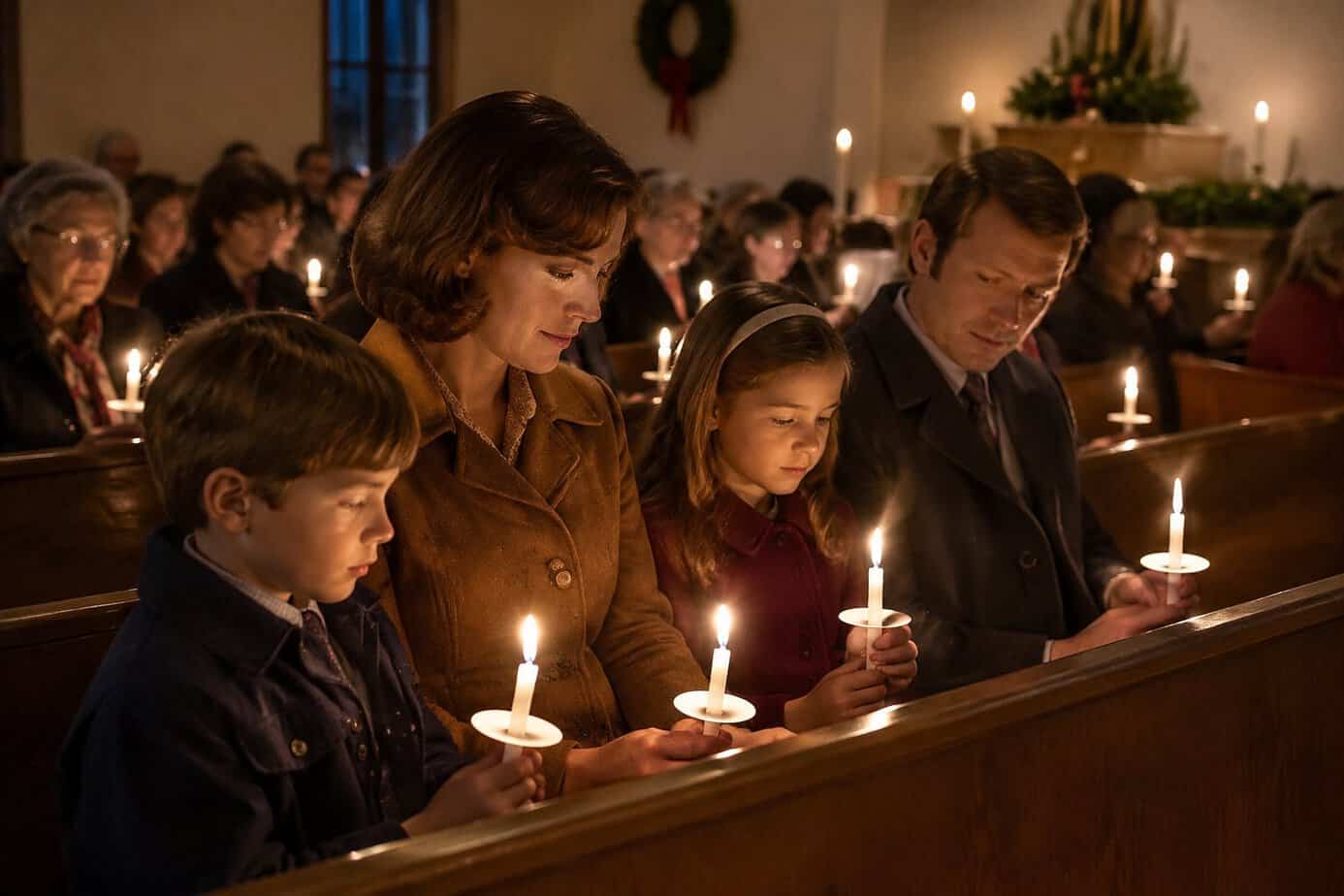
You pressed the good dresses the night before and made sure everyone had clean socks, because Christmas Eve service was not something you rushed into. The whole family went together, maybe to Midnight Mass if you were Catholic, or to a candlelight service if your church did things a little earlier in the evening.
You remember bundling the kids into coats over their church clothes and hoping they would not fall asleep in the pew before the candles were even lit. The church smelled like pine and melted wax, and the lights were turned down low so the stained glass caught whatever glow there was.
Singing carols by candlelight felt different than singing them at home. You held your candle carefully, tipping it so the wax would not drip on your sleeve, and passed the flame to the person next to you when it was time.
Afterward you drove home half-asleep yourself, kids drowsy in the back seat, knowing Santa still had to be dealt with once everyone was in bed. It was a lot of work for one night, but it anchored the whole holiday for you.
13. Hand-addressed cards mailed to friends and relatives
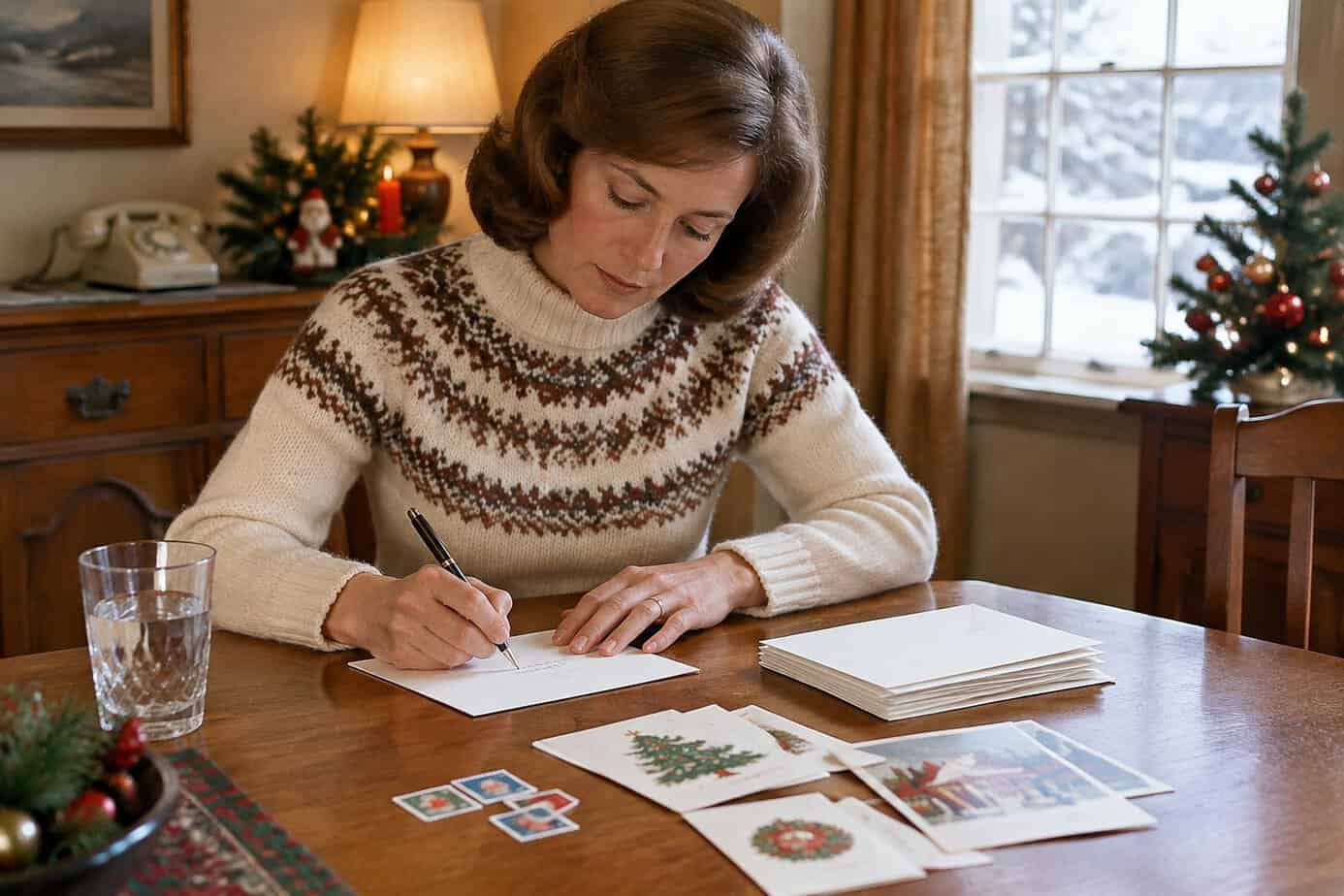
Every December, you pulled out your address book and sat down at the kitchen table with your box of Christmas cards. You probably bought them at the drugstore or the five-and-dime, choosing boxes of twenty-five with snowy scenes or a simple nativity on the front.
Writing them took real time. You wrote a short note in each one, maybe mentioning the kids’ grades or a trip you took that year, since this was often the only update some relatives got from you all year.
Your handwriting mattered to you then. You wanted your cousin in another state or your husband’s old Army buddy to feel like you had thought of them personally, not just signed your name and moved on.
You kept a running list of who sent you cards the year before, crossing names off as your own cards went into the mailbox. Stamps had to be bought ahead of time, and you budgeted for postage along with everything else that month.
The cards you received got taped around the doorframe or propped on the mantel, a paper trail of everyone who mattered to your family that year.
14. A yearly family Christmas letter
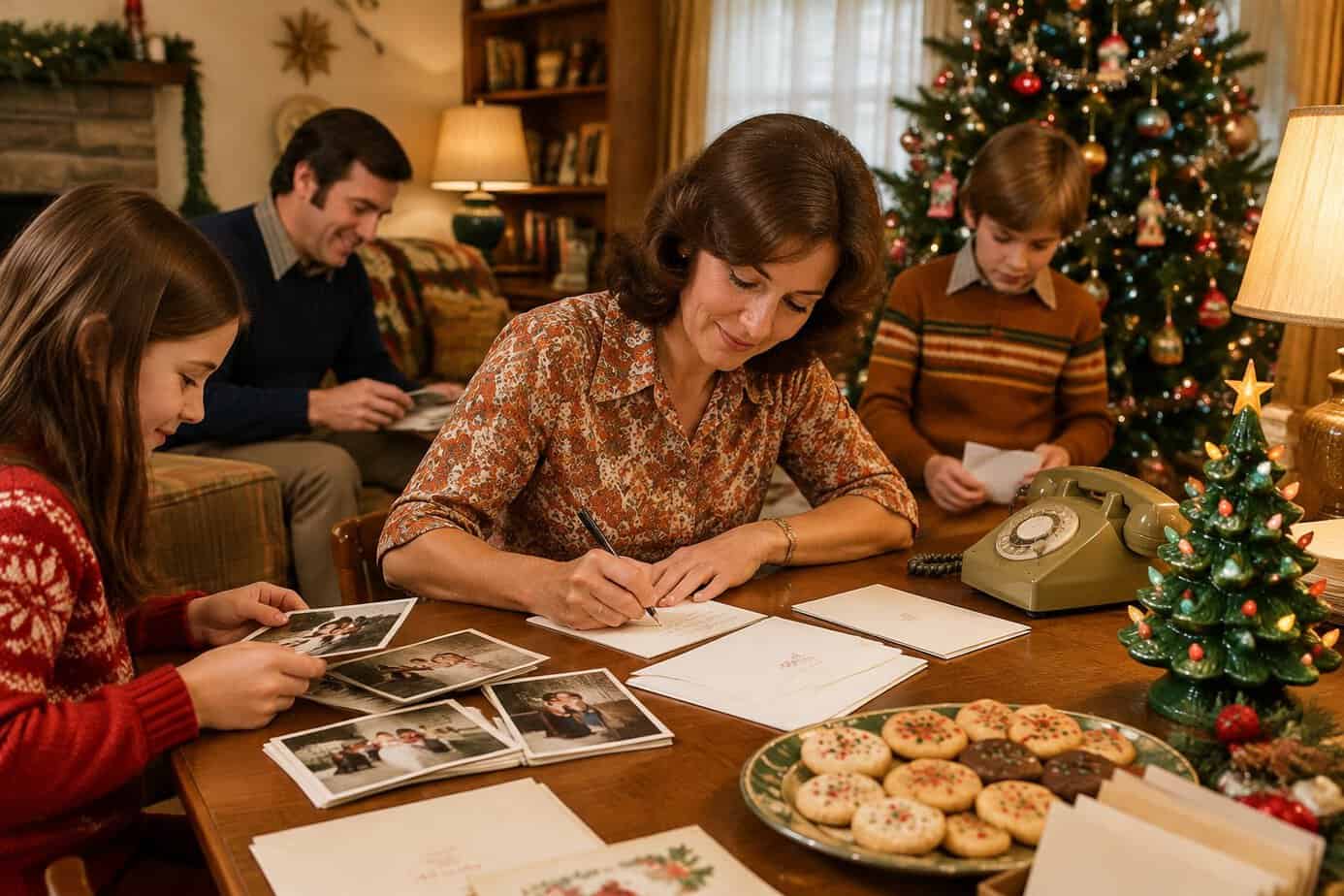
You probably started your Christmas letter sometime in early December, sitting at the kitchen table with your typewriter after the kids were in bed. It was your chance to sum up the whole year for relatives and old friends you did not get to see often. Births, moves, new jobs, graduations, even the family vacation to the lake all made the cut.
You likely kept a running list through the year of things worth mentioning, scribbled on a notepad by the phone. Typing it up took real effort, since mistakes meant starting the page over or reaching for the correction fluid. Making enough copies for your whole address book was its own project, often done at the library or a copy shop downtown.
You folded each letter into a card, licked the envelope, and checked your address book twice before mailing them out with the rest of your cards. Getting other families’ letters back felt like catching up over coffee, even from hundreds of miles away.
That stack of letters, saved in a drawer for years, became a quiet record of your family growing up, one Christmas at a time.
15. Hosting the whole extended family for Christmas dinner
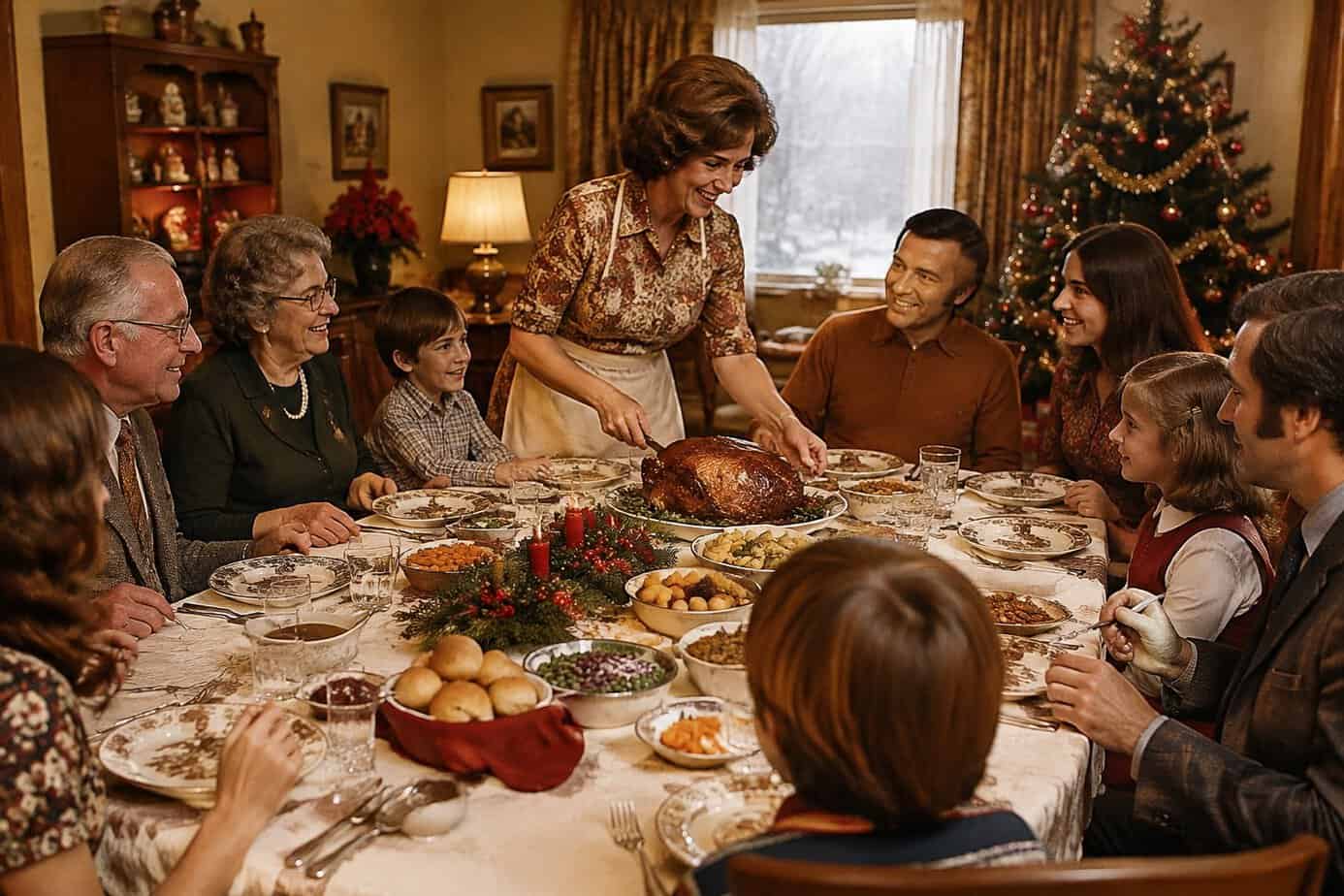
When it was your year to host, you started planning weeks ahead. You counted chairs, borrowed card tables from neighbors, and figured out how many leaves your dining table needed to seat everyone comfortably.
You made lists for who was bringing what, though you still ended up cooking most of the meal yourself. The turkey or ham went in early, and the kitchen stayed busy from morning until the last pie came out.
Your good china only came out for days like this one. You washed it carefully beforehand, since it sat in the cabinet the rest of the year collecting dust.
Getting everyone fed at the same time took real coordination. Kids ate at a separate table, usually squeezed into the kitchen or a corner of the dining room, while the adults had the main table.
Conversations overlapped from room to room, and someone always ended up washing dishes while others visited in the living room. By the time everyone left, you were worn out but satisfied, knowing you had pulled off another family Christmas under your own roof.
16. Homemade cookies packed into tins for neighbors
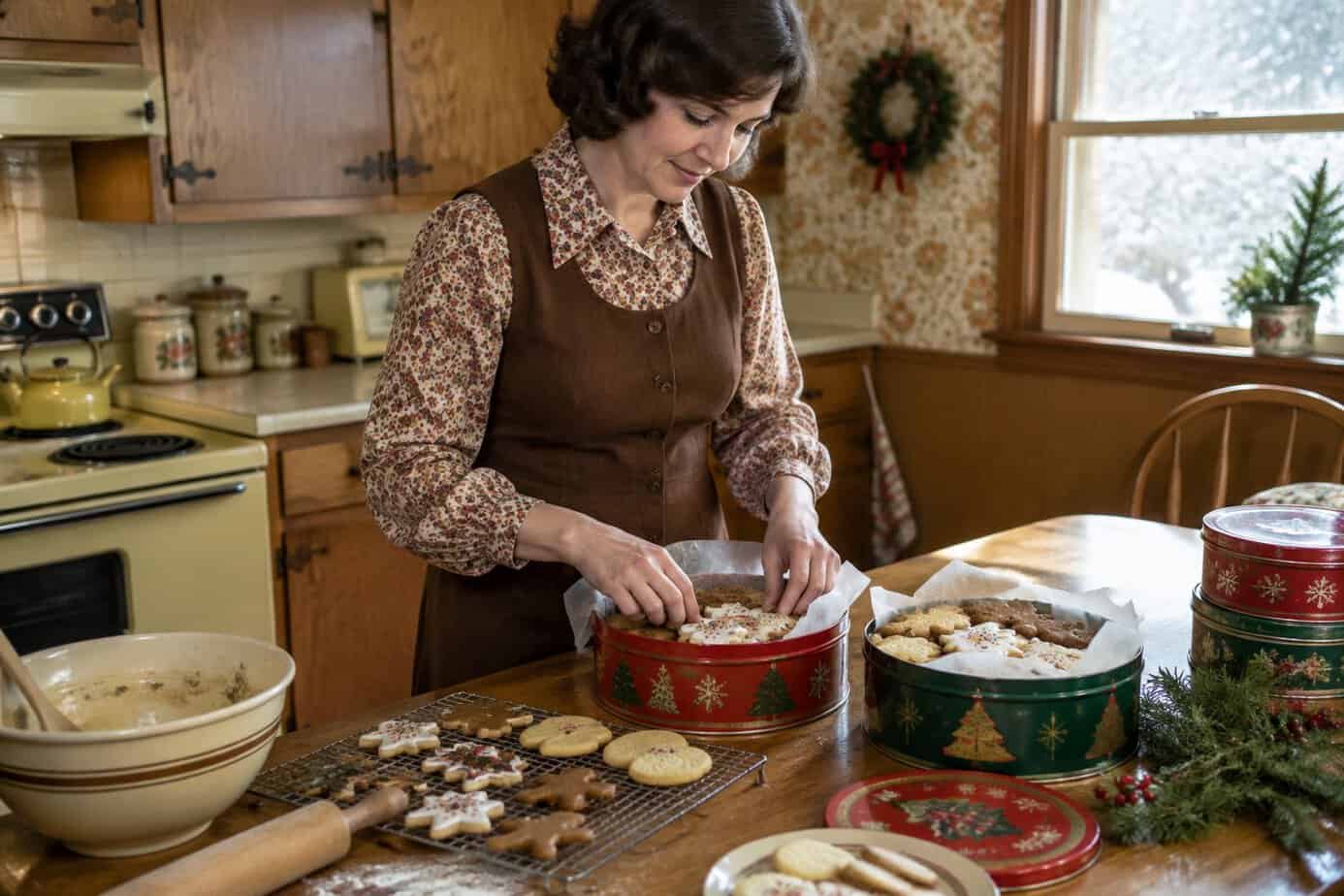
You probably started baking weeks before Christmas, lining up ingredients and clearing counter space for an operation that took real planning. Sugar cookies, spritz, thumbprints with jam centers, maybe a batch of fudge if you had the patience for the candy thermometer. The kitchen smelled like that for most of December.
Tins mattered as much as the cookies themselves. You saved popcorn tins and cookie tins year to year, washing them out each January and tucking them away for the next season. Wax paper went between the layers so nothing stuck together or got crushed on the walk next door.
Making the list of who got a tin was its own small task. Neighbors on both sides, the mail carrier, the teacher, maybe the widow down the street who lived alone. You kept track in your head of who gave you something the year before, though that was never really the point.
Delivering them meant actual conversations on porches and in kitchens, not a quick wave from a car. It was slower, but it meant something. That kind of baking and giving has mostly faded as fewer people bake from scratch or know their neighbors well enough to knock.
17. Fudge and brittle made for holiday visits
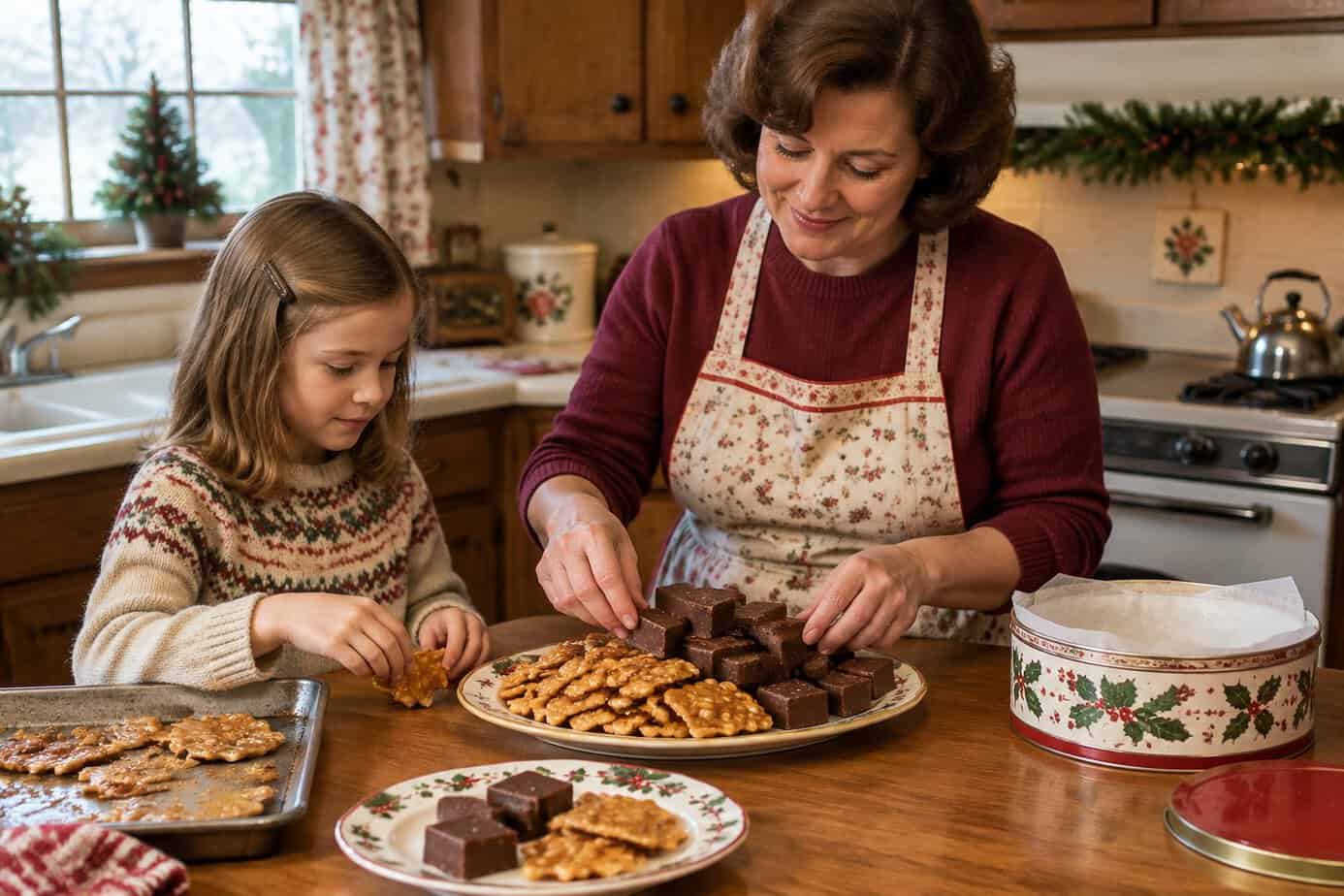
You pulled out the candy thermometer every December, usually the week before Christmas. Fudge and peanut brittle were not something you bought. You made them in your own kitchen, standing over the stove and watching the mixture closely so it would not burn.
The fudge took real attention. You had to hit the right temperature and then beat it just long enough before it set up properly in the pan. If it turned out grainy instead of smooth, you knew you had rushed a step somewhere.
Peanut brittle meant a hot pan, careful timing, and pouring it thin before it hardened. You usually made both in batches big enough to fill several tins, because you needed enough for your own family and for anyone who stopped by.
Visitors never left empty handed. A neighbor dropping off a gift, a relative passing through, or someone from church would go home with a small plate or a few pieces wrapped in wax paper. It was simply what you did for people during the season.
18. Fruitcake wrapped and saved for guests
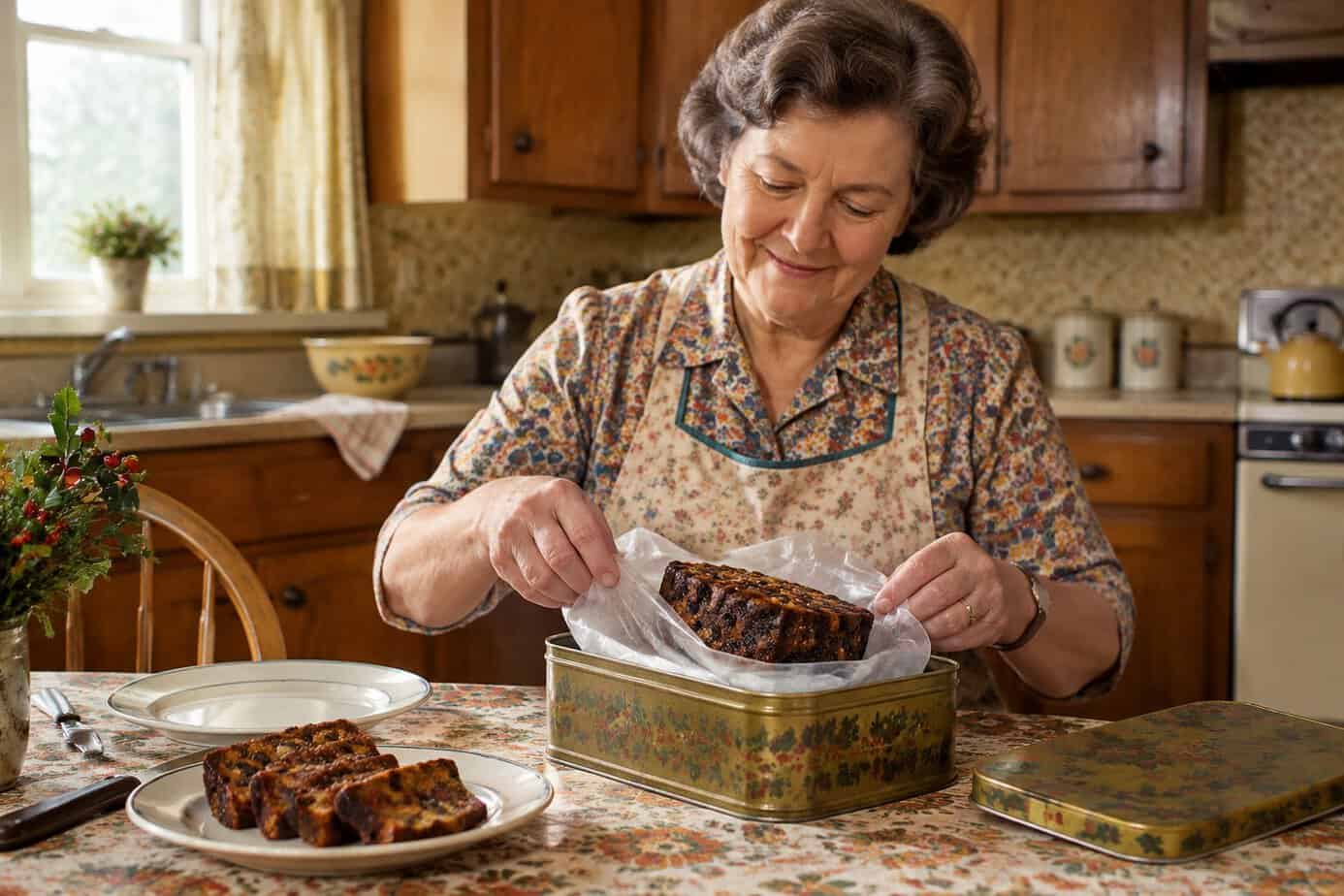
You probably made that fruitcake sometime in early December, long before anyone would actually eat it. Maybe it was your grandmother’s recipe, maybe one from a magazine, but you wrapped it carefully in cheesecloth soaked with a little rum or brandy.
That wrapped loaf went into a tin or sealed container, tucked away in a cool spot in the kitchen or basement. Every so often you’d check on it, maybe add a bit more liquor to keep it moist. It felt like tending to something, a small project that needed your attention through the weeks leading up to Christmas.
The fruitcake wasn’t really for your family to devour. It was there for when guests dropped by, something you could slice and offer with coffee when the doorbell rang unexpectedly. Having it on hand meant you were ready for company at a moment’s notice.
You took pride in that readiness. A woman who kept a fruitcake wrapped and waiting was a woman prepared for the holiday season, whatever it brought to her door.
19. A cookie-baking day with children and cousins
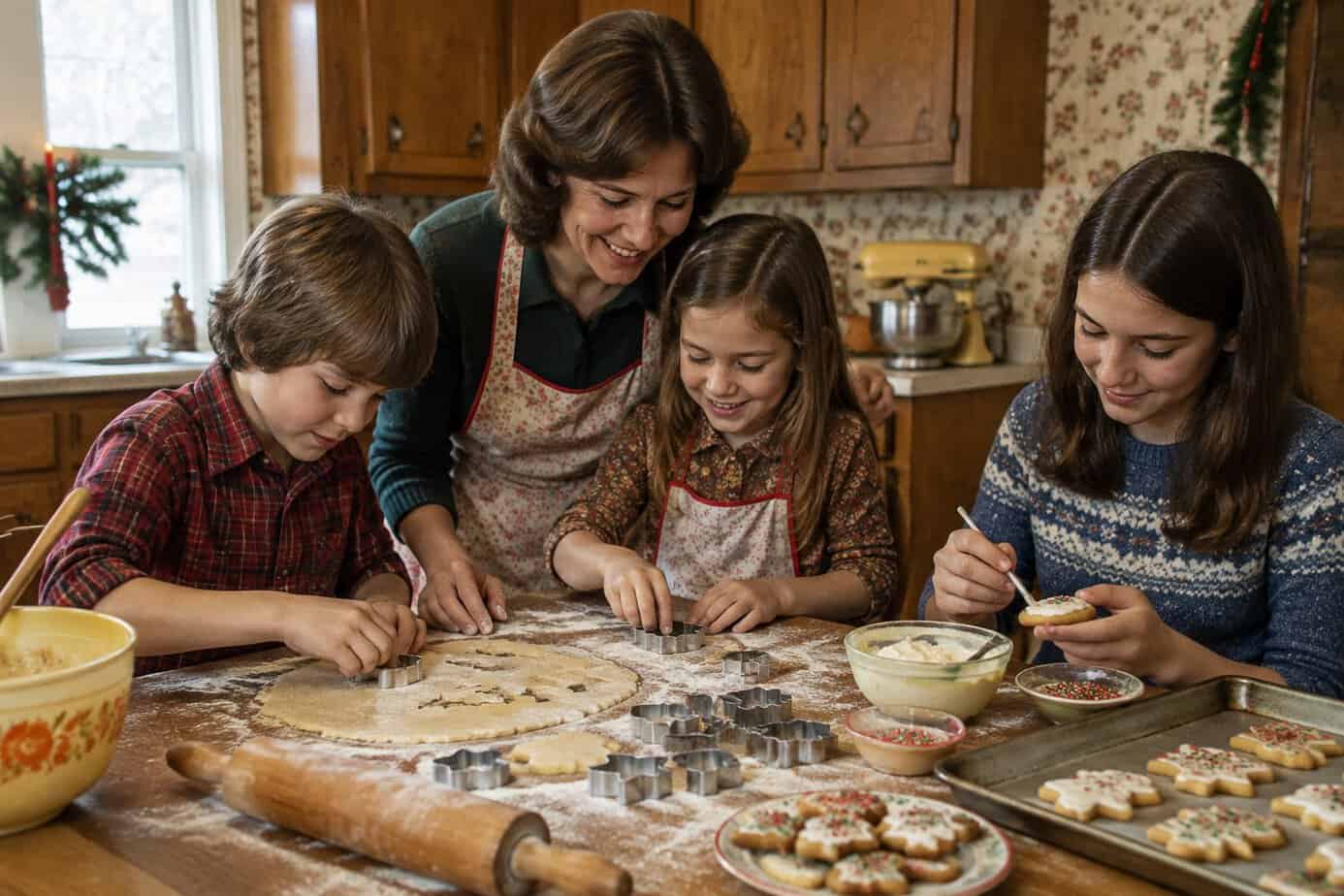
You probably set aside one full day, usually a Saturday, just for baking with the kids. The cousins would come over too, so your kitchen ended up full of flour, small hands, and a fair amount of noise.
You had your dough made ahead of time, chilled and ready, because you knew the day would be chaotic enough without that extra step. Sugar cookies were likely the main event, cut into stars, trees, and bells with the same metal cutters you used every year.
Letting the kids decorate was part of the fun, even though the frosting usually ended up everywhere except where it belonged. You didn’t mind much. Watching them concentrate so hard on getting the sprinkles just right was worth the mess.
Somebody’s mother or aunt usually helped keep things organized, since one adult alone couldn’t manage that many children near a hot oven. You passed out warm cookies straight off the pan as a reward for patience, and nobody ever complained about getting the broken ones.
By the end of the day your kitchen was a disaster, but you had trays of cookies and a houseful of tired, happy kids to show for it.
20. An orange and a handful of nuts in the toe of every stocking
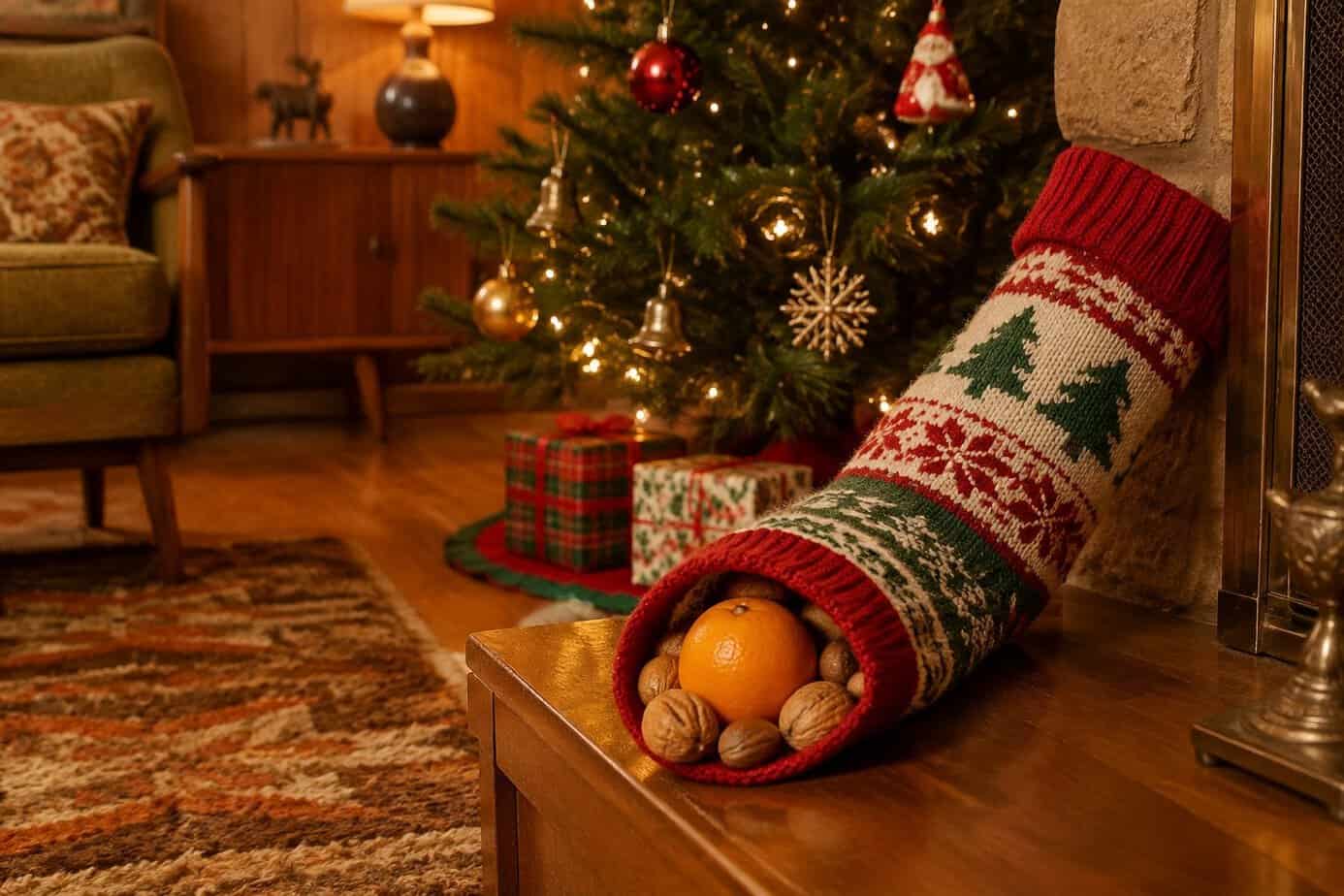
You made sure every stocking had weight in the toe before you added anything else. That meant a real orange, pushed down firm, and a handful of walnuts or mixed nuts still in their shells. It wasn’t fancy, but it felt like the right way to start things off.
You remembered your own mother doing the same thing, so you never questioned it. The orange was just part of Christmas morning, as familiar as the tree lights or the smell of coffee brewing. You bought a bag of oranges and a bag of nuts at the grocery store without giving it much thought.
Filling those stockings late at night was one of your quiet jobs. You liked the way the orange rounded out the bottom and the nuts rattled a little when the kids picked the stockings up. It gave the whole thing some substance before the smaller toys and candy went in on top.
Nobody in your house ever asked why there was fruit in with the toys. It was just how a stocking was supposed to start, and you kept doing it every single year.
21. Stockings sewn from felt or old fabric
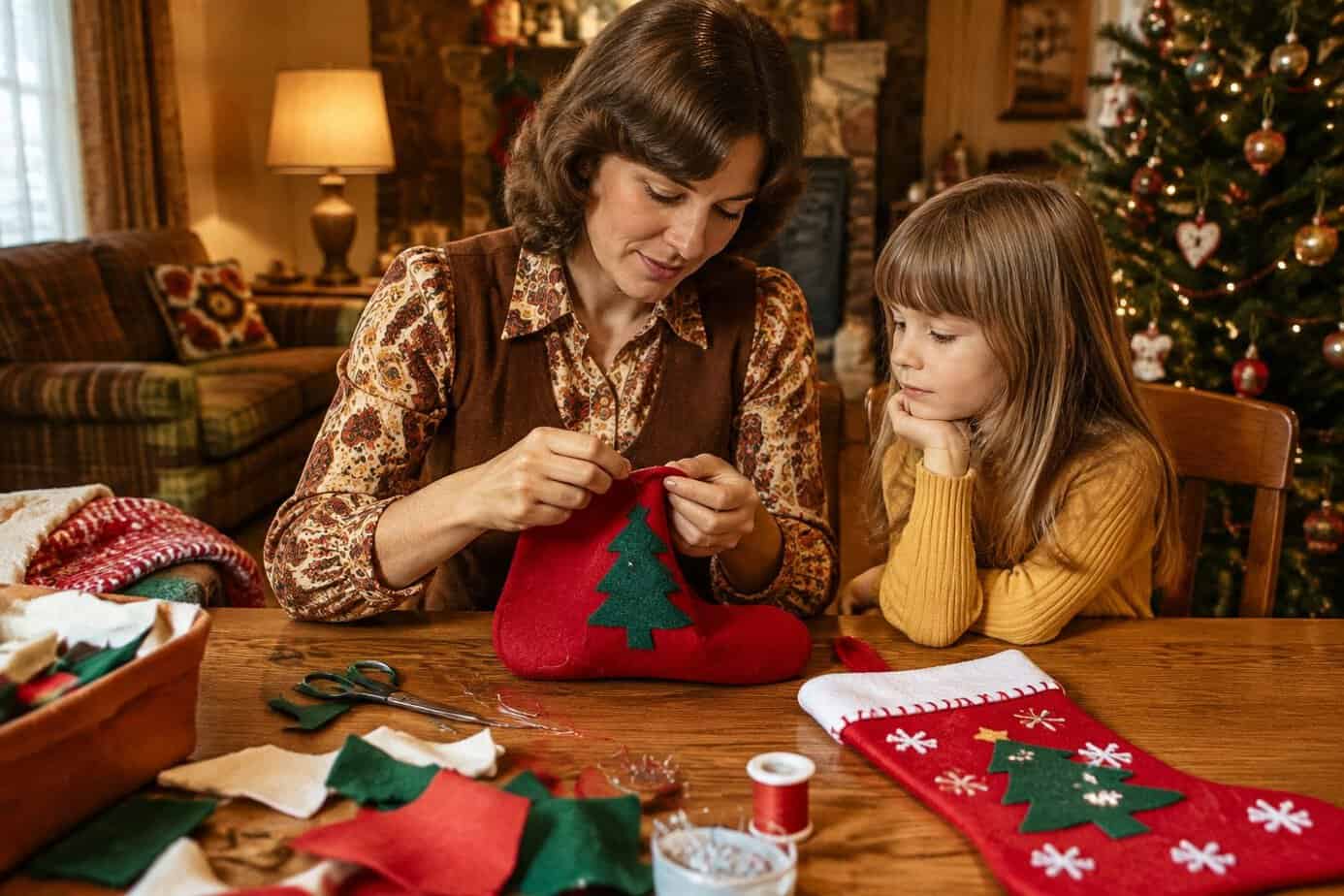
You probably made at least one stocking by hand during those years, cutting felt pieces at the kitchen table after the kids went to bed. Store-bought stockings existed, but they felt impersonal compared to something you stitched yourself with a name spelled out in glitter glue or sequins.
You likely kept a stash of felt scraps in a sewing basket, ready for whenever a new baby arrived or a stocking wore thin. Old fabric got a second life this way too, maybe a piece of a worn-out dress or a Christmas-colored remnant from another project.
Sewing the stockings was not fast work. You cut two matching pieces, stitched the edges, and added a loop for hanging, often by hand if the sewing machine was already put away for the night.
Each one looked a little different, which made them feel personal rather than mass-produced. You hung them in birth order along the mantel, and seeing them lined up felt like a quiet record of your family growing year by year.
22. Circling gifts in the Sears Wish Book catalog
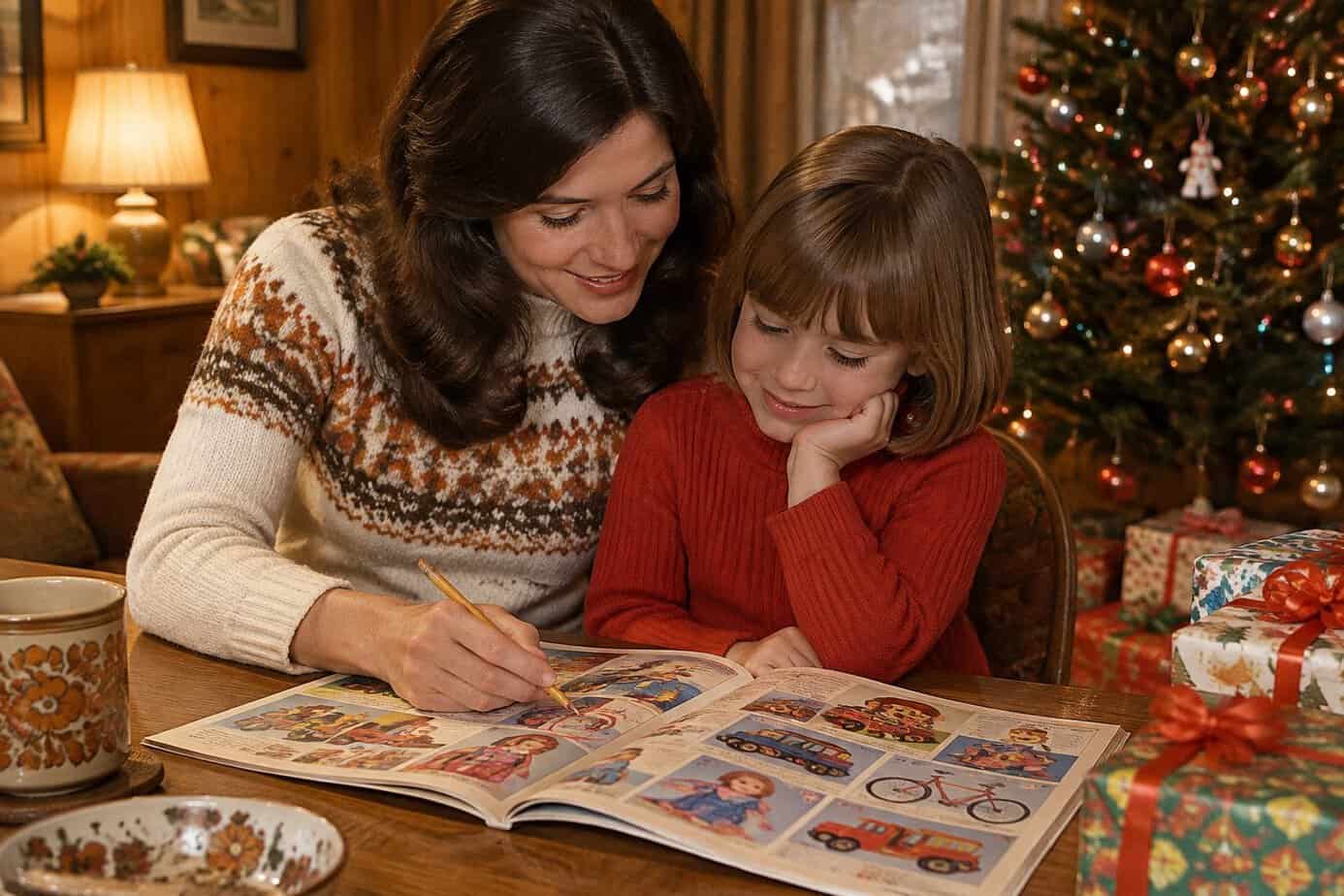
You remember when the Sears Wish Book arrived in the mail, usually sometime in the fall. You set it out on the coffee table or kitchen counter, and it stayed there for weeks, getting softer at the edges every time someone picked it up.
As a mom, you used that catalog as a planning tool more than anything else. You went through the pages with a pencil, noting prices next to the toys your kids pointed to, trying to figure out what fit the budget that year.
You learned to read between the lines of what your children circled. Sometimes they marked ten things on one page, and you quietly understood that meant they had no real favorite yet. Other times, one item got circled so hard the pencil nearly tore through the paper, and you knew exactly what was going under the tree.
You kept the catalog handy for comparing prices before you made a trip to the store. It helped you budget gift by gift, especially when you were stretching a modest paycheck across several children. Looking back, that catalog was as much a part of your Christmas planning as your shopping list or your grocery budget.
23. Knitted scarves and mittens given as presents
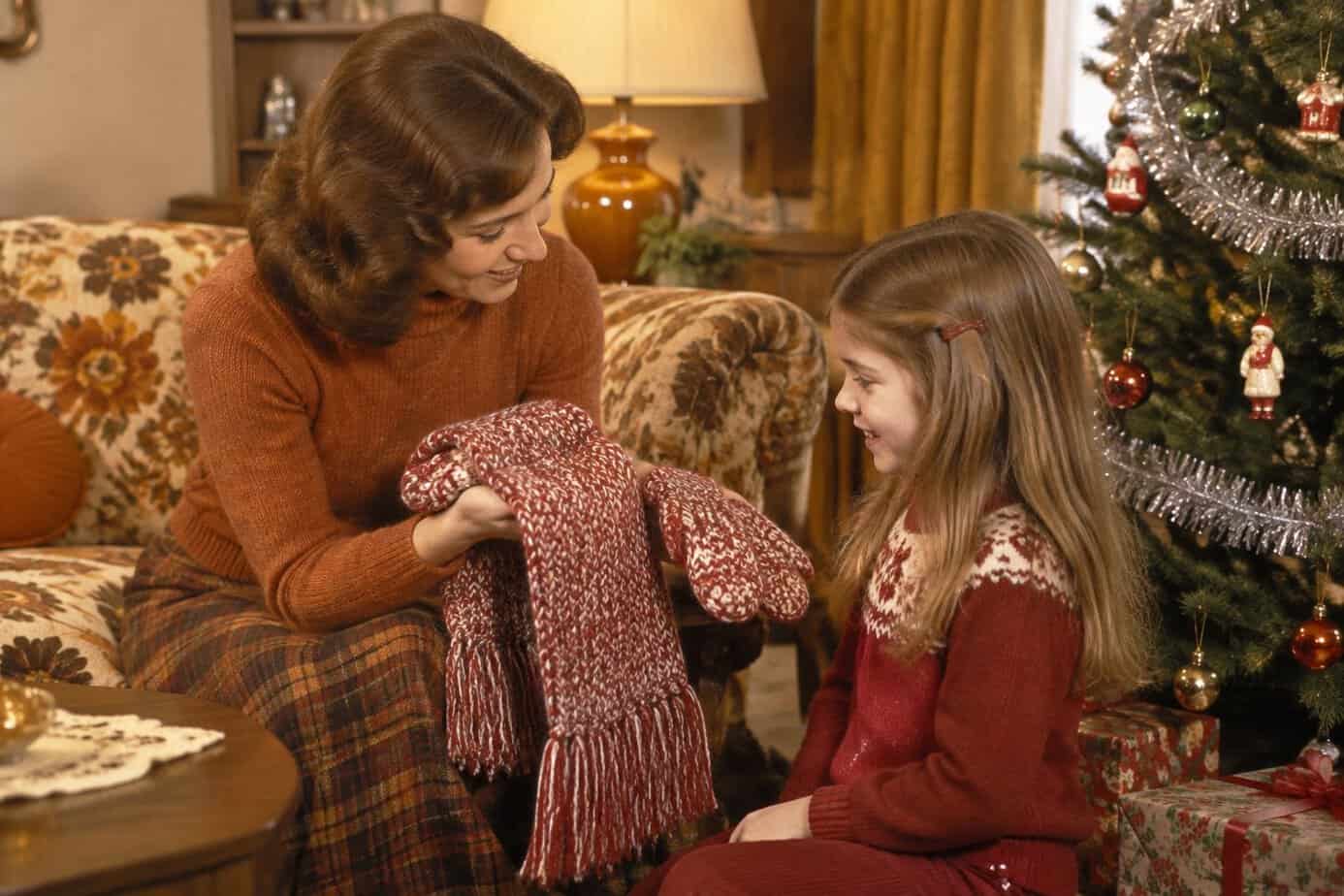
You probably spent a good part of October and November with knitting needles in hand, working through skeins of wool while the television played in the background. Scarves and mittens were practical gifts, and you knew exactly who needed a new pair that winter. Making them yourself meant you could pick colors you knew each person liked, rather than guessing at a store.
You likely kept a basket by your chair with half-finished projects, picking up a few rows whenever you had a spare moment between cooking, laundry, and getting the kids to bed. Some years you made matching sets for your children, maybe even yourself, so the whole family had something cozy for the cold months ahead.
These weren’t fancy or elaborate gifts, but they carried weight because of the time put into them. You knew your own stitches, your own mistakes hidden in the pattern, and that mattered more than anything bought in a store.
Giving something handmade felt different from wrapping up a purchased item. It said you had thought about that person for weeks, not just that afternoon at the shopping center.
24. Gift tags cut from last year’s cards
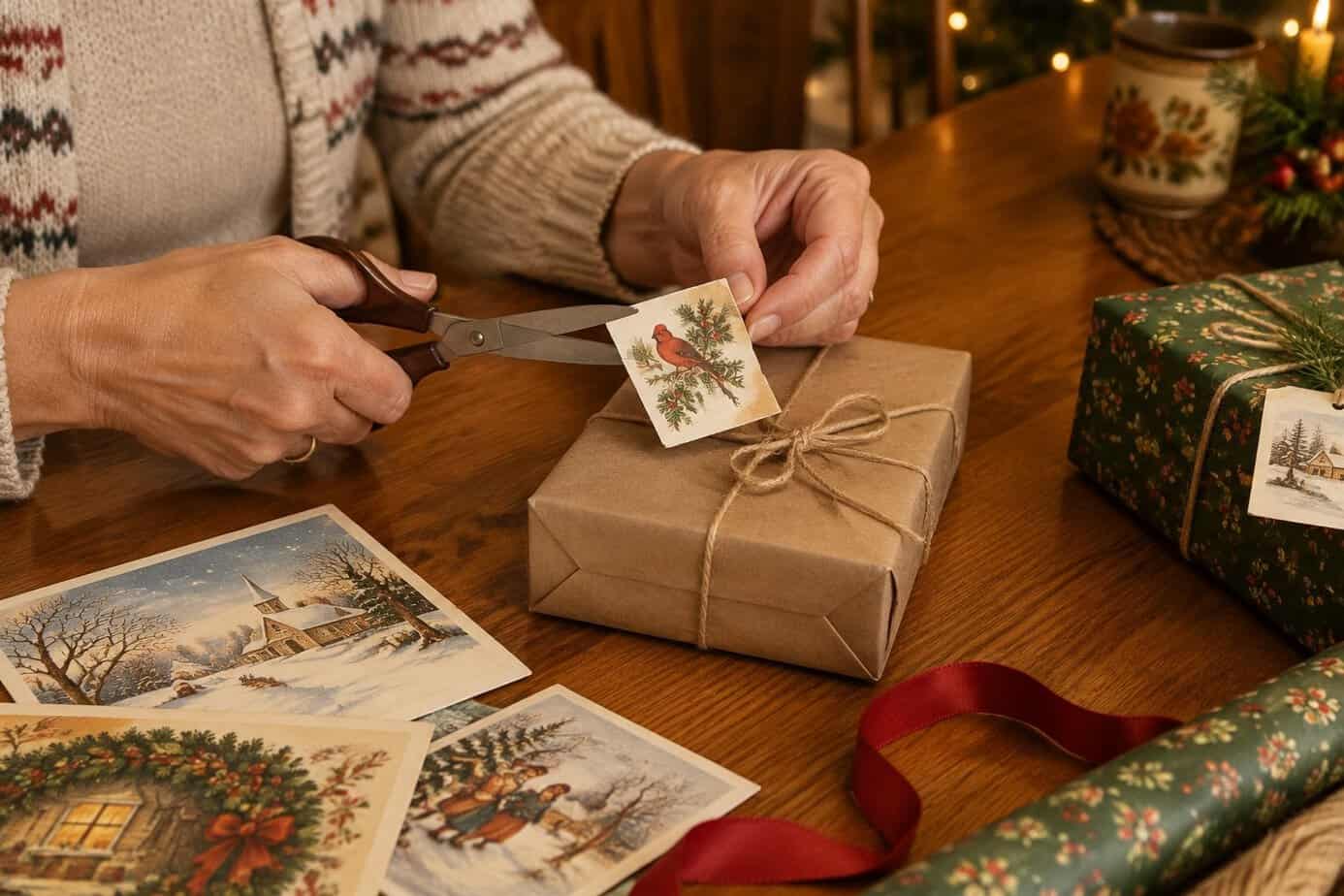
You kept a shoebox tucked in the hall closet, and into it went every Christmas card that came through your mailbox each December. Once the season wound down, you sat at the kitchen table with a pair of scissors, cutting out the prettiest parts of the fronts.
You looked for images without writing on the back, holly, bells, a snowman, anything with a bit of color and charm. Punching a small hole in the corner, you’d thread a bit of ribbon or string through, and just like that, a new gift tag was born.
It cost nothing but a little time in front of the television after the kids were in bed. You felt proud handing over presents with tags you’d made yourself, knowing nobody else would have one quite like it.
Buying tags at the store felt wasteful when you had a perfectly good box of cards waiting to be reused. Money was tight most years, and stretching a dollar wherever you could just made sense. It also meant your tree skirt was always covered in a cheerful jumble of mismatched, homemade tags that somehow all looked like they belonged together.
25. Wrapping presents in newspaper comics
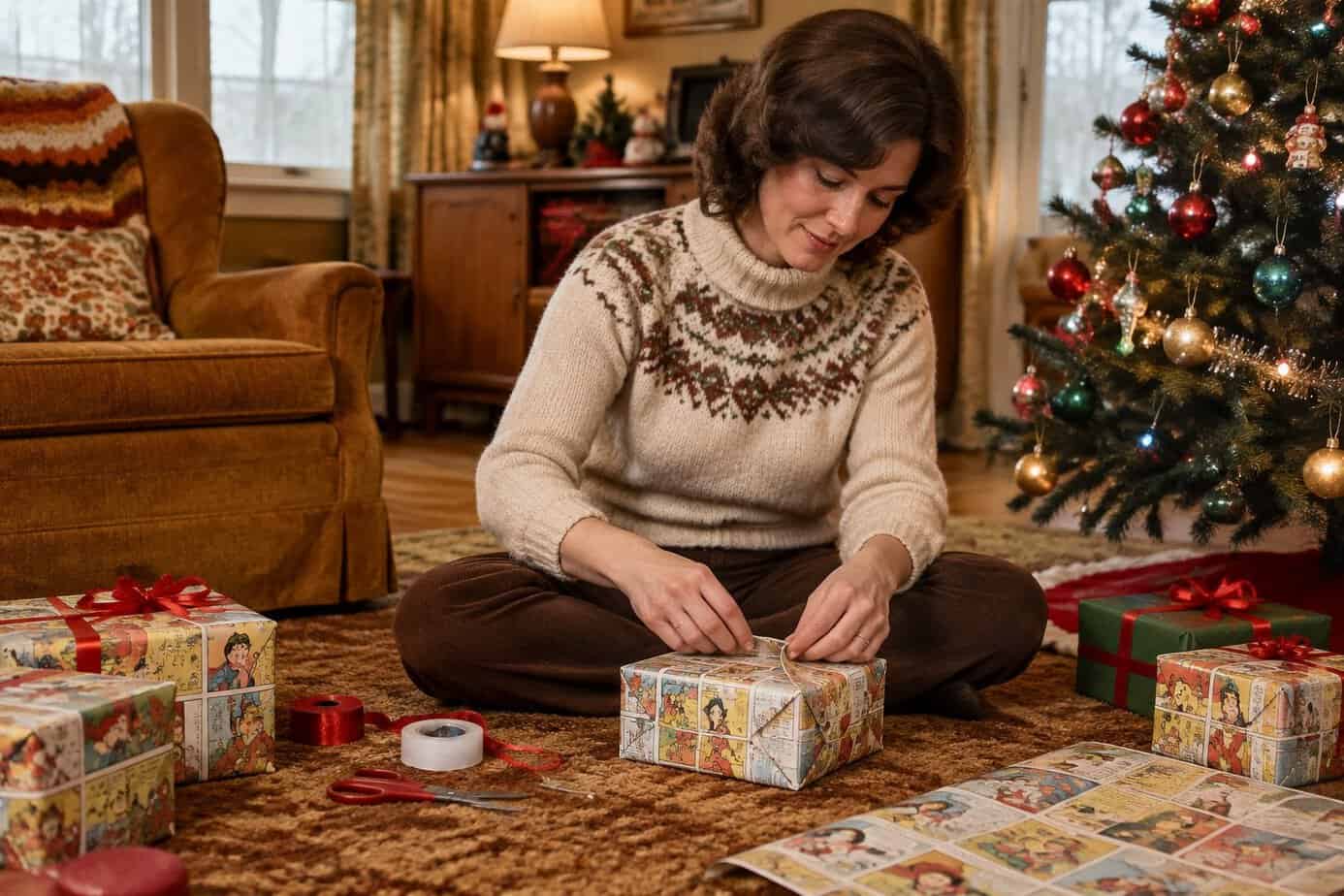
You saved the Sunday comics section for weeks before Christmas, folding each page carefully so it wouldn’t tear. Buying rolls of wrapping paper for every single gift just wasn’t in the budget, so the funny pages became your go-to solution. Peanuts, Blondie, and Beetle Bailey wrapped around shoe boxes and small toys just fine.
You liked how colorful the comics looked once they were taped up under the tree. It gave the presents a cheerful, homemade look that store-bought paper didn’t always have. Your kids got a kick out of spotting their favorite characters peeking out from under a bow.
Tying everything together with leftover ribbon or a bit of yarn finished the look nicely. You never worried about matching paper to a theme because none of it was meant to be fancy. It was simply practical, and it worked.
Looking back, you remember how resourceful you had to be with money those years. Wrapping gifts in newspaper wasn’t a statement, it was just what you did. Somehow it still felt festive, comics and all.
26. Reusable gift boxes saved from one Christmas to the next
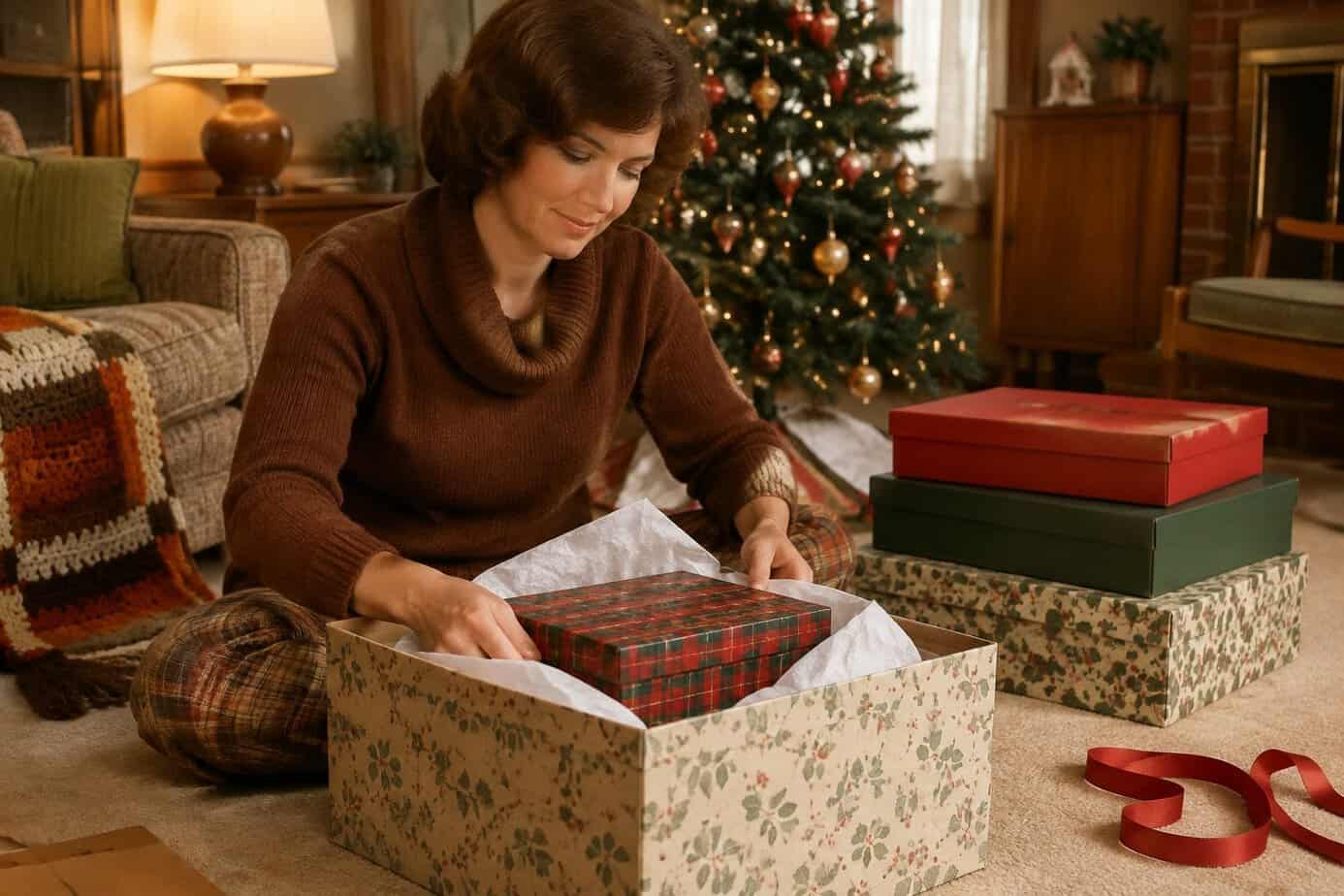
You probably had a closet shelf or an attic corner set aside just for this. Every January, after the wrapping paper was cleared away, you flattened the good boxes and tucked them away for next year.
A sturdy department store box with a nice lid was worth keeping. You knew which ones held up best, and you reused your favorites for years, sometimes patching a corner with tape when it started to wear.
Buying new boxes every season felt wasteful to you, especially when the old ones still worked fine. Money mattered, and this was just one more way you stretched the household budget without anyone feeling shortchanged.
You probably also saved bows, ribbon, and tissue paper right along with the boxes. A bow that wasn’t too crushed could go right back on a package the following year.
Your kids likely noticed the same tin or the same red-and-gold box showing up again and again. It became part of the rhythm of the season, something familiar they could count on.
Looking back, it wasn’t about being frugal for its own sake. It was about making things last, the same way you made most things last in those days.
27. Secret gift-wrapping sessions after the kids went to bed
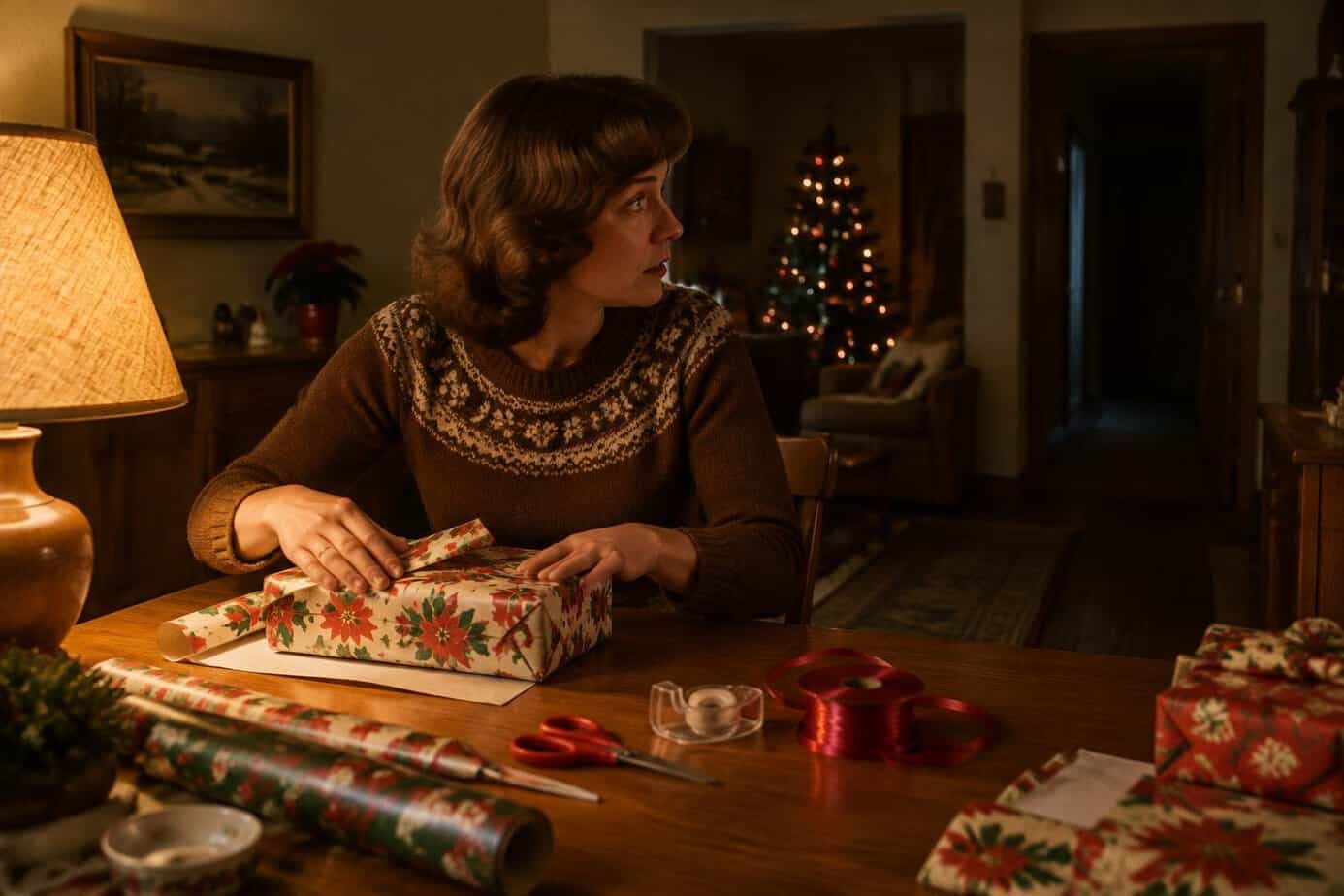
You remember waiting until the house went quiet before you got out the scissors and tape. Once the kids were finally asleep, you pulled out boxes hidden in the back of your closet or behind the winter coats. That was your time to turn plain cardboard into something that looked like it came from a store window.
You probably worked at the kitchen table or on the living room floor, spreading out paper, ribbon, and tags where nobody could stumble onto them. Wrapping took longer back then, since nothing came in gift bags with tissue paper stuffed on top. You creased every fold by hand and used tape sparingly, because you never knew how far that roll needed to stretch.
Some nights you worked alone with the television turned down low for company. Other nights your husband helped, especially with the bigger or trickier gifts. Either way, it felt like your own quiet ritual, something that belonged only to you until Christmas morning gave it away.
28. Putting presents on layaway in the fall
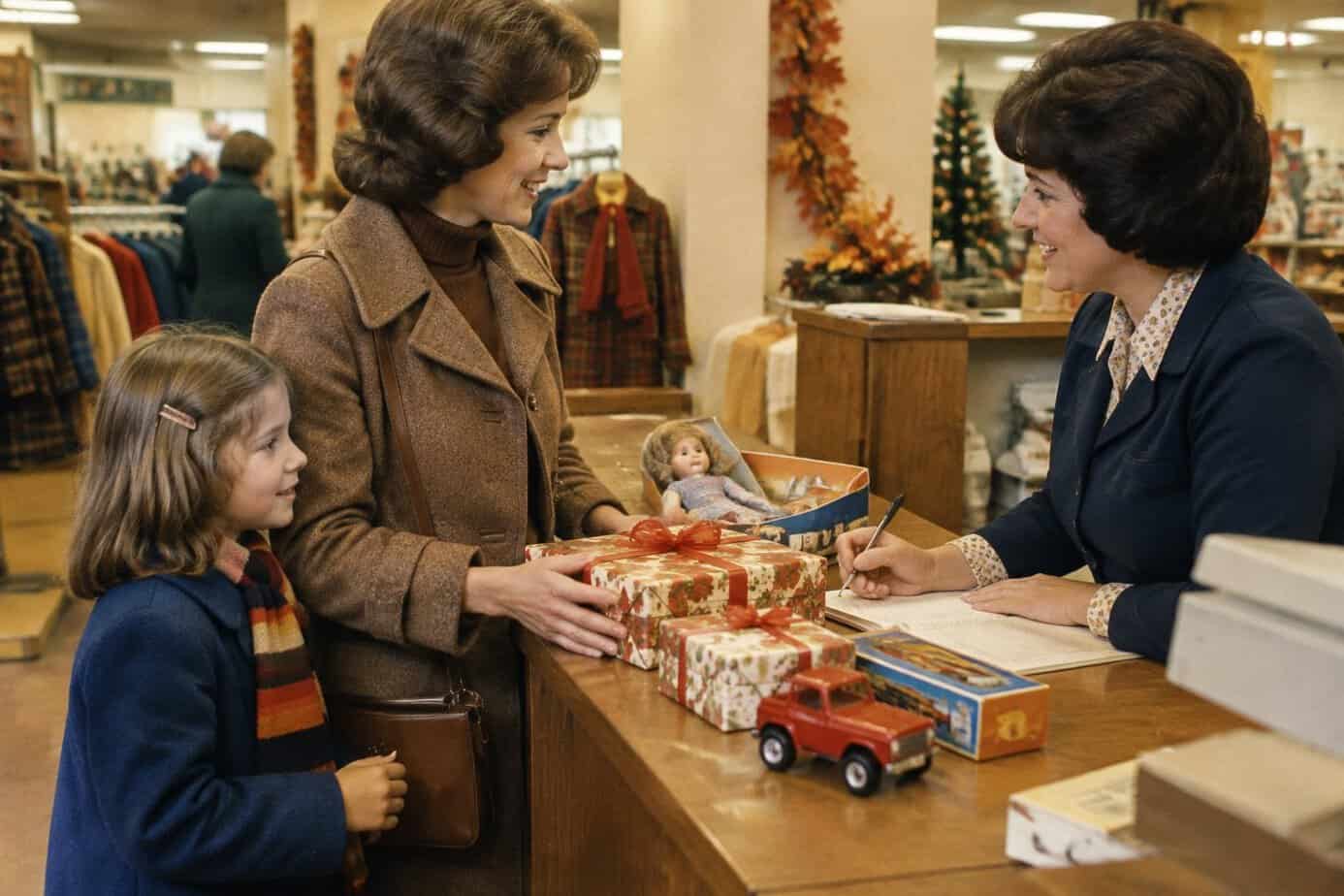
You started thinking about Christmas earlier than anyone in your house realized. By September or October, you were already walking through Kmart or Sears, picking out the bigger gifts your kids had been asking for. A bike, a record player, maybe a nice winter coat. You could not pay for it all at once, so you put it on layaway instead.
The clerk filled out a slip with your name and the item, then tucked it away in a back room until you finished paying. You put down a small deposit, sometimes just a few dollars, and went back every payday to add a little more. It felt good to watch that balance shrink week by week.
There was no interest, no credit card bill waiting in January. Just a quiet kind of patience that most families practiced without complaint. You liked knowing exactly what you owed and that nothing would show up on a statement you had forgotten about.
By December, when you finally paid it off and carried that big box home, it felt like you had earned it. In a way, you had.
29. Holiday shopping trips to downtown department stores
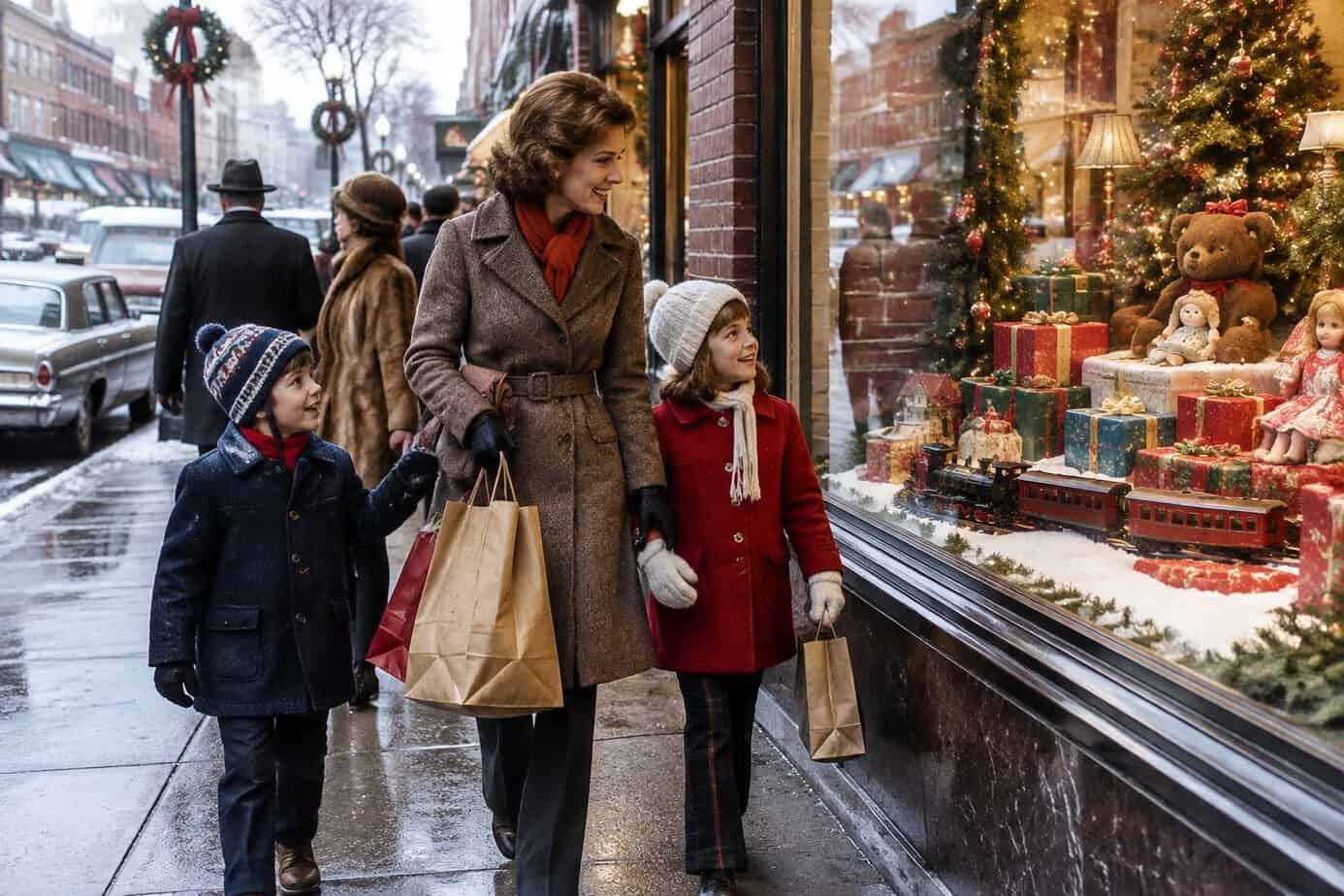
You planned that trip downtown for weeks. The kids got their coats on, you checked your list twice, and you headed to the stores that anchored the heart of town. Parking was tight and the sidewalks were crowded, but it felt right to be there with everyone else doing the same thing.
The window displays were worth the trip on their own. You’d slow down at each one, pointing out the moving parts to your kids, letting them press their mittens against the cold glass. Those windows took real planning on the store’s part, and you appreciated the work that went into them.
Inside, you moved between counters looking for gifts for grandparents, teachers, and each other. You might stop for lunch at the store’s restaurant or grab a treat at the counter before heading back out. It was a whole afternoon, not a quick errand.
You carried your bags home tired but satisfied, knowing you’d gotten something done and given your family a memory along the way. That kind of trip doesn’t really exist anymore, not the way it did then.
30. A visit to see Santa at the local department store
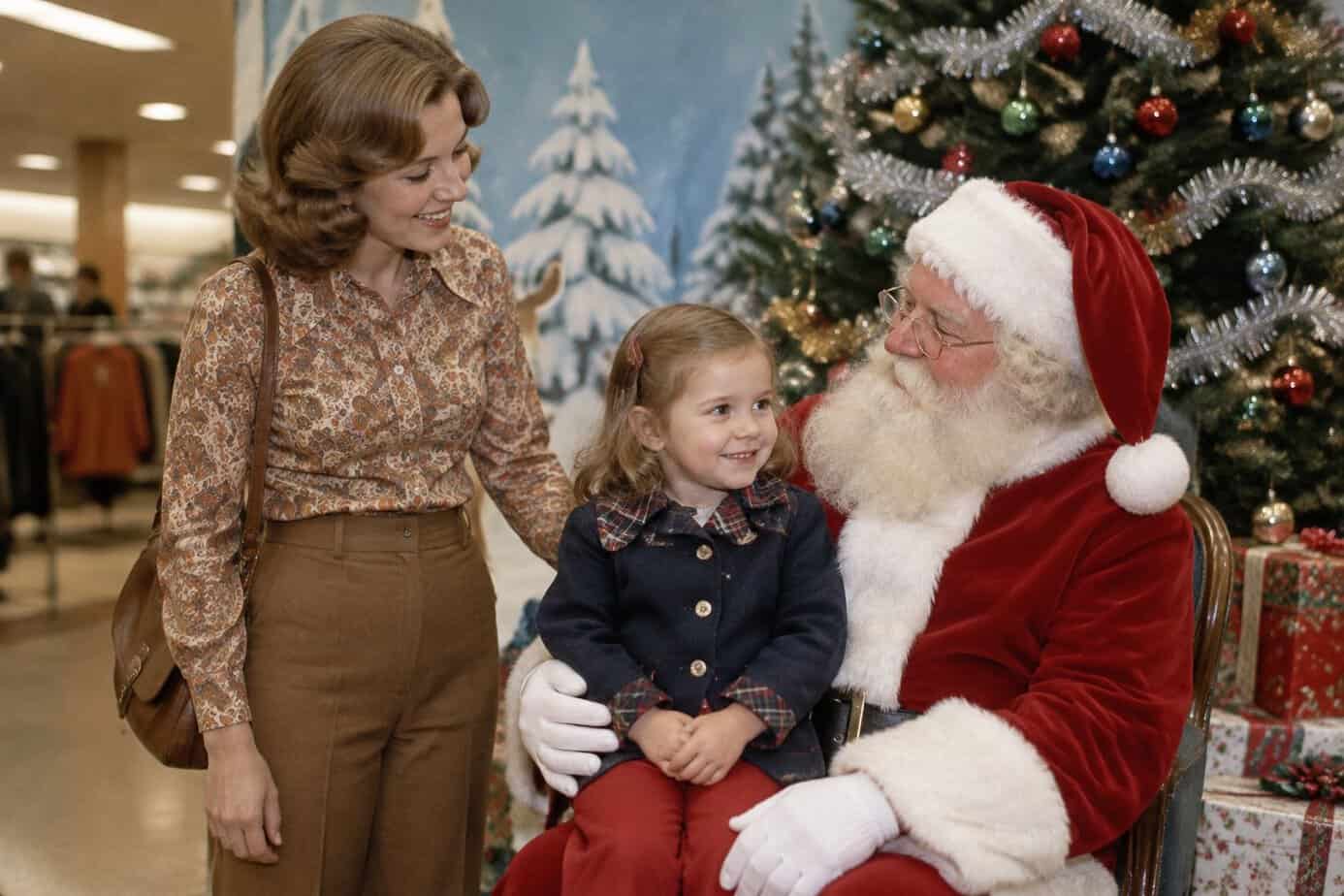
You remember bundling the kids into their coats for the trip downtown, knowing the whole afternoon would revolve around one line. The department store Santa visit was not something you squeezed in quickly. You planned around it, picking a time when the crowds might be thinner.
Once there, you waited with the other mothers, watching your children grow more excited as they inched closer to the front. You had probably already coached them on what to say, or quietly hoped they would not ask for anything too outrageous.
Getting the photo mattered to you. You wanted proof of the moment, something to tuck into that year’s Christmas card or set on the mantel. The store usually had a photographer set up right there, and you paid for a small print before you left.
Afterward, you likely walked through the toy department together, letting the visit stretch into a bigger outing. It gave you a reason to linger, to look at decorations, and to feel like the season had truly begun for your family.
31. Sewing shepherd and angel costumes for the church Christmas pageant
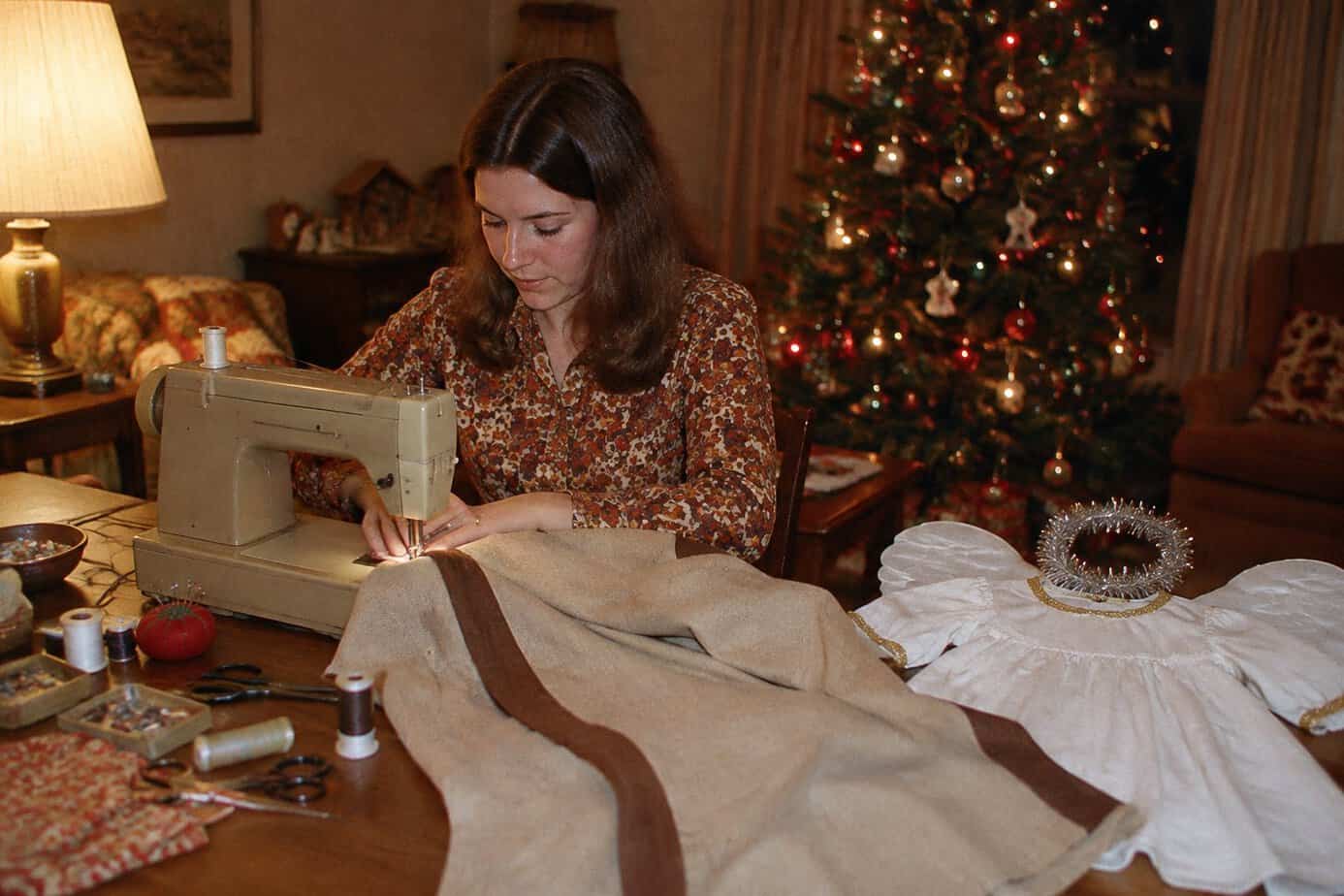
Every November, the pattern envelopes came out, and you could count on at least one evening at the sewing machine before the pageant. The costumes never needed to be fancy. A shepherd just needed a simple robe, a length of fabric for a headpiece, and a rope belt, while an angel needed something white and flowing with a bit of tinsel or ribbon trim.
You probably used whatever fabric you had on hand, maybe an old sheet or some leftover material from another project. Gold garland became a halo in about five minutes, and a wire coat hanger could be bent and covered for angel wings if you were feeling ambitious that year.
Other mothers in the church were usually doing the same thing, comparing notes on who needed what size and who had enough safety pins to spare. There was a kind of quiet teamwork to it, even if nobody called it that at the time.
By the night of the pageant, you had a houseful of children in homemade costumes, and somehow it always came together just in time.
What Shaped Christmas at Home in the 1970s
The Planning You Carried in Your Head
Christmas started for you long before December. You kept track of who needed a gift, who sent a card last year and who was bringing what to dinner, and most of it lived on a notepad by the phone or in your own head.
The baking, decorating, shopping and wrapping all had to fit around the cooking, laundry and school runs that never stopped, which is why so many of these traditions happened late at night after the kids were asleep.
Tight Budgets and Close Neighbors
Money was tight in a lot of homes in the 1970s, with high inflation and two oil shocks squeezing family budgets. That’s why layaway, saved gift boxes, homemade presents and tags cut from old cards made so much sense.
Neighbors and church friends filled in the rest. You traded cookie tins over the fence, compared costume notes with other mothers and knew the people on your street well enough to knock on their door with a plate of fudge.
Why These Traditions Faded
More Moms Went to Work
As more women took jobs outside the home through the late 1970s and 1980s, weeks of hands-on holiday work simply didn’t fit anymore. Store-bought cookies, gift bags and pre-lit trees took the place of much of what you once did by hand.
None of that meant families cared less. There were only so many hours in the day, and the easier options were right there on the store shelves.
The Feeling Is Still Worth Keeping
The details changed, but the reasons behind them didn’t. If these Christmases bring back good memories, you might also enjoy these 1970s family traditions that quietly disappeared and the Thanksgiving traditions families quietly stopped doing.
Picking just one or two of these to bring back this year, like a popcorn garland or a tin of homemade fudge for the neighbors, is a lovely way to share a little of your 1970s Christmas with the people you love now.