27 Family Traditions from the 1970s That Quietly Disappeared Over Time: A Look at Lost American Customs
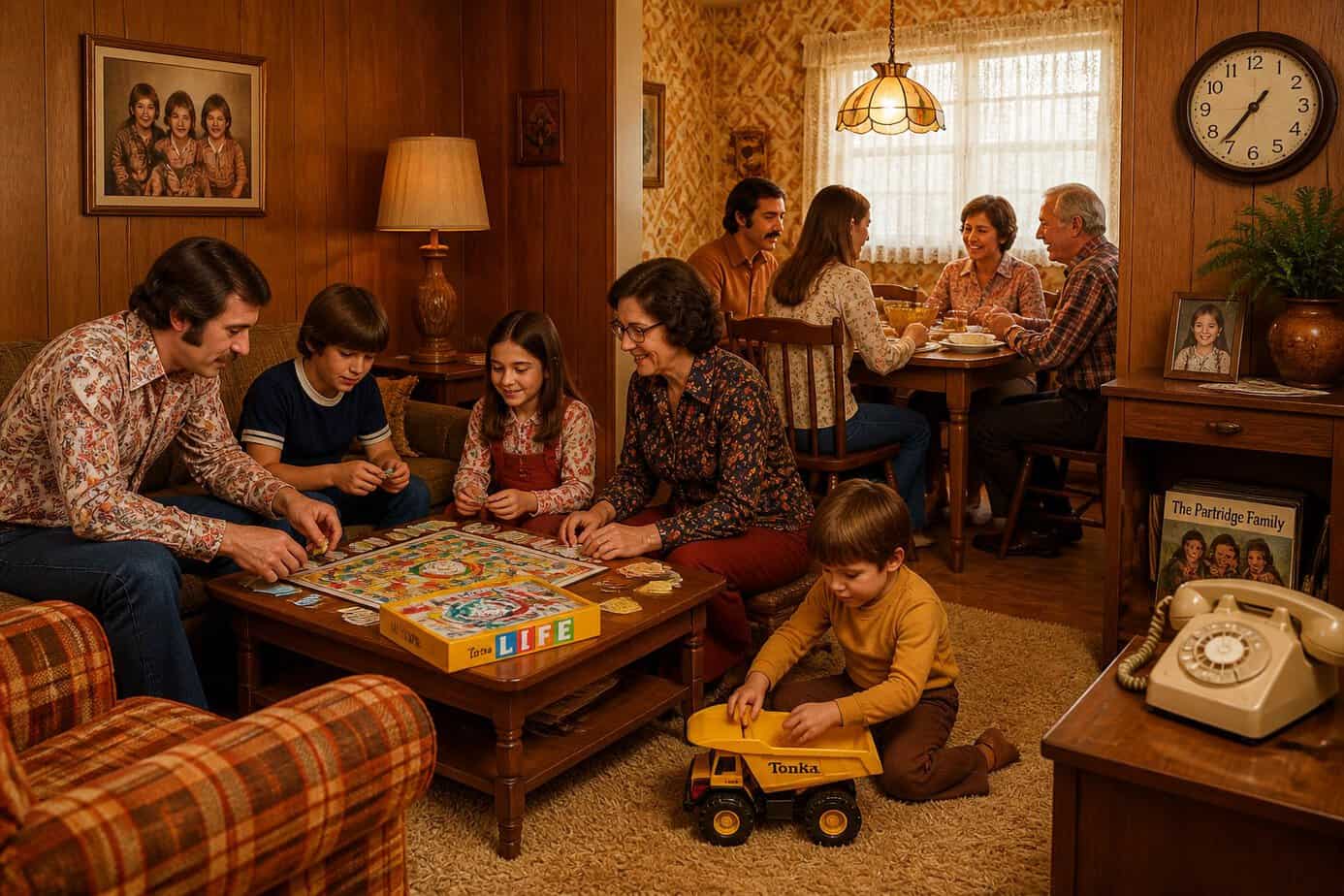
Family life in the 1970s operated under a different set of rhythms and routines than what we experience today. Shared meals, weekend rituals, and neighborhood connections formed the backbone of everyday life. These weren’t extraordinary events but regular practices that quietly shaped how families spent time together.
The traditions that once defined family weekends and weeknights have largely faded from modern life, replaced by digital connectivity and busier schedules.
Many of these practices required no special planning or expense. They emerged naturally from the pace of life before smartphones, streaming services, and the always-on culture that now defines our days.
Understanding what disappeared helps explain how family bonding has fundamentally changed over the past fifty years.
1. Sunday family dinner with meatloaf and green beans
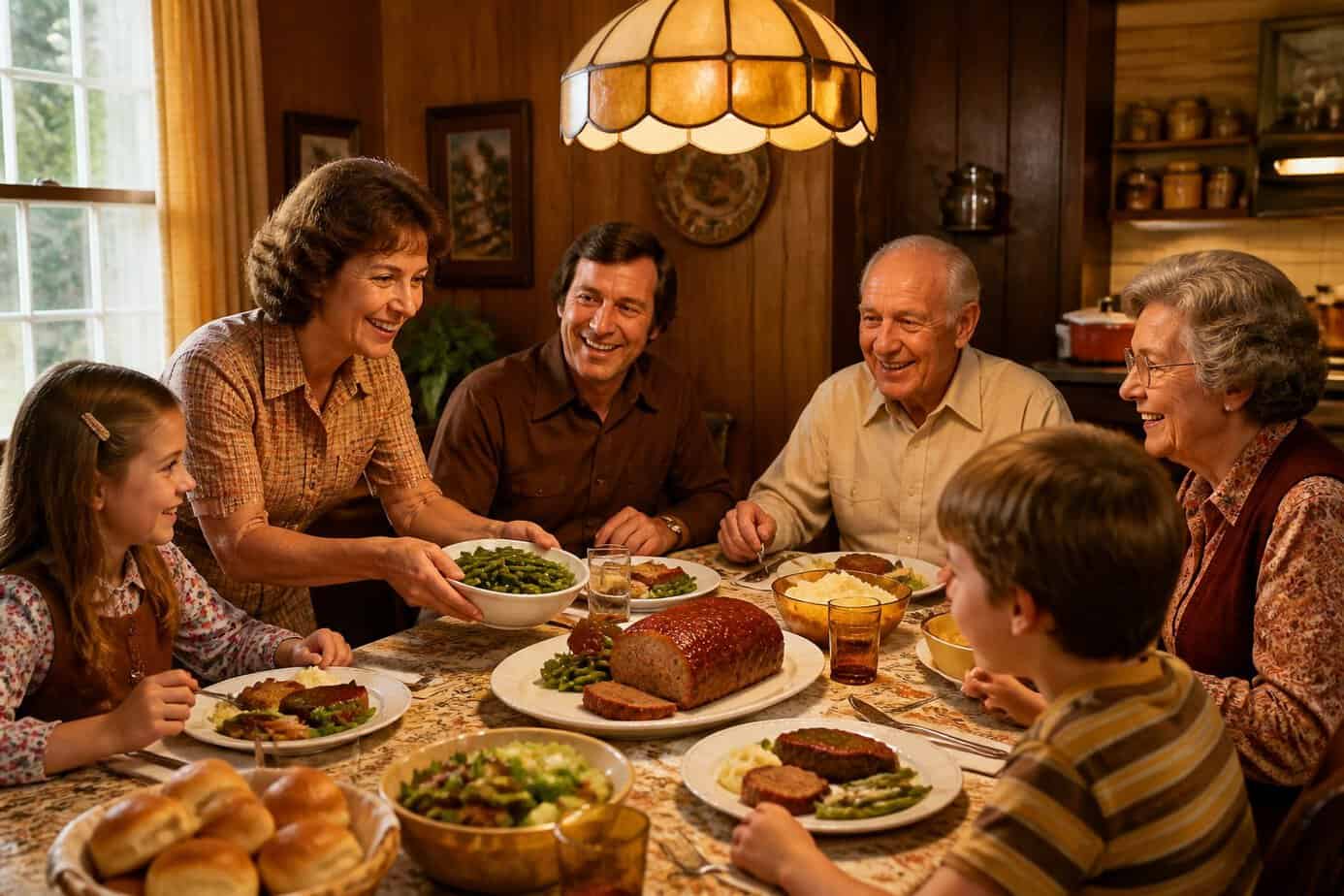
Sunday dinner in the 1970s followed a predictable rhythm that families counted on. Your grandmother likely served meatloaf topped with ketchup glaze, paired with mashed potatoes and green beans as standard fare.
This weekly meal brought multiple generations together around one table. Grandparents, neighbors, and extended family often joined without formal invitation.
The menu rarely changed, and that consistency provided comfort. You knew exactly what to expect when you sat down. Children set the table and helped with preparation, giving them a sense of contribution to the family ritual.
The tradition faded as schedules became more fragmented and convenience replaced routine. What once anchored the week gradually disappeared from most American households.
2. Watching the evening network news together
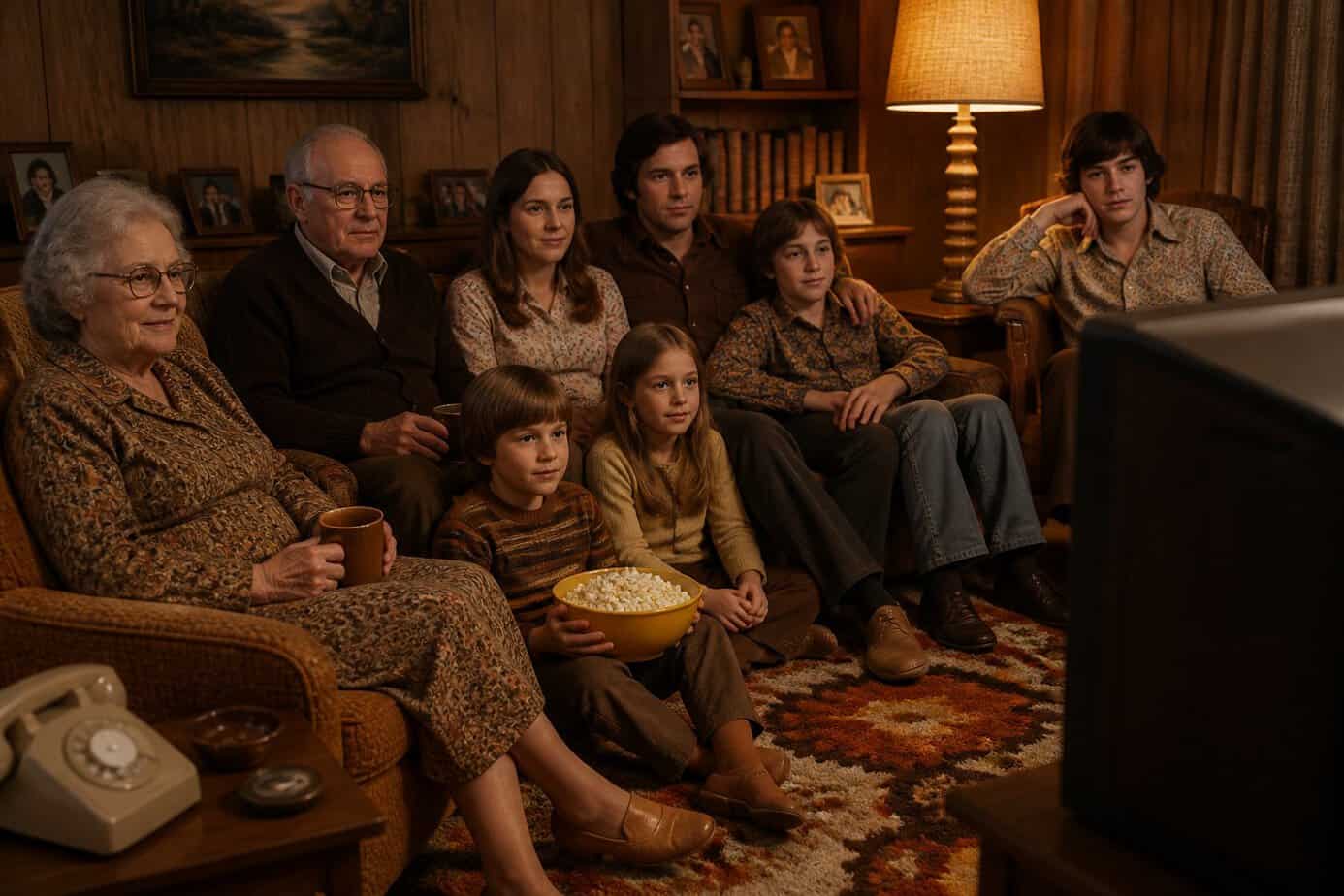
Your family likely gathered around the television at 6:30 PM to watch Walter Cronkite, David Brinkley, or another trusted anchor deliver the day’s events. This wasn’t just about staying informed. It was a shared ritual that structured your evening routine.
With only three major networks available, most American households watched the same programs and heard the same stories. Your parents could discuss the news with neighbors the next day, knowing everyone had seen identical coverage.
The evening news created a common reference point for entire communities. Today’s fragmented media landscape offers endless choices but lacks that unifying experience. Families now consume news individually on their devices, selecting sources that align with their existing views rather than gathering for a single authoritative broadcast.
3. Listening to Top 40 AM radio in the car
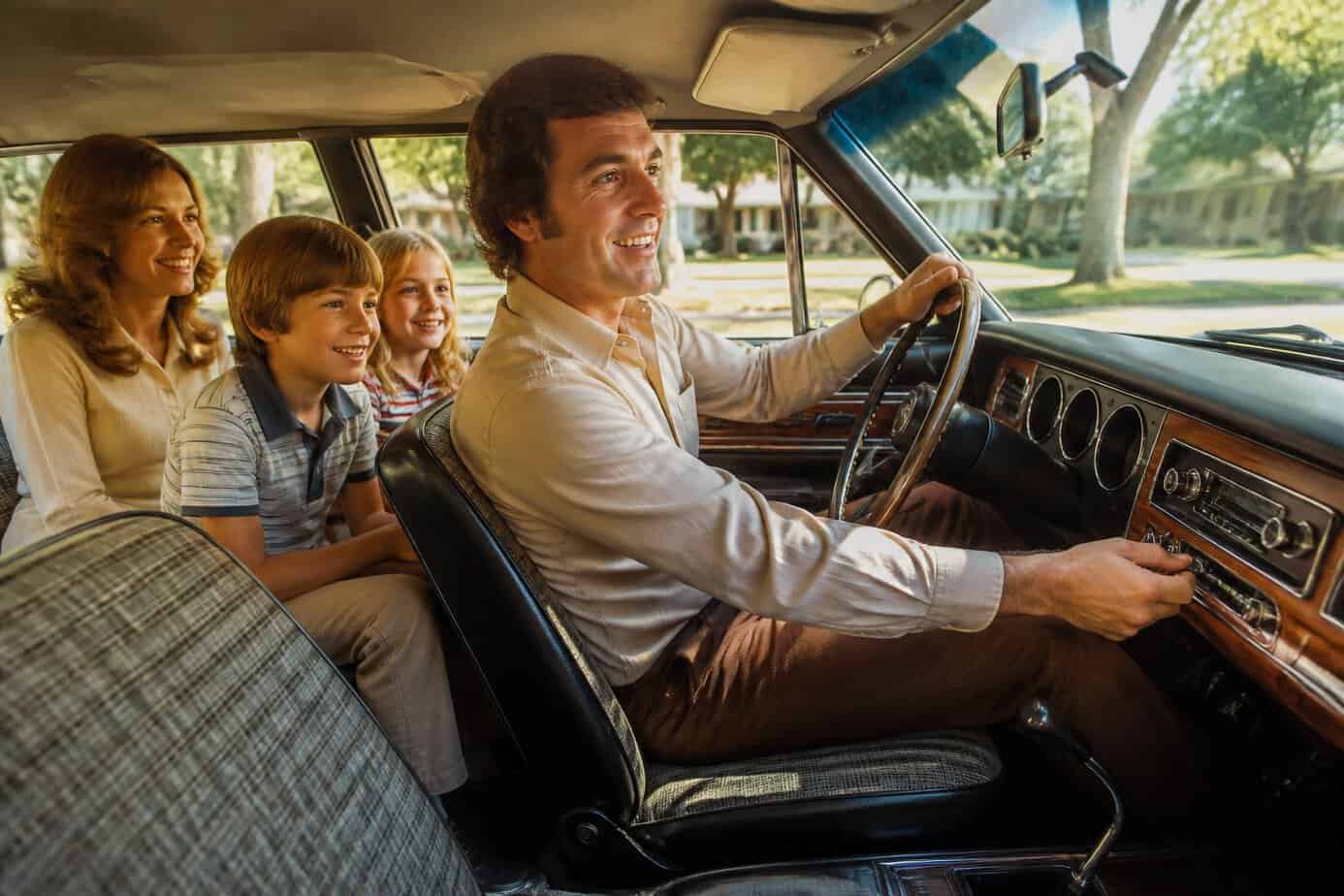
Your family car trips in the 1970s came with a soundtrack you couldn’t control. The radio dial stayed locked on the local AM Top 40 station, and everyone listened to the same mix of music together.
Top 40 radio back then offered remarkable variety. You’d hear rock, country, soul, and pop songs back-to-back on the same station. This created a shared musical experience that crossed genres in ways today’s personalized playlists don’t replicate.
Casey Kasem’s weekly countdown became appointment listening for families on Sunday drives. You planned trips around catching the show, turning the ritual into a national tradition.
The AM signal would fade as you crossed state lines, forcing you to hunt for new stations. This made music selection part of the journey itself, with the radio dial becoming a map of where you were traveling.
4. Making homemade ice cream in a hand-crank churn
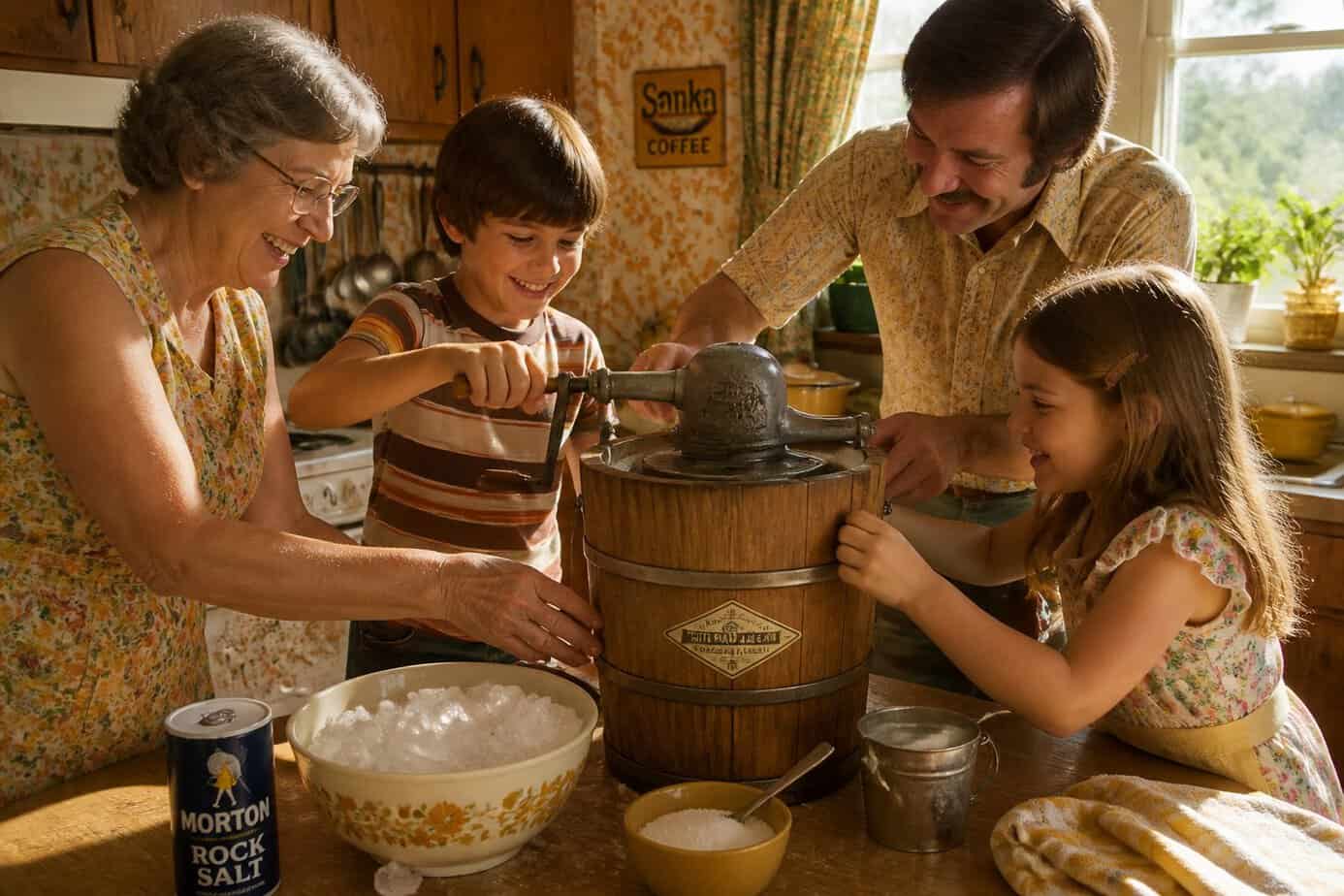
Summer weekends in the 1970s often meant gathering around a hand-crank ice cream maker on the back porch. You took turns cranking the handle while rock salt and ice worked their magic around the metal canister.
The process required patience and effort. Someone had to keep cranking for 20 to 30 minutes until the mixture thickened into creamy ice cream. Kids often competed to see who could crank the longest before their arms got tired.
This tradition created more than just a frozen dessert. It brought your family together for a shared activity that required teamwork and participation from everyone.
Electric ice cream makers eventually replaced the manual churns in most households. The convenience factor won out, and hand-crank models became relics stored in basements and garages.
5. Neighborhood block parties with potluck dishes
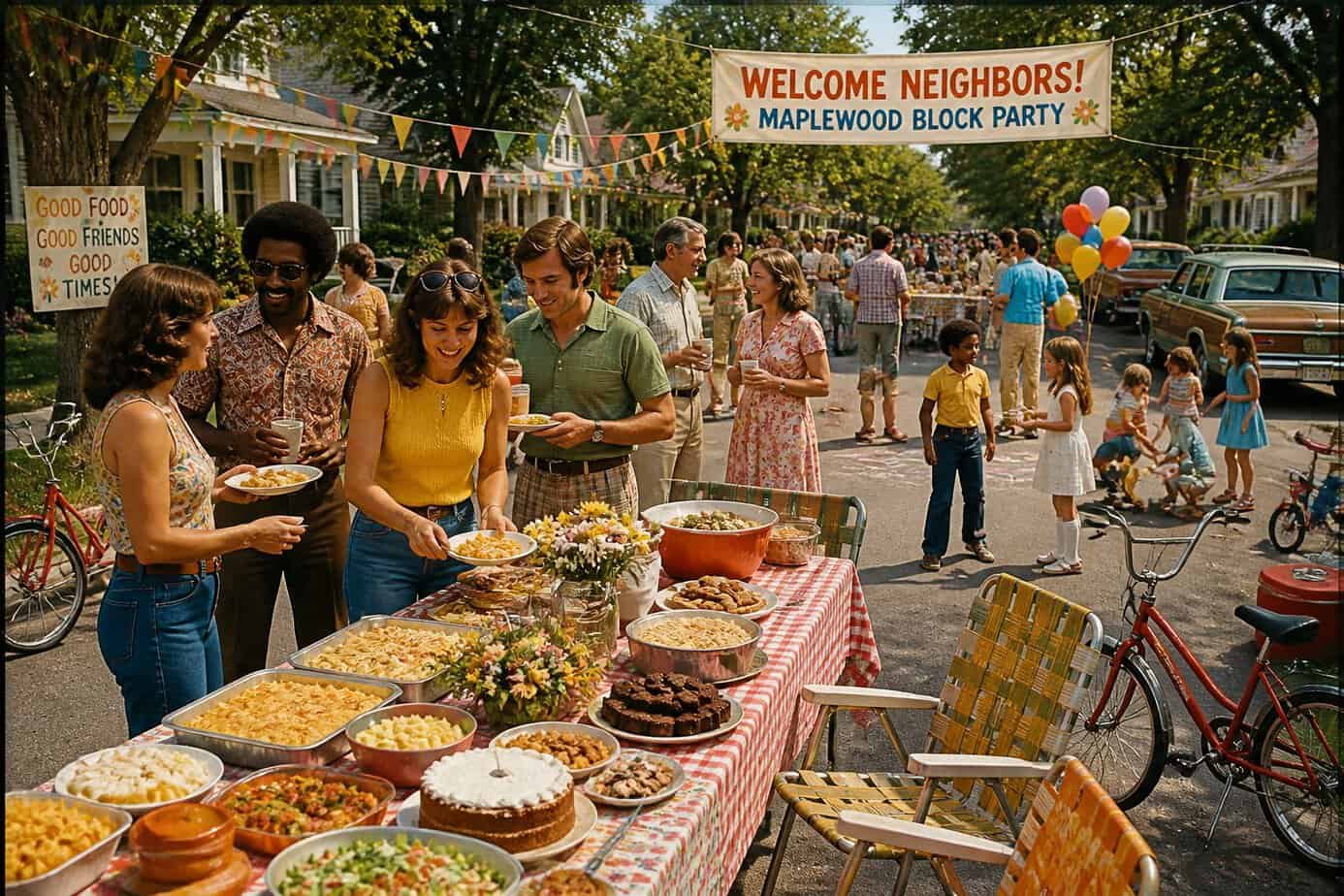
Streets closed to traffic became instant gathering spaces where neighbors brought casseroles, salads, and desserts to share. You knew whose potato salad was worth getting in line for and which neighbor made the best deviled eggs.
These events required minimal planning. Word spread informally through casual conversations over fences and quick phone calls. There were no elaborate permits or organized committees in most cases.
The food told stories about the families who made it. Homemade dishes arrived in mismatched containers, still warm from the oven. People contributed what they could, whether it was a full casserole or a six-pack of soda.
Kids played street games while adults chatted at card tables set up on driveways. The informal nature made these gatherings easy to organize and attend. This tradition faded as neighborhoods changed and schedules became more complicated.
6. Driving to the drive-in movie theater
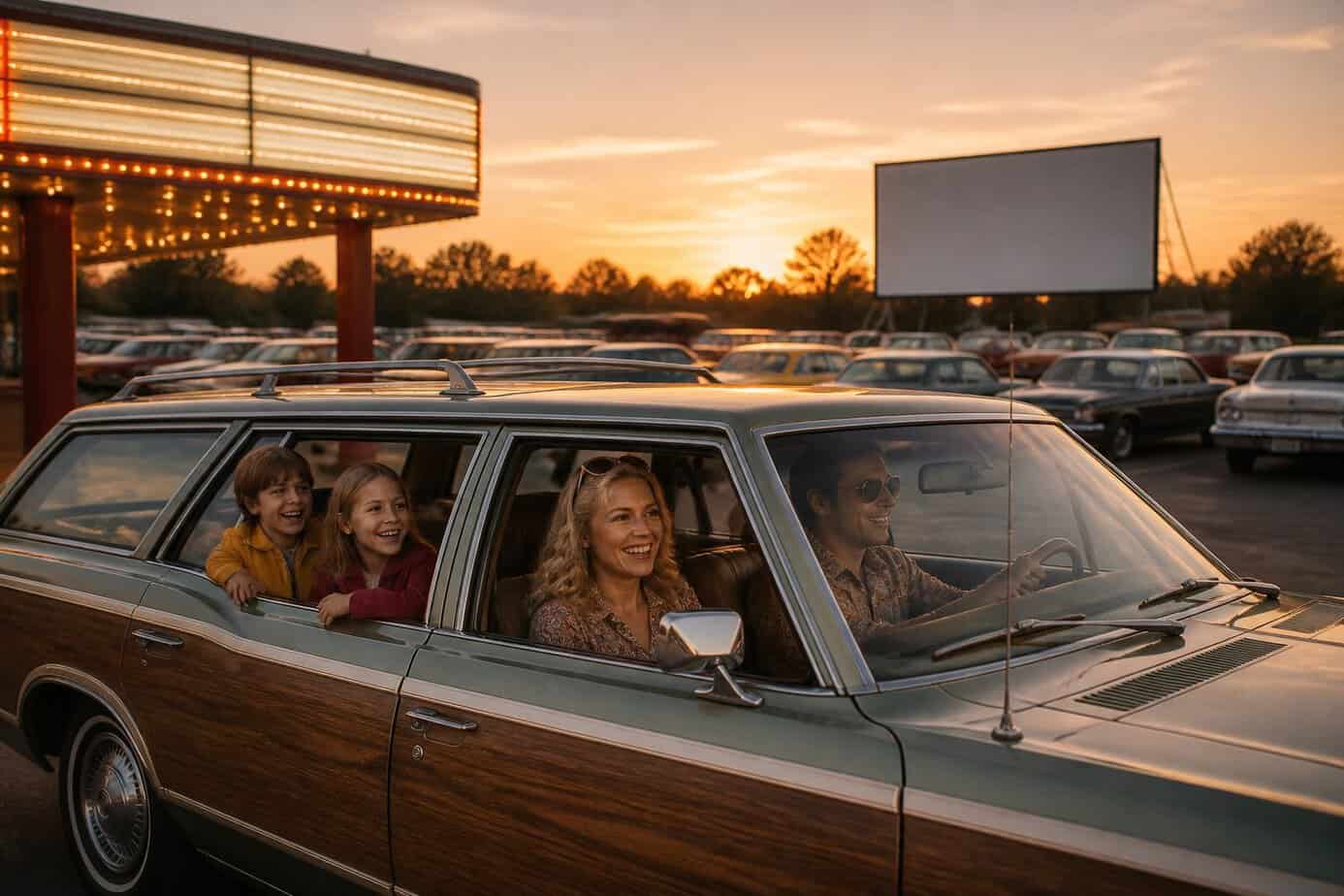
You loaded the family into the station wagon on weekend evenings and headed to the drive-in theater, where rows of cars filled outdoor lots under massive screens. From the 1950s through the 1970s, thousands of drive-ins operated across America, offering a unique way to watch movies together.
You could stay in your pajamas, bring your own snacks, and let younger kids fall asleep in the back seat during double features. The experience combined privacy with community, as your family shared space with other families under the stars.
Most drive-ins disappeared as the land became more valuable for development. While hundreds still operate today, they’re no longer the common weekend destination they once were. Your family’s regular trips to catch the latest release from the car became a relic of a different era.
7. Collecting and trading baseball cards on weekends
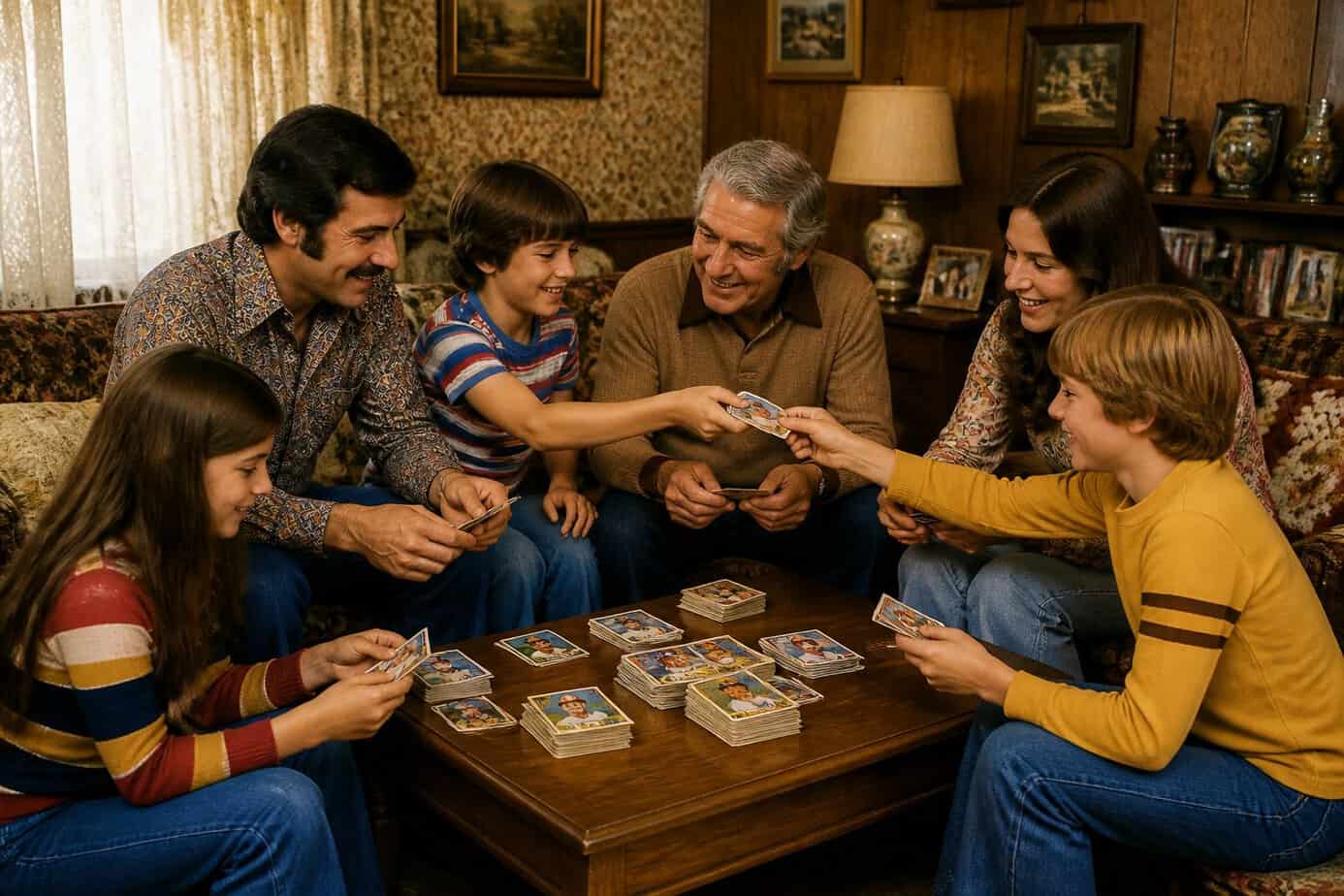
For millions of American kids in the 1970s, baseball card collecting was a year-round pursuit that peaked on weekends. You’d spend Saturday mornings riding your bike to the corner store for packs of Topps cards, then meet up with neighborhood friends to trade and flip cards on the sidewalk.
Trading sessions became neighborhood events where you negotiated swaps based on player stats and team loyalties. You kept your prized cards in shoeboxes or binders, organizing them by team or position.
The hobby combined sports fandom with real strategy. You didn’t need price guides or protective sleeves—just a stack of cards and friends willing to deal. These weekend gatherings created bonds through shared interests, something that faded as digital entertainment replaced face-to-face collecting.
8. Sabbath/quiet Sunday afternoons without shopping
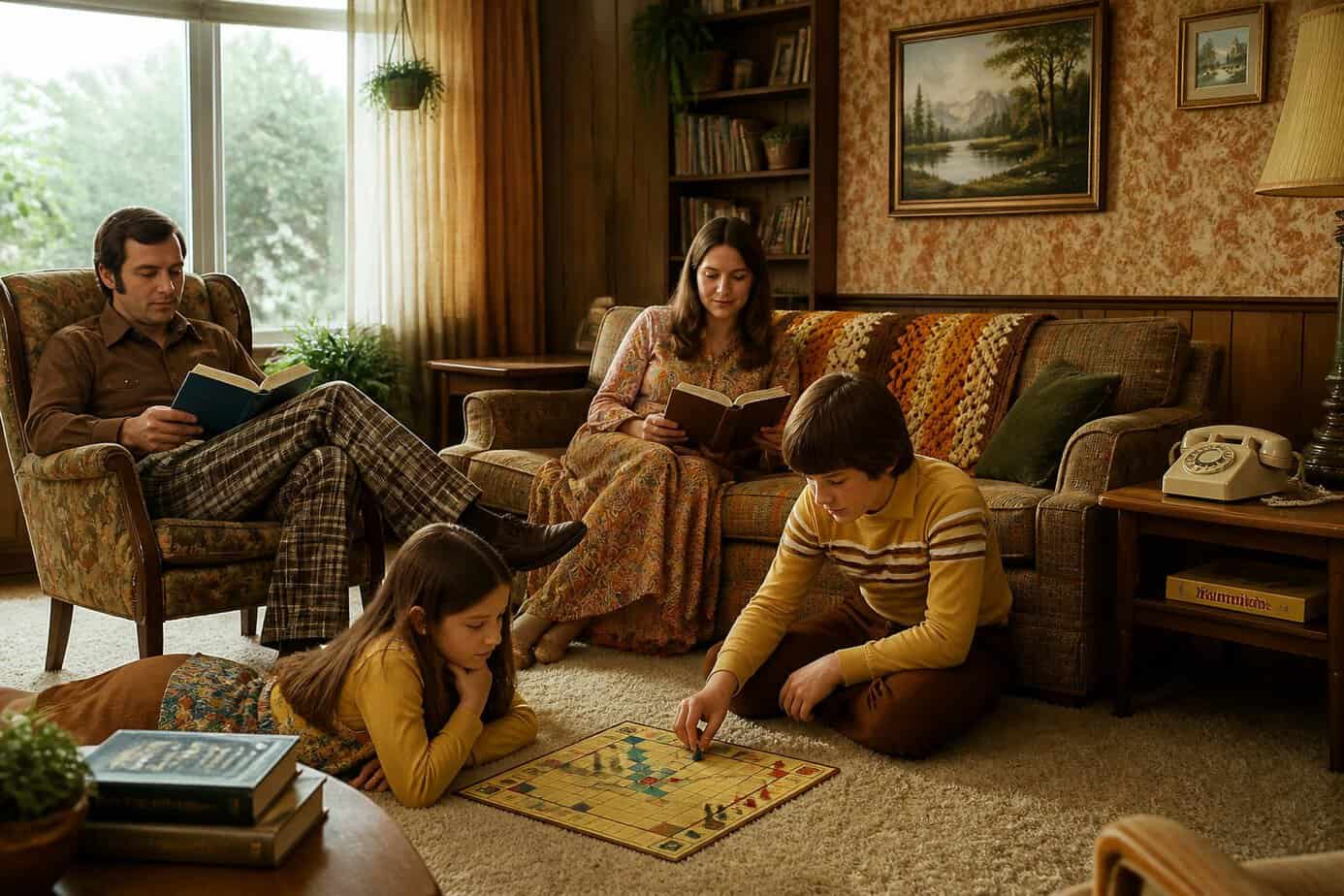
Sunday afternoons in the 1970s carried a distinctive stillness shaped largely by blue laws that kept most stores closed. You couldn’t simply run to the mall or grab groceries on a whim. Businesses were shuttered, creating a forced pause in the week’s commercial activity.
This legal restriction gave Sundays a different rhythm. Your family likely spent these hours visiting relatives, taking leisurely drives, or simply staying home together. The absence of shopping options meant fewer errands and distractions.
The quiet wasn’t just about closed stores. It reflected a broader cultural understanding that Sunday served a different purpose than other days. By the late 1980s and 1990s, blue laws gradually disappeared in most areas, and Sunday became indistinguishable from Saturday in terms of commercial activity.
9. Weekly family photo lined up in the living room
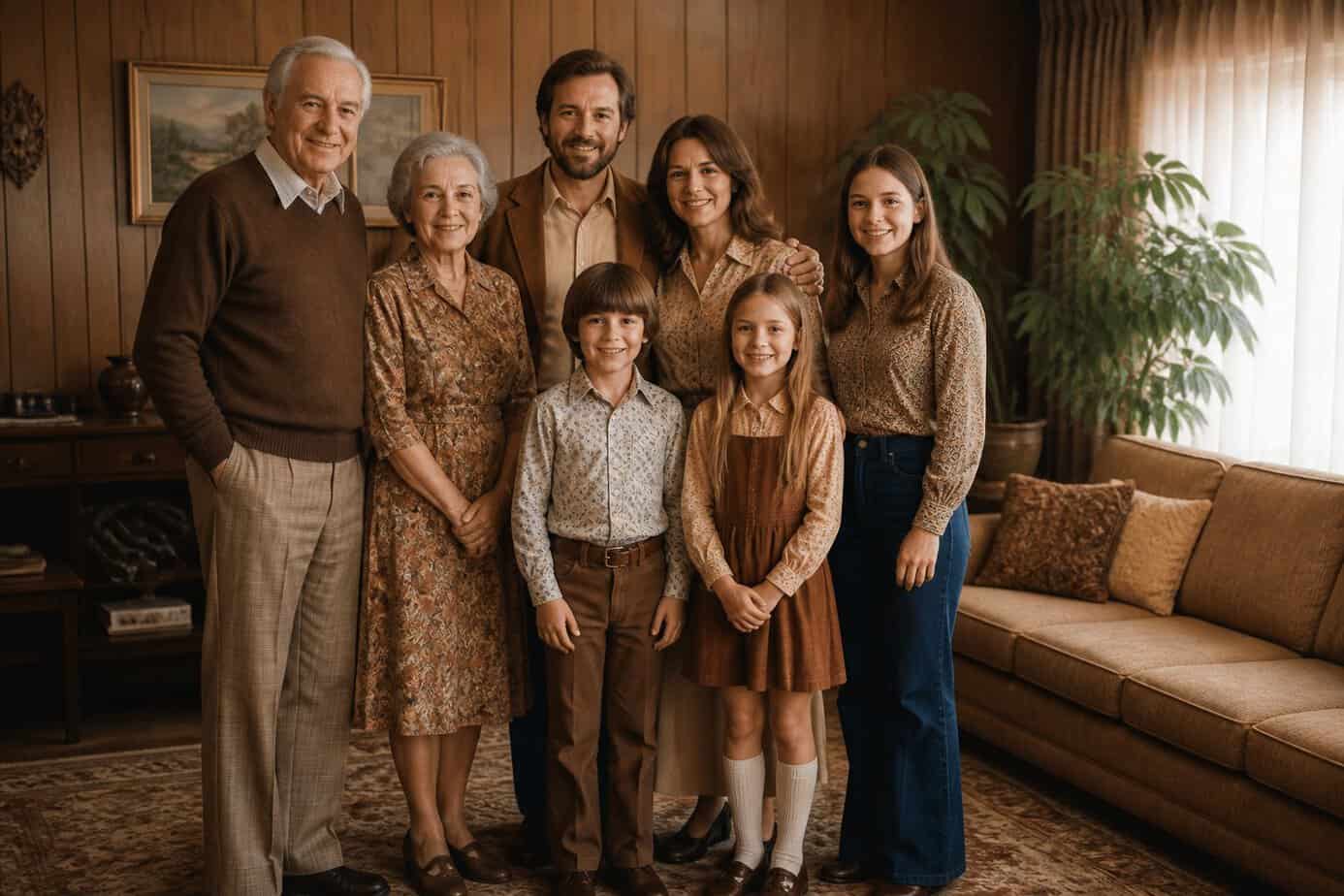
Every weekend or holiday gathering, someone in your family would grab the camera and gather everyone for a group photo. You’d line up in the living room or on the porch, tallest in back, kids squirming in front.
This wasn’t a once-a-year event. Many families made it a regular practice, documenting growth and changes throughout the year. The photos went straight into albums that actually got looked at during visits.
As handheld cameras like the Kodak Instamatic became more accessible in the 1970s, these casual family portraits captured real moments. You’d see someone mid-laugh, a kid making a face, or dad still wearing his work shirt.
The tradition faded as cameras became constant companions rather than special occasion items. What once felt meaningful became mundane when every moment could be photographed endlessly.
10. Listening to albums end-to-end on the family stereo
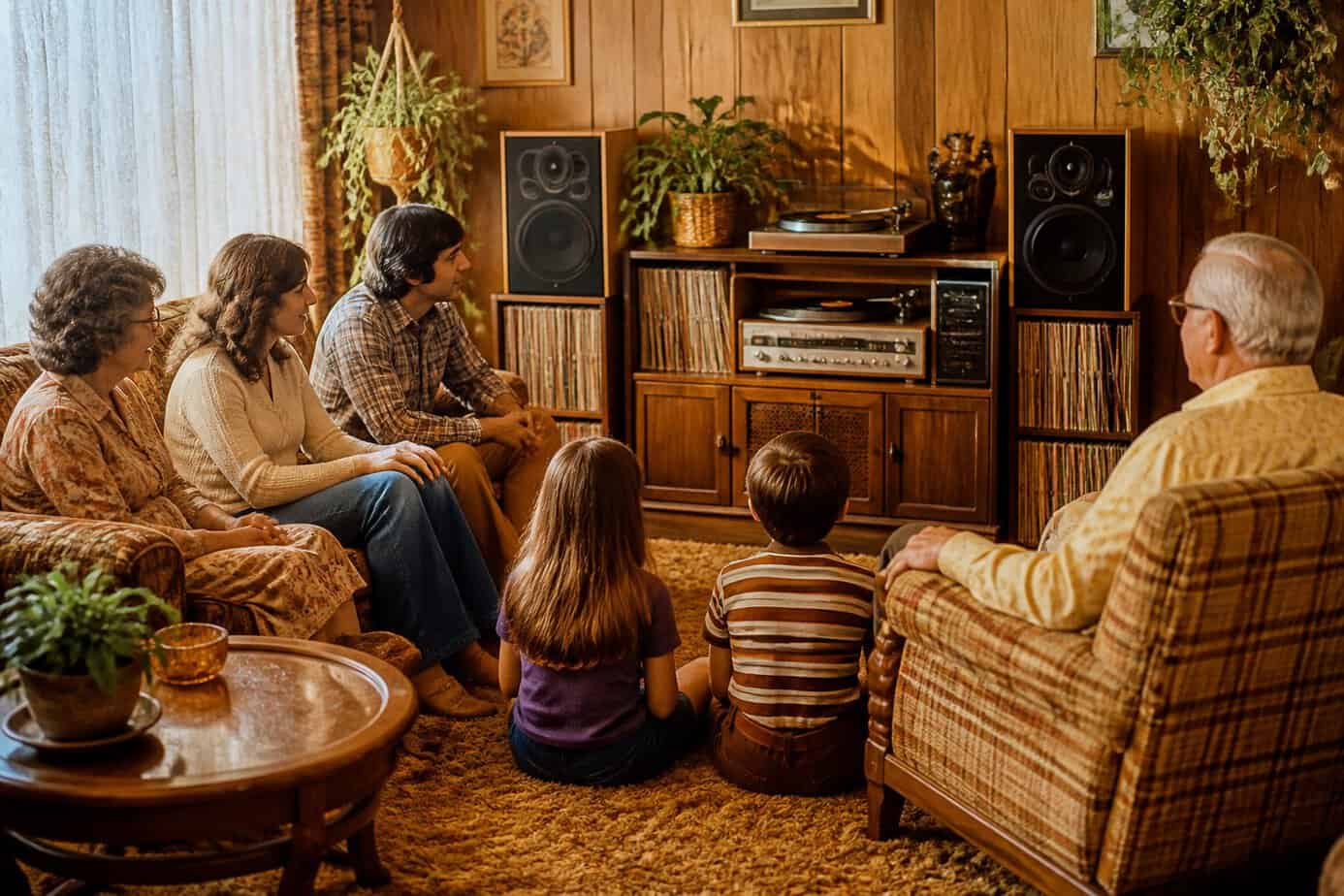
In the 1970s, your family likely gathered around the stereo to listen to entire albums from start to finish. This wasn’t just background music. It was an activity that demanded attention and presence.
You would sit together as someone carefully removed the vinyl from its sleeve, placed it on the turntable, and lowered the needle. The album played in the order the artist intended, and you experienced it as a complete work rather than isolated tracks.
Your family stereo was often a prominent piece of furniture in the living room. Everyone knew not to bump the record player or talk over the music. This shared listening experience created moments of connection that disappeared once portable music players and streaming services let everyone retreat to their own headphones.
11. Saturday morning cartoons with cereal bowls
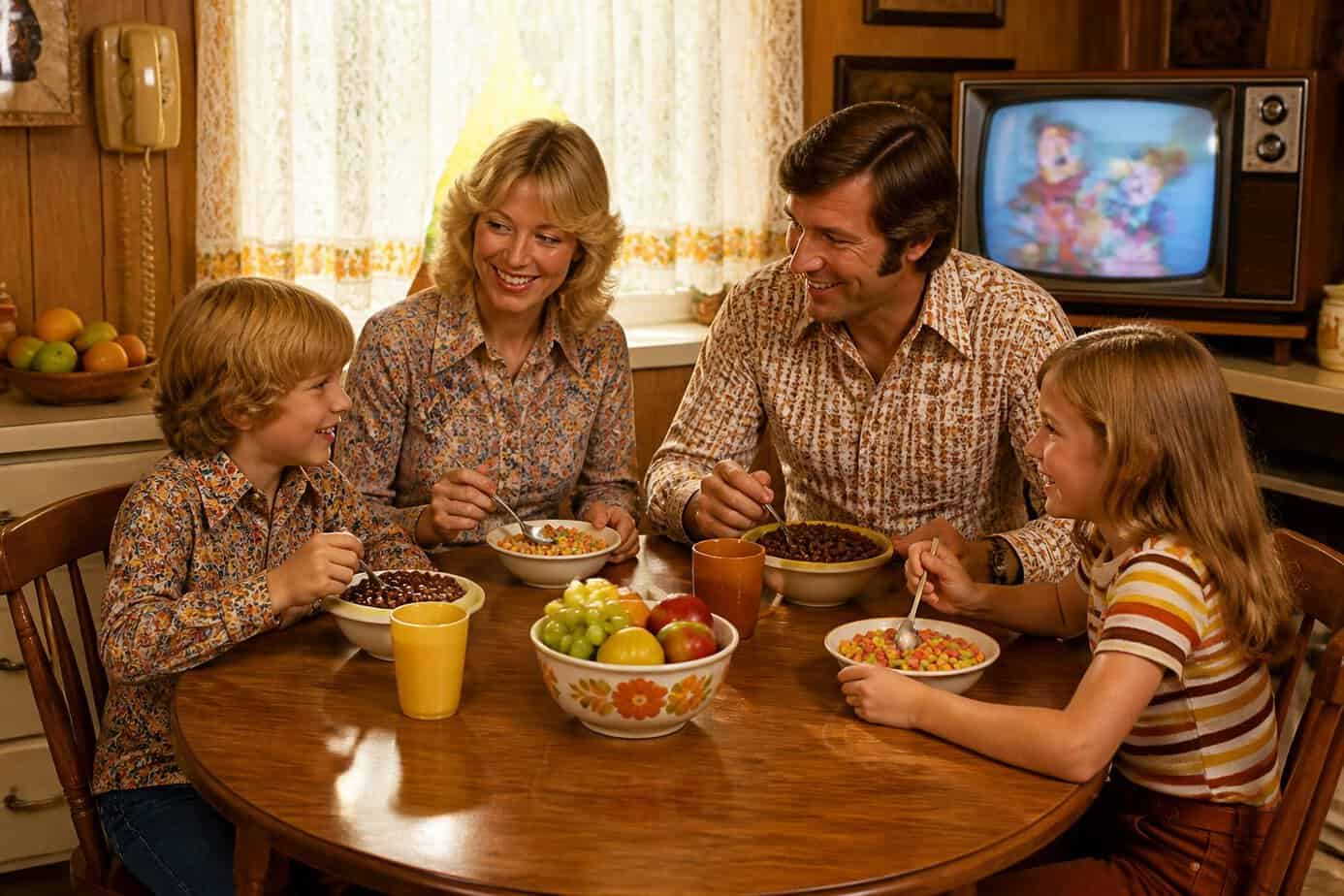
Saturday mornings in the 1970s followed a predictable pattern. You woke up early, poured a bowl of sugary cereal, and claimed your spot in front of the television.
Networks programmed cartoon blocks specifically for children during these hours. From the late 1960s through the 1980s, this time slot functioned as prime time for young viewers. You watched shows back-to-back until lunchtime, with no ability to pause or record for later.
The ritual connected directly to advertising strategies. Cereal companies purchased these time blocks to reach millions of children simultaneously. A single commercial spot in 1978 reached approximately 8 million young viewers.
This tradition required you to be present at a specific time. There were no streaming services or on-demand options. You either watched during the broadcast or missed the episode entirely.
12. Handwritten letter exchanges with distant relatives

Before email and instant messaging, you stayed connected with far-away family members through handwritten letters. You would sit down on Sundays with stationery, pen updates about your life, and mail them off with genuine anticipation for a reply weeks later.
These letters carried real weight. Your relatives could hold the physical pages, recognize your handwriting, and save them in boxes for years. The ritual required effort and intentionality that made each message feel more personal than today’s quick texts.
Writing letters encouraged thoughtfulness. You had time to reflect on what mattered before committing words to paper. Receiving a letter in the mailbox felt like an event worth noting.
As technology advanced, this tradition faded rapidly. Phone calls became cheaper and emails arrived instantly. The careful practice of letter writing gradually disappeared from most households, replaced by faster but less tangible forms of communication.
13. Family car road trips using paper maps and Rand McNally
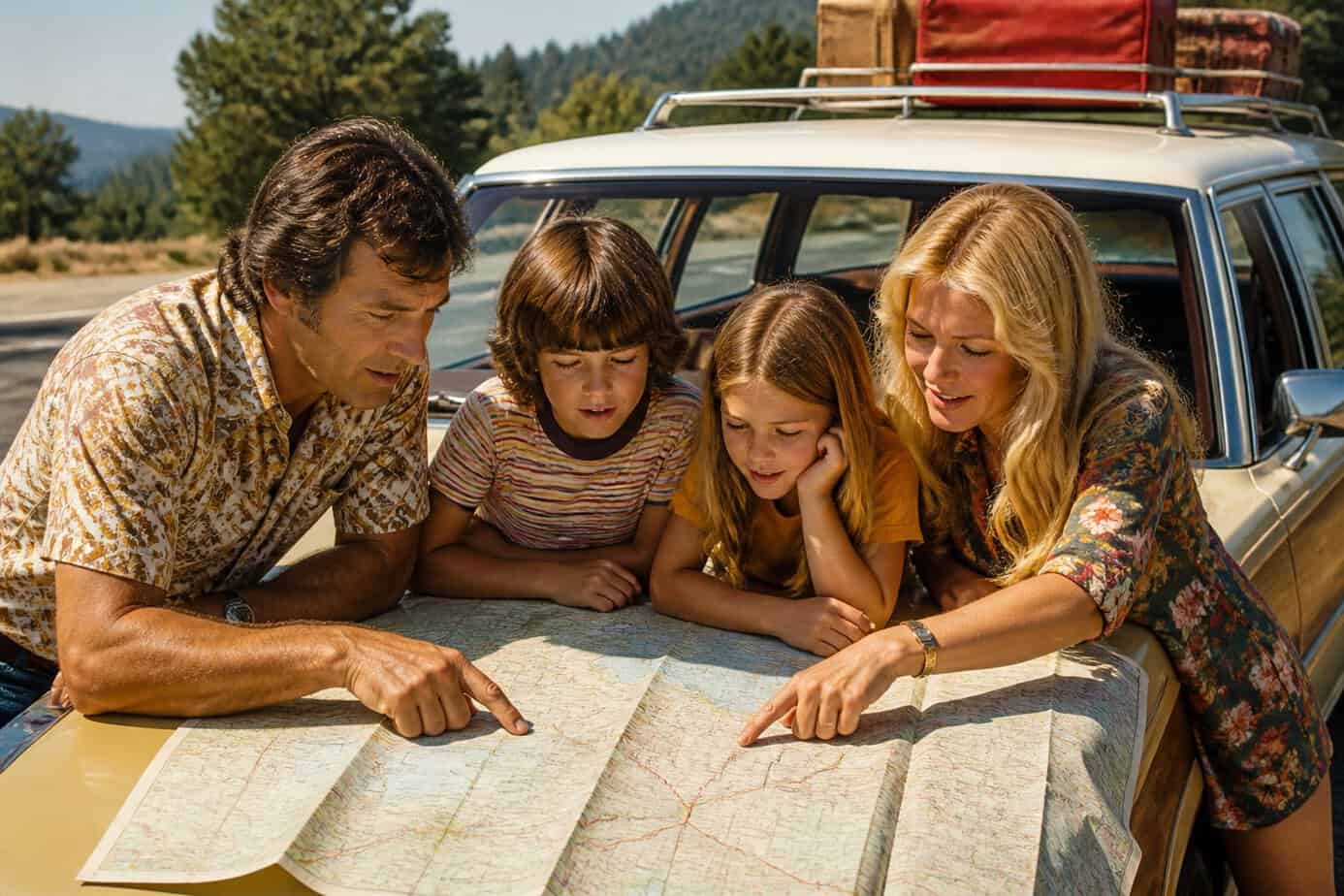
Before GPS, your family navigated cross-country trips with Rand McNally atlases and folded paper maps that never quite returned to their original shape. These spiral-bound road atlases rode shotgun in station wagons, becoming trusted companions for every journey.
You watched your parents trace routes with their fingers and debate which highways to take. AAA TripTiks offered personalized routing guides, with staff members hand-drawing your route and highlighting recommended roads.
Navigation meant learning geography accidentally as you noticed state lines and city names passing by. When your family entered unfamiliar territory, someone inevitably said, “Let’s stop for a map.”
The maps often sparked arguments about shortcuts and alternate routes. Yet this paper-based system worked, getting millions of families to their destinations throughout the decade.
14. Dad mowing the lawn as a Saturday ritual
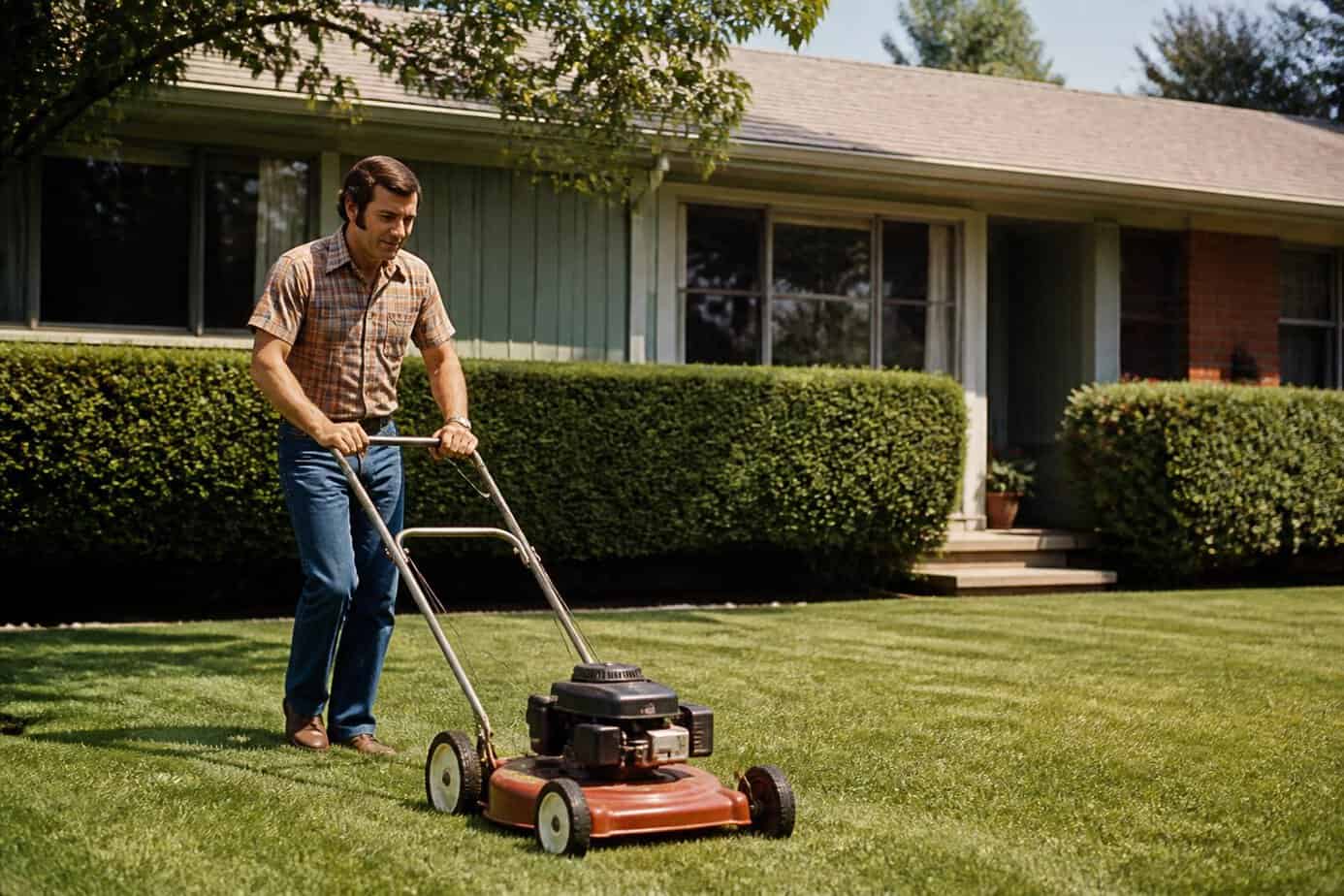
Saturday mornings in the 1970s had a distinctive soundtrack: the hum of push mowers across suburban neighborhoods. Your dad treated lawn mowing as his weekly domain, often heading outside in his work clothes to tackle the yard in precise, straight lines.
This wasn’t just a chore. It was a ritual that marked the beginning of the weekend. Neighbors would wave to each other from their respective yards, creating an unspoken community schedule.
The physical push mower required effort and time, turning what could have been a quick task into an hours-long commitment. Your dad took pride in the finished product, and the freshly cut grass became a badge of weekend accomplishment.
Today’s riding mowers and lawn services have replaced this hands-on tradition, along with the slower pace it represented.
15. Sunday afternoon repair-and-tinker time in the garage
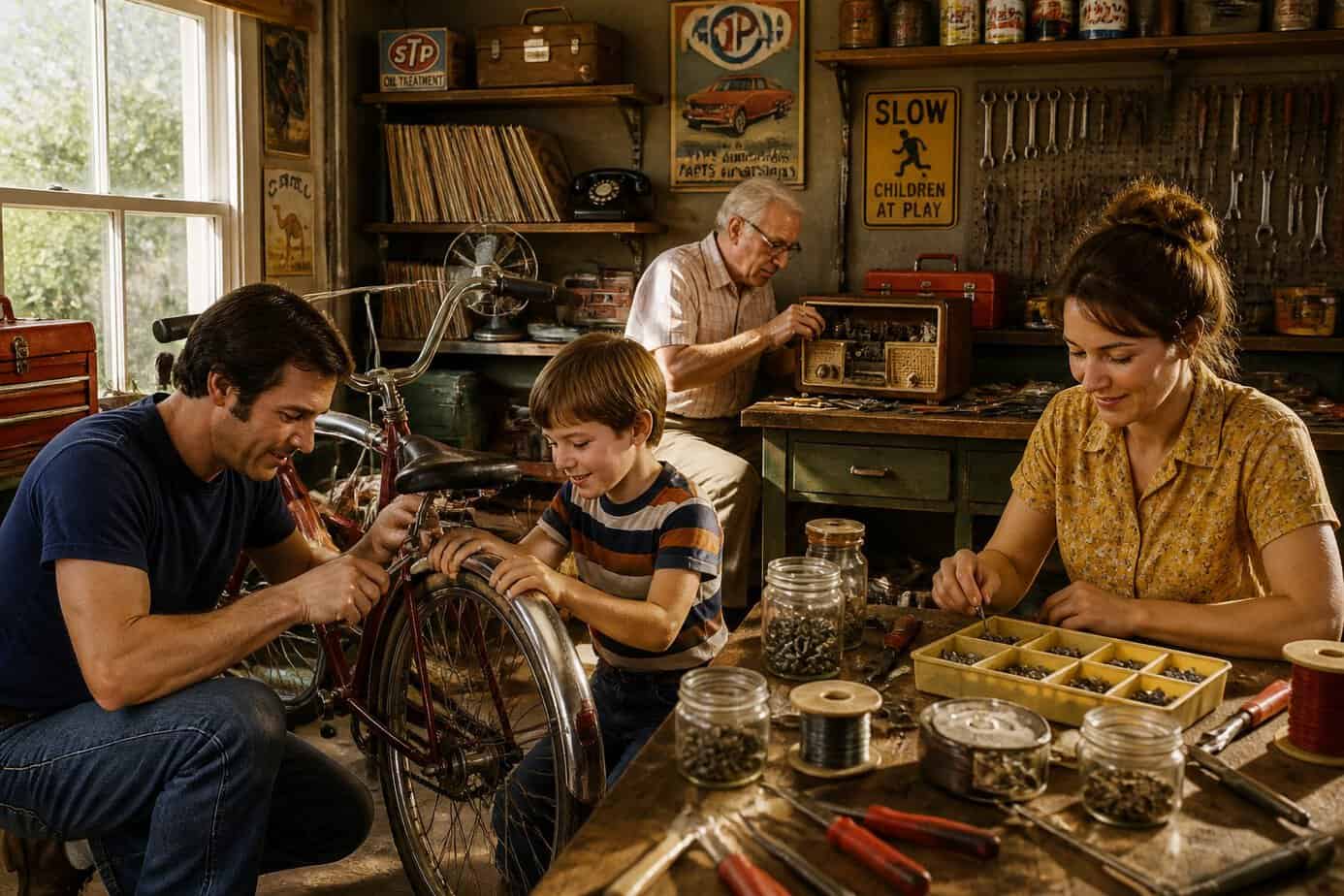
Your dad likely spent Sunday afternoons in the garage with a toolbox and a project. This was when families fixed broken appliances, tuned up the car, or built furniture instead of calling a professional or ordering replacements online.
The garage served as a workshop where fathers taught their children basic repair skills. You might have handed tools to your dad while he changed the oil or rebuilt a lawnmower engine.
These sessions weren’t just about saving money. They represented self-sufficiency and the satisfaction of fixing things with your own hands. Today, most products are designed to be replaced rather than repaired, and specialized tools or expertise make DIY fixes impractical.
The afternoon garage ritual created bonding time between parents and children while passing down practical knowledge that many families no longer share.
16. Paper route or neighborhood paperboy job for kids
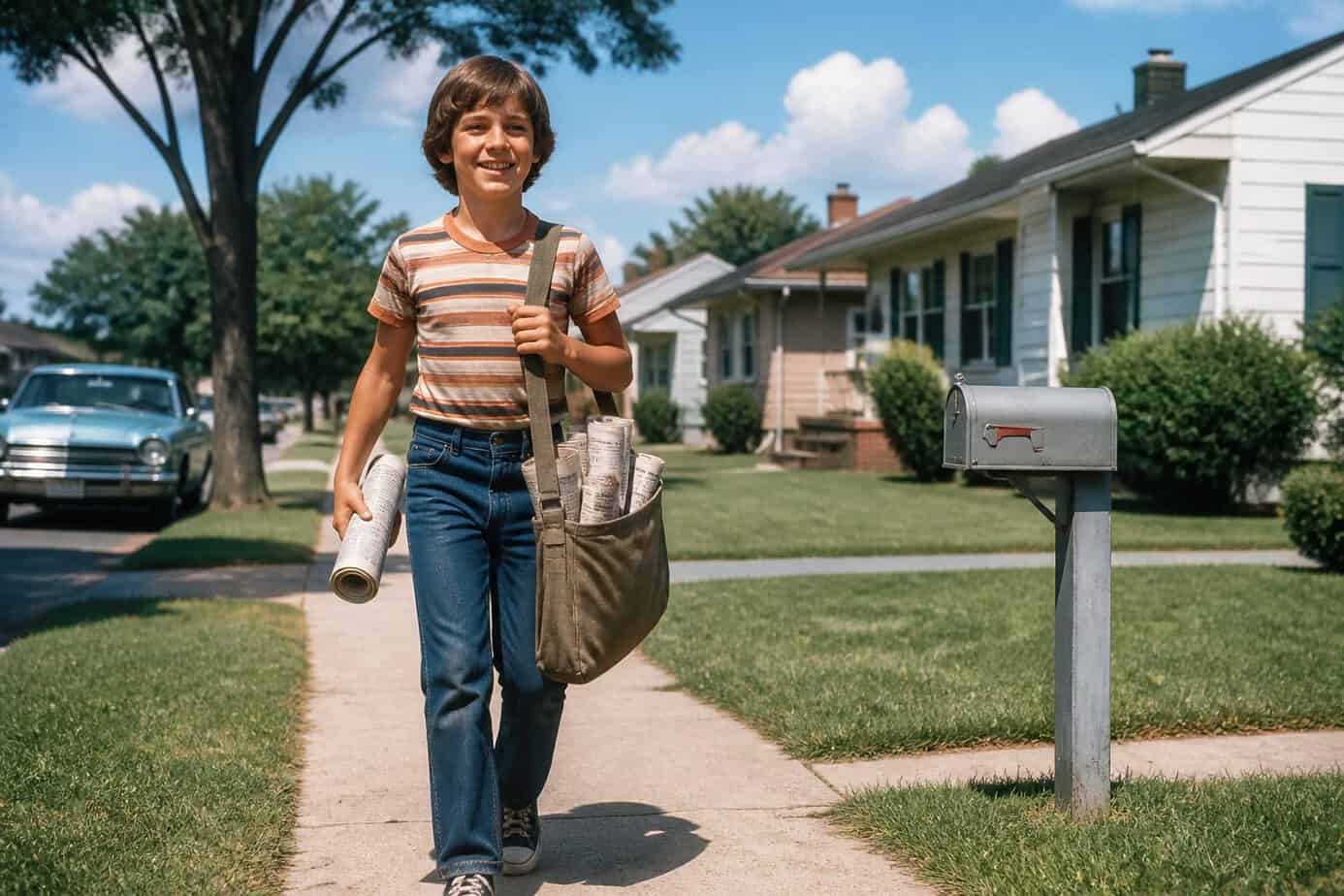
Your child’s first job was likely a paper route in the 1970s. Kids as young as 11 would wake before dawn to deliver newspapers by bicycle to homes in their neighborhood.
This job taught your children responsibility and time management. They learned to handle money by collecting payments from subscribers and keeping track of their earnings. Most kids made just a few dollars per week, but the independence it provided was invaluable.
The paperboy became a familiar fixture in residential areas, recognized by neighbors along their route. Your family may have relied on this service to receive daily news at your doorstep.
Today, this job has largely disappeared due to child labor law changes and the decline of print newspapers. Adult drivers in cars now handle most newspaper deliveries.
17. Neighbors borrowing tools over the fence
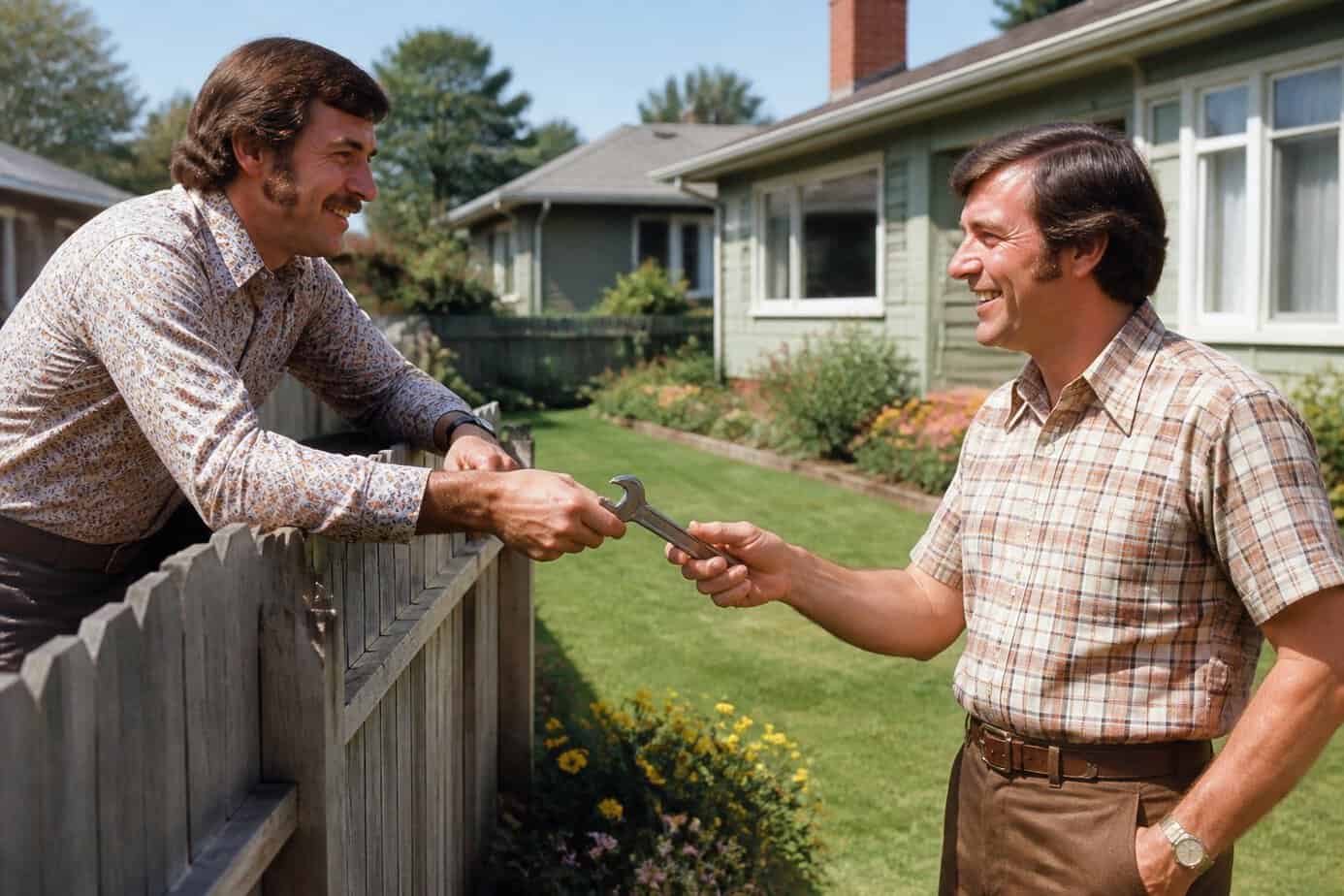
Your parents likely remember when asking to borrow a hammer or drill from next door was completely normal. Tools moved freely between households because most families couldn’t afford to own every piece of equipment they occasionally needed.
Wheelbarrows were among the most frequently borrowed items. Their size made them impractical for every household to store, so neighbors shared without hesitation.
This practice required proximity and trust. You knew your neighbors well enough to ask for help, and they knew you’d return items in good condition. By the 1990s, households began accumulating their own tools that sat unused most of the time.
The shift happened gradually as families became more isolated and big-box retailers made purchasing easier than asking. The social infrastructure that once made sharing effortless simply faded away.
18. Making patchwork quilts as a multi-generational project
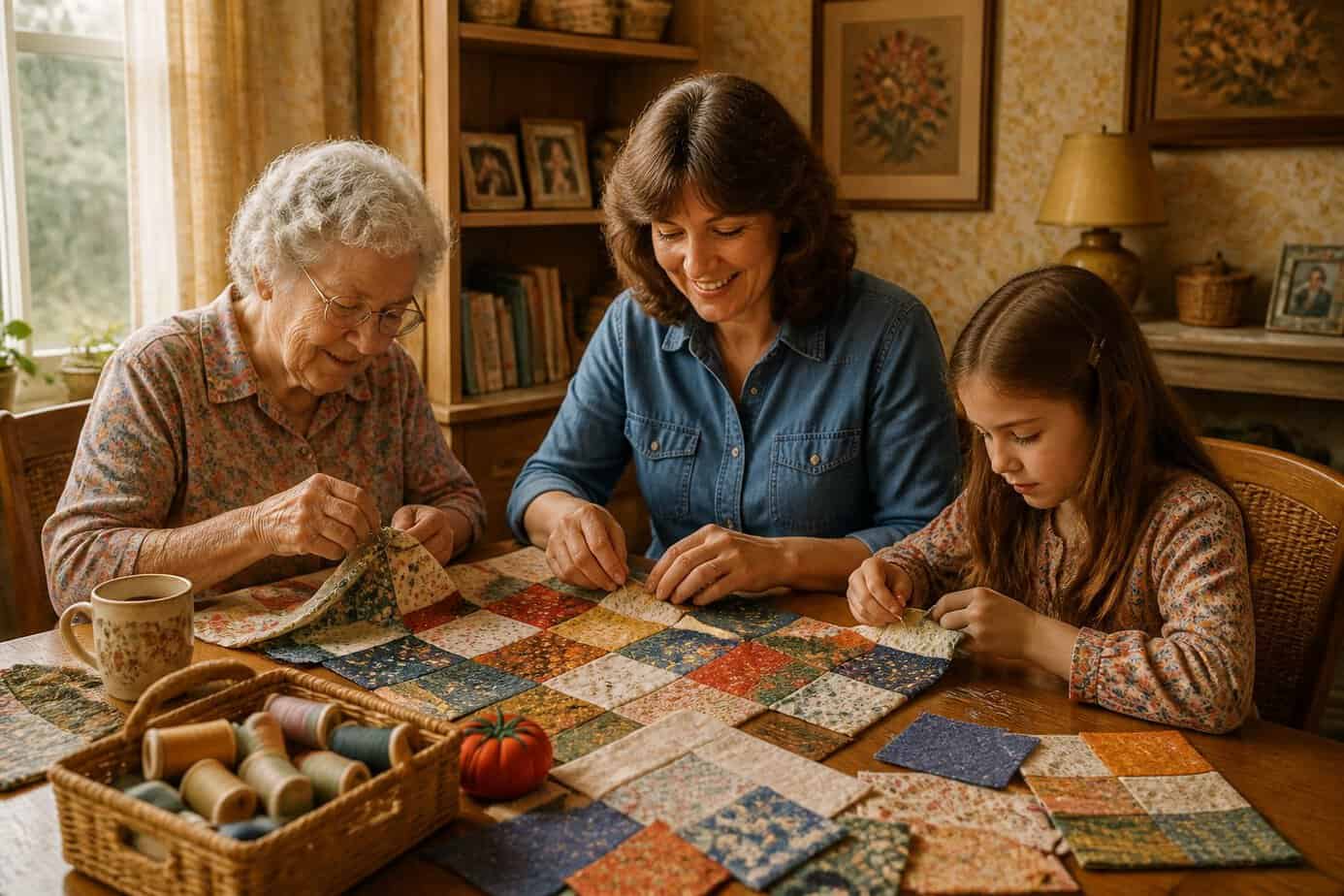
Grandmothers, mothers, and daughters once gathered around quilting frames to create family heirlooms together. This practice flourished in the 1970s when a quilting revival swept through American homes, partly inspired by Bicentennial nostalgia.
Families pieced quilts from fabric scraps that told their stories. Old clothing, worn linens, and leftover materials from sewing projects became patches in blankets that documented family life. Each square carried memories of outgrown clothes or special occasions.
The knowledge passed directly from experienced hands to younger ones. Your grandmother might have taught your mother specific stitching patterns, who then showed you the same techniques on quiet afternoons.
Today, few families maintain this tradition. Ready-made blankets replaced handmade quilts, and fewer households have the time or space for collaborative crafting sessions that once spanned weekends or entire seasons.
19. Family garage sales held every spring
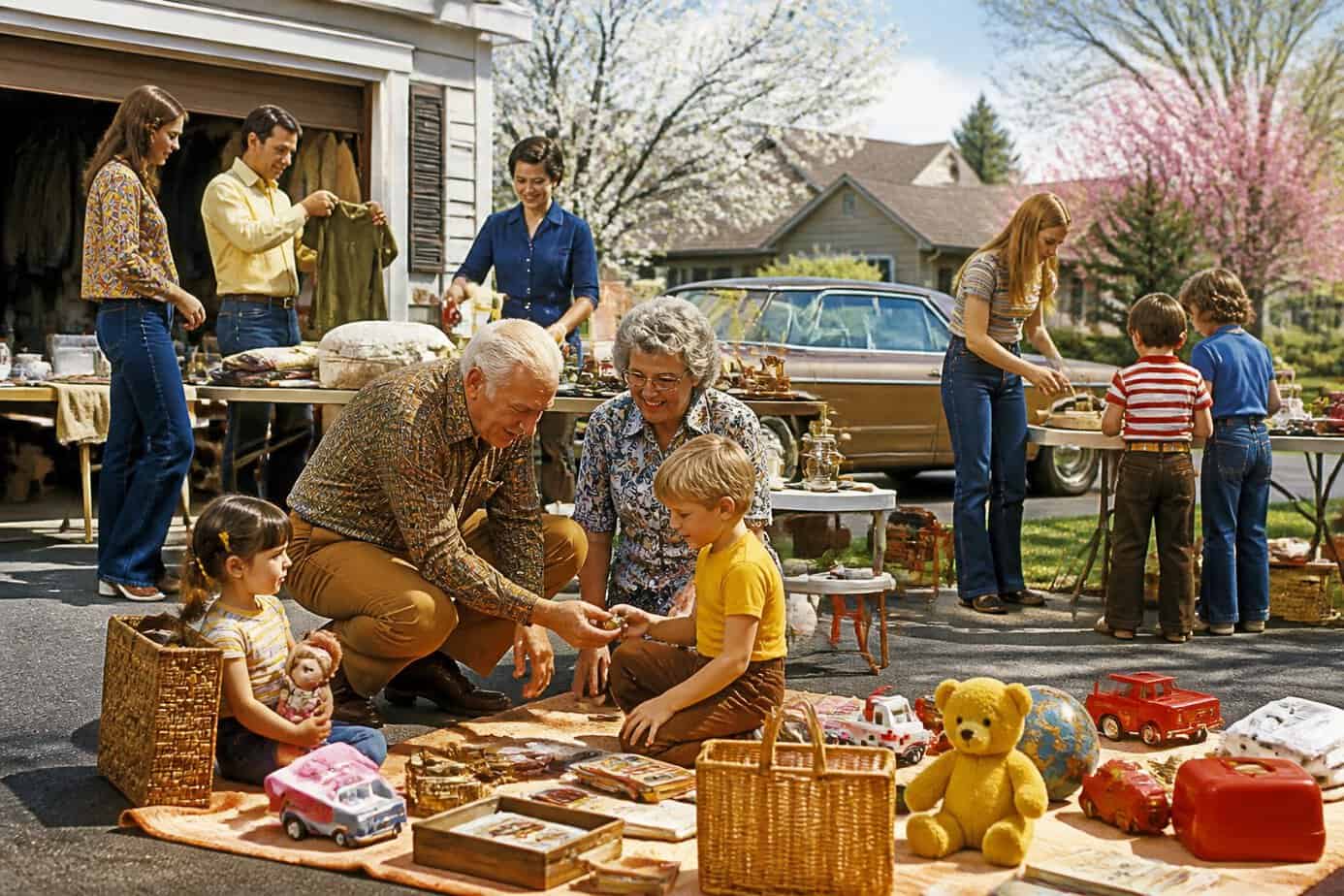
Your family likely spent weeks preparing for the annual spring garage sale in the 1970s. You’d sort through closets, basements, and attics together, deciding what to keep and what to sell.
The garage sale became a neighborhood event where you’d price items with masking tape and handwritten tags. Your parents taught you basic math skills as you made change from a shoebox cash register.
These sales served multiple purposes beyond decluttering. They brought communities together as neighbors browsed each other’s belongings and chatted about local news.
Garage sales exploded in popularity during the 1970s, becoming a widespread weekend tradition across suburban America. Today, online marketplaces have largely replaced these face-to-face transactions, eliminating the social aspect that made spring garage sales memorable family activities.
20. Watching televised variety shows together
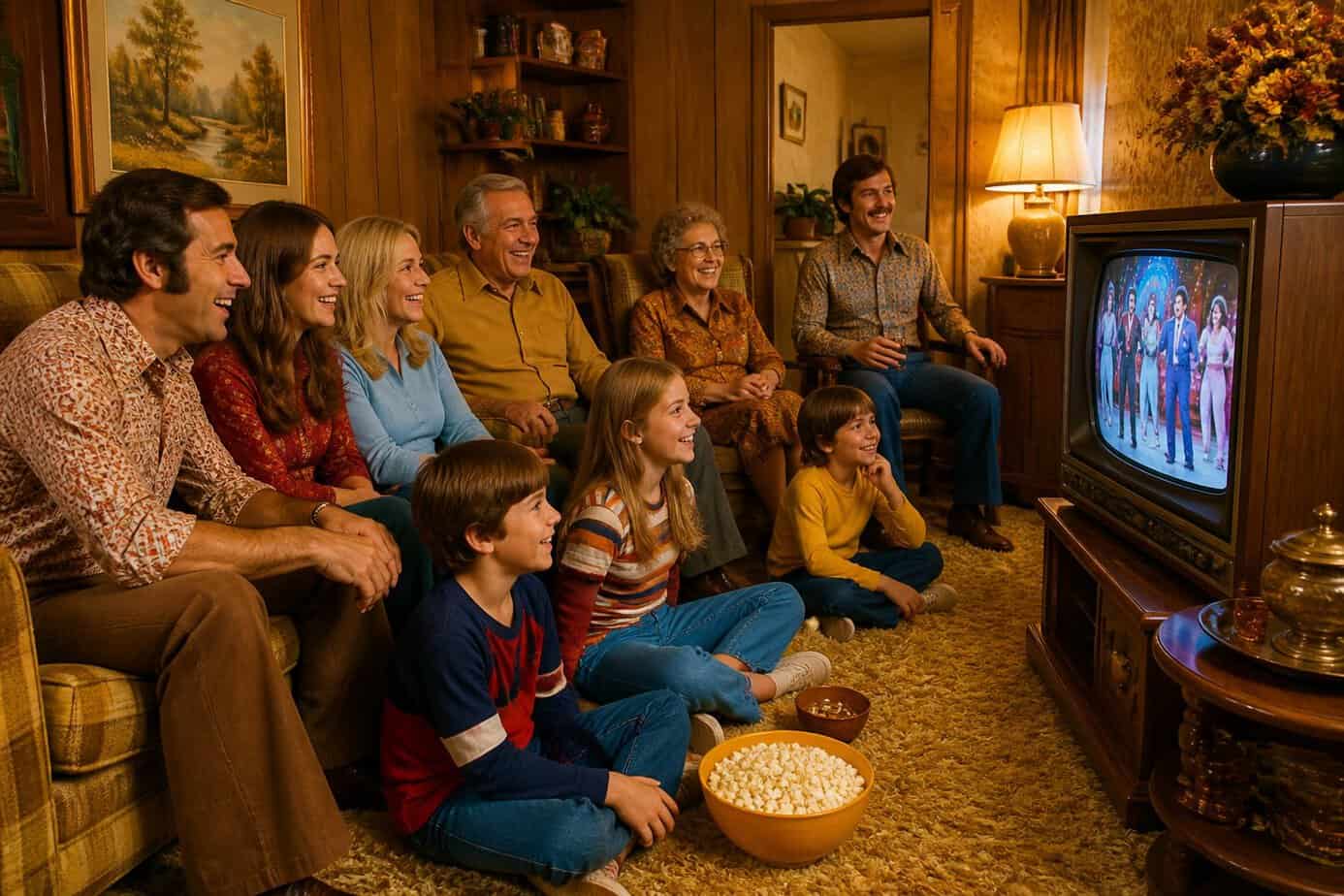
Your family likely gathered around a single television set on weekend evenings to watch variety shows. Programs like The Carol Burnett Show and Donny & Osmond offered something for everyone with their mix of musical performances, comedy sketches, and celebrity guests.
These shows aired at specific times, so your entire household planned around them. There was no option to stream later or pause for a bathroom break.
The variety show format has largely vanished from television. Modern entertainment splits families across different devices and streaming services. The shared experience of laughing at the same sketch or discussing a musical number during commercial breaks became rare as cable expanded viewing options and personal screens proliferated throughout homes.
21. Calling landline phones from the shared kitchen phone
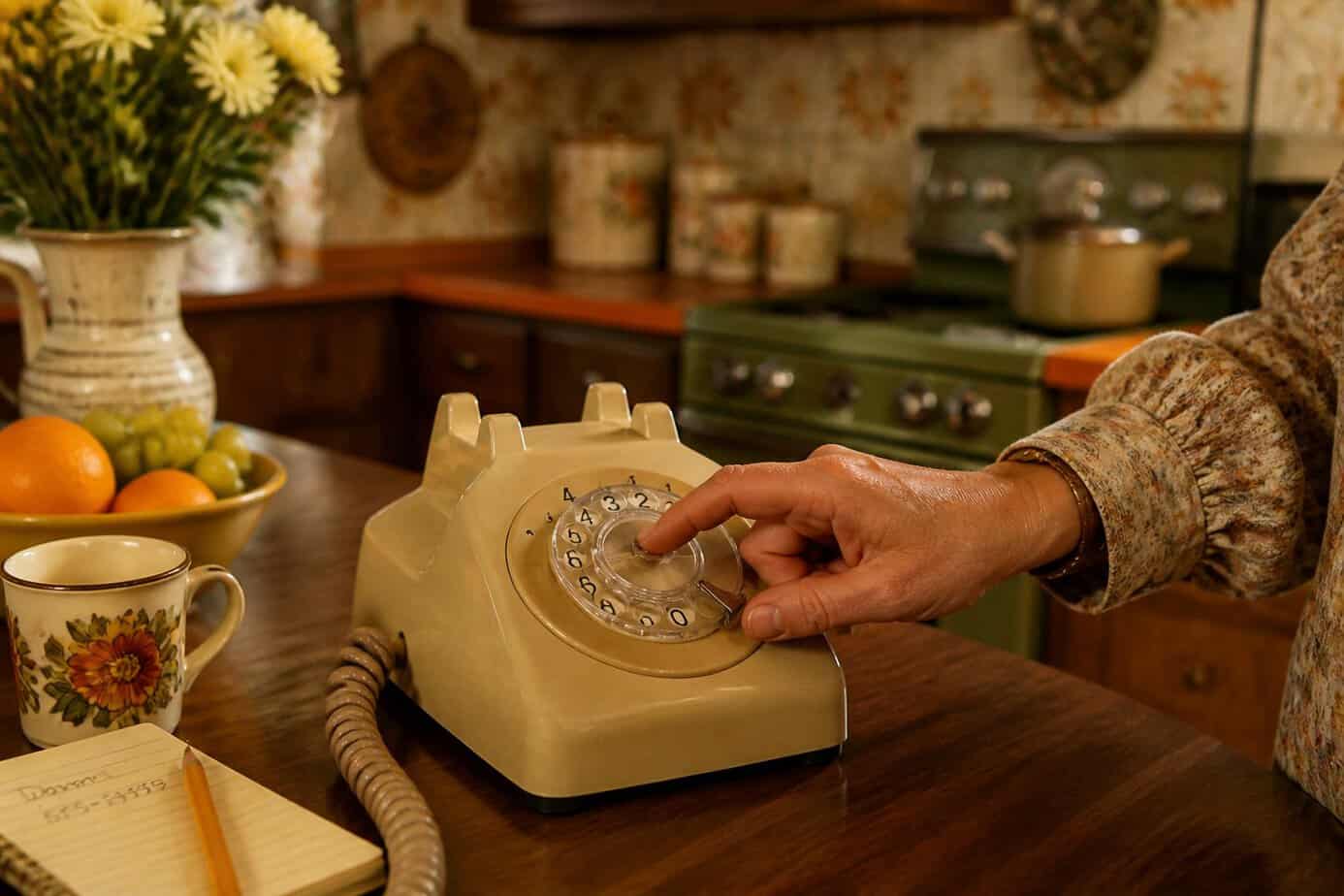
The kitchen phone was your family’s communication hub in the 1970s. Mounted on the wall or sitting on the counter, this single device served everyone in the household.
You couldn’t retreat to your room for private conversations. Instead, you stretched the coiled cord as far as it would go, seeking whatever privacy you could find while your family went about their activities nearby.
Long-distance calls required careful planning since they cost money by the minute. You kept these conversations brief and purposeful, making every word count.
When the phone rang, anyone could answer it. You never knew if the call was for you until someone yelled your name through the house. This shared access meant your social life was never entirely private, and your parents always knew who was calling.
22. Mom hosting Tupperware or Avon parties at home
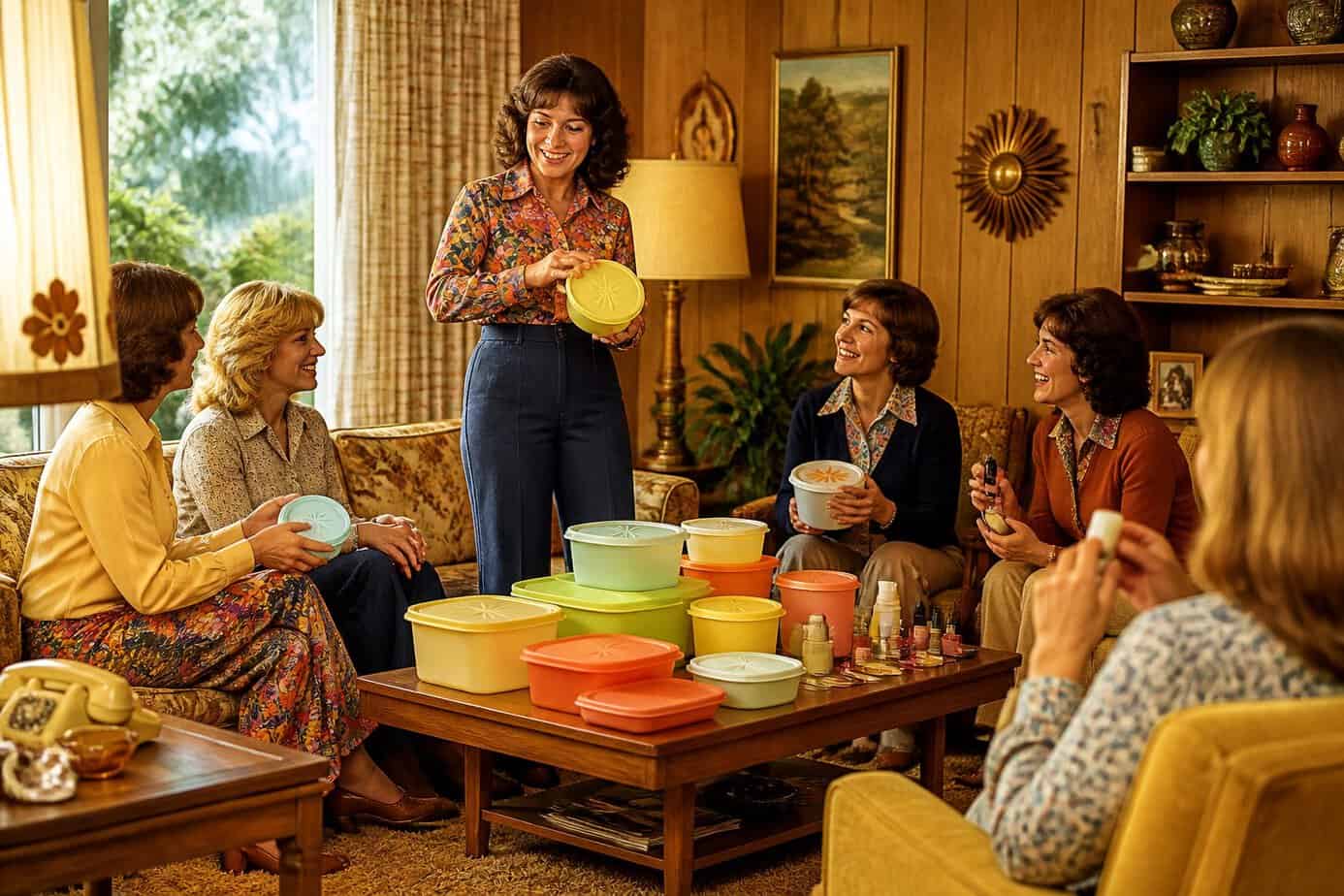
Your mom likely transformed your living room into a sales venue several times a year during the 1970s. These home parties for Tupperware, Avon, and Mary Kay were standard suburban events where neighbors gathered to view product demonstrations and place orders.
The gatherings served a dual purpose. Women socialized with friends while the host earned free products based on sales. Your mom probably shuffled you off to your room while she arranged chairs and prepared refreshments for a dozen guests.
These parties became a significant part of household routines, with women attending multiple events each month. The model thrived because it combined shopping with community building in an era when many mothers stayed home. Today, most product purchases happen online, making the concept of gathering neighbors to examine plastic containers feel outdated.
23. Sunday sermons followed by church potlucks
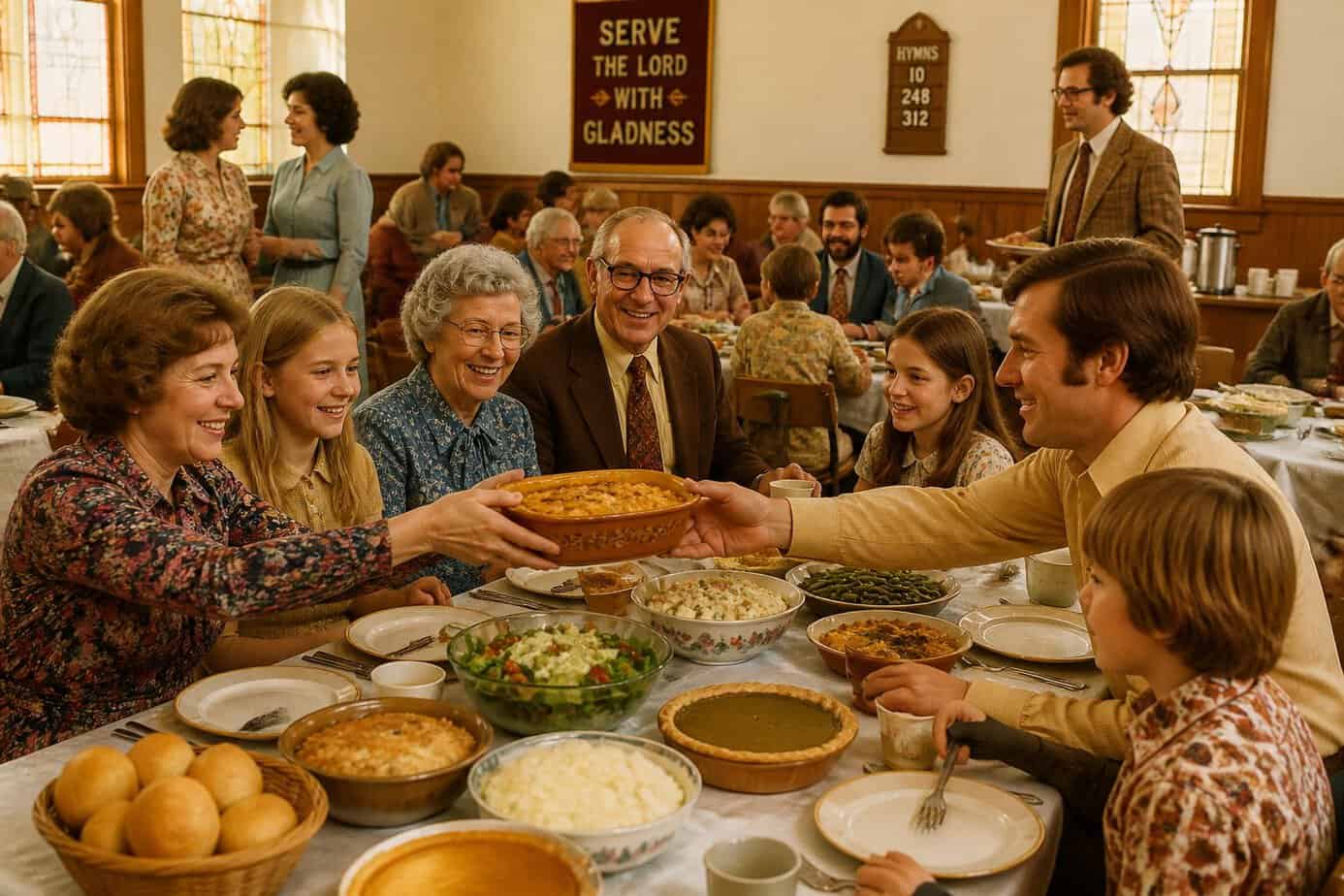
After morning services ended, families stayed for potluck lunches in church basements and fellowship halls. You brought casseroles, fried chicken, and desserts to share with the entire congregation.
These gatherings served as more than meals. They functioned as community-building events where families caught up with neighbors, children played together, and newcomers felt welcomed into the congregation.
Church potlucks existed alongside similar community gatherings at union halls and school fundraisers. The tradition created bonds that extended beyond religious observance into genuine neighborhood connection.
Sunday retail hours introduced in the 1980s changed these patterns significantly. As stores opened on Sundays and schedules grew busier, attendance at these extended church gatherings declined. Many congregations now hold potlucks monthly rather than weekly, if at all.
24. Saving and displaying family movie reels on Super 8
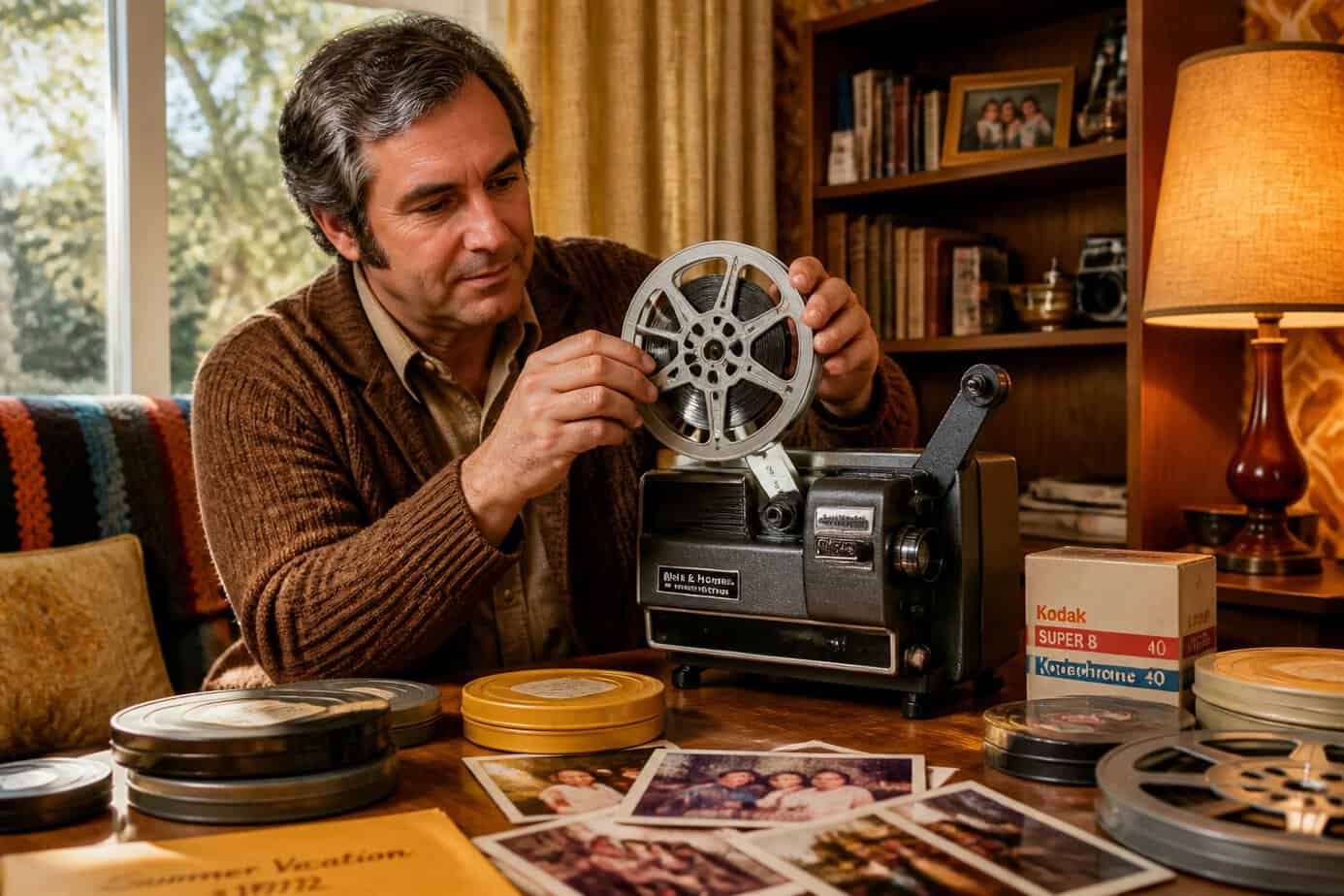
Super 8 film dominated home movies from the 1960s through the early 1980s. You loaded small reels into cameras to capture birthdays, vacations, and holidays on actual motion picture film.
Families stored these reels in labeled boxes and brought them out for special screenings. You needed a projector, a white screen or blank wall, and a darkened room to watch your footage.
The ritual of threading film through the projector and hearing that distinctive clicking sound became part of the experience. Many families made viewing these reels an annual tradition, revisiting memories together.
Super 8 required specialized equipment that eventually became obsolete. The film itself degrades over time, facing threats from vinegar syndrome and deterioration. Most families now digitize their old reels to preserve them, ending the practice of physical film screenings.
25. Kids playing unsupervised until dinner in the neighborhood
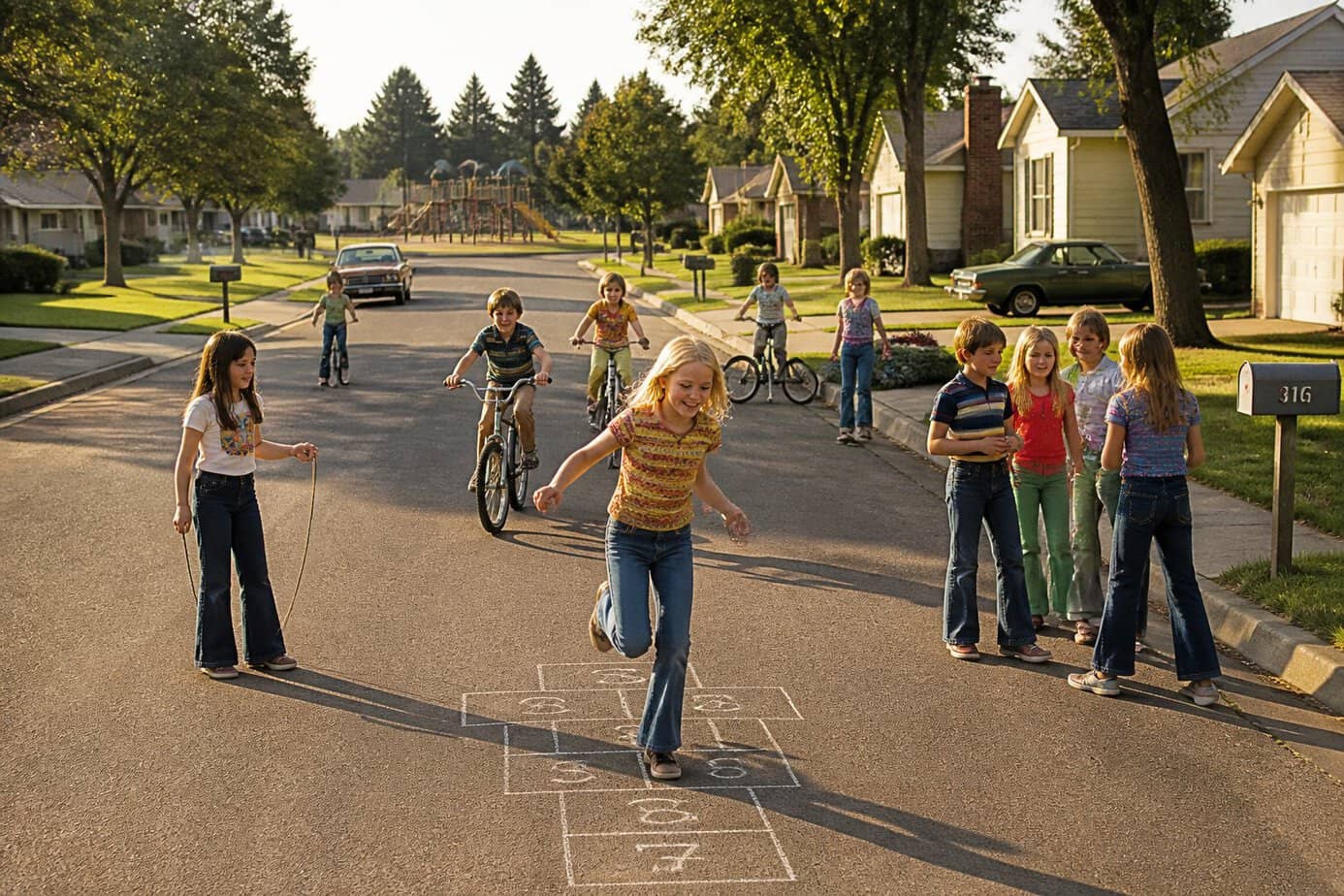
You disappeared after breakfast and returned when the streetlights came on. Your parents didn’t call, text, or track your location because those options didn’t exist.
The neighborhood functioned as your playground. You organized your own games of tag, kickball, and hide-and-seek without adult referees or structured schedules. When disputes arose, you settled them yourselves.
Your boundaries were defined by physical landmarks rather than parental supervision. You knew which yards were off-limits and which neighbors welcomed kids cutting through. The only firm rule was being home by dinner.
This level of independence built skills that came from necessity. You navigated social conflicts, created your own entertainment, and managed time without reminders. The freedom felt normal then, though it would seem extraordinary by today’s standards of child supervision.
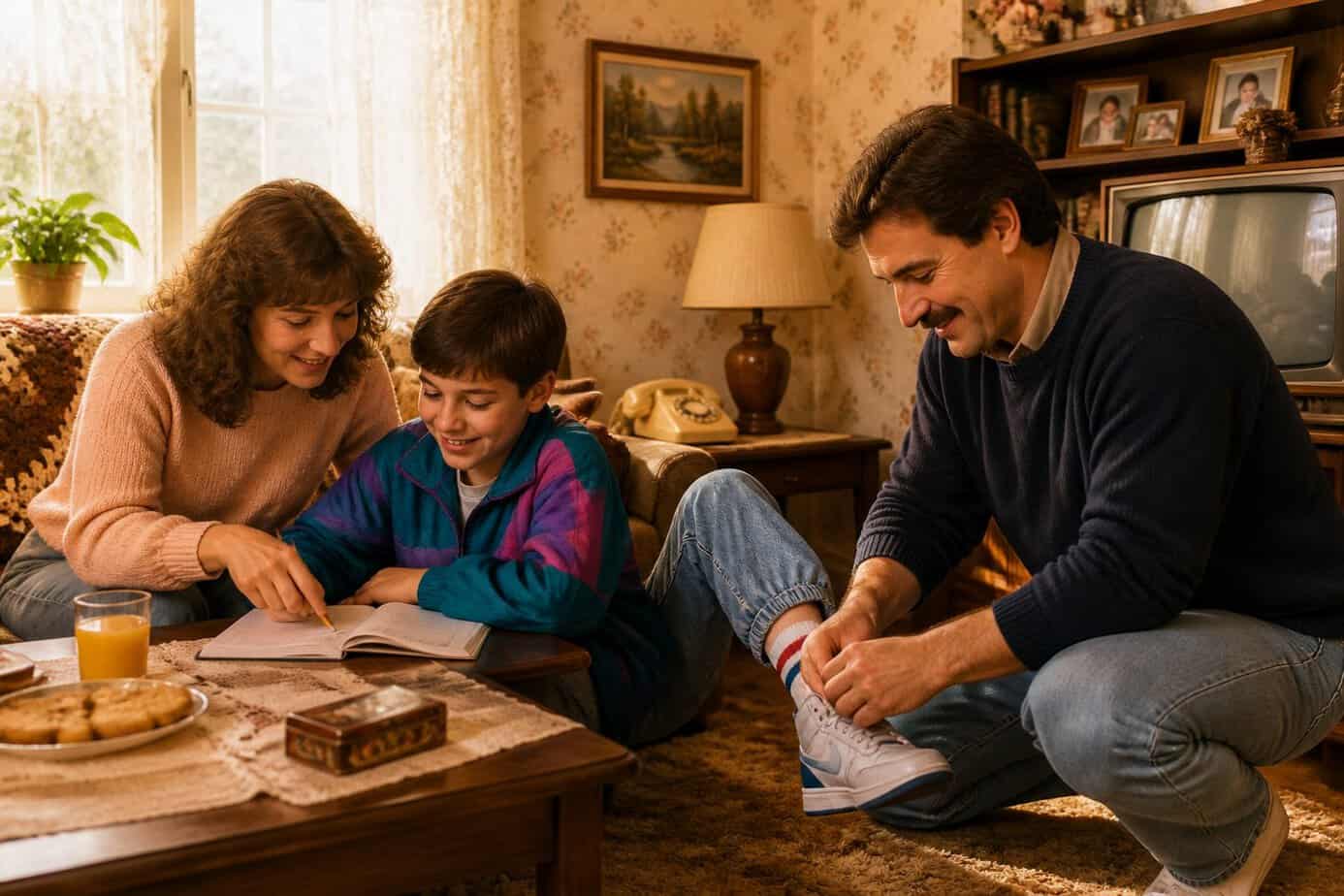
26. Homework done at the kitchen table with parental oversight
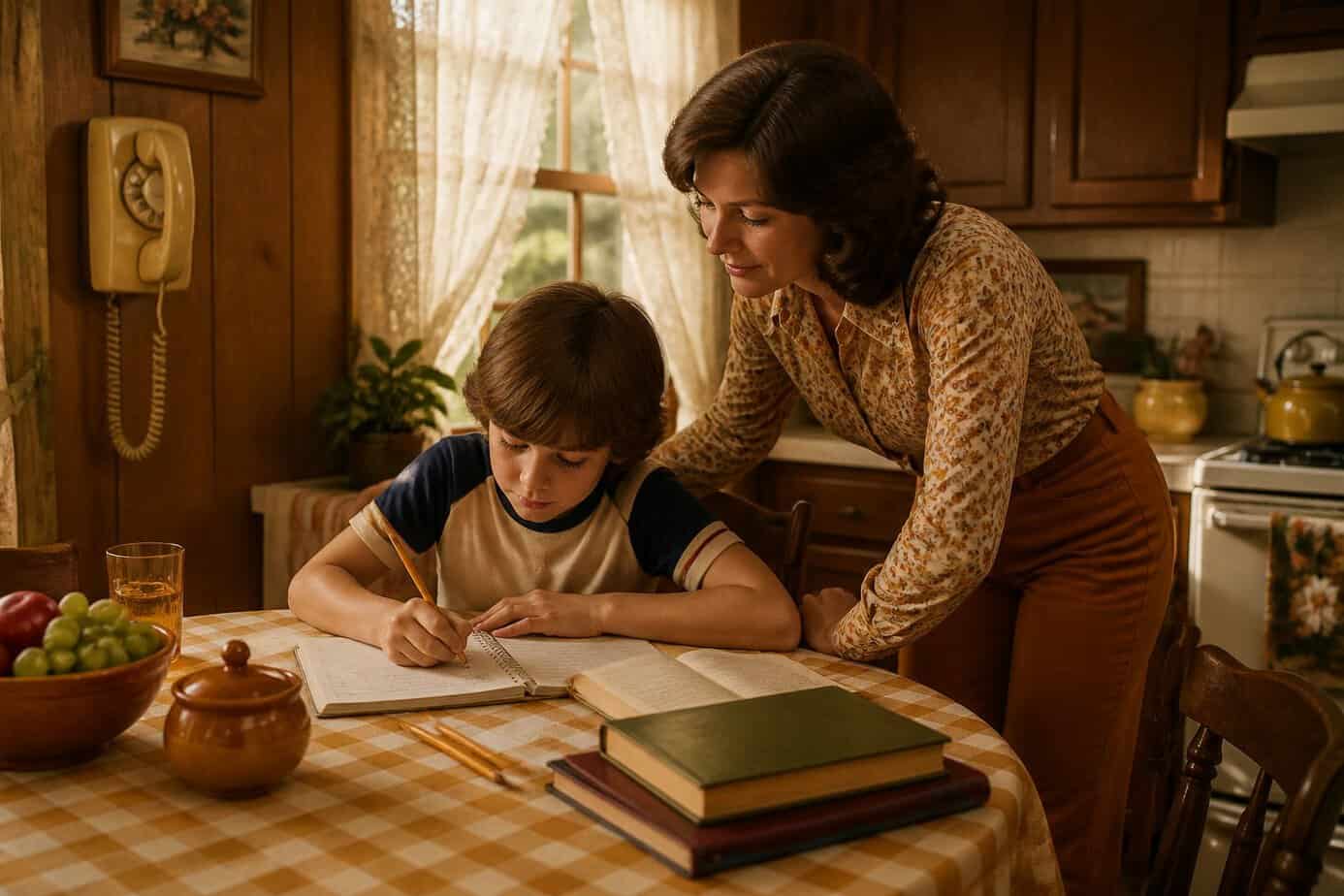
Homework in the 1970s happened in plain sight, usually at the kitchen table where parents could keep an eye on progress. This wasn’t about micromanaging every answer, but rather creating a structured environment with natural accountability.
The kitchen table served as a communal workspace. You spread out your textbooks and notebooks while your parents prepared dinner or washed dishes nearby. Distractions were minimal compared to today’s standards.
Parents checked completed assignments without the constant hovering that defines modern homework supervision. The television stayed off until your work was finished, and excuses for incomplete assignments didn’t hold much weight.
This setup created a balance between independence and guidance. You learned responsibility while knowing help was available if you genuinely needed it.
27. Reading aloud from books like The Chronicles of Narnia as a bedtime ritual
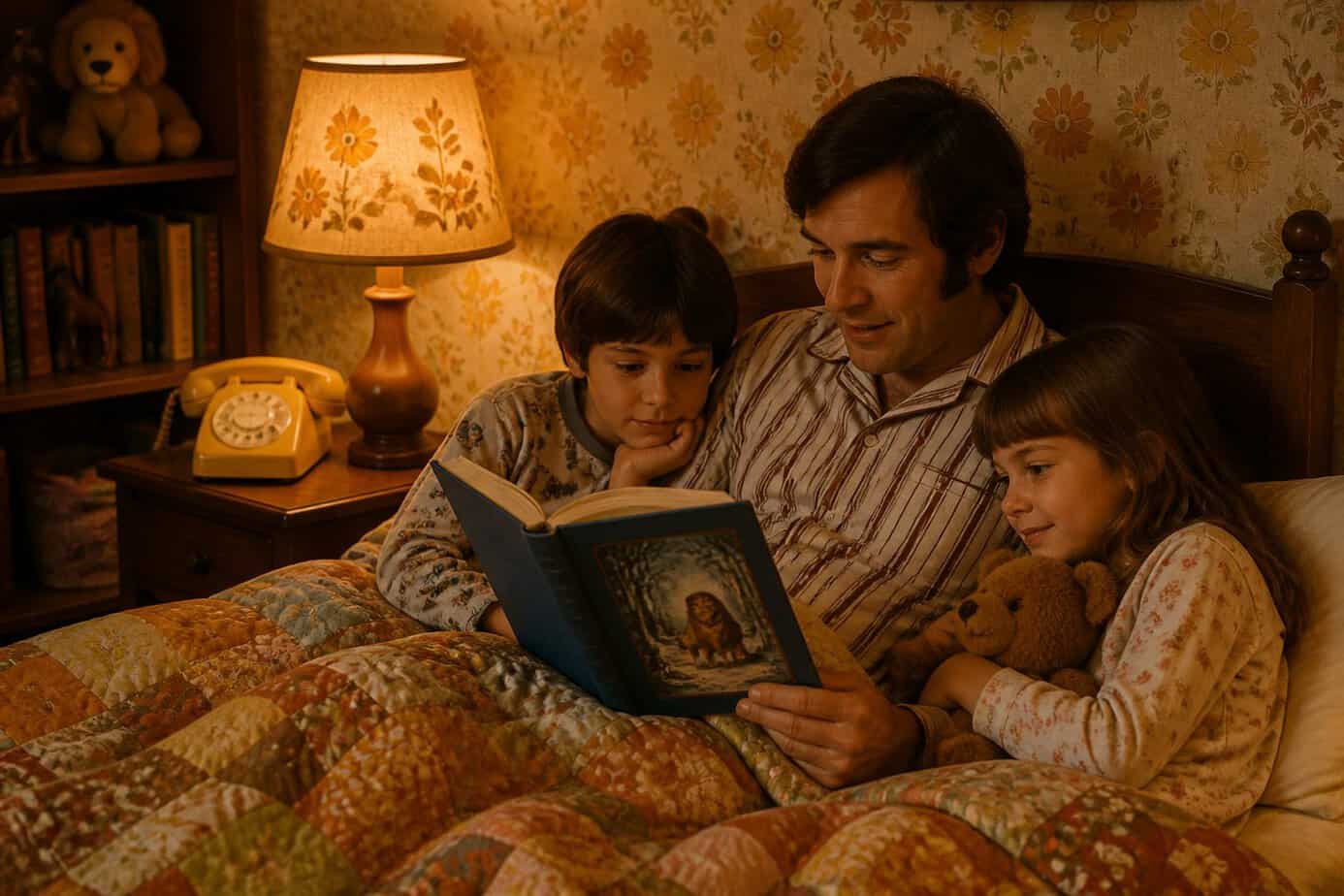
In the 1970s, families regularly gathered for nightly read-aloud sessions, with books like The Chronicles of Narnia serving as multi-week bedtime staples. Parents would dedicate 20 to 30 minutes each evening to reading chapter books aloud to their children, creating a shared literary experience that extended across weeks or months.
This practice required commitment and consistency. You couldn’t simply turn on a screen for instant entertainment. The ritual built listening skills and sparked imagination through words alone.
Today’s families face different evening routines. Audiobooks and streaming services have replaced the parent’s voice reading by lamplight. When bedtime stories do happen, they’re often shorter picture books rather than lengthy chapter book sagas.
The tradition of working through entire fantasy series together as a family, one chapter per night, has largely faded from modern households.
You might also enjoy 29 family dinners from the 1980s kids looked forward to and 1980s weeknight traditions families loved.
Cultural Shifts Influencing Family Bonds
The traditional family structure of the 1970s began transforming as work demands intensified, household roles evolved, and suburban expansion reshaped how neighbors interacted with one another.
Impact of Changing Work Schedules
The shift from single-income to dual-income households fundamentally altered when and how families spent time together. By the late 1970s, more mothers entered the workforce, reducing the availability for after-school activities and weekday family meals that had defined earlier generations.
Traditional nine-to-five schedules gave way to varied shifts and longer hours. Your parents might have worked opposite schedules just to cover childcare, leaving less time for the whole family to gather. Weekend work became more common in retail and service industries, eliminating the predictable Saturday and Sunday rhythms that families had relied upon.
The concept of “quality time” emerged as a response to shrinking family hours. You no longer had the luxury of spontaneous weeknight game sessions or leisurely Sunday afternoons together. Instead, families began scheduling activities, turning what was once natural into something that required planning.
Evolution of Gender Roles Within Households
The women’s movement reshaped household responsibilities and expectations throughout the 1970s. Mothers who had previously managed all domestic duties began sharing tasks with fathers, though the transition wasn’t always smooth or equal.
Your family dinner might have shifted from elaborate home-cooked meals to simpler fare as mothers balanced jobs with household management. Fathers started participating in activities like grocery shopping and cooking, breaking from the strict divisions of previous decades. Children took on new responsibilities too, with latchkey kids becoming more common as both parents worked.
These changes affected family traditions directly. Holiday preparations that once involved days of coordinated effort became streamlined. The all-day Sunday dinners with extended family occurred less frequently as schedules became harder to align.
Effects of Suburbanization on Community Spirit
Suburban expansion continued through the 1970s, spreading families across larger geographic areas with less walkable infrastructure. Your neighborhood likely had fewer central gathering spots than urban communities of earlier eras.
Front porches disappeared in favor of backyard patios, physically turning homes inward. You spent less time interacting with neighbors casually and more time inside or in private yards. The car became essential for every activity, reducing spontaneous community interactions that happened naturally when people walked.
Key changes in community interaction:
- Decreased sidewalk culture and street play
- Loss of local corner stores as gathering points
- Reduced multi-generational neighborhood connections
- Increased reliance on organized activities over spontaneous play
Shopping districts gave way to enclosed malls and strip centers, eliminating the weekly town visits where families would encounter their broader community. Church attendance began declining, removing another traditional point of regular social connection.
Media and Technology’s Role in Family Life
Television viewing became a structured family activity in the 1970s, with households gathering around a single set to watch scheduled programming together. Technology remained simple enough that it brought families together rather than isolating them in separate rooms.
Rise of Home Entertainment Systems
The 1970s saw families investing in their first complete entertainment setups centered around the television. You likely had a console TV as the living room centerpiece, often doubling as furniture with wooden cabinets and storage compartments.
Your family’s entertainment options expanded with the addition of a record player for listening to albums together. Many households purchased their first VCRs toward the decade’s end, though the devices cost between $1,000 and $1,400 initially. The Betamax and VHS format war meant your family had to choose sides, affecting which movies you could rent or record.
Sound systems remained relatively simple compared to today’s standards. Most families used the television’s built-in speakers or added basic stereo components. The shared nature of these systems meant everyone in your household heard the same content, creating common experiences and references.
Influence of Cable Television
Cable television arrived in many American homes during the 1970s, fundamentally changing viewing habits. Your family went from receiving 3-7 channels to accessing dozens of options, though you still gathered to watch programs together at scheduled times.
HBO launched in 1972, becoming the first premium cable channel and introducing commercial-free movies to home viewers. Your family’s cable package determined what everyone could watch, requiring household negotiations about which channels justified the monthly cost.
The TV Guide became essential reading material in your home. You planned your week around favorite shows since missing an episode meant waiting months for a possible rerun. Family disagreements over channel selection were resolved through discussion rather than everyone retreating to separate screens.
Early Computerization
Home computers entered family life during the late 1970s, though they remained expensive novelties for most households. The Commodore PET, Apple II, and TRS-80 arrived in 1977, costing between $1,200 and $3,000.
Your family likely viewed a computer as an educational investment rather than entertainment. These early machines required technical knowledge to operate, often making them a father-son bonding activity focused on programming in BASIC. Computing remained a shared family activity because most households could afford only one machine.
The learning curve was steep. You typed commands manually and saved data on cassette tapes or floppy disks. Games existed but served as secondary functions to educational and productivity applications.