
29 Thanksgiving Dishes Grandma Made That Nobody Cooks Anymore
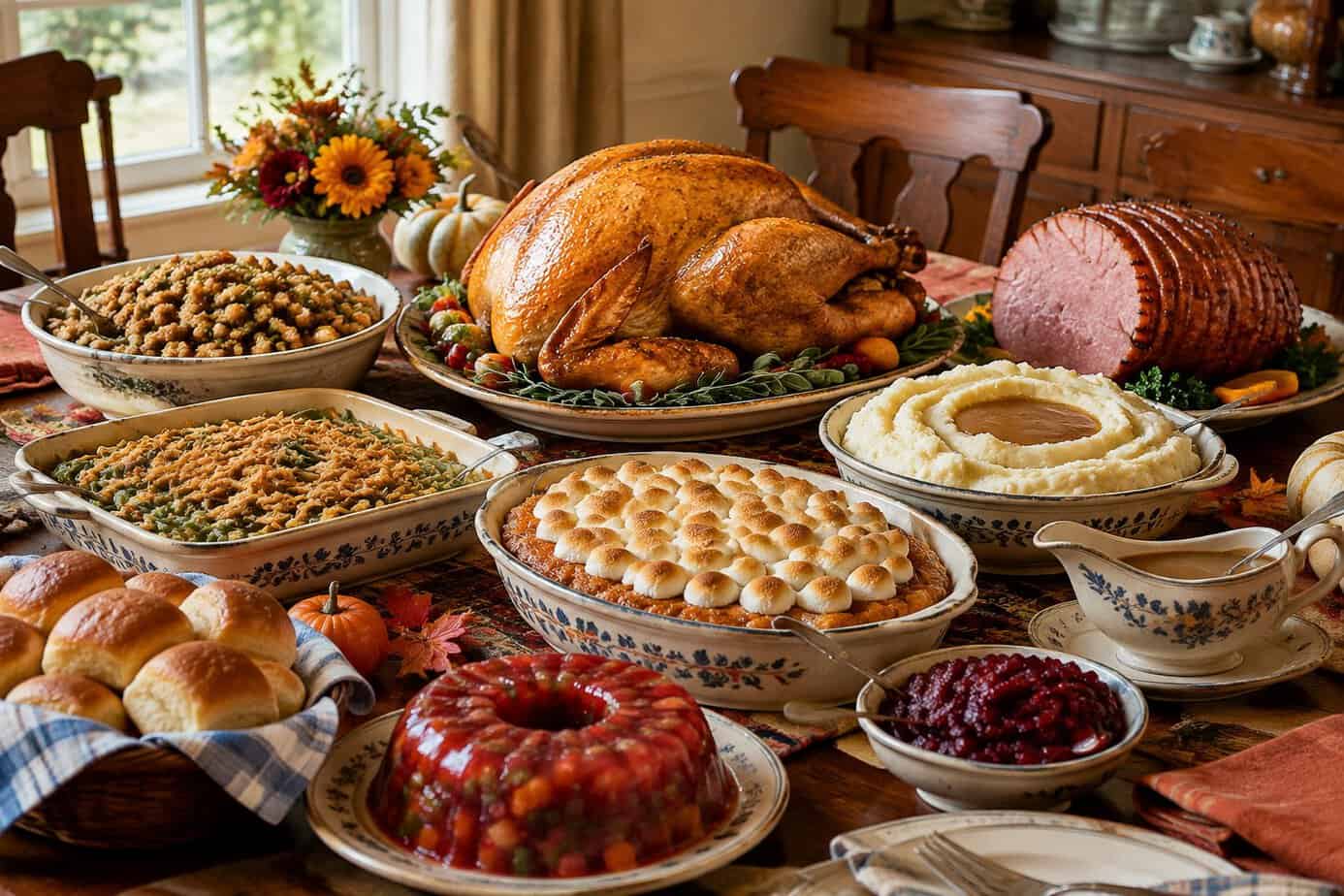
Thanksgiving tables used to look different than they do now. Many dishes that once held a place of honor have quietly faded from modern menus, replaced by newer favorites and quicker recipes.
You may remember standing beside your mother or grandmother in the kitchen, watching her prepare dishes that took all morning and smelled like nothing else all year. Some of those recipes came from handwritten cards, others simply from memory, passed down without measurements or instructions. As a young wife and mother, you likely carried a few of those Thanksgiving traditions into your own kitchen, even as tastes began to change around you.
This article takes a gentle look back at some of those dishes, the ones that once filled your table but rarely appear today.
1. Oyster stuffing
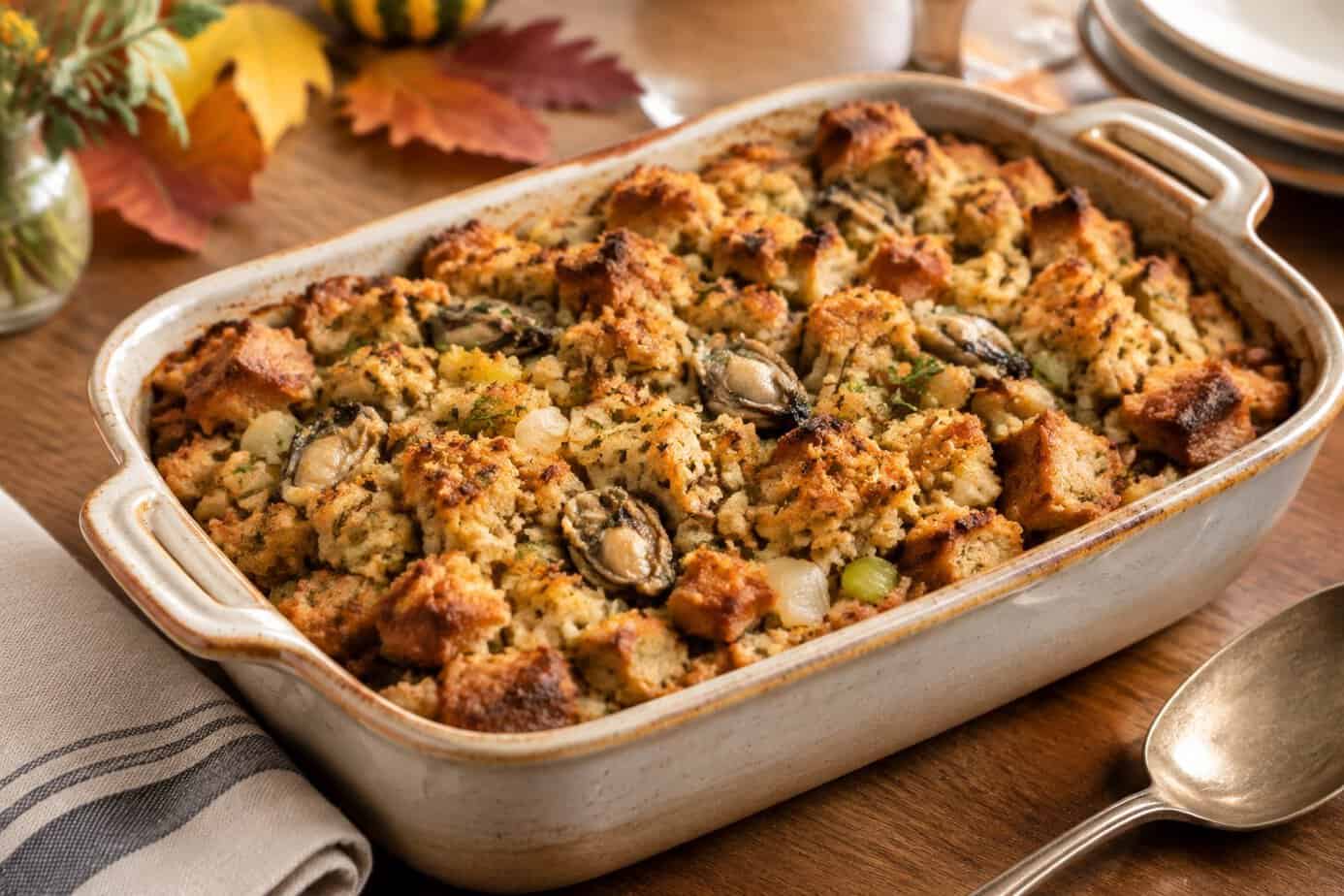
You remember the smell before you remember the taste, that briny note cutting through butter and sage as the turkey roasted. Your grandmother made it every year, no exceptions, and she would not hear a word against it. The oysters came in small tins or jars from the fish counter, drained and folded into day-old bread cubes along with celery, onion, and plenty of melted butter.
Some years she used fresh shucked oysters when the grocer had them in, which felt like a small occasion in itself. You learned to make it her way, stuffed right into the bird or baked alongside in a dish, and it always disappeared fast at your table too.
It was a coastal and Southern tradition mostly, something passed down through families who grew up near the water or whose own mothers had. Your children, though, were suspicious of seafood anywhere near their turkey. Once oysters got pricier and harder to find fresh, the dish quietly stopped showing up, and plain bread stuffing took its place without anyone really deciding it should.
2. Ambrosia salad
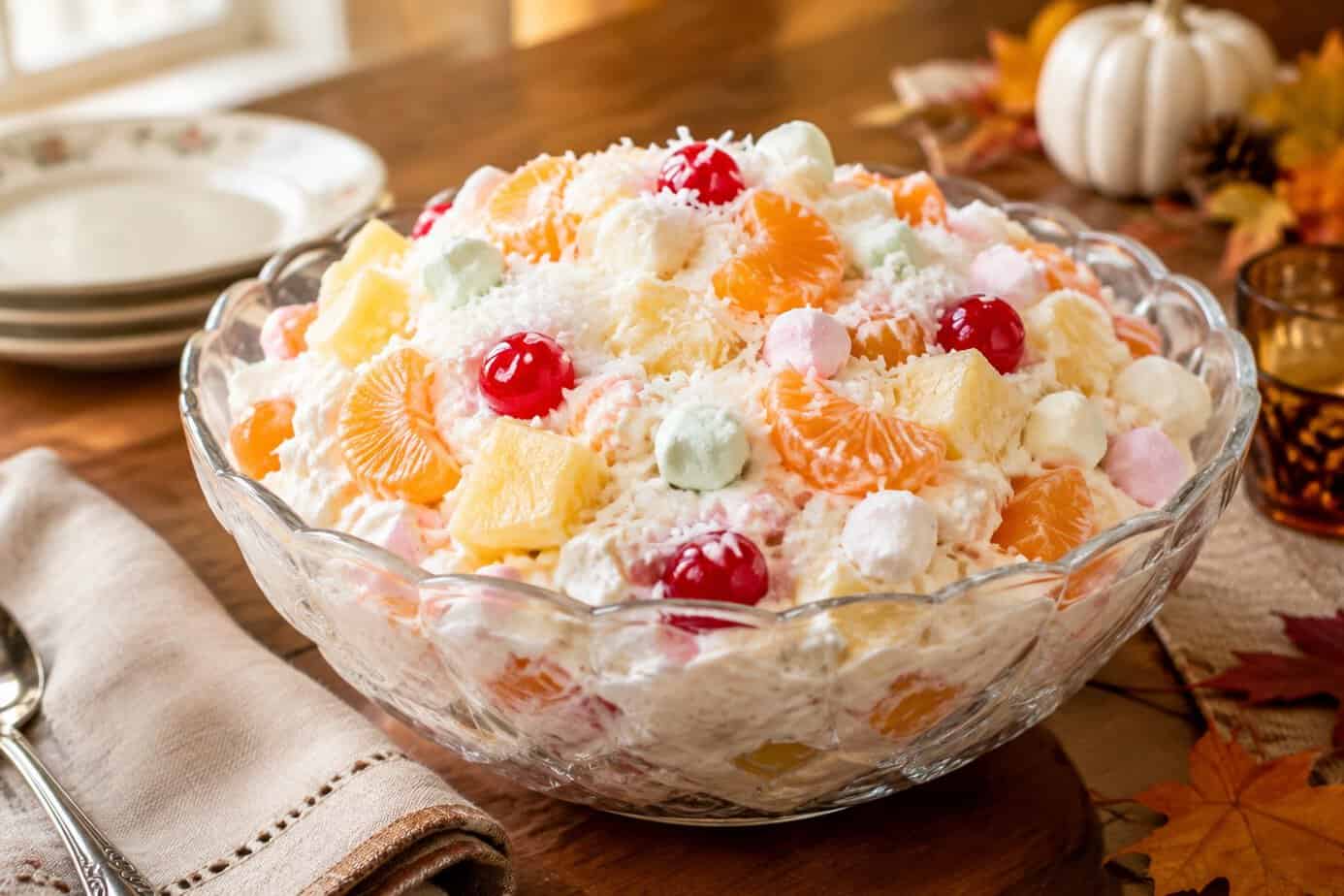
You remember pulling out the good glass bowl whenever ambrosia salad was on the menu. It felt like a special occasion dish, even though the ingredients were simple pantry staples. Canned mandarin oranges, crushed pineapple, maraschino cherries, shredded coconut, and a bag of mini marshmallows went into that bowl.
Sour cream or a mix of mayonnaise and whipped topping held it all together. Some versions called for a packet of instant vanilla pudding mix to thicken things up. You likely got the recipe from a church cookbook or clipped it from a magazine ad for canned fruit.
Making it was never complicated. You drained the fruit, folded everything together gently, and let it chill in the refrigerator for a few hours so the flavors could blend. By the time dinner rolled around, it had turned into something soft and creamy, almost like a dessert sitting right next to the turkey and stuffing.
Tastes changed as the years went on. Families started wanting fresher fruit and lighter dressings instead of canned ingredients and sweet sauces. Ambrosia salad quietly slipped off the holiday table, though the memory of that pastel-colored bowl still makes you smile.
3. Lime gelatin salad
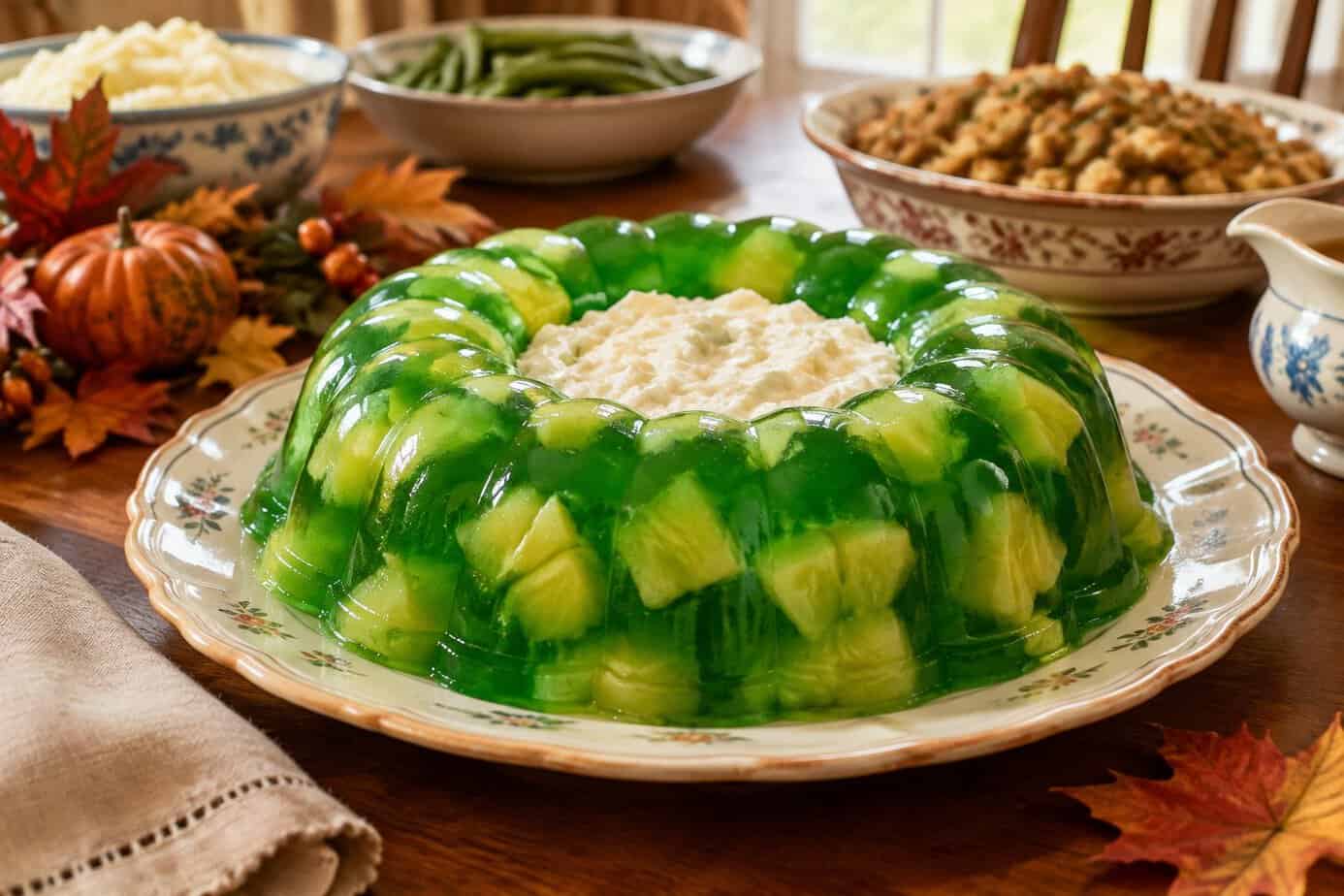
You remember the bright green bowl sitting on the table every Thanksgiving, jiggling a little whenever someone bumped the table. Lime gelatin salad was a fixture, and you probably had your own version passed down from your mother or found scribbled on an index card in her recipe box. Cottage cheese and crushed pineapple were almost always folded in, giving it that odd but familiar combination of sweet and tangy.
The recipe likely came from the back of a Jell-O box or a church cookbook, the kind every family seemed to own. You dissolved the lime gelatin in hot water, stirred in the pineapple juice, then waited for it to set just enough before folding in the cottage cheese. Some versions called for a dollop of mayonnaise or a layer of Cool Whip on top, which felt fancy at the time.
It showed up in a glass dish, often with a scalloped edge, proudly displayed between the mashed potatoes and the turkey. Nobody quite called it a salad or a dessert, but everyone took a scoop anyway. As tastes changed and gelatin salads fell out of style, this one slowly disappeared from most holiday tables.
4. Cranberry gelatin mold
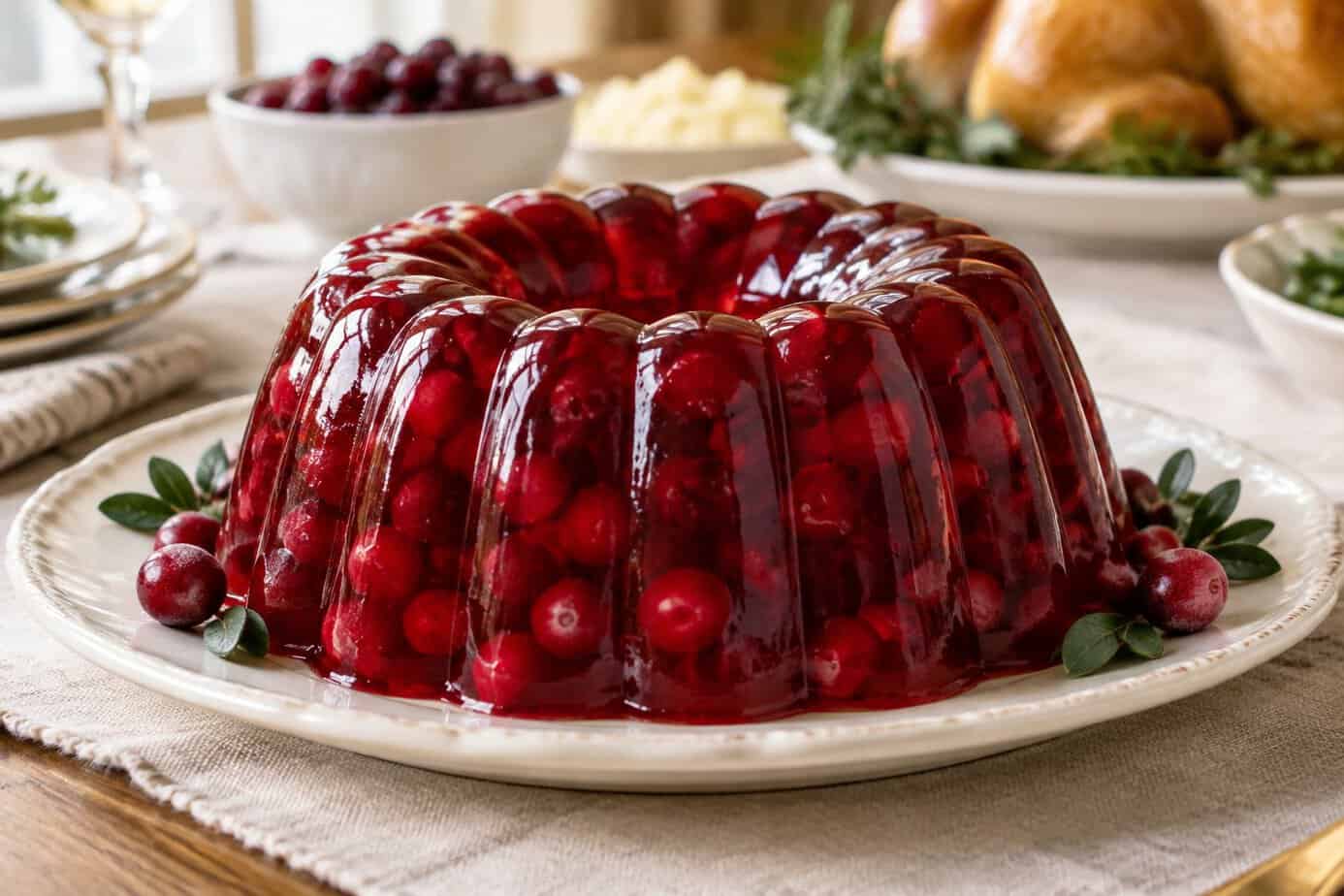
You remember the jiggly red mold sitting next to the turkey, sometimes with a pretty ring shape or little ridges from the fancy aluminum mold your mother kept in the cupboard. It was usually lemon or raspberry Jello mixed with whole fresh cranberries that had cooked until they popped, then chilled until firm. The recipe probably came off the back of a cranberry sauce bag, out of a church cookbook, or from a card your own mother copied by hand.
You likely added chopped apples, celery, and walnuts once the mixture started to set, giving it a little crunch against the smooth gelatin. Getting it out of the mold without it collapsing was its own small victory, and you probably dipped the mold in warm water for a few seconds before flipping it onto a plate.
It faded from tables as fresh and whole-berry cranberry sauces became easier to find and make. Molded salads in general started feeling dated, and fewer people wanted to fuss with gelatin, mixing, and chilling times. These days you might still think of it fondly, even if you reach for canned cranberry sauce instead.
5. Molded fruit salad
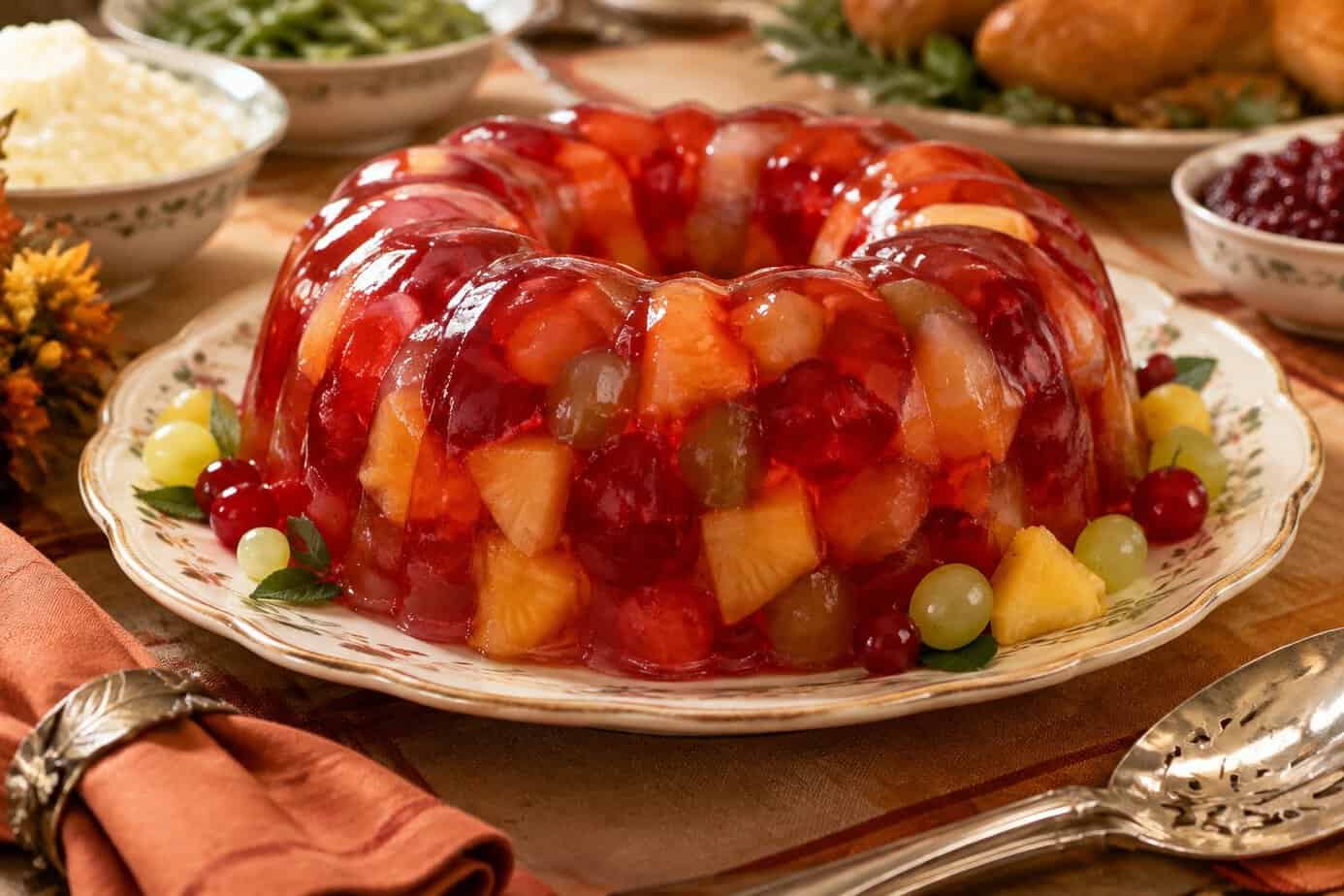
You remember the Jell-O box recipe by heart, because you made it so many times. Lime or lemon gelatin, a can of crushed pineapple, maybe some cottage cheese stirred in for that pale green color everyone associated with the holidays. It had to set overnight in the refrigerator, and you watched the clock, worried it wouldn’t firm up in time.
The mold itself mattered almost as much as what went inside it. You probably had a ring mold or a fish-shaped one passed down from your own mother, and getting the salad to release in one clean piece felt like a small victory every time.
Canned fruit cocktail, mandarin oranges, and miniature marshmallows often found their way in too, depending on what the recipe card called for. These cards came from church cookbooks, the backs of gelatin boxes, or a neighbor who swore her version was the best on the block.
It sat proudly on the table next to the turkey, jiggling a little when someone bumped the tablecloth. Nobody questioned whether a salad should be sweet and wobbly back then. Tastes changed, fresh produce became available year-round, and the habit of making these sweet, wobbly salads faded along with the molds that held them.
6. Perfection salad
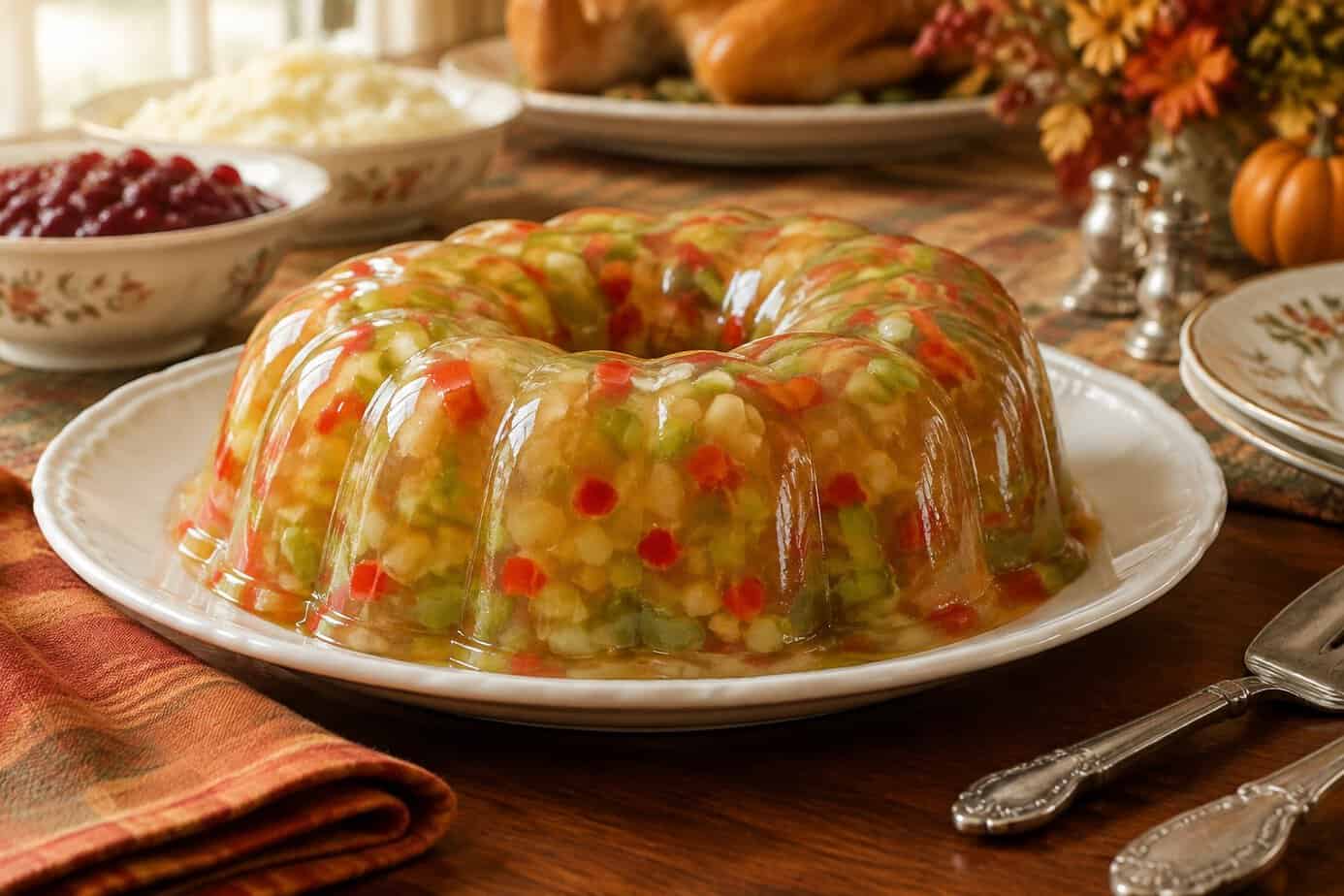
You remember this one sitting proudly on the table, wobbling just slightly when someone set it down too hard. It was plain or lemon gelatin with a good splash of vinegar, set with shredded cabbage, chopped celery, and bits of sweet red pepper or pimiento suspended throughout like a science experiment. Some later versions added grated carrots or pineapple, which gave it a sweeter edge against the vinegar tang.
The dish goes back to a 1904 Knox Gelatine recipe contest, and you probably had it on an index card, from a gelatin leaflet, or out of a church cookbook passed around after Sunday service. Making it meant planning ahead, since it needed hours in the refrigerator to set properly in the mold before you could turn it out onto a plate.
You served it because it looked impressive and felt a little fancy, especially next to all the heavier dishes on the table. Nobody really fought over seconds, but it held its place as something you were expected to bring.
It faded once people stopped seeing molded vegetables in gelatin as elegant and started seeing them as odd. Fresh salads took over, and Perfection Salad quietly disappeared from most Thanksgiving tables.
7. Cranberry-orange relish
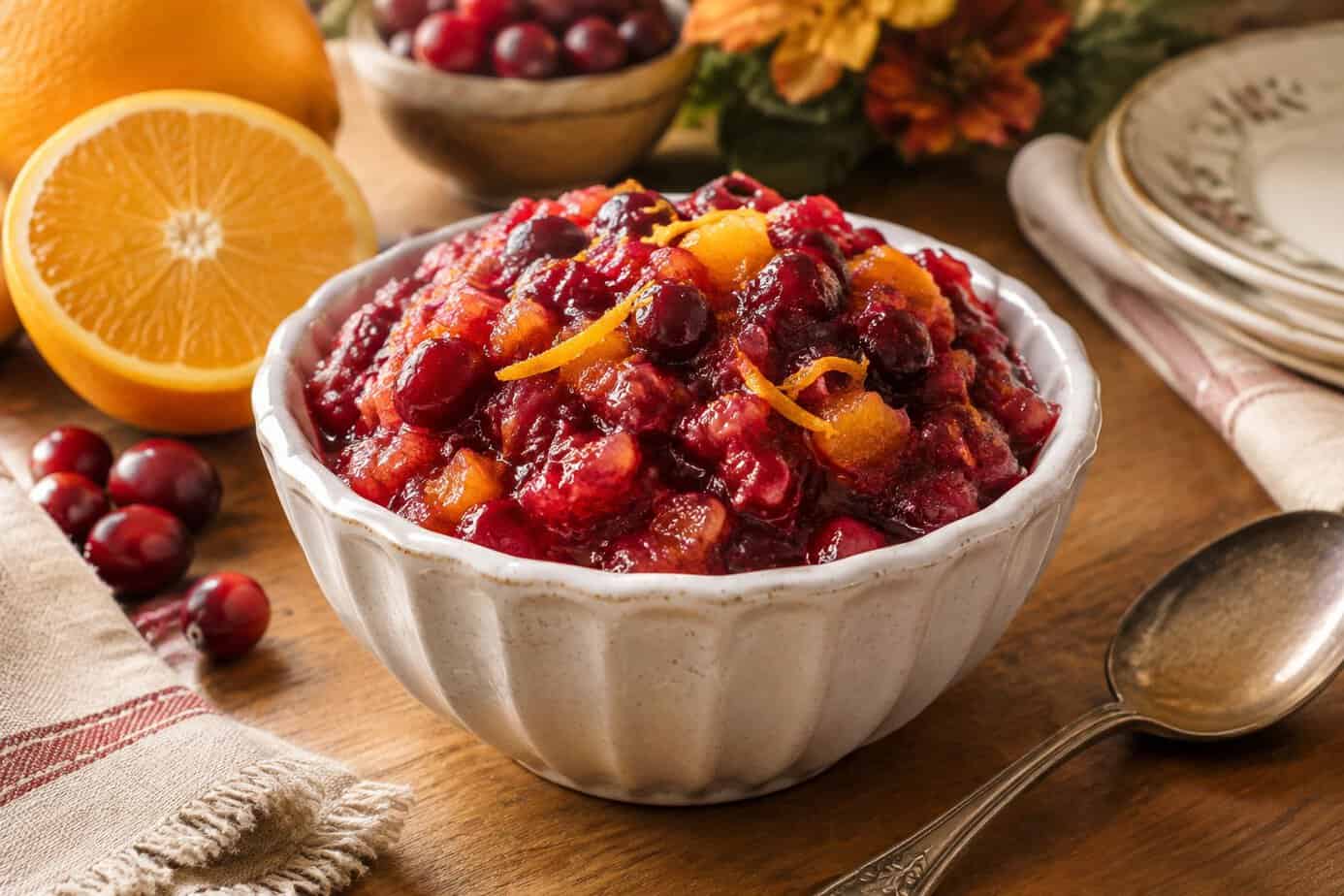
You remember grinding whole cranberries and an orange, peel and all, through that hand-crank food grinder clamped to the kitchen table. No cooking involved, just sugar stirred in until the color turned a deep ruby pink. Your mother called it relish, never sauce, and she made it a day ahead so the flavors could settle in the icebox.
The recipe probably came from a church cookbook or was scrawled on an index card passed between neighbors. Some versions added chopped walnuts or a handful of crushed pineapple for sweetness. Yours stayed simple: cranberries, orange, sugar, nothing fancy.
It faded once canned cranberry sauce became the easier choice, the kind that slid out in one smooth cylinder with ridges from the can. Families got busier, and the grinder sat unused in a drawer. Food processors replaced it for a while, then even that step felt unnecessary. Somewhere along the way, people forgot that fresh relish only took a few minutes to make, and tasted brighter than anything from a can.
8. Creamed onions
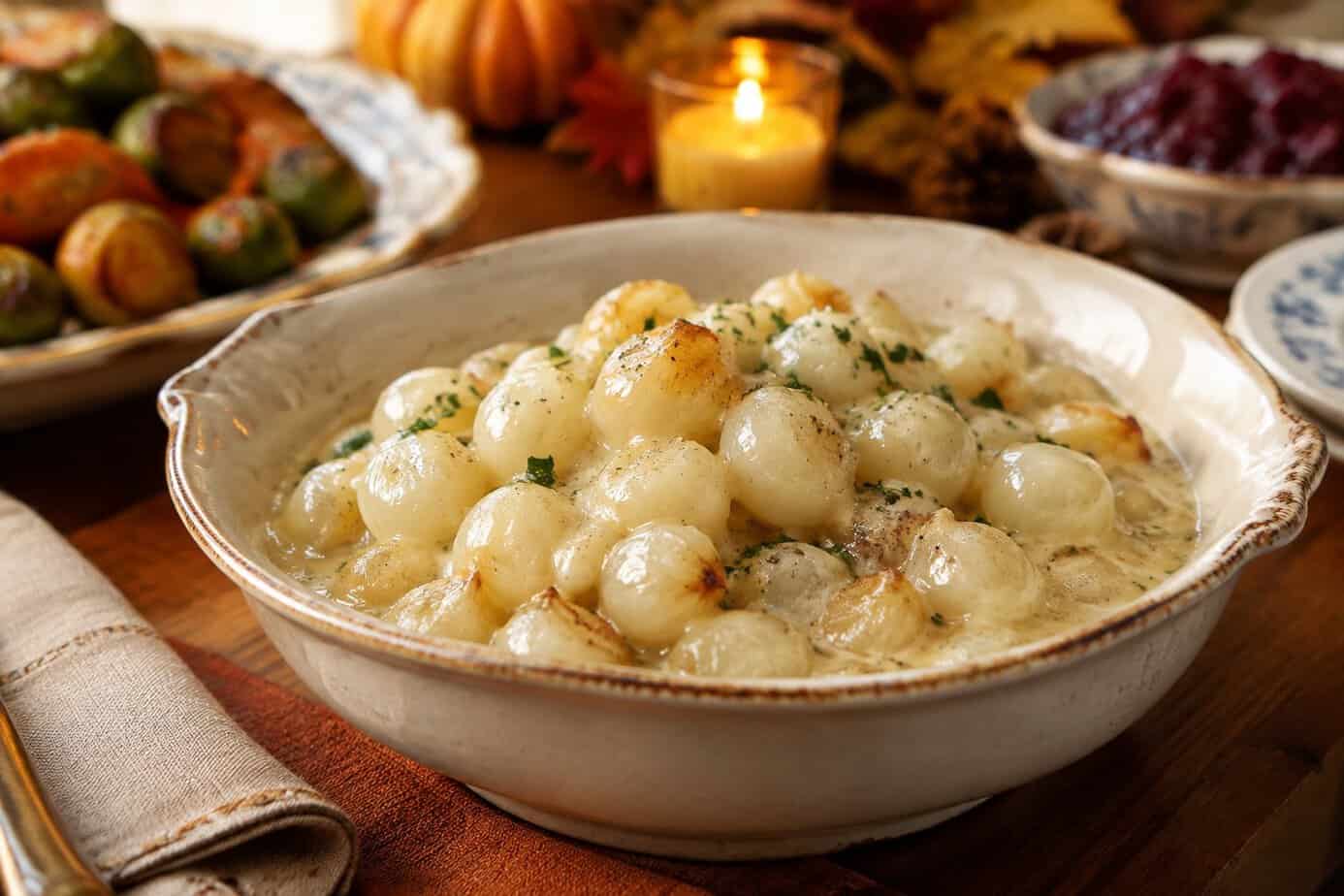
You remember the smell of pearl onions simmering on the stove before any of the other dishes even started. Your grandmother peeled what seemed like a hundred tiny onions every Thanksgiving morning, dropping them into boiling water first so the skins would slip off easier. It was tedious work, and she never once complained about it.
The sauce was simple: butter, flour, milk, and a little salt and pepper, cooked slow until it thickened into something smooth and rich. Some years she stirred in a bit of nutmeg. Other years your mother added breadcrumbs and cheese on top, then ran it under the broiler for a gratin finish, a trick she picked up from an old magazine clipping tucked into her recipe box.
You made it yourself for a while after you got married, mostly because it felt like tradition demanded it. But peeling pearl onions is nobody’s favorite task, and frozen vegetables made it easy to skip. Somewhere along the way, creamed onions quietly disappeared from the table, replaced by dishes that asked less of the cook.
9. Scalloped oysters
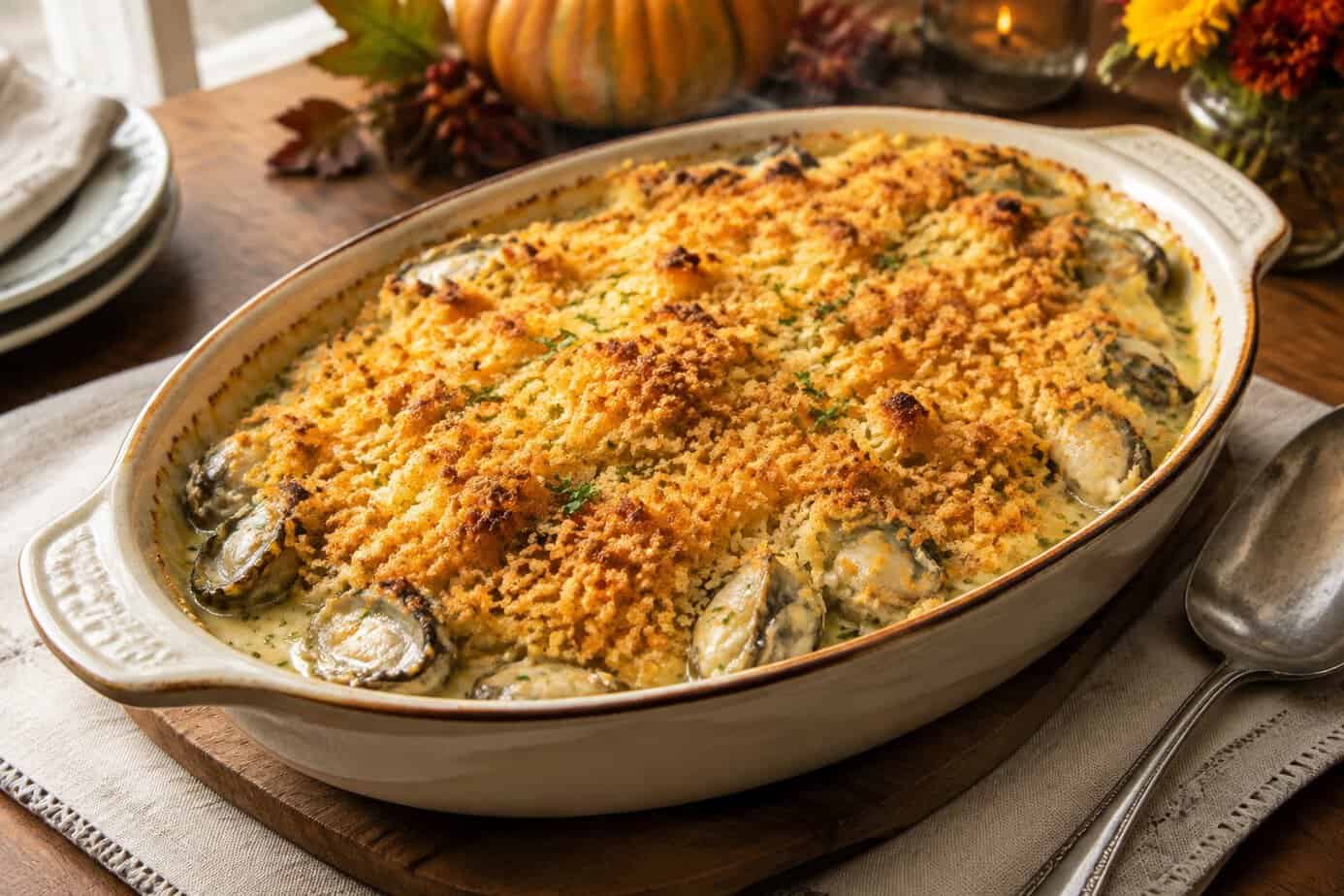
You remember this one showing up every Thanksgiving, right between the turkey and the mashed potatoes, in a buttered dish that had probably baked that same recipe for thirty years. Your mother or grandmother layered crushed saltines with oysters from a can or a small carton from the fish market, then poured melted butter and a little milk or cream over the top. It baked until the top crackers turned golden and the edges got that little crisp of butter and brine.
The recipe likely came from a church cookbook or one of those recipe cards passed hand to hand, maybe clipped from a magazine during the 1950s or 1960s. Everyone seemed to have their own version, but the basics stayed the same: crackers, oysters, butter, and a bit of seasoning.
It faded for a few honest reasons. Fresh oysters got pricier and harder to find inland, and canned ones never felt quite as special. Plus, younger cooks in your family just did not grow up eating them, so the dish quietly stopped getting made.
10. Oyster stew
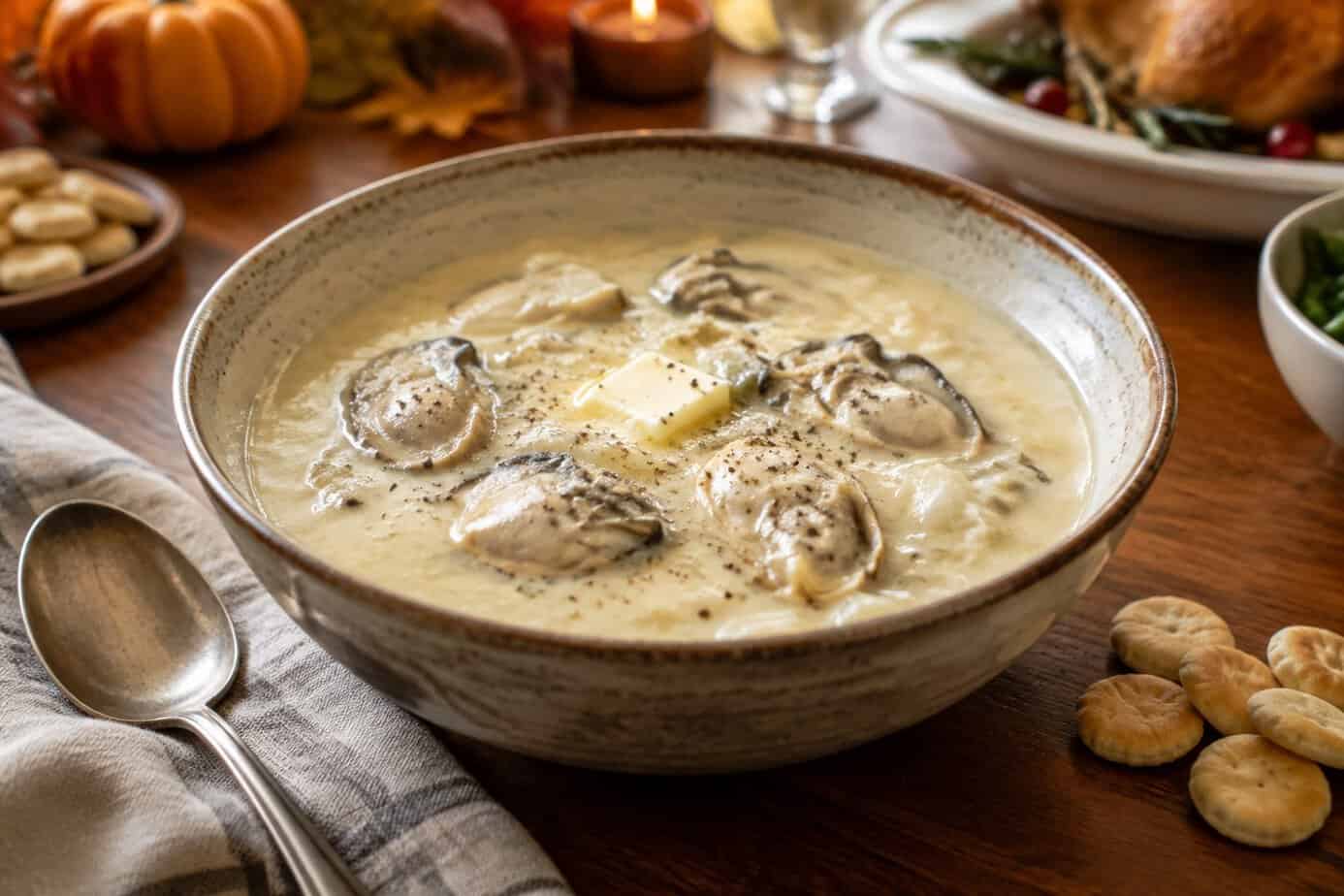
You probably made this one on Christmas Eve more often than Thanksgiving, but plenty of families served it both times, especially if there were coastal relatives or a father who grew up near the water. It was simple: milk or half-and-half, butter, a pint of fresh shucked oysters, salt, pepper, maybe a dash of paprika on top. Your mother likely heated the milk slowly so it wouldn’t scorch, then added the oysters just long enough for the edges to curl.
You served it in small cups before the main meal, or sometimes as a whole course on its own with oyster crackers. The recipe probably came from your grandmother’s side of the family, passed down without much written instruction because everyone already knew how it went.
It faded for a few reasons. Fresh oysters got harder to find inland and more expensive everywhere. Younger cooks weren’t as comfortable handling them, and the taste itself fell out of favor with younger palates. It’s still made here and there, mostly by people keeping an old family habit alive.
11. Chestnut stuffing
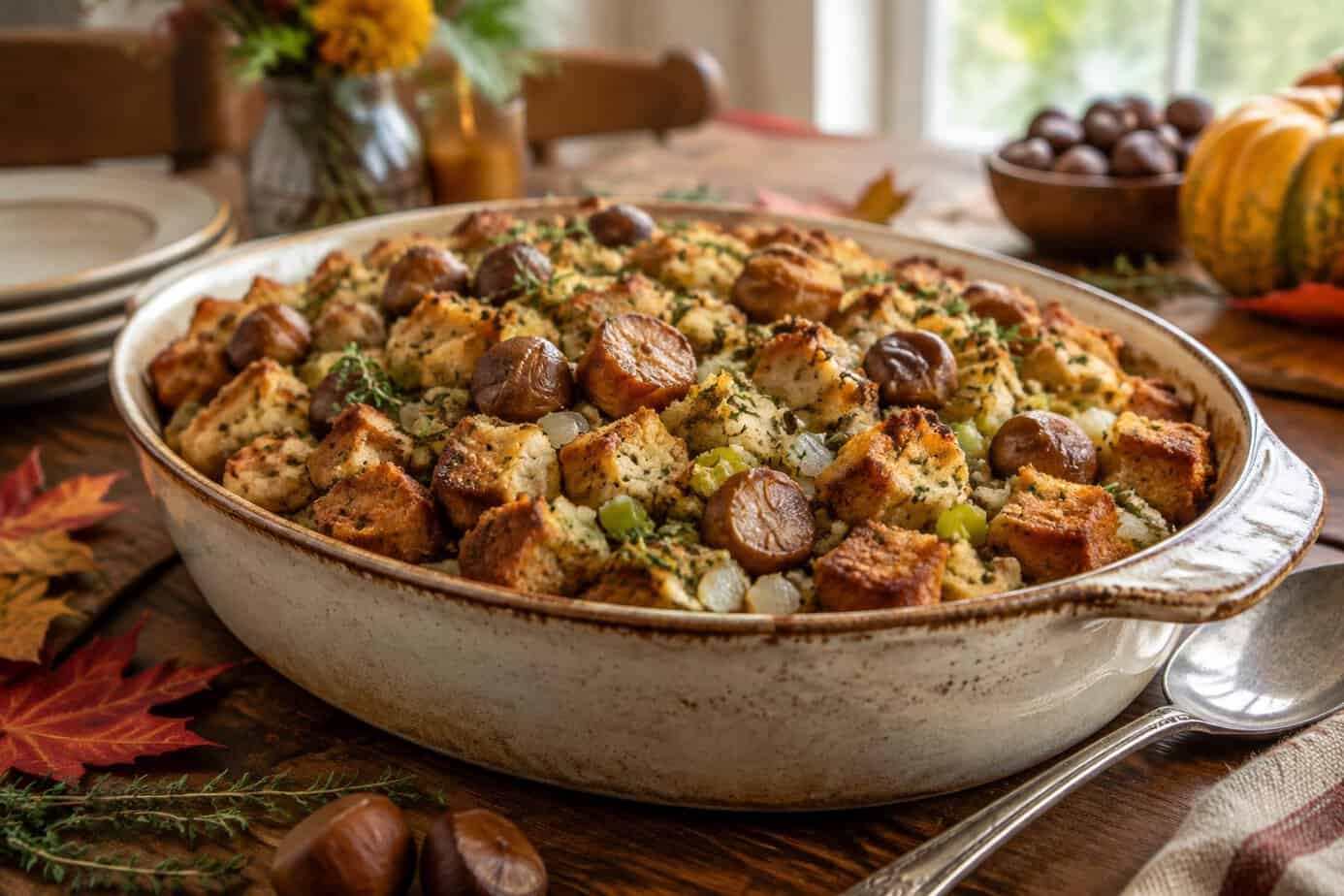
You remember your mother standing at the counter with a paring knife, cutting an X into each chestnut shell before roasting them. The kitchen smelled like roasted nuts and sage for hours. It was a slow job, and she never seemed to mind the work it took.
Her recipe came from a church cookbook, the kind with a spiral binding and a stained cover from years of use. The stuffing itself was simple: cubed bread, chopped celery and onion, roasted chestnuts, and a little milk or broth to bring it together. Some years she added sausage if there was extra in the icebox.
You made it yourself when you were first married, peeling chestnuts at the table while your own children ran around the kitchen. It took patience, but it felt like you were carrying on something real.
Fresh chestnuts got harder to find at the grocery store over the years, and the shelling process scared off a lot of younger cooks. Boxed stuffing mixes were just easier, so the chestnut version slowly disappeared from most Thanksgiving tables, even though the flavor was something special.
12. Sausage and sage dressing
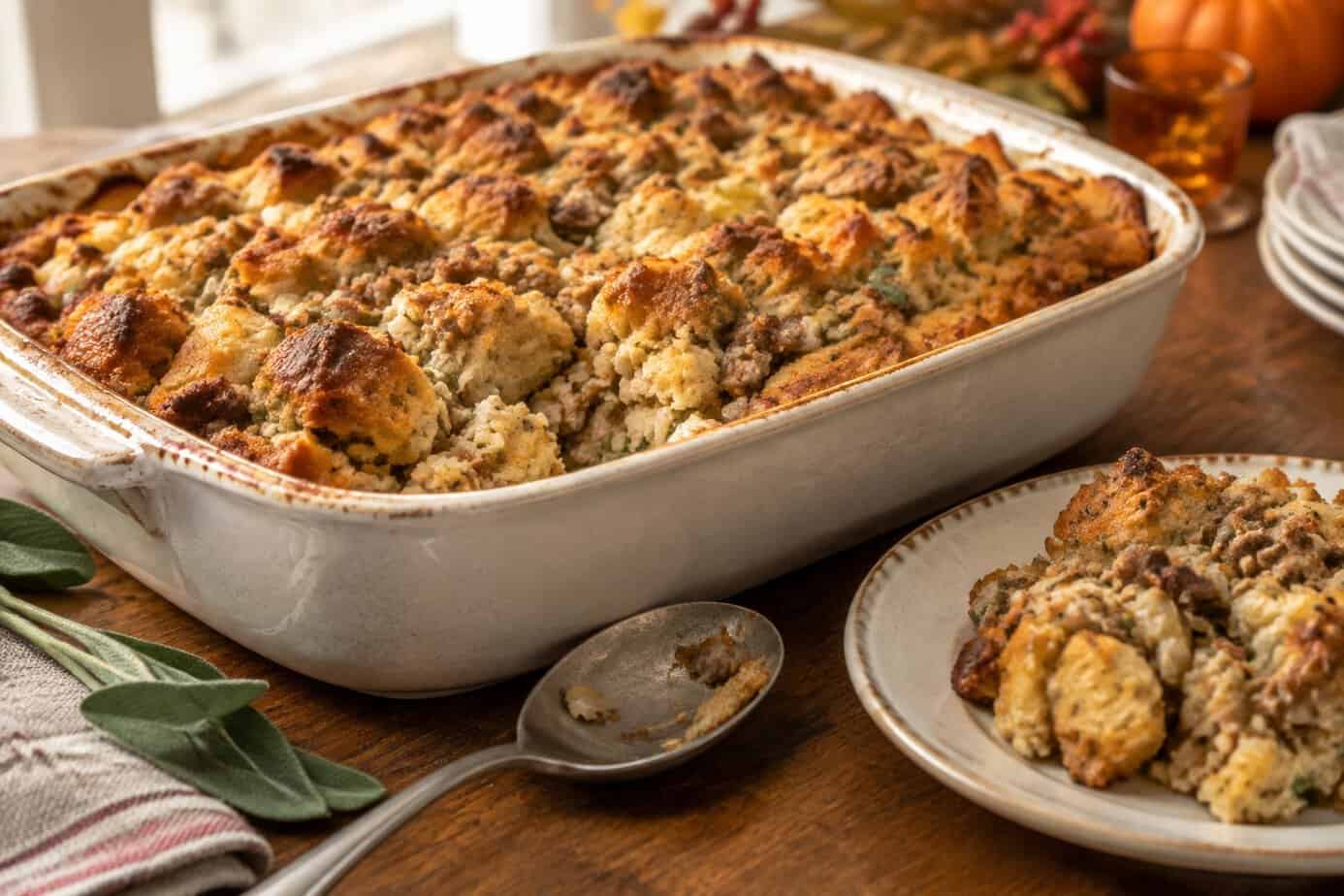
You remember your mother standing at the counter days before Thanksgiving, tearing bread into pieces and leaving it out to go stale on baking sheets. That stale bread was the whole secret. Fresh bread turned to mush, but dried-out bread soaked up the broth and held its shape.
The sausage came from a roll, browned in a skillet with the casing removed, and the smell of it cooking with onions and celery filled the kitchen for hours. Sage was never measured carefully. You just shook it in until it smelled right, the way your own mother had taught you.
This recipe likely came from a card tucked in a recipe box, handed down or copied from a church cookbook. Every family had their own version, but the bones were the same: bread, sausage, celery, onion, broth, and sage, baked until the top went golden and a little crisp.
It faded as families got smaller and nobody wanted to dry out bread for days anymore. Boxed stuffing mixes promised the same flavor in a fraction of the time, and most people decided that was good enough.
13. Cornbread dressing with giblets
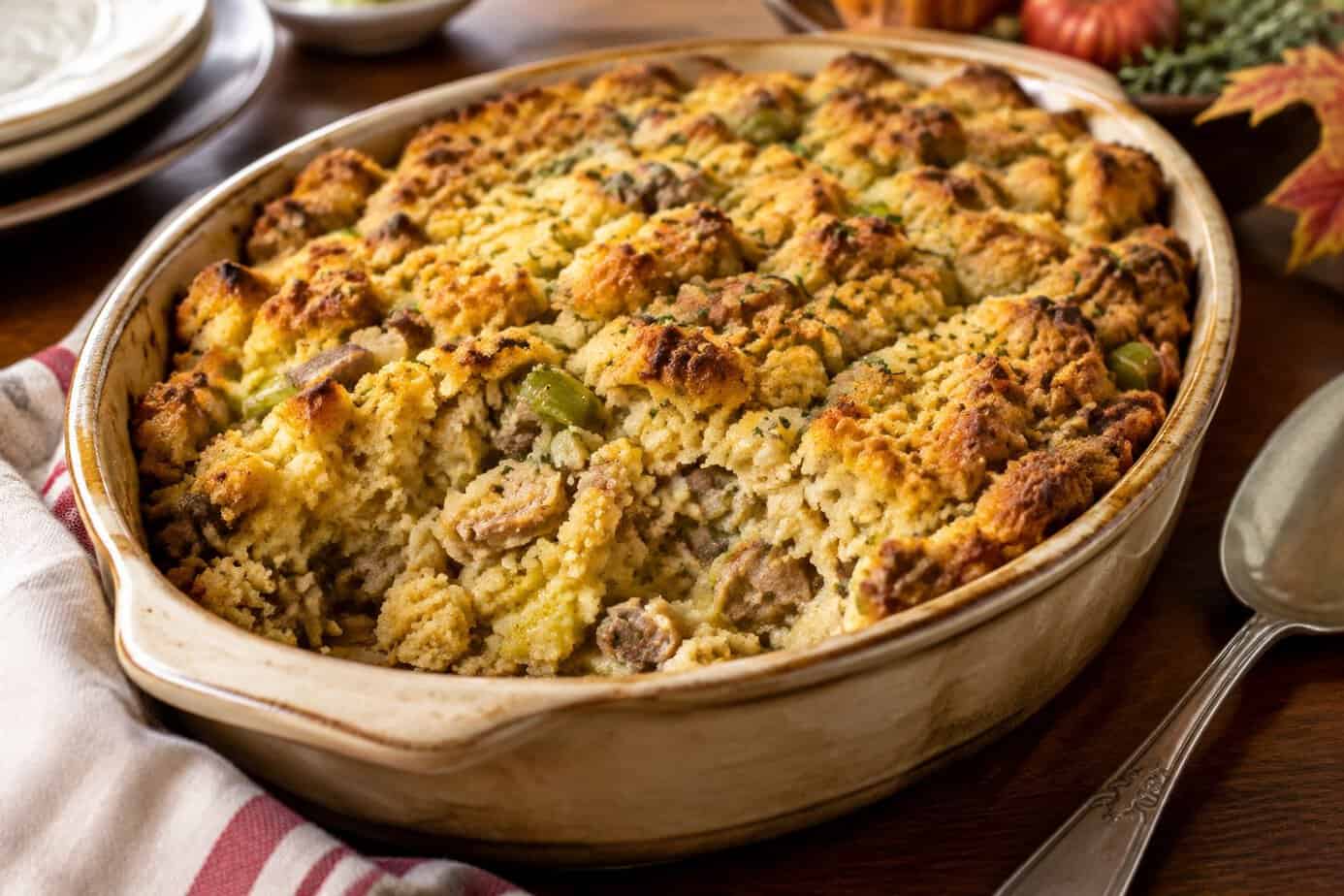
Your grandmother never used a box mix. She baked her own cornbread a day ahead, usually in a well-seasoned cast iron skillet, then let it sit out to get a little stale before crumbling it into her big mixing bowl.
The giblets came from inside the turkey, simmered on the stovetop with the neck until tender. You chopped the liver, heart, and gizzard fine and added them to the dressing along with the rich broth they cooked in.
Onion, celery, sage, and black pepper rounded out the flavor. Some mothers mixed in a few crumbled biscuits or white bread along with the cornbread, the way the Texas and Southern recipe cards called for.
She baked it in a big pan until golden on top, then made giblet gravy from the drippings and the rest of the chopped giblets to pour over everything.
Fewer cooks bother with giblets today. Plenty of cooks now toss the little bag of giblets without opening it, and many find the whole process a bit too old-fashioned for their taste.
14. Roast goose
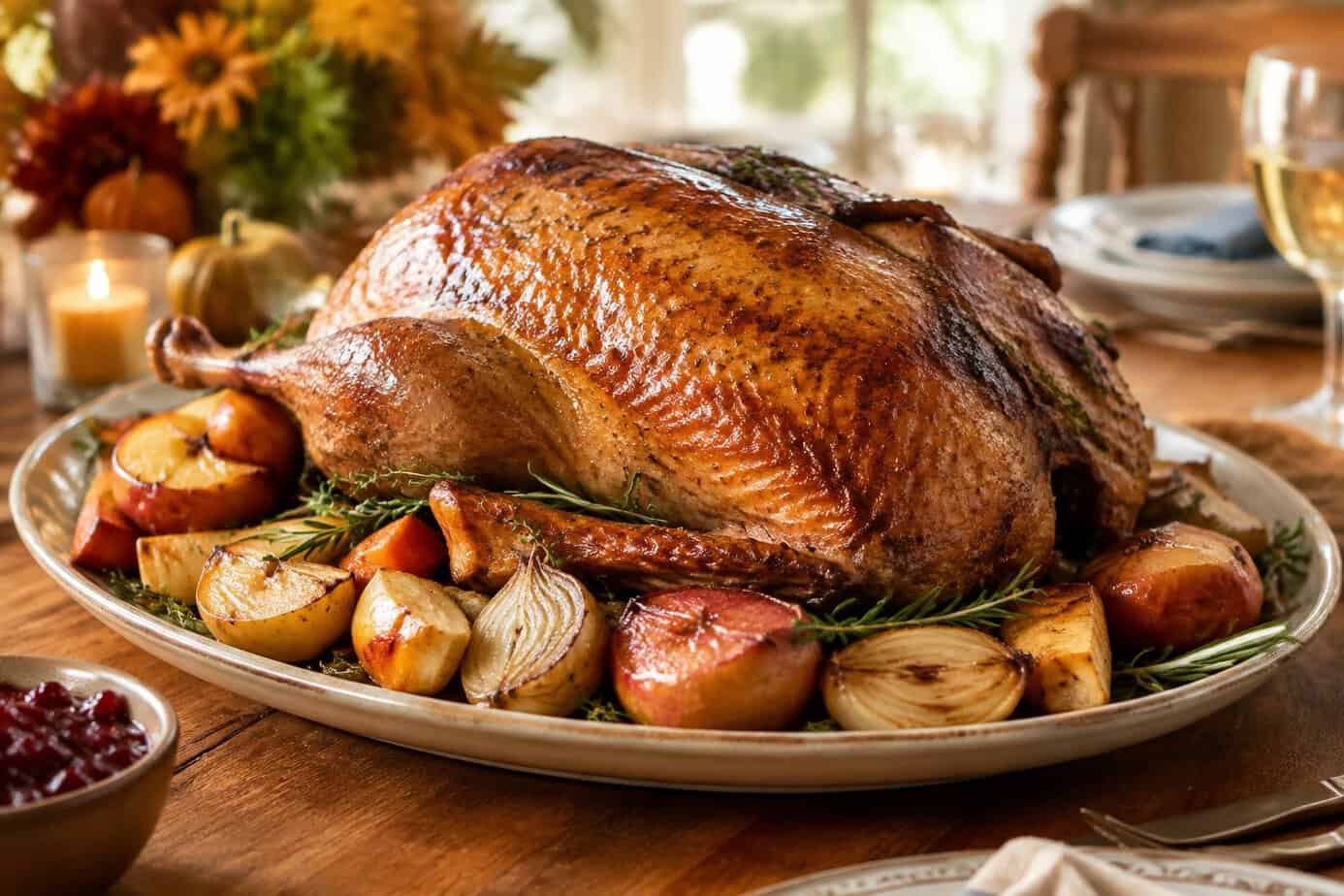
In some families, especially those with German or other European roots, roast goose shared the spotlight with the turkey or took its place altogether. You remember your grandmother ordering hers weeks ahead from the butcher, since geese weren’t something you could just pick up at the regular grocery store. The bird was prized for its rich, dark meat and the sheer amount of fat it rendered as it cooked.
You probably spent the morning basting it and pouring off the drippings, which your mother saved in a jar in the refrigerator for roasting potatoes later. Those potatoes, crisped in goose fat, might have been the best part of the whole meal. The skin turned deep golden brown and shatteringly crisp, a result your family took real pride in.
Recipes came from church cookbooks or were passed down on handwritten cards, often calling for simple seasonings like onion, thyme, and apple stuffing. Goose eventually fell out of favor as turkey became cheaper, more available, and easier to carve for a crowd. It also required more hands-on attention than most young mothers had time for once weeknight schedules got busier.
15. Cornish game hens
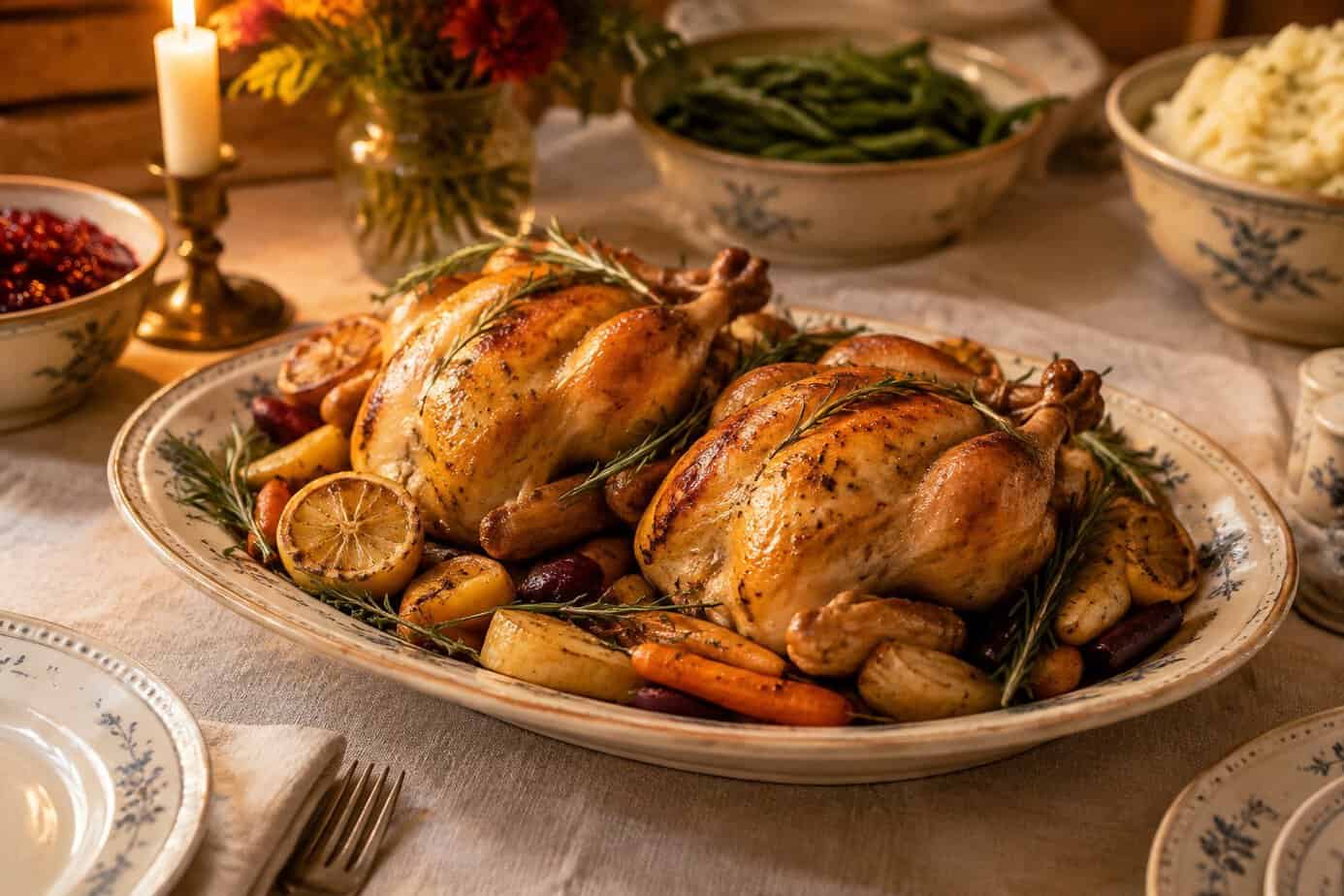
Do you remember when Cornish game hens felt like the fanciest thing you could put on the table? They looked like little turkeys, but each person got their own, and that made the meal feel special somehow. You probably served them when you wanted Thanksgiving to feel a bit more elegant than the usual roast turkey.
The hens were small, usually about a pound or a pound and a half, so one bird per guest was the standard. You stuffed them with wild rice, sometimes with chopped celery, onion, and a handful of dried fruit or nuts mixed in. A simple butter baste, maybe with some herbs, kept the skin crisping up nicely in the oven.
This recipe likely came from a magazine spread or a product label, since Cornish hens were marketed as a convenient, impressive alternative to a big bird. They faded from tables as families grew smaller and turkey breast or other simpler mains took over. Buying and stuffing several tiny hens also took more time than most people wanted to spend during a busy holiday.
16. Turkey croquettes
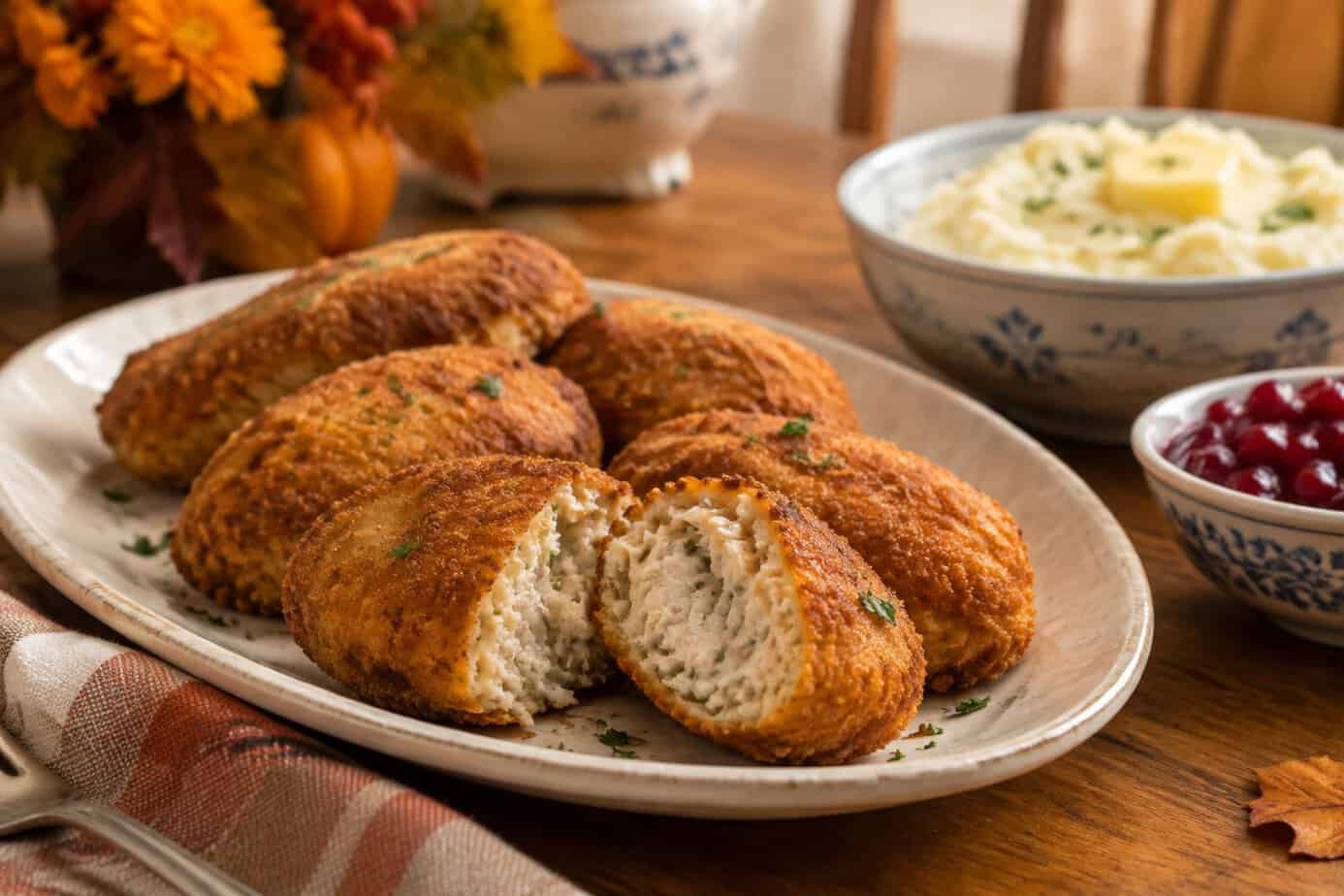
You remember the day after Thanksgiving almost as much as the holiday itself, because that was croquette day in your mother’s kitchen. She never let a scrap of turkey go to waste, and by Friday morning she had a bowl of chopped meat ready to turn into something new.
The basic formula came from her recipe box, likely copied from a magazine or the back of a bread crumb can. Leftover turkey got mixed with a thick white sauce, sometimes bound with egg, then shaped into little logs or patties.
You rolled them in cracker crumbs or dry bread crumbs before frying them in a skillet with a few inches of oil. They came out golden and crisp on the outside, soft and savory inside, and your mother always served them with the last of the gravy or a spoonful of cranberry sauce on the side.
As a young wife, you made them too, mostly because it felt wasteful not to. But as sandwich bread and freezer containers made leftovers simpler to store, frying up a separate dish felt like extra work nobody asked for anymore.
17. Turkey à la king
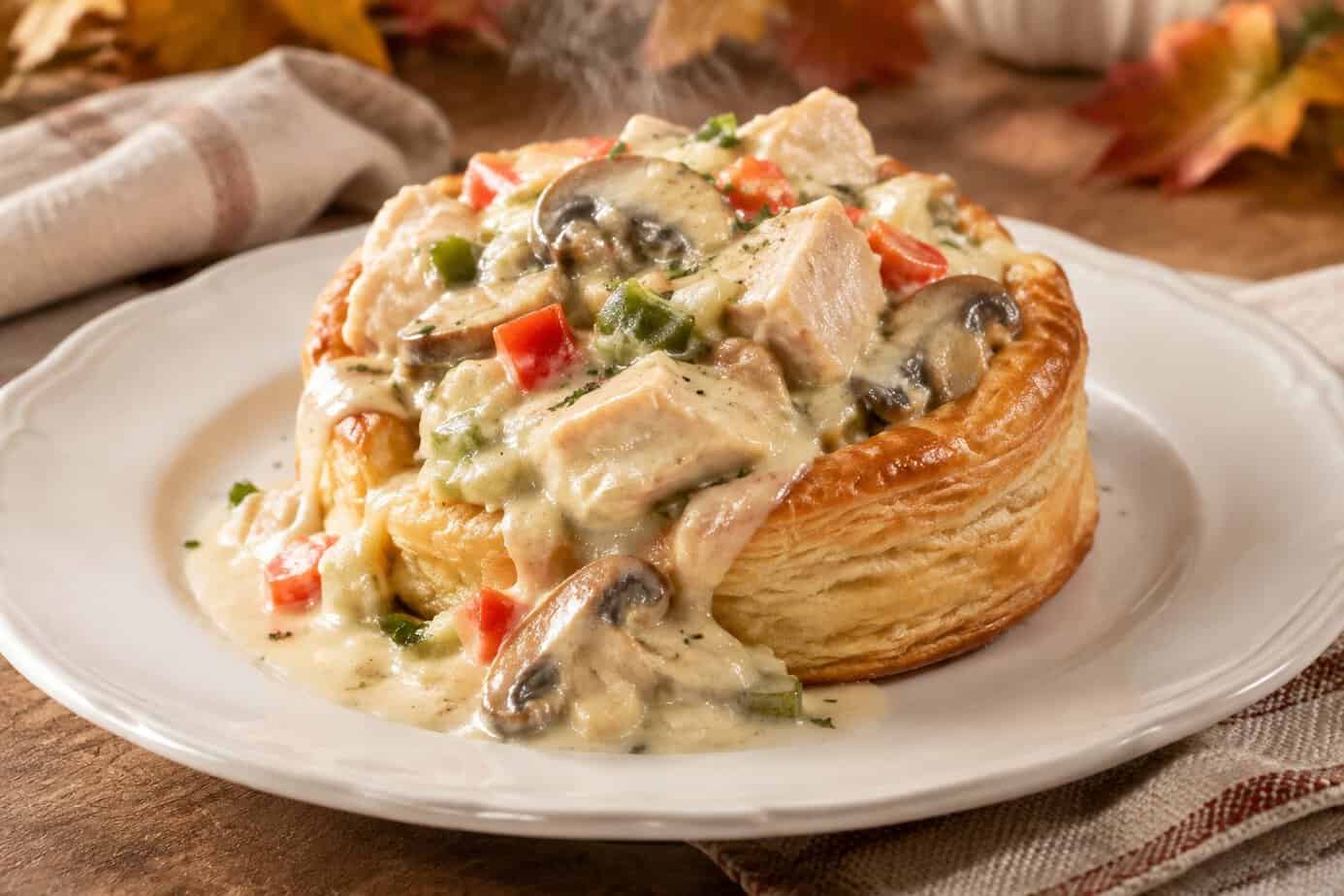
You remember making this the day after Thanksgiving, when the big bird was mostly picked clean and you needed something to stretch what was left. It started with a roux, butter and flour whisked together in a skillet until it smelled a little like toast. Then came the milk or cream, poured in slowly, stirred until it thickened into a smooth, pale gravy.
Into that sauce went chopped turkey, sliced mushrooms, and a handful of canned or frozen peas for color. Sometimes a diced pimiento went in too, more for looks than flavor. You ladled the whole thing over split biscuits, toast points, or rice, and nobody complained about eating turkey two days in a row.
The recipe probably came from a church cookbook or the back of a cream of mushroom soup can, since so many versions leaned on canned soup to save time. It was practical, filling, and forgiving if you didn’t measure exactly. These days leftovers get turned into soup or sandwiches instead, and that creamy skillet supper has quietly disappeared from most kitchens.
18. Glazed sweet potatoes with marshmallows
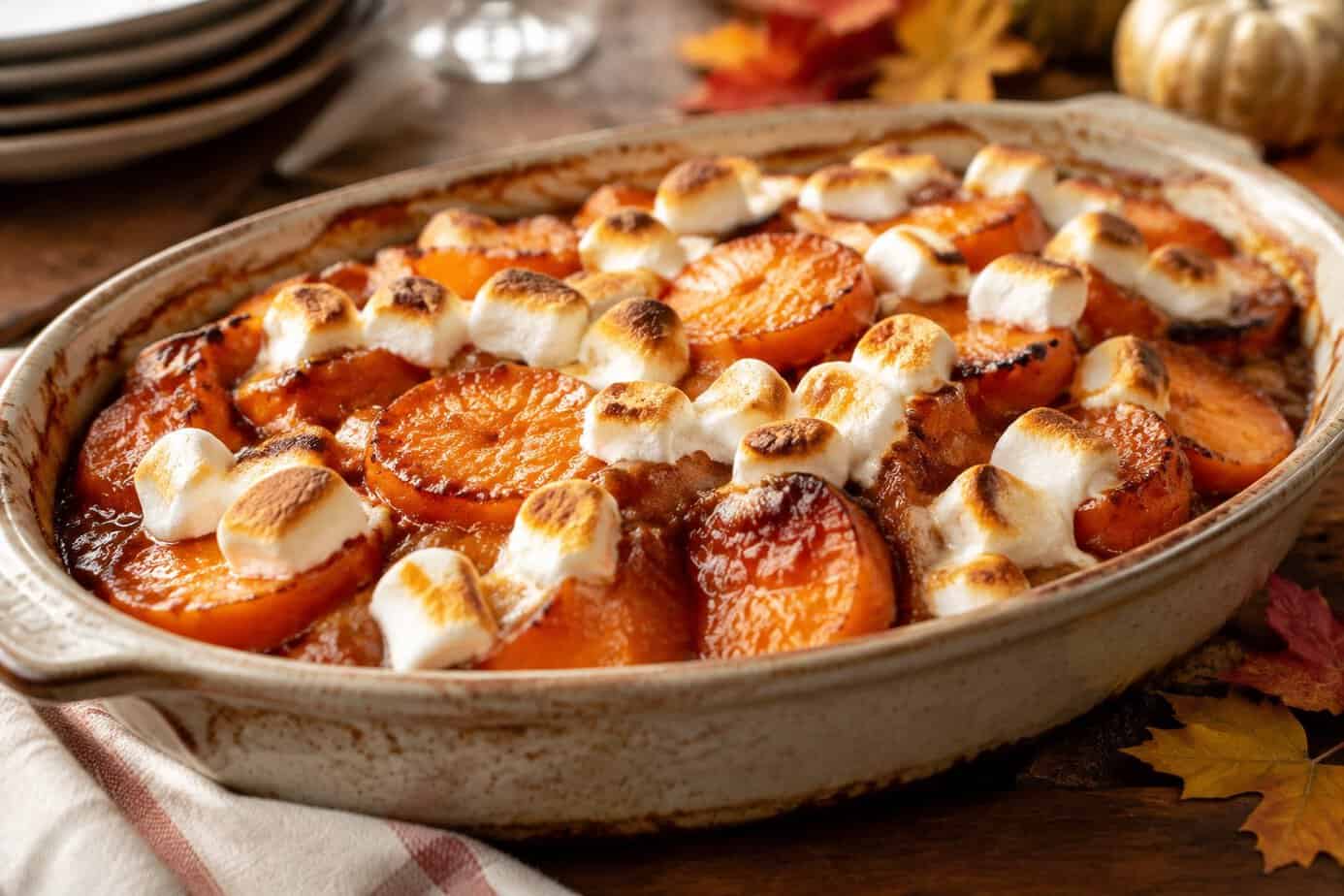
You remember mashing those sweet potatoes by hand, maybe with a splash of orange juice or a little vanilla if your mother felt fancy that year. Butter and brown sugar went in next, along with cinnamon and a pinch of salt to balance the sweetness. The mixture got spread into a baking dish, and then came the best part: lining the top with marshmallows, sometimes mini ones, sometimes the big fluffy kind cut in half.
The idea goes back to a 1917 recipe booklet from a marshmallow company, and your version likely came from the back of a marshmallow bag or a church cookbook that got passed around every November. It showed up on nearly every Thanksgiving table through the seventies and eighties, right next to the turkey and stuffing. Kids loved it because it tasted like dessert disguised as a vegetable.
Over time, people started questioning whether something this sweet belonged on the dinner table at all. Health-conscious cooks moved toward roasted sweet potatoes with just olive oil and herbs. The marshmallow topping came to feel old-fashioned, even a little silly, though you still smile thinking about those golden, toasted peaks coming out of the oven.
19. Candied yams with orange
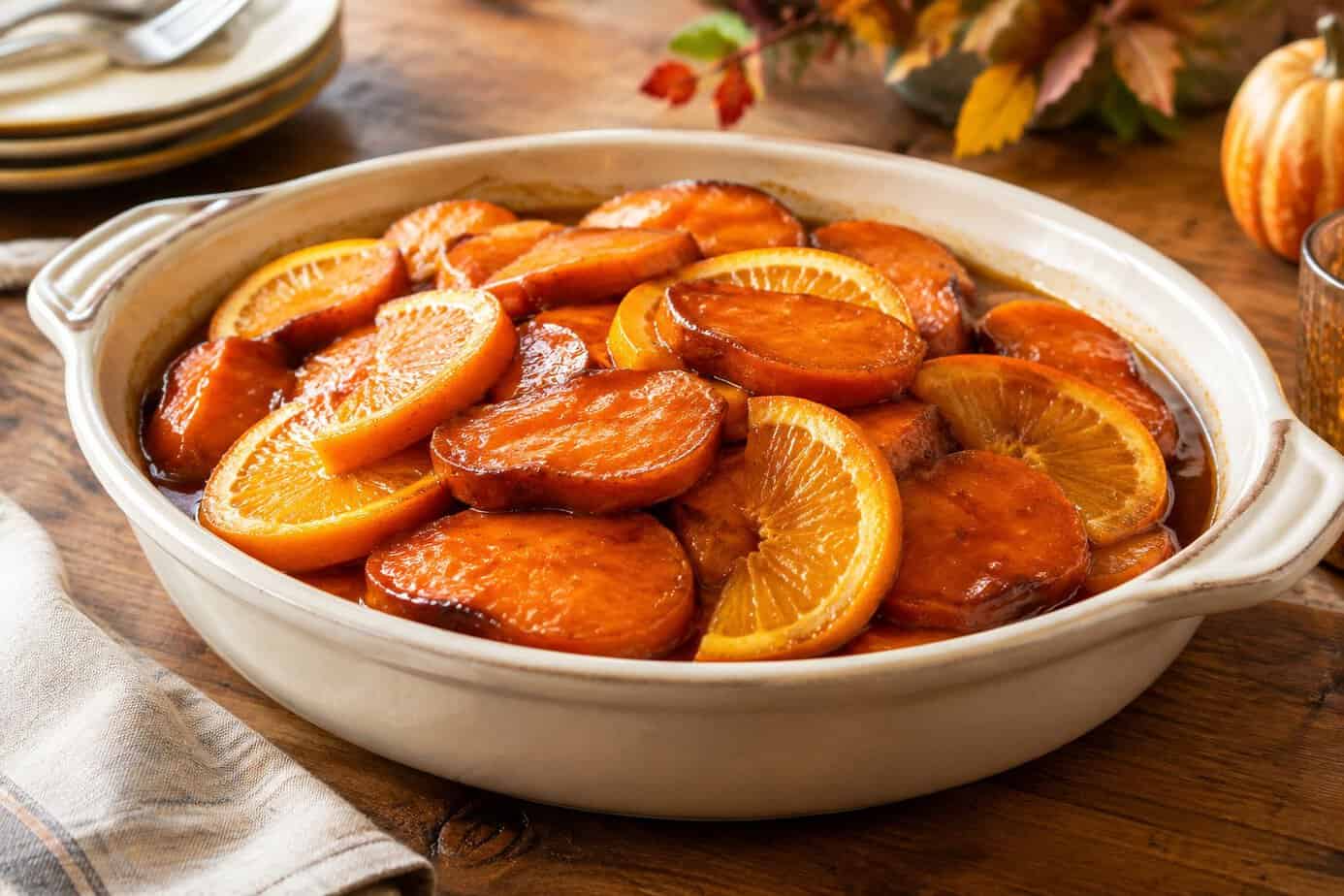
You remember your mother standing at the stove, stirring a pot of sweet potatoes with brown sugar melting into a sticky glaze. She always added orange, either fresh juice squeezed by hand or the zest grated right into the pan. That citrus cut through the sweetness just enough to keep the dish from feeling heavy.
The recipe likely came from a church cookbook or a card passed down from her own mother. Canned yams worked in a pinch, but the good versions started with real sweet potatoes, boiled and peeled before going into the baking dish. Butter, cinnamon, and sometimes a splash of orange liqueur rounded out the flavor.
You probably made this yourself for years, especially once you had your own Thanksgiving table to set. It took time, between peeling, boiling, and basting it in the oven until the top turned slightly caramelized.
These days, marshmallow-topped versions get all the attention, and the orange-based glaze has quietly disappeared from most tables. It takes more effort than people want to spend now, so it rarely makes the cut.
20. Baked acorn squash with brown sugar
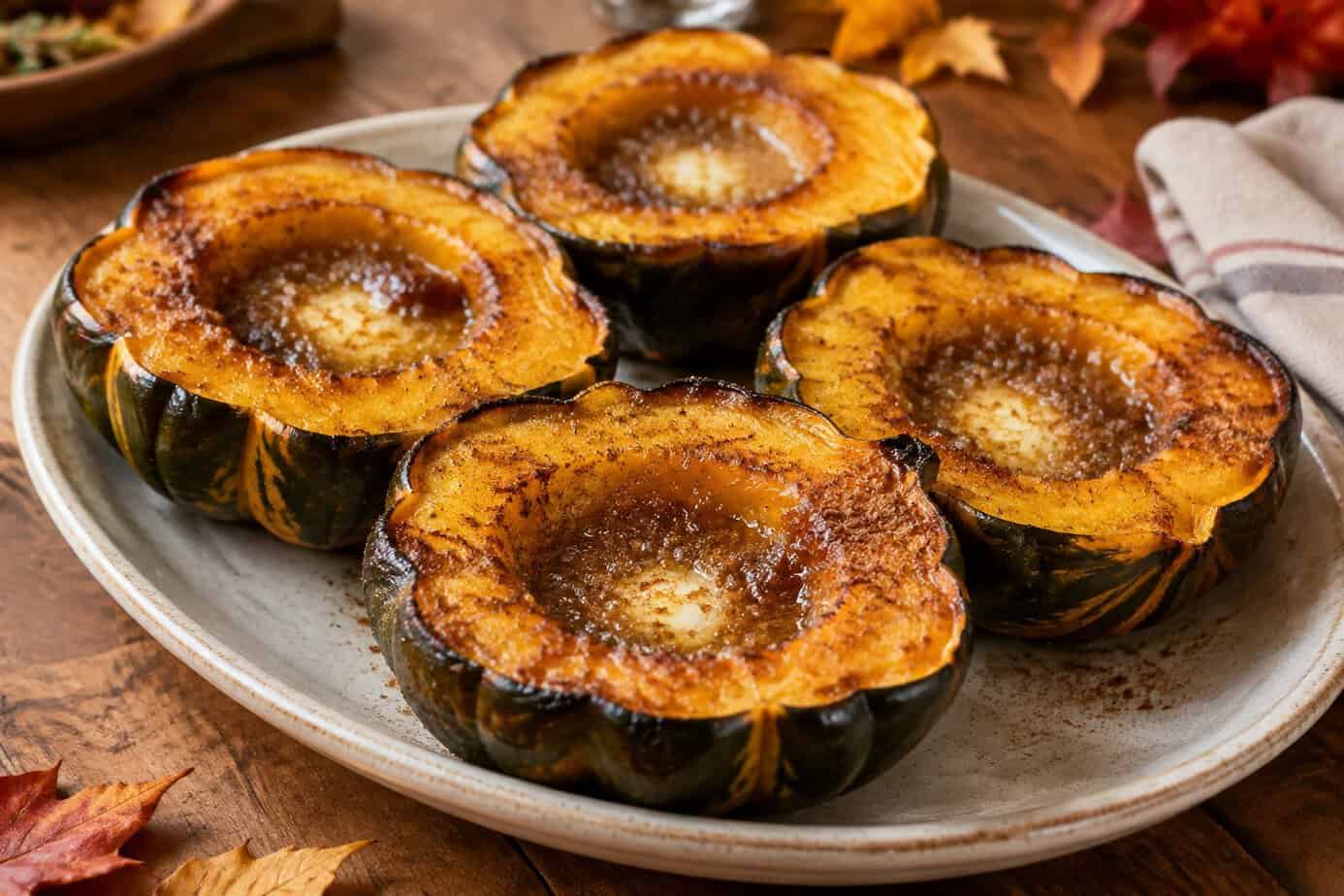
You remember the acorn squash sitting on the counter, its green and orange ridges catching the light while you decided how many your family would need. Your mother cut each one in half and scooped out the seeds with a spoon, saving a few to roast separately. It was one of those dishes that felt like fall had officially arrived at your table.
The filling was never complicated. A spoonful of butter, a sprinkle of brown sugar, maybe a dash of cinnamon or nutmeg if you had it on hand. Some years you added a splash of maple syrup for extra sweetness. You set the halves in a baking dish with a little water in the bottom and let the oven do the rest.
This recipe likely came from a church cookbook or was passed along on a recipe card from a neighbor. It showed up often enough at Thanksgiving dinners through the 1980s that nobody thought twice about it.
These days, squash gets roasted with savory herbs or skipped entirely for something quicker. The sweet, buttery version you grew up with just doesn’t make as many tables anymore.
21. Creamed peas
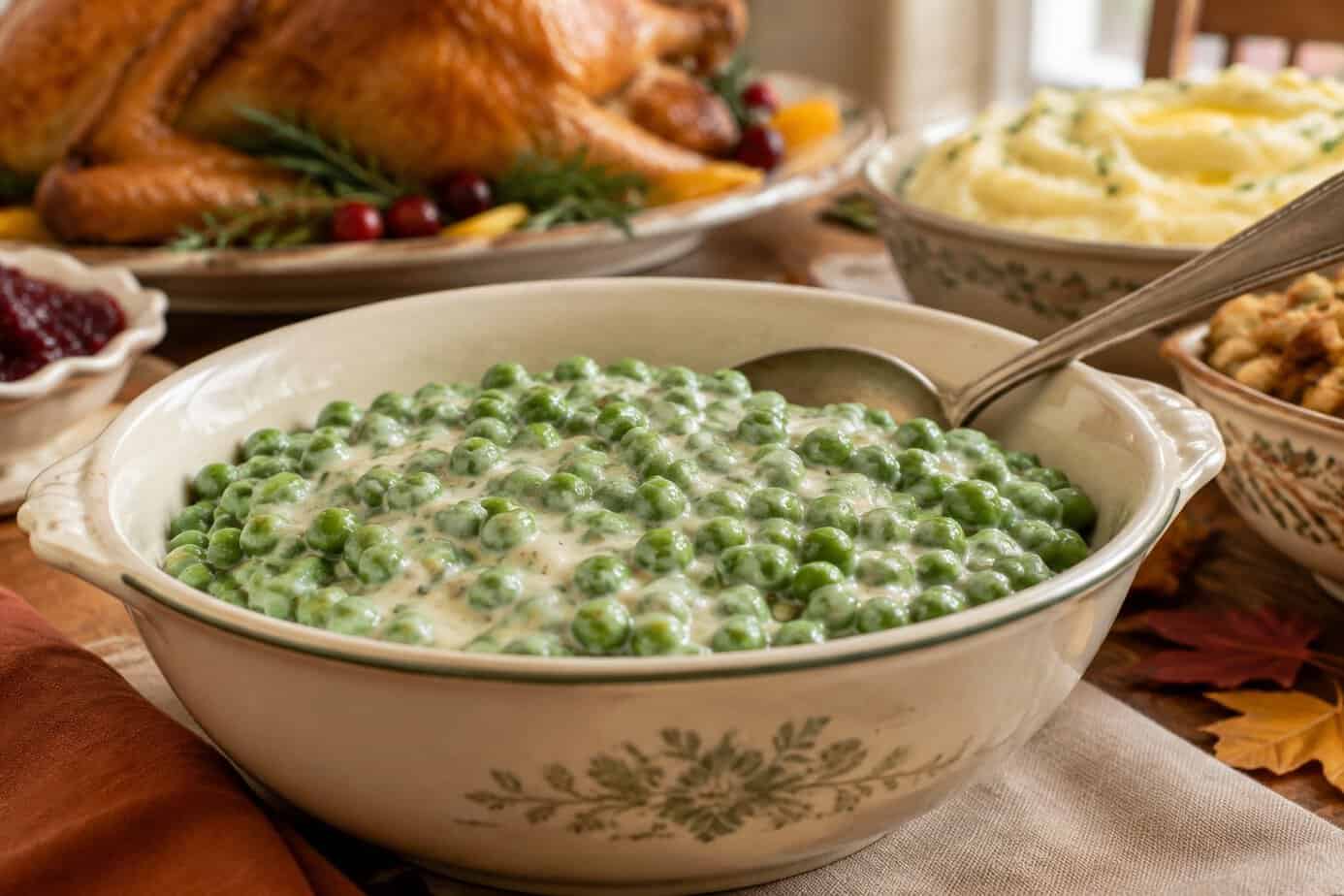
You remember how plain this dish was, and how good it tasted anyway. Frozen peas, butter, flour, milk, salt and pepper, that was really all it took. Your mother made it on the stovetop in a saucepan she had probably used for the same purpose a thousand times before.
The sauce came together quickly once you knew the trick: melt the butter, stir in the flour until smooth, then add the milk slowly so it didn’t lump. You whisked it over medium heat until it thickened, then dropped in the peas and let them warm through. The whole thing took maybe fifteen minutes, start to finish.
This was a recipe everyone seemed to know without writing it down, though it showed up in church cookbooks and on recipe cards anyway. It paired with almost anything, from weeknight meatloaf and pork chops to your Thanksgiving turkey.
Creamed peas faded as plates got more colorful and more complicated. Green bean casserole and fancier vegetable dishes took its place, and the plain white sauce started to seem old-fashioned rather than comforting. You still think about how simple it was, and how nobody complained.
22. Tomato aspic
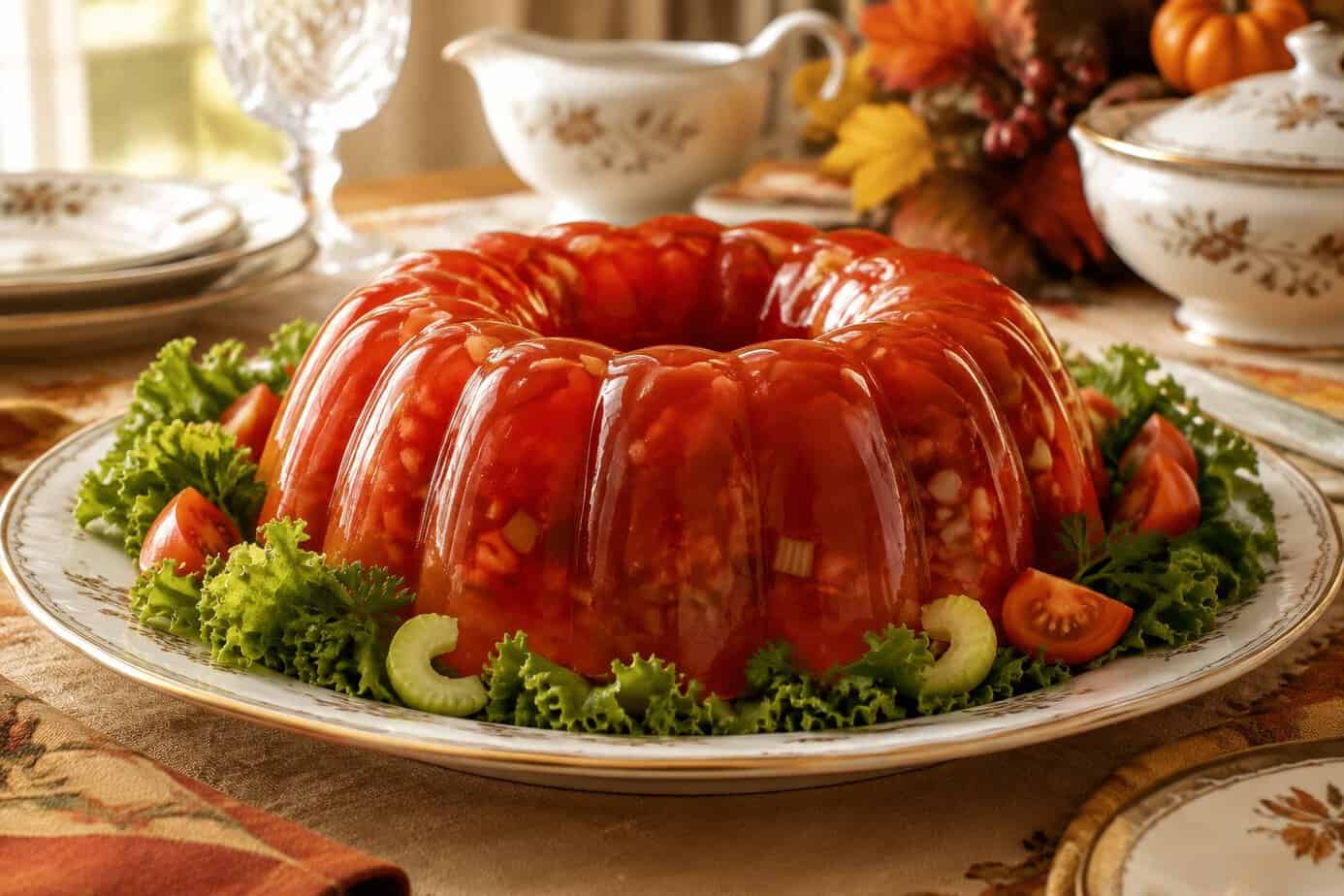
You remember the jiggle of it on the relish tray, that deep red color catching the light from the dining room window. Tomato aspic was tomato juice turned into a savory gelatin, set in a ring mold or individual cups and served on a bed of iceberg lettuce. You likely got the recipe from a church cookbook or off the side of a Knox gelatin box, and it felt like something special enough for the good glass serving dish.
You made it by heating tomato juice with a little lemon juice, onion juice or grated onion, sometimes Worcestershire sauce, and softened gelatin, then letting it simmer before folding in chopped celery, green olives, or pecans. It needed hours in the refrigerator to set firm, so you planned ahead, often making it the night before.
A dollop of mayonnaise on top finished it off. As tastes shifted toward fresher, simpler salads and gelatin molds fell out of style, aspic quietly disappeared from the Thanksgiving table, though you still think of it fondly when you see a vintage recipe card.
23. Stuffed celery with cream cheese and olives
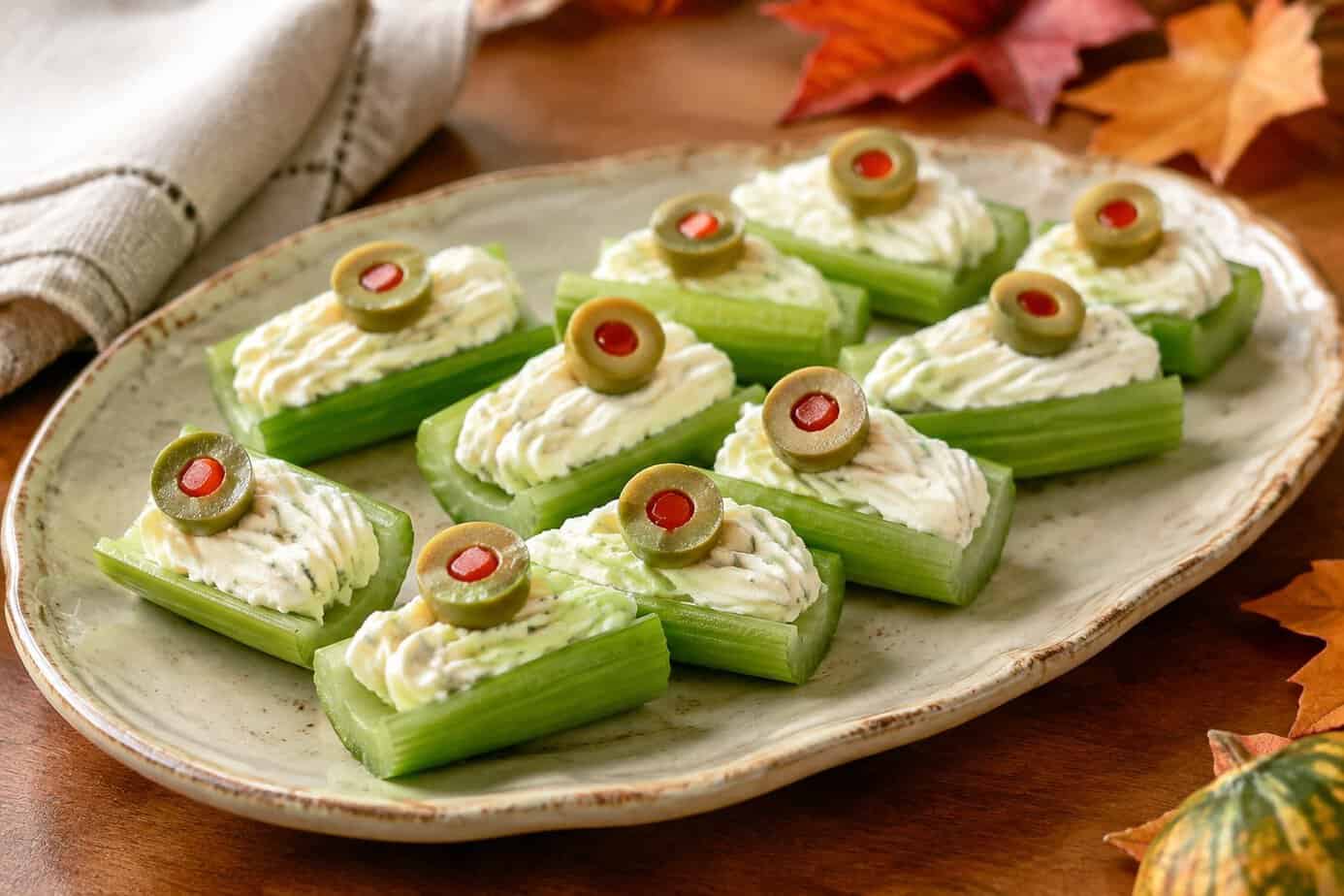
You can still see the celery sticks laid out on your mother’s good glass platter, lined up neat as soldiers. She washed the stalks, trimmed them down, and cut them into short pieces that fit nicely in one hand. No cooking involved, which made it an easy job to hand off to the kids, the way your mother once handed it to you.
The filling was simple: softened cream cheese mixed with chopped green olives, the kind stuffed with pimento. Sometimes a little mayonnaise went in to loosen it up, or a clove of garlic for bite. You pressed the mixture into the celery groove with a butter knife, and the red and green flecks against the white filling made it look festive without any real effort.
This was a church cookbook staple, the sort of recipe every family seemed to have a version of. It disappeared from tables partly because fewer people serve relish trays at all now, and partly because cream cheese spreads feel old-fashioned next to today’s dips and hummus. Still, the crunch and tang of it is hard to forget.
24. The relish tray with pickled beets and watermelon rind pickles
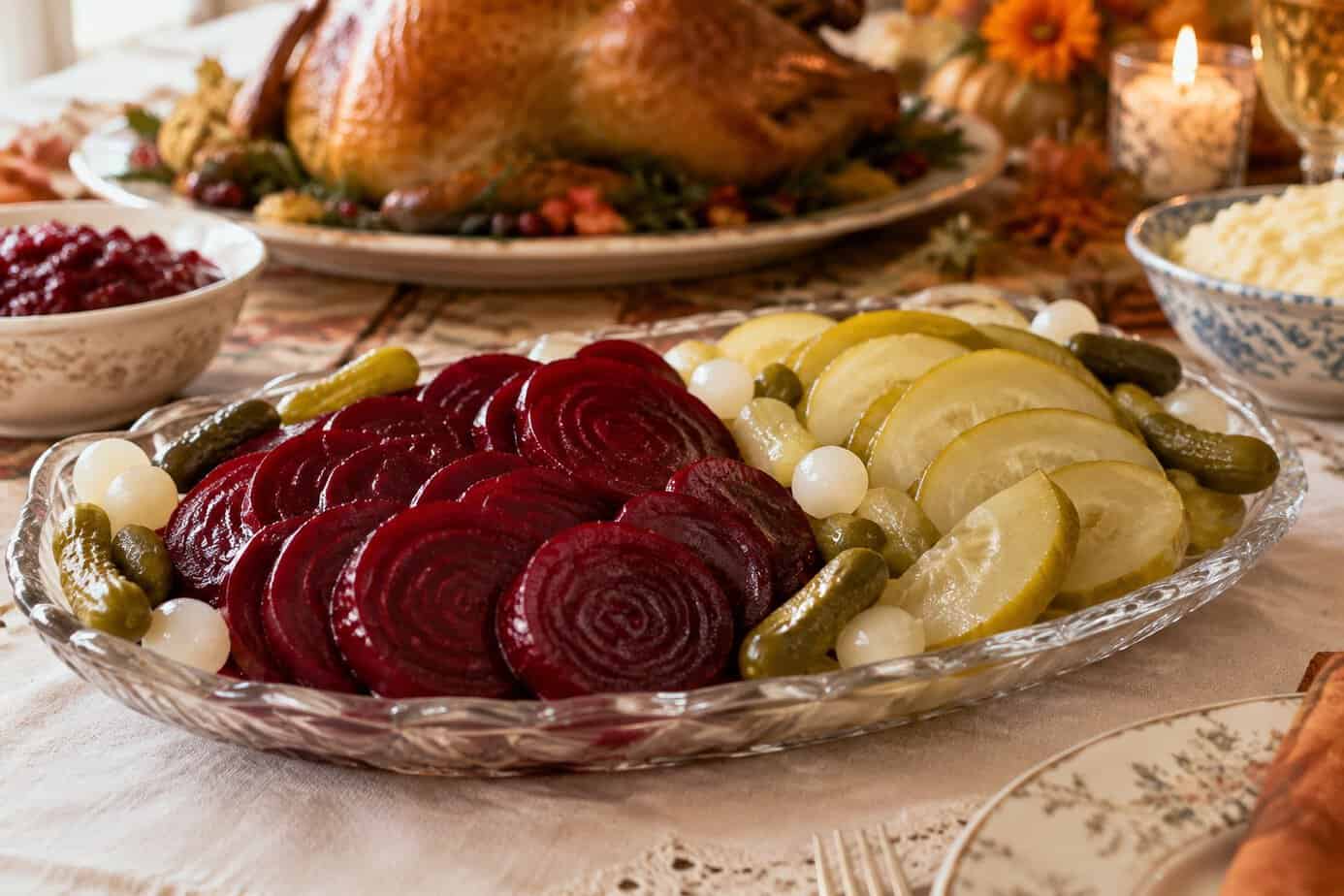
Before anyone sat down to eat, that glass relish tray was already waiting on the table. You remember your mother pulling out the same cut-glass dish every year, dividing it into sections for olives, pickled beets, and watermelon rind pickles. It wasn’t an afterthought. It was tradition, set out before the turkey even came close to being carved.
The watermelon rind pickles took real effort. You or your mother would save the rinds after a summer picnic, then cook them down in a sweet, spiced syrup with cinnamon and cloves until they turned glossy and translucent. The pickled beets were simpler, often just canned beets soaked in vinegar, sugar, and a little clove, left to sit in the icebox for a day or two.
Nobody wrote these recipes down in fancy cookbooks. They came from church cookbooks, handwritten recipe cards, or memory passed from mother to daughter. The relish tray faded as fewer families canned at home and store-bought appetizers took over. These days, a bag of chips or a cheese board does the job, but it never quite replaces that little dish of color and tang.
25. Mashed rutabaga
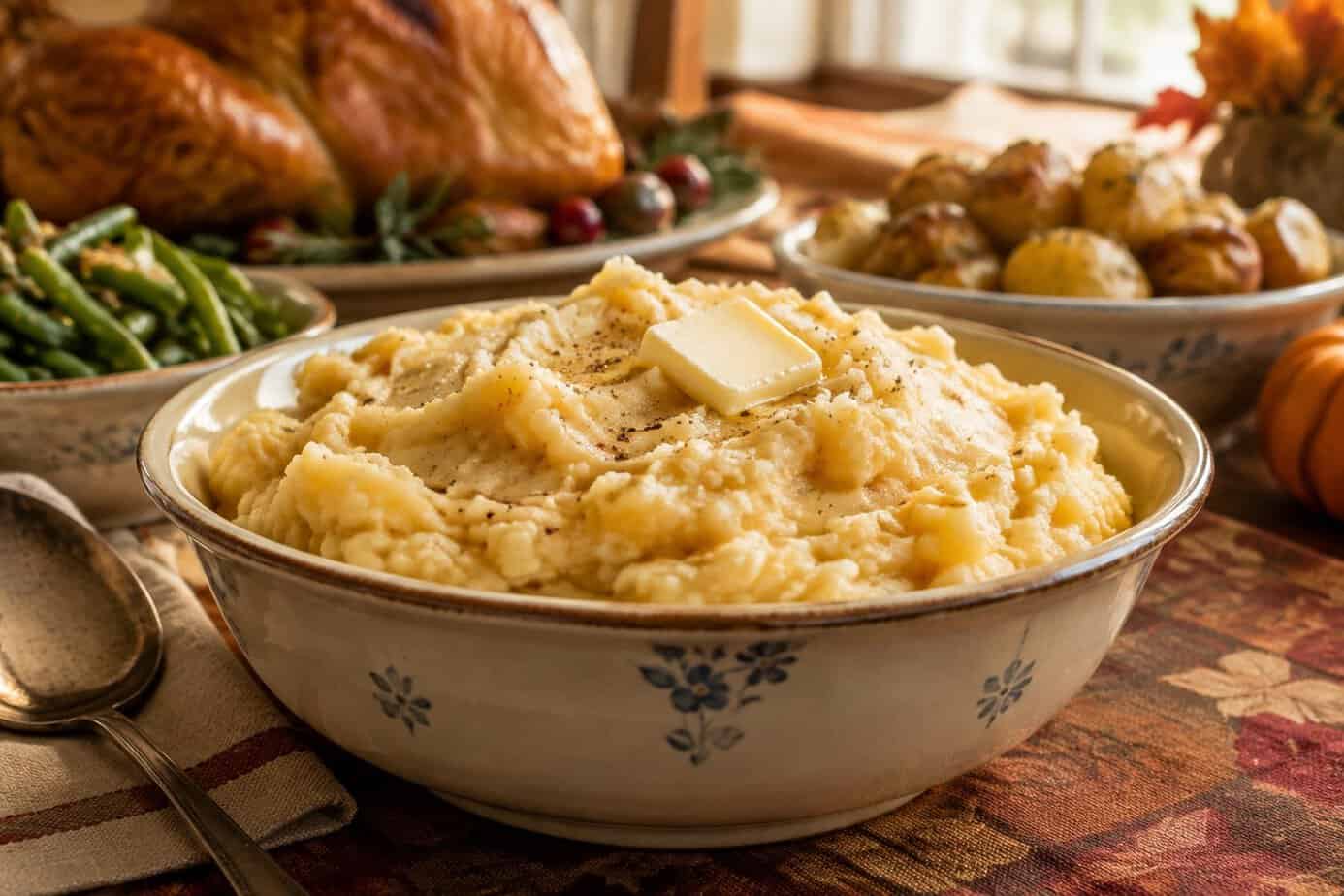
You probably remember rutabaga as the vegetable nobody could quite explain, but everybody’s mother served anyway. It showed up at Thanksgiving next to the mashed potatoes, a little rougher looking, with that pale orange-yellow color and a smell that filled the kitchen while it boiled.
You peeled it the same way every year, cutting through that thick waxy skin most grocery stores coated to keep it fresh. Once it was cubed and boiling, it took longer to soften than potatoes did, so you learned to start it early. Mashed with butter, a little cream, salt and pepper, it had a slightly sweet, earthy taste that was nothing like a potato, even though people mashed it the same way.
Some families added a spoonful of brown sugar or a dash of nutmeg to soften that peppery edge rutabaga can have. It was practical, cheap, and kept well through the fall, which is probably why your grandmother trusted it.
These days, most people don’t recognize rutabaga at the store, let alone think to mash it for a holiday table.
26. Succotash
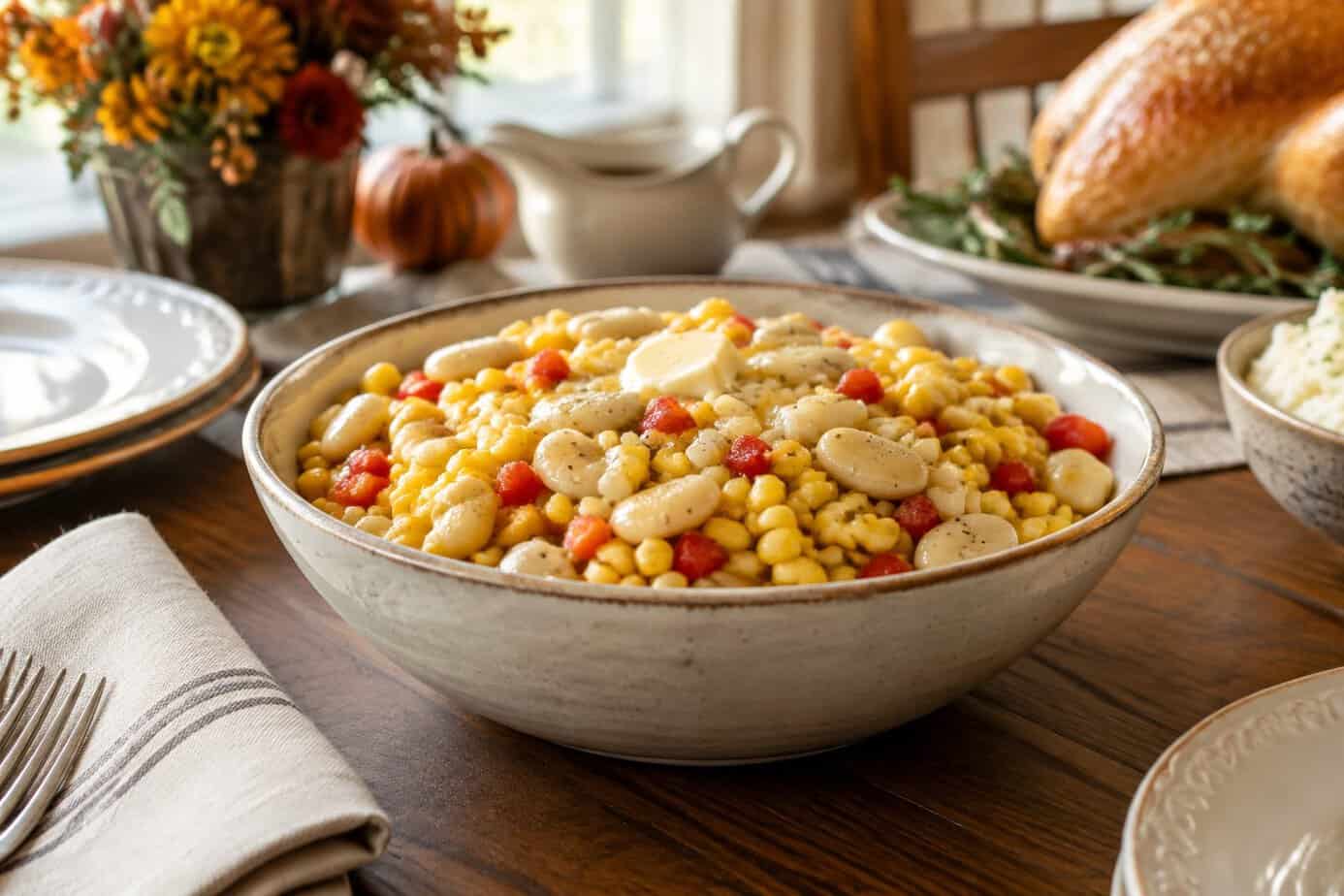
You grew up with succotash showing up on the Thanksgiving table almost without question, right next to the mashed potatoes. It was lima beans and corn, simmered together with a little butter, milk or cream, and salt and pepper. Some families added diced bell pepper or a bit of bacon fat for flavor. It traced back to Native American cooking traditions, and by the time your grandmother was making it, the recipe had been passed down through family and printed in church cookbooks for generations.
You probably learned to make it the way your mother did, using frozen lima beans when fresh ones weren’t easy to find. It simmered on the stove while the turkey roasted, needing little attention beyond an occasional stir. It was practical, filling, and didn’t compete for oven space.
Somewhere along the way, succotash stopped making the cut. Families started gravitating toward green bean casserole and sweeter vegetable dishes with more visual appeal. Lima beans fell out of favor with younger cooks, and the dish quietly disappeared from most modern Thanksgiving spreads, even though it once held a steady place on the menu.
27. Scalloped corn
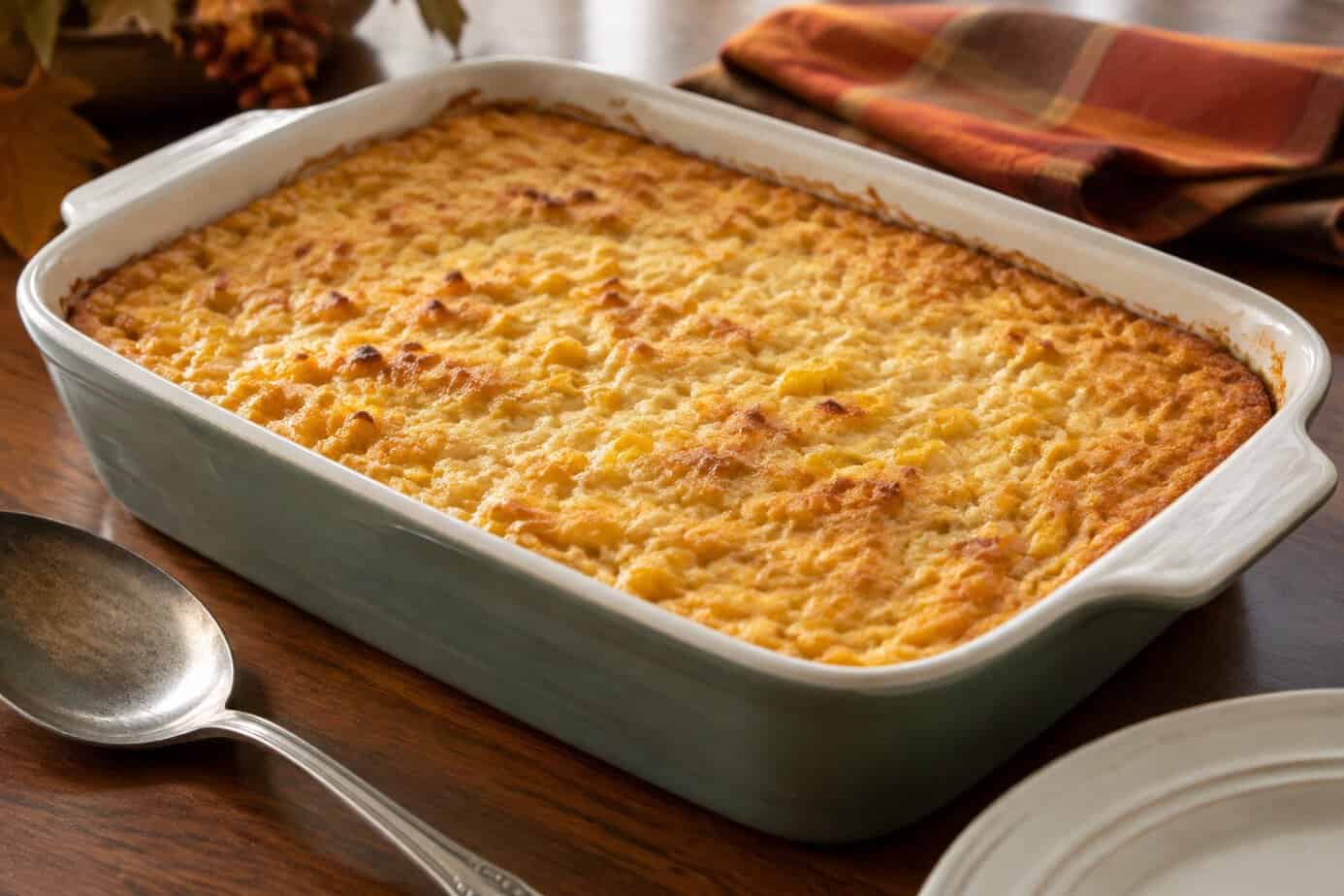
You remember scalloped corn as the dish that always showed up next to the turkey, filling that corner of the table where something soft and buttery was needed. It was simple: canned or fresh corn, eggs, milk, and crushed crackers, baked until the top turned golden and the inside set into something between a custard and a casserole.
Your mother probably got the recipe from a church cookbook or a card tucked into a recipe box, the kind with a few spots of grease on the corner. Some versions called for saltines, others for buttery round crackers, and a few families stirred in a diced onion that had been softened in butter first.
You likely made it yourself in your twenties, pouring the mixture into an eight-by-eight dish and dotting the top with butter before it went into the oven. It baked low and slow, around 350 degrees, until the center stopped jiggling.
It faded because corn casseroles got fancier, with sour cream and cornbread mix taking over. Scalloped corn just quietly stopped getting made.
28. Giblet gravy
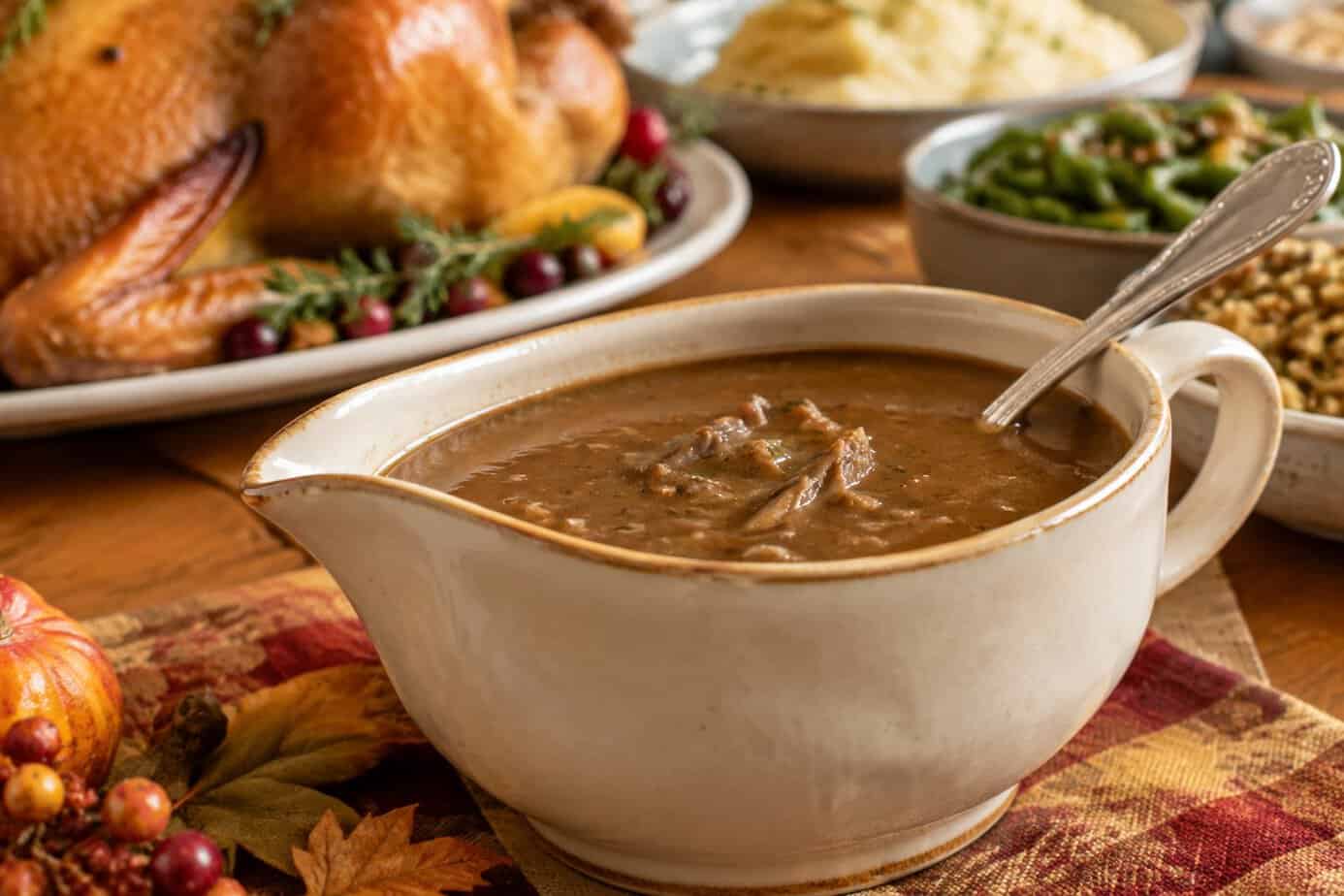
You remember your mother saving the little paper bag of giblets that came tucked inside the turkey, never once thinking to throw it away. She would simmer the neck, heart, and gizzard in water on the stove while the bird roasted, letting them turn tender over an hour or more. That broth became the base for the gravy, rich with the flavor of slow-cooked poultry.
Once the giblets were tender, she chopped them fine and added them back into the gravy along with the pan drippings. Some families, especially in the South, stirred in chopped hard-boiled eggs for extra texture. The gravy was thickened with flour or cornstarch, and it had a heartier, more savory taste than a plain pan gravy.
You probably made it yourself in your early married years, following a card passed down from your grandmother or a church cookbook recipe. It took patience, and not everyone in the family loved the texture of the giblets themselves.
Over time, convenience gravies and smoother pan sauces took over. Many cooks today skip the giblets entirely, finding the process more work than it is worth.
29. Waldorf salad
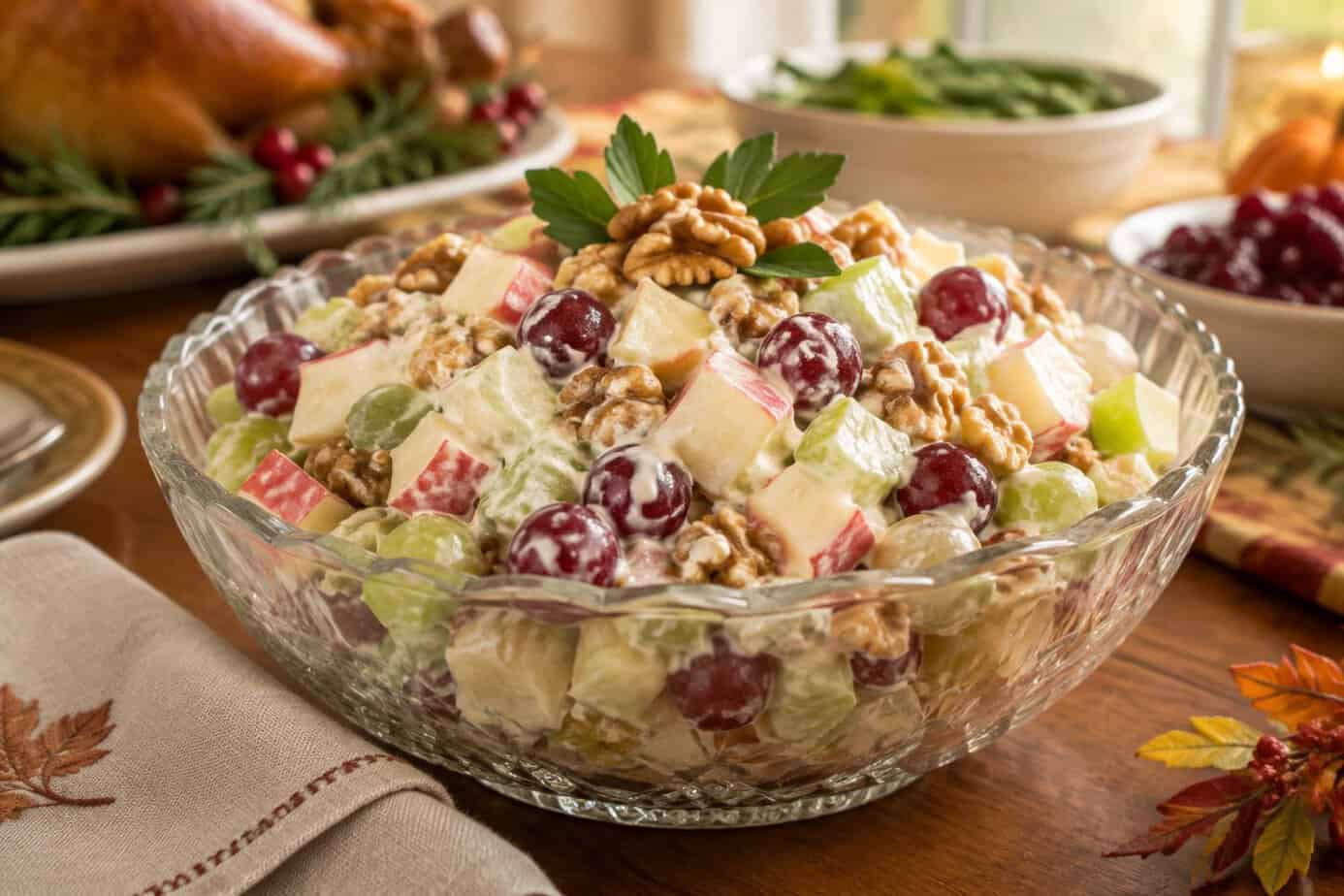
You probably remember this one sitting proudly next to the turkey, its pale, creamy color standing out against all the browns and oranges on the table. Crisp apples, celery, walnuts, and grapes tossed together in mayonnaise, usually served on a lettuce leaf because that was just how salads were presented back then.
The recipe traces back to New York’s Waldorf-Astoria Hotel from the 1890s, which gave it an air of sophistication your mother and grandmother liked for holiday meals. By the time it reached your kitchen, it had become a reliable Thanksgiving fixture, often pulled from a church cookbook or a well-worn recipe card.
You likely made your own version as a young wife, maybe adding raisins or swapping in Miracle Whip depending on what was in the pantry. It was easy, required no cooking, and gave you one less dish to worry about on a busy day.
These days, Thanksgiving salads lean toward greens, roasted vegetables, or vinaigrettes instead of mayonnaise-based mixtures. Waldorf salad started to feel old-fashioned, even though it still tastes just as good as it always did.
Why Thanksgiving Cooking Changed Across Generations
Your family’s Thanksgiving table today looks different from your grandmother’s for a few clear reasons: new products hit grocery shelves, kitchen technology improved, and tastes shifted toward simpler flavors. Both convenience and changing palates played a role in retiring old recipes.
How Convenience Foods Reshaped Family Traditions
Once canned soups, instant mixes, and pre-made crusts became widely available in the mid-1900s, you can imagine how quickly they replaced from-scratch methods in many kitchens. Campbell’s cream of mushroom soup, for example, turned green bean casserole into a five-minute side instead of an hour-long project.
Packaged stuffing mixes and canned cranberry sauce followed the same pattern. These products saved time, and for busy households, that mattered more than tradition.
Your grandmother likely welcomed these shortcuts because they freed her from hours of prep work. As a result, dishes that needed hand-made components, like scratch pie crusts or hand-churned butter, started disappearing as boxed and canned alternatives took their place on the table.
Changing Tastes and the Decline of Labor-Intensive Recipes
Beyond convenience, your family’s preferences simply changed over time. Heavy, rich dishes like giblet gravy, oyster stuffing, and creamed onions fell out of favor as lighter, more familiar flavors took priority.
You’ll notice this shift reflects broader food trends, too. As international cuisines and fresh produce became more accessible, cooks had more options and less reason to spend a full day on one labor-intensive dish.
Recipes requiring rare ingredients or multi-step techniques, such as calf’s foot jelly or suet pudding, didn’t fit modern schedules or tastes. Simpler, quicker recipes won out, even if that meant losing some old-fashioned dishes along the way.
How to Keep Family Food Memories Alive
Old recipes survive when someone takes the time to translate them and make them usable again. You can preserve these dishes by understanding the handwriting, the shorthand, and the ingredient substitutions, then adjusting them to fit how you actually cook today.
Decoding Handwritten Recipes and Grandma’s Cooking Shortcuts
If you’ve ever pulled out a recipe card covered in faded cursive, you know the challenge. Measurements like “a pinch” or “butter the size of an egg” meant something specific to her, but not necessarily to you.
Start by cross-referencing old terms with modern equivalents. A “moderate oven” usually means 350°F, and a “teacup” is roughly 6 ounces.
Ask relatives who watched her cook for context on steps she never bothered to write down. Look for abbreviations first: “tsp,” “tbsp,” and “doz” are common, but some cooks used personal shorthand. Old ingredient names matter too, since “oleo” means margarine and “saleratus” is baking soda. And watch the margins, because smudges and little notes often reveal her actual process.
Adapting Heirloom Recipes for Today’s Thanksgiving Table
Once you’ve decoded the recipe, you don’t have to cook it exactly as written. Many older recipes relied on canned soups, excess salt, or lard simply because those were kitchen staples at the time.
You can swap in fresh ingredients or reduce sodium without losing the dish’s identity. For example, a green bean casserole can use fresh green beans and a homemade cream sauce instead of canned versions.
Keep portion sizes in mind too, since older recipes often fed large families. Scaling down ingredients while keeping the original flavor profile intact lets you serve the dish to a smaller group without waste.