27 Thanksgiving Traditions from the 1970s That Families Quietly Stopped Doing
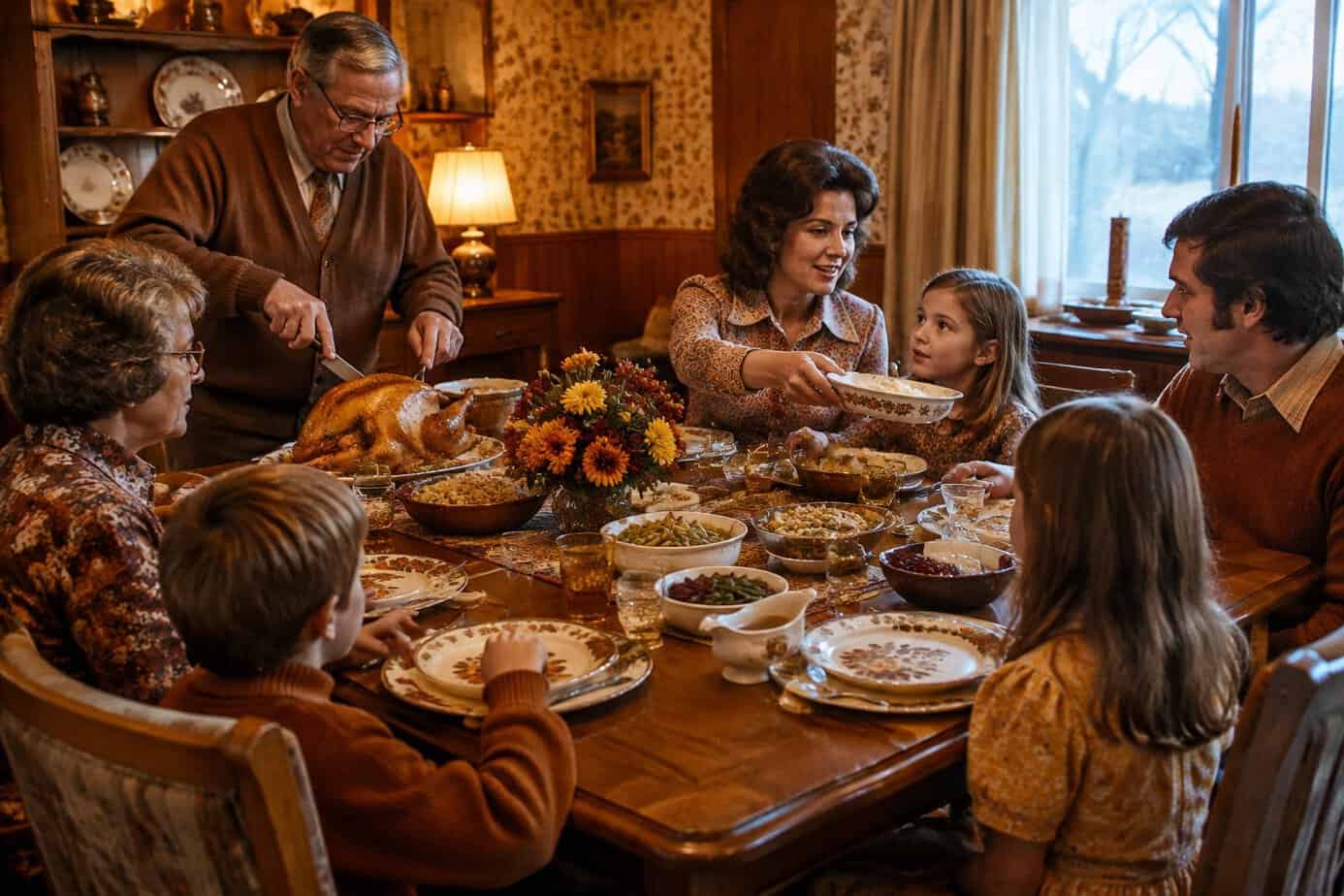
Thanksgiving in the 1970s had a rhythm you still remember clearly. You spent days preparing, the kitchen smelled like roasting turkey from early morning, and everyone had a job to do before the meal landed on the table.
You probably remember the canned cranberry sauce holding its ridges, the Jell-O salad on the counter, and the TV tuned to the parade while you worked. These weren’t fancy touches. They were just how things were done, year after year, without much thought.
Many of these small customs have faded as families changed how they cook, gather, and spend the holiday together. Some disappeared because life got busier. Others simply stopped getting passed down.
This article looks back at the traditions that once shaped your Thanksgiving table. You may find a few you had forgotten until now.
1. Watching the Macy’s Thanksgiving Day Parade together from start to finish
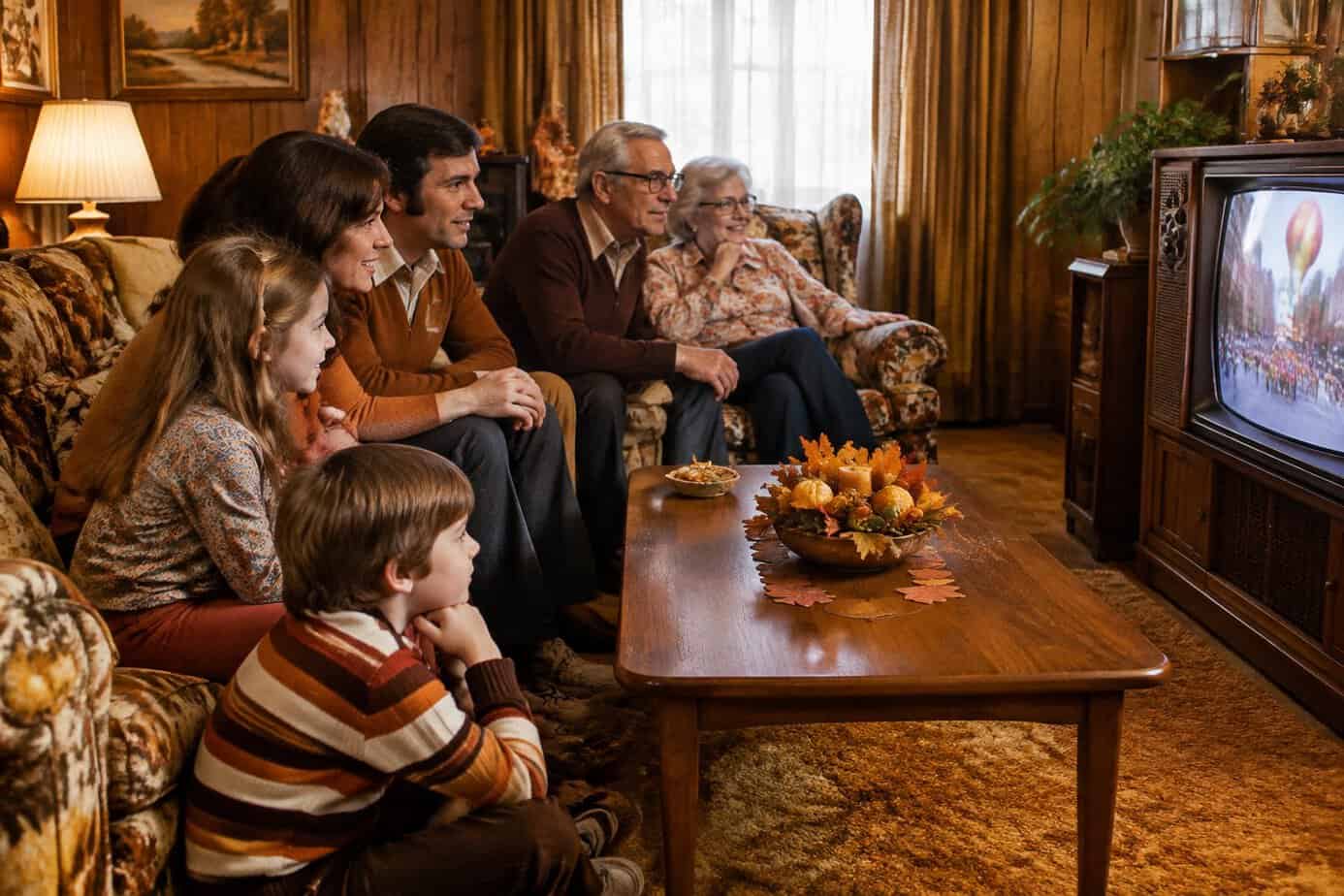
You remember turning on the television early, before the turkey even went in the oven, so you wouldn’t miss a single float. The whole family gathered in the living room, still in pajamas or robes, and nobody argued about what to watch that morning.
You had your coffee in hand and the kids sat cross-legged on the floor, pointing at every balloon that floated past. There was no fast-forwarding or skipping ahead back then, so you watched the full broadcast, commercials and all.
You probably had a favorite float or marching band you looked forward to each year, something that felt like it belonged just to your family. Santa arriving at the end meant the holiday season had officially started, and you felt that little thrill every time.
These days, people seem to catch bits and pieces of the parade on their phones or walk in and out of the room while it plays in the background. Back then, it was something you actually sat down for, together, start to finish, with nowhere else you needed to be.
2. Adjusting the television antenna to improve parade reception
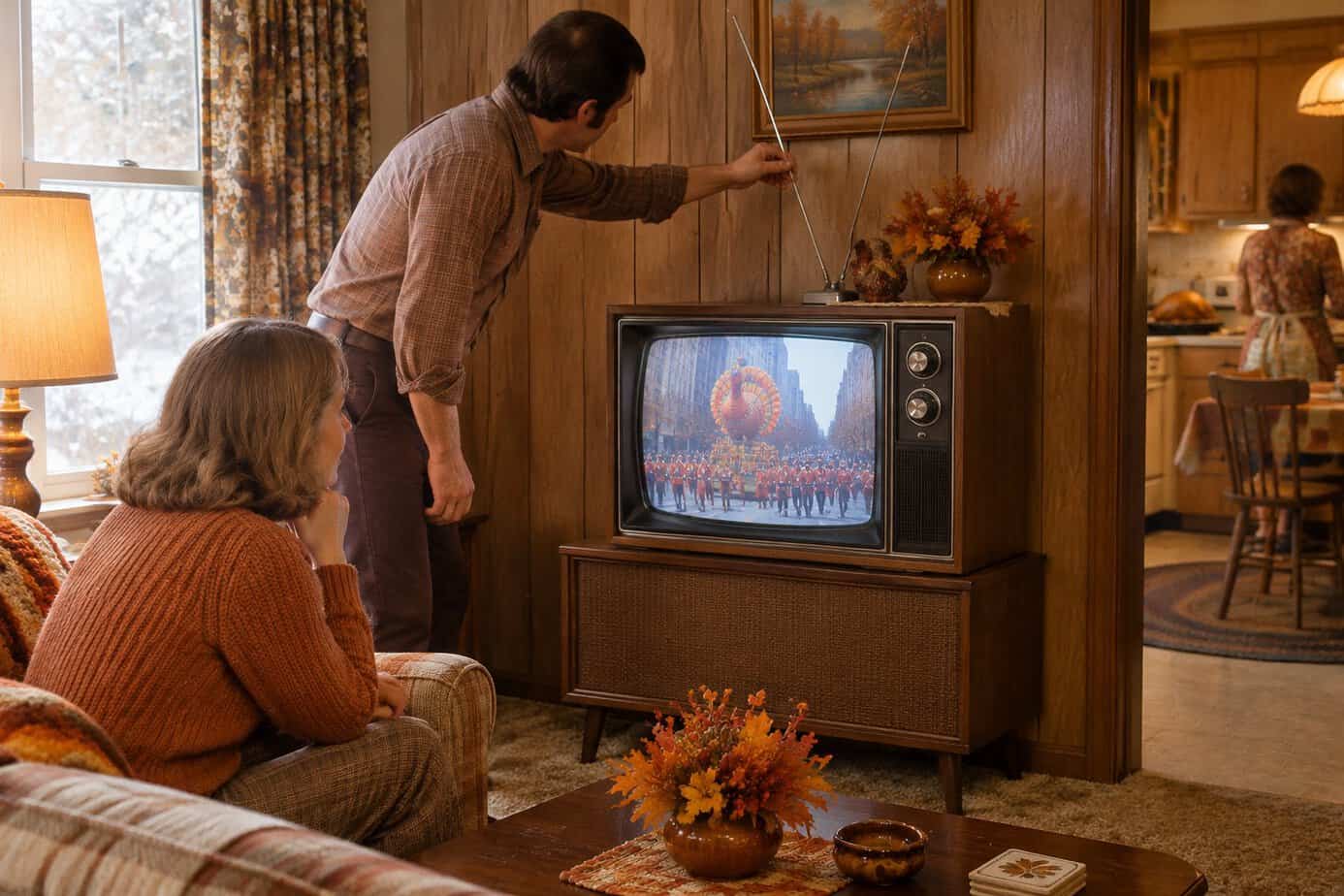
You remember standing a little too close to the television, one hand on the antenna, waiting for your husband to call out “there, right there” from across the room. The picture would flicker between snow and something almost watchable, and you’d hold perfectly still like moving might ruin it.
Rabbit ears never pointed the same direction twice. Some mornings you’d get a clear picture right away, and other Thanksgivings you were wrapping foil around the tips just to pull in a signal strong enough to see the floats.
The kids always wanted to watch the parade before the turkey went in, so getting a good picture felt like part of the morning ritual. You’d balance on a chair or lean the antenna against the window, hoping the weather outside wasn’t working against you.
Once cable crept into more homes through the late seventies and into the eighties, that whole routine faded. Nobody climbs on a chair for reception anymore, and the picture just appears, steady and clear, without anyone lifting a finger.
3. Gathering around a single television for the holiday broadcast
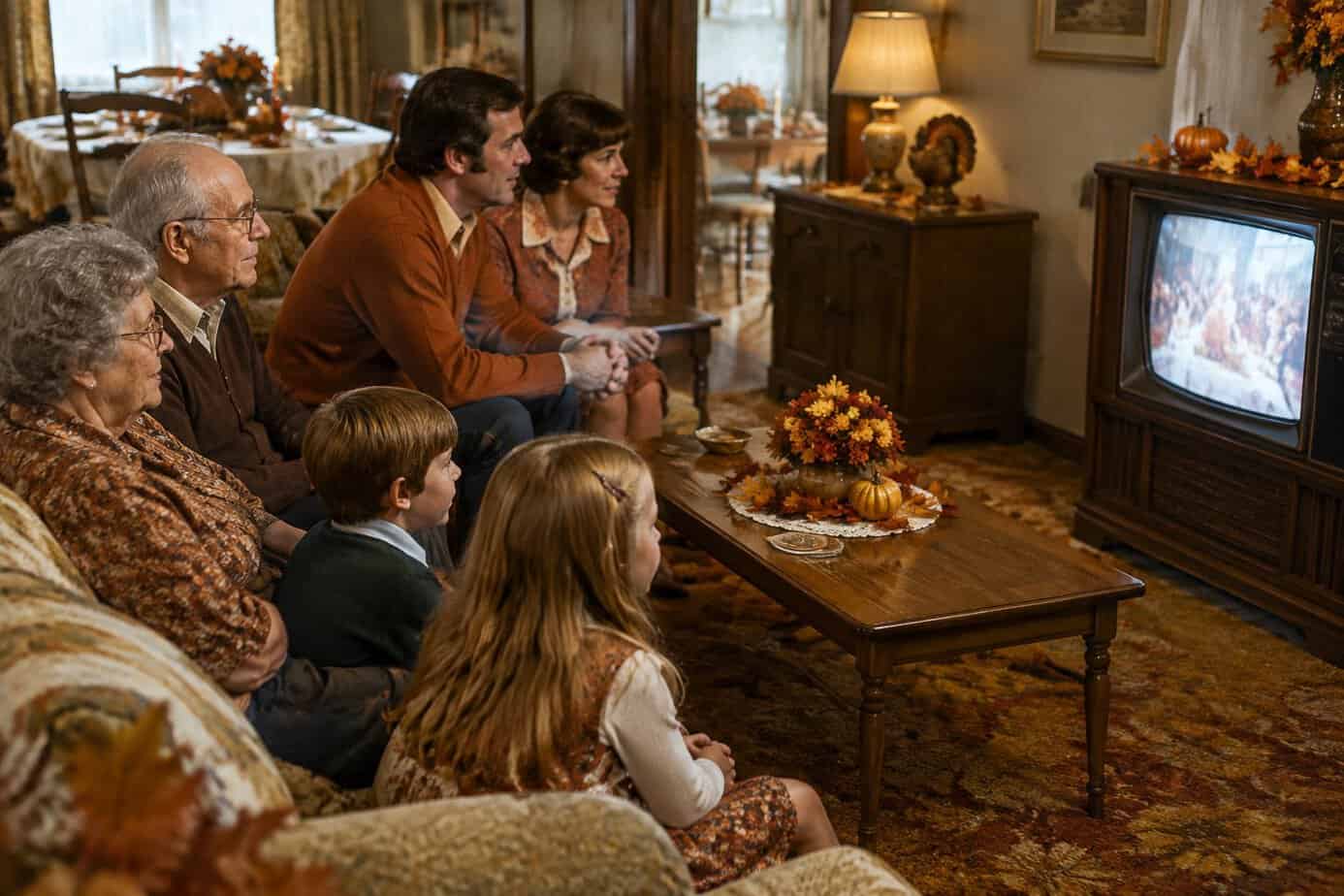
You only had one television in the house, and on Thanksgiving it belonged to everyone. By mid-morning you had the set turned on for the Macy’s parade, and someone was always adjusting the antenna to get a clear picture. The kids sat on the floor close to the screen while you moved between the kitchen and the living room, catching glimpses of the floats between basting the turkey.
There was no question of anyone watching something different in another room. Whatever was on, you watched together, whether it was the parade, the football game, or whatever special was airing that evening. Grandpa usually claimed his chair early and stayed there most of the day.
The television was background noise for conversation, card games, and naps after the meal. Nobody scrolled through channels looking for something better because there wasn’t much else to choose from anyway. Looking back, it’s funny how something as simple as one shared screen kept everybody in the same room, laughing at the same jokes, half paying attention while the rest of the day unfolded around it.
4. Setting the table with harvest-themed orange and brown decorations
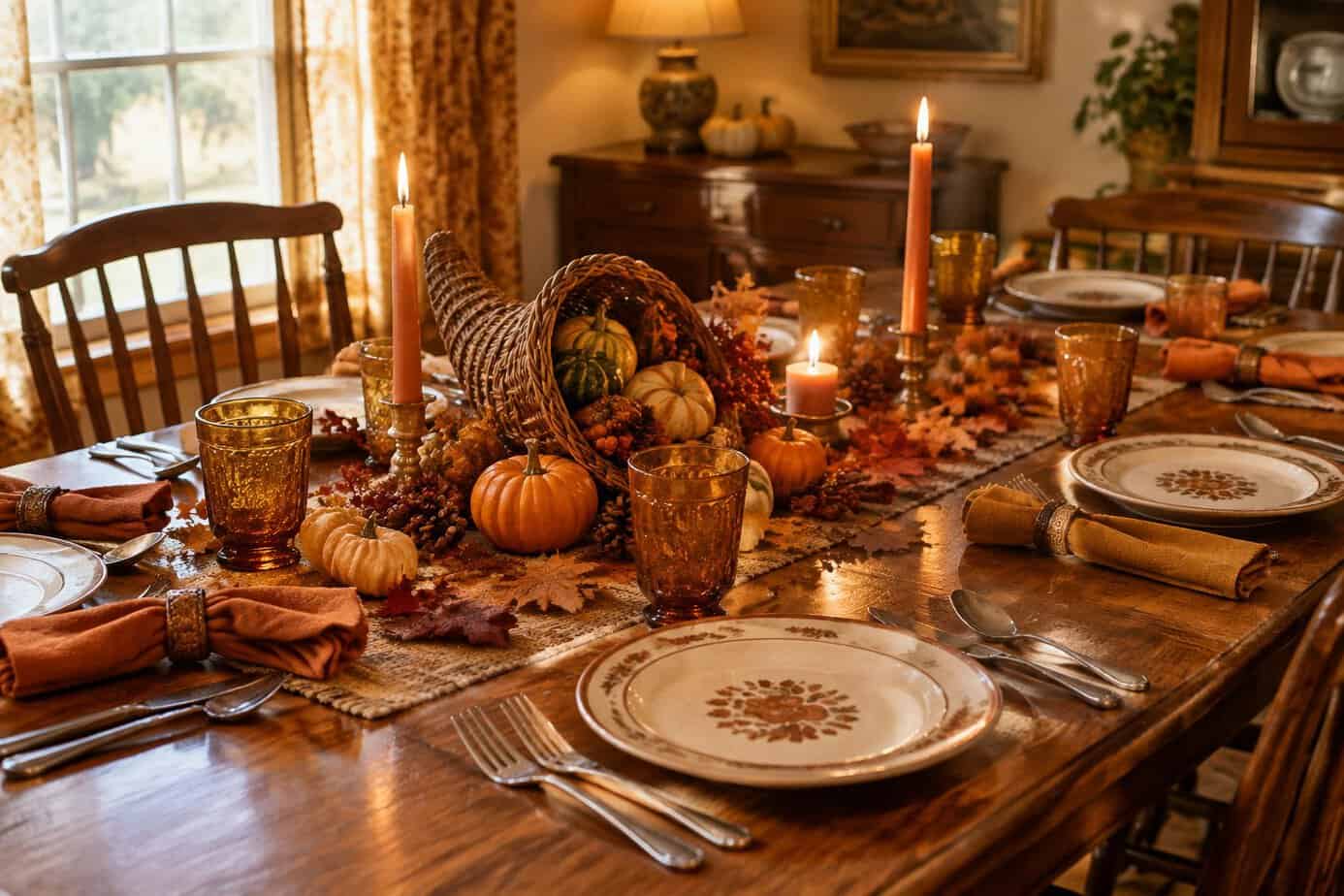
You remember pulling out the same table linens every November, the burnt orange tablecloth with the slightly frayed edge you never got around to fixing. Harvest gold and chocolate brown napkins went with it, folded into simple triangles because that was all you had time for between basting the turkey and getting the kids dressed.
Your centerpiece was probably something you made yourself. A few ears of ornamental corn, maybe a small pumpkin or two, arranged with some fall leaves you picked up from the yard that morning. It did not need to be fancy. It just needed to say autumn.
You may have had a set of dishes in those same earthy tones, the kind with a wheat pattern or a simple brown stripe around the edge. They were not your good china, just your everyday Thanksgiving dishes, sturdy enough for seconds and thirds.
Setting that table meant something. It meant the holiday had arrived, and for a few hours everything matched, even if nothing else that day went quite as planned.
5. Using a formal dining-room table reserved for special occasions
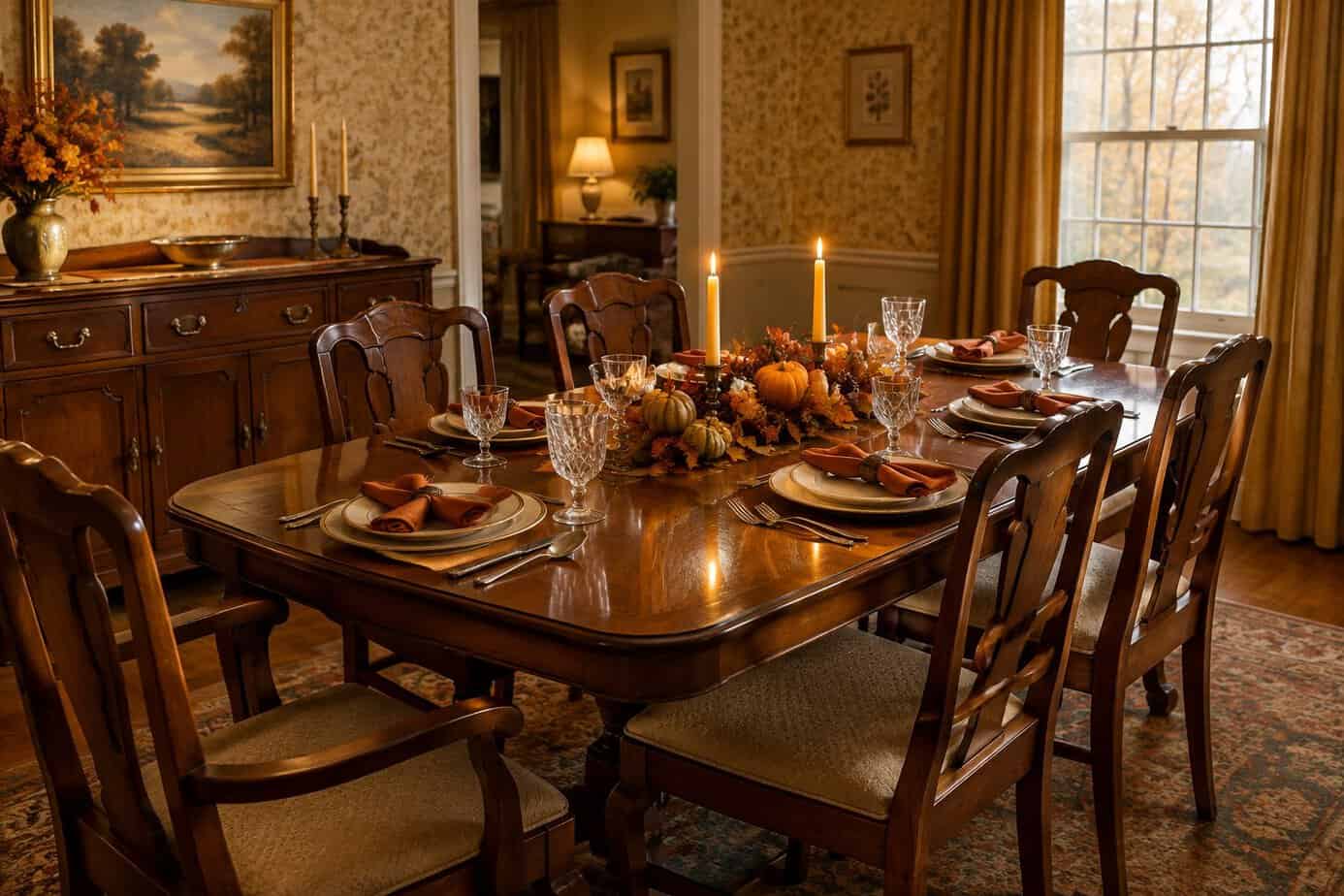
You had a dining room, and you probably used it only a handful of times a year. Thanksgiving was always one of those times. The rest of the year, that table sat quiet, maybe collecting mail or a stack of sewing projects.
You remember pulling out the table leaves, adding extra chairs borrowed from the kitchen, and spreading the good tablecloth over everything. It felt like preparing a stage for the meal, not just setting a surface.
That dining room had its own identity in your house. It wasn’t where you ate breakfast or helped with homework. It was saved, almost protected, for moments that mattered.
Setting that table was part of the ritual. You wanted it to look nice because the day felt important, and the room reflected that.
These days, many homes don’t have a separate dining room at all. Open floor plans and casual living have changed how people gather. You still think fondly of that formal table, and how good it felt to fill it once a year.
6. Serving cranberry sauce straight from the can, complete with ridges
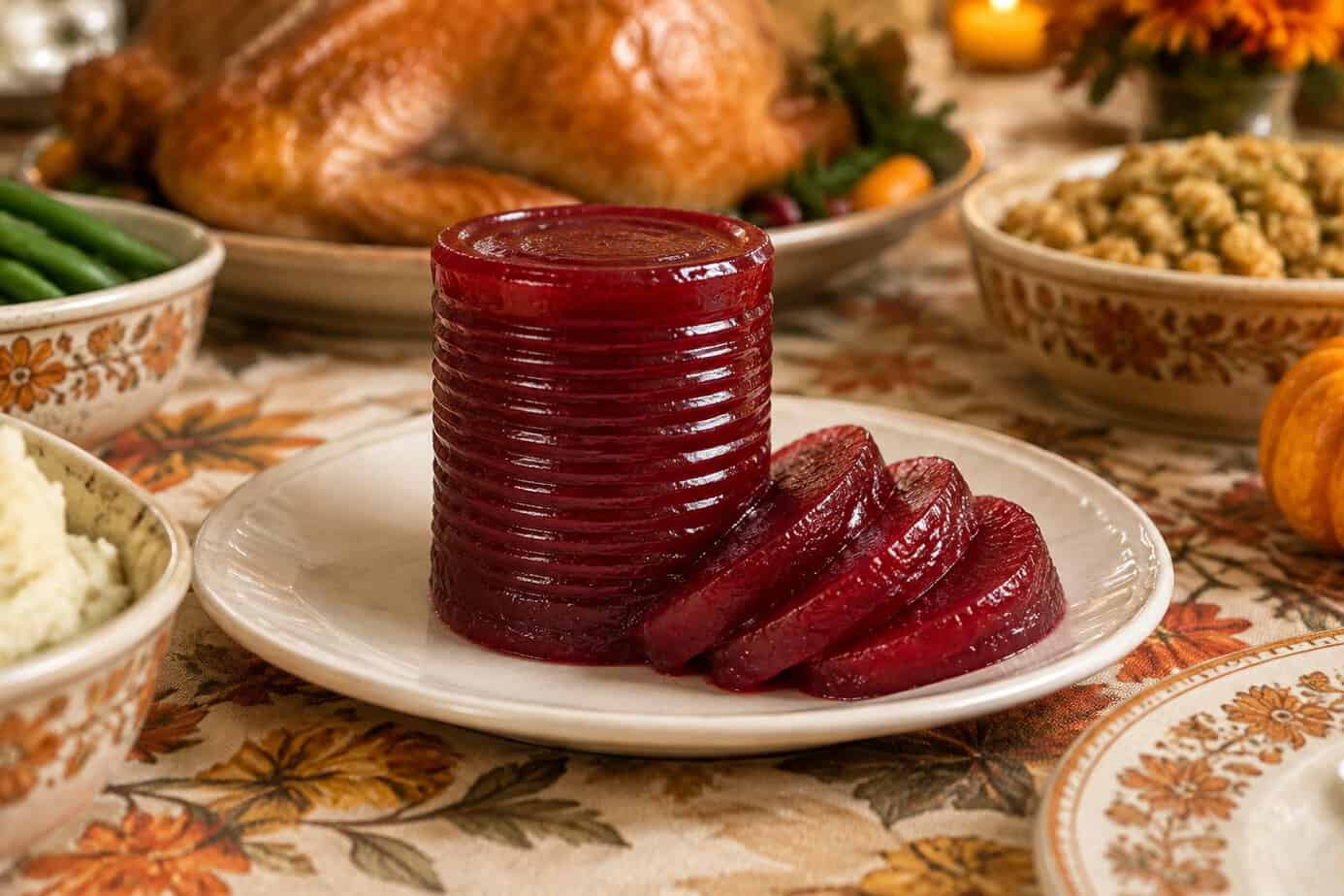
You remember the sound before anything else: both ends of the can opened, a little suction release, then that satisfying slide onto the plate. If you were lucky, the whole thing came out in one piece, ridges and all, still holding its shape like a tiny purple log.
You never thought twice about making cranberry sauce from scratch. The canned version was the cranberry sauce, and nobody in your house complained about it.
You’d slice it into neat rounds and arrange them on a small glass dish, maybe with a sprig of something green if you were feeling fancy that year. The kids liked watching you cut it almost as much as eating it.
Nobody fussed over where it came from. It sat there next to the turkey and gravy, tart and sweet and a little bit jiggly, and it did its job.
These days you notice more homemade versions at the table, with orange zest and whole berries. You don’t mind trying them, but some part of you still misses the plain, ridged simplicity of the can.
7. Making elaborate Jell-O salads as a Thanksgiving side dish
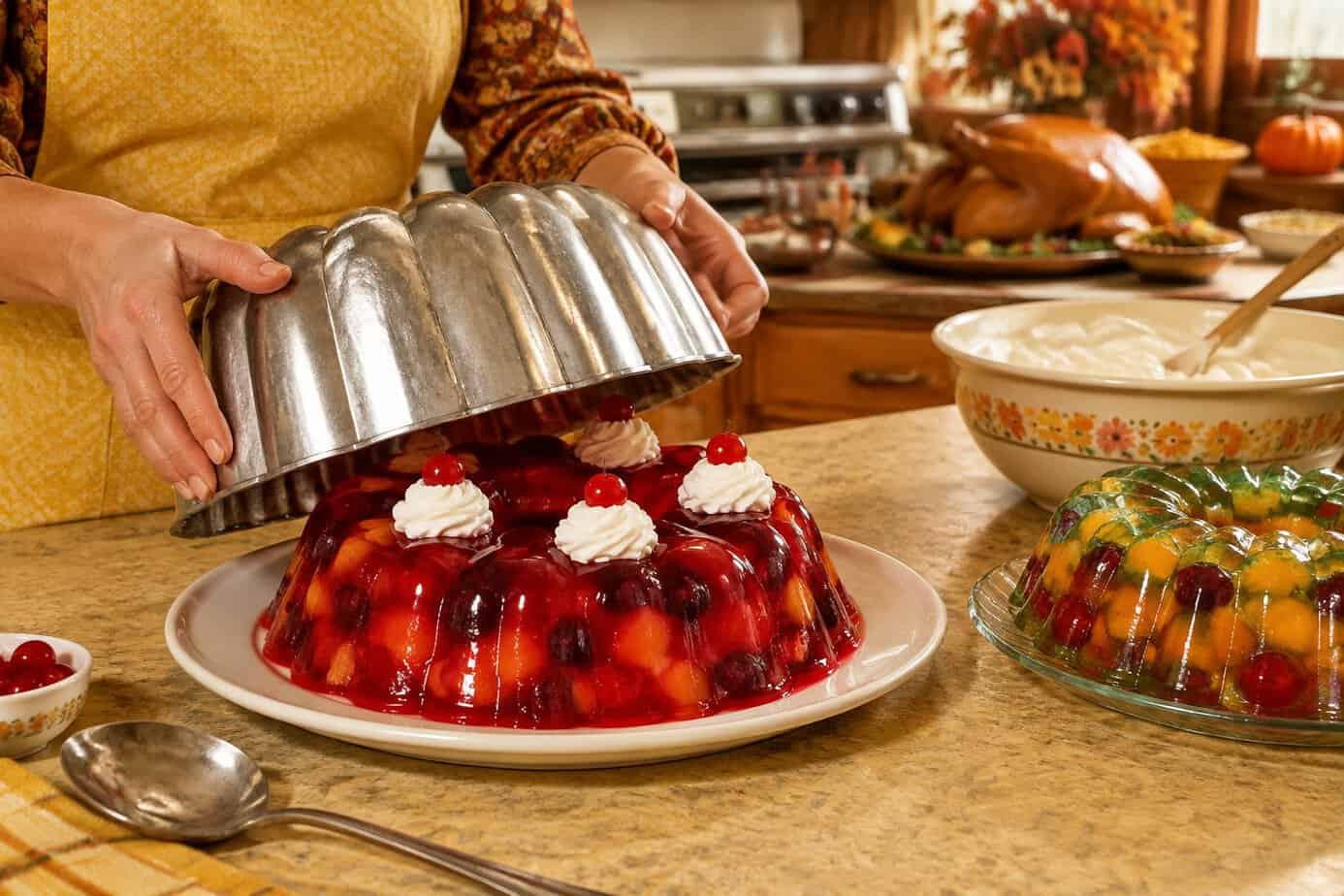
You remember clearing a whole shelf in the refrigerator just for the mold to set. Jell-O salad wasn’t an afterthought back then, it was a project you planned days ahead, right along with the turkey.
You probably had a favorite mold, maybe a ring shape or something with a fancy pattern, and you guarded it carefully. Getting the gelatin to unmold in one piece felt like a small victory every single time.
Your version likely had crushed pineapple, maybe shredded carrots, or that cottage cheese and Cool Whip combination everyone seemed to make. Some years you tried a savory one with vegetables suspended in it, other years you kept it sweet and fruity.
You served it on your nicest glass plate, right next to the mashed potatoes, and nobody questioned why it was there. It was simply part of the table.
Looking back, you can laugh at how seriously you took that wobbly dish. But at the time, it felt like it belonged, a little bit of color and effort that said you cared about the meal.
8. Bringing molded gelatin dishes decorated with fruit to the table
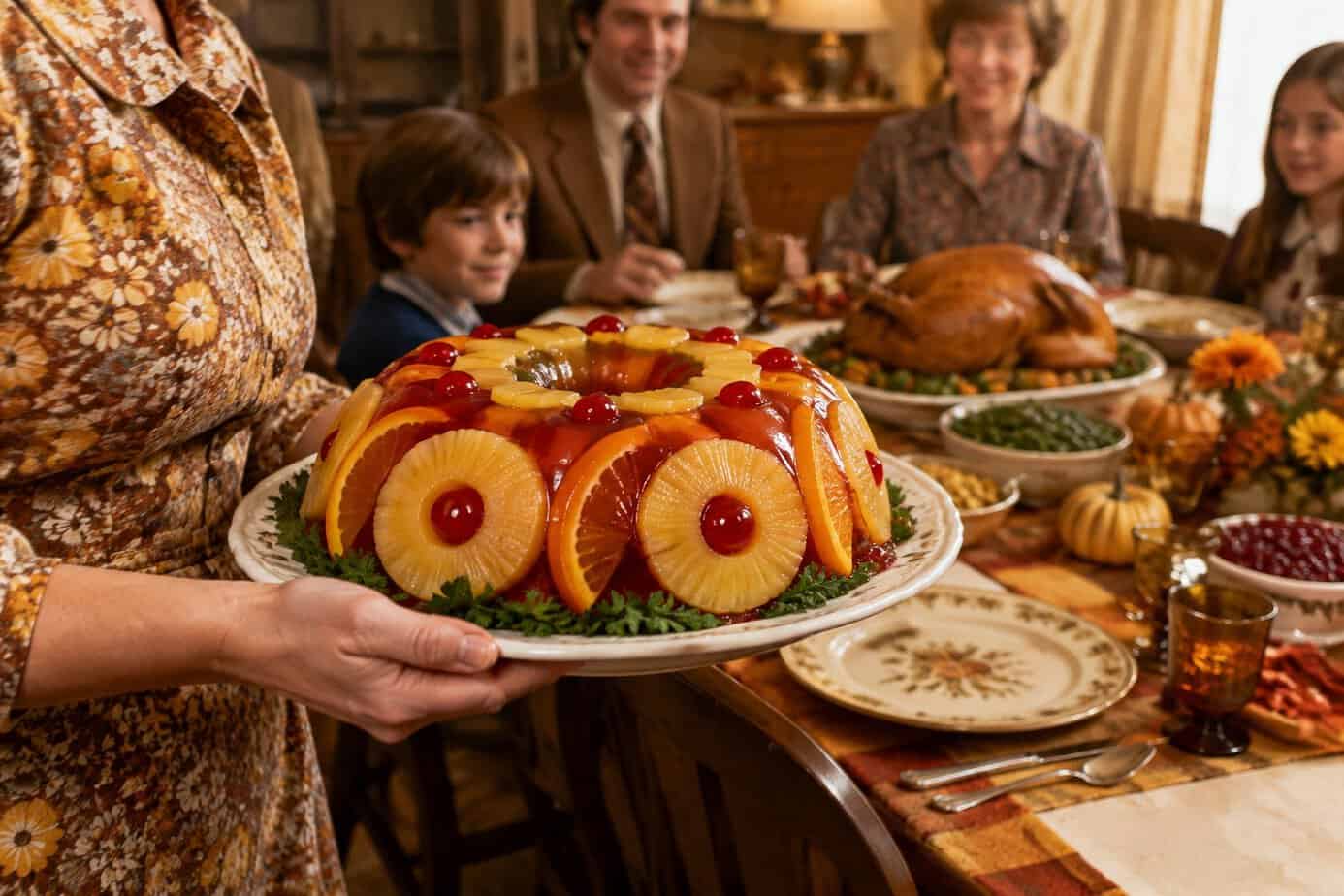
You remember standing in your kitchen the night before Thanksgiving, carefully pouring Jell-O into that metal mold shaped like a ring or a fish. It had to set overnight in the fridge, and you probably checked on it more than once, hoping it would come out just right.
Canned mandarin oranges, pineapple chunks, or grated carrots went into the gelatin before it firmed up. Some years you tried a layered version, with each color poured in and chilled separately so it would look impressive when you finally turned it out onto a plate.
Getting it out of the mold without it collapsing felt like a small victory every time. You’d dip the mold in warm water for just a few seconds, say a little prayer, and flip it onto your nicest serving dish.
Guests always noticed it sitting there, wobbling slightly, bright and shiny under the dining room light. It wasn’t fancy food, but it felt like part of what made the table look complete. These days you rarely see anyone make one, and the whole idea feels like it belongs to another time entirely.
9. Serving green bean casserole topped with canned fried onions
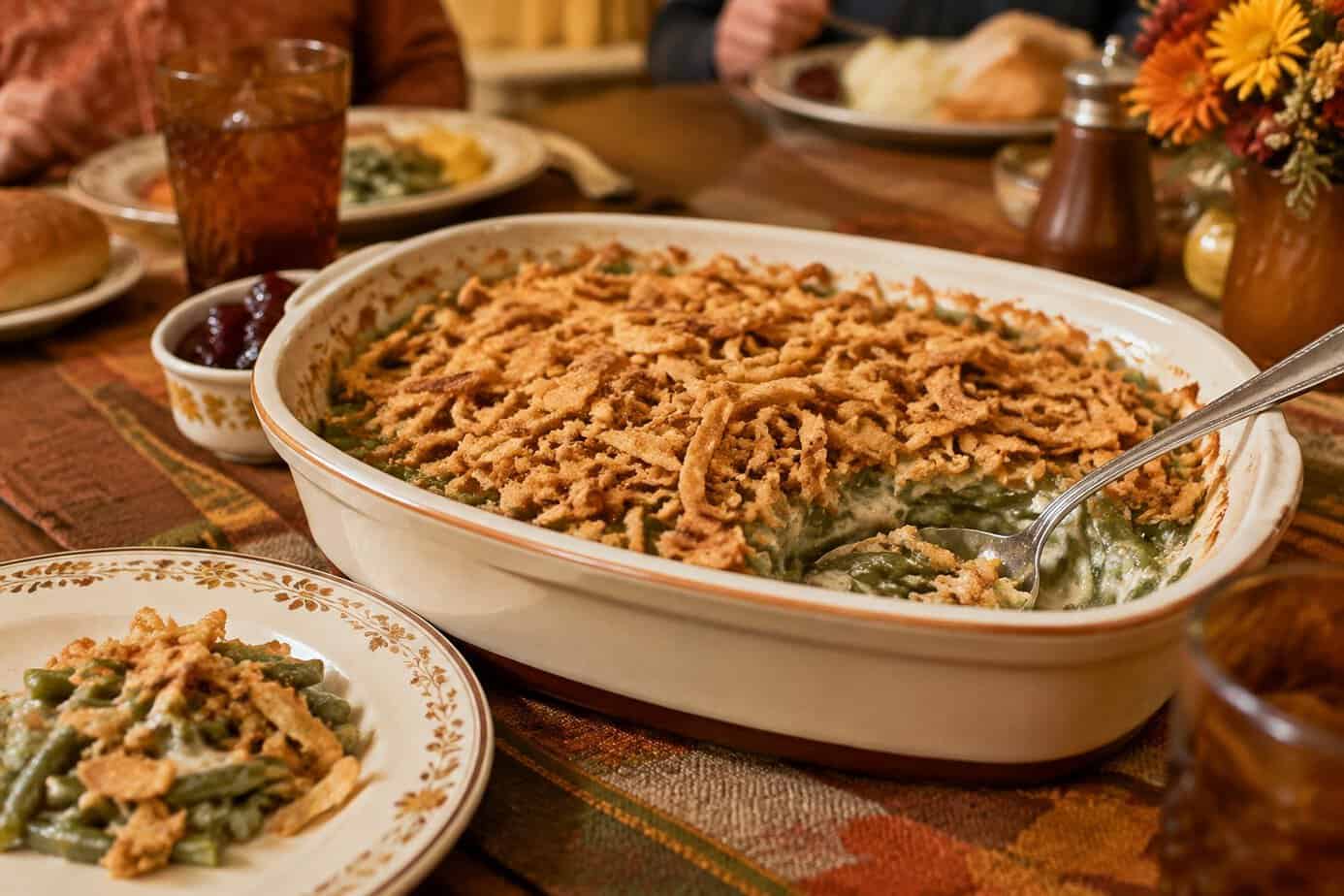
You made this dish every single Thanksgiving, and you probably didn’t think twice about it. Campbell’s had printed the recipe on their soup can back in the 1950s, and by the time you were hosting your own holiday in the 1970s, it felt like it had always existed. Green beans, cream of mushroom soup, and those crispy canned onions on top. That was just what Thanksgiving tasted like.
You likely mixed it together in the same glass dish every year, maybe even the same one your own mother used. There was nothing fussy about it. You opened a few cans, stirred, baked, and topped it off with those onions right before it went in the oven so they’d stay crunchy.
It sat on the table next to the turkey like it had earned its spot there, because it had.
These days, you still think about making it from scratch with fresh green beans and a homemade sauce. But some part of you misses the simplicity of the original, the way it tasted exactly the same every year without fail.
10. Putting out canned vegetables alongside homemade dishes
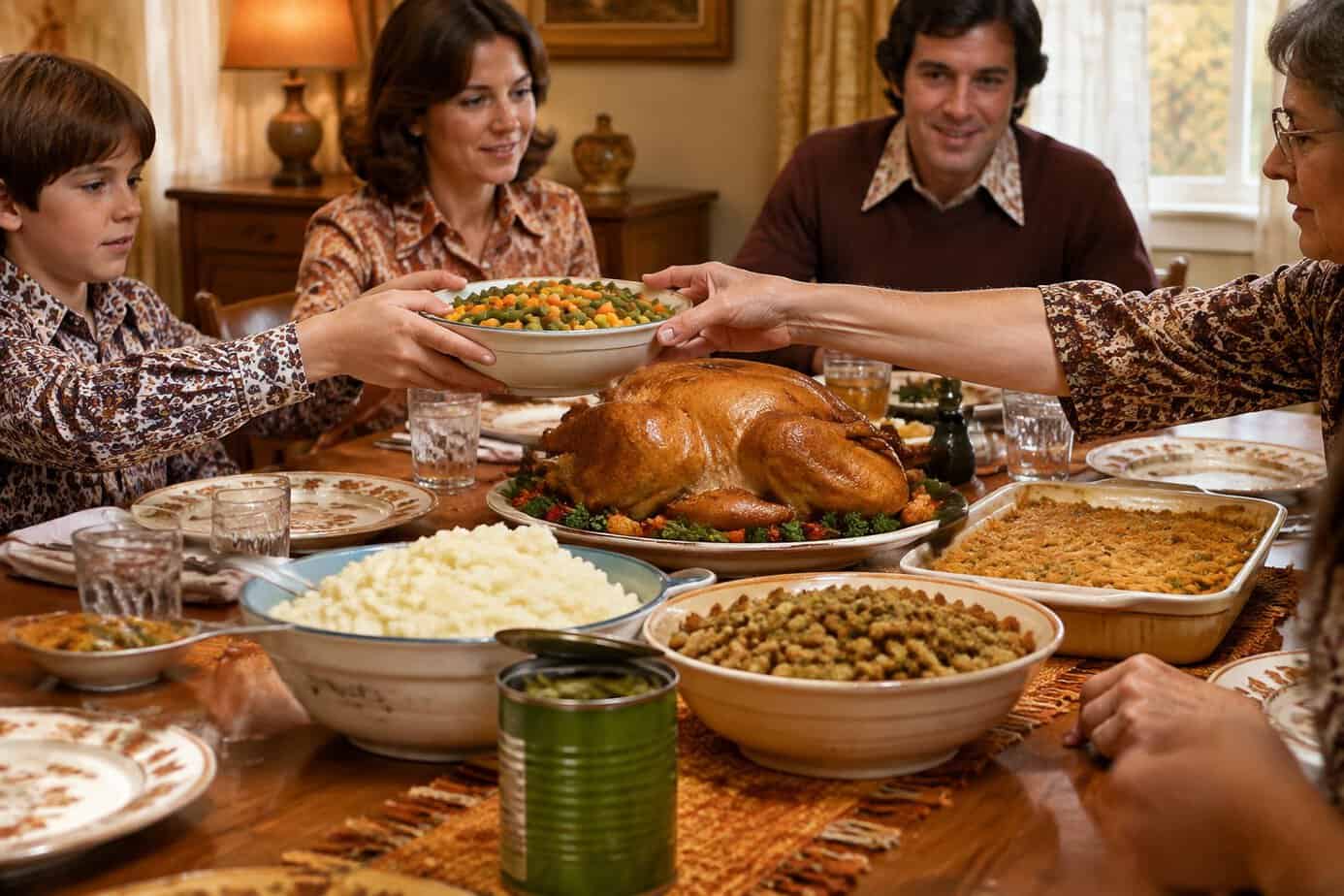
You remember how your Thanksgiving table never had just one kind of food on it. You’d spend half the morning making your mother’s stuffing from scratch, and then you’d open a can of green beans or corn right alongside it.
Nobody thought twice about it back then. Canned vegetables were a pantry staple, and using them wasn’t a shortcut you felt guilty about. You’d dress them up a little with butter or a sprinkle of something, but they stayed pretty simple.
Your homemade dishes got the real attention, the pies, the rolls, the gravy you stirred for what felt like forever. The canned vegetables filled out the table without demanding extra time you didn’t have.
Looking back, it made sense for a woman cooking a whole meal for a houseful of family. You couldn’t make everything from scratch, and nobody expected you to. Now you notice how often everything on a holiday table has to be fresh or organic, and you miss the easier balance you used to strike without even thinking about it.
11. Making a cheese ball for guests to snack on before dinner
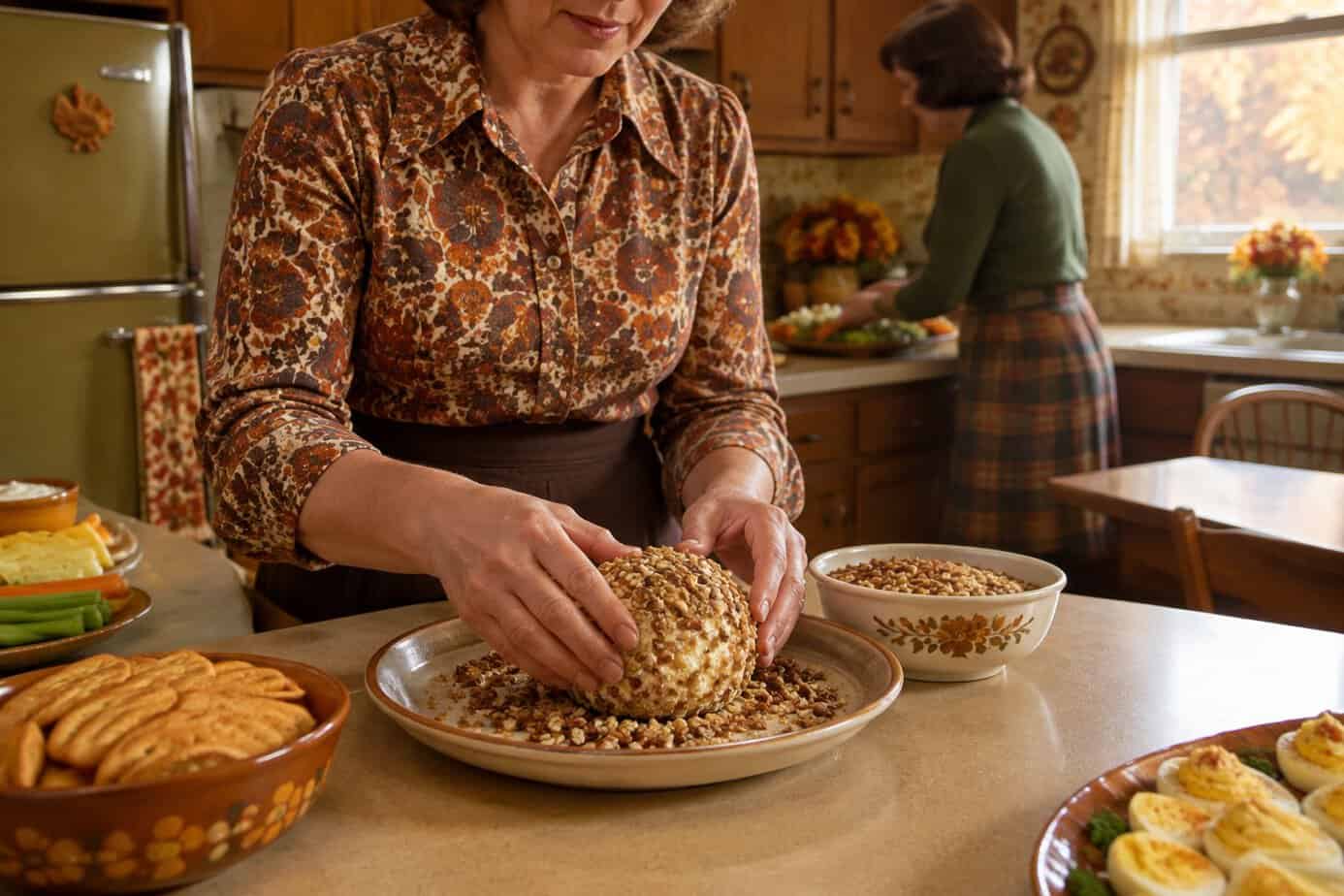
You remember standing at the counter softening that block of cream cheese, waiting for it to reach just the right consistency before mixing in the sharp cheddar. A little Worcestershire sauce, some minced onion, maybe a dash of garlic powder, and you had your base ready to go.
Rolling it into shape with your hands felt satisfying every single time. Then came the fun part, pressing chopped pecans or walnuts all around the outside until it was completely covered.
You always made it the day before Thanksgiving so the flavors had time to blend in the refrigerator. By the time guests arrived, it sat proudly on a plate surrounded by crackers, ready for everyone to dig in while the turkey finished cooking.
Nobody rushed through it either. People would stand around the kitchen or living room, chatting and snacking, waiting for dinner to be called.
These days, you notice fewer people bother with homemade appetizers like that. Store-bought trays have mostly taken over, and something about that simple tradition feels like it belongs to another time now.
12. Serving deviled eggs as a standard holiday appetizer
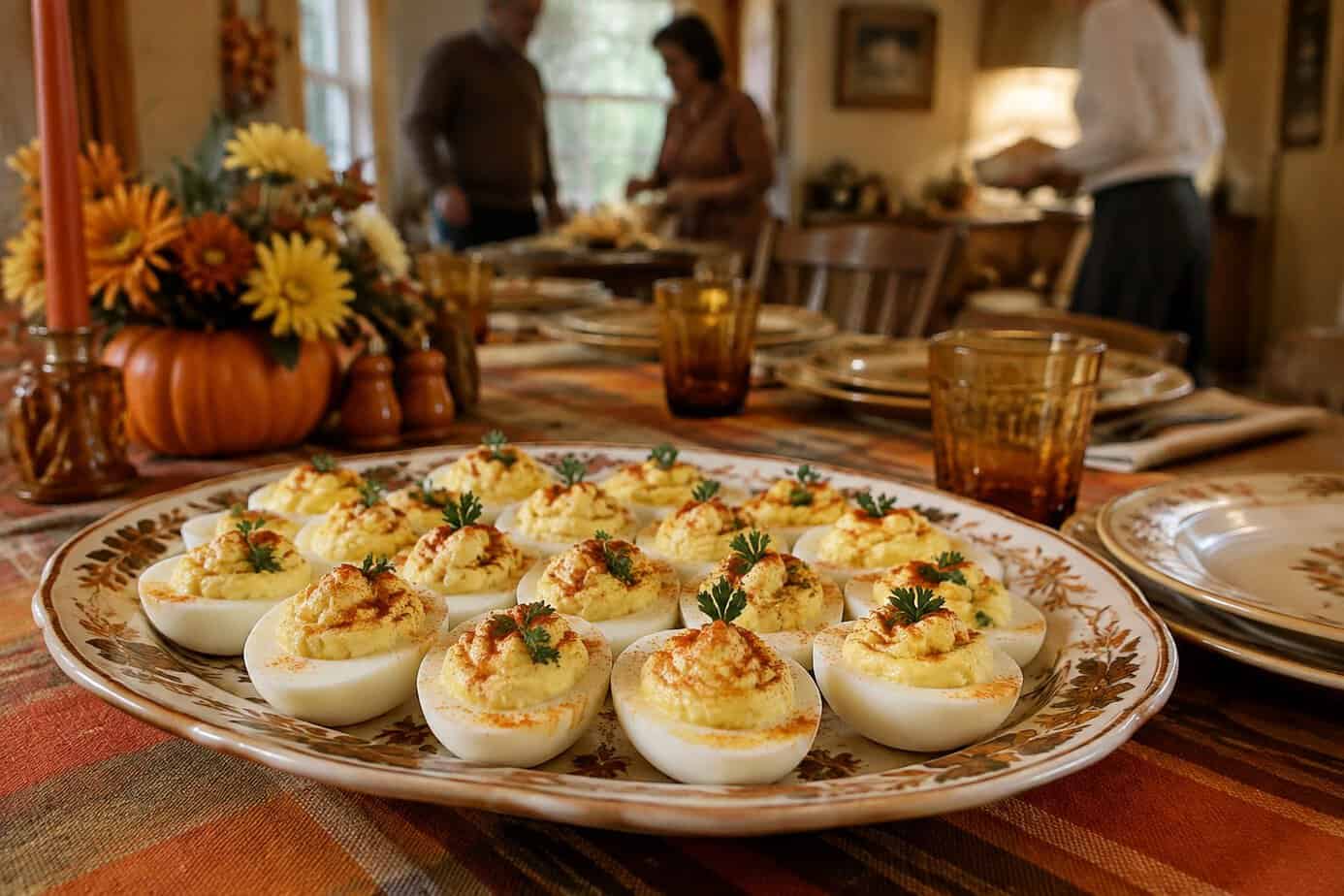
You always had a platter of deviled eggs ready before anyone sat down to the main meal. It was one of those dishes you never had to think twice about including.
You boiled the eggs the night before, usually while cleaning up from some other task in the kitchen. Peeling them was half the job, and you got good at it after years of practice.
The filling was simple: mashed yolks, mayonnaise, a little mustard, maybe a dash of paprika on top for color. You did not need a recipe card for it because you knew the measurements by feel.
Guests picked at them before dinner even started, standing around the kitchen or sitting in the living room with a napkin in hand. They disappeared fast, long before the turkey came out of the oven.
Somewhere along the way, fewer families kept this habit going. Appetizer tables shifted toward other things, and deviled eggs stopped being the automatic choice they once were.
You still think about that deviled egg plate, chipped a little at the edges, that came out every single year without fail.
13. Offering a relish tray with olives, pickles, and celery
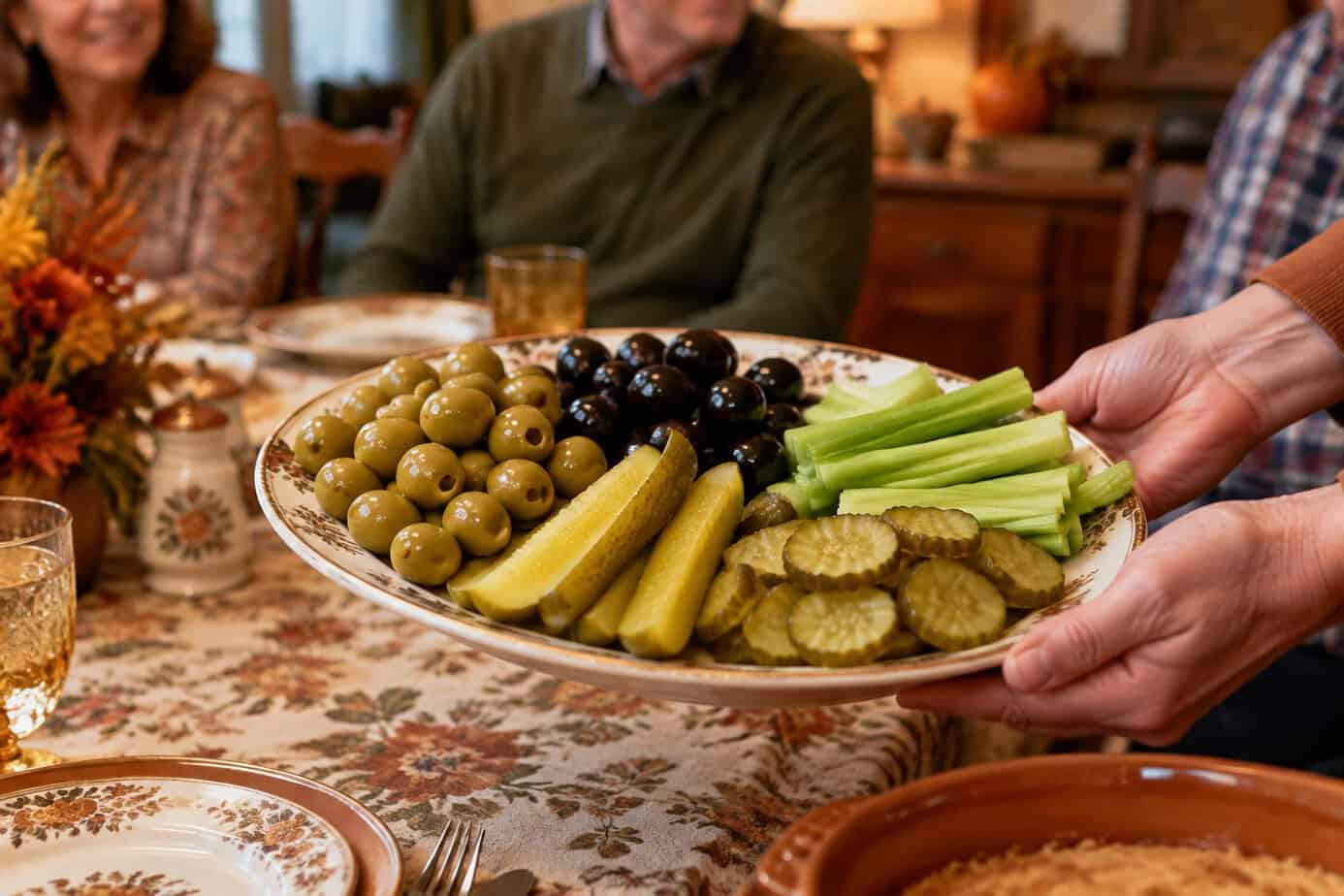
Before anyone sat down to eat, you set out the relish tray. It was one of the first things on the table, right alongside the rolls and butter.
You probably had a special dish for it, maybe a divided glass tray your mother gave you or one you got as a wedding gift. Each little section held something different: black and green olives, sweet gherkins, dill pickle spears, celery sticks, and maybe some radishes cut to look fancy.
You filled it almost on autopilot because it was just what you did every year. Kids would grab the olives first, sliding them onto their fingers before popping them in their mouths. The adults picked at the pickles while the turkey finished cooking.
It kept everyone from getting too hungry during that last stretch before dinner was ready. Somewhere along the way, the relish tray stopped showing up. Maybe it felt old-fashioned, or maybe with so many other dishes, there just wasn’t room on the table anymore. Either way, you remember it fondly as part of what made the day feel complete.
14. Setting out a bowl of mixed nuts for guests to shell
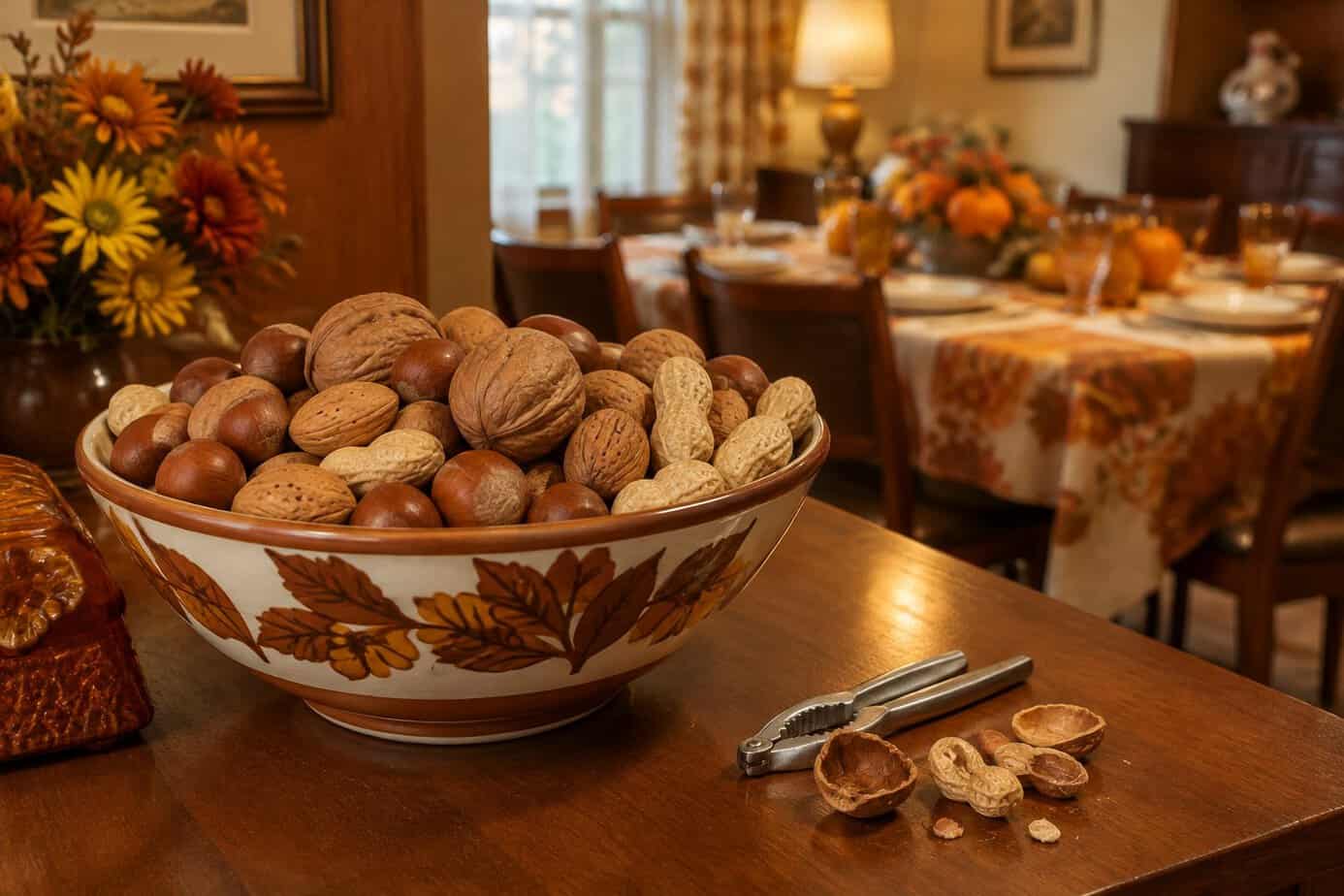
You always kept a big bowl of mixed nuts out on the side table, right next to the little wooden nutcracker and a small dish for the shells. Walnuts, pecans, brazil nuts, a few almonds mixed in. It gave people something to do while they waited for dinner or sat around after the meal was over.
You remember the sound most of all. That steady cracking noise coming from the living room while the men talked and the football game played in the background. It wasn’t loud, just a quiet kind of busy.
Picking out the shell bits took patience, and somebody always ended up with a sore thumb from the nutcracker. But nobody minded. It kept hands occupied and gave people a reason to linger at the table instead of rushing off.
You don’t see that bowl out much anymore. Everything comes pre-shelled now, already in a bag. It was such a small thing, but it slowed the afternoon down in a way you still think about.
15. Passing around a basket of dinner rolls with every meal
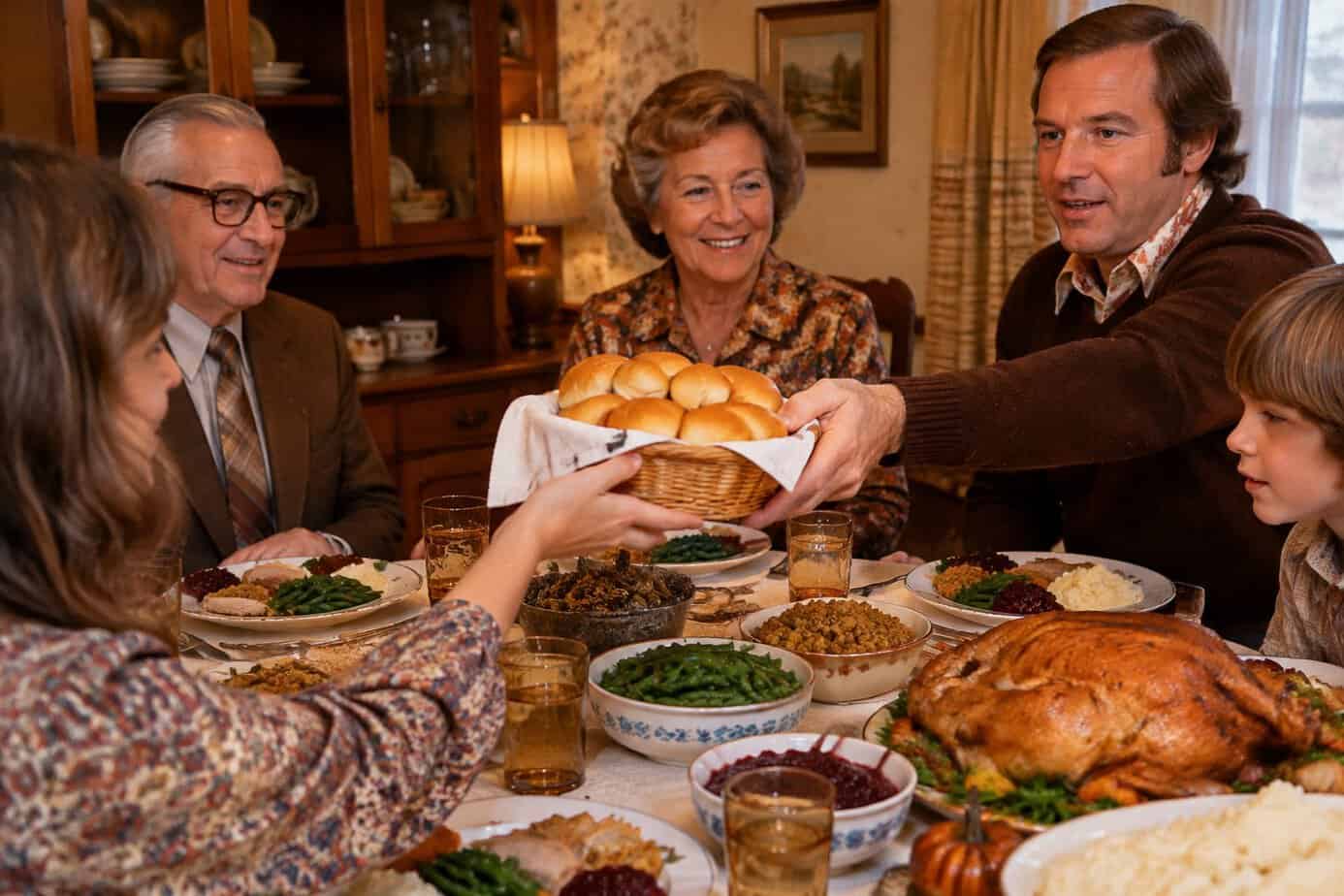
You always had a basket of dinner rolls on the table, and it never sat still for long. Someone’s hand was always reaching for it, passing it along to the next person without even being asked.
You probably warmed them in the oven wrapped in a clean dish towel to keep them soft. Whether you made them from scratch or popped open a can, that basket felt like part of the meal itself, not just an extra.
Butter went around right behind it, and nobody waited for permission to take seconds. It was just what you did while the turkey rested or while plates were still being filled.
Looking back, it was such a small thing, but it kept everyone’s hands busy and the conversation easy. You remember reaching across the table more than once, catching your husband’s eye or smiling at a grandchild struggling to break one open.
These days, rolls often sit forgotten in a bag by the bread box. Back then, that basket made its way around the table like clockwork, warm and familiar every single year.
16. Making stuffing from stale bread saved over several days
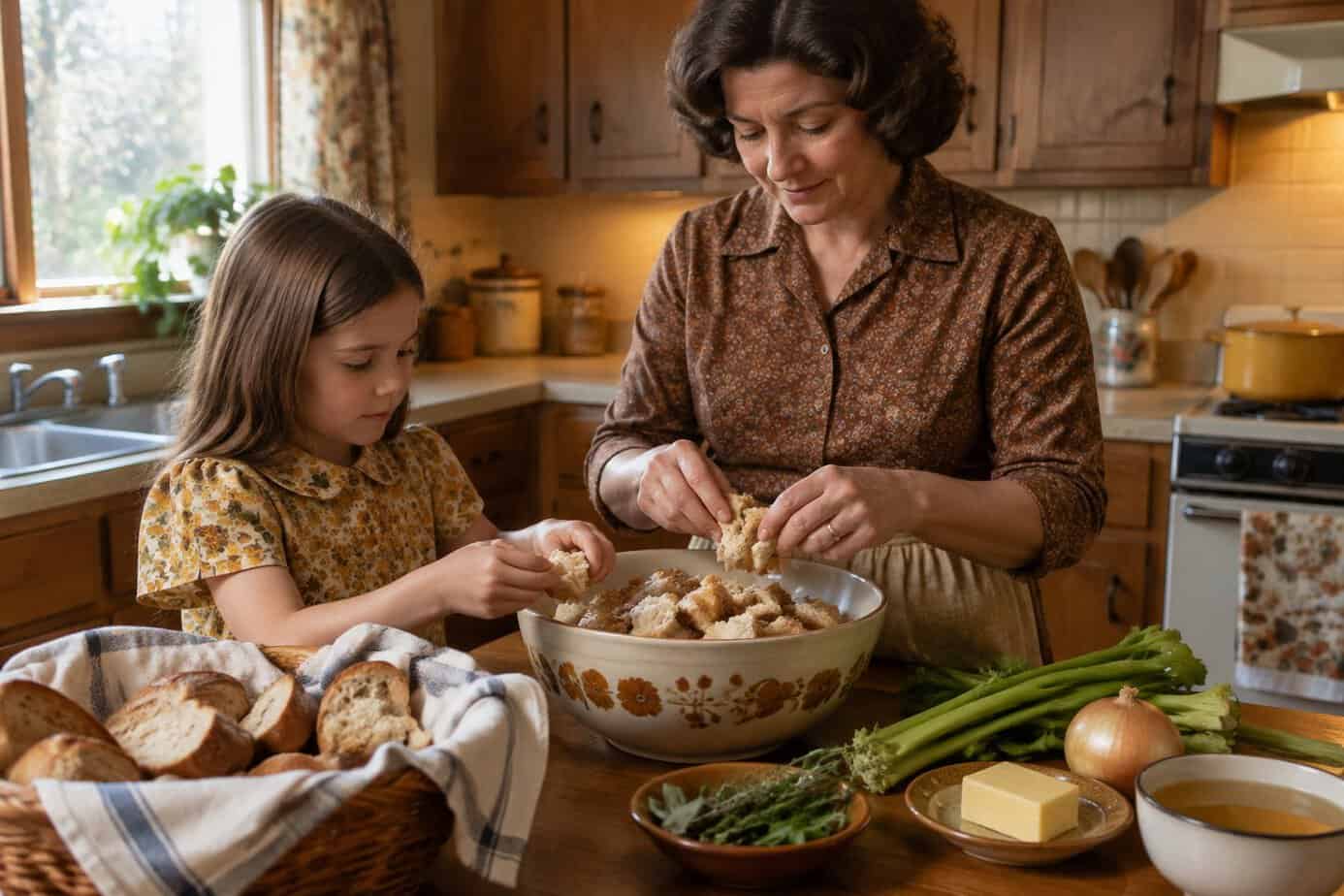
You never thought twice about saving bread for stuffing. It was just something you did, every single Thanksgiving, starting right around the middle of November.
You kept a big paper bag or an old bread box set aside just for this. Heels of sandwich bread, the end of a loaf nobody finished, maybe some leftover rolls from Sunday dinner all went in there to dry out.
By the time Thanksgiving morning came, you had enough stale bread cubed up and ready to go. There was no running to the store for a special stuffing mix. You used what you had, and it worked.
Your kitchen counter usually had bread pieces spread out on cookie sheets or wrapped loosely in cloth towels for days before the big meal. You’d press a piece between your fingers to see if it was dry enough yet.
That slow, patient process felt like part of getting ready for the holiday itself, not just a step before cooking. It made the whole week feel like Thanksgiving had already begun.
17. Cooking the turkey for most of the day in a conventional oven
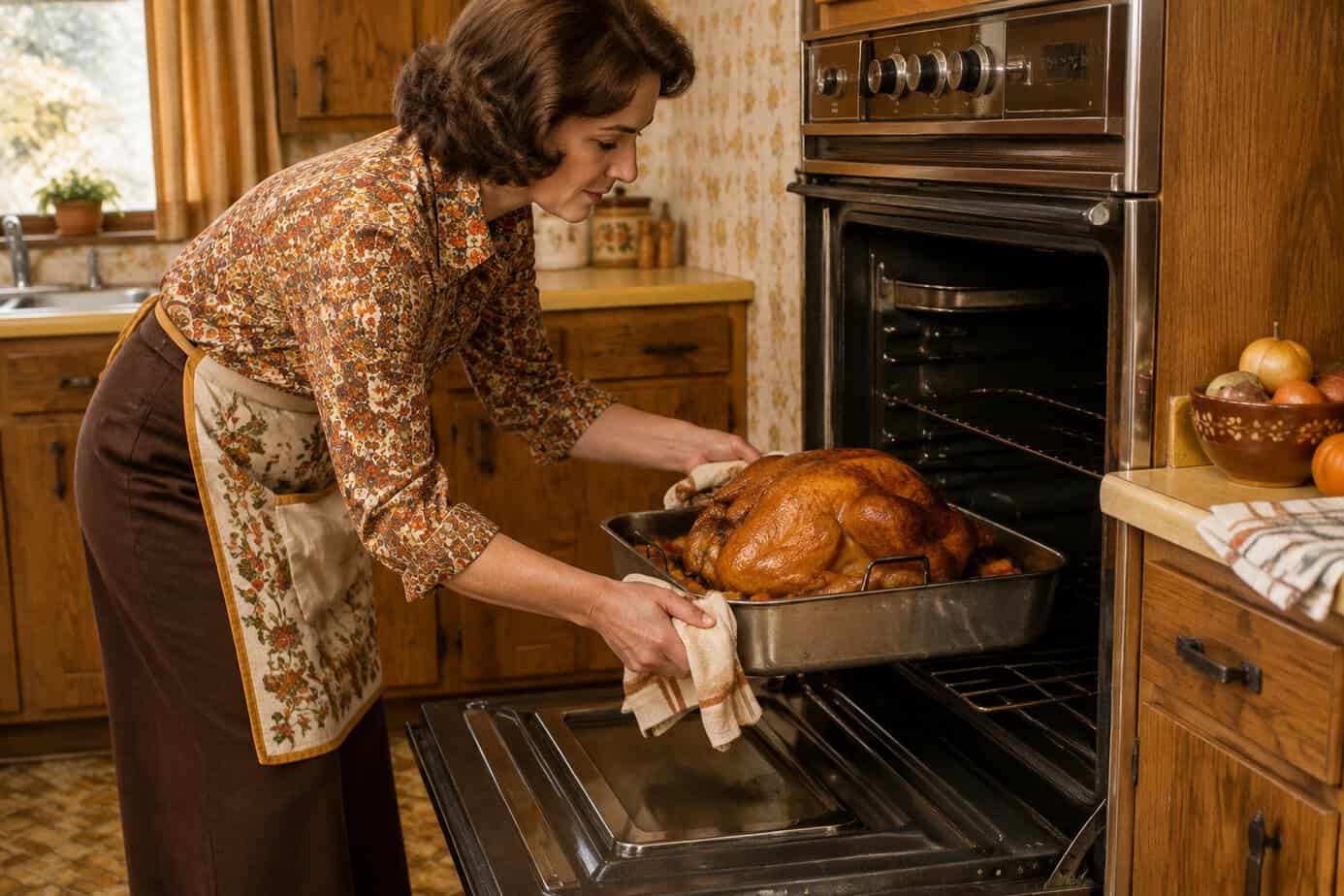
You remember setting your alarm early on Thanksgiving morning, long before the rest of the house woke up. The turkey had to go in by sunrise if you wanted it ready in time for an early afternoon dinner.
There was no shortcut back then. You rubbed the bird with butter, maybe stuffed it the night before, and slid it into the oven knowing it would be in there for hours and hours.
You basted it every thirty minutes or so, opening that oven door again and again, letting the heat escape into the kitchen. The whole house smelled like turkey by nine in the morning, and that smell only grew stronger as the day went on.
You didn’t have a meat thermometer with a timer that beeped when it was done. You just checked the legs, watched the clock, and trusted your instincts built up over years of cooking.
By the time it finally came out, golden and done, you felt like you’d earned that meal. The long wait was just part of the holiday, something you never questioned because that’s simply how it was done.
18. Carving the turkey at the table while everyone watched
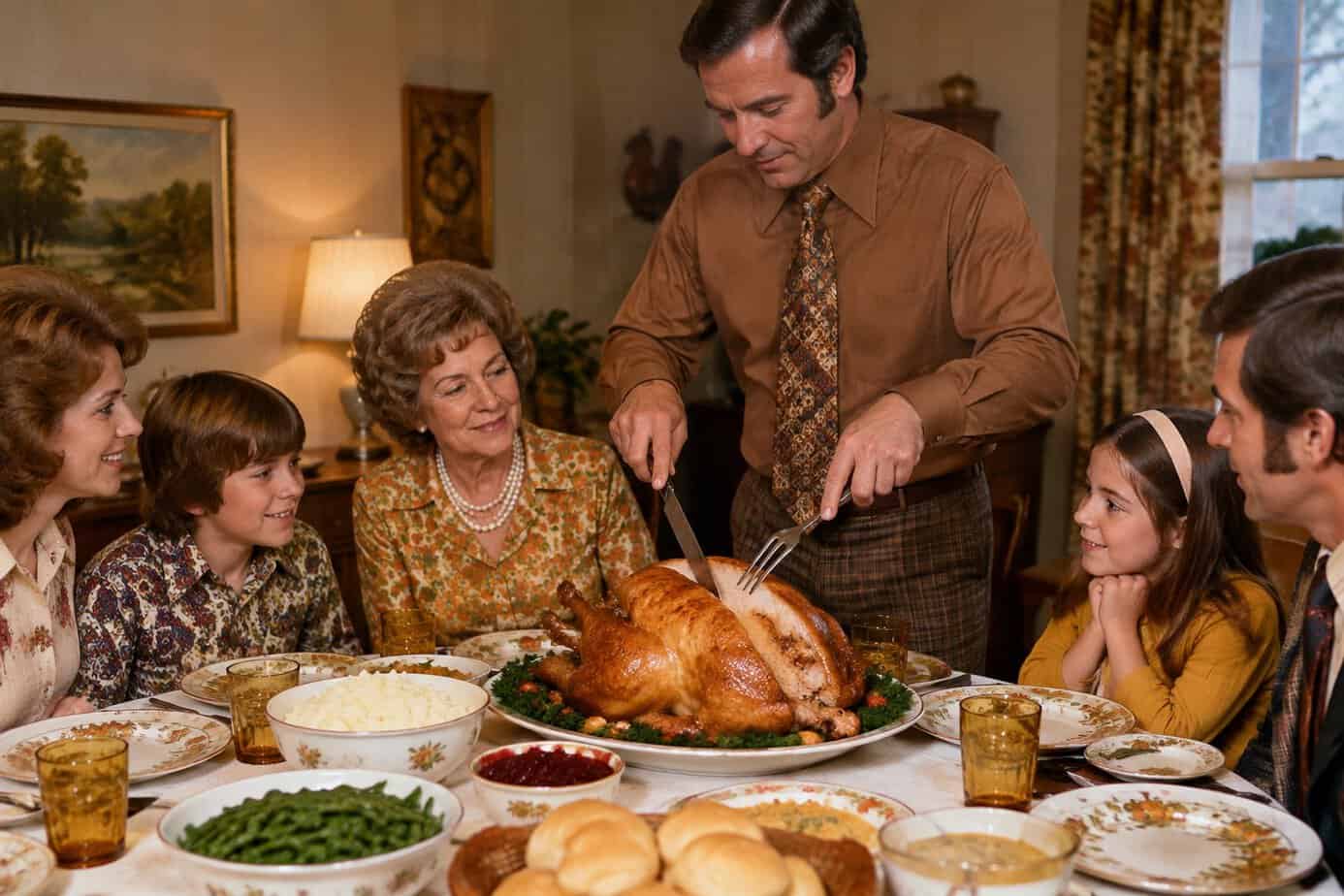
You remember the hush that fell over the room the moment your husband picked up the carving knife. The turkey sat on its platter in the center of the table, golden and steaming, and every eye turned toward it.
There was no slipping off to the kitchen to slice things out of sight. Carving was a performance, done right there in front of the whole family, with the good knife and the long fork your mother-in-law had given you as a wedding gift.
You remember holding your breath a little, hoping the first cut would come out clean. The kids always wanted drumsticks, and somebody’s uncle usually had an opinion about how thin or thick the slices should be.
It took time, and nobody minded waiting. Watching the turkey get carved was part of the meal itself, almost as important as eating it.
These days, turkeys often get sliced in the kitchen before they ever reach the table. It is quicker, but you miss that little stretch of anticipation when everyone sat still, forks in hand, waiting for the first plate to be passed.
19. Saving turkey drippings to make gravy from scratch
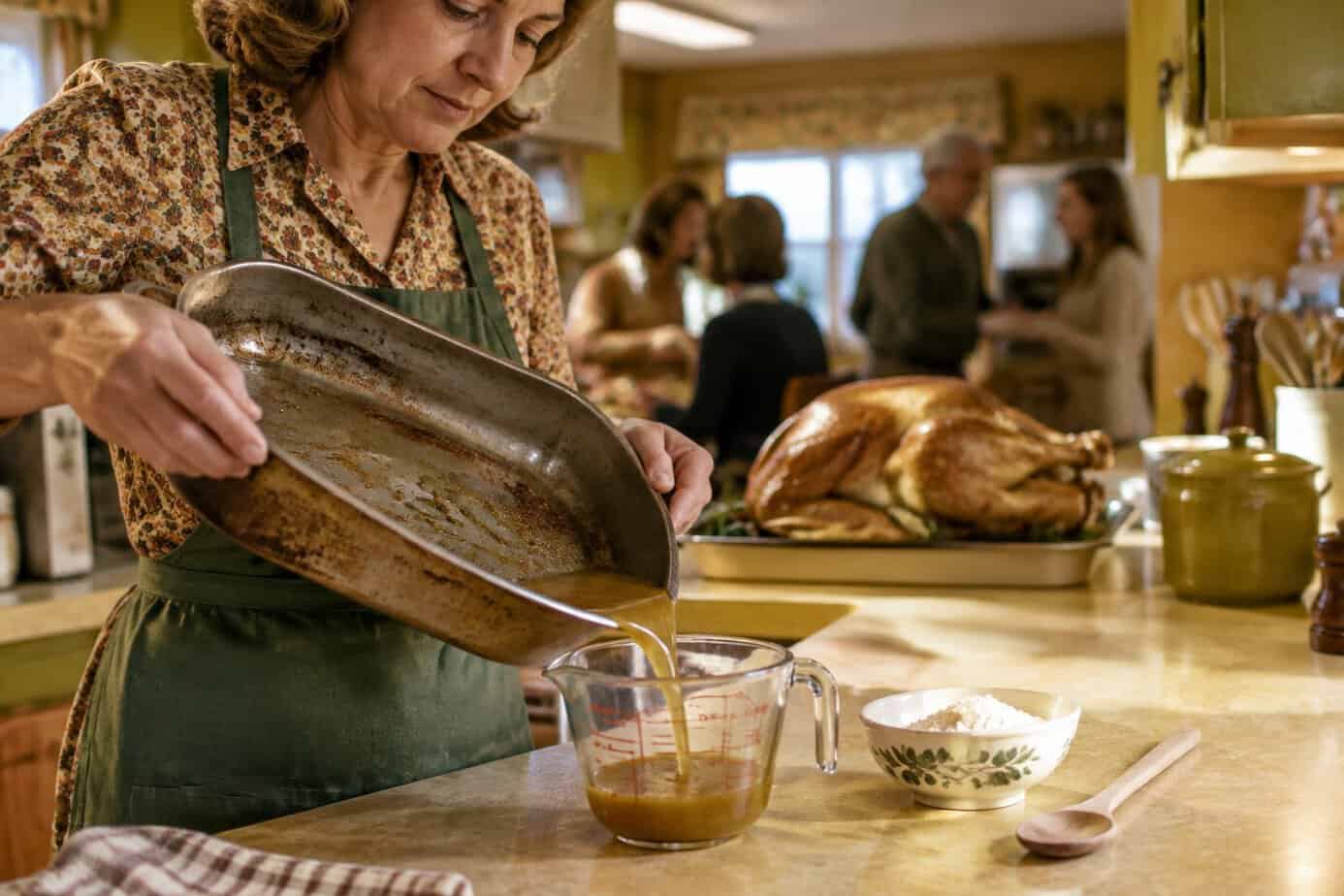
You remember standing at the stove with that roasting pan balanced across two burners, scraping up every brown bit stuck to the bottom. Nothing from that turkey went to waste, especially not those drippings. You poured them into a jar or bowl, let the fat rise to the top, then skimmed it off carefully before starting your gravy.
Making gravy wasn’t a quick task back then. You whisked flour into the fat to build a roux, then slowly added the drippings and broth, stirring constantly so no lumps formed. It took patience and a watchful eye, but you knew it was worth it when that gravy turned glossy and rich.
These days, so many families reach for a packet or a jar instead. It’s faster, sure, but you still think about the smell of that gravy simmering on the stove while the turkey rested nearby. There was something satisfying about turning those simple pan juices into something everyone fought over at the table.
20. Serving several homemade pies baked the day before
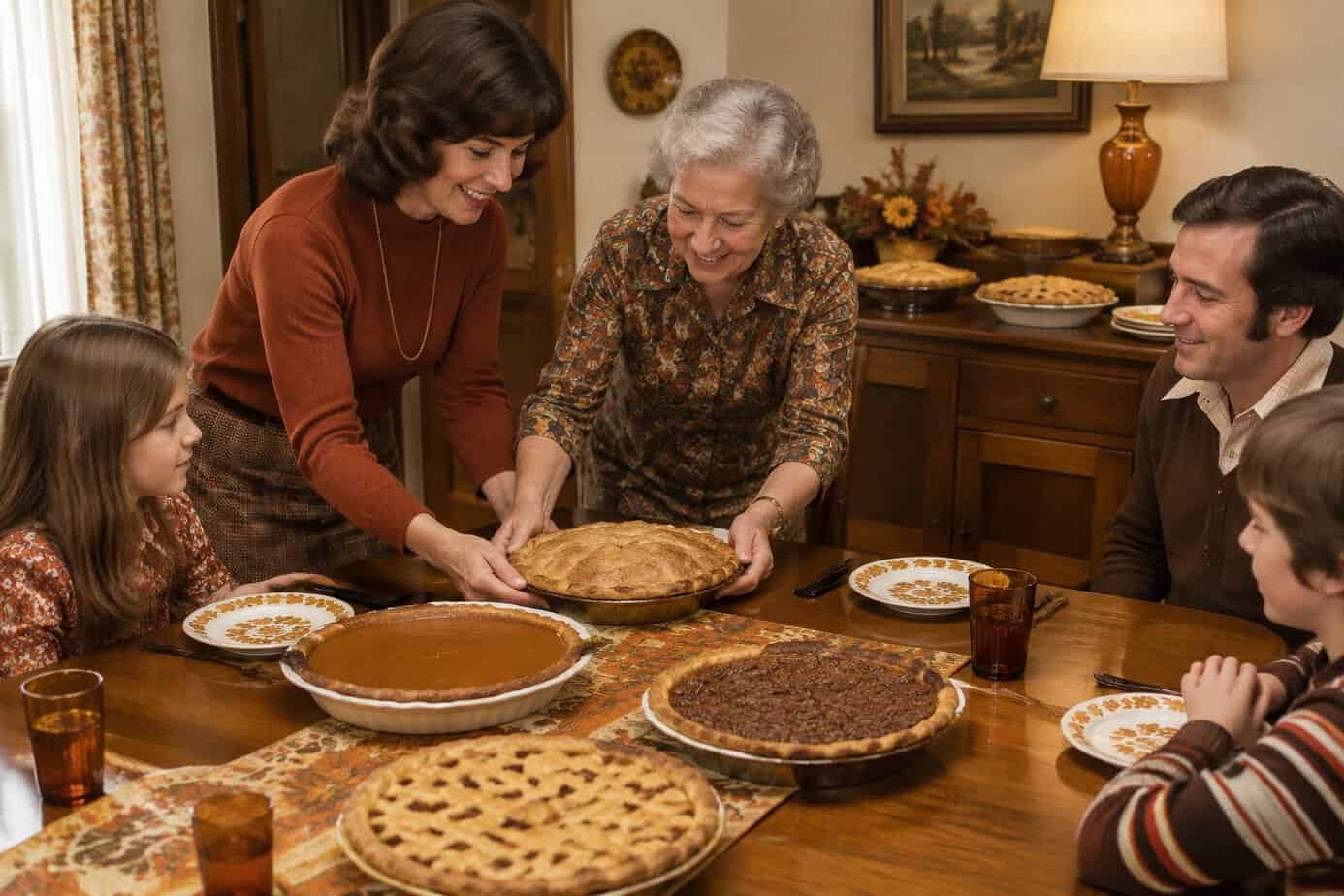
You remember standing in your kitchen the night before Thanksgiving, rolling out crust after crust until the counter was dusted with flour. Pumpkin, apple, and maybe a mincemeat for your husband’s father, who never touched anything else.
Baking the pies a day early wasn’t just convenient. It freed up your oven for the turkey and gave the pies time to set properly, so they sliced clean instead of falling apart.
Your kitchen smelled like cinnamon and baked sugar for hours, and it felt like the real start of the holiday. By the time guests arrived the next day, the pies sat cooling on the counter or windowsill, lined up like a reward for all that work.
Nobody thought twice about making three or four kinds from scratch. It was just what you did, because store-bought pie wasn’t something you’d have served your family back then.
Now you notice most people buy pies ready-made, or order just one from a bakery. The homemade lineup you worked so hard on has quietly become a rare thing instead of the expected centerpiece.
21. Making extra pie crust by hand for family dessert
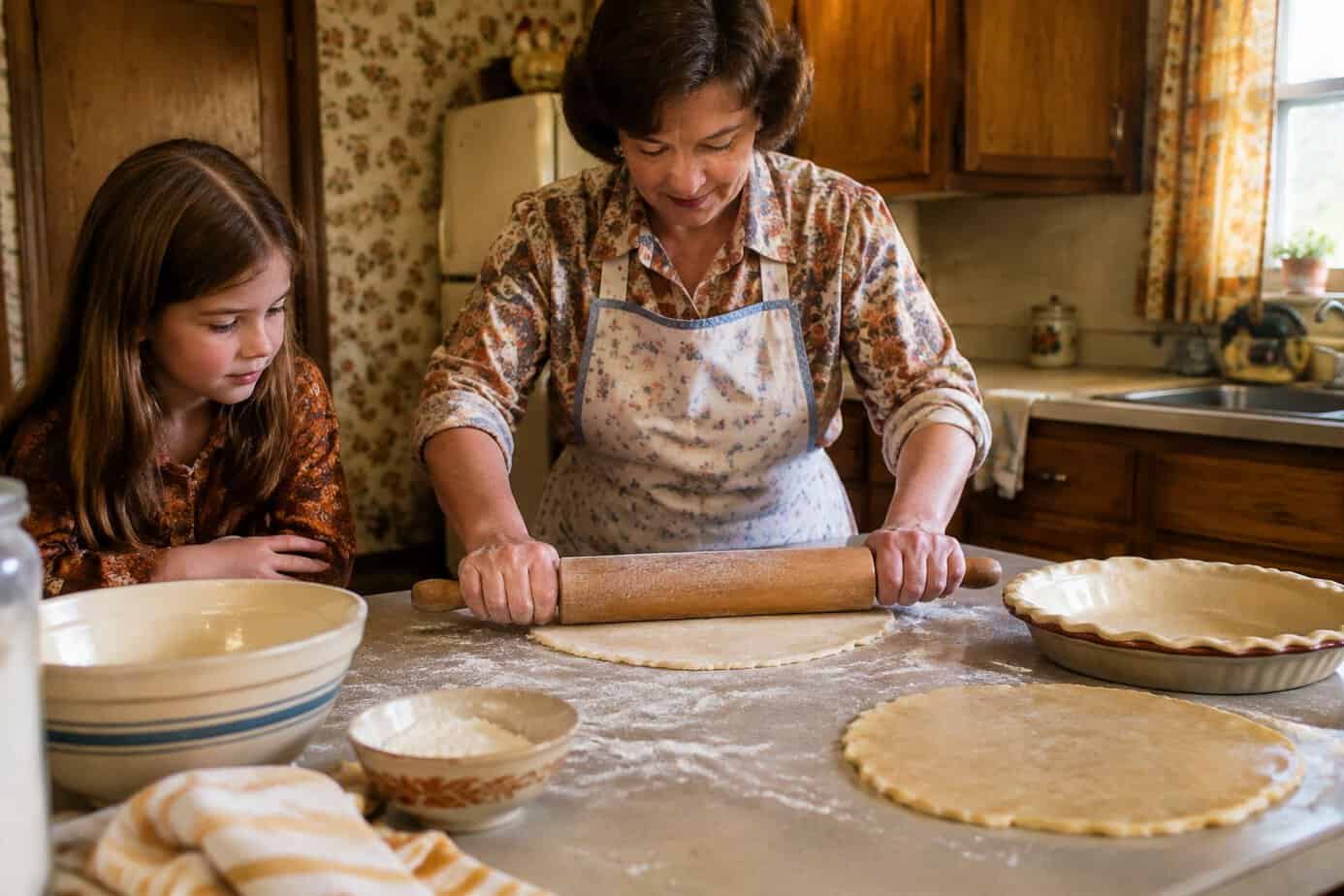
You remember standing at the counter, cutting cold butter into flour with your fingers until the mixture looked like coarse crumbs. There was no food processor involved, just your hands and years of practice from watching your own mother do the same thing.
You always made extra dough, enough for two or three pies, because you knew people would ask for seconds. Apple and pumpkin were the standards, but sometimes you threw in a pecan pie if you had the ingredients on hand.
Rolling out the dough took patience. You floured the counter, worked the rolling pin carefully, and tried not to overwork the crust so it would stay flaky.
Nobody in your family bought pie crust from a store back then. It just wasn’t something people did when you could make it yourself for less money and it tasted better anyway.
Your kids would hang around the kitchen waiting to lick the bowl or sneak a taste of raw dough. These days, most people reach for a premade crust in the freezer section, and the whole hands-on process has mostly disappeared from family kitchens.
22. Sending guests home with leftovers wrapped in foil
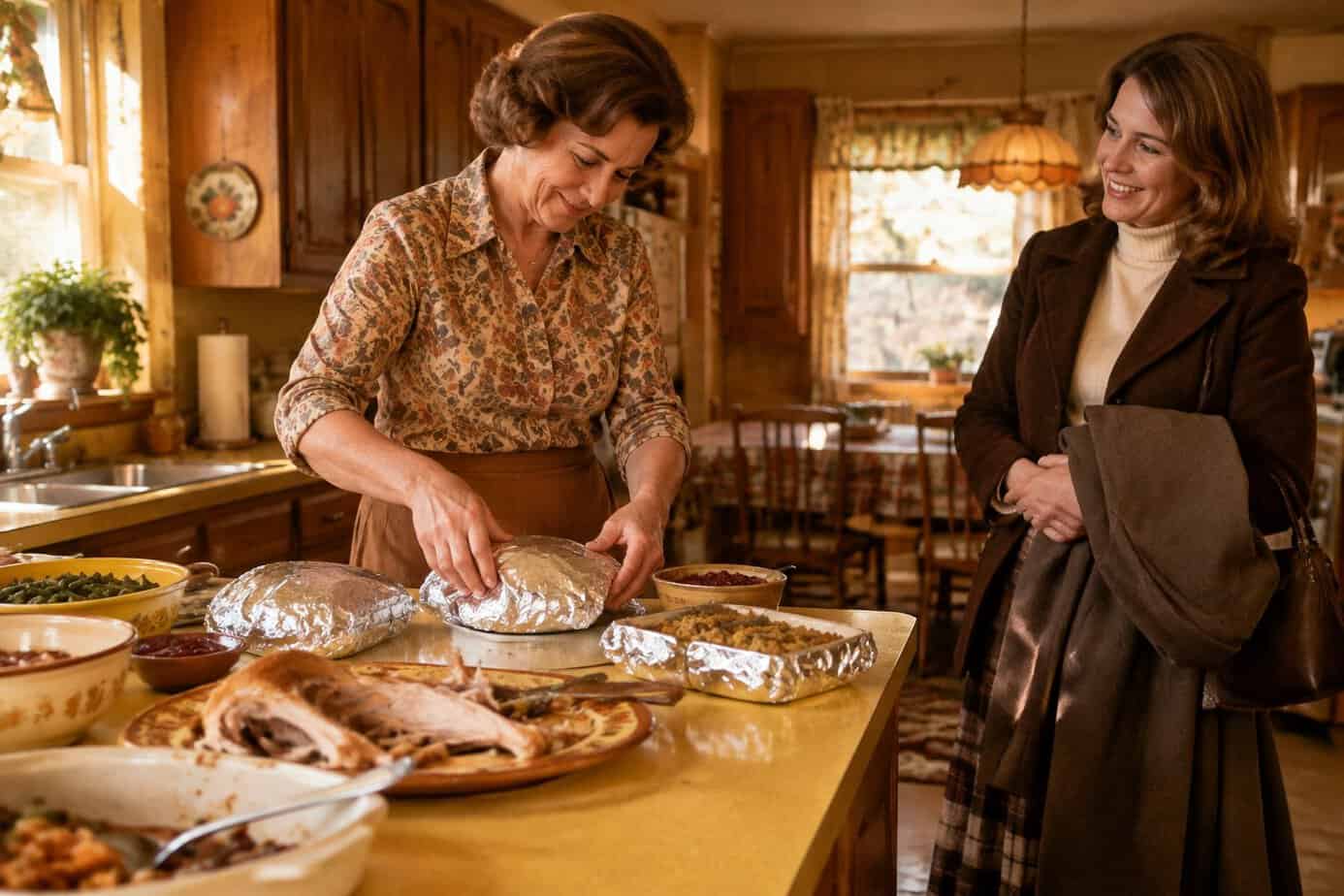
You never let anyone leave your house empty-handed after Thanksgiving dinner. Once the dishes were cleared, you headed straight for the foil drawer and started making packages for every relative who had come to eat.
You tore off big sheets of aluminum foil and wrapped up turkey slices, a scoop of stuffing, maybe a wedge of pie for the road. There was no real system to it, you just eyeballed portions and folded the edges over until they were sealed tight.
Nobody used plastic containers the way people do now. Foil was what you had, and it worked fine for a car ride home or a late-night snack once everyone got back to their own kitchen.
You remember standing by the door handing these little silver bundles to your aunts, your brother-in-law, your own grown cousins, telling them to eat the turkey first before it turned. It felt like part of the goodbye, almost as important as the hug.
These days leftovers get sorted into matching containers with labels, but back then it was foil, a marker if you had one, and trust that everyone would figure out what was inside.
23. Using leftover turkey in sandwiches the next day
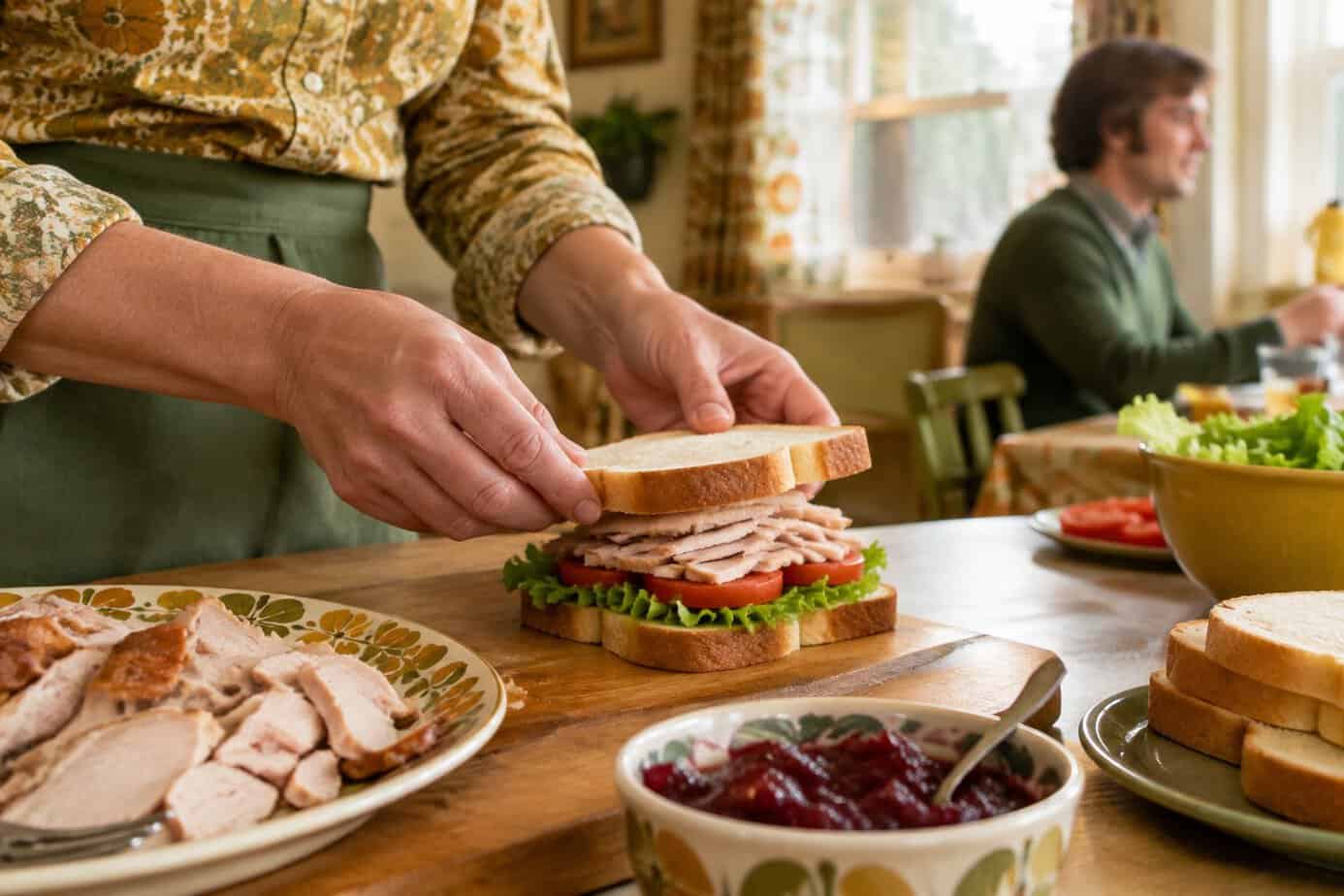
You never threw out a scrap of that turkey. The day after Thanksgiving, you were already pulling out the bread box and mayonnaise jar before anyone else was even awake.
Those sandwiches were simple. White bread, a little mayo, some salt and pepper, maybe a leaf of lettuce if you had it on hand. Nobody needed anything fancy because the turkey still tasted like Thanksgiving.
You packed them for school lunches and work lunches for days afterward. Your husband probably took one to the office, and the kids carried them wrapped in wax paper in their lunch boxes.
Sometimes you got creative and added cranberry sauce right on the sandwich, which felt like a treat all its own. Other times you just wanted it plain so you could taste the turkey without anything getting in the way.
It stretched that big bird further than anyone today might expect. There was no waste, no second thought about it. You just kept slicing, kept wrapping, and kept feeding your family off that one meal for what felt like the better part of a week.
24. Keeping children at the kids’ table during dinner
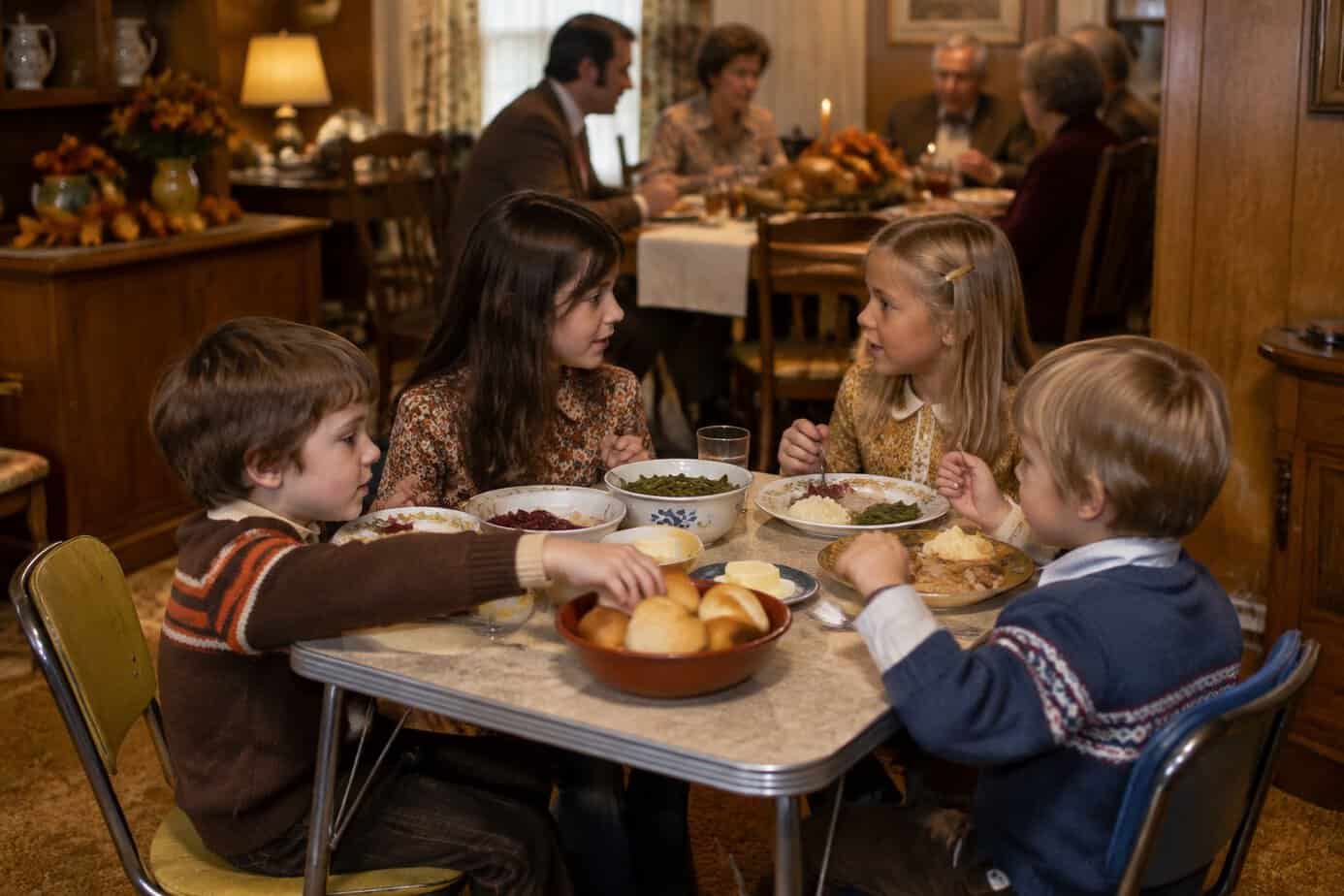
You remember setting up that second table every year, usually a card table dragged in from the closet and covered with a mismatched cloth. The children sat there while the adults took the main table with the good dishes and the tablecloth that only came out for holidays.
It wasn’t meant to be unkind. There simply wasn’t room for everyone, and the kids’ table let the grown-ups have a quieter conversation while the little ones ate at their own pace. Your children never seemed to mind much, honestly. They had their own jokes going, and they could get up and down without anyone fussing at them.
Looking back, it was as much about practicality as anything else. Your dining room only sat so many, and someone had to make it work.
These days, families push the tables together, or everyone just balances plates in the living room. The kids’ table has mostly disappeared, along with the idea that children needed a separate space during the meal.
25. Expecting everyone to dress up for the holiday meal
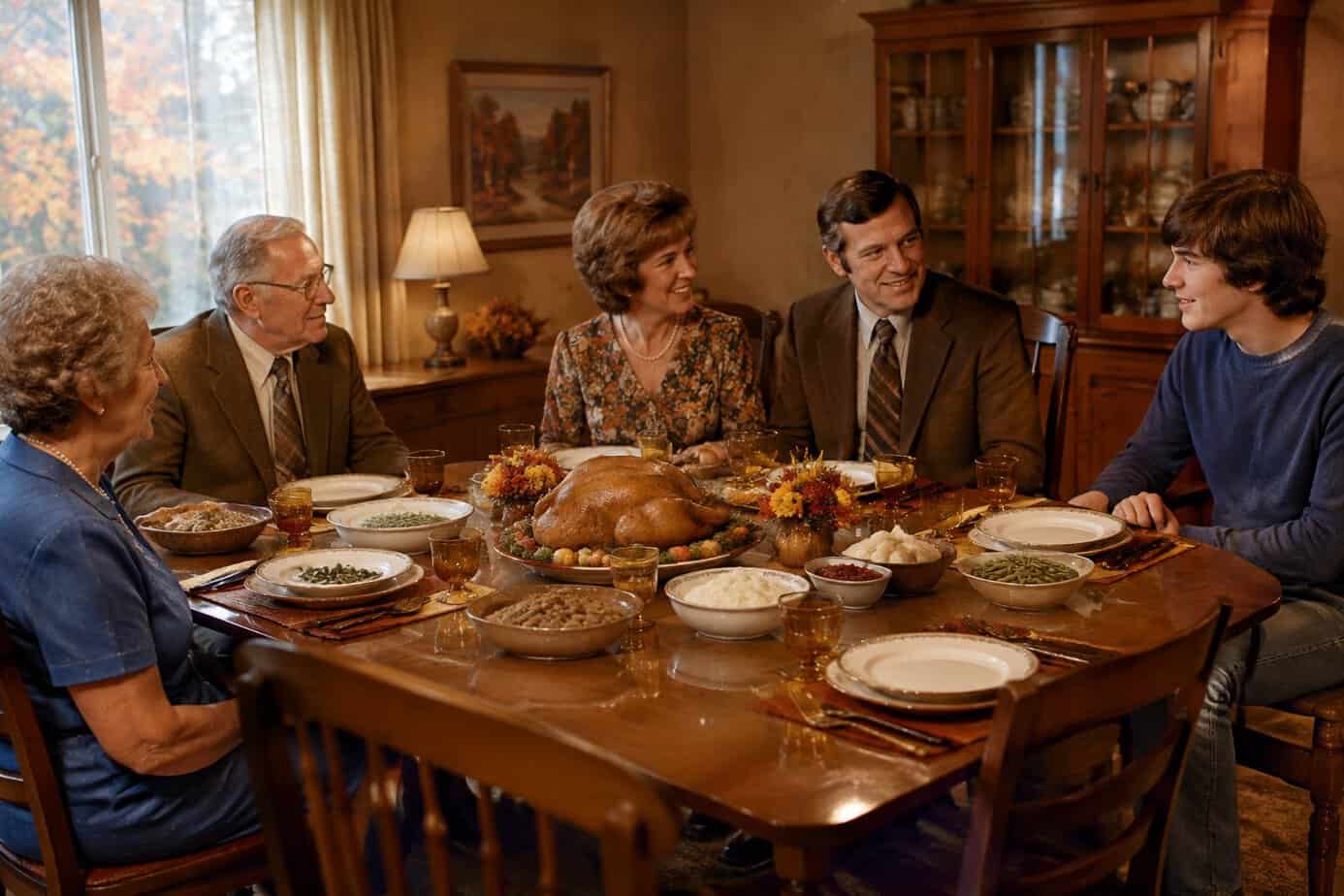
You remember laying out your good dress the night before Thanksgiving, the one you saved for church and special occasions. The kids had their own assigned outfits too, stiff little collars and shined shoes, even though they would be sitting on the floor playing before dinner was over.
Nobody questioned it. Thanksgiving meant you dressed up, the same way you would for a holiday photo, because the day felt important enough to deserve a little effort. Your husband wore a tie, even if he loosened it by the time the football game came on.
Looking back, there was something nice about everyone making that small effort for each other. It showed you cared about the day and about the people gathered around your table.
These days, most families show up in whatever is comfortable, and you understand why. Life moves faster now, and comfort often wins over formality. Still, you sometimes miss seeing everyone a little polished, like the day itself called for something special.
26. Having relatives arrive early to help with cooking
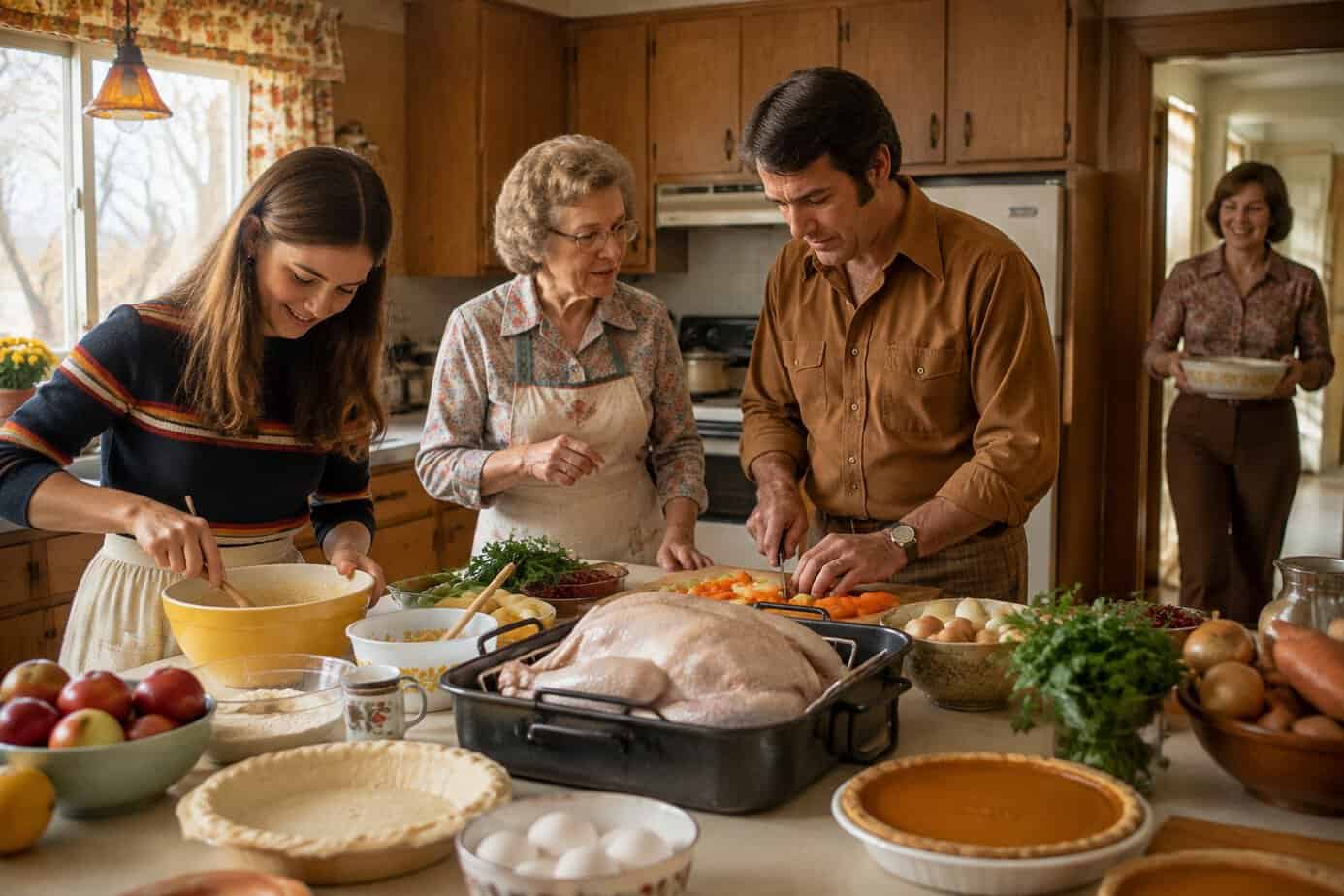
You remember hearing the doorbell ring before eight in the morning, hours before anyone expected to sit down and eat. It was usually your mother-in-law or a sister, already dressed and ready to work, not just visit.
Nobody waited to be asked. Your aunt would walk straight to the kitchen, tie on an apron she kept at your house, and start peeling potatoes without a word about it.
You split up the work without much discussion. Someone took the pies, someone else handled the vegetables, and you managed the turkey because that part always fell to the host.
The kitchen felt crowded, loud, and a little chaotic, but it worked. Conversations happened over cutting boards, not around a table, and that was often the best part of the whole day.
These days, people tend to show up closer to mealtime, if they come early at all. Many hosts do most of the cooking alone or rely on store-bought sides. You still miss that early-morning kitchen full of family, flour on the counters, and help you never had to ask for.
27. Calling distant relatives on a landline after dinner
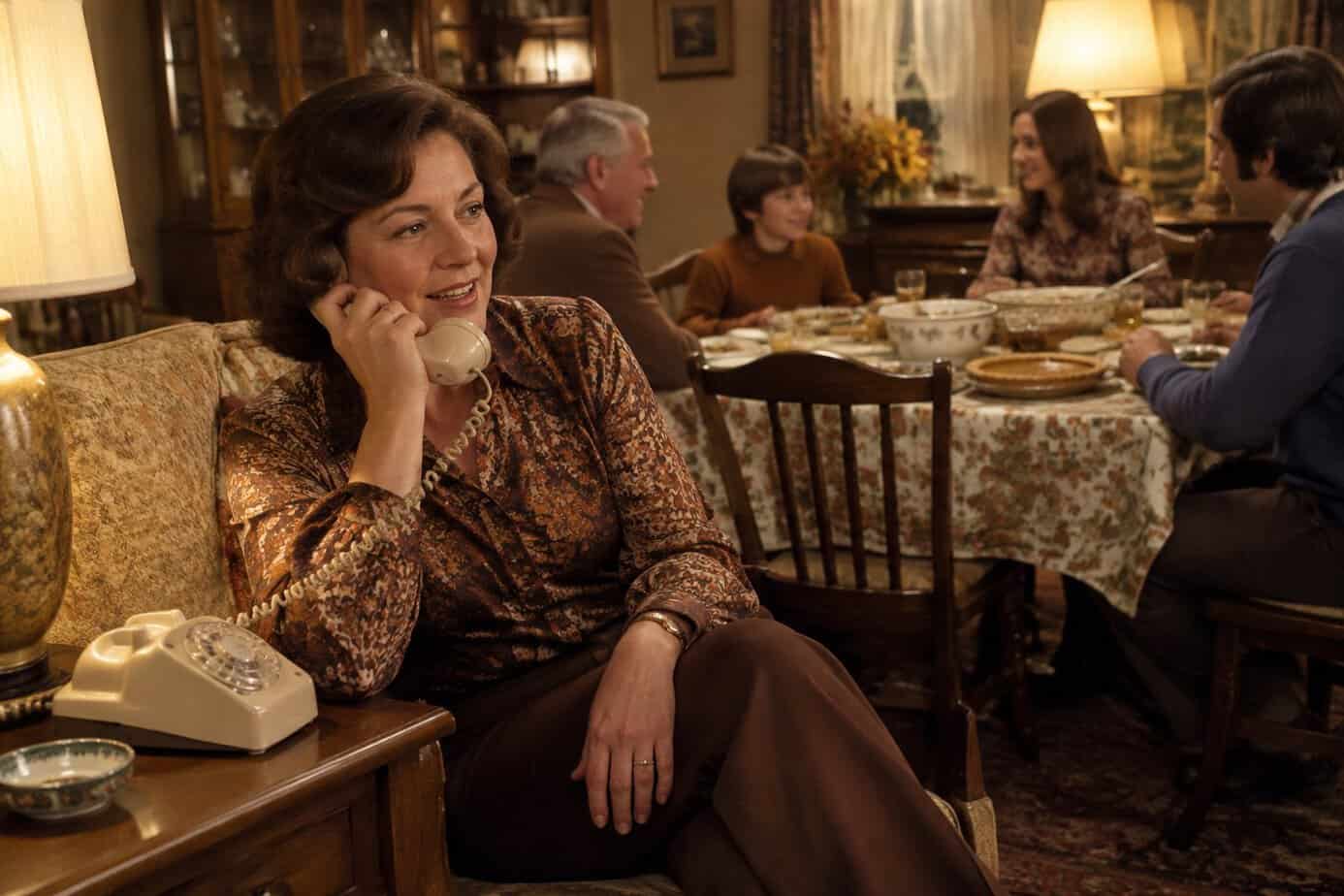
After the dishes were cleared and the pie had been served, you waited your turn for the phone. One line meant one call at a time, so everyone had a number scribbled on a notepad by the kitchen wall.
You dialed long distance carefully, watching the clock because rates dropped later in the evening. Your mother-in-law in another state always answered on the second ring, as if she had been waiting by the phone all afternoon.
The cord stretched as far as it could reach, and you often ended up sitting on the kitchen floor to talk. Kids lined up to say a quick hello to grandparents before being shooed off so the adults could catch up properly.
These calls were not rushed. You asked about everyone’s health, their turkey, their weather, filling in the gaps since the last holiday.
Now a quick text or video call replaces that slower, more deliberate check-in. You still remember how special it felt to hear a familiar voice crackle through the receiver, knowing that call was the only contact you’d have until Christmas.
What Shaped Thanksgiving in the 1970s
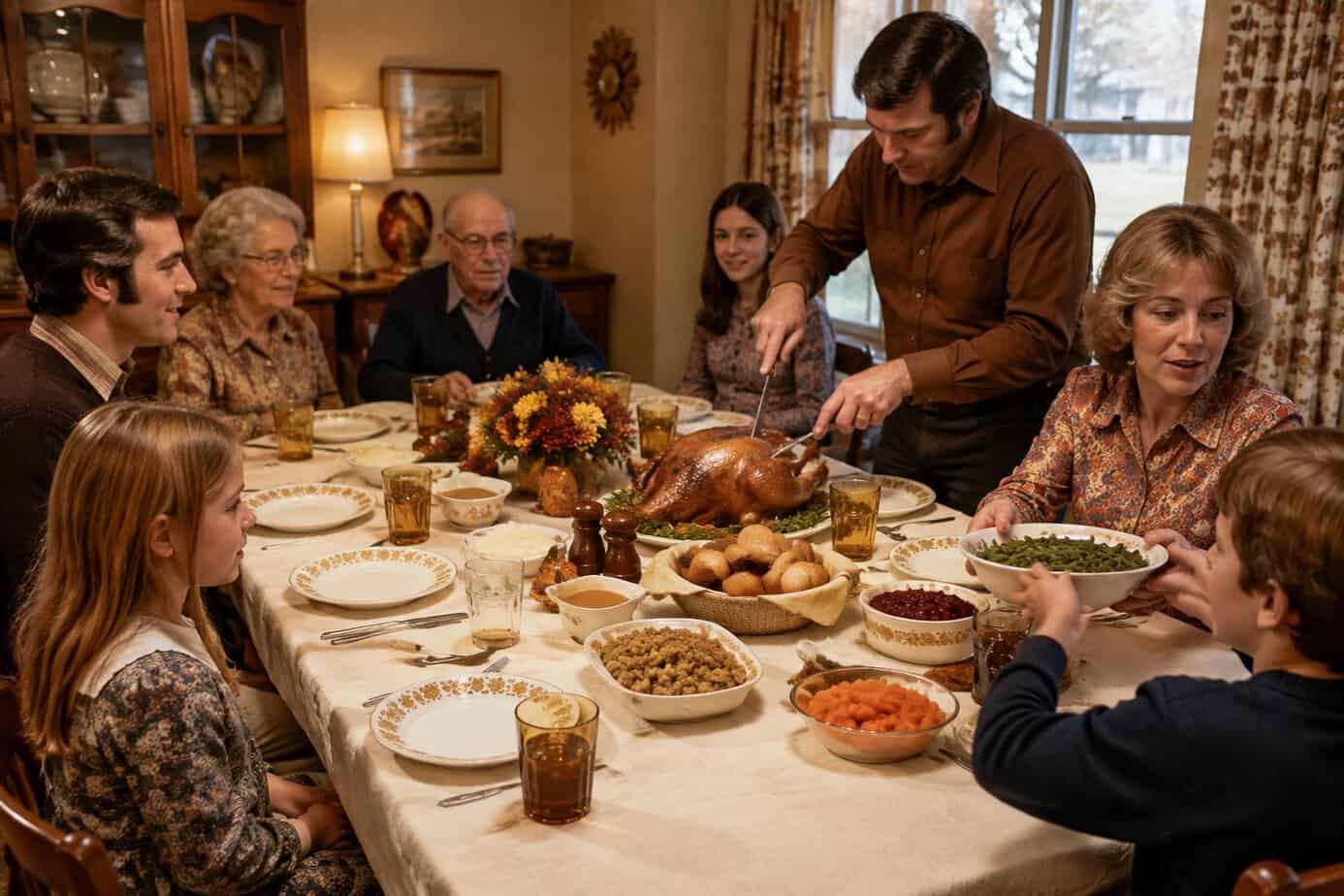
Your family’s Thanksgiving in the 1970s grew out of a mix of strict household routines and the new technologies entering American homes. Gender roles, television schedules, and the earliest convenience foods all played a part in shaping how you spent the day.
Family Routines and Holiday Expectations
If you were raising a family in the 1970s, your Thanksgiving likely followed a predictable script. You and your mother-in-law handled the kitchen while your husband and the uncles watched football or dozed in the living room.
Kids weren’t usually asked for input on the menu or schedule. You ate what was served and showed up when you were told.
Extended family gatherings were the norm, often at your house or your in-laws’, with three generations packed under one roof. Here’s what typically defined the day:
Women cooked, often starting before sunrise. Men relaxed or handled outdoor tasks like setting up extra tables. Children played outside or in a separate room until dinner was ready.
The Influence of Television and Convenience Foods
Your TV played a bigger role in Thanksgiving than you might remember. The Macy’s Thanksgiving Day Parade and football games structured the entire day around broadcast schedules, and someone always had to adjust the antenna for a clear picture.
Convenience foods were just starting to appear on your table too. Canned cranberry sauce, Jell-O molds, and boxed stuffing mixes sat alongside homemade dishes, blending old-fashioned cooking with new shortcuts.
You’d often find canned green beans and cream of mushroom soup in the casserole, even if the pies were still made from scratch. This was the early stage of processed food culture, well before it became standard in most American kitchens.
Why Holiday Habits Changed
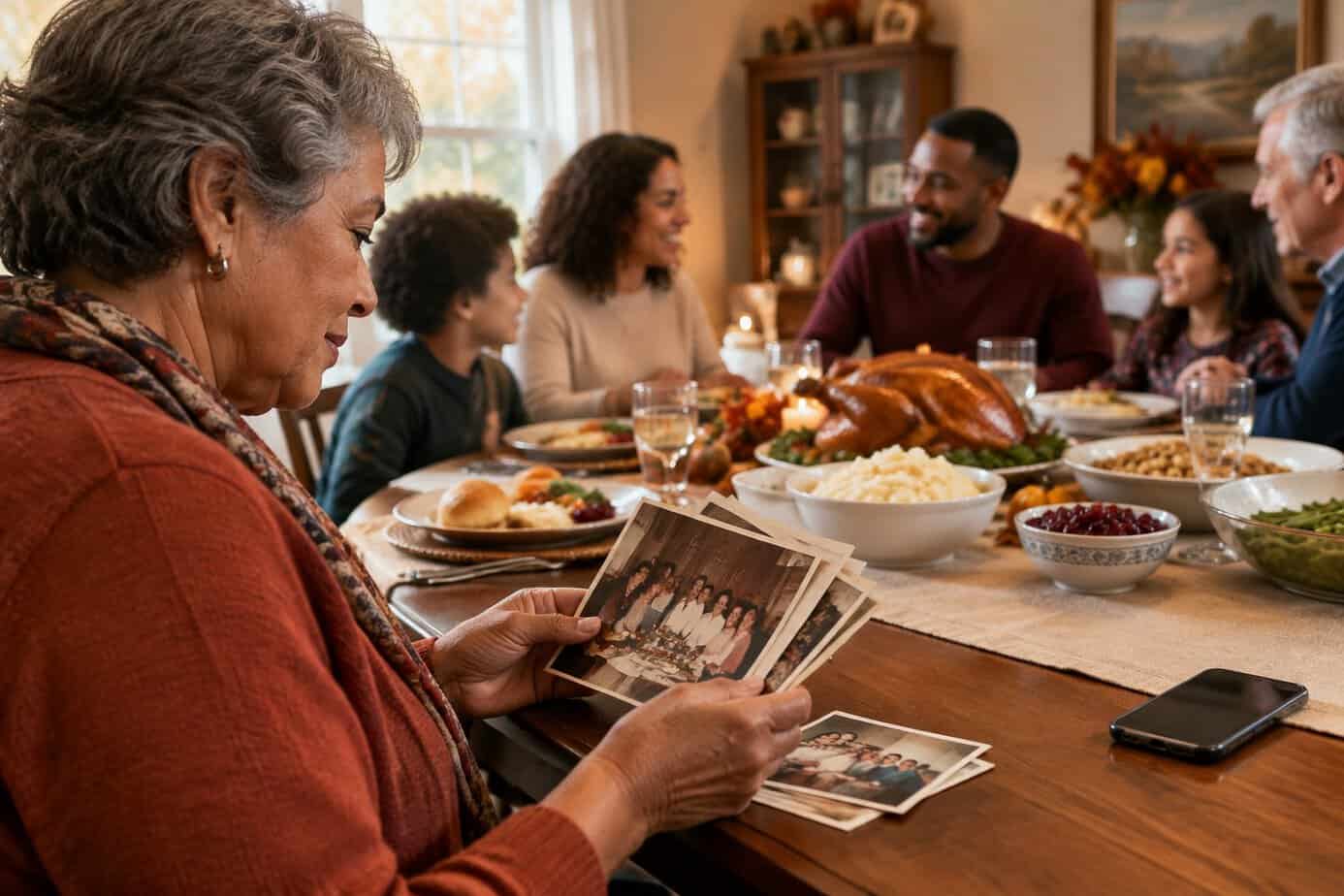
Several shifts pulled Thanksgiving away from its 1970s roots: smaller households, tighter schedules, and a shift toward simpler cooking methods. You can trace most of these changes to how differently people now organize their time and their kitchens.
Busier Schedules and Changing Households
Your family probably looks different than a 1970s household did. Fewer relatives live nearby, and more households are smaller or split across cities.
Work schedules also changed. You might work retail hours that didn’t exist decades ago, or you might travel for a job that keeps you from a multi-day gathering.
A few shifts worth noting:
Smaller family sizes mean fewer hands for big group activities. Dual-income households leave less time for multi-day prep. Long-distance relatives make yearly reunions harder to coordinate. Store hours on Thanksgiving Day changed how families structure their time.
You’re also juggling more obligations outside the home, from kids’ activities to your own side projects, so the holiday gets compressed into a single day instead of stretching into a weekend-long event.
New Approaches to Cooking and Hosting
Your kitchen habits probably look nothing like your grandmother’s. Pre-made sides, grocery delivery, and shortcuts like instant stuffing mixes have replaced hours of from-scratch cooking.
You’re also less likely to host a formal sit-down meal with assigned seating and matching china. Casual, buffet-style setups have become the norm in many homes.
A few reasons behind this:
Time constraints push you toward quicker meal prep. Dietary preferences (vegetarian, gluten-free, etc.) require more flexible menus. Smaller guest lists reduce the need for elaborate spreads. Takeout options let you skip cooking altogether some years.
You might also split hosting duties differently now, with potluck-style contributions replacing the single-household responsibility that was common decades ago.