The 30 Worst Christmas Tree Trends That Make Your Home Look Dated
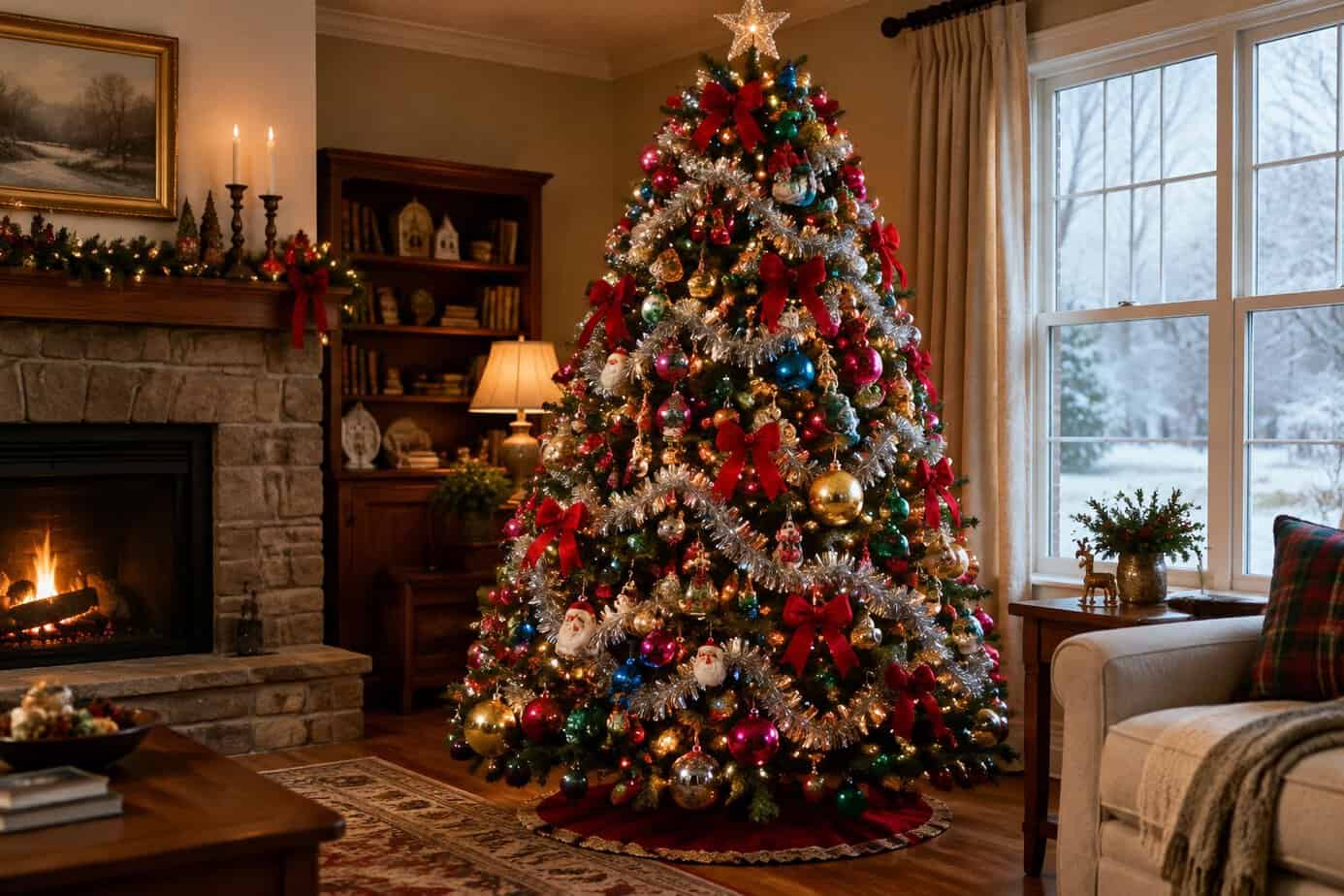
Your Christmas tree is probably the one decoration you fuss over most. It holds the ornaments the kids made, the ones you picked up on trips and a few that have been in the family longer than you have. That is exactly why it can be hard to notice when the way it is dressed has started to look like a snapshot from another decade.
Tree styles move just like paint colors and sofas do. The angel hair of the 1950s, the gold bead garlands of the 1990s and the big burlap bows of the farmhouse years all had their moment, and all of them can make a living room look older than it is. If you enjoyed our list of the worst Christmas decorating trends, this one zooms in on the tree itself.
None of this means your tree is wrong. Keep what you love. But if something about it has felt a little tired lately, one of these 30 trends might be the reason, and each one comes with an easy fix.
1. Angel hair draped over every branch
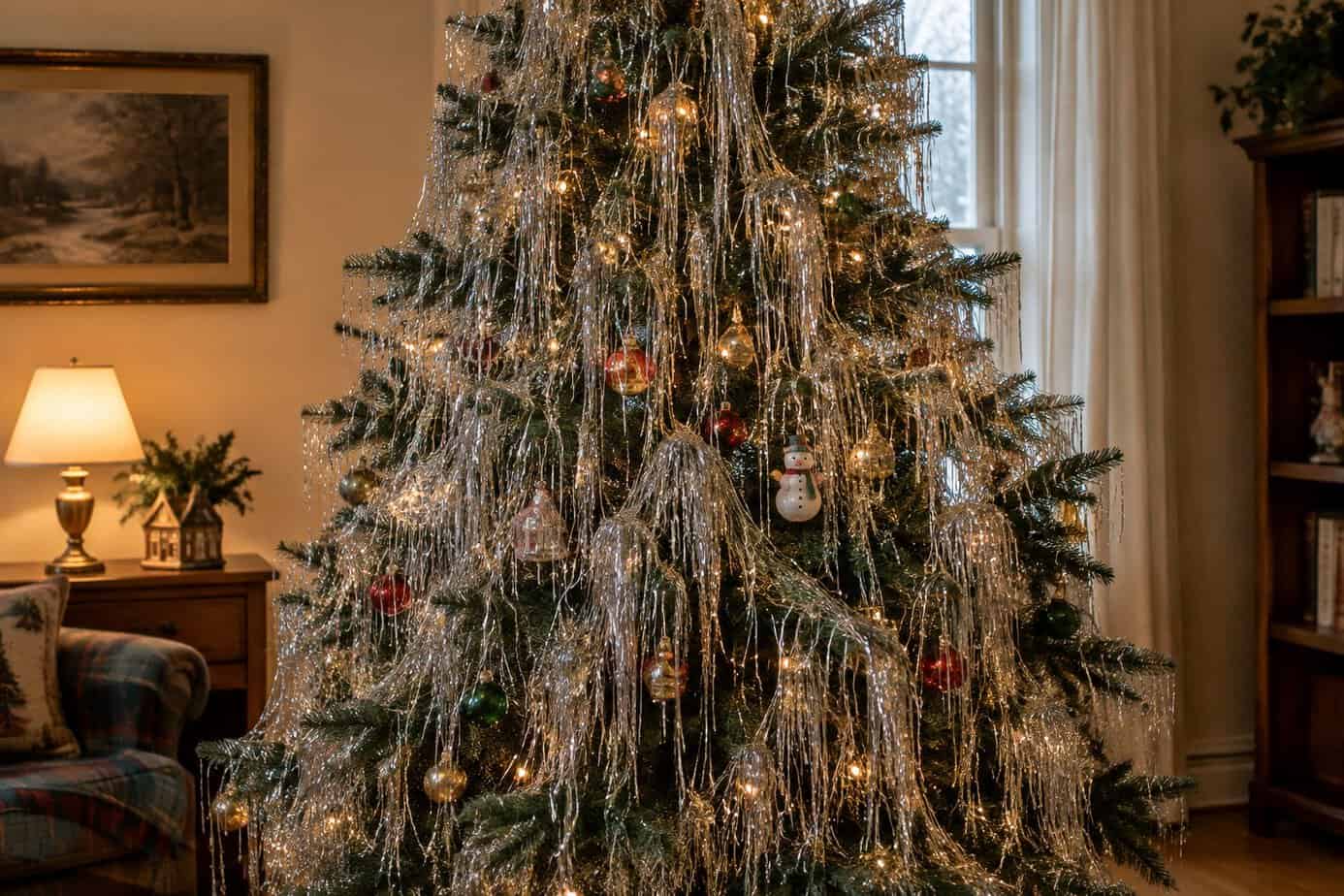
If you decorated a tree in the 1950s or 1960s, you may remember angel hair, the wispy white fluff you pulled apart and stretched over the branches so the lights glowed through it like a cloud. It was made of spun glass, and it could leave your hands itchy and full of tiny glass splinters, so many moms learned to handle it with gloves. It got into the carpet and clung to your sweater for weeks. Today’s versions are soft plastic.
Today it reads as pure mid-century, and not in the charming way a set of old glass ornaments does. Under bright modern lights it can look more like cobwebs than clouds.
If you love the soft, hazy look it gave, you can get the same glow with a strand of warm white fairy lights tucked deep into the branches. Your hands will thank you, and you won’t be picking glass fibers out of the rug in February.
2. Spray-can snow on the branches and the floor
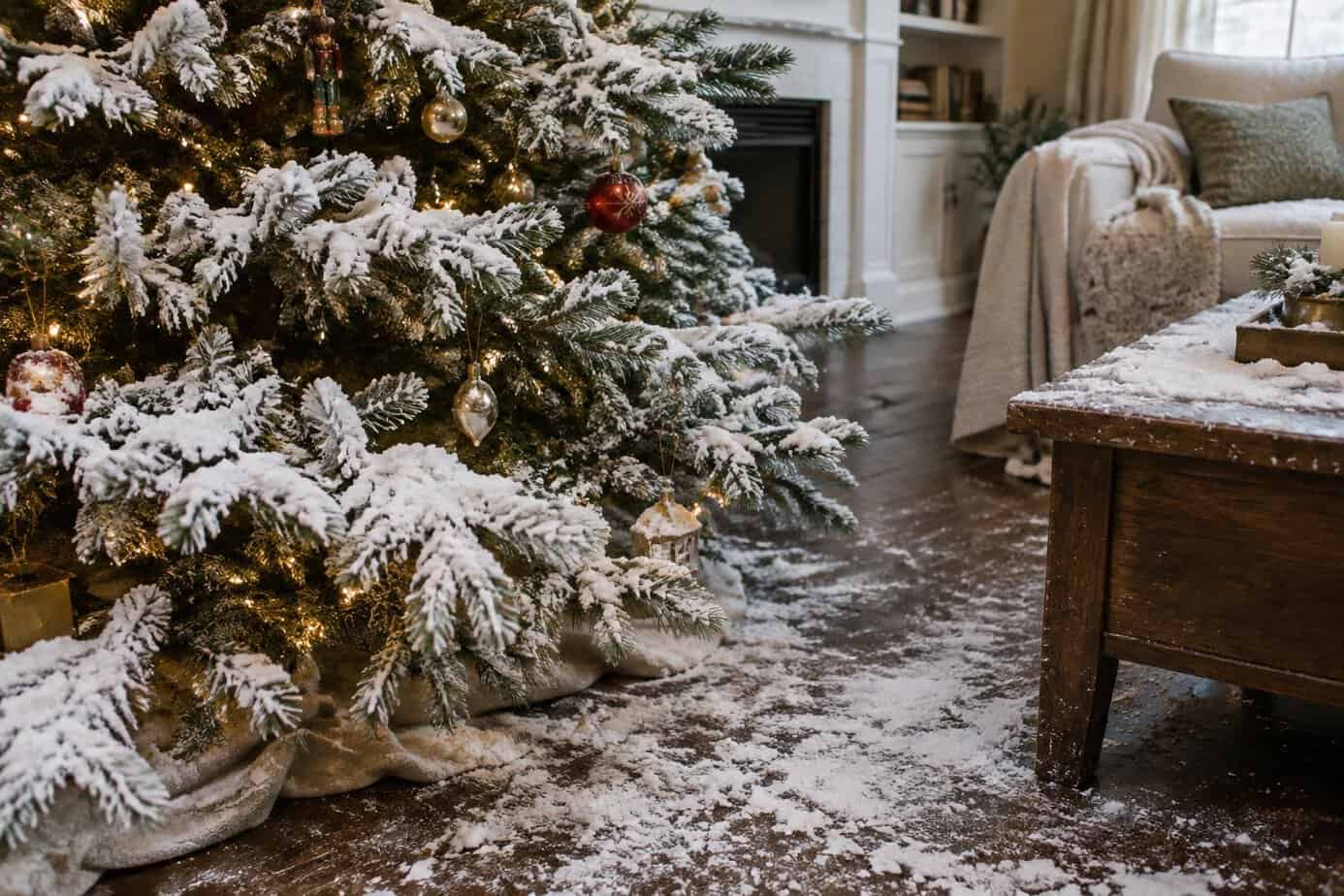
By the 1950s and ’60s, a can of spray snow and a set of window stencils were part of the holiday routine. You shook the can, sprayed the tips of the branches and the corners of the windows, and called it a white Christmas. Some families went further and sprayed it right onto a fresh-cut tree.
The trouble is how it ages. Spray snow tends to clump, turn a little yellow and flake off onto the floor, the presents and anyone who brushes past. A tree that leaves a trail of white crumbs on the rug looks worn out by mid-December, and it makes the whole room feel dated rather than wintry.
If you want that snowy look, a few frosted or lightly flocked picks tucked into the branches give the same feeling without the mess. White ornaments, a soft white tree skirt or a few pinecones with white tips can also suggest snow. Keep the spray can for the windows, if you use it at all.
3. Thick tinsel garland wound around and around
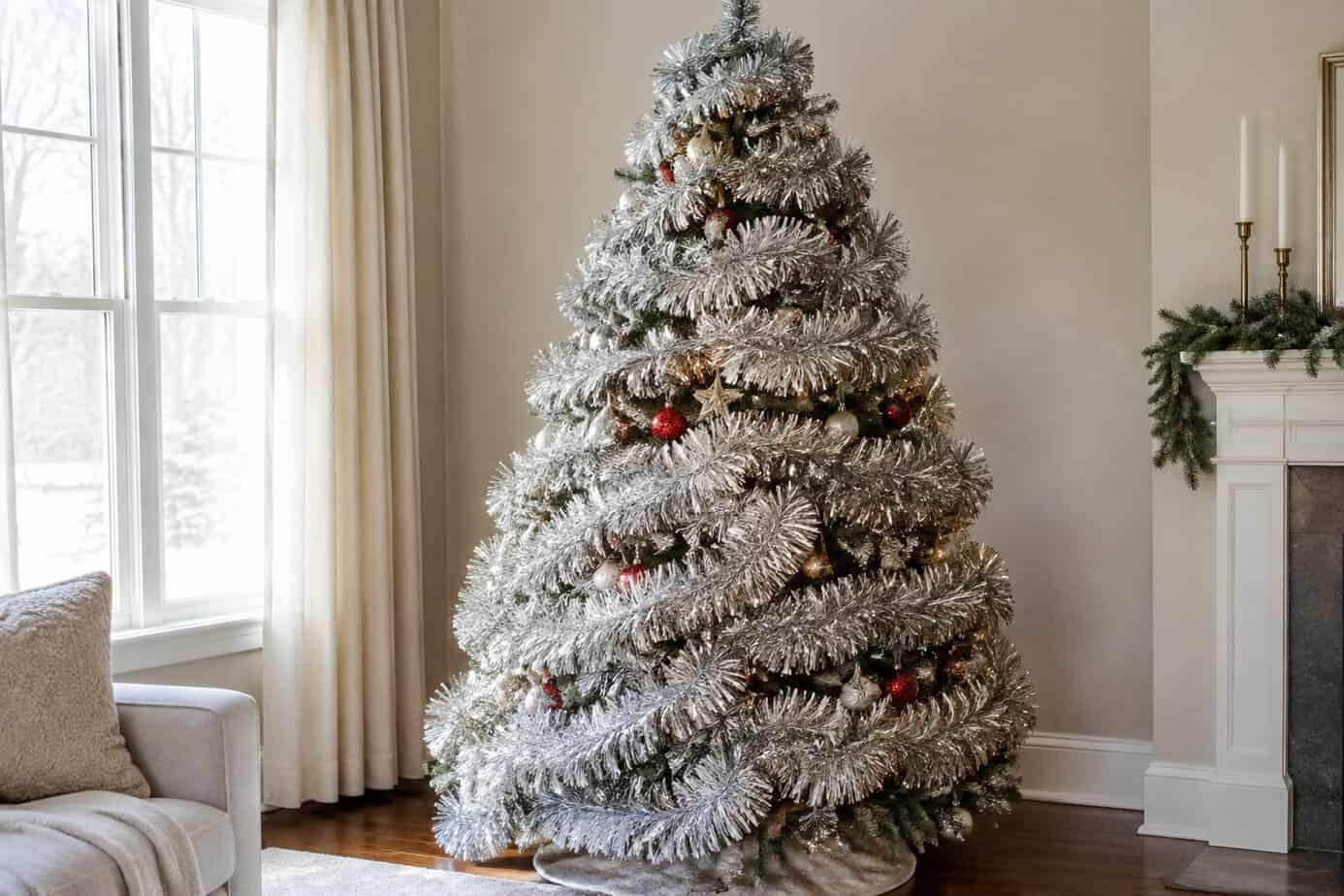
The fat, fluffy tinsel garland was everywhere in the 1970s and 1980s. It came in silver, gold, red and sometimes all three, and the standard method was to start at the top and wind it around the tree in a tight spiral until you ran out.
When you wrap a tree that heavily, the tinsel becomes the whole show. The green disappears, the ornaments get buried and the tree starts to look like a shiny barber pole. Under modern lighting it can also look a little cheap, since it reflects every bulb in a scattered, busy way.
You don’t have to give up garland. A softer option is a thin bead or ribbon garland draped loosely in gentle swoops, or a single strand of tinsel used as an accent rather than a wrapper. Letting a little green show between the loops makes the tree look fuller and more natural, not less festive.
4. Lights wrapped only around the outside, wires showing
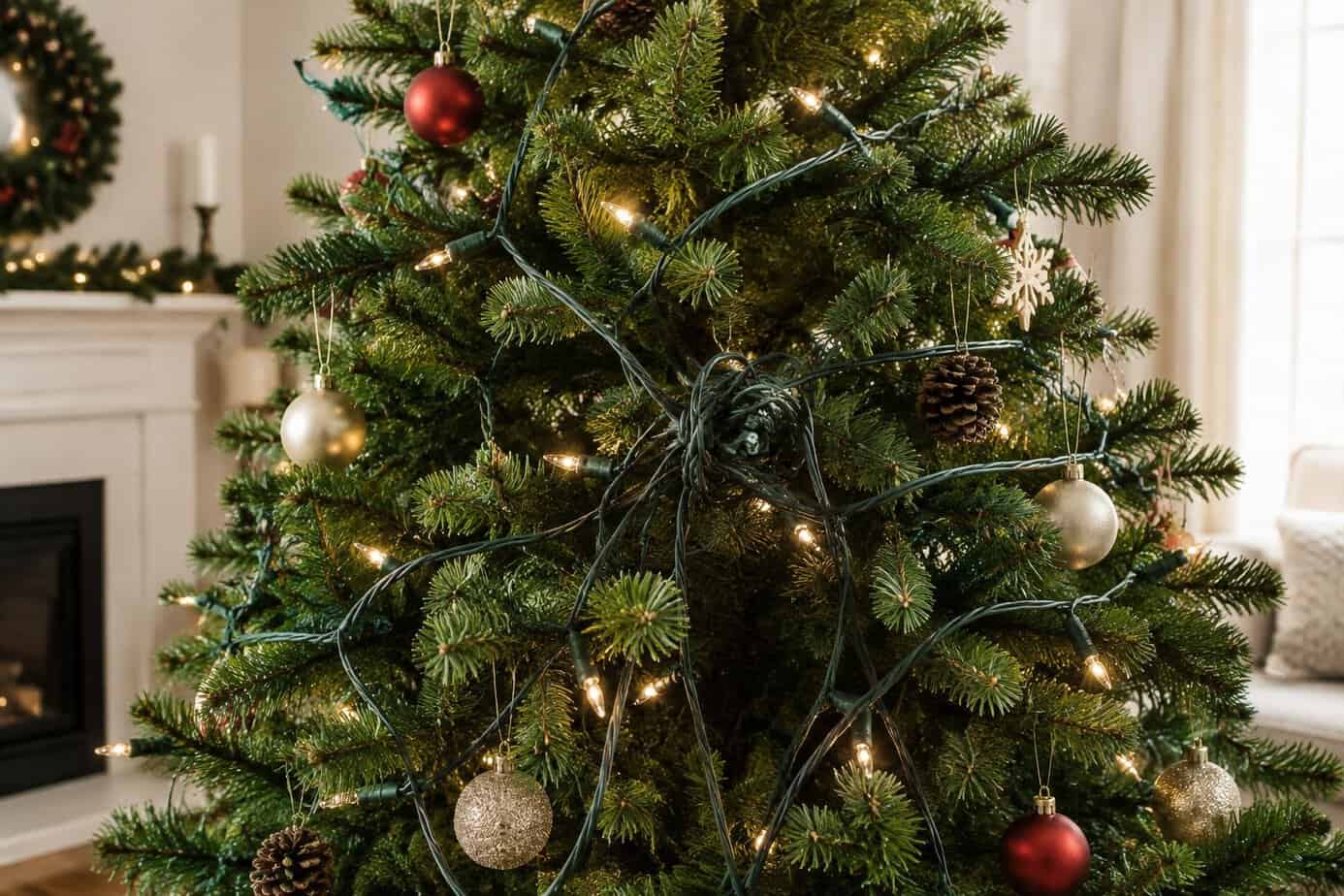
For a long time the easy way to light a tree was to walk around it with the strand, wrapping the outer tips in loops until you reached the bottom. It was quick, and nobody had to crawl under the branches.
The result is a tree that glows only on the surface, with dark green wires lying across the front like stripes. In the evening you can see every loop of cord, and the tree looks flat instead of deep.
Decorators today usually work the lights in toward the trunk and back out along each branch, so the tree seems to glow from the inside. It takes a little longer, but you need fewer tricks to make it look full. If you have a pre-lit tree, fluff the branches up and over the wires so they disappear. Whatever you do, look over your strands before they go up and toss any with frayed or broken cords.
5. A little bit of everything, all at once
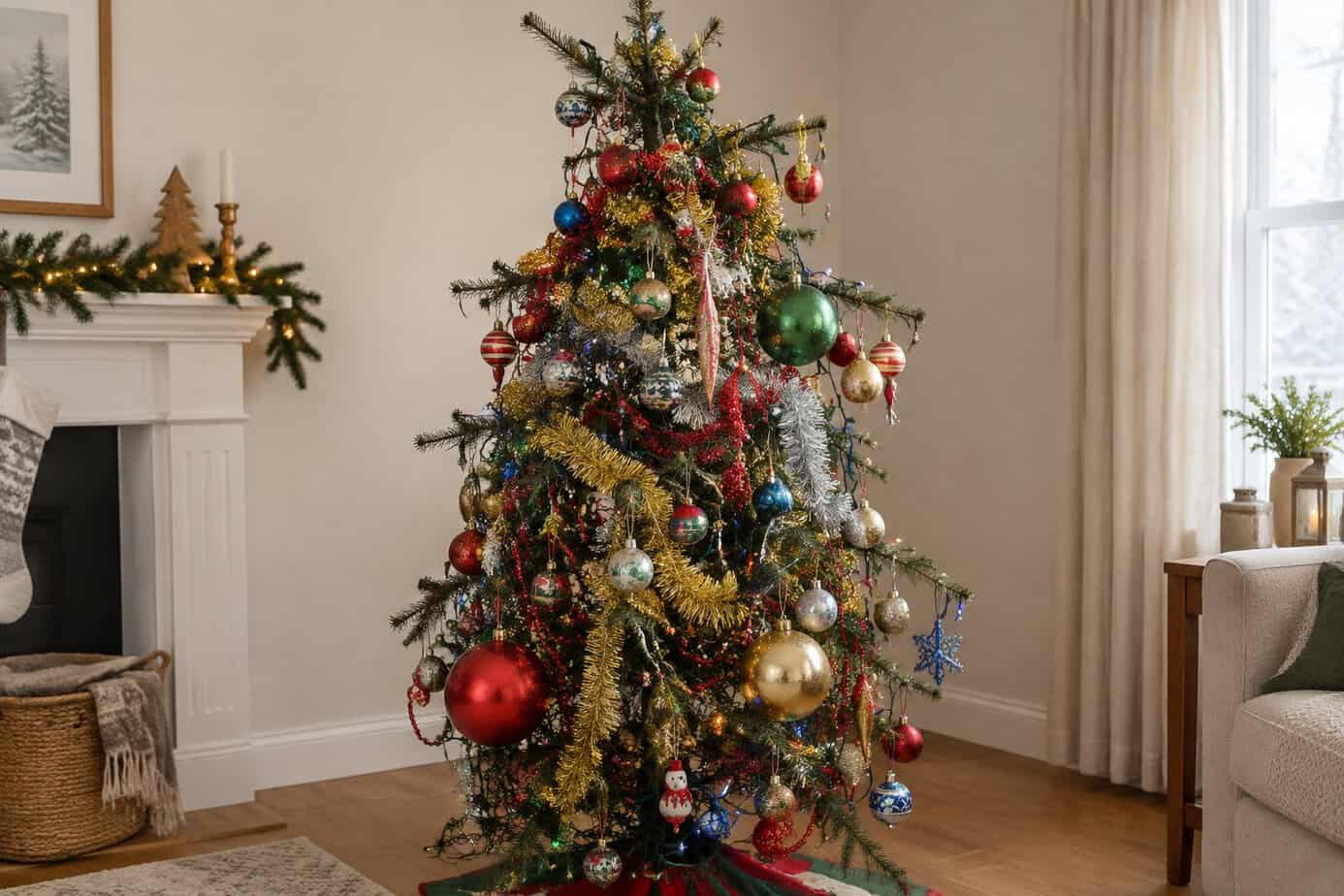
There was a time when the rule seemed to be that every decoration you owned went on the tree. Tinsel garland, bead garland, icicles, a ribbon or two, colored lights, white lights, and then every ornament in the box on top of all that.
You may have a soft spot for that look, because it is how a lot of us grew up. But when every type of trim fights for the same space, the eye has nowhere to rest. The tree ends up looking cluttered rather than generous, and the special pieces get lost.
The fix is choosing a lead. Pick one garland, one kind of light and one main color, then let your favorite ornaments stand out against that calm background. The box of extras doesn’t have to go anywhere. It can dress the mantel, fill a bowl on the coffee table or simply wait for next year.
6. Gold plastic bead garland in perfect swags
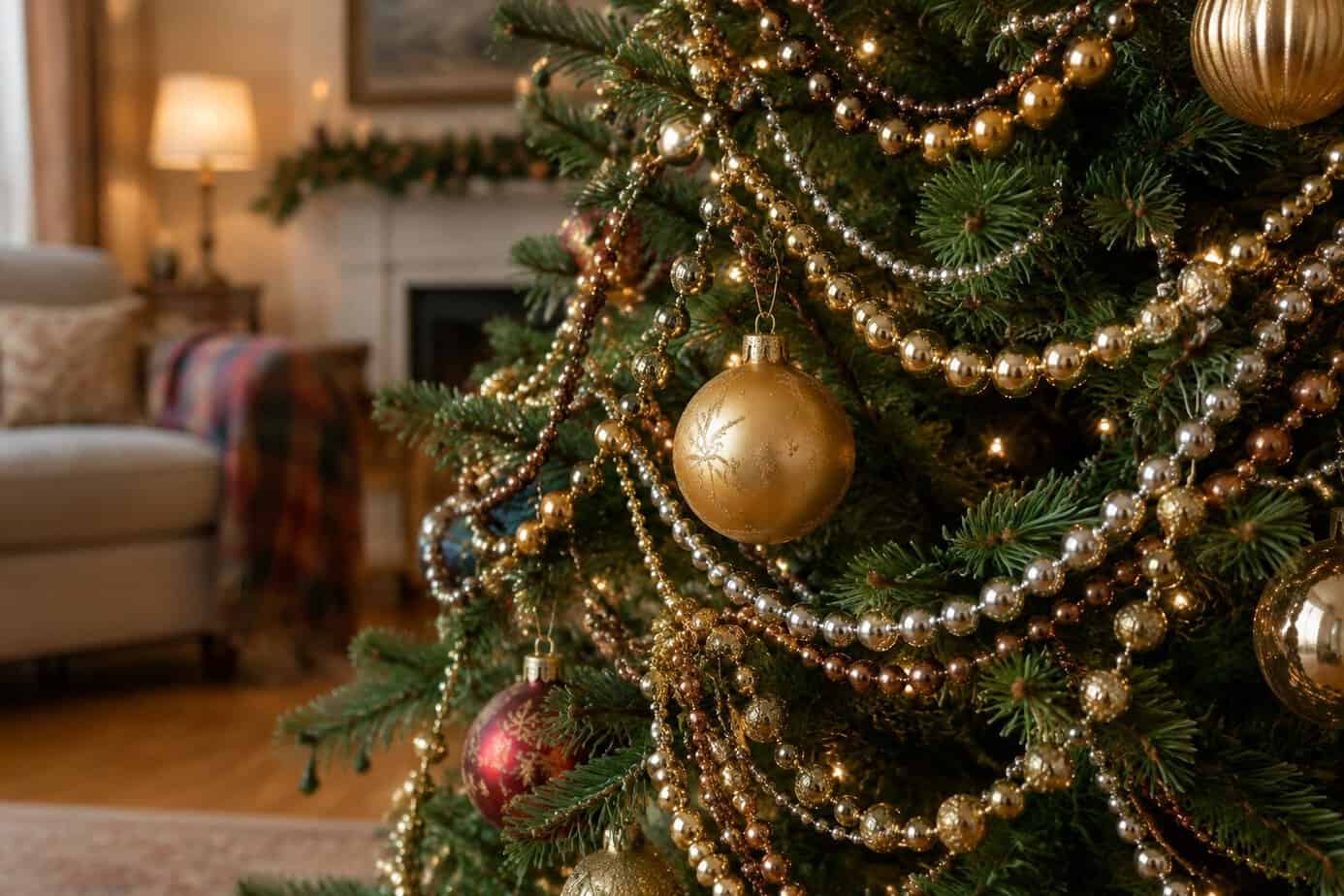
Shiny plastic bead garland was a favorite through the 1990s, usually in gold, sometimes in silver or red. You hung it in neat swags from branch to branch, all the way around the tree, so it looked a bit like a draped necklace.
It isn’t the beads themselves that make a tree look dated. It’s the plastic shine and the strict, evenly spaced swags. Those uniform loops can make a tree look stiff, and bright metallic plastic tends to look harsher next to the softer finishes people favor now.
If you love beads, try wood beads, matte glass beads or even a strand of pearls in a creamy shade. Drape them loosely and a little unevenly, the way a garland would fall if you tossed it, rather than measuring out each swag. It keeps the cozy look you liked and loses the department-store feeling.
7. The 1990s red-and-gold Victorian tree
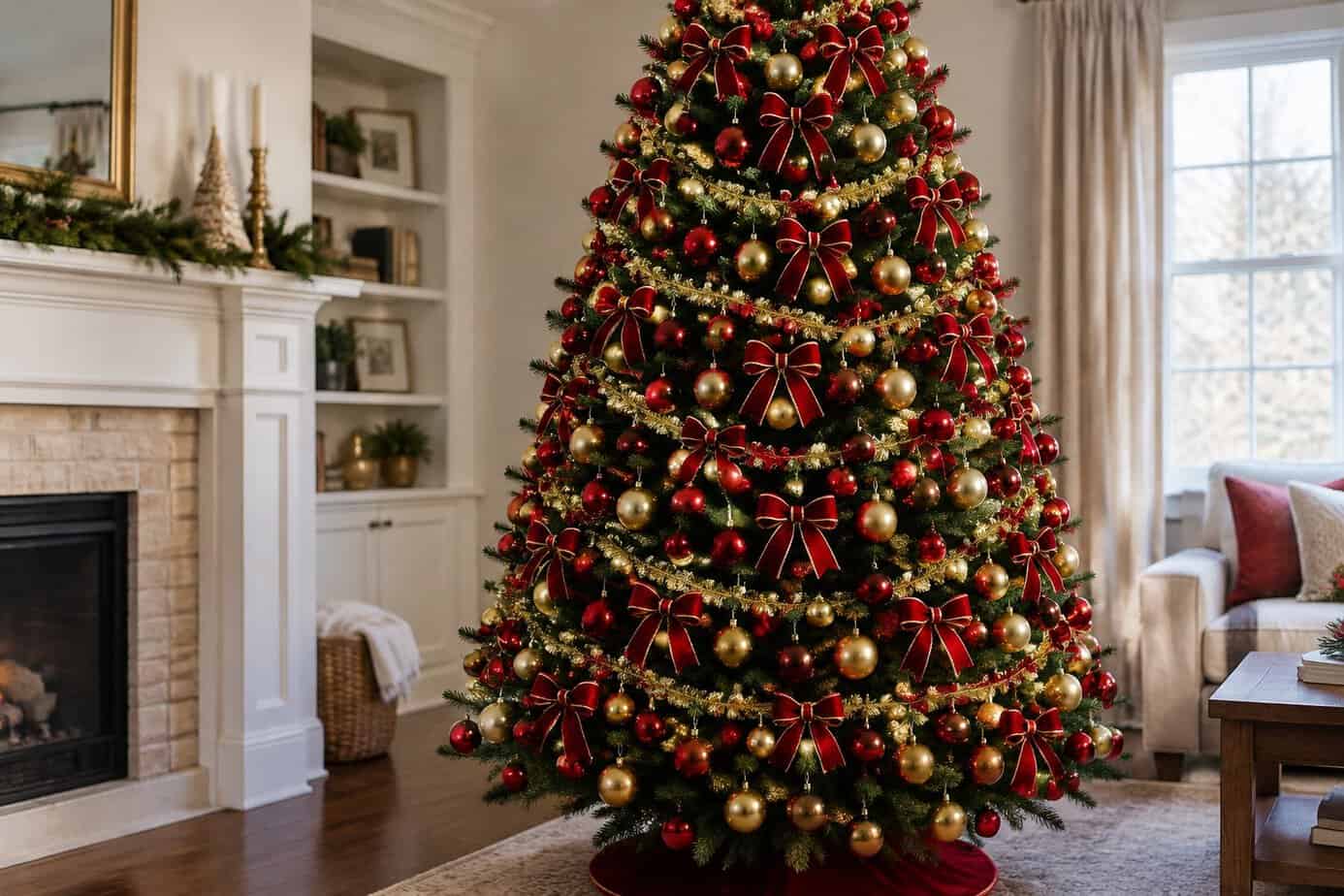
In the 1990s, many living rooms had the same tree: deep red and gold balls, gold bead swags, red velvet bows, gold mesh ribbon and maybe a few cherubs or brass horns tucked in for a touch of the Victorian. It looked rich and formal, and it often matched a room full of burgundy and hunter green.
The look is now a strong time stamp. Even if your living room has moved on, a tree done head to toe in red and gold can pull the whole room back to the decade of swag curtains and floral borders.
You can keep red and gold, which are classic Christmas colors. Just loosen the formula. Swap a few of the shiny balls for matte or glass ones, trade the gold mesh ribbon for plain velvet in one color and add some greenery, wood or natural pinecones. The tree will still feel warm, just less like it came out of a 1994 catalog.
8. A heavy glitter star that leans to one side
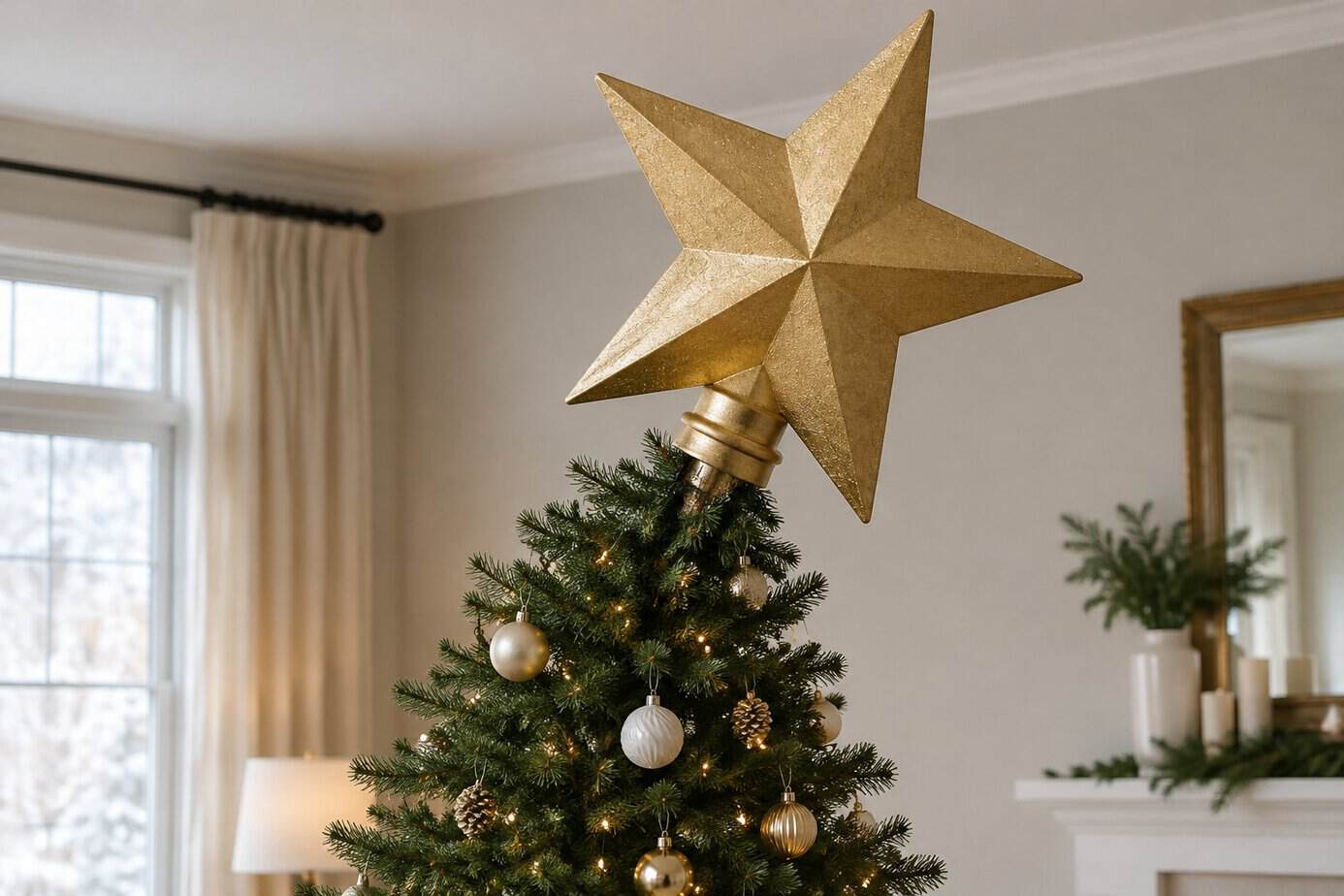
Most of us have wrestled with it: a big, glittery star or angel that looked wonderful in the store and then sagged sideways the minute it sat on the tree. Out came the twist ties, the clothespins and sometimes a pencil taped to the top branch to hold it up.
A topper that tilts or wobbles is the first thing people notice, because it’s at eye level for anyone coming in the door. Heavy foam or plastic stars covered in loose glitter also tend to shed and look worn after a few seasons.
Measure the top of your tree before buying a topper and choose one that is light enough for that slender tip. A simple wire star, a small vintage-style star or a cluster of ornaments and a few sprigs of greenery can look more finished than a big topper fighting gravity. If you love your old star, a hidden topper extender behind it can keep it straight.
9. The bare metal stand on full display
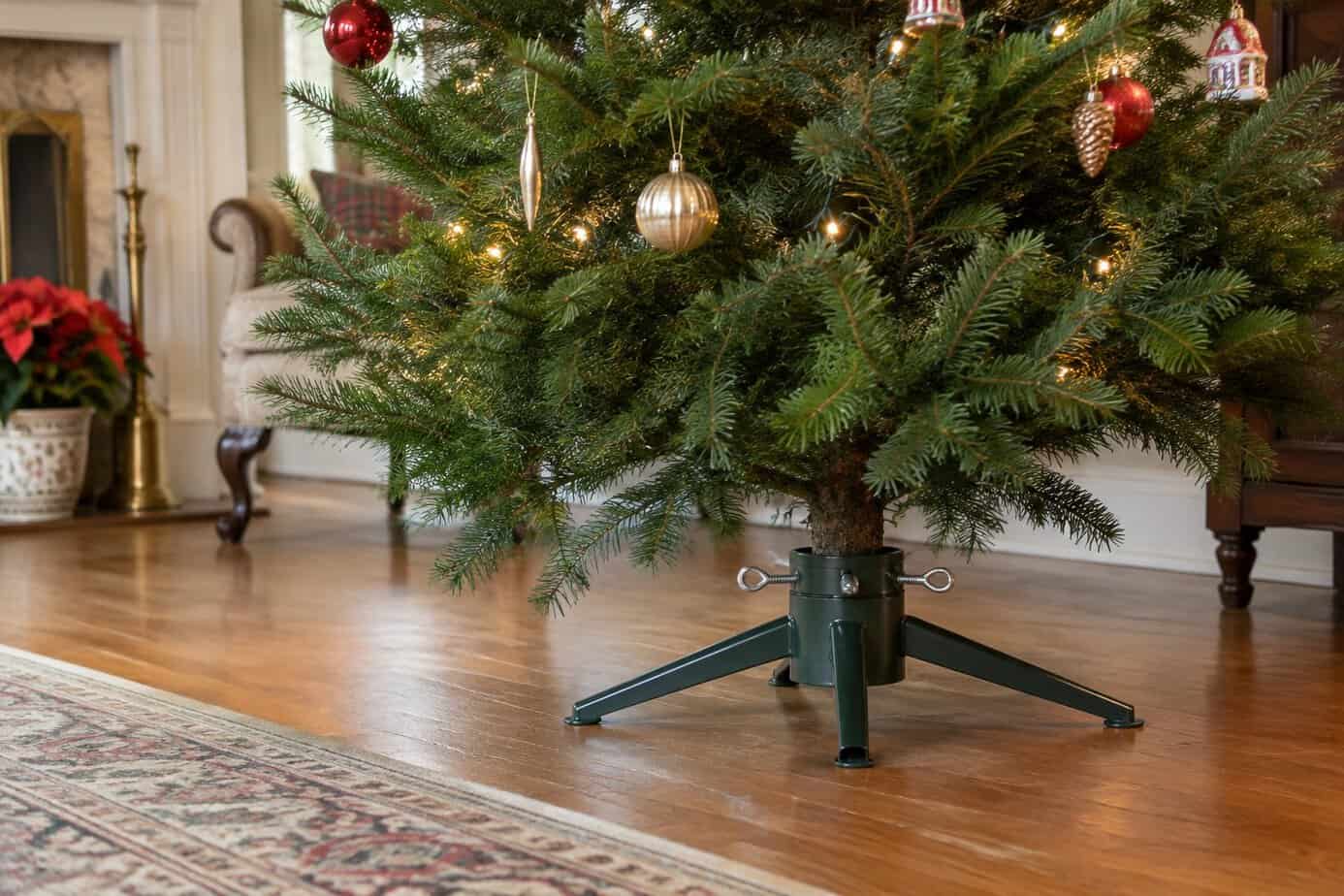
For decades the tree stand was just a tree stand: a green or red metal bowl with screws and legs, and nobody thought much about hiding it. If the tree skirt shifted or never made it out of the box, there it sat, along with the water bowl and the screws.
Today a visible stand makes a tree look unfinished, almost like it was put up in a hurry. It also draws the eye down to the least attractive part of the whole display.
Tree collars, the rings of metal, wicker or wood that slip around the stand, became popular in the last decade for exactly this reason. A basket, a crate or a large planter can work too. If you prefer a skirt, choose one wide enough to cover the stand and the legs completely, and tuck it under so it stays put when someone kneels to reach a present. Just make sure you can still get to the water bowl for a fresh tree.
10. A rotating stand that makes the tree turn
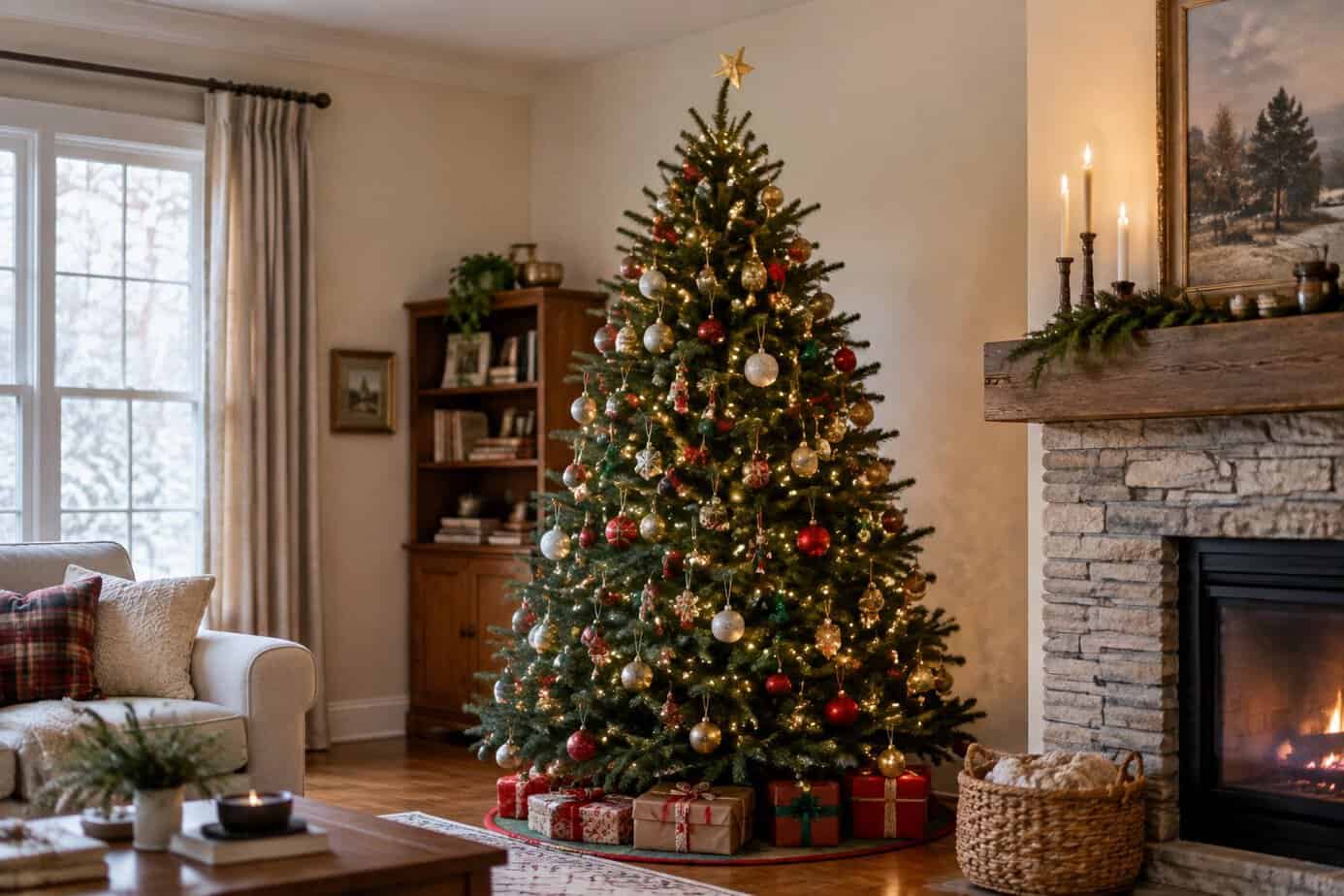
Turning tree stands are older than you might think. An inventor patented a stand that turned the tree to music back in 1891, and musical rotating stands had a fresh run in the 1950s, spinning the tree slowly while they played carols. It was a fun novelty, especially when the kids were small, and you may have one in the attic.
The look hasn’t aged as well as the memory. A slowly turning tree can feel more like a store display than a family room, the music gets repetitive quickly and the motion makes ornaments swing and sometimes fall. On a tree with lights, the cord also has to be managed so it doesn’t wrap around the base.
If you loved the idea that the tree looked good from every angle, you can get that by decorating all the way around, not just the front. Then turn the tree by hand once in a while if one side gets more attention. The rotating stand can live on in a tabletop tree or a child’s room.
11. Empty gift boxes as permanent filler
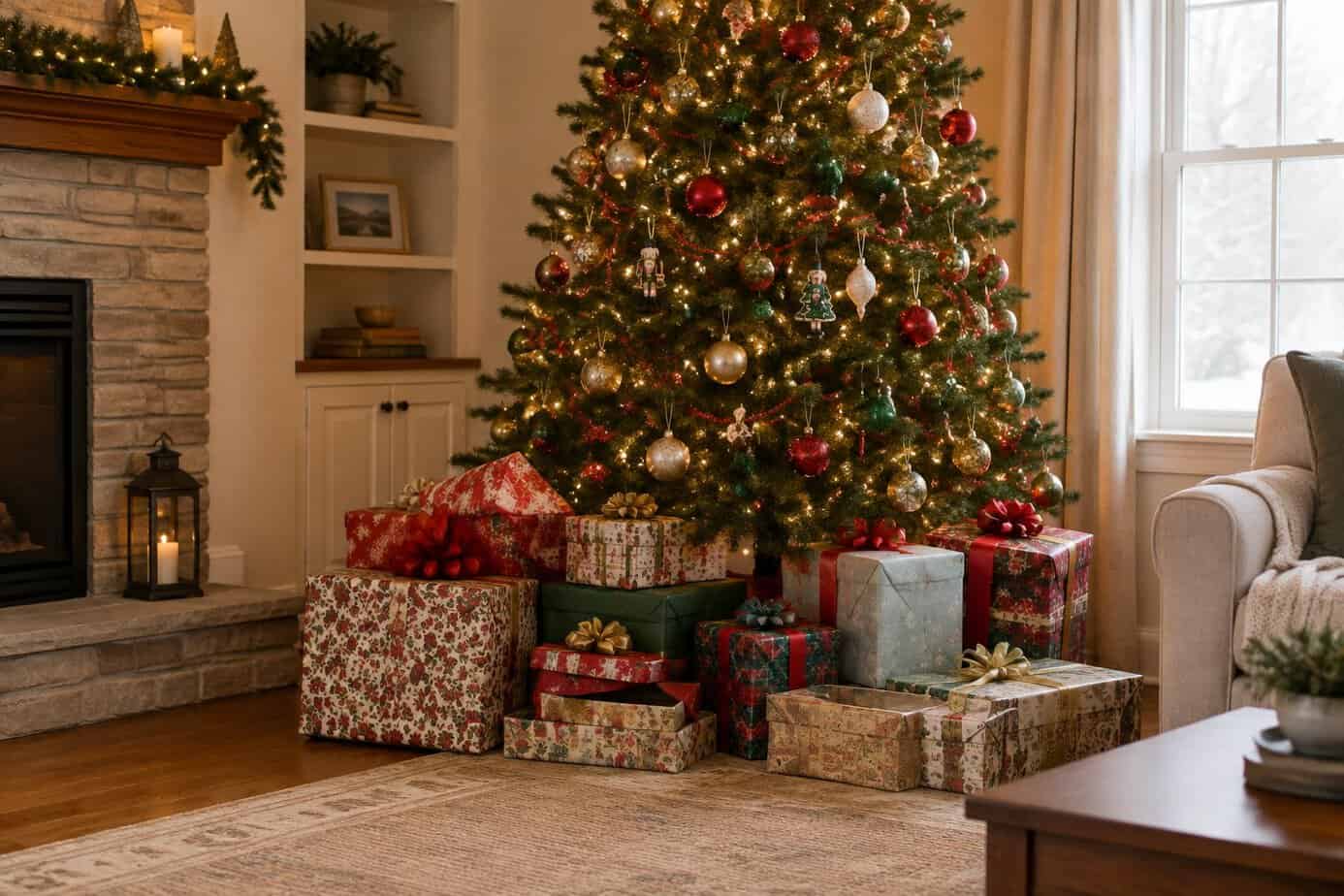
Many magazine photos in the 2000s showed trees surrounded by perfectly wrapped boxes in matching paper and ribbon. A lot of us copied it with empty boxes wrapped once and set out every year, so the tree never looked bare.
The problem is that guests can tell. The paper starts to fade, the corners get dented and the boxes look the same year after year. They also make the space under the tree look staged rather than lived in, and the real presents end up crowded into a corner.
If the empty space under the tree bothers you, try a few larger pieces that look intentional: a basket of pinecones, a wooden sled, a small stack of old books tied with ribbon or a lantern. Once the real gifts start arriving, they’ll fill the space naturally, and you won’t have to dust the same boxes every December.
12. A tree full of boxed shatterproof balls
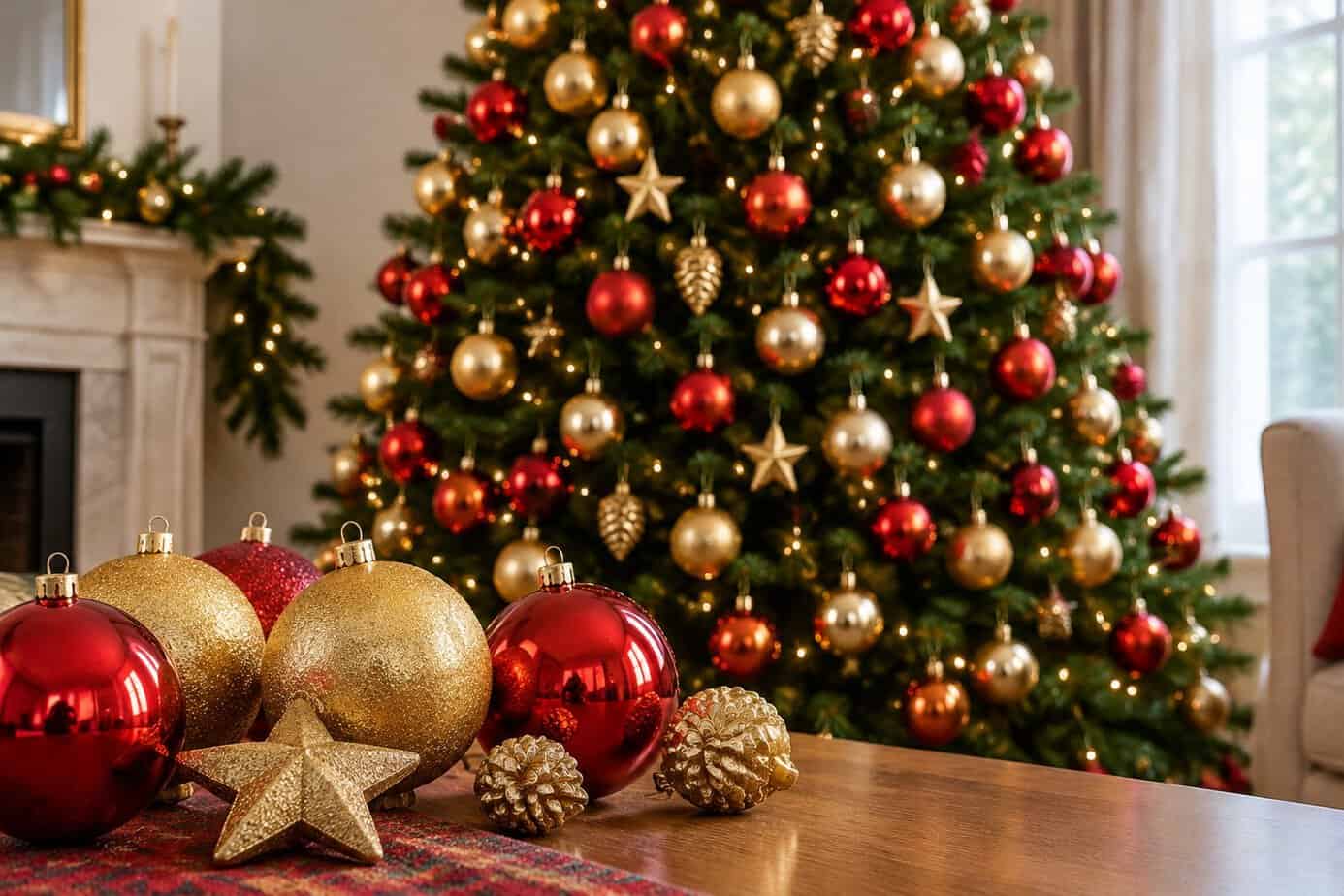
When shatterproof ornament sets started showing up in big boxes at discount stores, they made decorating easy. For a few dollars you could fill a whole tree with matching red, gold and green balls that didn’t break when the cat or the grandkids knocked them down.
They still have a place, especially with little ones around. But a tree dressed only in those identical plastic balls can look flat and a little generic, as if it came straight from the box. The finish is often a bit too even and the colors a touch too bright.
The fix is mixing. Keep the shatterproof balls on the bottom branches where small hands reach, and put glass, wood, felt or handmade ornaments higher up. A few that carry a story, from a trip, a wedding or a child’s school project, will do more for the tree than another dozen matching balls.
13. Mirror-shiny glam baubles in every gap
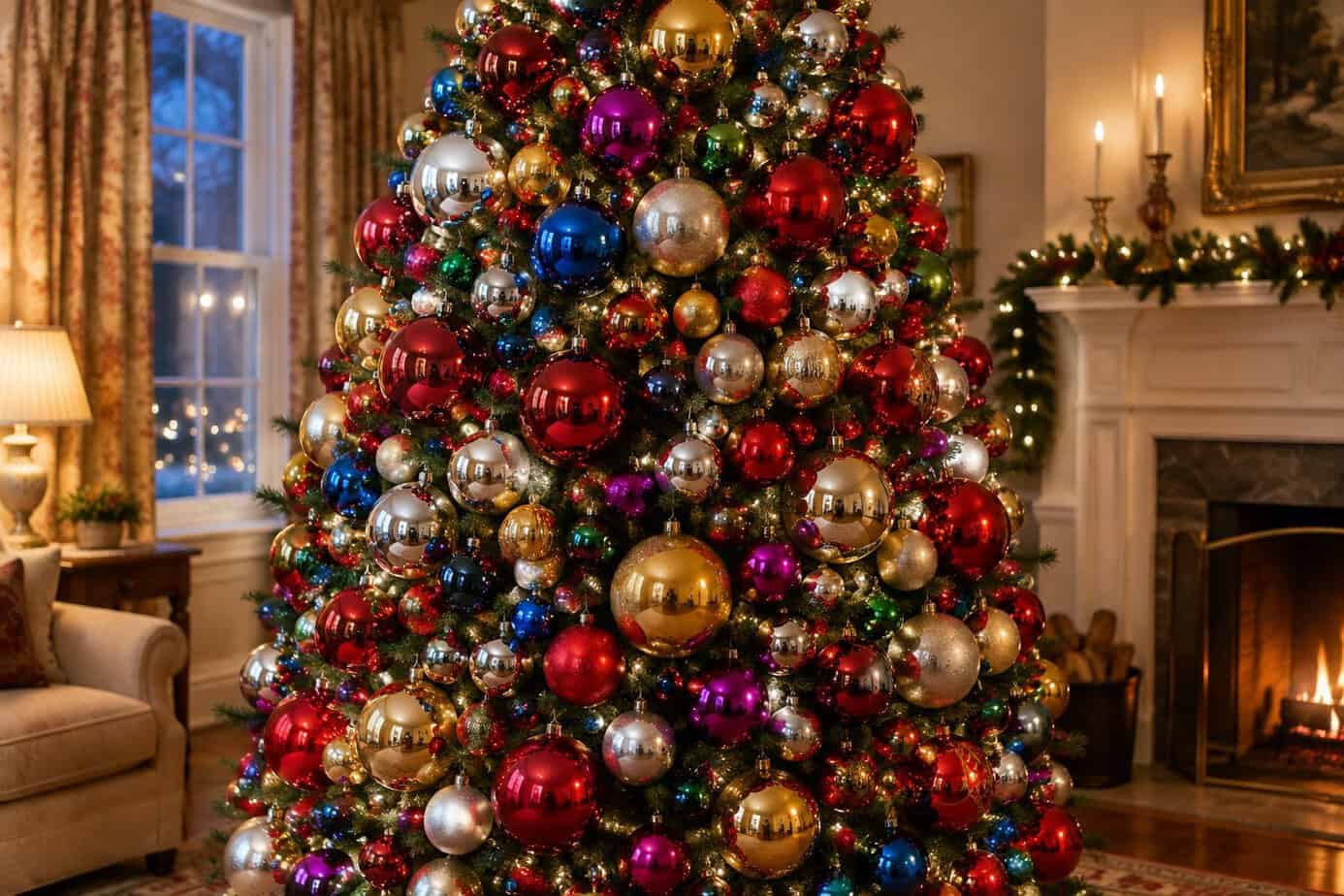
The glam tree had a long run in the 2000s and early 2010s. Every gap was filled with high-shine balls in gold, silver, red and copper, sometimes in three or four sizes, until the tree was more ornament than greenery.
It sparkles, but all that shine competes with itself. Under bright lights, mirror finishes bounce glare around the room, and the tree can look busy and heavy. Without any texture, it also starts to feel more like a hotel lobby than a home.
You don’t need to give up shine completely. Mix shiny ornaments with matte, frosted and glittered ones in the same colors, so some catch the light and some rest. Add a few textured pieces like felt, wood or knitted ornaments. You’ll end up with a tree that still twinkles but feels warmer and easier on the eyes.
14. The all-white tree with all-white everything
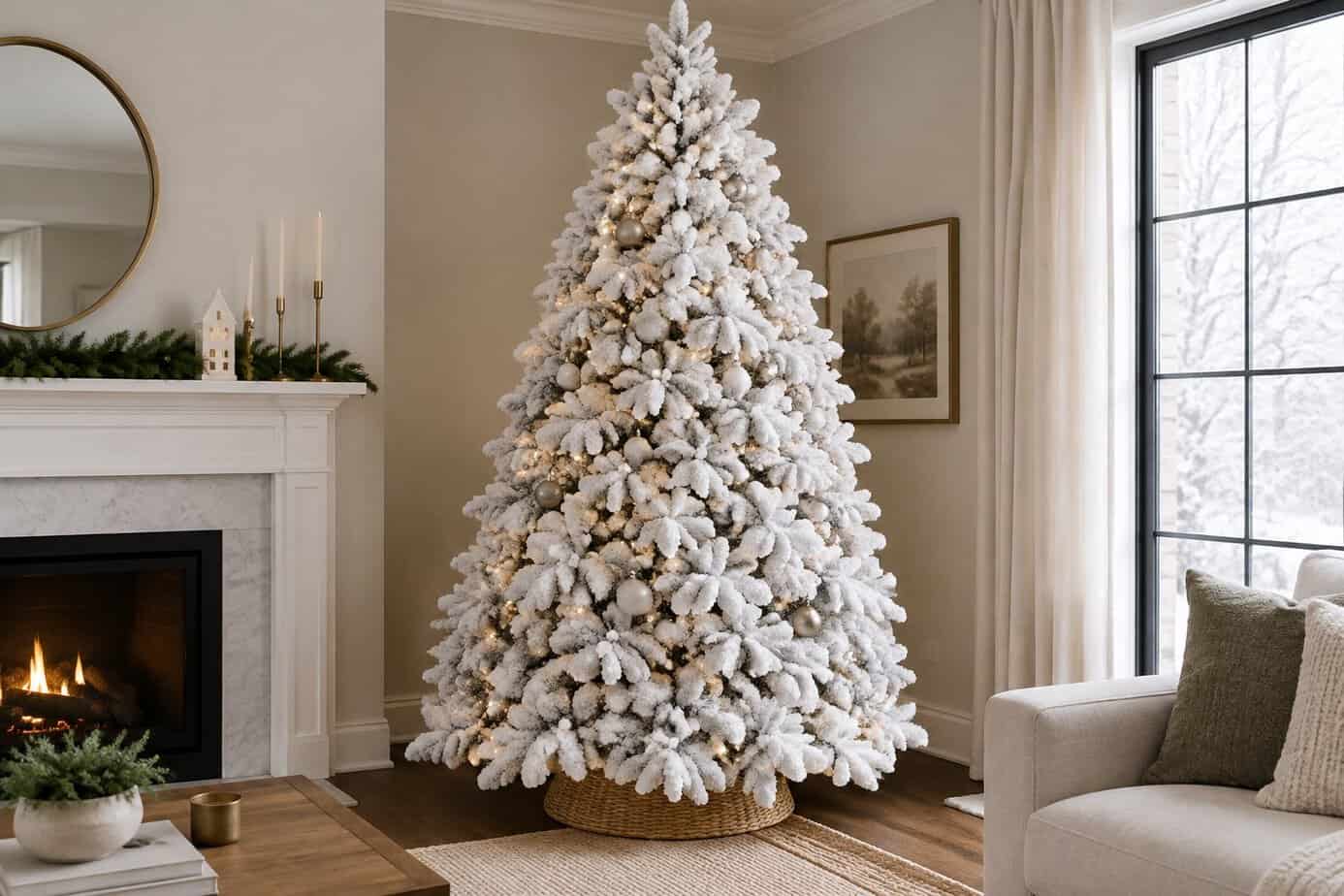
White artificial trees go back to the mid-century, and they had a big comeback in the 2000s. Many people paired them with white ornaments, white lights and white feather or tinsel trim for a snowy, winter wonderland look.
On a white tree, white ornaments tend to disappear, and the whole thing can look washed out in a room with warm wood or cozy furniture. It can also feel more like a department store window than a family tree, and white trees show dust and yellowing over the years.
If you already have a white tree, give it some contrast. Ornaments in soft blue, sage green, silver or even classic red stand out beautifully against white. If you’re buying a new tree, a green tree with a light dusting of flocking gives you a snowy feel while still looking like a tree.
15. Silver glitter-frosted tips on a fake tree
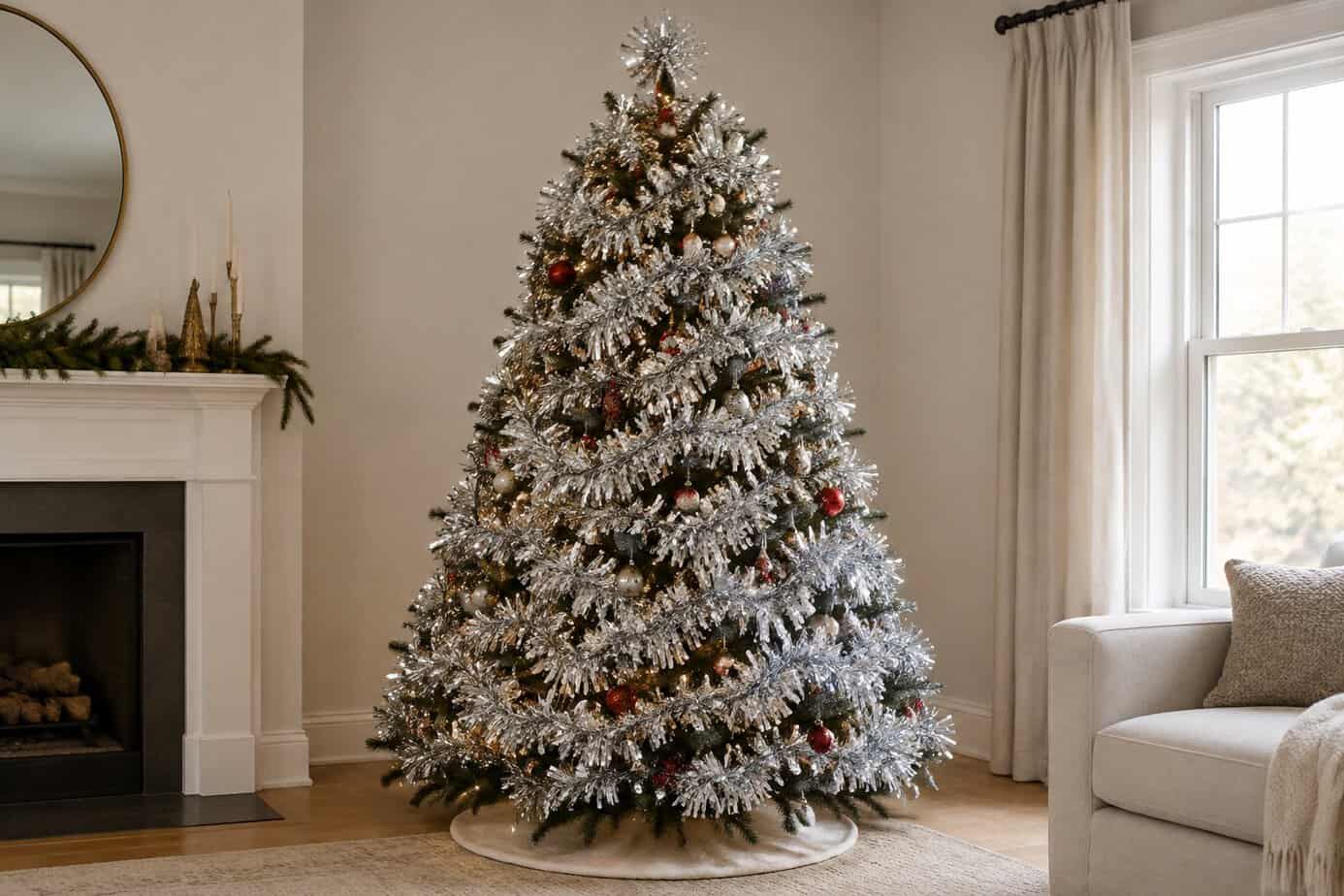
Another popular style in the 2000s was the artificial tree with silver glitter or iced tips on every branch. It gave the tree a frosty sparkle in the store, and it seemed like a shortcut to an elegant look.
Over time, though, glitter wears off unevenly, and the tree starts to look patchy. It sheds on the floor and the presents, and the silver can look a bit harsh next to the warmer, more natural trees that are common now.
If your glittered tree still has years left in it, soften it with ornaments in natural materials like wood, cotton or matte glass, and add a few sprigs of real greenery to break up the shine. When it’s time to replace it, look for a tree with realistic green tips. A few silver ornaments will give you the sparkle without the shedding.
16. Teal, purple and lime green instead of Christmas colors
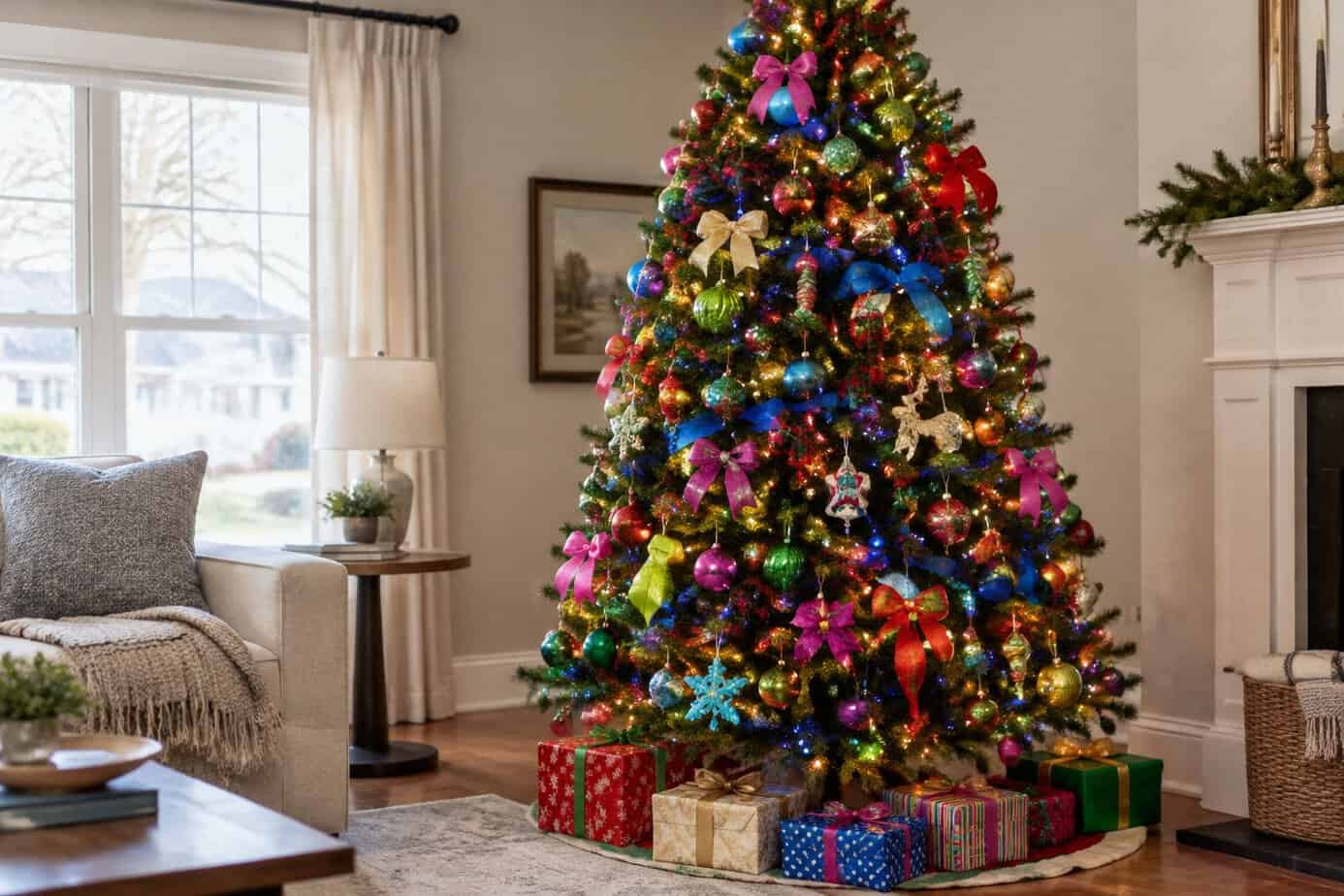
Bright, nontraditional color schemes had a real moment in the 2000s. Teal and purple, lime green and hot pink, peacock blue with gold. Stores sold whole aisles of ornaments in these shades, and they made trees feel fun and modern at the time.
Those exact color combinations now place a tree in a specific window of time. Very bright jewel tones can also clash with the softer, warmer palettes most homes have moved toward.
If you love color, there’s no need to go back to plain red and green. Pick one of your favorite shades and pair it with neutrals like gold, cream or natural wood. A deep teal with brass, for example, looks rich rather than dated. Mixing in some greenery and a few classic ornaments keeps the tree feeling like Christmas instead of a party store display.
17. Light-up, singing and battery novelty ornaments
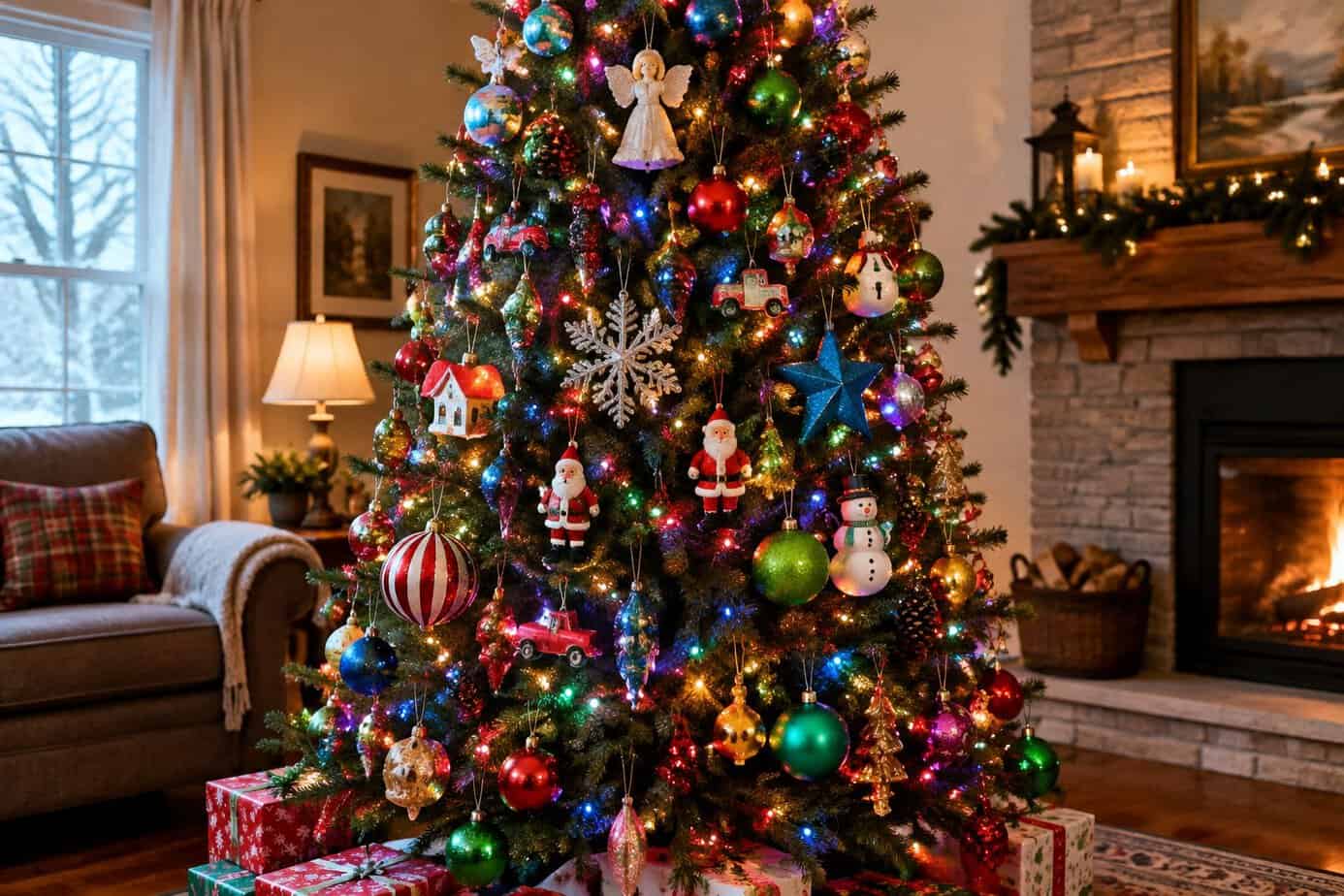
There was a stretch when many trees had at least a few ornaments that did something: lit up, played a tune, blinked or said a line when you pressed a button. Some came with little batteries, and some hooked into the light strand.
A couple of fun pieces can be a sweet surprise, but a tree full of them looks cluttered. The blinking and noise can be tiring by Christmas Eve, and the plastic shells tend to look dated next to glass and handmade ornaments.
Keep the one or two your family really loves, the ornament that sings the carol everyone hums, or the light-up one from a child’s first Christmas, and give them a good spot at eye level. Let the rest of the tree be calmer, and the special ones will stand out more. Check the batteries before you hang them so they don’t leak inside.
18. Cold, bluish-white LED lights
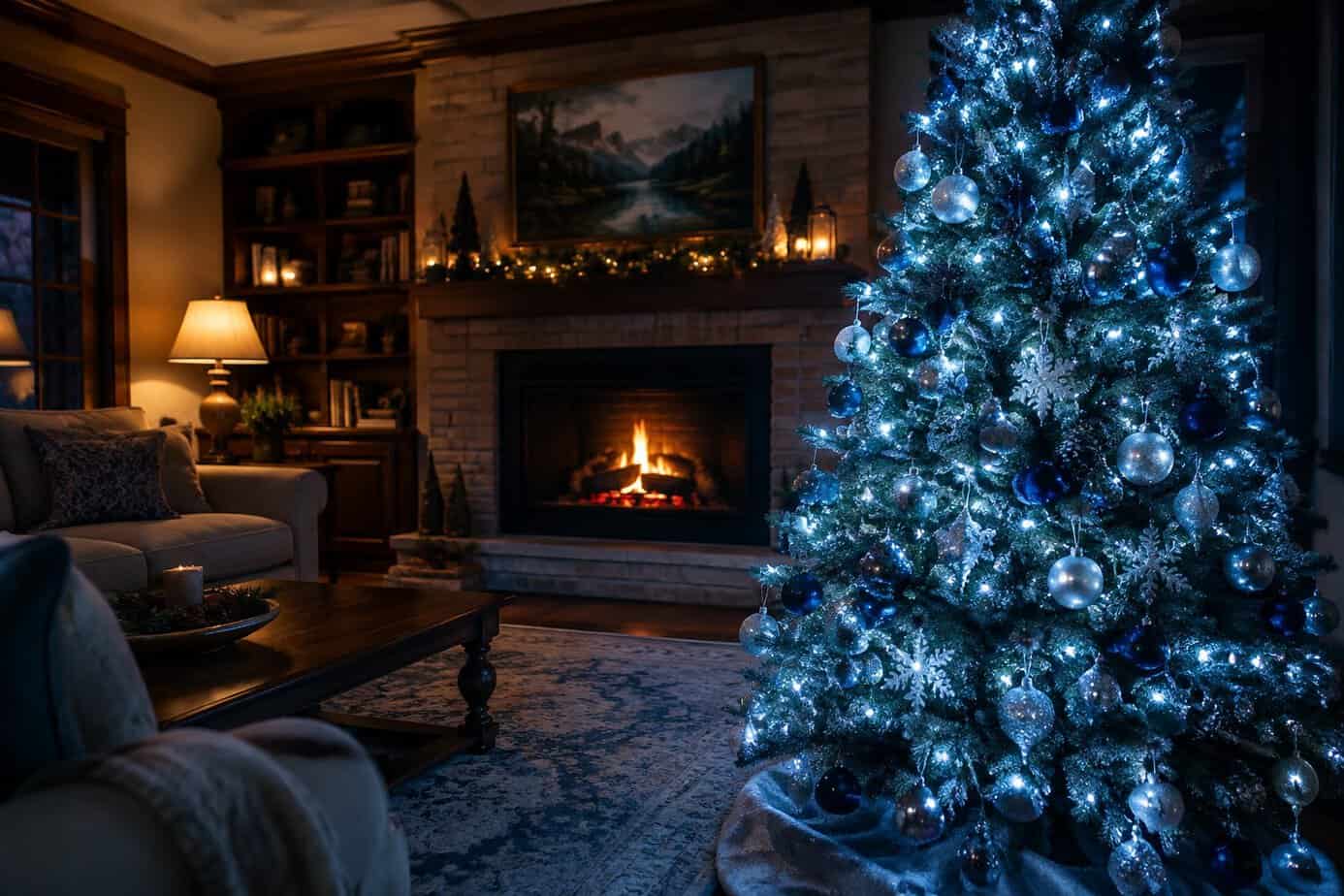
When LED Christmas lights first became common in the 2000s, many of the white strings had a cold, bluish glow. They saved energy and stayed cool to the touch, but they made trees look icy and a little clinical next to the warm glow of the old incandescent minis.
That blue-white light is one of the easiest ways to spot a tree that was set up with lights from that early LED era. It can make red ornaments look purple, gold look gray and the whole room feel colder.
The good news is that LED strings now come in warm white that looks much more like the old bulbs. Energy Star says a certified LED light string uses about 70% less energy than an incandescent one and holds up better, so switching keeps the savings and fixes the color. Check the box for “warm white” before you buy, and stick with one color temperature on the whole tree so it doesn’t look patchy.
19. A pre-lit tree with a dark section
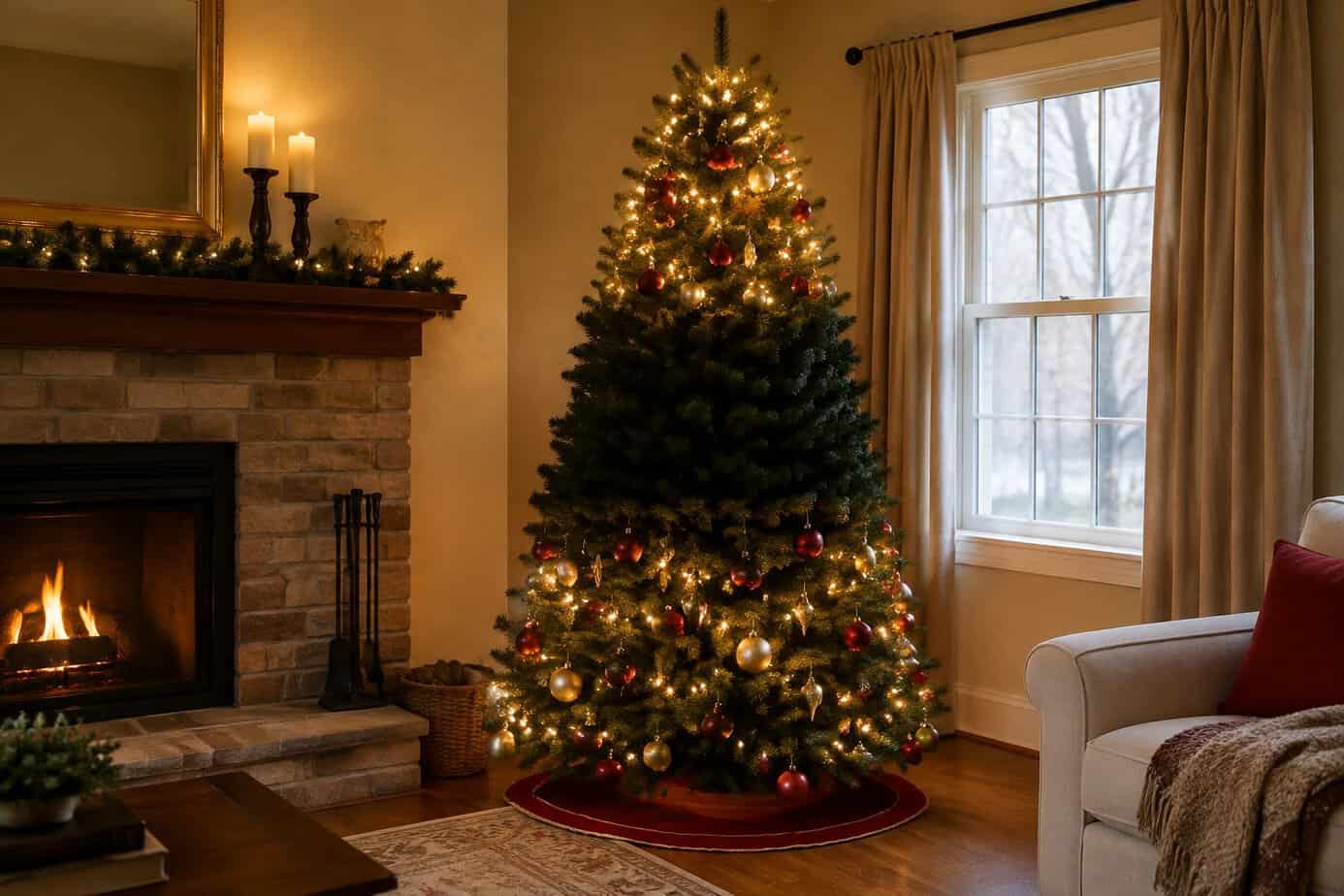
Pre-lit artificial trees caught on in the early 1990s and were everywhere by the 2000s, and they made decorating so much easier. You just stack the sections, plug them in and the lights are already on. But after a few years, many of them develop a dark stripe where one section or strand has gone out.
A tree that glows at the top and bottom and goes dark in the middle is hard to miss. It can make a well-loved tree look worn out, and it is a common reason people end up replacing a tree that’s otherwise fine.
Before you give up on it, check for a loose bulb or a blown fuse in the plug, since a single bad bulb can knock out a whole section on some sets. If that doesn’t work, you can weave a new string of lights through the dark area and plug it in separately. Choose the same color of white so it blends in. Nobody will know the difference once the ornaments are on.
20. A ribbon waterfall from the topper to the floor
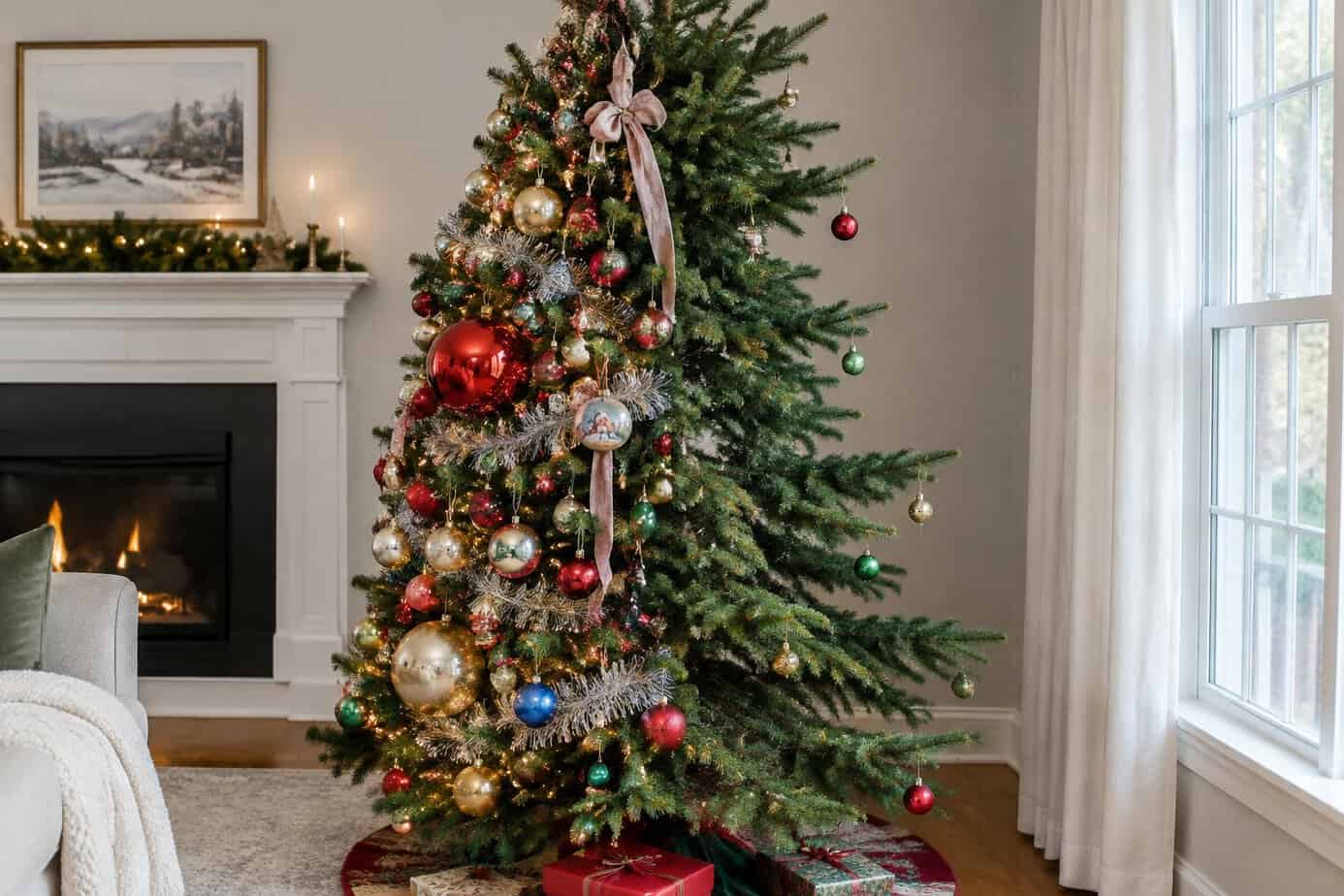
The ribbon waterfall was a big designer look in the 2000s and 2010s. Wide wired ribbon started under the topper and cascaded down the tree in long vertical strips, sometimes five or six of them, often in plaid, burlap or metallic mesh.
Done well, it looked elegant. But copied on every tree, the stripes started to look heavy and fussy. The ribbon tends to sag and crease over time, and it hides much of the tree and the ornaments.
If you love ribbon, try using less of it. A single soft velvet or linen ribbon tied in small bows on the branches, or draped loosely in a few places, adds the same color without dividing the tree into stripes. Keep the wired ribbon for wreaths, the banister or packages, where it still looks fresh and festive.
21. Big wired bows on every branch
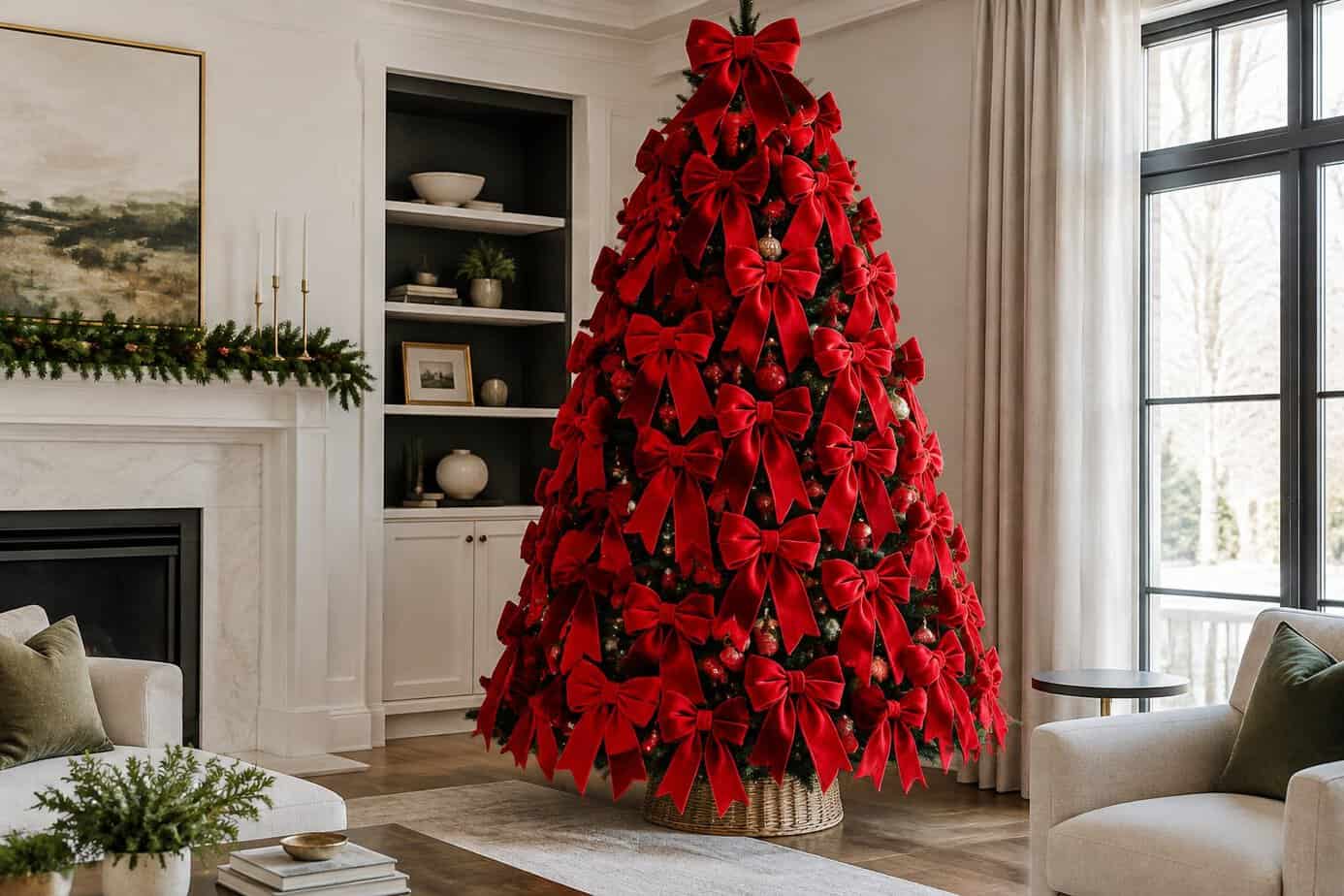
At some point, many trees became bow trees. Big red or plaid bows were wired onto branch after branch until the greenery almost disappeared. It made a bold statement in a store window, and plenty of us tried it at home.
The bows tend to look heavy on a home-size tree, and when there are dozens of them, they crowd out everything else. Large bows also lose their shape quickly and come out of storage crushed and flattened.
You can still use bows. Pick a smaller size, perhaps four or five inches across, in velvet or a soft fabric, and use just a handful spaced around the tree. Or tie simple ribbon bows onto your favorite ornaments. You’ll get the same festive feeling without the tree looking like a giant gift.
22. Giant silk flowers stuck in the branches
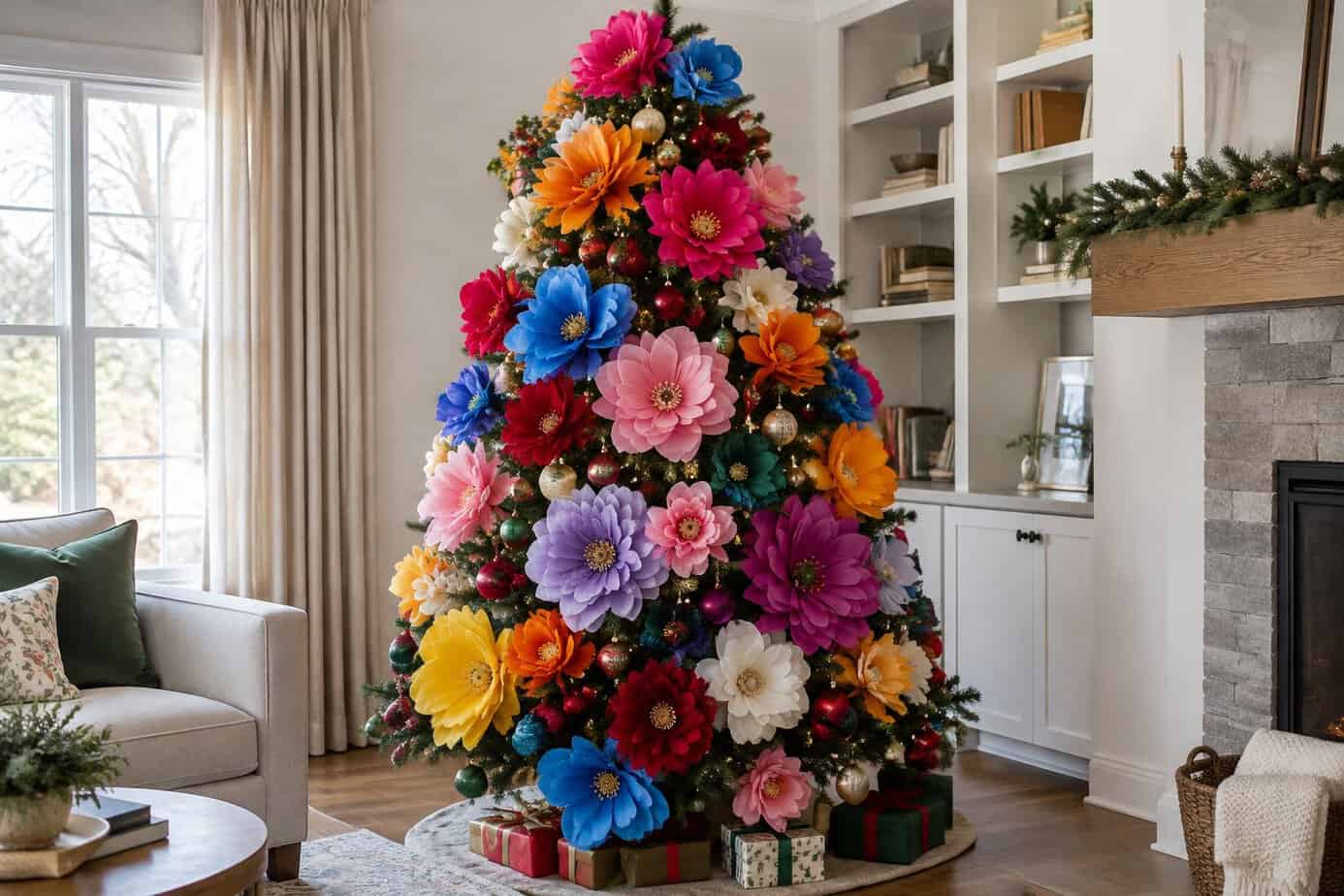
Floral picks went through a phase on Christmas trees, especially in the 2010s, when big silk poinsettias, roses and hydrangeas were tucked in all over the branches. Some trees had more flowers than ornaments.
A few blooms can be pretty, but oversized fake flowers in many colors make a tree look more like a parade float. Silk flowers also gather dust and fade, and they can look obviously artificial up close.
If you like the softness flowers add, use them sparingly. Choose one kind of flower in one color, perhaps white or deep red, and use only a few. Dried hydrangeas, a few sprigs of eucalyptus or some dried orange slices can give you that natural, gathered look while still feeling seasonal.
23. Ornaments wired together in big clusters
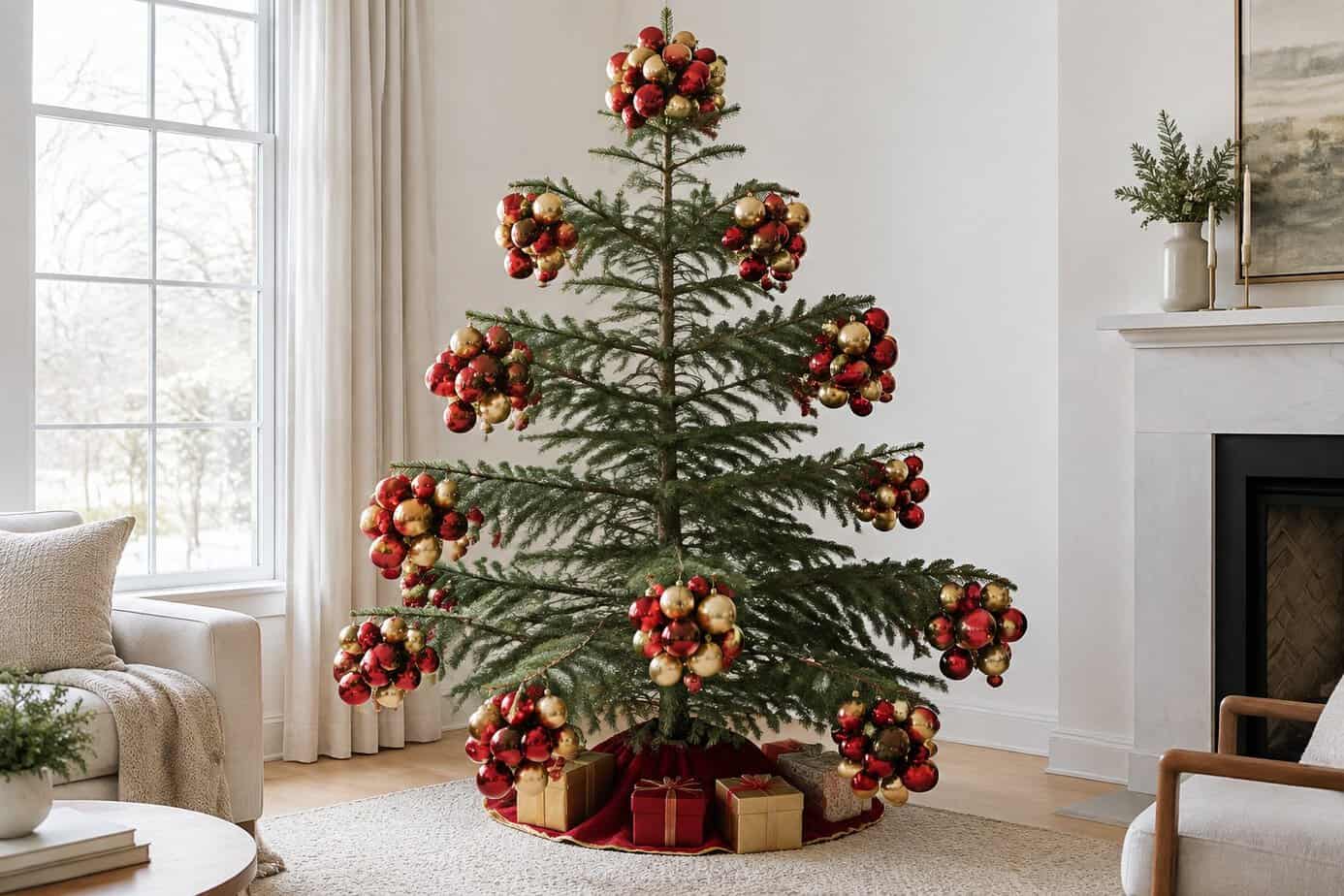
Designer trees in the 2010s often used ornament clusters, groups of three to six balls wired together and tucked in at intervals. It was meant to look abundant, and in decorator showrooms it often did.
On a typical home tree, the clusters can look like bunches of grapes hanging off the branches. They leave bare spots in between, and the repetition of the same cluster over and over looks staged rather than natural.
Instead, spread your ornaments out and vary their depth. Tuck some deeper toward the trunk and hang others near the tips, so the tree has layers. If you like the abundant look, group a few ornaments in a bowl or on the mantel, where clusters look natural, and let the tree breathe.
24. Ornaments in perfect rows
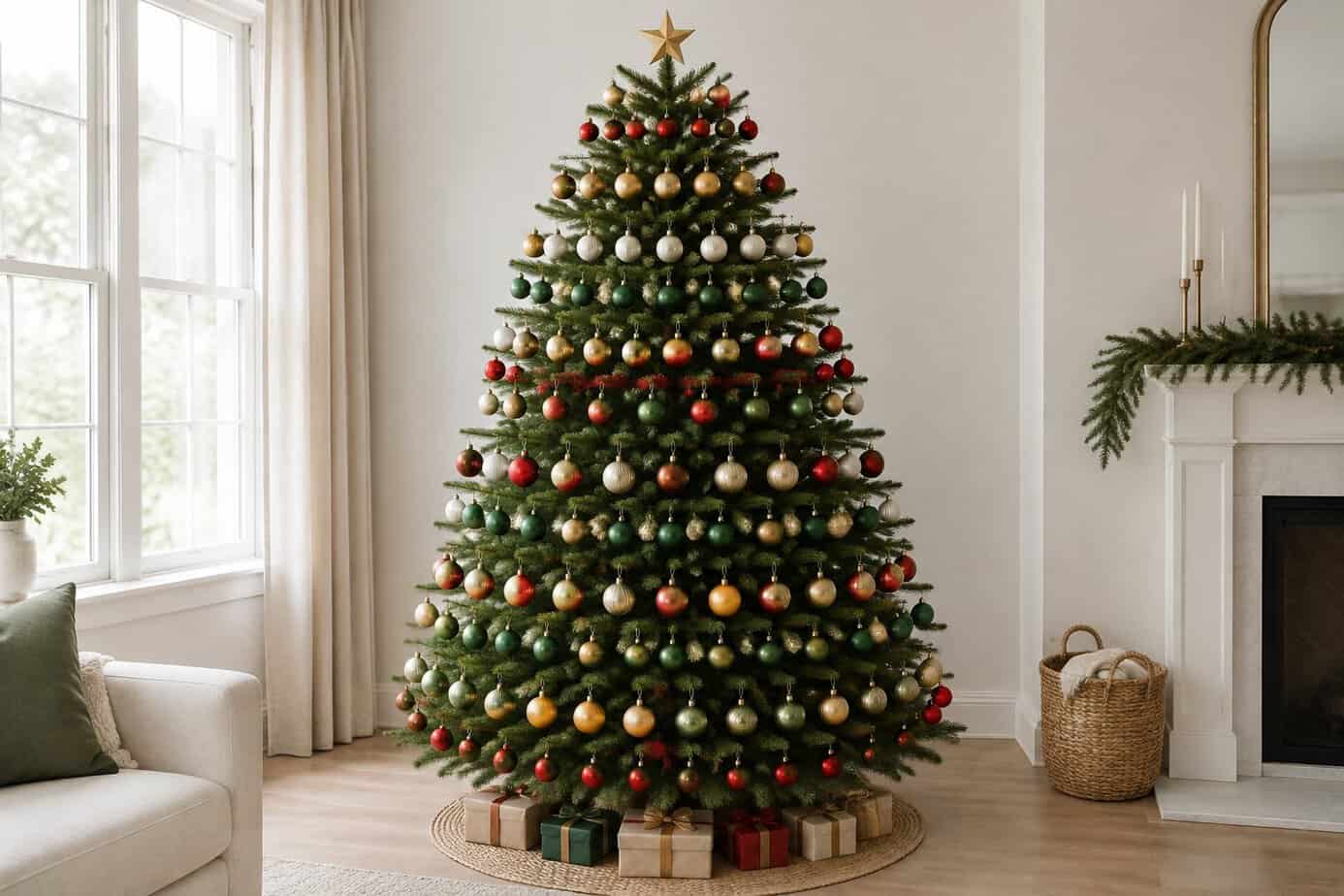
Some of us were taught to space ornaments evenly, one ball per branch tip, in neat rings around the tree. It looked orderly and organized, and it made sure every branch got something.
The trouble is that it can make the tree look stiff, almost like a grid. When every ornament is the same distance from the next and hangs at the same depth, the tree loses its sense of fullness and depth.
Try hanging ornaments in loose diagonal lines or small groupings of different sizes. Tuck some larger ornaments deeper inside to fill gaps, and hang smaller ones closer to the tips. Step back now and then to look at the tree from across the room. The goal is for it to look naturally full, not measured out with a ruler.
25. A single-theme tree that goes all the way
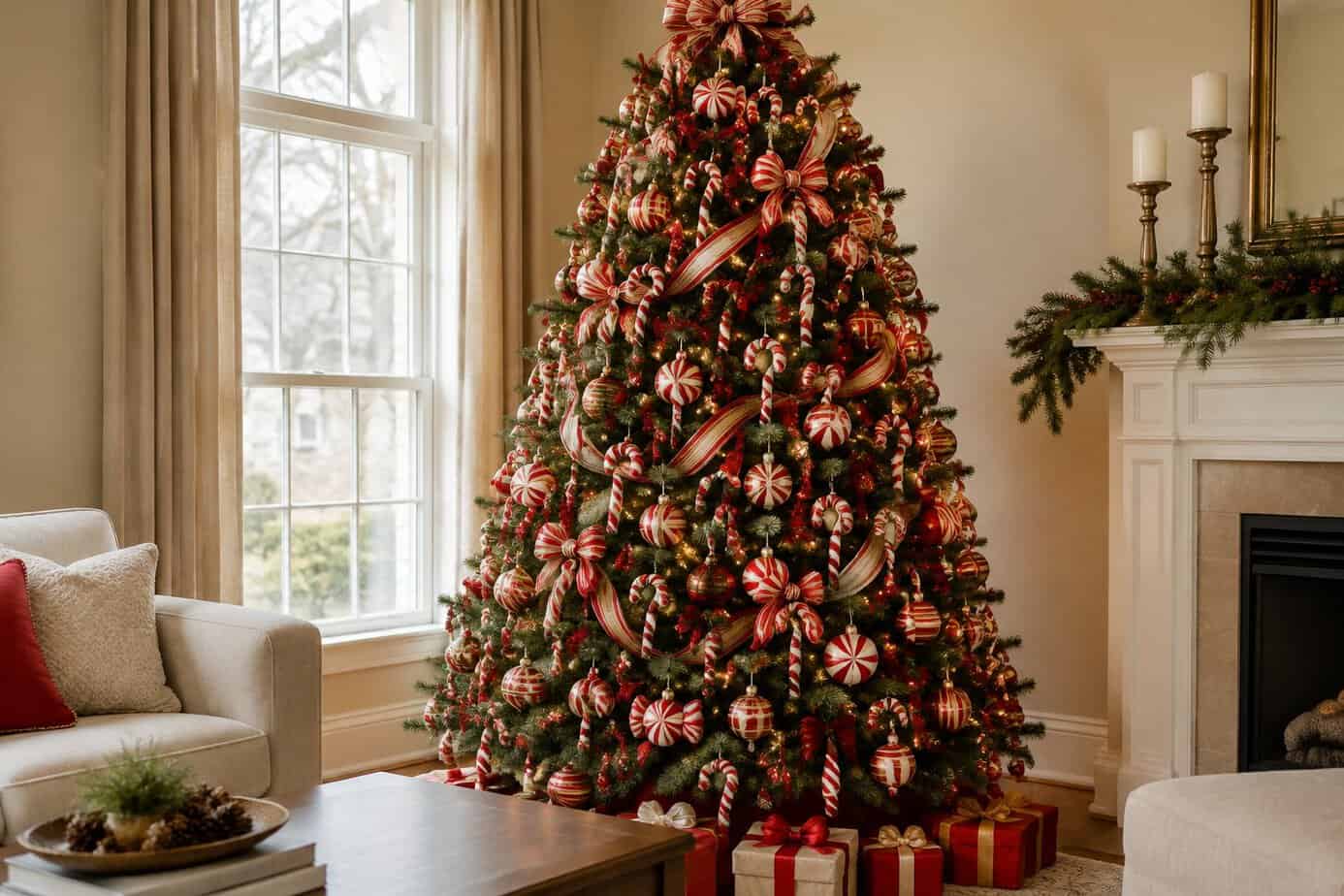
Theme trees were a big trend for a while: a peppermint tree, a snowman tree, a gingerbread tree, a tree done entirely in one motif from top to bottom. They looked great in stores and magazines, and some families still do one every year.
A single theme taken all the way can make a tree feel like a store display rather than part of the family. It can also look very dated quickly, since themes tend to follow whatever was popular in the stores that year.
If you love a theme, keep it to a smaller tree in the kitchen or a child’s room. For the main tree, use your theme as an accent. A handful of peppermint ornaments mixed in with family favorites can be just as charming without taking over.
26. Oversized nutcrackers and giant candy picks
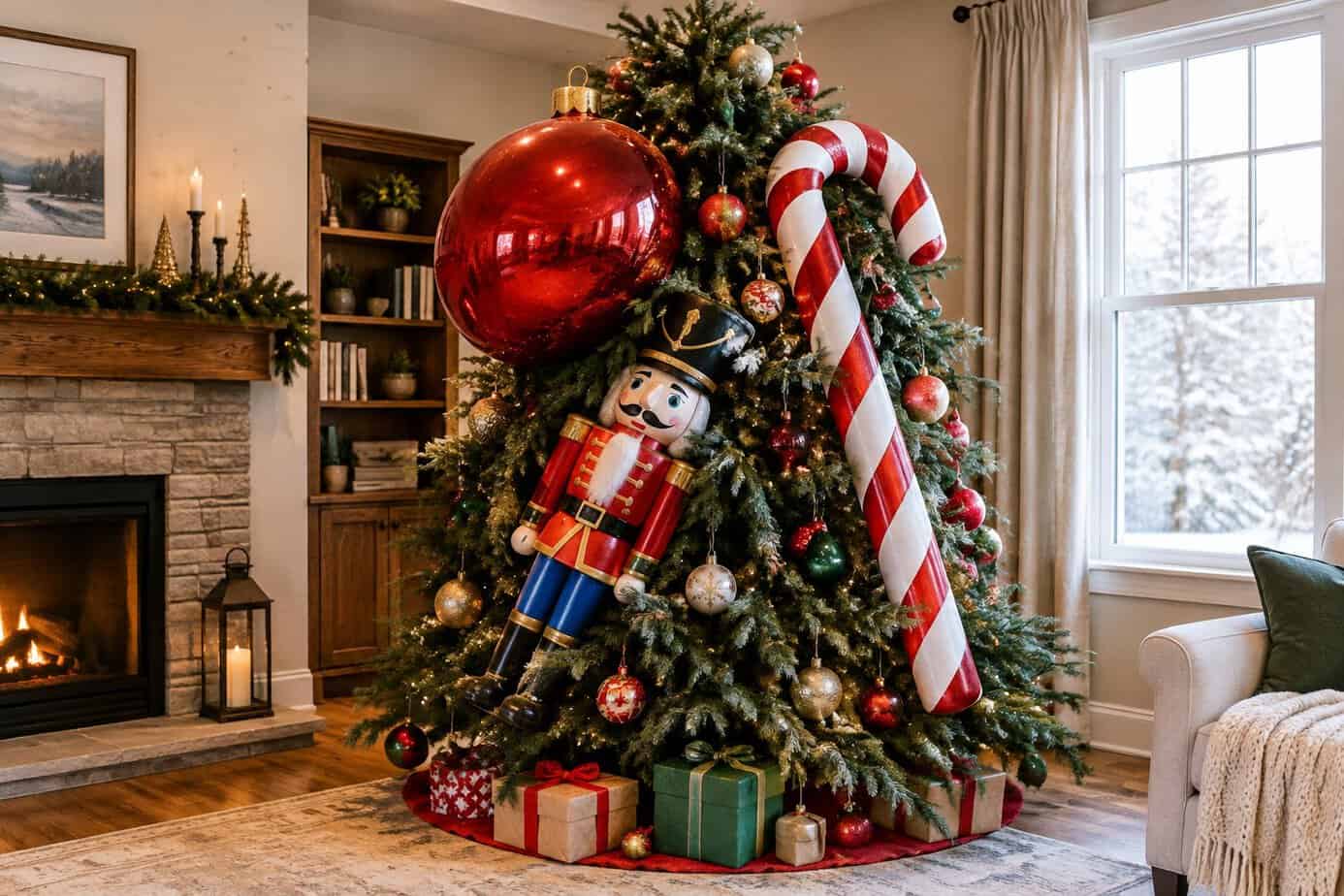
The whimsical tree had a strong run in the 2010s, with huge candy canes, giant lollipops, oversized nutcrackers and big plush characters poking out of the branches. It was fun and bold and made a big impression on kids.
The problem is scale. Big novelty pieces swallow a home-size tree, and when they’re stuck in all over, the tree loses its shape. They’re also hard to store and tend to look worn out after a few years.
If you love the fun of it, pick one or two big pieces for a special spot, maybe a nutcracker standing beside the tree instead of stuck in it. Use smaller candy ornaments on the branches themselves. The tree will still feel playful, and it’ll keep its shape.
27. Buffalo check and burlap farmhouse everything
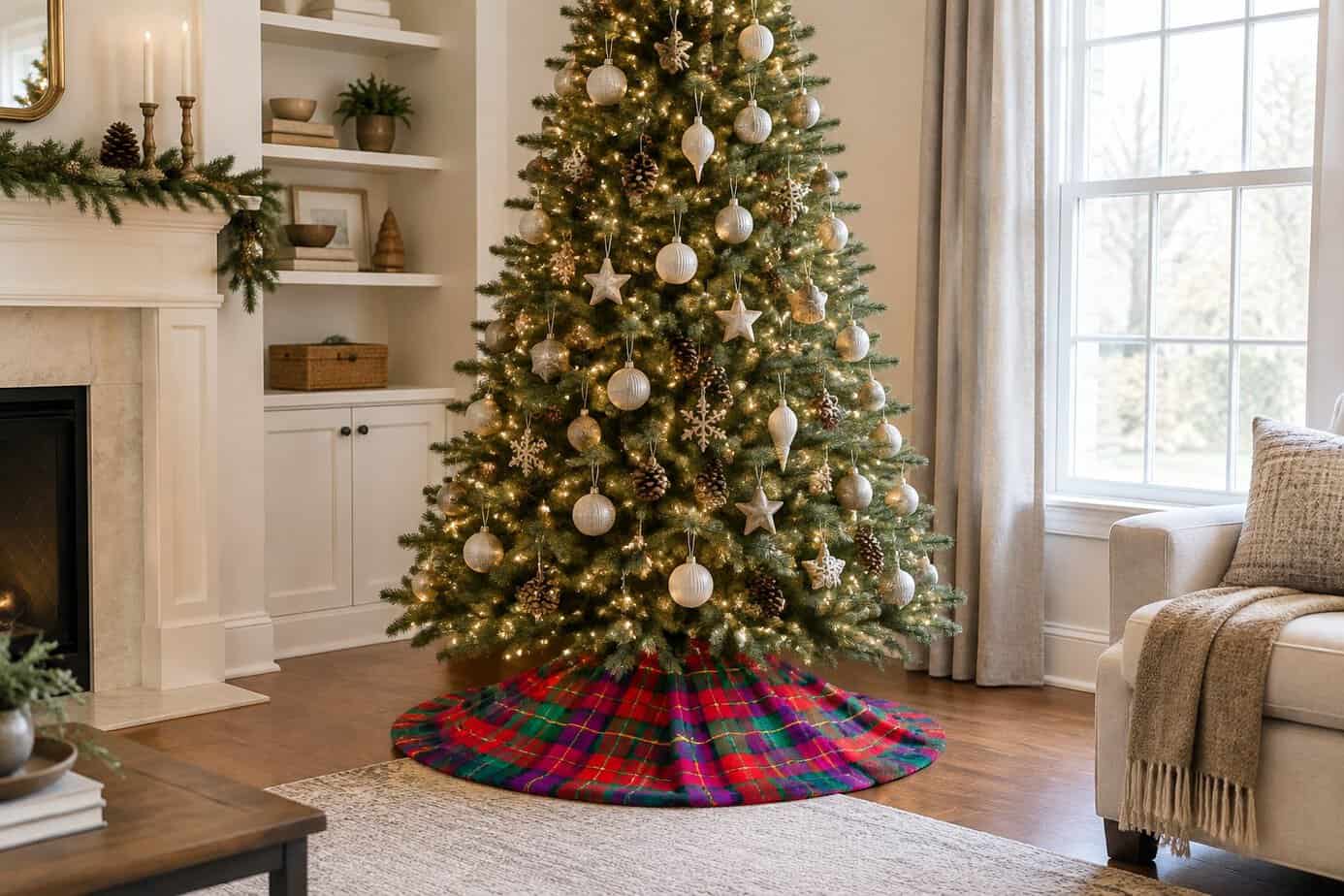
In the mid-2010s, the farmhouse look swept into Christmas decorating. Buffalo check ribbon, burlap bows, galvanized buckets, wood-slice ornaments and a plaid tree skirt showed up on countless trees.
It felt cozy and fresh at the time, but because so many homes had nearly identical versions, it now marks a tree as from a specific era. Burlap can also look rough, and black-and-white or red-and-black plaid can feel heavy in a softer room.
You can keep the warmth of the farmhouse look without all of it. Choose one plaid element, maybe a soft wool tree skirt, and pair it with natural pieces like pinecones, wood beads and greenery. Swap burlap for velvet or linen ribbon. The tree will still feel homey, just without looking like it came straight from a 2016 holiday store display.
28. A tree so packed you can’t see any green
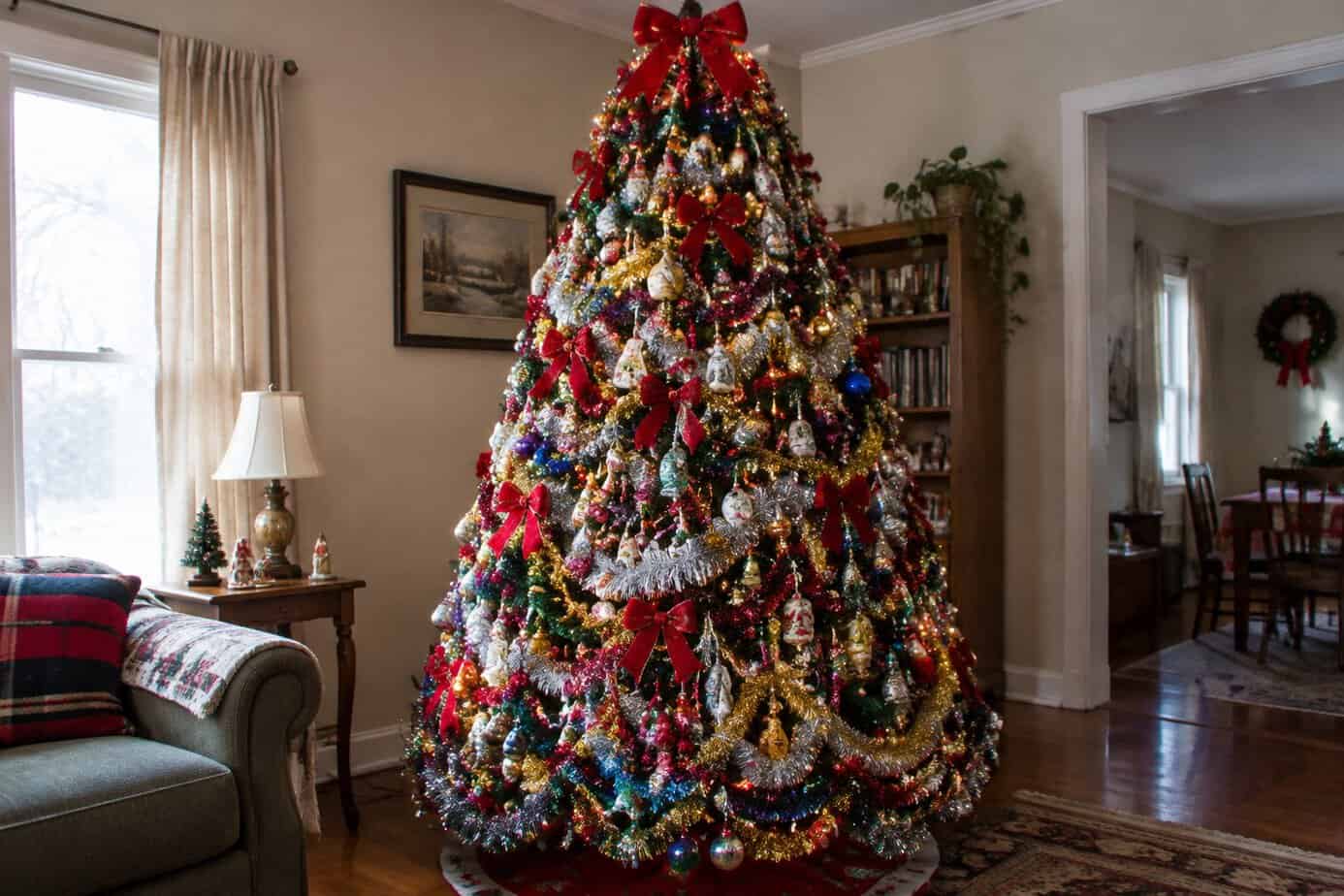
Some trees are decorated so heavily that you can’t find a single needle. Ornaments, garland, ribbon and picks fill every inch, and the tree turns into a solid cone of decorations.
It might feel generous, but it can look heavy and overwhelming. Without any green showing, the tree loses its natural shape and the ornaments stop standing out, because there’s no background for them.
Try taking a few things off. Start by removing anything you don’t love, then step back. Leave pockets of green between ornaments so each one has room. You’ll likely find that a tree with fewer, well-chosen decorations looks richer and more festive than one where everything is crammed in.
29. A tree too big for the room
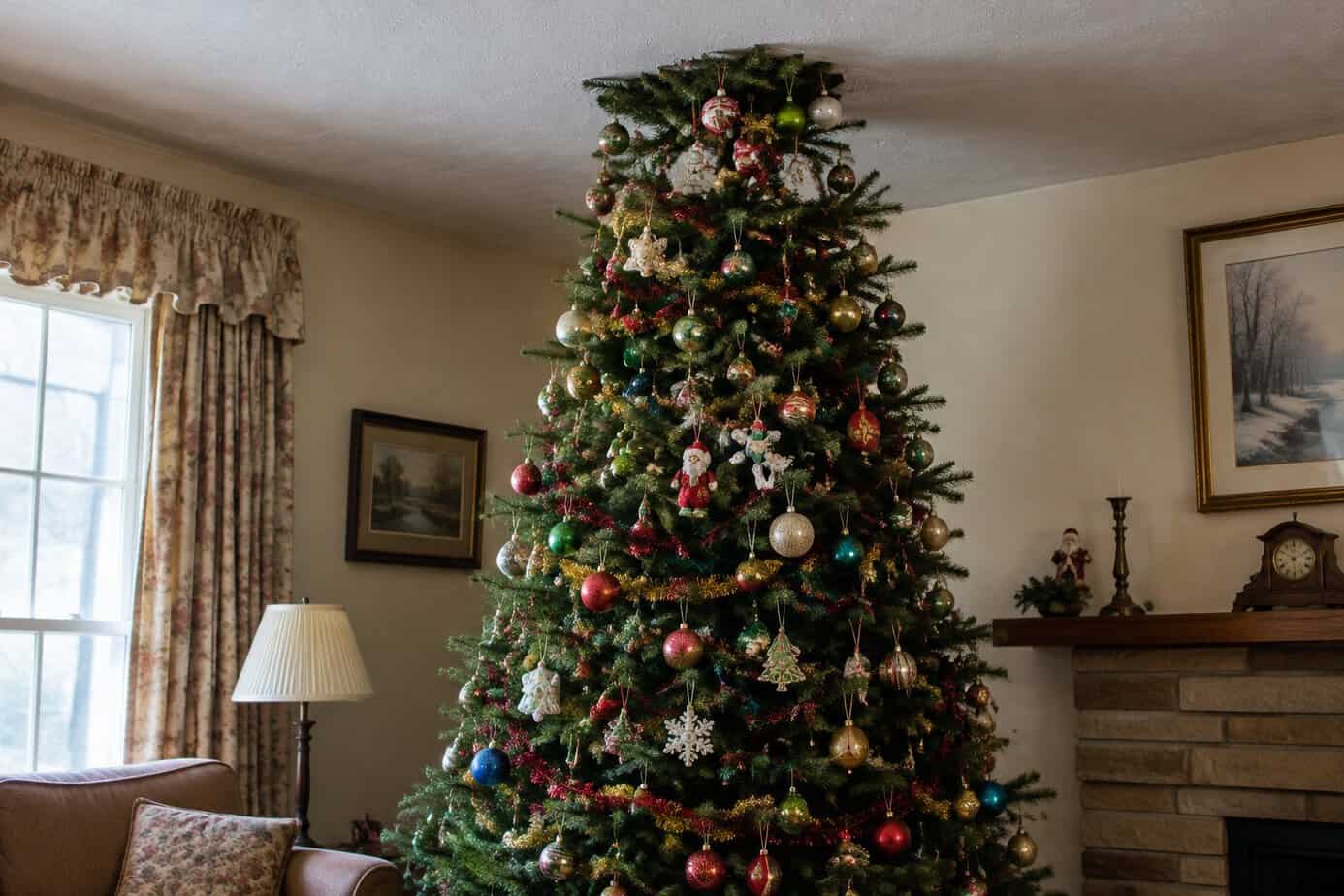
It’s tempting to buy the biggest tree you can find, especially if you have memories of towering trees in your childhood home. But when a tree is too tall or wide for the room, it presses against the ceiling, blocks walkways and crowds the furniture.
A tree that’s bent at the top or squeezed into a corner looks uncomfortable, and it can make the whole room feel smaller and more cluttered. It’s also harder to decorate well and can be a hazard if it blocks a path or sits too close to a heat source.
Measure your ceiling height and floor space before buying. Leave several inches between the top of the tree and the ceiling for your topper, and allow room to walk around it. A slimmer tree can be a better fit for smaller rooms, giving you height without taking over the space.
30. A tiny tree lost in a big room
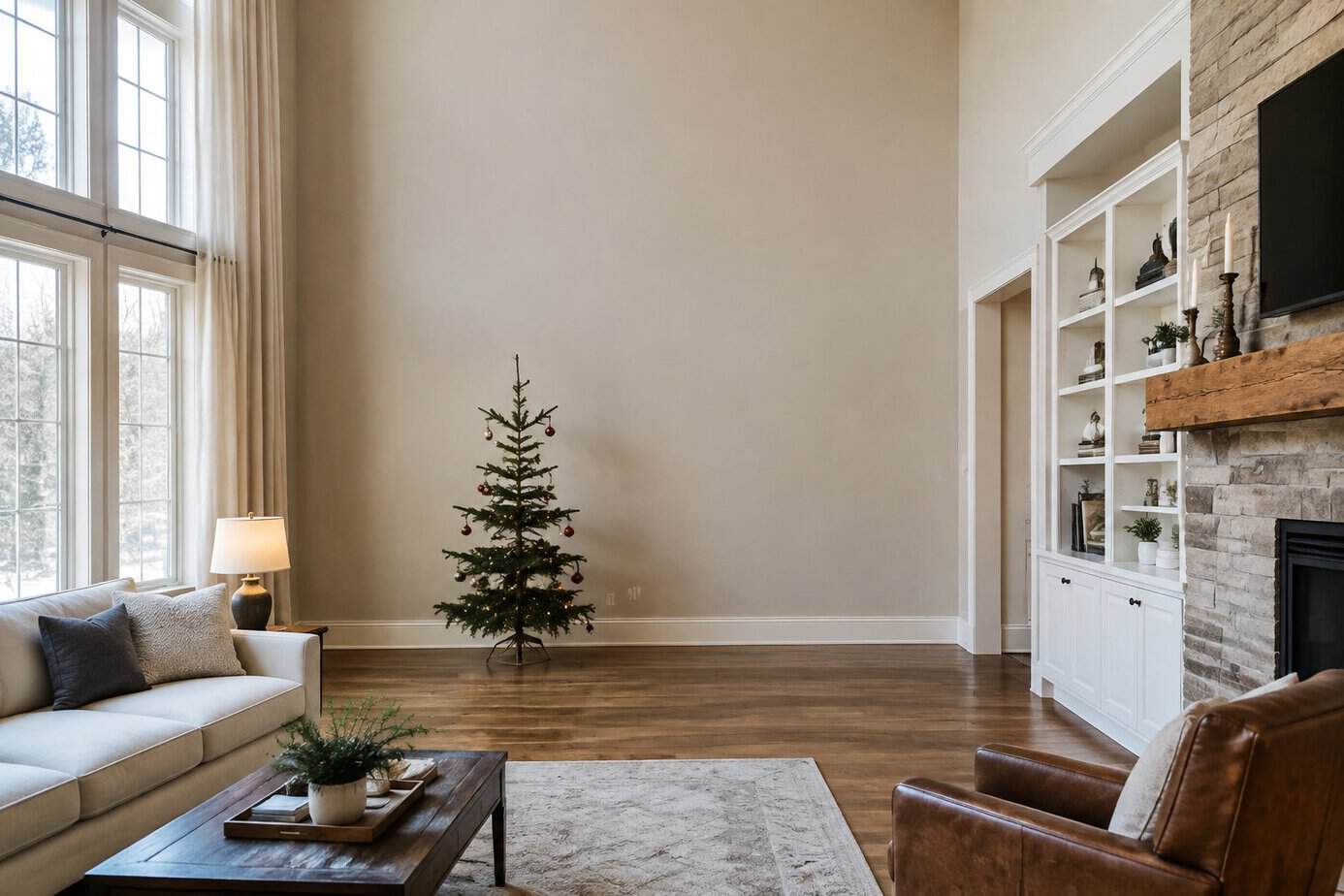
On the other end, a small tree in the middle of a large room can look a little lonely. Many people downsize their trees as their families grow up, and that makes sense, but if the tree is dwarfed by the room, it can look like an afterthought.
The fix doesn’t have to be a bigger tree. Place a smaller tree on a sturdy table, a low chest or a crate to raise it up. Group it with other decorations like lanterns, a basket of greenery or wrapped packages to give it presence. A small tree can be charming when it’s set up with intention.
You might also consider a pair of small trees on either side of a fireplace or doorway. Two smaller trees can fill a space better than one, and they’re much easier to decorate and store.
What Makes a Christmas Tree Look Timeless
The trees that never seem to go out of style have a few things in common. They have plenty of green showing, warm light that seems to come from inside the branches and ornaments that mean something to the family. They also fit the room they’re in, neither crowding it nor getting lost in it.
Most dated trees aren’t dated because of one ornament. They feel that way because one trend took over the whole tree, whether it was tinsel, bows, glitter or a single color scheme. When a trend becomes an accent instead of the whole plan, it usually looks fine.
Safety ages well too. The National Fire Protection Association’s Christmas tree safety tip sheet recommends keeping a tree at least three feet from heat sources like fireplaces and heat vents, and replacing light strings that have worn or broken cords. A live tree should be watered every day.
How to Refresh Your Tree Without Starting Over
You don’t need to buy all new decorations to make your tree look current. Start by taking everything off and putting back only what you love. Switch to warm white lights if yours are cold or uneven, and work them deep into the branches. Then add your ornaments in layers, larger ones first, favorites last, at eye level.
A few new pieces can go a long way. A simple tree collar or basket, one new ribbon in velvet or linen, or a handful of natural ornaments can update a tree for very little money. If you want more ideas, our list of the best Christmas decorating ideas that make your home look expensive has plenty of simple ways to give the whole room a fresh look.
Most of all, keep the ornaments that make you smile. The crooked clay star your son made in second grade and the faded glass ball from your mother’s tree will never look dated, because they were never about a trend in the first place.