The 30 Worst Outdoor Christmas Decorations Neighbors Secretly Hate
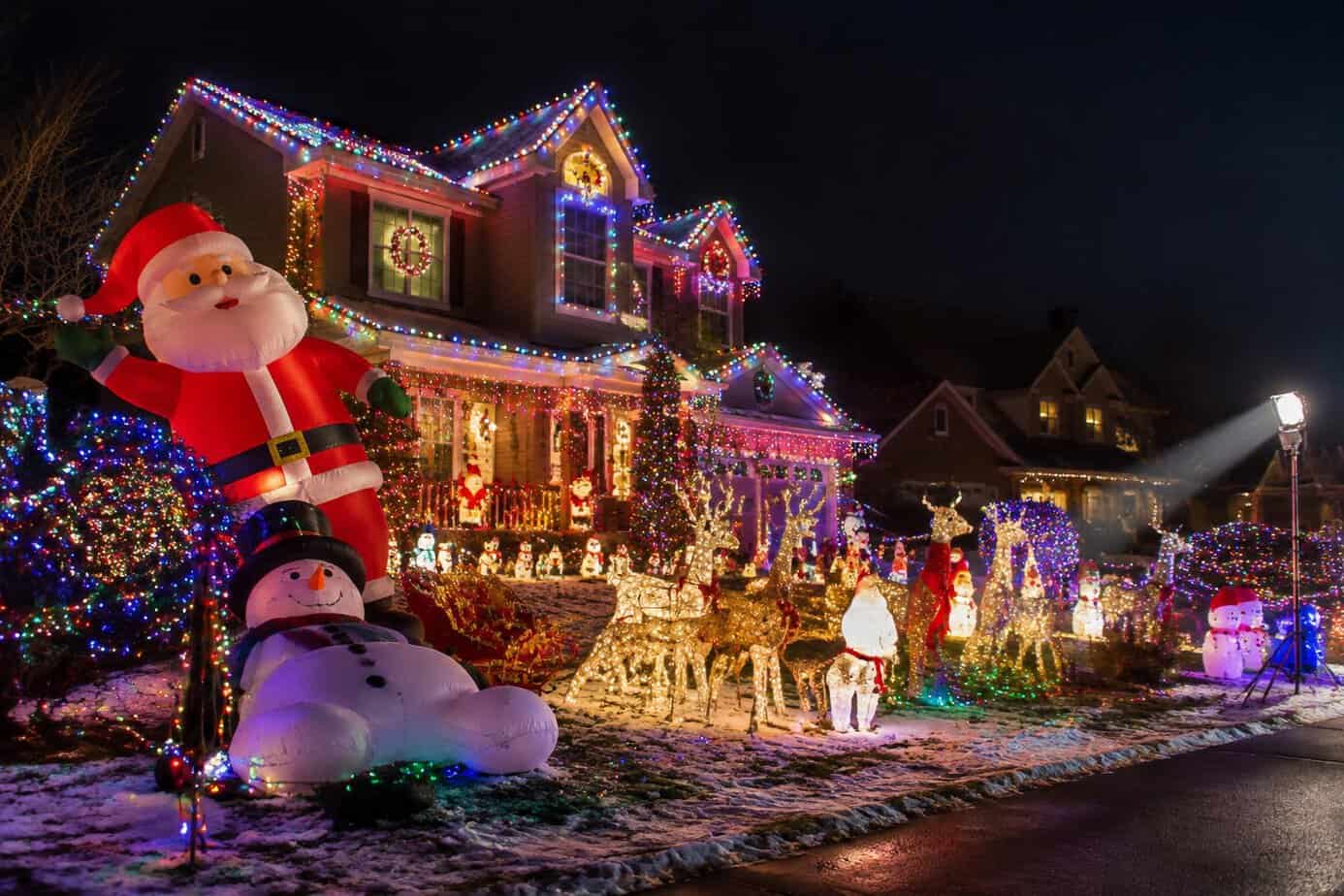
Most of us love a street that glows in December. Neighbors walk the dog a little slower, kids press their noses to the car window, and somebody always has the one house everyone drives past on purpose. Driving around to see the lights is one of the few old Christmas traditions that hasn’t quietly disappeared.
But every street also has a few displays that make the people next door quietly sigh. It’s rarely about taste. It’s about the light coming through the bedroom blinds at midnight, the song that has played 200 times since dinner, or the extension cord you nearly tripped over on your evening walk.
Here are 30 outdoor Christmas decorations and habits that neighbors commonly grumble about, plus an easy, kinder fix for each one. None of them make anyone a bad neighbor. A few small changes just let the whole block enjoy your display as much as you do.
1. Christmas lights that go up before Halloween is over
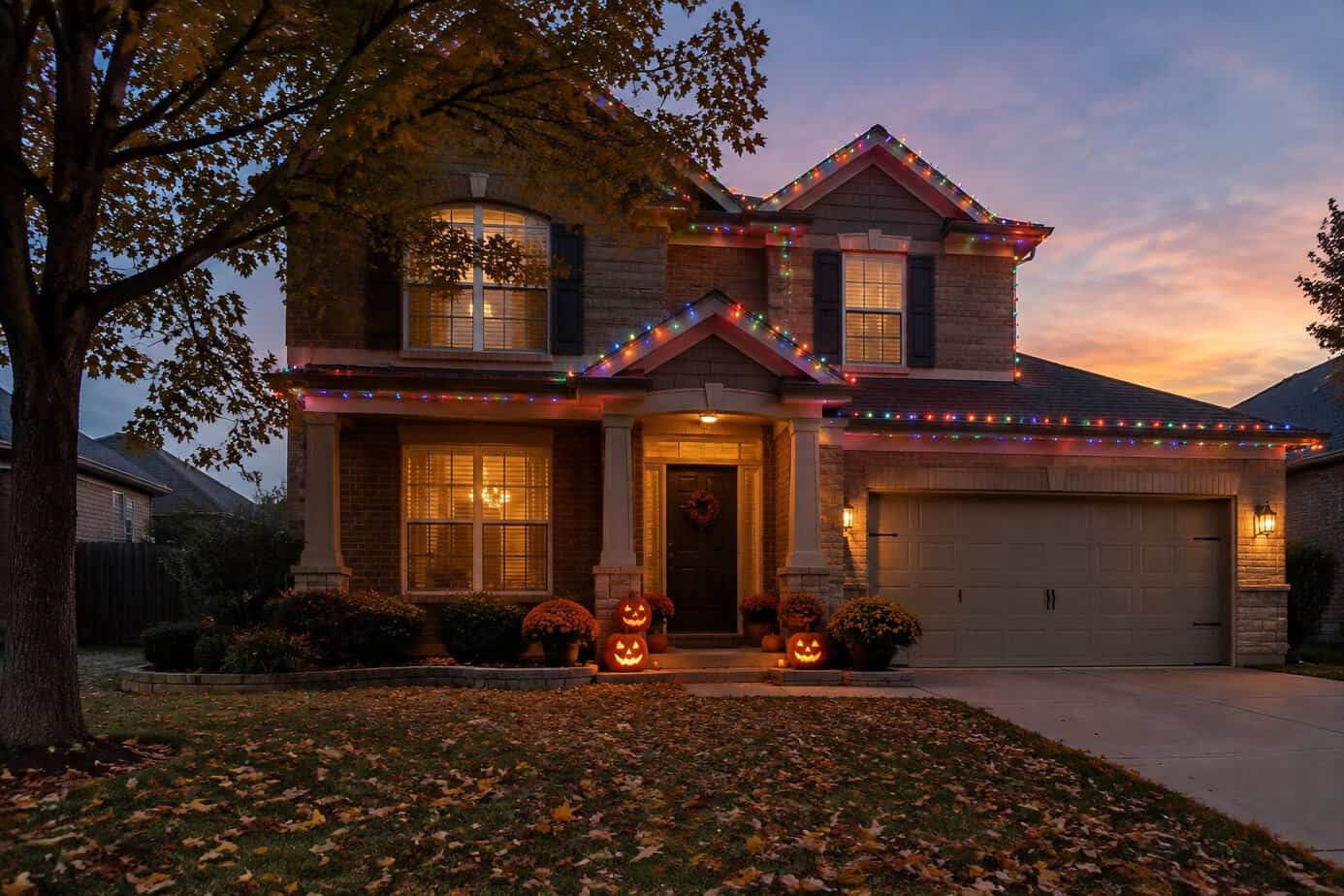
You know the house. The jack-o’-lanterns are still on the porch, the mums are still blooming, and the roofline is already lit up in red and green.
Some families hang lights early for a good reason: the weather is mild, the ladder is easier to climb in October, and nobody wants to be on the roof in an ice storm. That part makes perfect sense to most neighbors.
What wears on people is switching them on. Two full months of nightly lights can make December feel less special, and neighbors who take their own holidays one at a time may feel like the season is being rushed past Thanksgiving altogether.
The kinder fix: hang the lights early if it’s safer, but leave them unplugged until after Thanksgiving dinner. You get the easy installation, and the first night they come on feels like a real event for the whole street.
2. Lights left on all night long
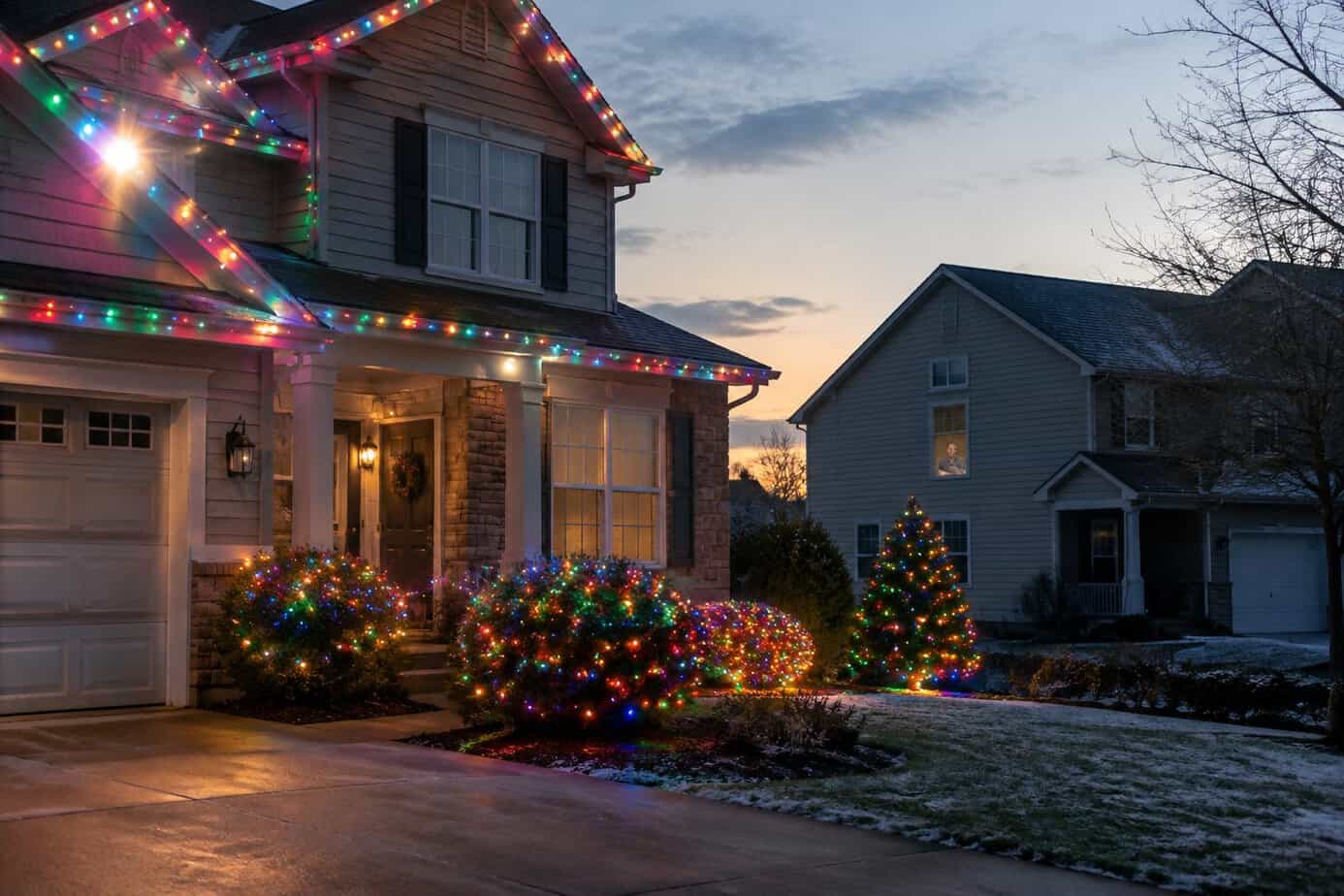
A house glowing at 7 p.m. feels warm and welcoming. The same house glowing at 3 a.m. mostly lights up the bedroom of whoever lives across the street.
This is one of the most common neighbor complaints of the season, and it usually isn’t on purpose. You flip the switch at dusk, go to bed, and forget the lights are still going. Nobody is out admiring them at that hour, but the people facing your yard can see the glow through their curtains.
It costs you, too. Even LED strings, which Energy Star says use about 70% less energy than old incandescent strings, add up when they run 12 or more hours a night for six weeks.
The kinder fix: an outdoor plug-in timer or smart plug. Set your lights to come on at dusk and go off around 10 or 11 p.m. It takes five minutes to set up, and you’ll never have to remember again.
3. Fast-blinking lights that flash into a neighbor’s windows
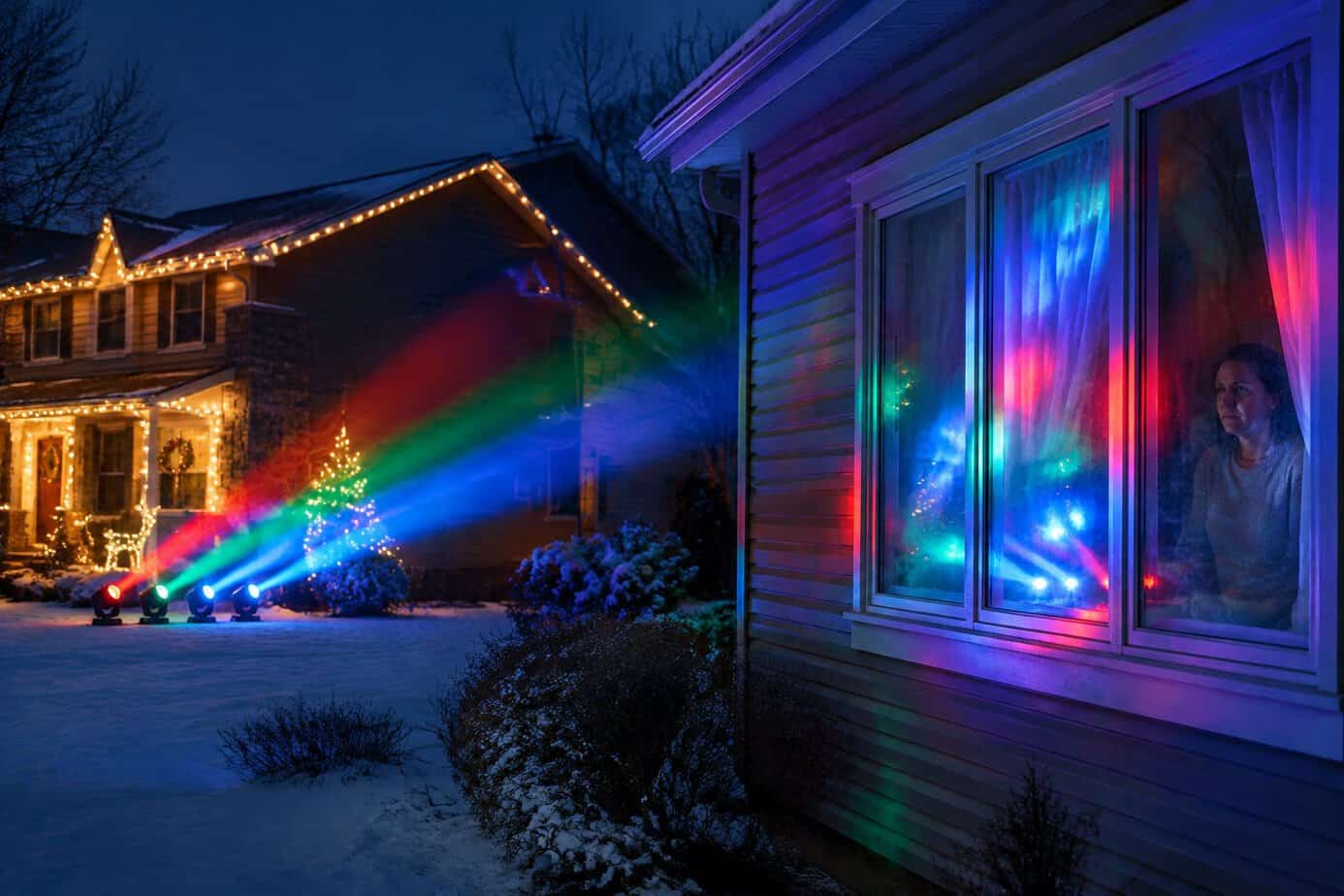
Chasing, strobing and rapid-blink settings can look lively from the sidewalk. From the house next door, they can turn a dark living room into a disco.
Steady light is easy to tune out, but flashing light isn’t. Our eyes are drawn to movement and change, so a strand that blinks every half second keeps grabbing attention even through closed blinds. Neighbors who get migraines, or who simply want to watch TV in peace, tend to notice this one first.
Many light sets come with eight or more modes, and the store default is often one of the flashiest. A lot of people never change it.
The kinder fix: switch to the steady-on or slow-fade setting, especially on any strand that faces a neighbor’s house. If you love the twinkle, save the faster modes for the side of the house that faces the street, and let them rest after 9 p.m.
4. A floodlight aimed straight at a bedroom
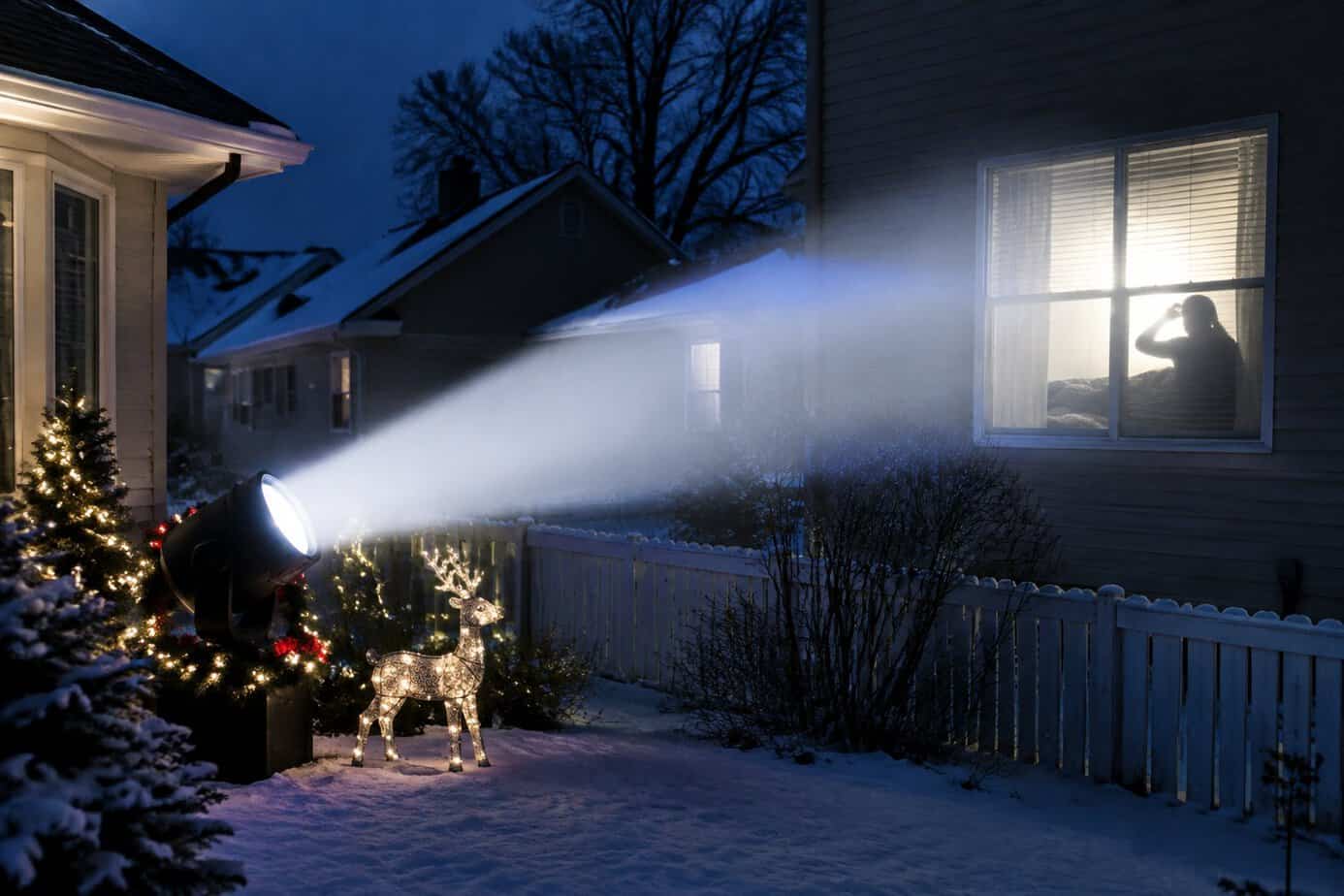
A spotlight on your wreath or your front-yard nativity can look beautiful. The trouble starts when the beam goes past its target and lands on the house next door.
Floodlights are much brighter than a string of mini lights, and they are often staked in the ground at an upward angle. A small tilt is all it takes for the beam to cross the property line and hit an upstairs window. The neighbor can’t turn it off, and blackout curtains don’t always stop it.
You probably won’t notice from your own front door, because you’re standing behind the light.
The kinder fix: after dark, walk to your neighbor’s side of the property line and look back at your display. If you can see the bulb itself or a bright spot on their siding, re-aim it lower and toward your own house. A floodlight with a hood or shield helps keep the light where you want it.
5. A tree lit up right outside the neighbor’s window
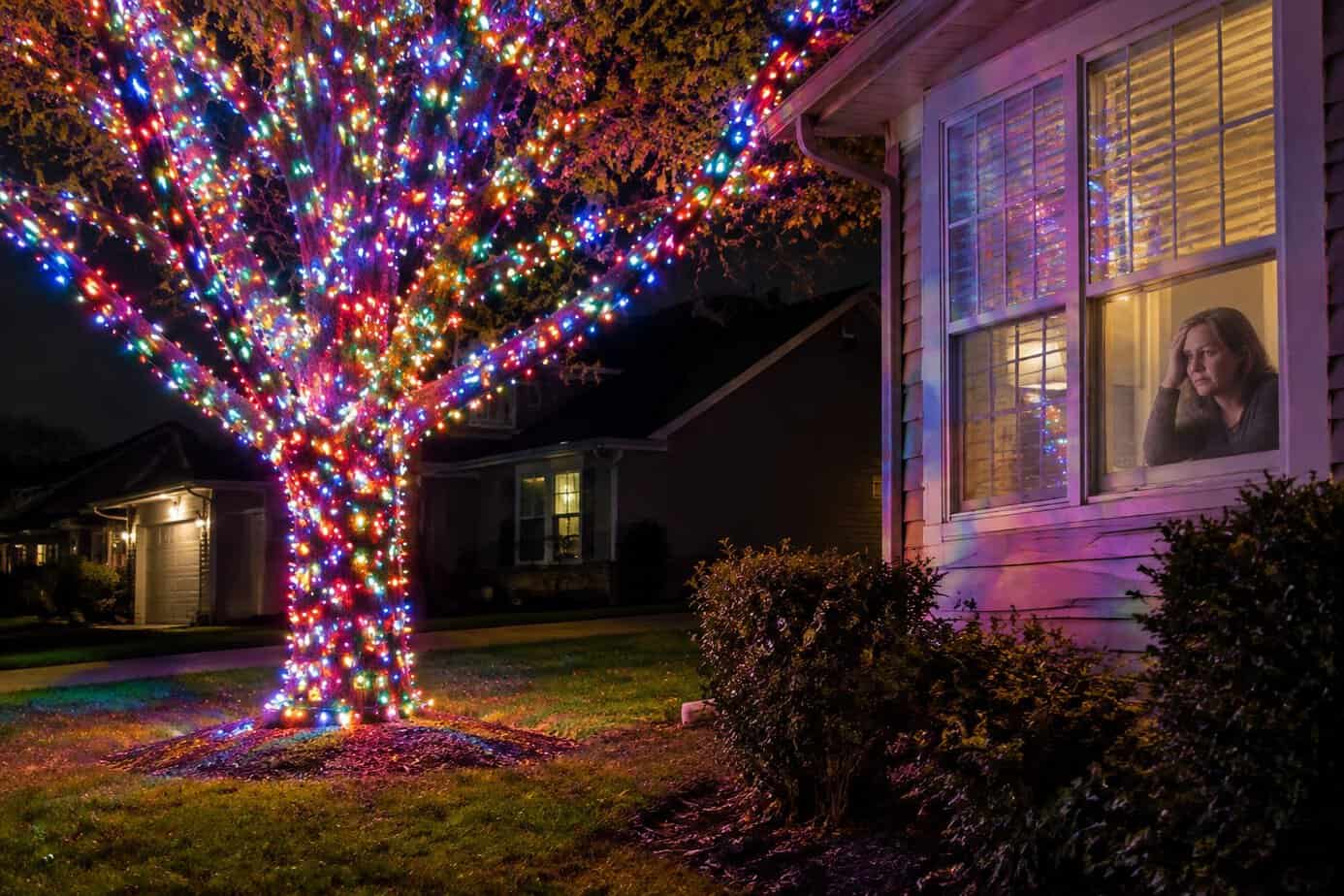
Wrapping a front-yard tree in hundreds of lights is a real labor of love. But trees near the property line often sit closer to the neighbor’s windows than to yours.
That means the brightest part of your display may be shining into their dining room, while you only see it from the street. Thick, multicolor wraps on every branch can light up a room almost like a lamp left on all night.
Most neighbors still enjoy the look. They just didn’t expect to live inside it.
The kinder fix: wrap the trunk and the branches that face the street or your own house, and go lighter on the side facing next door. Warm white or soft colors are gentler than bright cool white. Put the tree on the same timer as the rest of your display so it goes dark at a reasonable hour.
6. A projector that splashes patterns across the whole street
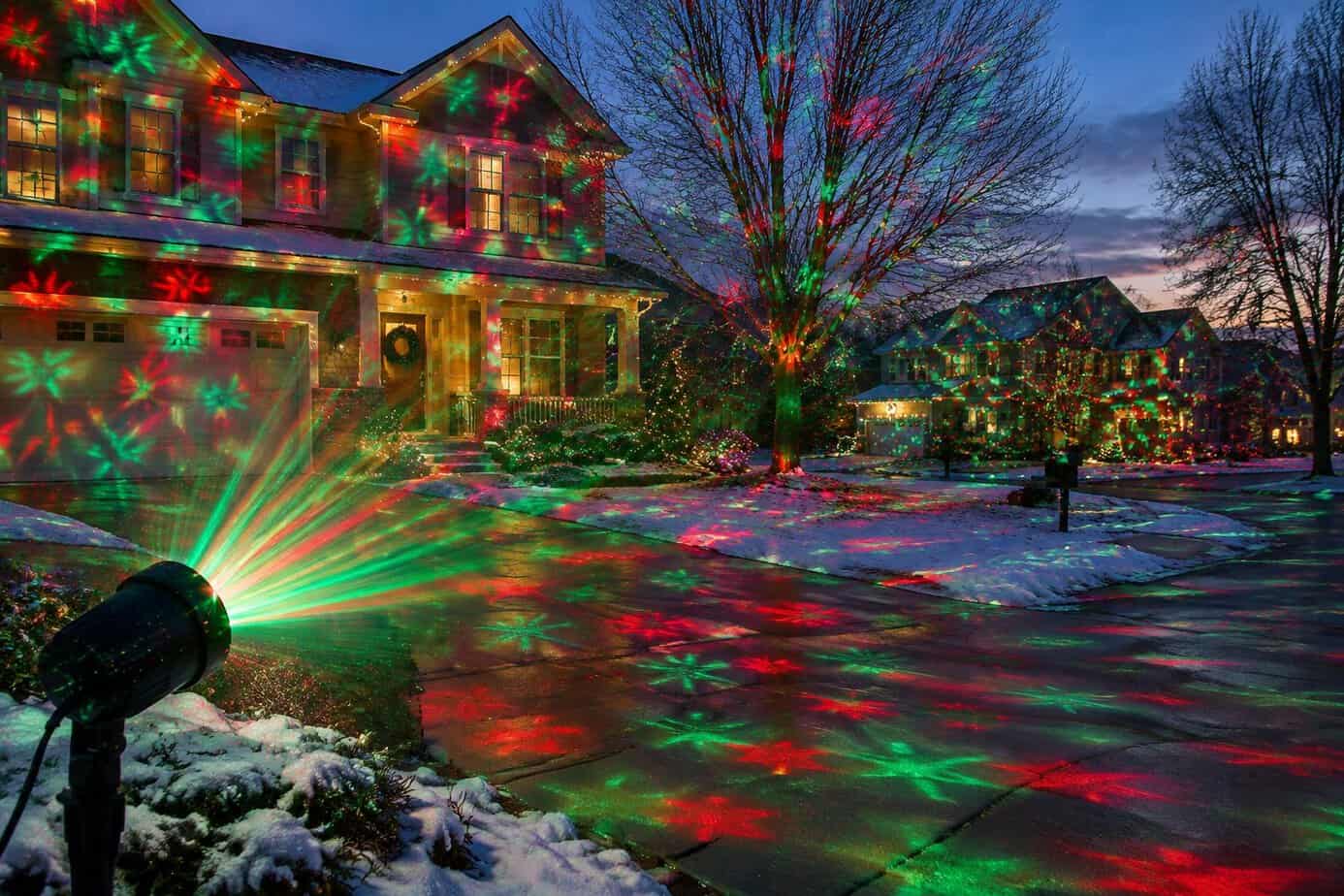
Light projectors became popular for an easy reason: one gadget in the lawn can cover your house with snowflakes or colored dots, no ladder needed.
The catch is that projectors don’t stop at your siding. Unless the beam is aimed carefully, the pattern spills across the yard, the street, parked cars and the front of the house next door. Moving patterns are even harder to ignore than steady ones, because the dots keep crawling across a neighbor’s walls and ceiling.
From where you stand next to the projector, it looks great. From the neighbor’s couch, it can feel like a light show they never bought a ticket for.
The kinder fix: set the projector close to your house and aim it so the whole pattern lands on your own walls. Choose a still pattern instead of a moving one, check it from across the street, and put it on a timer.
7. A laser projector pointed up at the sky
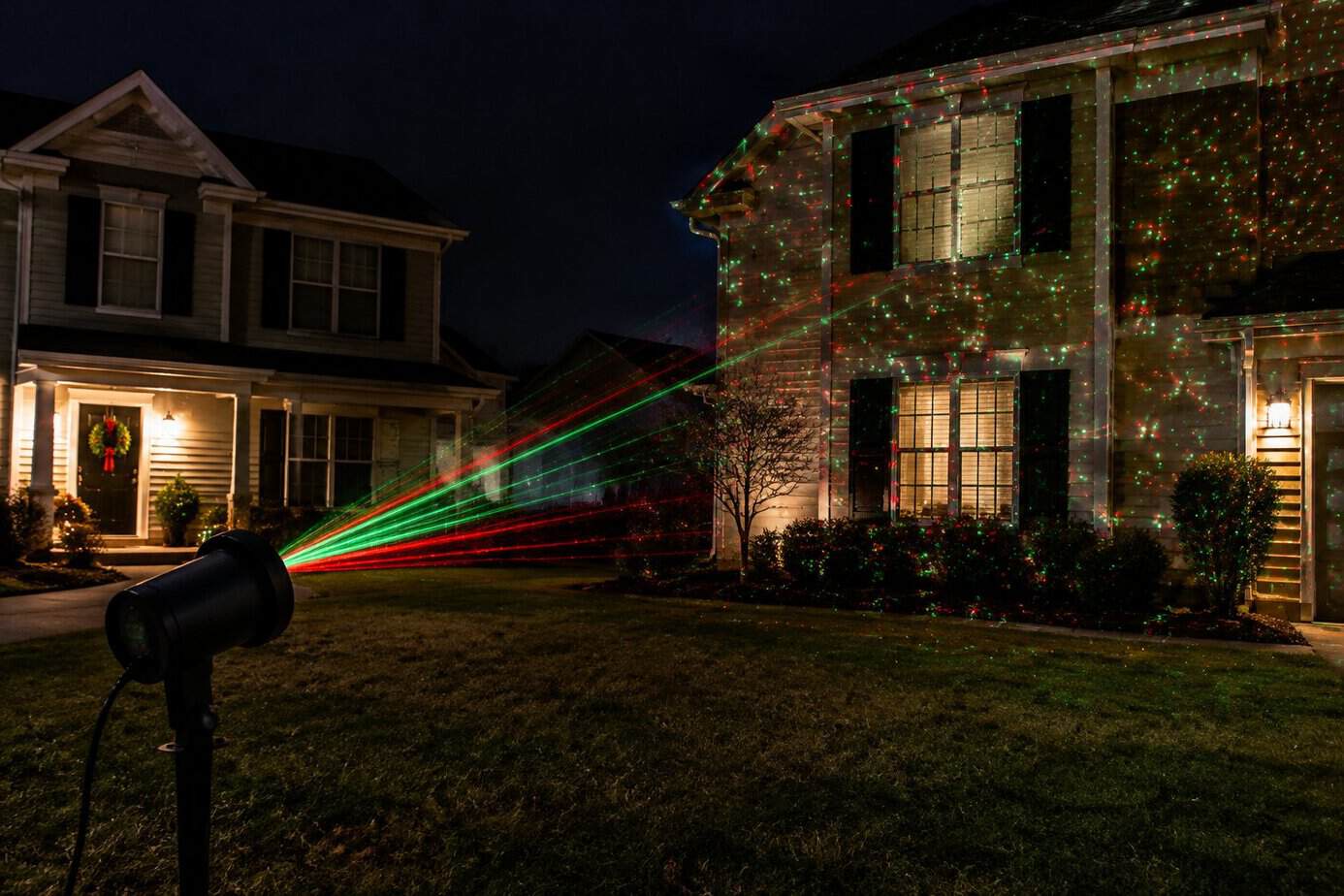
Laser projectors make tiny, sharp points of red and green light, and they reach much farther than an ordinary bulb. Point one too high, and the beam can travel well past your roof and into the night sky.
That’s more than a nuisance for the neighbors. The Federal Aviation Administration asks homeowners to aim holiday laser displays at the house, not the sky, because pilots report being distracted or temporarily blinded by them every year. If a display affects aircraft, the FAA can ask you to adjust it or turn it off. Deliberately aiming a laser at an aircraft is a federal crime.
Most people who cause a problem had no idea. The projector just got knocked over by a dog or a gust of wind.
The kinder fix: follow the FAA’s advice to keep holiday laser lights out of the sky. Stake the projector low, aim it at your walls, and check it after windy nights.
8. Red and blue lights that look like a police car
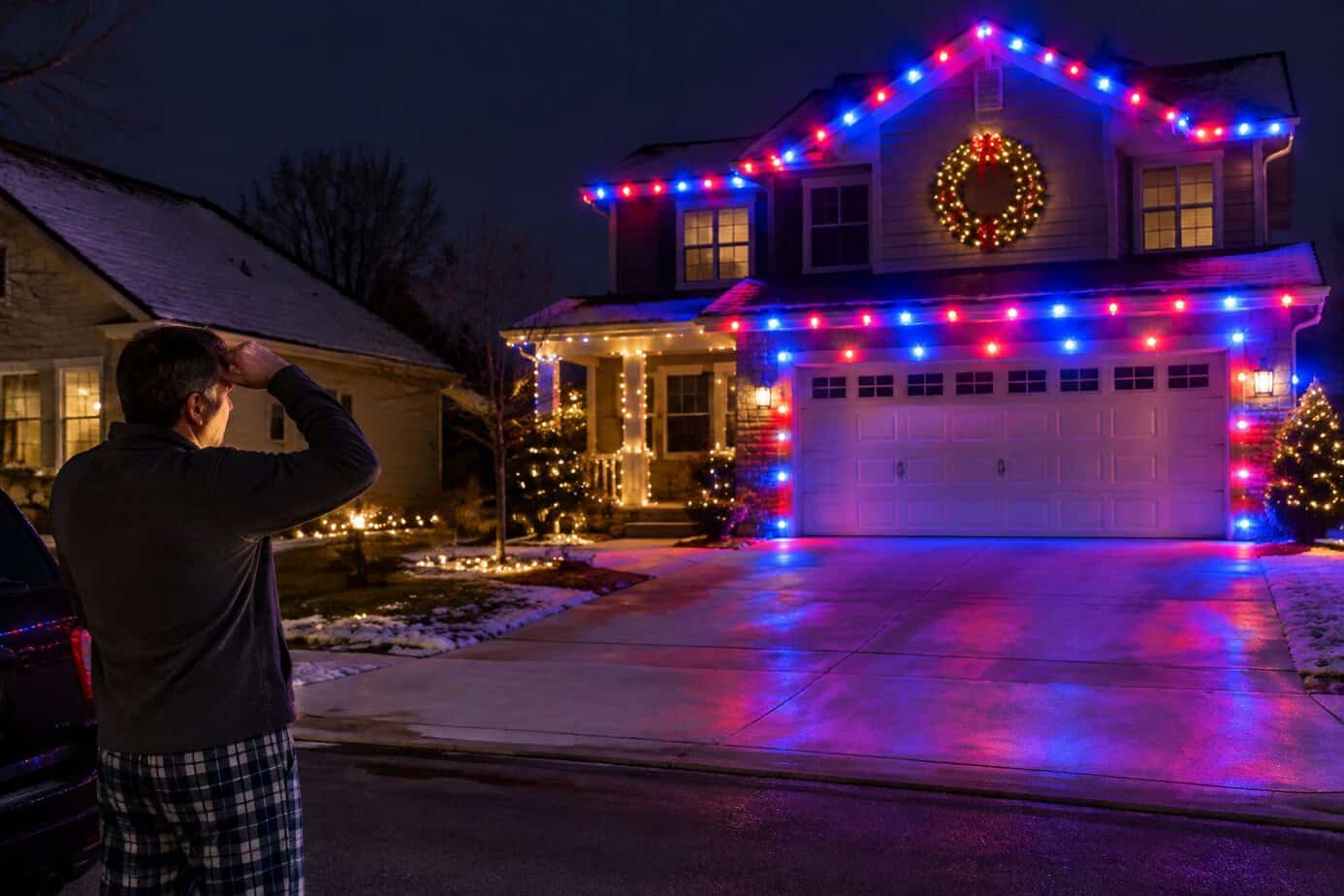
Red, white and blue lights can look cheerful on a roofline. Flashing red and blue together at street level, though, can look a lot like an emergency vehicle parked in front of your house.
Neighbors glancing out the window may wonder if something has gone wrong at your place. Drivers coming around the corner may slow down or tap their brakes, thinking there’s a police stop ahead. It only takes a second of confusion, but it happens every night the display runs.
This one sneaks up on people because each color looks fine by itself. It’s the combination, plus fast flashing, that does it.
The kinder fix: if you love red and blue, keep them steady instead of flashing, mix in white or green, and keep the brightest pieces up on the house rather than at the curb. A quick look from the end of your driveway at night will tell you whether it reads as “festive” or “pull over.”
9. A music-synced light show that never takes a night off
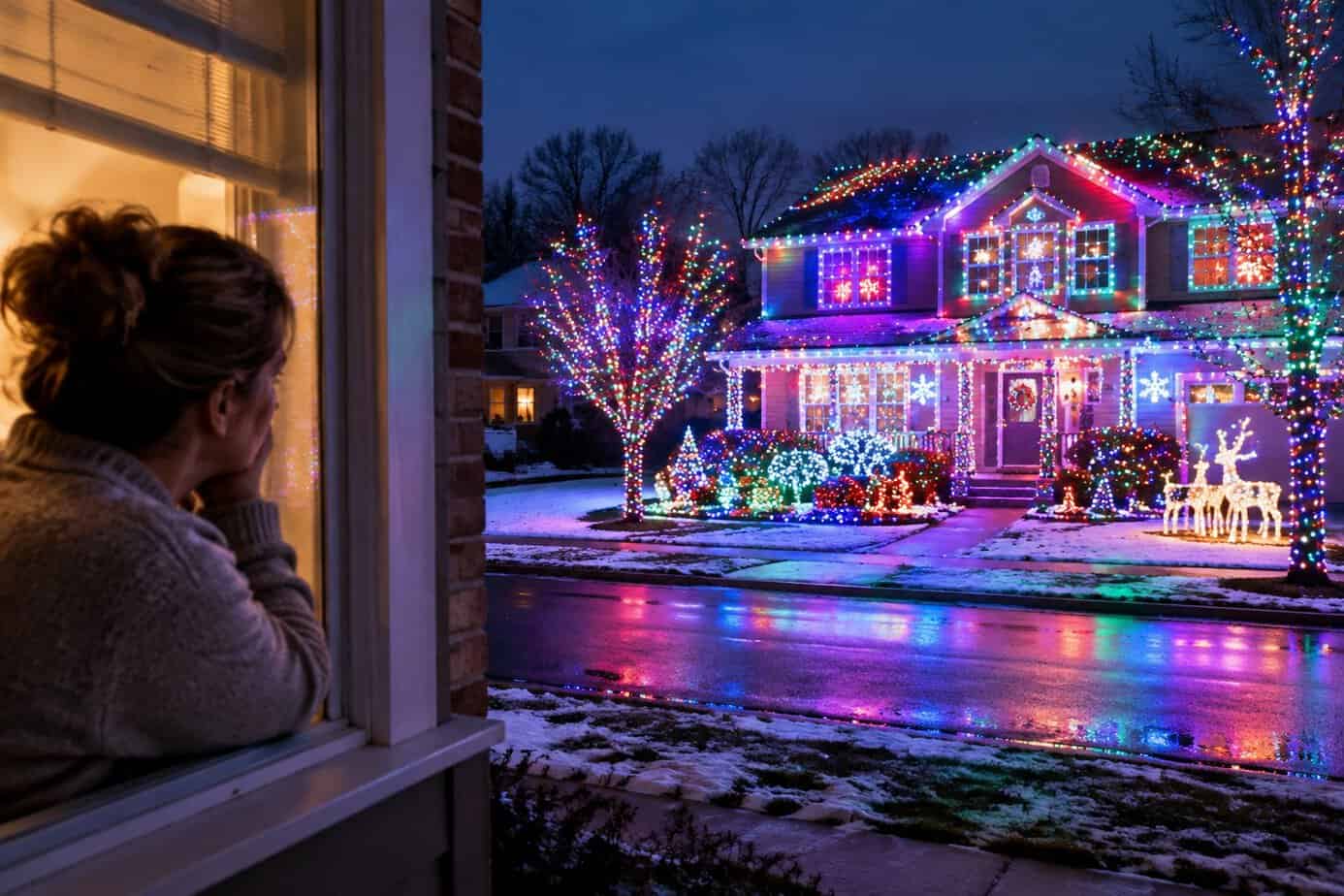
Computer-controlled light shows that dance to music are amazing to watch, and some families spend months programming them. Visitors usually tune their car radios to hear the soundtrack.
That radio trick comes from small FM transmitters. Under FCC Part 15 rules, these unlicensed transmitters are allowed only at very low strength, just enough to reach the cars parked out front. If yours carries farther than the end of the block, it may be stronger than the rules allow.
For the neighbors, the bigger issue is the schedule. A show that cycles every 20 minutes from dusk to 11 p.m., every night for six weeks, means a lot of flashing through their windows and a lot of idling cars.
The kinder fix: run the full show on weekends and a few weeknights, end it by 9 or 9:30 p.m., keep the transmitter low, and let neighbors know the schedule ahead of time.
10. An outdoor speaker playing the same carols on a loop
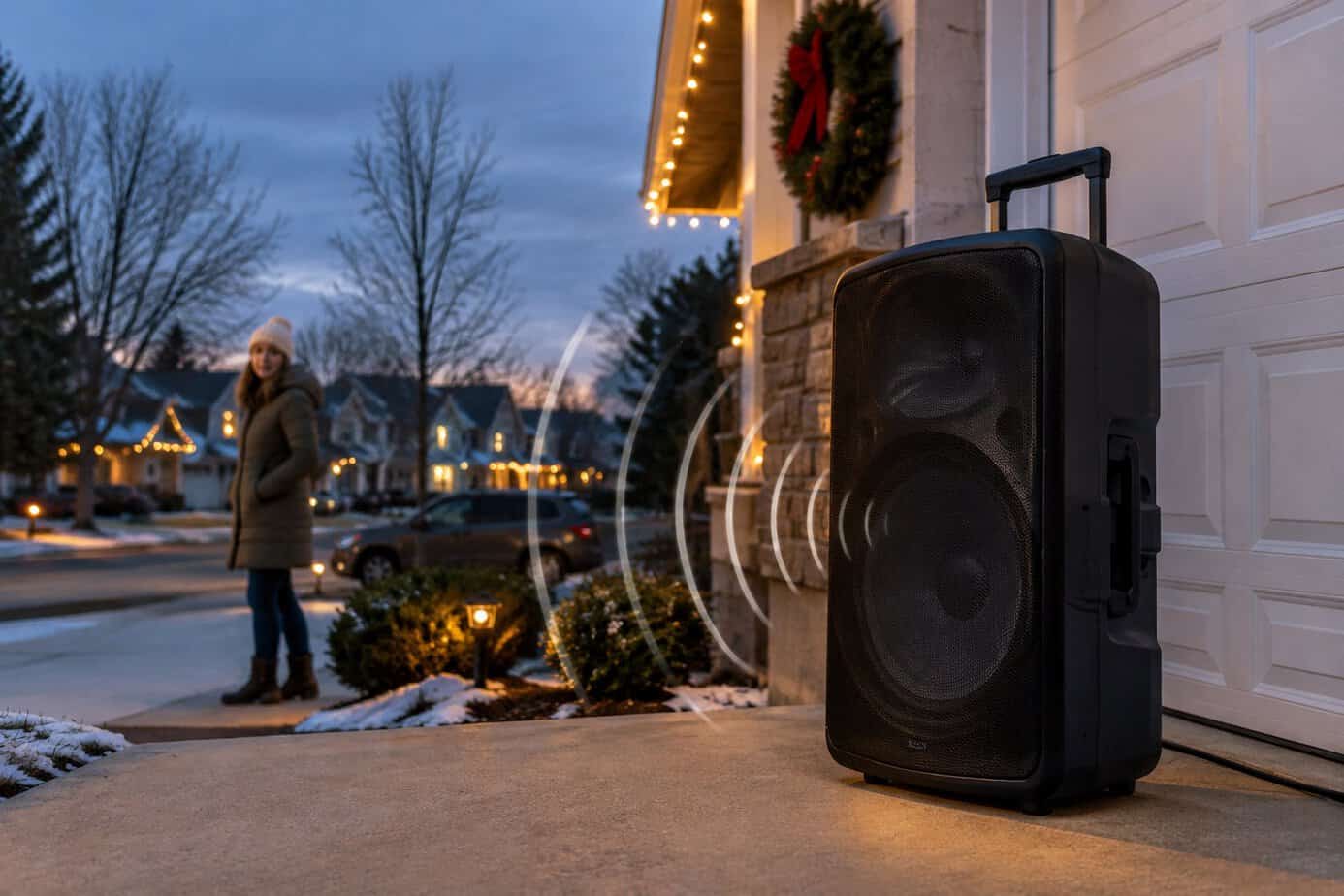
Music makes a display feel complete. The trouble is that a speaker on the porch doesn’t stay on your porch. Sound carries across lawns and through windows, especially on cold, still nights.
Neighbors can look away from a light, but they can’t look away from a song. A short playlist that repeats all evening can turn a favorite carol into something people dread hearing. Families with babies, shift workers who sleep early, and anyone working from home tend to feel it the most.
Many towns also have noise ordinances that cover amplified sound in the evening, so it’s worth a quick look at your city’s rules.
The kinder fix: keep the volume low enough that it fades before it reaches the property line, use a long playlist instead of a five-song loop, and set the music to stop by early evening. Or skip the speaker entirely and let the lights do the talking.
11. Motion-activated figures that sing every time a car passes
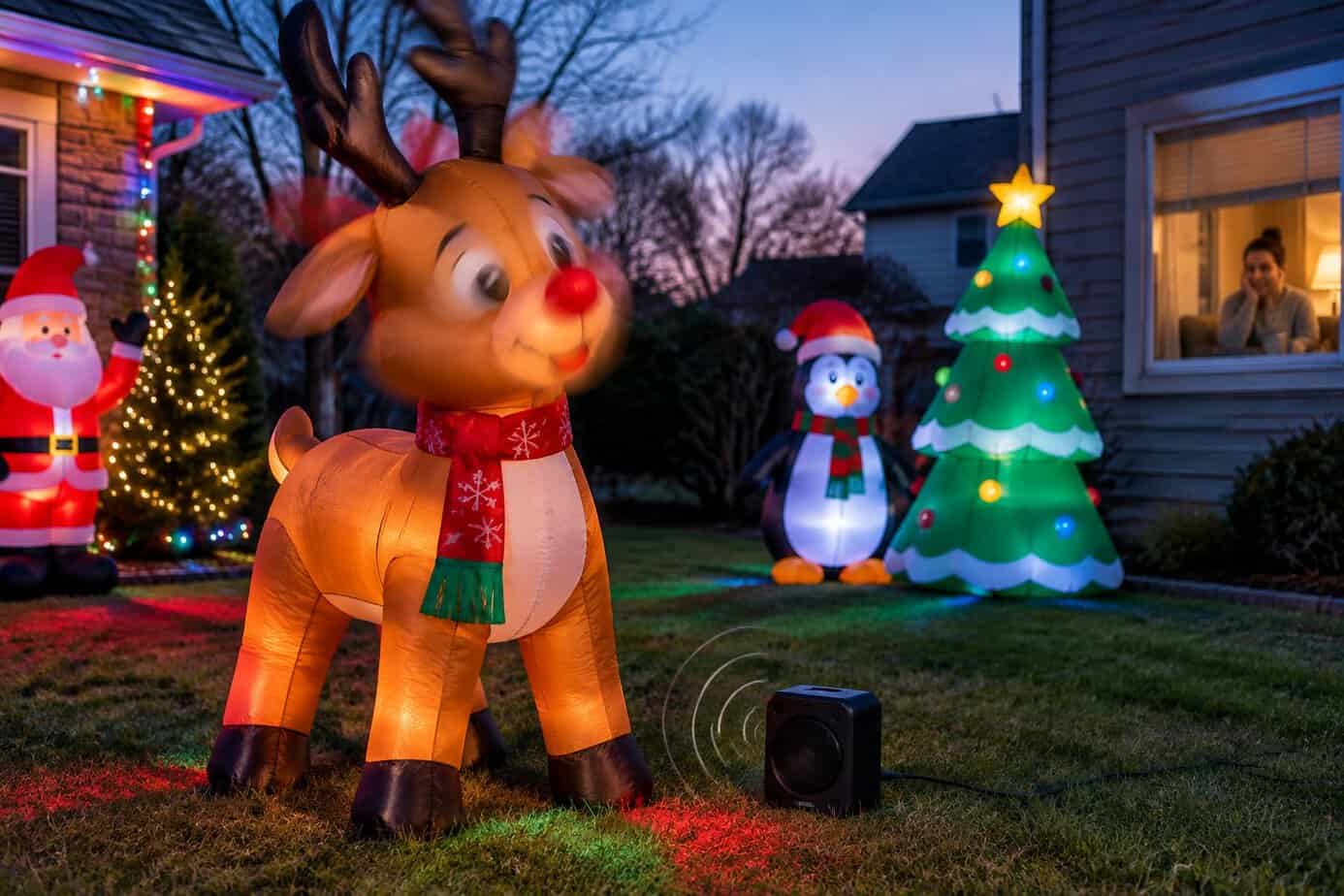
Motion-sensor reindeer and snowmen are fun the first time a child walks by and the figure bursts into song. They’re less fun the fiftieth time a car drives past and sets it off.
Motion sensors don’t know the difference between a delighted kid, a mail truck, a cat and a branch blowing in the wind. On a busy street, that can mean a few seconds of tinny music every couple of minutes, all day and into the evening.
You may not hear it from inside your house, especially if your TV is on. The neighbor whose driveway sits right next to the figure hears every single one.
The kinder fix: most of these figures have an on-off switch for the sound, or a “try me” setting. Turn the sound off and keep the lights and movement, or put the figure on a timer so it only sings for an hour or two after dinner.
12. A giant inflatable that towers over the house
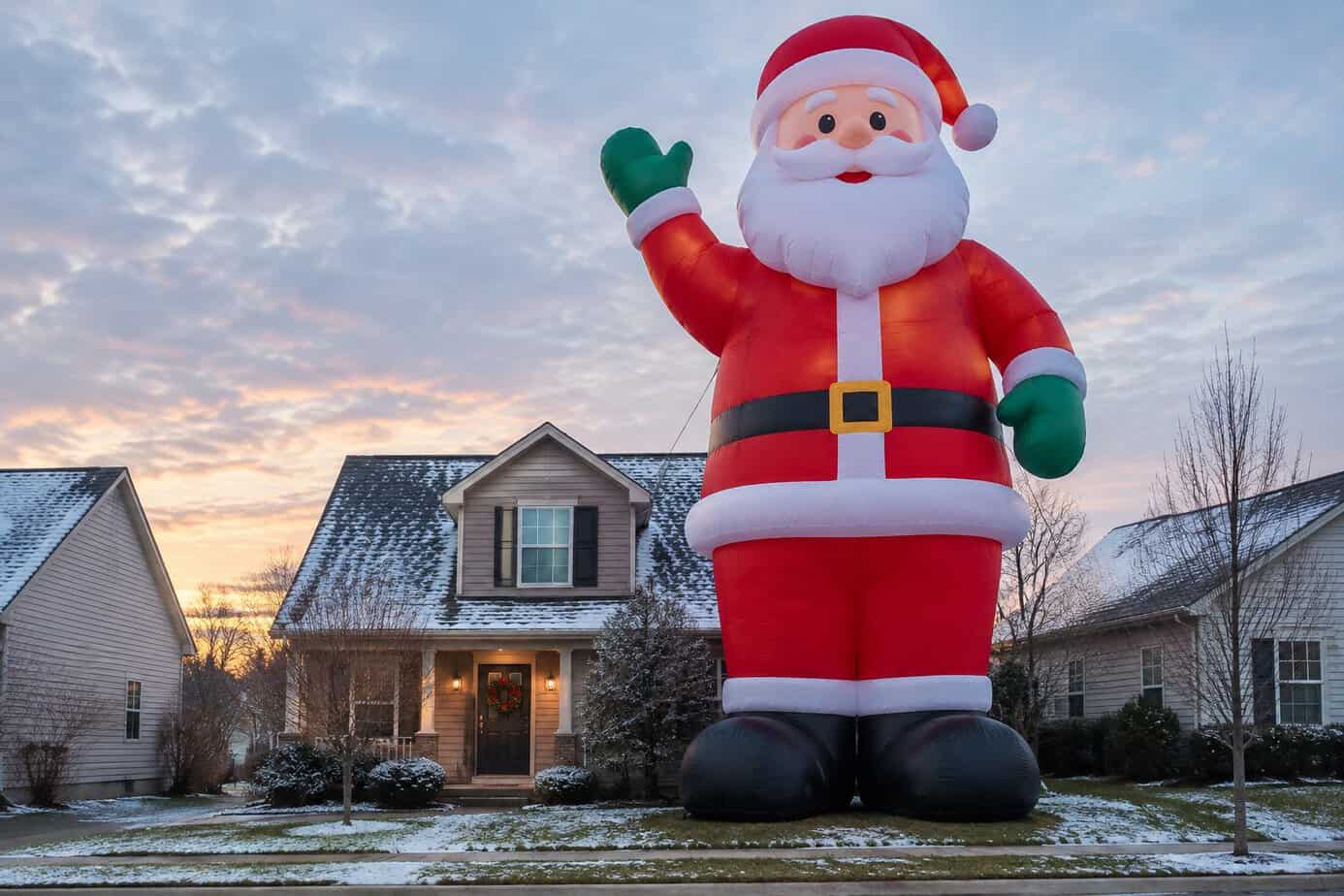
Some inflatables now stand 20 to 30 feet tall, taller than many two-story homes. They make kids gasp, and they also make a big impression on the neighbors, for better or worse.
In December 2025, a family in Severance, Colorado, got a letter from their homeowners association about a roughly 30-foot inflatable Santa on their corner lot. Neighbors rallied behind the Santa, and the HOA apologized and let it stay through Christmas. Not every street ends that happily, and many HOAs do have size and placement rules.
The issue for most neighbors isn’t Santa himself. It’s a giant figure looming over a shared fence or filling the view from their front window for six weeks.
The kinder fix: check your HOA rules or city code before you buy, and set big pieces in the middle of your yard rather than at the edge. If the street seems to love it, wonderful. If not, a 6- or 8-foot Santa still gets plenty of smiles.
13. An inflatable parked inches from the neighbor’s window
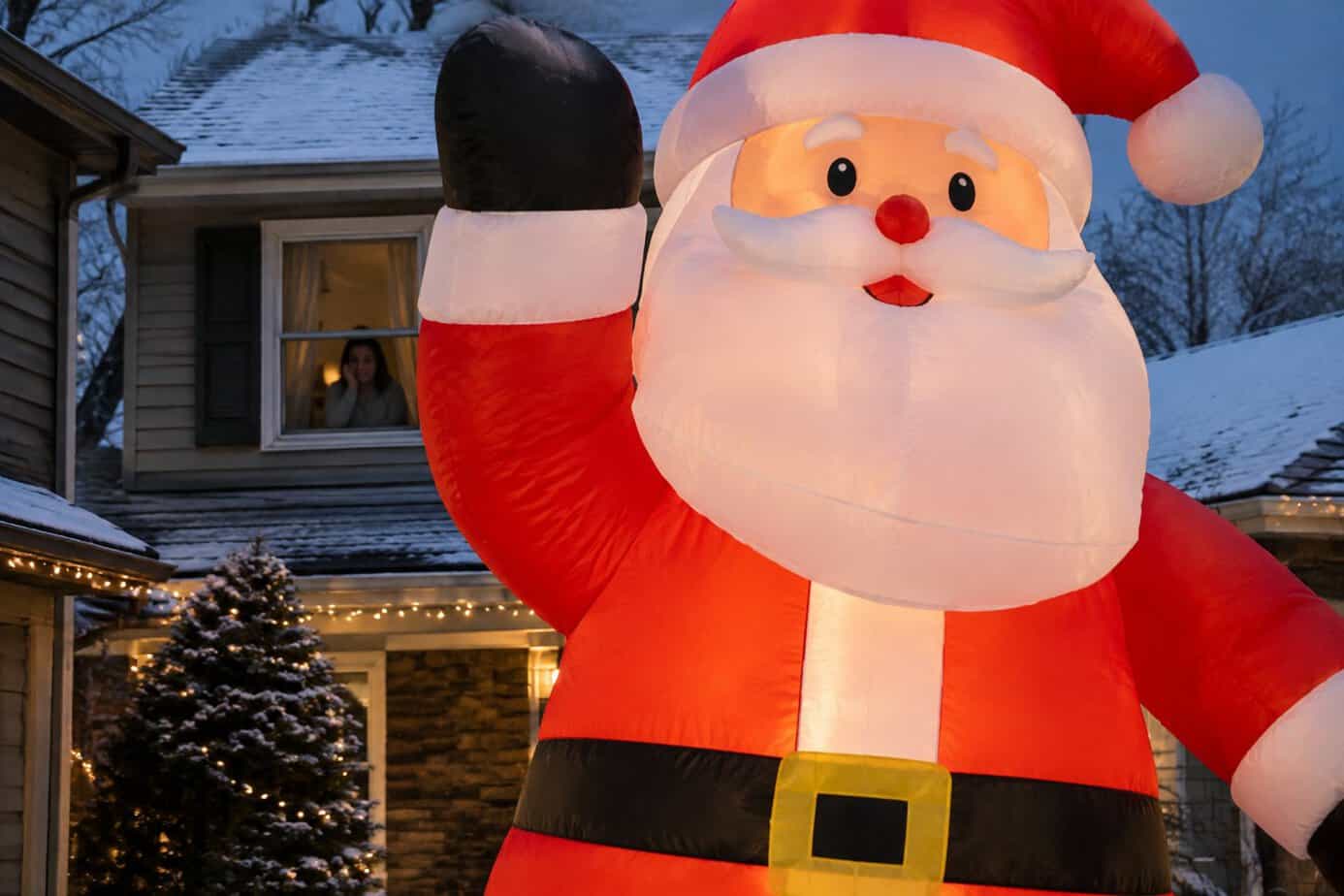
Side yards are tempting spots for an extra inflatable. There’s open grass, an outlet nearby, and it fills an empty corner.
The problem is that a side yard is often just a few feet from the neighbor’s kitchen or bedroom window. Instead of a view of the street, they get a close-up of a glowing nylon Santa for six weeks. During the day, when it’s deflated or sagging, the view is even less charming.
Nobody wants to be the person who complains about Santa, so most neighbors just keep the blinds closed and wait for January.
The kinder fix: keep your biggest pieces in the front yard, facing the street, where everyone can enjoy them from the sidewalk. If you’d like to use the side yard, ask the neighbor first. Many will happily say yes, and they’ll appreciate being asked.
14. Inflatables humming all night long
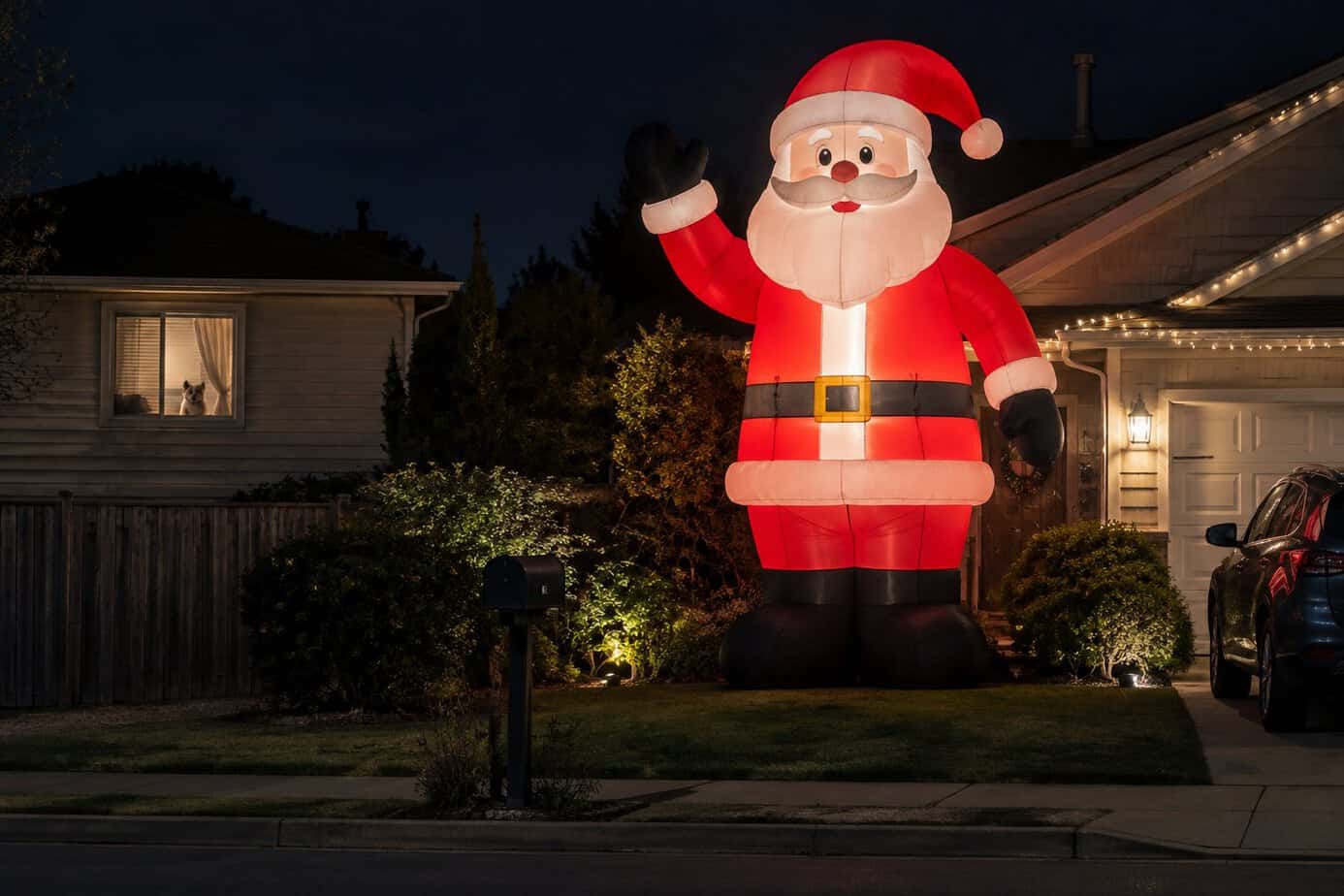
Every inflatable decoration stays upright thanks to a small electric fan that runs the whole time it’s plugged in. That’s why they sag when the power goes off.
One fan is a soft hum. Five or six of them running all night can add up to a steady drone that carries surprisingly well on a quiet winter night, especially if the inflatables are near a bedroom window or a shared fence. Older blowers can rattle or whine as they wear out.
Inflatables also tend to be left running around the clock, because nobody wants to watch Santa slowly collapse every morning.
The kinder fix: put your inflatables on a timer so they run from dusk to bedtime and rest overnight. They’ll rise again each evening, which kids think is magic. Place the noisiest pieces away from the neighbors’ sleeping side of the house.
15. Inflatables lying face-down on the lawn all day
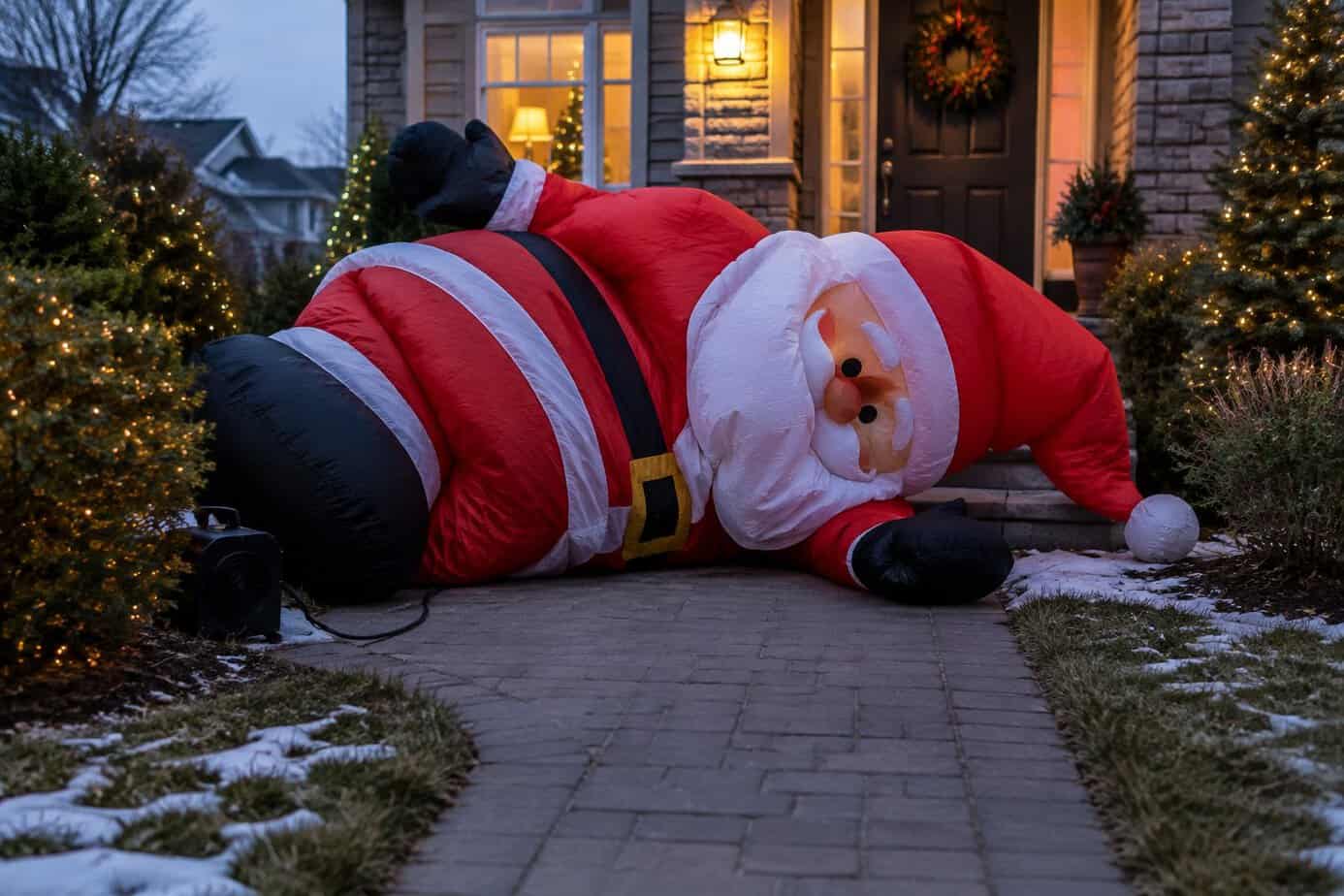
Whether it’s on a timer or blown over by the wind, a deflated inflatable doesn’t look like holiday cheer. It looks like Santa had a very rough night.
Neighbors see your yard far more often in daylight than at night. Driving to work, walking to the bus stop and coming home in the afternoon, they pass a flattened snowman sprawled across the grass, sometimes for days at a time. On a street with several inflatable houses, the daytime view can look more like the morning after a party than a winter wonderland.
There’s nothing wrong with owning inflatables. It’s the daytime collapse that draws the eye.
The kinder fix: place deflating pieces where they fold neatly, such as against a bush or on a flat bed of mulch instead of across a walkway. Stake and tether them so they stand up straight when inflated, and replace any that have a slow leak or a tired fan.
16. An inflatable that ends up in the street
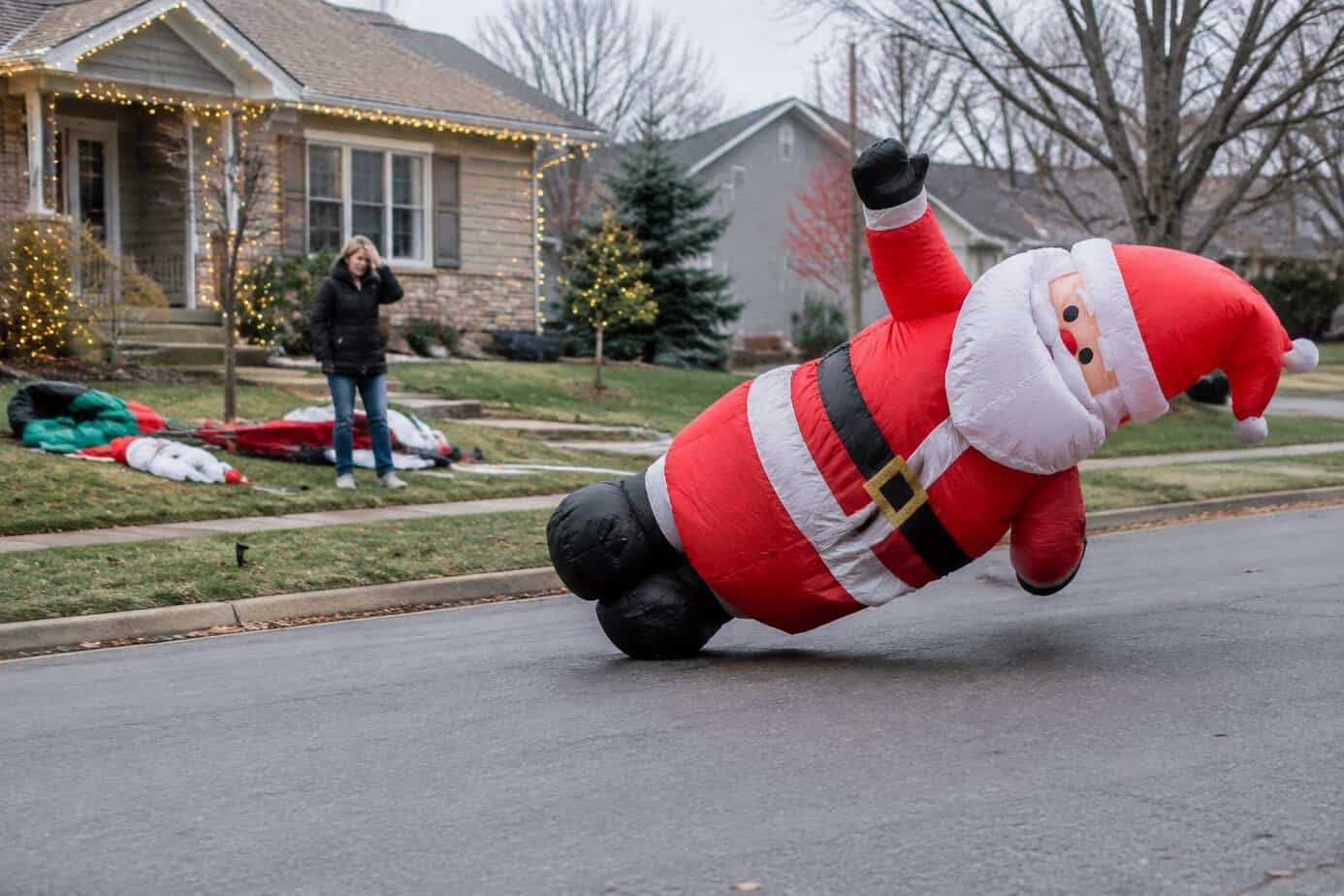
Winter wind loves an inflatable. Those big nylon figures catch a gust like a sail, and a single loose stake is all it takes for Santa to cartwheel into the road.
A runaway decoration can startle drivers, wrap around a parked car or land in someone else’s yard. More than one neighbor has gone out for the morning paper and found your snowman tangled in their hedge. Loose light strands and lightweight plastic figures can blow away too.
It usually comes down to short stakes, slack tethers or frozen ground that won’t hold them.
The kinder fix: use every tether loop the inflatable came with, and add longer stakes or sandbags if the ground is hard. Check your display after storms, and when high winds are in the forecast, unplug and bring lightweight pieces inside for the night. Your neighbors’ cars will thank you.
17. A crowd of mismatched inflatables
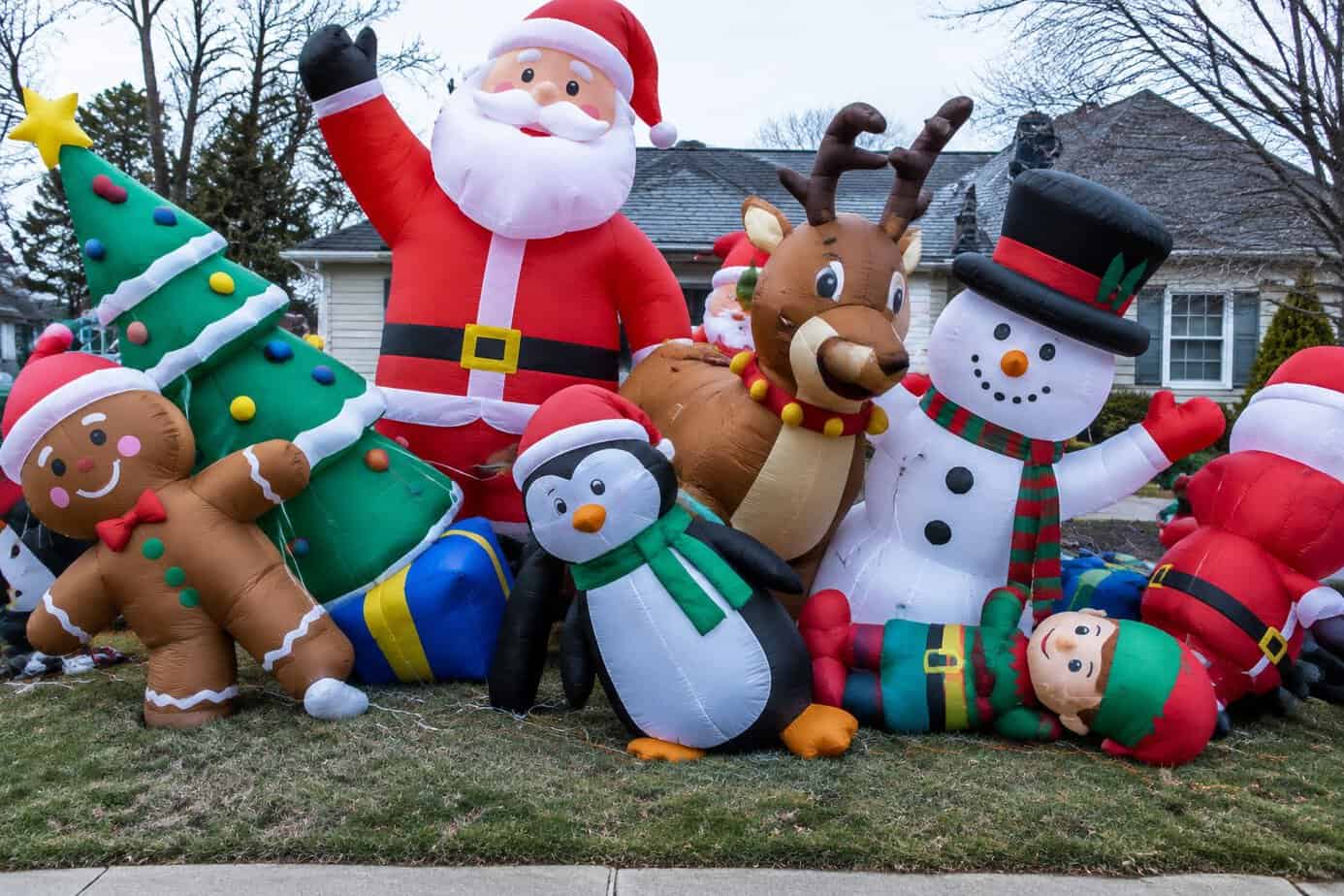
A gingerbread man, a penguin, a reindeer, a snowman, an elf and three different Santas, all crowded shoulder to shoulder. Every one of them was a good deal at the store. Together, they can look a little like a holiday clearance aisle.
Neighbors usually don’t mind a few inflatables. The grumbling starts when there are so many in one spot that none of them stand out, and the yard turns into one big wall of nylon. Crowded inflatables also lean on each other, tip over together and look twice as messy when they deflate.
It’s an easy trap, because inflatables go on sale every January and the collection grows a little every year.
The kinder fix: pick your three favorites and give them room to stand on their own. Rotate the rest, using different ones each year, so the display feels new without getting bigger. Grouping pieces that share a theme or colors looks more planned.
18. A display that covers every inch of the lawn
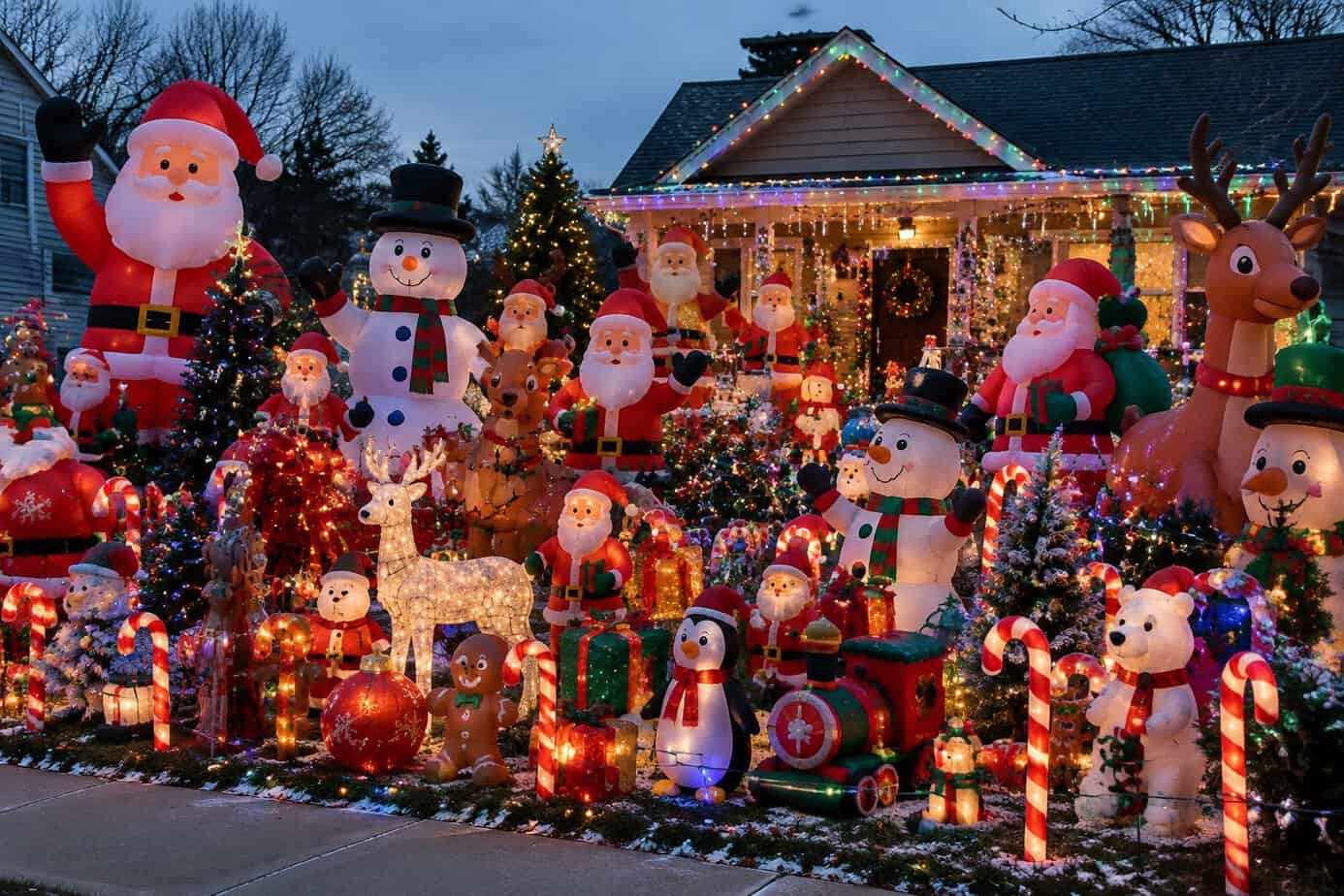
Some families go all in, and there’s something wonderful about that kind of joy. But when every patch of grass holds a light-up deer, a candy cane, a plastic snowman or a glowing present, the yard can blur into one bright jumble.
Neighbors mention two things about the “every inch” look. First, nothing gets noticed when everything is lit. Second, in daylight, a lawn packed with plastic figures, stakes and cords can look cluttered for weeks.
Crowded yards also create practical problems: cords snake everywhere, figures lean into each other in the wind, and guests and delivery drivers have to pick their way to the front door.
The kinder fix: choose a few focal points, such as the porch, one tree and one lawn scene, and leave some open lawn between them. Keep a clear path to your door. Your best pieces will stand out, and the yard will still look tidy in the daytime.
19. A display that’s too big for the yard
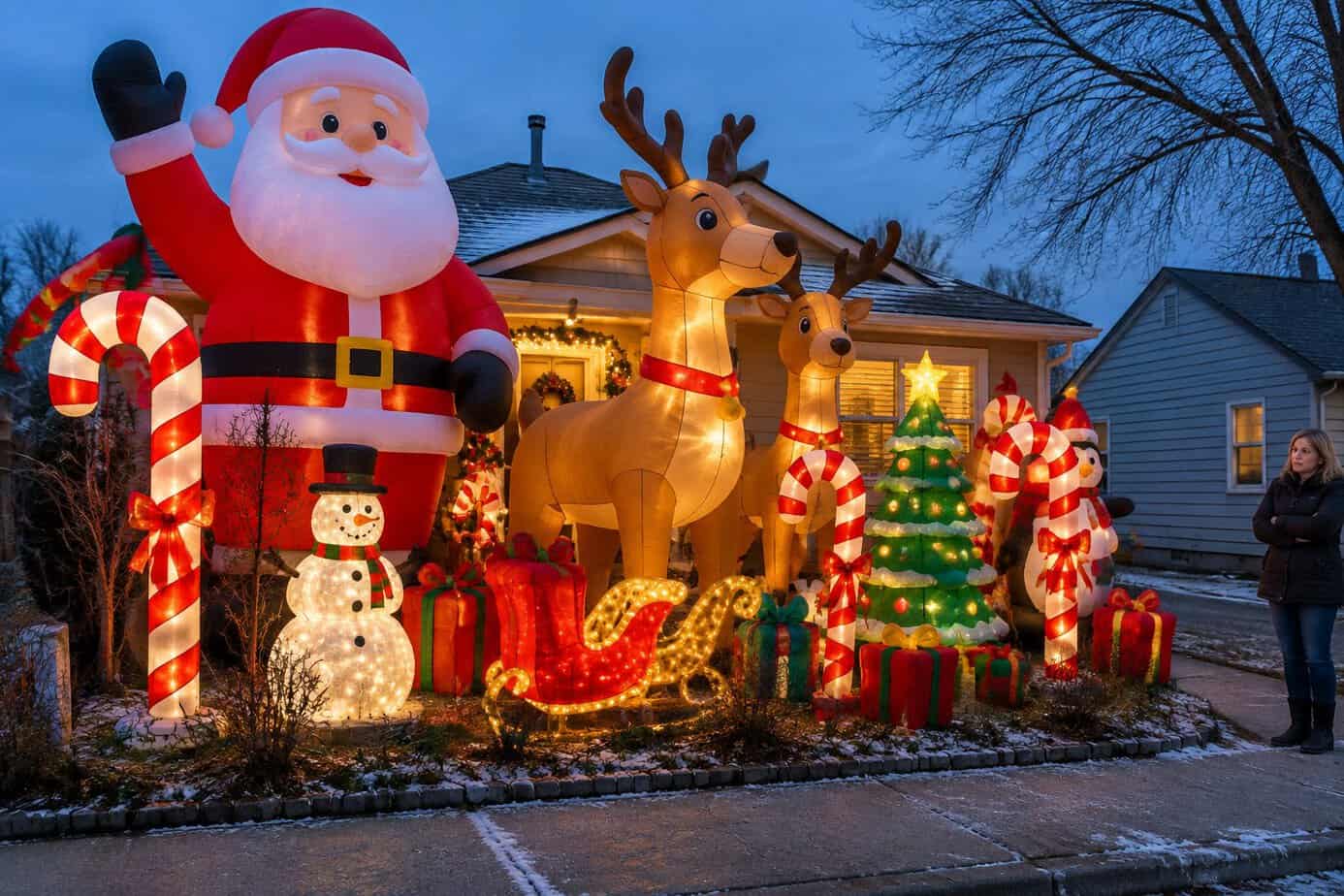
A 12-foot Santa and a full sleigh with reindeer look right at home on a wide lawn. Squeeze the same display into a small front yard or a townhouse strip of grass, and it can feel like it’s spilling onto everyone.
In tight neighborhoods, a big display often blocks part of the neighbor’s view, crowds the shared walkway or casts colored light across two or three houses instead of one. It isn’t that people dislike the decorations. They just feel like they’re living inside them.
Scale is something decorators think about indoors all the time, but it’s easy to forget outside, where everything looks smaller in the store.
The kinder fix: measure your space before you shop. In a small yard, choose a few medium pieces, such as a pair of 3-foot lighted reindeer, a lit wreath on the door and lights along the porch rail. A smaller display done neatly often draws more compliments than a big one squeezed in.
20. Santa sitting on the roof
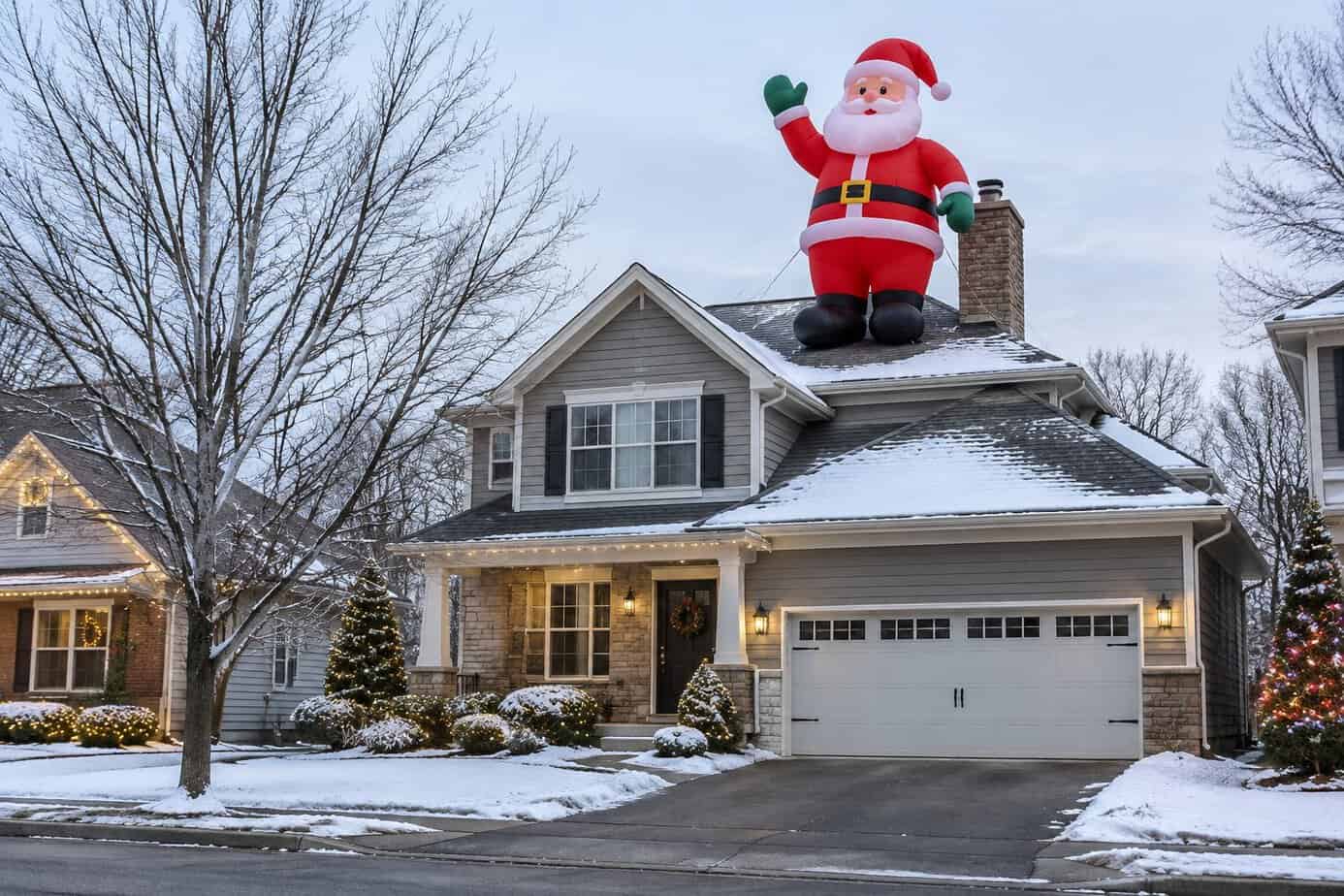
A Santa on the roof is a classic, and it’s easy to see from the street. That’s the appeal, and it’s also why neighbors notice when something goes wrong.
Rooftop pieces are hard to reach, so when an inflatable deflates, a figure tips over or a cord comes loose, it tends to stay that way for days. A Santa slumped against the chimney or hanging off the gutter isn’t the cheerful look anyone wanted.
Getting up there is also risky. The Consumer Product Safety Commission says about 14,900 people were treated in emergency rooms for holiday decorating injuries in the 2023 season, about 160 a day, and nearly half of those injuries involved falls.
The kinder fix: put Santa on the porch roof or in the yard, where you can reach him safely. If he must go on the roof, secure him well and have someone hold the ladder.
21. Decorations spilling onto the sidewalk

A row of candy canes along the walk is charming. A display that creeps past the property line and onto the public sidewalk is a different story.
Sidewalks are shared space. Joggers, dog walkers, kids on scooters, parents pushing strollers and people using wheelchairs or walkers all depend on that strip of concrete. A fallen candy cane, a leaning inflatable or a plastic reindeer at the curb can force someone to step into the street, which is a real problem on a dark winter evening or an icy morning.
Your neighbors probably won’t say anything. They’ll just walk on the other side of the street.
The kinder fix: keep every stake, figure and cord inside your own yard, and leave the full width of the sidewalk clear. Walk your sidewalk once after dark to make sure nothing has drifted onto it. If snow comes, shovel around the display, not just up to it.
22. Extension cords stretched across the sidewalk
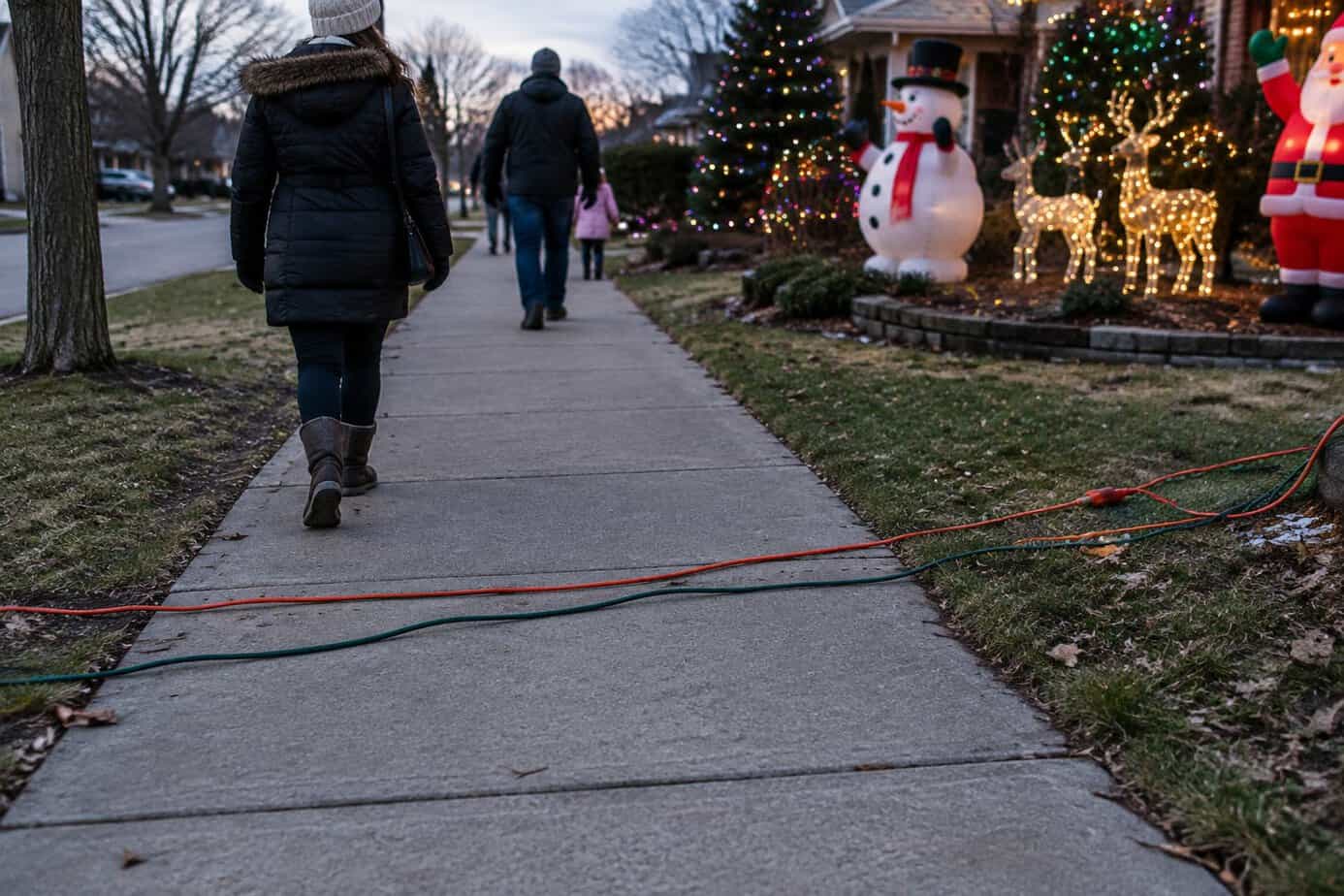
Extension cords disappear into the grass so well that it’s easy to forget where you ran them. But a cord lying across a sidewalk or a shared walkway is a trip hazard waiting to happen, especially after dark, when it’s nearly invisible.
The people most likely to catch a toe are the ones who have no say in your display: neighbors out for an evening walk, kids on bikes and delivery drivers rushing to the door. Wet leaves and frost make cords even harder to see.
There’s a safety side for you too. The CPSC advises using lights certified for outdoor use and plugging them only into GFCI-protected outlets, and checking that every cord is rated for the job and isn’t cut or frayed.
The kinder fix: route cords around paths instead of across them, along the house, the fence or the edge of the lawn. If you truly have to cross a walkway, use a flat, brightly colored cord cover so it lies flat and is easy to see.
23. A display that blocks the mailbox or driveway
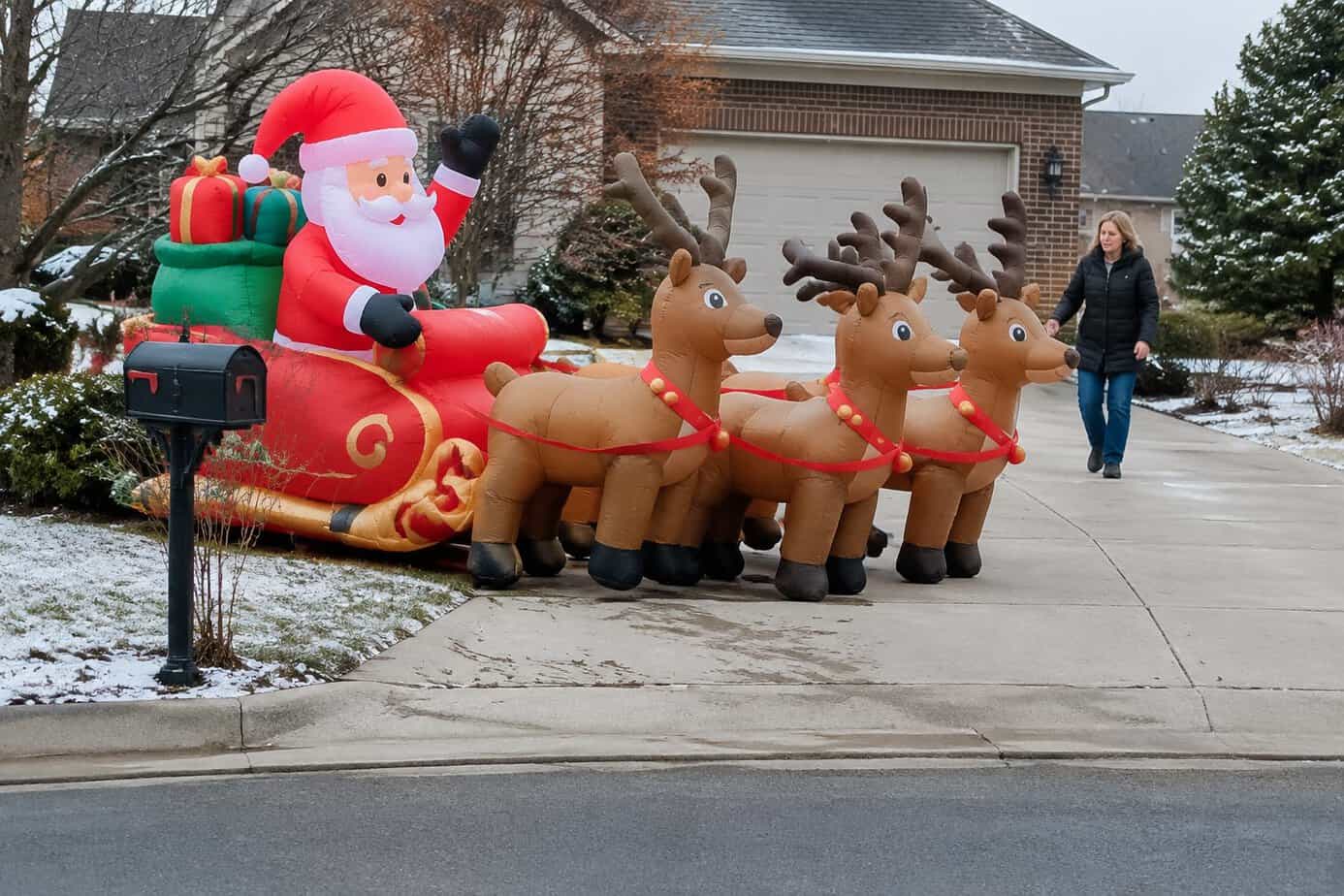
A sleigh and a team of reindeer look great at the front of the yard. But if that front edge is where the mailbox sits, the mail carrier may have trouble reaching it, and skipped deliveries in December are no fun for anyone.
Tall pieces near the end of a driveway cause another problem. Your neighbors need a clear view of the sidewalk and street when they back out, and a big inflatable at the corner can hide a child on a bike or a car coming around the bend.
These are easy to miss, because you see your display from the house, not from the driver’s seat next door.
The kinder fix: keep a few feet of open space around the mailbox, and keep tall figures away from the ends of both your driveway and your neighbor’s. Before you call the display finished, back your own car out at night and see what you can and can’t see.
24. A display so popular that visitors block the neighbors’ driveways
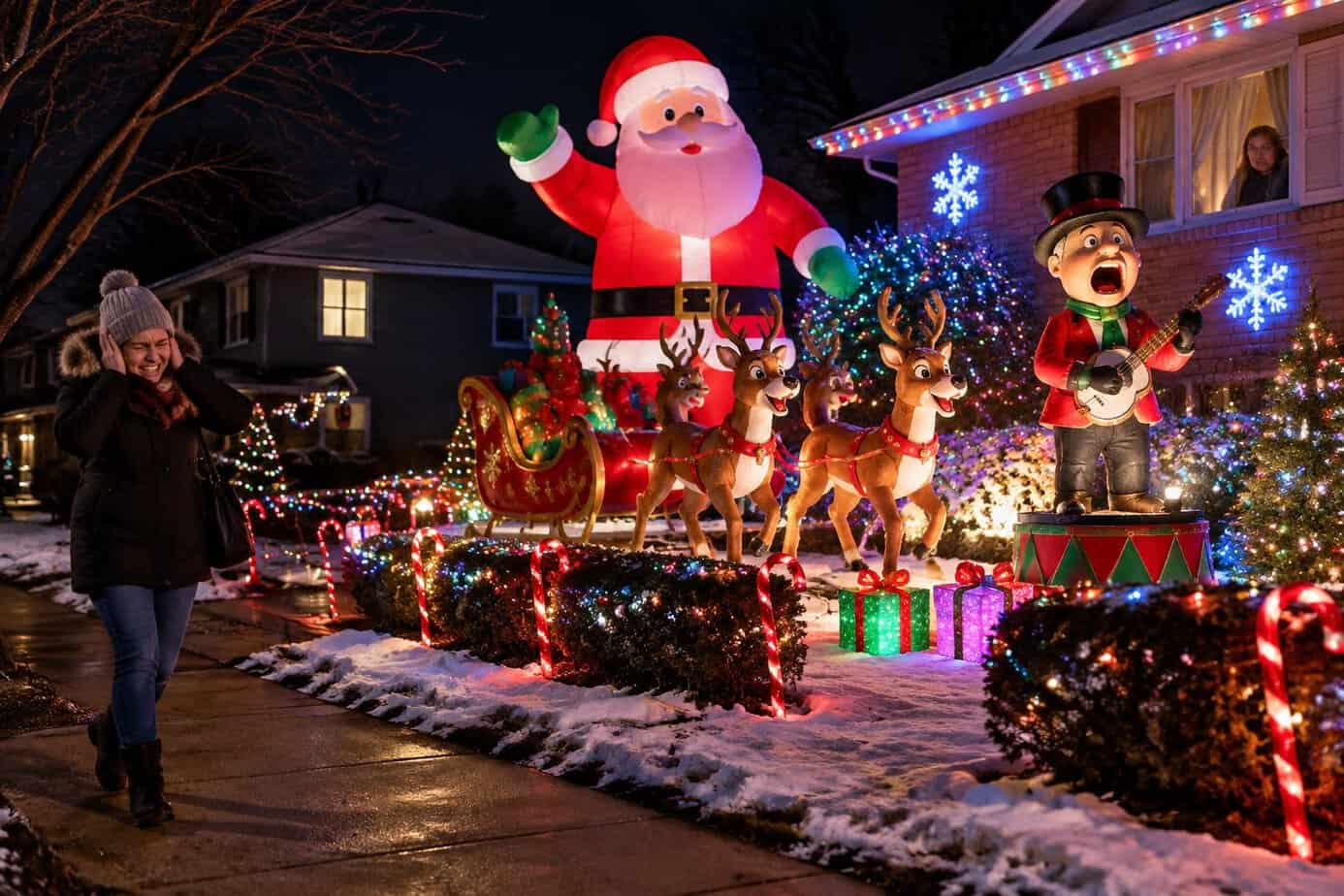
Some houses become a destination. Word spreads, families pile into the car after dinner, and suddenly there’s a slow parade of headlights on a street that’s usually quiet.
Most neighbors are happy to share the cheer. What wears thin is the traffic: cars idling for long stretches, visitors parking across driveways and in front of mailboxes, and headlights sweeping through living rooms all evening. Neighbors who just want to get home from work may find their own driveway blocked.
None of that is your fault, but it does come with running the house everyone wants to see.
The kinder fix: put a small, friendly sign near the curb asking visitors not to block driveways, and suggest a nearby spot to park, such as a church lot or a wider street. Let your neighbors know your busiest nights ahead of time. A plate of cookies on their porch in mid-December goes a long way, too.
25. Light strings sagging off the gutter
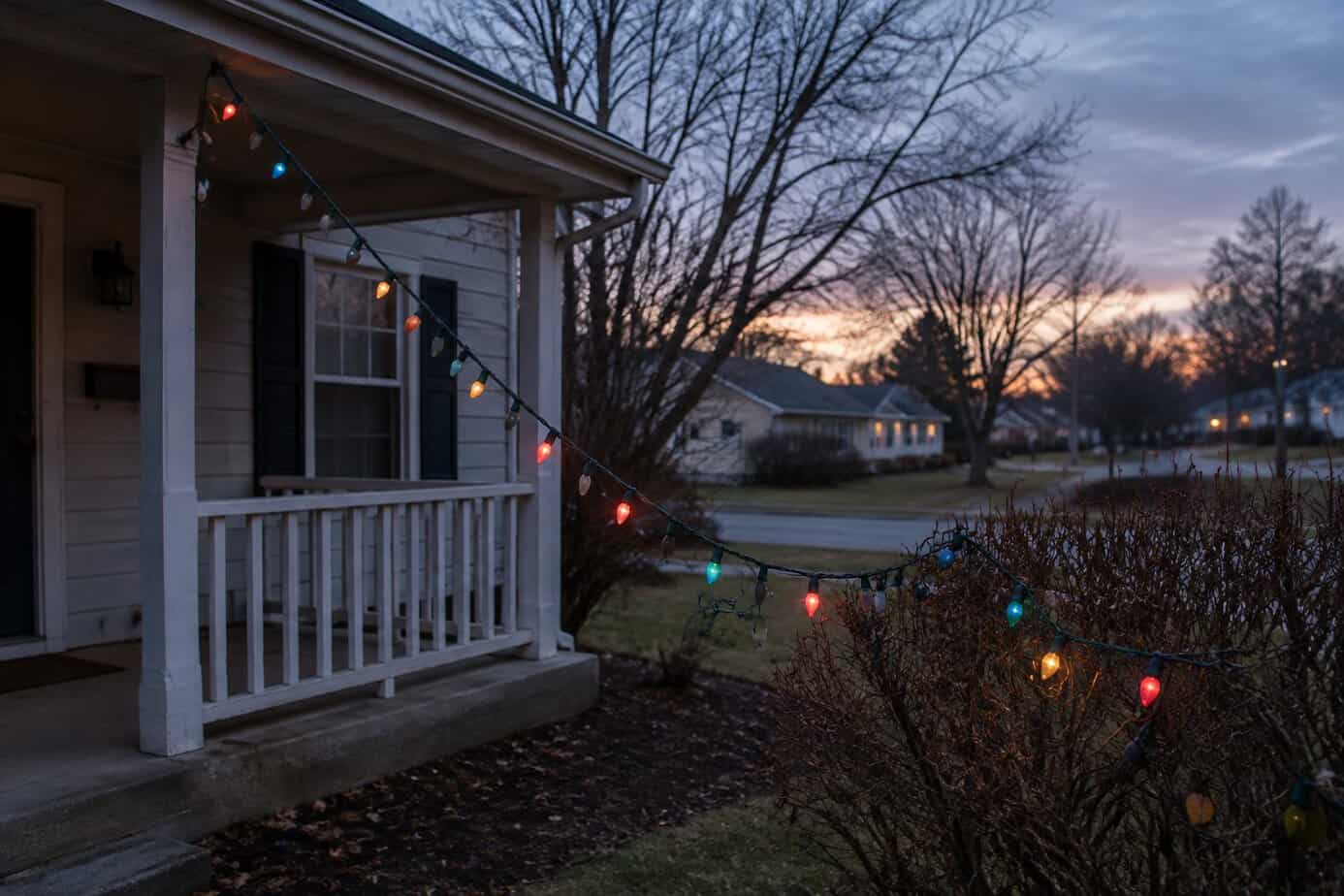
The lights looked perfect the afternoon you hung them. Three weeks later, a few clips have popped loose, and the strand droops along the gutter in long, tired loops.
Neighbors notice this one most in daylight, when you can see every sag, and at night, when the uneven line catches the eye. A strand dangling low over the porch steps or hanging into the bushes can look like the display was forgotten, even when it wasn’t.
Wind, wet snow and temperature swings all loosen clips over the season. Using too few clips, or the wrong kind for your gutters or shingles, makes it more likely.
The kinder fix: use clips made for your roof or gutter type, space them closely, and keep the strand gently taut as you go. Take a quick look around the house every week or two and clip loose sections back in place. If climbing isn’t for you, a neat strand along the porch rail is easier to keep tidy.
26. Lights thrown over the bushes in a clump
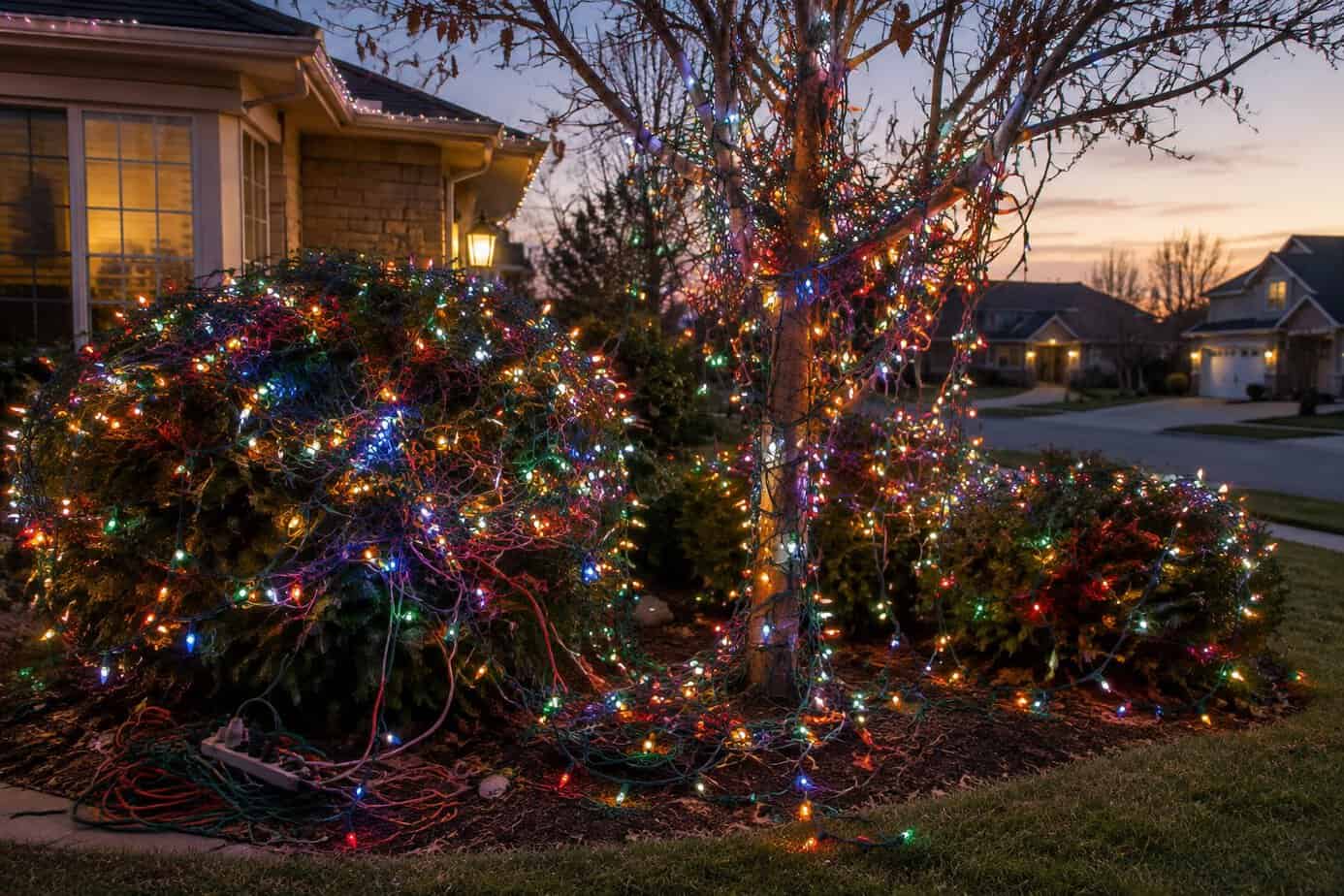
We’ve all done it. The lights come out of the box in a knot, it’s cold, it’s getting dark, and the fastest option is to toss the whole tangle over the nearest shrub.
From across the street, that tends to show. One side of the bush glows like a bonfire, the other side is dark, and a few loose strands trail across the mulch. In daylight, the knotted wires look even messier.
There’s a practical side, too. Strands piled tightly together can trap heat and moisture, and lights that sit tangled on the ground are easier to damage.
The kinder fix: weave the lights loosely through the bush, working from the bottom to the top, so the bulbs are spread evenly. Net lights made for shrubs are a fast shortcut if you have a lot of bushes to cover. When the season ends, wrap each strand around a piece of cardboard so next year starts without the knot.
27. Clashing colors and faded, cracked plastic
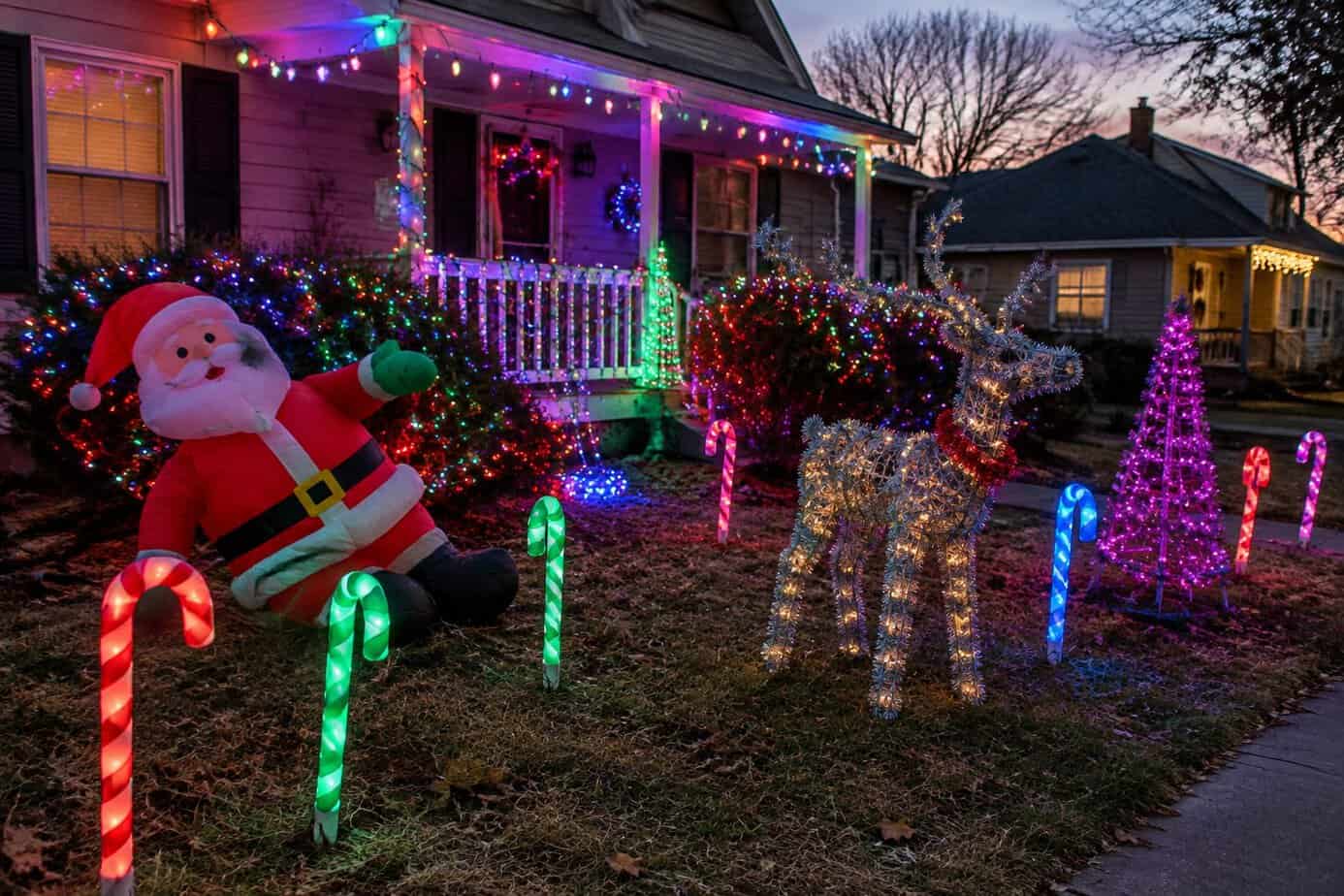
Hot pink trees, lime green candy canes, purple lights and a bright blue reindeer, all in the same yard. Each one might be fun on its own. Together, they can make it hard to know where to look.
Sun and weather make it worse. Plastic figures that have been out for years fade unevenly, crack, lose their paint and sometimes lose a nose or an ear along the way. Neighbors don’t expect a magazine yard, but a mix of clashing colors and worn-out pieces can make a display look more tired than festive.
The good news is that this is one of the cheapest problems to fix.
The kinder fix: pick two or three colors for the whole display, such as warm white plus red, or classic multicolor plus green, and stick with them. Retire figures that are badly faded or broken. A wreath on the door and lights along the roofline in one color scheme often look better than a yard full of mismatched pieces.
28. Halloween props wearing Santa hats
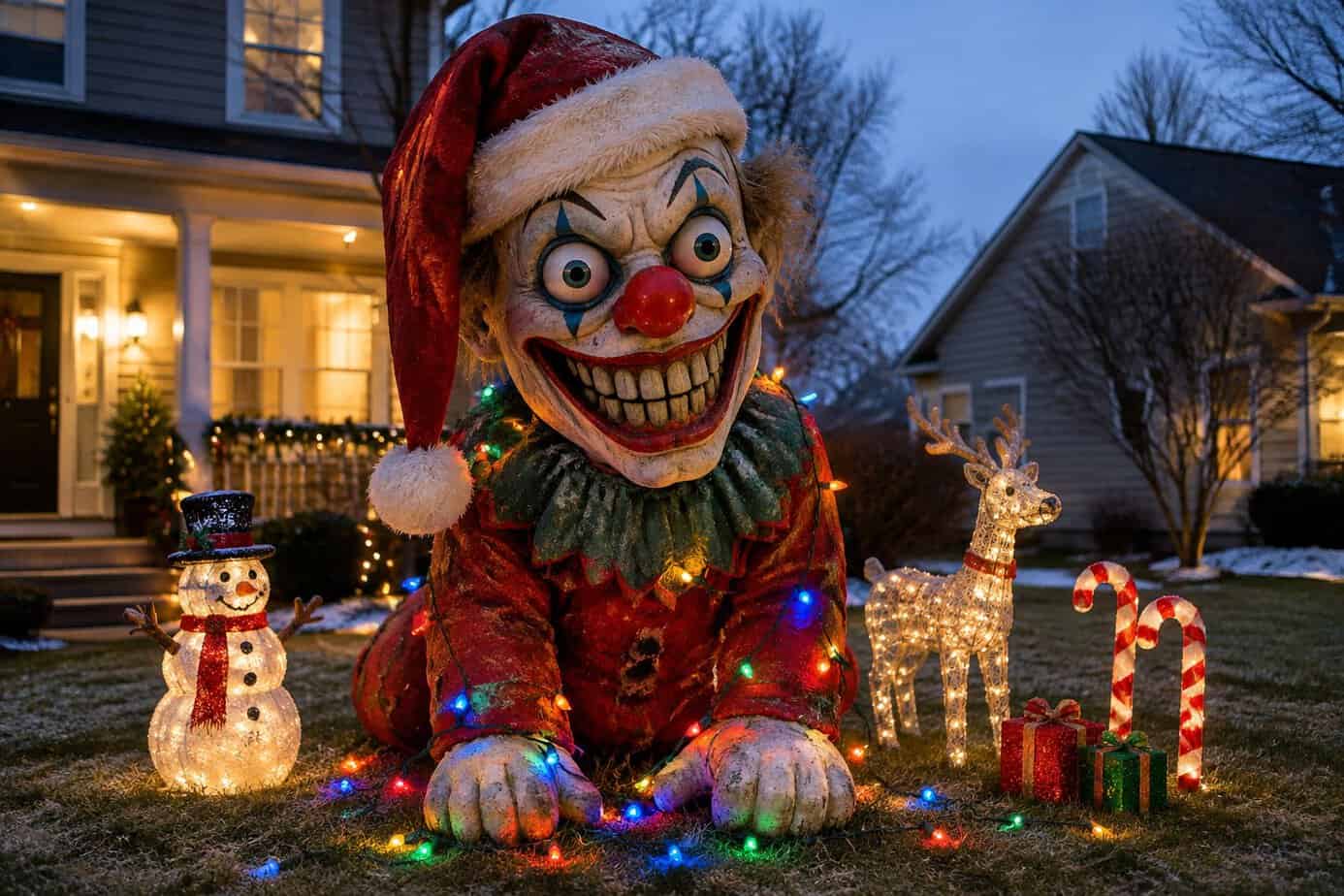
It can seem like a clever shortcut. The giant clown or skeleton from October is already out there, so why not add a Santa hat and call it Christmas?
Many neighbors find it more creepy than festive. A grinning clown or monster lit up after dark can startle people walking by, and it can be genuinely scary for small children, who don’t always get the joke. A Santa hat doesn’t change that much.
It also tends to look like the Halloween decorations simply never came down, which can make the whole yard feel a bit neglected.
The kinder fix: give your Halloween props a well-earned rest in November, and bring out something friendlier for December. A snowman, a lit-up reindeer or a simple wreath gives you the same pop without any nighttime frights. If you love a spooky-holiday mash-up, keep it small, cartoonish and close to the house.
29. Decorations hung on the neighbor’s side of a shared fence
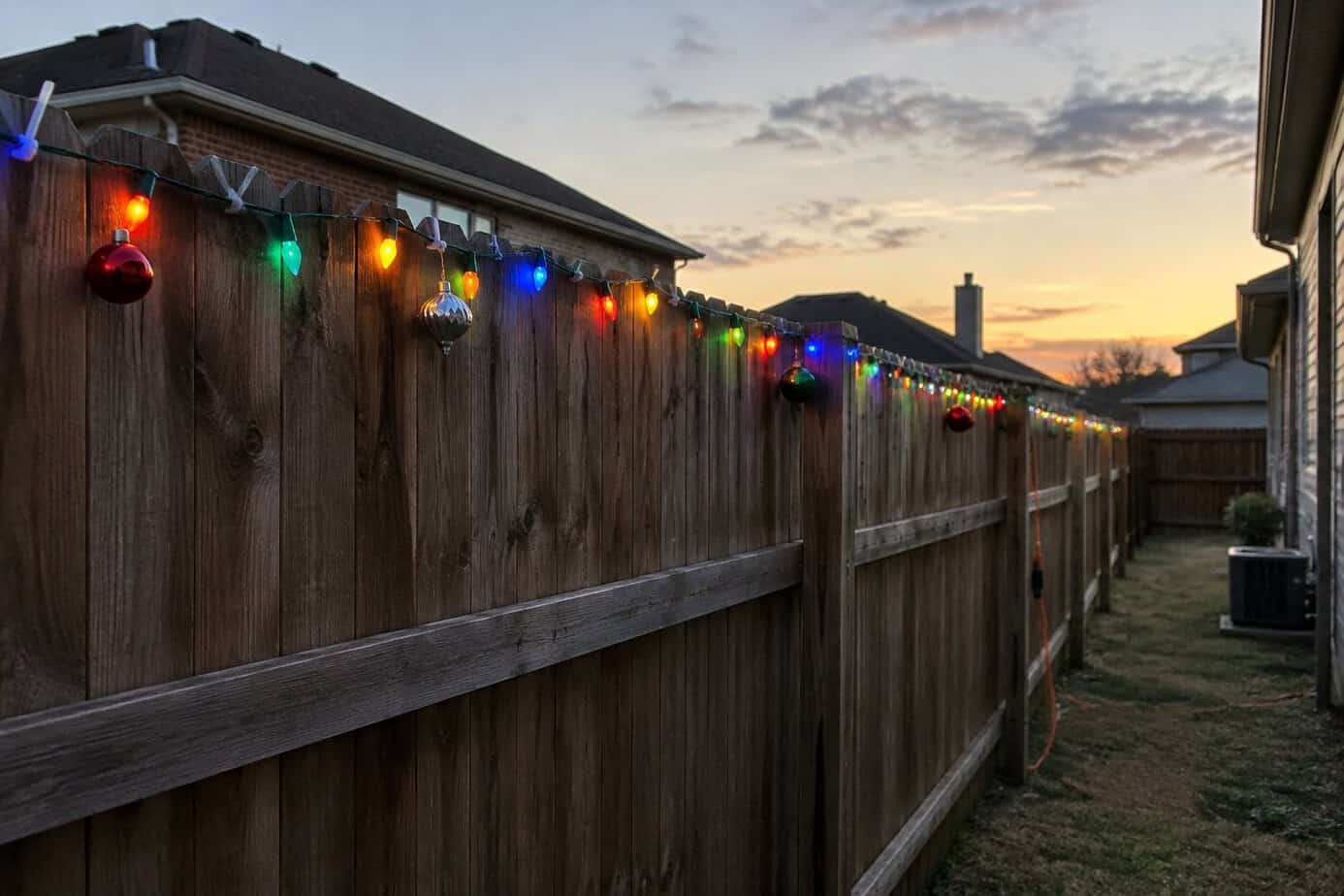
A fence between two yards looks like the perfect place to hang a string of lights. But a shared fence belongs to both households, and the side facing the neighbor’s yard is part of their view, not yours.
Neighbors commonly mention zip ties on their side, nails or staples in a fence they helped pay for, cords dangling into their yard and lights shining onto their patio all night. The same goes for decorating a tree whose branches hang over their side.
Most of the time, people just didn’t think to ask. That’s exactly why it bothers the person next door.
The kinder fix: decorate your own side of the fence, use clips instead of nails or staples, and keep cords and plugs on your side. If you’d like to decorate the whole fence, ask first. Plenty of neighbors will say yes, and some may even offer to help.
30. Decorations still up in March

The daffodils are blooming, the kids are on spring break, and the wreath is still on the door. The light strands are still on the gutter, and the reindeer is still lying in the flower bed.
Leaving decorations up a little past New Year’s is normal, and lots of families wait until after Epiphany on January 6. But by February and March, neighbors start to notice, especially when inflatables sag, lights flicker on in April or faded pieces sit in the yard all spring.
Many homeowners associations also limit how long holiday decorations can stay up, often a set number of days after the holiday, so a forgotten wreath can lead to a polite letter.
The kinder fix: pick a take-down date when you put things up, such as the second weekend in January, and put it on the calendar. If the roof lights are hard to reach in winter weather, at least unplug them and take down the yard pieces. You can grab the rest on the first warm weekend.
How to keep your holiday display neighbor-friendly
Almost every item on this list comes down to the same few habits. None of them cost much, and most take only a few minutes.
Look at your display from next door
Most of the problems neighbors mention are invisible from your own front porch. Once your display is up, walk to the end of your driveway, across the street and to each side of your property after dark. Look for light hitting their windows, sound reaching their yard, cords crossing paths and anything blocking a driveway or mailbox.
Give your display a bedtime
A plug-in timer or smart plug fixes more complaints than anything else. Lights, inflatables, projectors and music can all switch off around 10 p.m., and your display will come back to life on its own the next evening.
Check the rules before you buy
If you live in a homeowners association, read the rules on decoration size, inflatables, flashing lights and take-down dates. Your city’s noise ordinance may also cover outdoor music. It’s easier to buy the right size Santa than to take down the wrong one.
Just talk to each other
If a neighbor mentions something, thank them for telling you directly, and ask what bothers them most. Usually it’s one fixable thing, such as a single floodlight or a song that plays too late. And if something about their display bothers you, a friendly word in person works far better than a note on the door.
If you’re planning your whole look this year, our list of the worst Christmas decorating trends that make your home look dated covers the inside of the house, too.
The best outdoor displays are the ones the whole street enjoys. A little care with light, sound and timing keeps your house the one people drive past on purpose, for all the right reasons.