31 Things Grandma Did Every Day That Nobody Has Time for Anymore
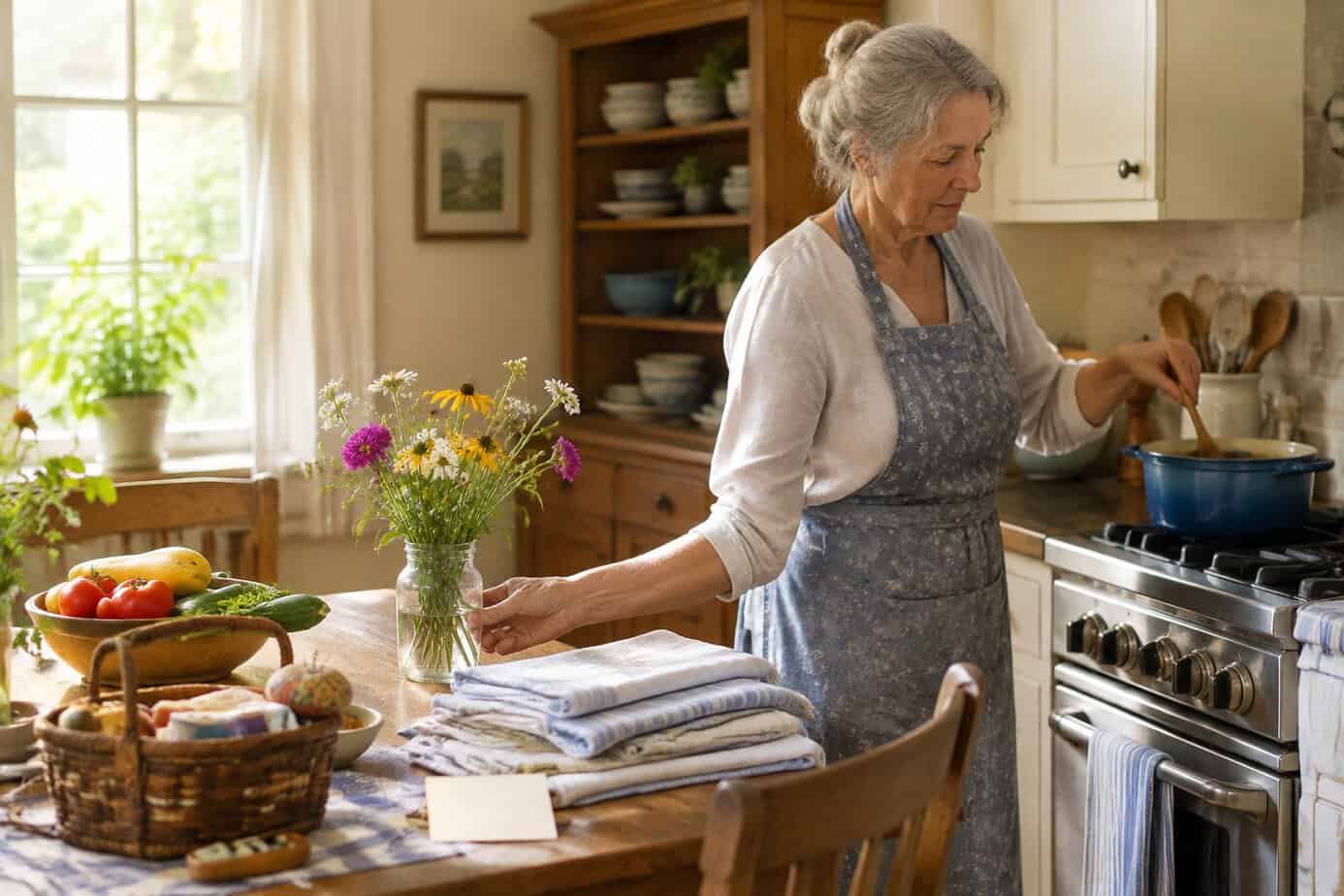
Your day started before the sun finished rising, with a pot of coffee brewing while the house was still quiet. There was a rhythm to those hours that you knew by heart, one task leading naturally into the next without needing a list or a reminder on your phone.
Back then, keeping a home running took constant, hands-on effort from morning until the last light switched off at night. You moved through your chores with a kind of quiet confidence, the sort that comes from doing something so many times it becomes part of you.
Looking back, it’s worth remembering just how full those days were. The pace of life has changed, and so has the way homes are kept, but the care you put into every task left its mark.
1. Brewing coffee in the percolator before the house woke up
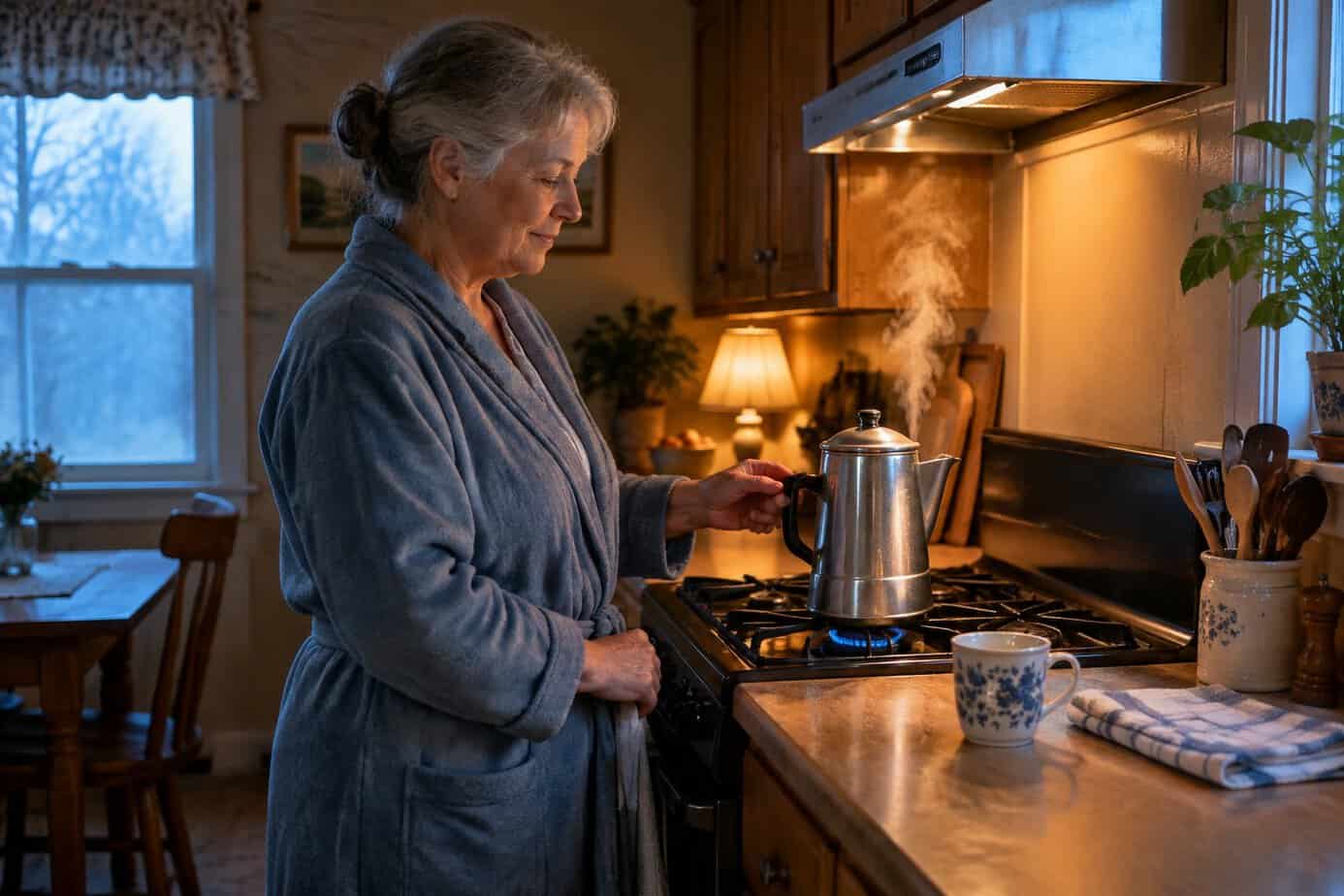
You were up before the sun most mornings, and the first thing you did was fill that percolator and set it on the stove. Not a machine with buttons, just the pot, the basket, the grounds, and a little patience while it worked.
You liked those few quiet minutes before anyone else stirred. The house was still dark, the kids were asleep, and the only sound was that steady perking coming from the stove.
By the time the coffee was ready, you had probably already started on something else. Maybe the lunches were half packed, or the bacon was waiting in the pan, because mornings back then didn’t leave much room for standing around.
That smell drifting through the kitchen told everyone the day had officially begun. Nobody needed an alarm clock when the percolator was doing its job.
You don’t see many of those pots anymore, chrome and dented and a little loud. But there was something satisfying about a cup of coffee that took real effort to make, especially when you were the one who got it going before anybody else even opened their eyes.
2. Cooking a hot breakfast every morning
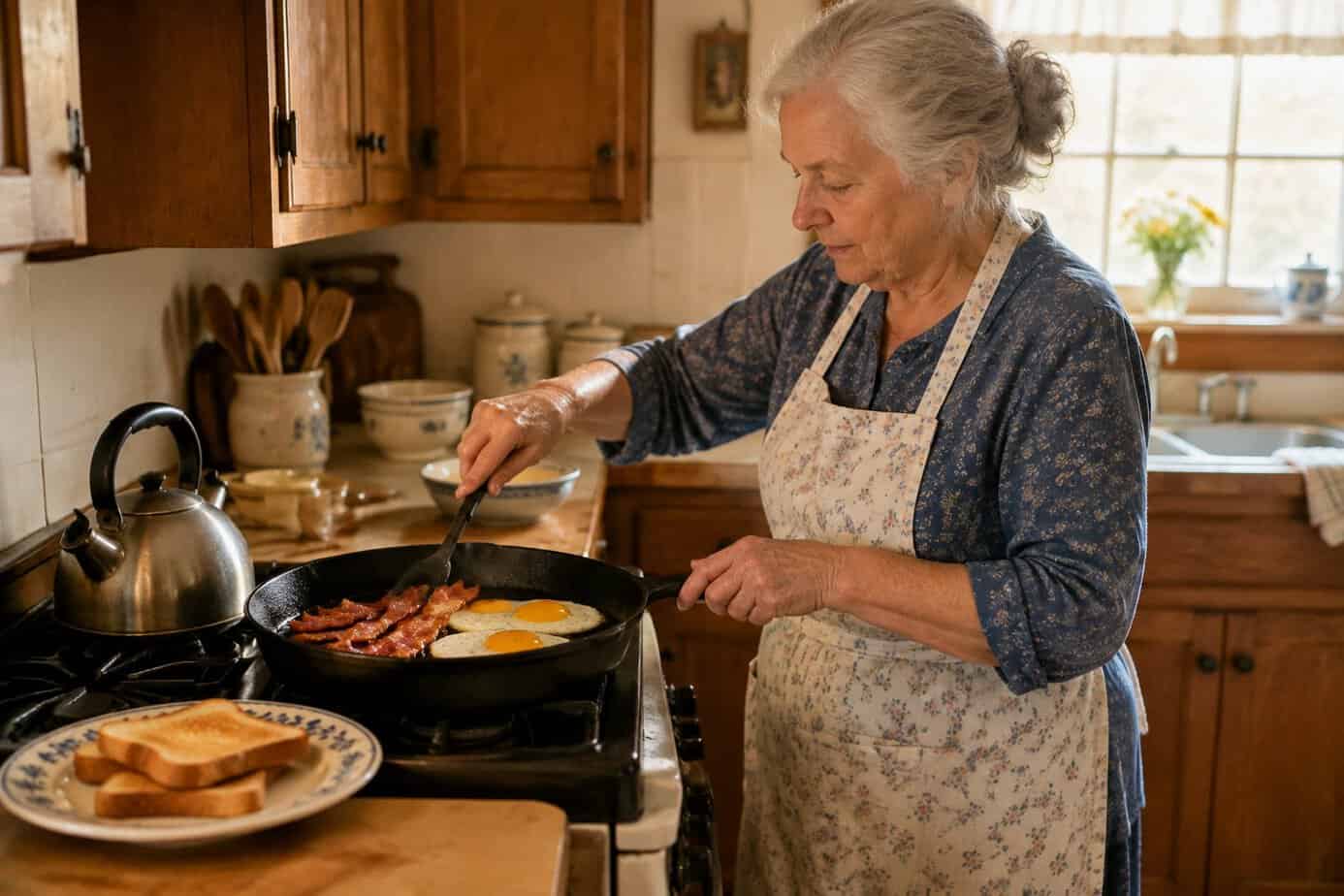
Every morning started the same way in your kitchen: the stove was already warm before anyone else was awake. You measured out coffee, cracked eggs, and had bacon sizzling before your family even thought about getting out of bed.
Cereal was fine for a treat, but a hot breakfast was what actually got everyone through the day. Eggs, toast, maybe some sausage or oatmeal depending on the morning. You never thought twice about it; it was just what you did.
There was no rushing through a bowl of something cold on your way out the door. Breakfast meant sitting down together, even if it was only for ten minutes before everyone scattered. You made sure of that.
Looking back, you probably spent more time on breakfast than most people today spend on dinner. It never felt like a chore, though. It felt like taking care of your family before the day had a chance to get complicated. A full stove and a full table were simply part of starting things off right.
3. Walking the children to school and back

Every morning, you laced up the kids’ shoes, grabbed their hands, and headed out the door on foot, rain or shine. There was no question of driving them a few blocks. The car was for groceries and church, not for a trip you could easily make on two legs.
You knew every crack in the sidewalk on that route. You probably knew the names of half the neighbors whose yards you passed, too, since you waved to them most days.
The walk gave you a built-in chance to talk about nothing in particular, which somehow turned into talking about everything. By the time you reached the schoolyard, you’d already heard about a lost tooth or a spelling test nobody wanted to take.
Afternoons meant doing it all over again, except now you were listening to the full replay of the school day. You didn’t think of it as exercise or bonding time. It was just how children got to school, and you were the one who got them there.
4. Sweeping the front porch and steps
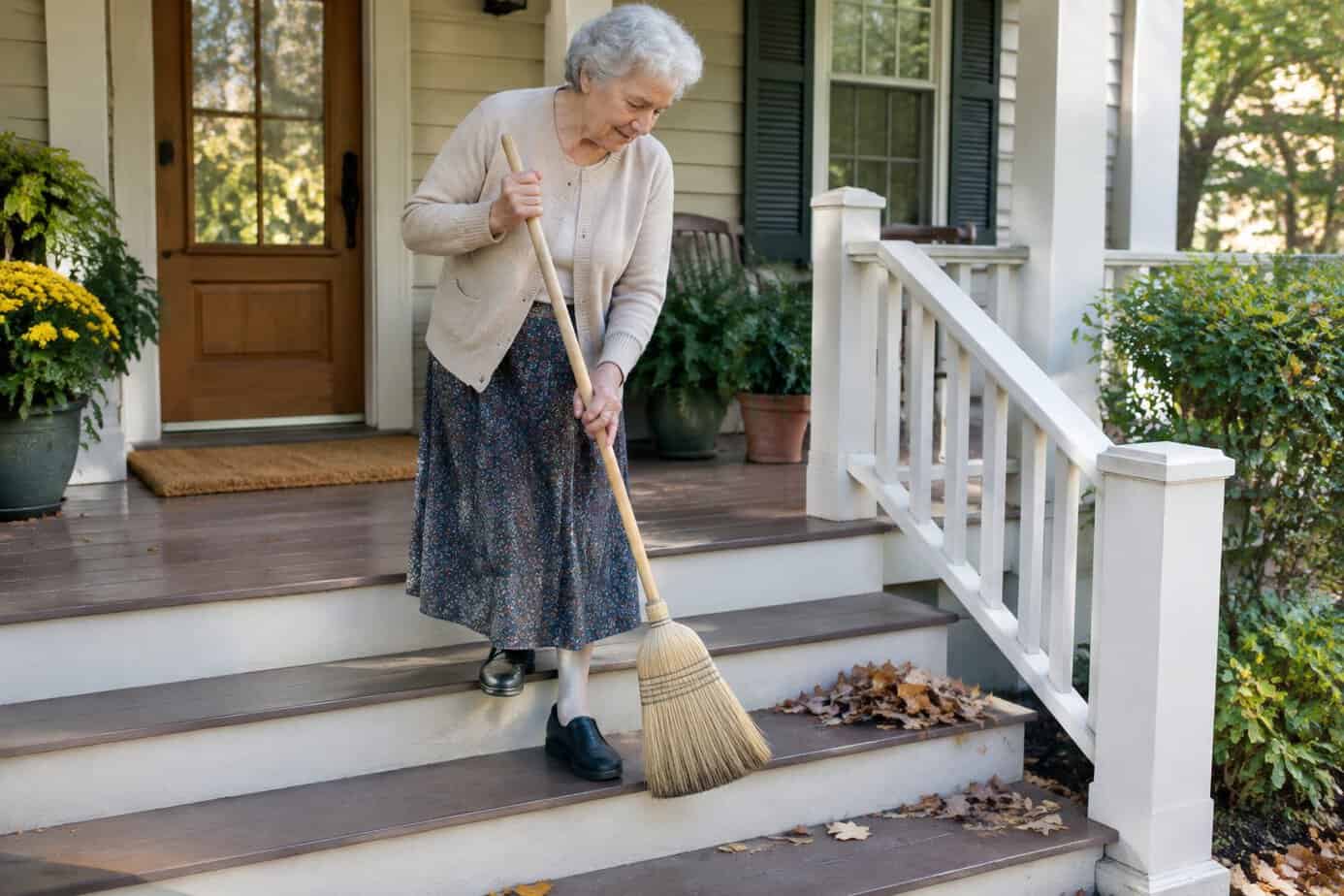
Every morning you grabbed the broom before you even thought about it, sweeping the porch and steps while the coffee finished brewing. It wasn’t really about dirt. It was about starting the day with something clean and orderly before the chaos of kids, breakfast, and everything else took over.
You swept away the leaves, the dust, the bits of grass tracked in from the yard.
Neighbors noticed a swept porch. It told them you were up, you were managing things, and your home was cared for. There was a quiet pride in those clean steps, even if nobody said a word about it.
You didn’t think of it as exercise, though your arms and back certainly felt it. It was just part of life, like making the beds or starting the laundry. Nobody questioned whether there was time for it. You simply did it, broom in hand, before the day pulled you in a dozen directions.
5. Running the carpet sweeper over the rugs
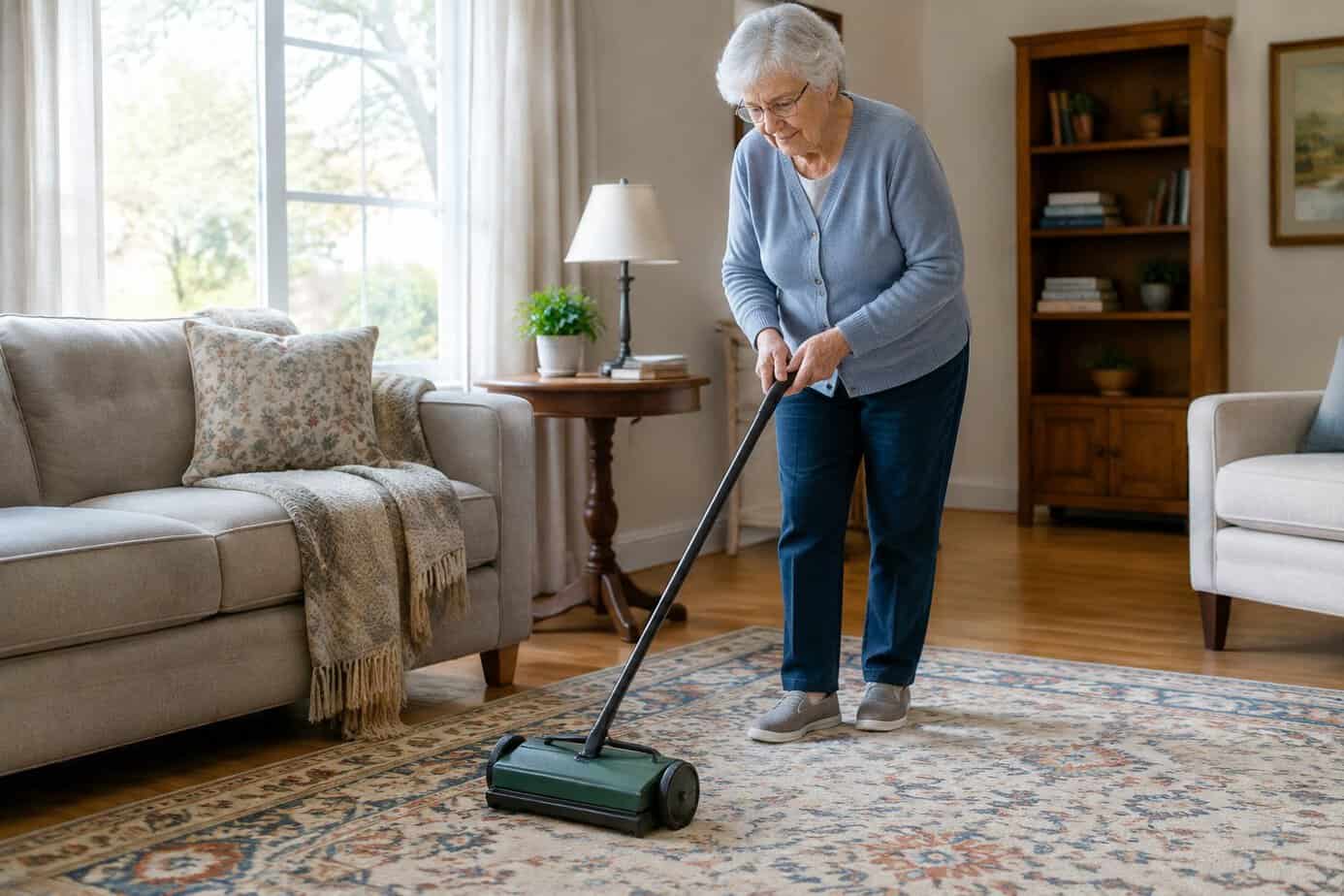
Even if you owned a vacuum cleaner, the carpet sweeper was your go-to tool for quick daily touch-ups. You rolled it back and forth over the living room rug every morning, picking up crumbs, dust, and whatever the kids had tracked in overnight.
It was lighter than lugging out the vacuum, so you used it constantly, sometimes two or three times a day. A quick pass before company came over, another after breakfast, and one more before your husband got home from work.
You liked the sound it made, that soft clicking of brushes spinning against the carpet fibers. It felt satisfying, almost calming, in a way that running a loud vacuum never quite matched.
Emptying the little dirt tray was its own small chore, one you did without much thought. These sweepers lived in the hall closet, always within reach for those in-between moments when the rug needed a once-over but you did not want the hassle of plugging anything in.
6. Dusting every surface with furniture polish
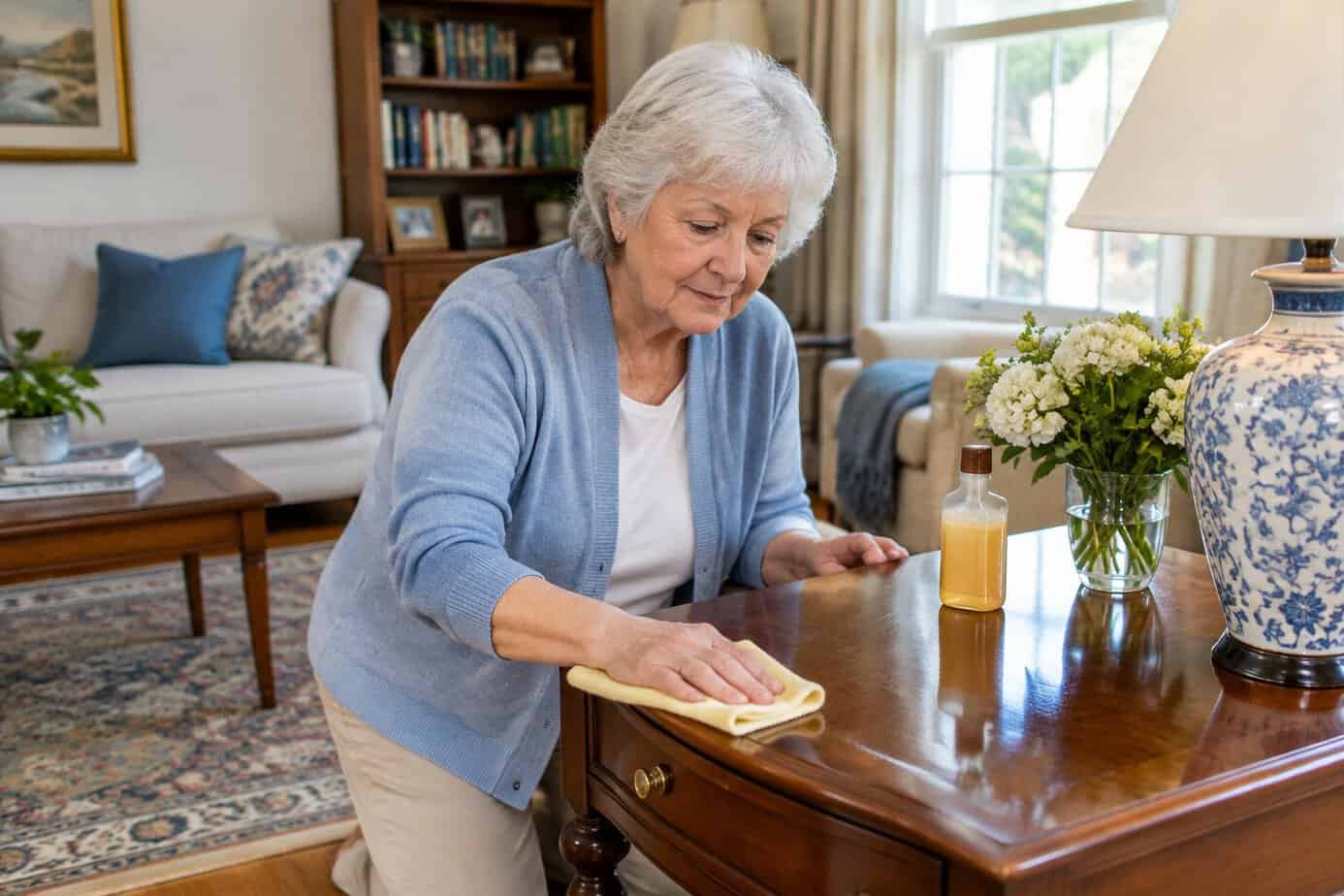
Every day, you went around the house with a soft cloth and a can of lemon-scented furniture polish. End tables, bookshelves, the piano top, picture frames—nothing got skipped. The smell of that polish is probably still tucked somewhere in your memory, ready to come back the moment you catch a whiff of it in a store.
You didn’t own a feather duster for show. It actually got used, usually before the polish came out, to knock loose the surface dust first.
Wood furniture showed every speck, and dust seemed to settle the minute you turned your back, especially with sunlight streaming through the windows.
There was a rhythm to it. You’d spray, wipe, buff, and move to the next piece, almost without thinking about it. It fit neatly into the day, somewhere between making beds and getting dinner started.
Keeping those surfaces gleaming wasn’t about perfection. It was just part of running a home you were proud of, one you kept looking its best for your family and for yourself.
7. Emptying and washing the ashtrays
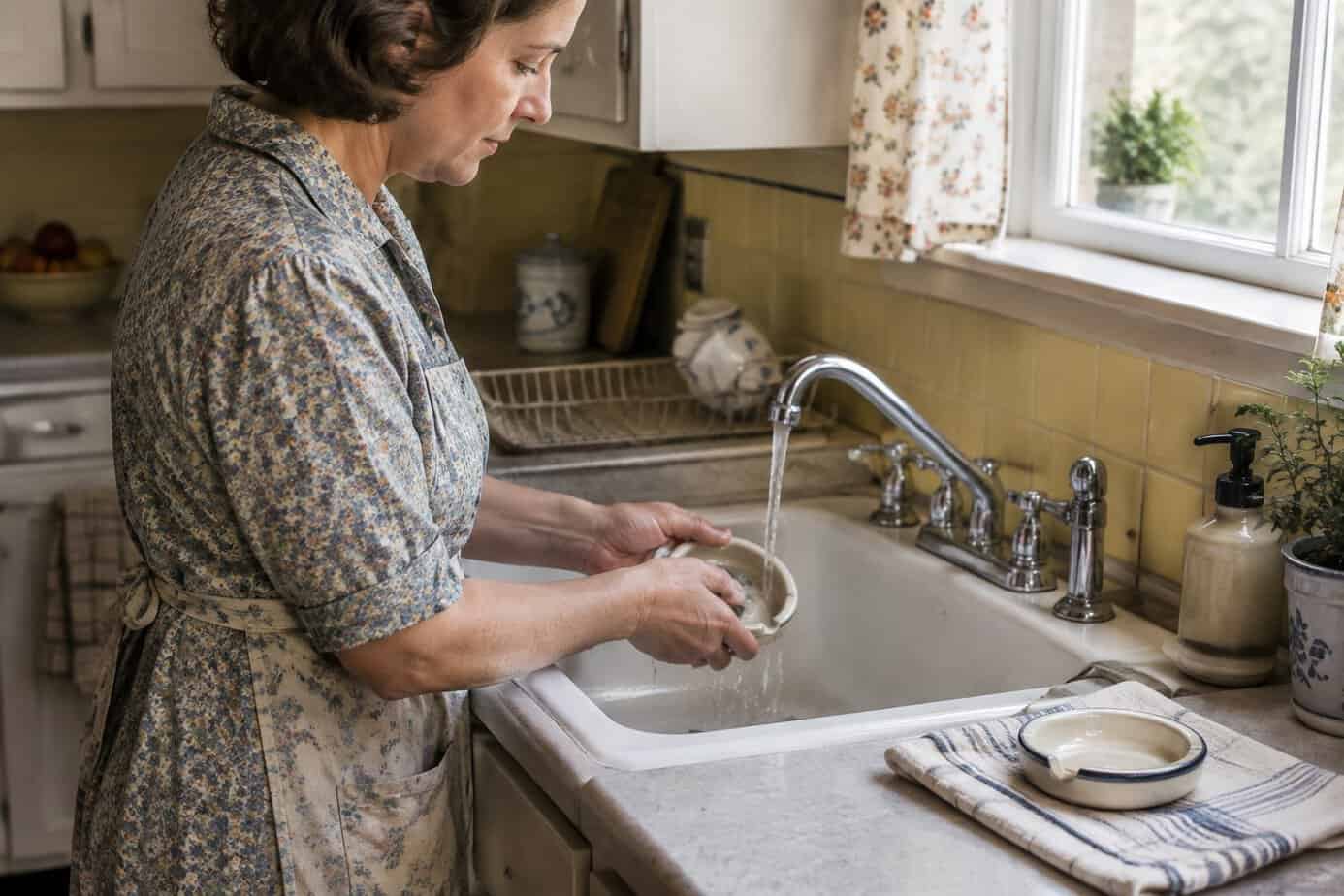
Smoking was just part of everyday life back then, and ashtrays sat on nearly every flat surface in your house. The coffee table, the kitchen counter, the end table by the good chair—all of them had one, and all of them needed attention daily.
You emptied them before they overflowed, which in a house with a couple of smokers didn’t take long at all. Nobody wanted to look at a pile of butts and ash while trying to enjoy their evening.
Washing them out was its own little task. You’d rinse the glass or metal ones in the sink, scrubbing off that gray film that clung to the bottom no matter how often you cleaned it.
Some of the nicer ashtrays were heavy glass or ceramic, maybe even a wedding gift, and those got a bit more careful handling than the everyday tin ones. You dried them and set them back out, ready for the next round of coffee and conversation.
It was a small chore, but it added up when you had guests over or a husband who smoked after every meal.
8. Rinsing and washing cloth diapers
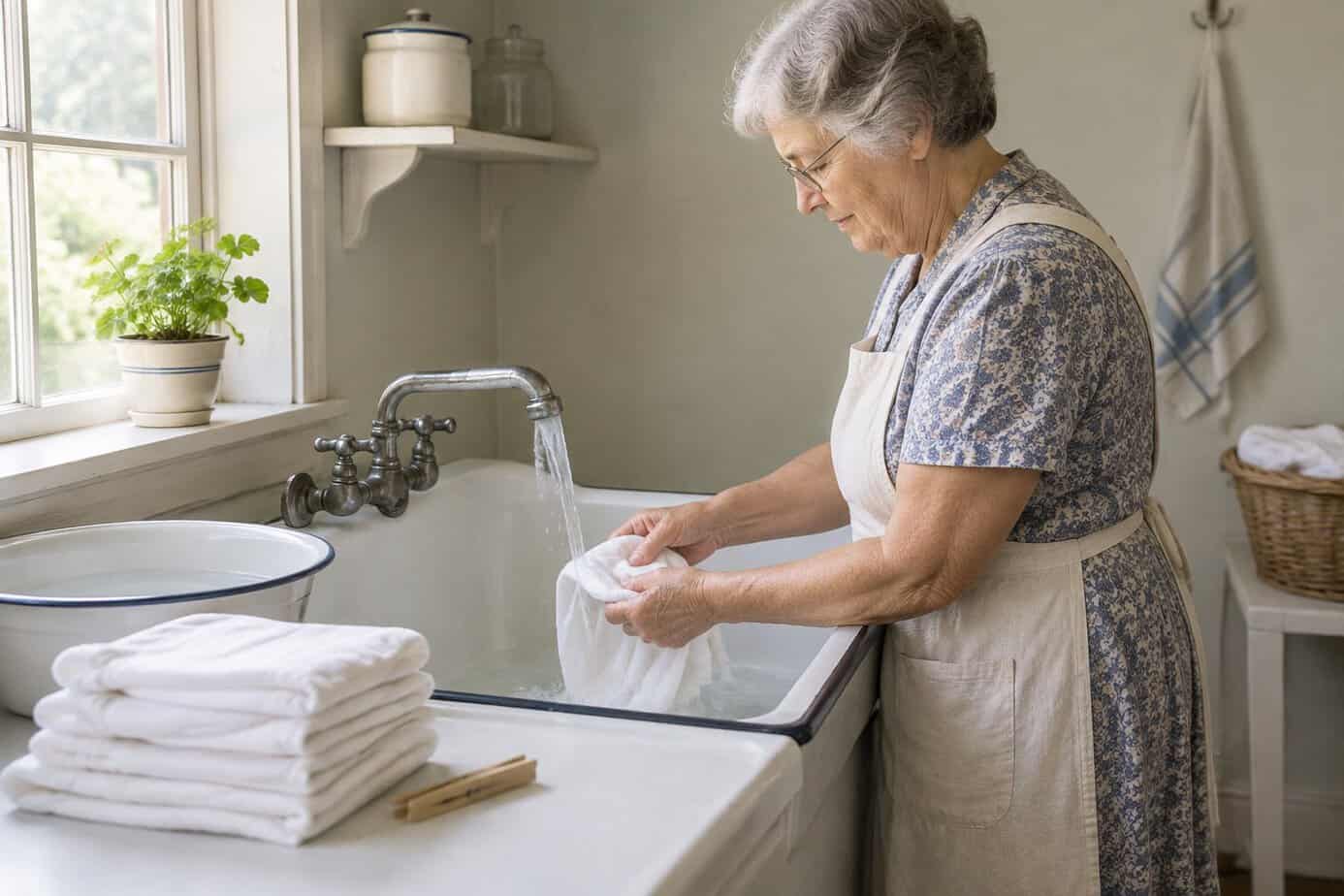
There was no quick fix for diapers back then. You kept a covered pail near the changing area, usually with a little water and a splash of vinegar inside, and every soiled diaper went straight in to soak until wash day.
Rinsing came first, often right in the toilet bowl, swishing the worst of it away before the diaper ever got near your washing machine. It was not a pleasant job, but it was simply part of the day.
Washing itself took real planning. You ran diapers through a hot cycle with a mild soap, sometimes doubling up with a second rinse to make sure no soap residue stayed behind to irritate soft skin.
Line drying was common too, since the sun helped cut odors and left everything smelling clean in a way the dryer alone never quite managed.
With a new baby, this routine repeated daily, sometimes twice a day, rain or shine. You learned to work it around naps, meals, and whatever else needed doing, because the diaper pail never waited for a convenient moment.
9. Sterilizing baby bottles on the stove
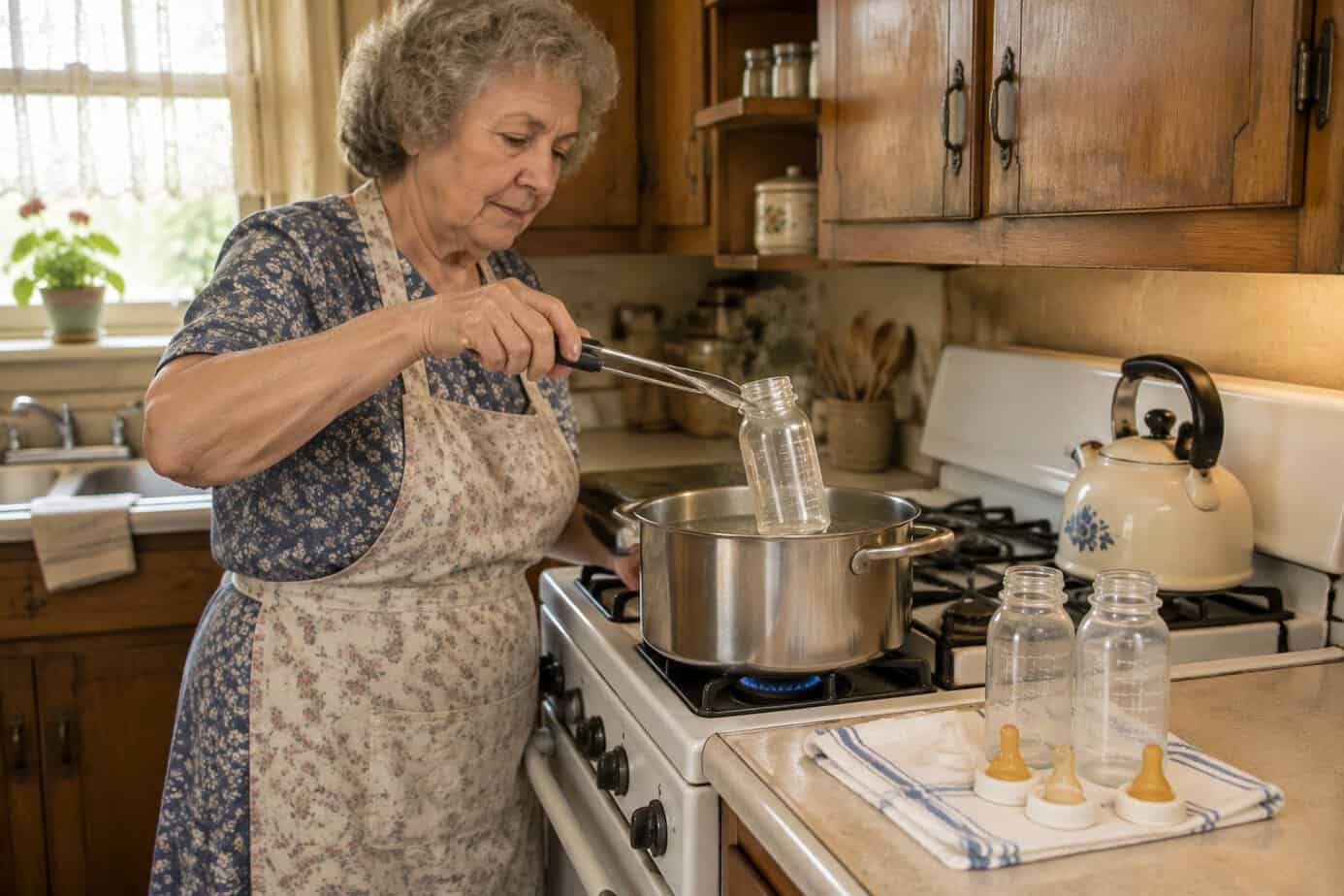
You remember filling a big pot with water and lining up the bottles, nipples, and rings like little soldiers waiting their turn. There was no quick rinse and done. Every bottle got a full rolling boil, usually for about ten minutes, before it touched a drop of formula or milk.
You kept a special pair of tongs just for lifting things out of that pot. Nobody wanted to fish out a scalding nipple with a fork and risk losing it down the drain. Timing mattered too, because you had a baby who would start fussing the second that bottle was late.
After boiling, everything went onto a clean towel to air dry, never wiped with a dish cloth that might carry germs. You checked the water level more than once, since it had a habit of boiling down faster than you expected. If you had more than one little one close in age, you were doing this ritual two, maybe three times a day, rain or shine. It just became part of the kitchen rhythm, as normal as making coffee.
10. Hanging the wash on the clothesline
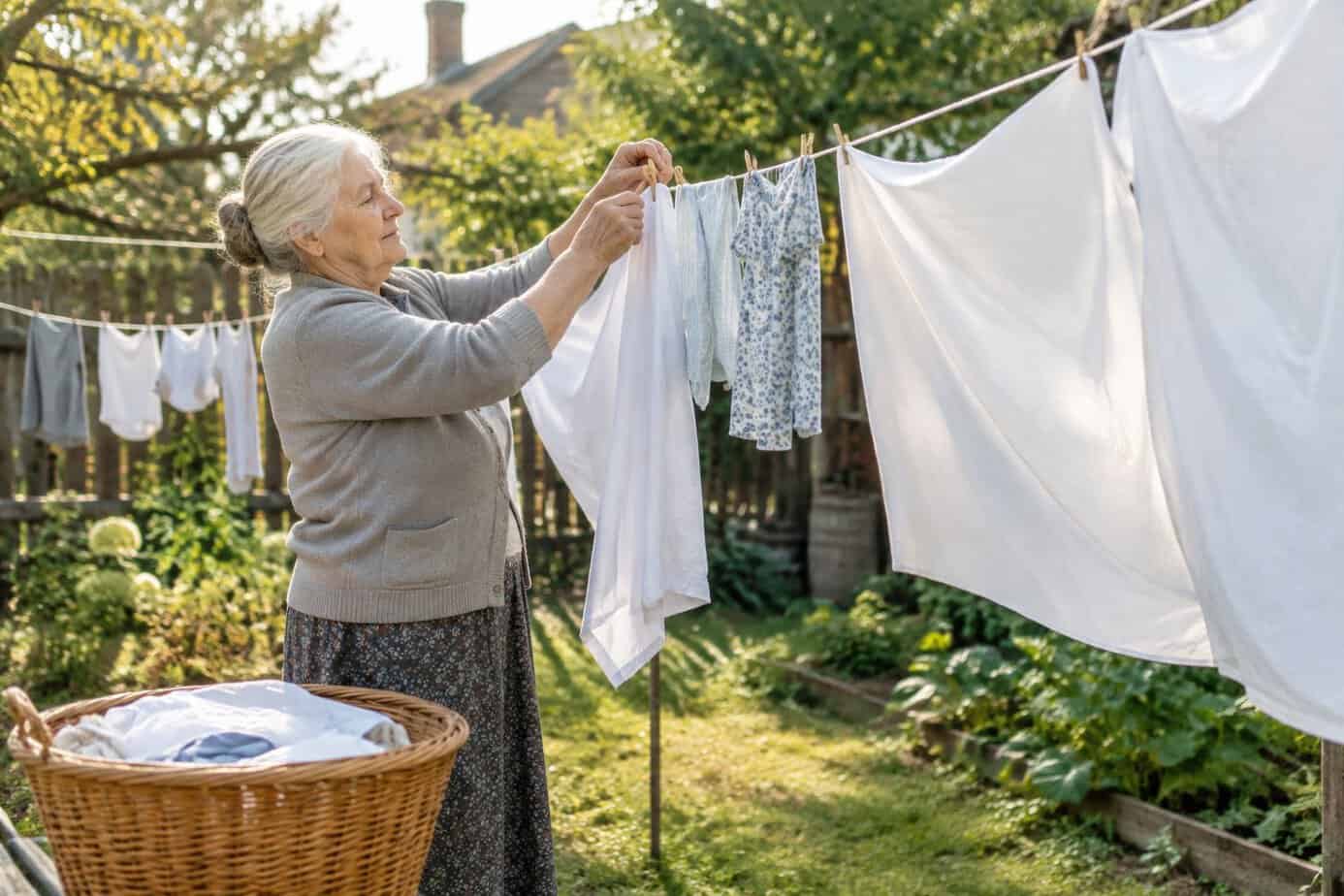
You had a whole system for this, and you took pride in it. The clothesline got wiped down first, because nobody wanted clean sheets touching a dusty line. Then came the sorting: whites in one section, colors in another, and your husband’s work clothes somewhere they wouldn’t rub against anything nice.
Socks went up by the toes, never the cuff. Pillowcases got pinned at the open end so they’d catch a little breeze and fill up like sails. You learned the order through trial and error, usually after a windy day taught you a lesson about hanging shirts by the hem.
Timing mattered too. You watched the sky before committing a whole basket of laundry to the yard, and you knew which neighbors had their own lines up so you weren’t the only one out there in curlers. The smell of sun-dried sheets was worth every clothespin pinched finger.
It took real time out of your morning, but it also got you outside, talking over the fence, watching the kids play while the wash dried. Nobody has that kind of morning anymore.
11. Sprinkling and rolling the clothes for ironing
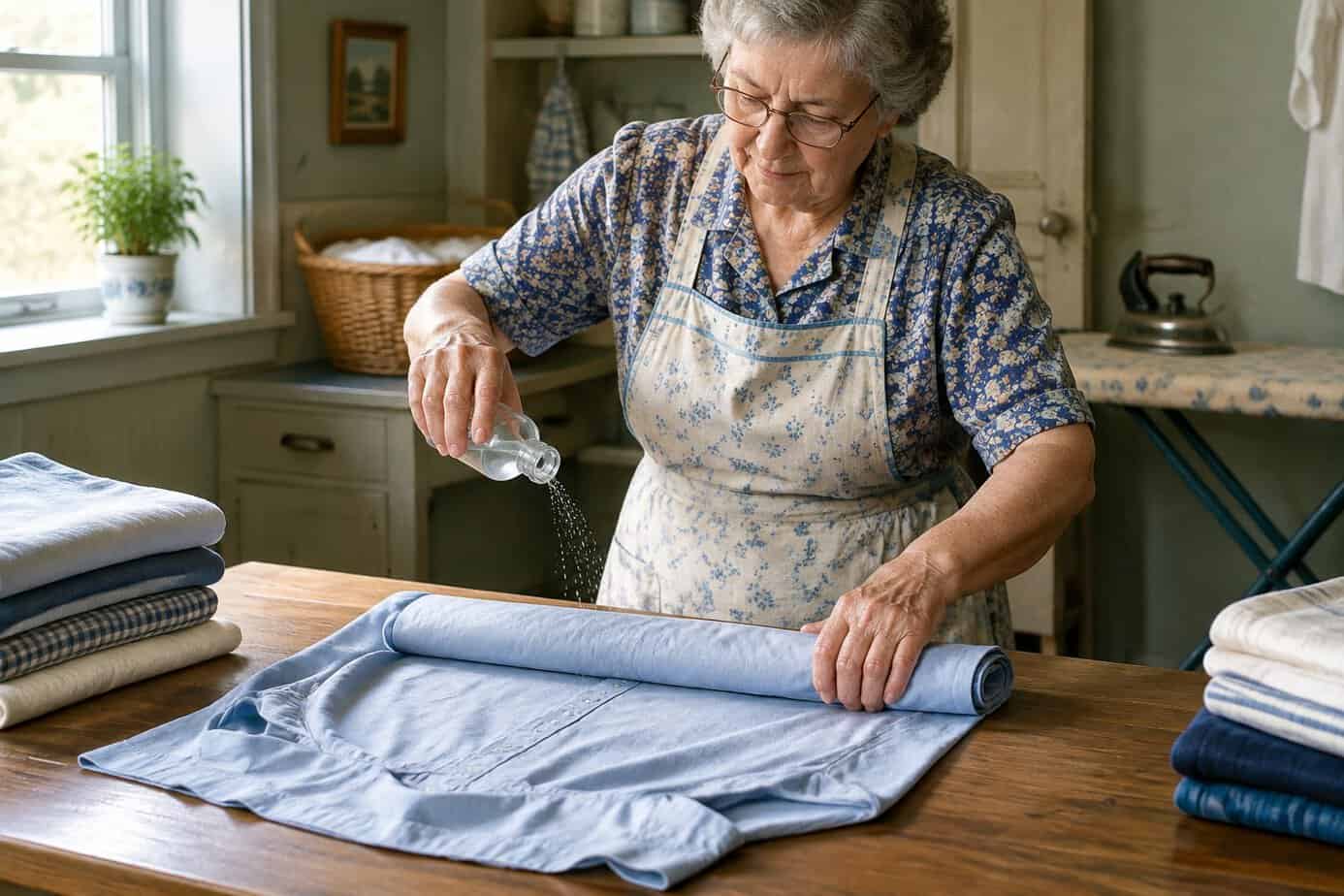
Before you ever plugged in the iron, you had a whole system for getting clothes ready. Cotton and linen dried stiff on the line, so you sprinkled them with water from a bottle fitted with a perforated metal cap, the kind that used to hold Coke or some other soda.
You worked piece by piece, dampening each shirt or pillowcase just enough, then rolling it up tight. The rolled bundles went into a basket or sometimes a plastic bag, and you let them sit for a while so the moisture could soak in evenly.
That waiting part mattered. If you ironed too soon, the fabric was still too wet, and if you waited too long, it dried out again and you were back where you started.
You learned to judge it by feel, almost without thinking. Ironing day usually followed wash day, and by the time you got to pressing, your kitchen or back room smelled like clean, damp cotton.
It was slow work, but it made the ironing go so much easier, with fewer wrinkles fighting back against the iron.
12. Ironing sheets, pillowcases and handkerchiefs
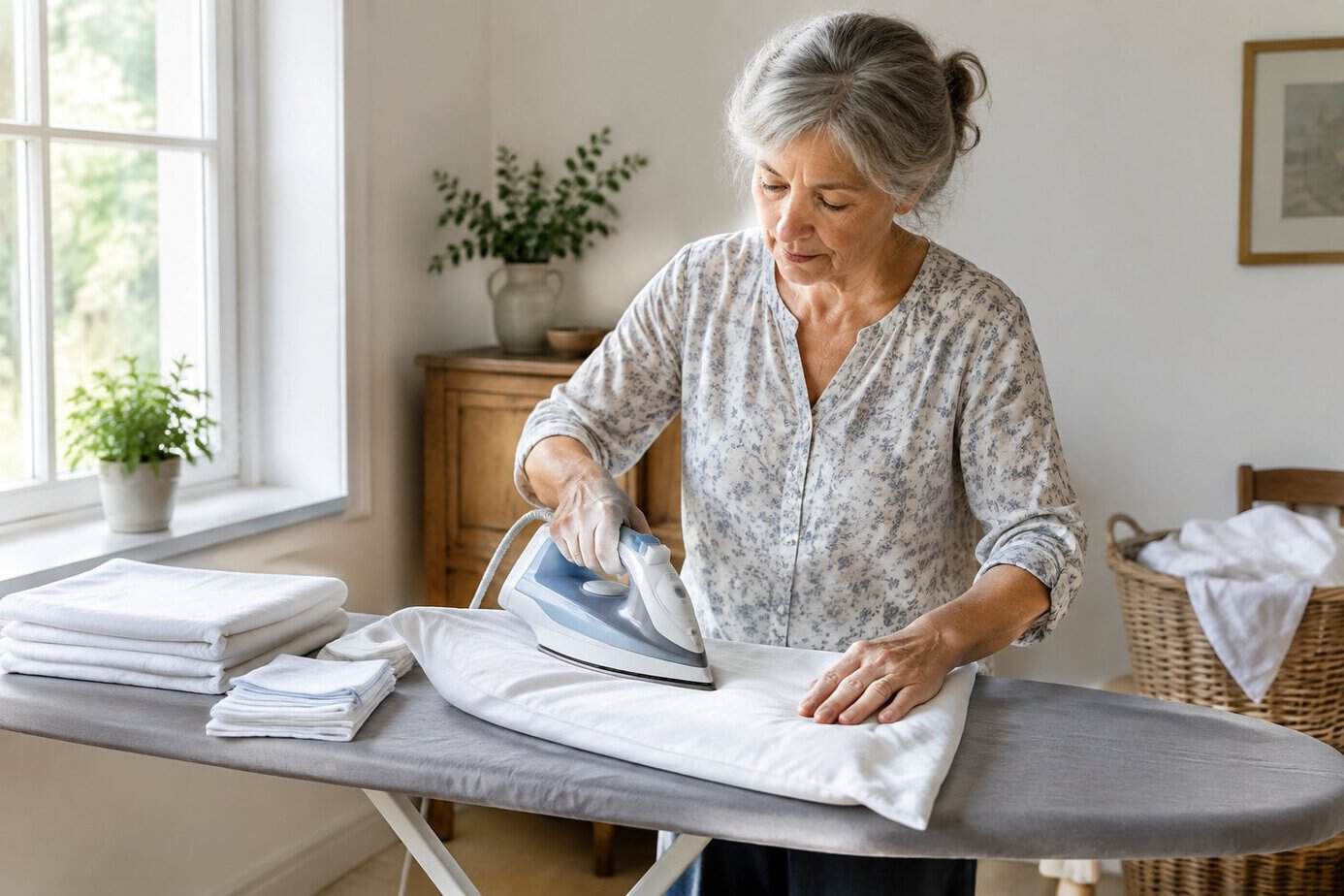
You pulled everything off the line still slightly damp, because dry fabric never pressed as well. The ironing board stayed set up in the corner for most of the week, not just folded away after one quick session.
Sheets were the real test of patience. You learned to fold them in thirds lengthwise so you could press long, even strokes without the fabric bunching or dragging on the floor.
Pillowcases went faster, and there was something satisfying about stacking them in neat, matching piles. Handkerchiefs were small enough to knock out while you waited for water to boil or a phone call to end.
Nobody told you it was required. It just felt careless to put wrinkled linens on a bed or hand someone a crumpled handkerchief.
You did it between other chores, not as a separate event. The iron stayed warm, the basket stayed full, and somehow the work folded itself into the rest of your day.
Looking back, you’re not sure where you found the time. You just did, because that was simply how things were done back then.
13. Folding laundry while your soap opera was on
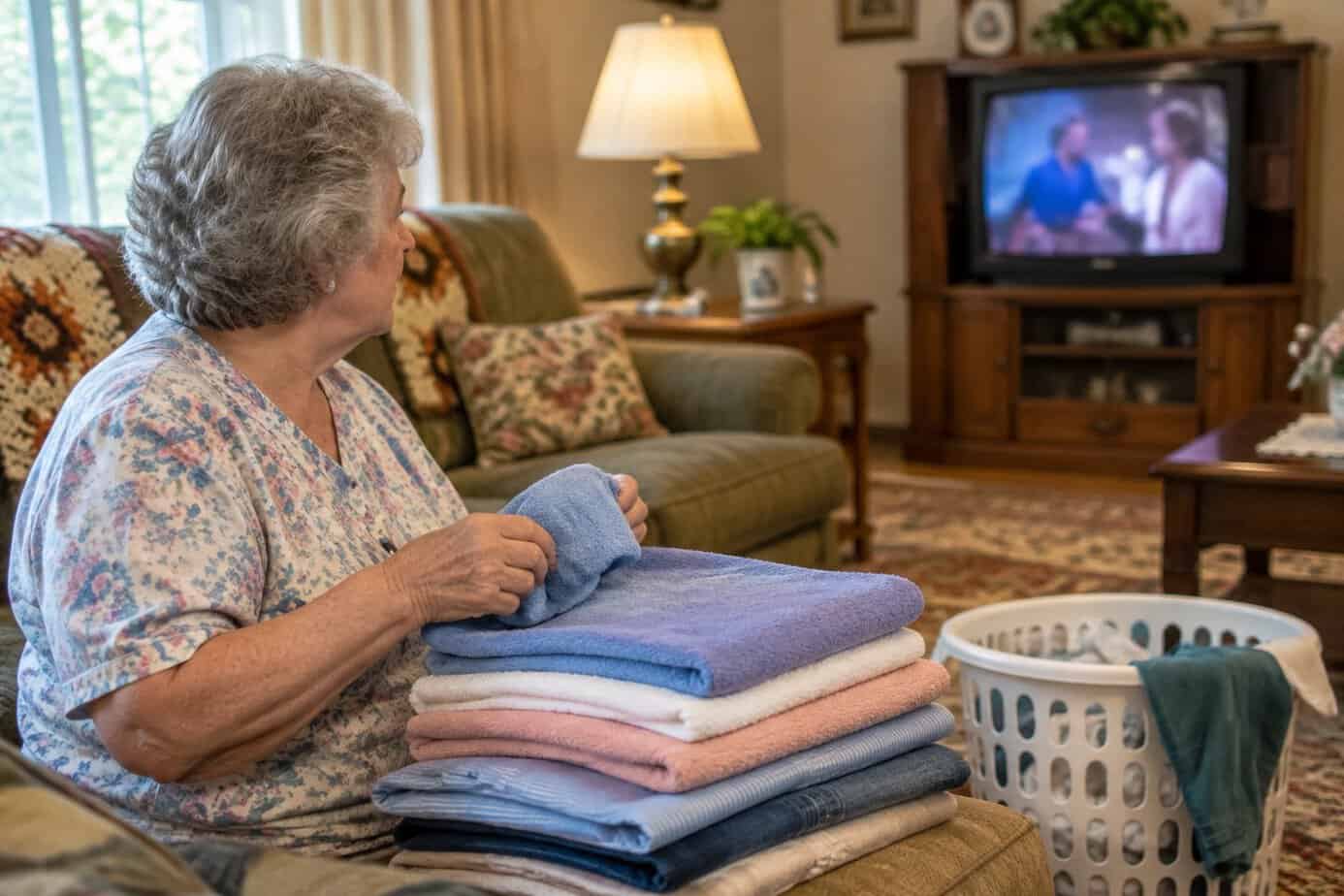
Two o’clock meant one thing in your house: your program was starting, and you had a full basket of laundry waiting to be folded. So you dragged the basket into the living room, parked yourself in front of the television, and let the folding and the story happen at the same time.
You knew the storylines by heart, but you still watched closely while your hands moved through towels and undershirts without you ever looking down. Folding became automatic after enough years of practice. Your eyes stayed on the screen while some scandal unfolded between two characters who seemed to divorce and remarry every few months.
The pile of clothes shrank as the episode went on, and somehow you always finished folding right as the credits rolled. It felt like the perfect use of thirty minutes, getting a chore done while catching up on whatever drama was happening in that fictional town.
Nobody multitasks like that anymore, not with a basket of warm towels and a story playing in the background. You had your show, your laundry, and your spot on the couch, and that was enough for one afternoon.
14. Rinsing the milk bottles for the milkman
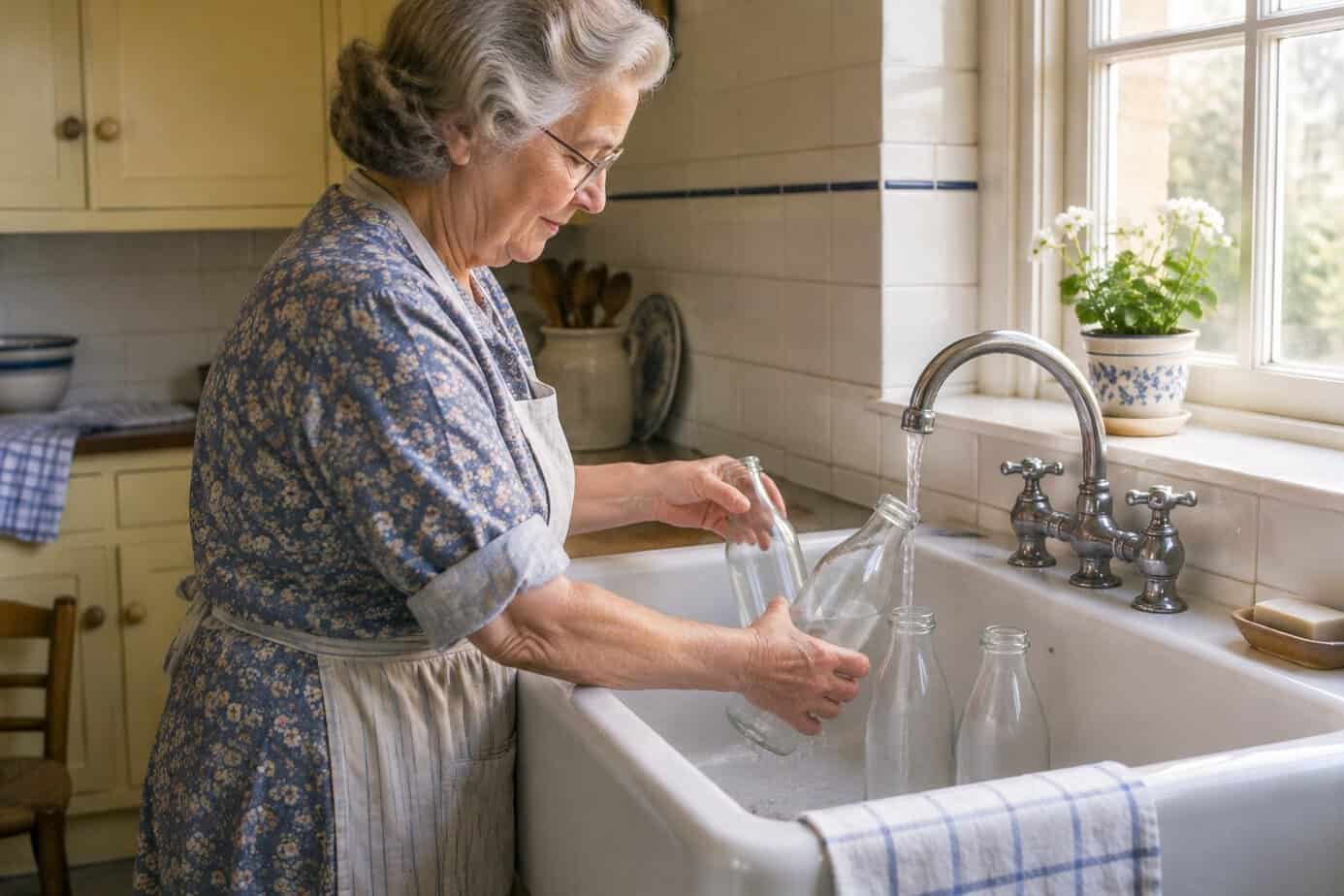
Every evening, you rinsed out the empty milk bottles before setting them on the porch. It only took a minute, but skipping it meant a sour smell waiting for you the next day.
You lined the bottles up by the back door, usually right after the supper dishes were done. Sometimes you tucked a note inside one, letting the milkman know if you needed an extra quart or some cottage cheese that week.
The milkman came early, often before you were even fully awake, and swapped your empties for fresh, cold bottles. You got used to listening for the clink of glass on the step.
It felt like a small chore, but it was part of a system that ran like clockwork. You trusted it completely, the way you trusted the mail to arrive or the paper to land on the lawn.
These days, nobody rinses bottles for a milkman anymore. Home delivery faded as neighborhoods spread out, the milkman’s routes grew longer and costlier, and milk moved to cartons at the supermarket. But you still remember the satisfying clink of glass bottles early in the morning, and the quiet routine of setting them out the night before.
15. Walking to the butcher and the corner market

You didn’t drive to the store for one onion. You put on your shoes and walked, because the butcher was six blocks away and the corner market was even closer, and that was just how you got groceries.
The butcher knew your order before you said it. You’d ask for a pound of ground beef or a chicken for Sunday, and he’d wrap it in that white paper and tie it with string, no questions needed.
The corner market smelled like produce bins and the wood floor, and the owner knew your name along with everyone else’s on the block. You picked up milk, bread, maybe a can of something you forgot, and you paid attention to what was fresh that day instead of planning a whole week in advance.
Walking there meant you saw your neighbors, stopped to talk, maybe carried a sack of groceries home with one arm while a child held your other hand. It wasn’t a chore exactly. It was just part of the day, woven into everything else you had to do.
16. Clipping coupons from the newspaper
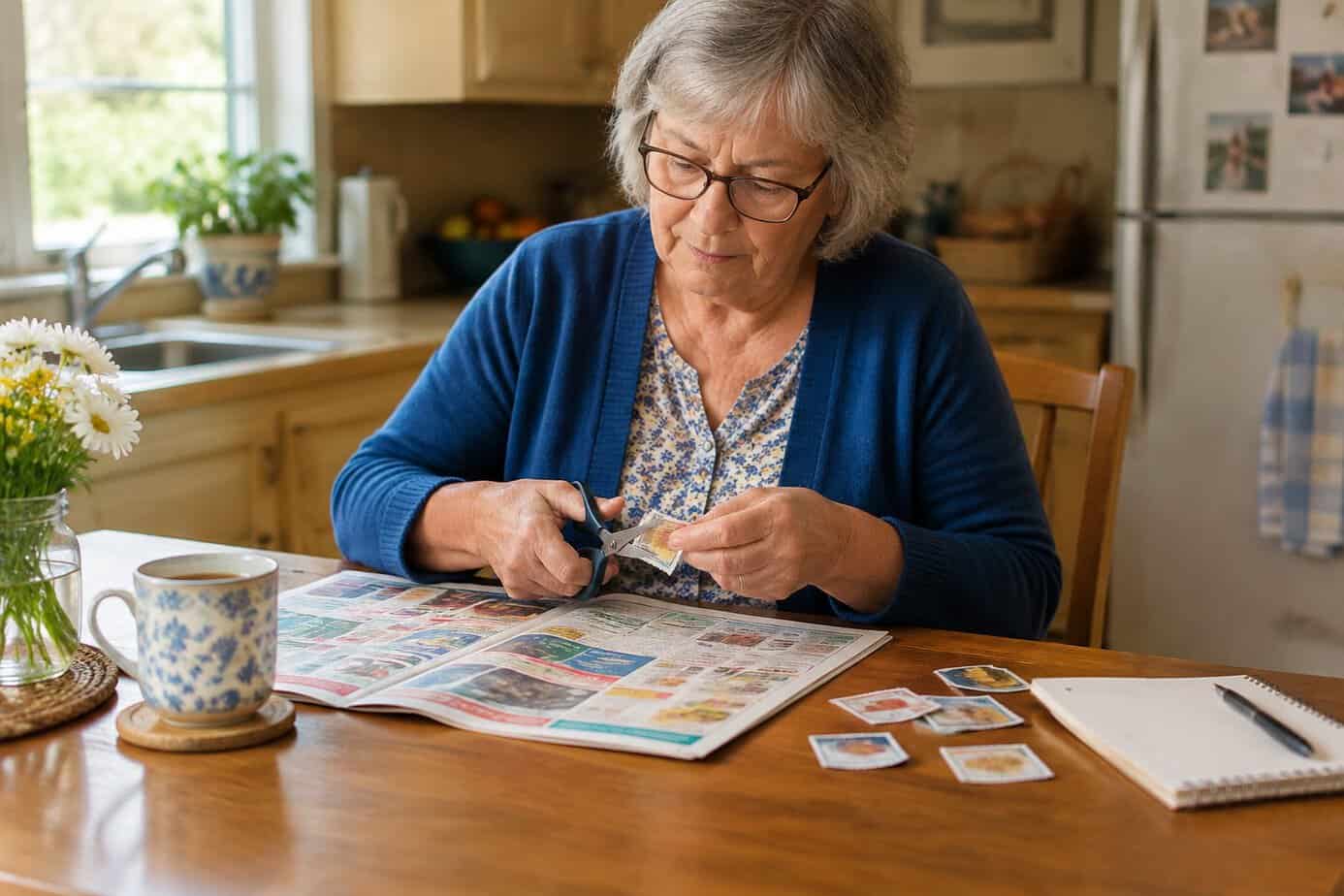
Sunday mornings had a ritual all their own. After the paper landed on your porch, you pulled out the circulars before anyone could touch them. Coffee in one hand, scissors in the other, you sat at your kitchen table and got to work.
You cut along the dotted lines, careful not to waste a single coupon. Some went into an envelope, others into a small box with little dividers for meat, canned goods, cleaning supplies, and anything else you bought regularly. You knew exactly which store had double coupon days and planned your shopping list around it.
It wasn’t just about saving a few cents here and there. Those coupons meant you could stretch the grocery budget enough to buy something extra, maybe a treat for the kids or a cut of meat you wouldn’t normally splurge on. You took pride in coming home with bags full of groceries and a receipt that showed how much you’d saved.
Hardly anyone waits for the Sunday paper anymore, let alone sits down with scissors. It was slow, careful work, but it felt like you were in control of your household budget in a way that mattered.
17. Calling your mother on the kitchen phone

Every day, usually around the same time, you picked up the phone that hung on your kitchen wall and dialed your mother’s number from memory. The cord stretched just far enough to let you stir a pot or check the oven while you talked. Nobody needed to look up the number because it lived in your head, right alongside your own.
These calls were not quick. You talked about what was for supper, what the kids had done, and whatever small thing had happened at the store that day. If you were still on a party line, that sometimes meant waiting your turn, or trying not to listen when someone else was already talking.
There was no texting, no quick check-in between errands. If you wanted to hear your mother’s voice, you set aside real time and stood right there in the kitchen for it. The phone cord wrapped around your finger while you leaned against the counter, settling in for a proper conversation.
Those calls kept you connected in a way that felt steady and expected, almost like a small appointment you never had to write down. You simply knew it was coming, and so did she.
18. Having coffee with the neighbor ladies

Most mornings, once the kids were off and the beds were made, you’d put the percolator on and wait for the knock at the back door. It was never really planned. Someone just showed up, cup in hand sometimes, and you’d sit at the kitchen table for twenty minutes or an hour, depending on the day.
You talked about whatever needed talking about. Whose kid had the chicken pox, what was on sale at the grocery store, a recipe someone wanted to borrow. Nothing important, and somehow everything important.
Nobody called ahead. That wasn’t really a thing yet, not for a quick visit next door. You just listened for the door and figured if it was a bad time, she’d understand and come back later.
The coffee itself was never fancy. Folgers or Maxwell House, maybe a little cream if you had it. Nobody was impressed by the coffee. It was just the reason to sit down.
These days everyone’s schedule is so tight that a spontaneous knock on the door feels like an imposition instead of a gift. You miss that version of friendship, the kind that didn’t need an invitation.
19. Listening to the radio while you did the housework
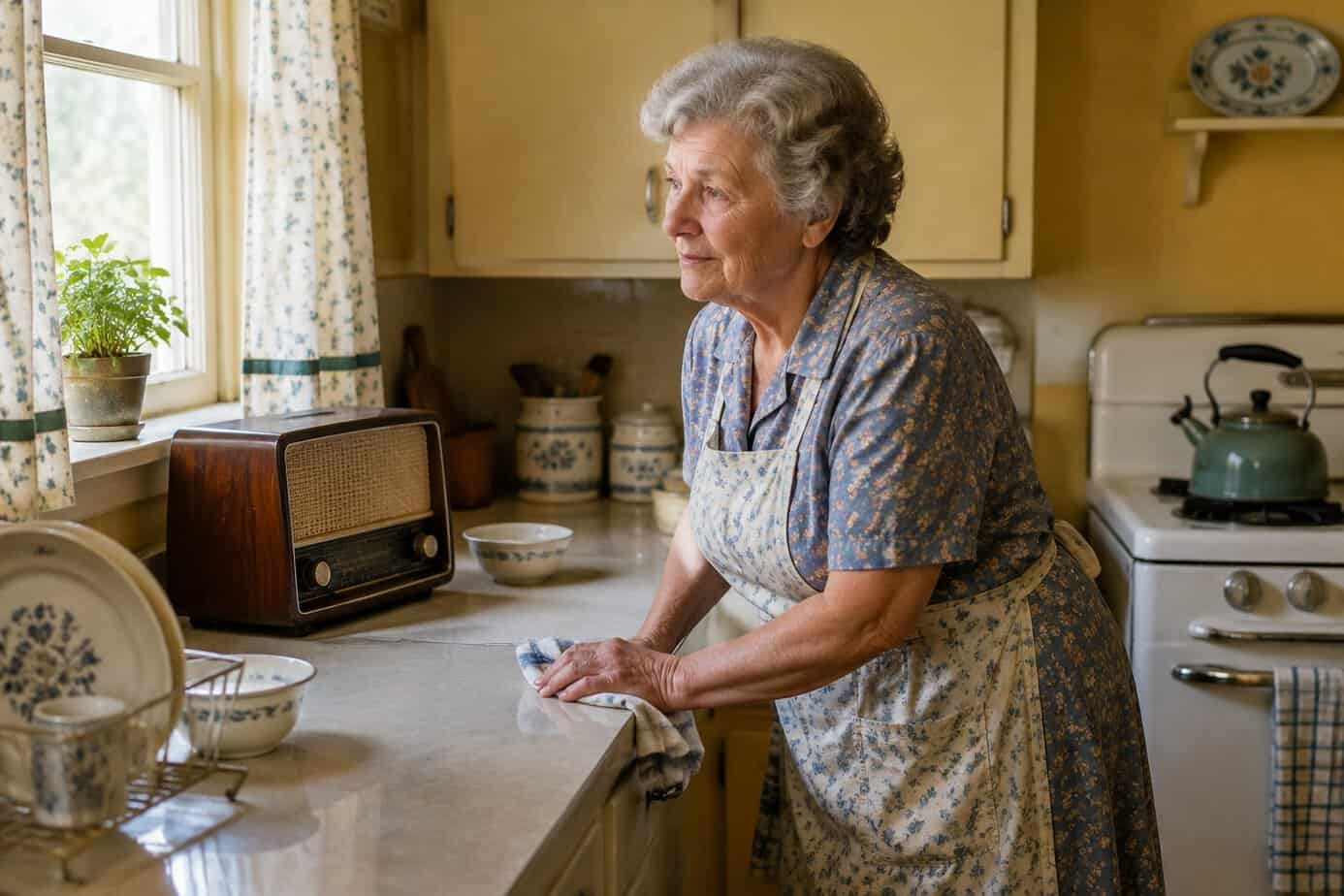
You kept the radio on a shelf in the kitchen, and it stayed on for most of the morning. There was no screen to look at, just voices and music while you worked around it.
You knew the local station’s schedule by heart. News came on at the top of the hour, then music, then maybe a call-in segment, and you timed your chores around it without even trying.
Ironing went faster with a little background noise. Scrubbing the sink, sweeping the floor, folding laundry on the table, it all felt less like a chore with something playing in the next room.
You did not pick songs. You took whatever came on, and most of the time that was fine with you. A song you did not care for just meant the next one was coming soon.
The radio also kept you company when the house was quiet, especially once the kids were off at school. It filled the silence without asking anything of you, and you could still hear the phone ring or a knock at the door over it.
20. Picking vegetables from the backyard garden for supper

Every evening around five, you walked out to the garden with a bowl tucked under your arm. Supper depended on whatever was ripe that day, not the other way around. You learned to read the garden like a calendar, knowing exactly when the beans would be ready or the tomatoes would finally turn.
Picking was never a chore you dreaded. It was simply part of getting supper on the table, as normal as setting out the plates. You pinched off green beans, twisted ripe tomatoes free, and pulled up a few carrots, brushing the dirt against your apron.
The kids sometimes tagged along, though they were more interested in eating a sun-warm tomato right there than helping fill the bowl. You didn’t mind. A little dirt never hurt anyone back then.
By the time you got back inside, supper practically planned itself. Whatever filled your bowl became the meal. There was no deciding what to cook first and shopping second. The garden decided for you, and somehow that made cooking feel simpler, even on the busiest days.
21. Keeping the cookie jar full
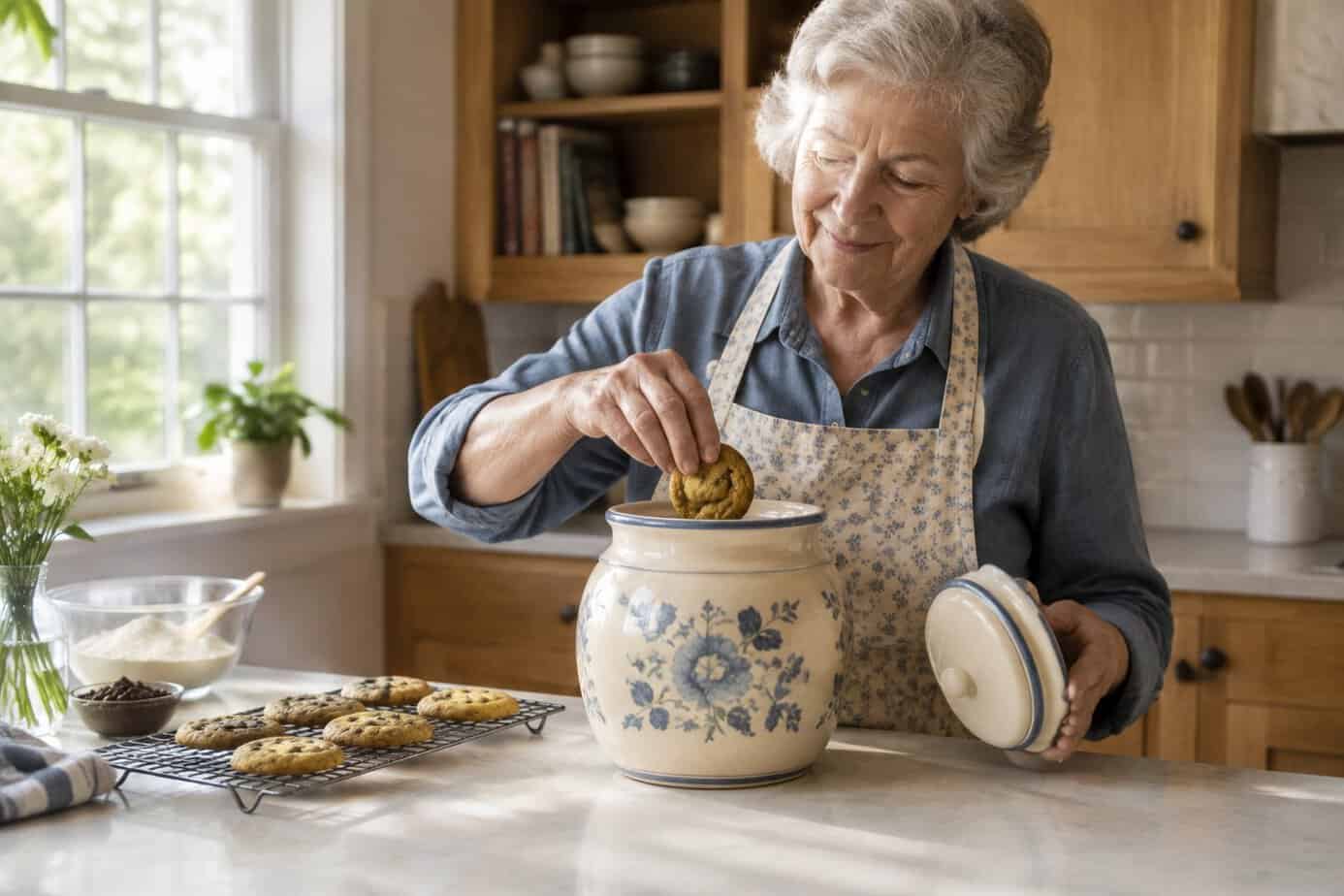
Your cookie jar never sat empty for long, and keeping it stocked was simply part of your weekly rhythm. You baked in batches, not because anyone asked, but because you knew the jar would be raided within a day or two. Chocolate chip, oatmeal raisin, sugar cookies dusted with a little extra sugar on top. Whatever you had the ingredients for became the flavor of the week.
You kept a running mental list of what everyone liked best. One child wanted the soft ones, another preferred them crisp around the edges. You baked a double batch on purpose, knowing half would disappear before suppertime.
Flour, sugar, and shortening were kitchen staples you never let run low, precisely because baking day could arrive without warning. A neighbor might drop by, or the kids might come home from school with friends in tow.
The jar itself usually sat on the counter in plain sight, lid a little loose from all the opening and closing. You refilled it almost without thinking, the same way you checked the mail or wiped down the table. It was a small thing, but it meant your kitchen always had something sweet waiting for whoever walked through the door.
22. Saving bacon grease in a can by the stove
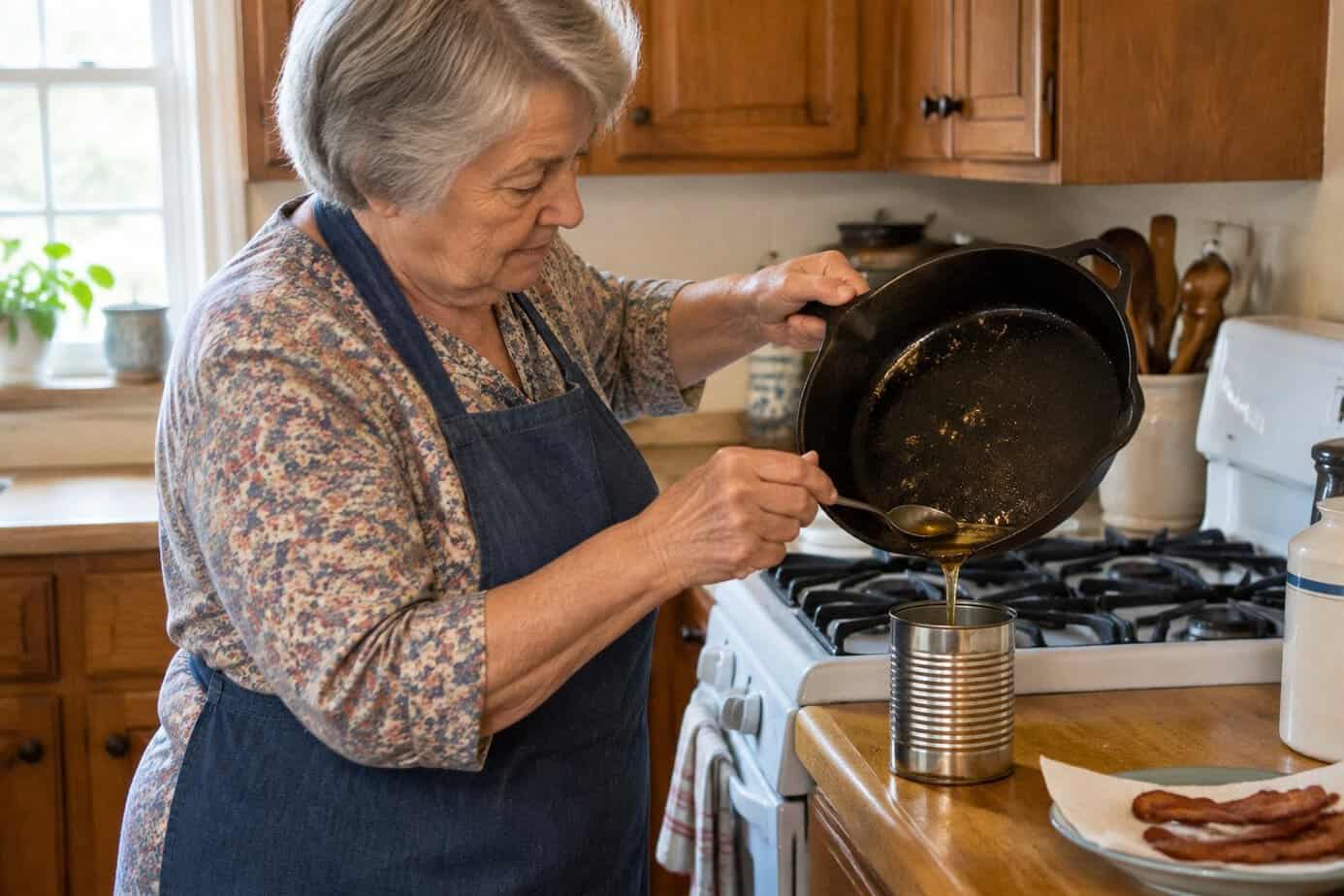
You never threw out bacon grease. That old coffee can sat right by the stove, and every time you fried bacon, the warm fat went straight into it instead of down the drain.
Butter was for toast and special things. For nearly everything else, that can of grease did the job. A spoonful went into the skillet before frying eggs, potatoes, or cornbread, and it gave everything a little extra flavor you couldn’t quite get any other way.
Nothing fancy sat there. Just a can, no lid half the time, kept close enough to reach without thinking twice. You topped it off whenever you cooked bacon again, so it never really ran out.
It wasn’t about being clever or thrifty for show. It just made sense to you. Why buy more fat when you already had good grease sitting right there, still warm from breakfast?
Looking back, it was such a small habit, but it quietly shaped how your kitchen worked every single day.
23. Making supper from scratch every night
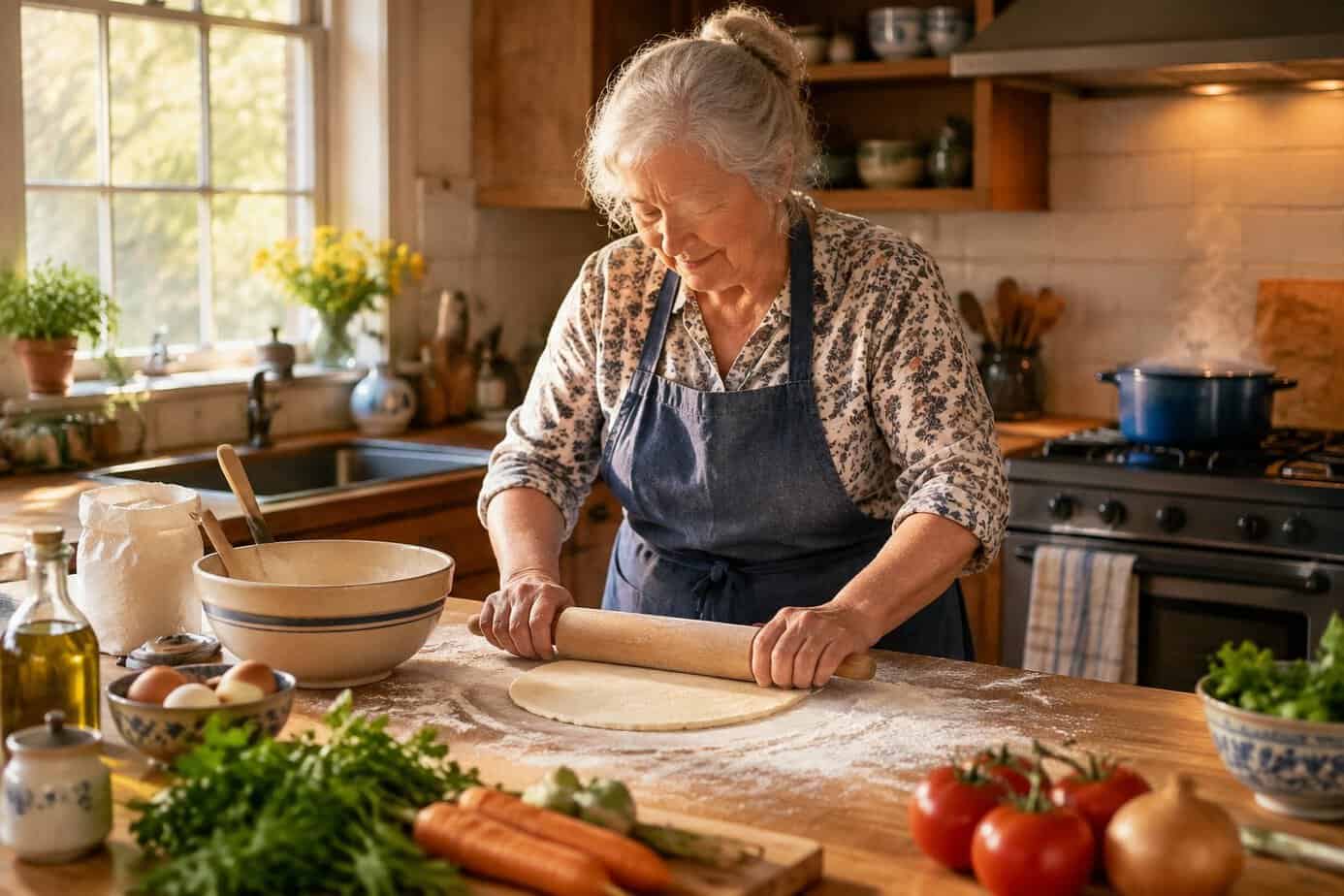
Every evening, you stood at the stove with no real choice in the matter. There was no delivery menu tucked in a drawer and no frozen tray to slide into the oven. You pulled out what you had, usually something from the pantry and whatever meat was on sale that week, and you made it into dinner.
You planned meals around what was actually available, not what sounded good on a whim. Monday might mean a roast stretched into Tuesday’s hash. Friday often meant fish, just because that’s how the week always went.
There was no rushing the process, either. Gravy needed stirring, bread needed rising, and a pot roast needed hours you simply gave it without complaint. You timed everything so it landed on the table the moment your family walked through the door.
Nobody asked if you were tired. You just put your apron on and got started, the way you did every single day before it and every day after.
It wasn’t fancy, but it was dinner, made by your own hands, in your own kitchen, from almost nothing but effort and habit.
24. Setting the table for a sit-down dinner
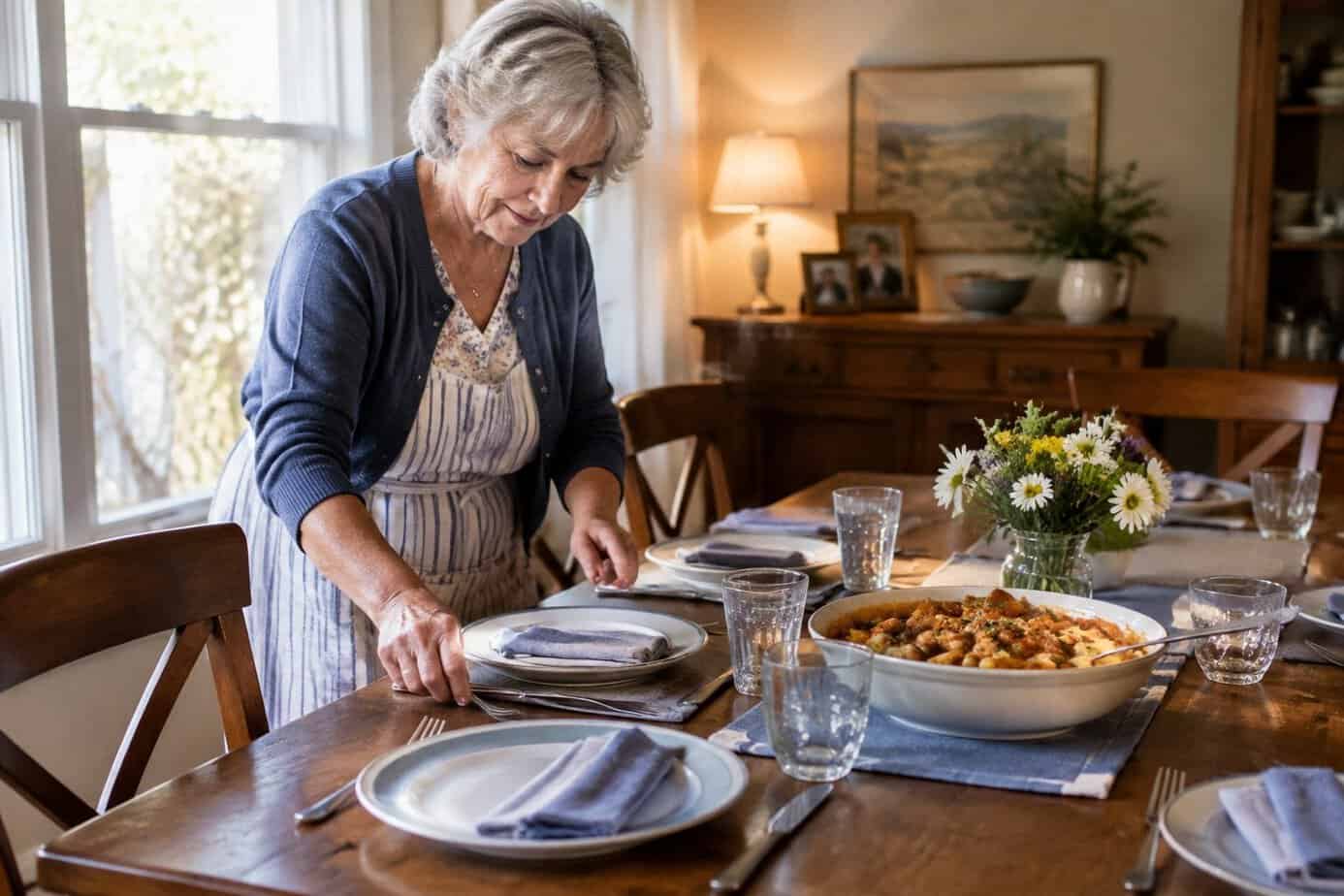
Every evening before anyone sat down, you set the table properly. Placemats or a tablecloth went down first, then plates, forks on the left, knives and spoons on the right. Nobody taught a class on it. You just knew it from watching it done the same way a thousand times.
Glasses went at the top right of each plate, napkins folded next to the fork. If it was a special night, you might fold them into triangles or tuck them into glasses. Most nights, though, a simple fold did the job just fine.
You set a place for everyone before calling anybody to the table, kids included. There was no grabbing a plate from the cupboard and eating standing up at the counter. Dinner meant sitting down together, and the table reflected that.
It only took a few minutes, but it signaled that dinner was an event, not just refueling. These days, people eat in front of screens or in the car between activities. Back then, the table setting was the quiet announcement that the day was pausing for a meal.
25. Freshening up before your husband came home
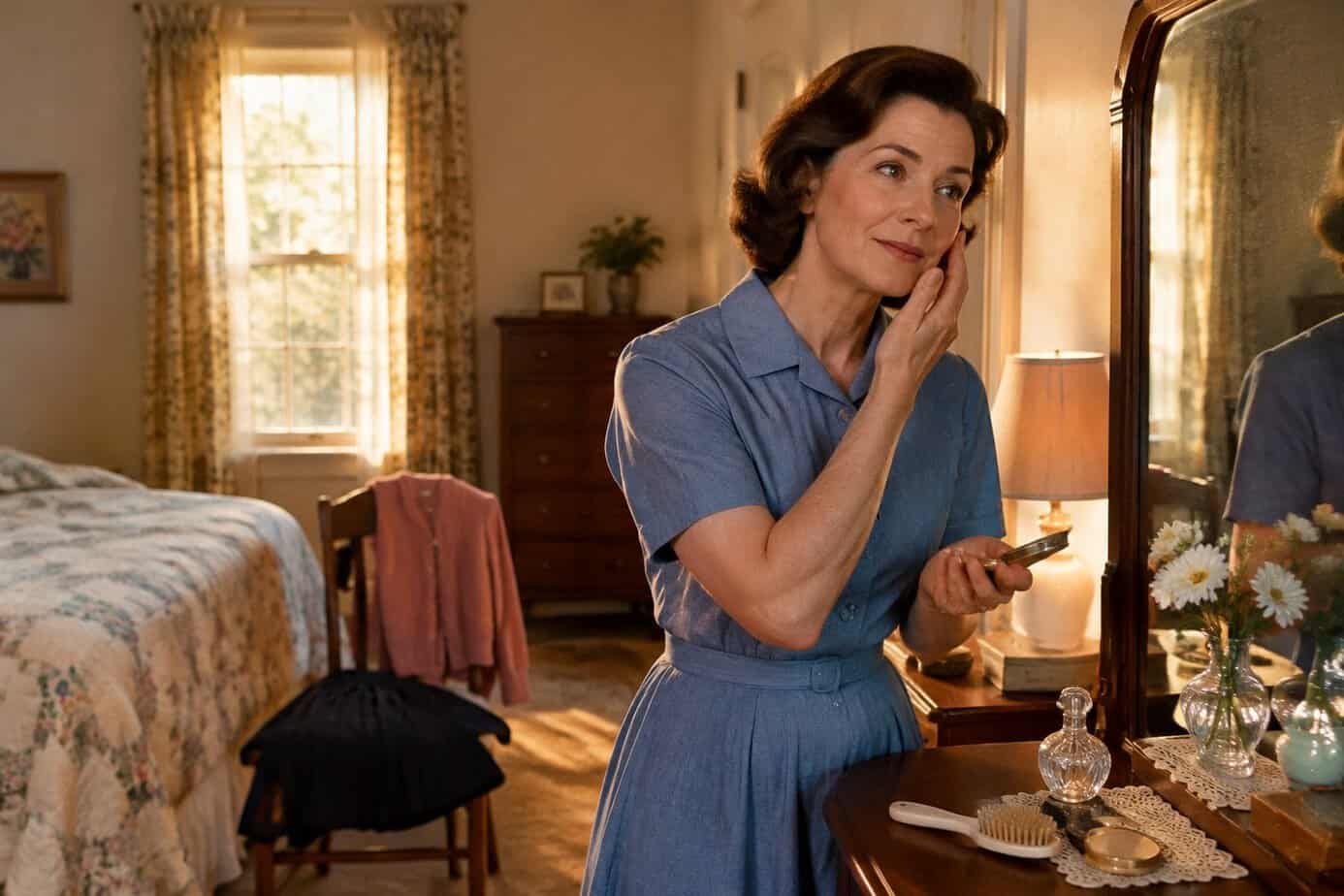
By late afternoon, you were already thinking about the sound of the car in the driveway. You washed your face, maybe dabbed on a little powder, and ran a comb through your hair. It only took a few minutes, but it mattered to you.
You often changed out of your housedress into something a bit nicer. A clean apron over a pressed blouse felt like the right way to greet him after a long workday. It was not about dressing up exactly, just about looking put together.
A quick swipe of lipstick was common too, even if you had been chasing kids or scrubbing floors all day. You wanted the house, and yourself, to feel calm and welcoming when he walked through the door.
Dinner was usually already on the stove by then, filling the kitchen with good smells. Freshening up felt like part of that same ritual, a small pause before the evening began. It was less about appearances and more about marking the end of one part of the day and the start of another, together.
26. Calling the kids in for supper from the back door
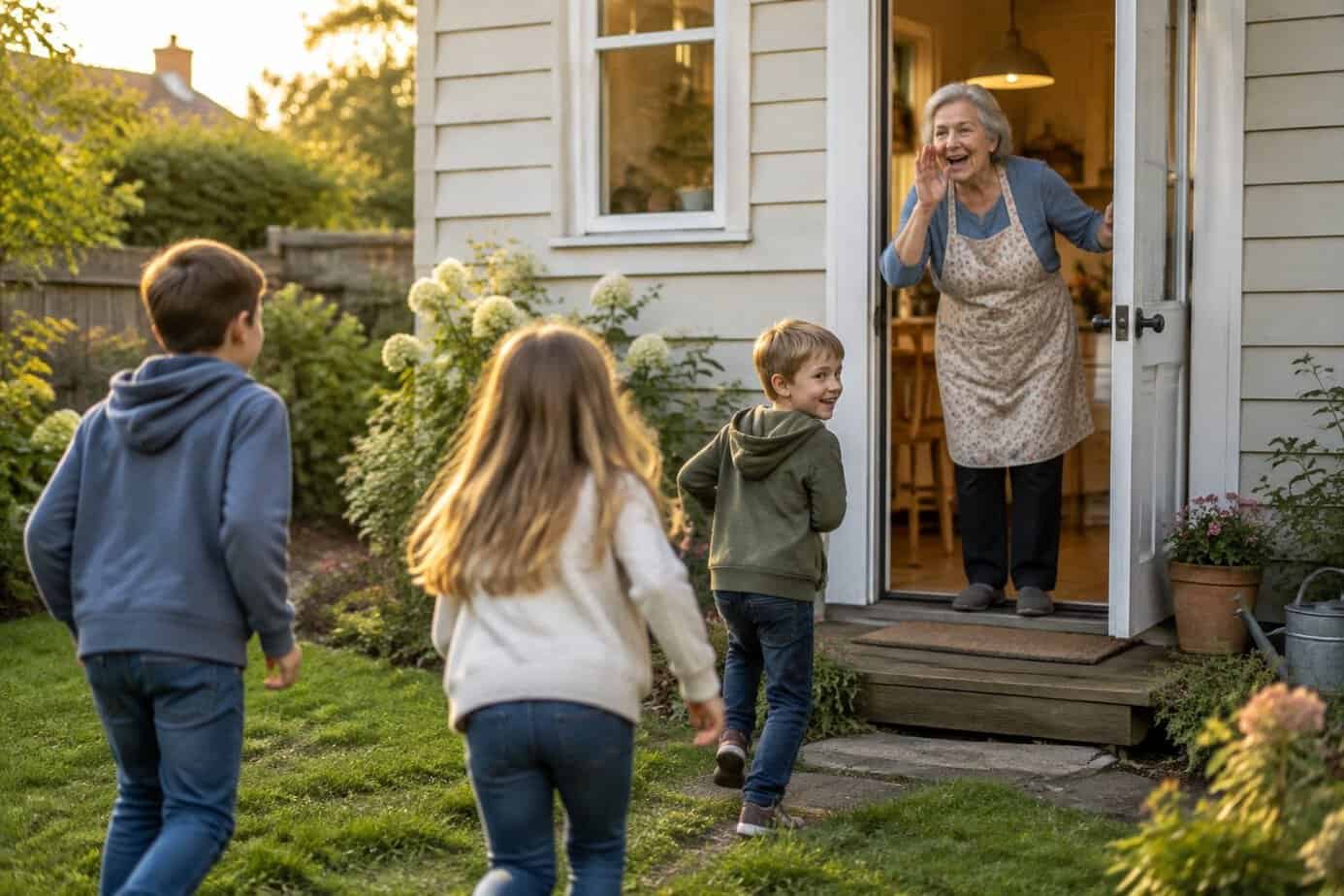
There was no texting anyone when supper was ready. Instead, you walked to the back door, cupped your hands around your mouth, and hollered out across the yard. Every mother on the street had her own version of the same call, and somehow all the kids knew exactly which one belonged to them.
The trick was making your voice carry far enough to reach the far end of the block, where the kids had wandered off chasing something more interesting than homework. You might call once, then again a little louder, then threaten a third call that meant business.
There was no checking a screen to see where anyone was. You just trusted they would hear you, or that some other kid would relay the message down the street like a game of telephone.
By the time they came running, hands dirty and out of breath, supper was already on the table getting cold. You didn’t mind much. That was just how the evening worked, and it always seemed to sort itself out fine.
27. Washing and drying the dishes by hand
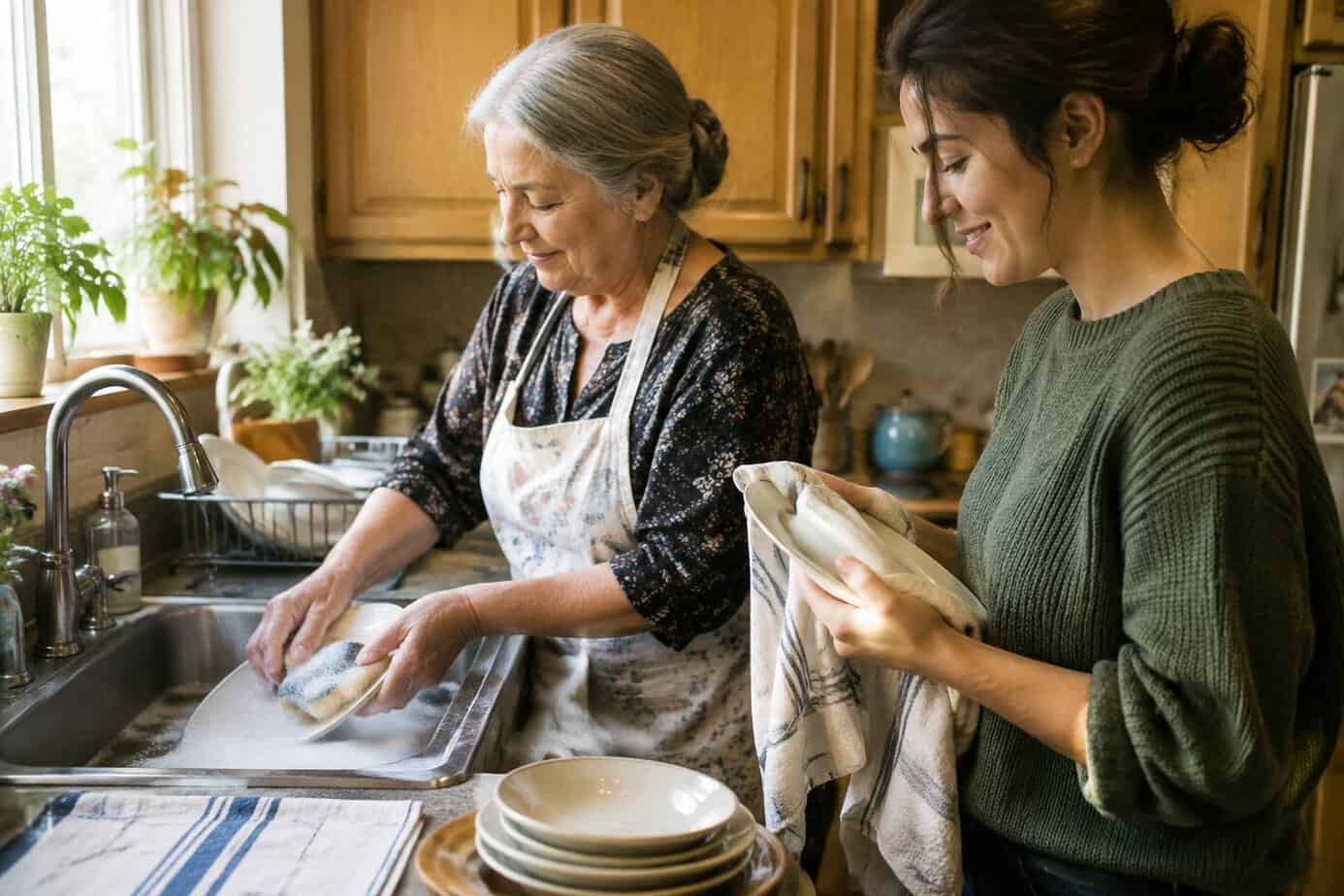
Every meal ended the same way. You filled one side of the sink with hot soapy water and the other with clean water for rinsing, and you got to work while the table was still being cleared around you.
There was no dishwasher humming in the corner. Your hands did the job, and you knew exactly how hot the water could get before it was too much to bear.
Drying was its own small ritual. You kept a stack of cotton dish towels nearby, and someone usually stood next to you to dry and put away while you kept washing.
Pots with stuck-on food got set aside to soak, and you’d come back to them once the easier dishes were done. Glasses went first, so they stayed clear and spot-free, and greasy pans came last.
It took time, maybe twenty minutes or more after a big dinner, but it gave you a quiet moment to think or chat about the day. Your kitchen always smelled like dish soap and clean towels by the time you finished.
28. Taking tomorrow’s meat out of the freezer
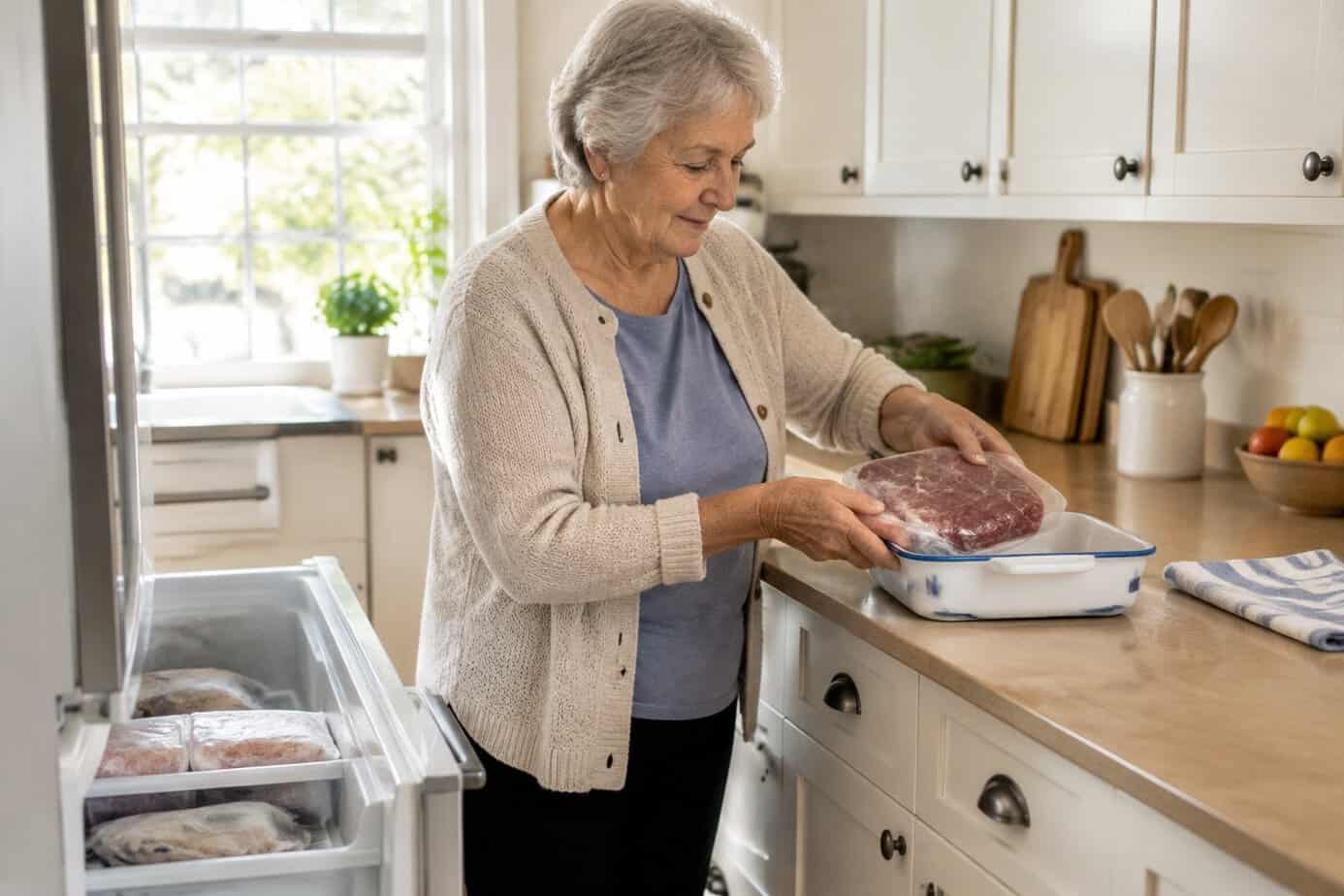
Every evening, before you did anything else in the kitchen, you opened the freezer and pulled out whatever meat tomorrow’s dinner required. There was no last-minute scrambling, because you planned a day ahead out of necessity.
Most kitchens didn’t have a microwave yet, so there was no defrost button to bail you out. You knew a roast or a package of chicken needed a full day in the refrigerator to thaw properly, so you built that step into your routine without a second thought.
You kept a rough mental list of what was down in that freezer, too. There was no app to check, no photo on your phone. You just remembered, the same way you remembered how much flour was left in the bin.
Setting the meat out became as automatic as locking the door at night. You did it while the dishes dried or while the children finished their homework at the table.
It wasn’t a chore you dreaded. It was simply part of running a kitchen that fed people every single day, rain or shine.
29. Giving the children their baths every night
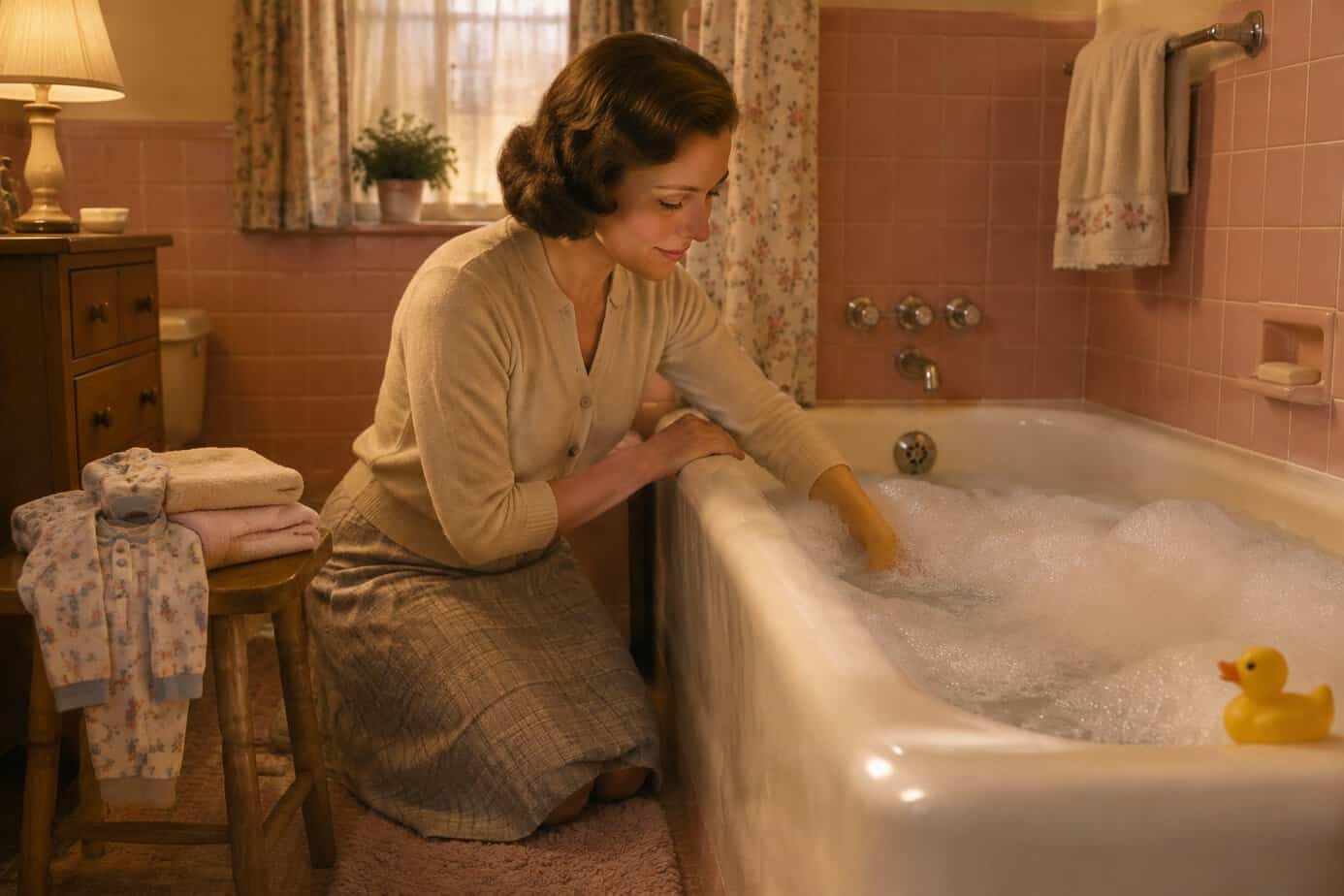
Every evening, no matter how tired you were, you ran bathwater for the kids before bed. It just seemed like part of the deal, right alongside dinner and bedtime stories. You didn’t think twice about it.
You probably didn’t have the luxury of letting anyone skip a night, either. Dirt from the yard, sticky hands from supper, scraped knees that needed a good look over. A bath took care of all of it in one go.
You likely filled the tub only partway to save on hot water, especially if money was tight that month. Two or three kids might share the same bathwater, youngest to oldest, and nobody complained about it. That was just how things worked in your house.
Afterward came the toweling off, the pajamas, the combing out of wet hair before anyone was allowed near a pillow. It was routine, almost automatic, the kind of thing you did without needing to think about whether it was necessary. Nowadays, with sports practices and late dinners and everyone exhausted by eight, a nightly bath for every child sounds like a small miracle of time management you somehow pulled off.
30. Tidying the living room before bed
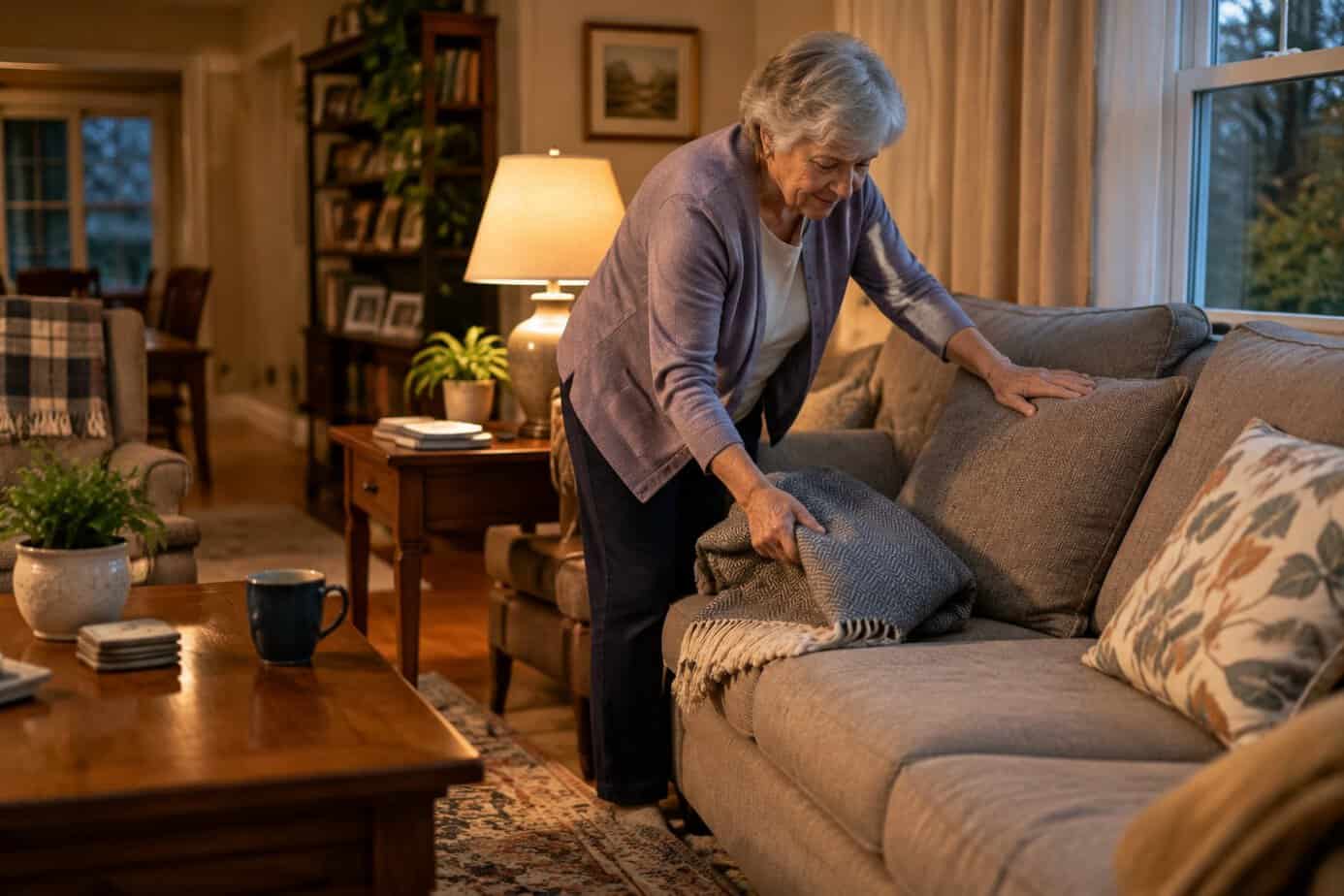
Before you turned in for the night, you walked through the living room and put everything back where it belonged. Magazines got stacked, cushions got fluffed, and any stray shoes or toys got picked up off the floor. It only took a few minutes, but it made a real difference.
You wanted to wake up to a room that looked decent, not one that reminded you of the day before. Coffee cups went back to the kitchen, blankets got folded over the arm of the couch, and the ashtray got emptied if anyone had been smoking. It was a small ritual, but it felt necessary.
Part of it was pride. If someone dropped by unexpectedly in the morning, you didn’t want them walking into a mess. Part of it was just practical, too, since starting the next day with a tidy space made everything feel more manageable.
Nobody made a big deal out of it. You just did it, the same way you brushed your teeth or locked the front door, as one of the last small tasks before bed.
31. Setting your hair in pin curls or rollers at night
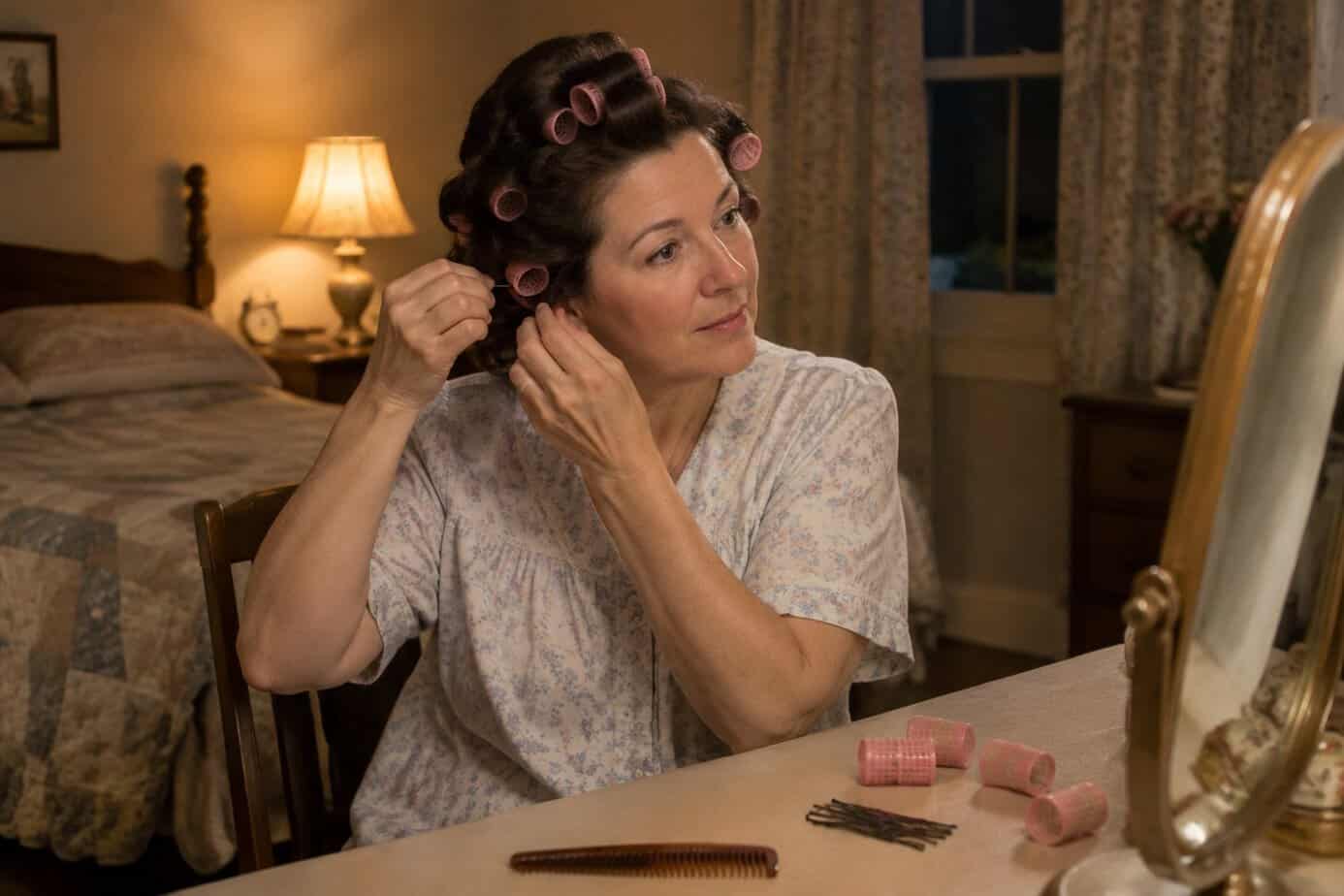
Before bed, you sat at the dressing table and went to work on your hair. Rollers, bobby pins, maybe a little setting lotion if you had it on hand. There was no rushing this part. You sectioned your hair carefully, wound each piece just right, and pinned it so it would stay put until morning.
Sleeping in rollers took some getting used to. You learned how to find a comfortable position, usually flat on your back, so you didn’t wake up with dents or flattened spots. A scarf tied over the whole thing helped keep everything in place through the night.
By morning, your hair had body and curl without you touching a hot iron. A quick brush-out and you were ready for church, errands, or whatever the day held. It felt like a small reward for the effort you put in the night before.
Nobody sleeps in rollers much anymore. Between blow dryers and wash-and-go styles, that nightly ritual has mostly disappeared, though the memory of waking up to a full head of curls still makes you smile.
Why nobody keeps a day like that anymore
Looking back, it is a wonder you fit it all in. From the first perk of the coffee pot to the last bobby pin at night, your day was full of small jobs that each took a little time, and together took nearly all of it.
The machines took over the hard parts
Automatic washers and dryers, dishwashers, wash-and-wear fabrics, frozen dinners and, later, the microwave each took a chore off the list, one at a time. Nobody decided to stop hanging the wash or sprinkling the ironing. The dryer and permanent press simply made it unnecessary, and the rituals faded along with the work.
Most women went off to work
By the late 1970s and 1980s, many of the women on your street had gone back to work, and their daughters grew up planning on jobs of their own. With everyone out of the house by eight, there was no one home to sweep the porch, chat over the back fence or wait for the milkman. If you want to see how much the bigger chores changed too, take a look at these things housewives used to do every week.
What those long days gave you
The work was real, and some days it wore you out. But it also gave your days a rhythm, put you in touch with your neighbors every morning and kept your family around the same table every night. That is the part most people miss when they look back.
Keeping a little of it in your own home today
You don’t need to bring back the diaper pail or the sprinkler bottle to hold on to the best of those days. A few of the old rituals still fit nicely into a modern life.
Pick the one ritual you miss most
Maybe it is sheets dried on the line, a full cookie jar or a real sit-down supper with the table set properly. Choose one and keep it, not because you have to, but because it still makes your home feel like yours. Plenty of the household rules grandma followed still make life easier, too.
Pass it on to the people you love
Your grandchildren have never rolled up a damp shirt for ironing or listened for the clink of milk bottles on the step. Show them how you did it, tell them why it mattered and let them help. That is how these little routines last another generation.