29 Things Every 1980s Working Mom Did That Nobody Gave Her Credit For
You went to work every morning, and when you came home at night, the second shift was waiting. Supper, homework, laundry, baths, permission slips. Somehow it all got done.
If you were a working mom in the 1980s, you were part of something new. By 1980, more than half of American mothers with children at home had jobs, and most of you were doing it without the help working parents take for granted today. No cell phones, no family leave law, no email to tell your boss you’d be late.
You figured it out anyway, one carpool, one casserole and one sick day at a time. Most of it happened quietly, and a lot of it nobody ever thanked you for.
So here’s a thank-you, long overdue. See how many of these sound like your life.
1. Getting everyone dressed and out the door before your own workday started
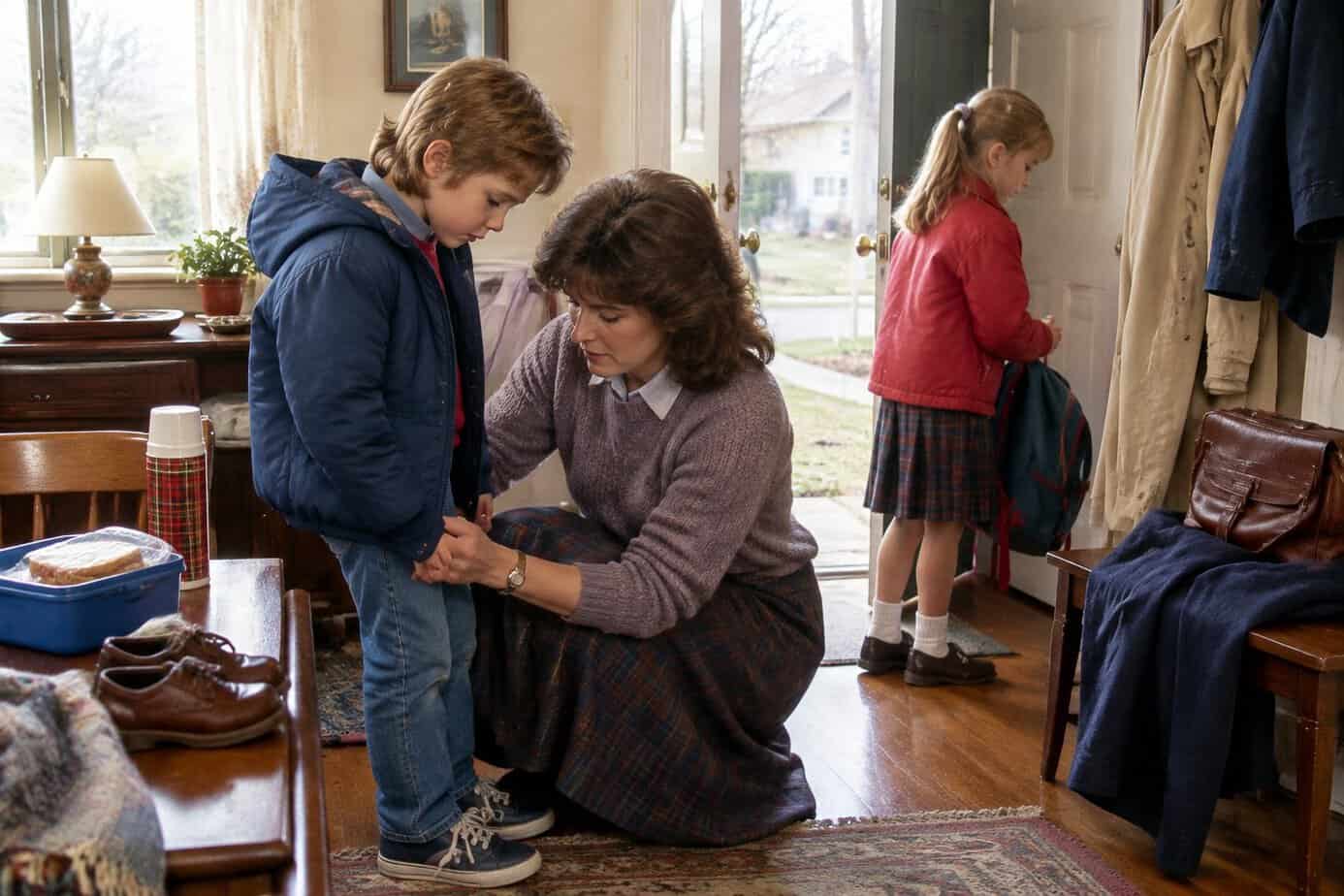
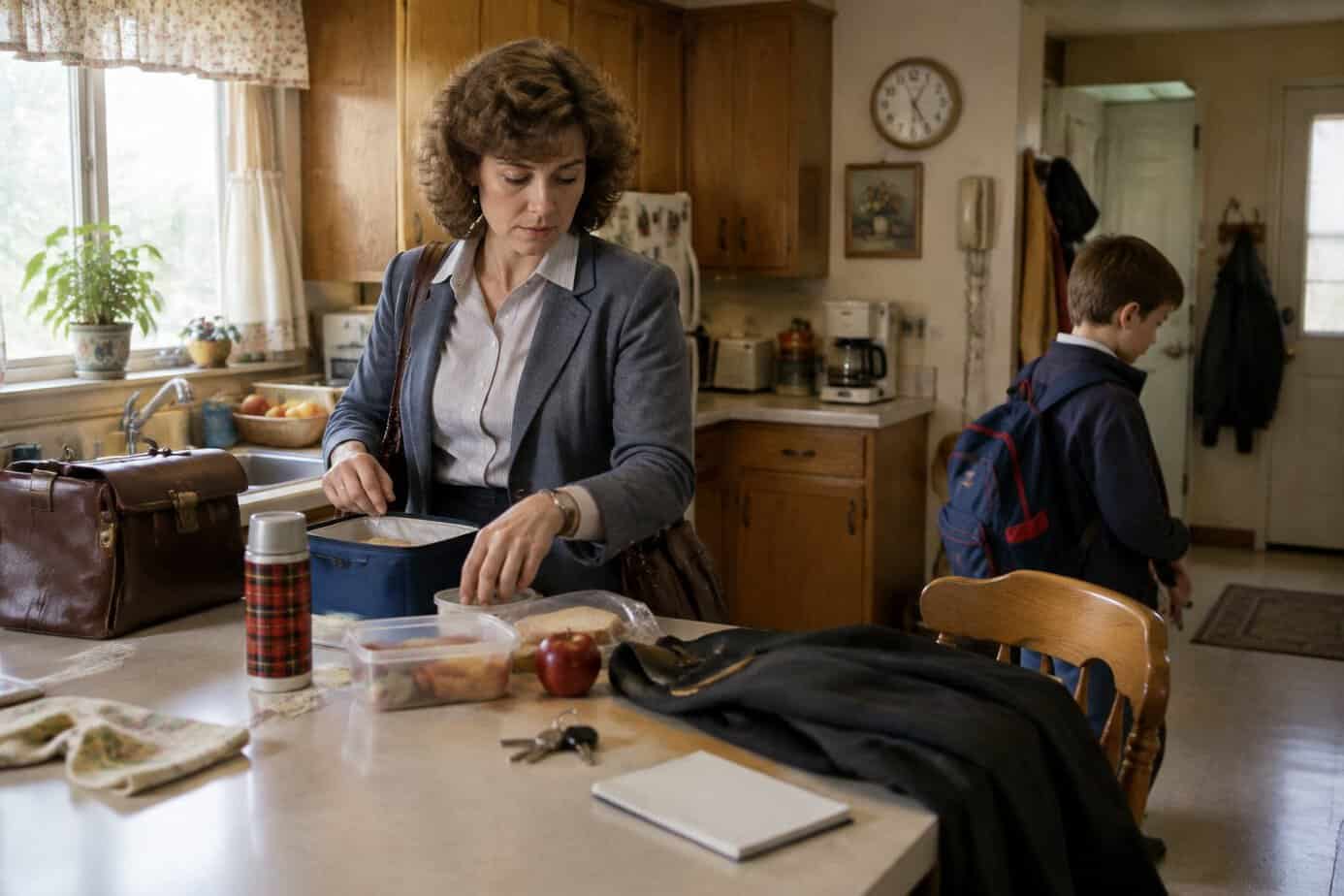
Before you poured your own coffee, you had already matched socks, found the missing shoe and settled an argument about which sweater was itchy. Breakfast happened standing up, usually while you buttered toast with one hand and signed a spelling test with the other.
You also did the morning math nobody saw: who had gym today, whose library book was due, whose hair actually needed brushing and whose could get by with a quick pat. It all lived in your head, because that was the only place it could live.
By the time the bus pulled away or the last kid climbed out of the car, you had put in what felt like a full shift. Then you checked your lipstick in the rearview mirror, grabbed your purse and your work bag, and walked into the office looking like you had slept eight hours.
2. Commuting in sneakers with your work pumps in your bag

You laced up your sneakers, dropped your pumps in a tote bag and headed out the door like it was the most natural thing in the world. In a way, it was. Nobody walks eight blocks or stands on a crowded train in heels if she has a choice.
The look really took off in New York during the 11-day transit strike in April 1980, when thousands of office workers walked or biked to work and wore whatever got them there. Plenty of women kept the habit long after the buses and subways were running again, and it spread to downtowns all over the country.
Some women kept a whole row of dress shoes in a desk drawer at the office. Some people thought sneakers looked silly with a skirt suit. You thought they looked like getting through the day with your feet still working at five o’clock.
3. Coordinating school drop-offs with work schedules

The school bell did not care what time your boss expected you, and your boss did not care what time the school bell rang. Somewhere in between, you made it work.
You knew the exact minute you had to leave the driveway, how long the light by the elementary school took, and which crossing guard waved cars through fastest. If school started at 8:15 and you were due at 8:30, there was no room for a forgotten lunch or a flat tire.
So you built backup plans. A neighbor who could take the kids if you ran late. A carpool with two other working moms, traded by the week. A grandparent on call for early-dismissal days, which always seemed to land on your busiest week.
You did it all with a wall calendar and the phone on the kitchen wall.
4. Finding reliable childcare and handling last-minute changes
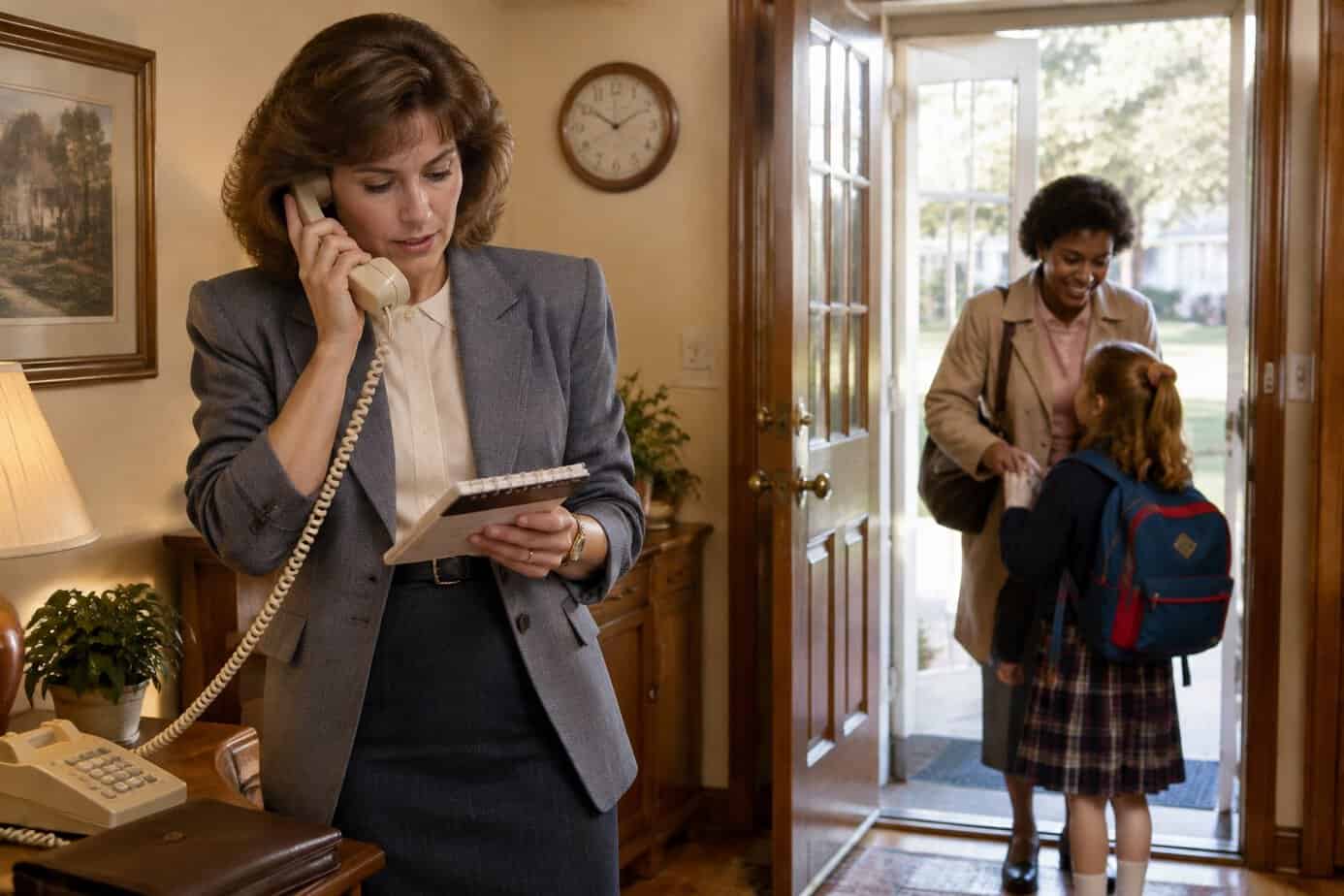
Finding a good sitter in the 1980s worked mostly by word of mouth. You asked at church, at work and over the backyard fence. A woman down the street who watched a few kids in her home could become one of the most important people in your life.
When you found a good one, you held on tight. You paid on time, remembered her birthday at Christmas and never came late for pickup if you could possibly help it.
Then there were the days it all fell apart. The sitter called in sick at 6:45 a.m. A snow day closed school with no warning. Your youngest woke up with a fever an hour before your shift. You worked the phone, called in favors and somehow got to work anyway, and you rarely let anyone at the office see how close it came.
5. Taking a half day for the repairman’s “sometime between 8 and 5”
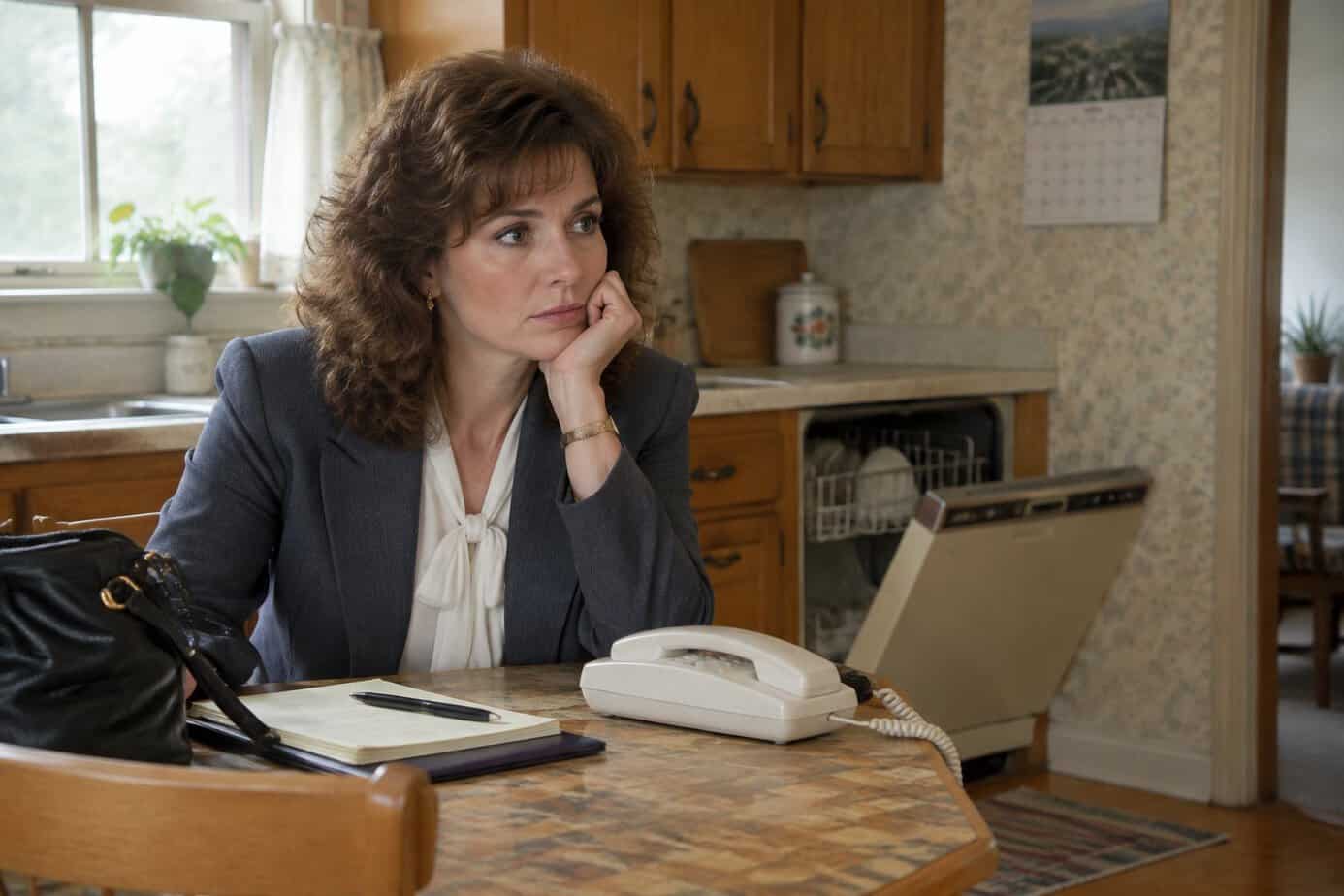
When the washer quit or the furnace started making that noise, the repair company gave you a window. The window was usually the whole day.
So you used up a vacation day, or half of one, to sit at home and wait. You couldn’t run to the store in case he came while you were out, and there was no way for him to reach you except the phone on the kitchen wall. You did a little ironing, paid a few bills and glanced out the front window every time a truck slowed down.
He usually showed up around 3:30. The fix took twenty minutes. You thanked him, wrote out a check and quietly did the math on what that day off had cost you.
Your husband probably never even heard about it. The washer just worked again.
6. Keeping the whole family’s calendar in your head
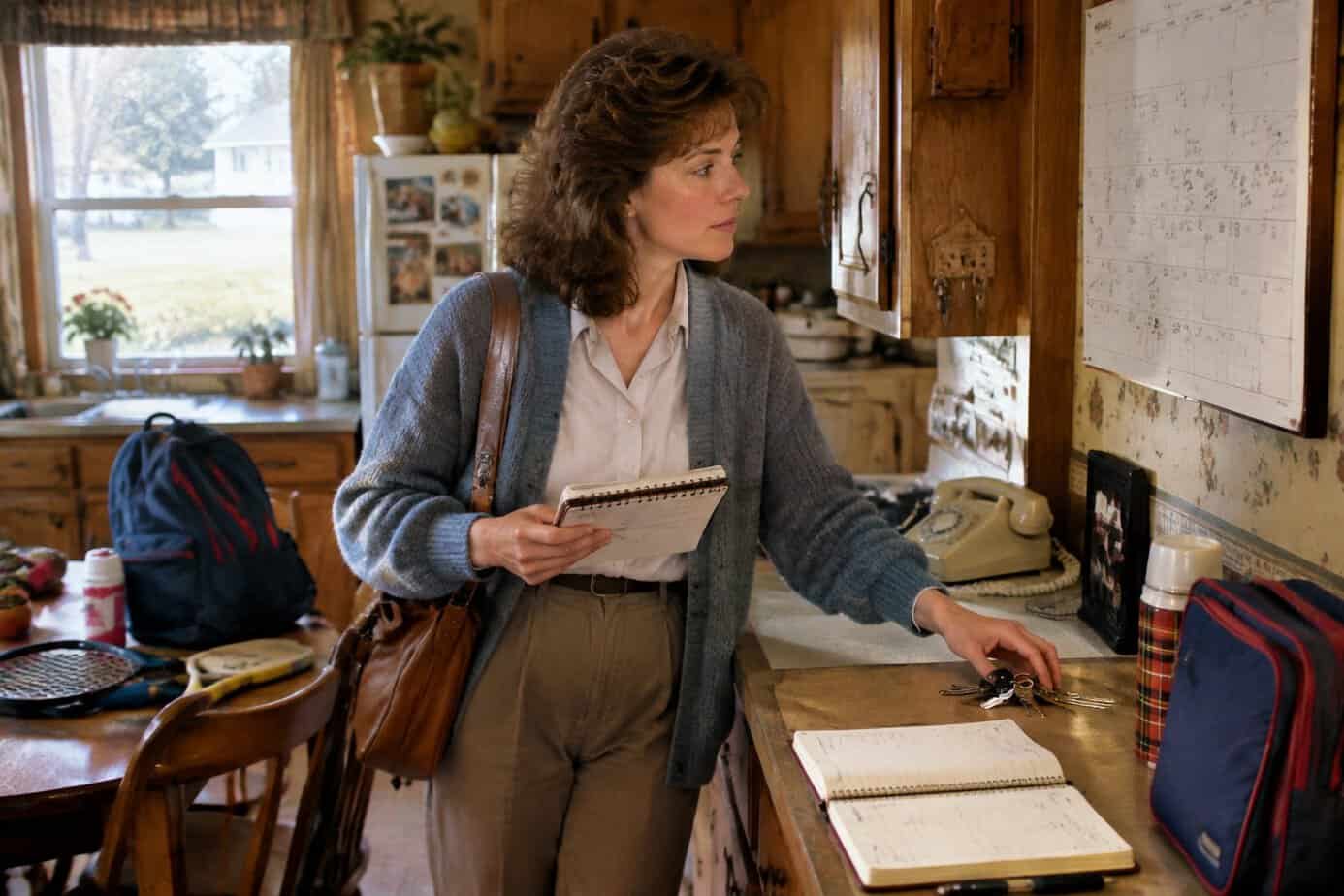
Dentist appointments, parent-teacher conferences, Little League, piano lessons, Scout meetings, the orthodontist every third Thursday. You kept every one of them straight while holding down a job.
Most kitchens had a calendar on the wall or the side of the refrigerator, often a free one from the bank or the insurance man, filled in with three colors of ink. But half the time you didn’t need to look. You just knew Tuesday meant Brownies and Friday meant the early bus.
You also tracked the things nobody wrote down. Whose turn it was to bring snacks. Which birthday party needed a present by Saturday. When the car was due for an oil change. When your mother-in-law was coming to stay.
It looked effortless from the outside. It took the kind of focus most companies would have paid good money for.
7. Getting a real supper on the table after a full day at work
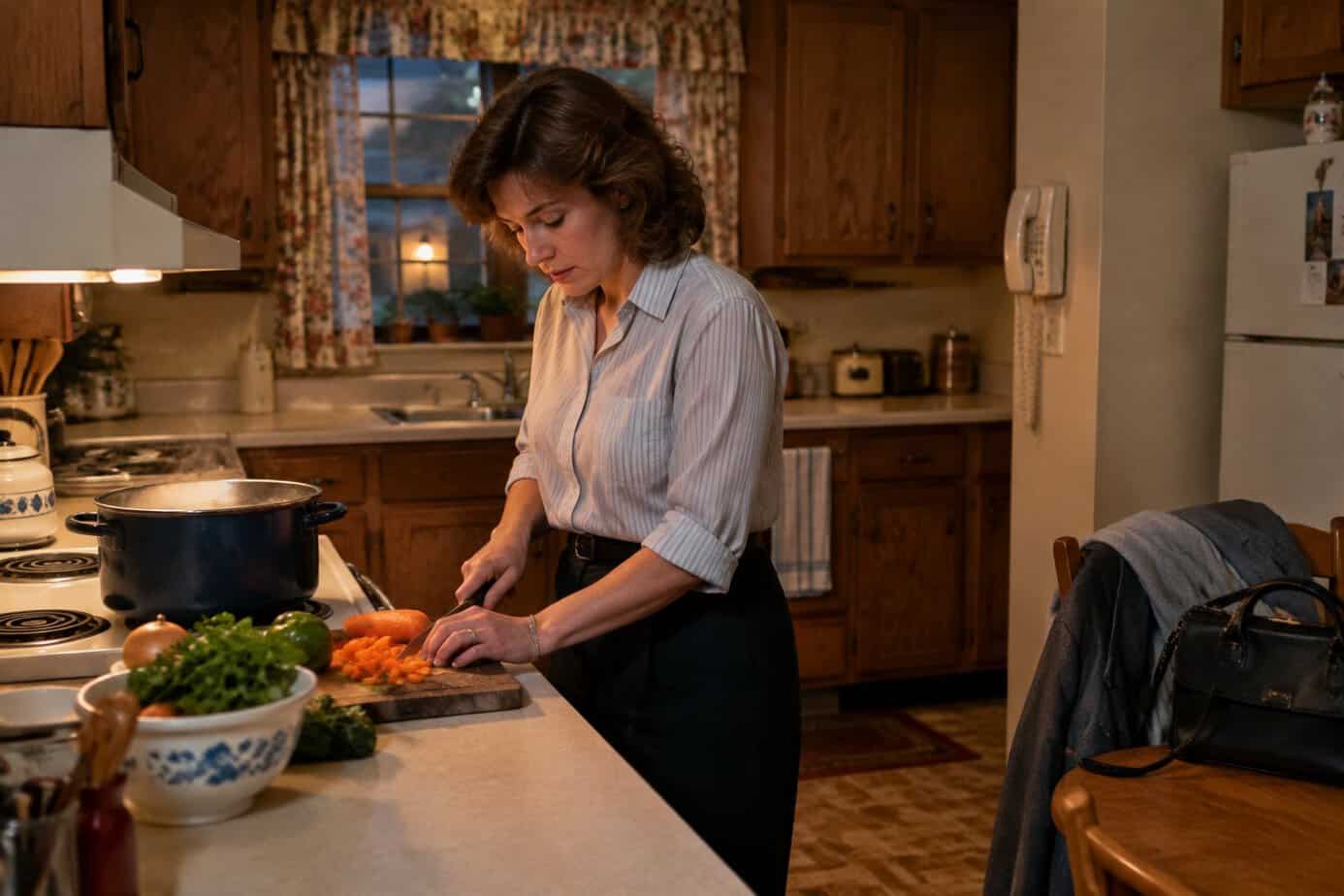
You clocked out, sat in traffic, picked up the kids and walked in the door at 5:45 with everyone asking what was for supper. There was no time to sit down. One job ended and the other one started.
You got very good at reading the refrigerator. Half a pound of ground beef, leftover rice, a can of cream of mushroom soup and whatever vegetable hadn’t gone soft yet could become a casserole in the time it took to change out of your work clothes. Hamburger Helper, which General Mills had been selling since 1971, earned its spot in the pantry on nights like that.
Supper hit the table around 6:30. The kids ate, someone asked for the ketchup, and everyone wandered off afterward.
Nobody noticed what it took to pull that off on a Tuesday after eight hours somewhere else. You did.
8. Cooking a week of suppers on Sunday and freezing them
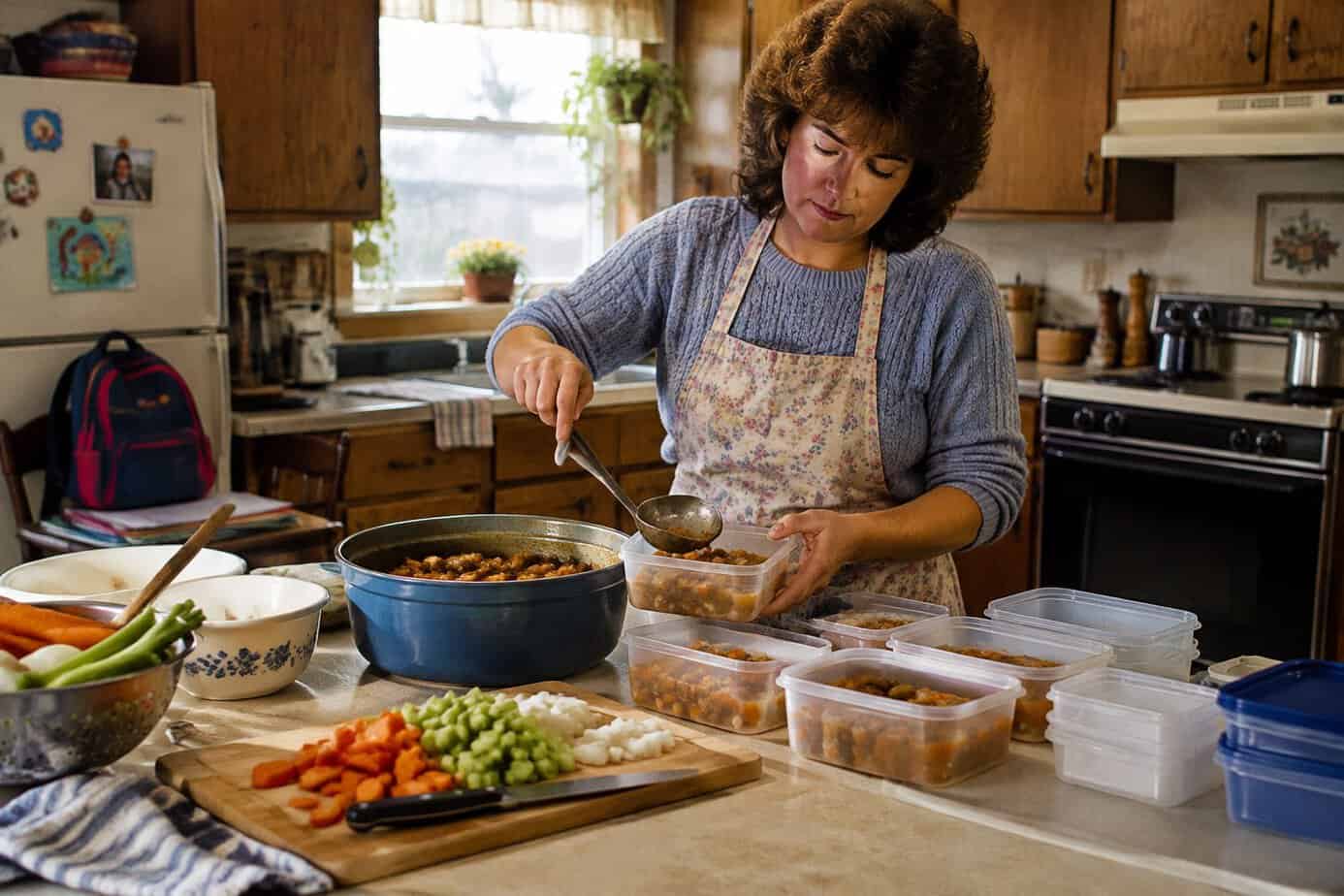
Sunday afternoon was how you got ahead of the week. While the game was on and the kids played outside, you were browning ground beef in batches, simmering a big pot of spaghetti sauce and lining up casserole dishes on the counter.
You were cooking for the tired woman you knew you’d be on Wednesday night, the one who would walk in the door with homework to check and nothing planned.
By evening the freezer was full. Meatloaf wrapped in foil, chili in margarine tubs, a pan of lasagna labeled with masking tape and a marker so nobody mistook it for something else. Buying the big family pack of meat and cooking it all at once saved money too, which never hurt.
You spent your one day off on your feet at the stove. Every quick weeknight supper that week was proof that it paid off.
9. Getting supper on the table with the new microwave
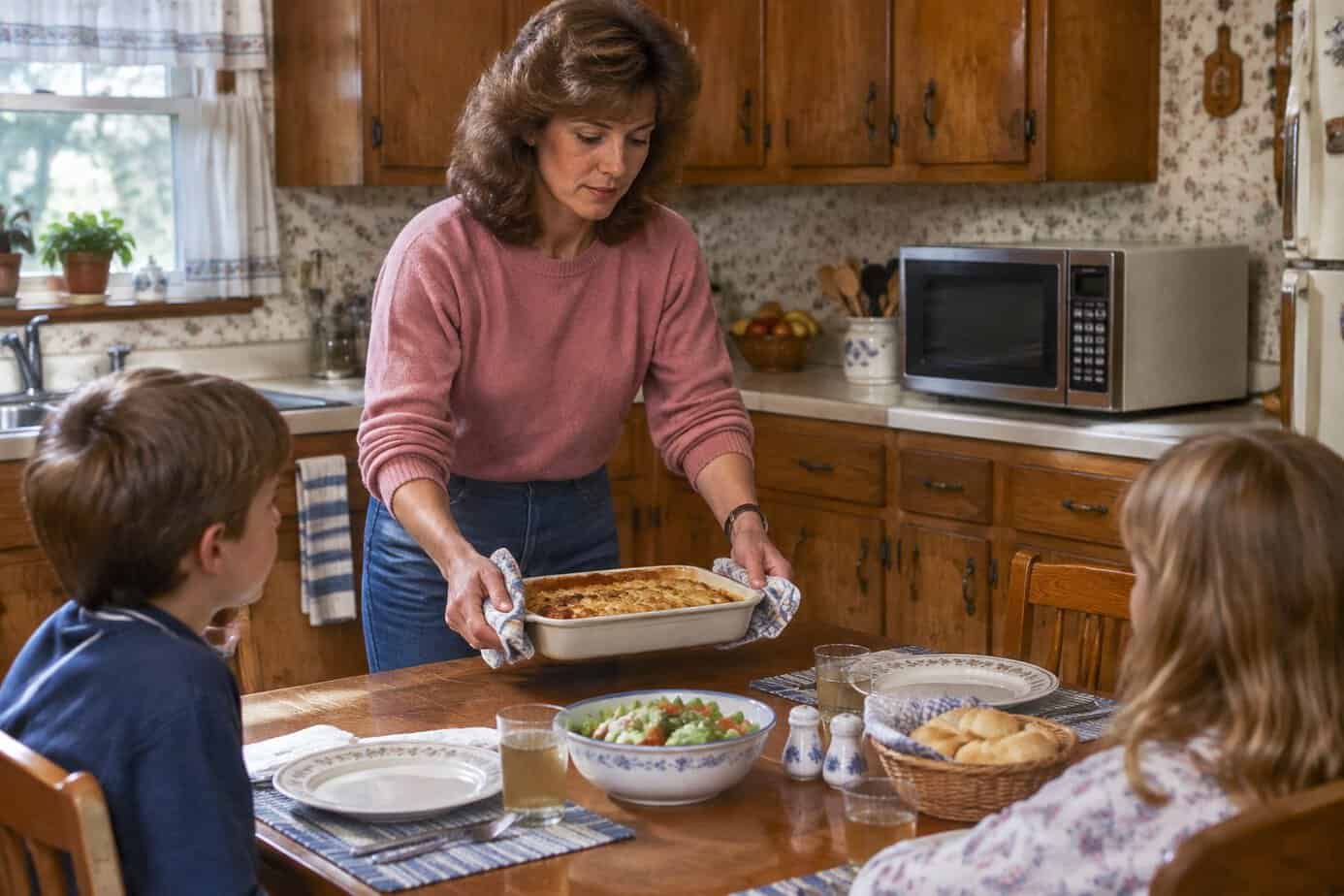
The microwave was the best friend a working mom could have. By the mid-1980s, about a quarter of American homes had one, and if yours did, you leaned on it hard.
It thawed the ground beef you forgot to take out that morning. It reheated last night’s leftovers without dirtying another pot. It baked a potato in minutes instead of an hour. Many came with their own little cookbook, and you tried a few of the recipes, with mixed results.
You learned its quirks fast. A casserole could come out bubbling at the edges and cold in the middle, so you stirred it halfway and let it stand. You figured out which dishes could go in and which would spark. The government kept an eye on them too: the FDA has set safety limits on microwave ovens since 1971.
Supper still got made most nights. The microwave just gave you back twenty minutes.
10. Keeping a spare pair of pantyhose in your desk drawer
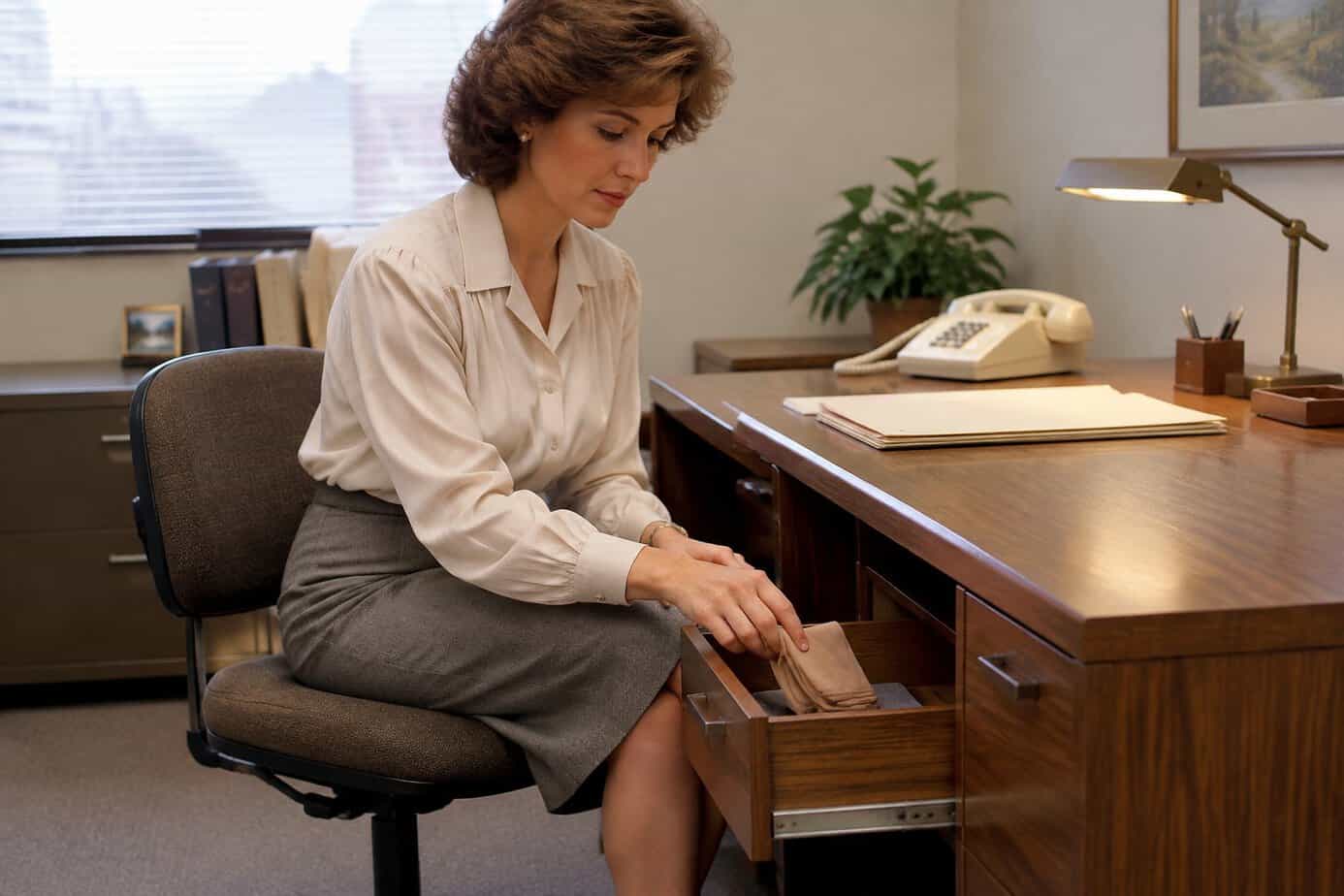
Bare legs were not an option at most offices in the 1980s, and you knew it. So you kept a backup pair in your desk drawer, often still in its L’eggs egg from the rack at the grocery store.
A run could start anywhere. Climbing out of the car. Catching a nail on your chair. Bumping the corner of a filing cabinet. One minute you looked polished, and the next a ladder was crawling up your shin right before the 10 o’clock meeting.
A dab of clear nail polish could stop a small one in its tracks for a few hours. For a big one, you slipped into the ladies’ room, made the swap and walked back out like nothing had happened.
It was a tiny habit, but it saved you more times than you can count, and nobody at the office ever knew.
11. Doing laundry late at night or before dawn
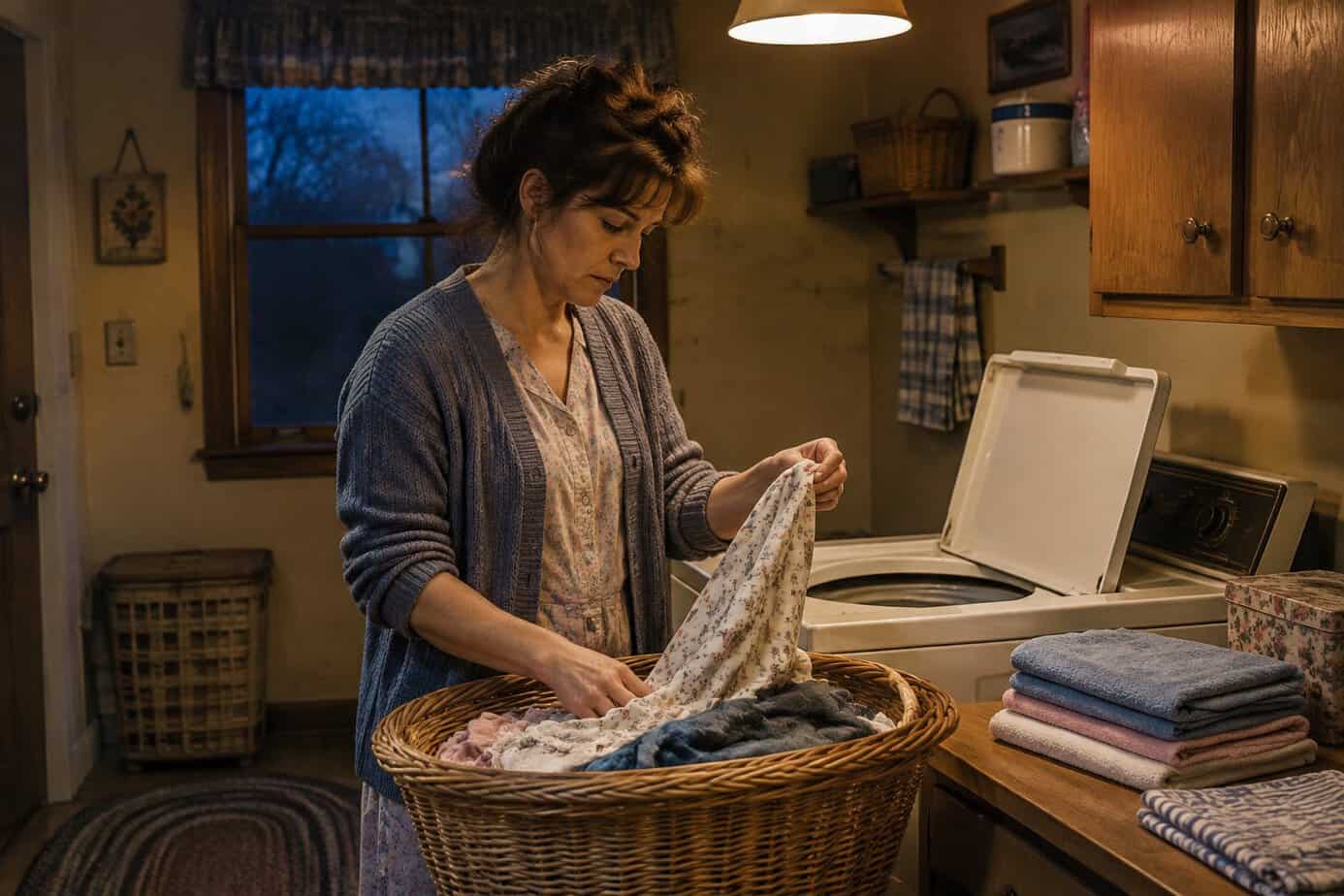
Work ran until five, then came supper, homework, baths and bedtime. Laundry had to wait its turn, so you ran loads at ten at night or got up before the sun to get one more in before work.
You listened for the buzzer from the other room and tried to get the clothes out before they wrinkled, because nobody had time to iron everything twice. Your work blouses got special treatment. The kids’ jeans got whatever was left.
Folding happened wherever you could fit it in, maybe on the couch with the late news turned down low, or on the kitchen table at 6 a.m. while the coffee brewed. You sorted everything into neat piles, one for each person, and somehow the piles always made it upstairs.
Every clean uniform and matching pair of socks in that house came out of your sleep.
12. Going back to work six weeks after the baby, with no guaranteed leave
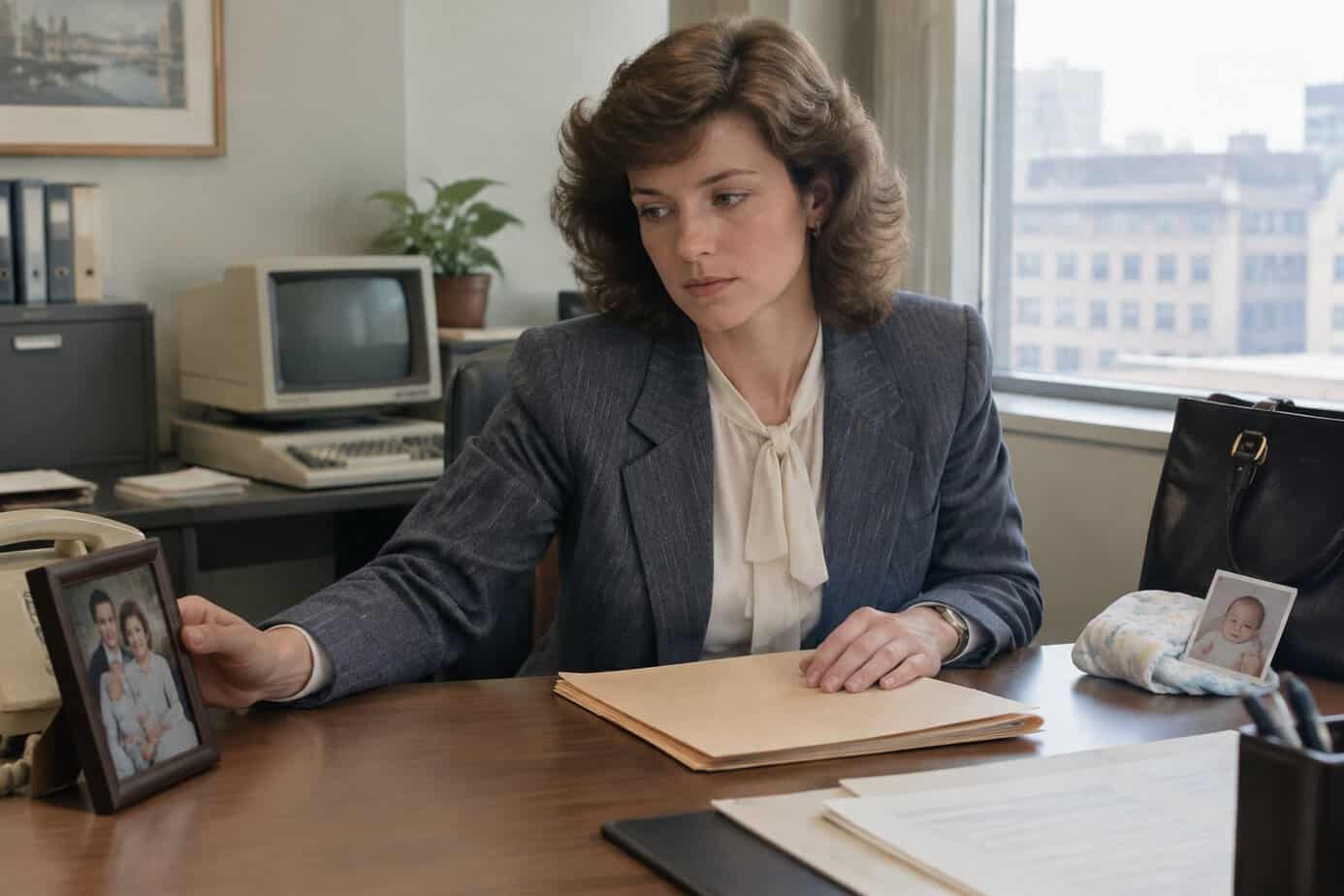
Six weeks was the usual recovery time doctors gave after a normal delivery, and for a lot of women in the 1980s, that was it. Then you went back.
The law did give you some protection. The Pregnancy Discrimination Act of 1978 said employers couldn’t fire you for being pregnant and had to treat pregnancy like any other temporary disability. But no federal law guaranteed you any leave at all. That didn’t come until the Family and Medical Leave Act in 1993, and even then the leave was unpaid.
So you pieced together sick days, vacation days and whatever your company offered. Your body wasn’t ready, and your heart definitely wasn’t. But you got dressed, found a sitter willing to take a newborn and walked back into the office like you’d never left.
Nobody asked how you were sleeping.
13. Learning the office computer after years on a typewriter
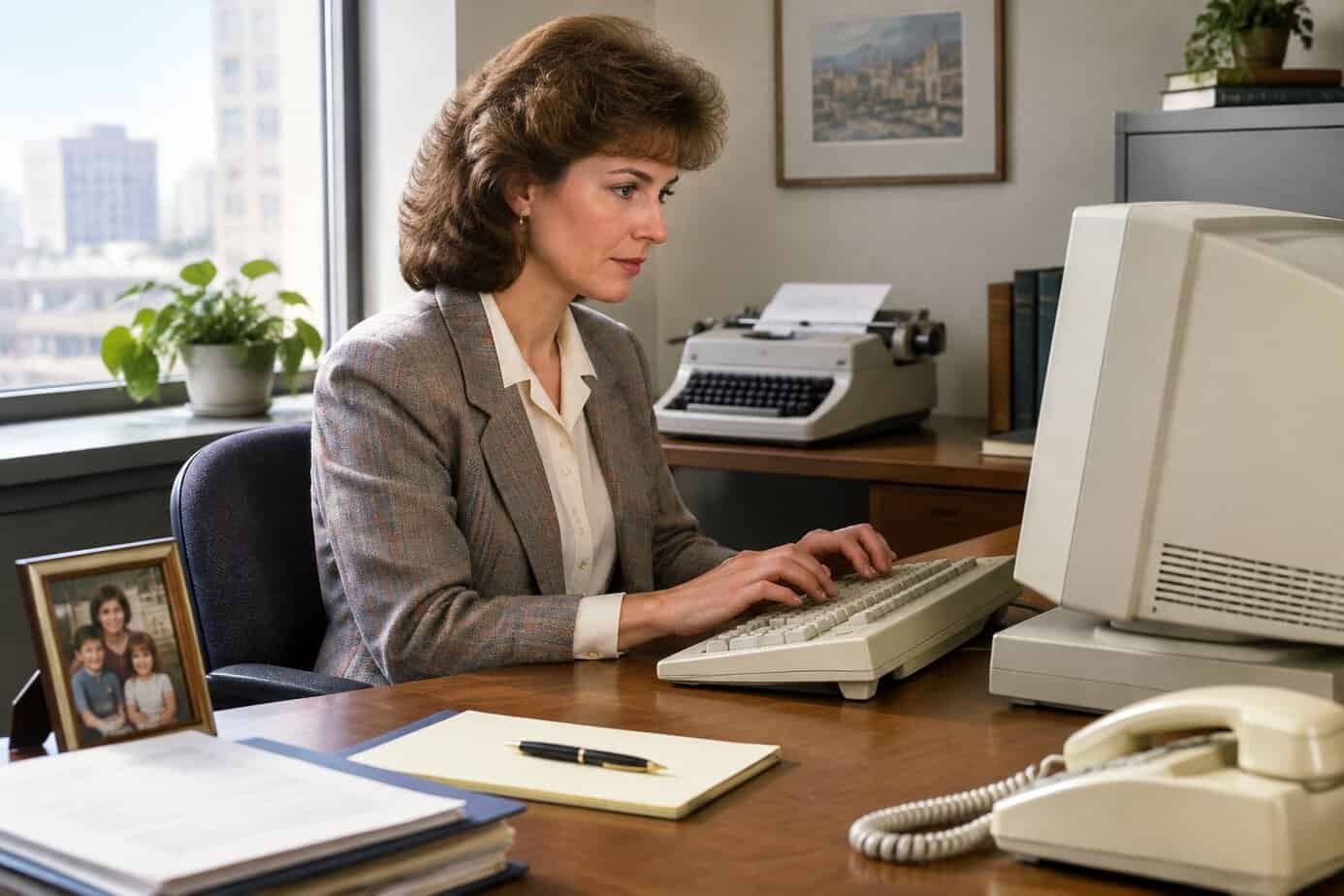
You had mastered the typewriter. You knew how hard to hit the keys, how to line up a form and how to fix a mistake with a dab of Liquid Paper. Fun fact: Liquid Paper was invented in the 1950s by Bette Nesmith Graham, a Dallas secretary and single mom, who sold her company to Gillette in 1979 for $47.5 million.
Then a beige computer showed up on your desk. IBM’s personal computer came out in 1981, and by the middle of the decade offices everywhere were trading typewriters for screens with blinking cursors, floppy disks and manuals as thick as a phone book.
You sat through the training that went too fast. You stayed late figuring out how to save a document without losing it. And before long, you were the one younger coworkers came to when the printer jammed.
14. Making the office coffee and remembering everyone’s birthday cake
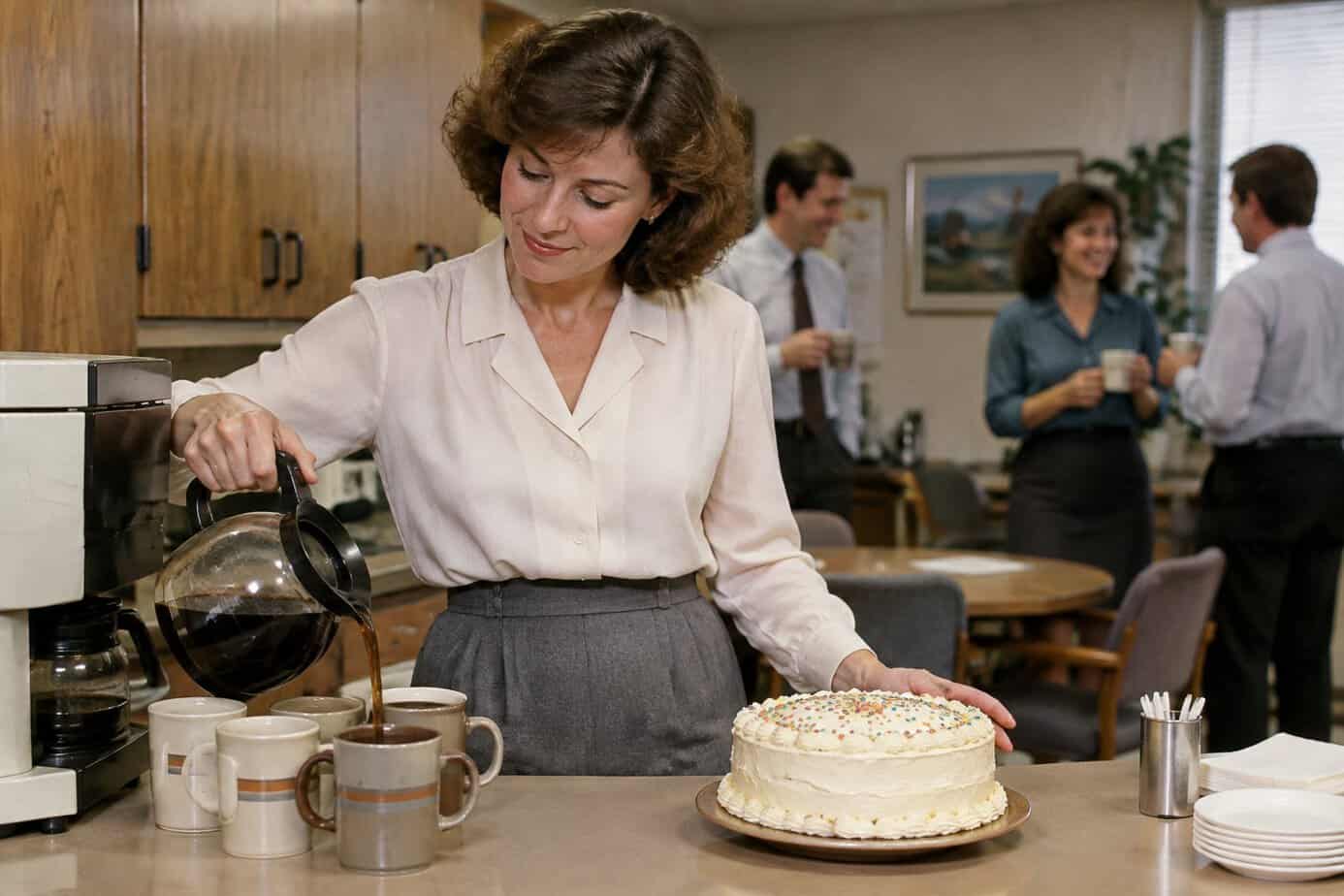
Nobody put it in your job description, but somehow the coffee became yours. You were often the first one in, so you started the pot, and by the second week everyone just assumed it would be ready.
You also kept track of the birthdays. Not just your own family’s, but your boss’s, the receptionist’s and the new guy’s in accounting. You knew when to pick up a sheet cake from the grocery store bakery, when to pass around a card and how to collect a couple of dollars from everyone without making it awkward.
You organized the baby showers, the retirement lunches and the Christmas grab bag too.
None of it showed up on your paycheck. But you understood that those small things kept an office running the same way they kept a home running, and the people around you felt it, even if they never said so.
15. Taking night classes to finish your degree

You worked all day, got supper on the table and then grabbed your textbook and headed back out the door. Two nights a week, you sat in a community college classroom with other tired grown-ups, taking accounting or English composition after a full day at the office.
Someone else had to handle bedtime while you were gone, and you went over the kids’ spelling words in the car on the way home. After everyone was asleep, homework happened at the kitchen table. Your own homework, this time.
It took years. One or two classes a semester, fitted around jobs, babies and everything else. Plenty of women finished in their thirties or forties and walked across the stage while their own kids cheered from the seats.
That diploma meant more than most, because you knew exactly what every credit had cost.
16. Answering “Who’s watching your kids?” at every party
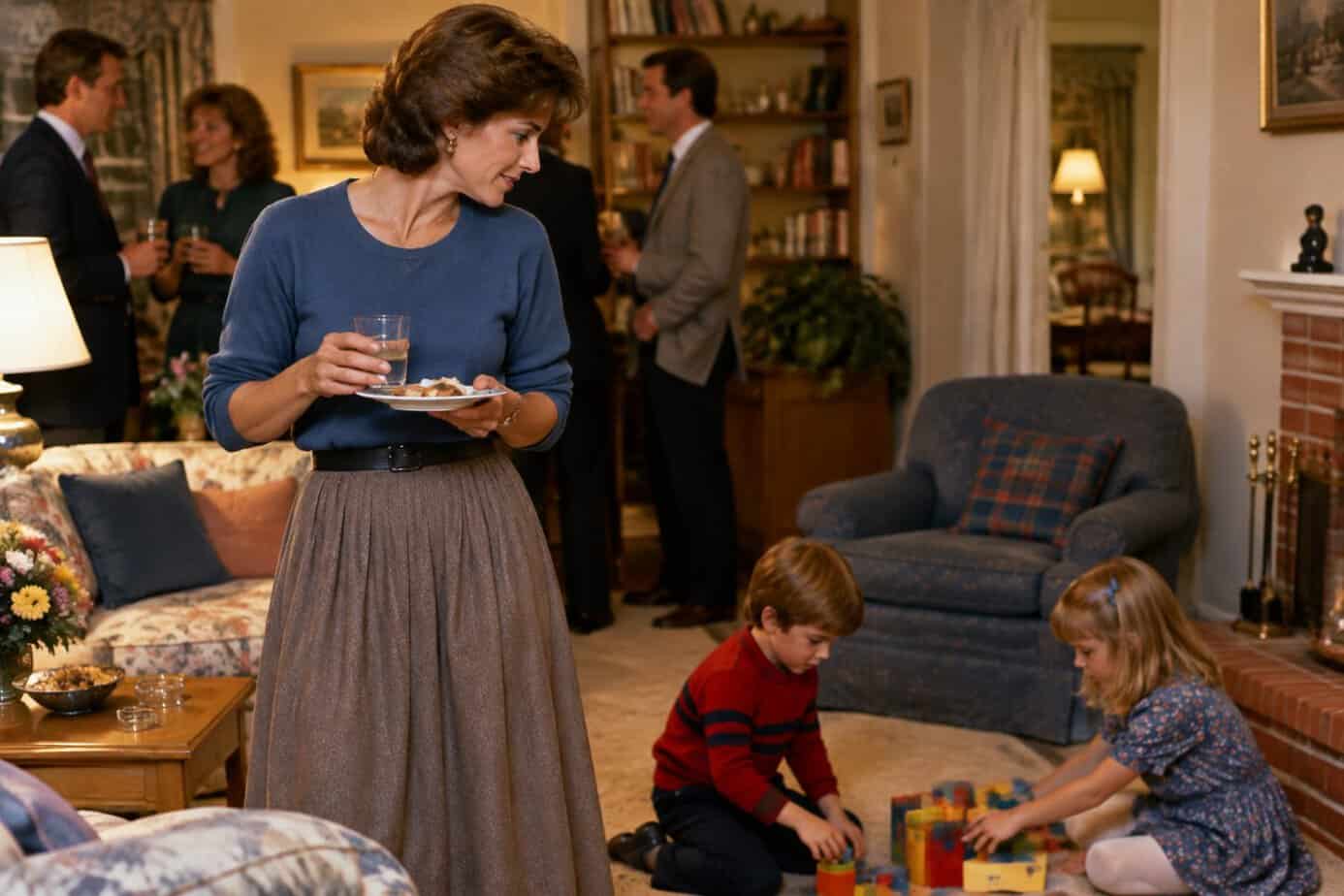
You couldn’t go to a cookout, a church supper or the company Christmas party without someone asking it. “So who’s watching your kids?” Usually with a tilted head, as if you might have forgotten you had any.
You had your answer ready every time. The sitter down the street. Your mother. Your husband, who somehow got credit for babysitting his own children. You said it with a smile, even though you had arranged every detail days in advance.
You noticed that nobody asked the dads in the room. You rarely said so out loud.
Instead you went back to your conversation, refilled your punch and enjoyed the rare evening out. Your kids were fine. You had made sure of that before you ever put on your earrings.
17. Being the one the school called first, even though you both worked
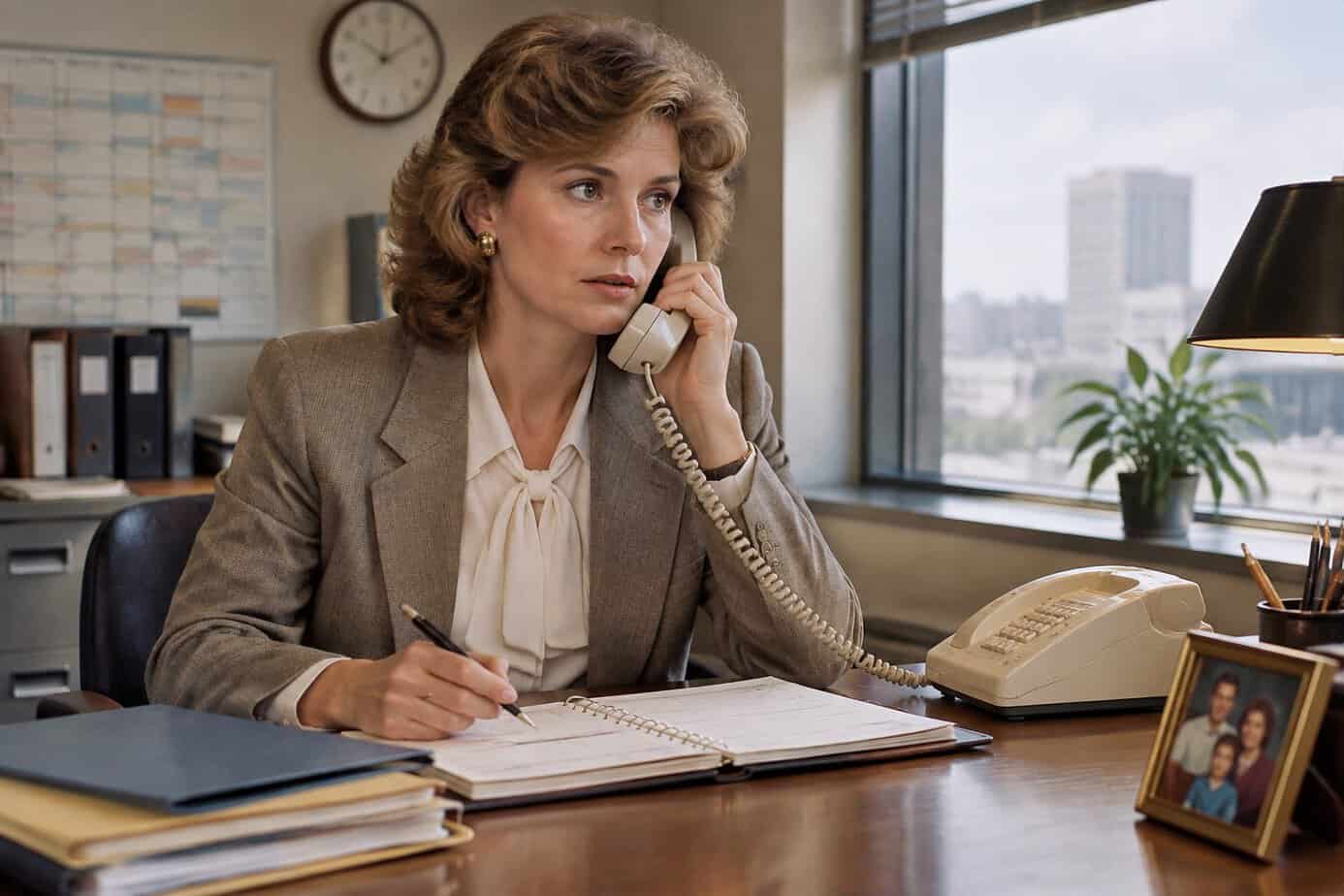
Your name was at the top of the emergency card, every single time. It didn’t matter that his office was just as close or that he had a phone on his desk too. When the school secretary picked up the phone, she called you.
You got the calls for fevers, skinned knees, forgotten lunches and the occasional trip to the principal’s office. And you were expected to drop everything, even in the middle of a meeting or halfway through a shift.
So you did. You told your supervisor, grabbed your purse and drove over with your heart pounding, hoping it was just a stomachache. Then you came back and made up the work, sometimes staying late to do it.
You filled out a fresh card every September. You kept a few dollars in your wallet for gas. And you kept answering, because someone had to.
18. Racing through the grocery store at 5:30 with everyone else
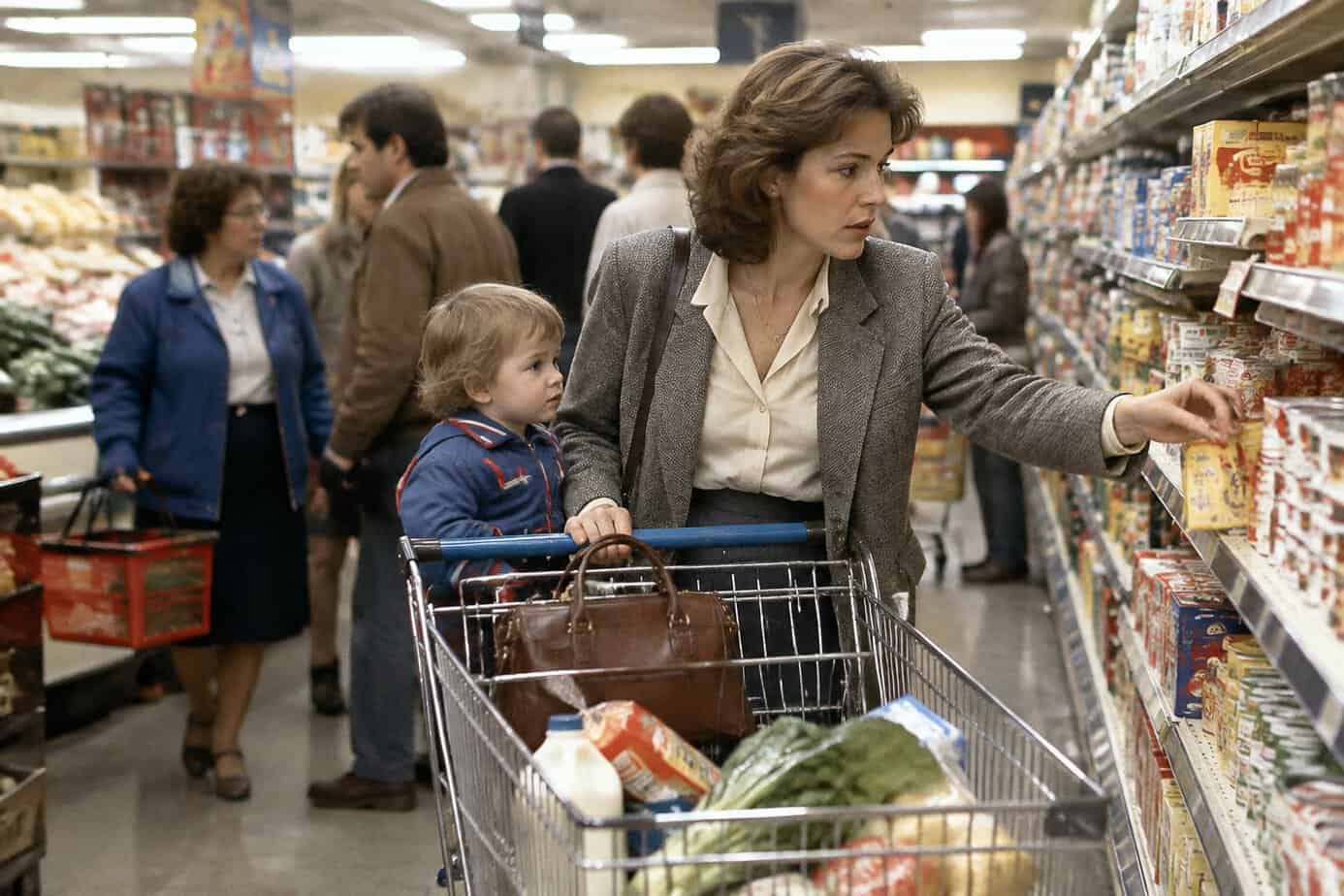
Everybody in town who worked a day job had the same idea, so the grocery store at 5:30 on a weeknight felt like rush hour with shopping carts.
You moved like a woman on a mission. You knew which aisles to skip and which ones mattered, and you wrote your list in the order of the store, produce first and frozen foods last. No browsing the magazines at the checkout. Well, maybe a quick look at the TV Guide.
The lines backed up into the aisles. You made small talk with the woman behind you, who was usually just as tired, while the cashier rang up your order and the bagger packed the eggs on top where they belonged.
Then you drove home, carried in every bag, put away the cold things first and still had supper to make. Week after week, you squeezed a whole shopping trip into a window most people never noticed was so small.
19. Living up to the “24-hour woman” in that perfume commercial

If you watched TV around 1980, you saw her: the Enjoli woman, in a business suit, singing about earning the money, cooking supper and still having energy left at night. Enjoli was sold as the 8-hour perfume for the 24-hour woman, and the commercial made it all look glamorous.
Your real version looked a little different. You came home, kicked off your pumps, put your hair up and stood at the stove in your stocking feet. Nobody filmed you doing it, and there was no soft lighting.
Still, the commercial got one thing right. You really were doing both jobs, every single day, back to back with barely a breath in between. The job during daylight hours, the house after it.
The difference was that the woman on TV got to stop when the commercial ended. You got up the next morning and did it all again.
20. Spending Saturday catching up on the whole week’s housework
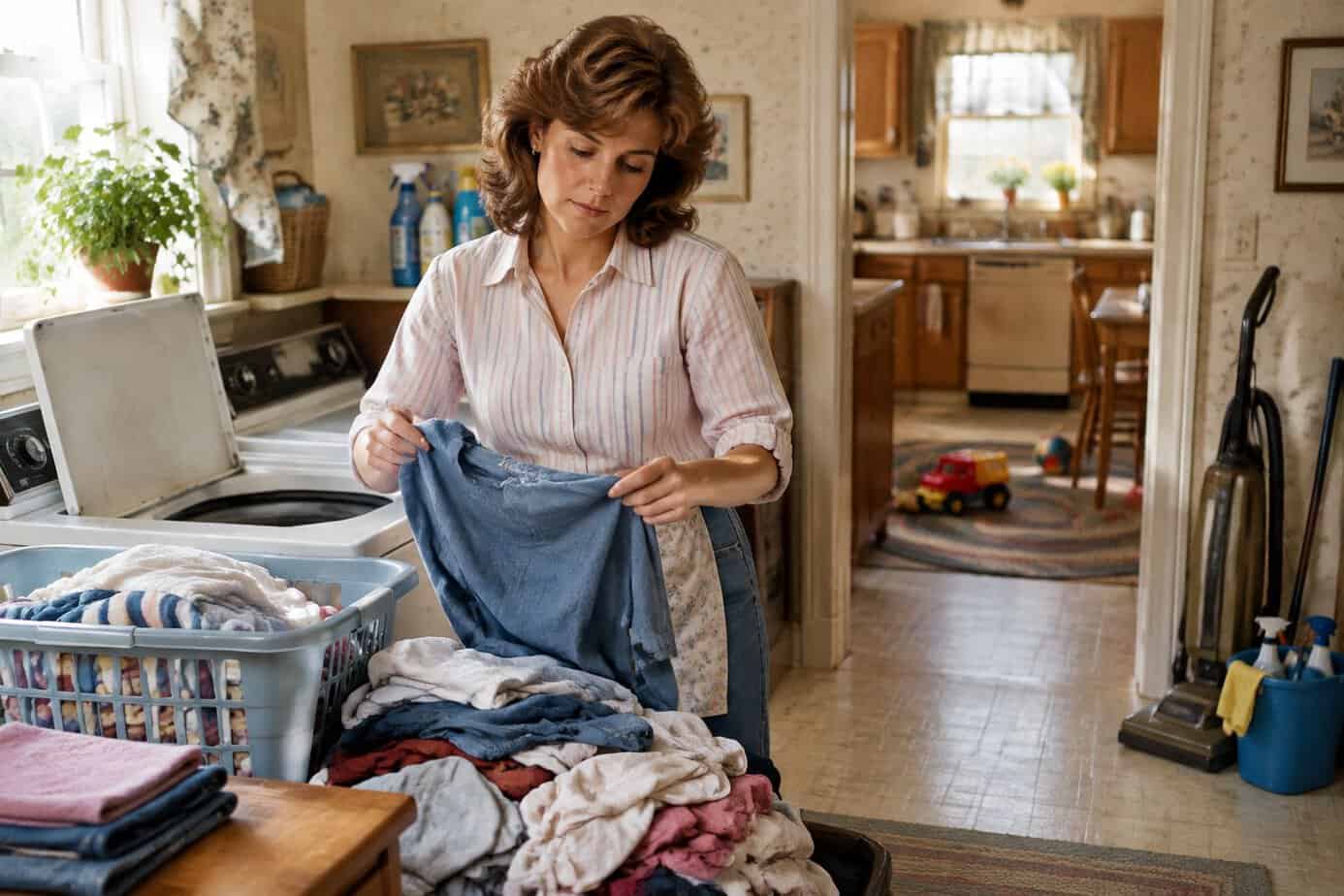
Weeknights were for keeping your head above water. Saturday was for actually cleaning the house.
So you got up, put on comfortable clothes and a pot of coffee, and got going before anyone else was up. Laundry went in first. Then came the floors while it washed, the bathrooms, the dusting, clean sheets on every bed, and the refrigerator cleaned out before anything in the back turned into a science project.
You might have put on a record or the radio to keep yourself moving, and you probably handed out a few chores to the kids, which took almost as long as doing it yourself.
By afternoon, the house looked like a house again instead of a place five people had been passing through all week. Then you squeezed in the grocery shopping, the dry cleaner and a birthday party drop-off, because Saturday had to cover everything the week couldn’t.
21. Pulling off Christmas, cards, gifts and all, on top of a full-time job
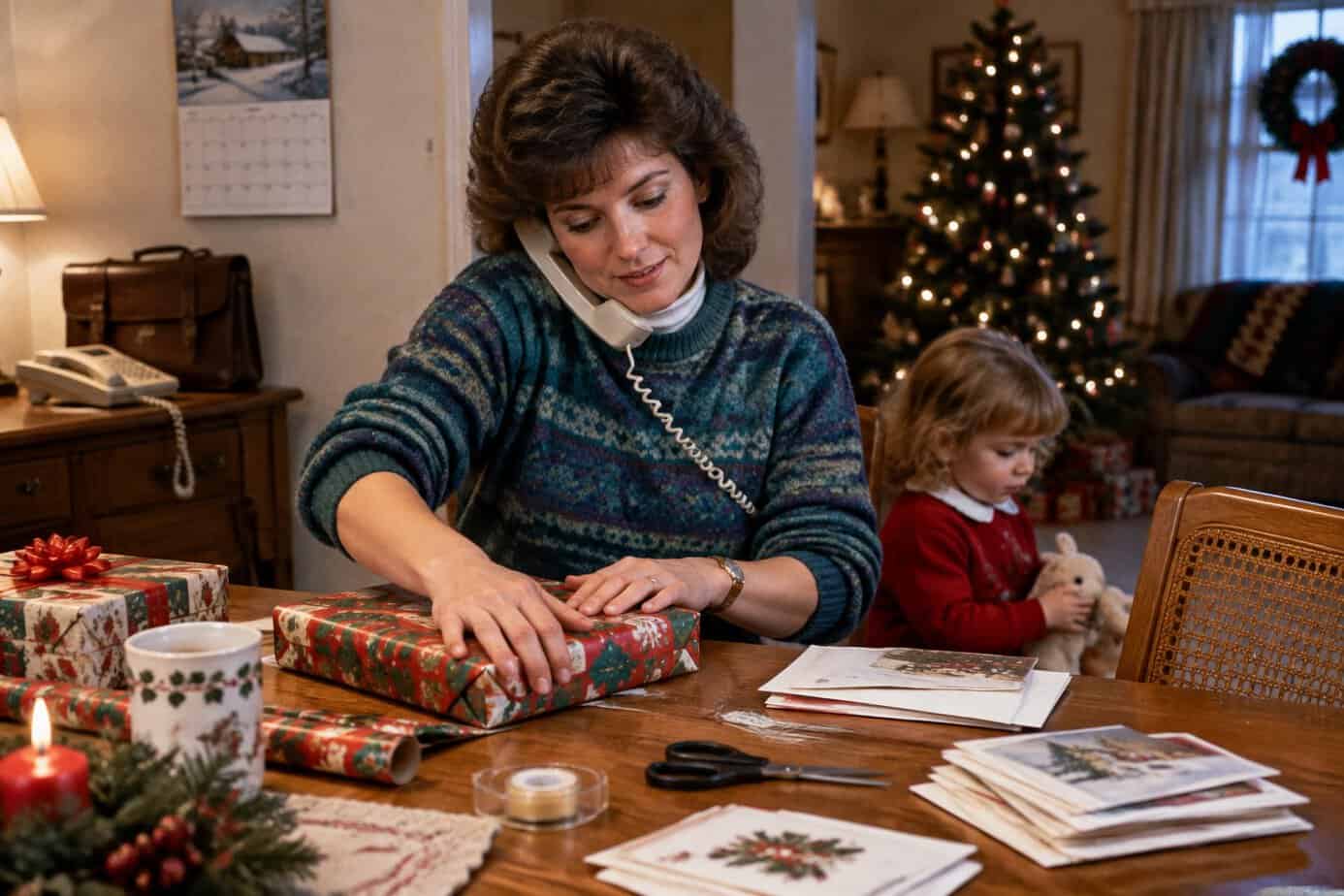
For most working moms, Christmas was a second job that started the day after Thanksgiving and paid nothing.
The cards got addressed by hand at the kitchen table, a few each night, with a note in every one. You kept a running gift list in your purse and shopped on your lunch hour and on Saturday mornings. Some years that meant hunting for the one toy everyone wanted. In 1983, shoppers stood in long lines and even scuffled in stores to get a Cabbage Patch Kid, and plenty of working moms spent their lunch breaks trying.
The wrapping happened after the kids were asleep. The cookies for the office party and the school party got baked on Sunday afternoon.
On Christmas morning, everyone saw the tree, the stockings and the presents. Nobody saw the hours and hours behind them.
22. Bringing work home in your briefcase after the kids were asleep
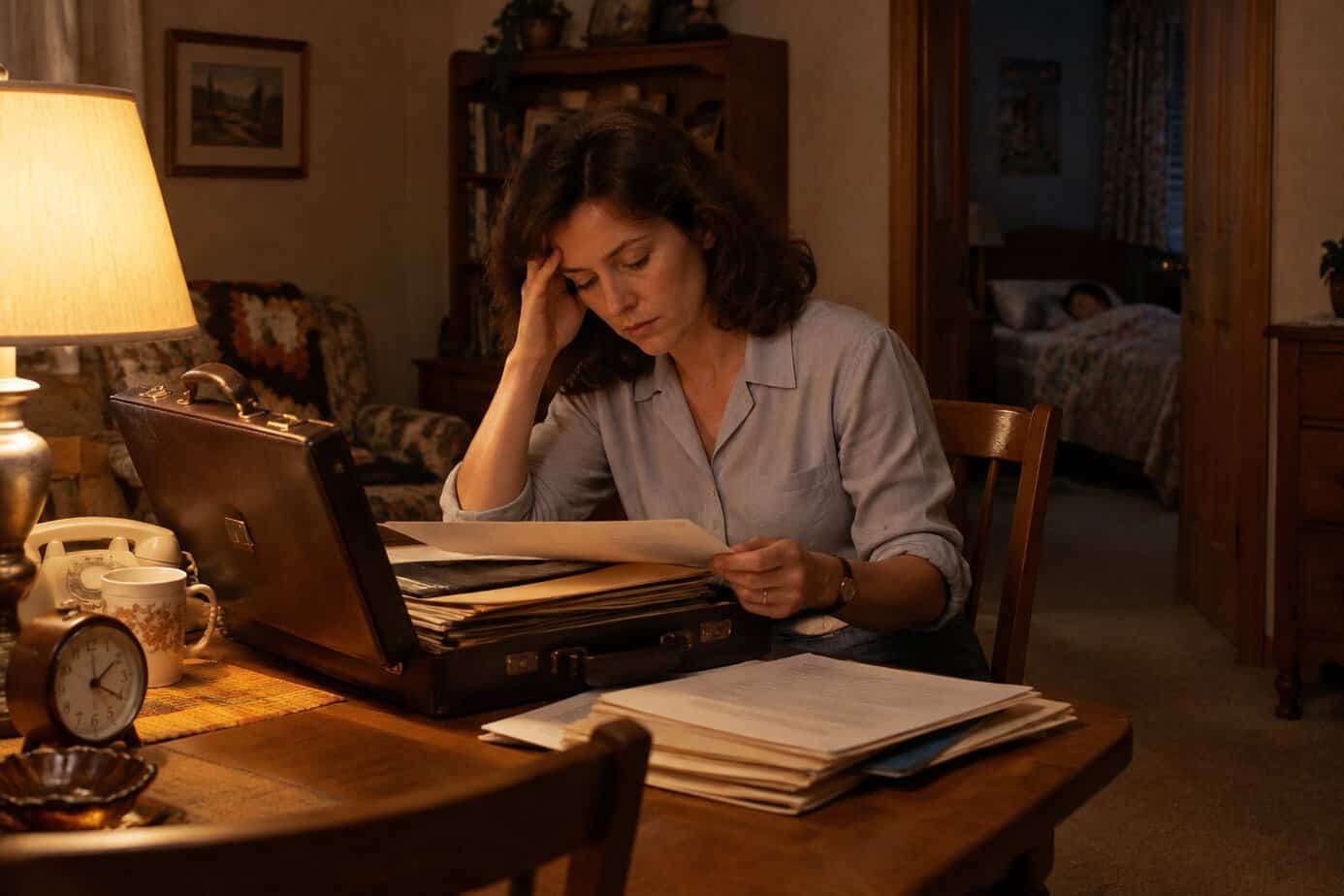
The kids finally went down around 8:30, and that’s when your third shift started. You poured one more cup of coffee, opened your briefcase and spread your papers across the kitchen table.
Back then, a woman with a briefcase still turned a few heads. It said you had a job that mattered enough to follow you home, and some nights you wished it didn’t.
You checked figures on a calculator that printed a paper tape. You wrote out reports by hand to be typed the next day. You read the files you hadn’t had a minute for at the office, because the office had been full of interruptions and so had the house.
Some nights you fell asleep with the lamp still on. In the morning, you packed the briefcase back up, packed the lunches and went out the door to do it all again.
23. Doing drive-thru supper on the busiest nights
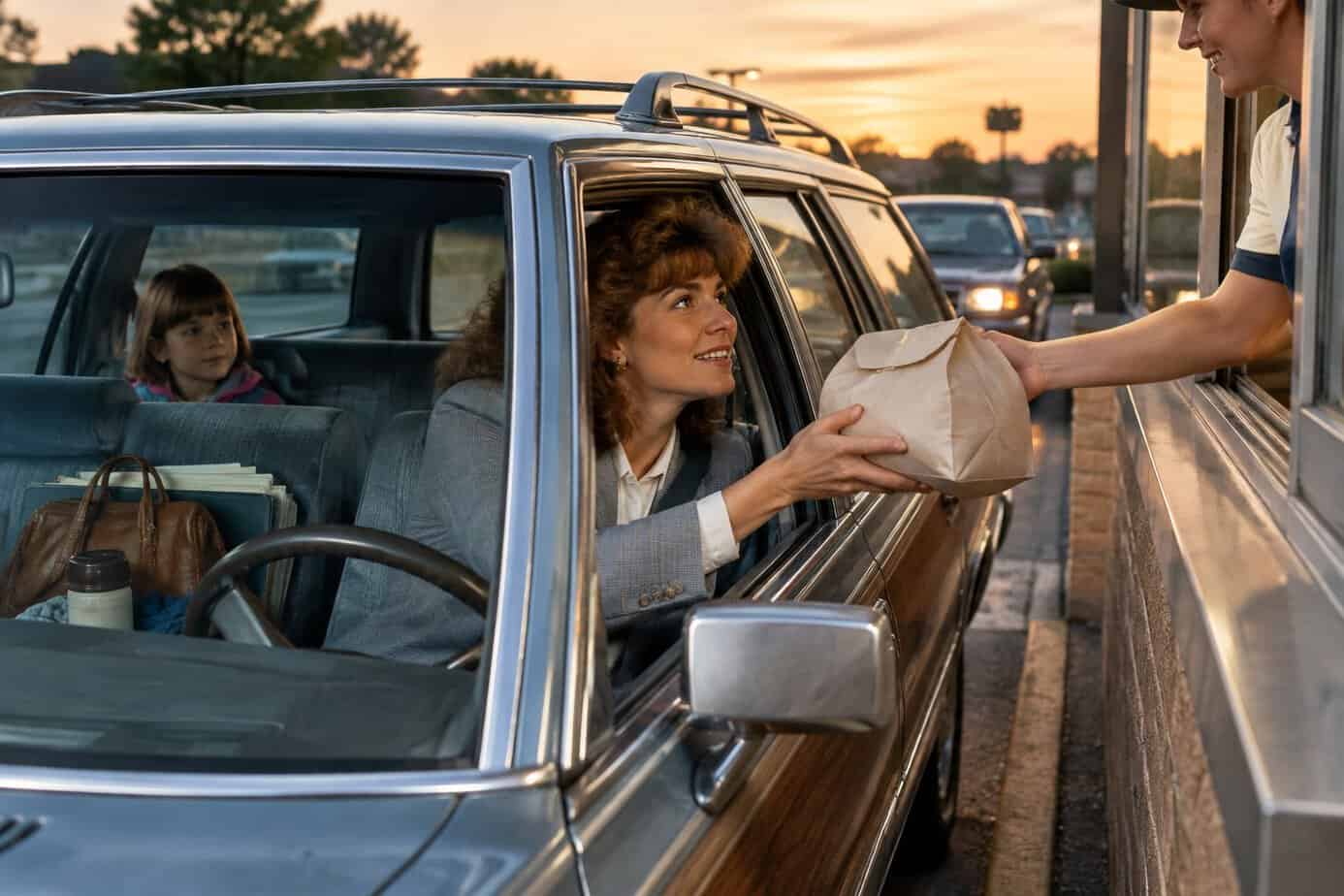
Some nights you knew by four o’clock that supper wasn’t happening at home. There was a late meeting, a Little League game and a trip to the shoe store, and the drive-thru was the only thing standing between your family and cereal for dinner.
McDonald’s opened its first drive-thru in 1975 in Sierra Vista, Arizona, and by the 1980s they were everywhere. The Happy Meal went nationwide in 1979, which meant the kids were thrilled and the toy ended up under the back seat.
You ordered into the speaker, counted out the money and passed the bags back over your shoulder, reminding everyone not to spill the shakes.
You might have felt a little guilty about it. You shouldn’t have. Knowing which nights would be impossible and planning around them was its own kind of skill, and everyone still got fed.
24. Leaving instructions for the kids to start supper before you got home
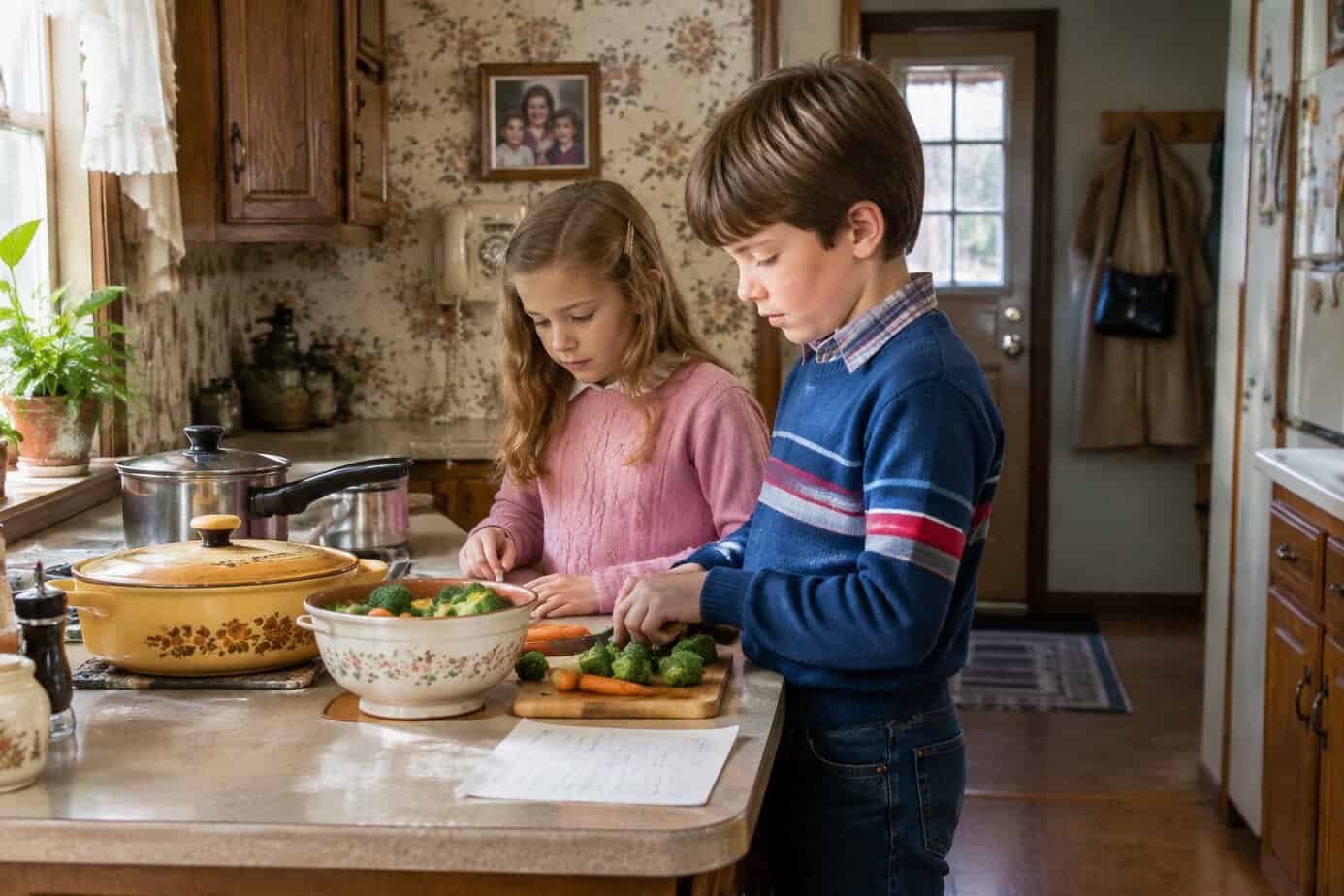
You left the note taped to the counter or stuck under a magnet on the refrigerator, and it read like a set of mission orders. Peel four potatoes. Put the casserole in at 350 at 5:00. Do not touch the stove until your sister gets home.
Plenty of working moms in the 1980s counted on the kids to get supper going after school, and you were one of them. You timed it from your desk, counting backward from when you’d walk through the door. If the timing was off, supper was either dried out or still cold in the middle, and you rewrote the instructions for next time.
It took trust to hand that over. You believed your kids could follow directions, watch a clock and not burn the house down, and most of the time you were right.
Those twenty minutes made the difference between a calm evening and a frantic one. And you raised kids who knew their way around a kitchen.
25. Paying for the extras with your own paycheck
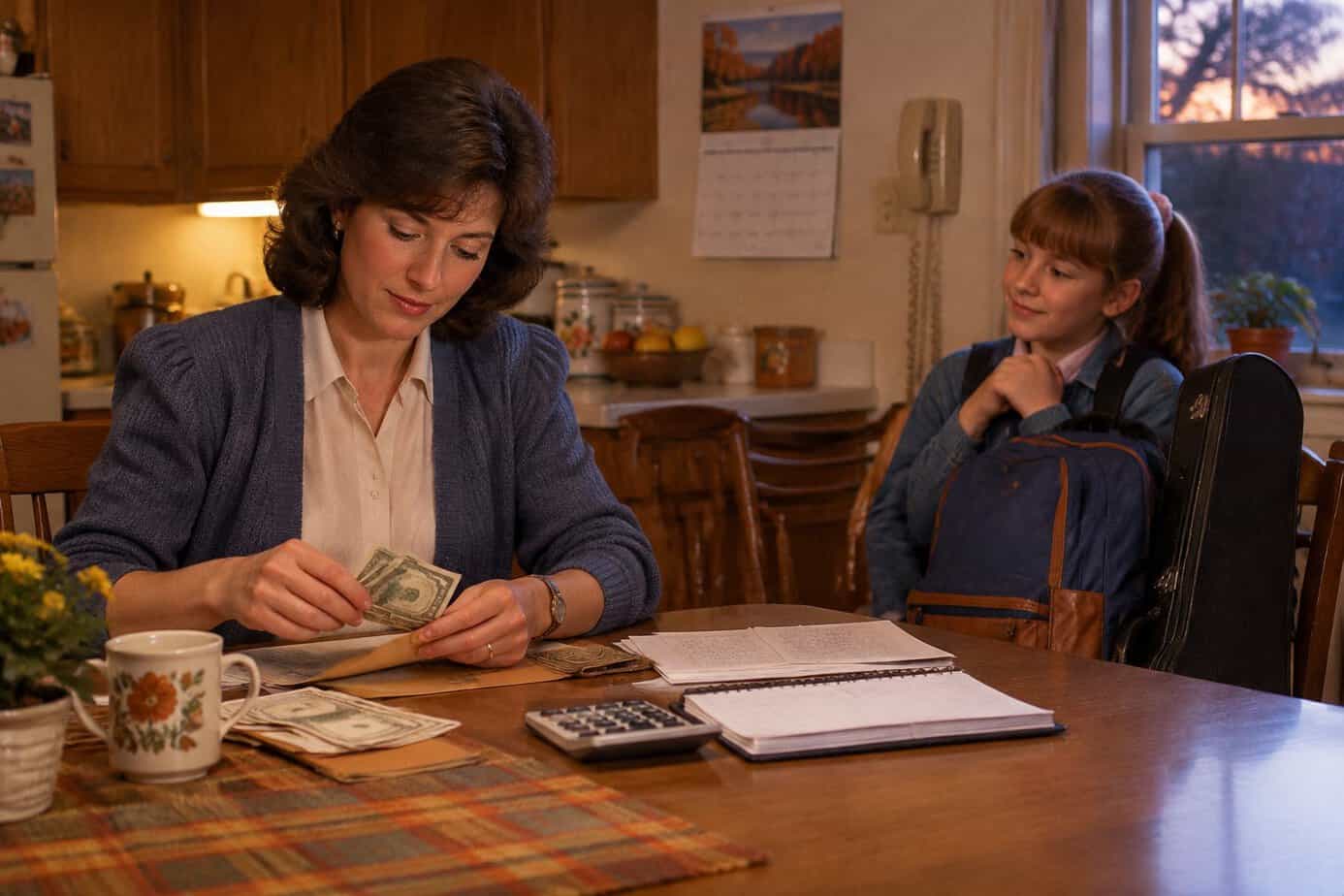
Your paycheck rarely went to anything flashy. In a lot of families, his covered the mortgage and the utilities, and yours covered everything that made life a little fuller.
The braces. The piano lessons. The dance recital costume and the school pictures. The new sneakers when the old ones pinched. The week at the lake in July, and the payments on the second car so you could get to work in the first place.
Nobody sat down and divided it up that way. It just happened, paycheck after paycheck, until it was simply how the house ran.
There was something satisfying about it, too. When you wrote the check for the class trip or handed over cash for the yearbook, you knew you had earned every dollar of it yourself. A lot of the good memories your family has from those years were paid for by you.
26. Fitting errands into lunch breaks and the trip home
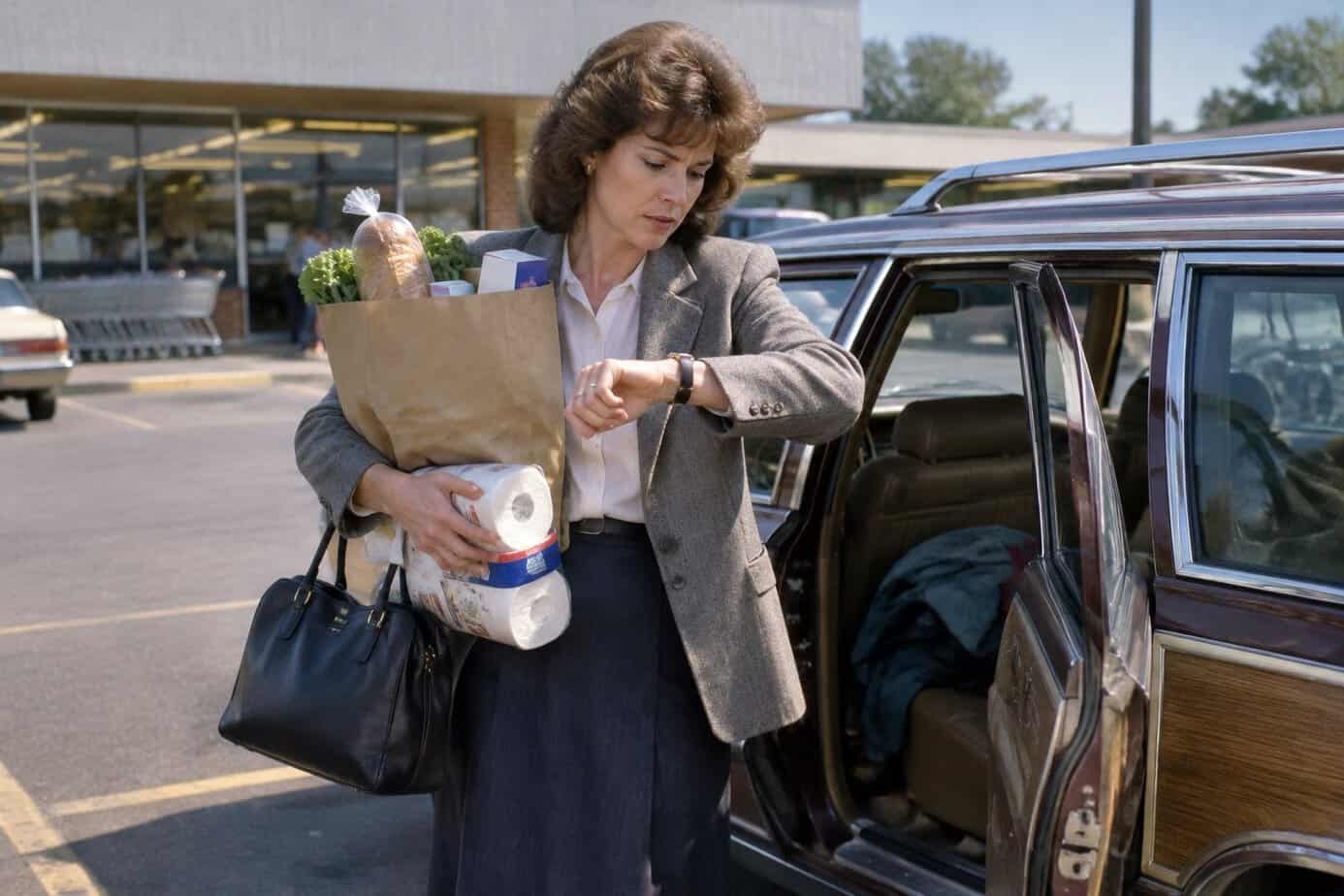
You didn’t get a lunch hour so much as a lunch sprint. The bank lobby often closed by 3, the post office had a line by noon and the dry cleaner wasn’t going to deliver to your desk. So you used every one of those minutes.
One day it was depositing your paycheck and getting cash for the week. The next it was picking up a prescription, buying a birthday card and dropping off a roll of film to be developed. You ate a sandwich at your desk afterward, or in the car at a red light.
The drive home had its own route, planned by which side of the road everything was on, because doubling back wasted gas and time you didn’t have.
To everyone else, things just got done. Nobody saw the careful choreography behind it, or the woman running it in a skirt and heels.
27. Taking care of sick kids while juggling work
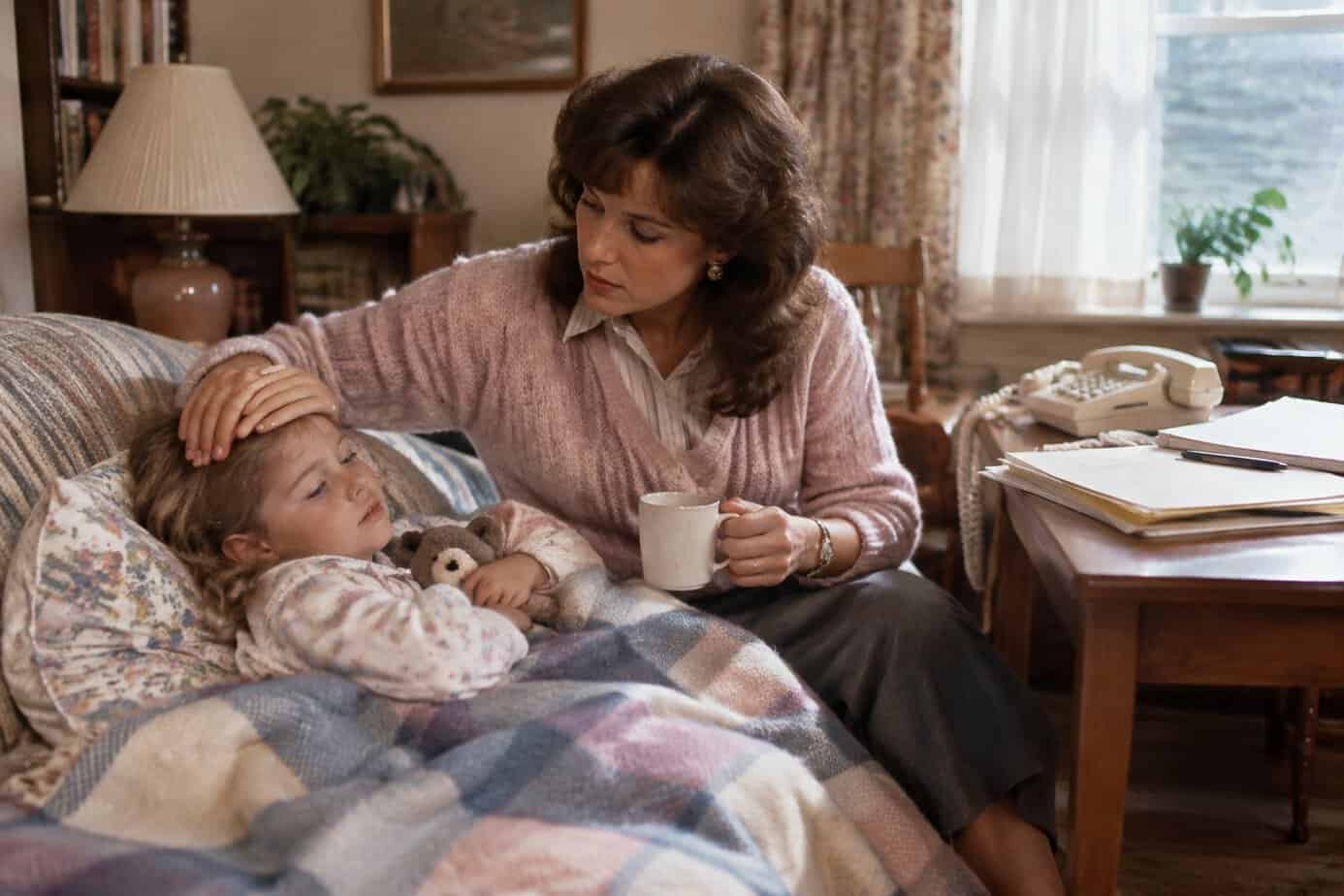
A fever at 6 a.m. changed everything. Before you were out of your robe, you were rearranging the whole day in your head.
There was no working from home, and before 1993 no federal law protected your job if you took time off to care for a sick child. Many women simply called in sick themselves, using up their own sick days on chicken pox and ear infections and then going to work with their own colds.
Other days, you called your mother, a neighbor or the sitter who would take a mildly sick kid. You learned to read a thermometer and a cough fast, deciding in minutes whether this was a stay-home day or a sitter day.
And when the school nurse called at 1:00 to say he’d thrown up after lunch, you picked up your purse and went. Again.
28. Patching together summer with day camp, swim lessons and a neighbor’s teenager
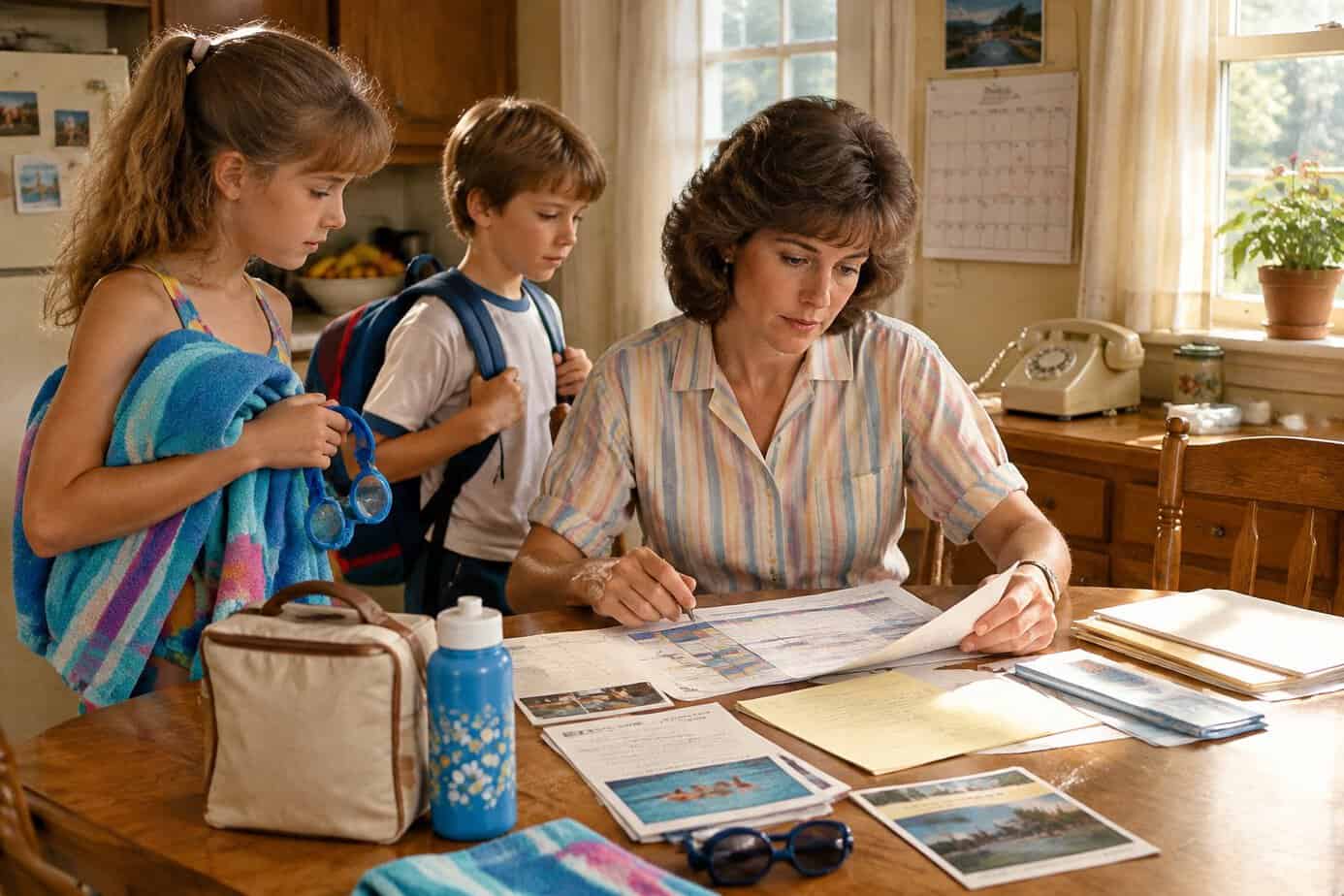
School let out in June, and your job did not. So every spring you built a summer schedule from scratch.
Day camp at the Y or the park district covered some weeks. Vacation Bible School covered another. Swim lessons filled a few mornings, and the teenage girl next door picked up the hours in between, usually for a couple of dollars an hour, paid in cash on the porch every Friday.
You kept track of which days needed a swimsuit, which needed a packed lunch and which days the teenager had plans of her own. You called in March to get a camp spot before they filled up. You traded weeks with your sister or a friend.
None of it lined up perfectly, but by the end of June it worked. The kids were fed, sunscreened and mostly supervised, and you still made it to work on time.
29. Still finding a little time for yourself

By the time everyone was fed, bathed and settled in front of the TV, there wasn’t much evening left. But you still carved out a sliver of it.
Maybe it was a bubble bath with the door locked, the kind the Calgon commercials promised would take you away. Maybe it was a paperback romance from the drugstore rack, read twenty pages at a time. Maybe it was the first cup of coffee after everyone left in the morning, drunk while it was still hot for once.
Some women had a standing night out: a bowling league, choir practice or Tuesday night aerobics. Others just took the long way home with the radio turned up.
You didn’t call it “me time.” You just took the minutes where you found them. Those minutes kept a part of you that was yours alone, and that mattered more than anyone knew.
You might also enjoy 27 things 1980s housewives did before noon and these 27 dinners every 1970s mom made on a budget.
Why It Was Harder Than It Looked
The numbers back up what you already know. In 1980, women working full time earned about 60 cents for every dollar men earned. Good child care was hard to find and harder to afford. And there was no federal guarantee of family leave until 1993.
At home, the expectations hadn’t caught up yet. In most houses, the cooking, cleaning, laundry, school forms and doctor’s appointments still landed on you, job or no job. Sociologist Arlie Hochschild called it “the second shift” in her 1989 book of the same name, and millions of women read that title and nodded.
You didn’t have a name for it while you were living it. You just called it Tuesday.
You Deserve the Credit Now
The kids who grew up in your house may not have noticed all of this at the time. Kids rarely do. But they learned from it. They learned that a woman could hold a job and run a home, that you show up when you say you will, and that supper can come out of almost nothing if you know what you’re doing.
So if you were one of those women in shoulder pads and sneakers, juggling a briefcase and a diaper bag, take a minute and give yourself the credit nobody handed you back then. You earned every bit of it.
Which of these did you do the most? And which one would you never want to do again?