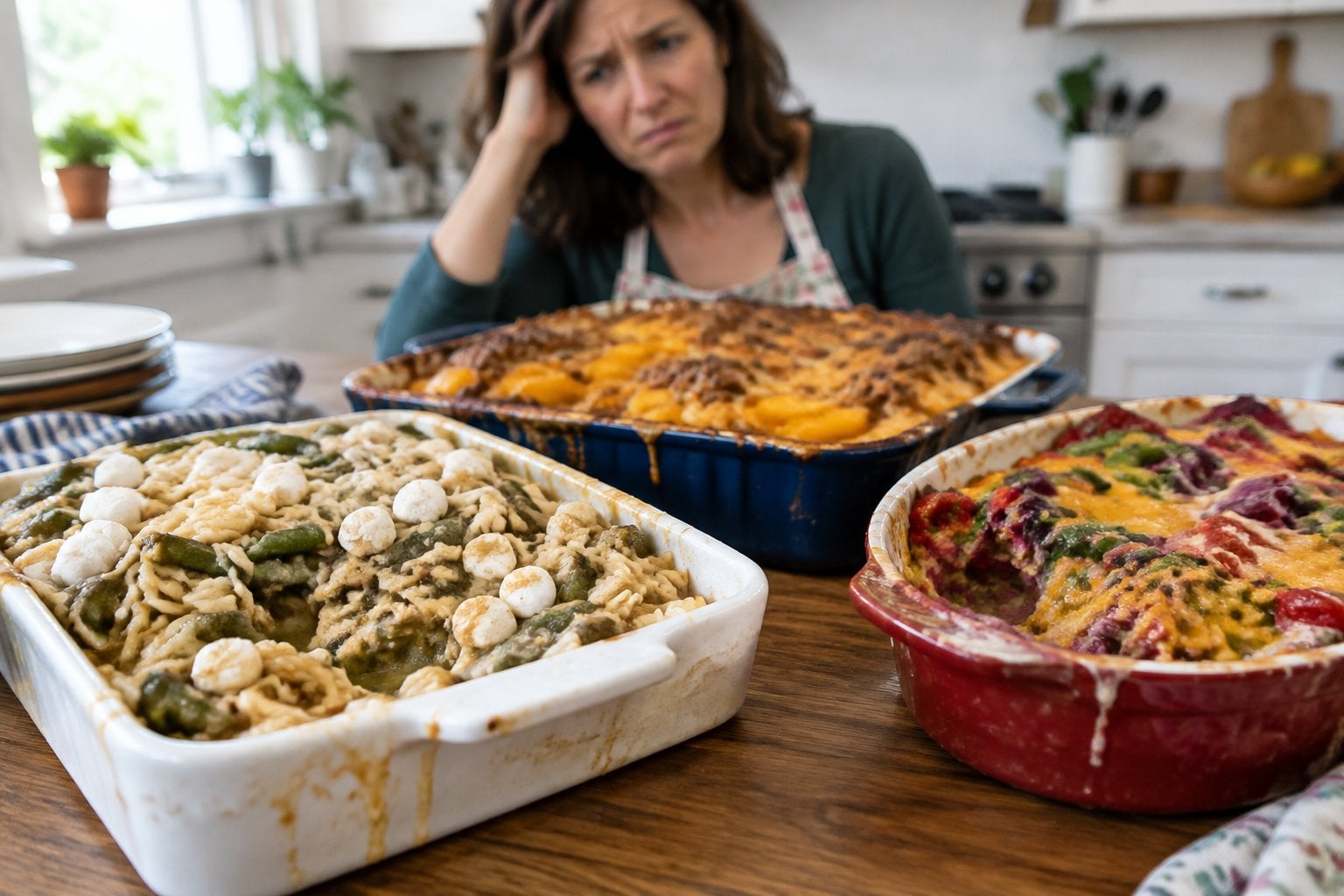
The 30 Worst Potluck Foods That Nobody Wants to Take Home: Dishes to Skip at Your Next Gathering
Would you like to save this?
Potlucks bring people together, but not every dish earns a second helping. Some foods look appealing on a table yet end up untouched by the time the gathering winds down, while leftovers go home in the same container they arrived in.
Certain dishes consistently get passed over because of how they travel, hold up over time, or fit the mood of a shared meal. Texture, temperature, and presentation all play a role in whether a dish gets eaten or left behind.
This article looks at the foods that tend to sit at the edge of the table rather than the center of attention, and explains why guests often skip them.
1. Dry, overcooked turkey slices
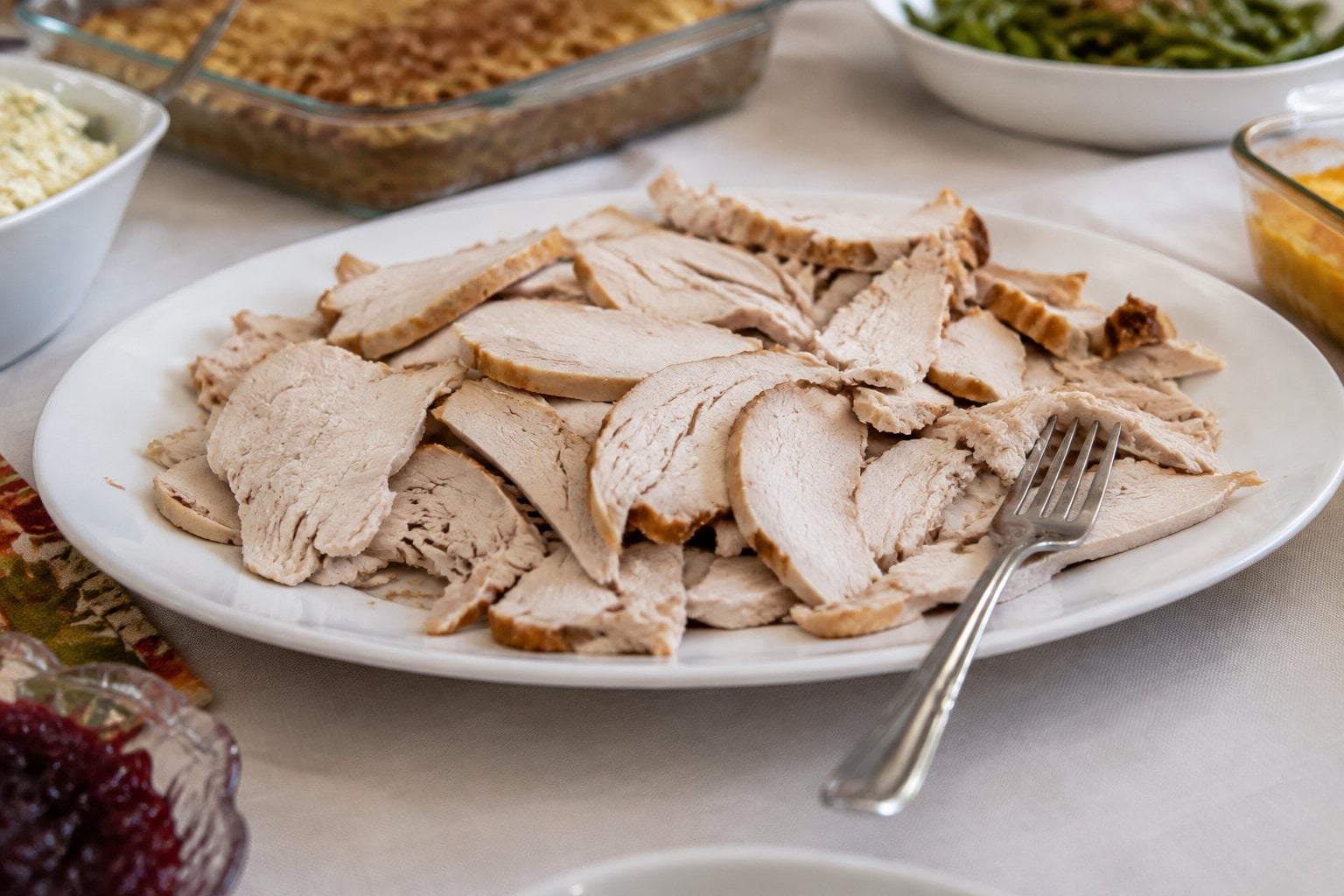
You probably already know the signs. The meat sits there, gray and tight, curling at the edges after too long in a warming tray. No sauce or gravy saves it once the fibers have seized up.
This happens because turkey breast has almost no fat to protect it during reheating. You hold it at serving temperature for hours, and the moisture disappears fast.
Guests notice immediately. One bite tells them the texture is off, and they move on to something else on the table.
You can avoid this outcome by slicing turkey just before serving, keeping it covered, and adding broth or gravy to maintain moisture. Dark meat also holds up better than breast meat over time. A dish like this ranks among the most skipped potluck dishes you’ll see served.
2. Soggy green bean casserole
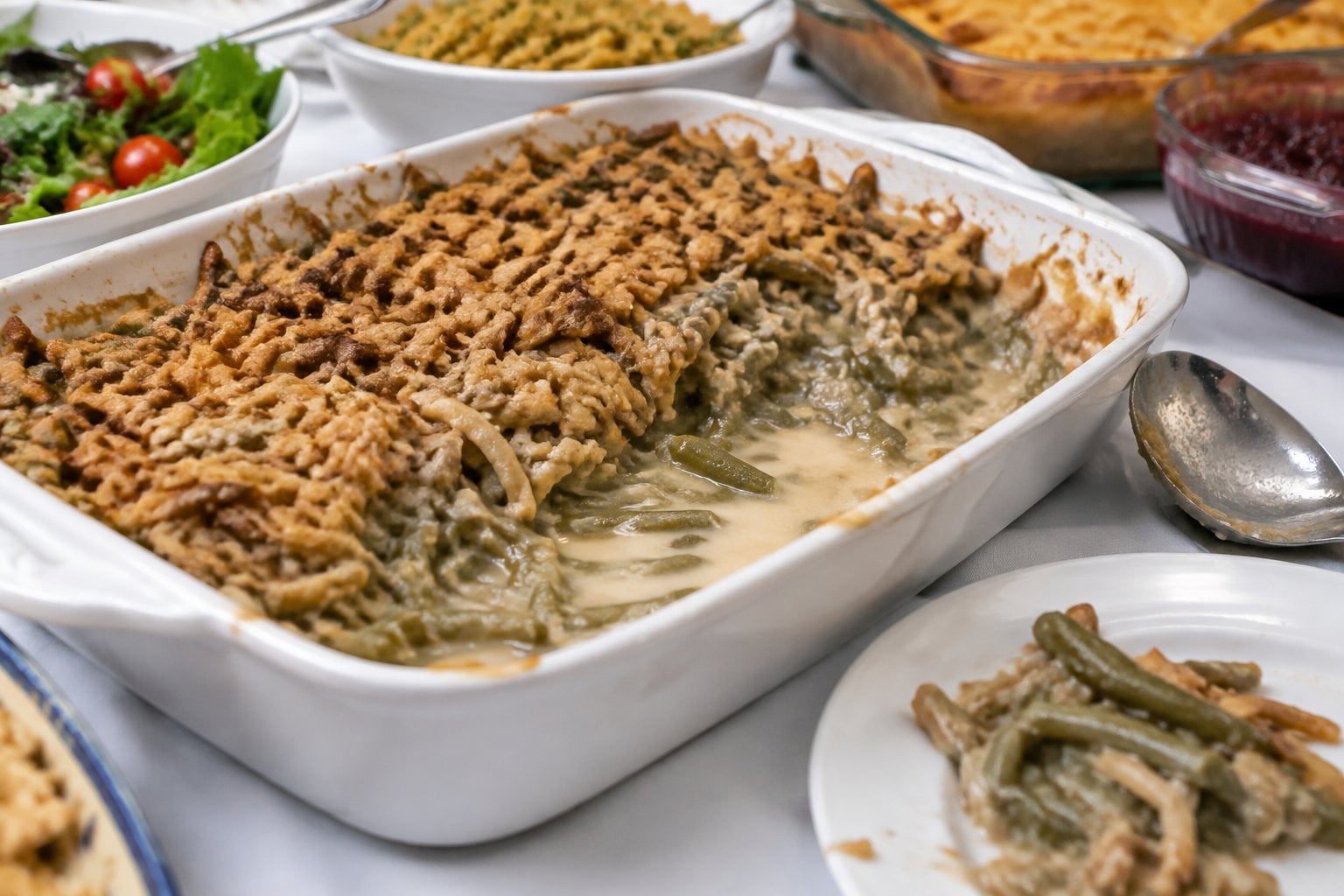
Green bean casserole holds a permanent spot on potluck tables, but it rarely survives the trip in good shape. The canned cream of mushroom soup base breaks down over time, leaving you with a watery, separated mess instead of a creamy sauce.
Once the fried onion topping sits in that liquid, it loses its crunch almost immediately. You end up with soft, soggy onions that add no texture at all.
The dish also tends to seem a little boring compared to fresher sides, especially if guests have seen it at every gathering for years.
Reheating doesn’t help much either. The green beans often turn mushy, and the overall texture becomes harder to enjoy the longer it sits out. If you bring this dish, expect it to go largely untouched by the end of the night.
3. Watery potato salad
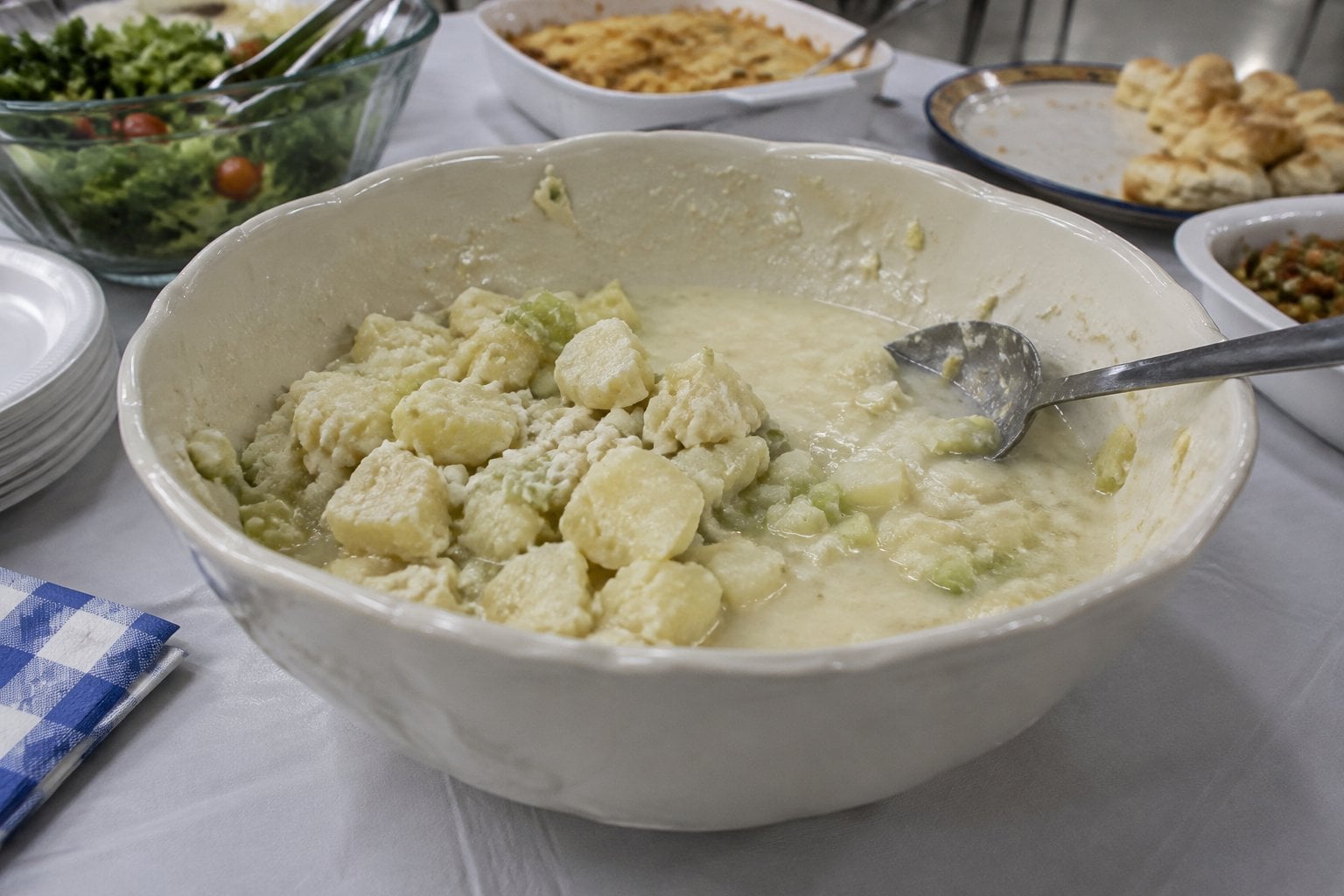
Potato salad breaks down fast once dressing sits on warm potatoes. Mayonnaise thins out, water pools at the bottom of the bowl, and the whole dish looks separated by the time you serve it.
You’ll notice people scoop around the liquid instead of digging in. Soggy potatoes don’t hold their shape, and a watery base signals the dish wasn’t made with fresh ingredients or proper technique.
Store-bought potato salad is often the biggest offender here, since many guests find the overly processed texture and artificial flavor unappealing. Homemade versions can suffer too if potatoes aren’t drained and cooled properly before mixing.
Temperature control makes this worse. Potato salad needs to stay cold, and if it warms up during transport or sits out too long, the texture only gets softer and less appealing.
If you’re bringing potato salad, drain your potatoes thoroughly and add dressing just before serving.
4. Mayonnaise-heavy macaroni salad left unrefrigerated
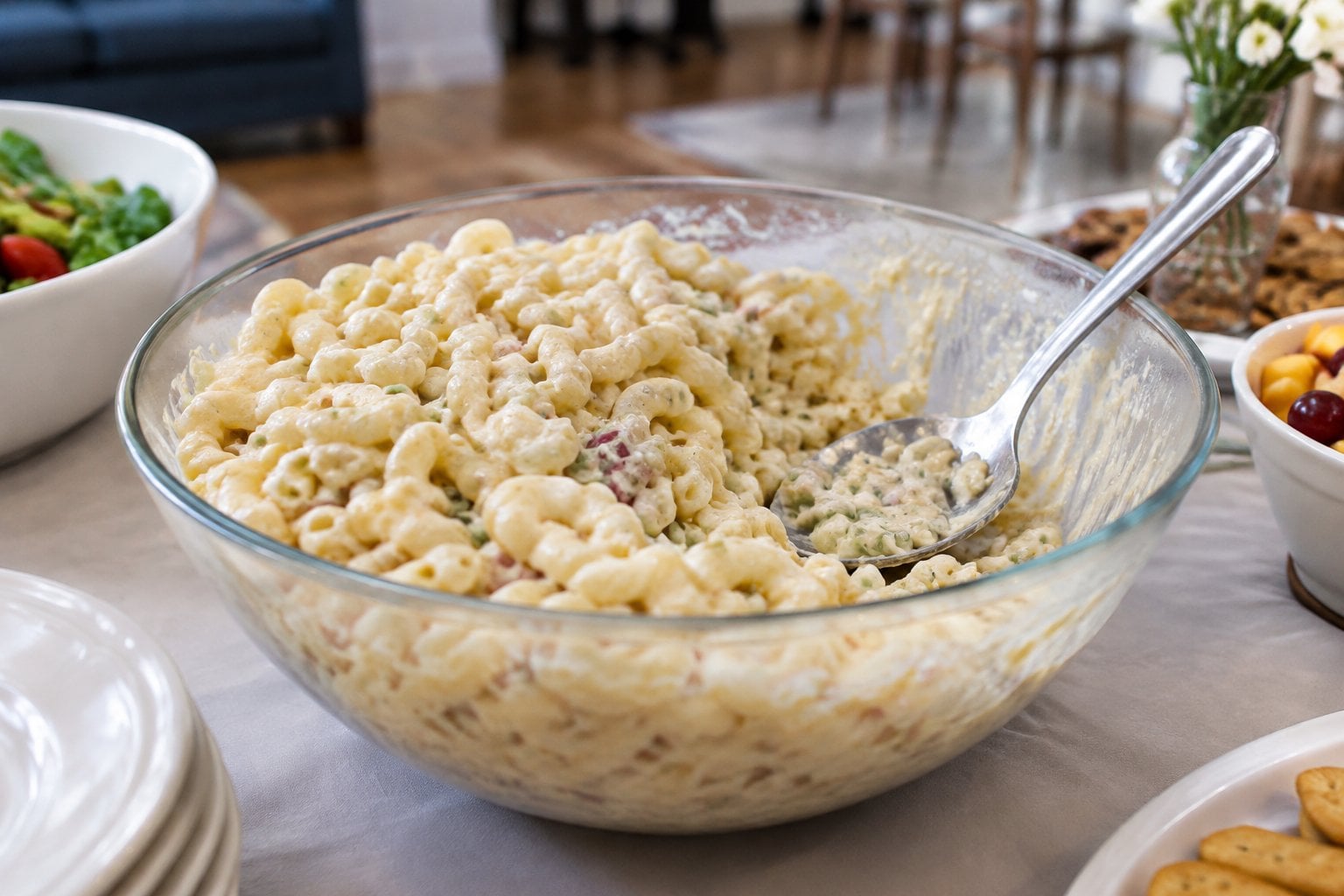
You know the dish. It’s a bowl of macaroni, mayonnaise, and vegetables that shows up at almost every potluck. The problem is its moisture content and perishable ingredients make it a prime candidate for spoilage once it sits out.
Mayonnaise-based dressings create an ideal environment for bacteria like Salmonella and E. coli when the dish stays at room temperature too long. You won’t necessarily taste or smell a difference, which makes this risk easy to miss.
If you bring this dish, keep it chilled on ice until serving. Once it’s been out for more than two hours, you should toss it rather than take it home. Reheating won’t fix contamination, and neither will refrigerating it afterward.
5. Unseasoned boiled vegetables
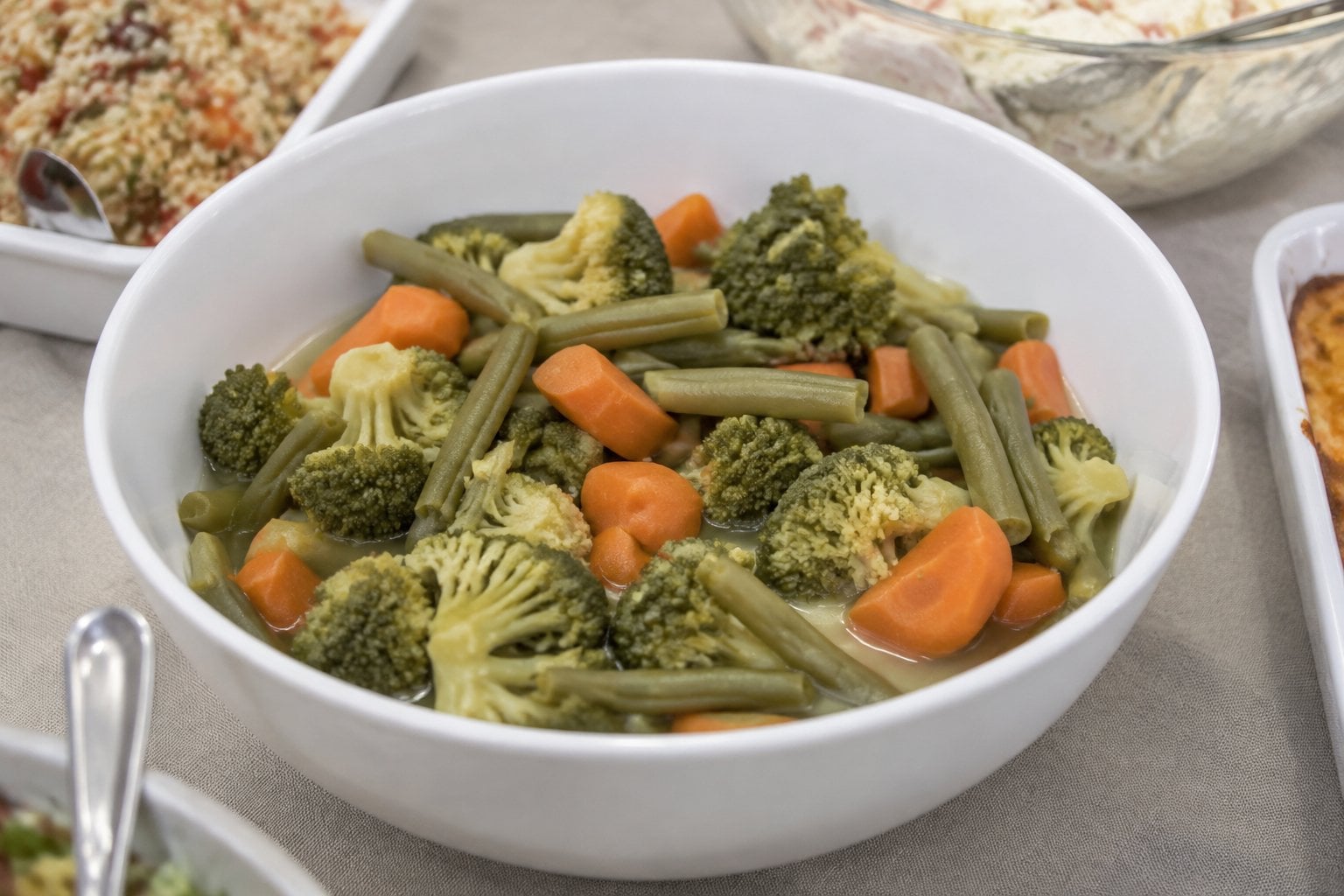
If you boil vegetables with no salt, no butter, and no seasoning, you end up with a dish most people skip. The texture turns soft and mushy, and the flavor disappears into the water.
You might think plain vegetables are a safe, healthy choice for a crowd. In practice, guests tend to pass over bland trays in favor of dishes with actual flavor, and dense items like broccoli and cauliflower often go untouched when served raw or underseasoned.
If you want to bring vegetables, season them before you leave home. A bit of olive oil, garlic, or herbs makes a noticeable difference. Roasting instead of boiling also helps retain texture and taste, giving guests a reason to actually serve themselves a portion.
6. Overcooked Brussels sprouts
Overcooked Brussels sprouts are an easy way to empty a potluck table fast. Even Gordon Ramsay has named them the worst food to overcook, and the texture tells you why.
Once boiled too long, the sprouts turn mushy and release a sulfurous smell that lingers near the serving dish. You will notice guests steering their plates in another direction.
Brussels sprouts are already bitter by nature, so overcooking only intensifies that flavor instead of softening it. A quick ice bath after boiling can prevent this, but it is a step many home cooks skip before a potluck.
If you want your dish to disappear from the table for the right reasons, roast your sprouts until crisp rather than boiling them into a soft, gray pile nobody wants to serve themselves.
7. Mystery meat casserole
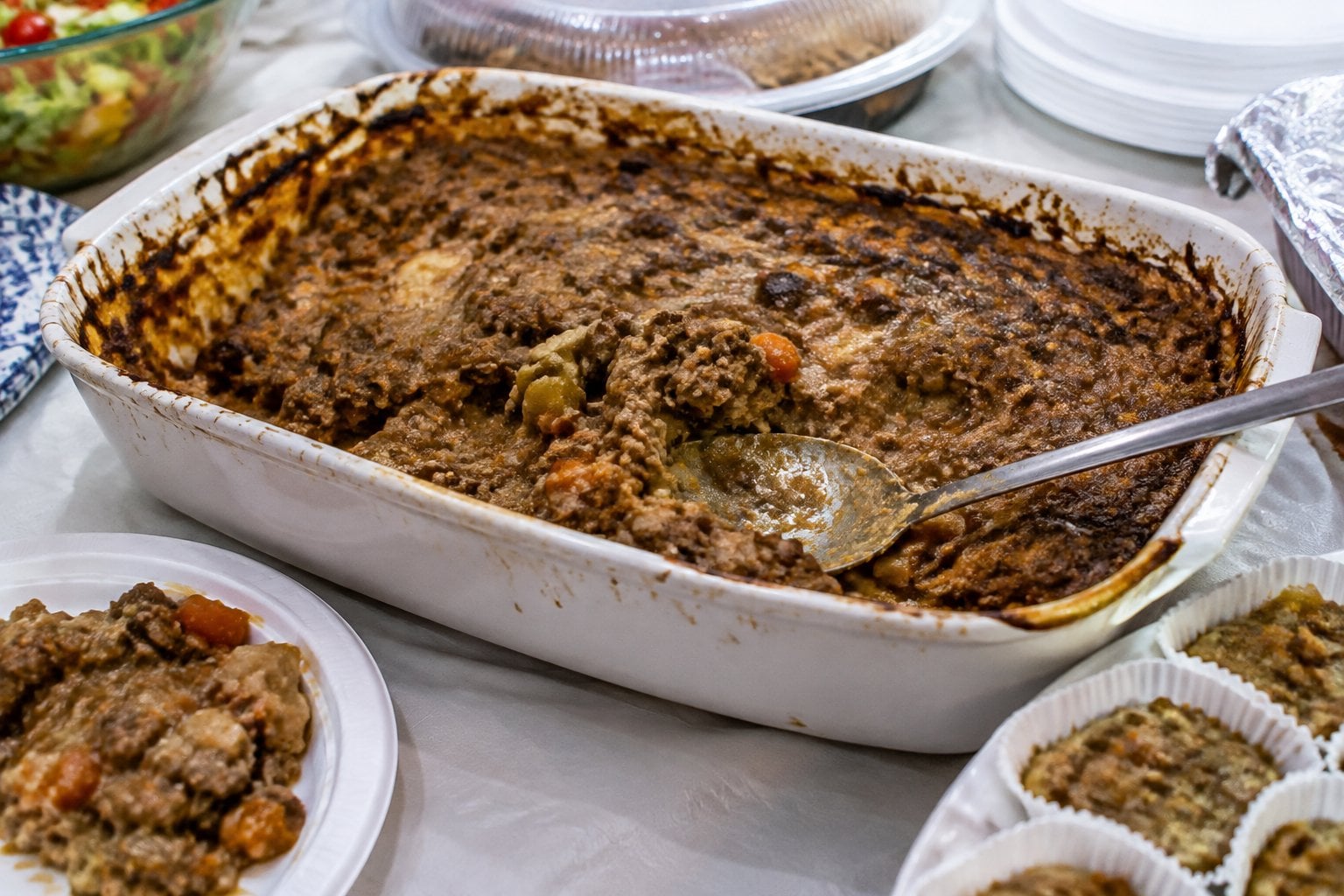
You know this dish when you see it. The meat is unidentifiable, hidden under a layer of sauce or cheese that offers no clues about what you’re actually eating.
Ground beef, canned chicken, leftover ham — it could be any of these, or a combination you’d rather not think about. The uncertainty alone makes most guests hesitate before serving themselves.
Casseroles built around a single meat lovers’ recipe can work well when the ingredients are clear, as seen in dishes from this casserole recipe collection. The problem isn’t meat in casseroles generally, it’s the lack of transparency about what’s inside.
Food safety concerns compound the issue. If you can’t identify the protein, you’re less likely to trust how long it’s been sitting out or how it was stored before the event.
Most people will quietly pass this dish by rather than ask questions.
8. Dry Baked Chicken Breasts
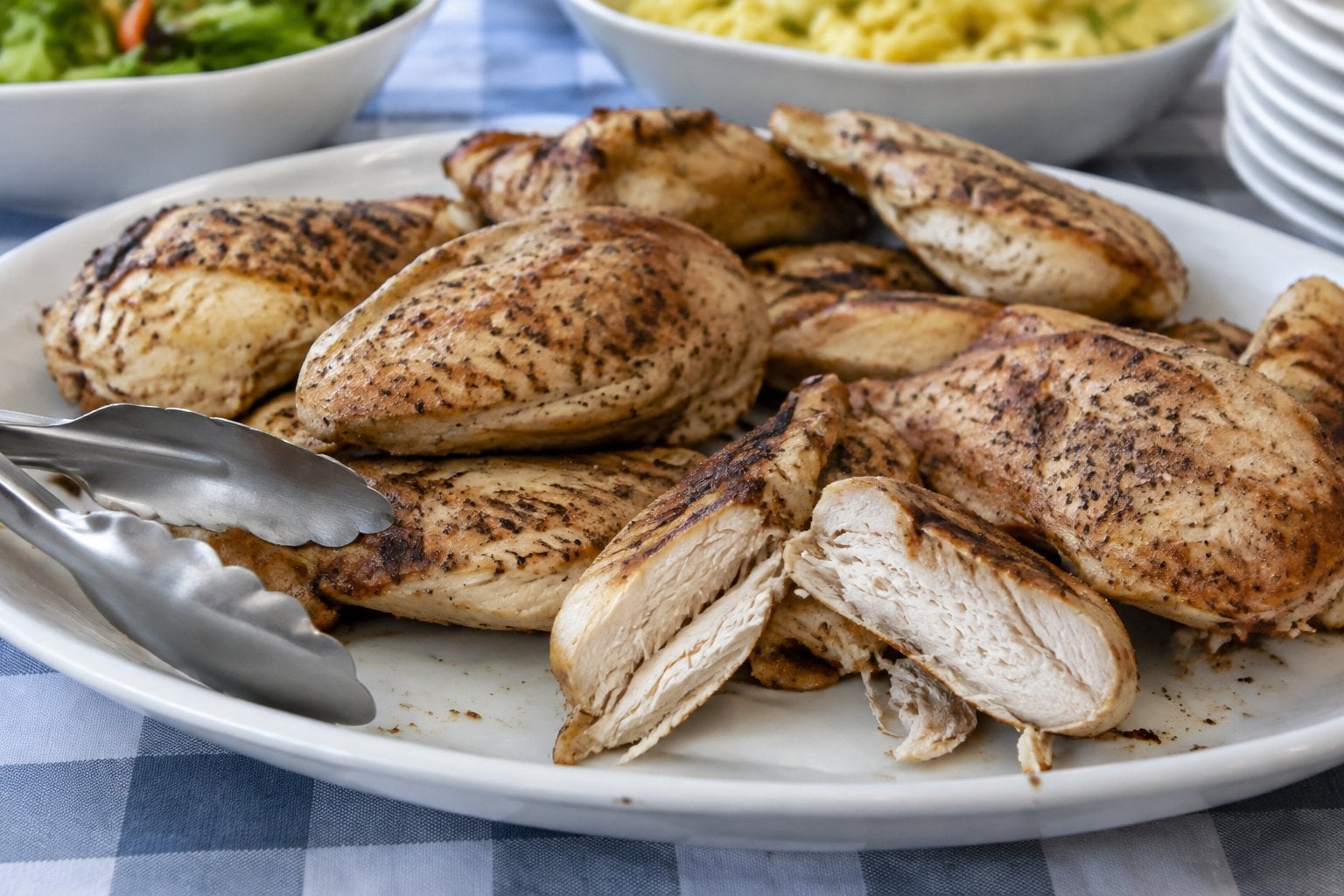
Dry chicken breasts show up at almost every potluck, and they almost never get finished. Overbaking is the usual culprit; without careful timing, the meat turns chalky and tough. Once it sits in a chafing dish for an hour, any remaining moisture disappears fast.
You can avoid this by slicing the chicken and adding a sauce or gravy before serving. A marinade also helps retain moisture during baking. If you skip these steps, guests will take one bite and move on, leaving most of the tray behind.
Bone-in, skin-on pieces tend to fare better than boneless breasts, since the bone helps regulate cooking and keeps the meat from drying out as quickly. A whole chicken often leaves half untouched at these gatherings, so portioning and presentation matter just as much as the cooking method itself.
9. Greasy, limp fried chicken
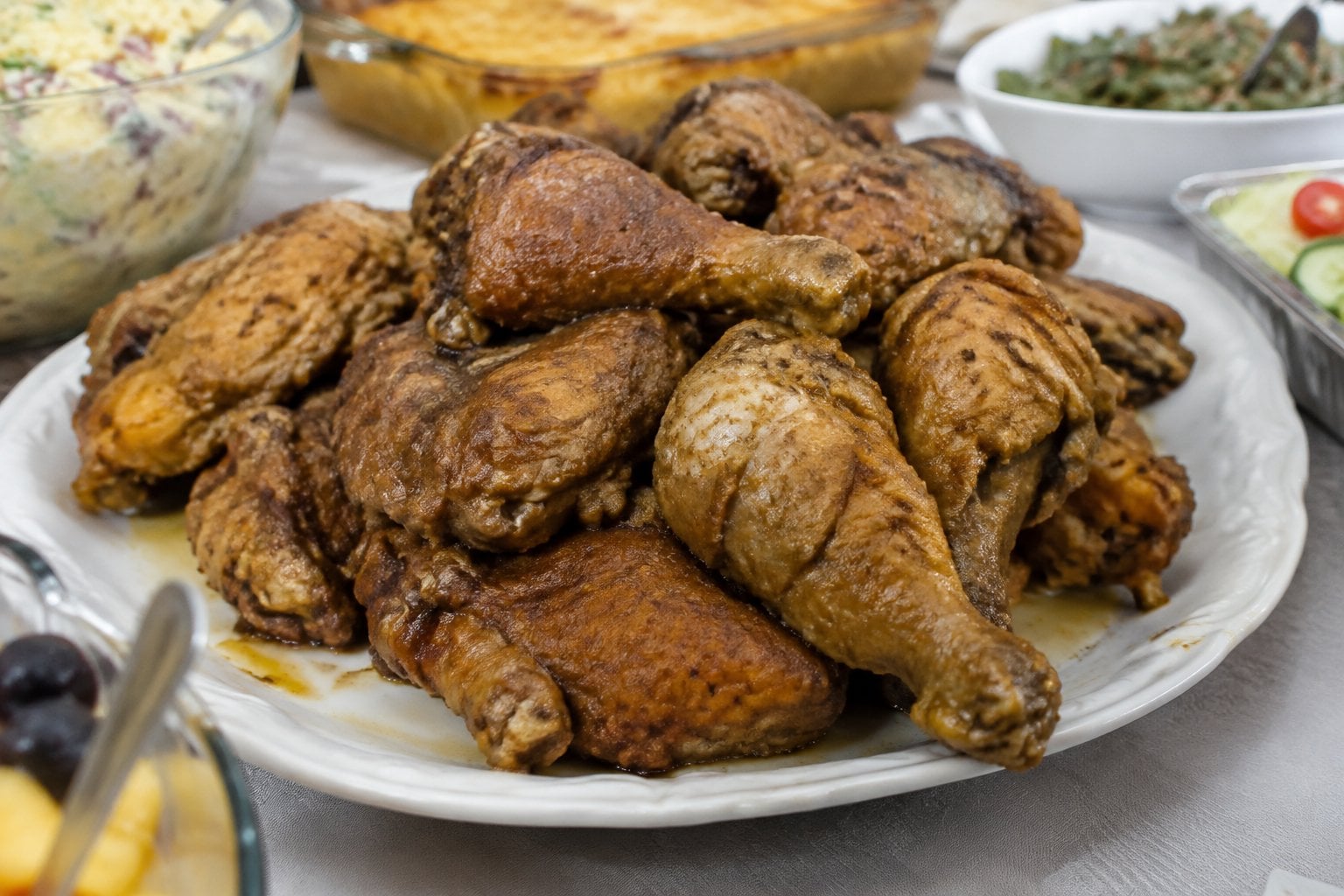
Fried chicken loses its crunch within a couple hours of cooking. By the time you set it on the potluck table, the breading has likely gone soft and oily.
Heat and steam trapped in a covered container make this worse. The coating absorbs moisture instead of staying crisp, leaving you with a soggy, greasy exterior.
You can avoid this by transporting chicken uncovered or in a container with ventilation. Some bring a small cooling rack to keep air circulating underneath the pieces.
Reheating isn’t a reliable fix either, since most potluck setups don’t have an oven on hand. A microwave will only make the breading chewier and release more oil.
If you want to serve fried chicken, consider a version that holds up cold, or plan to serve it immediately after cooking rather than transporting it.
10. Cold, congealed gravy
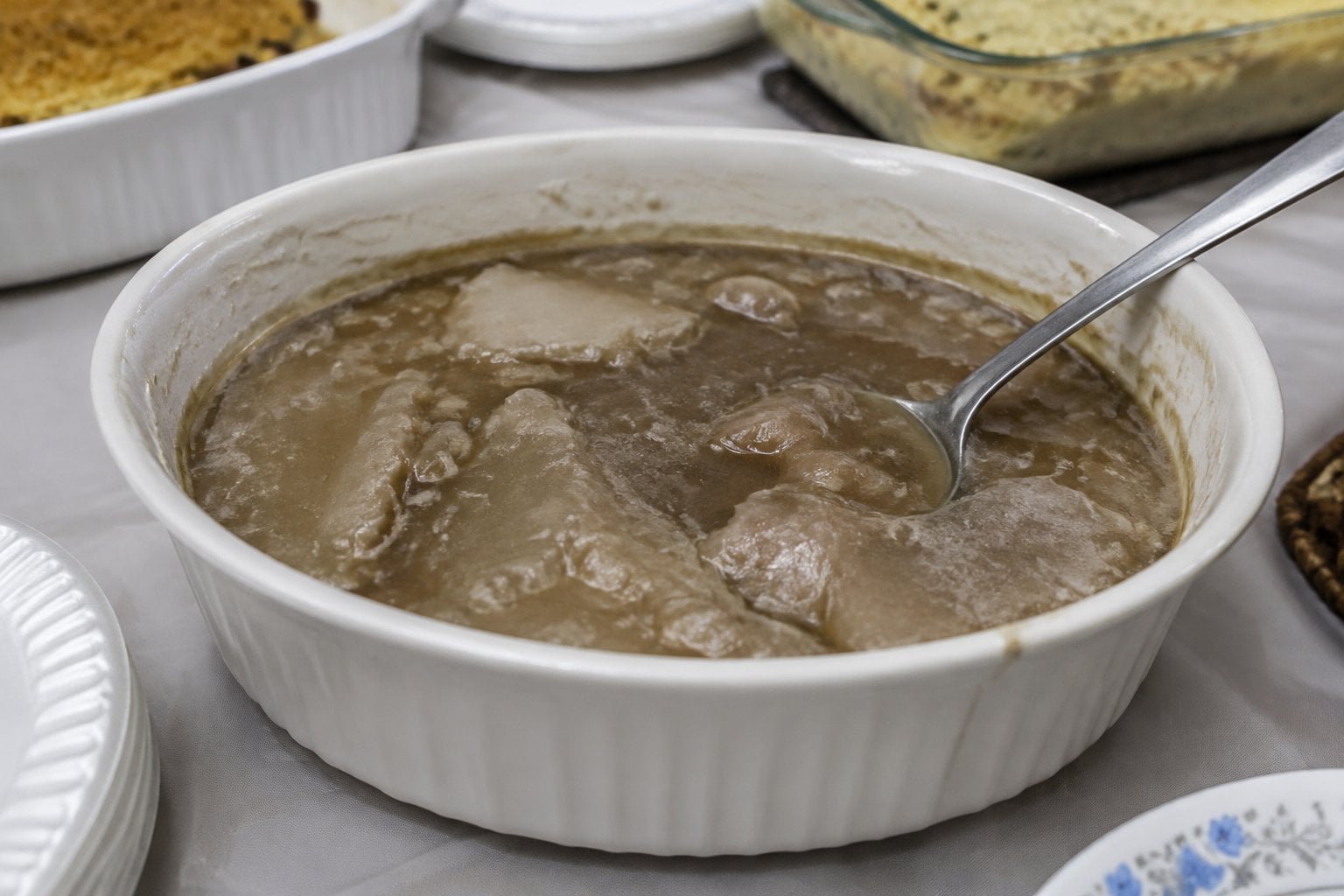
Gravy depends on heat. Once it cools, the fat and starch separate and set into a thick, gelatinous layer that looks unappetizing and tastes worse.
Reheating gravy at a potluck is rarely practical. Most tables don’t have a stove or microwave nearby, so the dish sits at room temperature and continues to solidify.
You’ll also run into food safety concerns. Gravy made with meat drippings or dairy needs to stay above 140°F, and once it dips into the “danger zone,” bacteria can grow quickly.
If you want to bring a sauce-based dish, choose one that holds up cold or at room temperature, like a vinaigrette or salsa. Save the gravy for a meal you’re serving straight from your own kitchen, where you control the temperature from stovetop to plate.
11. Runny Deviled Eggs
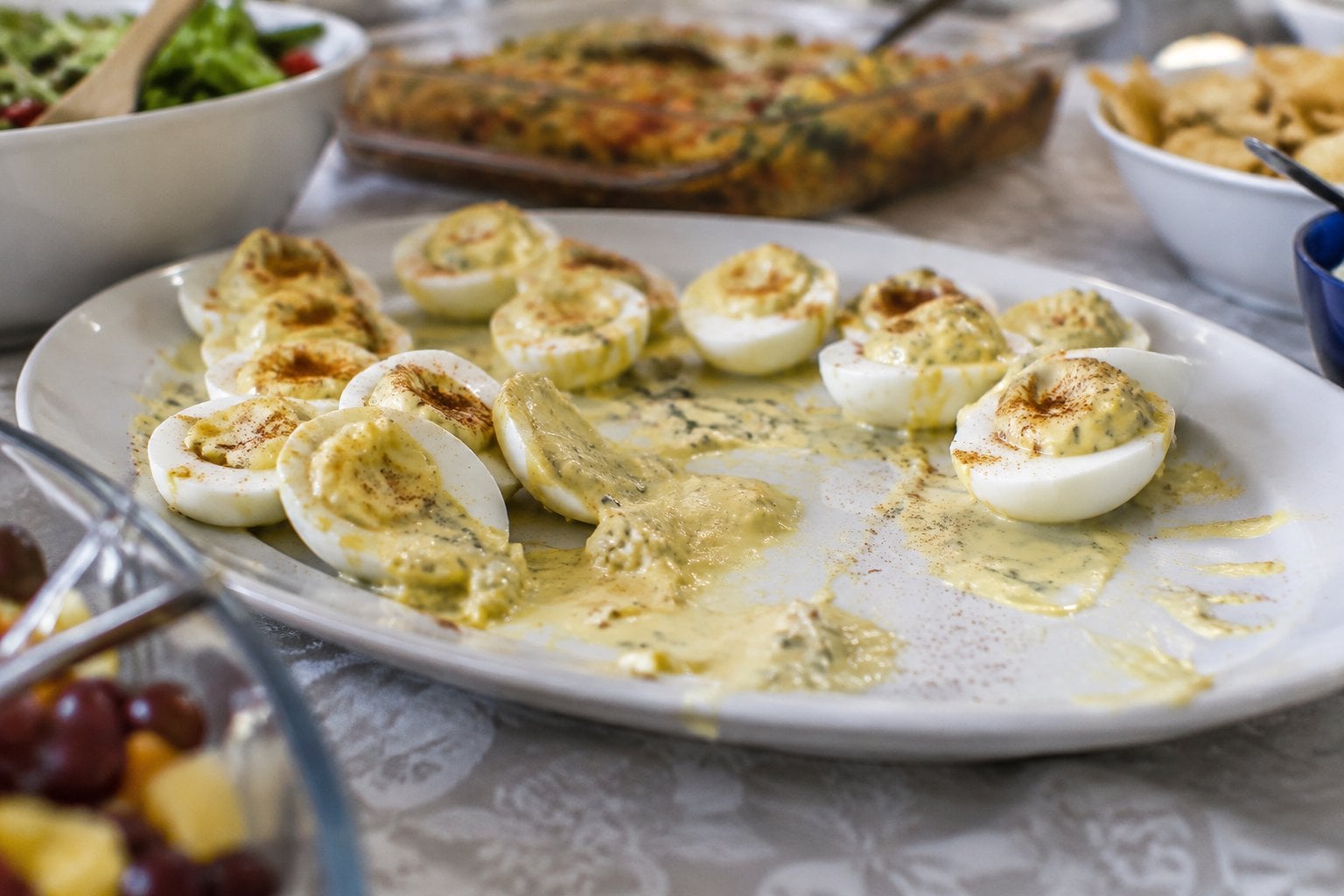
A deviled egg should hold its shape. If the filling is runny, the egg white can’t contain it, and you end up with a mess on the platter instead of a neat bite.
This usually happens when you add too much mayonnaise or mustard without enough yolk to balance it out. Overcooked or undercooked yolks can also throw off the texture.
You’ll notice people skip these once the filling starts to pool or seep onto the tray. The appearance alone signals that something went wrong, and most guests won’t risk it. A fresh, properly made deviled egg draws attention, but a sloppy one gets left behind.
If you’re bringing deviled eggs, test the consistency before you leave home. The filling should hold a stiff peak when piped, not slump or spread across the plate.
12. Wilted garden salad
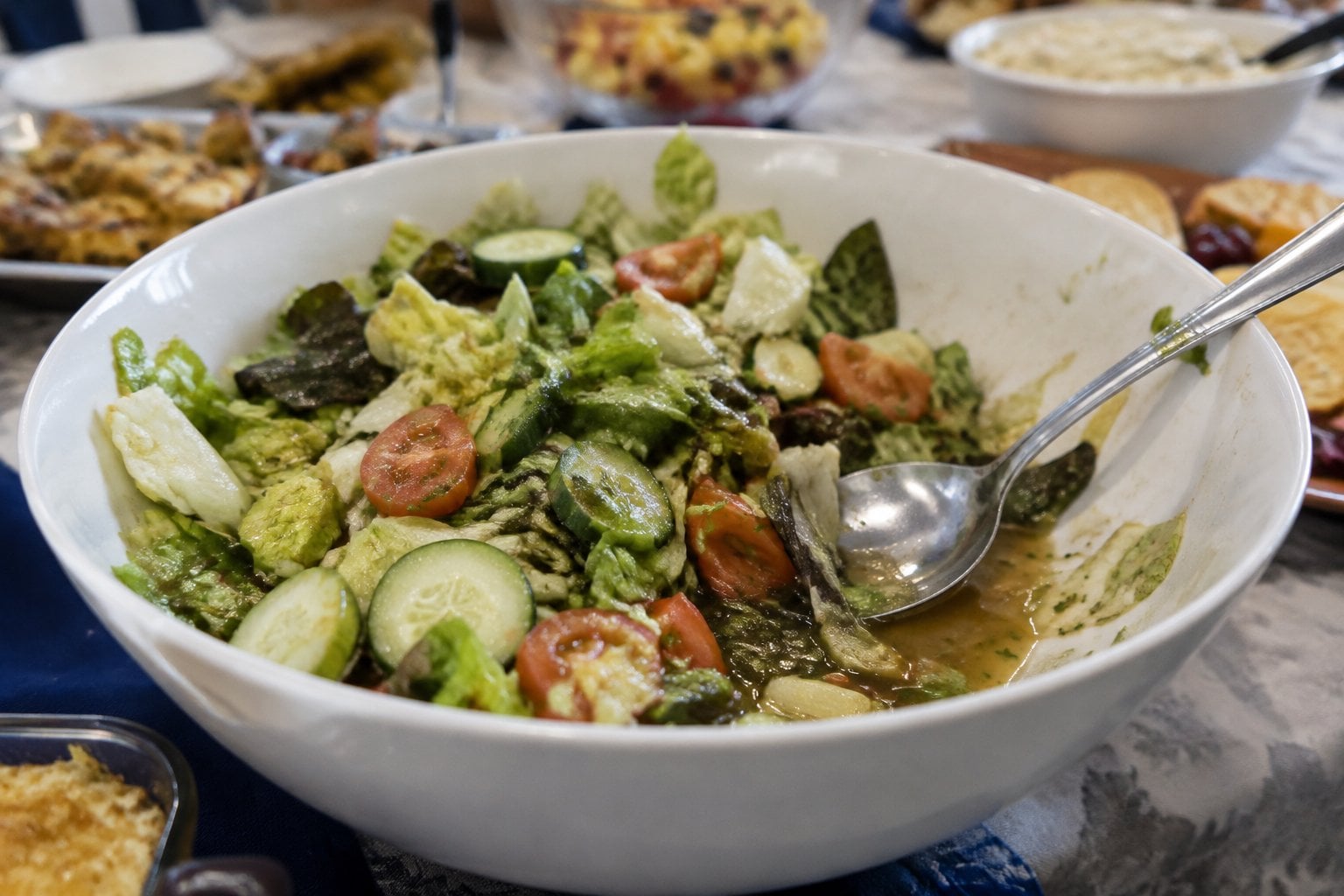
A garden salad looks appealing for about an hour, then it starts to fall apart. Lettuce releases moisture as it sits, and the leaves turn soft and translucent.
Once dressing gets added early, the problem gets worse. Vinaigrette and creamy dressings both break down greens quickly, leaving you with a soggy, flavorless mess by the time the potluck starts.
You’ll notice the telltale signs: a pool of liquid at the bottom of the bowl, limp leaves clinging together, and tomatoes that have gone mushy. None of this is appetizing, and most guests will skip it entirely.
If you bring a salad, keep the dressing separate until serving time. Store delicate greens apart from wetter ingredients like tomatoes or cucumbers. A little planning prevents the wilted, waterlogged dish that ends up untouched at the end of the table.
13. Soggy Dressed Caesar Salad
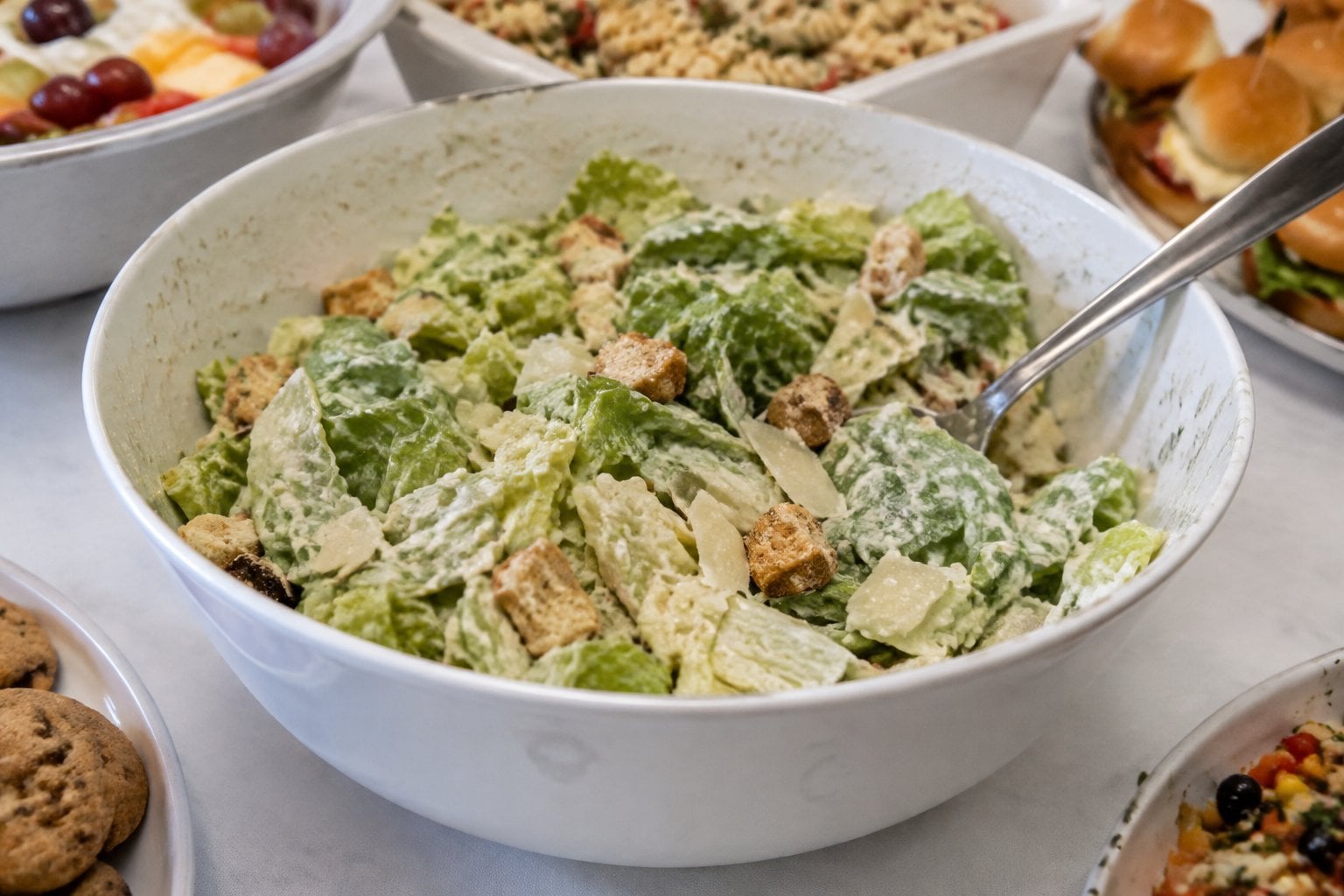
Caesar salad only works when it stays crisp, and pre-dressing it before transport ruins that texture completely. The romaine wilts under the dressing’s oil and acid, turning limp and watery by the time anyone serves themselves.
Croutons suffer the same fate. They absorb moisture from the dressing and lose their crunch, leaving you with soggy bread chunks instead of a textural contrast.
A properly made Caesar depends on fresh ingredients and proper technique, with real anchovy and enough garlic to give it character, as noted in this breakdown of restaurant foods that are almost always disappointing. A potluck version faces even more obstacles, since it sits in a container for an extended period before reaching the table.
If you want to bring Caesar salad, pack the dressing separately and toss it on-site. Anything else guarantees a soggy, unappetizing result that most people will skip entirely.
14. Undercooked rice pilaf
Would you like to save this?
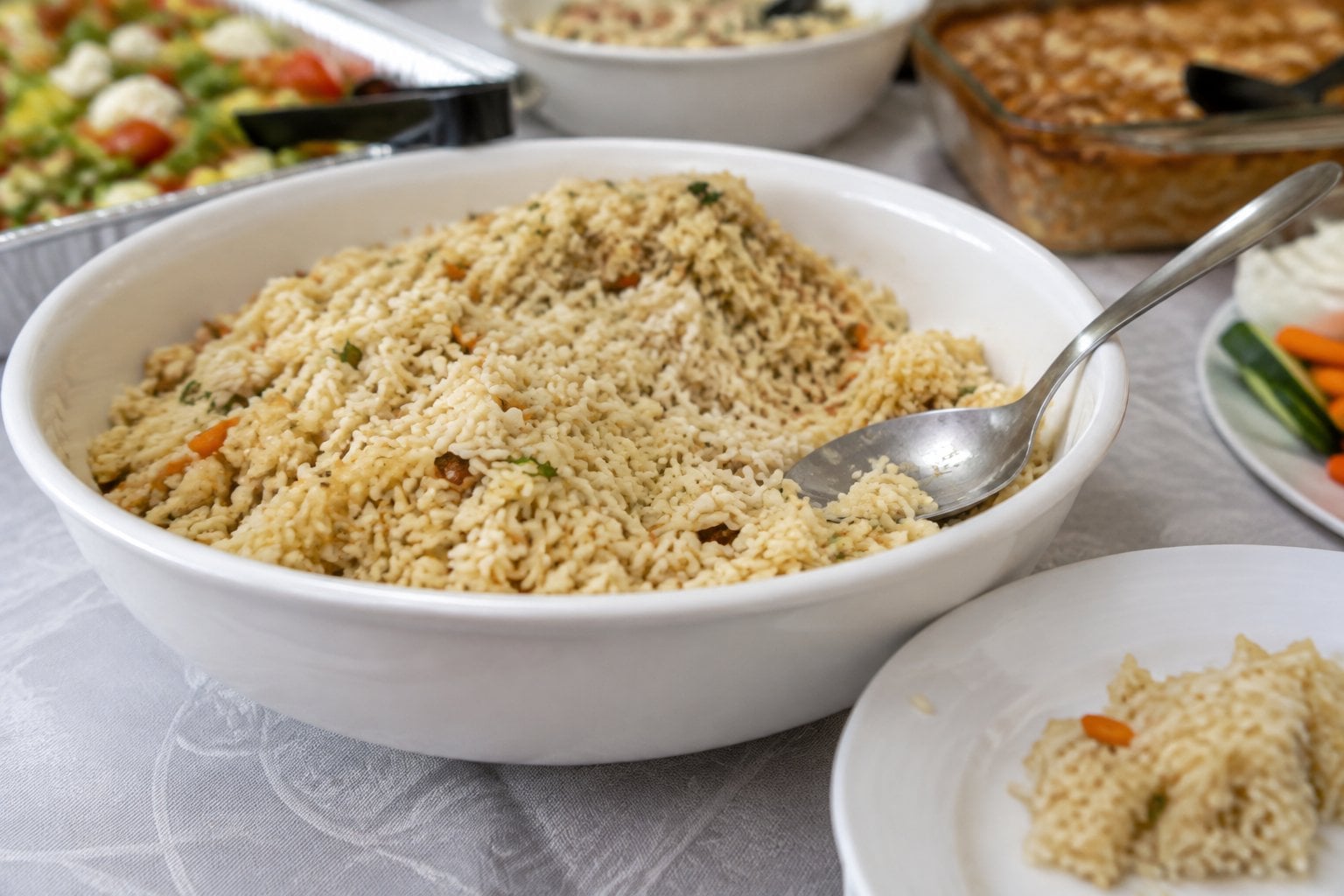
You know the problem the moment your fork hits resistance. Rice pilaf needs precise timing, and most slow cookers or chafing dishes don’t deliver it. The grains sit on the bottom, absorbing too little liquid while the top stays mushy.
Potluck setups work against this dish from the start. Rice pilaf is usually made ahead, then reheated or kept warm for hours, which throws off the original cook time. You end up with a texture that’s crunchy in some bites and soggy in others.
Few people will say anything, but fewer will take a second scoop. It’s one of those dishes that looks fine on the table and disappoints the moment someone tries it. If you’re bringing rice pilaf, cook it fresh on-site or skip it for something more forgiving, like a cold pasta salad.
15. Bland pasta salad
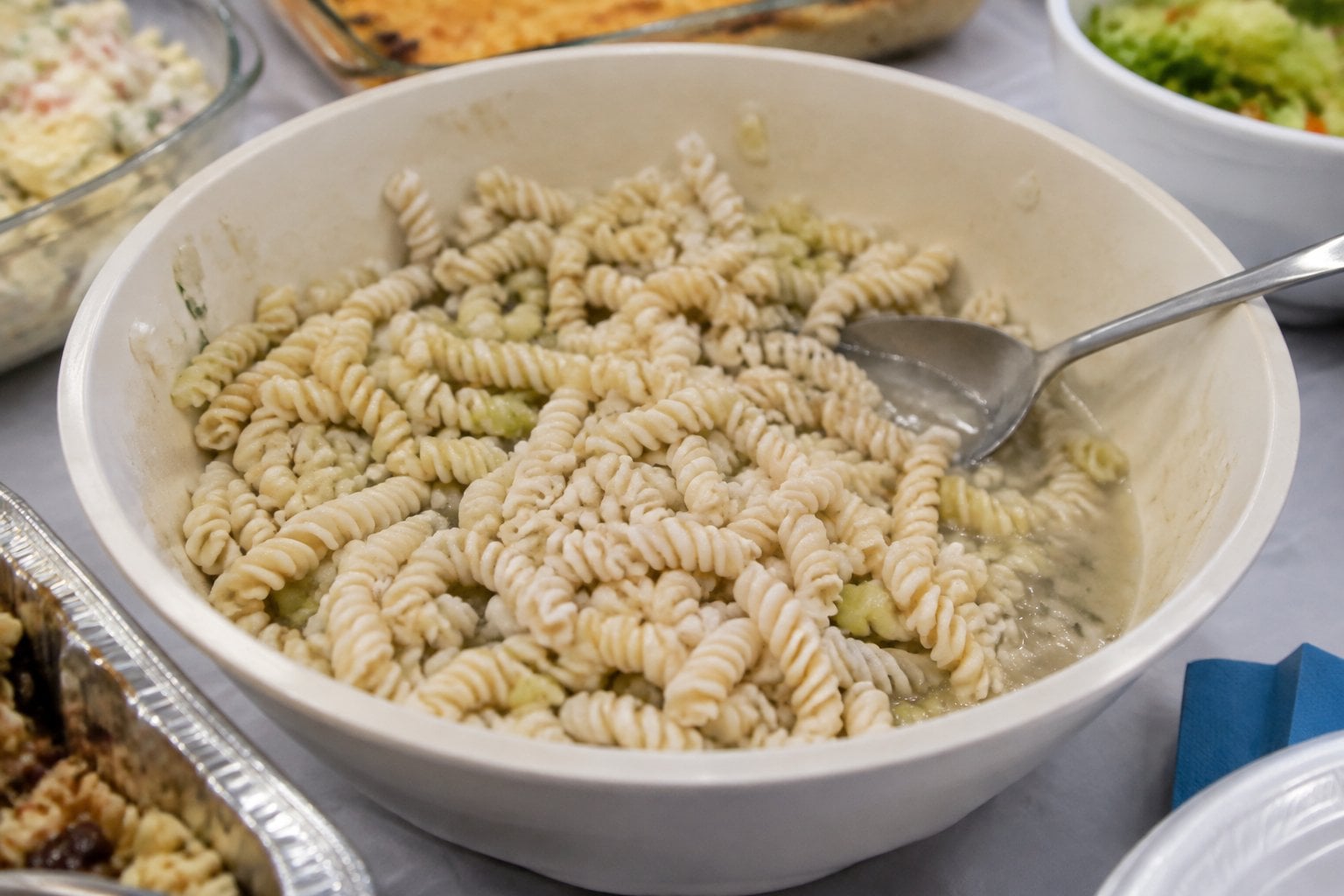
Cold pasta mixed with bottled Italian dressing is one of the most predictable dishes at any potluck. It’s cheap and easy to make, but that’s part of the problem.
Without vegetables, cheese, or real seasoning, it just sits on the table looking like leftovers. Guests can tell when a dish lacks effort, and plain pasta salad rarely gets a second glance.
You might think the dressing alone carries the dish, but oil-based sauces often separate or turn watery after sitting out. The noodles soak up whatever flavor exists and lose any texture they once had.
If you’re bringing pasta salad, add something with actual flavor: roasted vegetables, fresh herbs, or a sharper dressing. Otherwise, you’re just bringing a bowl of noodles that everyone will skip.
16. Overcooked pasta bake
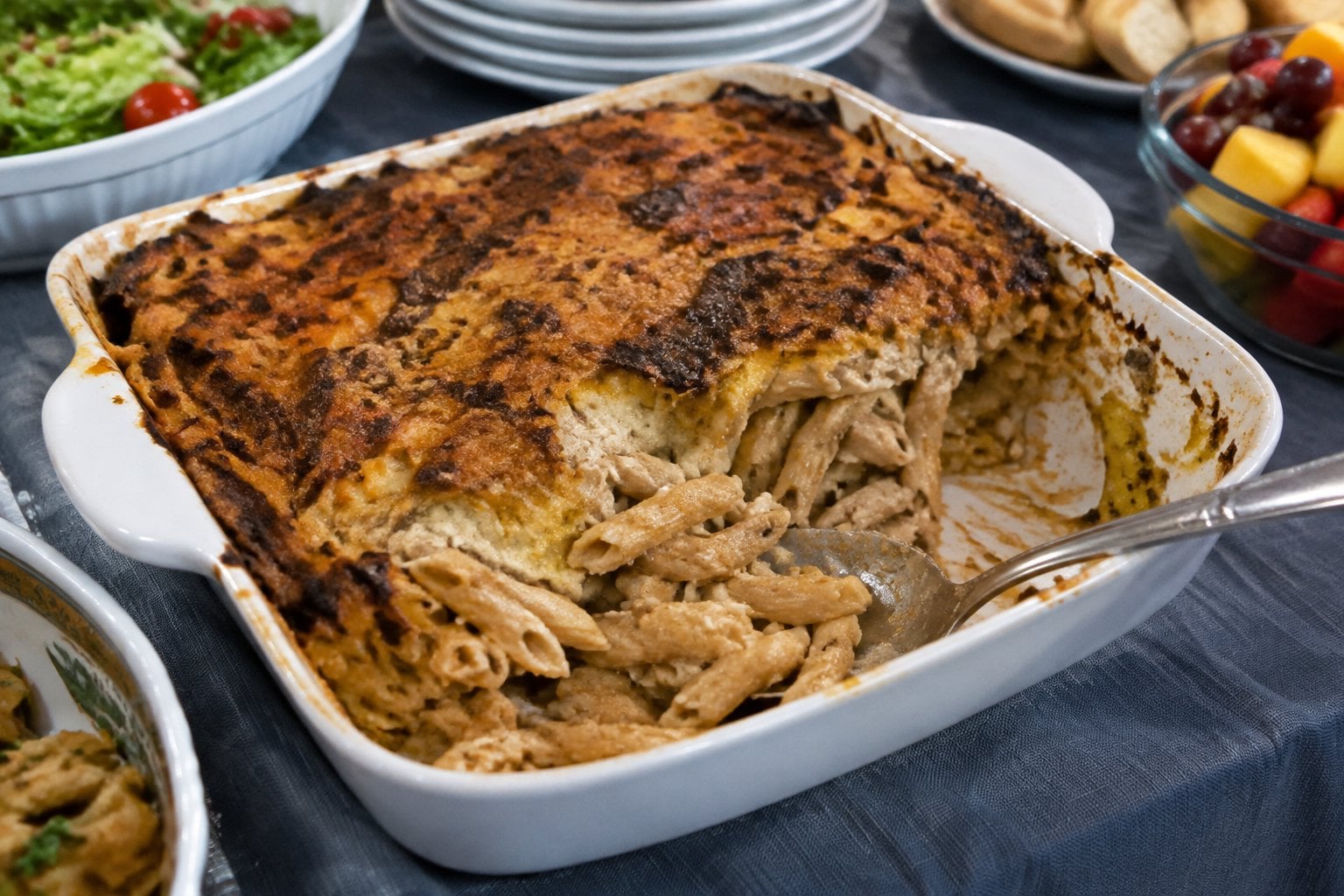
Overcooked pasta bake arrives at the table mushy and dense. Once pasta loses its structure, it absorbs excess sauce and turns into a thick, gluey mass. You end up with something closer to paste than a dish anyone wants to serve themselves.
Reheating makes the problem worse. Pasta bakes that sit under a heat lamp or in a slow cooker for hours continue cooking, so noodles that started slightly soft become completely broken down. Overcooked pasta is one of several foods that turn from delicious to disastrous when overcooked, and casseroles are especially vulnerable since the sauce traps heat and moisture.
Cheese on top can also separate or turn rubbery after extended holding time. You’re left with a dish that looks unappetizing and tastes worse than it did an hour earlier. Most guests take one look and move to the next tray.
17. Burnt casseroles
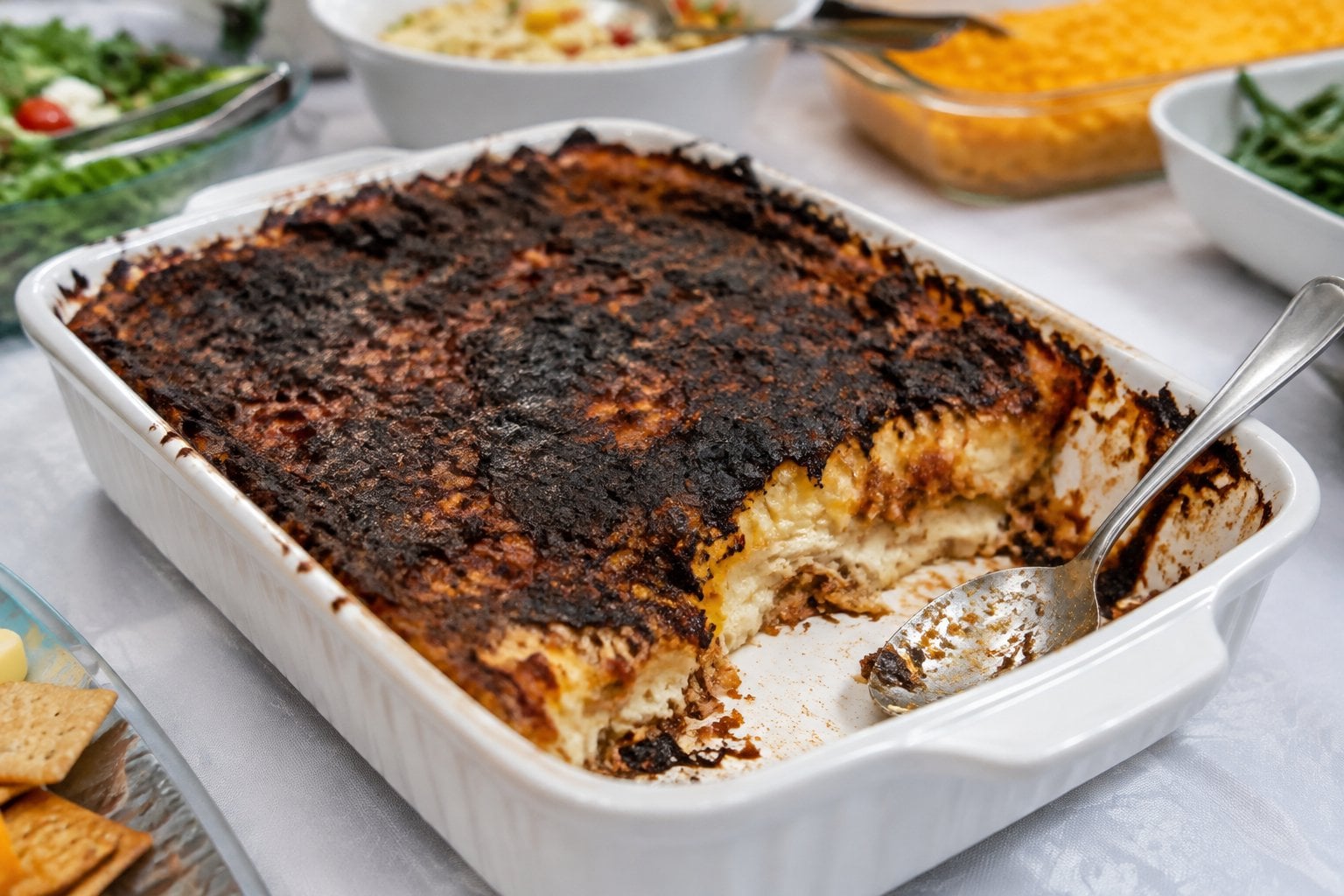
A burnt casserole is hard to miss. The top layer turns dark, sometimes black, and the edges harden into a crust that no amount of sauce can soften.
You can usually taste it before you see it. The char leaves a bitter, acrid note that overwhelms whatever cheese, meat, or vegetables were underneath.
Ovens vary, and potluck dishes often sit out for hours before serving, which only makes the problem worse. A casserole that looked fine when it left your kitchen can dry out and scorch further under a chafing dish or warming tray.
Guests tend to scrape off the top layer and eat around it, if they eat it at all. Most people will pass entirely once they spot the blackened edges, leaving the dish mostly untouched by the end of the night, according to accounts collected by Mashed.
18. Watery lasagna
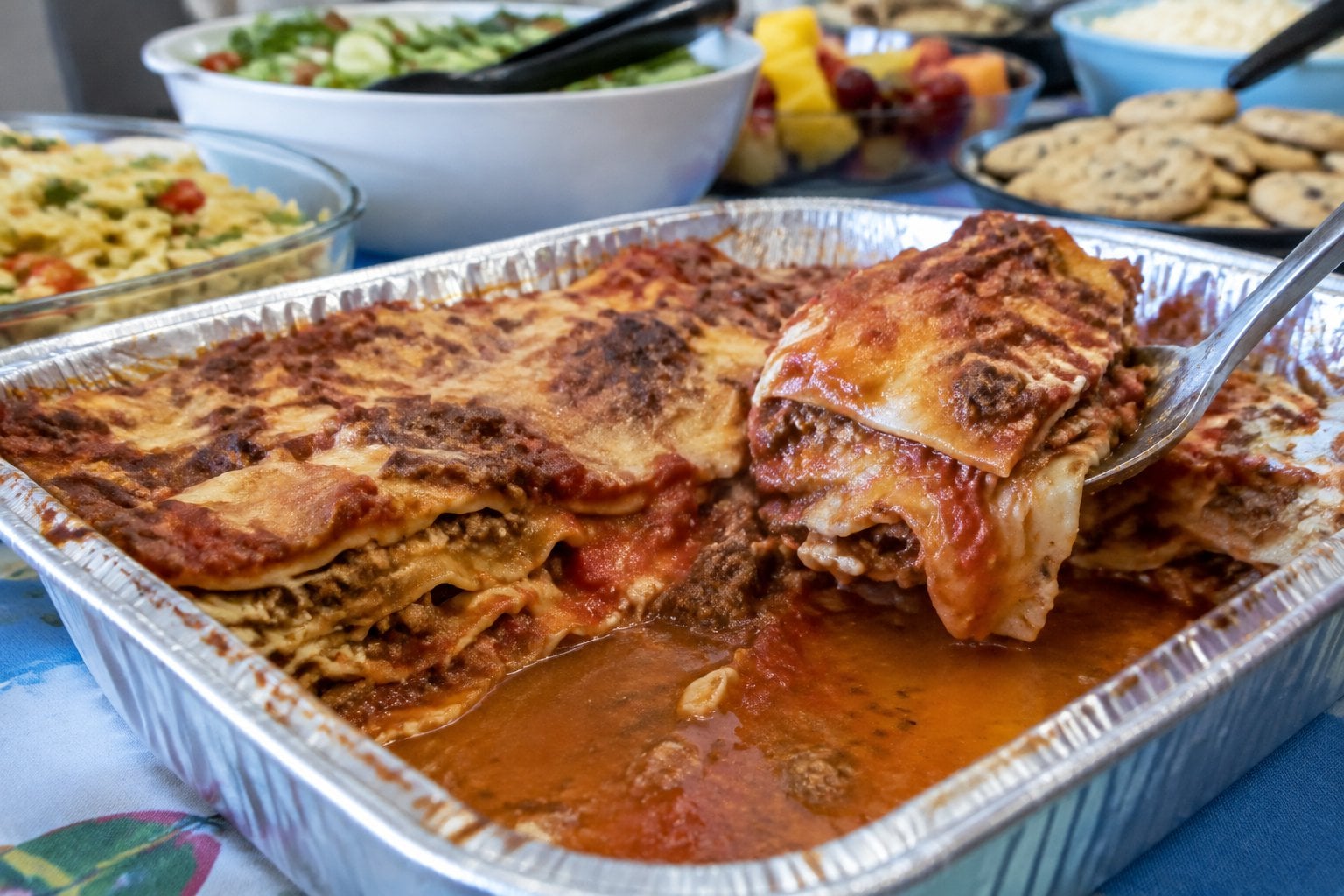
Lasagna that pools liquid on the plate is a common potluck letdown. It usually happens when the noodles release excess moisture or the sauce wasn’t reduced enough before assembly.
You end up with a dish that looks unappetizing and tastes diluted, even if the flavors were fine to begin with. Guests tend to skip it after one soupy bite, leaving most of the pan untouched.
The fix is straightforward. Drain ricotta well, cook down your sauce until thick, and let the lasagna rest for at least 15 minutes before transporting it.
Resting time matters more than people expect, since it lets the layers set and the liquid reabsorb. Skipping that step is often the real cause of the problem, not the recipe itself.
If you’re bringing lasagna to a potluck, treat it the way you’d treat one of the worst foods to bring to a potluck: plan for travel time, not just serving time.
19. Dry meatloaf
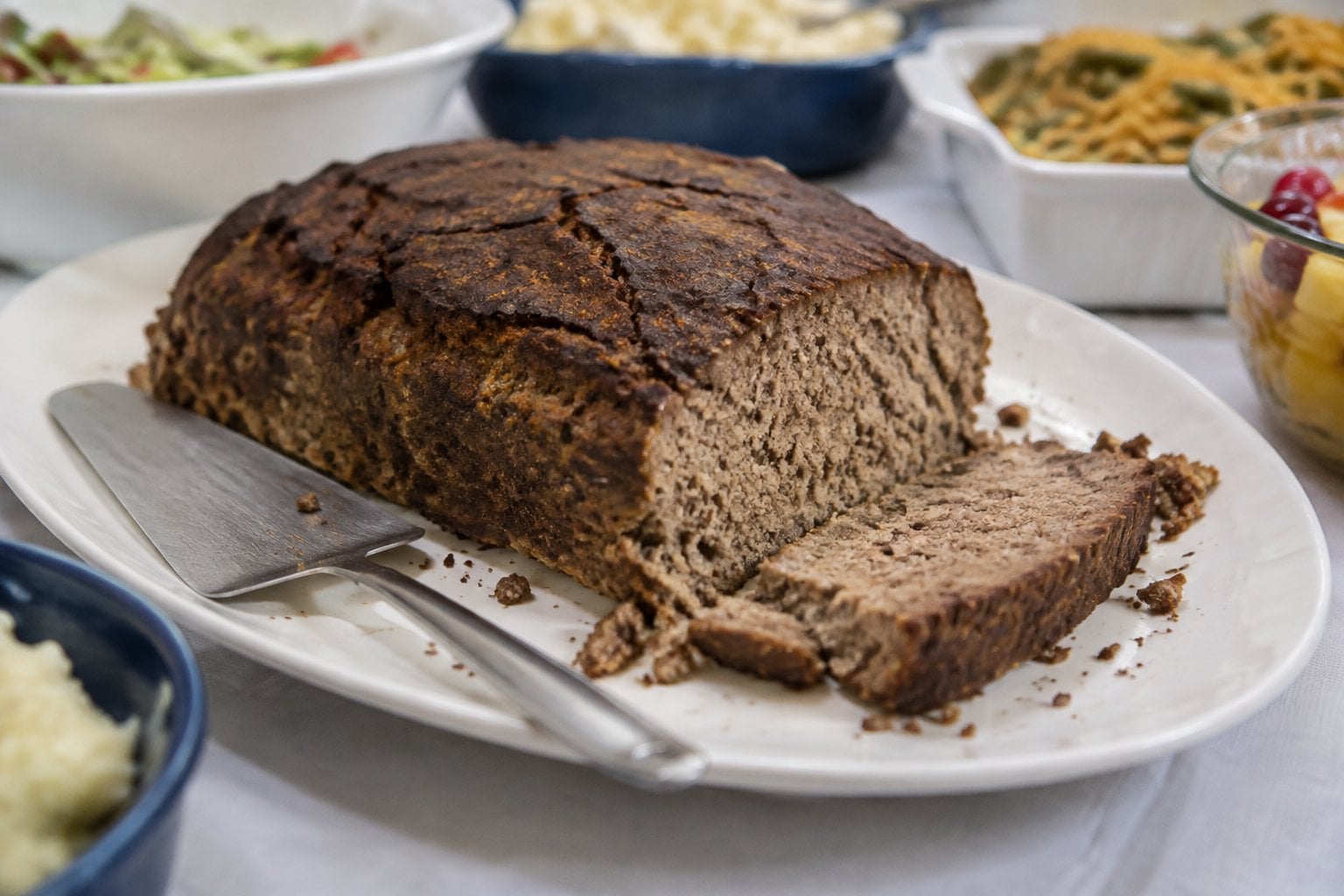
Dry meatloaf is a common sight at potlucks, and it’s rarely a popular one. Once it sits out for an hour or two, the texture only gets worse.
The problem usually starts in the oven. Lean ground beef with no added fat or moisture dries out quickly, and overbaking makes it worse.
You’ll often see it served without sauce or gravy, which doesn’t help its case. A slice that’s already dense and crumbly needs something to carry it, and plain meatloaf rarely gets that treatment at a buffet table.
Reheating under heat lamps or in slow cookers compounds the issue. The outer edges harden while the inside stays bland, and few people reach for seconds.
If you’re bringing meatloaf to a potluck, a glaze or sauce on the side can make a real difference.
20. Lukewarm fish casserole
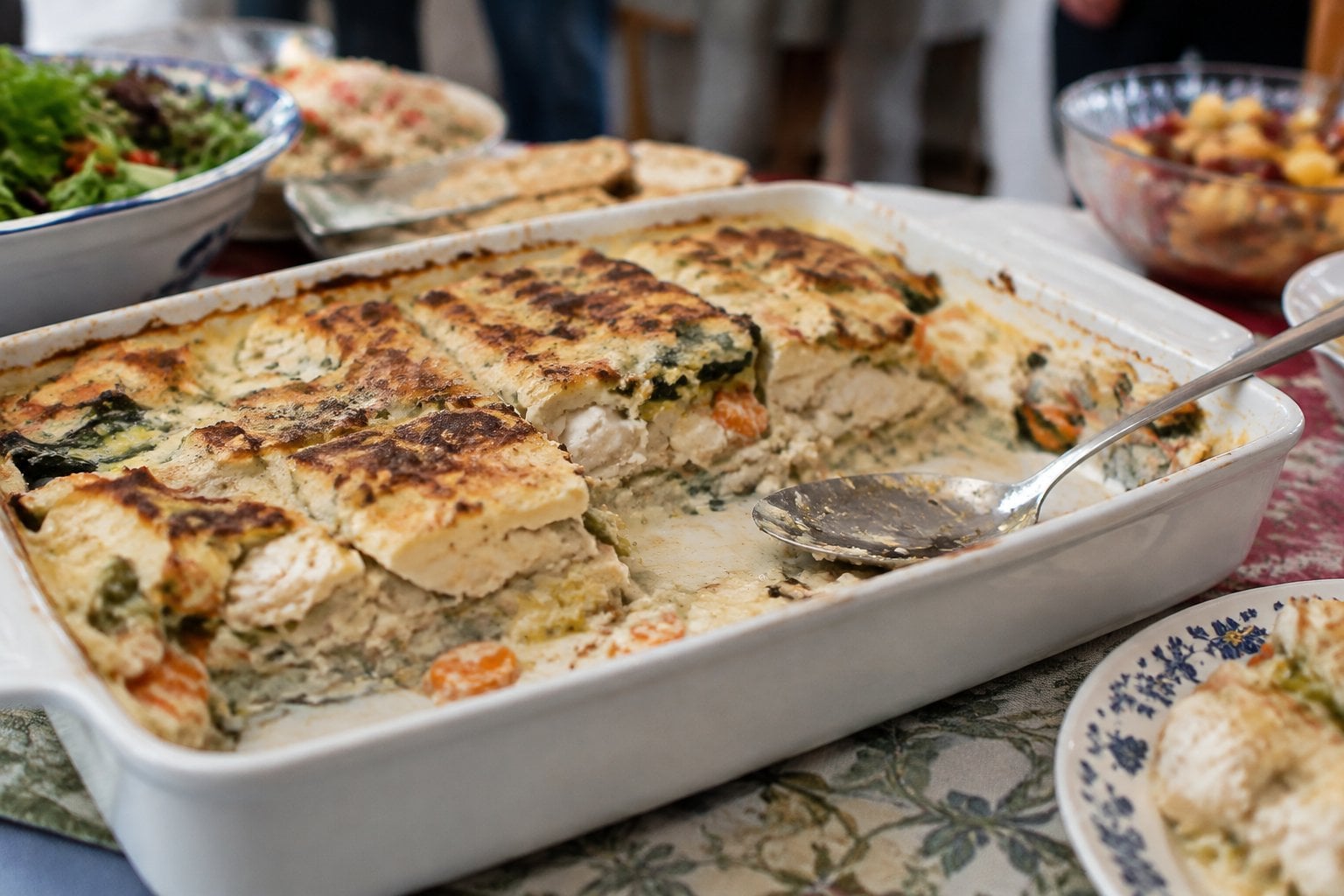
Fish casserole has a narrow window for serving temperature. Once it cools below hot, the smell becomes more noticeable, and the texture turns dense and unappetizing.
Potlucks often involve long transport times and inconsistent holding temperatures, which makes fish-based dishes particularly risky. A casserole sitting at room temperature for an hour will lose its appeal fast.
You also face food safety concerns with fish that sits out too long. Bacteria grow quickly in seafood dishes that aren’t kept properly hot or cold, which gives guests another reason to avoid the dish entirely.
If you want to bring a seafood dish to a potluck, consider options that hold up better outside a warm oven, such as a chilled seafood salad. Save the hot fish casserole for a sit-down dinner where it can be served immediately.
21. Strong-smelling tuna salad
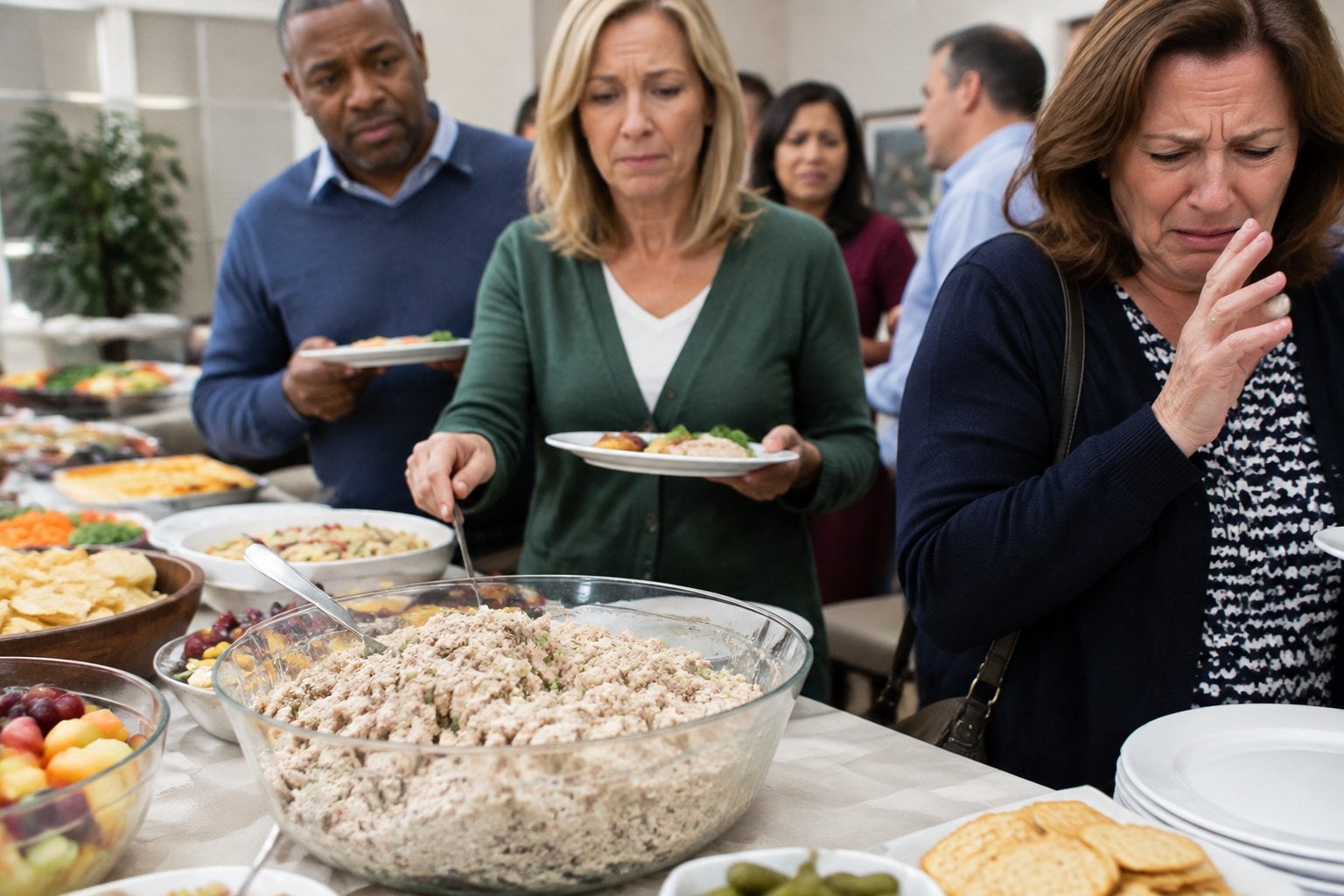
Tuna salad has a smell that travels. In a warm room, it only gets stronger, and that odor can linger long after the dish is gone.
Some guests love it, but the strong aroma of tuna can be off-putting in a crowded room, making people hesitate before they even try it.
You also have food safety to think about. Mayonnaise-based dishes need to stay cold, and tuna salad sitting out for hours on a buffet table is a real risk.
If you bring it home, you are stuck with the same smell in your fridge and your car. That combination of odor, texture, and spoilage risk is exactly why tuna is one of the most skipped dishes at gatherings like this.
22. Unlabeled Spicy Chili
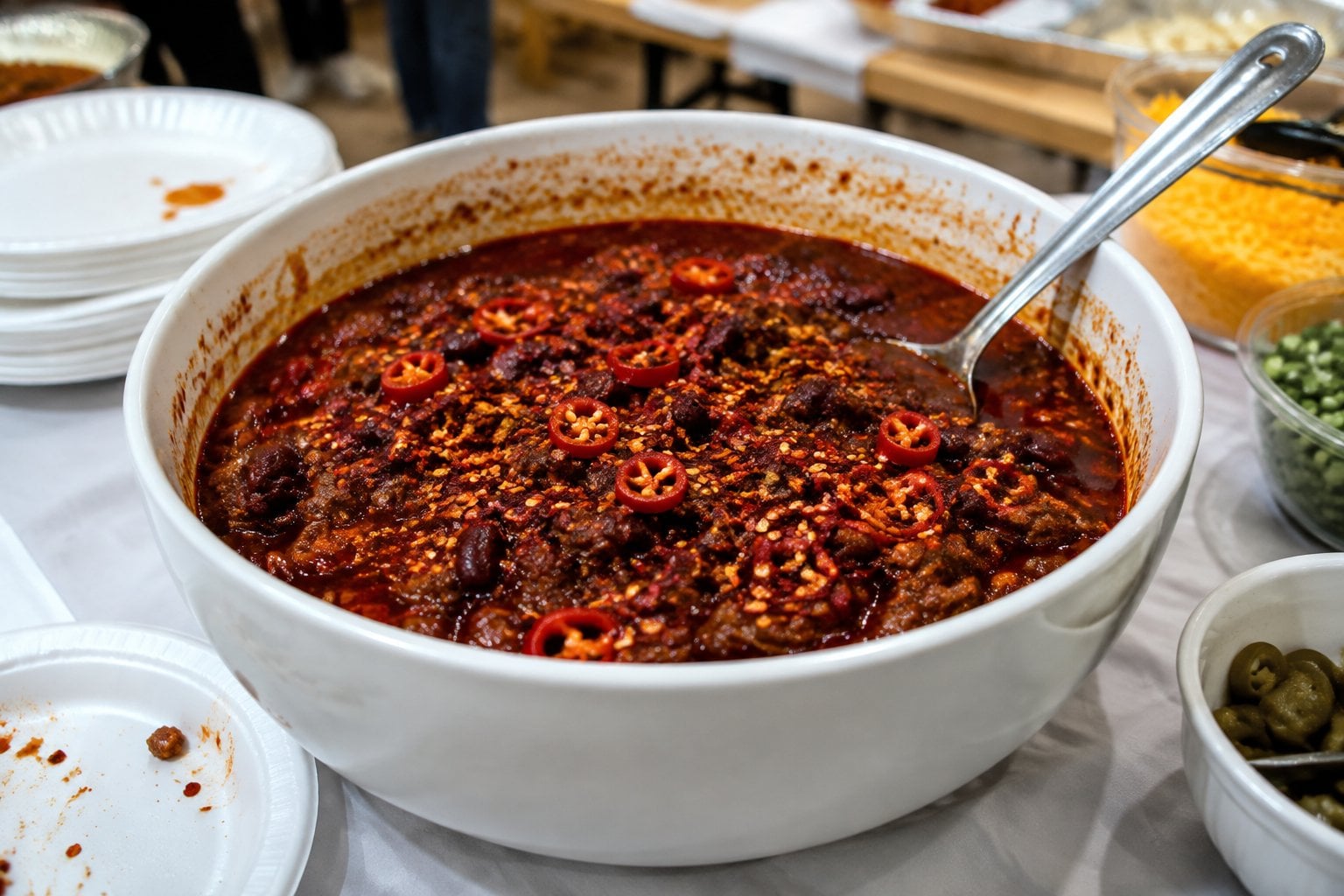
Chili without a label is a gamble. You don’t know the heat level until you’ve already taken a bite, and by then it’s too late.
Some people load their chili with ghost peppers or habaneros without warning anyone. Others expect guests to just know. Either way, you end up guessing.
A label solves this instantly. “Mild,” “medium,” or “bring tissues” gives you the information you need before you commit a full scoop to your plate.
Without that warning, you watch people take a bite, pause, and reach for their drink. Kids and anyone with a sensitive stomach are especially at risk here.
If you’re bringing chili to a potluck, a simple index card with the heat level and main ingredients listed takes ten seconds to write. That small effort prevents an uncomfortable surprise for everyone else.
23. Excessively salty dip
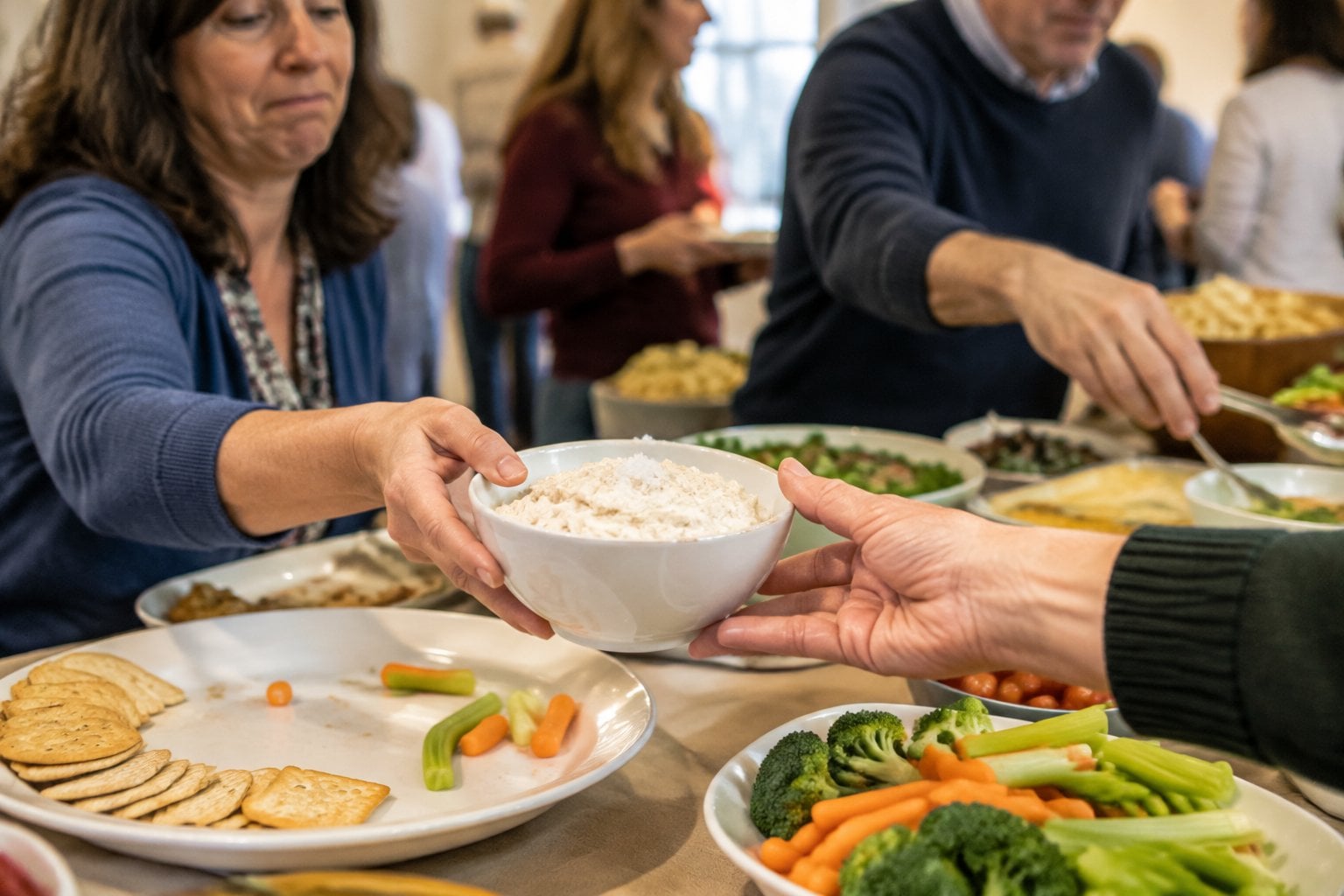
An overly salty dip is hard to enjoy no matter how good the base recipe is. You might reach for a chip, taste it once, and set the rest aside without going back.
This often happens when a recipe calls for multiple salty ingredients at once, like bouillon, soy sauce, and pre-salted cheese. The flavors stack up fast, and the result overwhelms everything else on the table.
You also risk this problem when using canned or packaged shortcuts, since many of these products already contain significant sodium. Adding extra salt on top pushes the dip past what most people want to eat.
Guests with dietary restrictions or sensitivity to sodium will likely avoid it altogether. Taste your dip in stages and adjust gradually instead of salting all at once, so you don’t end up with a dish nobody finishes.
24. Store-bought veggie tray with dried-out vegetables
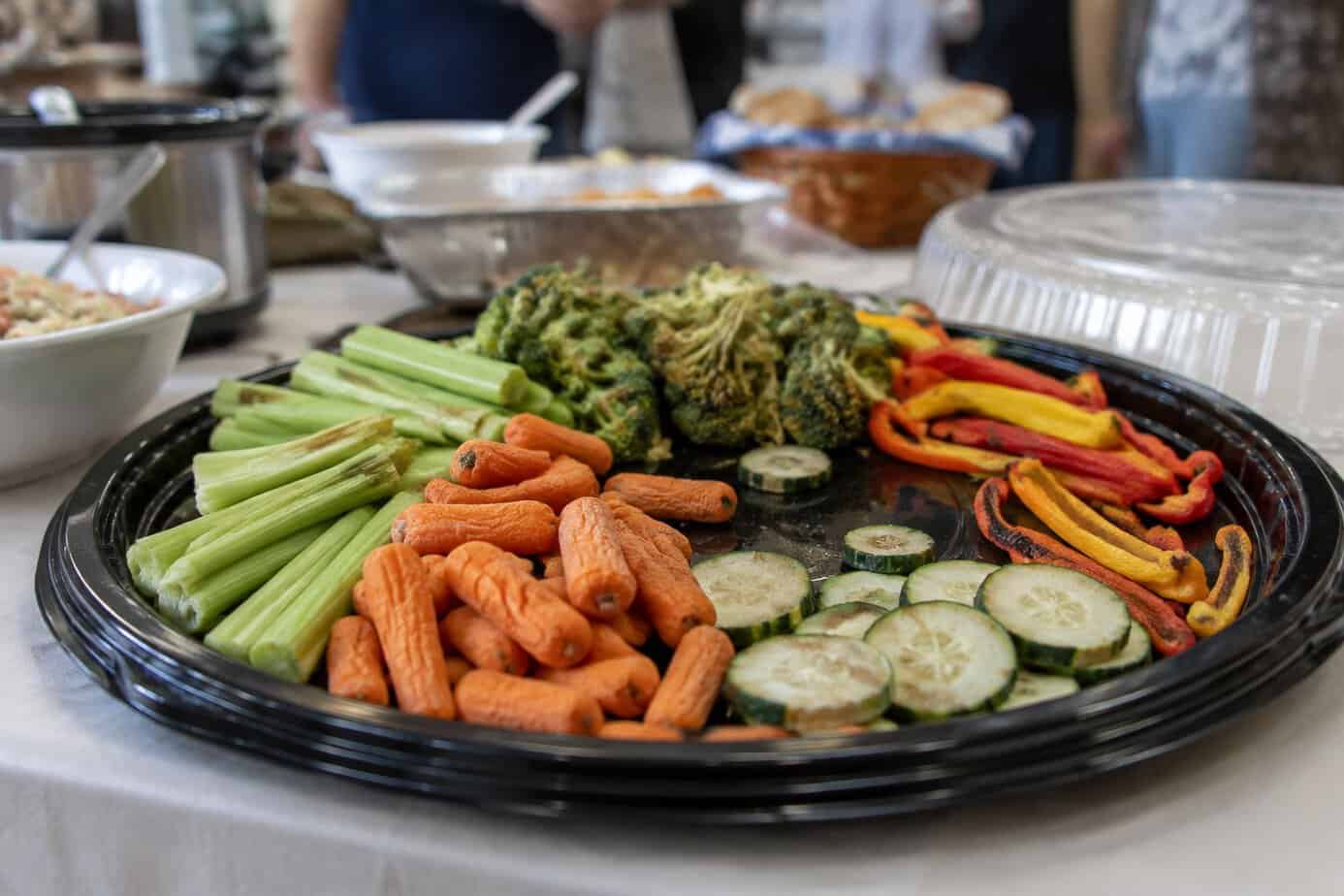
A pre-packaged veggie tray from the grocery store is the potluck equivalent of showing up empty-handed. Everyone recognizes the plastic container, and that recognition works against you.
By the time you reach the venue, the carrots and celery have usually lost their crunch. The broccoli and cauliflower florets dry out faster than the rest, and they tend to sit untouched by the end of the event.
Guests will still grab the ranch dip. Few bother with the vegetables themselves, since the dip often outlasts the vegetables in popularity.
If you want to bring vegetables, cut them fresh that morning and pack them separately from any dip. A small effort here changes how the dish gets received.
25. Stale dinner rolls
Packaged dinner rolls are one of the most common grab-and-go potluck items, but they lose freshness fast. If you buy them the day before or leave them sitting out too long, they turn dry and tough before anyone gets a chance to eat them.
Bringing store-bought rolls can also come across as a last-minute effort, especially next to dishes that took real time to prepare. Guests often skip them in favor of homemade bread or more substantial sides, which means they end up forgotten at the end of the table.
If you choose to bring rolls, buy them the same day and keep them wrapped until serving. A quick warm-up in foil right before the event helps restore some softness. Pairing them with butter or a dip gives guests an actual reason to grab one, rather than leaving them a thoughtless grab at the grocery store.
26. Crumbly, dry cornbread
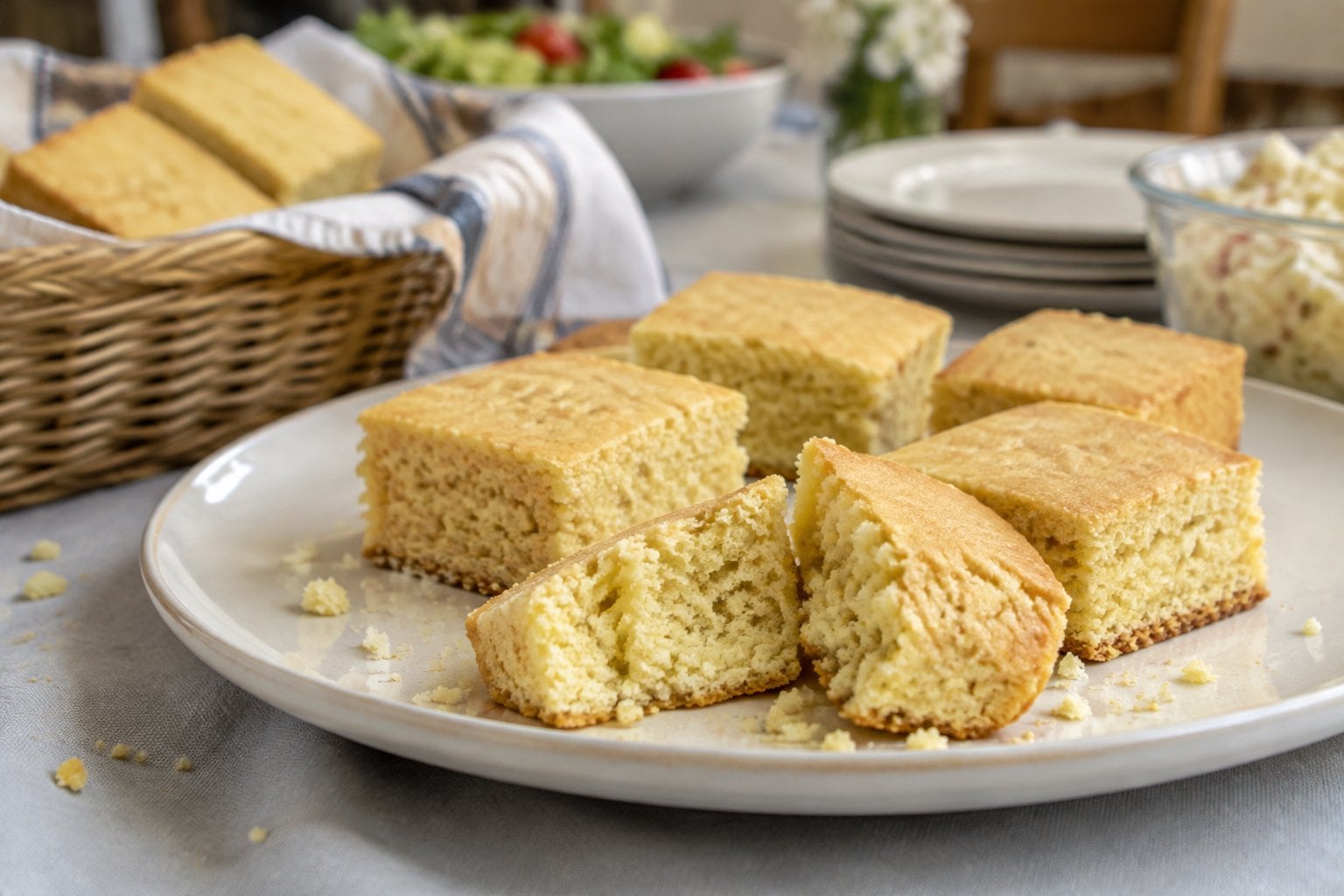
Cornbread sounds like a safe, classic choice, but it often falls apart before anyone gets a bite onto their plate. Without butter, honey, or gravy nearby, dry pieces become hard to swallow and can even cause coughing mid-meal, as noted in this breakdown of failed potluck dishes.
The texture problem usually starts in your kitchen. Overmixing the batter develops too much gluten, which turns what should be tender crumb into something tough and crumbly, a point explained in this look at cornbread mixing mistakes.
Inaccurate ingredient ratios and overbaking make things worse. If you want your cornbread to disappear from the table, wrap it well, serve it warm, and bring something to spread on it.
27. Melted ice cream cake
Would you like to save this?
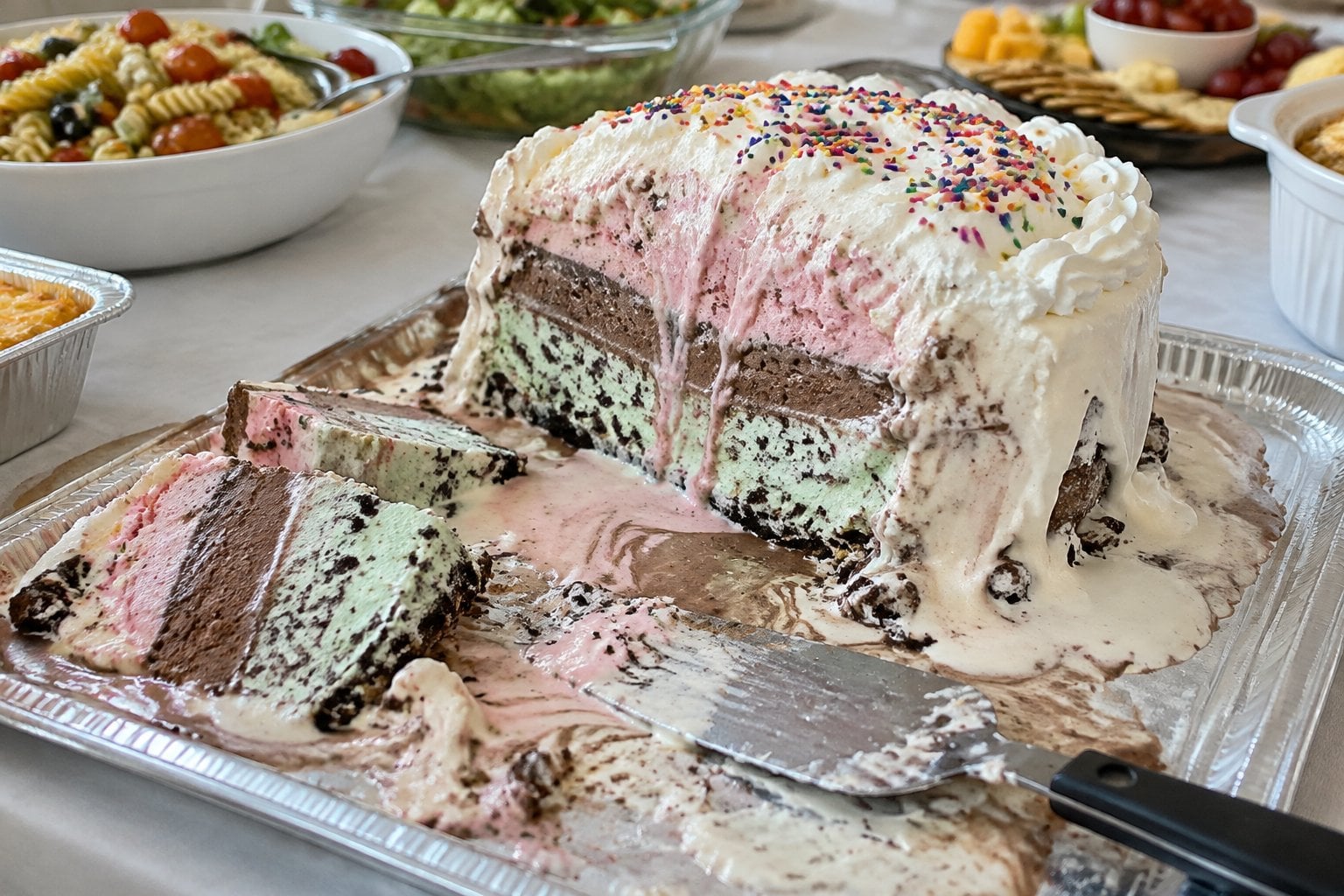
Ice cream cake depends on constant freezer temperatures, and most potlucks cannot offer that. Once you set it out, it starts softening within minutes.
The timing problem is hard to avoid. You want to keep it frozen until the last moment, but then everyone has to eat it immediately before it collapses.
This dessert doesn’t travel well either, since ice cream cakes depend heavily on timing and freezer space. Without a place to store it cold, it turns into a soft, messy puddle before guests even get a slice.
You’re better off skipping frozen desserts altogether. Options that hold up well at room temperature spare you the stress of racing against melting ice cream and give guests something they can actually enjoy without a mess.
28. Whipped-cream desserts left in the heat
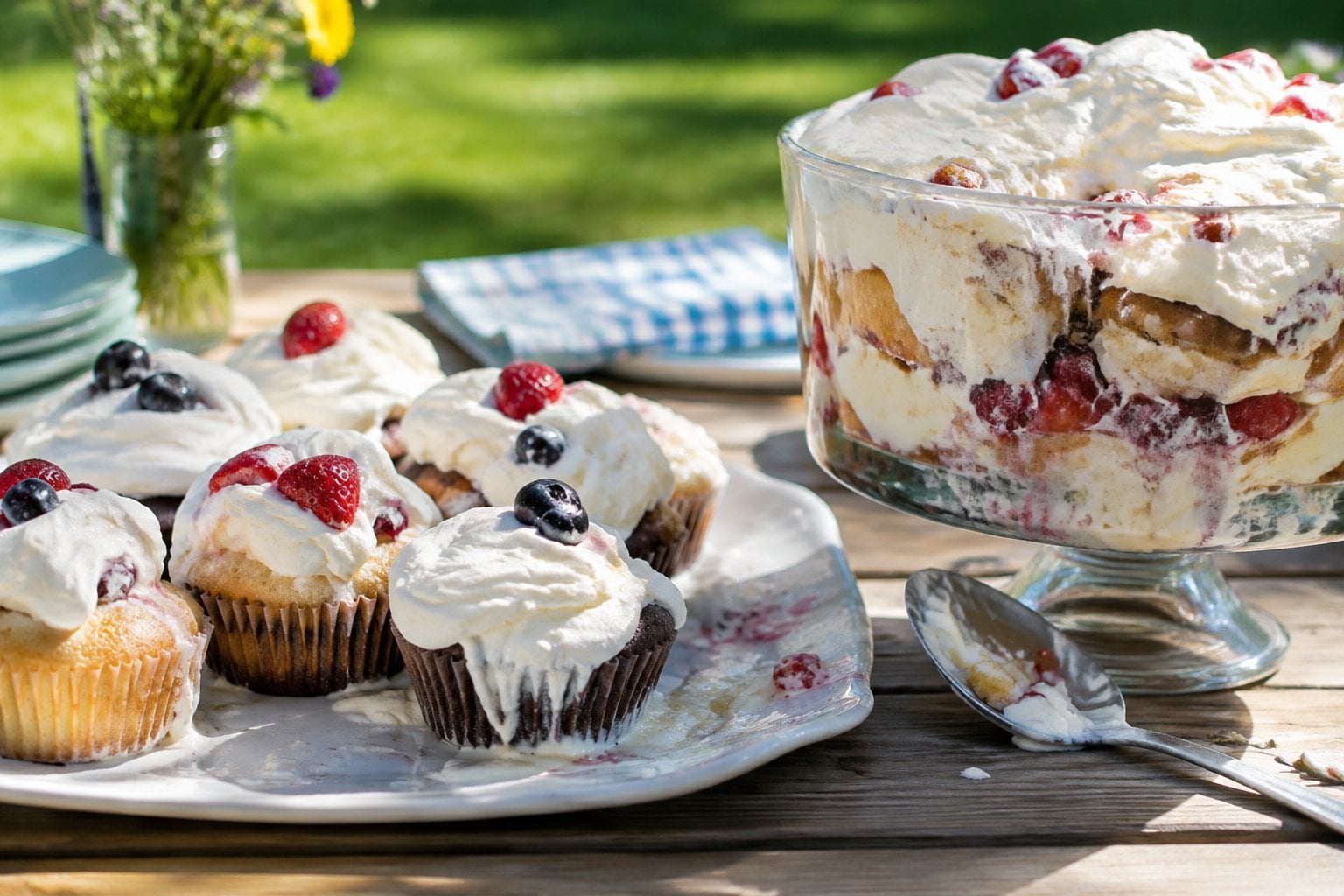
Whipped cream breaks down fast once it leaves the refrigerator. If your potluck is outdoors or in a warm room, your pie or trifle starts losing its shape within the hour.
You’ll notice the texture turns soupy first. The topping slides off the dessert and pools at the edges of the dish, which doesn’t look appealing on a serving table.
There’s also a food safety concern. Dairy-based toppings sit in the temperature danger zone once they warm past 40°F, and bacteria grow quickly under those conditions.
If you’re bringing something with whipped cream, keep it chilled until serving time and consider topping it on-site instead of hours beforehand. Stabilized whipped cream, made with gelatin or cornstarch, holds up better than the regular kind. For a dessert with real staying power in warm conditions, this collection of potluck desserts that survive the heat focuses on recipes built to handle it.
29. Uncut sheet cake with no serving knife
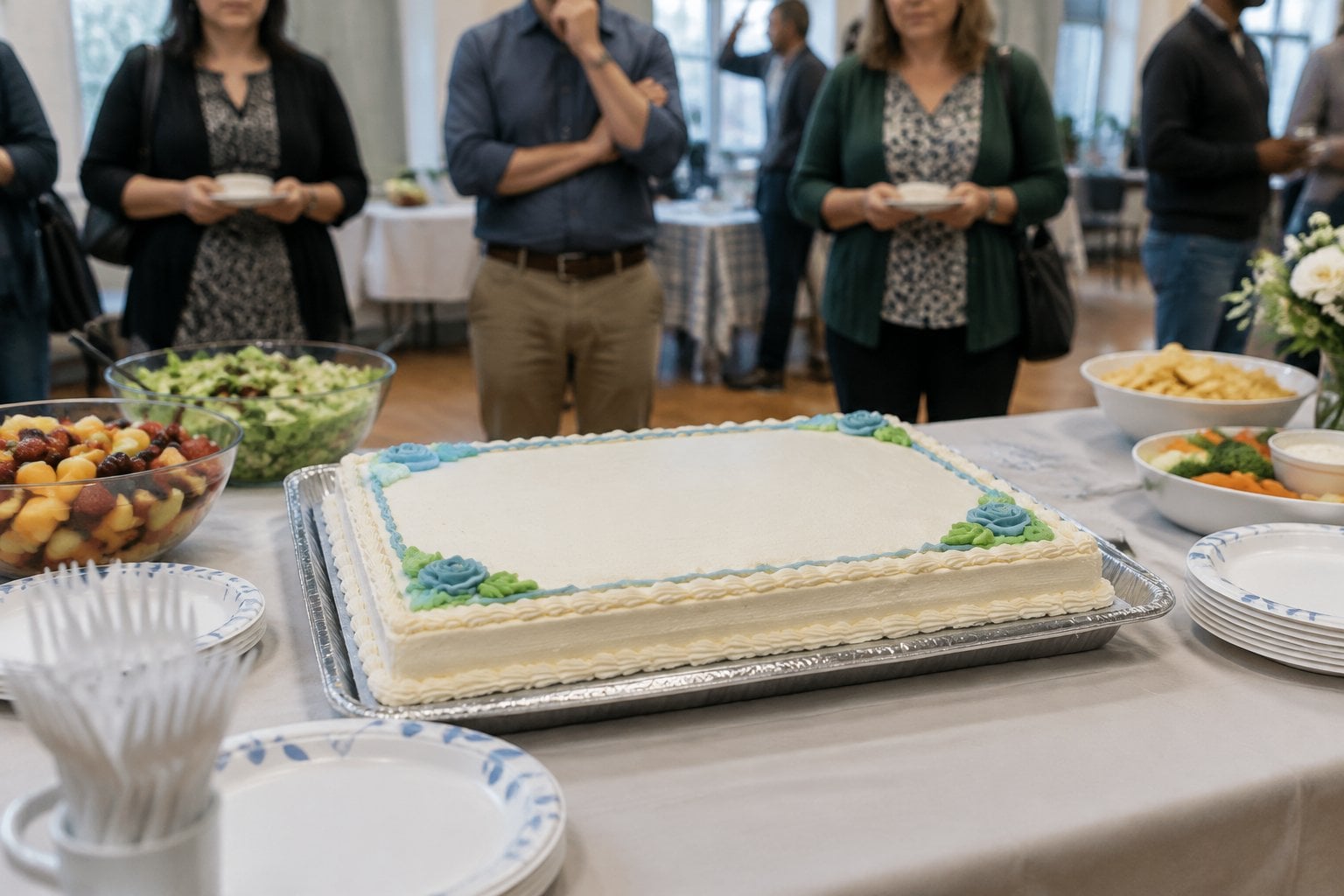
A whole sheet cake looks generous, but it stalls the dessert line if you don’t bring a knife and server. Guests end up hunting through someone else’s kitchen drawers, and the cake sits untouched while everyone waits.
Sheet cakes travel well and feed large groups, which is exactly why they’re a potluck staple. That convenience disappears, though, if nobody can actually cut a clean slice.
Bring your own knife, a stack of napkins or plates, and a spatula for lifting pieces out of the pan. If you want to save everyone the hassle entirely, pre-slice the cake before you leave home.
A few minutes of prep at home means guests can serve themselves immediately instead of standing around waiting for someone to track down utensils.
30. Whole watermelon without a knife
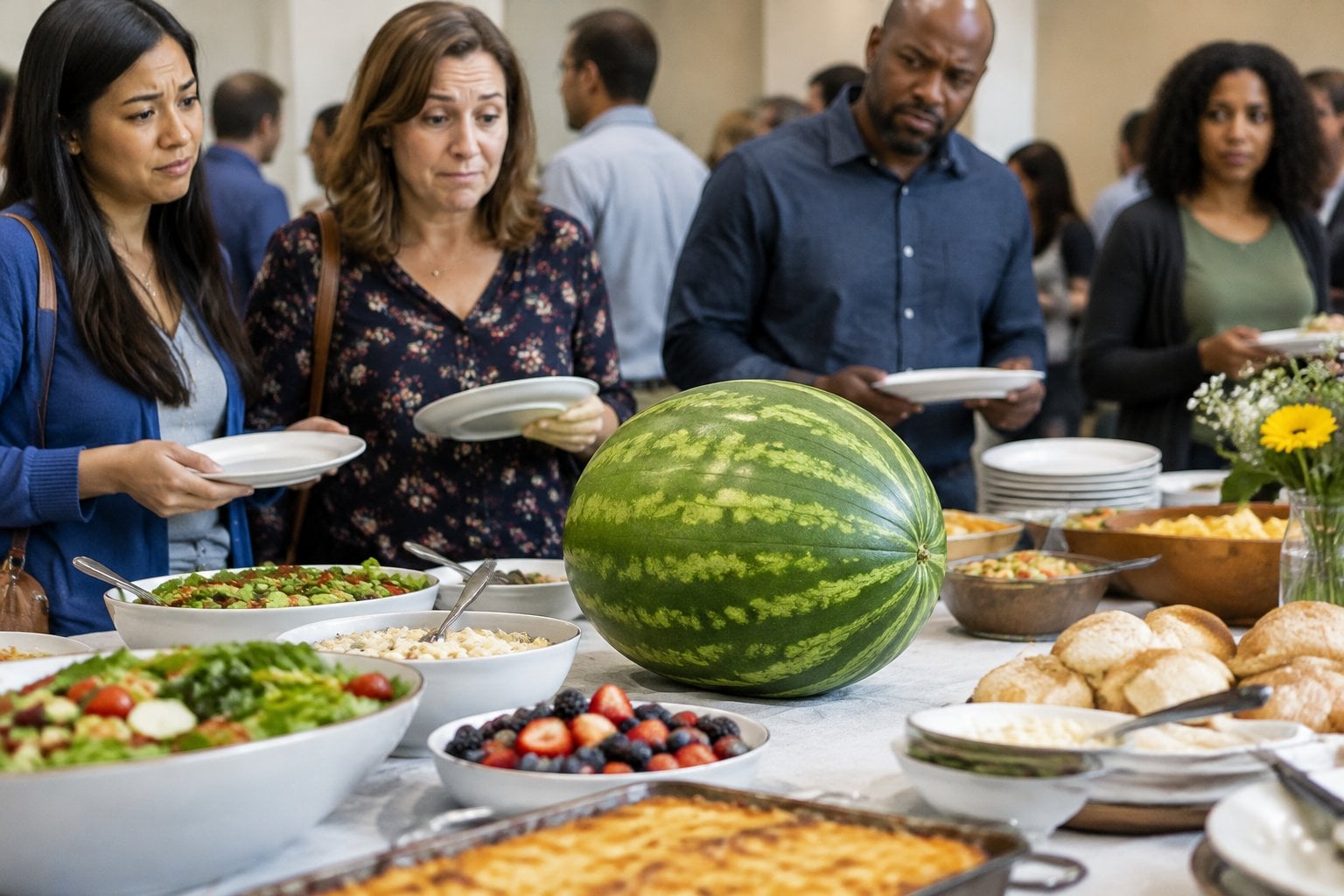
You carry in a whole watermelon and set it on the table, proud of your contribution. There’s just one problem: nobody packed a knife, a cutting board, or a plate to catch the juice.
Now the host has to scramble for the right tools while your watermelon sits there, untouched and dripping condensation onto the tablecloth.
Watermelon is a fine potluck choice, but only when it arrives ready to eat. Pre-cut it into cubes or wedges before you leave home, and bring a container with a lid to keep it fresh during transport.
If you show up with the fruit still whole, you’re creating extra work for someone else at an event where everyone is supposed to be sharing the load. A good rule: if your dish needs assembly, do that part at home, not at the party.
Why Potluck Dishes Get Left Behind
Several factors determine whether your dish gets emptied or sits untouched for hours. Temperature, texture, and how easy a food is to serve all play a role in whether guests reach for it.
How Serving Conditions Affect Appeal
The buffet table is not your kitchen, and dishes that taste great fresh often fail under these conditions. Hot foods cool down fast, and once a casserole or fried dish drops below serving temperature, the texture and flavor both suffer.
Cold salads face the opposite problem: mayonnaise-based dishes and anything with dairy can spoil or separate if left out too long, especially at outdoor events. Experts frequently note that foods requiring strict temperature control tend to attract fewer takers than simple, familiar options, as outlined in this breakdown of potluck dishes that seem like good ideas until nobody touches them.
Visual appeal matters too. A dish that looks dried out, discolored, or watery after sitting for an hour will get skipped, even if it tastes fine.
Why Portions and Packaging Matter
How you portion and package your dish affects whether guests even attempt to take some. Foods that require complicated serving utensils or careful assembly slow down the line and discourage people from bothering.
Consider these packaging factors:
- Single-serving vs. shared format: Pre-portioned items move faster than dishes requiring guests to cut or scoop awkwardly.
- Container stability: Dishes in flimsy or overly full containers risk spilling during transport, arriving messy before anyone serves themselves.
- Labeling: Unlabeled dishes with unfamiliar ingredients get passed over by guests wary of allergens or unknown flavors.
Dishes that travel poorly or separate during transit rarely recover their original appeal by serving time, according to this list of worst foods to bring to a potluck.
Handling Leftovers Safely and Considerately
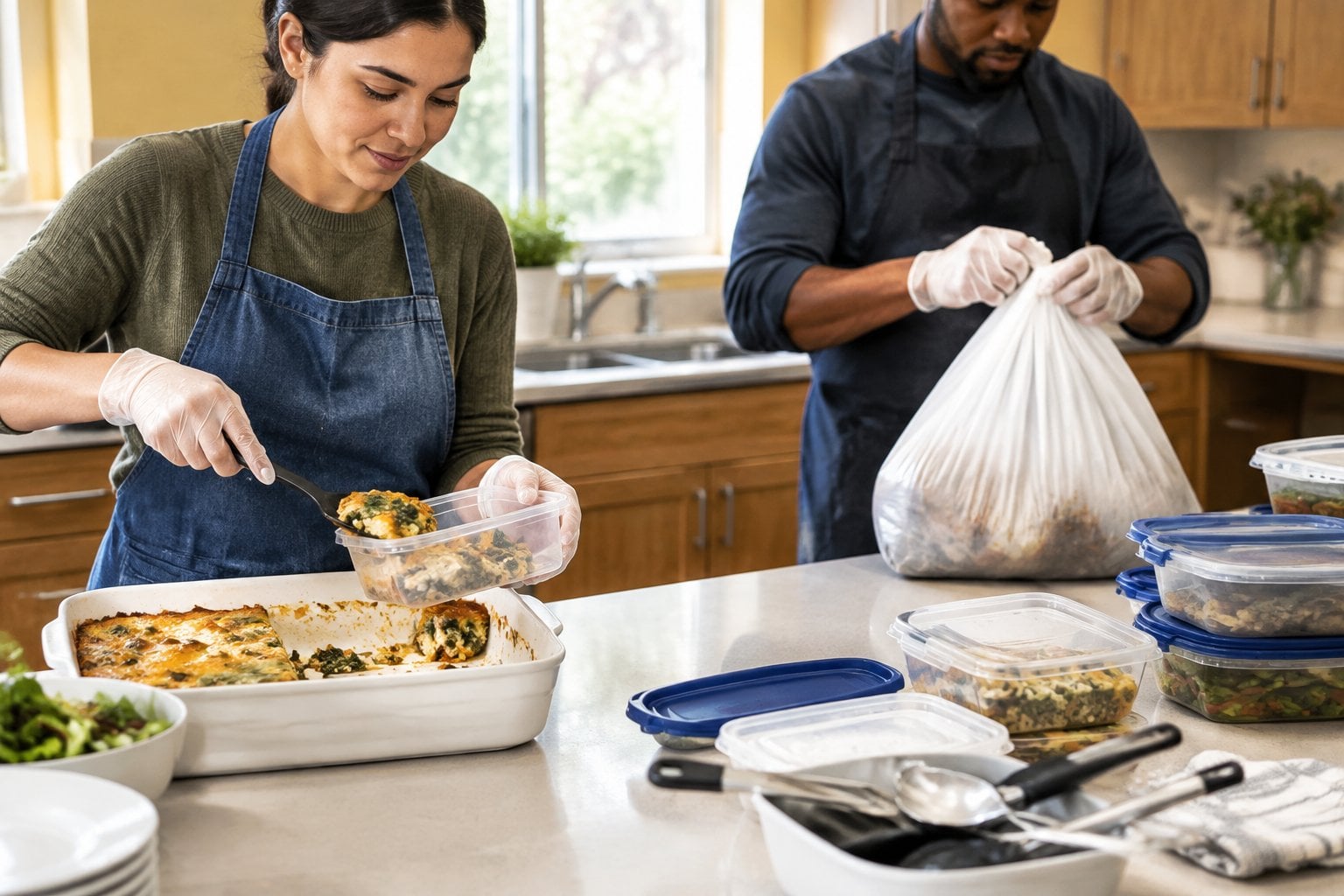
Potluck leftovers carry real food safety risks once they sit out for extended periods, and deciding who takes food home afterward involves its own etiquette. Knowing when to toss a dish and how to divide what remains keeps the gathering safe and avoids awkward disputes.
When Perishable Food Should Be Discarded
Perishable dishes left at room temperature for more than two hours should be discarded. That window shrinks to one hour if the temperature is above 90°F, which matters for outdoor potlucks in warm weather.
Seafood dishes are especially risky. They are generally safe to eat within one to two days if refrigerated promptly below 40°F, but once they’ve been sitting out at a gathering for several hours, that safety window no longer applies.
Use these guidelines to judge a dish:
- Dairy-based dips and desserts: discard after 2 hours unrefrigerated
- Meat and poultry dishes: discard after 2 hours, or 1 hour in hot weather
- Cut fruit and vegetable trays: lower risk, but still discard after 4 hours unrefrigerated
- Mayonnaise-based salads: high risk, discard after 2 hours
When in doubt, throw it out rather than risk foodborne illness.
Who Should Take Home the Leftovers
The host typically has first claim on leftovers, since they supplied the space and often the serving dishes. After that, offering food to the person who brought it is common courtesy, particularly if it’s a dish they clearly put effort into.
For dishes with multiple servings remaining, splitting portions among several guests avoids one person leaving with an excessive amount while others get nothing. Bringing your own containers makes this easier and shows consideration for the host, who otherwise has to wash and later return their dishes.
Always ask before taking a large portion of a dish, even if it looks untouched. Some hosts plan to serve leftovers at a separate event or keep them for their own household.