29 Everyday Sounds from the 1980s That Instantly Take Gen X Back: A Nostalgic Audio Journey Through the Decade
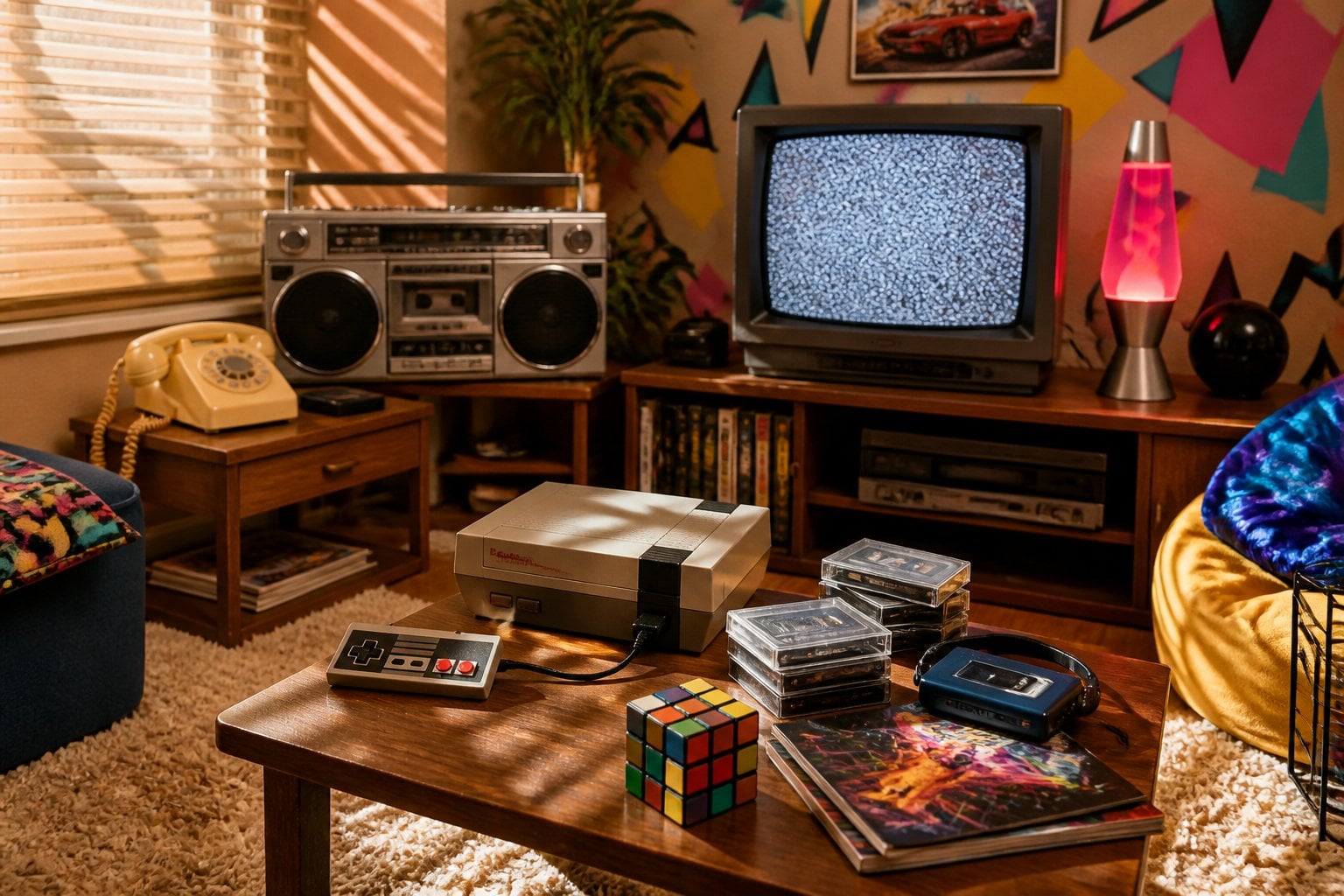
The 1980s had a distinct audio landscape that younger generations will never experience firsthand. If you grew up during this decade, certain sounds can trigger instant memories of everyday life, from the mechanical clicks of communication devices to the electronic beeps of emerging technology.
This collection of 29 sounds captures the authentic audio experience of 1980s daily life, covering everything from telephones and entertainment systems to arcade games and household appliances.
These weren’t background noise—they were the acoustic markers of a pre-digital era when technology was transitioning from purely mechanical to electronic, creating a unique sonic environment that defined the decade.
Your memories of the 1980s are likely tied to these sounds as much as to visual imagery. The following list explores the distinctive audio signatures that Gen X heard regularly, from morning alarm clocks to late-night television sign-offs.
1. Clicking of a rotary phone dial
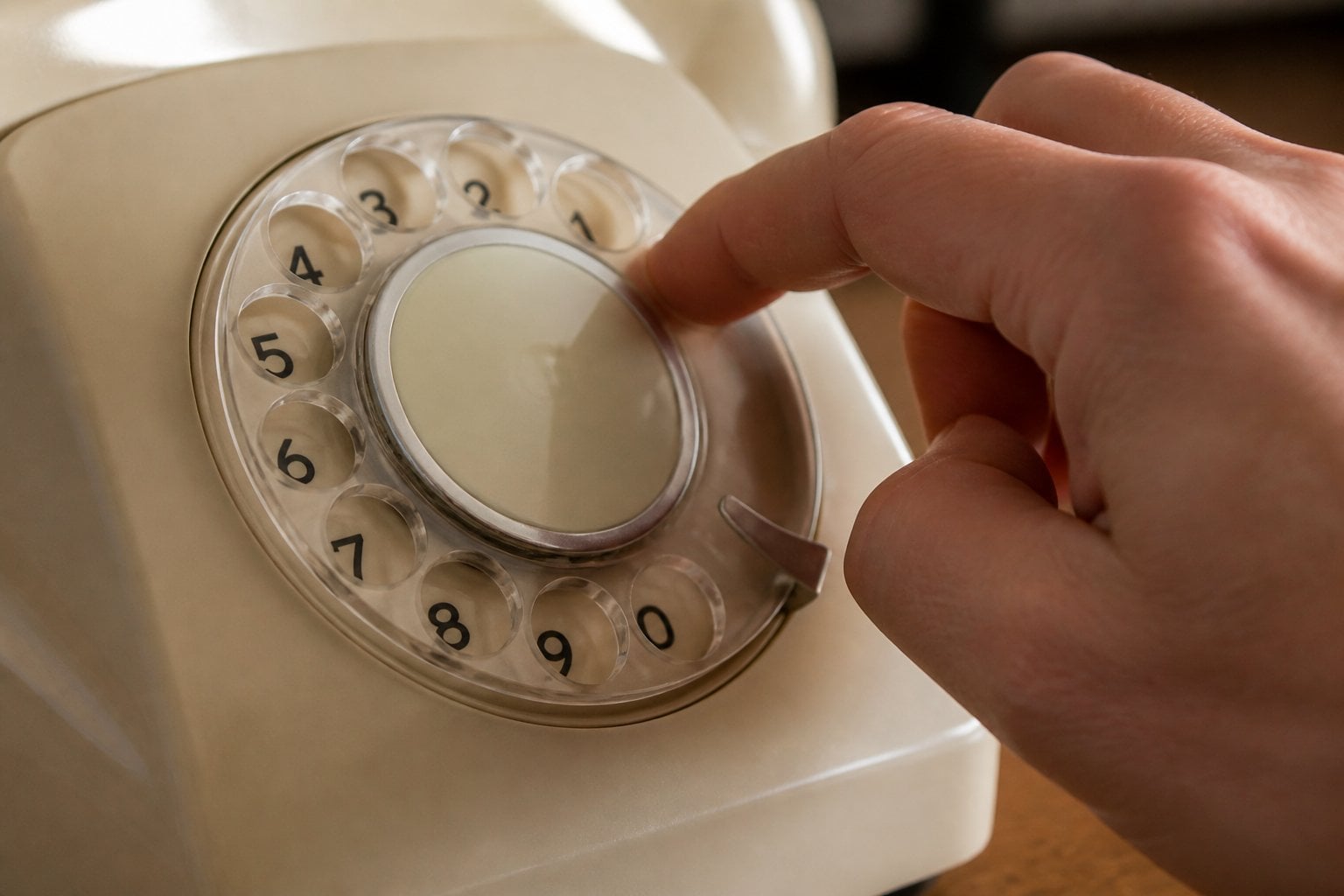
The mechanical click-click-click of a rotary phone dialing remains one of the most distinctive sounds of the 1980s. You placed your finger in the numbered hole, pulled it around to the metal stopper, and listened as it whirred back to its starting position.
Each number had physical weight to it. Dialing a seven or nine took noticeably longer than a one or two, which meant calling certain phone numbers became a brief exercise in patience.
The rhythm of dialing was unmistakable. That satisfying click as the dial returned created a pattern unique to each phone number you called. The sound marked the beginning of every phone conversation, whether you were calling a friend down the street or your grandmother across town.
These rotary phones made communication a tactile, auditory experience rather than the silent screen-tapping of today.
2. Coin dropping into a payphone slot
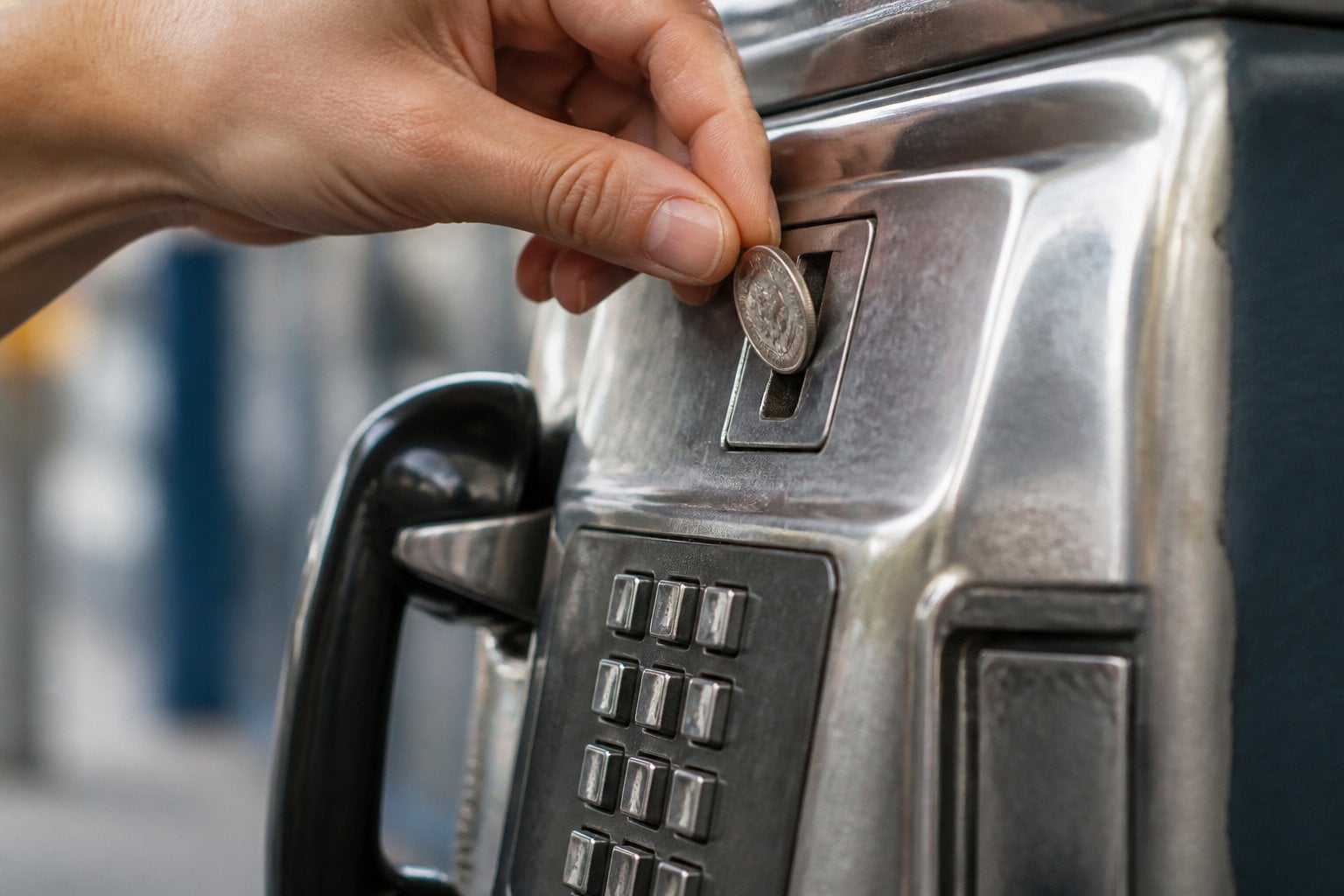
The metallic ker-chunk of coins falling through a payphone slot created a distinct sound you heard countless times in the 1980s. Each coin produced its own tone as it dropped and registered in the phone’s mechanism.
A quarter made five tones, a dime produced two, and a nickel generated one. You’d listen for these sounds to confirm your money registered before hearing the dial tone.
The acoustic quality of phone booths amplified this experience. The warm ringing of brass bells mixed with the mechanical clicks of the coin system created an unmistakable sequence.
These phones stood on street corners and in building lobbies everywhere. Making a call required having the right change ready, and that coin drop sound meant you were connected to the outside world.
3. Busy signal tone on landlines
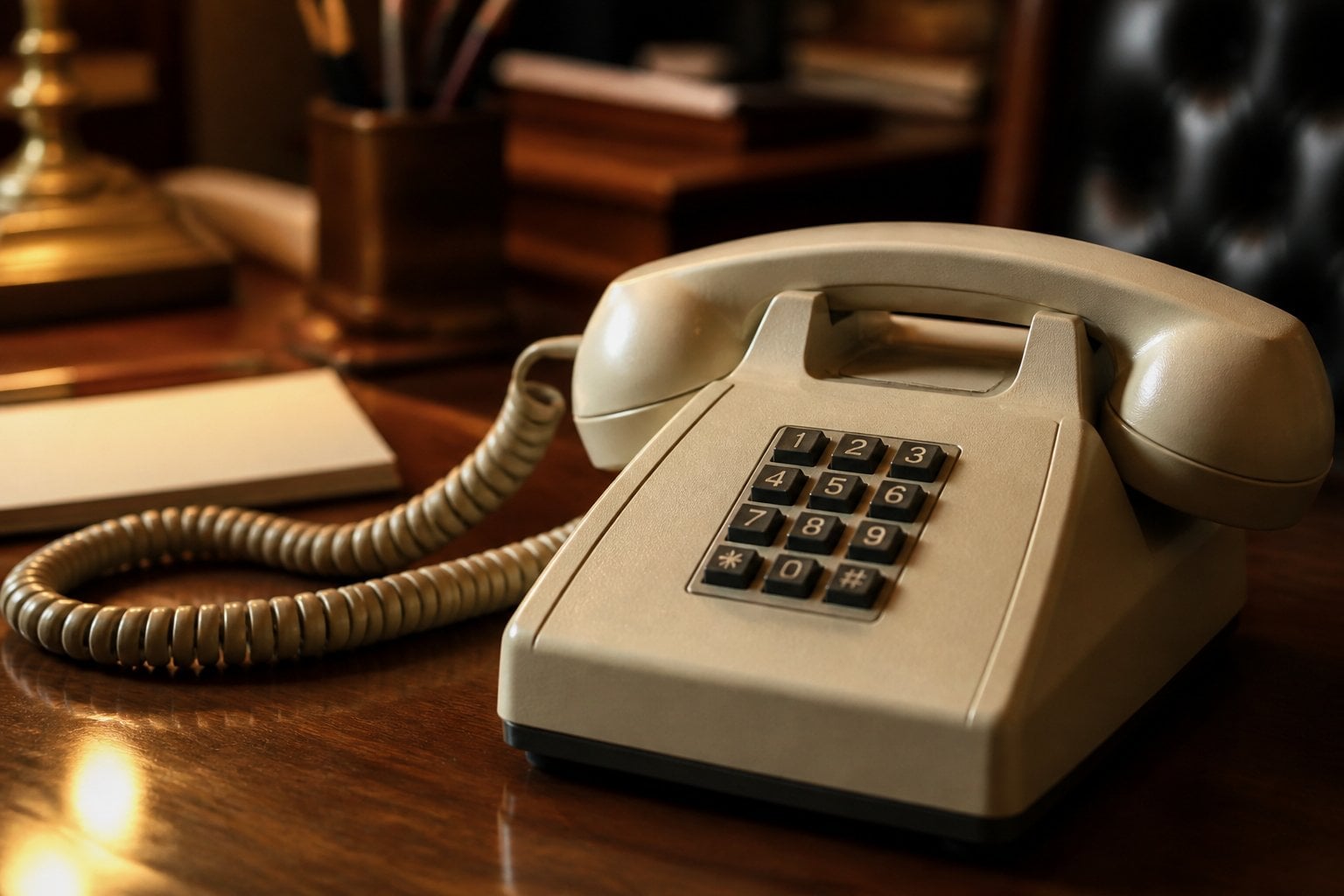
The rapid beep-beep-beep of a busy signal was an unmistakable part of phone communication in the 1980s. When you called someone whose line was already in use, this repetitive tone informed you that the connection couldn’t be completed.
You had two choices: hang up and try again later, or keep redialing until you got through. There was no voicemail to fall back on and no way to leave a message.
The busy signal used specific frequencies that created its distinctive sound pattern. Its faster cadence differentiated it from other phone tones you heard regularly.
For Gen X, this sound meant patience was required. You couldn’t just send a text or leave a message. You simply had to wait your turn to connect.
4. Dial-up modem handshake screech
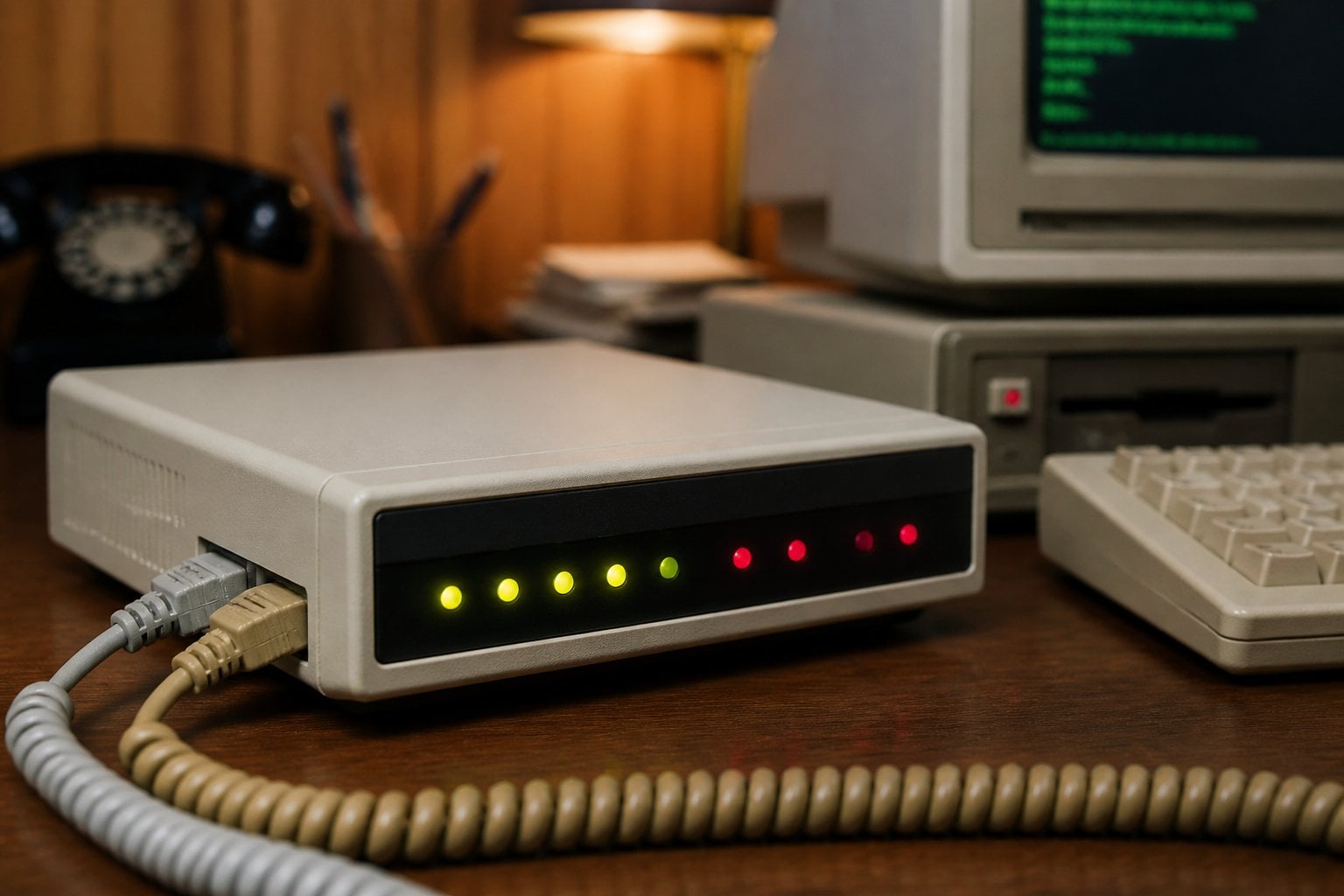
You couldn’t mistake that sound for anything else. The dial-up modem’s screech was actually a complex digital handshake between your computer and your internet service provider.
Those beeps, screeches, and static bursts lasted between twenty and sixty seconds. Your modem was negotiating connection speeds over copper phone lines during this process.
The sound represented something significant. It meant you were about to access the internet, transforming your computer from an isolated machine into a connected device.
You had to remain patient while the modems communicated. Picking up your household phone during this handshake would sever the connection instantly, forcing you to start the entire process over again.
That distinctive noise became the gateway sound to the early internet, signaling possibility and connection for an entire generation.
5. VHS tape rewinding and fast-forwarding
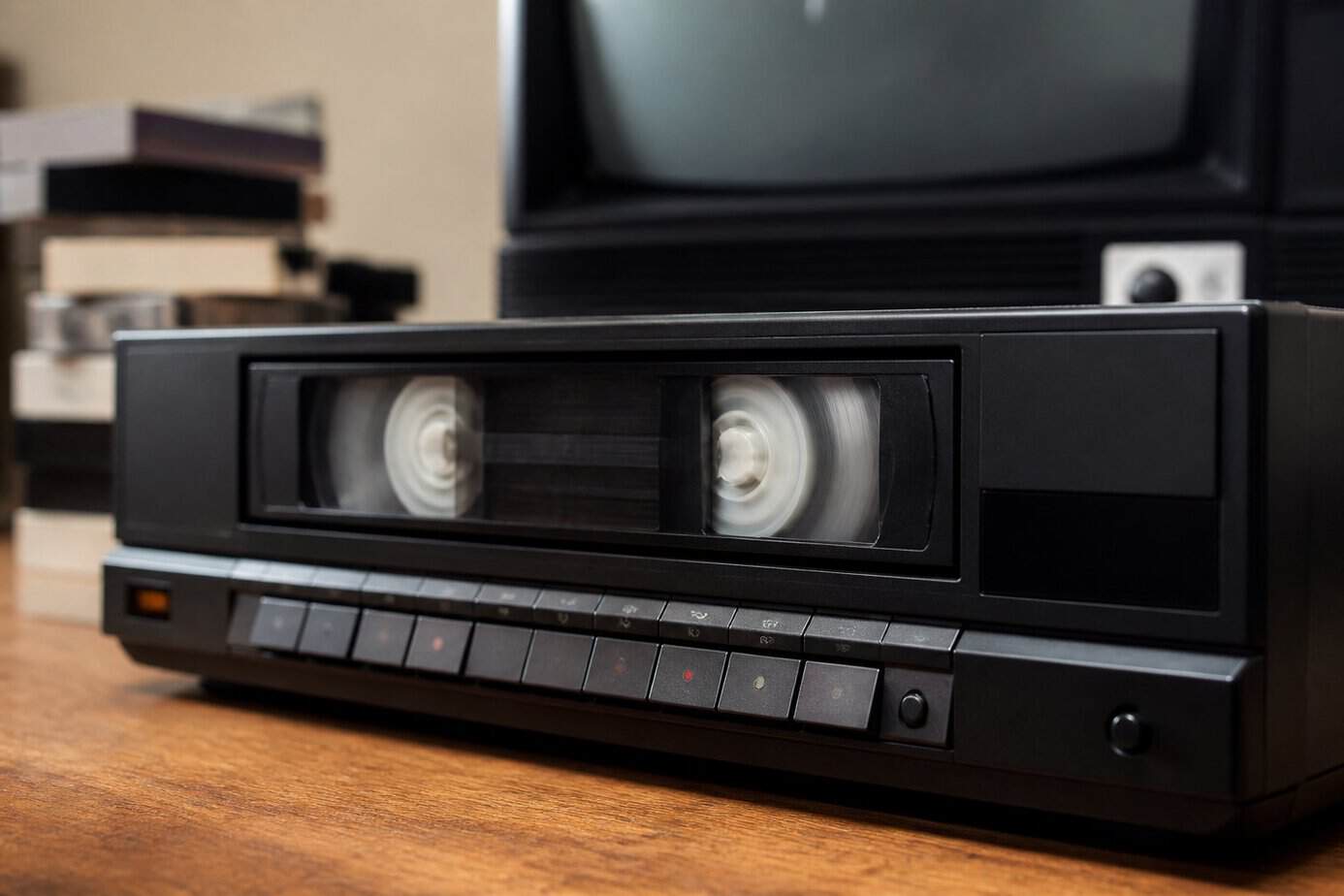
The mechanical whir of a VHS tape rewinding was an unavoidable part of movie nights. You’d press that button and listen as the tape rolled backward, sometimes for several minutes depending on how long the movie was.
Fast-forwarding through previews or commercials created its own distinctive sound. The mechanism worked harder as it sped through the tape, creating a higher-pitched whir that filled the room.
Many households invested in separate rewinding machines to save wear on their VCR. These devices made an even louder mechanical noise as they spun the tape back to the beginning. The hiss and click when the tape finally stopped signaled you were ready to watch again.
6. VCR heads searching noise
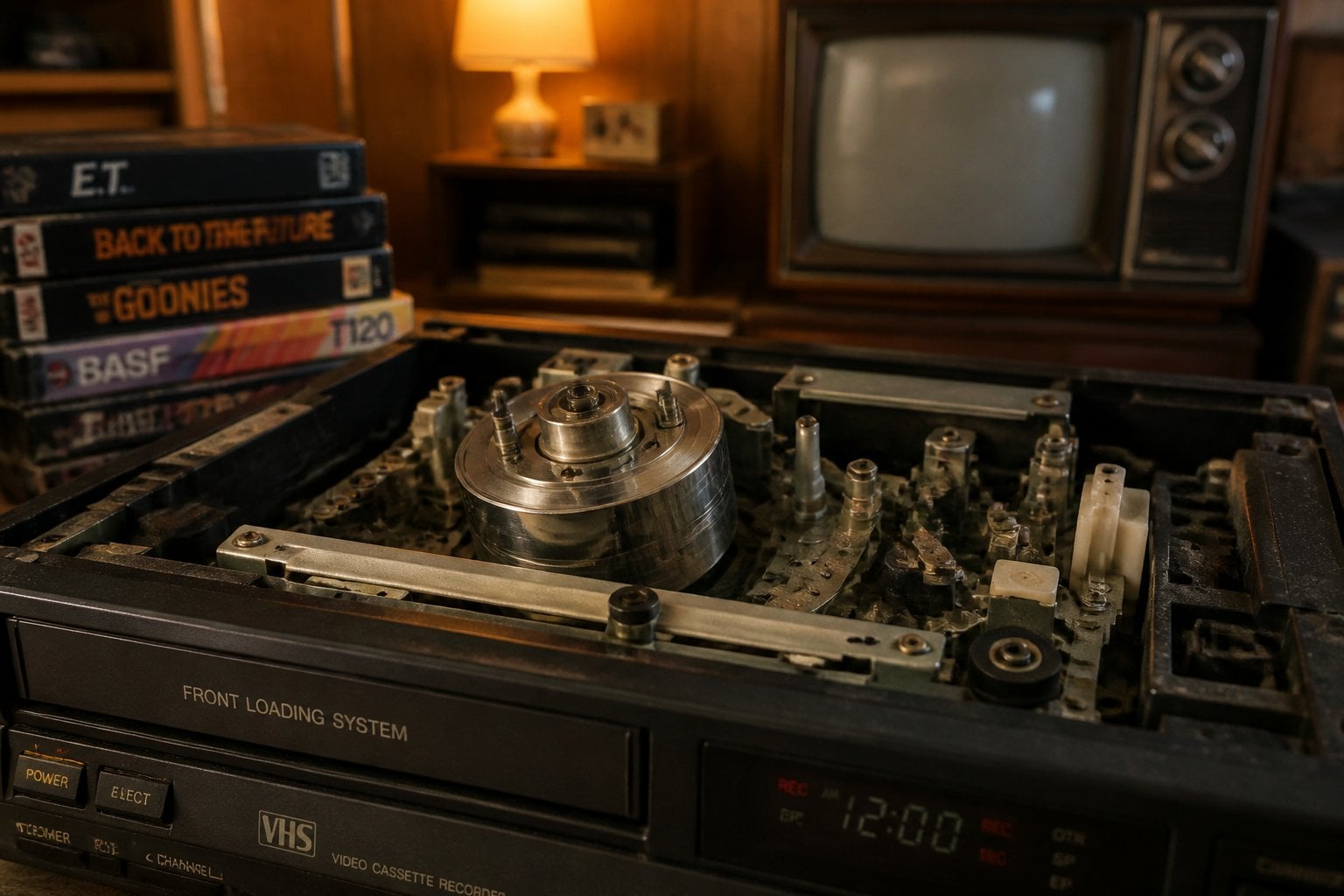
You heard that distinctive mechanical whirring sound every time you fast-forwarded or rewound through a VHS tape. The VCR heads made a rhythmic, clicking noise as they searched for the exact spot where you stopped watching last night’s recording.
This sound became part of your daily routine when you wanted to skip past commercials or find your favorite scene. The mechanical grinding mixed with the tape spinning created a unique audio signature that no streaming service could replicate.
You learned to recognize when the heads were getting close to your desired position. The sound changed pitch slightly as the tape slowed down, signaling it was time to press play. That searching noise represented the patience required in an analog world, where instant replay meant something entirely different than it does today.
7. TV static and snow between channels
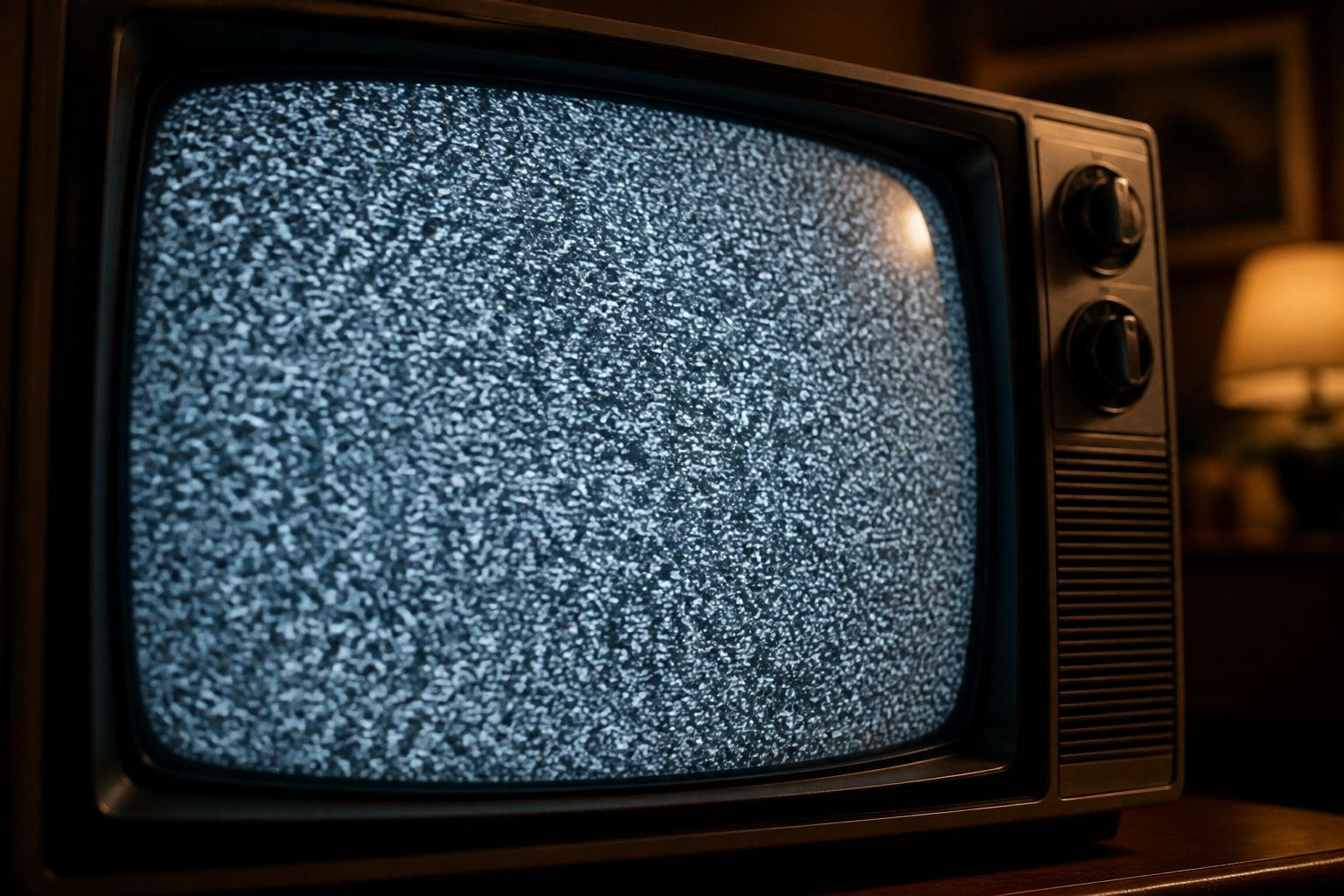
That distinctive buzz and crackle of analog TV static was impossible to ignore. When you switched between channels or landed on an unused frequency, your screen filled with dancing gray and white dots accompanied by a harsh white noise roar.
The static appeared whenever your antenna failed to pick up a signal. You’d navigate through it while searching for your favorite shows, especially during Saturday morning cartoon hunts. The volume often caught you off guard when surfing channels, blasting unexpectedly loud compared to regular programming.
Late-night viewing ended with stations signing off, leaving only that persistent static filling darkened living rooms. The phenomenon resulted from ambient electromagnetic noise your analog TV interpreted as weak signals. Today’s digital televisions display silent blue or black screens instead, eliminating this once-ubiquitous sound entirely.
8. HBO Feature Presentation trumpet intro sting
The sweeping orchestral fanfare that introduced HBO movies in the 1980s became one of the most recognizable sounds of the decade. You heard those powerful trumpets every time a feature film was about to start on the premium cable channel.
The intro sequence featured a distinctive brass-heavy composition that built anticipation before movies aired. If your family had HBO, Saturday nights meant hearing this epic theme as you settled in for viewing.
The sound design was deliberately grand and cinematic. It competed with network television movie intros by creating something more theatrical and memorable.
For Gen X viewers, this audio signature meant something special was coming. The combination of dramatic horns and soaring strings signaled you were about to watch an uninterrupted film without commercial breaks, making it a premium entertainment experience.
9. Cassette tape recorder fast-forward/rewind click
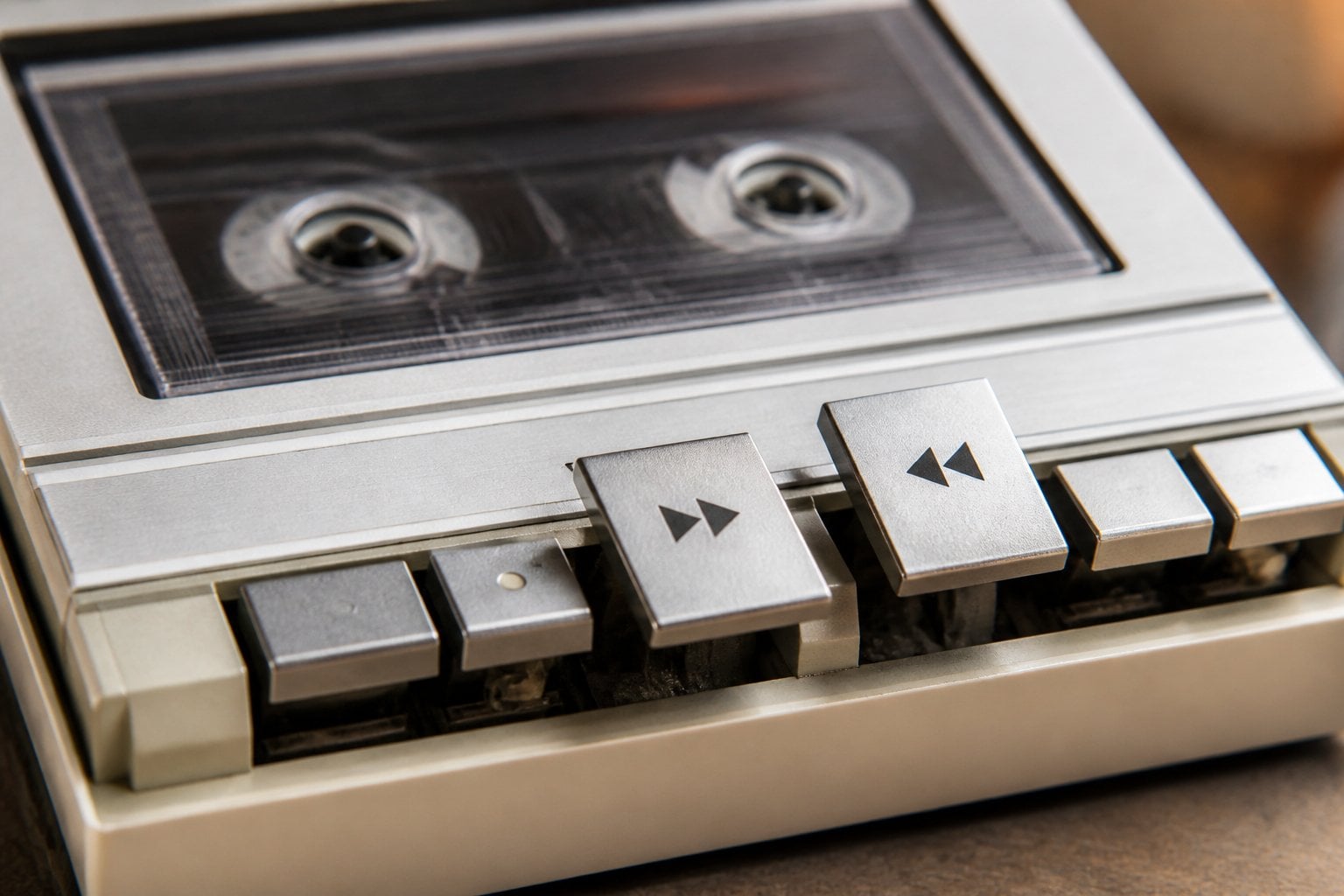
You pressed those chunky plastic buttons countless times, and each one produced that distinctive mechanical click. The satisfying clunk signaled the beginning of a high-speed whirr as the tape spools spun rapidly in either direction.
The fast-forward sound was a familiar companion when you searched for your favorite song on a mixtape. You learned to estimate timing by ear, knowing roughly when to stop to land near the track you wanted.
Rewinding created its own rhythmic mechanical hum. The automatic stop mechanism would produce a final click when the tape reached its end, telling you it was time to flip the cassette over or eject it entirely.
These physical sounds represented the tangible nature of music listening in the 1980s. Every interaction with your cassette player produced audible feedback that confirmed your commands were working.
10. Walkman button clicks and tape hiss
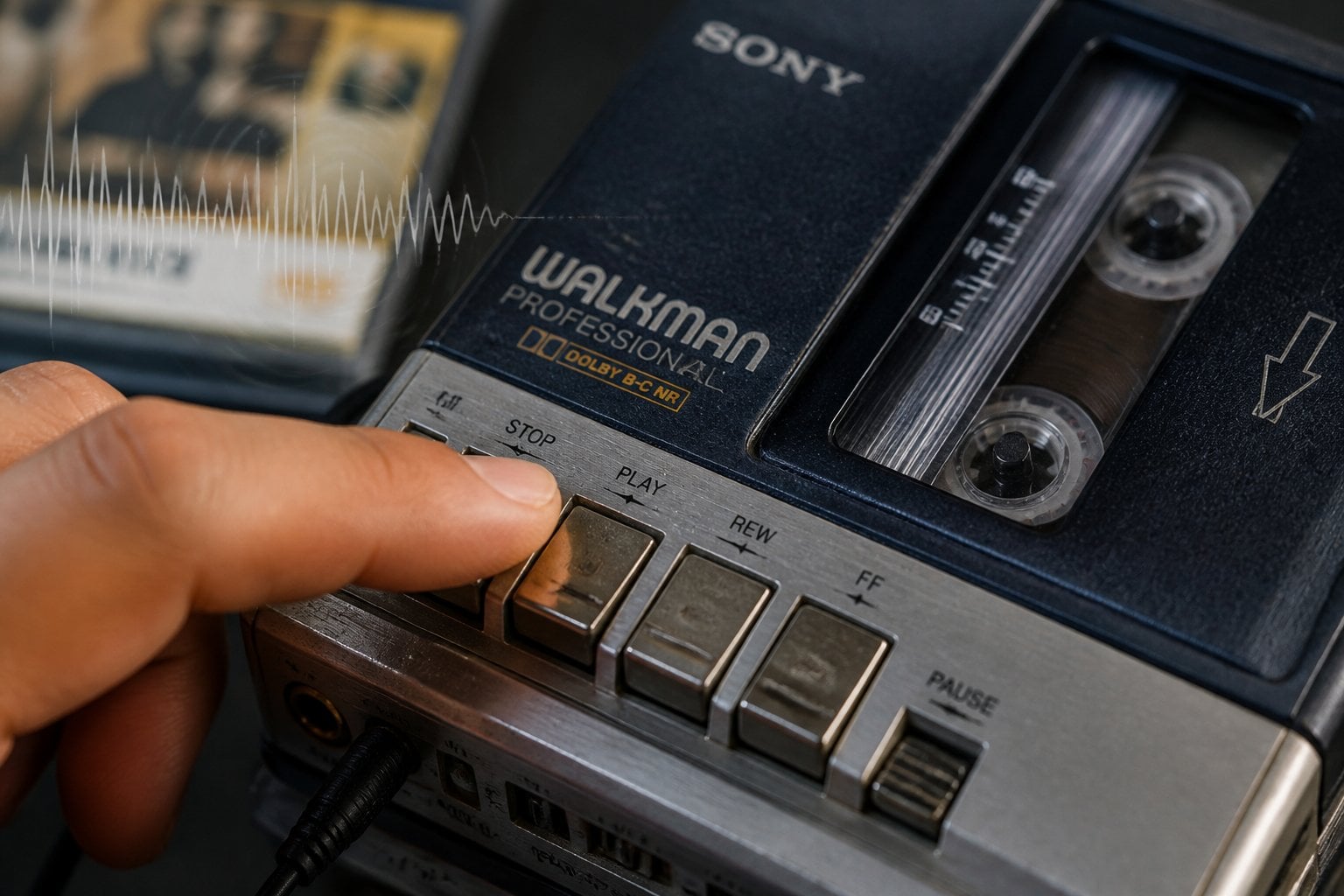
The Sony Walkman transformed music into something portable and personal. When you pressed play, that satisfying mechanical click signaled the start of your soundtrack. The button had weight and purpose, delivering tactile feedback that touchscreens can’t replicate.
Closing the tape deck produced another distinctive sound. That firm snap meant your cassette was locked in and ready. You could hear the difference between a proper close and one that wasn’t quite right.
Then came the tape hiss. Before the music started, you’d hear that soft, steady static in your foam headphones. It was the baseline noise of magnetic tape, present on every recording. You learned to tune it out within seconds, but it was always there, woven into every song you played.
11. Polaroid camera whir and ejection clunk
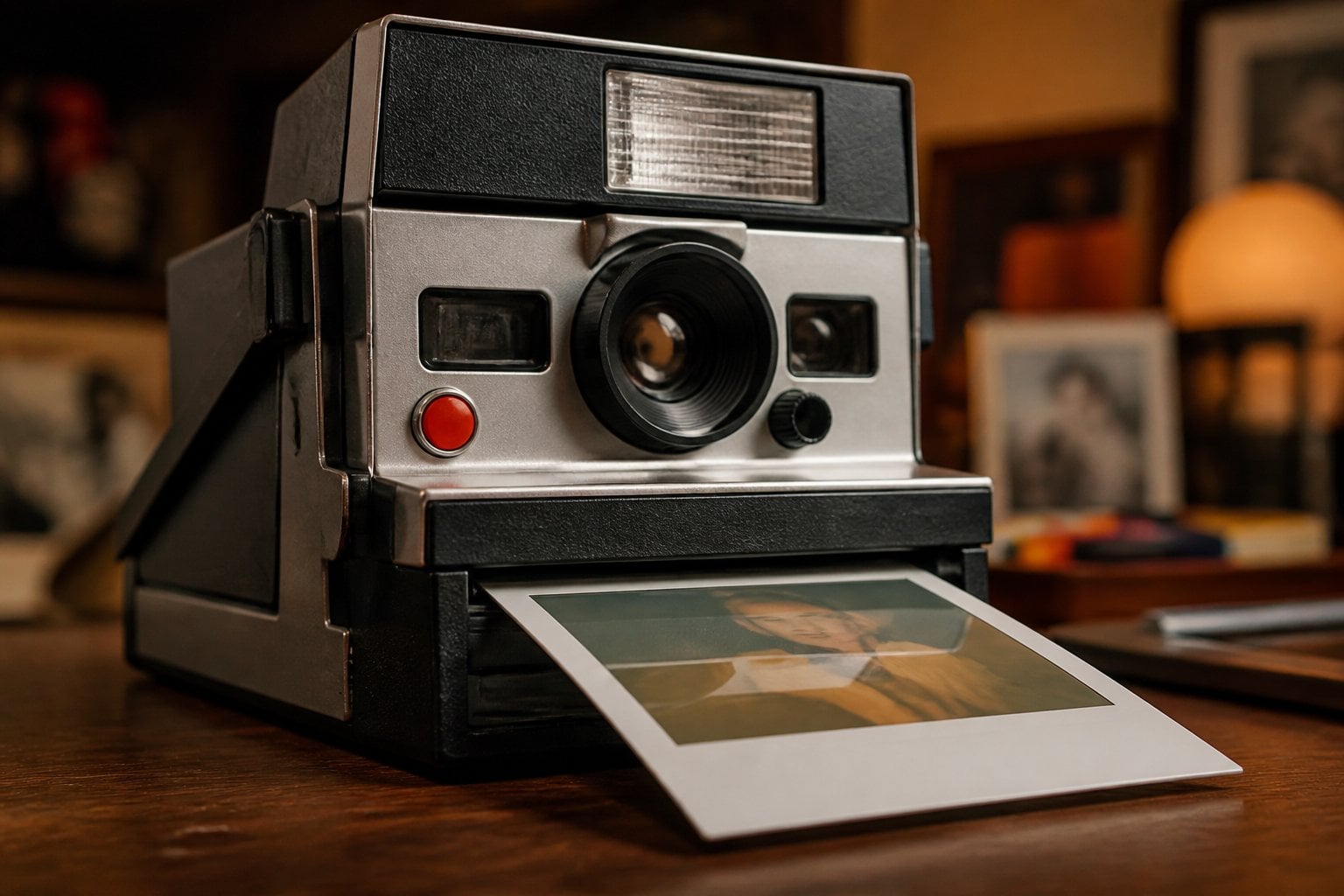
You’d recognize that distinctive mechanical whir anywhere. The moment you pressed the shutter button on a Polaroid camera, it produced a satisfying click followed by the motorized sound of the photo being processed inside.
Then came the best part: the ejection. The camera pushed the developing photograph through its front slot with a characteristic whirring noise that lasted about three seconds. You’d grab the warm photo as it emerged, careful not to shake it despite what the song said.
The SX-70 and similar models created this unmistakable sound with every shot. It signaled both the capture of a moment and the beginning of the 60 to 90 second wait while the image slowly materialized before your eyes. No preview screen, no second chances, just instant film and that mechanical symphony.
12. Floppy disk drive seek and floppy write-protect notch sound
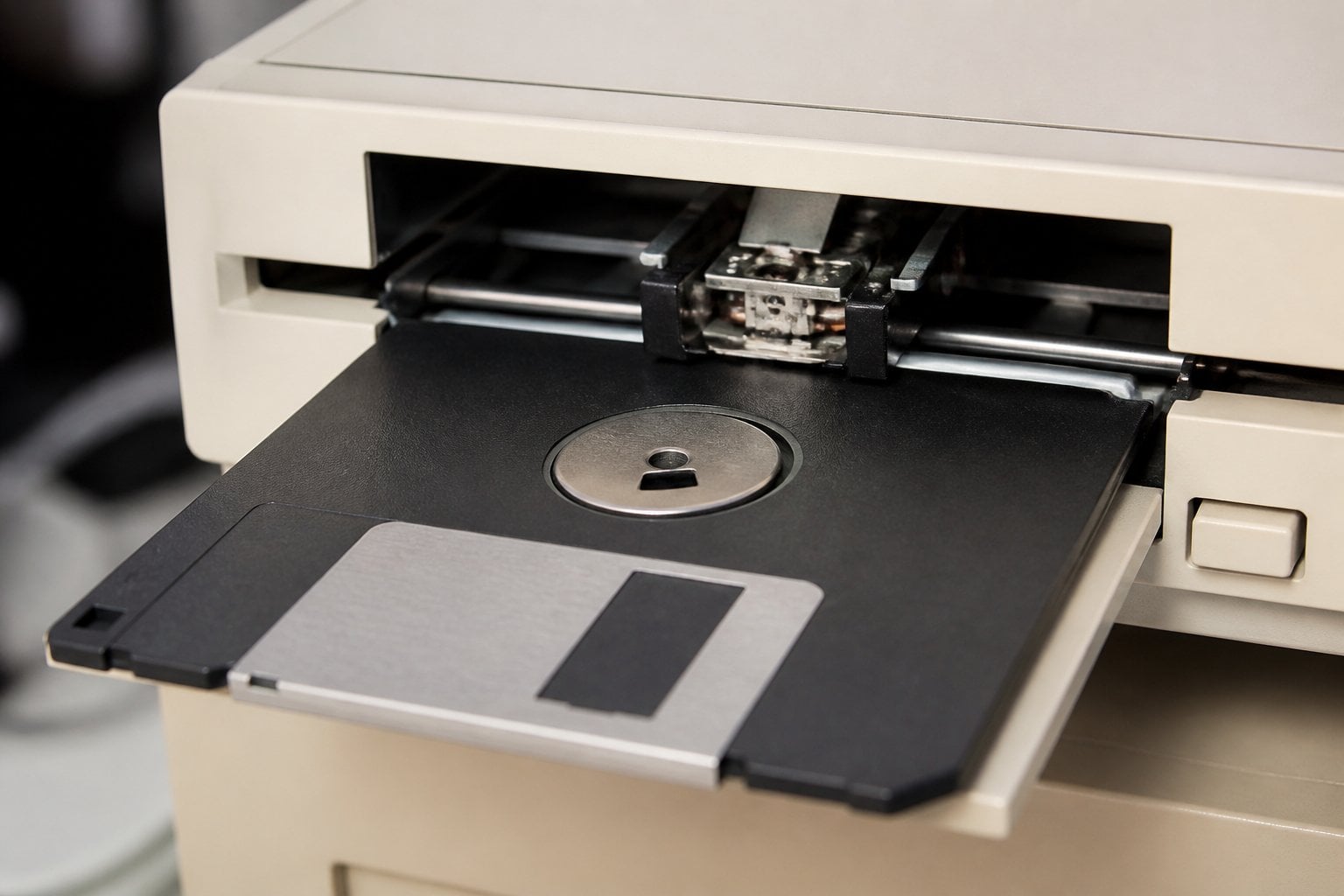
The mechanical whirring of a floppy disk drive searching for data was a constant companion in 1980s computing. You’d hear the drive head stepping across tracks, creating distinctive clicking and buzzing sounds as it located your files.
The 5.25-inch floppy dominated the decade with its write-protect notch on the right edge near the top. When you covered this notch with a small tab, the drive would refuse to write, sometimes producing a faint mechanical click as it detected the protection. An uncovered notch meant you could save data freely.
You might remember using disk notchers to create write-protect notches on the opposite side, effectively doubling your storage capacity. The 3.5-inch floppy later introduced a sliding switch that produced its own satisfying snap when toggled between protected and writable positions.
13. Dot matrix printer chattering and paper feed
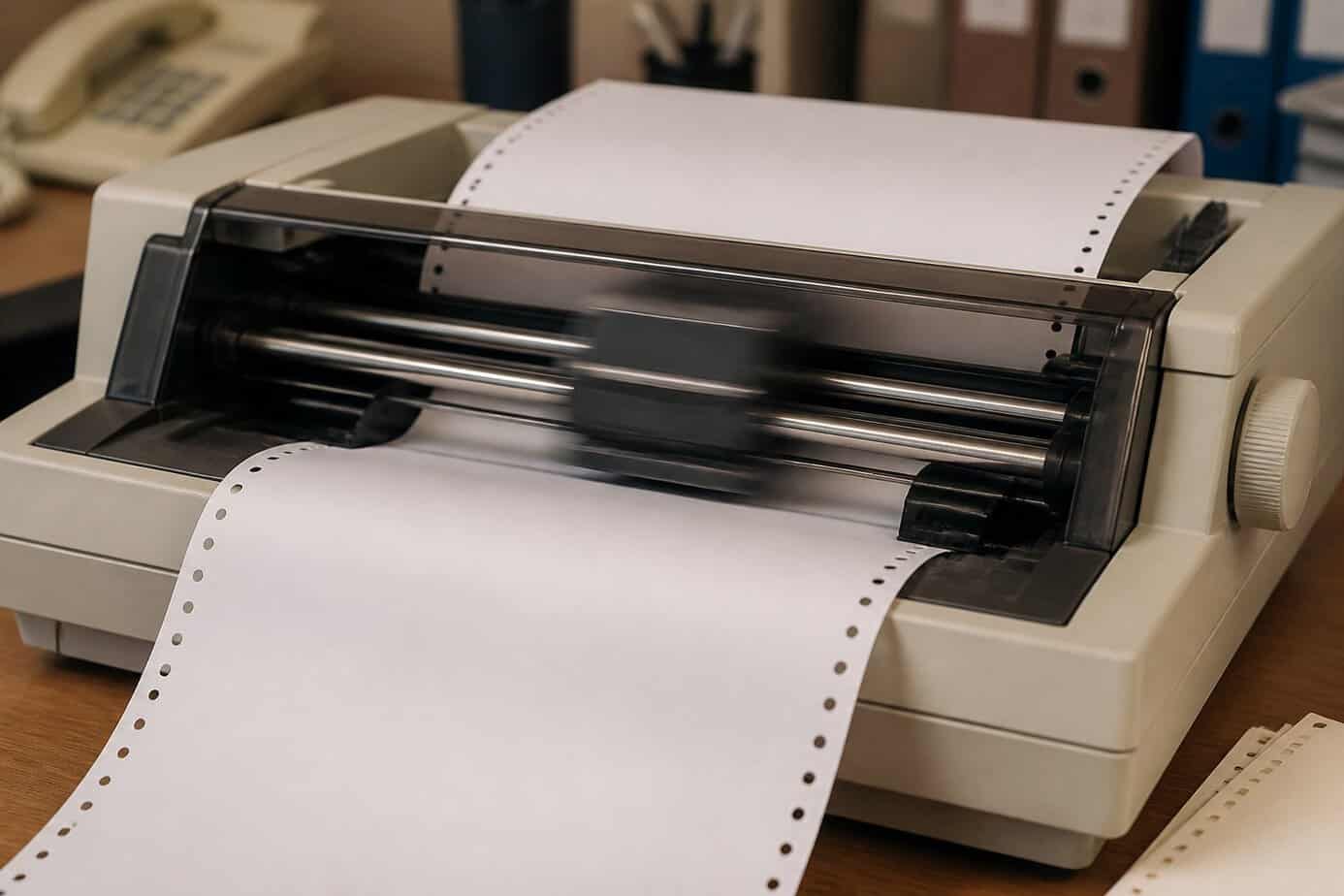
You could hear a dot matrix printer from rooms away as its print head moved back and forth across the paper. The rhythmic chattering created a distinctive mechanical sound that defined office spaces and computer rooms throughout the decade.
The printer worked by striking pins against an ink-soaked ribbon, forming letters and images dot by dot. Each pass of the print head produced that characteristic staccato rhythm you probably still remember.
The continuous feed paper added its own sound to the symphony. Those perforated edges guided the paper through on sprockets, creating a steady mechanical hum beneath the chattering print head.
Whether you were printing a school report or watching your parents work at home, that sound meant something was getting done. The louder and longer it ran, the more pages were coming out.
14. Typewriter key clacks and return bell
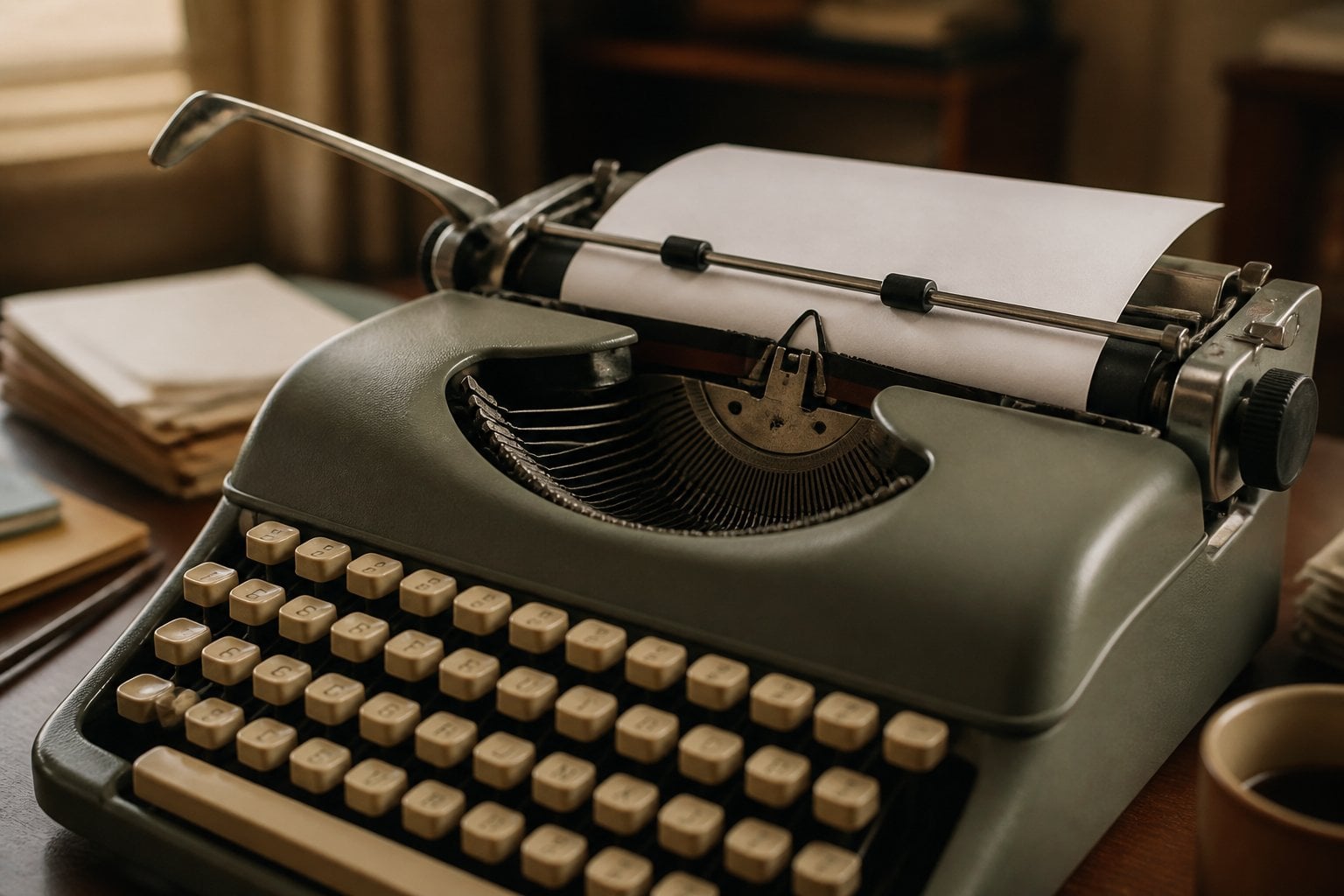
The distinctive clack-clack-clack of typewriter keys filled offices and homes throughout the 1980s. Each keystroke struck the paper with force, creating a rhythmic sound that became synonymous with productivity and writing.
The carriage return bell provided its own memorable moment. When you reached the end of a line, a sharp ding signaled it was time to push the lever and start fresh. This mechanical feedback was muscle memory made audible.
Electric typewriters added their own rapid clatter to the mix. The sounds were constant wherever someone was working on correspondence, reports, or creative writing.
These mechanical noises have largely disappeared as computers took over. The tactile and auditory experience of typewriting has been replaced by the quiet tapping of modern keyboards, making those distinctive clacks and dings a distinct marker of the 1980s era.
15. Answering machine outgoing greeting beeps
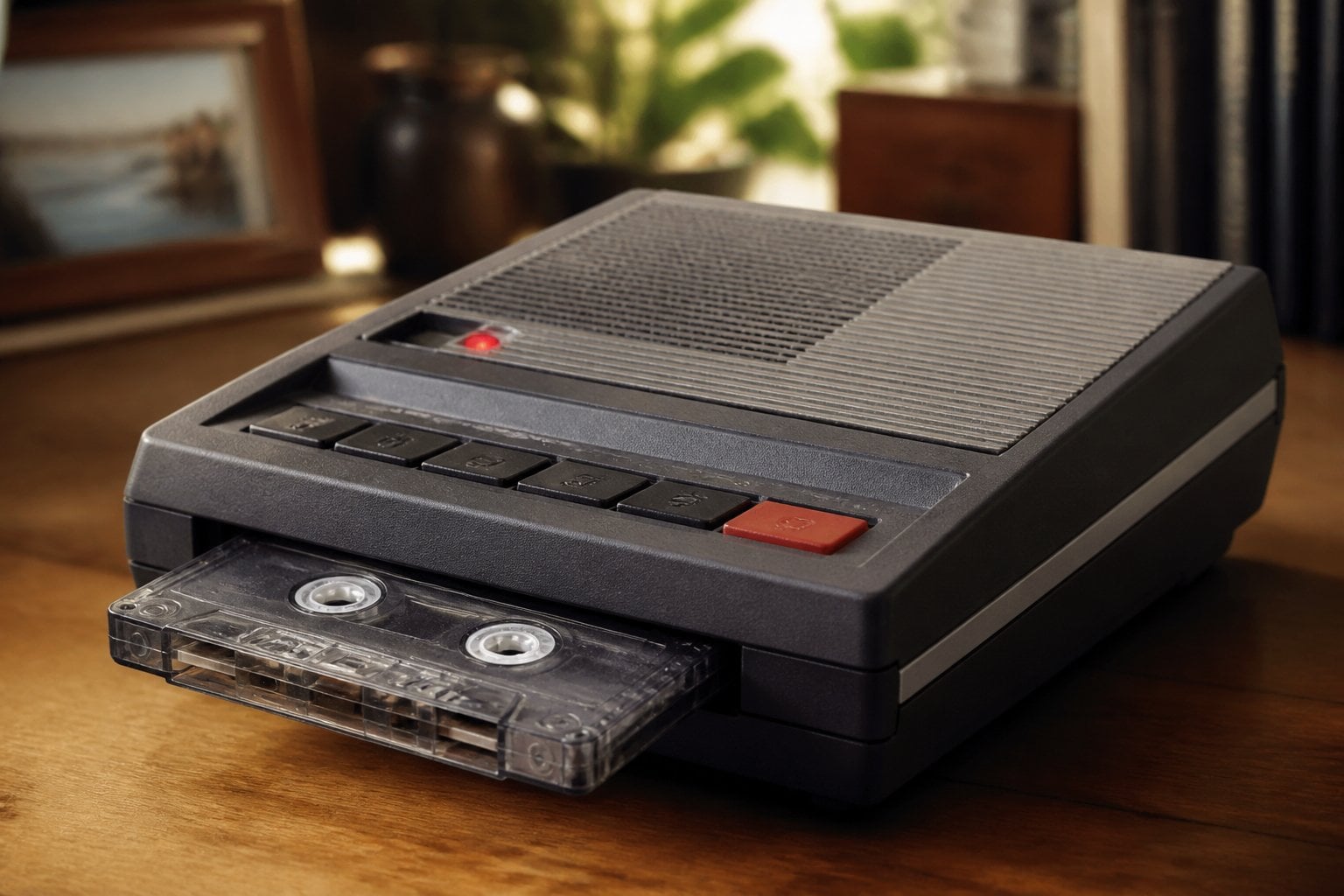
You recorded your outgoing message, then waited for that distinctive beep before speaking. The sequence became second nature: the machine’s mechanical whir, your pre-recorded greeting playing back, then that sharp tone signaling the start of recording time.
Early answering machines in the 1980s required explanation in the greeting itself. People weren’t accustomed to leaving messages, so recordings often instructed callers on what to do after the beep.
Radio Shack and other companies sold pre-recorded greeting tapes for those who wanted something more entertaining than a standard message. Some households opted for funny songs or skits, while others kept it simple and professional.
That final beep marked the boundary between your prepared words and the caller’s spontaneous response. You knew exactly when it was coming on your own machine.
16. Carcass of a gas station air pump hissing and coin meter clunk
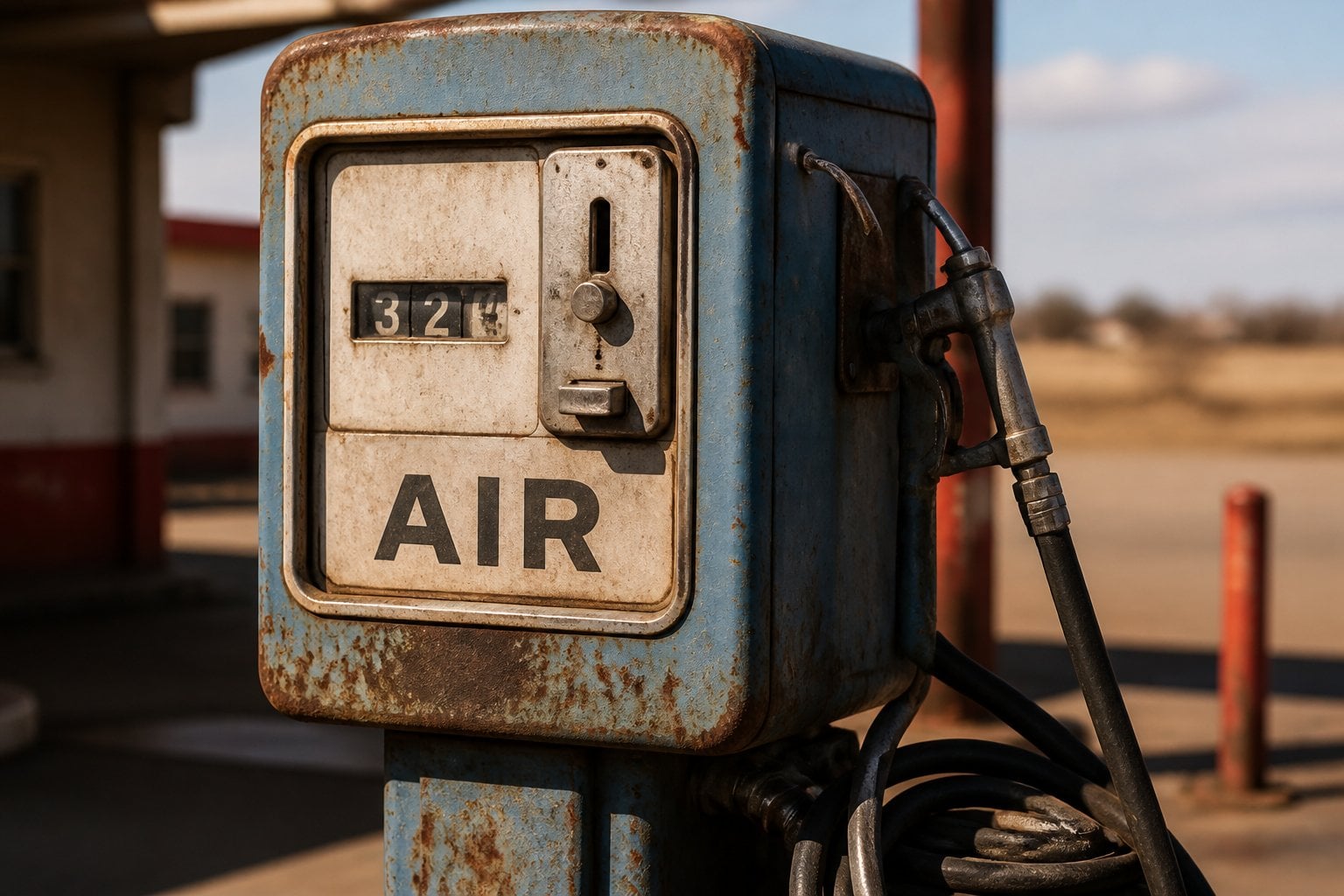
You pulled up to that weathered air pump standing at the edge of the gas station lot. The metal housing showed years of use, often dented and faded from constant exposure to the elements.
Feeding quarters into the coin meter produced a satisfying mechanical clunk. That sound meant you had purchased a few minutes of compressed air. The pump would wheeze to life with a distinctive hiss as pressure built up in the line.
You grabbed the heavy rubber hose and heard air escaping before you even attached it to your tire valve. The gauge, if it worked, bounced wildly as you filled your tires. These self-service air stations required patience and often multiple coin insertions.
The entire experience was purely mechanical, no digital displays or credit card readers in sight.
17. Arcade cabinet coin drop and joystick clack
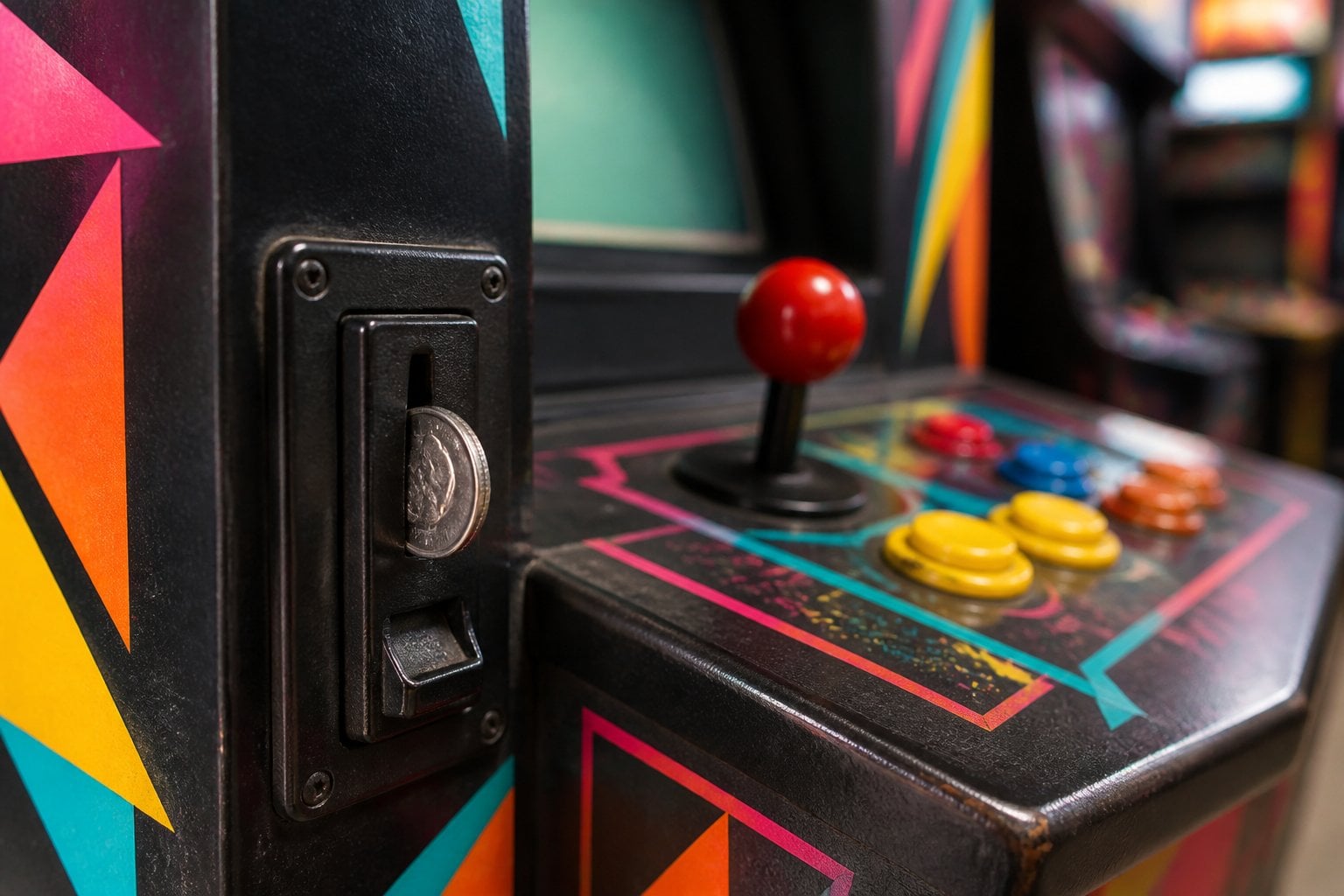
The metallic clink of quarters dropping into an arcade cabinet signaled the start of another gaming session. You’d hear that satisfying coin sound echo through packed arcade halls, mixing with dozens of other machines accepting their payment.
The joystick clack was equally distinctive. Each movement produced a sharp, mechanical click as you maneuvered through games like Pac-Man, Donkey Kong, or Galaga. The sound varied slightly between cabinets, but that firm, responsive feedback let you know your commands registered.
Button mashing added another layer to the arcade symphony. Those chunky, oversized buttons made solid thunking sounds with each press. Together with the coin drops and joystick movements, these sounds created the unmistakable audio landscape of 1980s arcades that you still recognize instantly today.
18. Arcade game start-up attract music (8-bit synth)
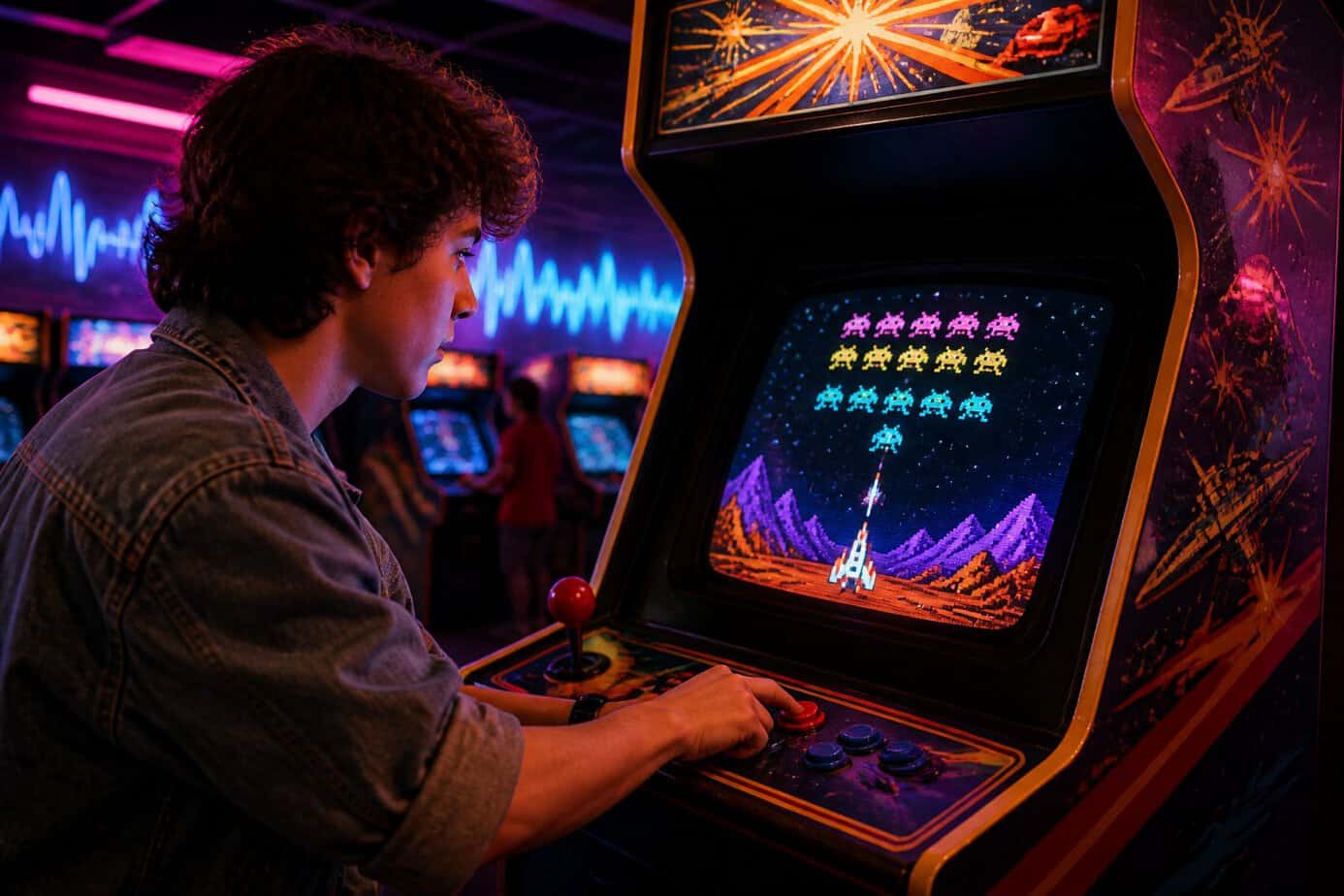
Walking past a row of arcade cabinets, you’d hear those distinctive 8-bit melodies looping endlessly. Each machine broadcast its own musical invitation, designed to pull you in with bright synthetic tones and catchy chip-tune hooks.
The attract mode music featured simple waveforms that created those characteristic bleeps and bloops. Developers worked within strict memory limitations, crafting earworms using basic sound channels and synthesized bass lines. These weren’t just random notes but carefully composed loops that conveyed each game’s personality.
You could identify specific games from across the arcade floor just by their attract music. The throbbing bass and determined beats signaled which cabinet was calling for your quarters. Those neon-soaked arcades filled with overlapping synth melodies created a soundscape that defined an entire era of gaming.
19. Atari/Nintendo console cartridge click and power-up beep
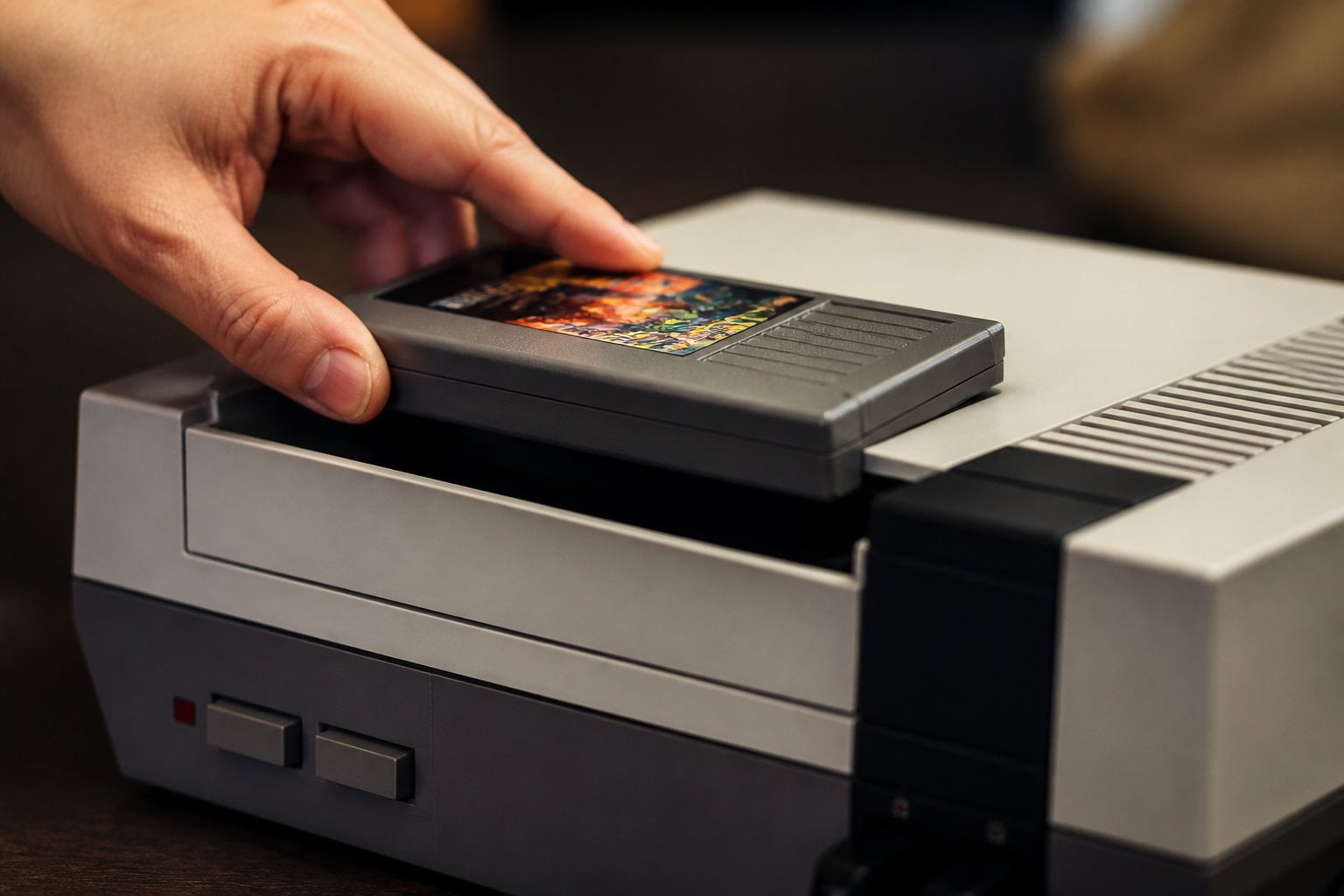
The satisfying click of inserting a game cartridge into your Atari 2600 or Nintendo Entertainment System marked the beginning of your gaming session. You’d push the cartridge down firmly until you heard that distinctive snap, confirming it was properly seated.
The power-up sequence came next. Your Atari 2600 would emit simple electronic beeps as it loaded, while the NES had its own characteristic startup sounds. These audio cues told you the console recognized the cartridge and was ready to play.
You became familiar with the ritual of removing the cartridge, blowing into it to clear dust, and reinserting it when games didn’t load properly. That mechanical click and subsequent power-up beep were your gateway to hours of 8-bit entertainment.
20. Synthesizer patch twang and arpeggiator whirr
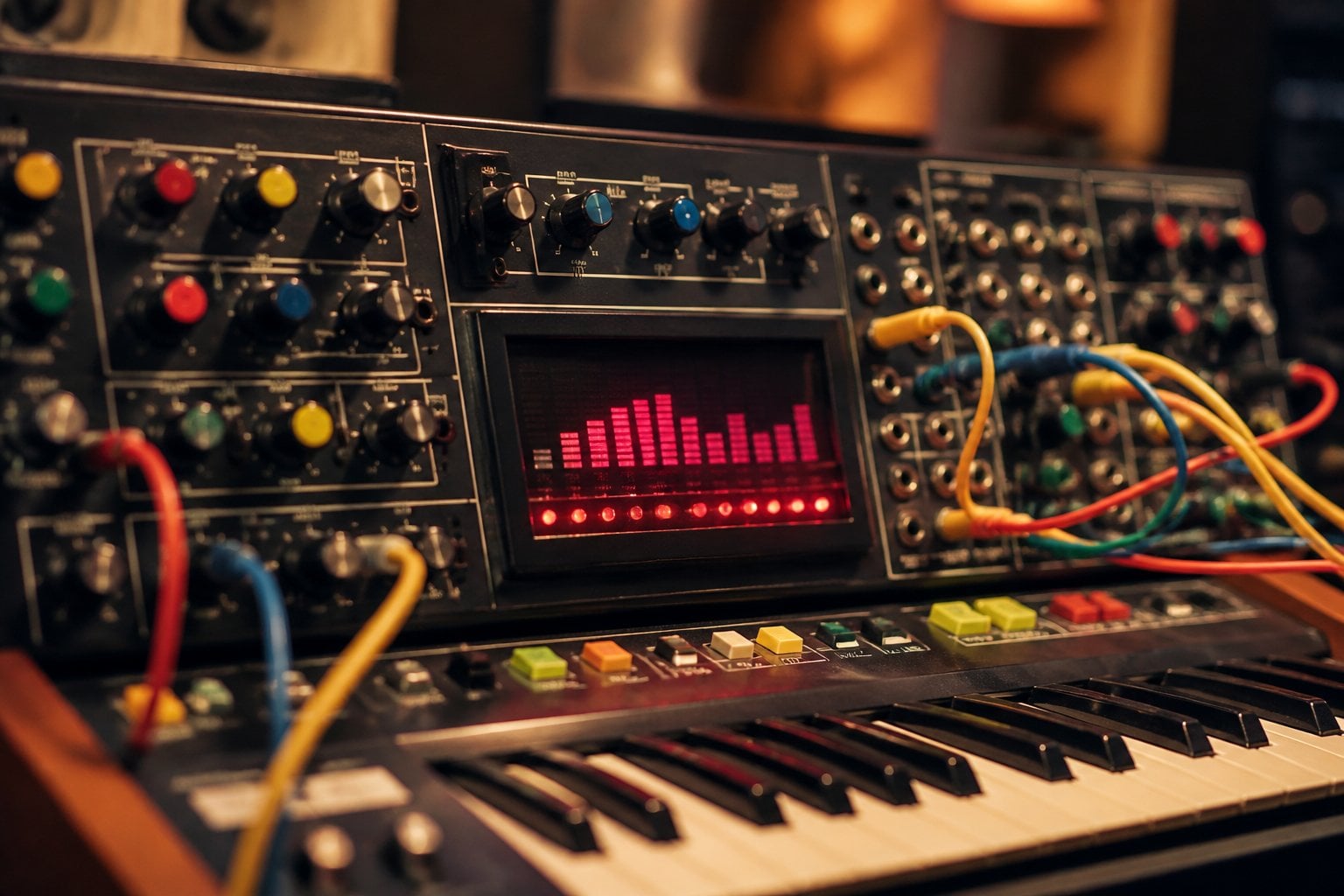
You heard these sounds everywhere in the 1980s, from pop hits to TV show themes. Synthesizers dominated the decade’s music production, and their distinctive patches created sounds that defined the era.
The arpeggiator whirr was particularly recognizable. This feature automatically cycled through notes in rapid succession, creating cascading patterns that appeared in countless songs. You could identify it instantly when listening to radio stations or watching MTV.
Synthesizer patches produced everything from bright, metallic twangs to warm, analog sweeps. Musicians crafted these sounds by adjusting oscillators, filters, and envelopes on keyboards like the Yamaha DX7 and Roland Juno-106.
These electronic textures became the backbone of new wave, synth-pop, and film soundtracks. When you hear them today, they immediately transport you back to that specific moment in music history.
21. Boom box cassette auto-reverse clunk
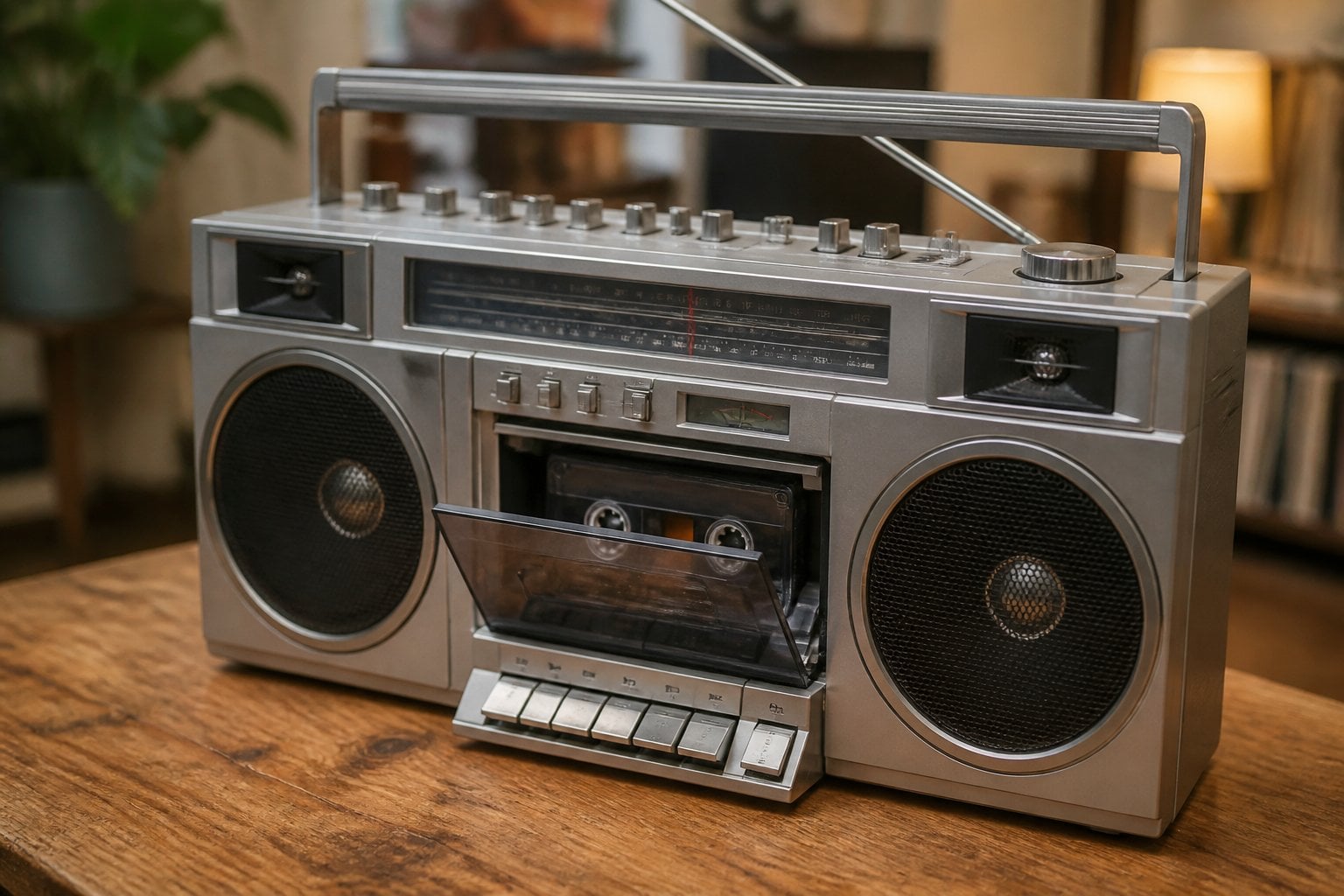
You knew that mechanical clunk meant your mix tape would keep playing without interruption. Auto-reverse boomboxes eliminated the need to manually flip cassettes, using a distinctive mechanical action to switch playback direction.
The sound came from logic-controlled mechanisms shifting gears and repositioning the tape heads. Higher-end models from Sony, Panasonic, and Sanyo featured this technology, often paired with Dolby noise reduction systems.
You heard the clunk most clearly during quiet passages between songs. The brief mechanical interruption became part of the listening experience, signaling that your favorite tracks would continue seamlessly. Models with dual cassette decks sometimes featured auto-reverse on both units, creating even more opportunities to hear that characteristic sound.
The feature worked with normal, chrome, and metal tapes, maintaining playback quality in both directions.
22. AM radio DJ signal fade and dial tuning drag
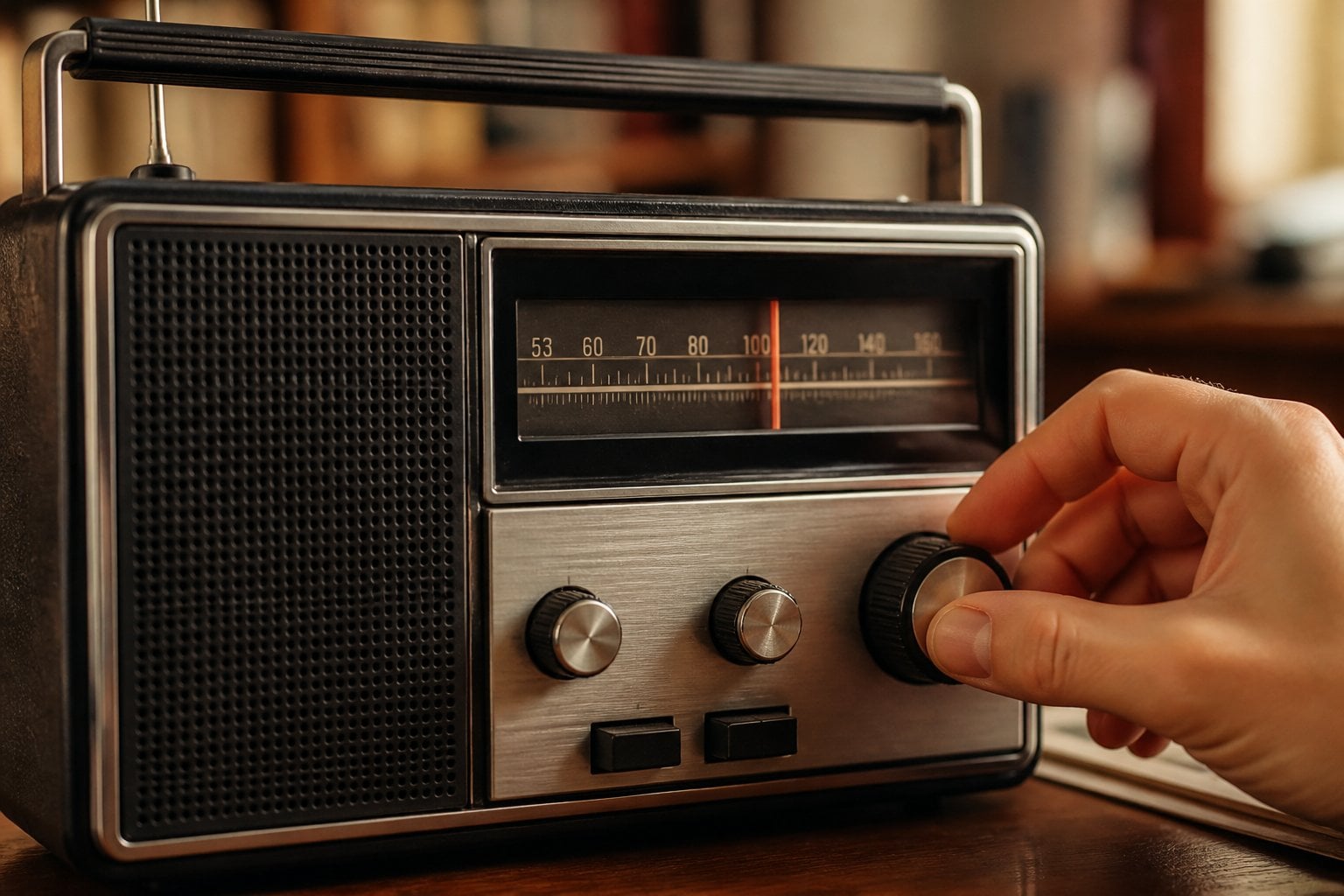
You remember the distinctive scratch and hiss of turning that analog radio dial, searching for your favorite station. The sound combined mechanical resistance with electronic static as signals drifted in and out.
AM radio particularly delivered this experience. Stations would fade during the day, replaced by crackling white noise and fragments of distant broadcasts bleeding through. You twisted the dial slowly, hearing voices distort and frequencies shift.
That tuning drag became part of the listening ritual. The needle swept across glowing numbers while you hunted for clear reception. Between stations, you caught brief snippets of unfamiliar DJs, commercials, and songs before landing on your destination.
Digital presets and streaming eliminated this tactile search process entirely. The physical act of tuning disappeared along with those atmospheric sounds.
23. TV test pattern tone and announcer ID
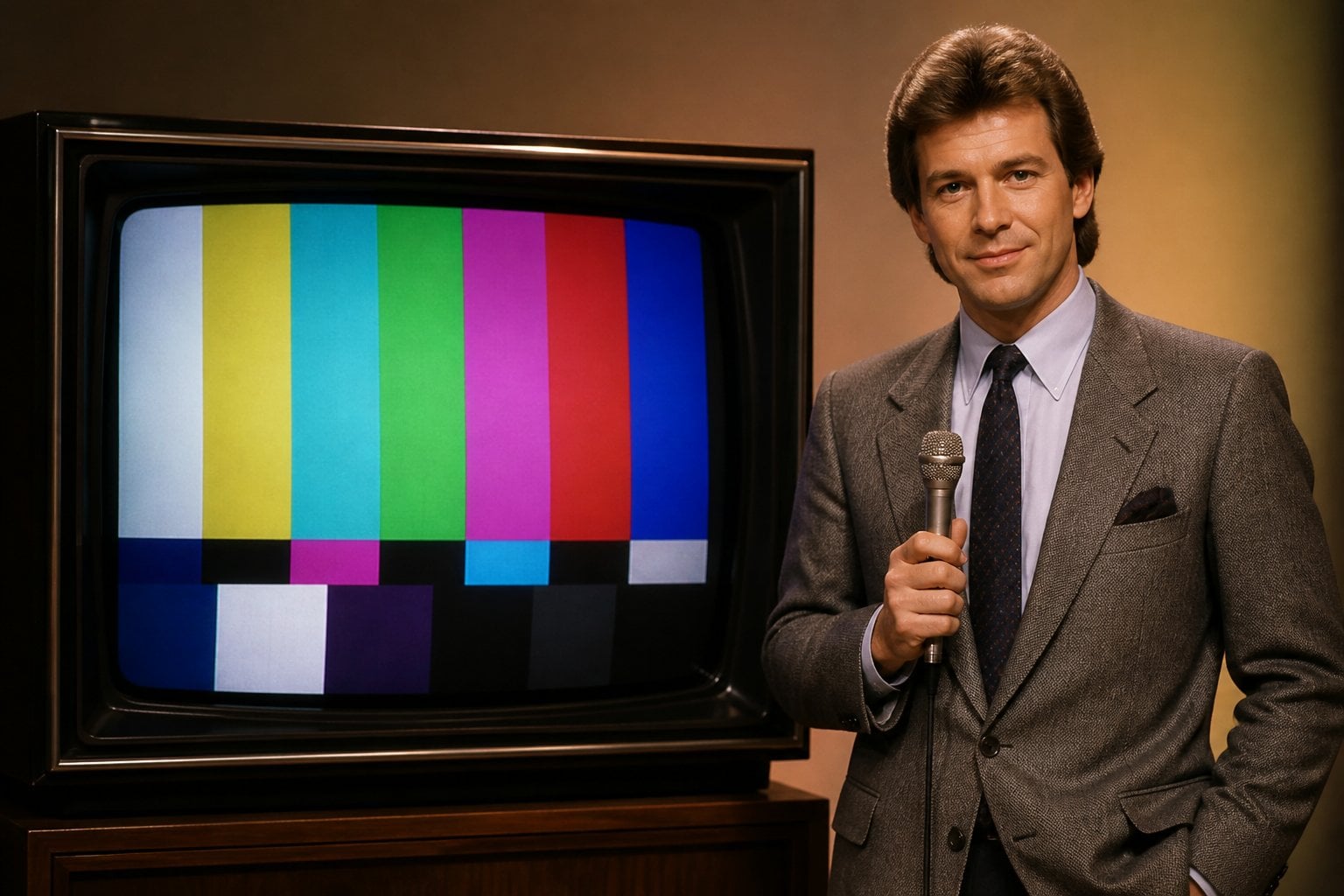
Before 24-hour programming became standard, television stations signed off each night with a distinctive test pattern and steady tone. You likely remember waking up to that piercing beep if you fell asleep with the TV on.
The test pattern displayed colorful bars or geometric designs while networks broadcast a single-frequency tone. This setup allowed technicians to calibrate equipment and viewers to adjust their sets. Many stations accompanied the pattern with recorded announcer identifications, stating the station’s call letters and location.
By the 1980s, these patterns still appeared regularly during late-night and early-morning hours. The combination of the monotonous tone and static image became a familiar signal that programming had ended. It meant you’d either have to turn off the TV or wait until the morning broadcast resumed.
24. Microwave oven dial mechanical timers ticking
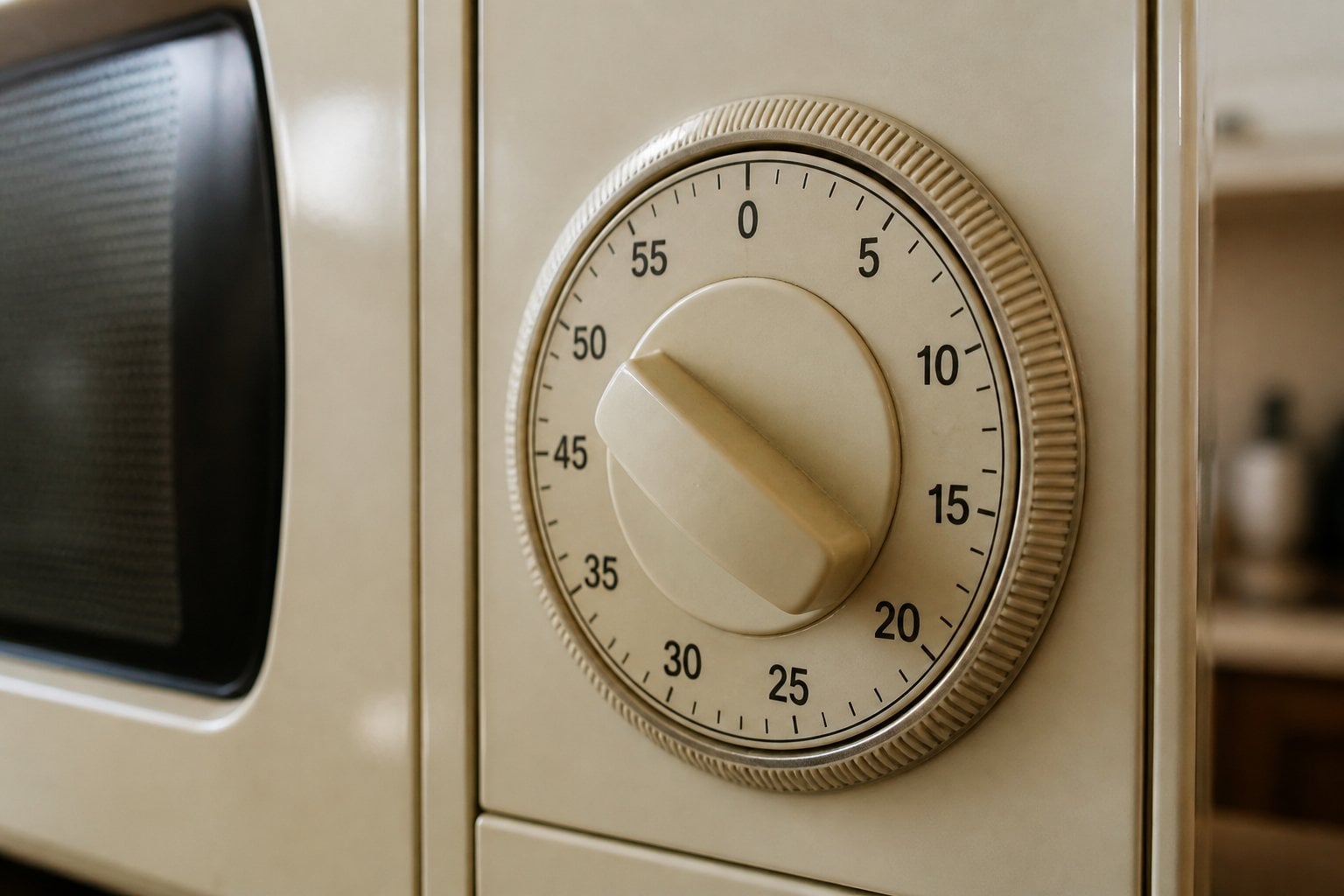
The rhythmic ticking of a mechanical dial timer was your constant companion while reheating leftovers or cooking a quick meal. Unlike modern digital microwaves with their silent countdowns, these dial timers produced an audible tick with each passing second.
You twisted the dial clockwise to set your cooking time, feeling the resistance of the spring mechanism beneath your fingers. The ticking sound confirmed the timer was working, creating a predictable soundtrack in your kitchen.
When the timer reached zero, a bell would ring to alert you that your food was ready. This mechanical system was simple, reliable, and required no digital components. The steady ticking became background noise you barely noticed until it stopped, signaling your meal was done.
25. Analog alarm clock bell ring and wind-up tick
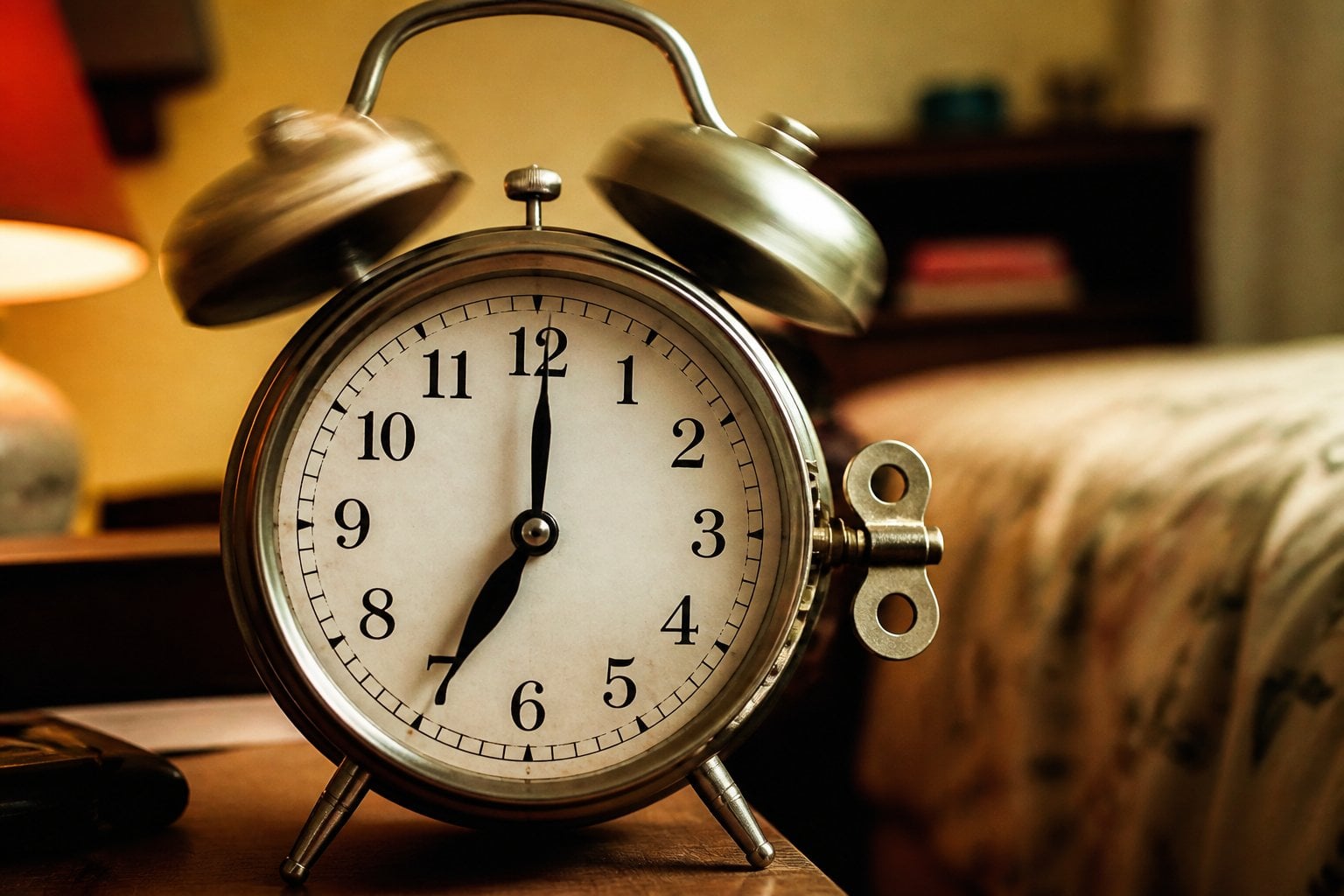
You knew exactly what time it was by the steady tick-tick-tick from your bedside table. Wind-up alarm clocks required nightly attention, winding the mechanical spring to keep them running and setting the separate alarm knob for the morning.
The twin bells on top delivered a jarring wake-up call that you couldn’t ignore. That metal-on-metal clang grew louder as the hammer struck back and forth between the bells. No snooze button existed on most models, forcing you out of bed to physically press down the lever.
The constant ticking sound became white noise as you fell asleep. Many bedrooms featured this mechanical rhythm throughout the night, a reliable companion that never needed batteries or a power outlet. You learned to wind it before bed, turning the key until resistance told you the spring was fully loaded.
26. School PA system crackle announcing over tinny speakers
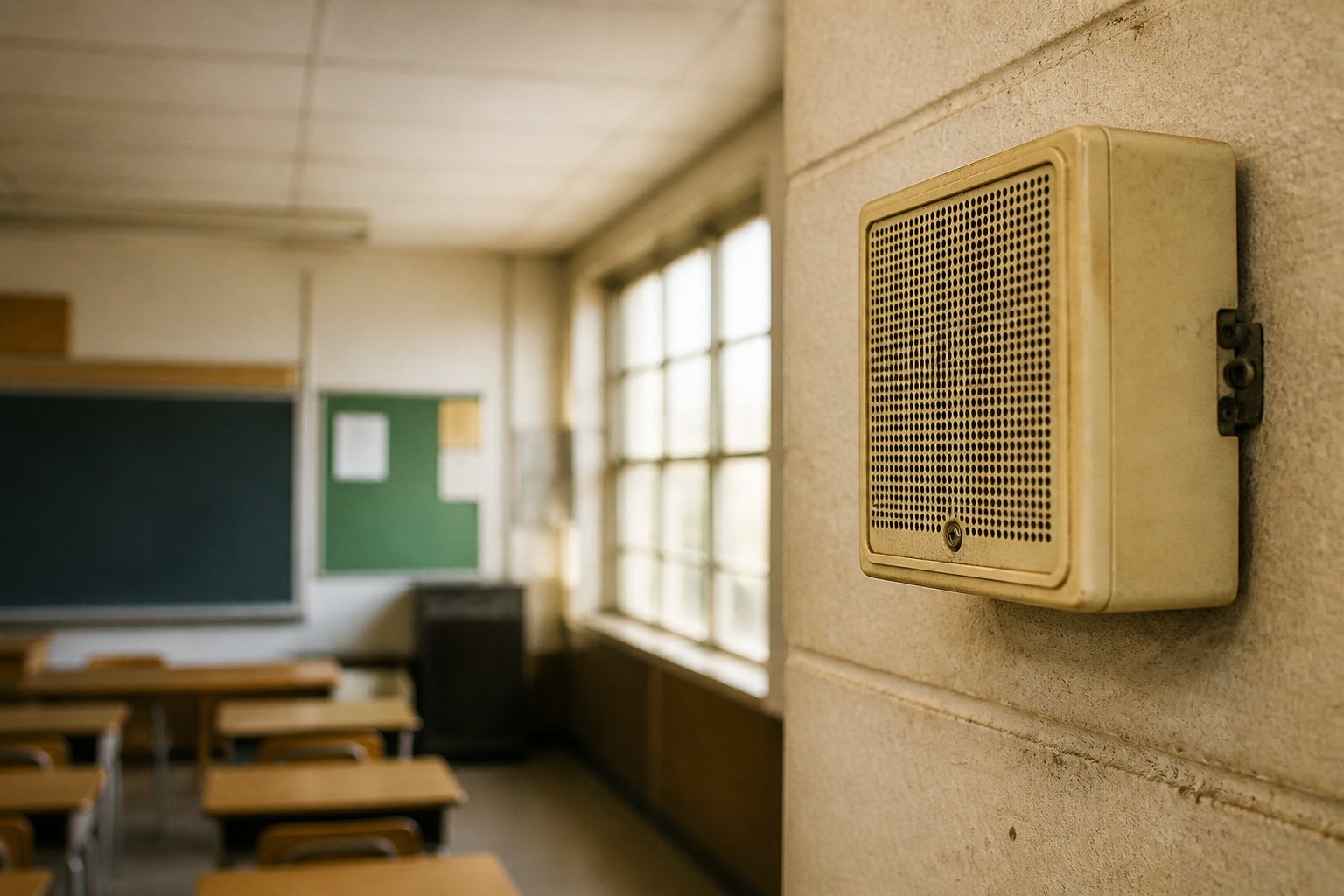
The morning started with that familiar static buzz before anyone spoke. School PA systems in the 1980s had a distinct sound quality that made every announcement feel slightly distorted and tinny.
You’d hear the crackle first, then a pause, before the principal or secretary’s voice came through. The speakers were often mounted in classroom corners or hallways, and their audio quality was far from crystal clear.
The Pledge of Allegiance typically followed that initial burst of static. Every word emerged through those half-broken speakers with a characteristic fuzziness you learned to decode.
Fire drill announcements, lunch menu changes, and reminders about after-school activities all shared that same scratchy delivery. The sound became so routine that you barely noticed the poor audio quality anymore.
27. Tube television warm-up hum and knobby vertical hold adjustment
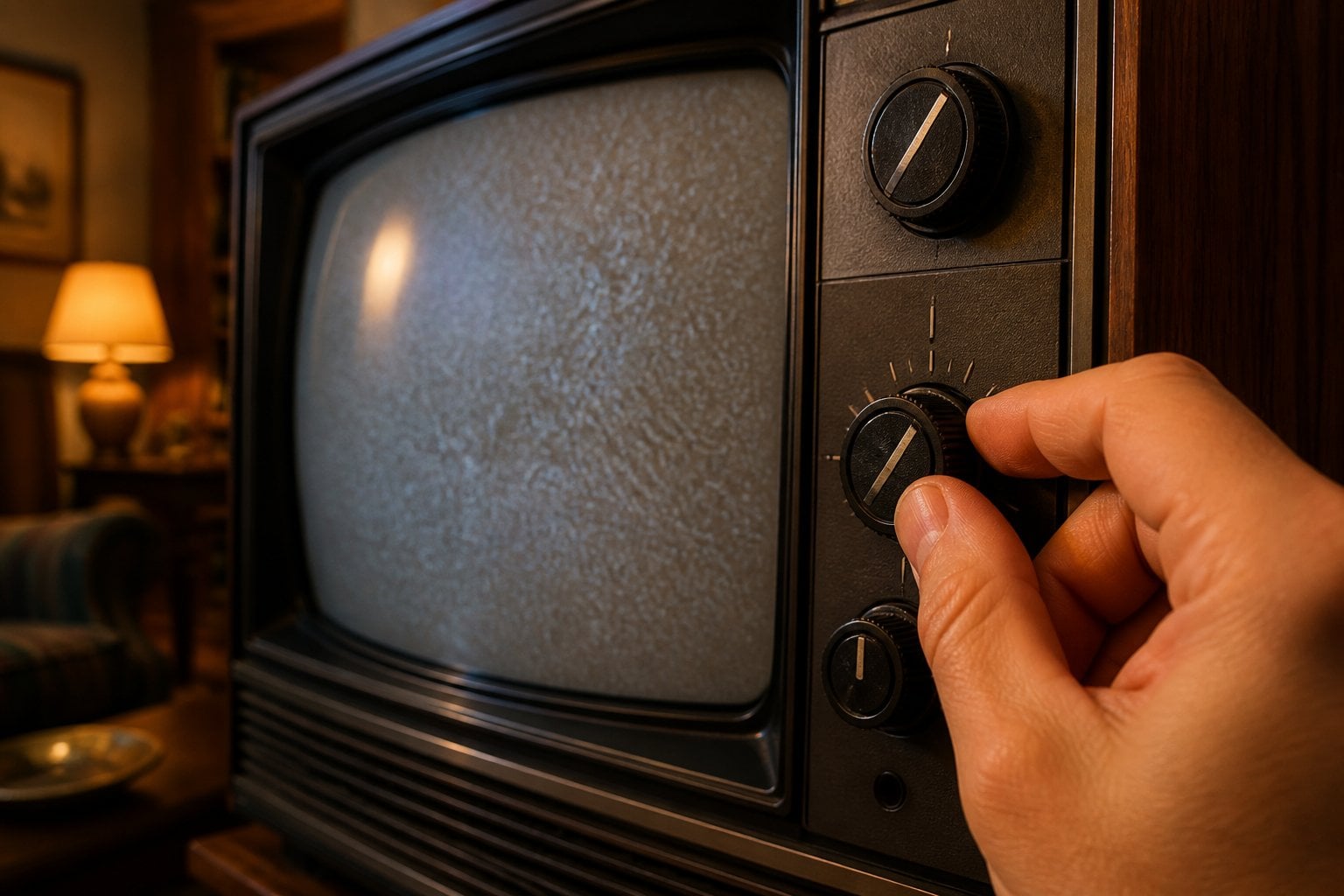
Turning on a tube TV in the 1980s meant waiting 30 to 60 seconds for the picture to appear. You’d hear a distinct electrical hum as the filament inside warmed to approximately 2000 degrees Fahrenheit. The screen would glow faintly before the image finally materialized.
Once your TV was on, you might need to adjust the vertical hold knob to stop the picture from rolling up or down the screen. This small dial, usually located on the front or side panel, corrected synchronization issues that were common in older television sets.
The horizontal hold knob served a similar purpose, preventing the image from shifting sideways. You’d fiddle with these controls until the picture locked into place, making small adjustments until everything looked right.
28. Payphone handset metallic clank and receiver click
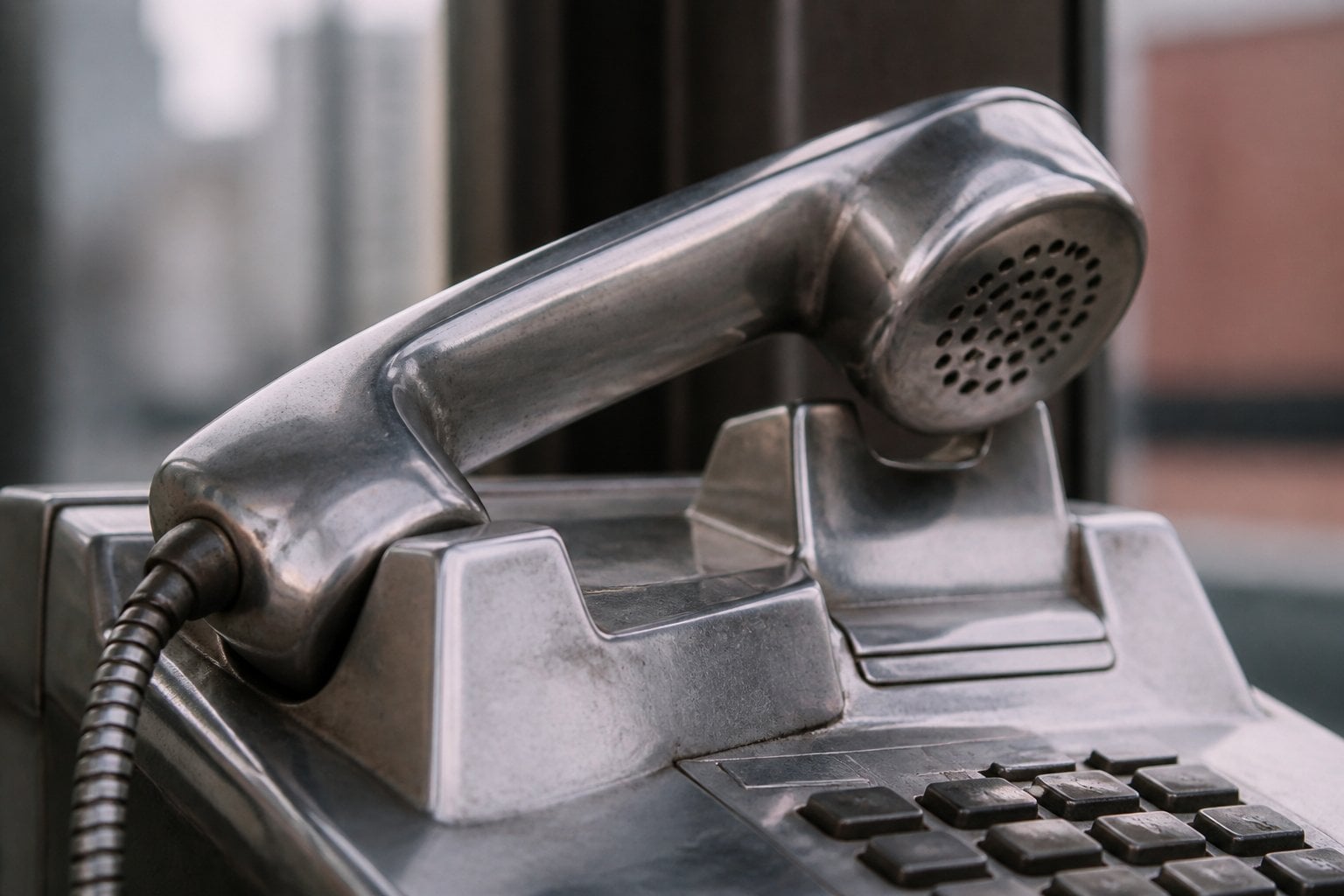
Picking up a payphone handset created a distinctive metallic clank that signaled the start of your call. The weight of the receiver felt substantial in your hand, and that initial sound confirmed the phone was ready for use.
Dropping coins into the slot produced a satisfying clunk as they fell through the mechanism. You heard each quarter, dime, or nickel register inside the phone’s collection box. The dial tone that followed meant your money had been accepted and you could proceed.
When you hung up the receiver, it made a solid click as it settled back into the cradle. That final sound marked the end of your conversation and often triggered the return of unused coins. The entire experience involved tactile and auditory feedback that modern phones simply don’t provide.
29. Disposable camera single-use flash bulb pop
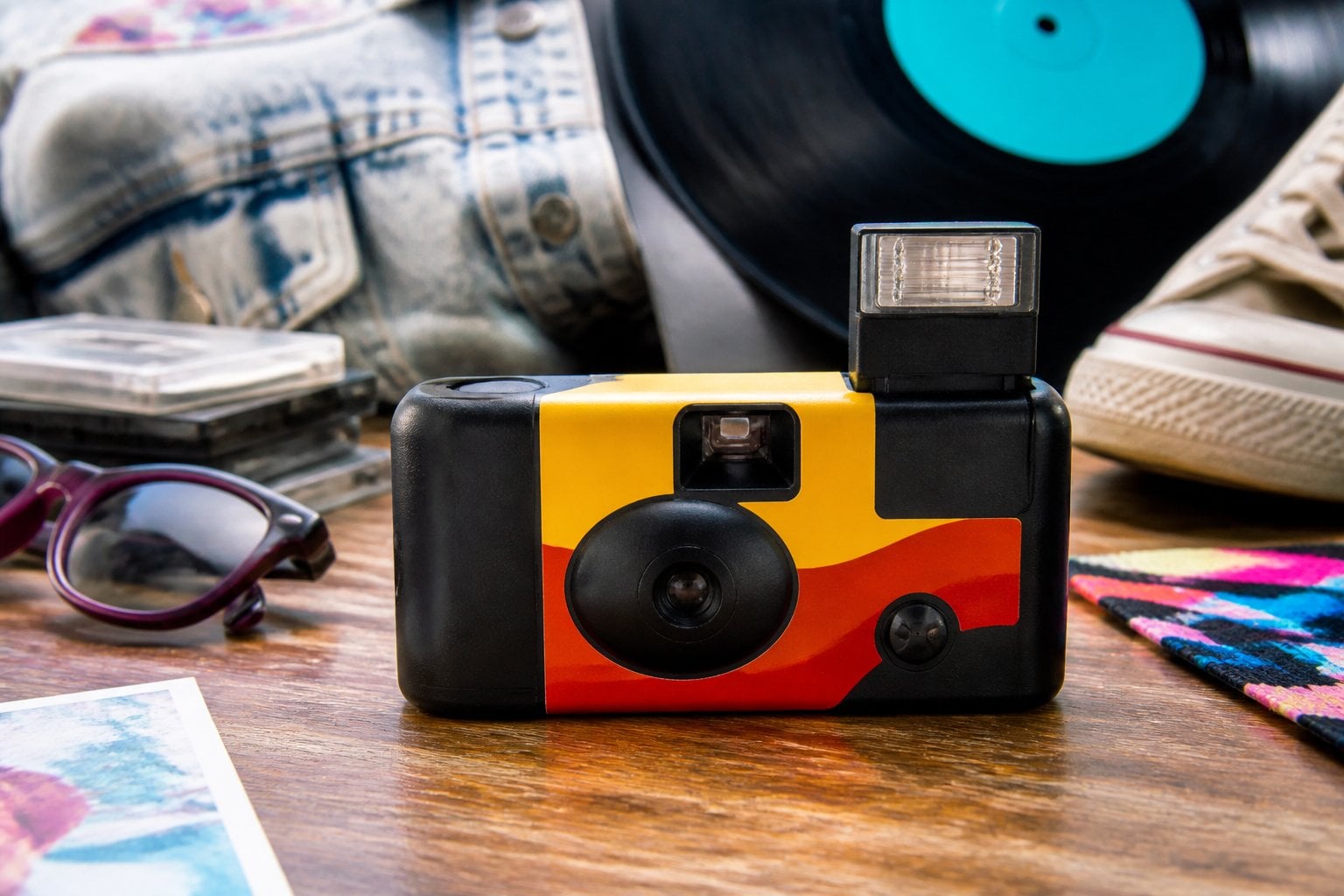
You remember the distinct pop and bright flash that came with every snapshot using single-use flash bulbs in the early 1980s. These bulbs screwed into cameras or fit into flash cube attachments, delivering one intense burst of light before needing replacement.
The sound was unmistakable—a sharp “popfwish” that accompanied each photo you took. After every shot, you had to unscrew the spent bulb and attach a fresh one before capturing another moment.
Flash cubes and disposable bulbs were standard equipment for amateur photography before built-in electronic flashes became widespread. The ritual of changing bulbs between pictures added a deliberate pace to photography that feels foreign in today’s rapid-fire digital world.
That explosive pop meant you captured a memory, even if you had to wait days to see how the photo turned out.
How Sound Shapes Nostalgia
Sound connects to memory centers in your brain differently than other senses, creating stronger emotional responses and more vivid recall of specific moments from your past.
The Science of Auditory Memory
Your brain processes sounds through the auditory cortex, which maintains direct connections to the hippocampus and amygdala. These regions handle memory formation and emotional processing. When you hear a familiar sound from your past, your brain activates the same neural pathways that formed when you first experienced it.
This explains why a dial-up modem tone or cassette tape click can trigger detailed memories of where you were and how you felt. Research shows that auditory memories remain stable over decades because your brain encodes them with contextual and emotional information. The combination creates what neuroscientists call “involuntary memory retrieval.”
Your auditory cortex can recognize and recall thousands of distinct sounds. It stores them with remarkable precision compared to visual or other sensory memories.
Why Gen X Remembers Certain Sounds
You grew up during a transitional period when analog technology dominated daily life. Each device produced mechanical sounds that required your attention and interaction. The TV warmed up with a distinctive hum. The phone rang with actual bells. The VCR made specific clicks and whirs as it loaded tapes.
These sounds repeated consistently throughout your childhood and teenage years, embedding them deeply in your memory. You heard them during formative experiences, which strengthened the neural connections.
Modern digital devices operate silently or with generic beeps. Your generation experienced the last era when everyday objects had unique acoustic signatures. This makes your auditory memories particularly rich and specific to machines and devices that no longer exist.
Technology and Cultural Shifts of the 1980s
The 1980s introduced cassette tapes, VCRs, and early digital devices that created distinct audio signatures, while MTV and arcade culture amplified these sounds into defining elements of the decade’s identity.
Iconic Audio Devices and Media Formats
Cassette tapes dominated personal music consumption throughout the 1980s. You heard the mechanical whir of tape decks in homes and cars, along with the distinctive click when inserting or ejecting cassettes. The rewinding process created its own rhythmic hum that became part of daily life.
VCRs transformed home entertainment with their characteristic mechanical sounds. The auto-rewind feature produced a specific high-pitched whine you recognized instantly. Renting movies meant hearing the clunk of VHS cases and the tracking adjustment noise when tapes didn’t play properly.
Key 1980s audio technologies included:
- Walkman portable cassette players with their compact headphone clicks
- Answering machines with beeps and tape mechanisms
- Dial-up modems producing their connection handshake sounds
- Early compact disc players with laser reading mechanisms
Arcade game cabinets filled public spaces with 8-bit sound effects and electronic music. These synthesized sounds used simple waveforms that created the characteristic bleeps and bloops of games like Pac-Man and Space Invaders.
Impact of 1980s Soundscapes in Pop Culture
MTV launched in 1981 and revolutionized how you experienced music through television. The channel’s signature guitar riff and visual style made specific sounds synonymous with youth culture. Music videos incorporated synthesizers, drum machines, and electronic production that defined the decade’s sonic landscape.
Television programming used distinctive theme songs and jingles that became cultural touchstones. Saturday morning cartoons featured synthesized soundtracks, while sitcoms used laugh tracks and specific audio cues. News broadcasts employed electronic stingers and theme music that signaled important information.
Shopping malls became cultural centers where you encountered specific ambient sounds. Muzak systems played throughout stores, food courts buzzed with conversation, and coin-operated rides chimed for children. These public spaces created shared audio experiences across generations.
The convergence of cable television, personal computing, and portable music devices meant you encountered more technological sounds daily than any previous generation.