The 30 Worst Thanksgiving Side Dishes According to Home Cooks
If you’ve hosted Thanksgiving more than a few times, you already know the turkey isn’t what people talk about on the drive home. It’s the sides. The stuffing that could have been sawdust, the green beans that gave up hours ago, the gelatin salad that went home just as full as it came.
You’ve cooked most of these yourself at one time or another, and you’ve certainly been served the rest. Some came from a tired cook on a busy morning, some from a well-meaning guest, and a few from family recipes nobody has the heart to retire.
Here are the 30 Thanksgiving side dishes home cooks groan about most, along with a quick way to rescue each one if it ever lands on your table again.
1. Stuffing Baked Until It’s Dry as Sawdust
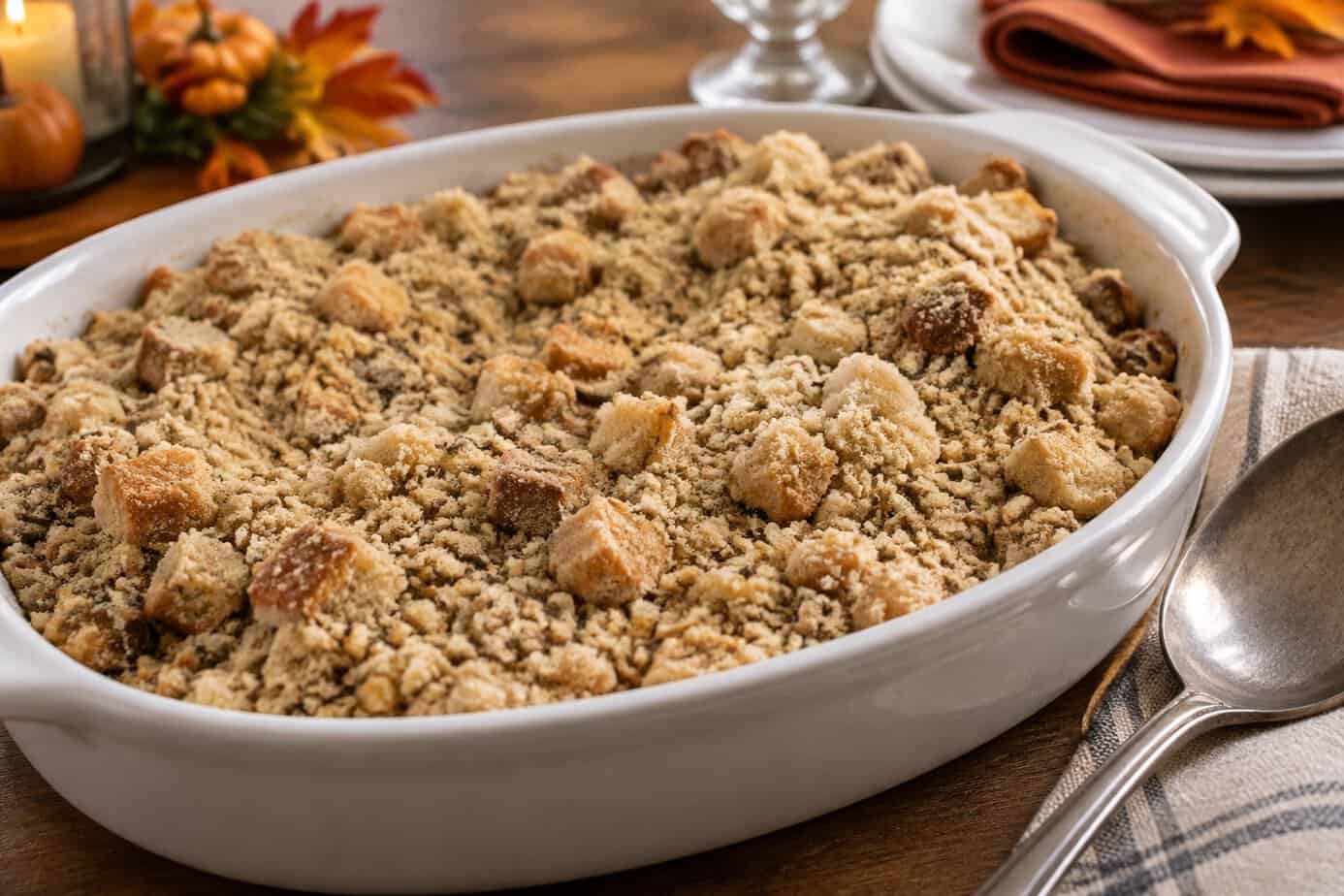
You’ve seen it come out of the oven looking golden and lovely, and then the first spoonful crumbles like toast left on the counter overnight. Dry stuffing is one of the most common Thanksgiving complaints, and it usually happens when the pan goes in uncovered too early or the bread was already rock hard before any broth went in.
Stuffing baked in its own dish loses moisture fast, especially in a hot oven that’s crowded with everything else. Guests end up drowning it in gravy just to get it down, which tells you everything.
The fix: add warm broth a little at a time until the bread feels like a damp sponge, bake it covered with foil for most of the time, then uncover it for the last 15 minutes so only the top gets crisp.
2. Stuffing Pulled Out of the Bird Half-Cooked
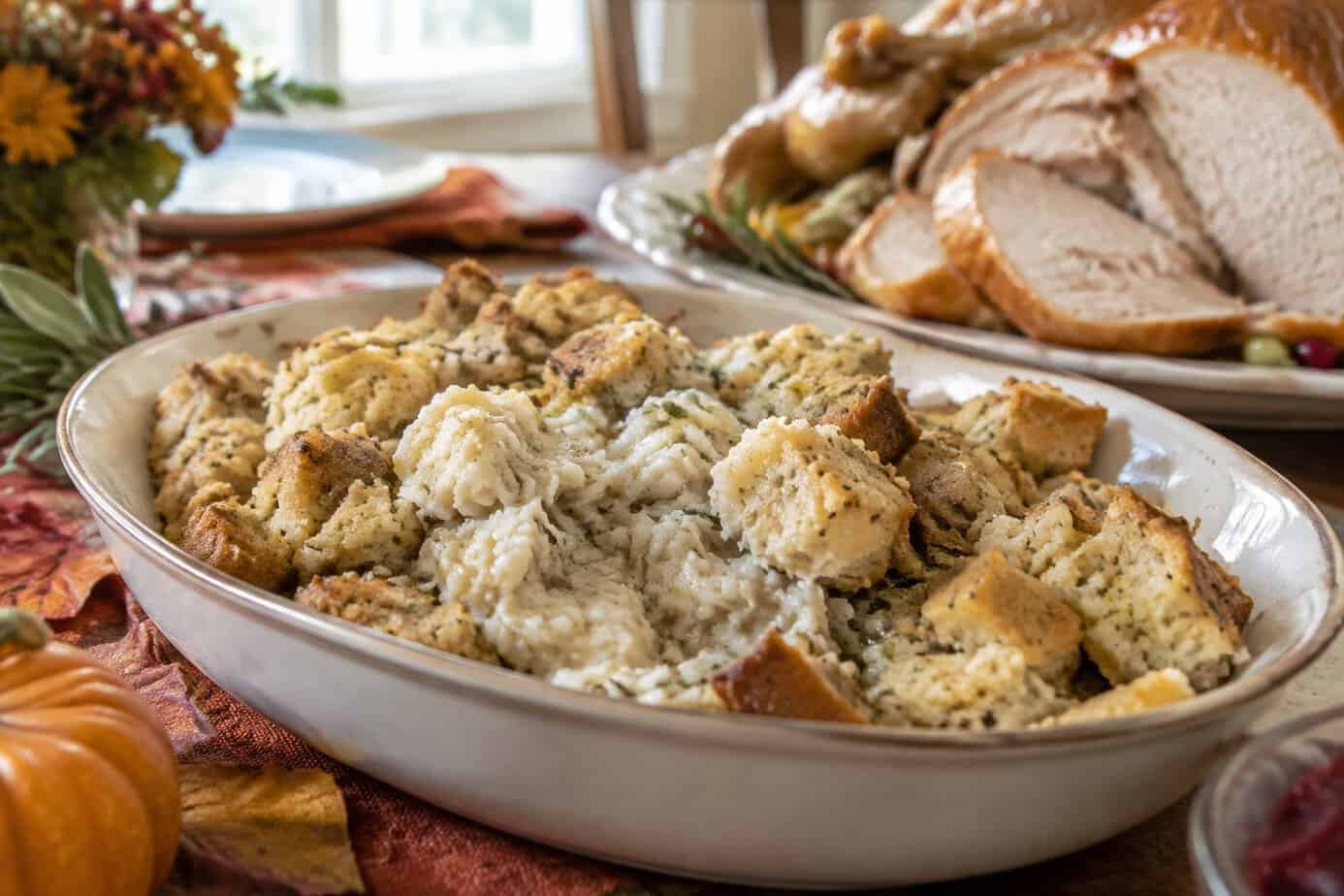
Plenty of families still swear stuffing tastes best cooked inside the turkey, and they may be right about the flavor. The trouble is that the middle of a packed bird heats slowly, so the stuffing can still be lukewarm and soggy when the turkey itself looks done.
You’ve probably watched someone scoop out a pale, wet clump from the center and serve it anyway. Besides the gummy texture, it’s a food safety worry, because that stuffing has soaked up raw turkey juices. The USDA’s stuffing safety advice says the center of the stuffing has to reach 165°F, and it recommends baking it separately for even cooking.
The fix: stuff the bird loosely, check the stuffing itself with a thermometer, or bake it in a casserole dish and baste it with drippings for that same flavor.
3. Boxed Stuffing Made in a Hurry
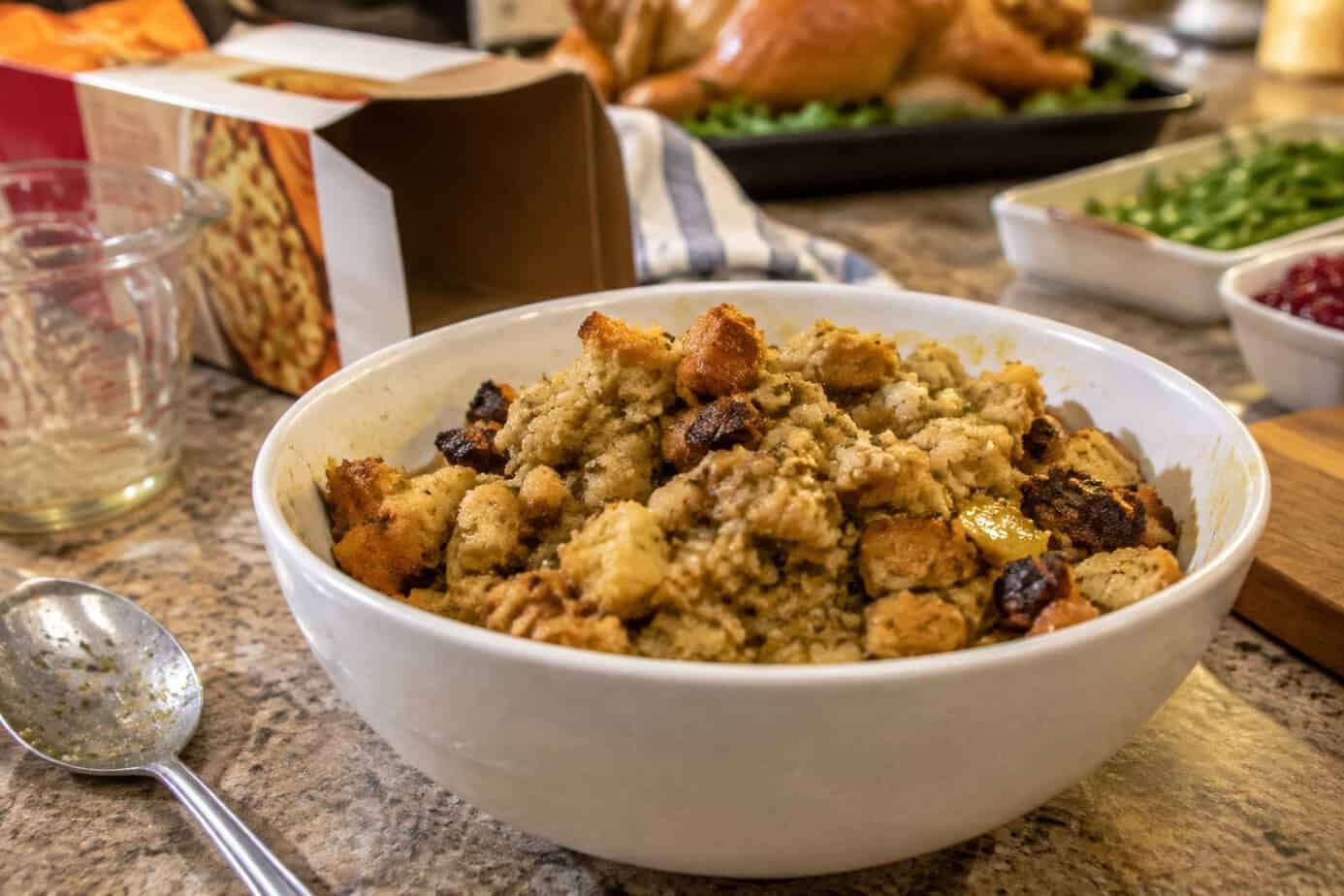
Boxed stuffing mix arrived in the early 1970s and saved many a busy cook. There’s nothing wrong with a shortcut, but when it’s made straight off the back of the box and set next to a homemade turkey, people notice.
The usual complaints are that it’s too salty, too soft, and tastes the same as it does on a Tuesday night in March. It also tends to turn into one solid mushy mound if it sits on the stove too long while everything else finishes.
The fix: stir in sautéed onion and celery, a little crumbled sausage or fresh sage, then spread it in a buttered dish and give it 15 minutes in the oven so the top gets some crunch. Nobody will guess where it started.
4. Canned Cranberry Sauce With the Can Ridges Still On It
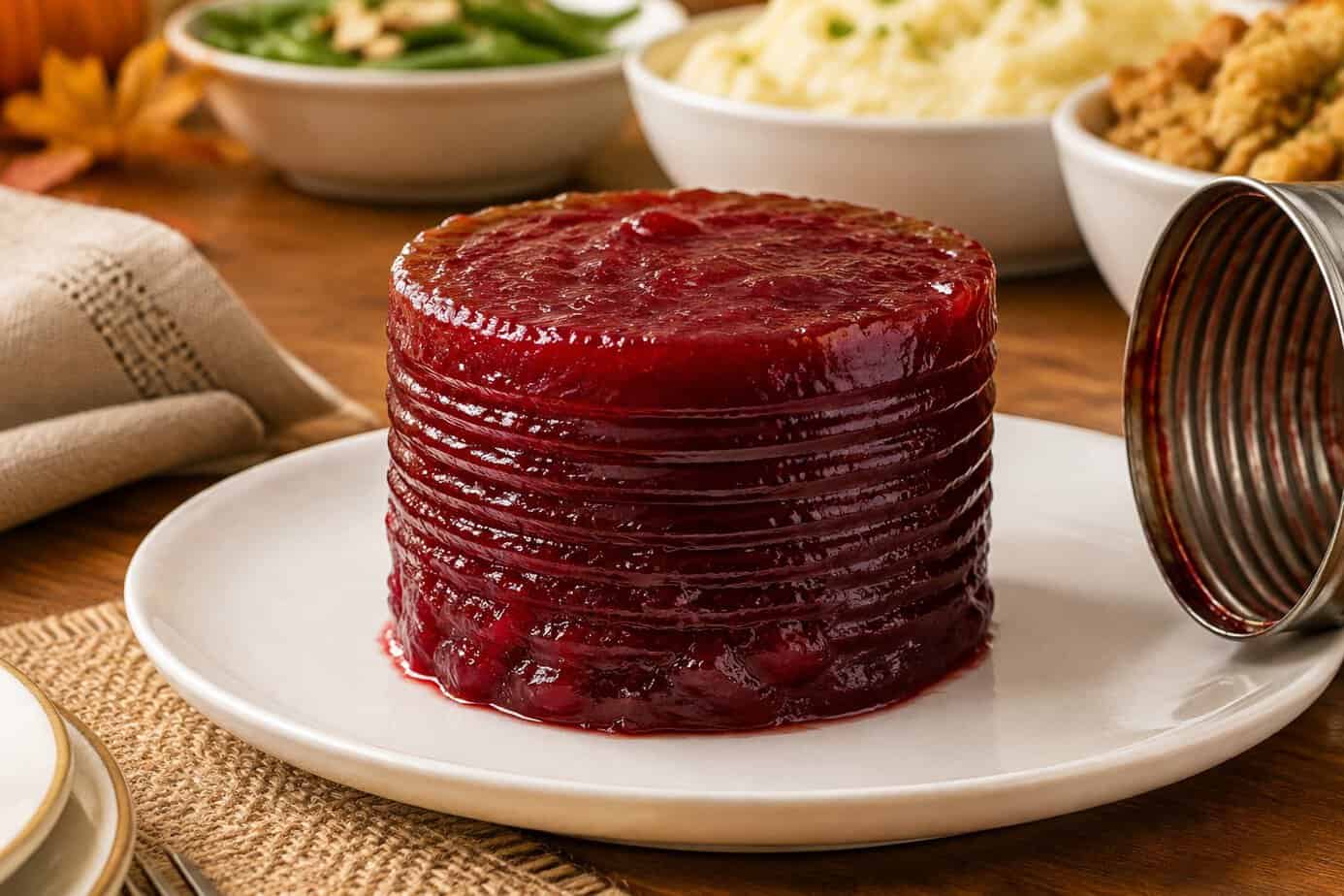
Few things divide a Thanksgiving table like the jellied cranberry log. Half the family loves it sliced into neat rounds with the ridges still showing. The other half thinks it looks like something from a school cafeteria and wants real berries.
It has been around a long time. The Smithsonian’s history of canned cranberry sauce traces it back to a Massachusetts cranberry grower in the early 1900s, and it went nationwide in 1941. So the argument at your table is older than most of the people having it.
The fix: serve both. Put out the canned kind for the loyalists and a simple homemade sauce of cranberries, sugar and orange zest for everybody else. It takes about 10 minutes on the stove.
5. Green Beans Boiled Until They Turn Gray
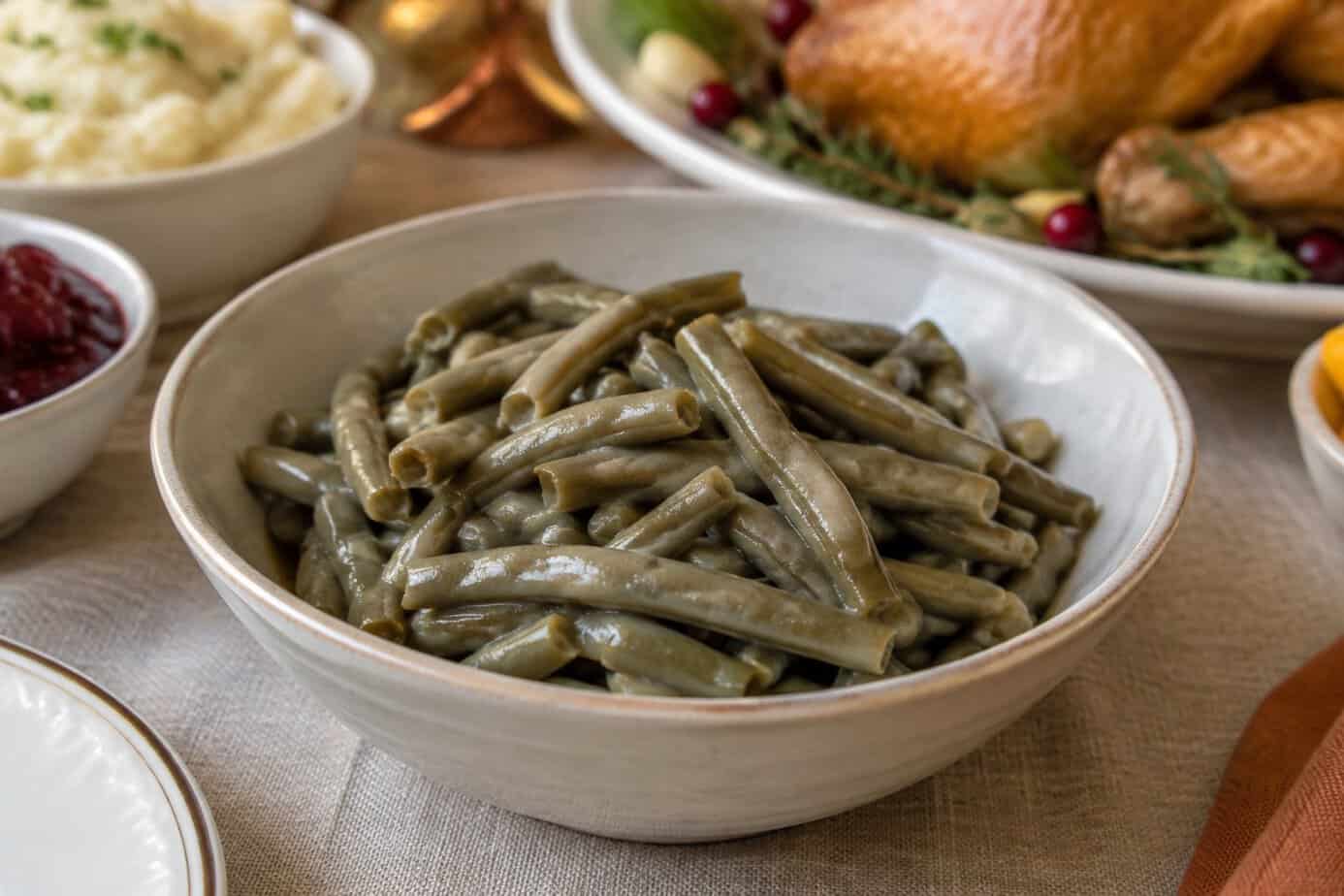
Somewhere along the way, a lot of us learned to cook green beans until they were good and soft. Then they sat on the back burner for an hour, and by dinner they had gone from bright green to a dull olive gray.
Overcooked green beans are a common complaint because they lose their snap, their color and most of their flavor. Even a pat of butter can’t do much for a bean that has given up. Guests take a polite spoonful and leave most of it on the plate.
The fix: cook the beans just until tender-crisp, then drain them and toss them with butter, salt and a squeeze of lemon right before serving. If you need to make them early, plunge them in ice water and reheat them quickly in a hot skillet.
6. Sweet Potato Casserole That Tastes Like Dessert
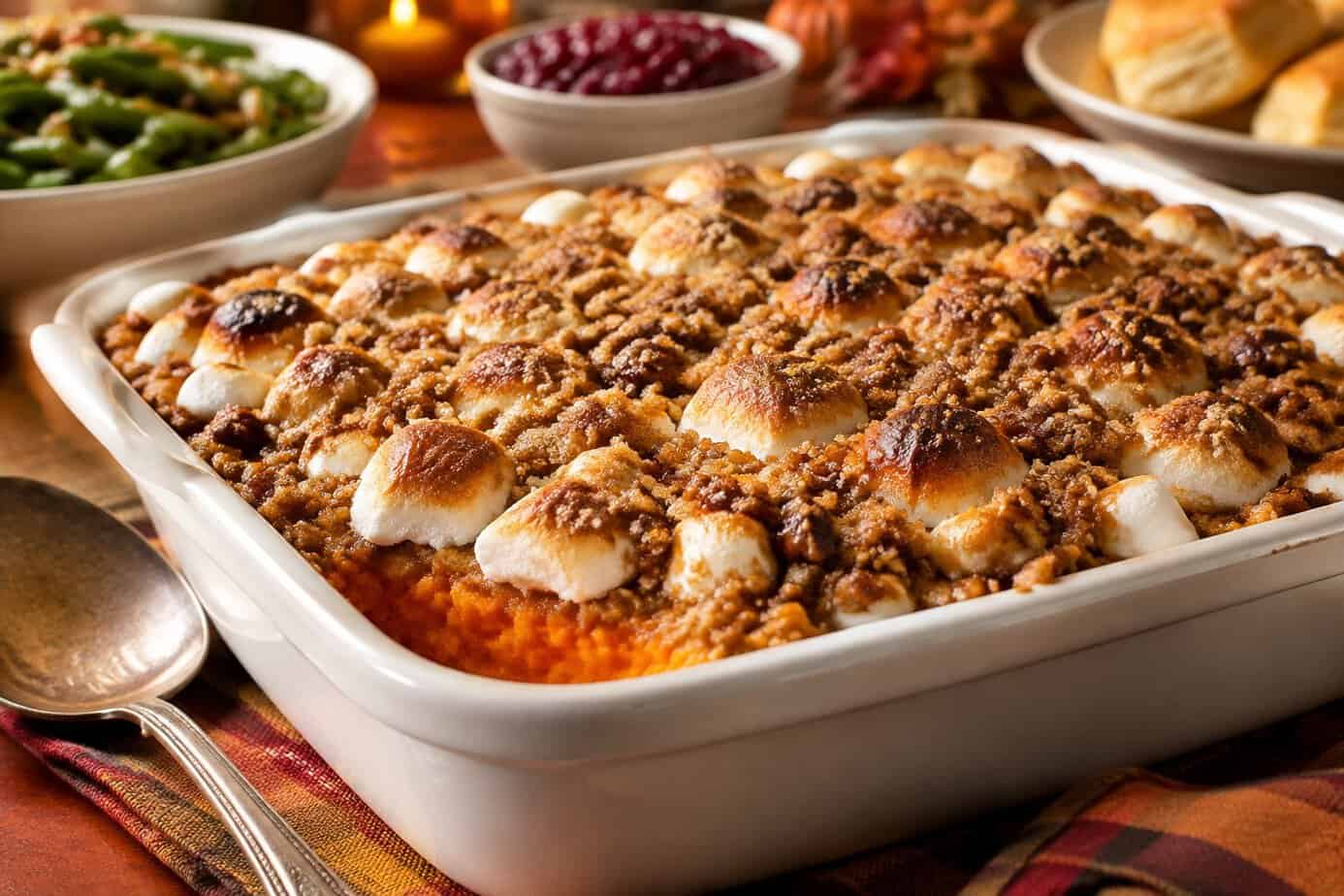
You know the one. It’s buried under brown sugar, butter and a thick blanket of marshmallows, and by the time you’ve finished a spoonful, you’re not sure whether you’re eating a side dish or pie filling.
Home cooks complain about this one every year. When the sweet potatoes come from a can packed in syrup and then get extra sugar on top, the whole thing becomes cloyingly sweet and overpowers the turkey and everything else on the plate. Some guests skip it entirely and save room for the real dessert.
The fix: roast fresh sweet potatoes instead of using canned ones, cut the sugar in half, and add a pinch of salt and a little orange zest. A pecan topping gives you crunch with far less sugar than a layer of marshmallows.
7. Lumpy Mashed Potatoes
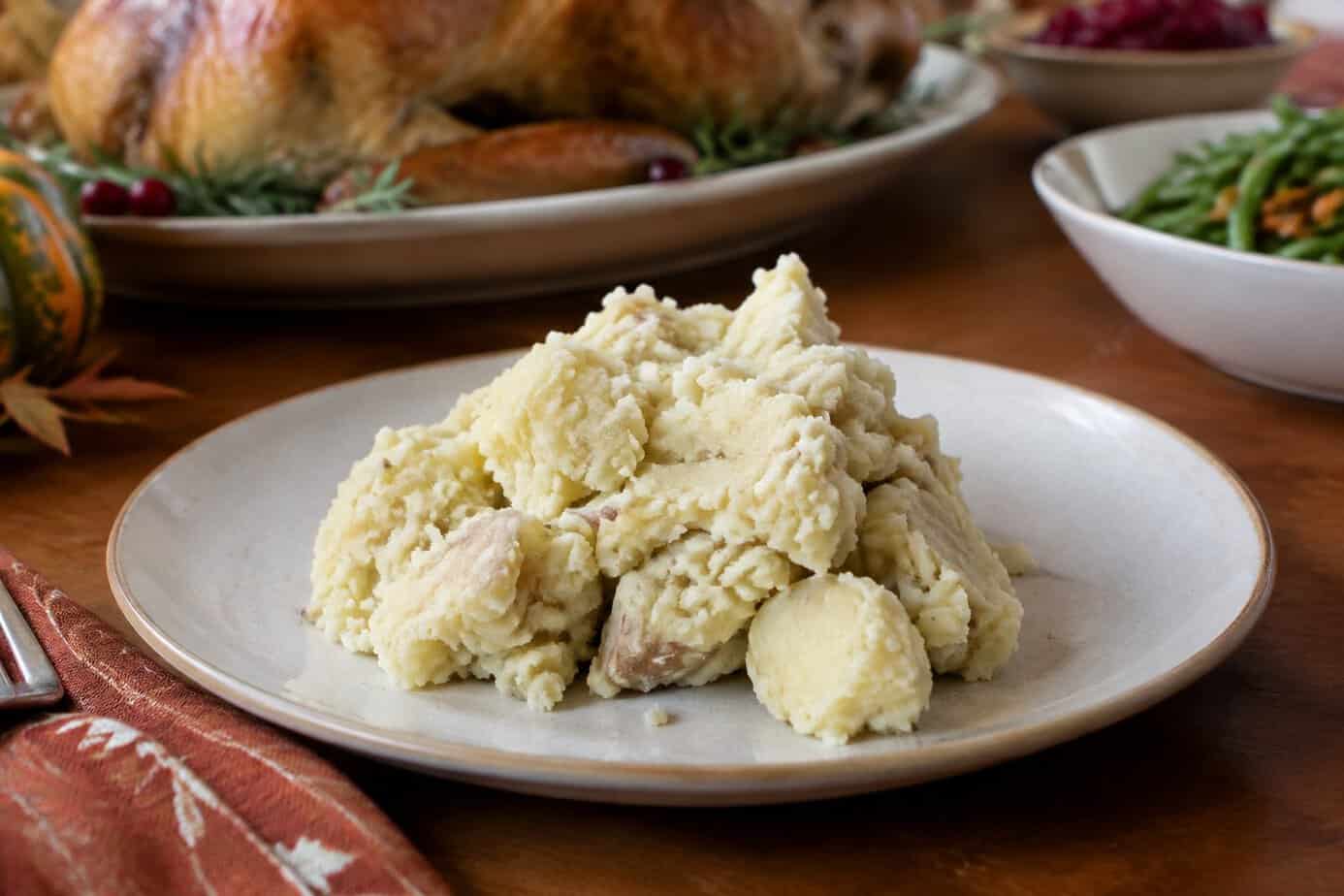
Lumpy mashed potatoes might be the most common Thanksgiving complaint of all. One bite is creamy and the next one has a hard little chunk hiding in it, and everybody at the table notices.
Usually it comes down to potatoes that weren’t cooked quite long enough, or ones that were cut into uneven pieces so some were done and some weren’t. Cold milk and butter added straight from the refrigerator don’t help either, since they cool the potatoes down before they’re smooth.
The fix: cut the potatoes into same-sized pieces, cook them until a fork slides through with no resistance, and drain them well. Warm the milk and butter before adding them, and use a hand masher or a ricer for a smooth, fluffy bowl.
8. Mashed Potatoes Beaten Until They’re Gluey
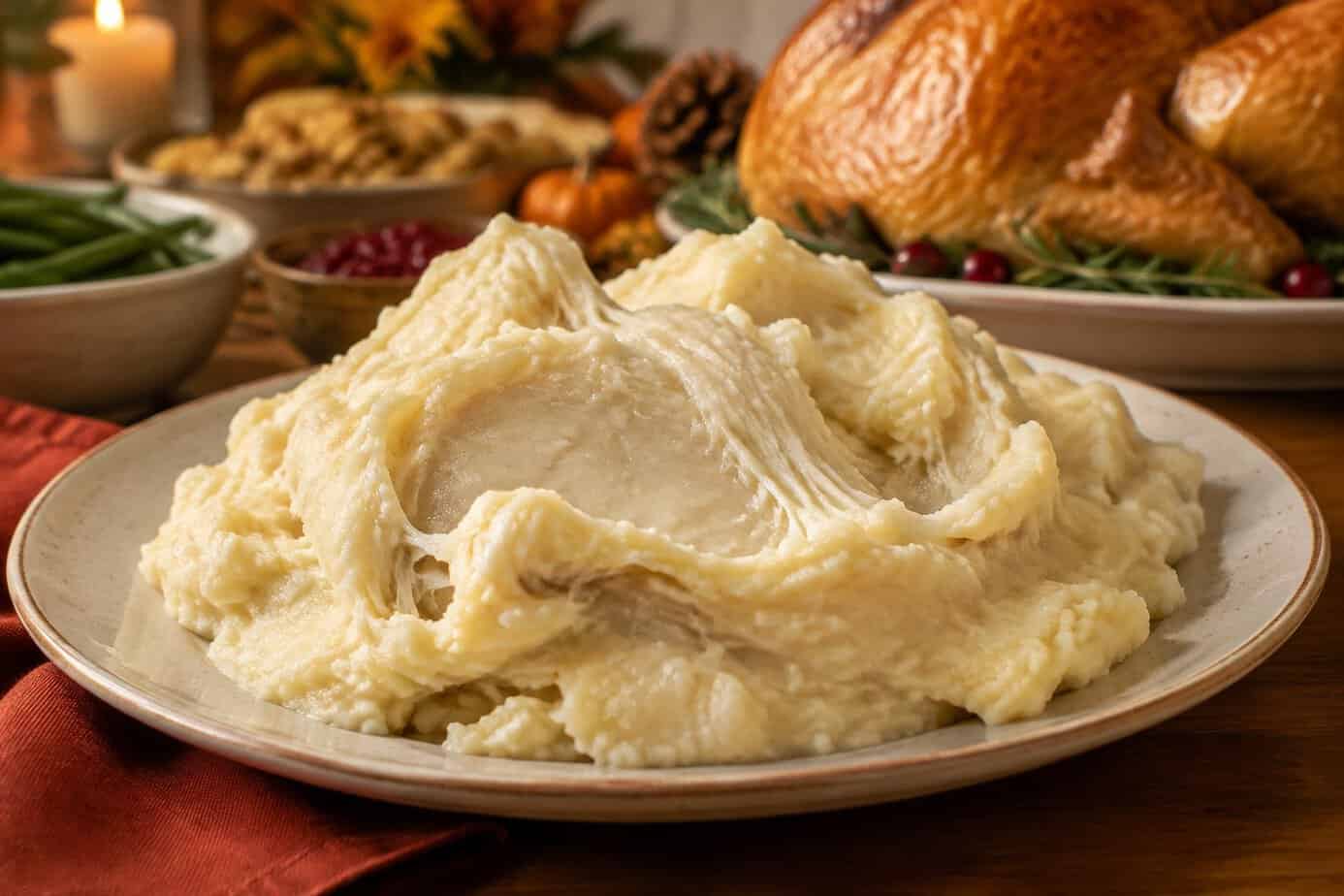
Then there’s the opposite problem. Someone wanted their potatoes extra smooth, so they ran them through a food processor or let the electric mixer go too long, and now the bowl looks more like wallpaper paste than mashed potatoes.
Overworking potatoes releases too much starch, which turns them sticky, stretchy and heavy. It’s a well-known kitchen mistake, and once it happens, there’s no going back. You can’t un-glue a potato.
The fix: use a hand masher or a ricer and stop the moment the potatoes are smooth. Starchy potatoes like russets or buttery Yukon Golds make the fluffiest mash. If you do use a mixer, keep it on low and only for a few seconds.
9. Instant Mashed Potatoes From a Box
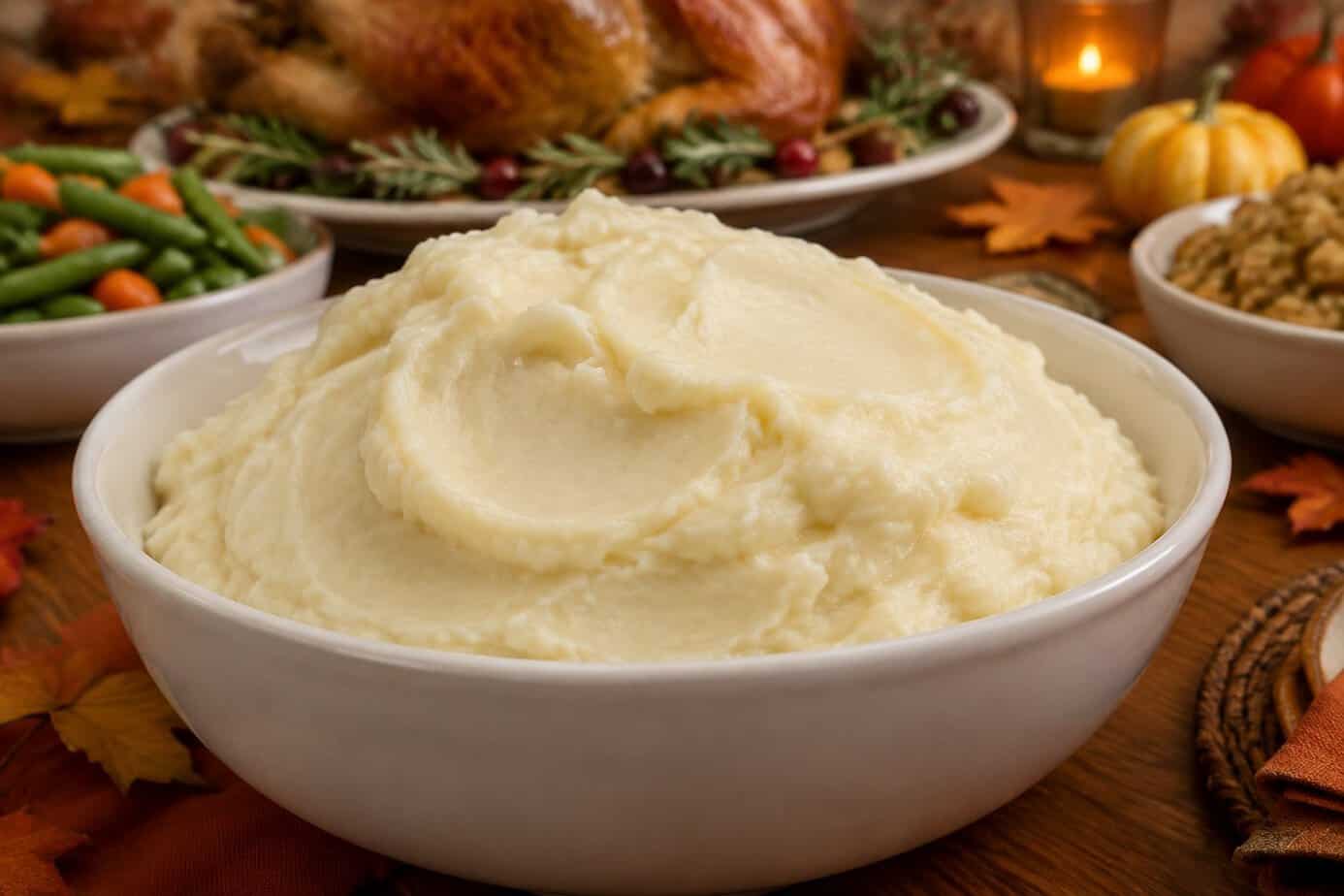
Potato flakes were developed in the 1950s at a USDA lab outside Philadelphia, and they’ve been rescuing busy cooks ever since. On an ordinary weeknight, nobody minds. On Thanksgiving, though, a bowl of instant potatoes tends to stand out.
The common complaints are that they taste flat, a little like cardboard, and have a too-smooth texture that no real potato ever had. Some families can spot them from across the room.
The fix: if you need the shortcut, make them with whole milk or half-and-half instead of water, and stir in plenty of butter, salt, pepper and a spoonful of sour cream or cream cheese. Better yet, peel a few real potatoes the day before and reheat them with extra butter.
10. Pale Gravy That Tastes Like Flour Paste
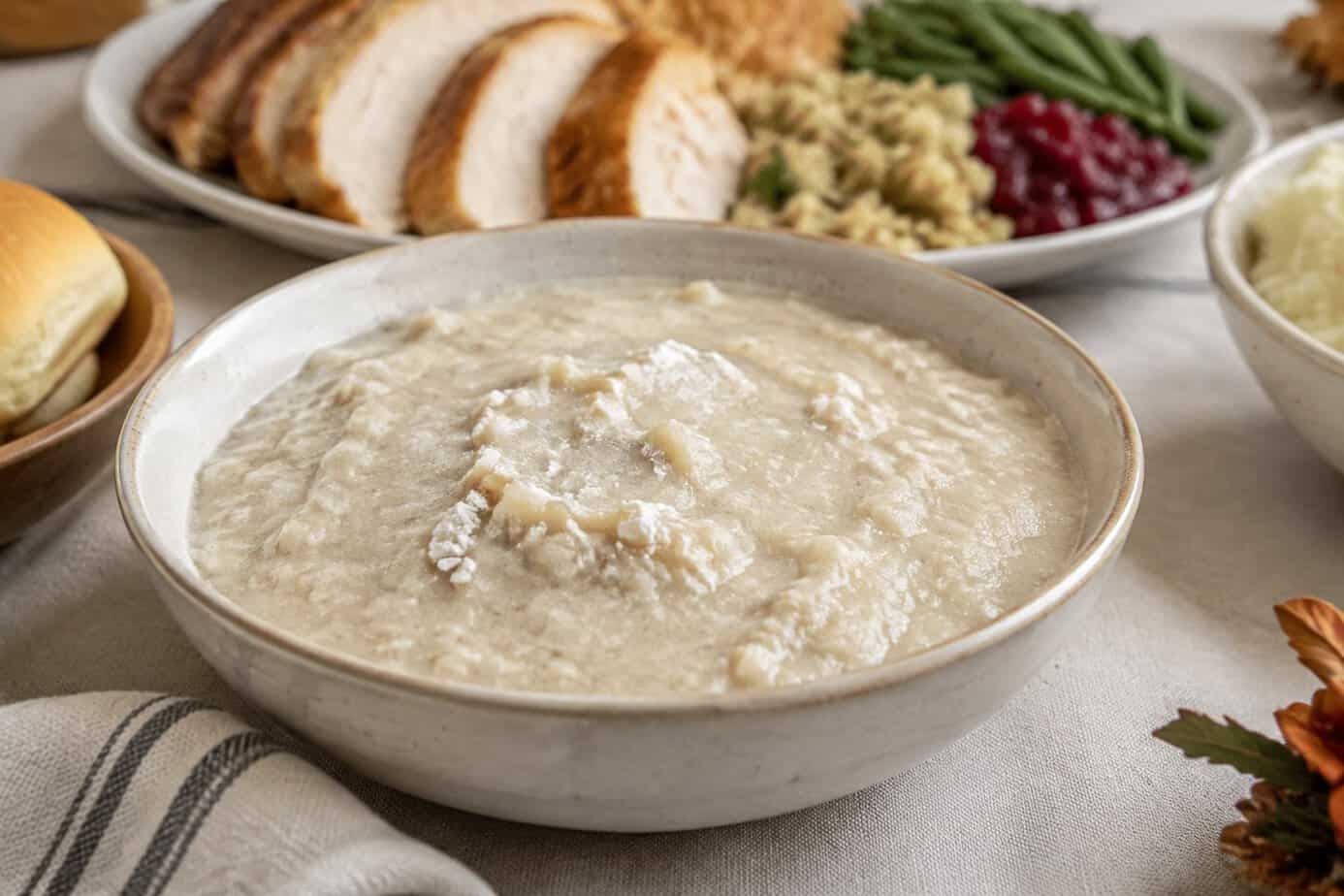
Gravy can save almost anything on the plate, which is exactly why bad gravy is such a letdown. The usual culprit is gravy that’s pale, thick and tastes more like raw flour than turkey.
It happens when the flour isn’t cooked long enough before the broth goes in, or when someone adds more and more flour to thicken a pan that’s already too thick. You’ve likely seen gravy that set up like pudding the second it hit a cool plate.
The fix: cook the flour in the drippings for a couple of minutes until it smells nutty and turns a light golden brown, then whisk in warm broth slowly. A splash of the pan juices, a little salt and pepper, and a strainer for any lumps will make it taste like it should.
11. The Gelatin Salad With Vegetables Trapped Inside
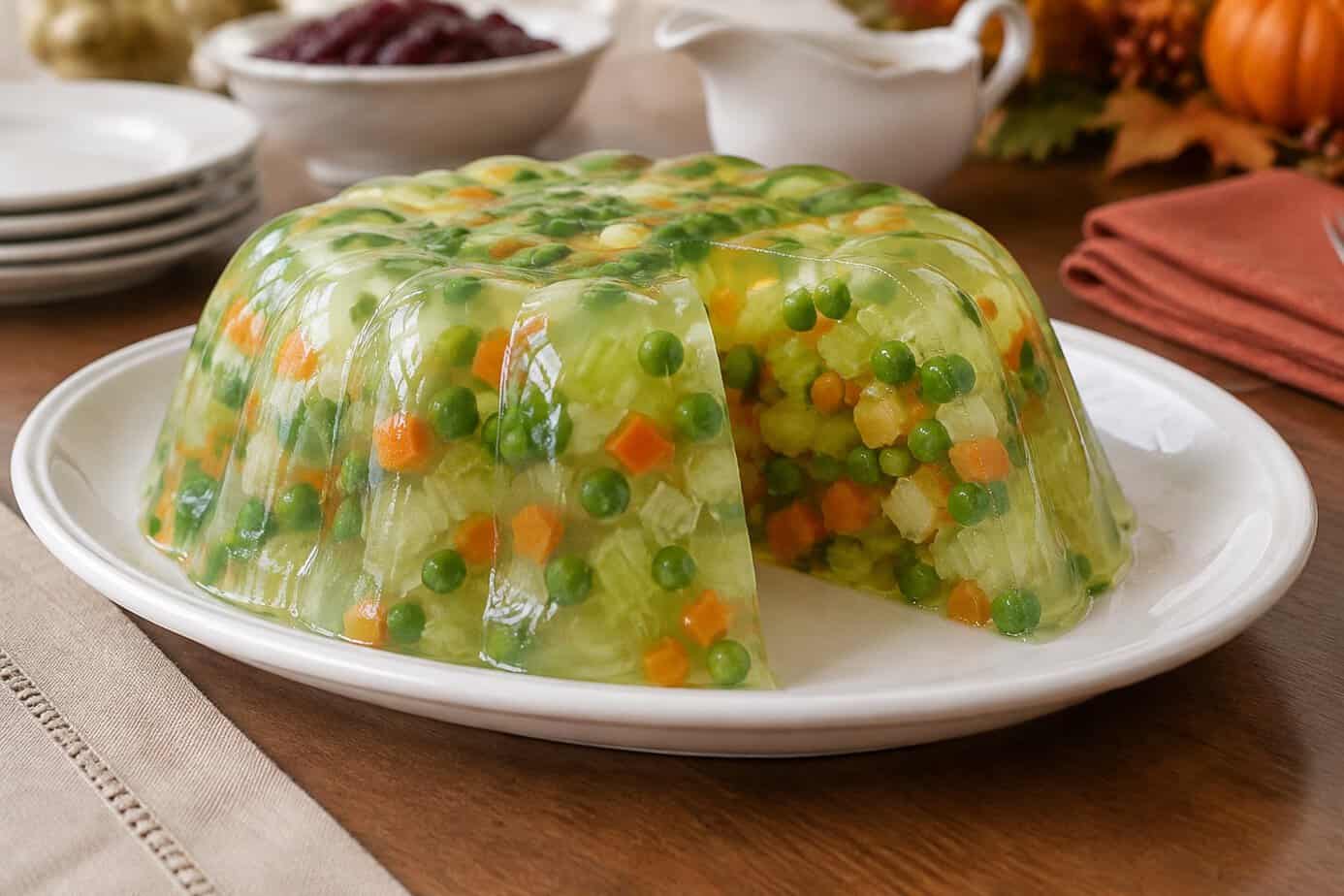
Gelatin salads had their heyday, and some families still love them. But the version with shredded carrots, celery or olives suspended in shimmering green gelatin is one of the most talked-about dishes on any worst-sides list.
The complaint isn’t really the taste. It’s the mix of sweet and savory in one jiggly bite, and the fact that it often goes home with the same number of servings it came with. If you’d like to see the classic versions in their glory days, our look at the Thanksgiving dishes Grandma made covers several of them.
The fix: keep the gelatin and the vegetables apart. Serve a simple cranberry or fruit mold for those who want something cool and sweet, and put the crunchy vegetables on a relish tray instead.
12. Canned Peas Heated in Their Own Water
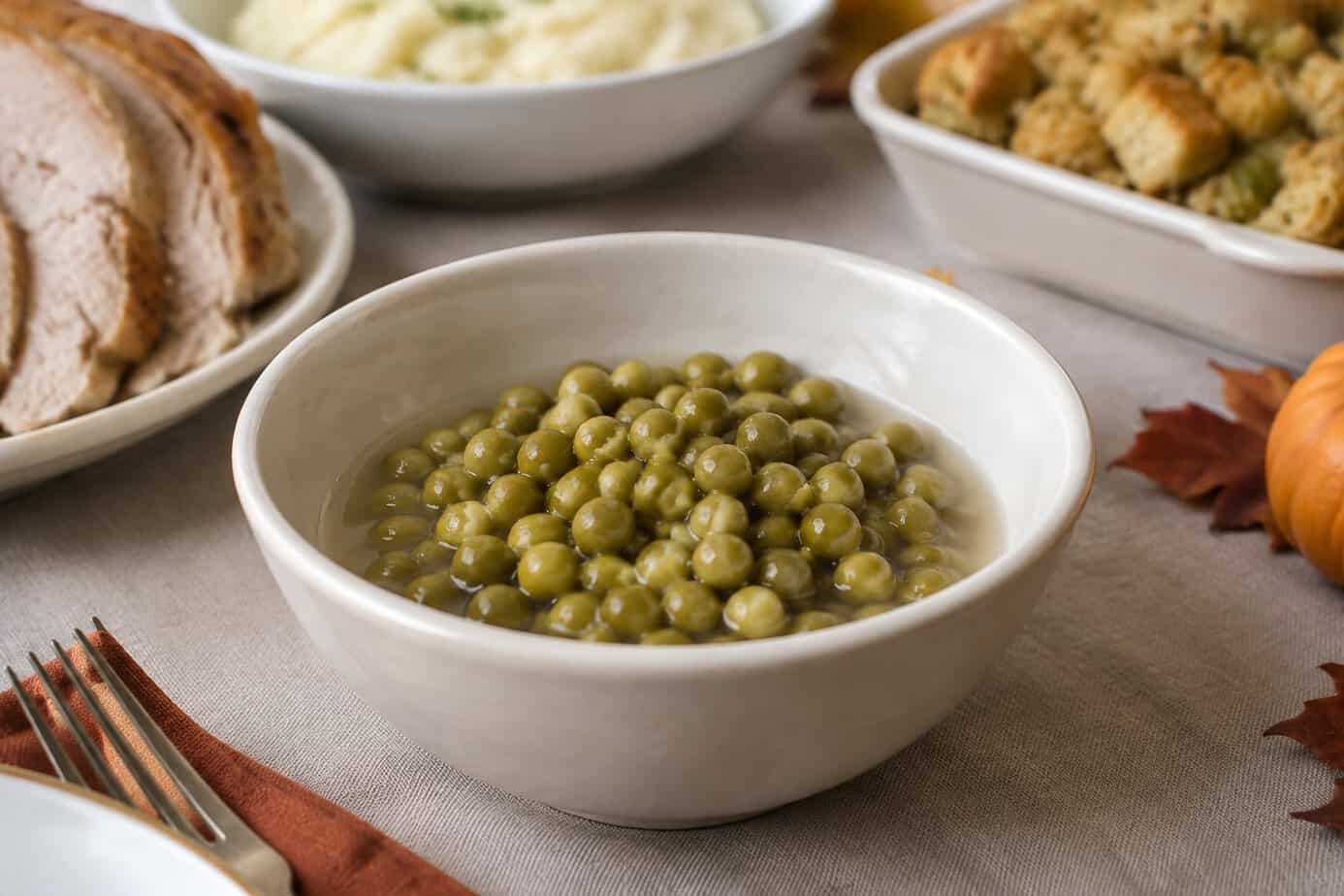
Canned peas have a look all their own. They come out of the can a soft, muted green, and after a warm-up on the stove, they’re mushy enough to fall apart when you press them with a fork.
Home cooks often put them out because they’re easy and somebody at the table always expects peas. But warmed in the can liquid and served plain, they taste mostly of tin and salt, and they tend to roll around the plate untouched.
The fix: switch to frozen peas, which keep their sweetness and bright color. Cook them for just a few minutes, drain them and toss them with butter and a little salt. A handful of crisp bacon or some pearl onions turns them into something people will actually reach for.
13. Brown-and-Serve Rolls Burned on the Bottom
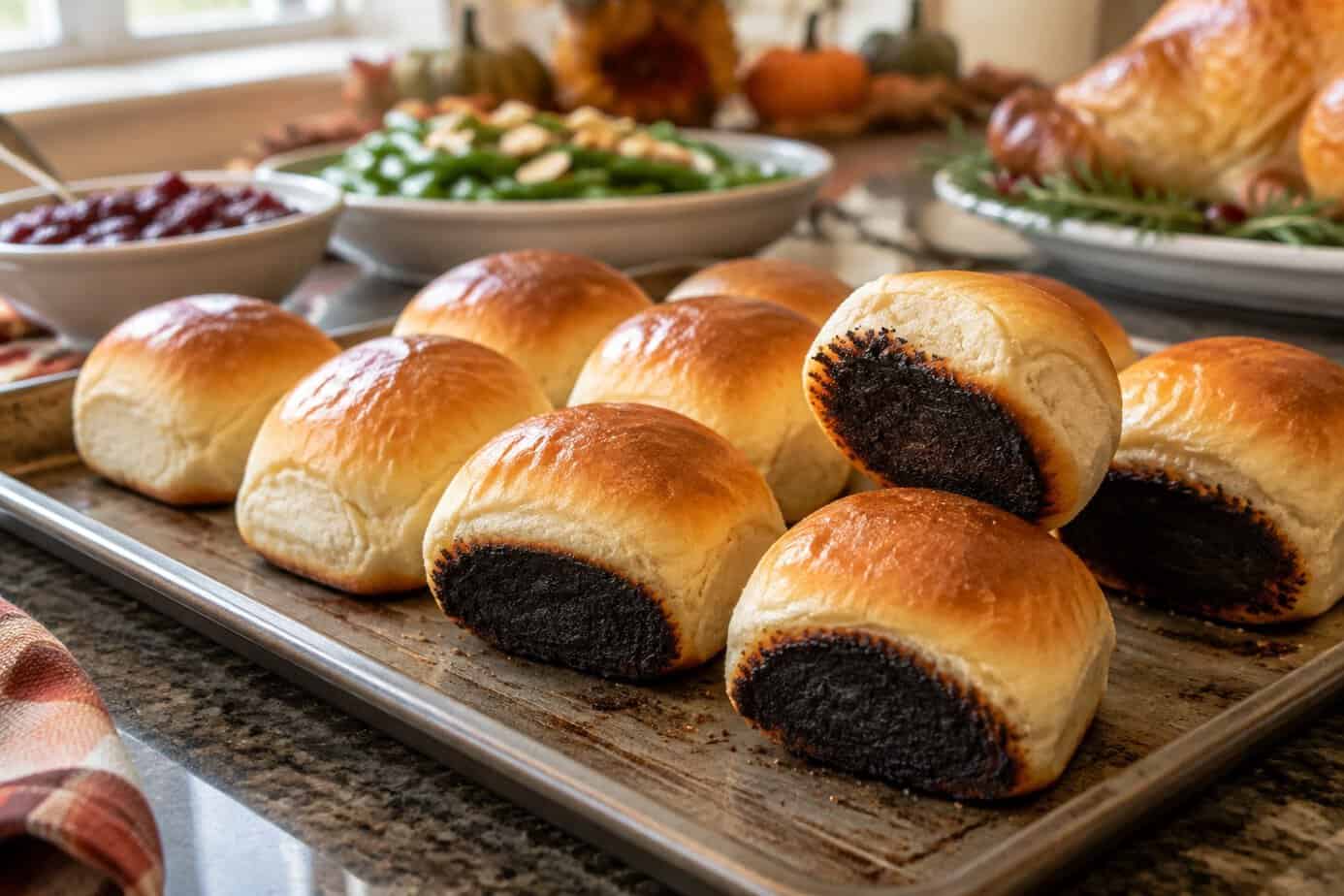
The oven is the busiest place in the house on Thanksgiving, so the rolls usually go in at the very last minute. That’s how so many of us have ended up with brown-and-serve rolls that are pale on top and scorched black on the bottom.
The smell of burning bread just as everyone sits down is a common holiday moment. So is the other version, where the rolls come out still doughy in the middle because the oven was crowded with casseroles.
The fix: bake the rolls on a light-colored sheet pan on the middle rack, or set one baking sheet on top of another to protect the bottoms. Better still, bake them while the turkey rests, when the oven finally has room to breathe.
14. Carrots Swimming in Brown Sugar Glaze
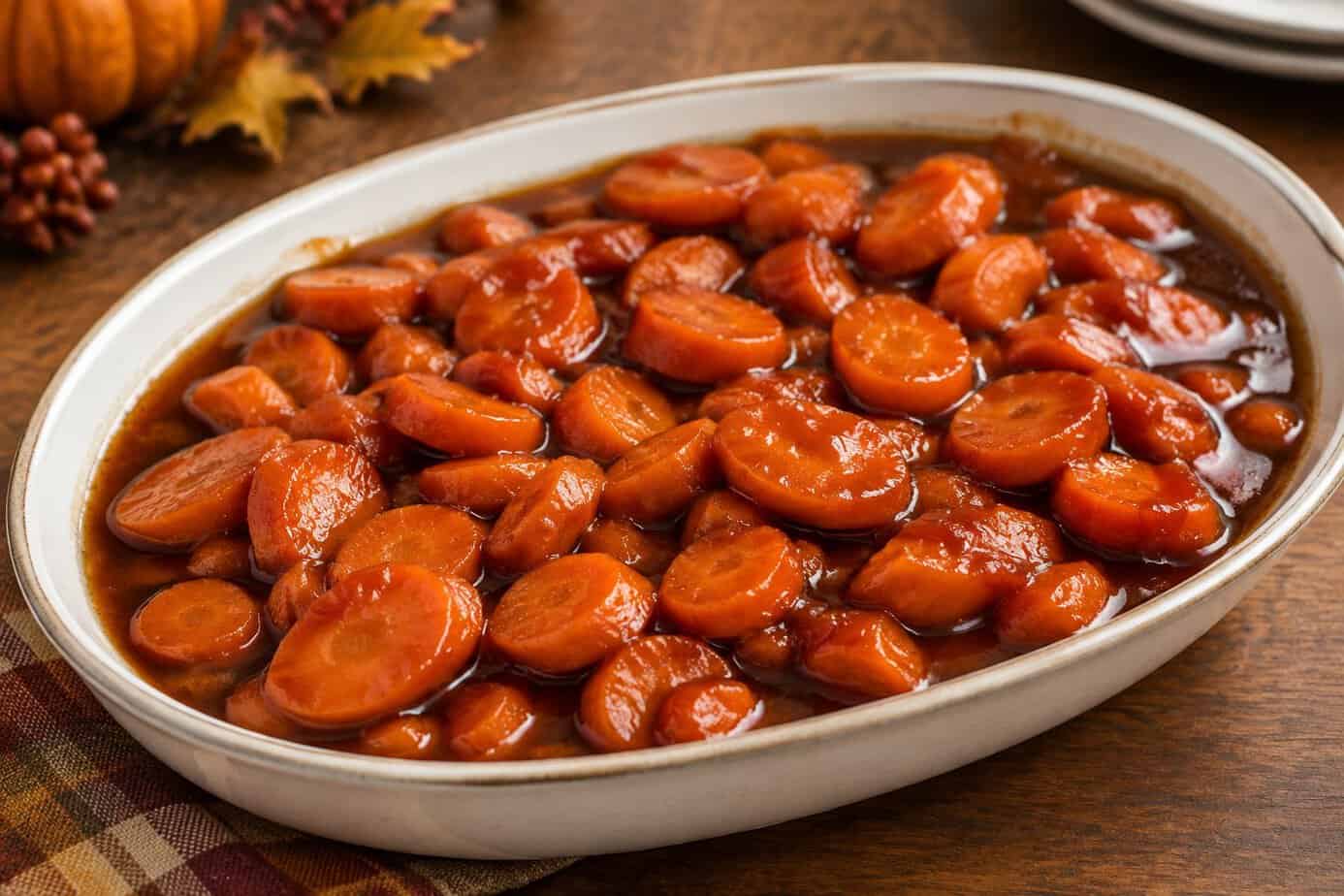
Glazed carrots sound lovely, but a lot of holiday versions are more glaze than carrot. They come to the table soft as baby food and floating in a sticky pool of brown sugar and butter.
The common complaint is that they’re simply too sweet, especially next to sweet potato casserole and cranberry sauce. When carrots are boiled until mushy and then simmered in syrup, they lose any bite or real carrot flavor.
The fix: roast carrots in a hot oven with a little olive oil and salt until the edges brown, then toss them with just a spoonful of honey or maple syrup and some fresh thyme at the end. They come out sweet but still taste like carrots.
15. Creamed Corn Straight From the Can
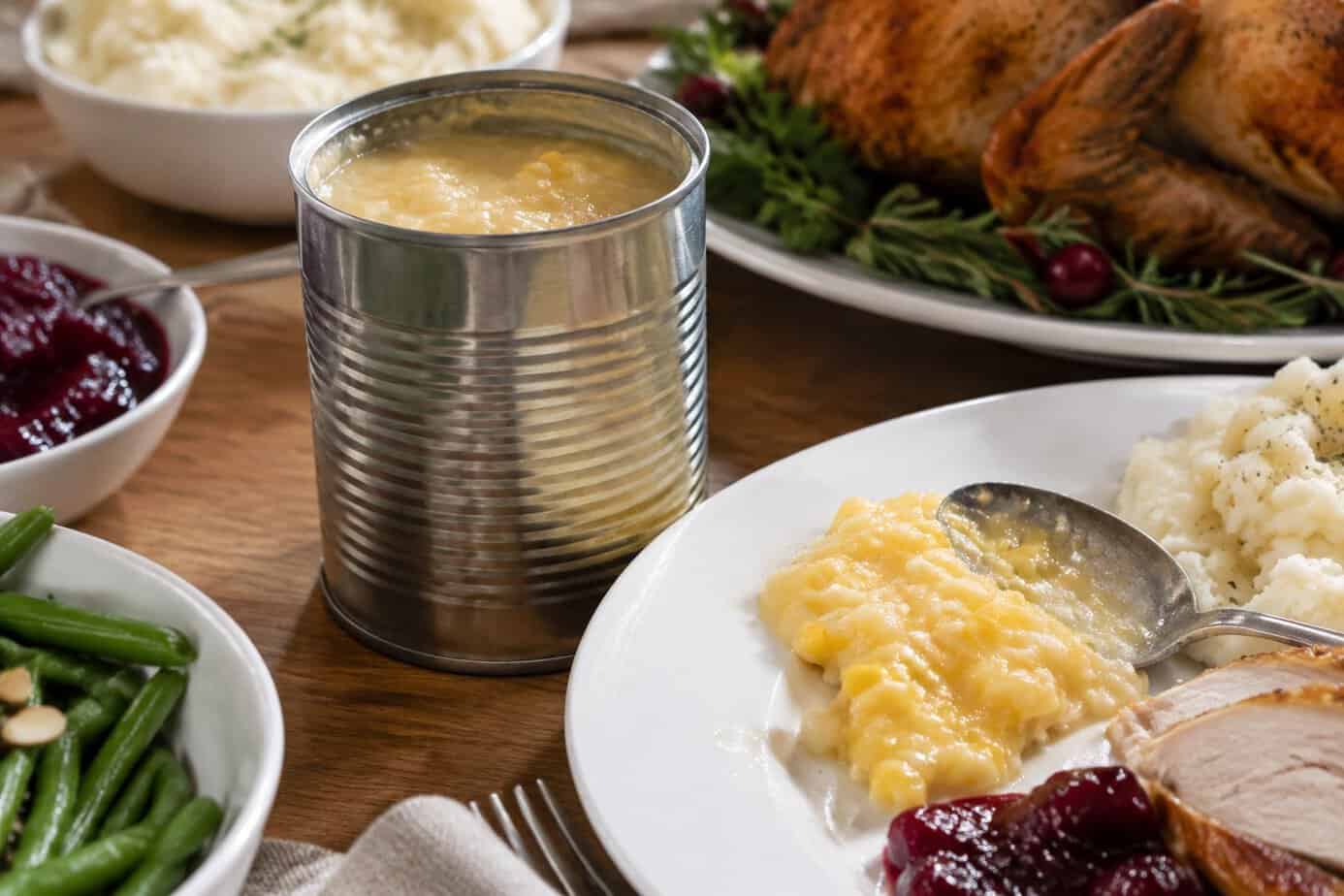
Canned creamed corn is a dish people either grew up loving or can’t stand to look at. Poured from the can and warmed on the stove, it tends to be runny, overly sweet and pale yellow, and it spreads across the plate into everything else.
For guests who didn’t grow up with it, the texture is the main problem. It’s soupy and soft, and it doesn’t have much corn flavor once it’s been sitting on the warmer for a while.
The fix: make a quick homemade version with frozen corn, a little butter, a splash of cream and salt and pepper, simmered until it thickens. If your family insists on the canned kind, bake it into a corn casserole with eggs and a buttery cracker topping so it holds together.
16. Baked Macaroni and Cheese Gone Dry and Stiff
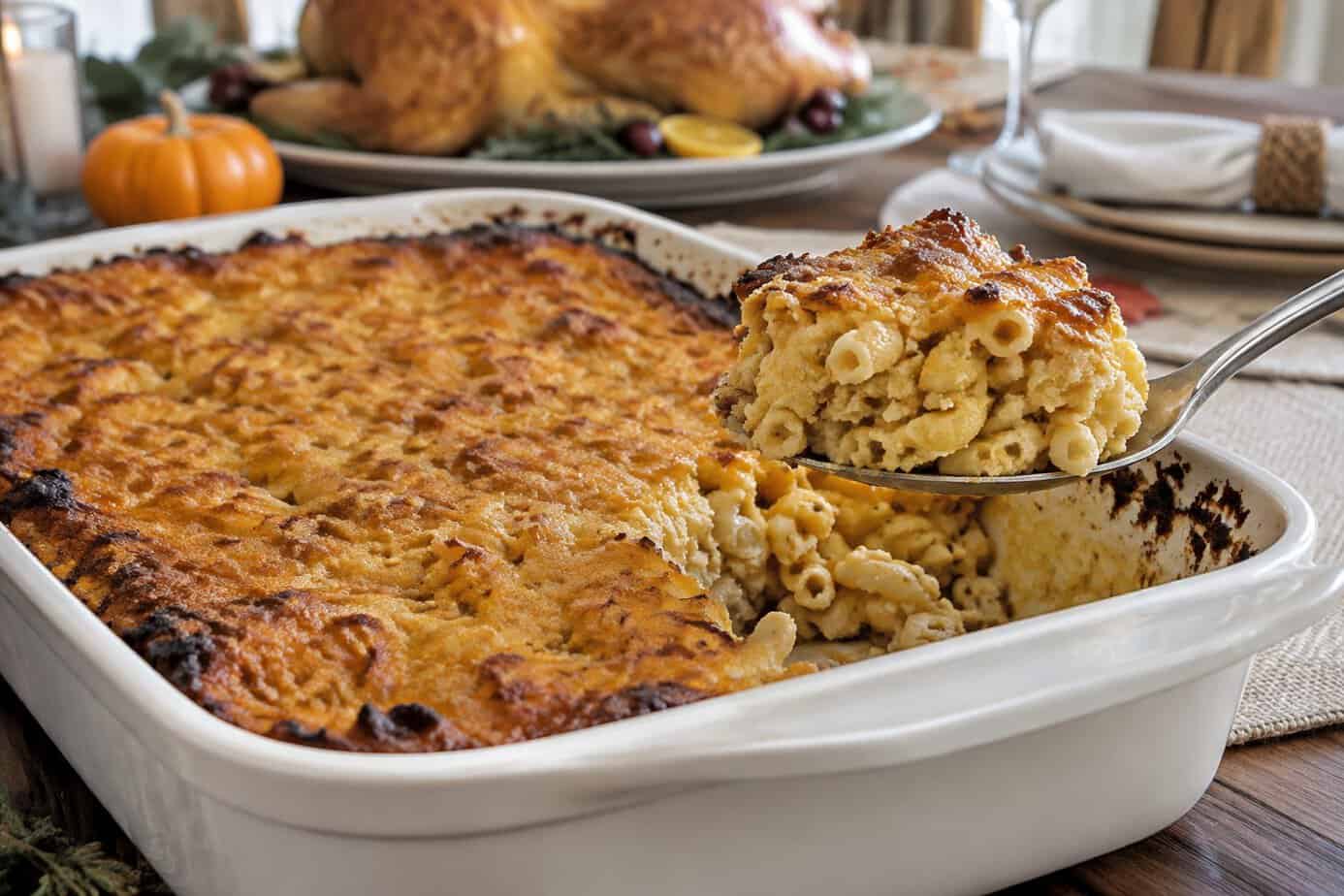
In many families, especially in the South, baked macaroni and cheese is as important on Thanksgiving as the turkey. That’s exactly why a dry one causes so much disappointment.
It usually happens when the macaroni was cooked all the way before baking, or when the dish sat in the oven too long while the turkey finished. The pasta soaks up all the sauce, and you end up cutting it into stiff squares that taste mostly of browned edges.
The fix: cook the macaroni a couple of minutes less than the box says, make extra cheese sauce so it looks almost too loose going in, and bake it just until bubbly. Cover it with foil if it has to wait, and add a splash of milk before reheating.
17. Watery Mashed Butternut Squash
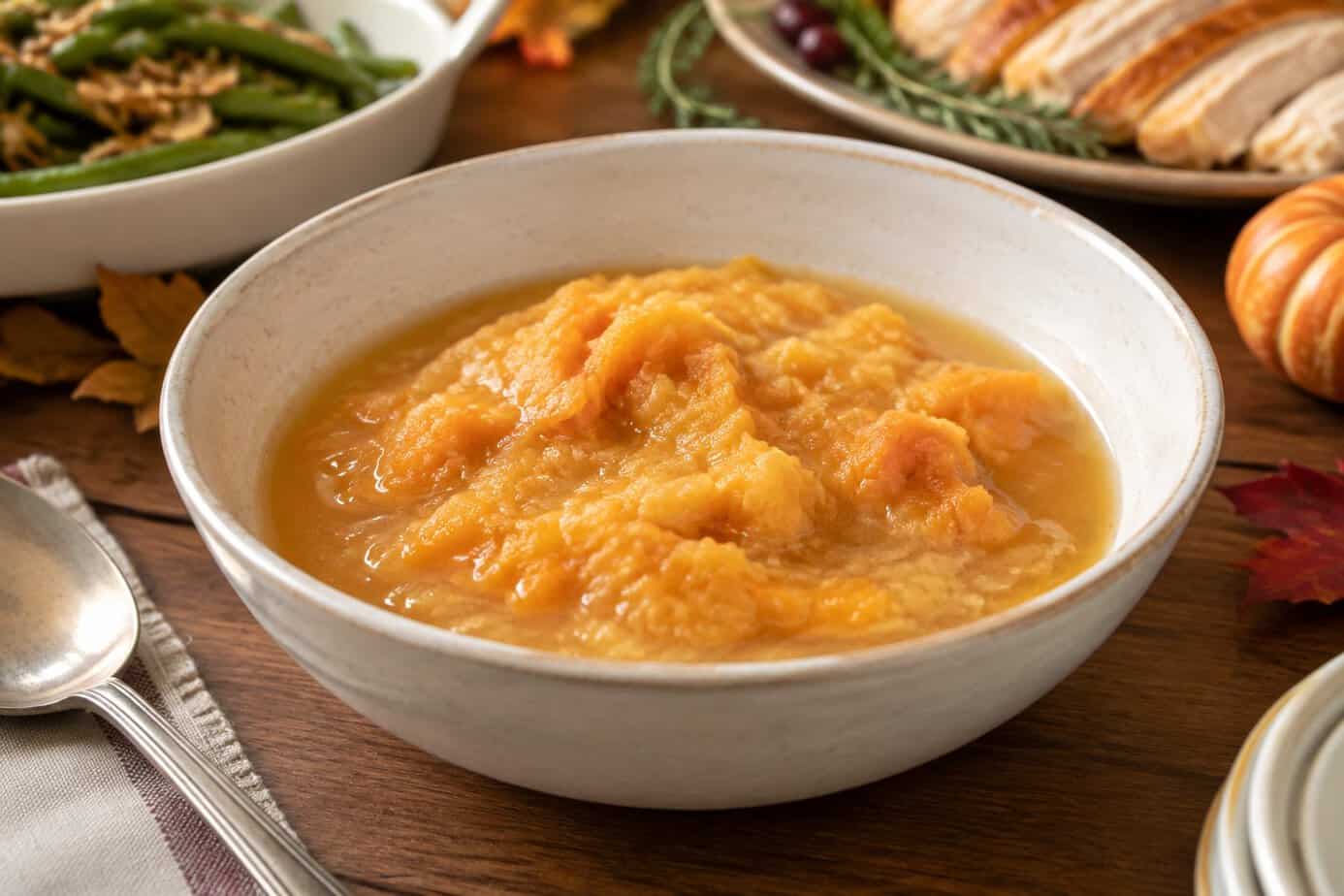
Mashed squash looks bright and cheerful on the table, but too often, a puddle of water seeps out from underneath it and runs into the turkey and stuffing.
Winter squash holds a lot of moisture, and boiling it adds even more. Once it’s mashed and set on a warm plate, all that water comes back out. The flavor gets watered down along with it, so it tastes bland no matter how much butter you add.
The fix: roast the squash instead of boiling it. Cut it in half, roast it cut side down until it’s very soft, then scoop it out and mash it with butter, salt, a pinch of nutmeg and a little brown sugar or maple syrup. Roasting cooks off the extra water and deepens the flavor.
18. The Green Salad Nobody Touches
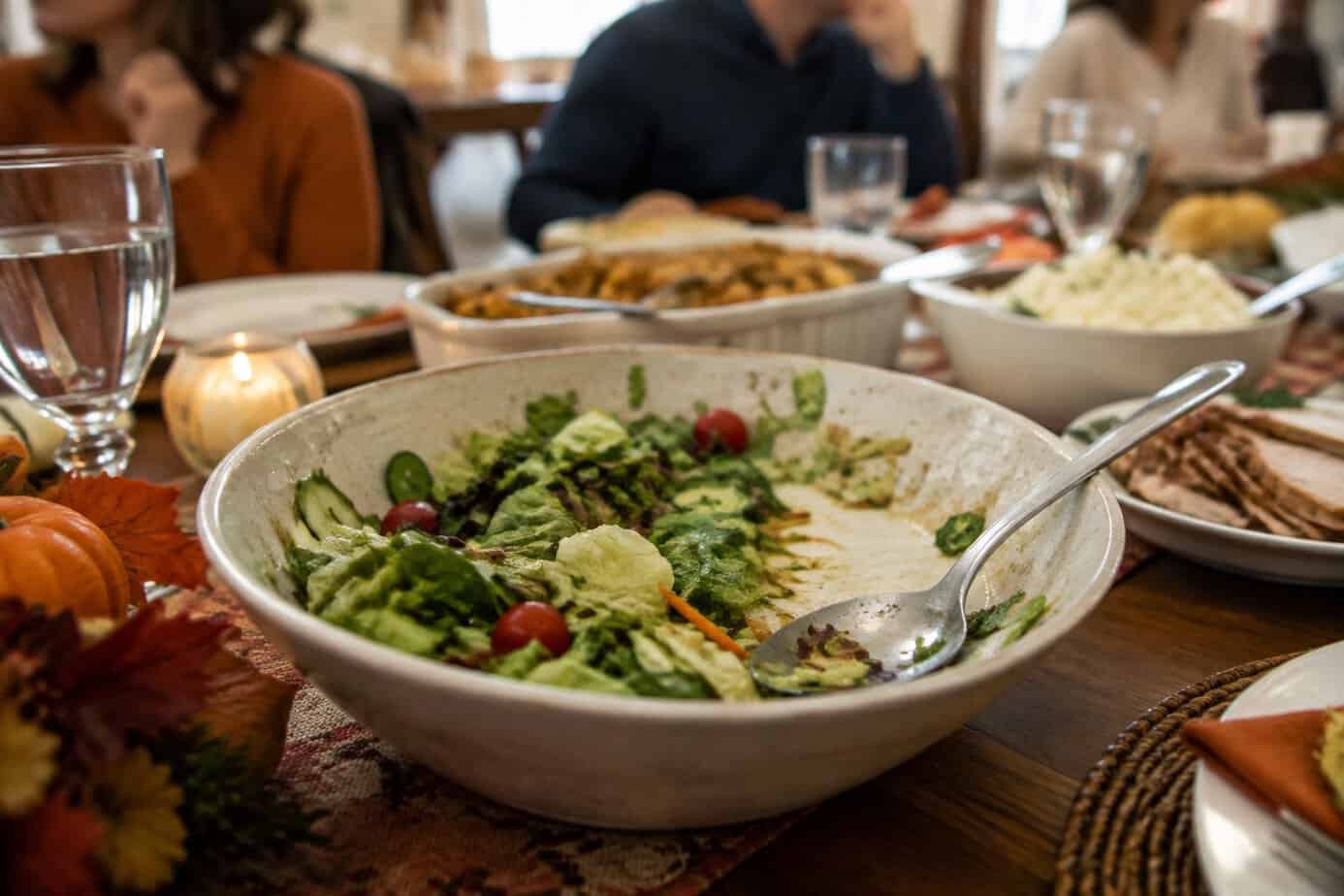
Every Thanksgiving table seems to have one: a big bowl of green salad sitting off to the side while everyone fills up on potatoes and stuffing. By the end of the meal, it’s wilted, soggy and barely touched.
The problem usually isn’t the salad itself. It’s dressed too early, so the lettuce goes limp before anyone gets to it, and it’s often plain iceberg with a few tomato wedges that can’t compete with everything else on the table.
The fix: keep the dressing on the side until the last minute, and make the salad feel like it belongs on a holiday table. Crisp greens with sliced apples or pears, dried cranberries, toasted pecans and a little crumbled cheese will actually get passed around.
19. Broccoli Casserole Made With Processed Cheese
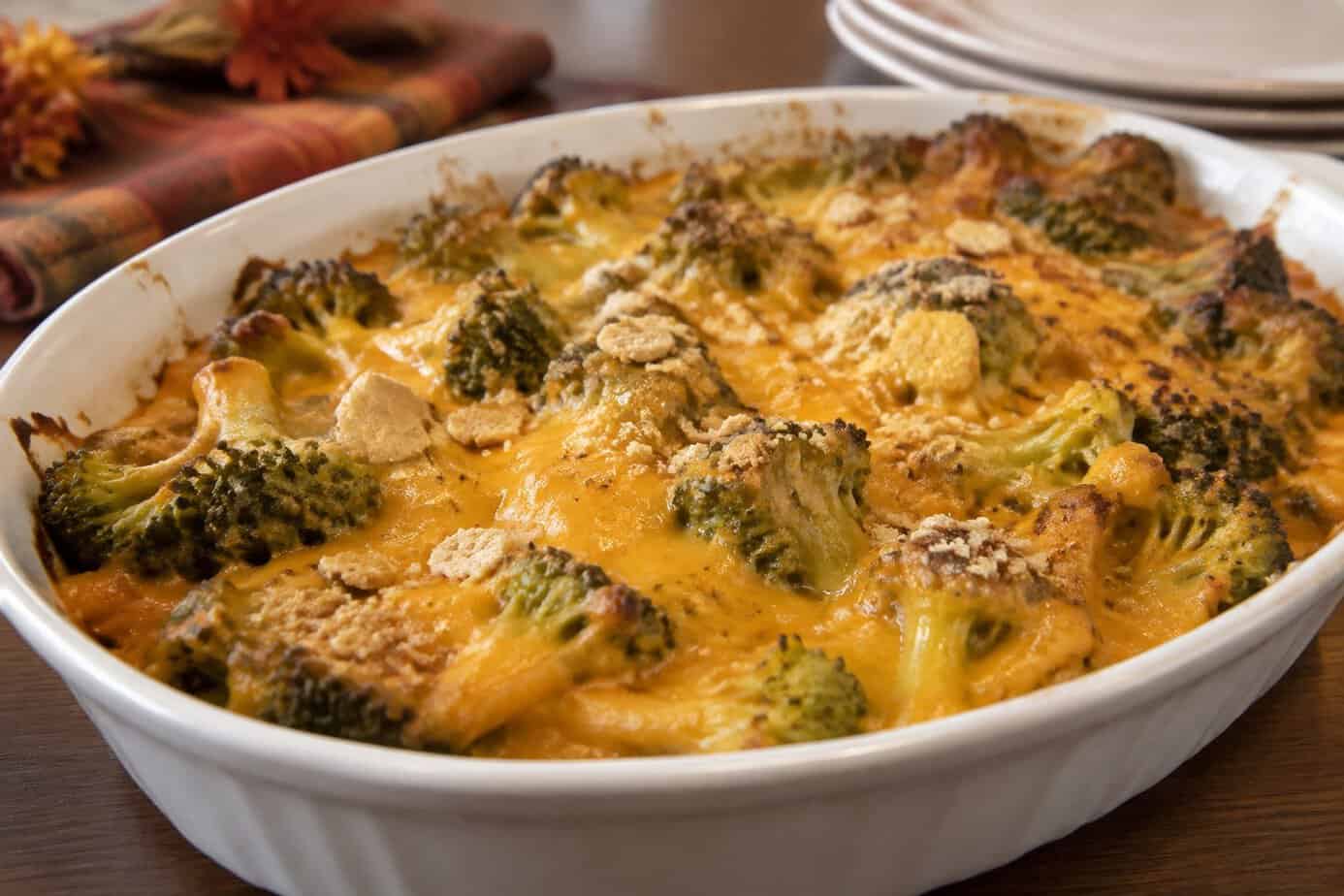
The broccoli and cheese casserole made with processed cheese, canned soup and buttery crackers is a holiday regular in many homes. It’s also one of the dishes home cooks complain about most when it isn’t done well.
Frozen broccoli can turn mushy and watery in the oven, and processed cheese can leave the whole thing greasy, overly salty and orange in a way that doesn’t look quite natural. After an hour on the buffet, the top goes hard while the bottom stays soupy.
The fix: use fresh broccoli and blanch it briefly, then make a simple sauce with real sharp cheddar, a little milk and a spoonful of butter. Top it with buttered crumbs and bake just until bubbling and golden.
20. Gummy Corn Pudding
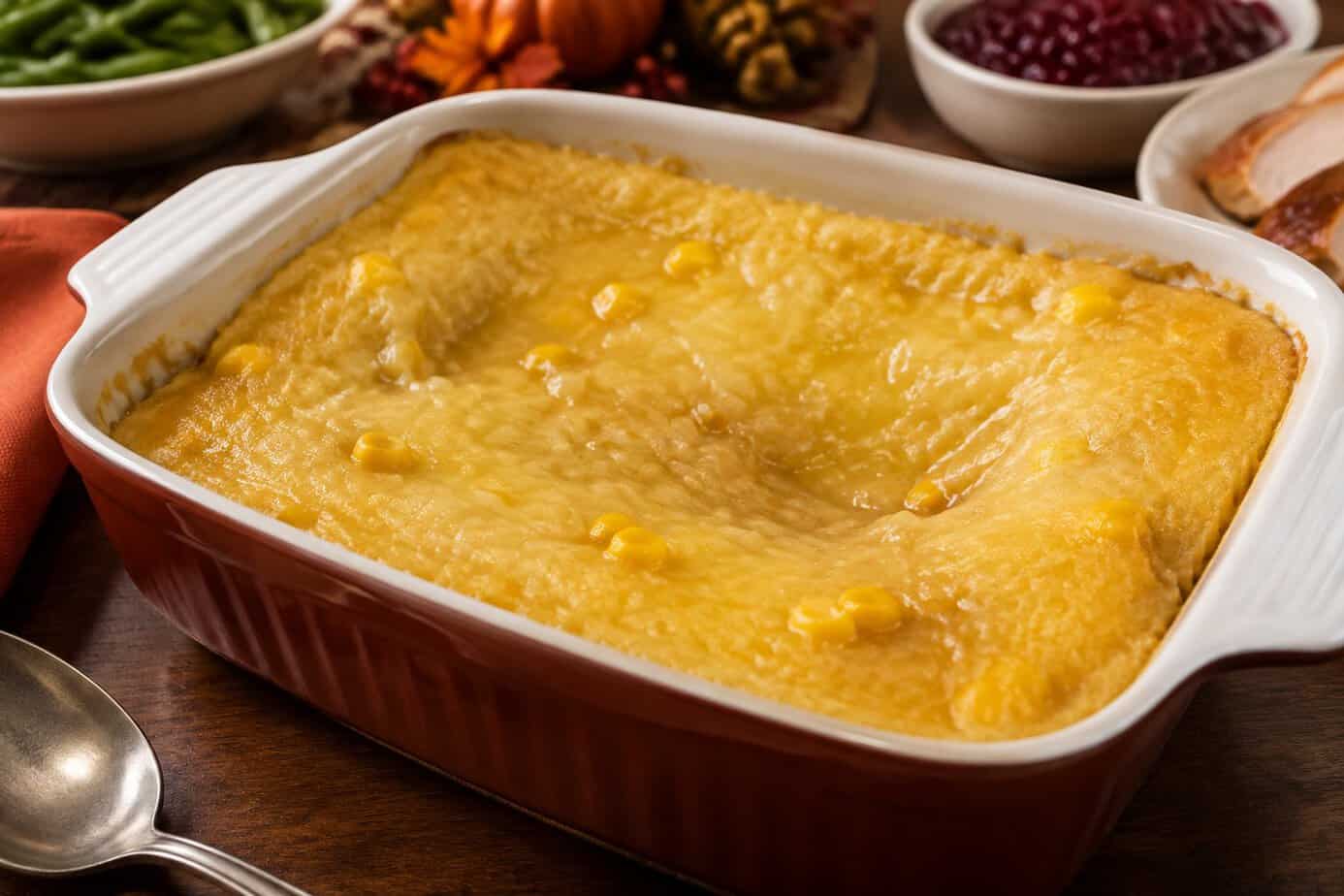
Corn pudding should be soft and custardy, somewhere between cornbread and a soufflé. When it goes wrong, it comes out dense and gummy, or it’s set on the edges and still runny in the middle.
The common causes are too much flour or cornmeal, a pan that’s too deep, or an oven that’s crowded and running cooler than it says. Some boxed corn muffin versions also turn out overly sweet and heavy.
The fix: use a shallower baking dish so it cooks evenly, go easy on the flour, and bake it until the center barely jiggles. Let it rest 10 minutes before serving so it finishes setting. A little sharp cheese or chopped green chiles stirred in will balance the sweetness.
21. Mashed Cauliflower Passed Off as Potatoes
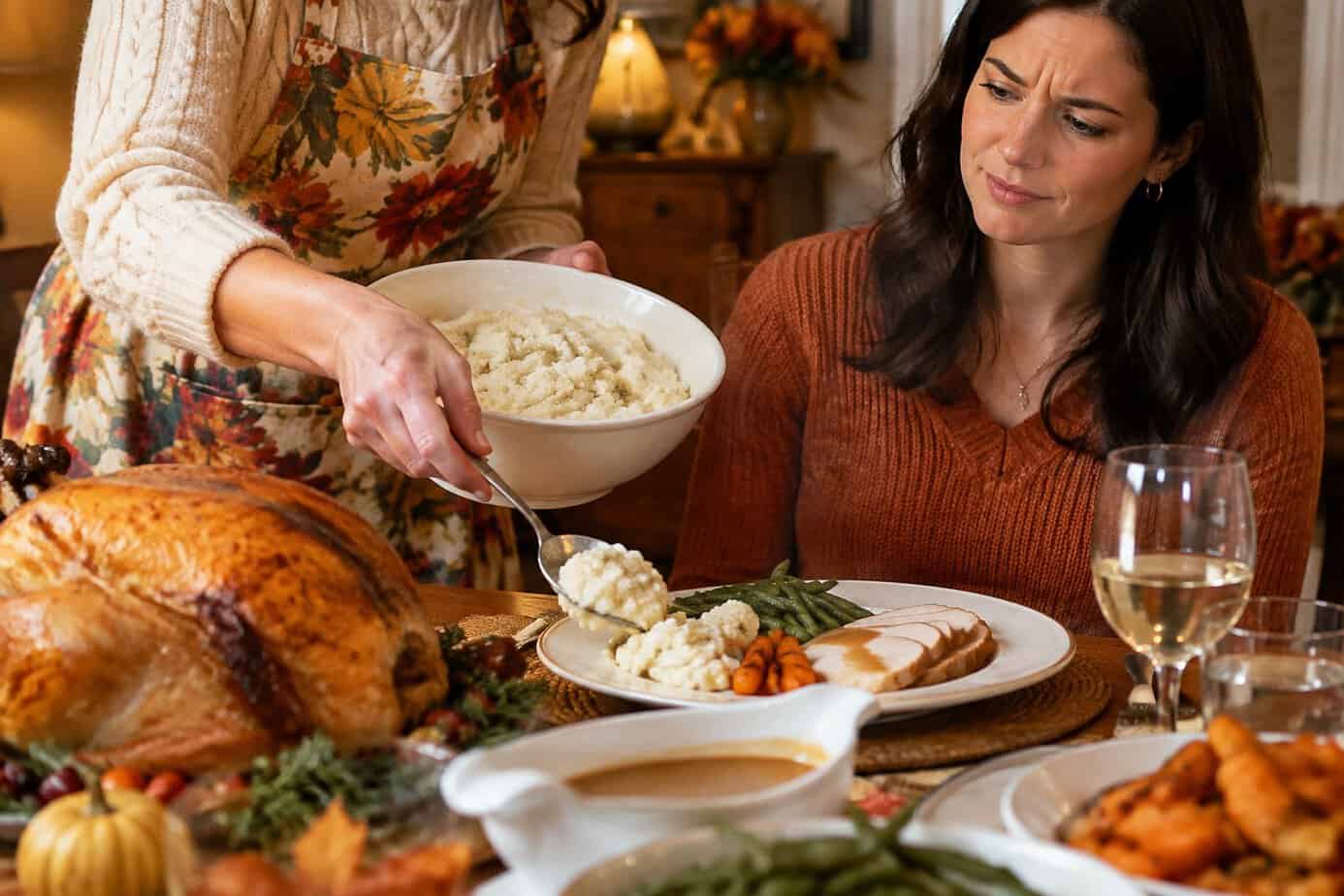
Lately, more and more home cooks are seeing a bowl of mashed cauliflower show up on the Thanksgiving table, sometimes passed off as mashed potatoes. It’s usually there for a guest watching carbs, which is thoughtful.
The trouble starts when it’s served as a swap for the real thing. Cauliflower mash is often watery, has a stronger vegetable flavor, and doesn’t hold gravy the way potatoes do. People who were expecting potatoes notice right away, and they aren’t always polite about it.
The fix: serve it alongside the real mashed potatoes, never instead of them, and label it so nobody gets surprised. Roast the cauliflower before mashing it, then add butter, garlic and Parmesan. It’s quite good on its own terms.
22. The Trendy Side Dish Nobody Recognizes
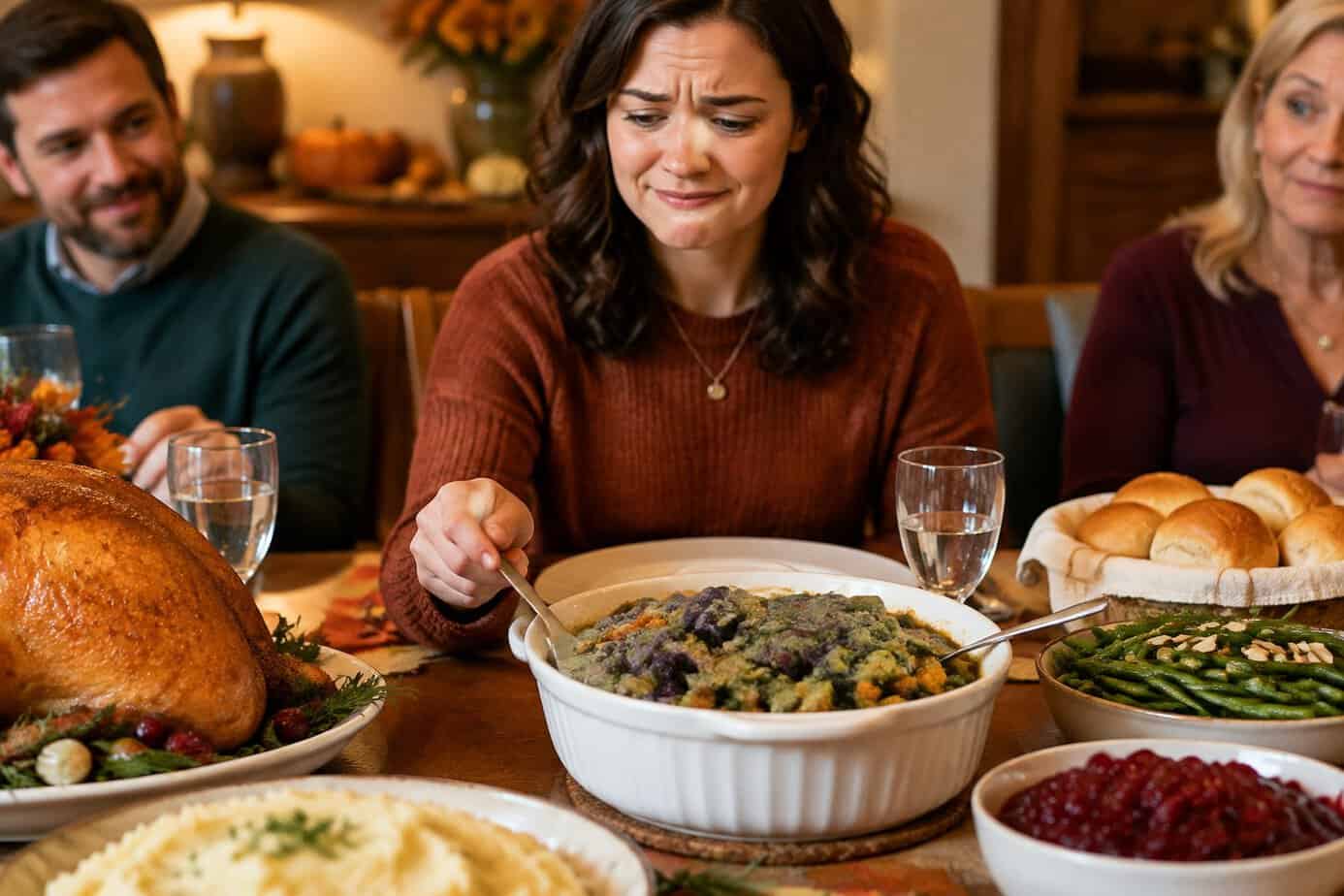
You may have had a guest bring something they saw online, made with ingredients you couldn’t name and a texture nobody quite expected. It shows up in a beautiful dish, and then it sits there.
New dishes aren’t a bad thing, and some families love trying something different. But Thanksgiving is a meal most people look forward to all year precisely because it’s familiar. A side dish that doesn’t fit with turkey and gravy often goes untouched, and the guest who brought it can feel a little let down.
The fix: if someone wants to bring something new, gently suggest a twist on a classic instead, like roasted Brussels sprouts with bacon or green beans with toasted almonds. Familiar enough to fit in, new enough to feel special.
23. Watery Creamed Spinach
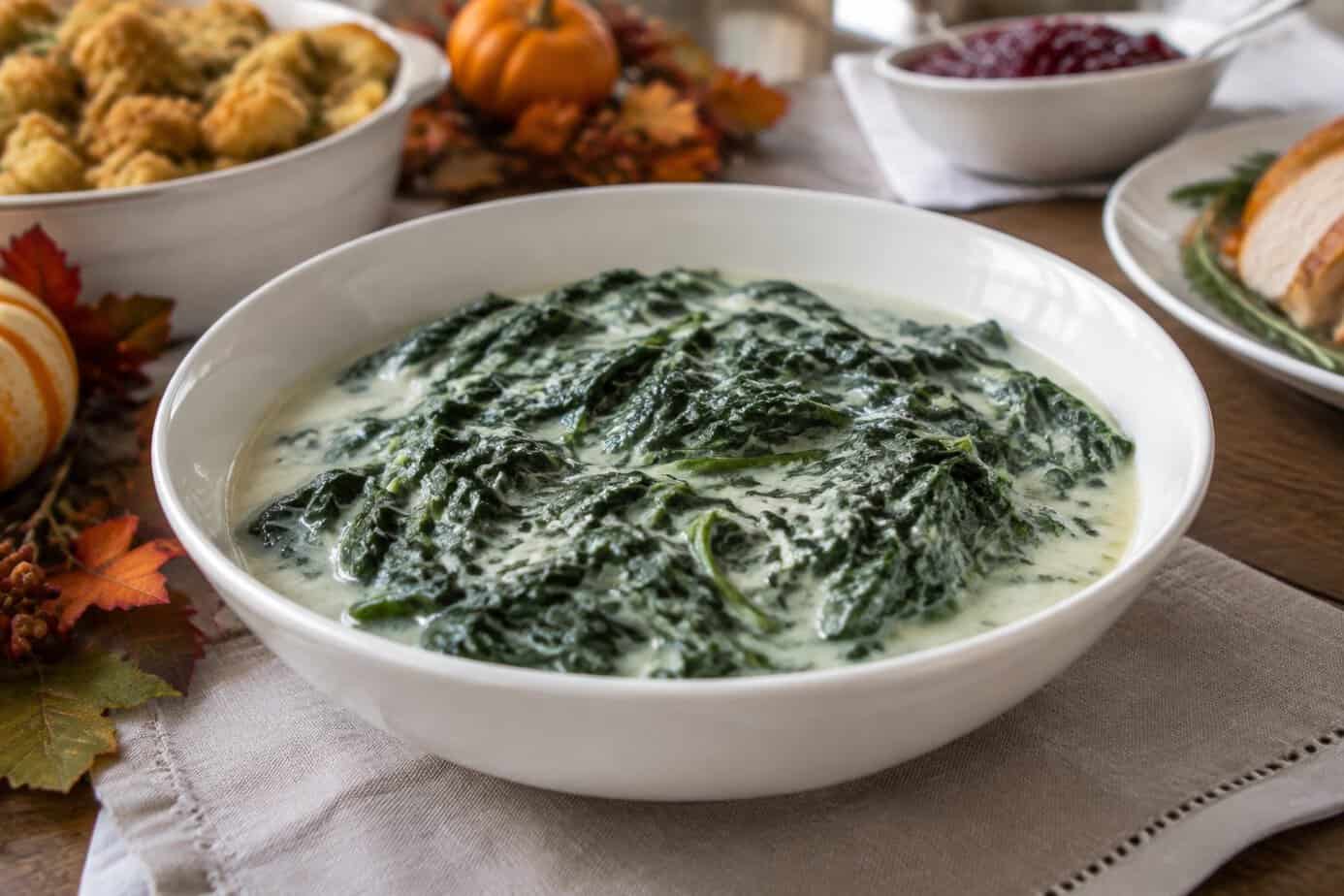
Creamed spinach can be rich and lovely, but on a busy holiday it often comes to the table thin, runny and pooling on the plate.
The reason is simple. Spinach is mostly water, and frozen spinach that wasn’t squeezed dry, or fresh spinach that wasn’t drained after cooking, lets it all out into the cream sauce. What should be thick and velvety turns into green soup that runs into everything else.
The fix: squeeze the cooked or thawed spinach in a clean dish towel until no more water comes out. Then stir it into a thick sauce made with butter, a little flour, cream and a pinch of nutmeg, plus a handful of Parmesan. It should hold its shape on the spoon.
24. Roasted Potatoes Still Hard in the Middle
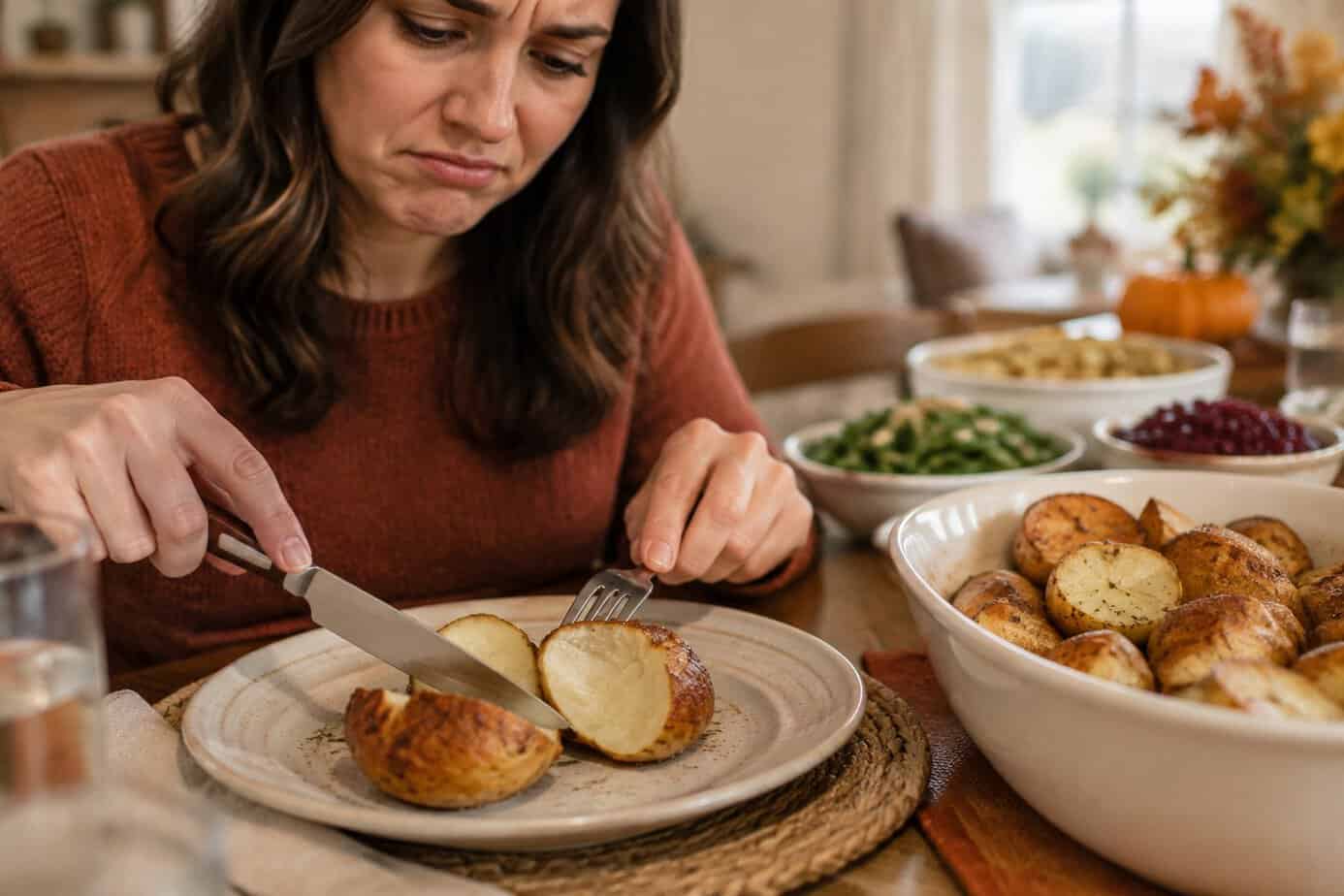
Roasted potatoes look beautiful coming out of the oven, all golden and crisp. Then someone cuts into one and finds the middle is still hard and raw.
This happens a lot on Thanksgiving, when the oven is set lower for the turkey or packed with other dishes. The outside browns before the inside has a chance to cook, especially if the pieces were cut too big or crowded together in the pan.
The fix: cut the potatoes into even, bite-sized pieces and parboil them for about 8 to 10 minutes first. Drain them, give the pot a shake to rough up the edges, then roast them in a single layer on a hot pan. They’ll be soft inside and crisp outside every time.
25. Scalloped Potatoes With a Curdled Sauce
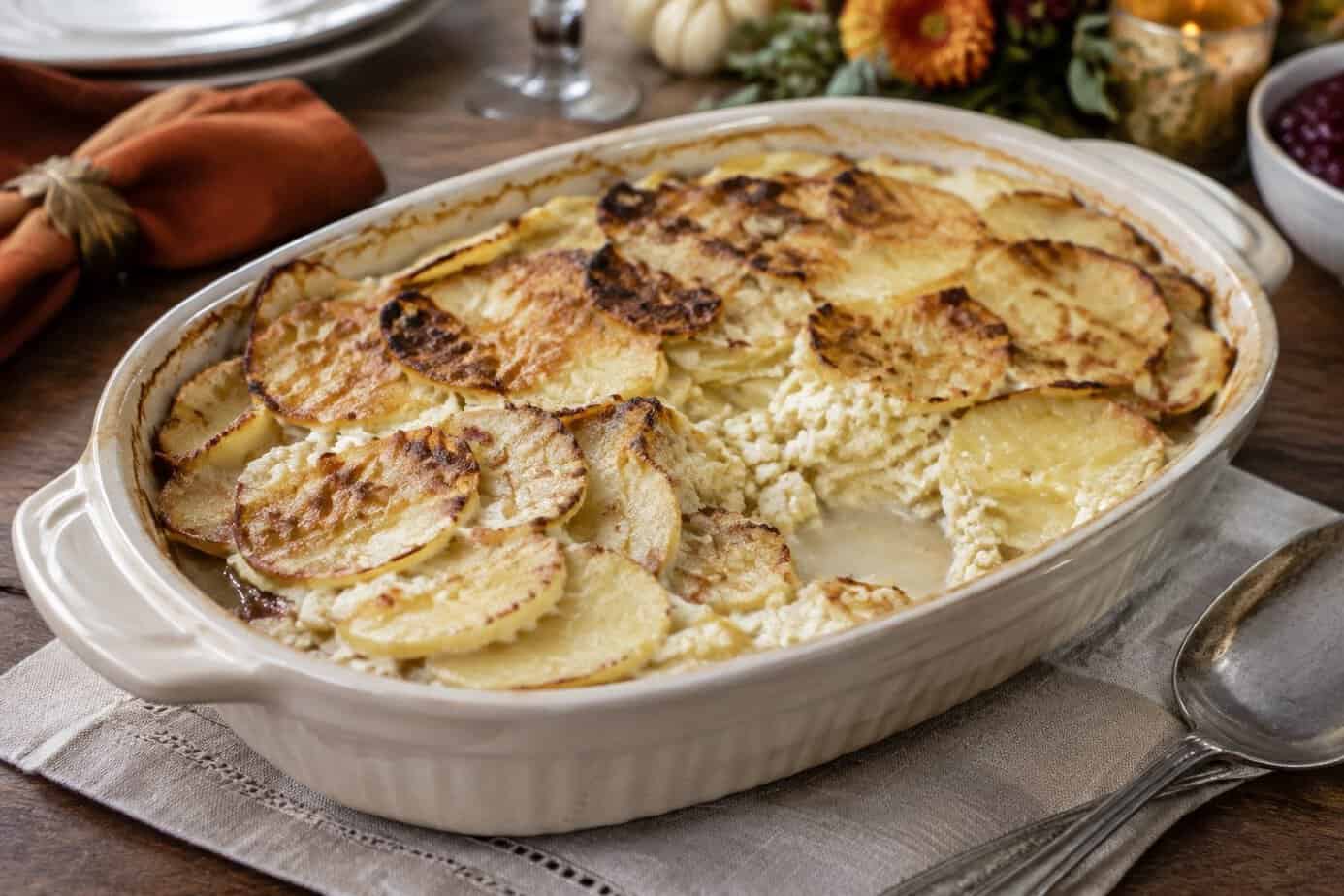
A pan of scalloped potatoes should be creamy and tender. When it goes wrong, the sauce separates into grainy curds and a greasy, watery liquid, and the potatoes on top are still crunchy.
Curdling usually happens when low-fat milk is baked at too high a heat, or when the dish is overcooked. Thick potato slices that take too long to cook make it worse, since the sauce breaks down while you’re waiting for them to soften.
The fix: slice the potatoes thin and even, use cream or half-and-half instead of skim milk, and bake at a moderate temperature with the dish covered for the first part of the time. A little flour in the sauce helps keep it smooth.
26. Crunchy, Undercooked Wild Rice
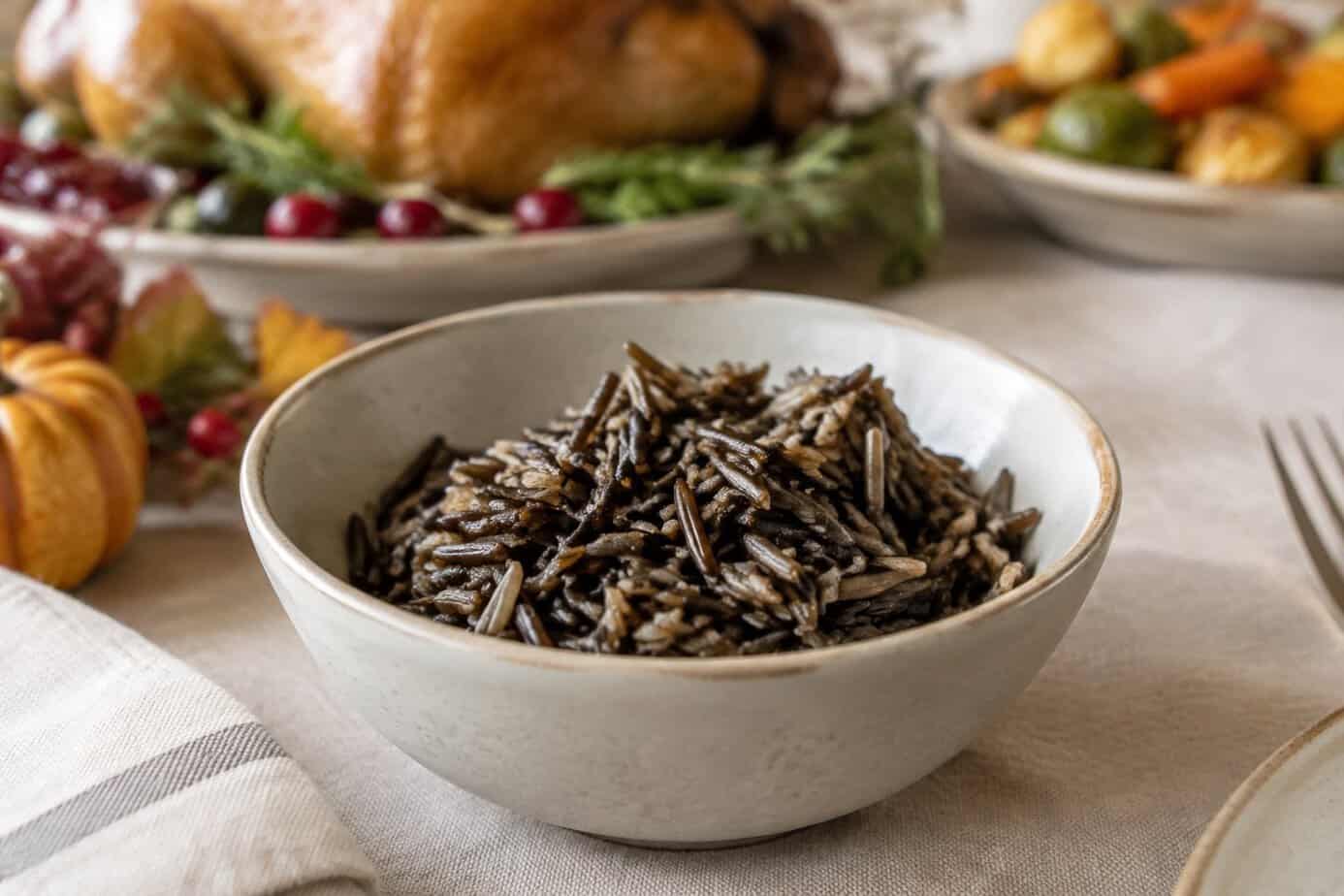
Wild rice is a lovely, nutty side dish, and in some parts of the country, it’s a Thanksgiving tradition. But it takes much longer to cook than regular white rice, and many a host has served it while it was still crunchy and chewy.
Wild rice is actually the seed of a water grass, and it can need 45 minutes to an hour to become tender. When it’s rushed, the grains stay hard, and when it’s overcooked, they burst open and turn mushy.
The fix: cook it a day ahead, simmering it in broth until most of the grains have just split open, then drain it. On Thanksgiving, warm it with sautéed mushrooms, onions, celery and dried cranberries for a dish that holds up well on the buffet.
27. Baked Beans at the Thanksgiving Table
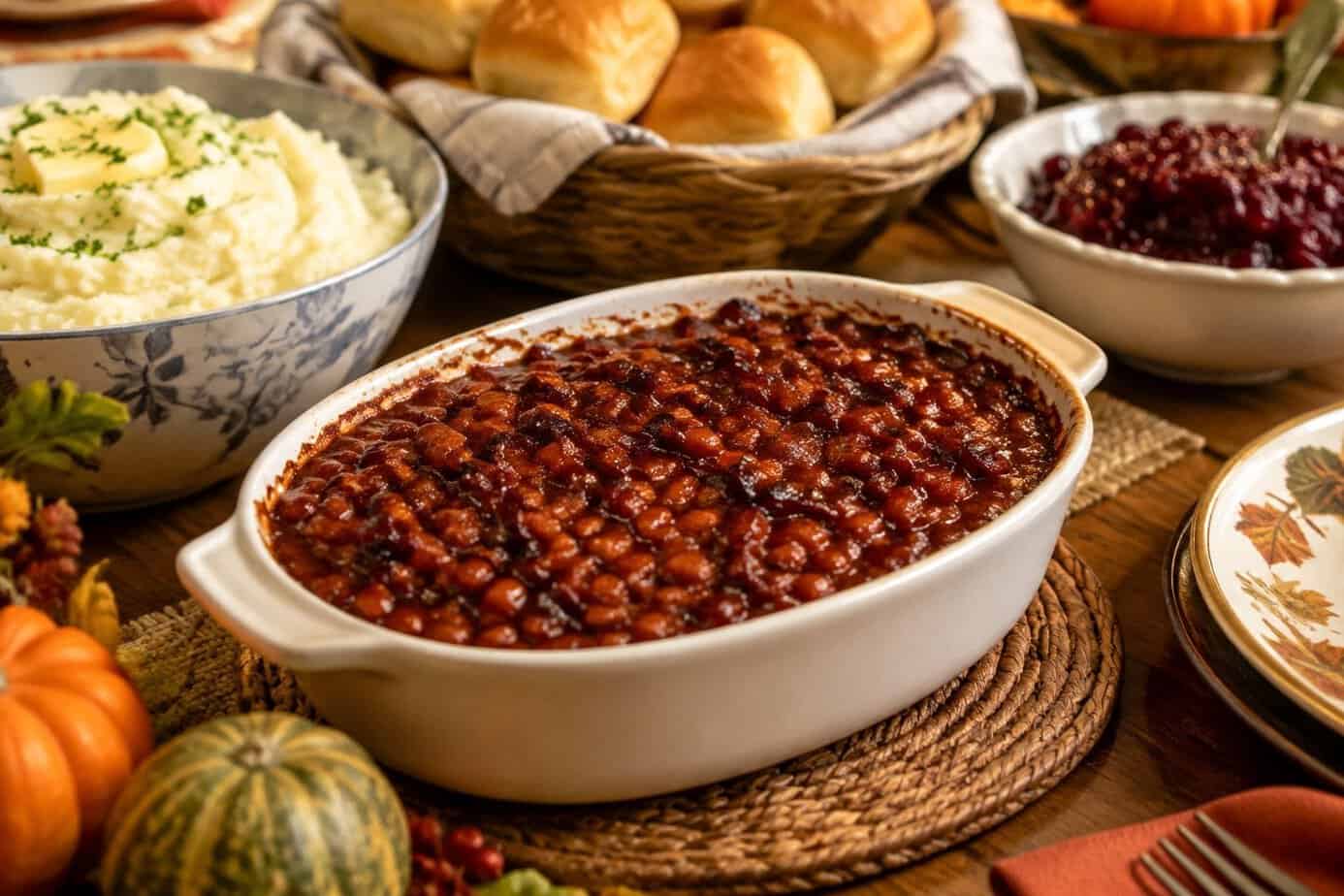
Baked beans are a summer cookout favorite, and in parts of New England, they have their own place at holiday meals. But when a pot of sweet barbecue-style beans shows up next to the turkey, a lot of guests aren’t sure what to make of it.
The common complaint is that they don’t quite fit. They’re sweet and smoky, they spread into the stuffing and potatoes, and they add one more heavy, sugary dish to a table that already has plenty.
The fix: if your family loves them, keep them, but make them a little less sweet and serve them in a separate small bowl so they don’t take over the plate. If someone just needs a dish to bring, suggest a lighter vegetable side instead.
28. Soupy Store-Bought Coleslaw
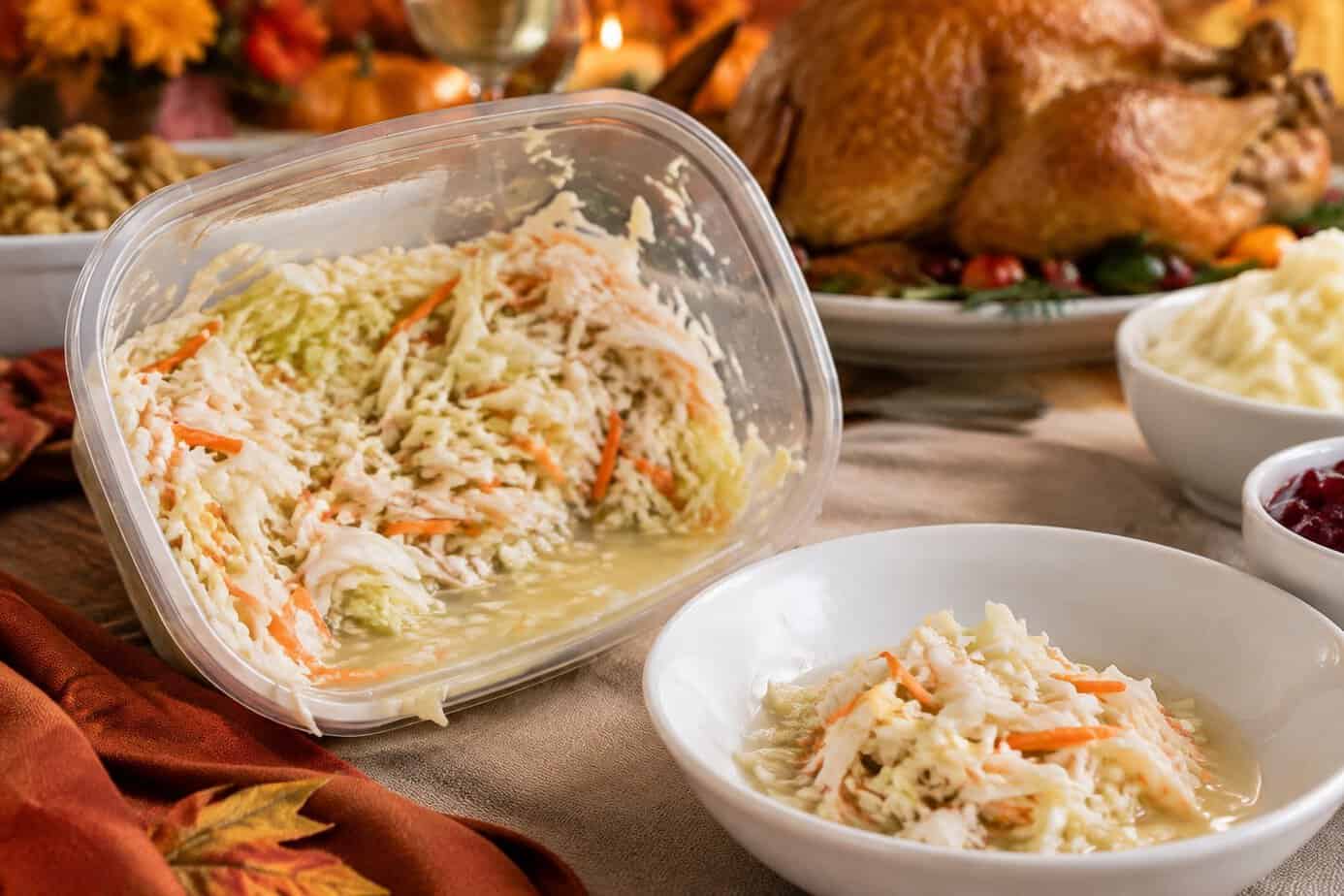
A tub of deli coleslaw is an easy grab on the way to Thanksgiving dinner, which is probably why so many show up. By the time it’s opened, though, the cabbage has given off its water, and the slaw is swimming in thin, sugary dressing.
Guests complain that it’s too sweet, too soggy and runs across the plate into everything else. It also tends to sit out on the buffet for hours, which doesn’t do it any favors.
The fix: drain off the extra dressing and add some fresh shredded cabbage to perk it up, or make your own with a simple dressing of mayonnaise, a splash of vinegar, a pinch of sugar and salt. Mix it close to dinnertime, and keep it chilled until you serve it.
29. Sauerkraut Next to the Turkey
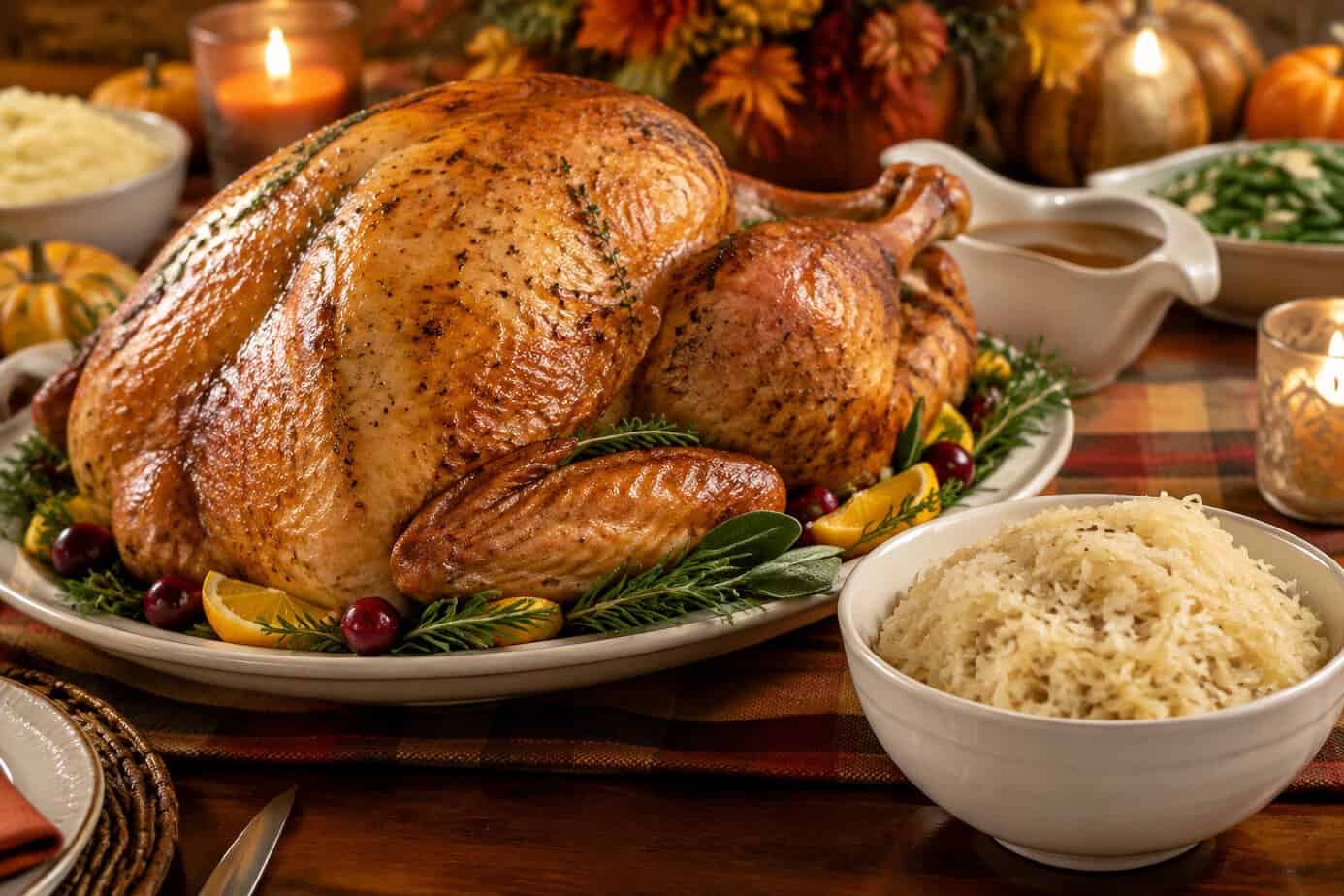
If you live in or around Baltimore, sauerkraut on the Thanksgiving table seems perfectly normal. Everywhere else, guests often stare at it in confusion. According to Baltimore Magazine’s history of the custom, it goes back to the city’s German immigrant families and spread from there.
For people who didn’t grow up with it, the sour, tangy flavor feels out of place next to sweet potatoes and cranberry sauce, and the smell fills the whole house. For people who did, Thanksgiving isn’t Thanksgiving without it.
The fix: if it’s your family tradition, keep it, and cook it slowly with onions, apples and a little pork or turkey drippings to mellow the sourness. A small bowl lets the fans enjoy it without startling everyone else.
30. Pea Salad With Mayonnaise and Cheese Cubes
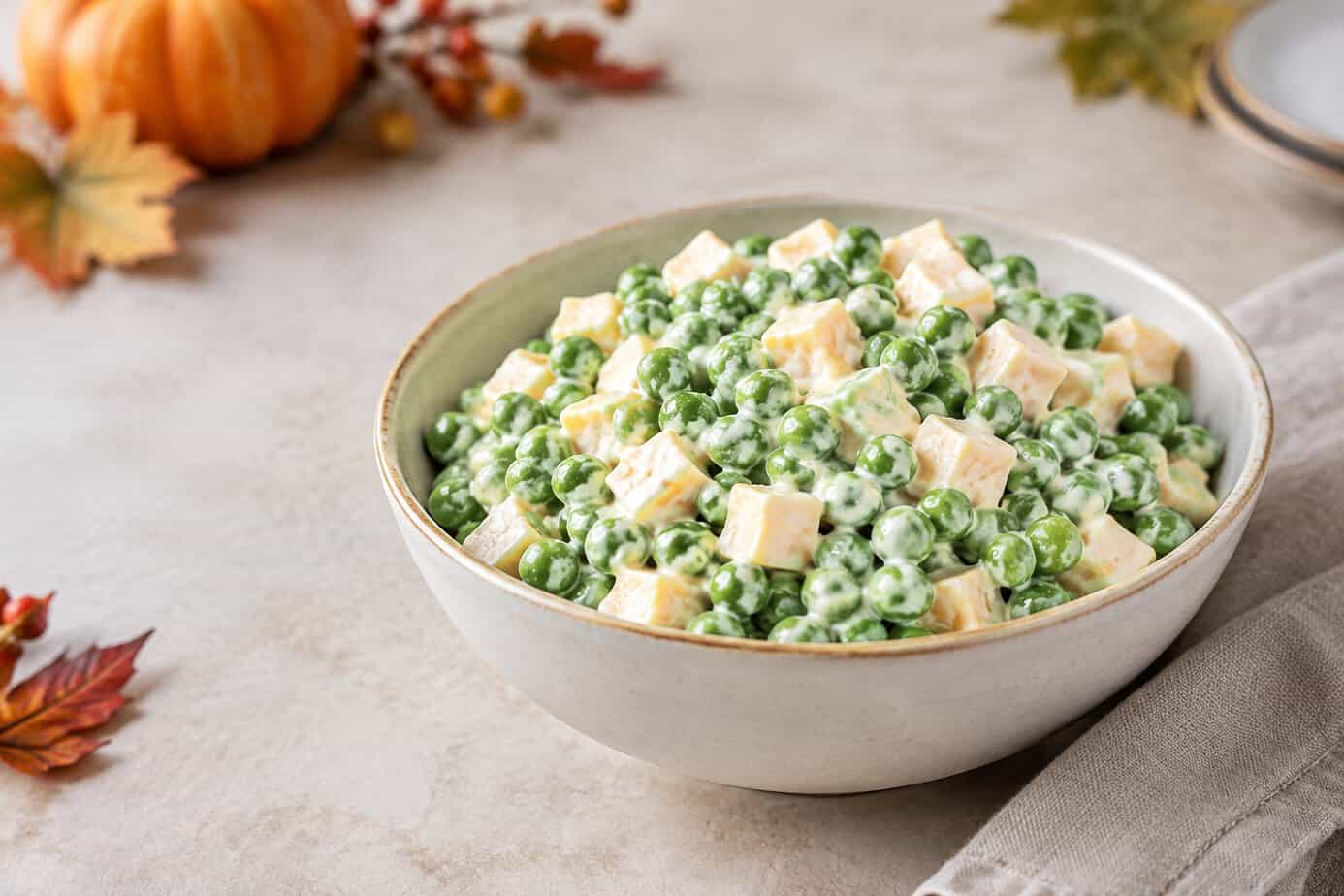
Cold pea salad, with peas, chunks of cheddar, chopped onion and plenty of mayonnaise, is a Midwestern potluck classic that sometimes finds its way to the Thanksgiving table. It has loyal fans and a lot of people quietly passing it along.
The usual complaints are that it’s too heavy on the mayonnaise, the peas are mushy, and a cold creamy salad feels out of place next to all the hot food. It can also turn watery if it’s made too far ahead.
The fix: use thawed frozen peas that are still firm, cut back on the mayonnaise and add a little sour cream and a squeeze of lemon. Crisp bacon on top just before serving gives it a fresher taste and some crunch.
Why Side Dishes Cause the Most Thanksgiving Grumbling
The turkey gets all the attention, but the side dishes are where every family’s personality shows up. They’re also where most of the little disappointments happen, and there are good reasons for that.
Everyone Grew Up With a Different Version
One person’s perfect stuffing is another person’s mystery dish. When two families come together around one table, everybody brings a memory of how a dish is supposed to taste, and not all of those memories agree. That’s how canned cranberry sauce and sauerkraut end up sitting right next to each other.
One Oven, a Dozen Dishes
You know this one better than anyone. The turkey takes up the oven for hours, so everything else gets squeezed in early, crowded together or kept warm far too long. That’s where dry stuffing, gray green beans and rolls burned on the bottom come from. It isn’t bad cooking. It’s just too much food for one kitchen.
How to Keep Your Sides Off the Worst List
A few small habits can make a big difference, and most of them come down to timing and a little planning.
Do the Make-Ahead Work Wisely
Cook the dishes that hold up well a day early, like wild rice, cranberry sauce and the cheese sauce for your casseroles. Save the quick things, like green beans, peas and salad dressing, for the last half hour. And bake the rolls while the turkey rests, when the oven is finally free.
Let Guests Bring What They Make Best
If you’re hosting a crowd, ask each guest to bring the dish they’re proud of rather than whatever’s easy to grab on the way. You’ll avoid the soupy deli coleslaw, and everybody gets to show off a little. For more of what not to set out, our list of the worst potluck foods has a few more cautionary tales.
No matter what lands on the table this year, the people around it are what everyone remembers. Even the gray green beans become a funny story in time.