
31 Things 1970s Moms Did That Would Get Them Criticized Today
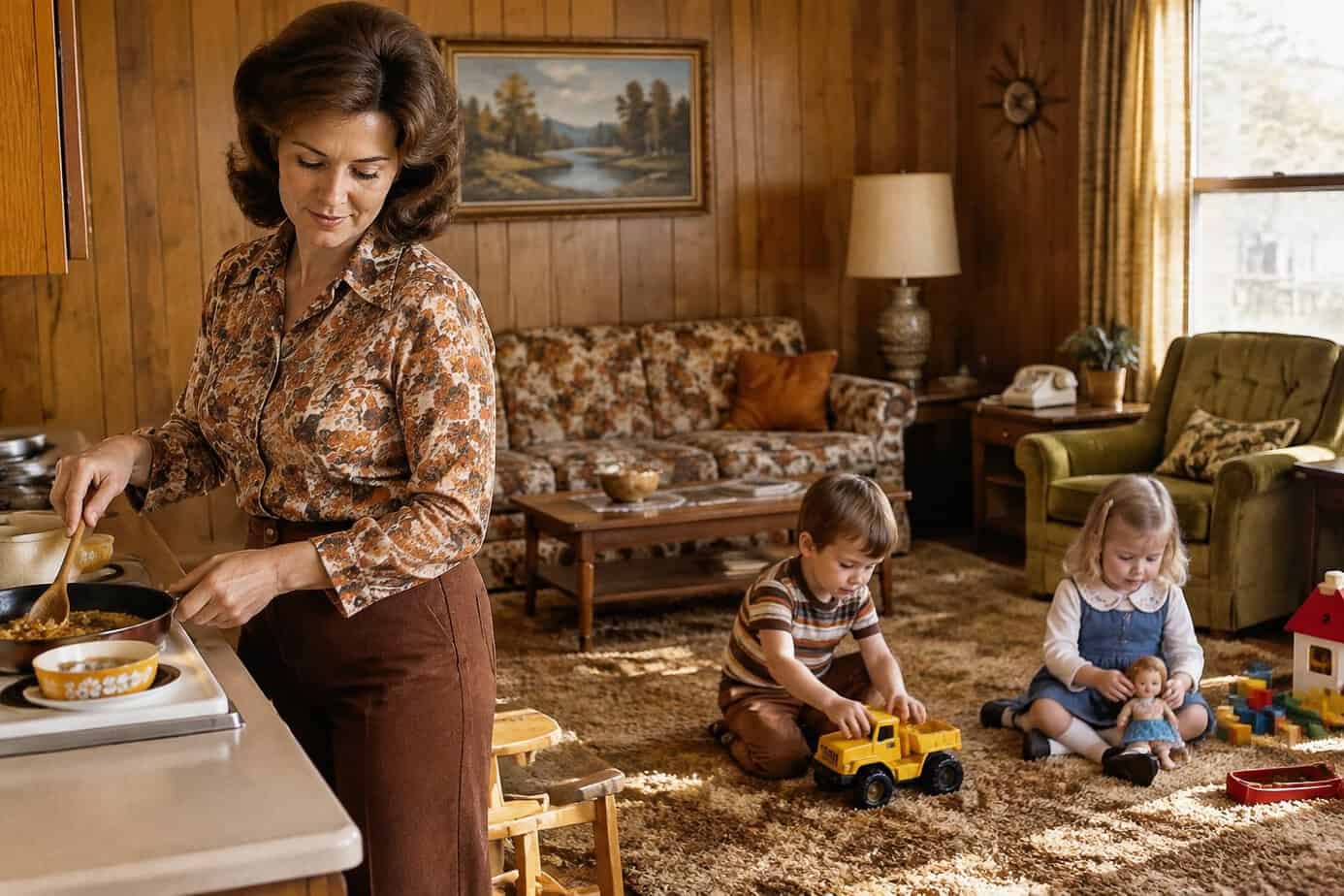
You raised your kids in a different world, one where the rules of parenting looked nothing like they do now. You let them roam the neighborhood until the streetlights came on, rode in the backseat without a second thought about seatbelts, and handled everyday situations with a confidence that came from instinct rather than instruction manuals.
Looking back, many of the choices you made simply reflected the common sense of the time, not carelessness. Doctors, neighbors, and even magazines backed up habits that today would raise eyebrows or draw judgment online. You were doing exactly what every other mom on your block was doing.
This article takes a warm look back at those everyday moments. It is not about pointing fingers, but about remembering how different things were and appreciating how far you stretched to raise your family with the tools you had at the time.
1. Letting the kids roam until the streetlights came on
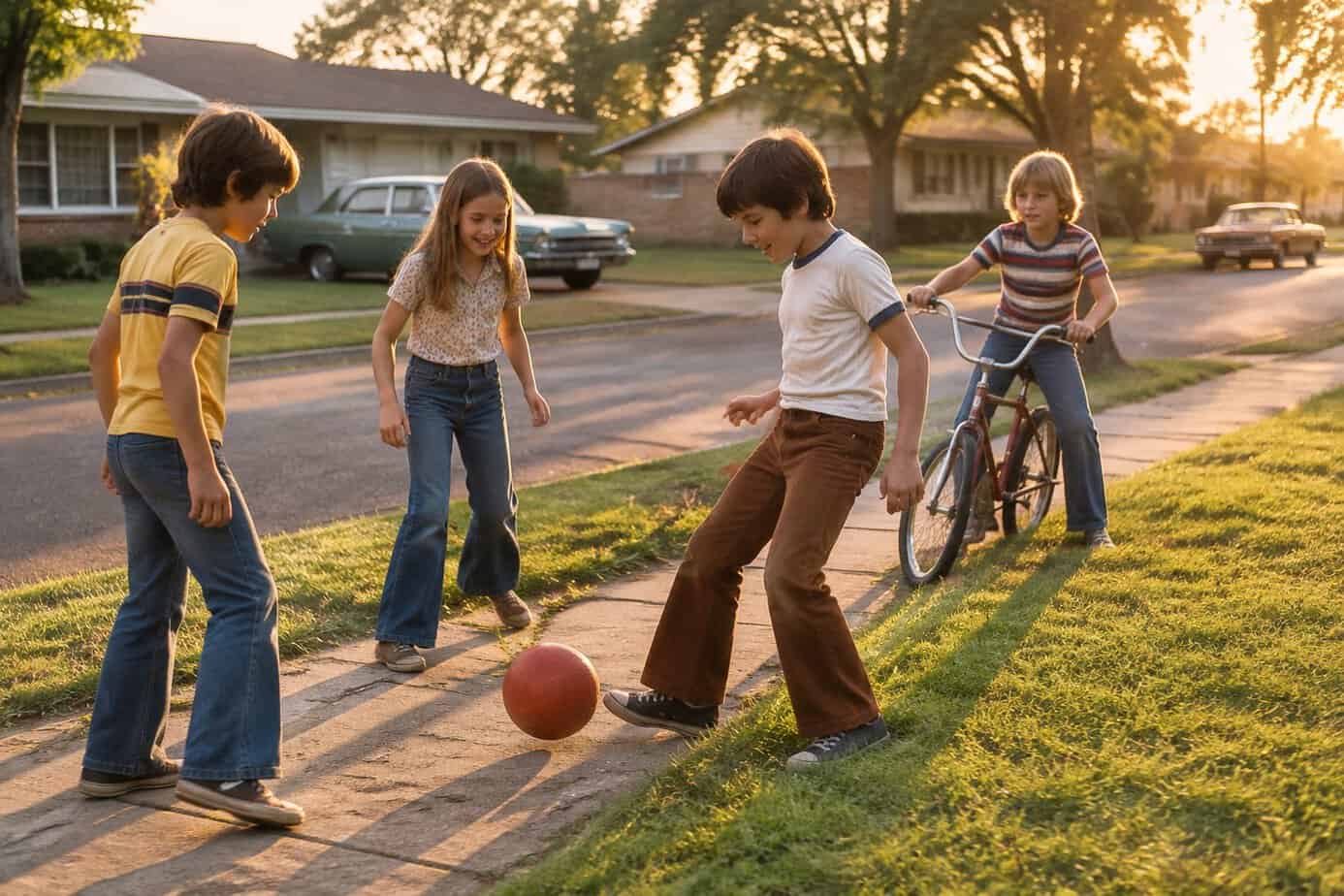
You remember the morning routine well. Your kids ate breakfast, pushed open the screen door, and disappeared until the streetlights came on or you called them in for dinner. You didn’t worry much, because every other mom on the block followed the same unspoken schedule.
There was no need to track anyone’s location. You simply trusted that your children would show up at a friend’s yard, the creek, or the empty lot down the street, and that some other mother would feed them a snack or patch up a scraped knee if needed.
It made sense at the time because the whole neighborhood operated like an extended family. Kids policed themselves, older ones kept an eye on younger ones, and everybody knew whose house belonged to whom.
If you tried that today, someone might call it neglect before you finished pouring your coffee. Modern parents lean on phones, group chats, and tracking apps just to feel comfortable letting a child walk to the corner.
You weren’t careless back then. You were raising kids in a world that simply expected more independence, and most days, it worked out just fine.
2. Sending the kids to walk to school on their own
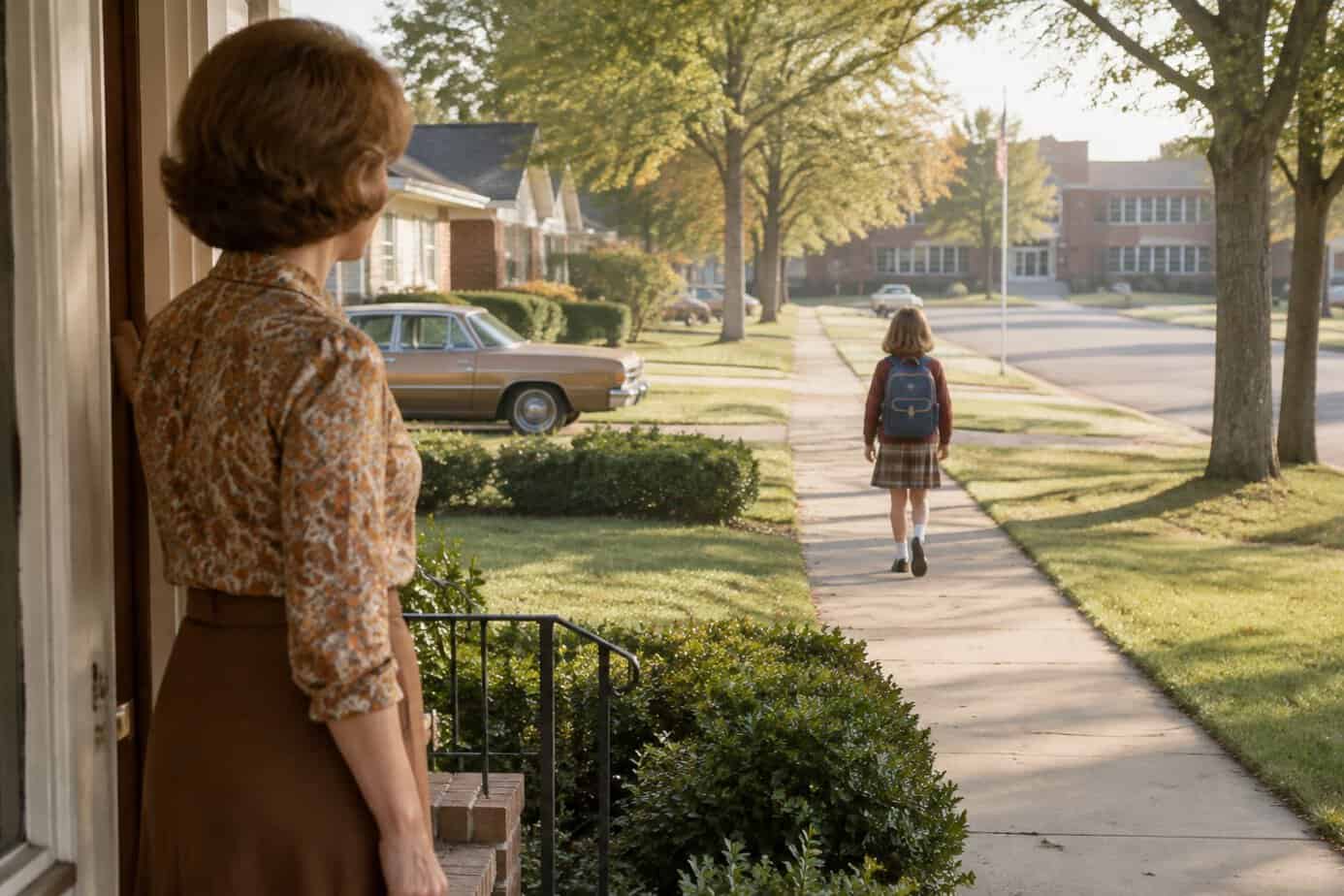
You probably remember sending your five- or six-year-old off to walk to school by themselves, maybe with a neighbor kid or an older sibling tagging along. In the 1970s, walking or biking to school was simply how most kids got there, and nobody on your street thought twice about it.
You weren’t being careless. Streets felt more familiar then, and neighbors kept an eye on each other’s children without anyone asking them to. You knew the route your child walked, you trusted the crossing guards, and you figured a half-mile walk built a little independence along the way.
Today, far fewer children walk to school at all, and most parents wouldn’t dream of sending a five-year-old alone. Car lines and supervised pickup are the norm now, and letting a young child walk solo might even raise questions from a teacher or neighbor.
You weren’t wrong to let them go. It just reflected a different time, one where a short walk to school felt like an ordinary part of growing up rather than something to worry over.
3. Leaving the kids in the car while you ran into the store
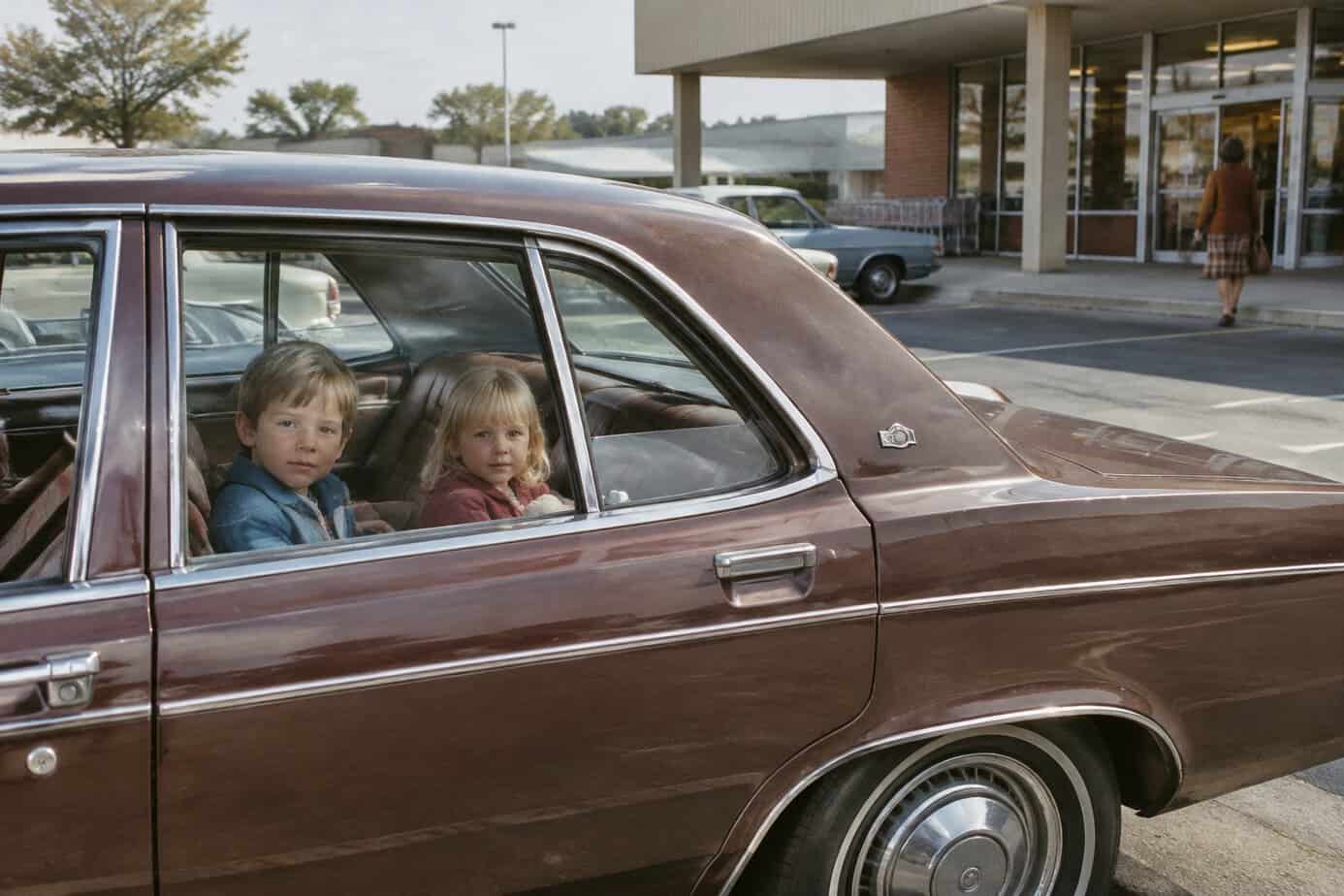
You remember how ordinary it felt to pull into a parking lot, crack the windows, and leave the kids in the back seat while you ran in for a few groceries or dropped off a package. It wasn’t something you thought twice about. The car was right there, you could see it through the store window half the time, and everyone else on your street did the same thing.
Errands moved faster that way, and honestly, it saved a lot of hassle. Unbuckling two or three kids, herding them across a parking lot, keeping track of little hands in a crowded store, all of that took time you didn’t always have. Leaving them snug in the car for ten or twenty minutes seemed like the practical choice, not a risky one.
Today, a parent doing the same thing might find a stranger knocking on the window or even calling the police. Attitudes about supervision have shifted so much that what once felt responsible now gets treated as neglect. You weren’t careless back then. You were just living by the rules of a different time.
4. Letting the kids ride loose in the back seat
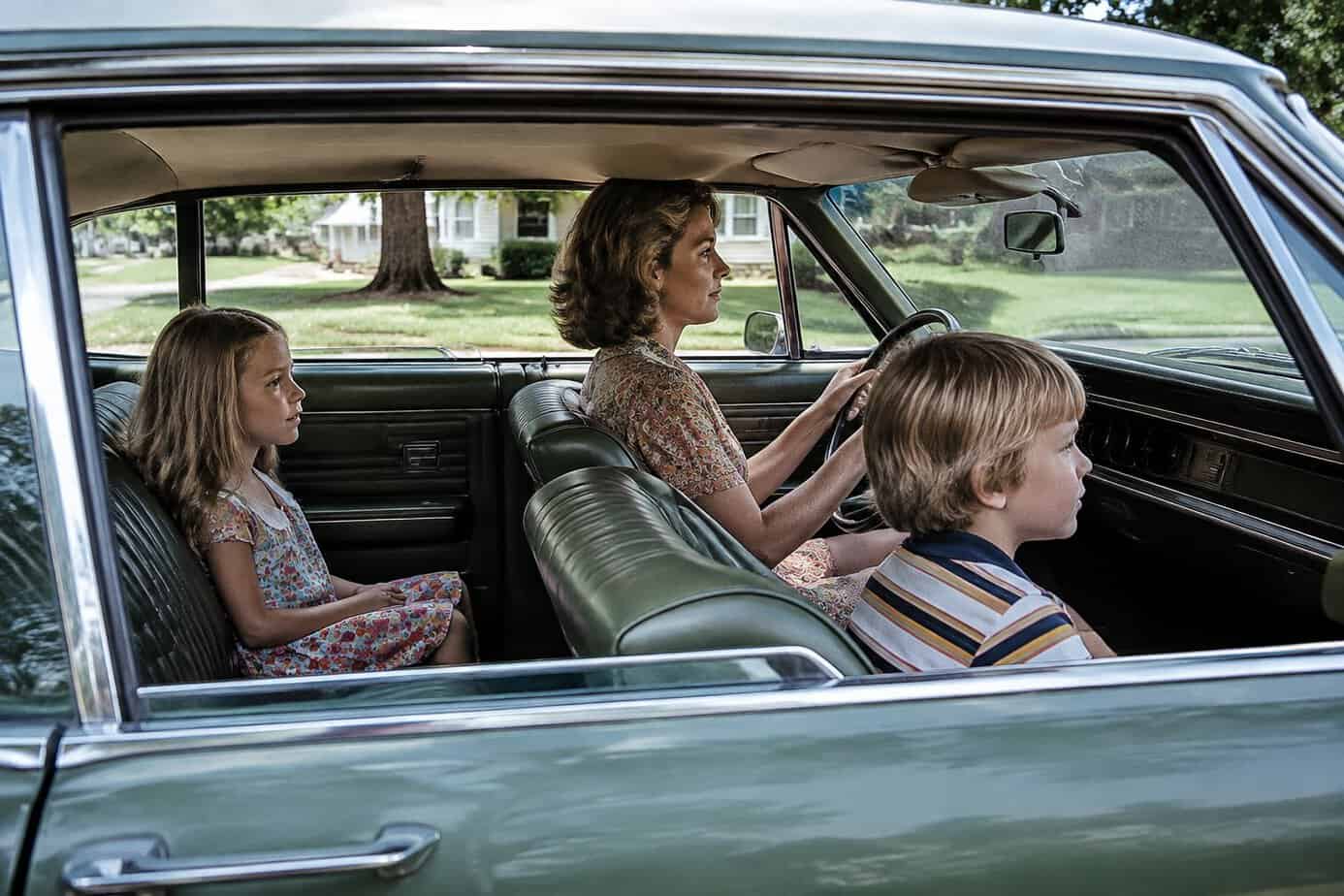
You probably remember piling the kids into the car without a second thought about seatbelts. Your little one may have ridden up front next to you, standing or kneeling on the seat to see out the window. It wasn’t carelessness, it was just how driving worked back then.
Car seats weren’t standard equipment, and the ones that existed were nothing like the sturdy, padded systems parents use now. Many families simply didn’t own one, and if they did, it often doubled as a place to prop a baby up rather than a true safety device. Letting kids ride loose in the back seat, or even in the way-back of a station wagon, felt completely normal.
You were following what everyone else did, from your neighbors to your own parents before you. Nobody around you was buckling kids in, so there was no reason to think twice about it.
A modern parent would probably feel their stomach drop watching those old home movies. Car seats, boosters, and seatbelt laws are second nature now, and the idea of a toddler bouncing around the back seat feels unthinkable. But you were doing exactly what your whole generation considered sensible and safe.
5. Letting the kids ride bikes without helmets
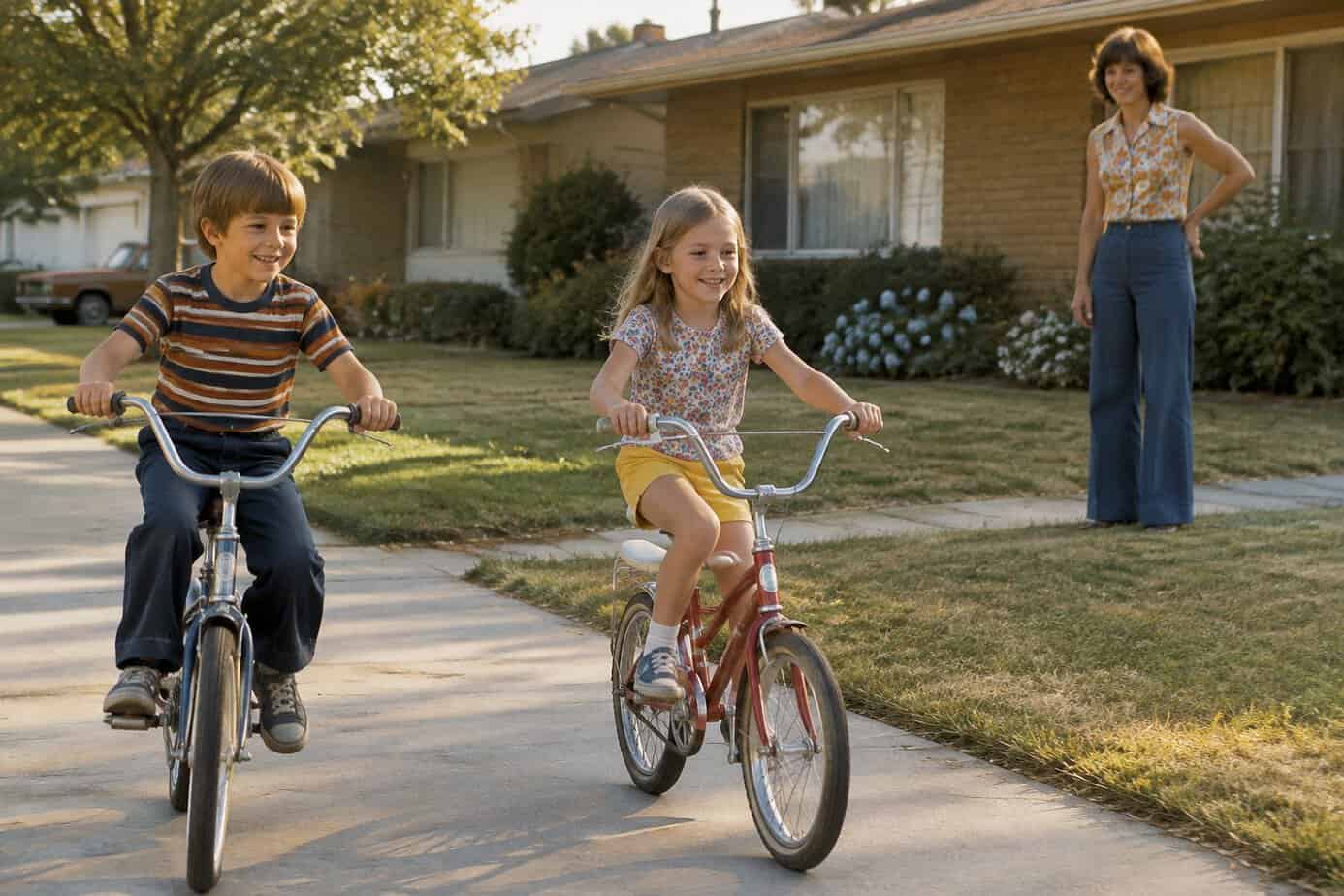
You probably remember sending your kids out the door on their bikes without a second thought about helmets. They weren’t something most stores even sold back then, and if they were, almost nobody bought them. Your children pedaled off down the street, and you trusted them to come home in one piece.
It made sense at the time because that’s just how things were done. Helmets weren’t part of the conversation the way they are now, and no one around you was doing it differently. You weren’t being careless, you were simply following what felt normal for the era.
Your kids likely rode for hours, exploring the neighborhood, racing friends, maybe taking a spill now and then with nothing worse than a scraped knee. Skinned elbows were treated with a hug and a bandage, not a trip to urgent care.
Today, a parent letting a child ride helmetless might get pointed looks or even a comment from another mom at the park. It’s funny how something so ordinary back then would raise eyebrows now, isn’t it?
6. Holding the baby on your lap in the front seat
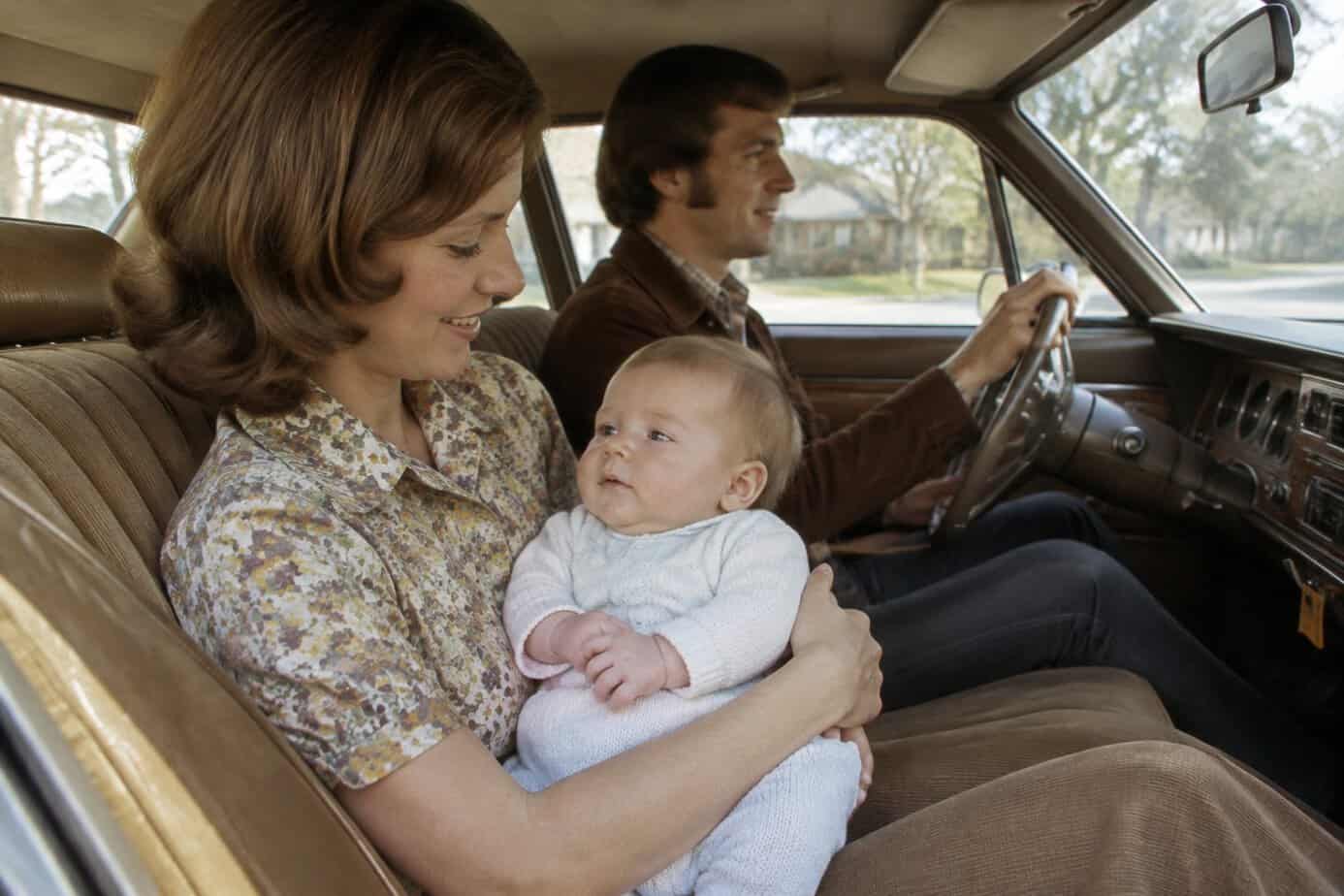
You remember those drives, don’t you? Baby snug against your chest, your arm wrapped around that little body as the car rolled down the road. It felt natural. It felt close.
Car seats as we know them today barely existed, and the ones that did were often flimsy little seats that hooked over the back of the bench seat, more for keeping a baby occupied than actually protecting them. So holding your baby just seemed like the sensible choice. You could feel them breathing, adjust them when they fussed, and keep them calm without turning around.
Nobody thought twice about it back then. Your own mother probably did the same thing with you, and her mother before her. It was just how babies traveled.
A modern parent would be horrified watching this today, and honestly, you’d probably be a little horrified too if you saw it now, knowing what we know about crash safety. But at the time, holding your baby felt like the safest place in the world for them to be. In a way, it was just love doing the best it could with what it had.
7. Sending the kids outside after breakfast until lunch

You remember how it worked. The kids ate their cereal, you rinsed the bowls, and out the door they went. Nobody asked where they were headed or when exactly they’d be back, as long as it was before the next meal.
That stretch of hours was yours. You could clean the house, start laundry, or just sit with a cup of coffee without anyone tugging at your sleeve. It wasn’t neglect in your mind, it was just how childhood worked back then.
The neighborhood itself kept an eye on things. Other mothers were out on porches or in yards, and everyone sort of watched everyone’s kids without making a big deal of it. If someone fell off a bike or got into a squabble, a grown-up nearby usually sorted it out.
Today, a parent doing the same thing might get a knock on the door from a concerned neighbor, or worse, a call to child services. Phones and tracking apps have replaced that old trust in letting kids roam within shouting distance. You didn’t have constant updates, just faith that they’d come home hungry and a little dirty, which they almost always did.
8. Keeping the baby in a playpen while you got the housework done
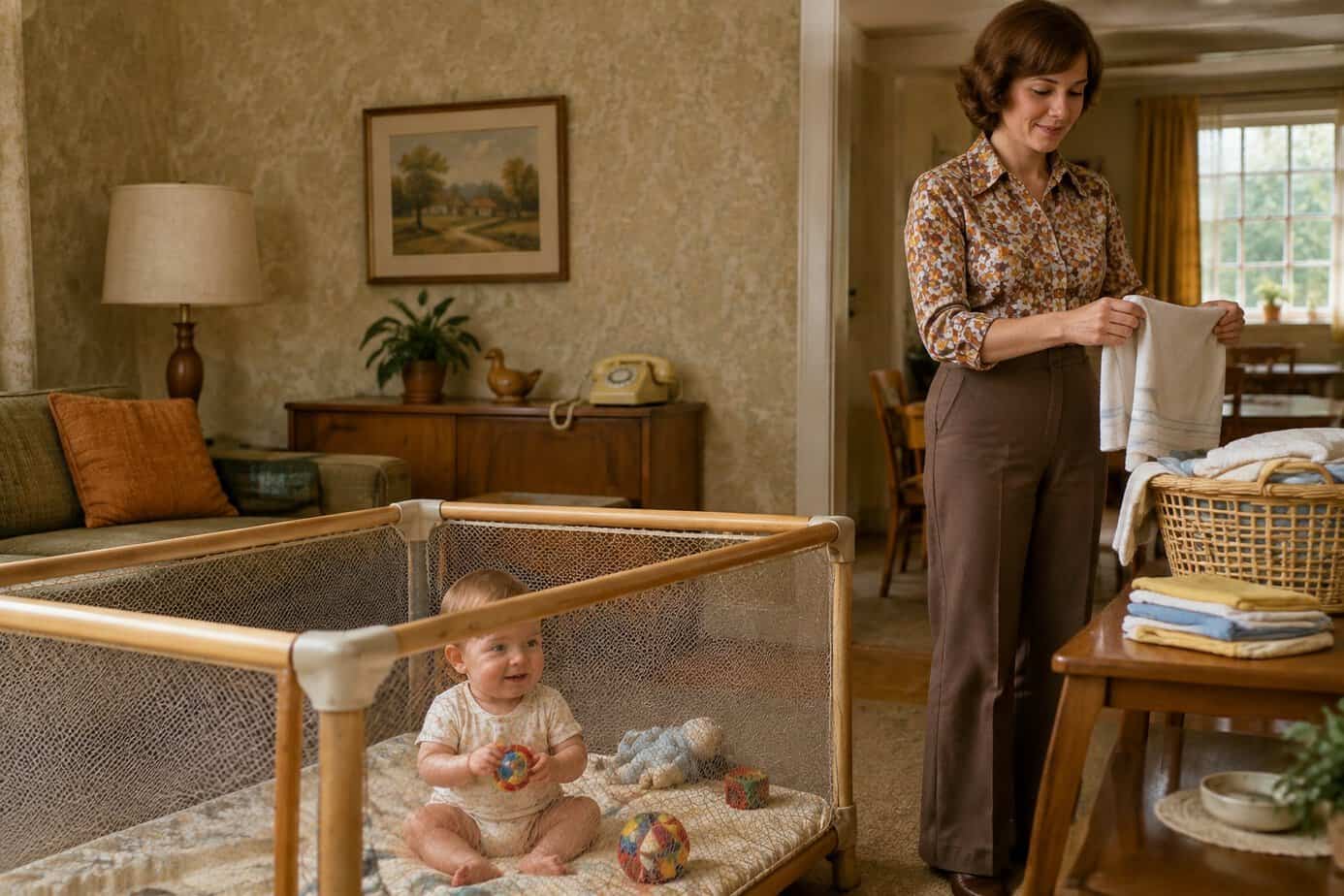
You had a house to run, and that playpen was your best friend some mornings. You’d settle the baby in there with a few toys and a blanket, then go wash dishes, fold laundry, or vacuum the living room without worrying every second.
It wasn’t about ignoring your baby. You could still hear every coo and cry from across the room, and you checked in constantly. It just meant you could get something done without a little one underfoot or into the cleaning supplies.
Nobody thought twice about it back then. Playpens were standard equipment in nearly every home, right next to the crib and the high chair. Your own mother probably used one for you.
Today, some parents worry that too much playpen time limits a baby’s movement and exploration. You’ll hear more about “floor time” and babyproofing whole rooms instead. But you were just trying to get the laundry done and keep your baby safe and happy at the same time, and that made perfectly good sense.
9. Filling the crib with quilts, bumpers and stuffed animals
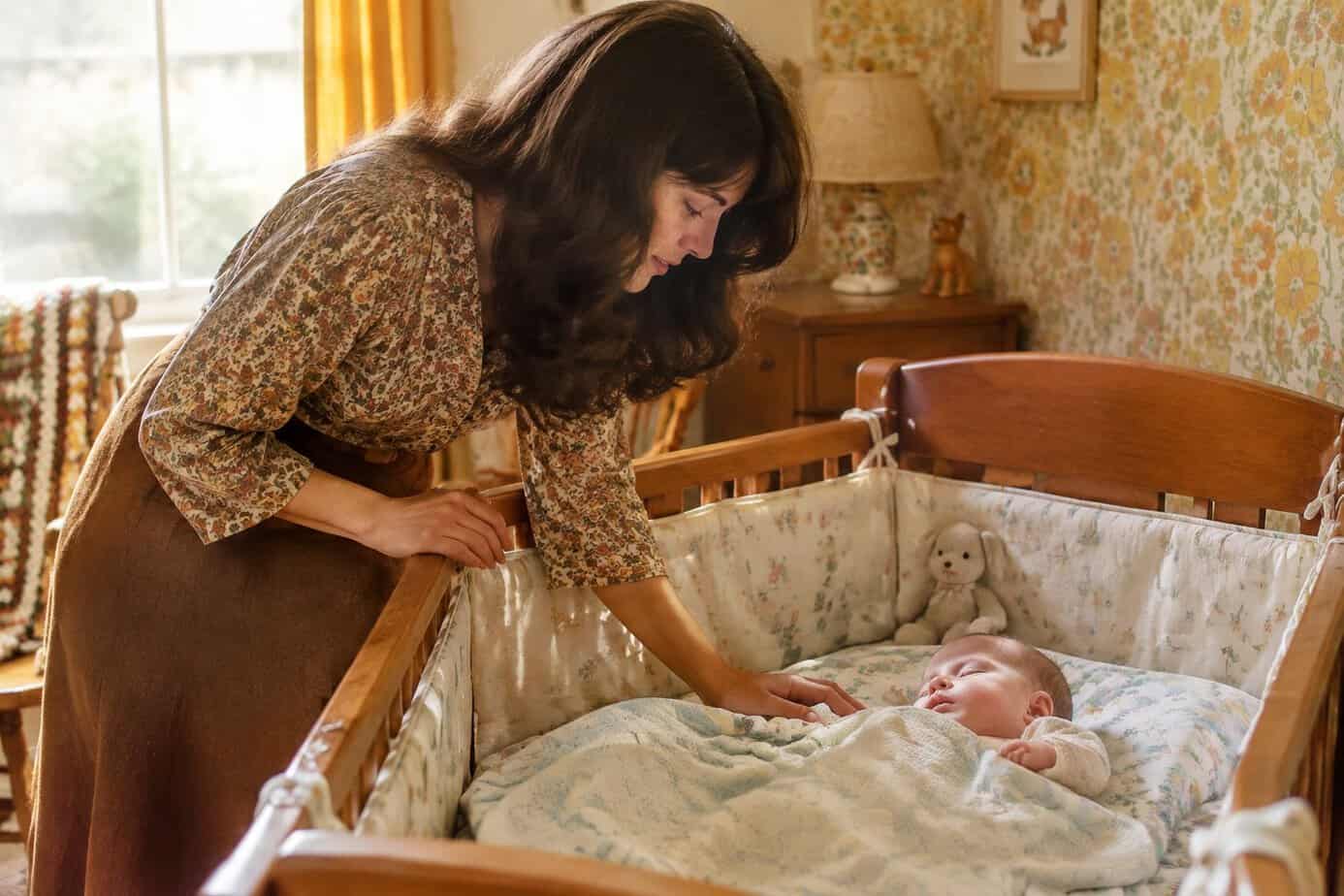
You probably made up the crib the way you’d make up any cozy bed, with a soft quilt, a fluffy blanket or two and maybe a small pillow for comfort. That was simply what everyone did back then, and your own mother likely did the same with you.
Crib bumpers were considered a thoughtful touch, something soft to keep little arms and legs from poking through the rails. Stuffed animals often shared the crib too, propped up near your baby’s head like cheerful little guards.
Nobody talked about bare cribs in those days. The idea that a flat, empty mattress was actually the safest option hadn’t become common knowledge yet, so you worked with what made sense at the time.
Today’s parents follow very specific guidelines about sleep position and keeping cribs free of anything soft. If they saw photos of your nursery setups, they might feel a little nervous looking at them.
You were doing exactly what loving, attentive mothers did with the information available. The guidance simply changed over the years, and you adjusted along with everyone else as it did.
10. Putting the baby to sleep on her tummy
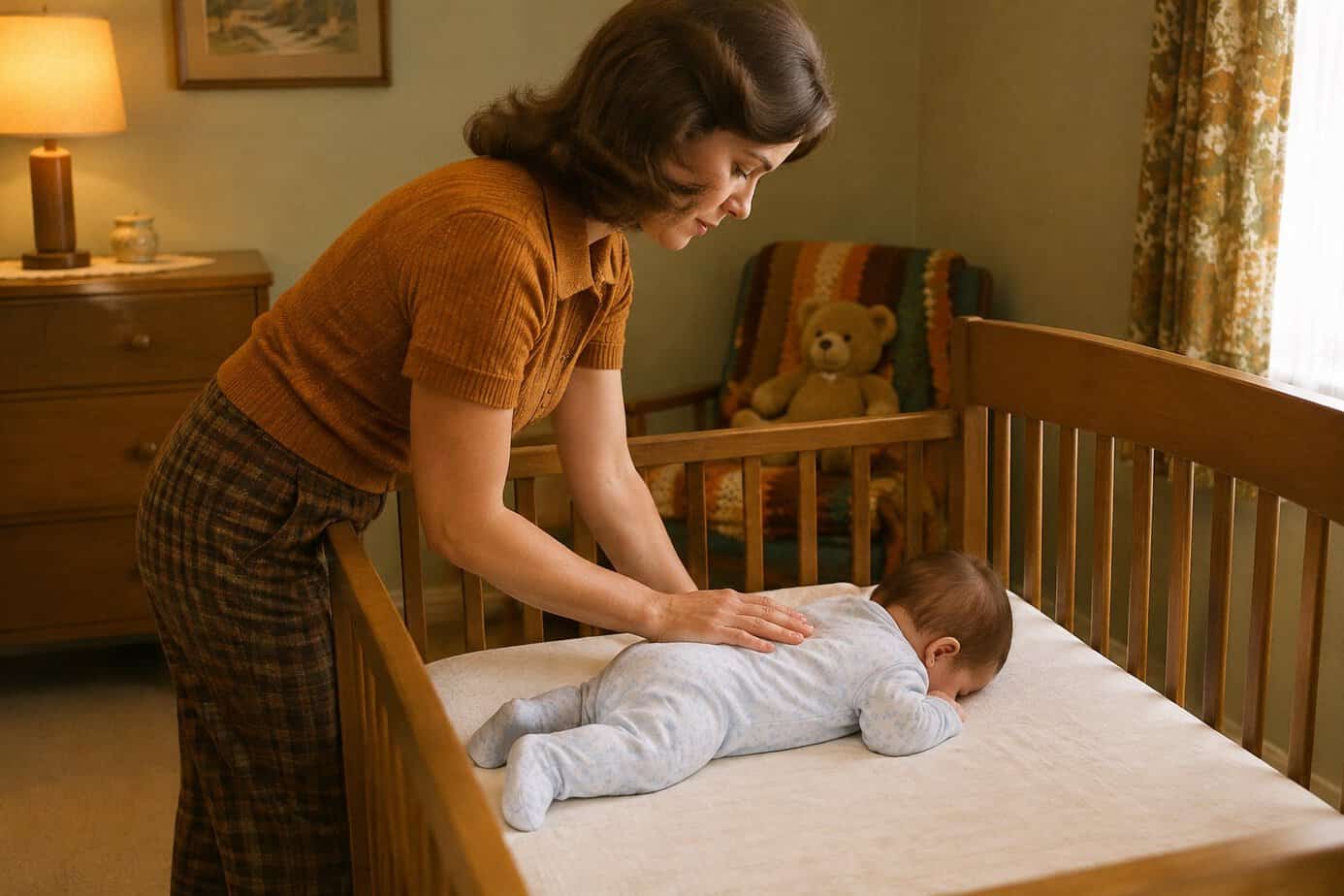
You probably tucked your babies in on their stomachs every single night, and no one thought twice about it. It was just how things were done, and most of the mothers around you did the same thing. Your own mother likely did it too, so it felt natural rather than risky.
The thinking back then was simple. People believed it helped babies who spit up avoid choking, and it was the common wisdom passed along by doctors and nurses at the time. You followed that advice because it came from people you trusted, not because anyone was careless.
Many mothers also noticed that babies on their tummies seemed to settle faster and sleep longer, which felt like proof the advice was right. You were doing exactly what the experts recommended, so there was no reason to question it.
Today, parents are taught to place babies on their backs, with bare, simple sleep spaces. If they saw a 1970s crib setup, they might feel a little nervous. But you were simply following the best guidance available at the time, and that counts for a lot.
11. Smoking in the house and the car with the kids around
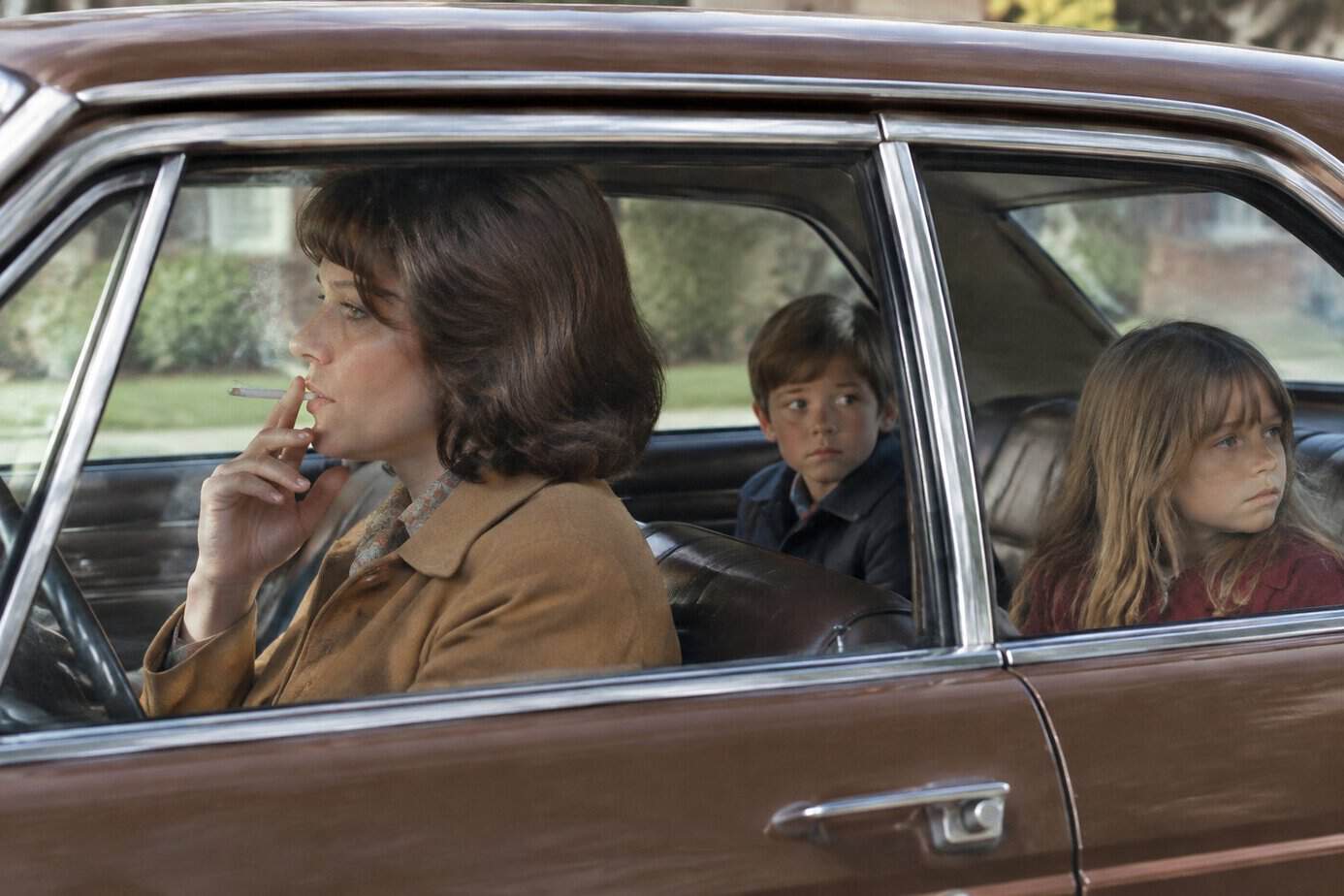
You probably smoked in the kitchen while making dinner, in the living room during your favorite shows, and yes, in the car with the windows barely cracked. Almost everyone did. Cigarettes were just part of daily life, sold everywhere and lit up without a second thought in homes, offices, and restaurants.
Secondhand smoke wasn’t something people talked about back then. The health warnings that exist today simply weren’t common knowledge, so you had no reason to think twice about lighting up with your kids nearby.
Car rides probably meant a haze drifting through the back seat while you drove to the grocery store or picked the kids up from school. Nobody flinched. It was just how things were.
Today, smoking around children, especially in a closed car, draws sharp criticism and even legal restrictions in some places. Parents now go out of their way to avoid any exposure at all.
Looking back, you were simply living the way everyone around you lived. You weren’t careless, you were just part of a generation that didn’t yet have the information we have now.
12. Rubbing a little whiskey on the baby’s sore gums
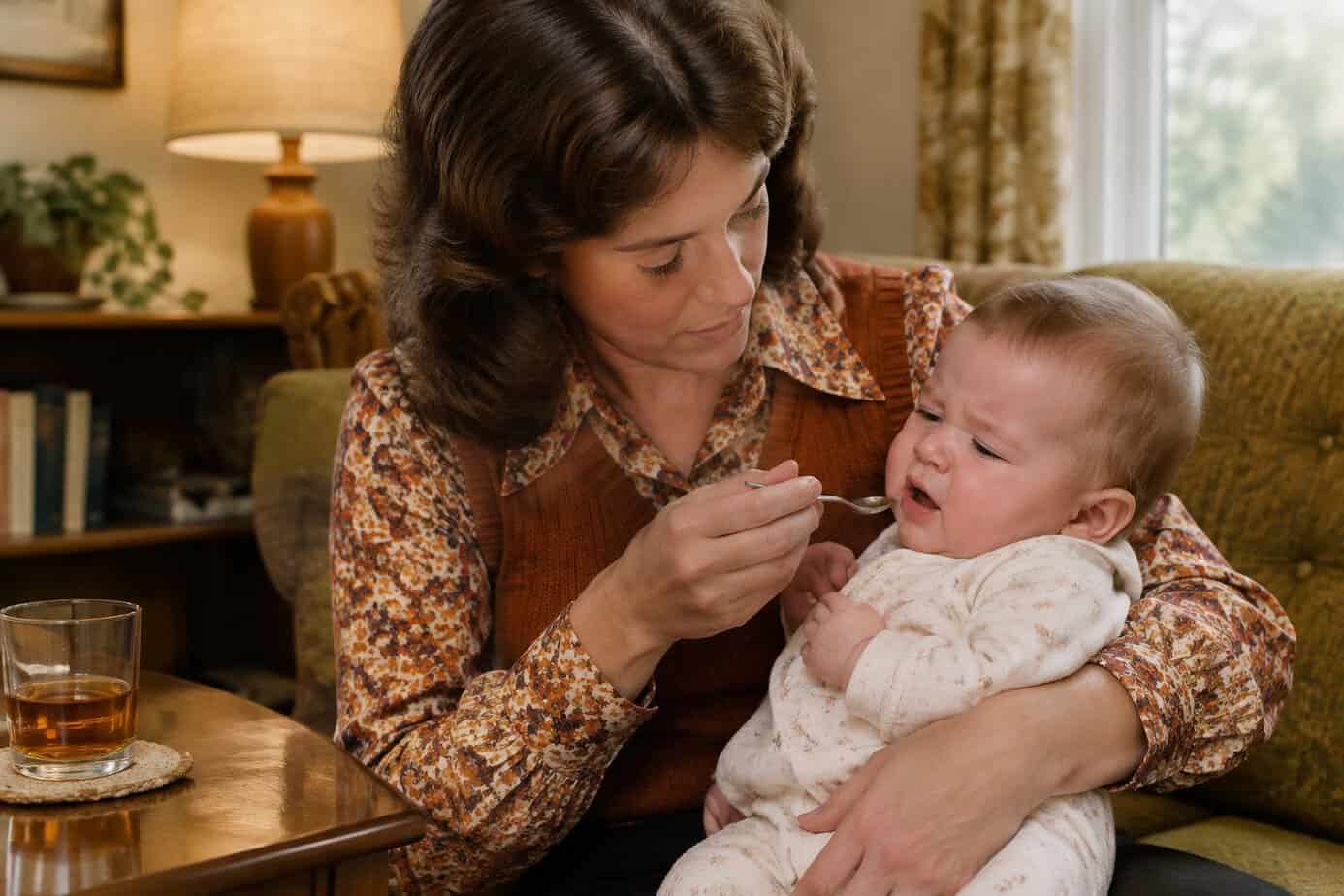
You remember the drill well. A fussy, drooling baby, a sleepless night ahead, and someone in the family, maybe your own mother or a neighbor, suggesting a little whiskey on the gums to take the edge off.
It wasn’t something you questioned much. Everyone seemed to do it, or at least talk about doing it, and it was passed along as ordinary advice rather than anything risky.
The logic made sense at the time. A small amount seemed to numb the gums and calm the baby enough for everyone to get some rest, and rest felt precious when you had a teething infant.
Few people questioned it back then, so you trusted what was handed down from one generation to the next.
Looking back now, you can see why today’s parents would be horrified. Alcohol and infants simply don’t mix, and the idea of it is enough to make modern moms gasp.
But at the time, it was just another quiet trick tired parents used to get through a hard night, not something anyone thought twice about.
13. Serving soda with dinner like it was milk
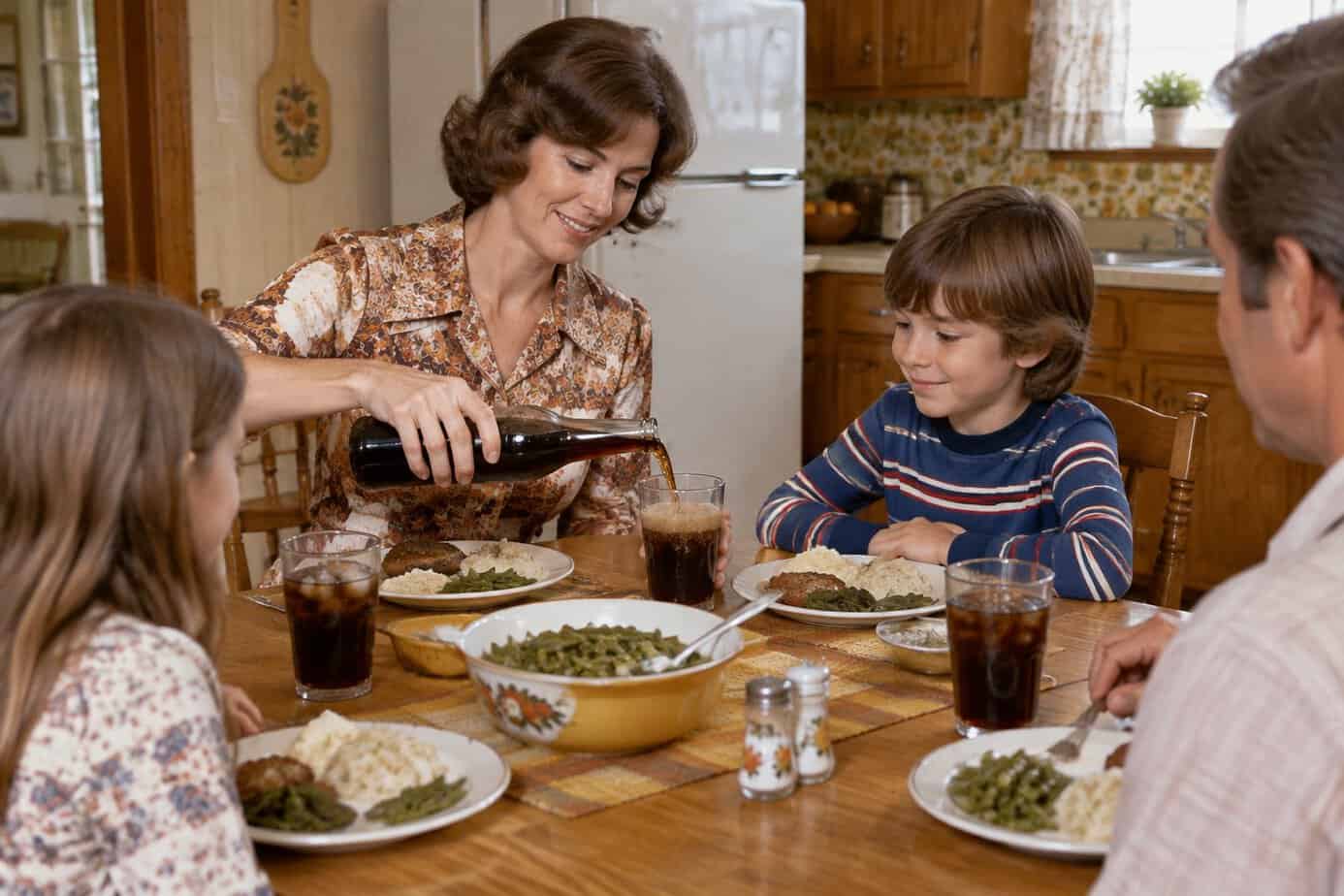
You probably kept the fridge stocked with cola, and nobody thought twice about pouring a glass for your kids alongside dinner. Soda wasn’t treated as an occasional treat back then; it was just another drink option, right up there with milk.
Kids could grab a bottle from the corner store with their own pocket change, no questions asked. Vending machines sold soda freely too, and you never worried about reading a label or counting grams of sugar.
It made sense at the time because nobody was talking much about sugar’s long-term effects. Soda companies marketed their drinks as wholesome family fun, and you had no reason to doubt that.
Today’s parents keep a much closer eye on sugary drinks, often limiting them to special occasions or birthday parties. Many schools have banned soda from vending machines entirely, something that would have seemed strange in your day.
Looking back, you probably remember soda as part of ordinary family meals rather than something to feel guilty about. It was simply what everyone did, and your kids turned out just fine drinking it.
14. Giving a quick swat on the bottom
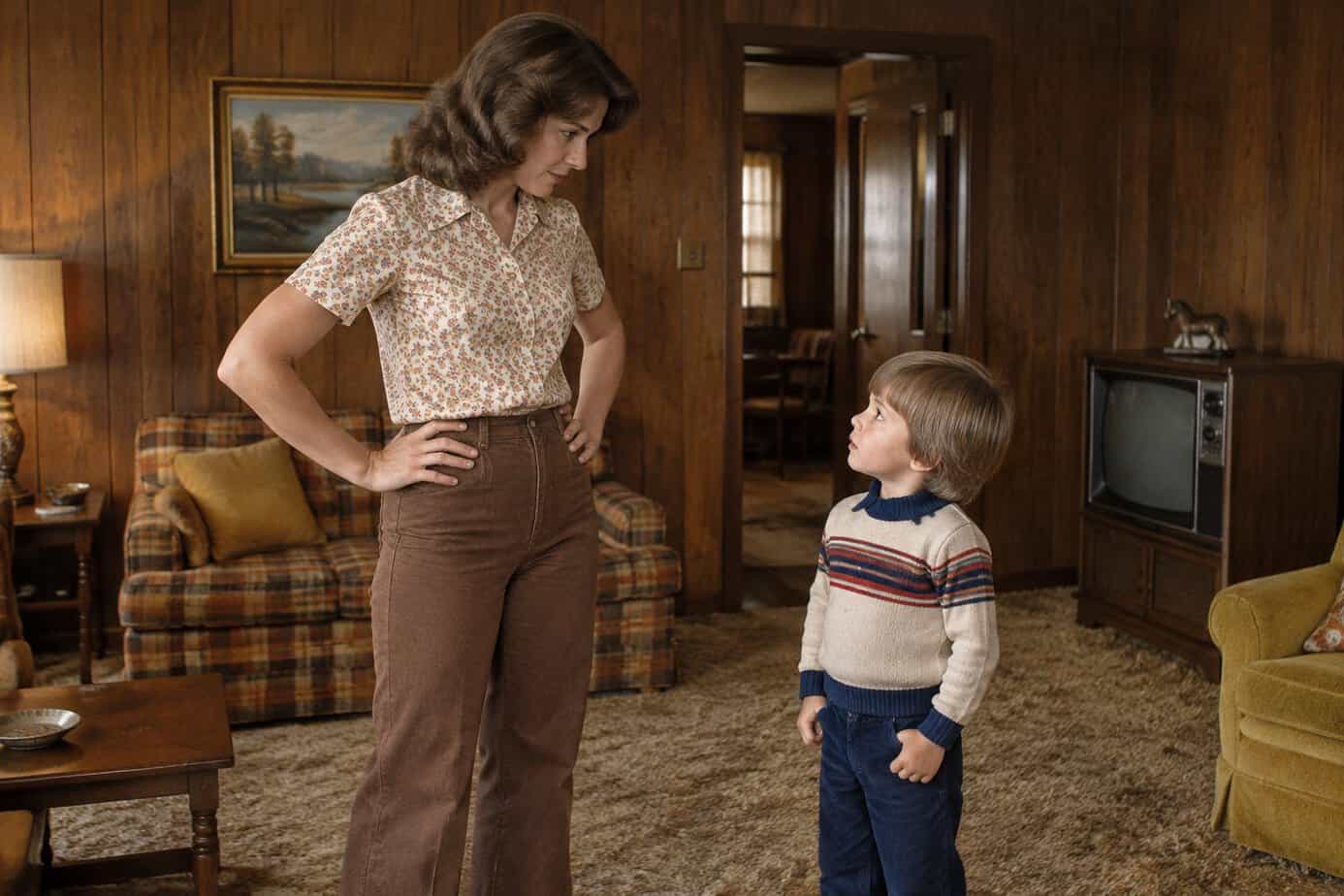
You probably gave your kids a quick swat on the bottom when they ran into the street or mouthed off at the dinner table. It was not something you agonized over. Nearly every parent on your block handled discipline the same way, so it felt like ordinary parenting rather than anything harsh.
Spanking was simply the accepted response when a child broke the rules or ignored a warning. Your own parents likely did the same thing to you, so it seemed like the natural way to keep kids safe and respectful. Nobody called a family meeting about it. You just went with what you knew.
Today, many parents lean toward time-outs, talking things through, or taking away privileges instead. Spanking has become a topic people debate online, with plenty of pediatricians and parenting experts encouraging gentler approaches. If a mom today mentioned swatting her toddler, she might get some raised eyebrows or a lecture about emotional development.
You were not trying to be tough or old-fashioned. You were just raising your kids the way everyone around you did, doing your best with what felt normal at the time.
15. Saying “Wait until your father gets home”
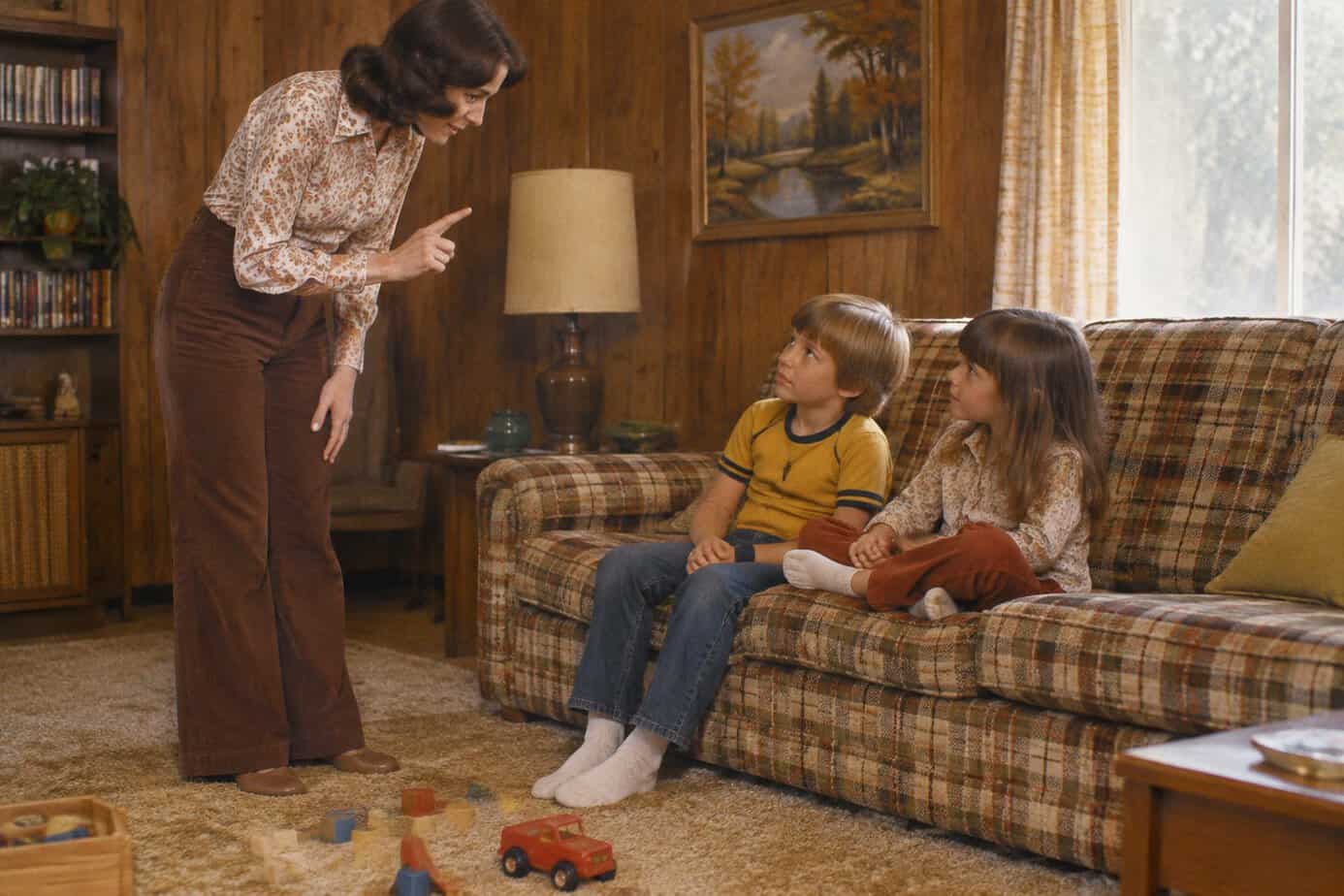
You probably said it a hundred times: “Wait until your father gets home,” or “Keep that up and you’ll be sorry.” It was just how you got a kid moving when asking nicely the first time didn’t work.
A warning like that usually did the trick. Kids knew you meant business, and the threat alone often stopped the whining or the backtalk before it even started.
You weren’t trying to scare your children. You were trying to get through a grocery store trip or a long car ride without a full meltdown, and a firm warning felt like a fair heads-up before any real consequence landed.
Nobody around you thought twice about it either. Every mother on the block had her own version of “don’t make me stop this car,” and it was just background noise of parenting back then.
These days, parenting advice leans toward calm explanations and natural consequences instead of threats, since experts worry that warnings alone can create anxiety rather than real understanding. Looking back, you were just doing what worked, with the tools and expectations of your time.
16. Making the kids clean their plates
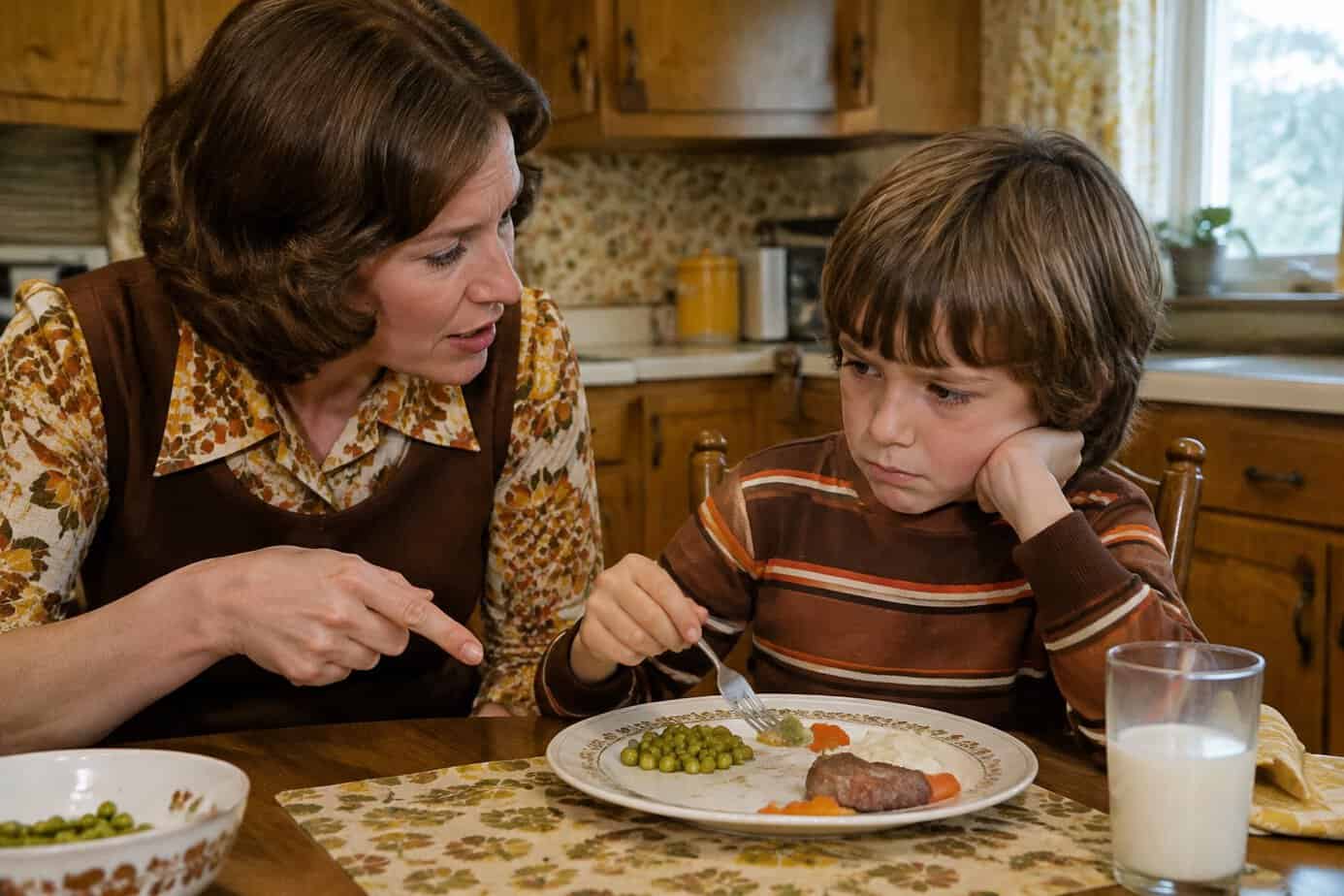
You remember the standoffs at the kitchen table. Everyone else had gone outside to play, and one stubborn child was still staring down a pile of peas. There was no negotiating. Your rule was simple: they finished what was on their plate, or they sat there until they did.
It wasn’t about being harsh. Food cost money, and wasting it felt wrong to a generation that grew up hearing about hardship from their own parents. Clearing your plate was just good manners, and it showed respect for the work that went into the meal.
Your own mother had done the same with you, so you didn’t think twice about it. If the kids didn’t like the liver and onions, that was just too bad. There would be nothing else offered, and dessert certainly wasn’t coming until that plate was empty.
Today’s parents tend to let kids stop eating when they feel full, even mid-meal. Pediatricians now talk about letting children listen to their own hunger cues instead of pushing them past it. You were just doing what every mother around you did, and nobody thought twice about it back then.
17. Making the kids hug and kiss every relative
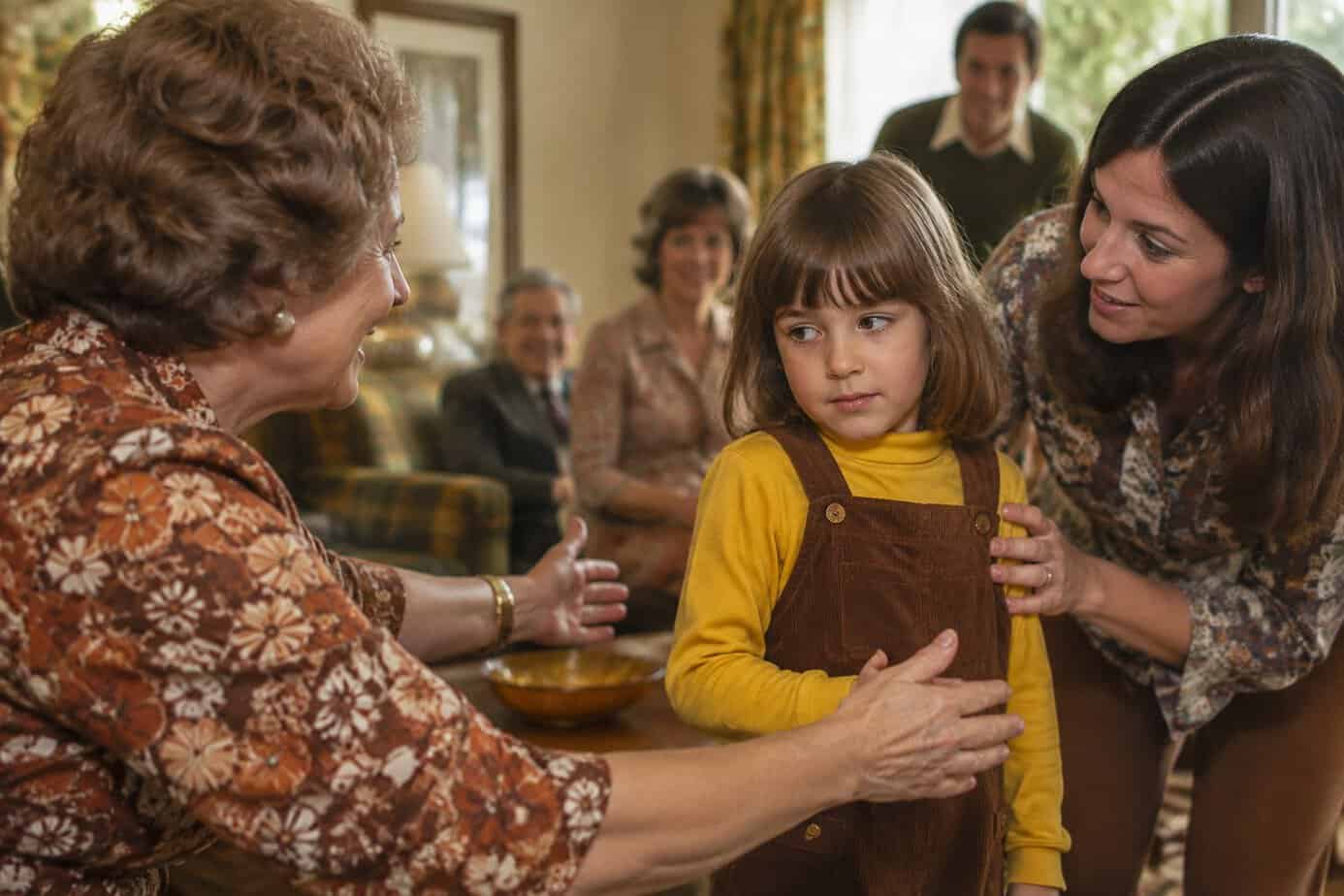
You remember standing your child in front of Grandma or a favorite uncle and gently nudging them forward for a hug or kiss hello. It wasn’t meant to be strict, it was just good manners, the same way you were raised. Family was family, and showing affection to relatives was simply part of being polite.
If your child hesitated or looked shy, you probably gave them a little encouragement, maybe even a reminder that it would hurt someone’s feelings if they didn’t. Nobody thought twice about it. It felt like a small, loving gesture that kept family bonds warm.
Today, many parenting experts encourage letting kids decide for themselves how they want to show affection, even to relatives. The idea is that children should feel in control of their own bodies from an early age. A modern parent might offer a wave or a high five as an alternative instead of insisting on a hug or kiss.
Looking back, you were just trying to raise a polite, loving child who respected family. It came from warmth, not pressure, and most relatives appreciated the gesture just as much as you intended.
18. Letting the TV babysit while you got dinner on the table
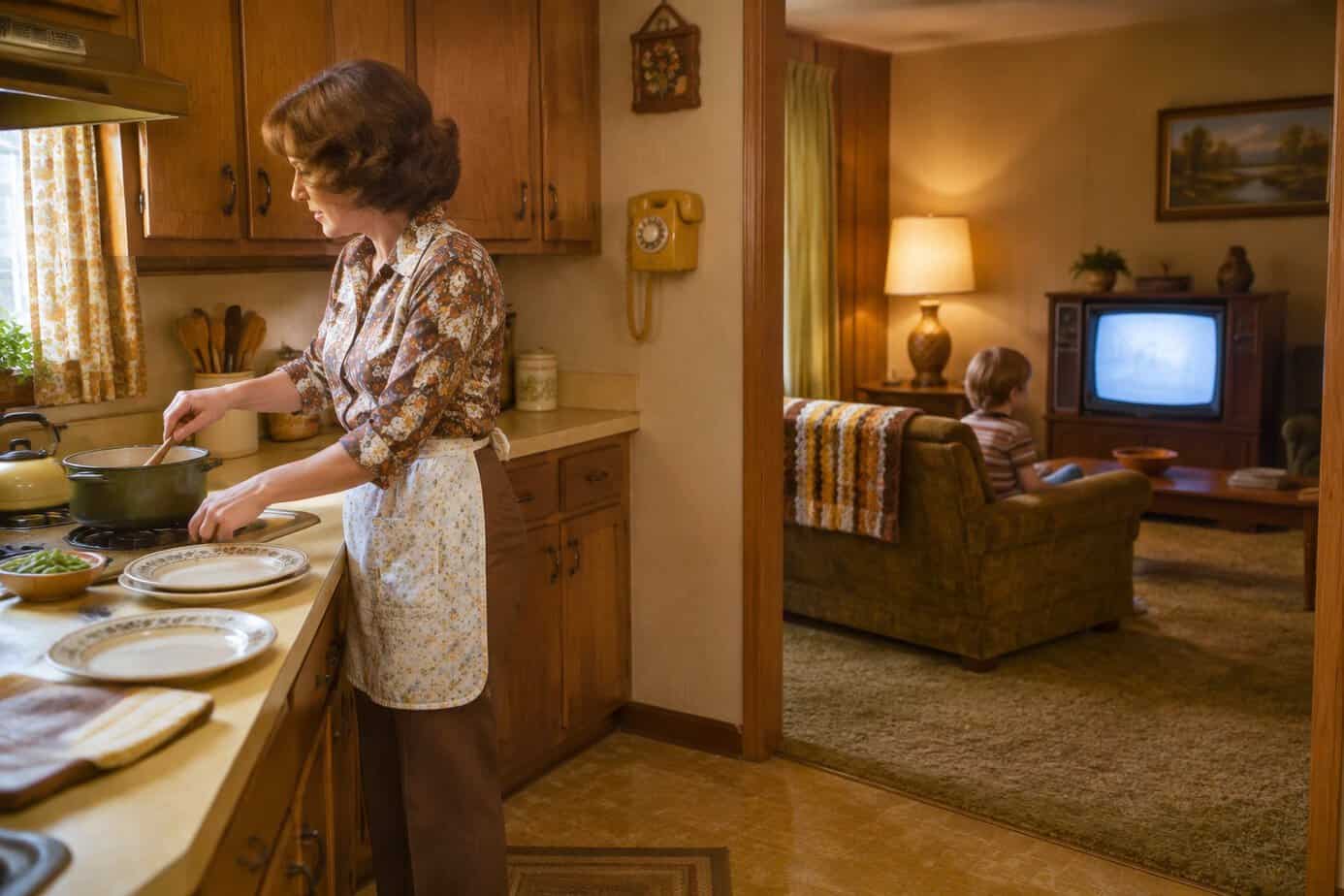
You remember the routine well. Around five o’clock, you flipped on the television, parked the kids in front of it, and headed to the kitchen to get dinner going. Reruns, cartoons, or whatever variety show was on didn’t really matter, as long as it bought you thirty quiet minutes.
There was no guilt attached to it back then. You had a meal to cook, maybe laundry to fold, and no one expected you to entertain your children every waking minute. The television was just another tool, like a playpen or a swing set.
Nobody worried about screen time limits or educational content ratings. If the kids were safe, quiet, and not fighting, you considered it a win. Your own mother had probably done the same thing with the radio.
Today, people talk about screen time guidelines and curated content lists, and plenty of parents feel nervous about handing over a tablet for even ten minutes. Back then, you just needed dinner on the table and a little peace before the evening got busy again.
19. Feeding the baby formula from the very first day
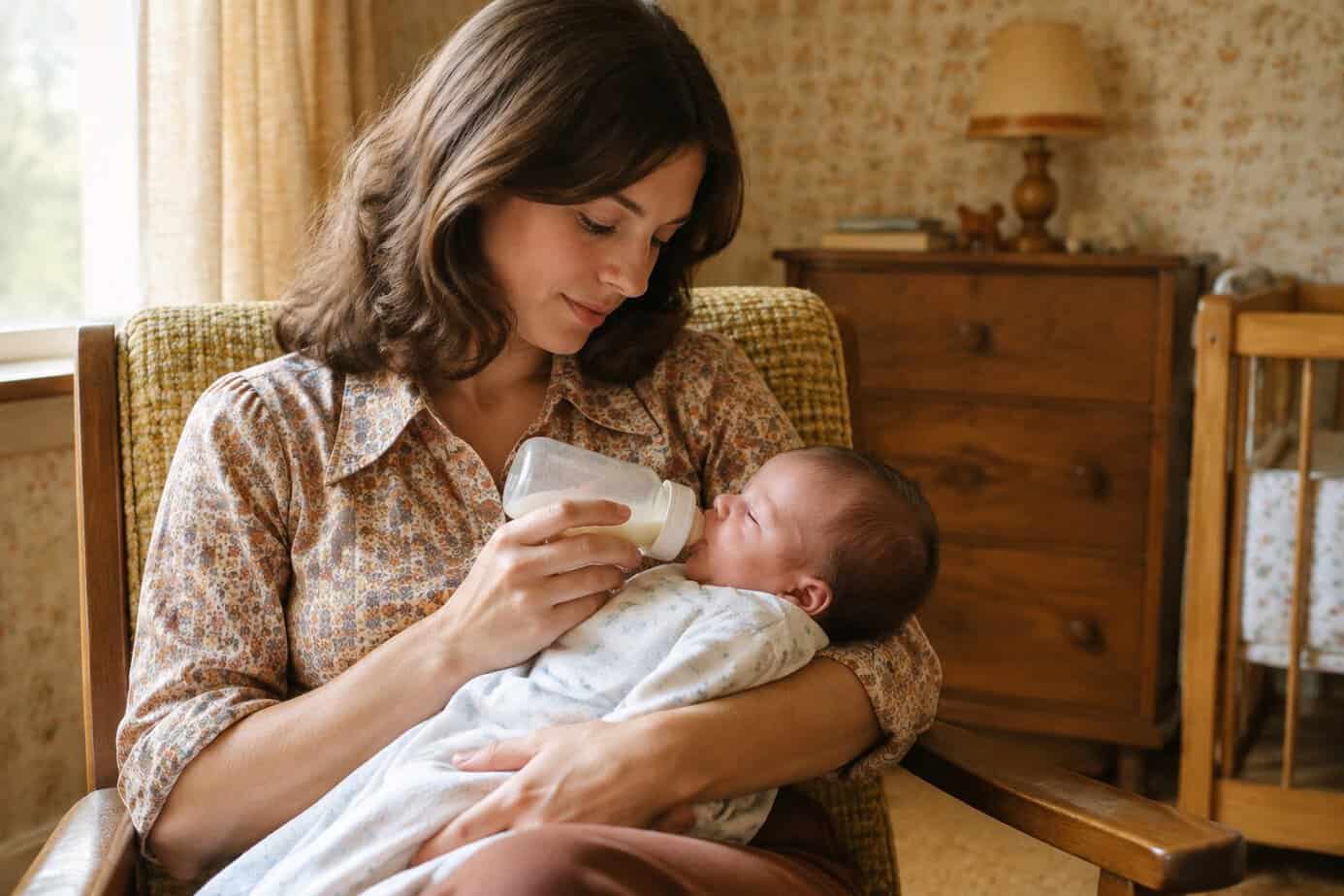
You probably didn’t think twice about it. If breastfeeding didn’t work out right away, or you simply preferred formula, the hospital handed you a can and sent you home with instructions. Doctors at the time often treated formula as a perfectly equal substitute, so there was no guilt attached to the choice.
Formula companies made the decision easy, too. They sent free samples home with new mothers and advertised their products as scientifically formulated and modern. It felt like progress compared to what your own mother might have done.
Plenty of women also went straight to formula because it gave other family members a chance to help with feedings. Your husband could take a turn at two in the morning, and that mattered when you were running on no sleep.
Today, formula feeding is still common, but there’s a lot more pressure around “breast is best” messaging. Parents now face a mix of encouragement and judgment no matter which way they feed their babies. Back then, you just did what felt practical and moved on with your day, without anyone questioning you over it.
20. Putting cereal in the baby’s bottle to help her sleep
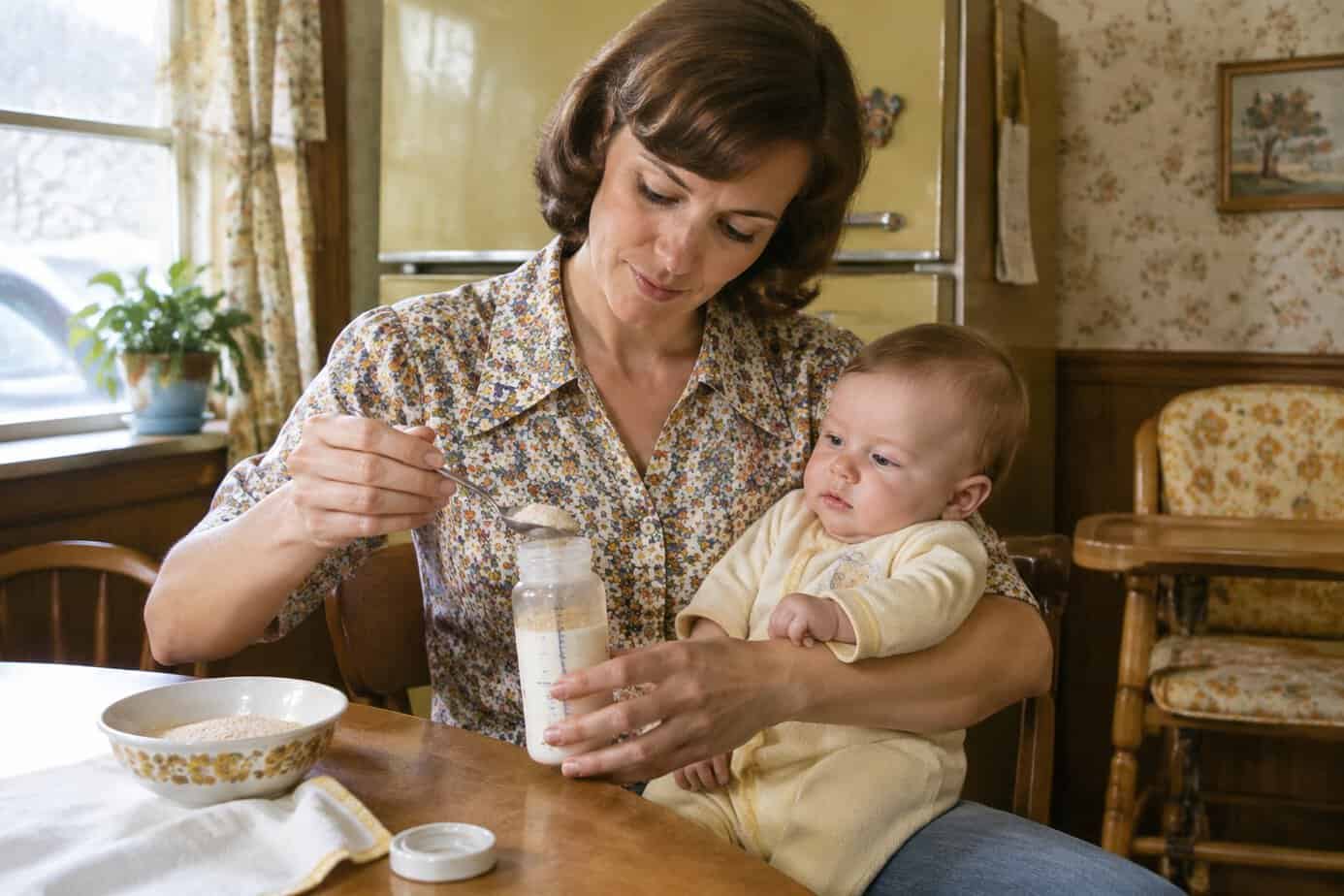
You remember the advice well. A spoonful of rice cereal mixed into the evening bottle, and your baby would sleep longer, or so everyone said. Your own mother probably suggested it, and so did your neighbors and maybe even your doctor.
It made sense at the time. You were exhausted, running on fragmented sleep for weeks, and anything that promised a few extra hours felt worth trying. The idea was that a fuller belly meant a longer stretch of rest for everyone in the house.
Nobody questioned it much back then. Cereal in the bottle was just something mothers did, passed down like a family recipe, with no warning labels attached.
Today, pediatricians advise against it. The thinking now is that it does not actually help babies sleep better, and it can interfere with how an infant learns to recognize hunger and fullness. There are also concerns about choking, since bottle nipples were not designed for anything thicker than milk.
If you did this, you were simply following the common wisdom of your day. You wanted your baby fed and settled, and you used the tools you had.
21. Sending the kids to the corner store for your cigarettes
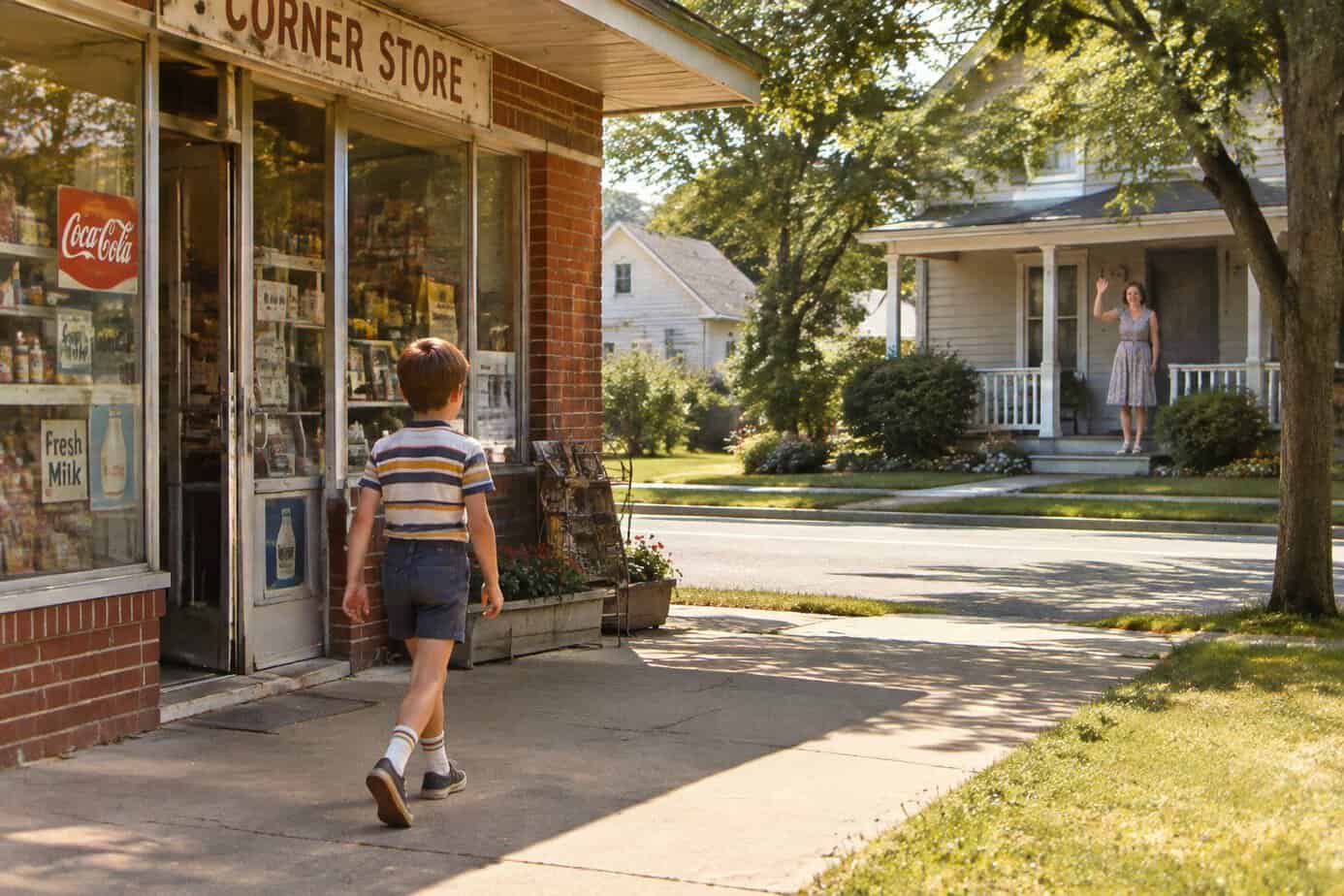
You probably remember handing your child a few coins and a short note, then watching them head off to the corner store for a pack of cigarettes. Maybe you were busy with dinner, or your hands were full with a younger baby, and it just seemed easier to send someone who could run there and back in ten minutes.
The store owner knew your family, and your child probably felt proud to be trusted with the errand. Nobody batted an eye when a nine or ten year old walked up to the counter and asked for a specific brand by name.
It wasn’t about carelessness. Cigarettes were sold everywhere, advertised everywhere, and treated as an ordinary household item like bread or milk. Sending a kid to fetch them felt no different than sending them for a loaf of bread.
Today, a store wouldn’t even be allowed to sell cigarettes to a child, and the clerk could face real penalties for trying. A parent doing this now would likely hear about it from someone pretty quickly. Back then, it was just Tuesday.
22. Leaving the oldest in charge of the little ones
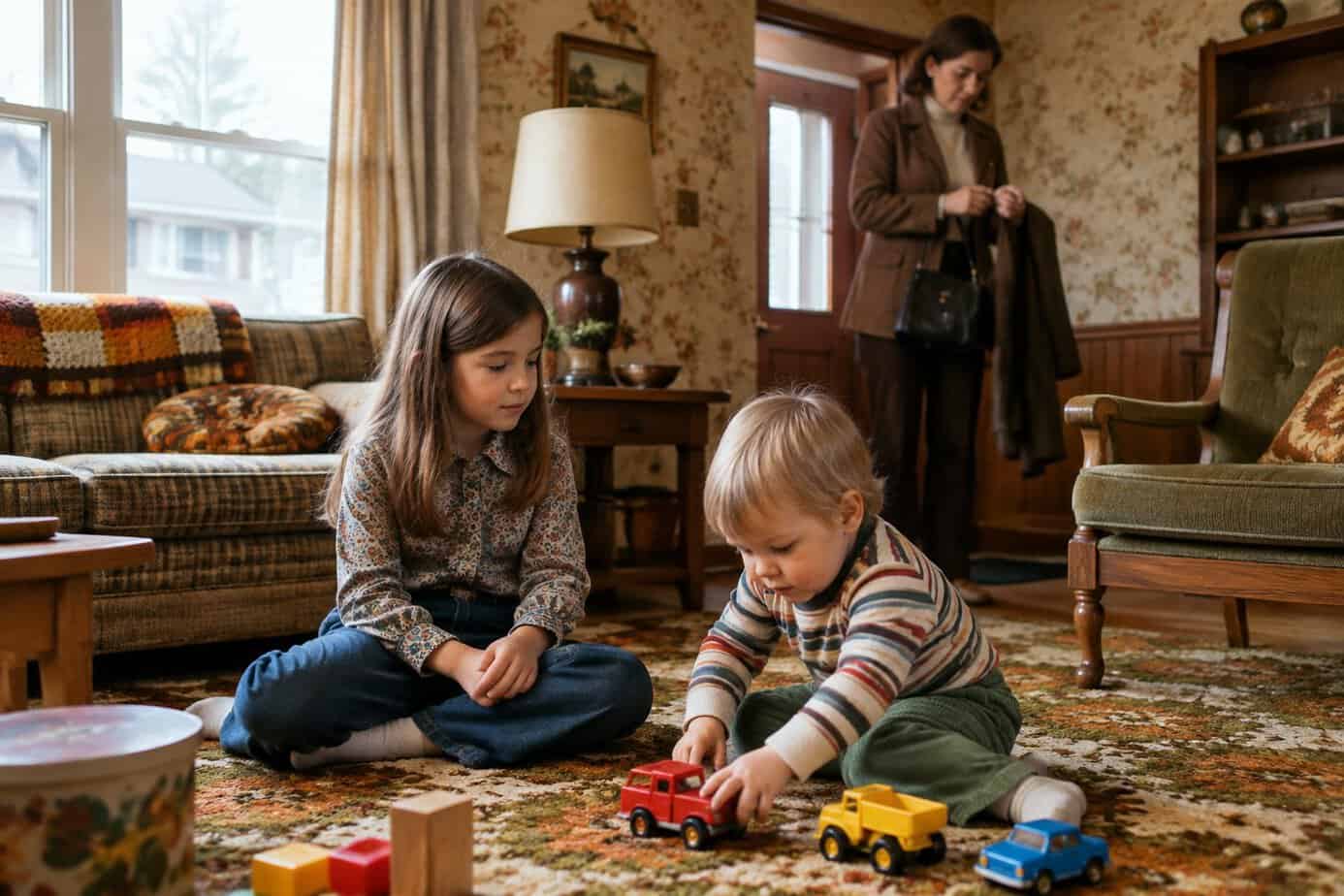
You probably remember handing the younger ones over to a sibling who was maybe ten or eleven and heading out the door without a second thought. It wasn’t carelessness. It was just how things worked when you had errands to run and no one else around to help.
That older child became the boss for an afternoon, settling arguments, making snacks, and keeping everyone from wandering too far. You trusted that they could handle it, and most of the time, they did just fine. Kids grew up a little faster back then, and that responsibility was part of it.
Today, leaving a ten-year-old in charge of younger siblings raises eyebrows fast. Parents now wait until kids are well into their teens, and even then, there are rules about how long and under what circumstances. Back then, it was just how busy families got by.
You weren’t being negligent. You were stretched thin, like every other mother on the block, and you leaned on the family you had. Looking back, it taught your older kids something about responsibility that’s harder to teach now.
23. Hiring the twelve-year-old next door to babysit
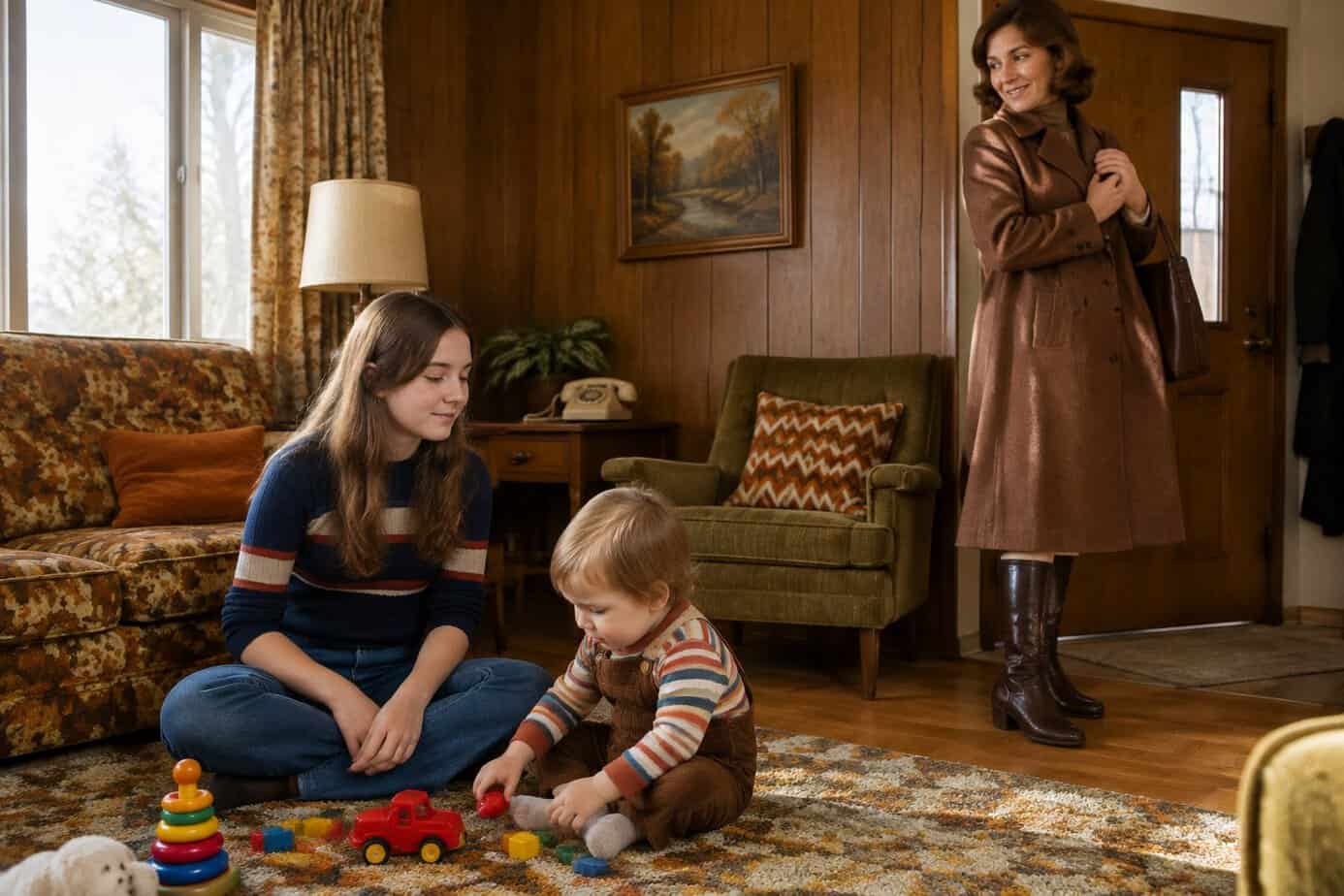
You probably remember scanning the neighborhood for a responsible kid, not a certified adult, when you needed someone to watch your children for an evening. A twelve or thirteen-year-old with a good reputation was often all you needed. She lived three doors down, she had younger siblings of her own, and that was considered plenty of experience.
The arrangement made sense because everyone knew everyone. You had watched that girl grow up, you trusted her parents, and she could always run next door if something went wrong. Payment was often a dollar an hour or less, maybe with a plate of leftovers on the side.
Today, hiring a twelve-year-old to supervise young children would raise eyebrows fast. Most parents now look for sitters who are at least fifteen or sixteen, and many want babysitting certification through the Red Cross or similar programs. Background checks and references have become standard, even for teenagers.
Back then, you relied on community knowledge instead of paperwork. It worked for you, and most evenings ended with happy kids and a sitter who walked home proud of her earnings.
24. Leaving the kids home alone while you ran an errand
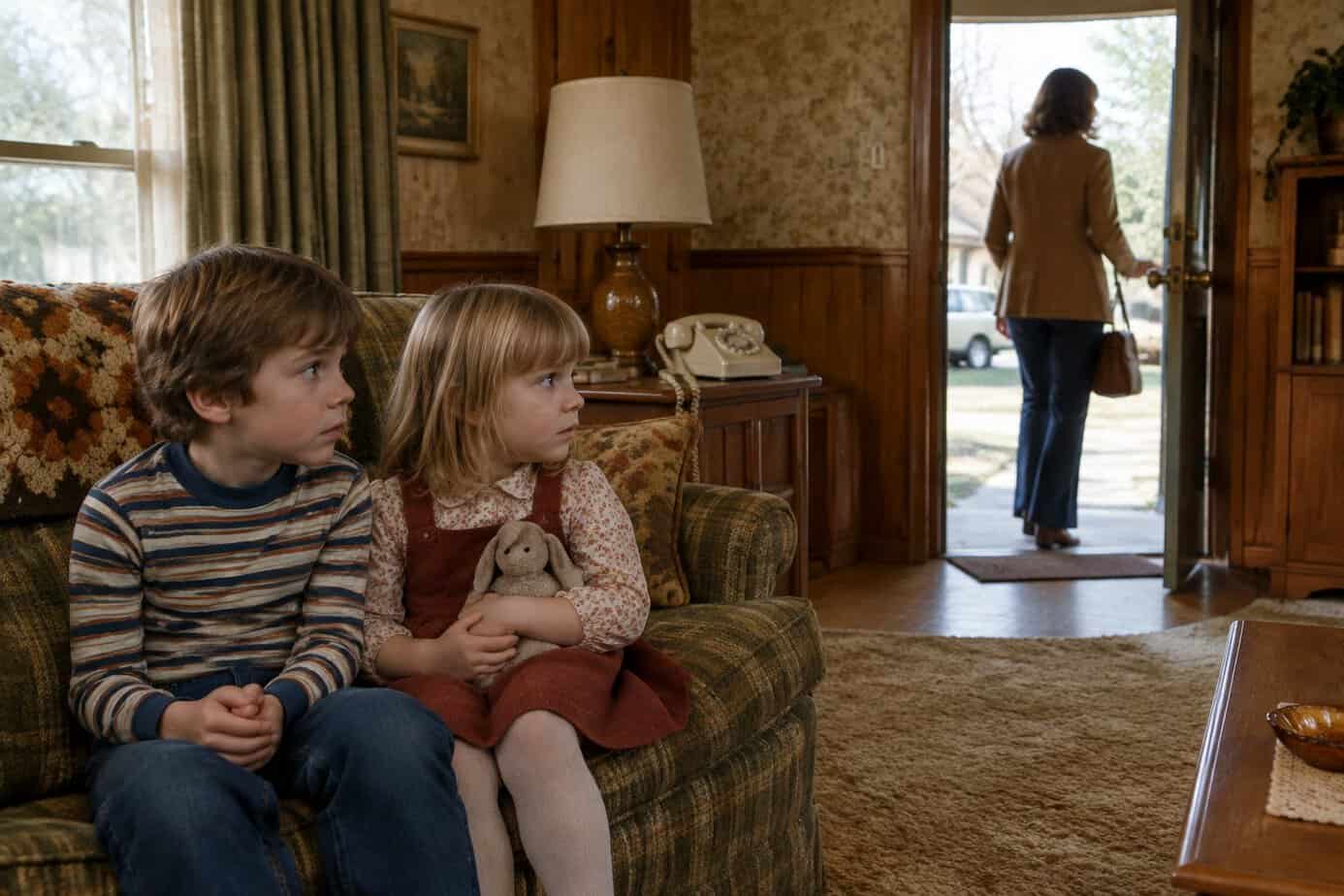
You probably left your kids home alone earlier than most parents would today, and at the time it did not feel like a big decision. Maybe you ran to the grocery store, or needed to pick up another child from practice, and your oldest was old enough to “keep an eye on things” for twenty minutes.
There was no real guideline for what age that should start. You mostly went by instinct, knowing your own child’s temperament and trusting the neighborhood around you.
Phones were attached to walls, so there was no way to check in every few minutes. You simply told them you would be back soon, and that was considered enough.
Neighbors were often nearby and paying some attention, which made the whole idea feel safer than it might sound now. Today, a parent doing the same thing might worry about judgment from others or even a visit from concerned authorities.
Back then, it was simply part of learning independence. You were not being careless, you were trusting your child the way your own parents had once trusted you.
25. Letting the kids handle sparklers and firecrackers on the Fourth
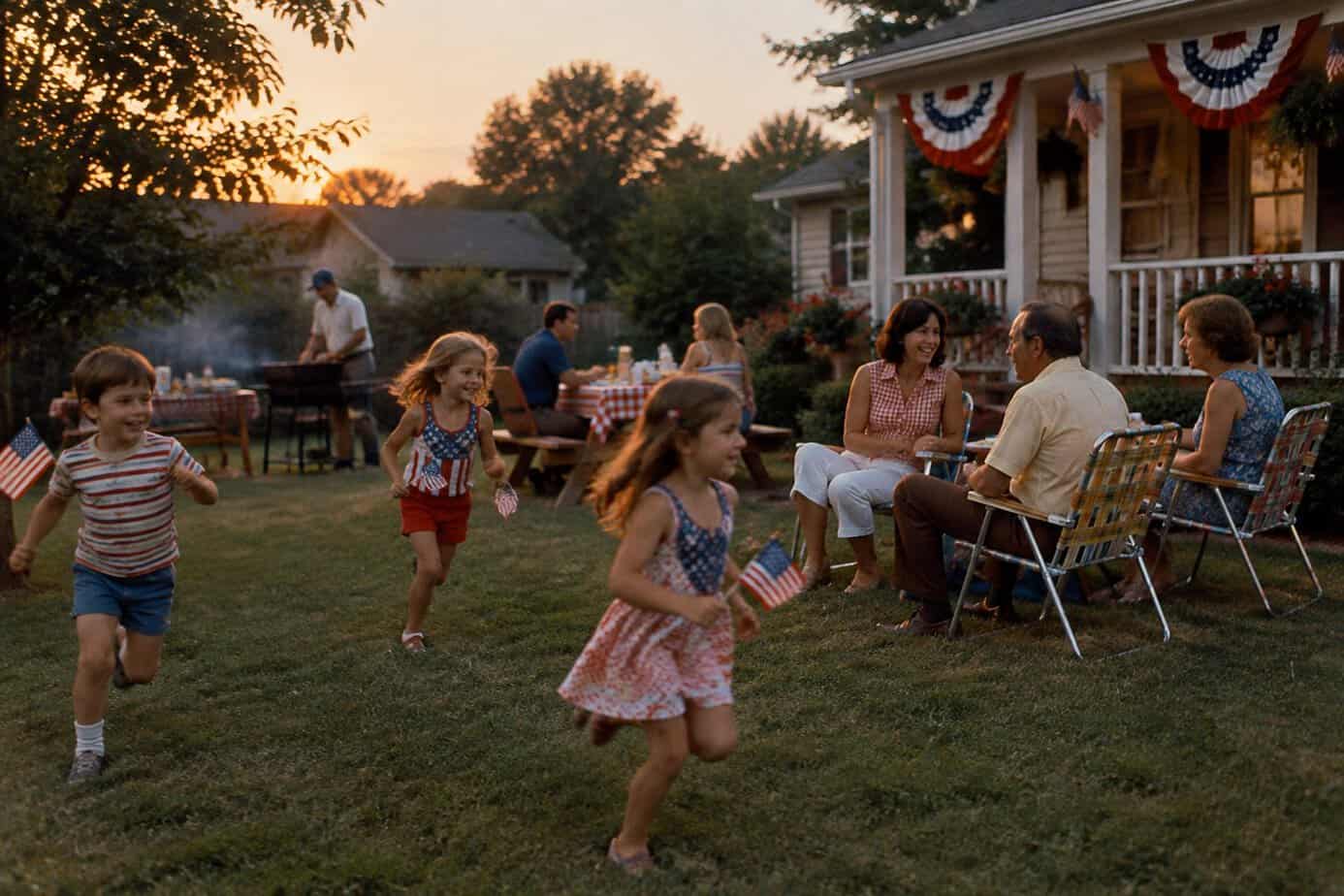
You remember handing your kids a box of sparklers on the Fourth of July and going back to visiting with the neighbors. Nobody stood over them with a bucket of water or safety glasses. It just wasn’t how things were done.
Matches were around the house for lighting candles, cigarettes, or the stove, and kids knew where to find them. Letting your children strike a few just to see what happened didn’t feel reckless. It felt like a normal part of growing up and learning how things worked.
Firecrackers and bottle rockets were treated the same casual way. Kids lit them in the driveway or the street, sometimes with friends standing close by, and the grown-ups nearby were chatting rather than hovering.
Looking back, you probably shake your head a little at how loose that all was. Today’s parents keep fireworks locked away and supervise every spark. But at the time, you were simply doing what every other mom on the block was doing, trusting your kids to be careful and figuring a few scares were part of summer.
26. Letting the kids ride in the back of the pickup truck
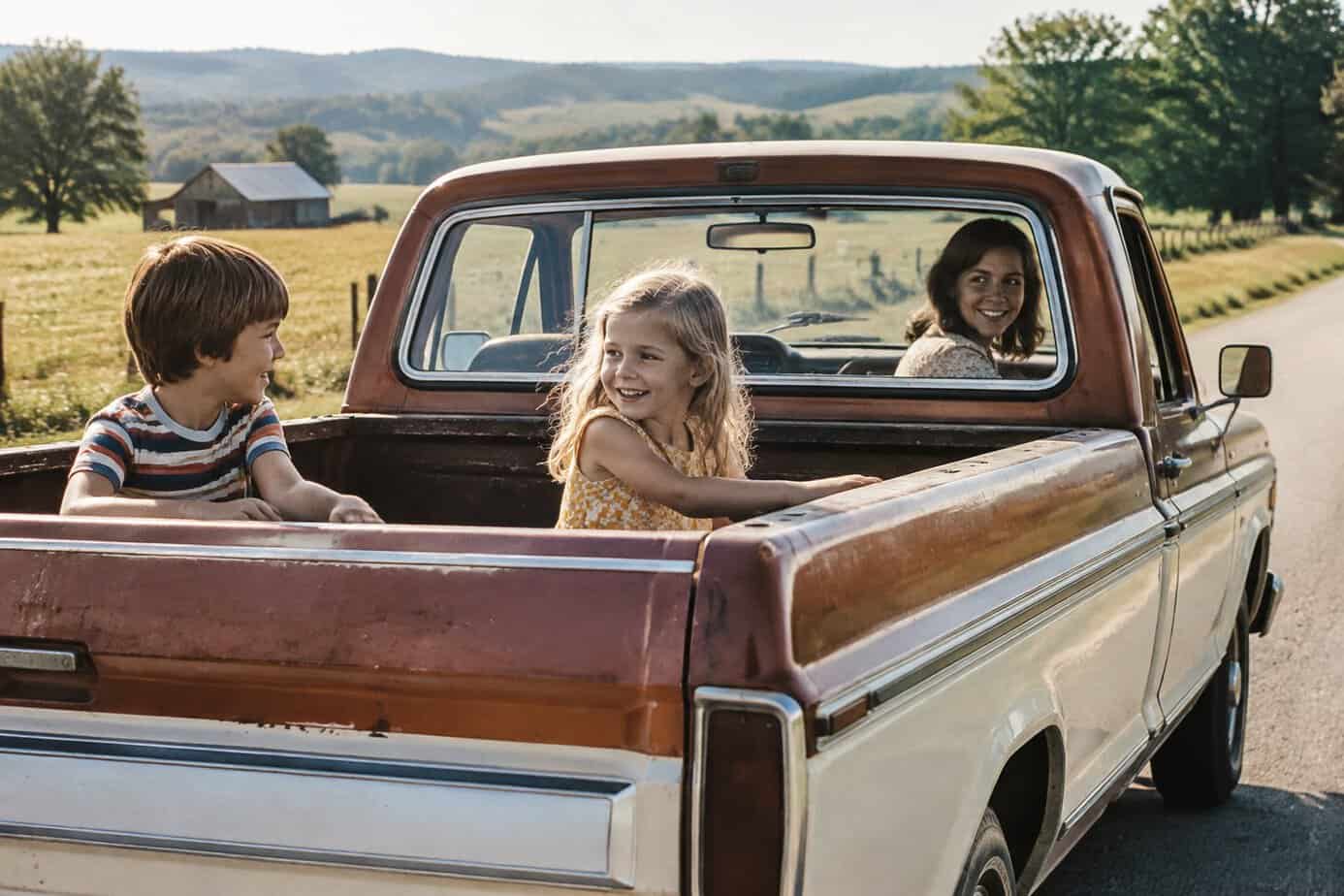
You remember the feeling of warm wind and wide open sky as the truck rumbled down the road. Piling into the bed with your kids and maybe a few of the neighbor kids too was just part of summer. Nobody buckled anyone in, because there was nothing to buckle into back there.
It made perfect sense at the time. You were only going a few miles, maybe to the lake or into town for ice cream, and everyone did it. Cars were full, the truck had extra room, and the kids loved it anyway.
There was something freeing about sitting up against the cab, watching the world go by, hair blowing everywhere. You probably hollered back at them to hold on tight and sit down, and that counted as safety instruction.
Today, a parent doing that would likely get pulled over, and in a number of states it is now against the law for young children. People would assume the worst, even though back then it was just how families got around. You were not being careless. You were just living the same way everyone else was, enjoying the ride without a second thought.
27. Keeping the cleaning supplies under the sink with no locks
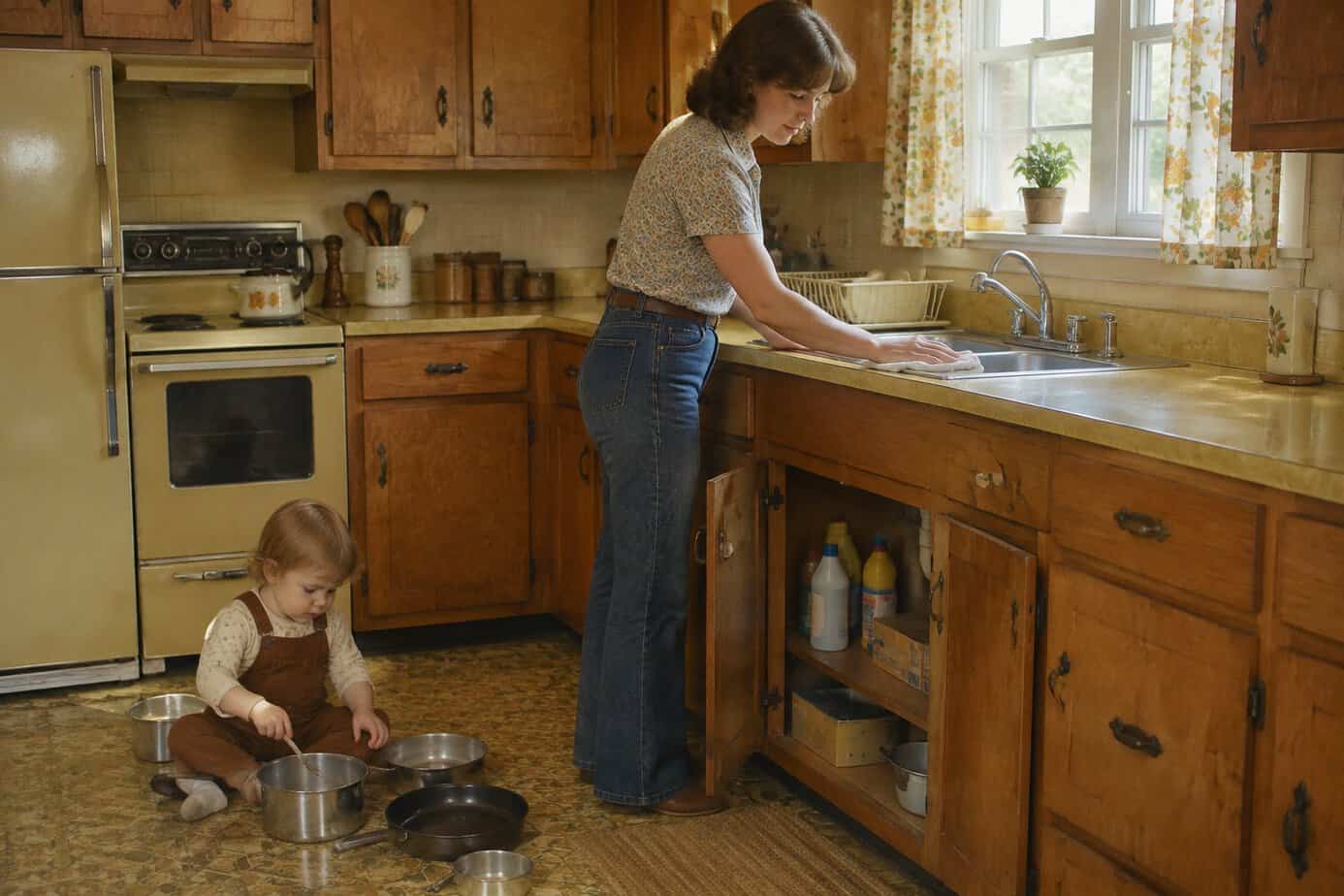
You probably kept the bleach, ammonia, and furniture polish right under the kitchen sink, in a cabinet with no lock at all. That’s just where cleaning supplies lived back then, within easy reach of little hands if they ever wandered that far.
It made sense to you because kids were taught early to stay out of certain cabinets, and you trusted that teaching more than any lock. Supervision was the main safety system, and most days it worked out fine.
You also didn’t have many other options. Childproof latches and cabinet locks weren’t something you saw in every store, so unlocked storage was simply the normal setup in nearly every home on your street.
Today’s parents would be a little startled walking into a 1970s kitchen. They grew up with safety latches, cabinet locks, and products stored up high as standard advice, so an open cabinet full of chemicals at toddler height would catch their attention right away.
Looking back now, you can see how differently things are done, though at the time it felt like an ordinary part of keeping house.
28. Giving the kids aspirin for every fever and sniffle
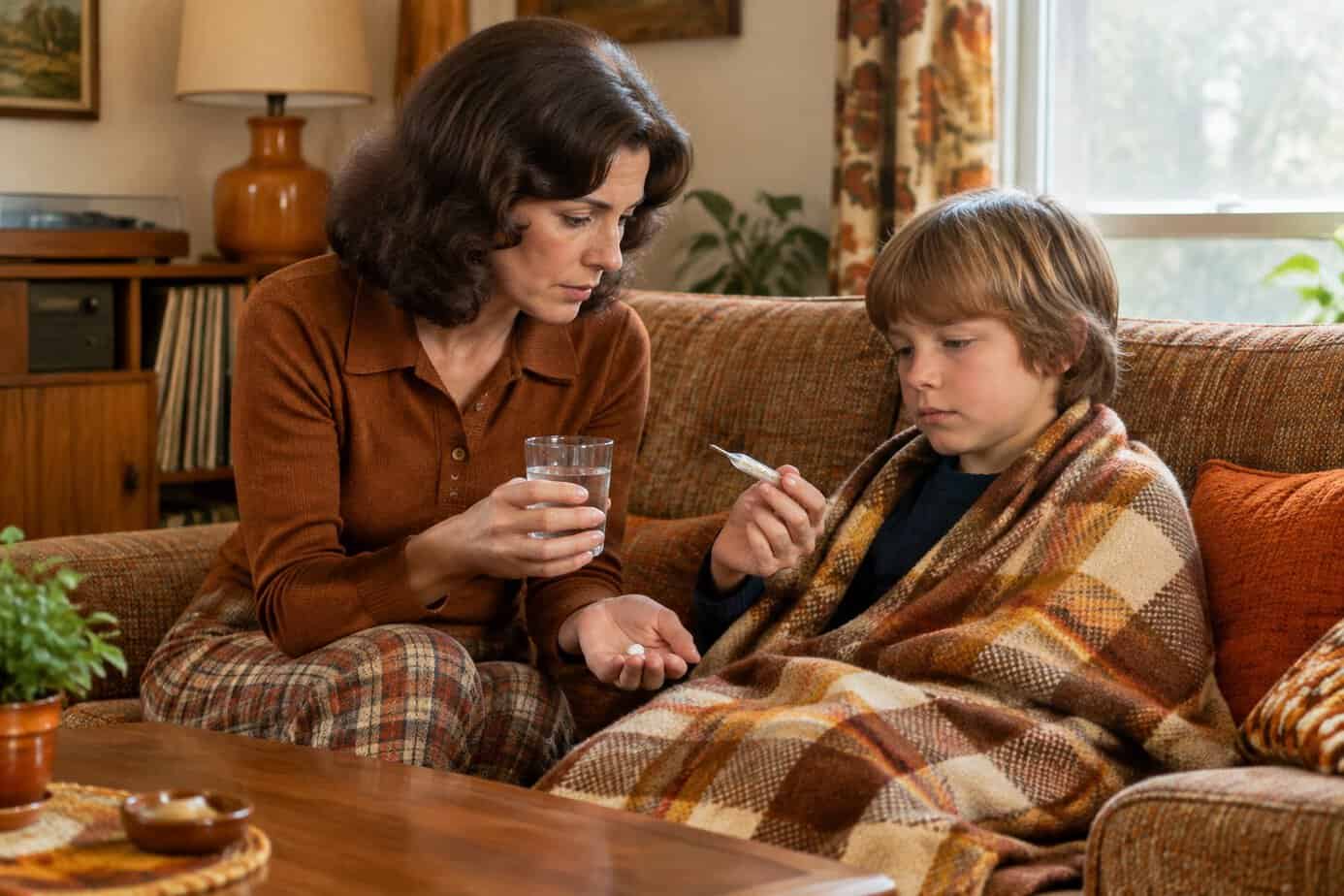
You remember reaching for that little bottle of orange-flavored baby aspirin every time one of your kids felt warm or started sniffling. It sat right in the medicine cabinet alongside the cough syrup, and you never thought twice about it. A fever meant a chewable tablet, a sore throat meant the same thing, and it just felt like part of being a good mom.
Nobody warned you otherwise back then. The link between aspirin and Reye’s syndrome in children didn’t become widely known until the early 1980s, and warning labels came later still. You were simply doing what your own mother did, and what doctors of the day commonly recommended.
Looking back, it’s a little unsettling how routine it was. Today’s parents reach for acetaminophen or ibuprofen instead, and the idea of handing a child aspirin for a common cold would raise eyebrows fast. But you were working with the best information available at the time, and that orange flavor is still a strange, oddly fond memory.
29. Sending the kids to playgrounds with metal slides and blacktop
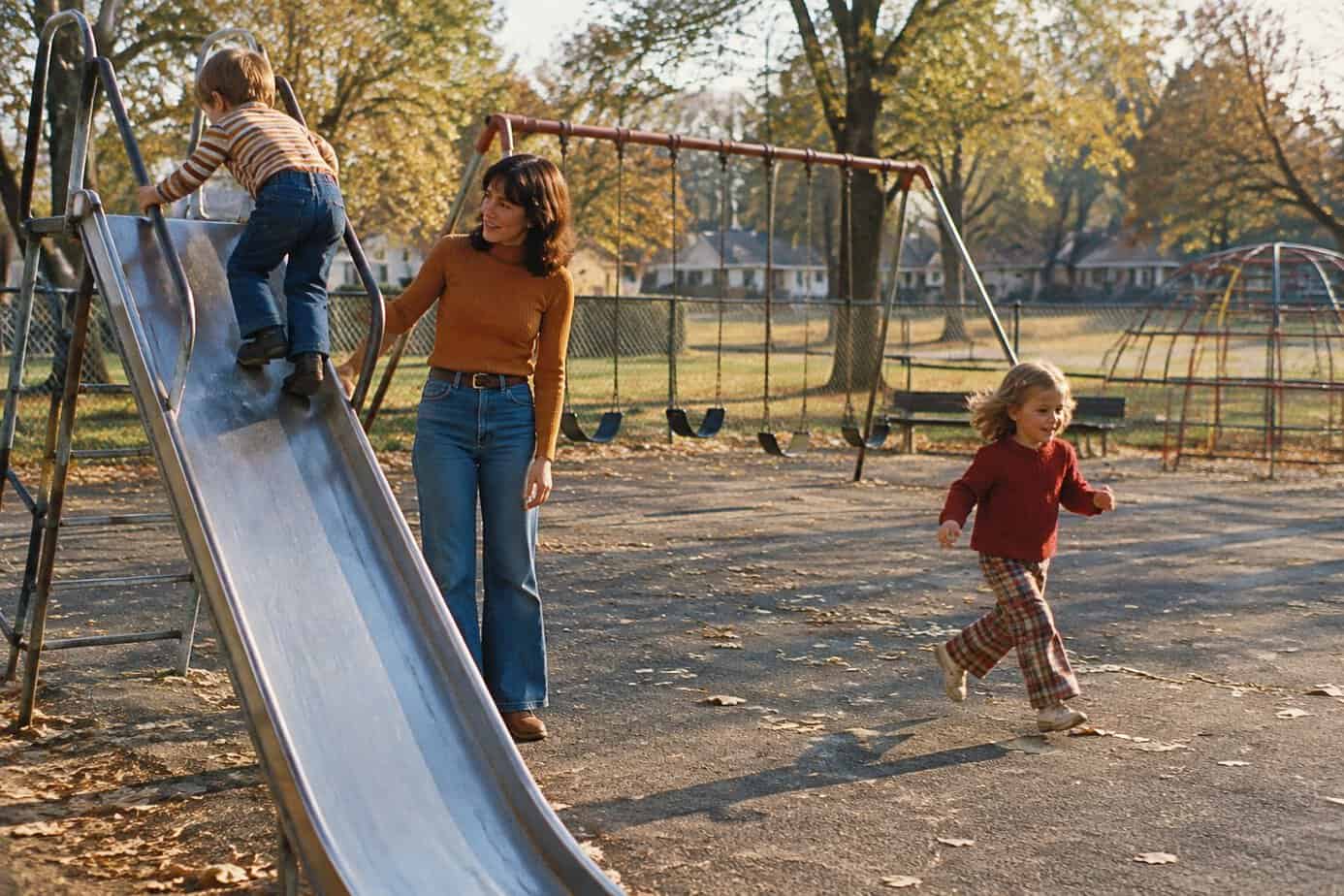
You probably remember those playgrounds like they were yesterday. The slide was metal, it sat under the sun all day, and by two in the afternoon it was hot enough to make any kid yelp halfway down. You sent your children anyway, because that was just how playgrounds were.
Nobody thought twice about the blacktop or concrete underneath the swings and jungle gyms either. Scraped knees and the occasional bruise were part of growing up outside. You patched them up with a bandage and sent them right back out to play.
There was no cushioned rubber matting back then, no soft wood chips spread underneath the equipment. The ground was just the ground, hard and unforgiving if someone took a tumble. It never occurred to you to worry much about it, since every playground in town looked exactly the same way.
Today’s parents would probably wince watching their kids climb onto a blazing metal slide or tumble onto pavement. Playgrounds now come with soft surfaces and shaded equipment designed with safety in mind. But you were just doing what every mom did, trusting that kids were tougher than we give them credit for.
30. Tanning with baby oil and skipping sunscreen on the kids
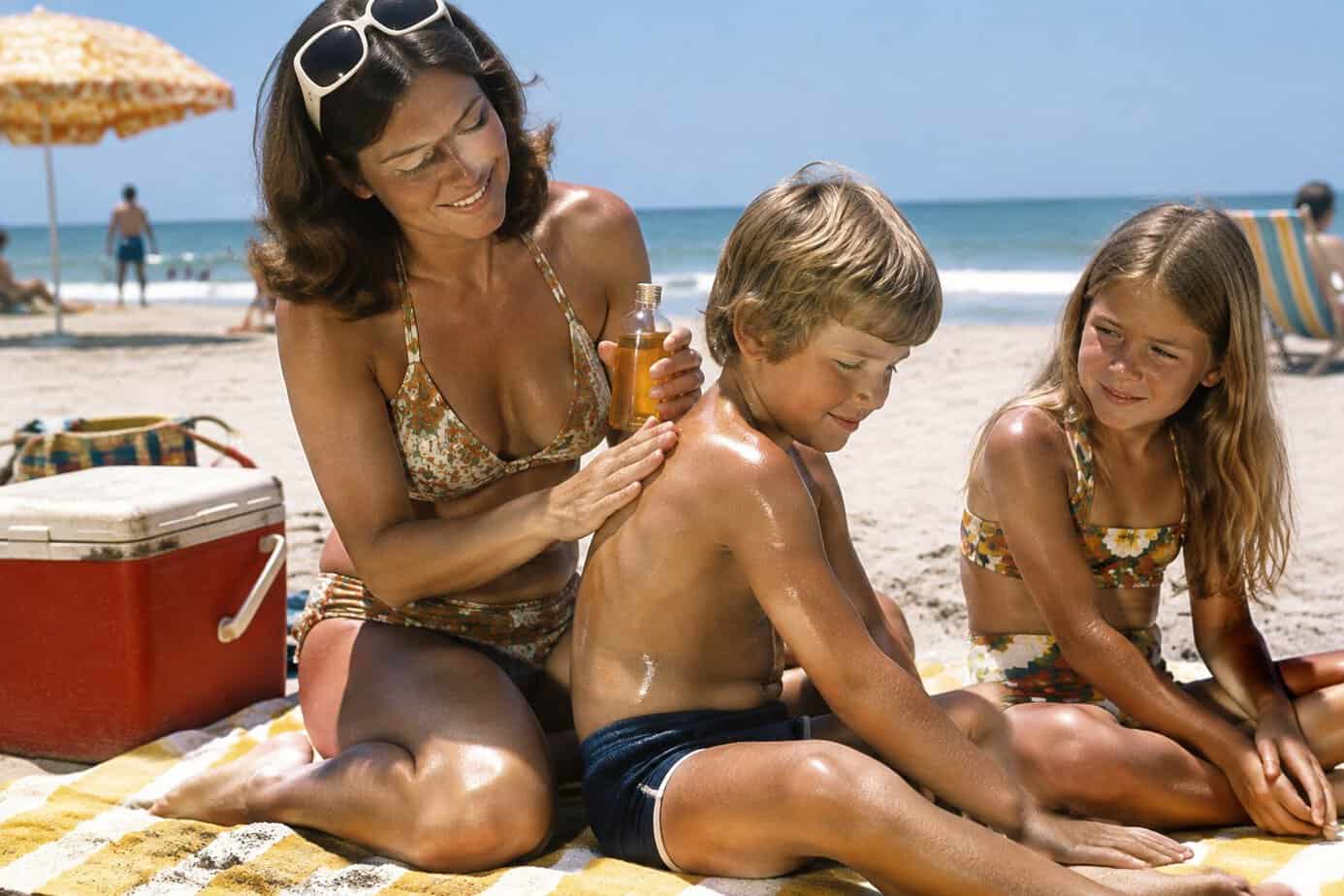
You remember the smell of baby oil as soon as the weather turned warm. You rubbed it on your arms and legs, and you probably put a little on the kids too, because a tan looked healthy back then.
Nobody talked much about sunscreen in those days. A bottle of baby oil, maybe mixed with a bit of iodine, was the standard summer kit for most families you knew.
The goal was to get as brown as possible, as fast as possible. Pale skin wasn’t the look anyone wanted, so you spent long afternoons at the pool or the beach without giving it a second thought.
You weren’t trying to do anything risky. It was just what everyone did, and the idea that the sun could cause real harm hadn’t really reached regular households yet.
Today, parents slather on SPF 50 before their kids even step outside, and they reapply every couple of hours. If you mentioned baby oil as a tanning method now, you’d probably get a few concerned looks.
But back then, you were just following the same routine as every other mom on the block, trying to give your kids a fun, carefree summer.
31. Dropping the kids off at the movies for the afternoon
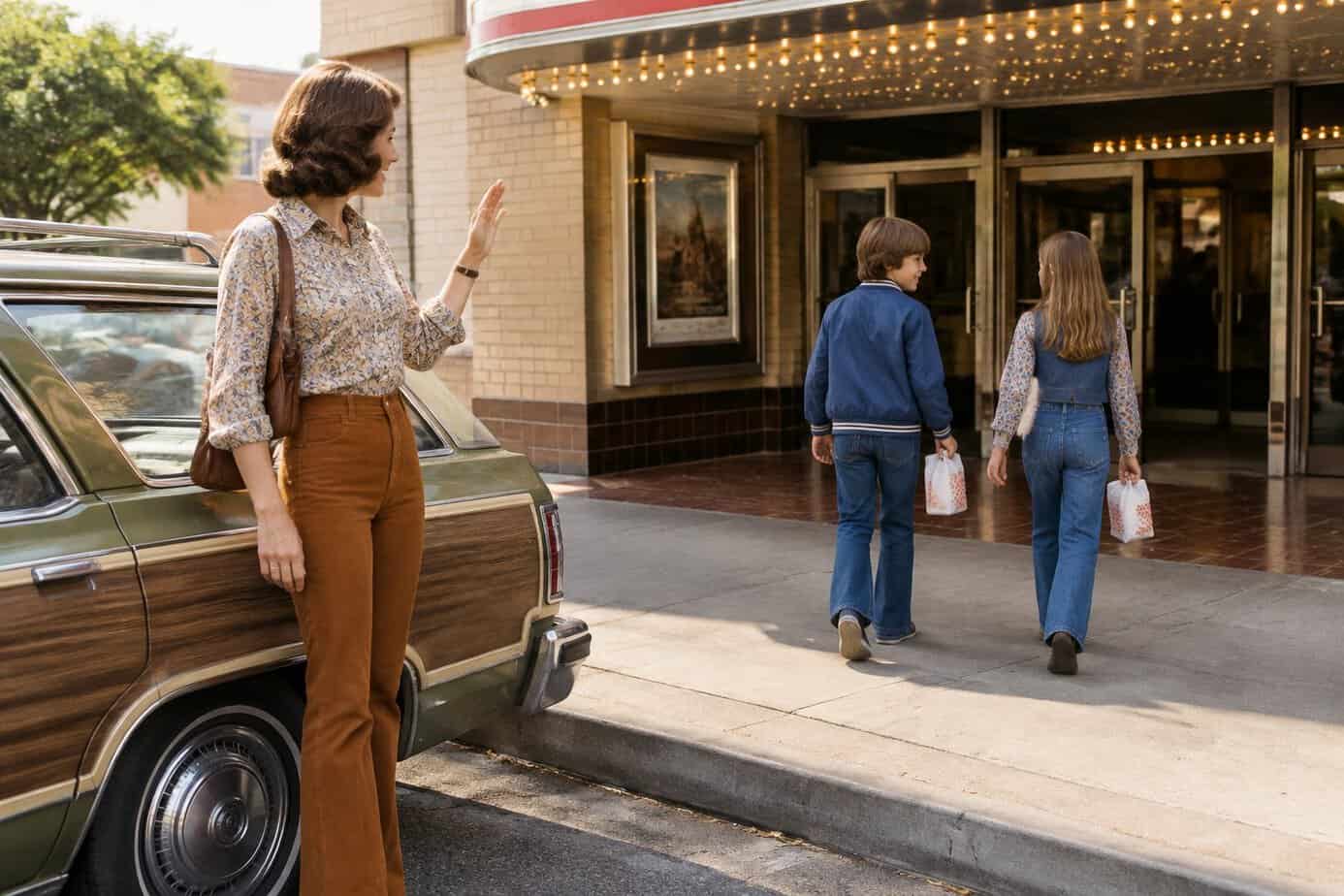
You remember handing your kids some change for a ticket and popcorn, then driving off for a few hours of errands or quiet time at home. The theater was basically a safe, air-conditioned babysitter, and nobody thought twice about it.
Kids would watch a double feature, wander out to the lobby for snacks, maybe even sneak into a second movie if the usher wasn’t paying attention. It felt like a treat, not a risk.
You’d just tell them where to meet you afterward, usually right out front, and trust that everything would work out fine. Most of the time, it did.
Today, a parent dropping off a child alone at the movies for an entire afternoon would raise eyebrows, and many theaters now have age policies for unaccompanied kids after certain hours. Phones have also changed things, since parents expect constant check-ins now instead of just trusting a meeting time.
Back then, though, it was simply what Saturday afternoons looked like. You were giving your kids a little independence and yourself a little peace, and nobody saw anything wrong with that.
Why it all made sense at the time
None of this came from carelessness. You were raising kids in neighborhoods where every mother on the block kept an eye out, where your own mother’s advice carried a lot of weight, and where the doctor’s word was taken as the final say.
The whole block did it the same way
When every family on the street sent the kids out after breakfast, smoked in the living room and piled into the station wagon without buckling up, there was nothing to compare yourself against. Doing what your neighbors did felt like the responsible thing, and for most families it was the only measure anyone had.
You followed the best advice you had
Much of what looks surprising now came straight from the experts of the day. Pediatricians recommended tummy sleeping, the hospital sent you home with formula samples, and aspirin was the standard answer to a fever. You listened to the people you trusted, which is exactly what a careful mother does.
What changed since then
Most of what’s different now comes down to research and safety rules that simply didn’t exist yet when your kids were small.
The safety rules that came later
Child car seat laws spread from state to state in the late 1970s and 1980s, and today’s car seat and booster seat guidelines cover every age from newborn to grade school. In 1992 pediatricians began advising that babies sleep on their backs, and the American Academy of Pediatrics’ safe sleep advice still calls for a bare crib with no bumpers, pillows or soft toys. For teething, the FDA now suggests a firm teething ring or a gentle rub with a clean finger instead of anything rubbed on the gums, and aspirin bottles carried Reye’s syndrome warnings by the mid-1980s.
Looking back with a smile
Your kids grew up with scraped knees, long summer afternoons and a mother who was doing her very best with what she knew. If you enjoyed this trip back, you might also like these parenting habits from the 1980s that deserve a second look and these family traditions from the 1970s that quietly disappeared.