33 Ways Kids Entertained Themselves Before Phones Took Over Childhood: A Look at Screen-Free Play That Shaped Generations
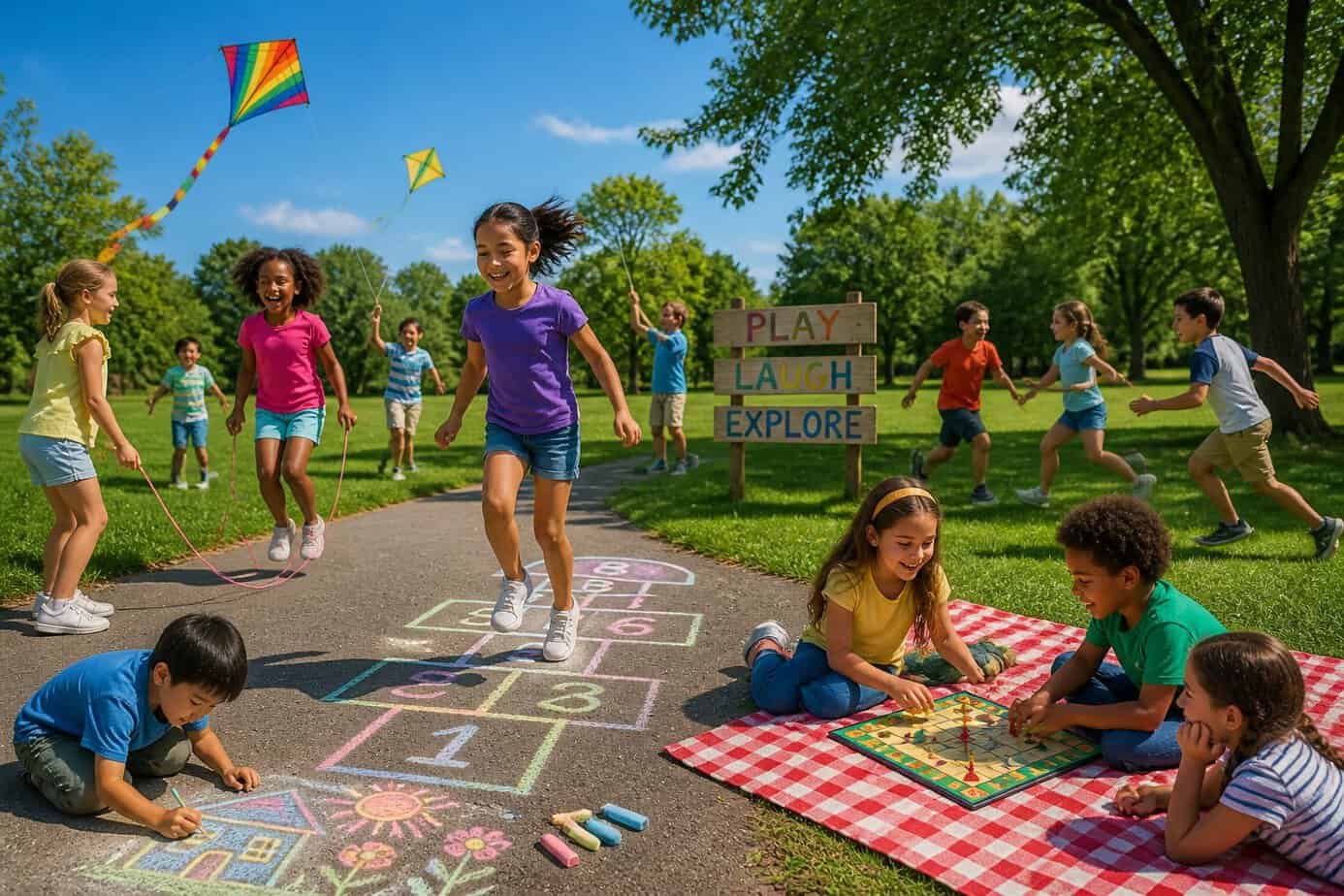
Childhood looked remarkably different just a few decades ago. Before smartphones and tablets became constant companions, kids filled their days with activities that required creativity, physical energy, and face-to-face interaction.
The absence of digital entertainment didn’t leave children bored, it pushed them to invent games, explore their neighborhoods, and build things with their own hands.
Kids once relied on outdoor adventures, imaginative play, and simple household items to create their own entertainment, developing social skills and independence along the way.
From constructing elaborate forts to organizing spontaneous sports games with neighbors, children found endless ways to occupy their time without screens. These activities weren’t just pastimes—they shaped how kids learned to problem-solve, collaborate, and entertain themselves.
The shift from analog to digital childhood happened gradually, but the contrast is striking. Understanding what kids did before phones took over offers insight into how play has evolved and what might be lost in our screen-dominated era.
1. Building blanket forts
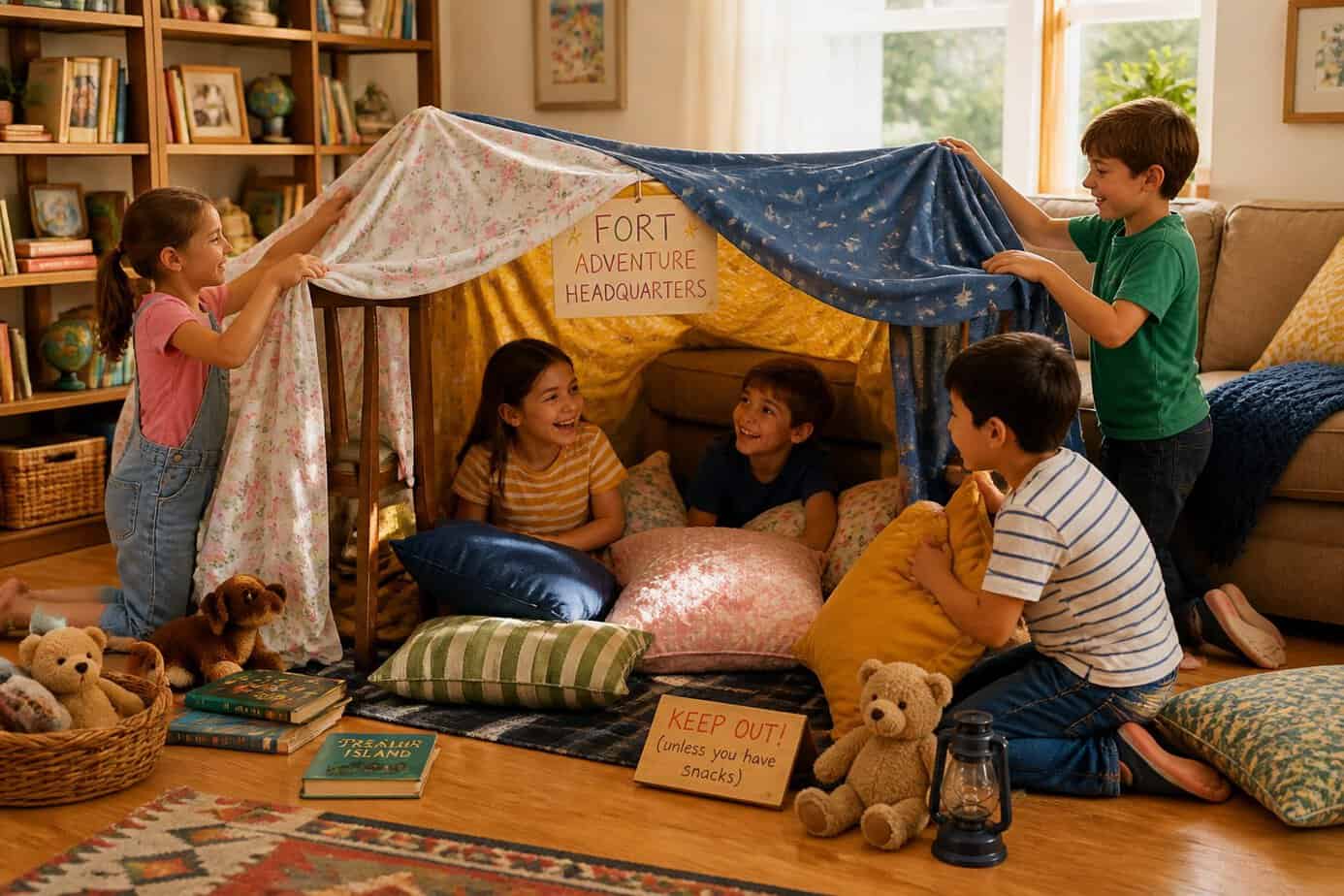
You probably spent hours dragging chairs across the living room and draping sheets over furniture to create your own private hideaway. Building blanket forts required nothing more than household items like cushions, pillows, and whatever blankets your parents would let you use.
The construction process itself was half the fun. You negotiated with siblings over which furniture could be moved and debated the best architectural designs to keep the roof from collapsing.
These forts became your personal space for reading, playing pretend, or simply hiding away from the outside world. You transformed ordinary living rooms into castles, spaceships, or secret headquarters using only your imagination and basic household materials.
The forts rarely lasted more than a day before being dismantled, but you’d rebuild them again whenever the mood struck.
2. Playing kick the can
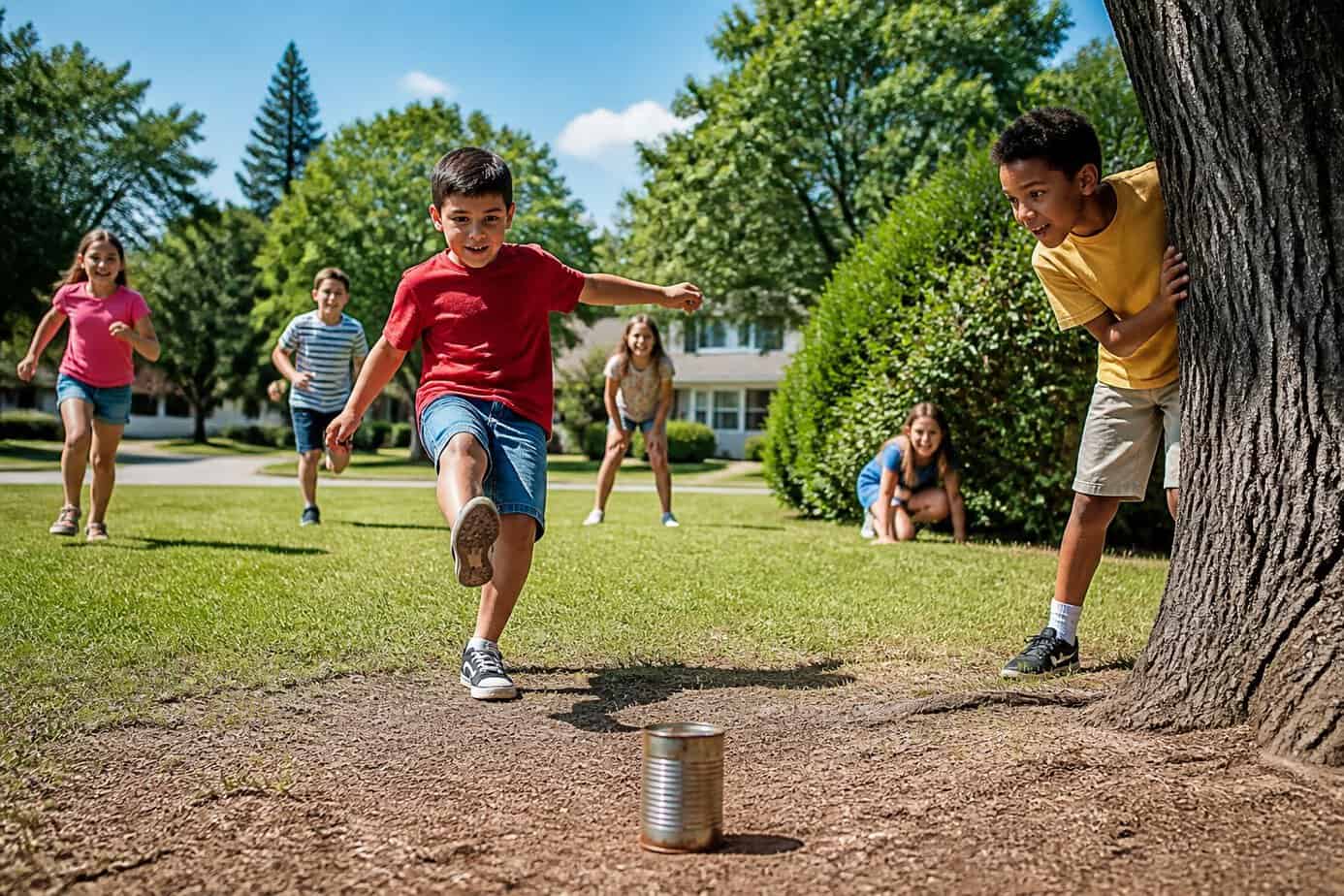
Kick the can combined elements of hide-and-seek with tag, creating an exciting game that kept neighborhood kids engaged for hours. You placed an empty can in a central location, and one player guarded it while everyone else hid.
The goal was to kick the can without getting tagged by the guard. If you succeeded, you freed any captured players and started a new round. If the guard tagged you first, you joined the other caught players in a designated area.
The game required no equipment beyond a discarded can and an open area. You developed strategic thinking as you decided when to make your move and where to hide.
Streets and backyards transformed into playing fields where groups of varying ages participated together. The simple rules made it accessible to everyone in the neighborhood.
3. Riding bikes around the neighborhood

You’d hop on your bike in the morning and disappear for hours, exploring streets and alleys without any way for your parents to track you. The only rule was typically to return home before the streetlights came on.
Your bike gave you independence and freedom to roam miles from home. You learned to navigate by landmarks and memory rather than GPS. If you got lost, you’d ask neighbors for directions or figure out the way back yourself.
Flat tires and broken chains weren’t emergencies requiring a pickup. You learned basic bicycle maintenance from other neighborhood kids, fixing problems with patches and pumps. These mechanical challenges were part of the adventure, teaching you problem-solving skills and self-reliance as you kept your bike running.
4. Collecting and trading baseball cards
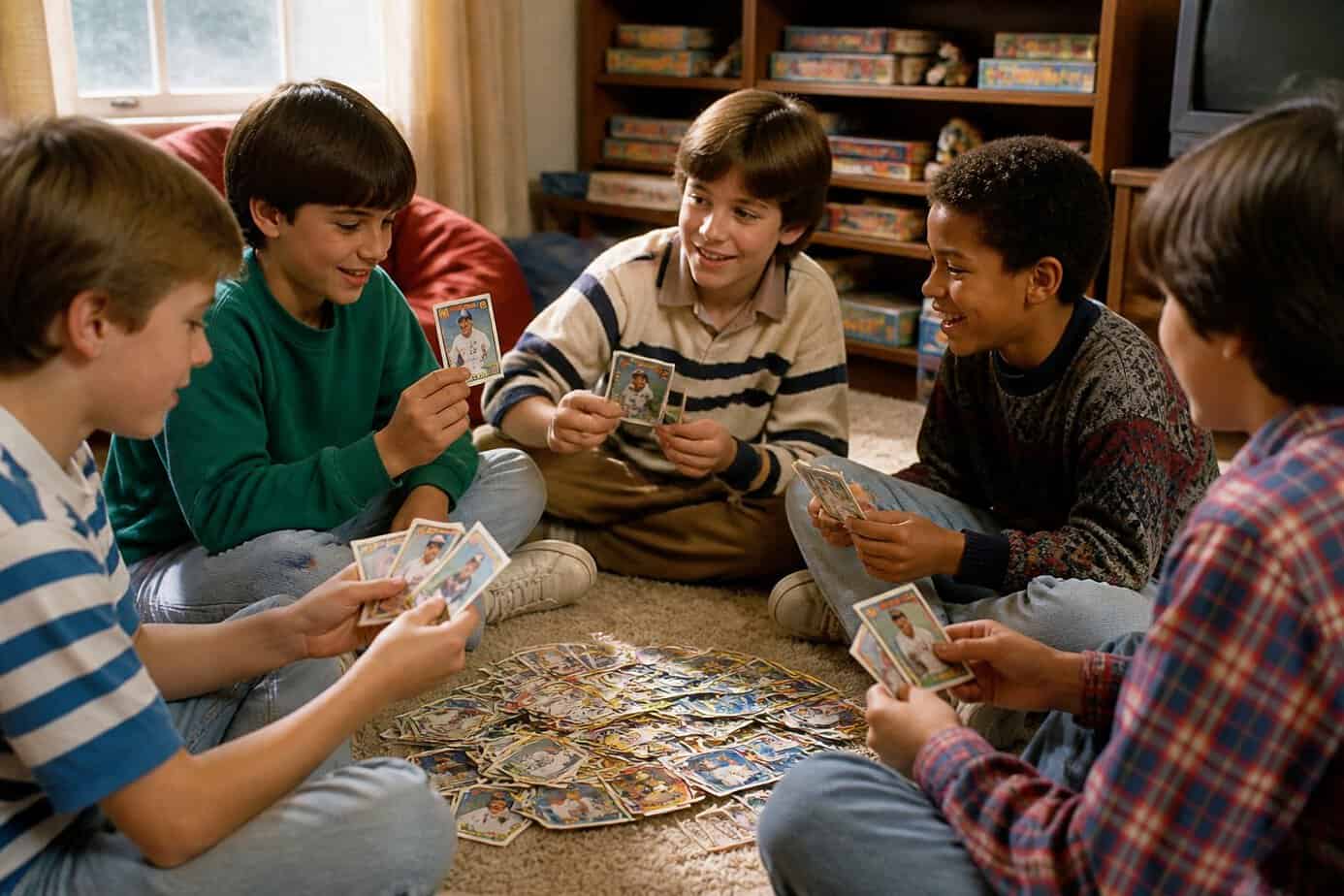
You spent hours organizing baseball cards in binders, protecting your most prized possessions in plastic sleeves. Each pack you opened held the possibility of discovering a rare rookie card or completing your favorite team’s roster.
Trading cards on the playground was a social event that sharpened your negotiation skills. You learned to assess value, make deals, and build relationships with other collectors. The cardboard rectangles featured player photos on one side and statistics on the other, turning you into an expert on batting averages and home run records.
Your collection represented more than just pictures of athletes. It was a tangible connection to the sport and its history. Some kids maintained their collections into adulthood, while others eventually sold or donated them. The hobby taught patience, organization, and the basics of commerce through simple trades.
5. Making sidewalk chalk murals
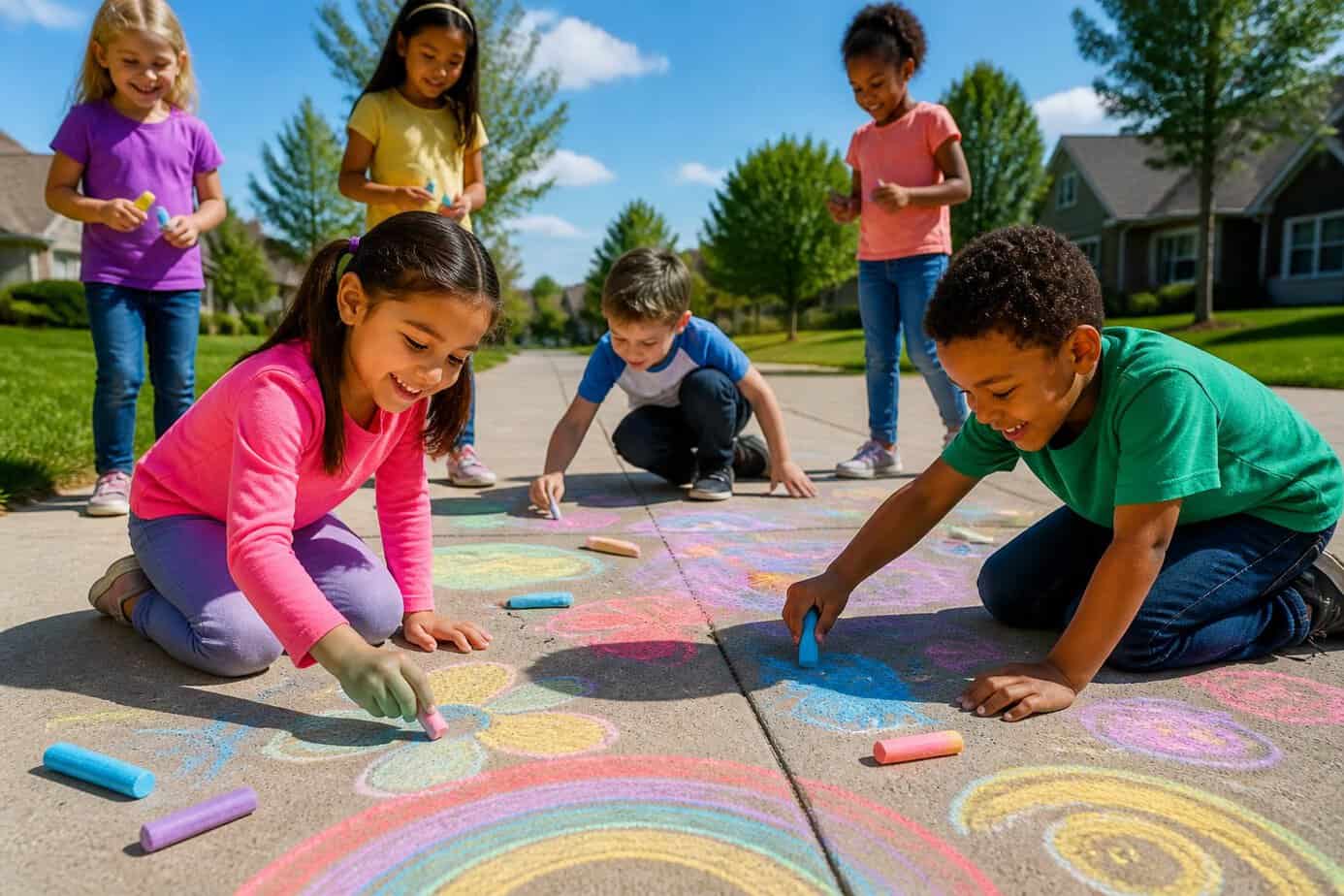
You could spend entire afternoons creating elaborate chalk murals on driveways and sidewalks. Armed with a box of colorful chalk, you transformed plain concrete into vibrant canvases filled with rainbows, hopscotch grids, and imaginary worlds.
The activity developed your fine motor skills as you experimented with different textures and techniques. You learned to blend colors, add details, and work on large-scale projects that required planning and patience.
Creating murals often became a group effort. You collaborated with siblings and neighborhood friends, discussing ideas and dividing sections of the driveway to bring collective visions to life. The temporary nature of chalk art made each creation special, knowing the next rain would wash it away and give you a fresh start.
6. Organizing backyard scavenger hunts
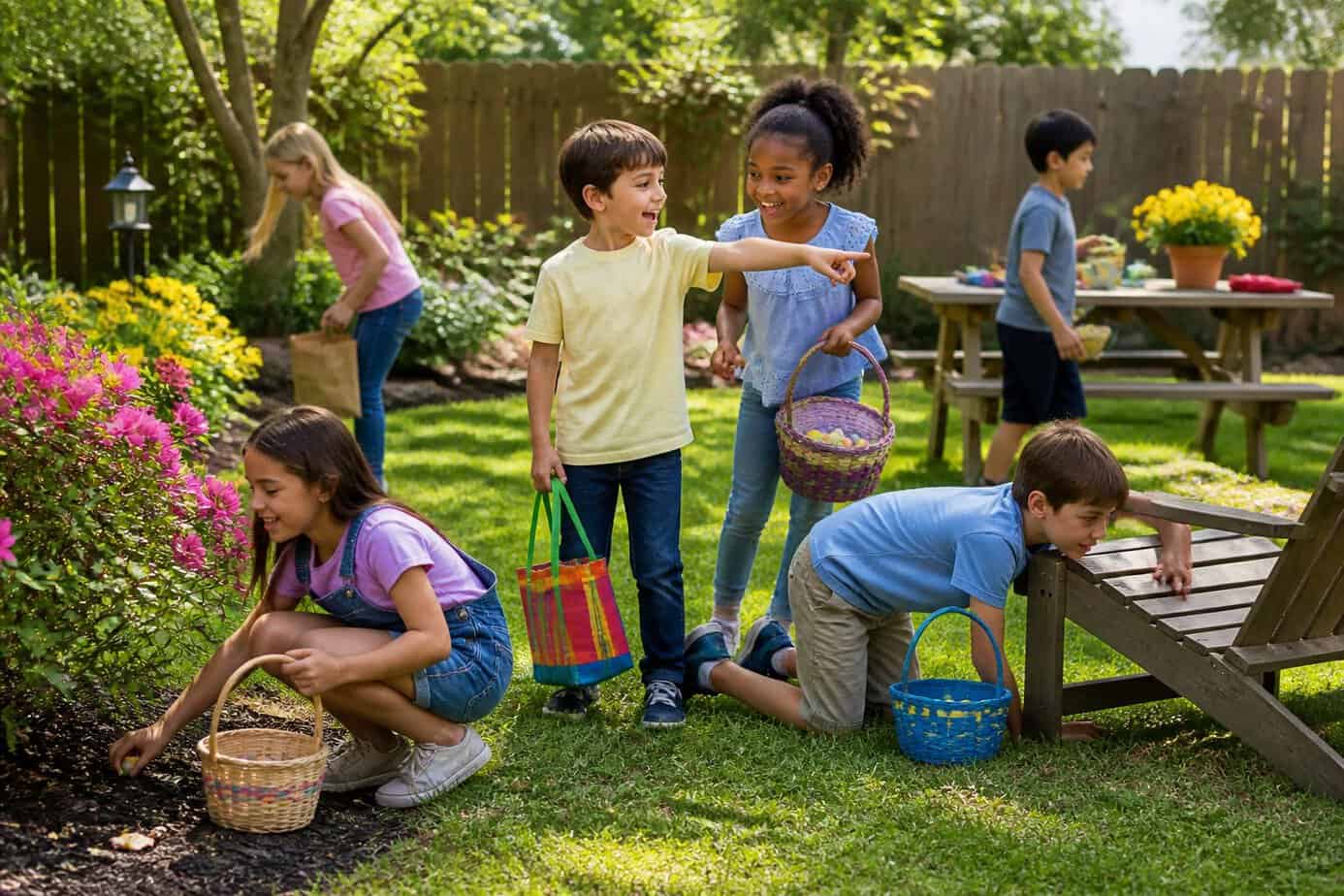
Kids would spend hours creating elaborate scavenger hunts for their friends and siblings. Armed with paper and pencil, they’d craft lists of items to find or challenges to complete around the yard.
The format varied based on age and creativity. Younger children might hunt for common objects like pinecones, smooth rocks, or flowers of specific colors. Older kids developed more complex versions with riddles, clues leading to the next location, or photo challenges.
No special equipment was needed beyond the list itself. The backyard transformed into an adventure zone where ordinary spaces became exciting discovery areas. Kids learned to observe their surroundings carefully and work together when hunts involved teams.
These activities encouraged physical movement, problem-solving, and imagination. Setting up a hunt became as entertaining as participating in one, with kids taking turns being the organizer.
7. Playing hide-and-seek after dinner
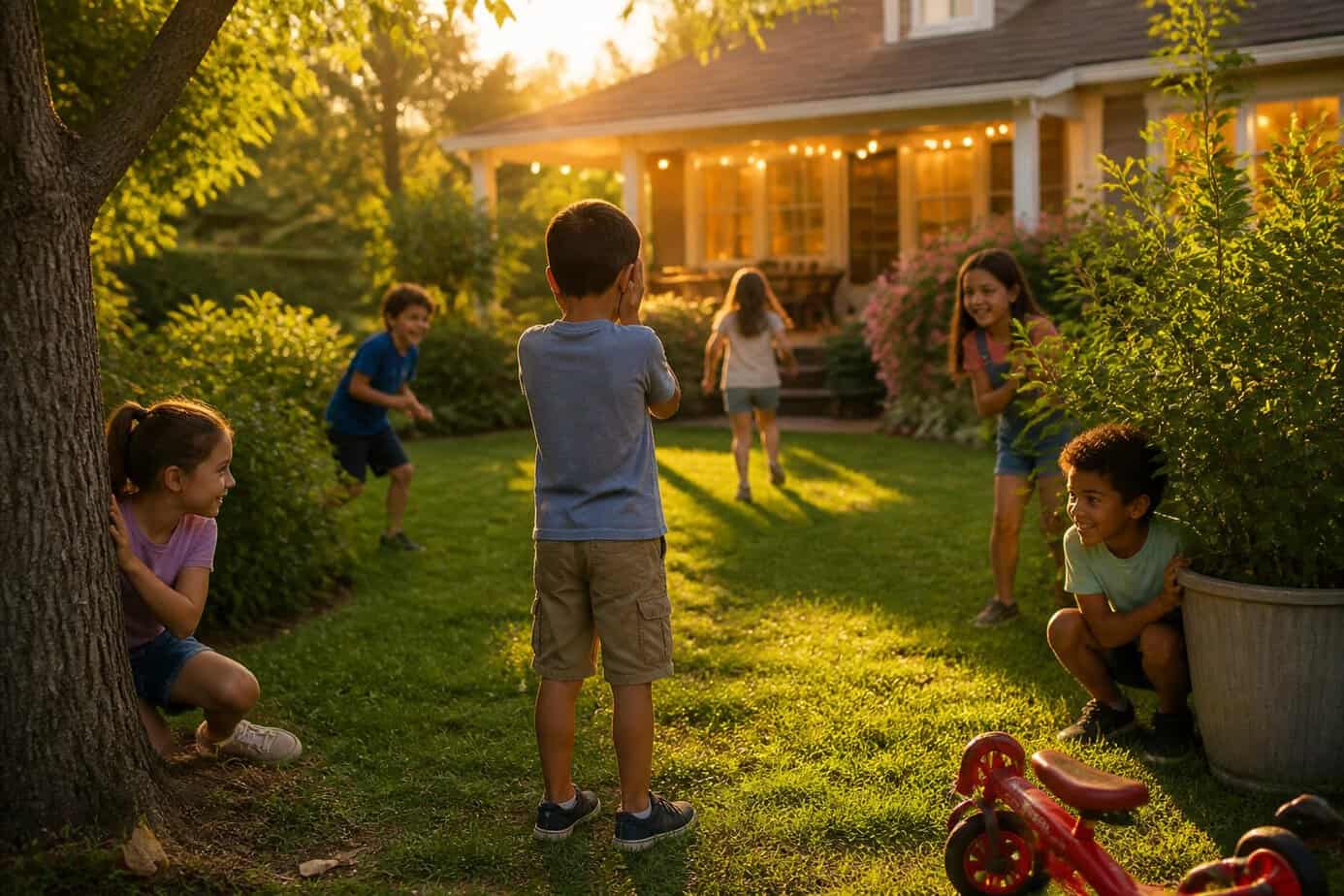
After finishing your evening meal in the 1960s, you headed outside to gather neighborhood friends for hide-and-seek. One person counted while others scattered to find hiding spots behind trees, porches, and bushes.
The game required no equipment or planning. You simply needed imagination and a group of willing participants from your street.
Evening games became especially exciting as shadows lengthened and darkness approached. You learned to stay completely still in your hiding spot, developing patience and strategy. The seeker moved carefully through yards, listening for small sounds or movements.
These games lasted for hours until parents called you home. You developed social skills, physical coordination, and the ability to read your environment in low light. The simple activity kept you active and connected with friends in ways that required face-to-face interaction and real-time decision-making.
8. Flying kites on windy days
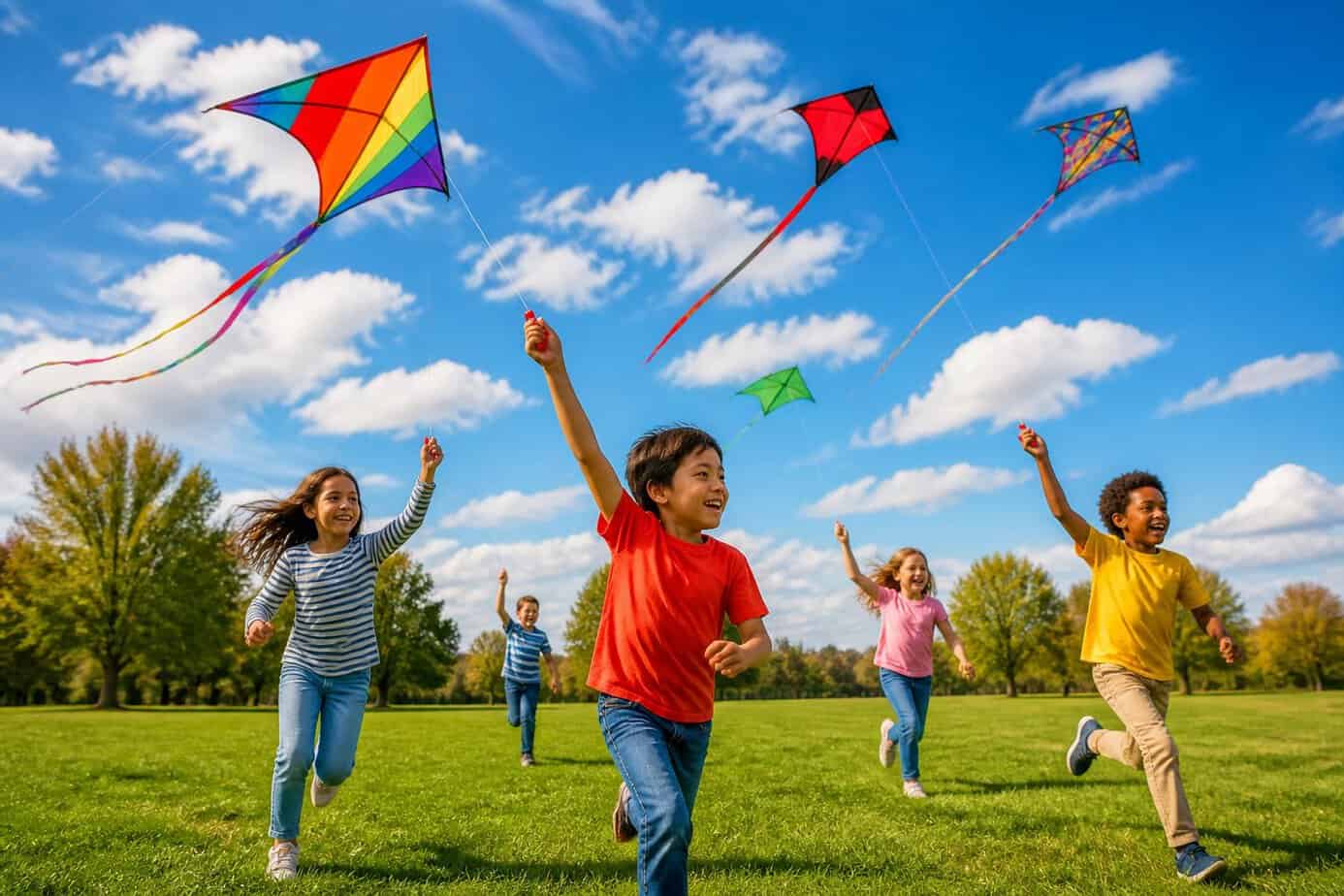
You grabbed your kite and headed outside the moment the wind picked up. There was no need to check a weather app—you could feel the breeze and knew it was time.
Kite flying required patience and skill. You learned to read the wind, adjusting the string tension and running at just the right speed to get your kite airborne. The thrill came from watching it climb higher and higher into the sky.
On particularly gusty spring days, fields and parks filled with kids launching kites of all shapes and colors. You might have flown a simple diamond kite or a more elaborate box design. Either way, keeping it steady in changing winds taught you about air pressure and perseverance.
The activity kept you outside for hours, fully engaged with the elements around you.
9. Climbing trees and building treehouses
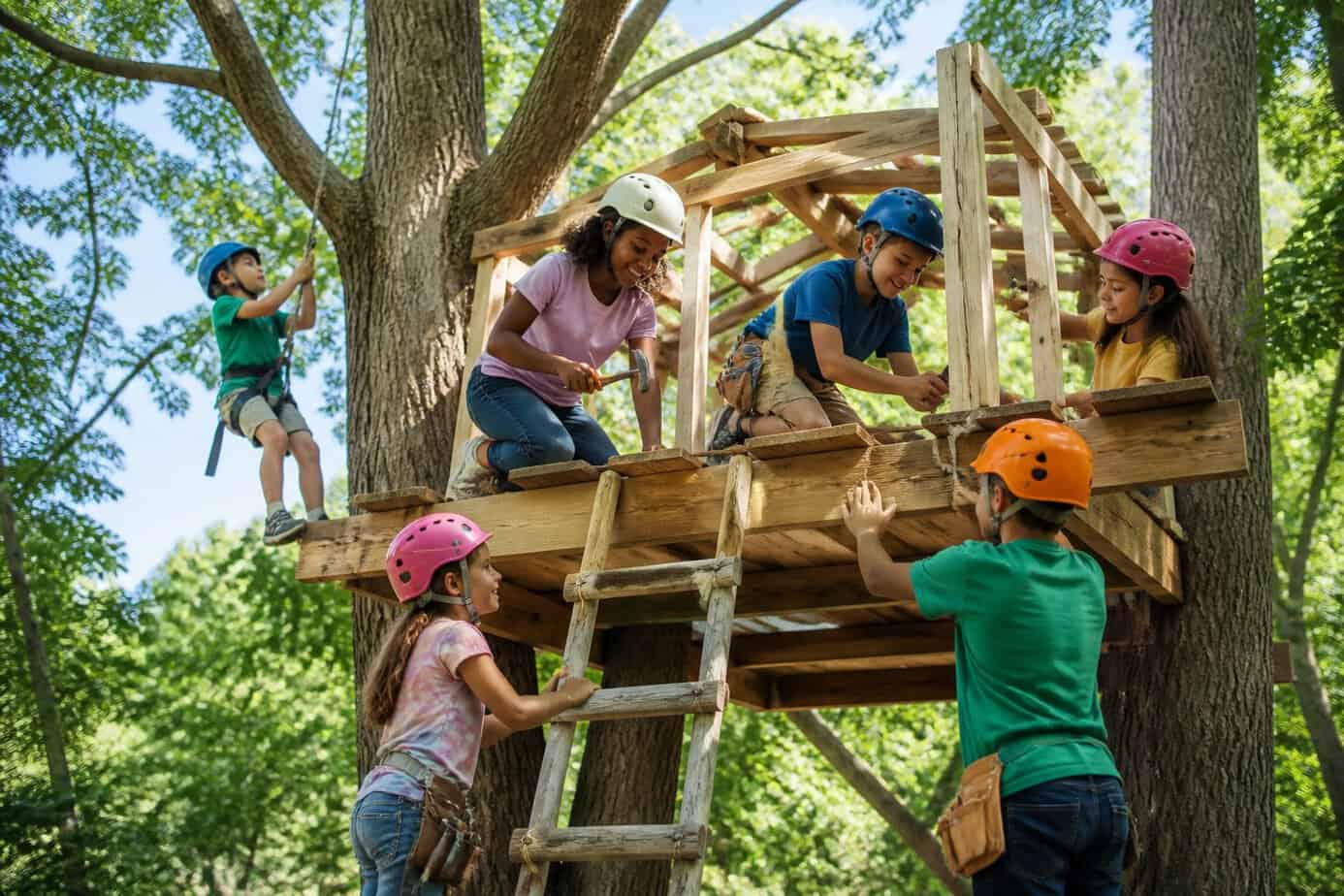
You spent hours searching your neighborhood for the perfect climbing tree. The best ones had sturdy branches positioned like natural ladders, allowing you to climb higher into the canopy.
Tree climbing taught you to assess risks and develop physical coordination. You learned which branches could support your weight and how to plan your route upward. Each climb built your strength and confidence.
Building a treehouse was the ultimate project. You gathered scrap wood, hammered together platforms, and created your own elevated hideaway. These structures didn’t require permits or parental approval—just imagination and determination.
Your treehouse became a private clubhouse where you and your friends spent entire afternoons. You made rules, shared secrets, and enjoyed the freedom of your own space away from adults.
10. Putting on neighborhood talent shows
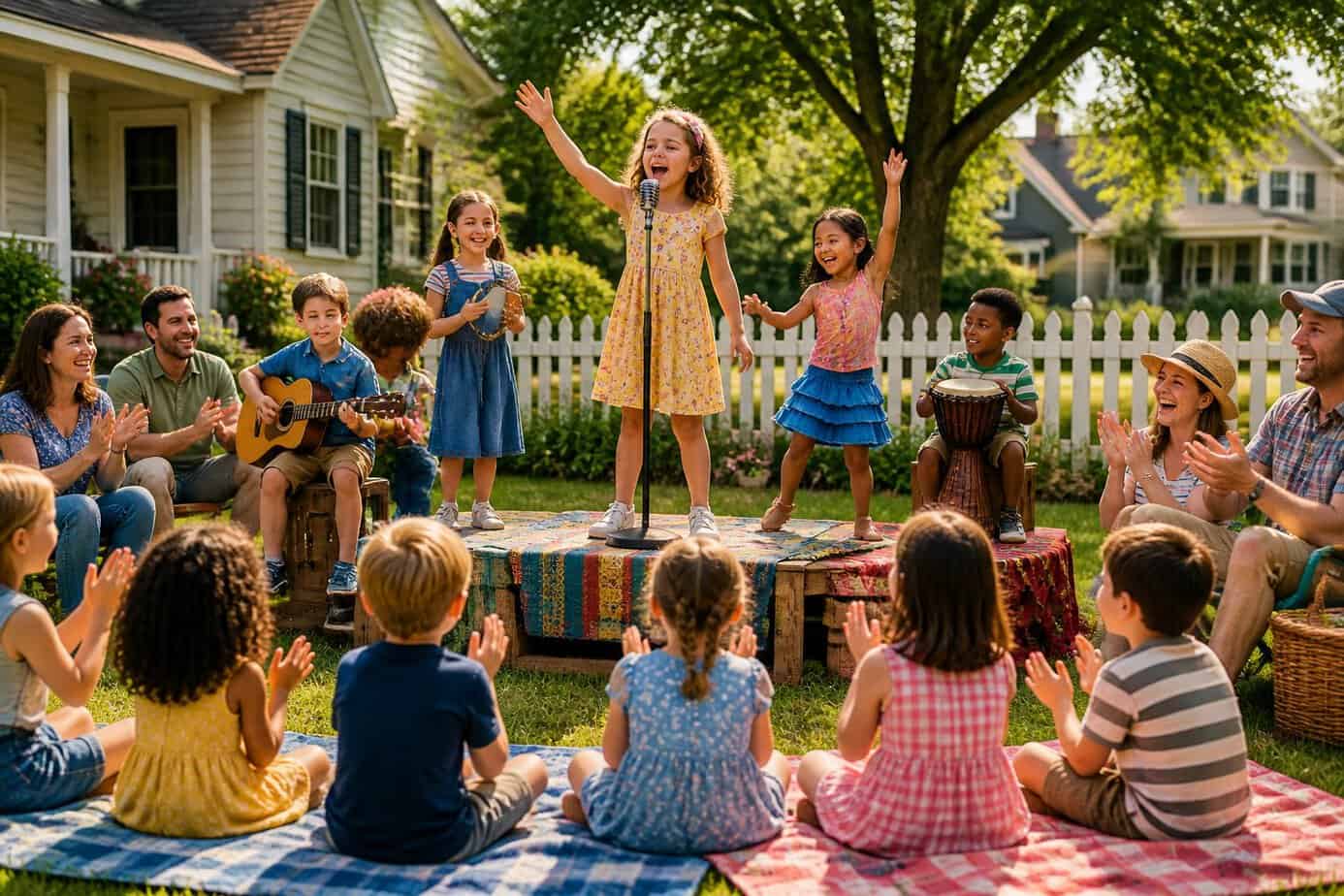
You and your friends would spend hours planning elaborate performances for parents and neighbors. Someone’s garage or backyard became an instant stage, with bed sheets serving as curtains and flashlights as spotlights.
Kids took turns showcasing their abilities, from magic tricks and gymnastics to singing and comedy skits. You charged a small admission fee, usually a quarter or handmade tickets crafted from construction paper.
The preparation was just as entertaining as the show itself. You rehearsed routines, created costumes from whatever you found around the house, and designed programs listing each act. These performances gave you a chance to build confidence and work together toward a shared goal.
Neighbors would actually sit through your productions, offering genuine applause and encouragement. These shows created memorable summer afternoons that brought the whole block together.
11. Skateboarding at local spots
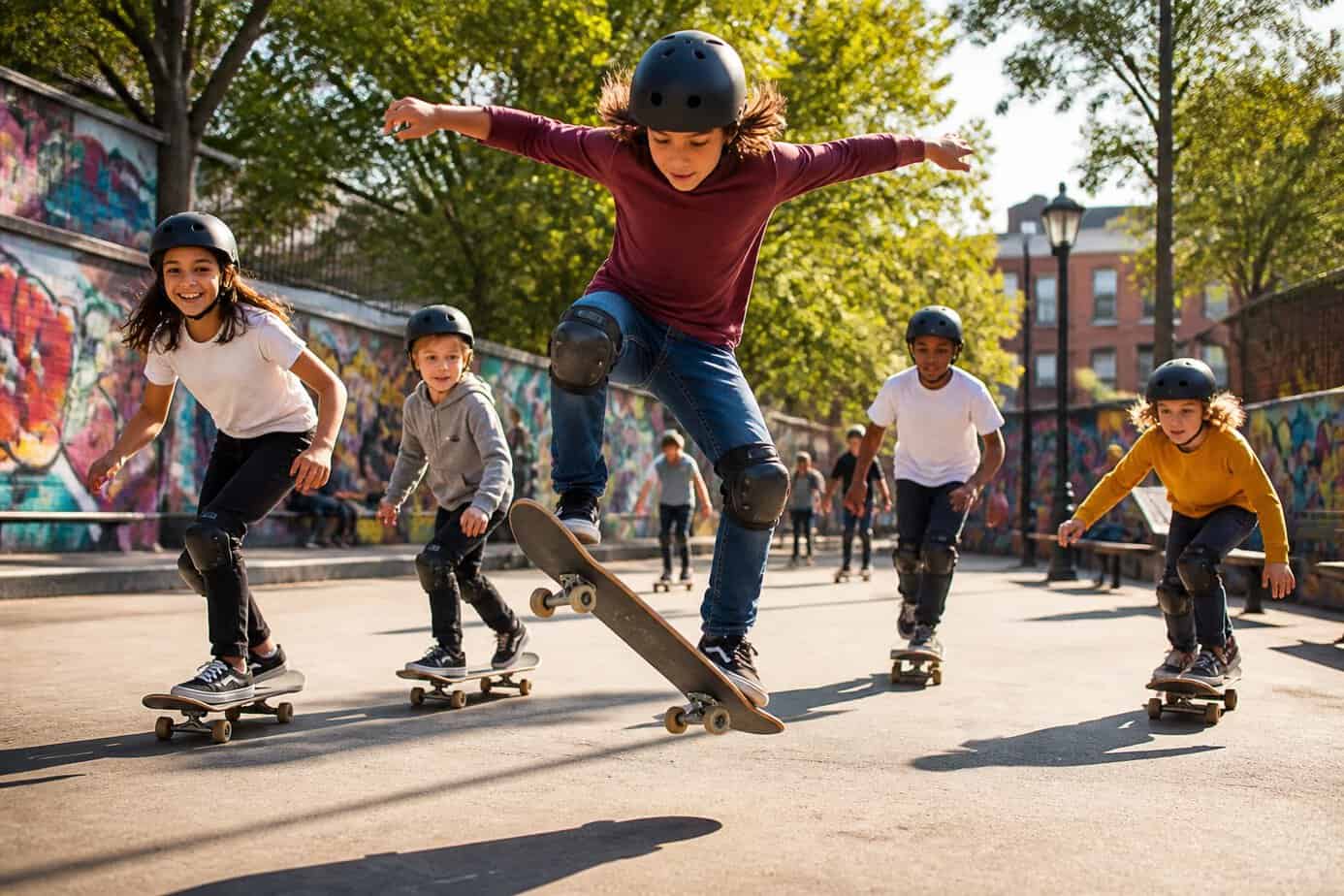
You grabbed your board and headed to whatever spot had the best pavement. Empty parking lots, smooth driveways, and schoolyard blacktop became your practice grounds. You didn’t need a professionally designed skate park to spend hours perfecting ollies and kickflips.
Local spots were discovered through word of mouth and exploration. You and your friends found abandoned loading docks, sloped banks, and stair sets that made perfect obstacles. Each spot had its own character and challenges.
Scraped knees and elbows were badges of honor as you attempted the same trick repeatedly until you landed it. You learned through trial and error, watching older skaters, and pushing yourself to go faster or jump higher. The freedom to skate wherever you found good terrain made the activity accessible to anyone with a board.
12. Designing paper airplanes and testing flights
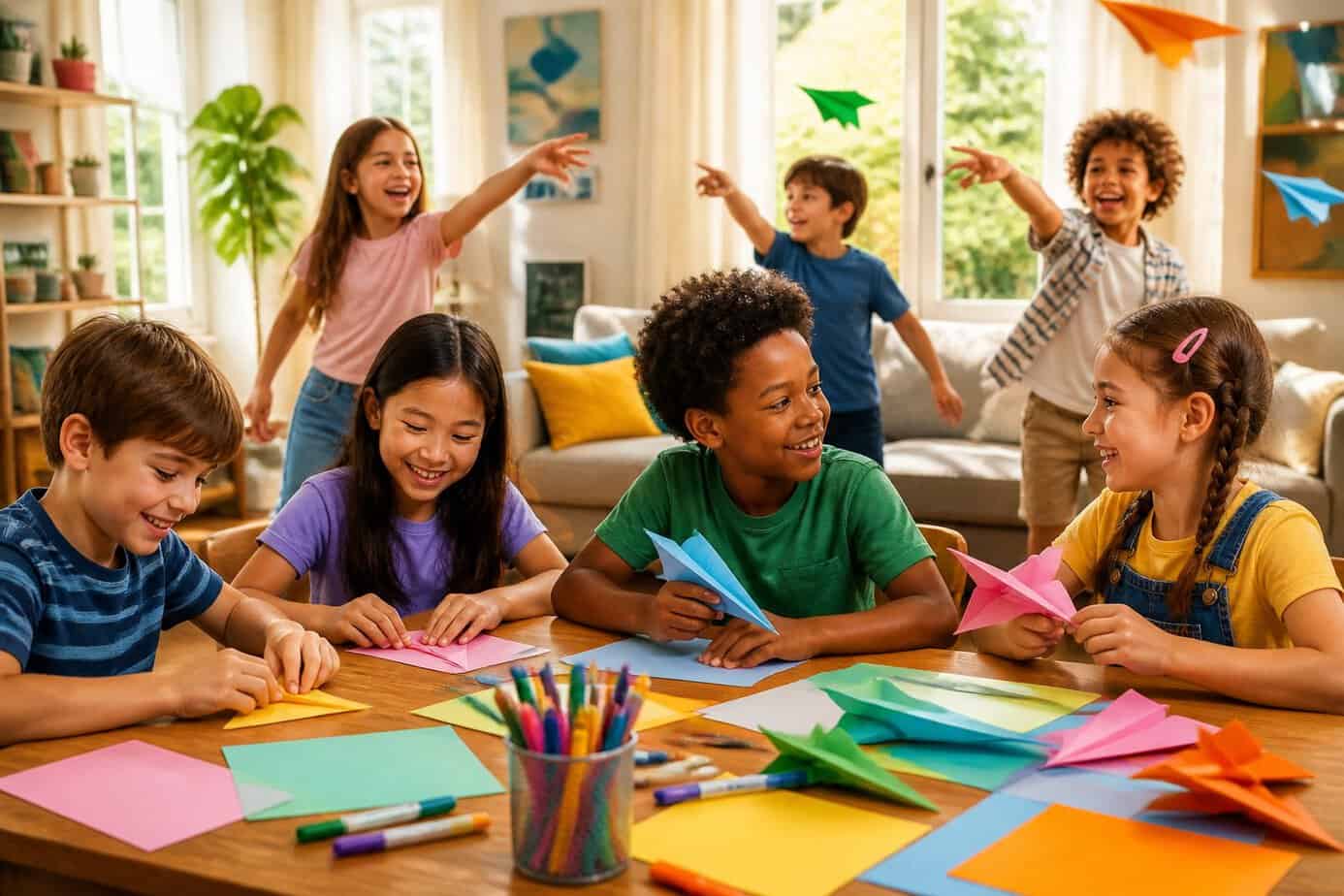
You spent hours perfecting your paper airplane designs, experimenting with different folds and wing shapes to see which flew farthest. Each design required careful attention to details like the nose weight, wing angle, and tail configuration.
Testing your creations meant running trials down hallways, across playgrounds, or from bedroom windows. You measured distances, tracked flight times, and observed how different designs performed under various conditions.
The experimentation taught you basic principles of aerodynamics without you even realizing it. You learned that heavier noses helped with distance, while wider wings affected stability and hang time.
Competition naturally emerged as you challenged friends to distance contests or accuracy targets. You traded folding techniques and refined your designs based on test results, turning simple notebook paper into functional gliders through trial and error.
13. Role-playing with action figures or dolls
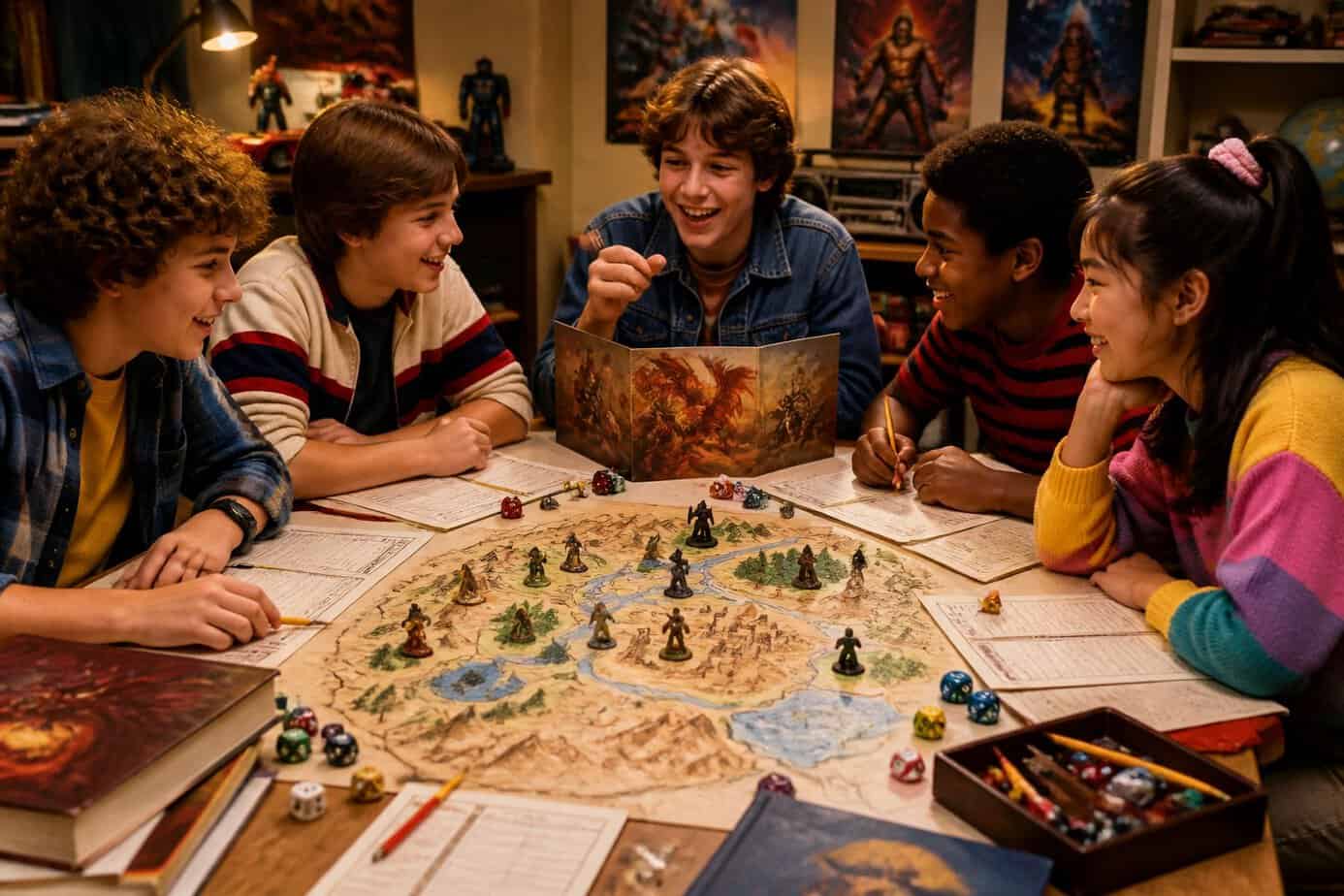
You spent hours creating elaborate worlds with your action figures and dolls. Whether you had G.I. Joe, Barbie, or LEGO sets, you built entire storylines that unfolded over days or even weeks.
Your imagination turned a bedroom floor into a battlefield, a fashion runway, or an adventure zone. You gave each character distinct personalities and voices, acting out complex scenarios without any digital prompts or screens.
These toys helped you develop social skills and creative thinking. You learned to problem-solve as you navigated your characters through conflicts and challenges you invented yourself.
Playing with dolls and action figures also taught you storytelling. You constructed beginnings, middles, and ends to your adventures, building narrative skills that would serve you throughout life.
14. Roasting marshmallows over a campfire
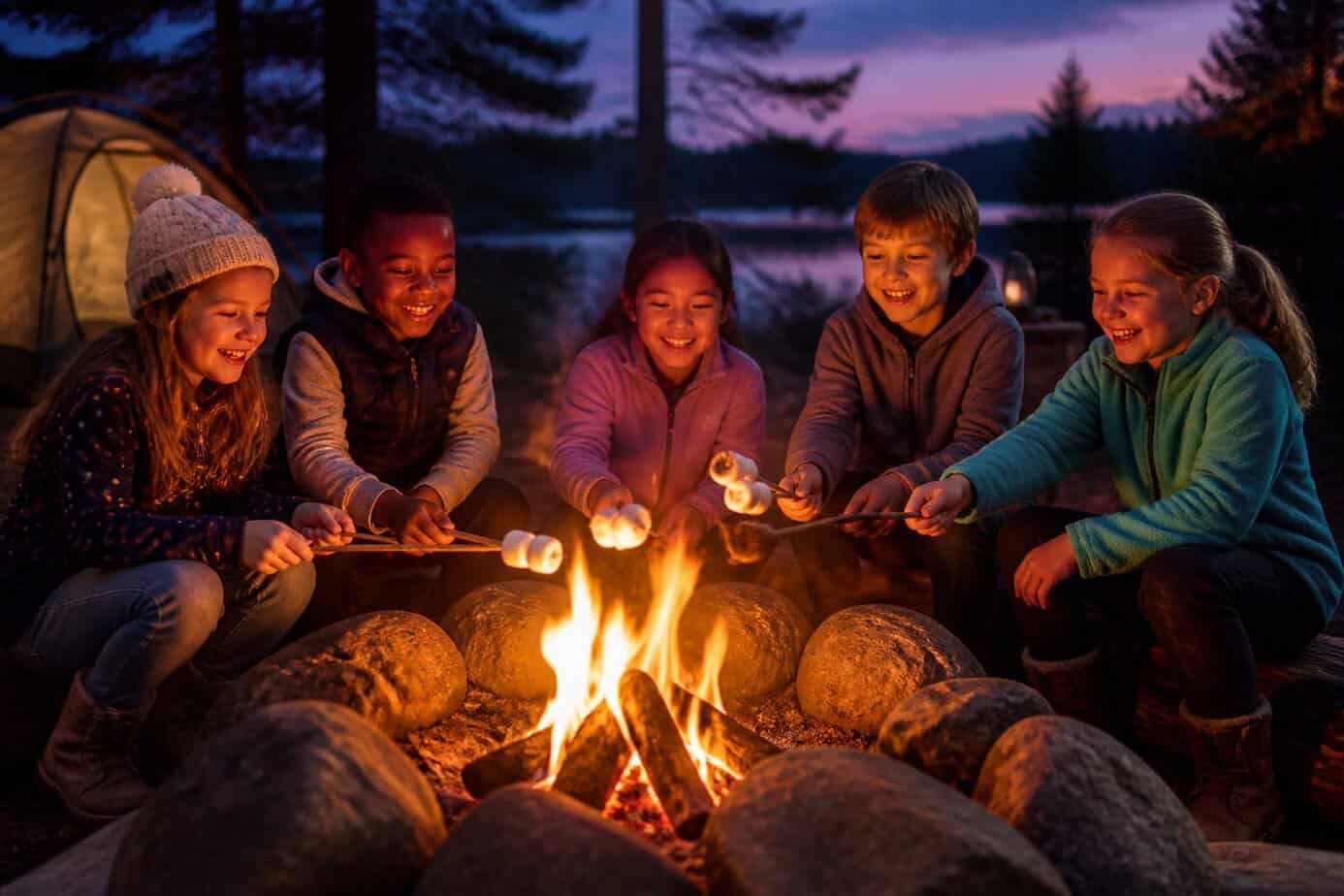
You gathered around crackling fires with friends and family, armed with long sticks or roasting forks. The goal was simple: toast your marshmallow to golden perfection without letting it catch fire.
This activity became popular in the late 1800s and turned into a staple of camping trips and backyard gatherings. You learned patience as you rotated your marshmallow slowly over the coals, watching it puff up and change color.
The best part was customizing your technique. Some of you preferred a slow, even golden brown, while others enjoyed charring the outside to a crisp black shell.
S’mores came later, but the simple act of roasting marshmallows provided entertainment for hours. You shared stories, told jokes, and enjoyed the warmth of the fire while waiting for your treat to reach the perfect level of gooeyness.
15. Hosting sleepovers with board games
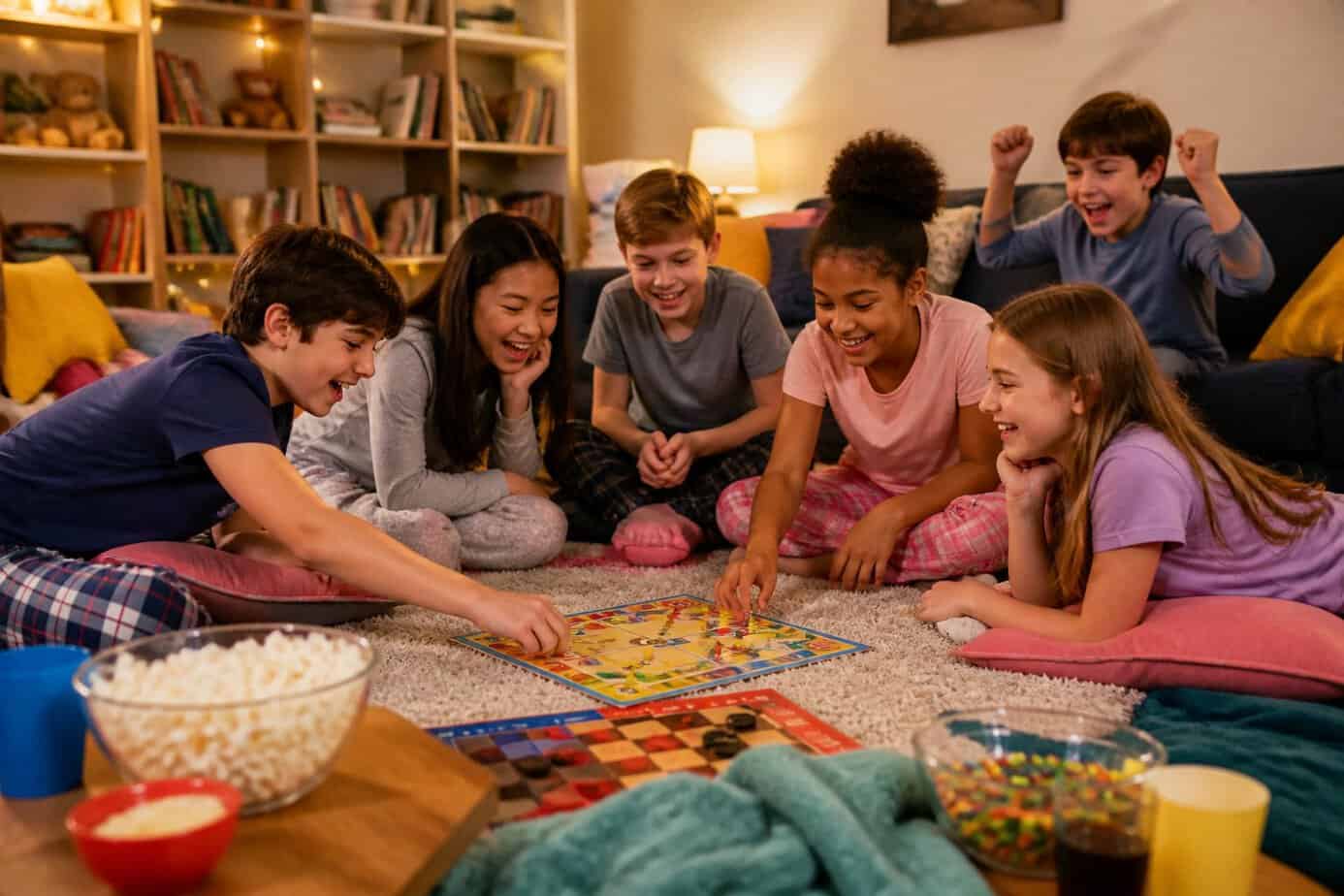
Sleepovers centered around board games were a staple of childhood entertainment. You’d gather friends for an evening of Monopoly marathons, Risk battles, or Sorry tournaments that lasted well past midnight.
The beauty of board game sleepovers was their simplicity. You needed only the games themselves, snacks, and a group of friends willing to stay up late. Games like Clue, Life, and Trivial Pursuit sparked friendly competition and countless inside jokes.
These gatherings taught you patience, strategy, and how to handle both winning and losing gracefully. You learned to take turns, follow rules, and work through disagreements when someone disputed a move.
The face-to-face interaction created bonds that formed through shared experiences. Between game rounds, you’d talk, laugh, and enjoy each other’s company without digital distractions pulling attention away from the group.
16. Creating stop-motion with toy figures
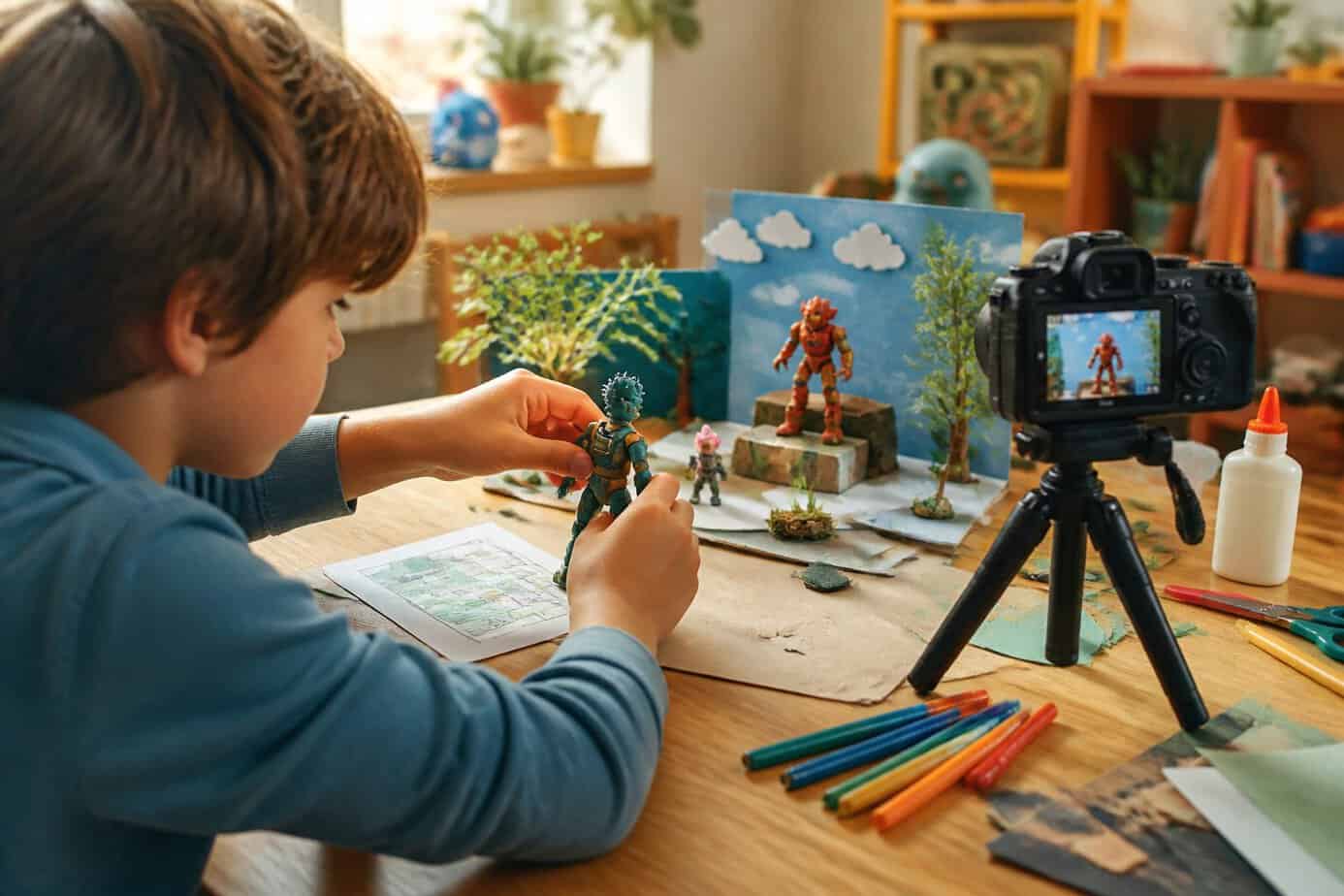
You didn’t need expensive software to become a filmmaker as a kid. Stop-motion animation turned your action figures, dolls, and LEGO sets into movie stars using just a basic camera and patience.
The process was straightforward but required dedication. You positioned your toys, snapped a photo, moved them slightly, and took another shot. Repeating this hundreds of times created the illusion of movement when played back quickly.
Your childhood bedroom transformed into a film studio. You crafted scenes with household items as props and backgrounds. The creative challenge involved planning your story, setting up shots, and maintaining consistent lighting throughout filming.
This hands-on activity taught you storytelling fundamentals while developing patience and attention to detail. Each completed animation, even if just a few seconds long, represented hours of careful work and creative problem-solving.
17. Learning to roller skate outdoors
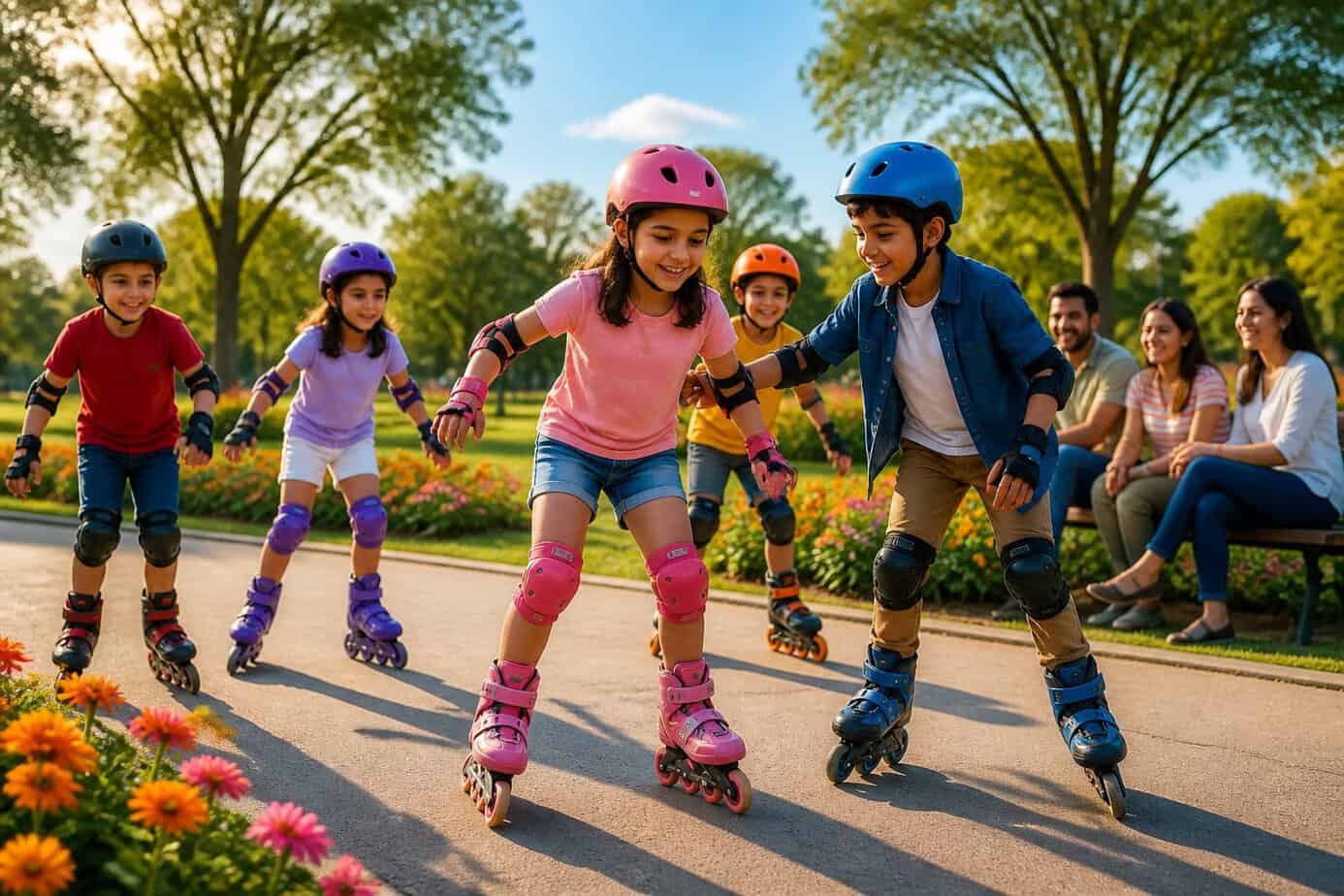
You strapped on your roller skates and headed straight to the nearest smooth patch of pavement. Driveways, parking lots, and empty streets became your practice rink. You spent hours perfecting your balance, learning to stop without crashing into bushes, and mastering turns.
Falls were part of the process. Scraped knees and bruised elbows taught you persistence as you got back up and tried again.
You skated with friends through your neighborhood, racing to see who could go fastest or who could skate backward first. Some of you set up obstacle courses using chalk lines and random objects from the garage.
The outdoor setting meant you dealt with real-world challenges like cracks in the sidewalk, small rocks, and sloped surfaces. These obstacles made you a better skater and taught you to adapt quickly.
18. Skipping rope and rhyming chants
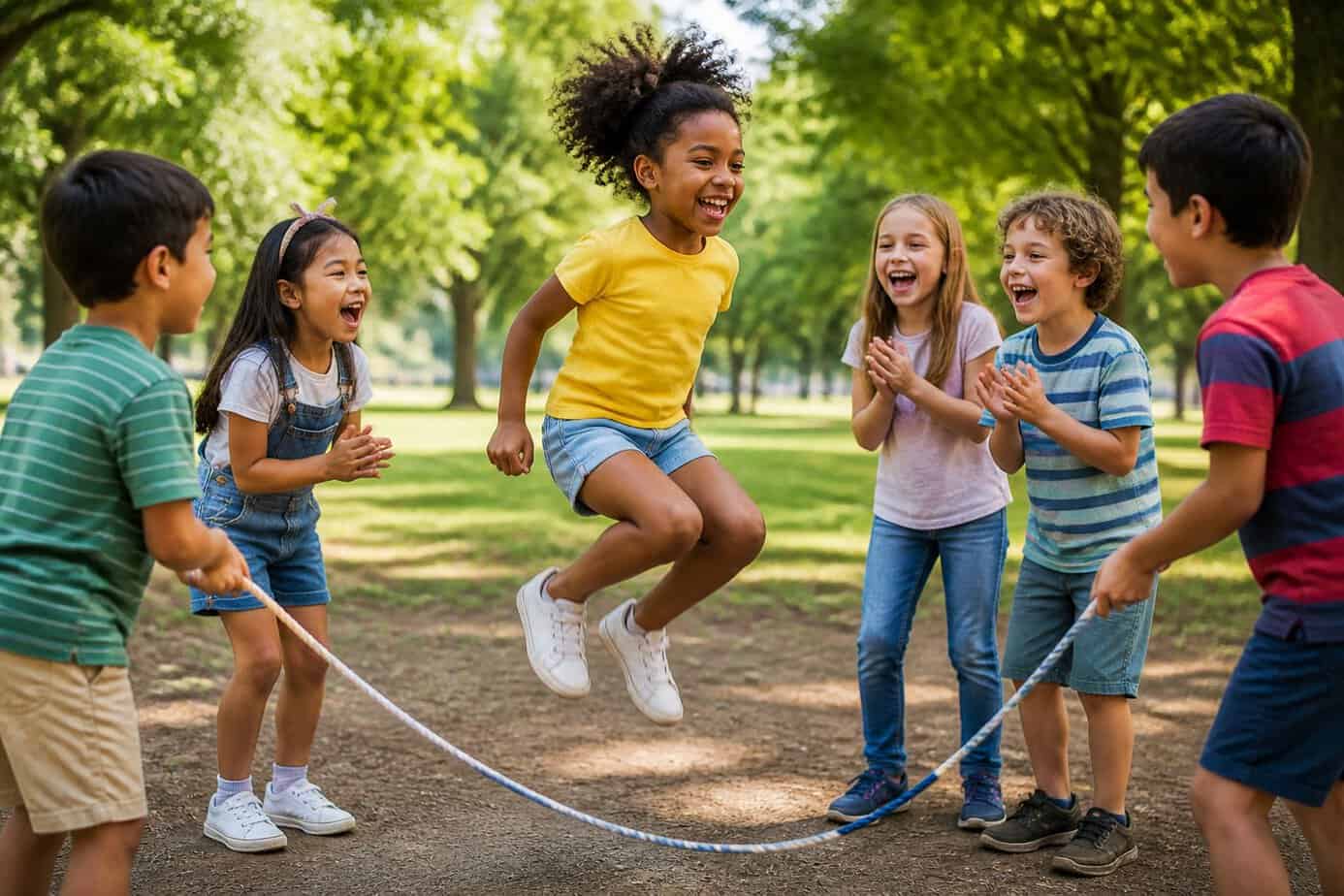
You learned rhythm and timing through skipping rope, a playground activity that has existed since at least the 1600s. The game involved one or two people turning a long rope while others jumped in time to avoid tripping.
You chanted rhymes to keep the beat and coordinate your jumps. These verses ranged from simple counting songs to complex narratives that determined whose turn was next. The rhymes passed down through generations as oral traditions in schoolyards.
You developed motor skills, counting abilities, and social interaction through this activity. The chants helped you memorize patterns while staying synchronized with other players.
You found skipping rope in playgrounds across different cultures worldwide. Each region had its own collection of traditional rhymes that reflected local folklore and language patterns.
19. Playing marbles on the sidewalk
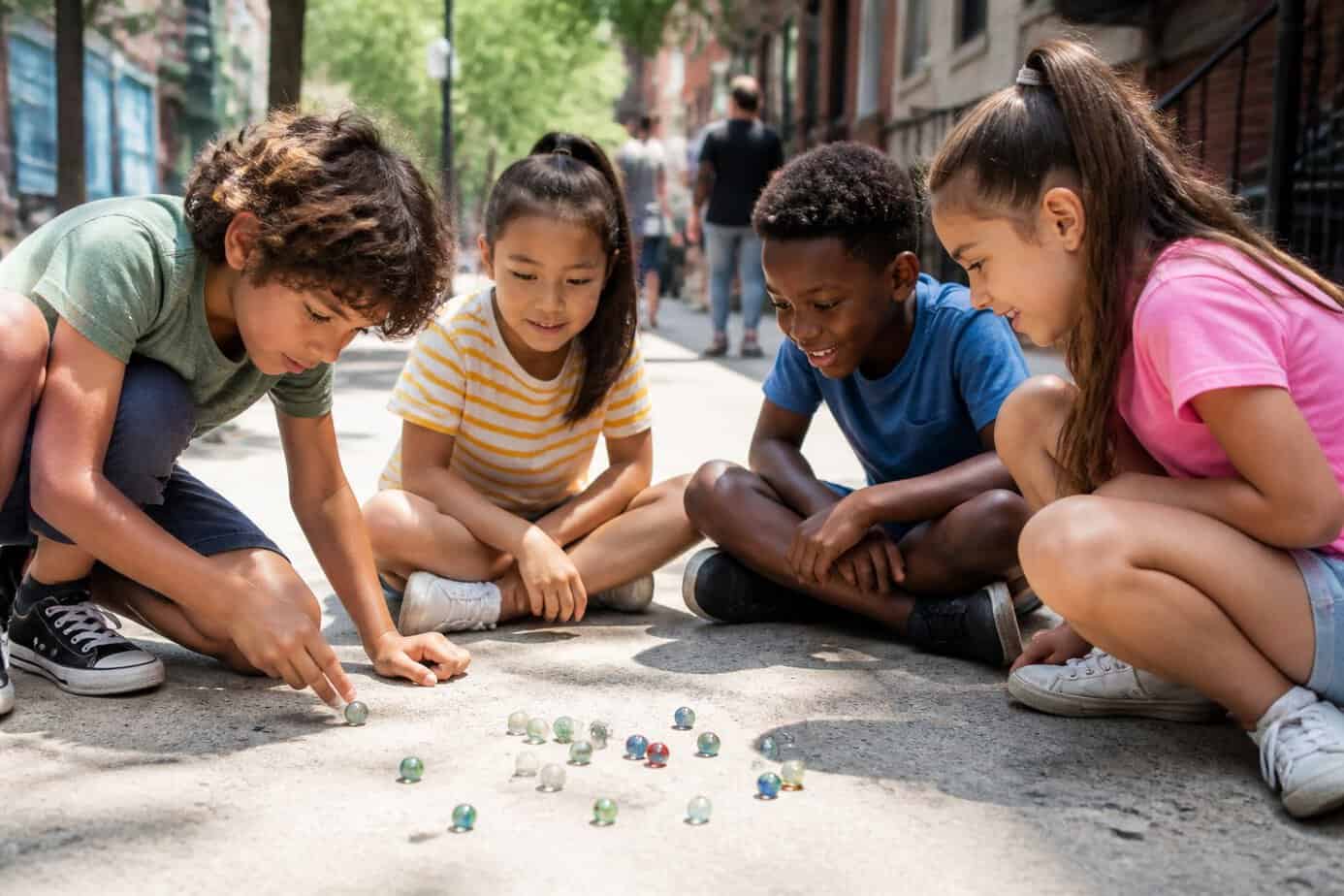
You carried your best marbles in a small cloth bag, ready for impromptu games wherever you found your friends. The sidewalk became your arena, with circles drawn in chalk or scratched into the dirt at the pavement’s edge.
Each player contributed marbles to the ring, and you used your prized “shooter” to knock opponents’ marbles out of bounds. You aimed carefully, flicking your shooter with your thumb to send it rolling across the concrete.
Winning meant collecting more marbles to add to your collection. The games taught you about angles, force, and strategy without ever feeling like a lesson.
Your reputation grew based on your skill and the quality of your marble collection. The simple glass spheres provided hours of competitive fun that required nothing but a smooth surface and willing opponents.
20. Joining impromptu neighborhood pick-up sports
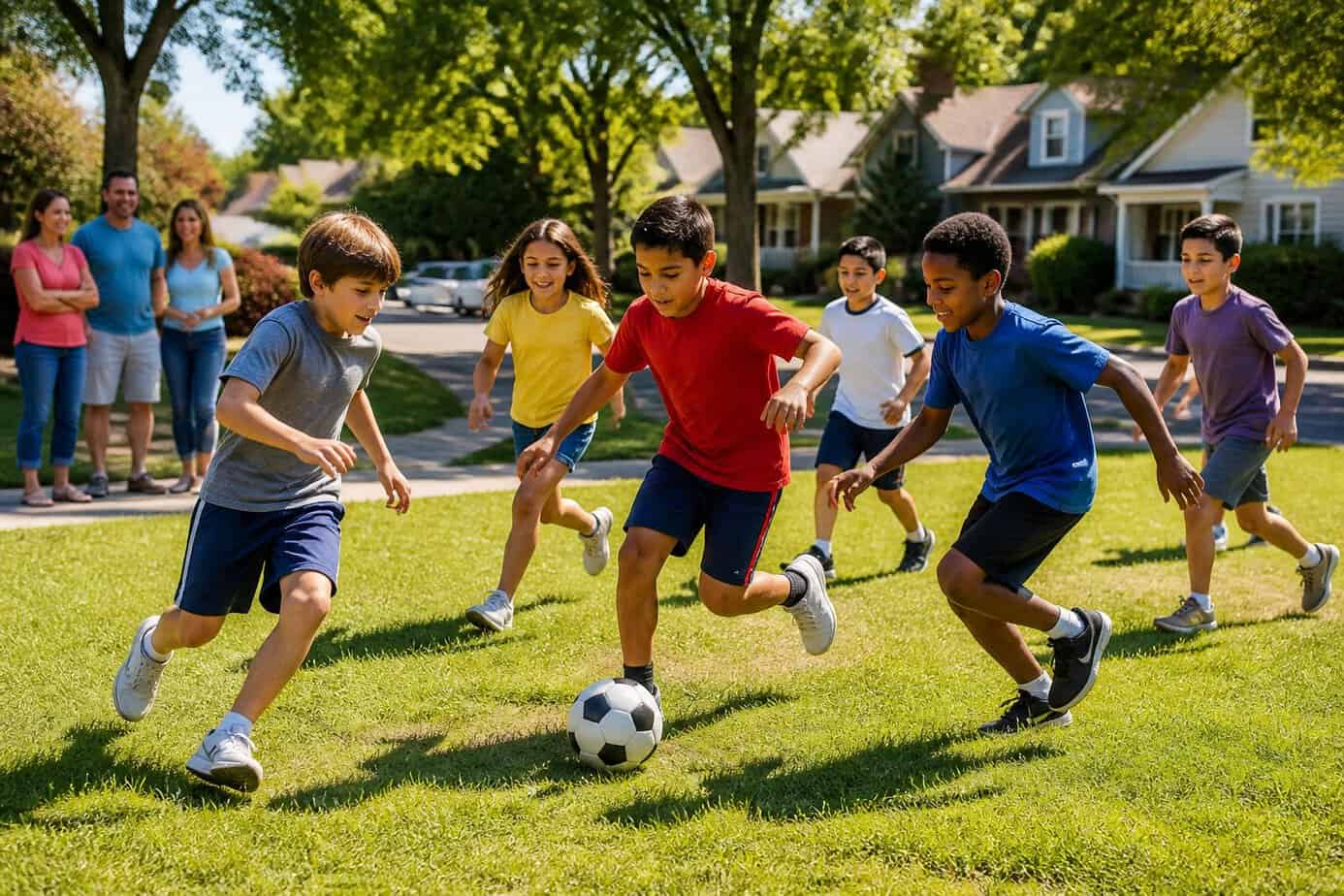
You didn’t need organized leagues or scheduled practices to play sports. Kids simply grabbed a ball and headed to the nearest park, empty lot, or cul-de-sac where others were already gathering.
Pick-up games happened spontaneously throughout neighborhoods. You’d knock on doors to round up players or join whatever game was already underway. Basketball, baseball, football, and soccer all took place with makeshift boundaries and flexible rules that everyone agreed on.
These informal games taught you negotiation skills as you worked out teams and settled disputes without adult referees. You learned to include players of different ages and skill levels, adapting the game to make it work for everyone present.
The games ended when darkness fell or someone’s parent called them home for dinner.
21. Writing and exchanging handwritten letters
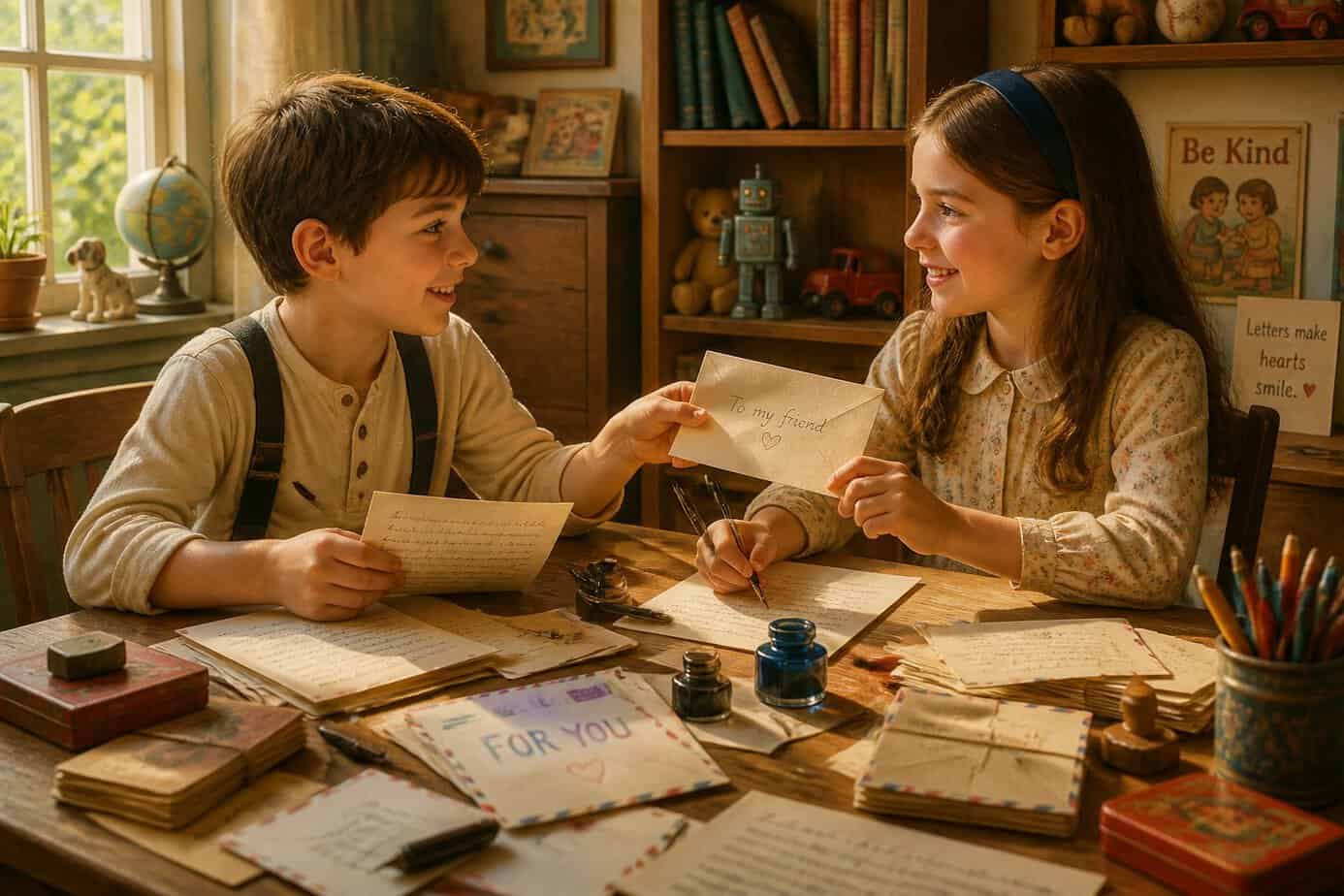
Before instant messaging existed, you spent time carefully crafting letters to friends and relatives. You selected stationery, chose your words thoughtfully, and decorated envelopes with stickers or drawings to make them special.
The process taught patience since replies took days or weeks to arrive. You checked the mailbox regularly, and receiving a letter was genuinely exciting.
Pen-pal programs connected you with kids in other cities or countries. You learned about different places and cultures through these exchanges, building friendships without ever meeting in person.
Writing by hand made communication feel more intentional and personal. You saved letters in shoeboxes or special folders, creating physical records of your relationships. This hobby developed your writing skills and gave you something meaningful to do that didn’t involve screens.
22. Collecting rocks, stamps, or coins
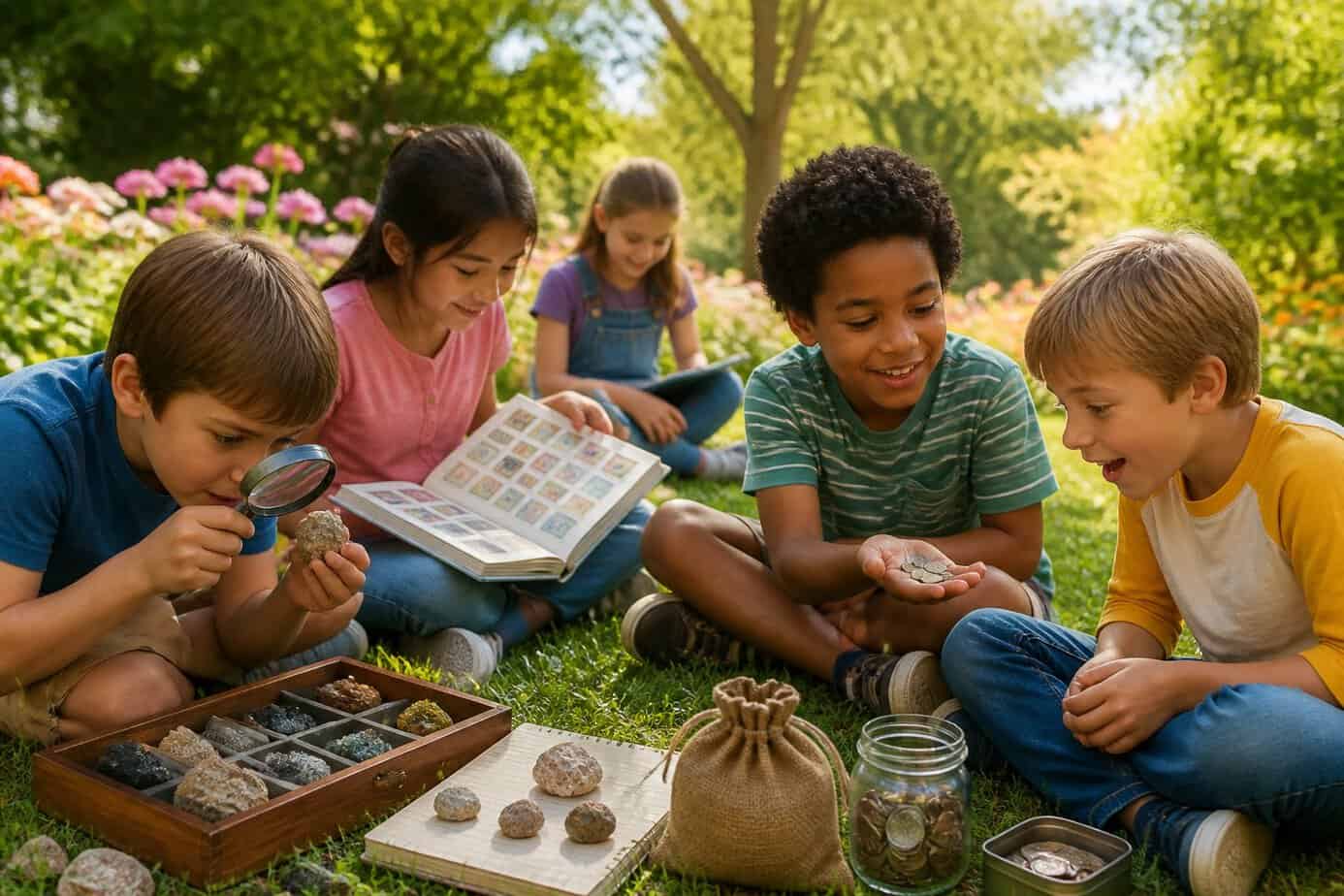
You probably had a shoebox or album dedicated to your prized collection. Collecting gave you a sense of purpose and accomplishment as you searched for new additions to display.
Stamp collecting taught you about geography and history through the images and origins of each piece. You learned to handle delicate items carefully and organize them by country, year, or theme.
Rock collecting turned ordinary walks into treasure hunts. You examined colors, textures, and patterns while building your personal museum of geological specimens.
Coin collecting introduced you to numismatics and the value of patience. You sorted through pocket change hoping to find rare dates or mint marks that made certain coins more special than others.
These collections required no batteries or internet connection. You simply needed curiosity and the dedication to build something meaningful over time.
23. Making friendship bracelets
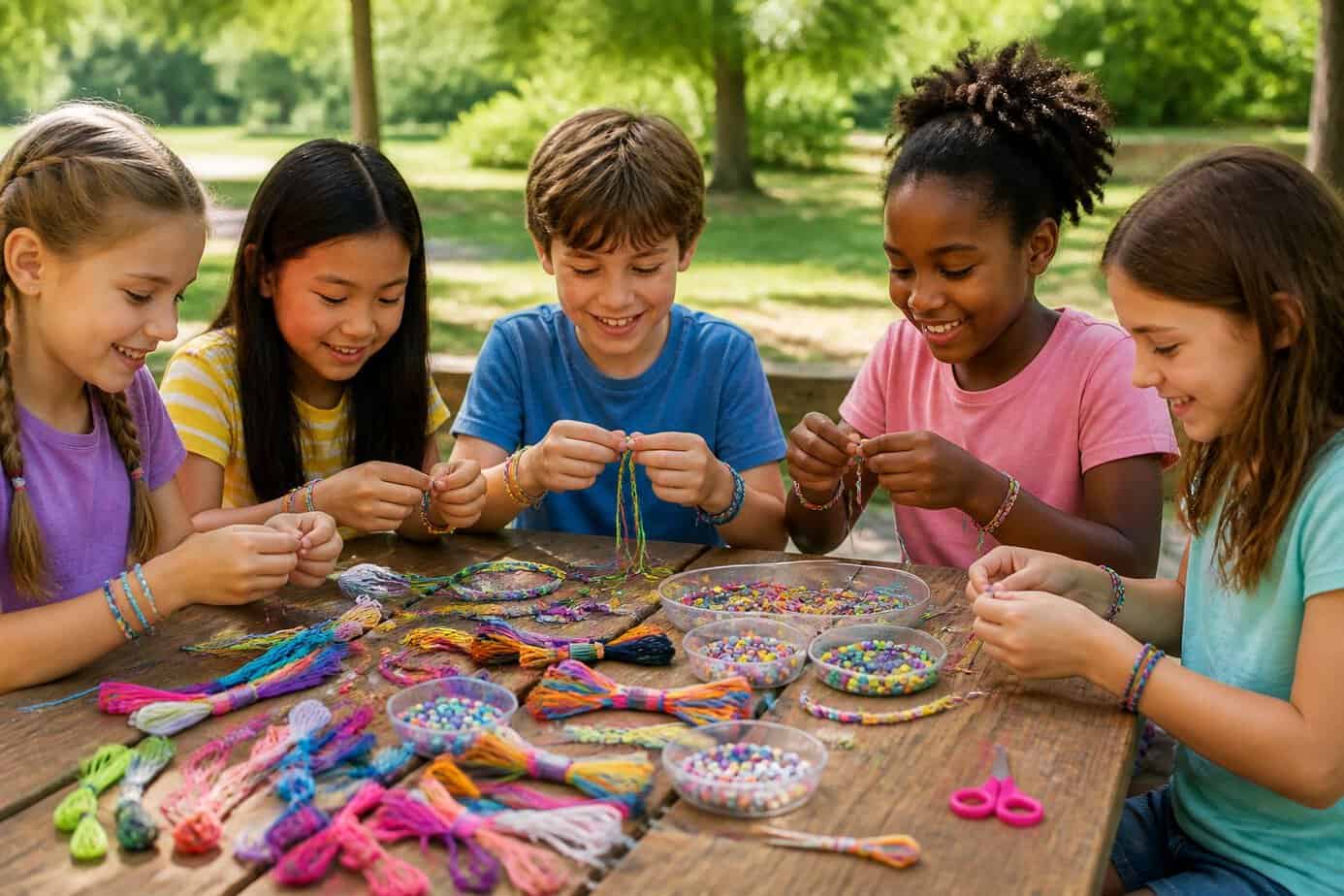
You spent hours mastering the art of knotting colorful embroidery thread into intricate patterns. This hands-on activity required patience and focus as you learned forward knots, backward knots, and diagonal stripe designs.
Making friendship bracelets helped you develop fine motor skills and hand-eye coordination naturally. You chose thread colors carefully, often matching them to your friend’s favorite shades or school colors.
The process was simple but engaging. You secured the threads to a clipboard or pinned them to your jeans, then worked through patterns step by step. Each completed bracelet represented time and effort, making it a meaningful gift.
You traded bracelets with friends and wore them until they fell off naturally. The activity kept you entertained for afternoons at a time, requiring nothing more than inexpensive thread and basic knotting skills.
24. Playing hopscotch drawn with chalk
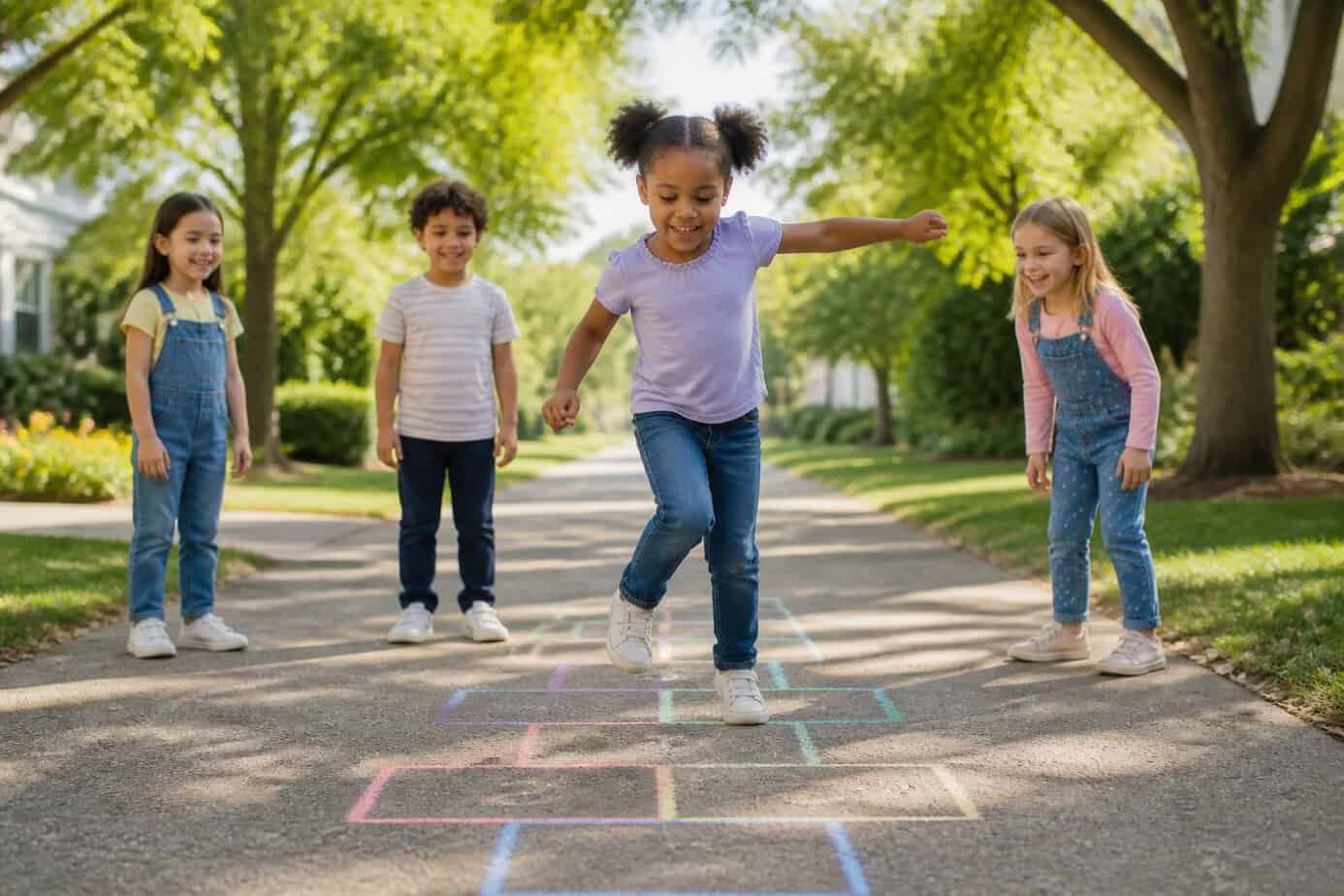
You’d grab a piece of chalk and draw a numbered grid on the sidewalk or driveway. The basic setup required squares numbered one through ten, though variations existed depending on your neighborhood.
The game involved tossing a small object like a stone or beanbag onto a numbered square. You’d then hop through the grid on one foot, skipping the square containing your marker. When you reached the end, you’d turn around and hop back, picking up your object on the way.
Hopscotch developed your balance and coordination as you carefully navigated each square. The game required minimal equipment and could be played alone or with friends taking turns. Rain would eventually wash away the chalk grid, so you’d simply draw a new one the next day.
25. Exploring local creeks and nature trails
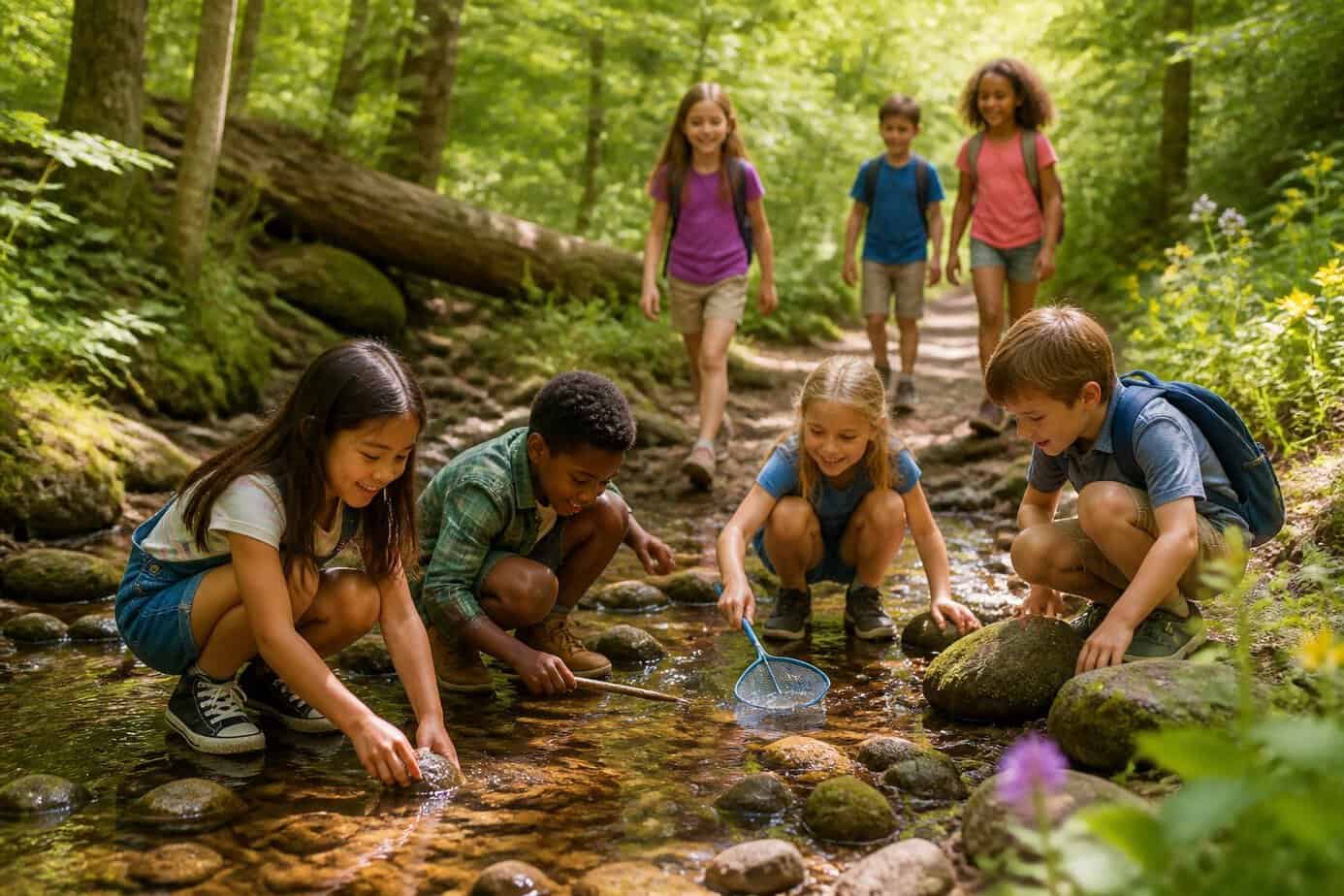
You probably spent hours wandering along creek beds, turning over rocks to find crawfish and watching minnows dart through shallow water. These waterways offered endless exploration opportunities without needing any special equipment or planning.
Creeking became an adventure where you learned to navigate slippery stones, identify different plants along the banks, and discover small ecosystems thriving in the water. You developed balance and problem-solving skills while simply playing.
Nature trails near your home provided similar freedom to explore. You’d follow paths through wooded areas, creating shortcuts and secret spots that only you and your friends knew about.
These outdoor expeditions taught you to read natural signs, from cloud formations to animal tracks. The unstructured time spent exploring creeks and trails built your confidence and connection to the natural world around you.
26. Building model kits (cars, planes, ships)
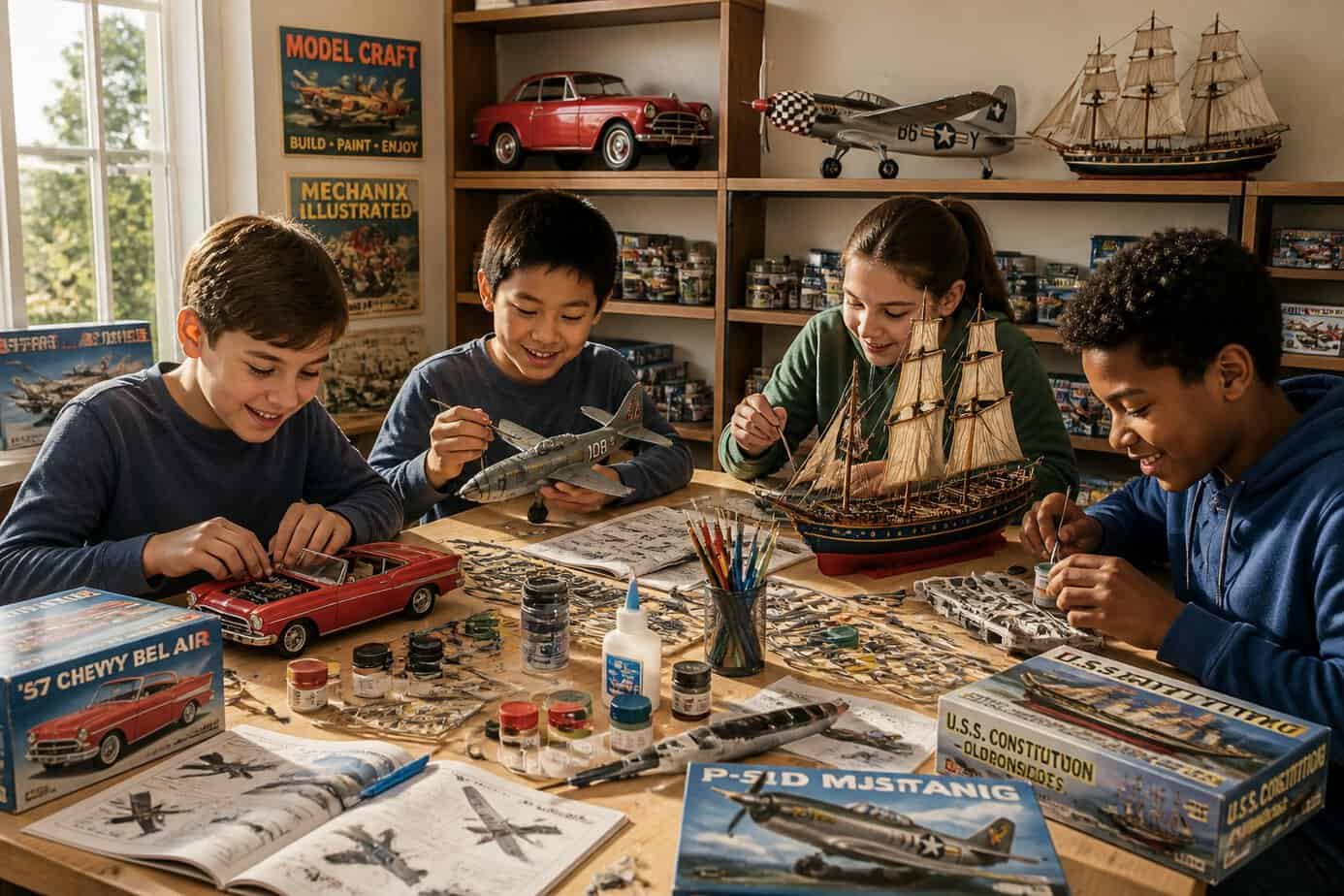
You spent hours at the kitchen table carefully assembling plastic model kits. The distinctive smell of model glue and paint became a familiar part of the experience as you followed detailed instructions step by step.
Popular kits included Aurora models, Tamiya vehicles, and various aircraft and ship designs. You learned patience as you pieced together tiny parts, applied decals, and painted intricate details.
The activity taught you to read instructions carefully and develop fine motor skills. Many kids bonded with parents during these building sessions, working side by side on their projects.
Your finished models earned a place on bedroom shelves, serving as tangible proof of your accomplishment. The hobby required focus and dedication, keeping you engaged for extended periods without any digital devices needed.
27. Putting together jigsaw puzzles on the dining table
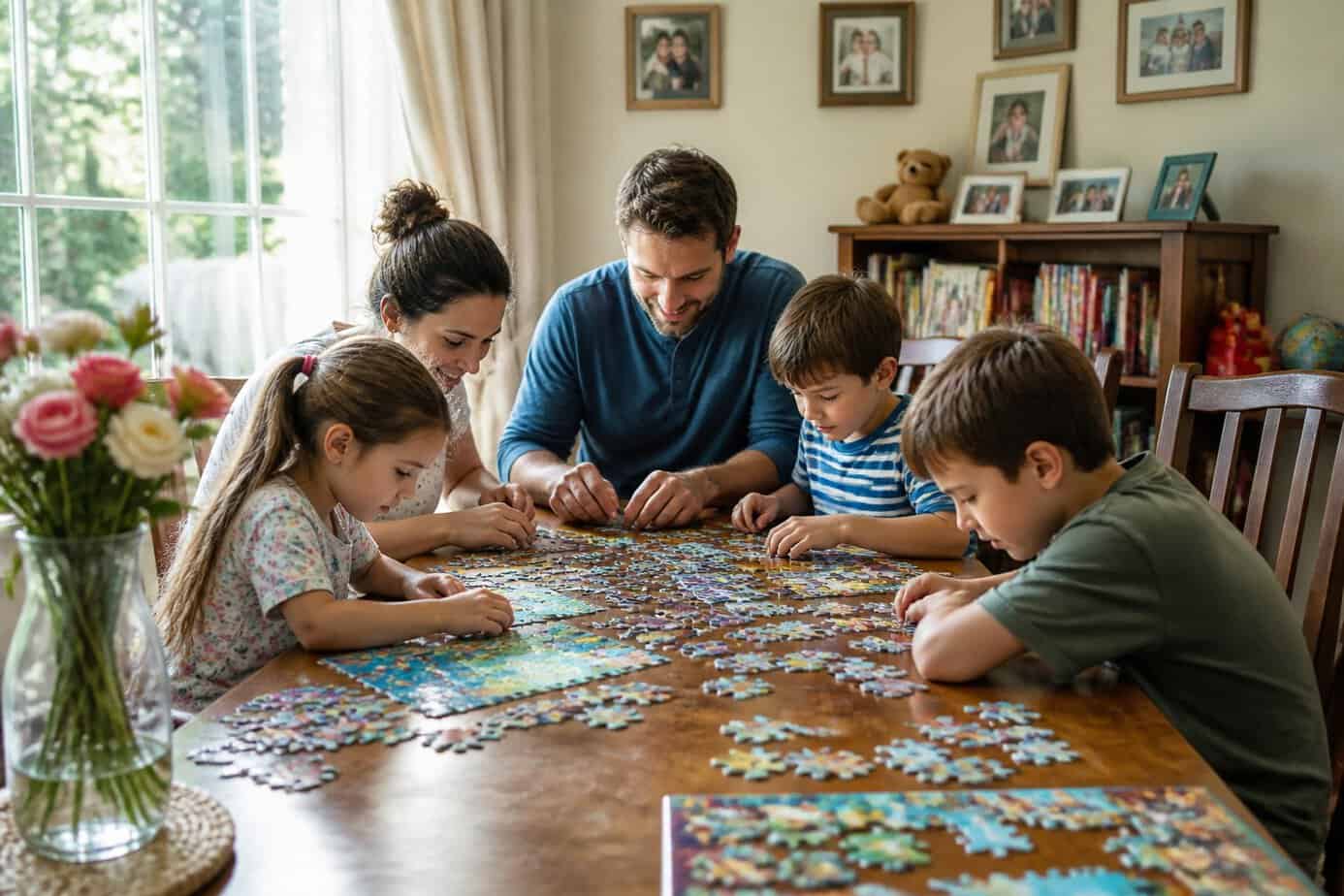
Your family’s dining table often doubled as puzzle headquarters, with a half-finished jigsaw claiming the space for days or even weeks. You’d walk by and add a piece or two between meals, creating an ongoing project that anyone could join.
Jigsaw puzzles offered affordable entertainment that could occupy your family for hours. During the 1930s Depression, puzzle sales surged because they provided cheap, reusable fun that brought everyone together.
You learned patience as you sorted edge pieces from center pieces and matched colors and patterns. The collaborative nature meant your siblings, parents, or visiting relatives could sit down and contribute whenever they wanted.
Completing a challenging section gave you a genuine sense of accomplishment. That final piece always felt like a small victory you’d earned through persistence and teamwork.
28. Inventing backyard obstacle courses
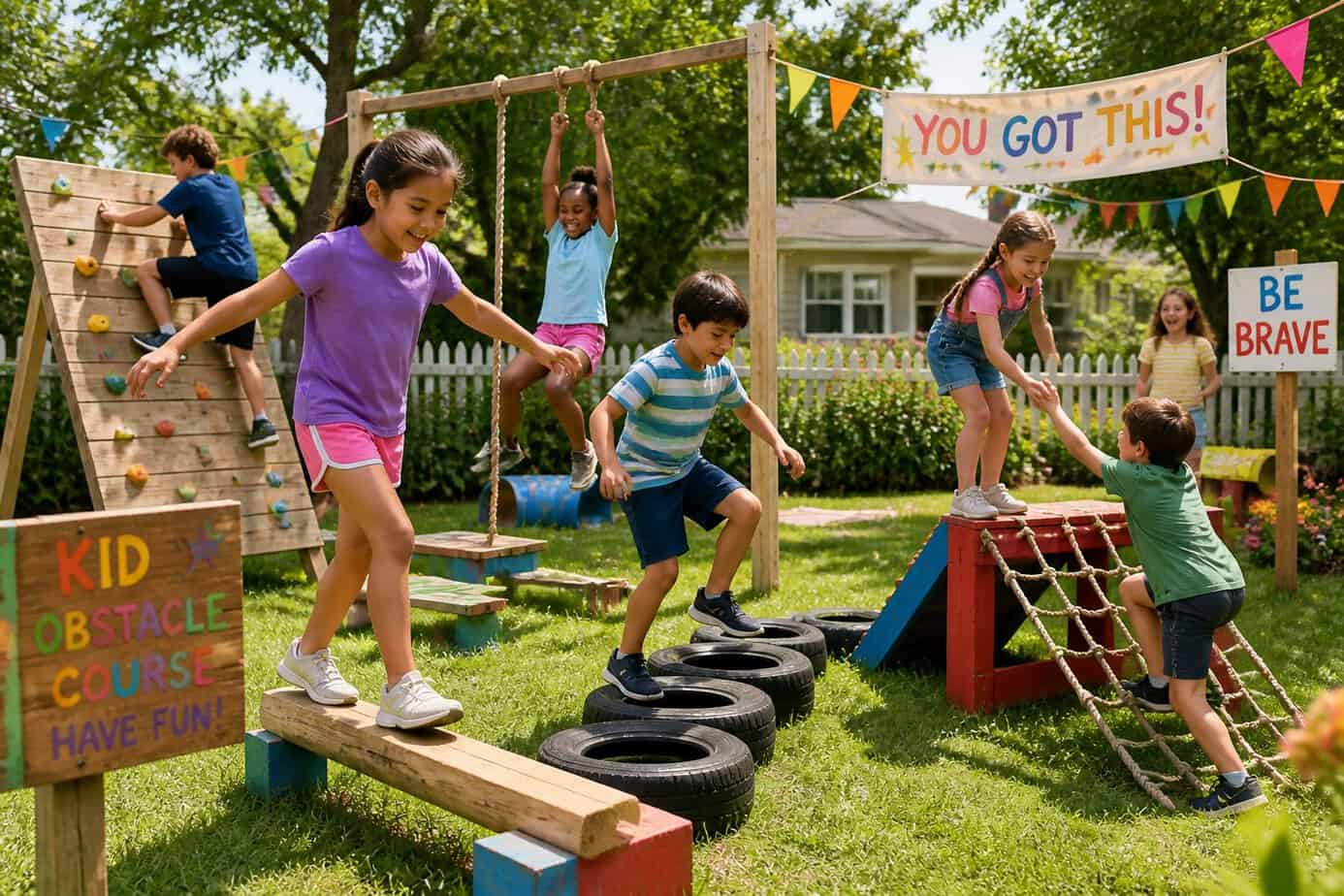
You turned your backyard into a challenging course using whatever materials you could find. Lawn chairs became hurdles to jump over, garden hoses laid out in zigzag patterns for weaving exercises, and tree branches served as limbo bars.
You timed each other with a stopwatch or counted seconds out loud. The courses changed constantly as you added new challenges or rearranged existing ones.
Cardboard boxes, old tires, and pool noodles all found new purpose in your creations. You crawled under tables, hopped between designated spots, and balanced along wooden planks.
The best part was redesigning the course after someone completed it too quickly. You made the challenges harder by spacing obstacles farther apart or adding penalty laps for touching certain items.
29. Performing backyard puppet shows
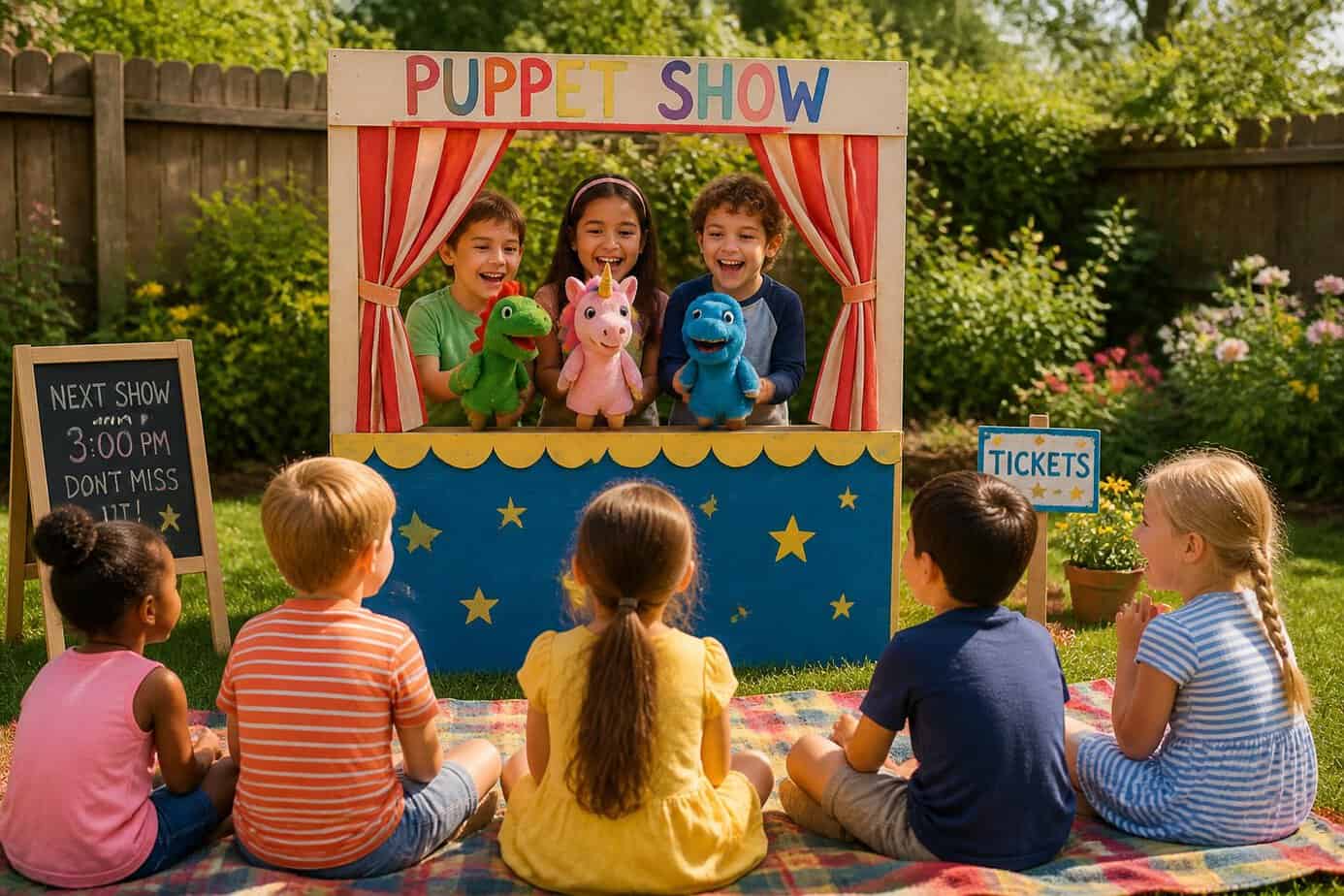
You transformed cardboard boxes, old socks, and paper bags into entire theatrical productions. A simple blanket draped over a clothesline or stretched between two chairs became your stage.
You spent hours crafting puppet characters and writing scripts for your shows. Neighborhood kids gathered as your audience, sitting on the grass while you crouched behind your makeshift theater. The admission price was often nothing more than their attention.
Your puppets had voices and personalities you created on the spot. You performed fairy tales, made-up adventures, or reenactments of your favorite stories. Sometimes you charged a small fee like a nickel or offered homemade refreshments during intermission.
These backyard productions taught you storytelling, public speaking, and creative problem-solving without any screens involved.
30. Reading libraries and trading books with friends
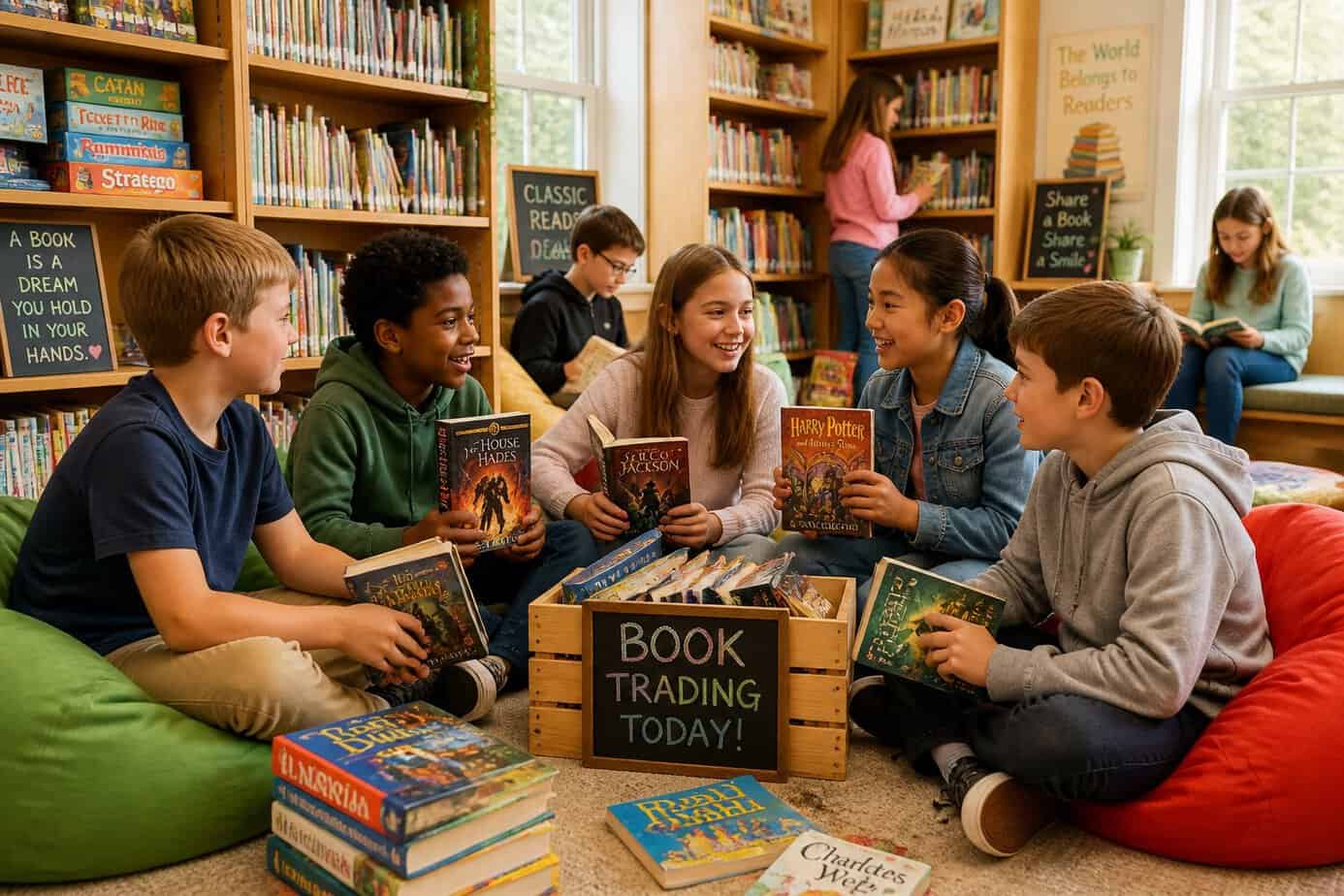
Libraries served as community gathering spots where you could spend hours browsing shelves and discovering new stories. You walked through aisles filled with books, selecting titles based on cover art and back-cover descriptions rather than online ratings.
Trading books with friends created informal lending networks throughout neighborhoods and classrooms. You swapped favorite novels and comic books, building anticipation for the next exchange. These trades introduced you to genres and authors you might not have chosen independently.
Book fairs and bookstores allowed you to flip through pages with friends, making selections based on genuine interest. The Scholastic book order forms circulated monthly, letting you mark your choices and wait eagerly for delivery.
This physical relationship with reading developed literacy skills while fostering social connections around shared stories and recommendations.
31. Memorizing and reciting phone numbers
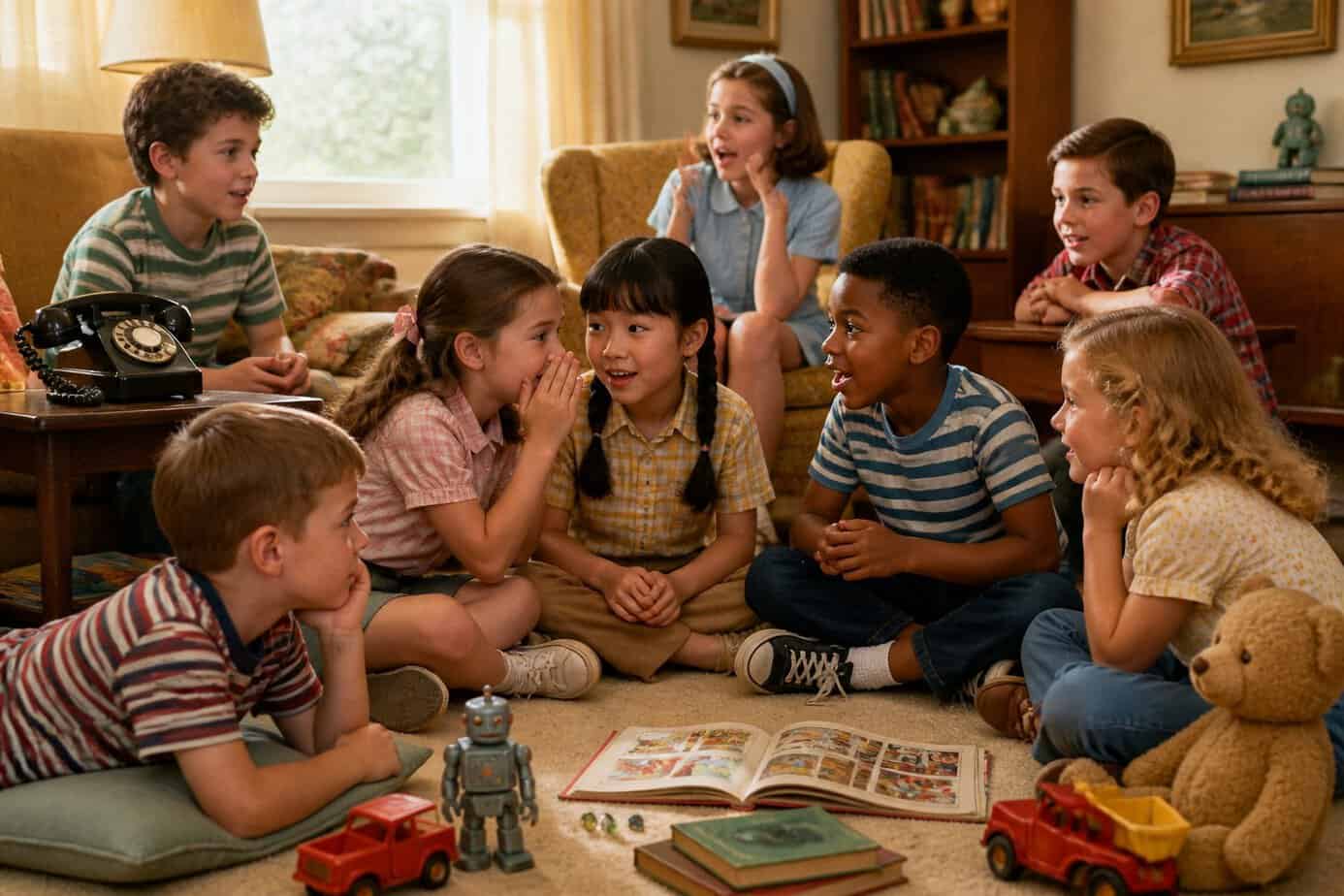
You kept a mental rolodex of the phone numbers that mattered most to you. Your best friend’s number, your parents’ work lines, and your grandparents’ home phone were committed to memory through repeated use.
There was no contact list to scroll through. You simply picked up the phone and dialed from memory, your fingers knowing the pattern without thinking.
This practice strengthened your recall abilities in ways that went beyond just numbers. You learned to retain information because forgetting meant being disconnected from the people you cared about.
Kids could often recite a dozen or more phone numbers without hesitation. This skill made you self-reliant and kept your brain actively engaged in storing important information.
32. Constructing and racing soapbox derby cars
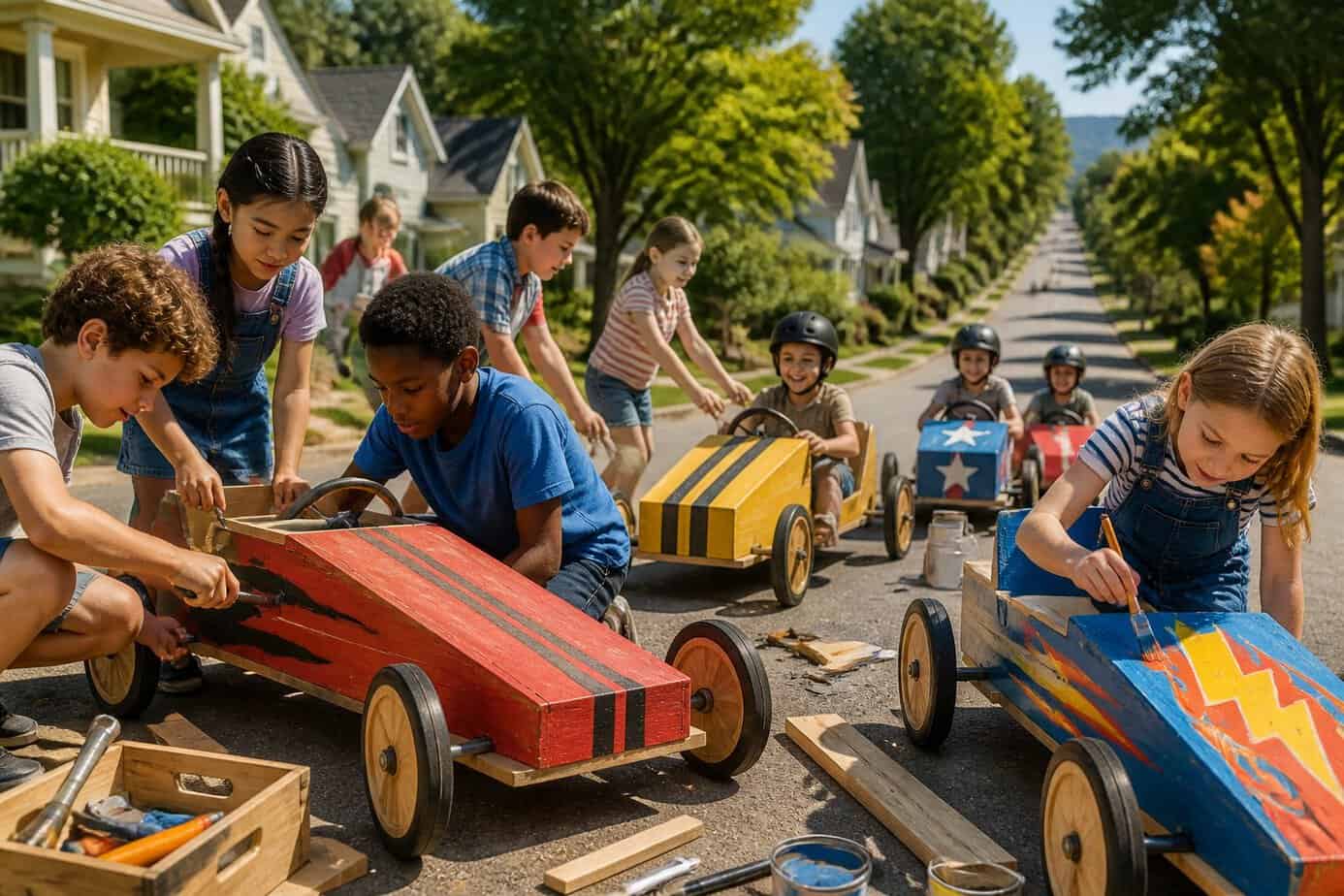
You spent weeks building your soapbox derby car from scratch, learning basic engineering and design principles along the way. These gravity-powered vehicles required no engines, just your creativity and whatever materials you could find or afford.
The construction process taught you problem-solving and resourcefulness as you worked with simple tools like screwdrivers and wrenches. You designed the body, installed ball-bearing wheels, and assembled the chassis, often with guidance from parents or other adults.
Race day brought genuine excitement as you tested your handiwork against other kids’ cars on an inclined track. The International Soap Box Derby, which started in the 1930s, formalized these competitions and continues today. You gained hands-on experience in mechanics while developing teamwork skills and learning how physics actually worked in the real world.
33. Hosting neighborhood lemonade stands
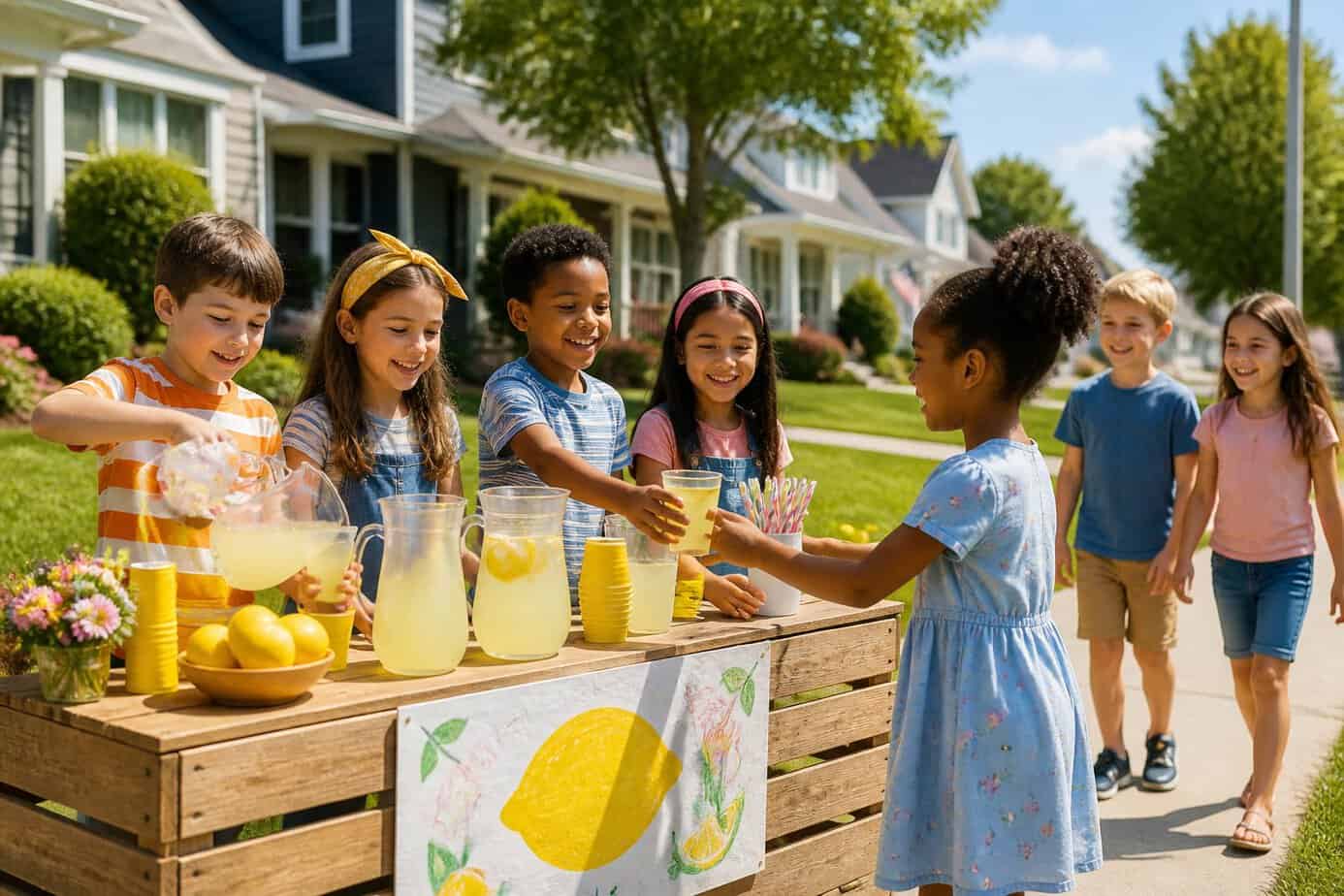
You probably remember setting up a card table on the sidewalk, hand-painting wobbly price signs, and waiting for customers to stop by. Running a lemonade stand was a summer ritual that taught you to count money, make change, and interact with neighbors.
Your stand didn’t need much beyond lemons, sugar, water, and cups. You’d spend an hour mixing pitchers and arranging everything just right, then sit outside for the afternoon hoping to earn a few dollars.
The experience gave you your first taste of business. You learned about supply, demand, and customer service without realizing you were learning anything at all.
This simple activity required freedom kids rarely have today. You operated unsupervised on quiet streets where parents trusted the neighborhood and passersby were happy to support young entrepreneurs with pocket change.
The Impact of Technology on Childhood Experiences
Technology has fundamentally altered how children interact with peers and express their creativity. The shift from analog to digital entertainment has restructured both social connections and imaginative play patterns.
Shifts in Socialization Patterns
Face-to-face interaction was the primary mode of socialization before smartphones became prevalent. Children gathered at parks, knocked on neighbors’ doors, and made plans without parental coordination through text messages. These interactions required reading body language, navigating conflicts in real-time, and developing conversational skills through direct engagement.
Social media and messaging apps have transformed these dynamics. Your child now maintains friendships through screens, often communicating with peers they see daily at school through digital platforms rather than after-school visits. Research indicates that while digital communication expands connection opportunities, it reduces opportunities to practice conflict resolution and emotional interpretation skills that develop through in-person interactions.
The spontaneity of childhood friendships has shifted to scheduled, parent-mediated interactions. Before technology, you likely spent hours with neighborhood kids without formal planning, creating organic social experiences that taught independence and social navigation.
Effects on Creativity and Imagination
Unstructured play drove creative development in pre-digital childhoods. Children invented games, created narratives without templates, and transformed ordinary objects into toys through imagination. A cardboard box became a spaceship, fort, or store without instruction manuals or predetermined outcomes.
Digital entertainment often provides pre-packaged experiences with defined rules and narratives. Video games and apps offer structured activities that require less imaginative input from users. While some digital tools foster creativity, passive screen consumption has replaced much of the open-ended play that previously occupied children’s time.
Boredom served as a catalyst for creative thinking. Without constant digital stimulation, you had to generate your own entertainment, whether through drawing, building, storytelling, or outdoor exploration. This necessity developed problem-solving abilities and imaginative capacity that structured digital activities may not replicate.
Benefits of Unplugged Play
Screen-free activities directly strengthen children’s ability to solve problems independently and regulate their emotions. These foundational benefits shape how kids navigate challenges and relationships throughout their lives.
Building Lifelong Skills
When children engage in unplugged play, they develop patience through activities that require sustained attention without instant rewards. Building a fort from scratch or completing a puzzle teaches them to work through frustration and celebrate delayed gratification.
Creative thinking flourishes during screen-free time. Your child invents games, creates stories, and finds solutions to problems without predetermined outcomes or digital prompts guiding each step.
Key skills developed through unplugged play:
- Problem-solving and critical thinking
- Negotiation and rule-making during group games
- Self-entertainment and independent play
- Physical coordination and motor skills
- Communication without digital mediation
Children also learn to navigate social dynamics face-to-face. They practice reading body language, taking turns, and resolving conflicts in real-time rather than through screens.
Supporting Emotional Wellbeing
Unplugged routines enhance your child’s ability to focus on single tasks without digital distractions competing for attention. This concentrated engagement helps them develop deeper thinking patterns and attention spans.
Screen-free play reduces overstimulation from constant notifications and rapid content changes. Your child’s nervous system gets essential downtime to process experiences and emotions at a natural pace.
These activities also strengthen family connections through shared experiences. Playing board games together or building projects side-by-side creates opportunities for genuine interaction and lasting memories.
Children gain confidence in their ability to entertain themselves without external devices. This self-reliance translates into better emotional regulation and reduced anxiety when technology isn’t available.