31 Ordinary Weekend Moments from the 1980s That Became Lifelong Memories: A Nostalgic Look at Simple Pleasures
Would you like to save this?
Weekends in the 1980s had a distinct rhythm shaped by analog entertainment, face-to-face connections, and routines that didn’t require screens or internet access.
These ordinary moments from Saturday morning cartoons to neighborhood bike rides and family game nights, created a shared cultural experience that defined childhood and family life for an entire generation.
The rituals may have seemed unremarkable at the time, but they formed the foundation of memories that feel impossibly warm when recalled decades later.
Before streaming services and smartphones transformed how you spent free time, your weekends revolved around tangible experiences. You waited for things, whether it was new comic books at the corner store or your turn at the arcade.
You made plans without texting, played outside without GPS tracking, and entertained yourself with whatever was available in your immediate surroundings.
This collection captures those specific weekend traditions that shaped the 1980s, the ones that felt automatic then but now seem like relics from another era.
From VHS rentals to roller rinks, these moments reflect how you actually spent your time when entertainment required more effort and social interaction happened primarily in person.
1. Saturday-morning cartoon marathons in front of the TV
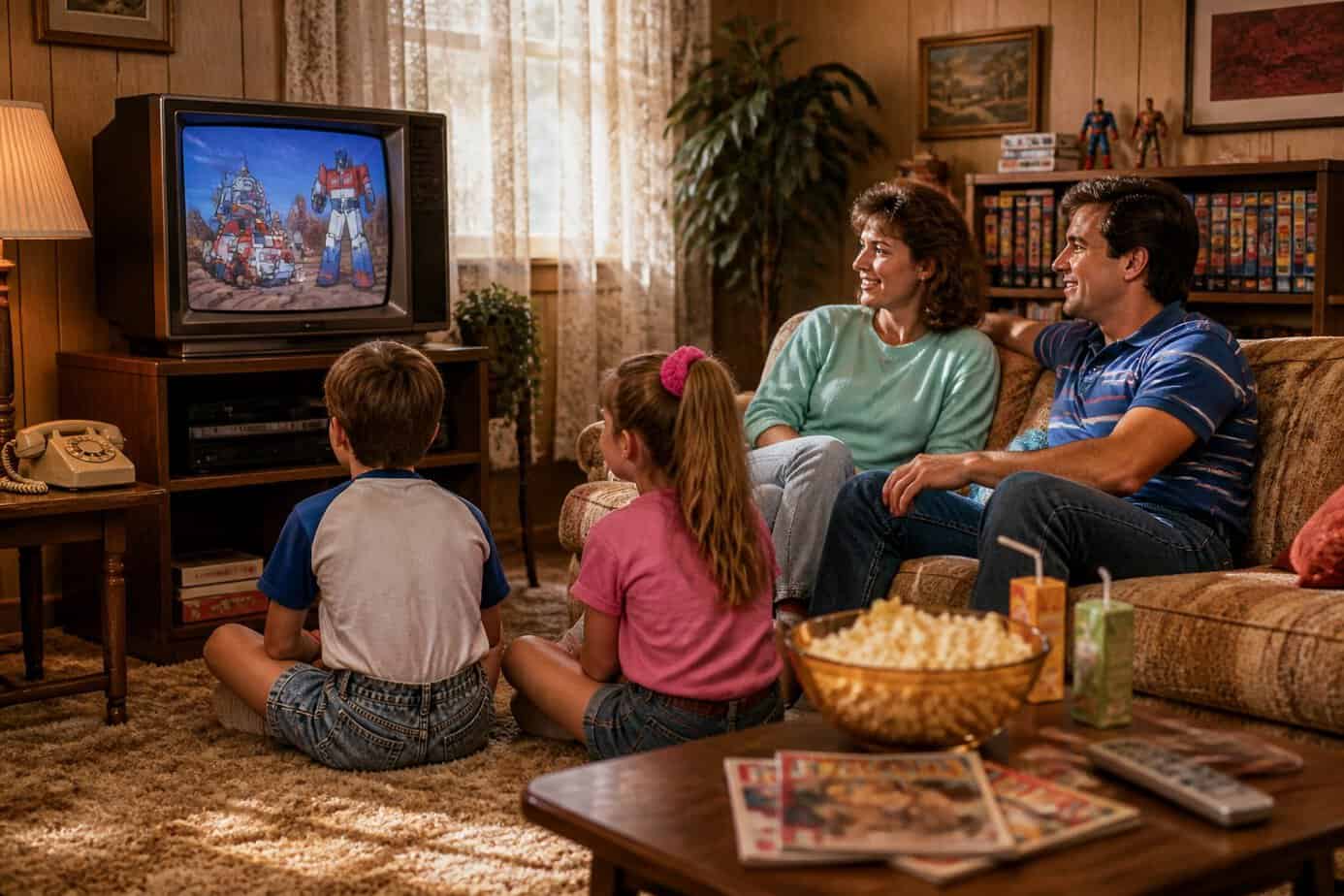
You woke up early without an alarm, crept to the living room, and claimed your spot in front of the television. Saturday mornings meant hours of cartoons on ABC, CBS, or NBC, typically running from 7 a.m. until noon.
You grabbed your bowl of cereal and settled in for back-to-back animated shows. This wasn’t casual background noise. It was your weekly routine that required commitment and focus.
The cartoon blocks featured shows like He-Man, Thundercats, and Transformers. You shared these programs with millions of other kids across the country, creating common references and catchphrases you’d repeat at school.
Between shows, toy commercials teased the latest action figures and playsets. Your parents might sleep in, but you had your own appointment viewing that defined your weekend mornings throughout the decade.
2. Family VHS movie night with Popcorn and rewinding the tape
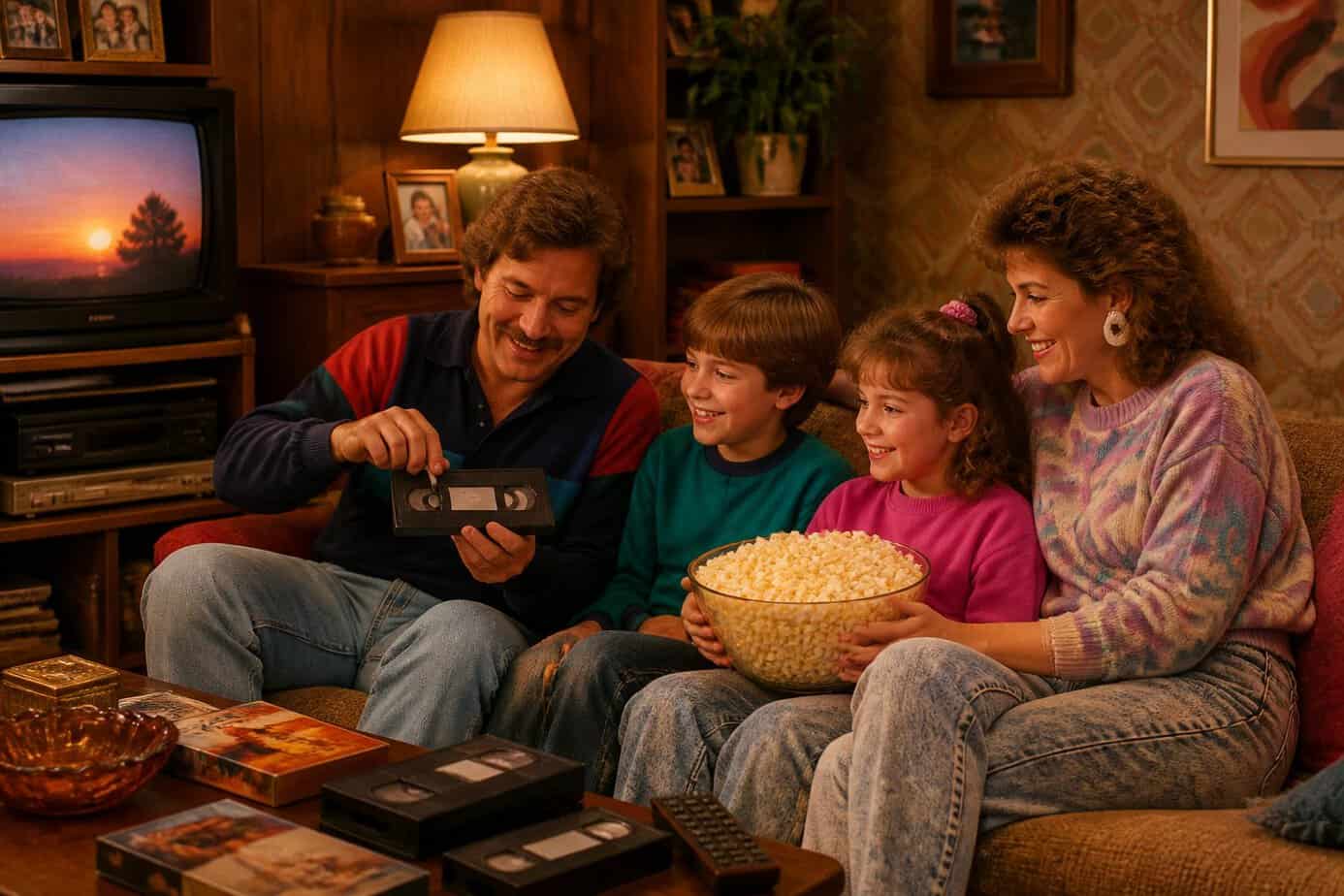
Friday nights meant a trip to the video store to browse shelves of colorful VHS cases. You debated with your family over which movie to rent, knowing everyone had to agree on one choice.
Back home, you popped popcorn in the microwave and gathered around the TV. The ritual included pressing play and sitting through previews before the main feature started.
When the movie ended, you had a responsibility. Rewinding the tape was mandatory before returning it to avoid late fees. That distinct whirring sound of the VHS rewinding became a familiar part of the experience.
Some families even owned dedicated rewinder machines to save wear on their VCR. The entire process was simple compared to today’s endless scrolling through streaming options.
3. Neighborhood bike rides until dusk
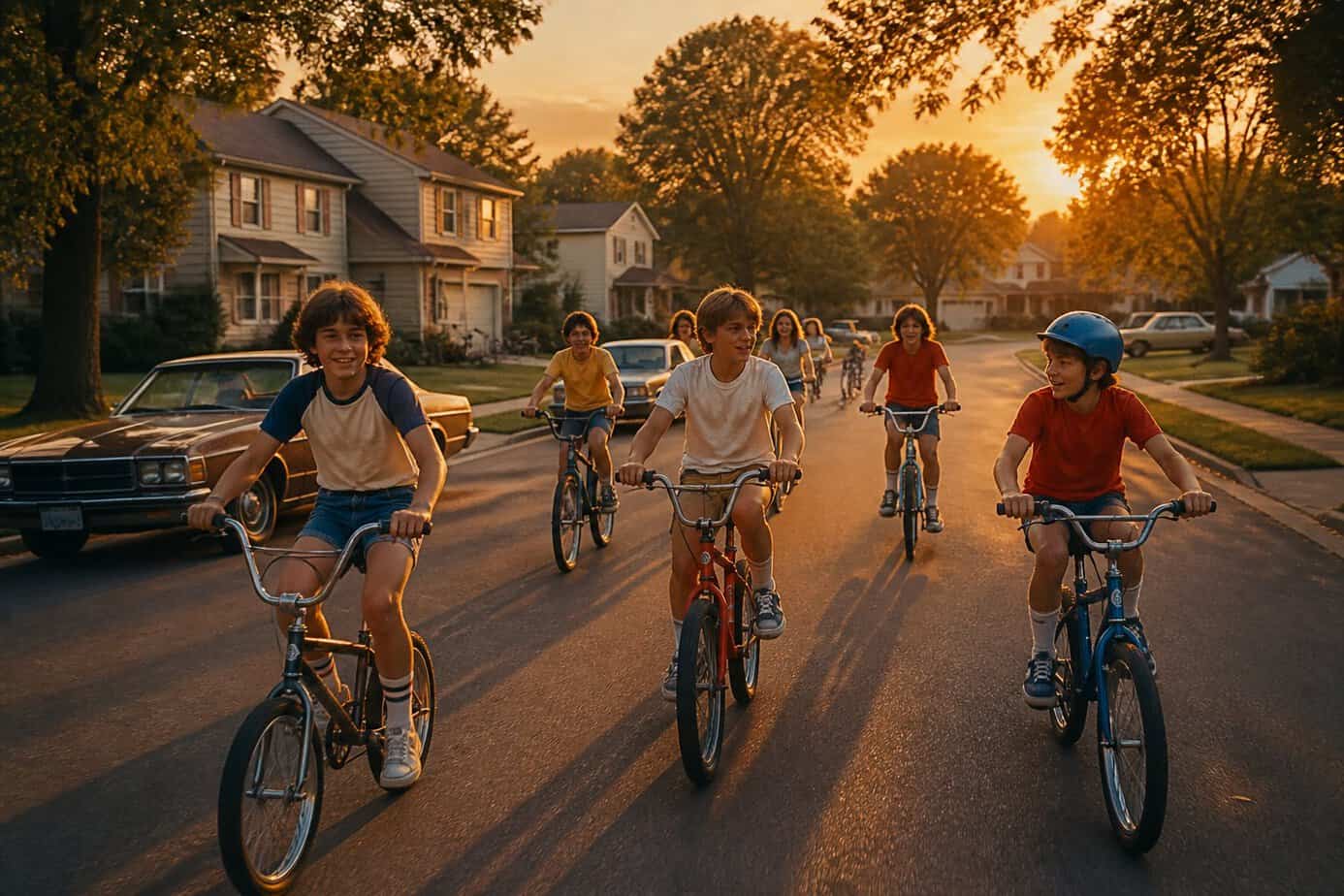
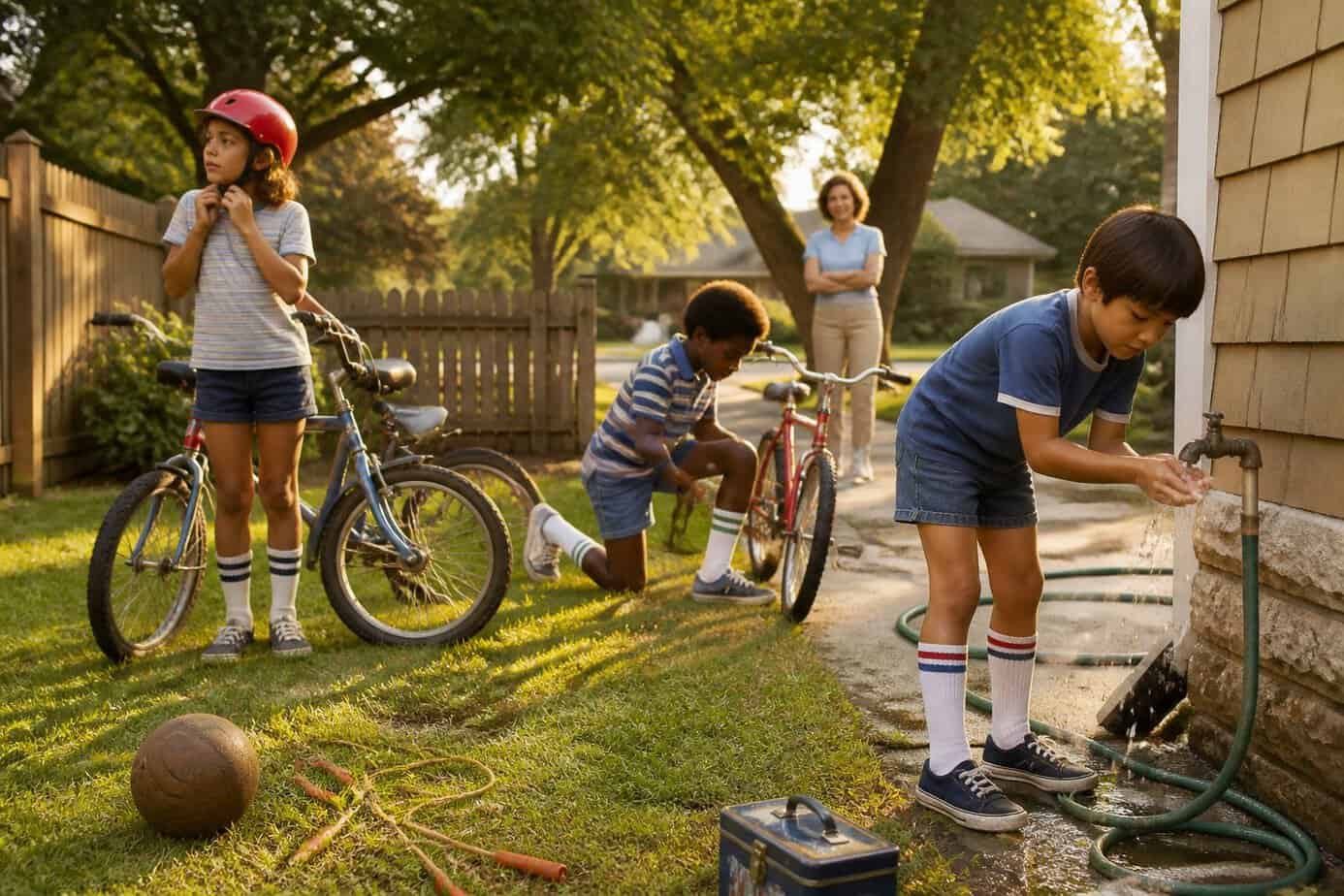
Your bike was your ticket to freedom on summer weekends. You’d ride through the neighborhood for hours, chasing down the ice cream truck or finding new shortcuts between streets.
The rule was universal and non-negotiable: be home when the streetlights came on. That orange glow marked the end of your adventure, a signal everyone in the neighborhood understood without question.
You explored everywhere within riding distance. The corner store, friends’ houses, the park at the end of the block. Each ride felt like a small expedition without any real destination in mind.
Those evenings felt completely ordinary at the time. You didn’t realize you were creating memories that would last decades, or that such unsupervised freedom would eventually become a rarity for future generations.
4. Playing Atari 2600 with friends
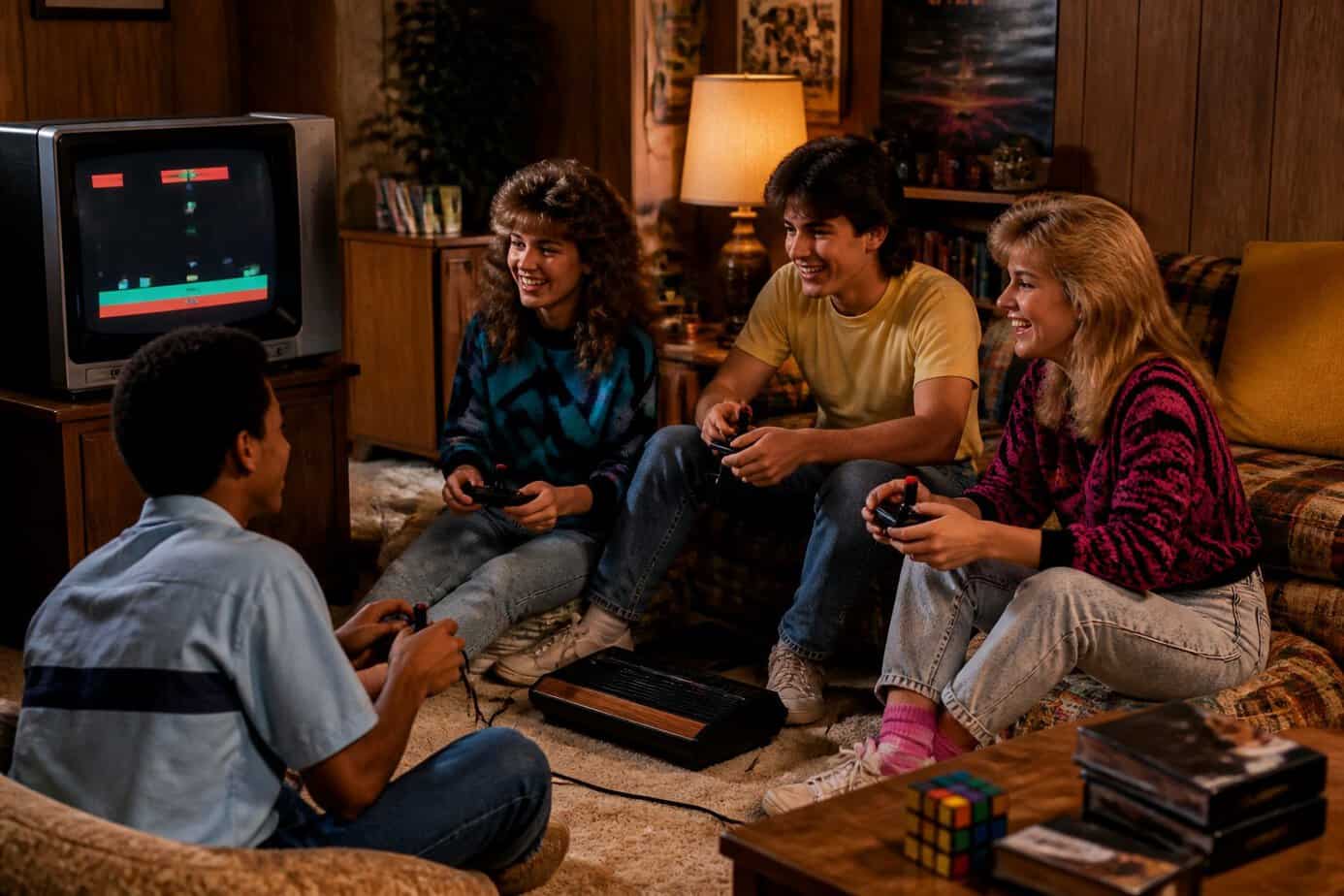
Your weekends often revolved around gathering at someone’s house to take turns with the Atari 2600. You and your friends would sprawl out in front of the TV, controllers in hand, competing for high scores.
The console, originally called the Atari VCS, became a social hub in many households during the early 1980s. You’d coordinate with friends about which games to request for birthdays or holidays to expand your shared library.
Late-night gaming sessions were common. You’d lower the TV volume and sometimes drape blankets over the screen to hide the glow from parents checking the hallway. These simple cartridge-based games created a shared experience that differed from today’s online gaming, requiring everyone to be in the same room.
5. Saturday trips to the local mall food court
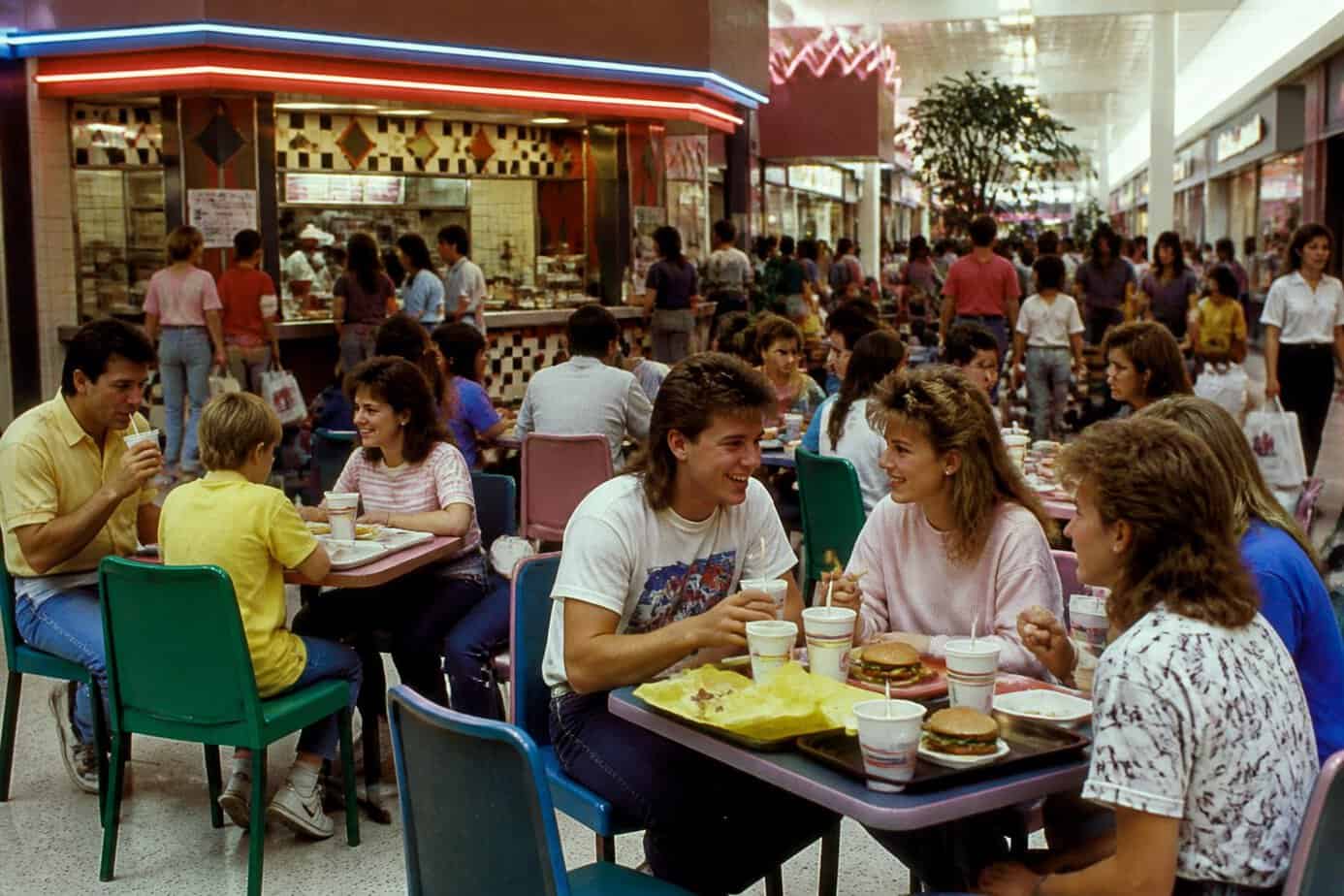
The mall food court was your destination for lunch after browsing stores. You stood beneath glowing menu boards, deciding between pizza, pretzels, or Chinese food while the smell of fryer oil filled the air.
You claimed a table among the crowd of other shoppers and teenagers. The orange trays and plastic chairs were standard issue, but the freedom to choose your own meal made it feel special.
Between bites, you watched people walk by and talked with family or friends. The food court wasn’t fancy, but it was your spot to refuel during a long shopping trip.
Those simple meals became part of your Saturday routine. The mix of different food smells, the buzz of conversation, and your regular order created a familiar comfort that you looked forward to each weekend.
6. Renting a new-release VHS from the video store
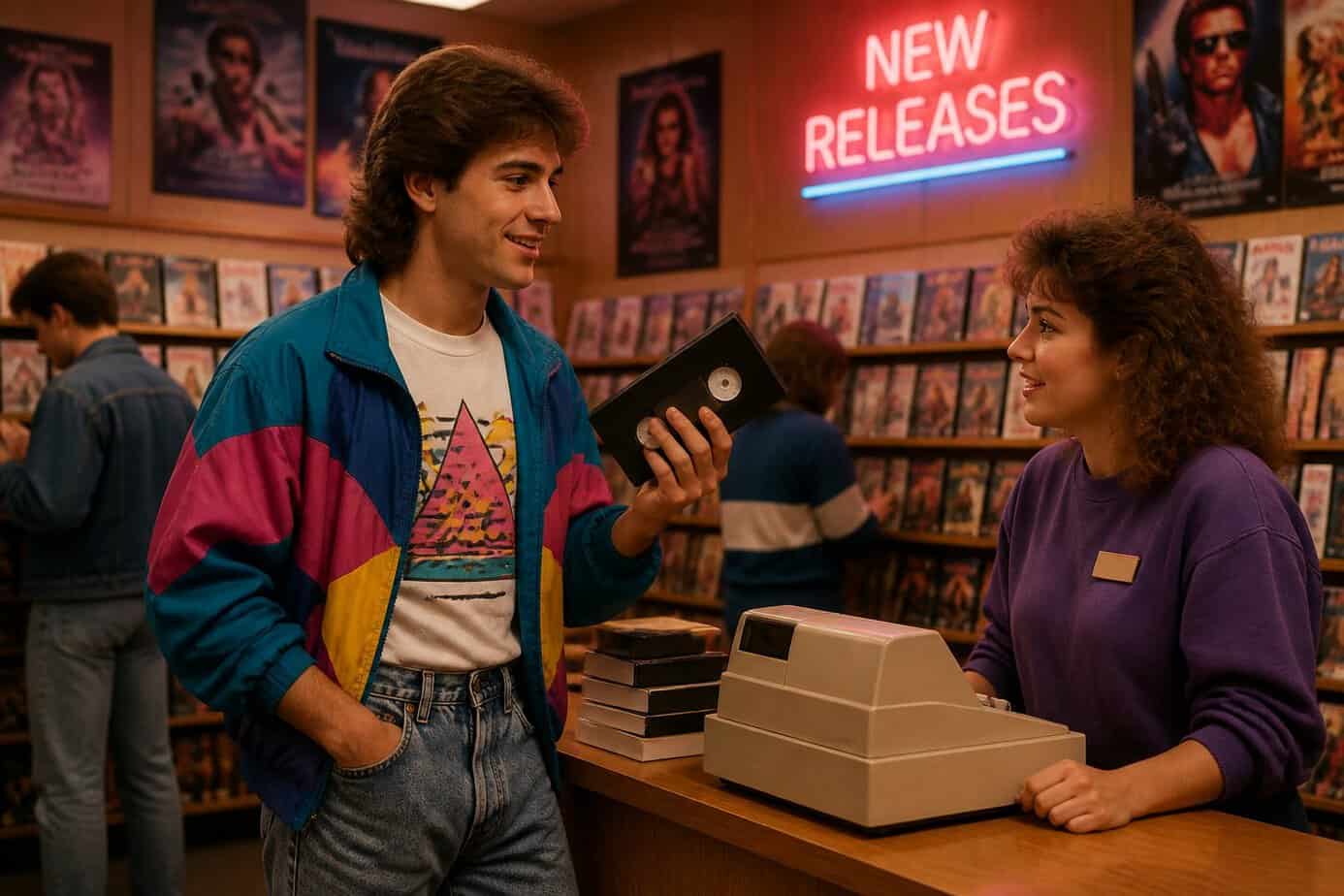
Friday night meant one thing: heading to the video store to grab the latest movie release. You’d scan the New Release wall, hoping your top choice hadn’t been rented out already. The distinctive smell of plastic cases and carpet greeted you as you walked through the aisles.
Finding that last copy of the movie everyone wanted felt like a small victory. You’d carry it to the counter, hand over your membership card, and receive the due date stamp on your receipt.
The first VCRs appeared in 1975, and video rental stores quickly followed. By the mid-1980s, approximately 15,000 video rental stores operated across the U.S. Your weekend entertainment depended on this simple ritual of browsing, selecting, and taking home a small plastic case containing magnetic tape that would play your chosen film.
7. Sunday roast dinner with extended family
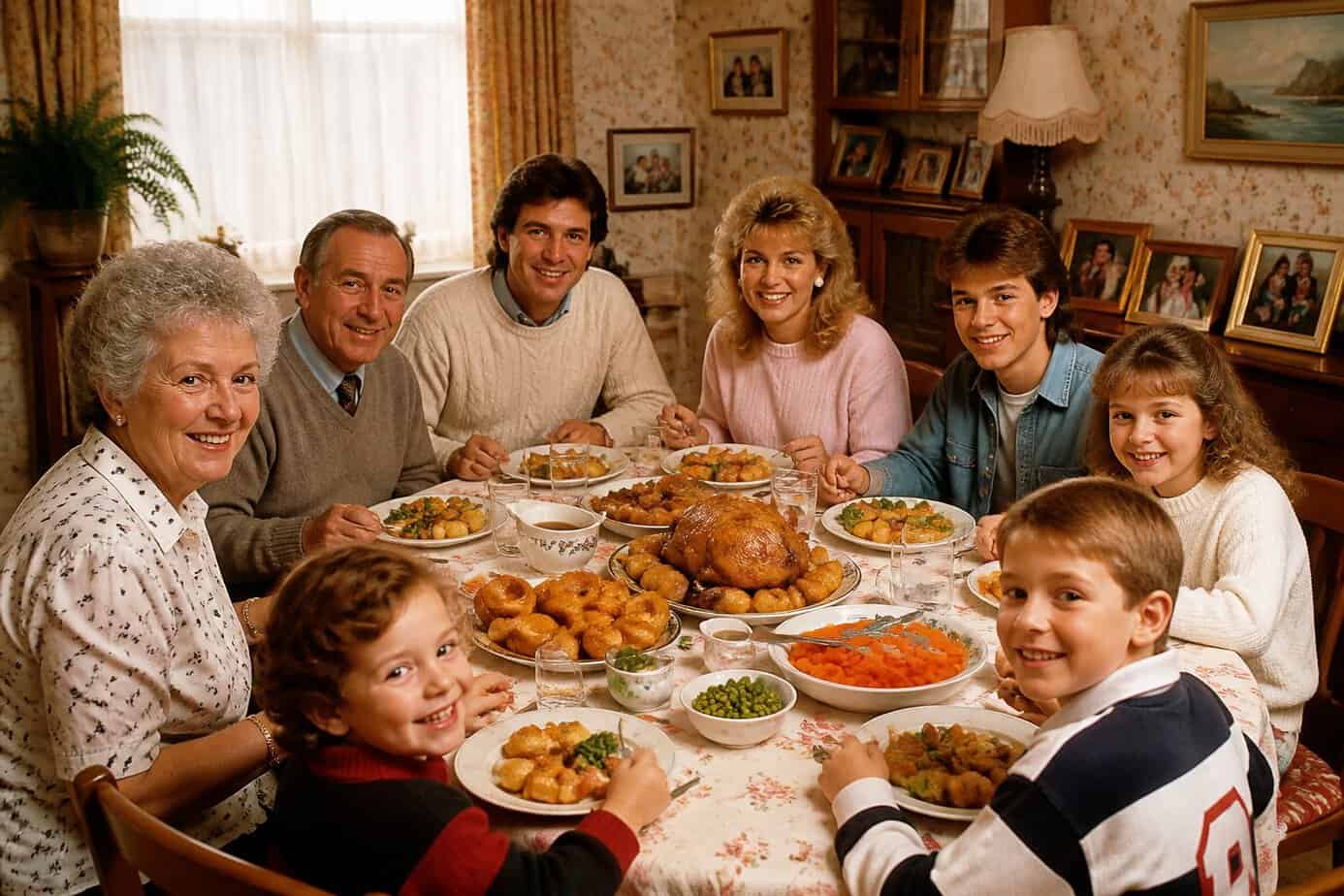
Sunday dinner wasn’t just another meal in the 1980s. It was the weekly anchor that brought your family together, often including grandparents, aunts, uncles, and cousins around one table.
The preparation started early, with a roast slowly cooking while your family attended church or spent the morning together. By early afternoon, your home filled with the aroma of pot roast, roasted chicken, or beef, accompanied by mashed potatoes and vegetables.
These gatherings served a purpose beyond food. You heard family stories, learned about relatives you’d never met, and understood where you came from through casual conversation. The dinner table became where your family maintained connections that might have otherwise faded with distance.
Shopping centers weren’t open on Sundays like they are now, which meant families had fewer distractions and more reason to gather for this weekly tradition.
8. Collecting and trading baseball cards
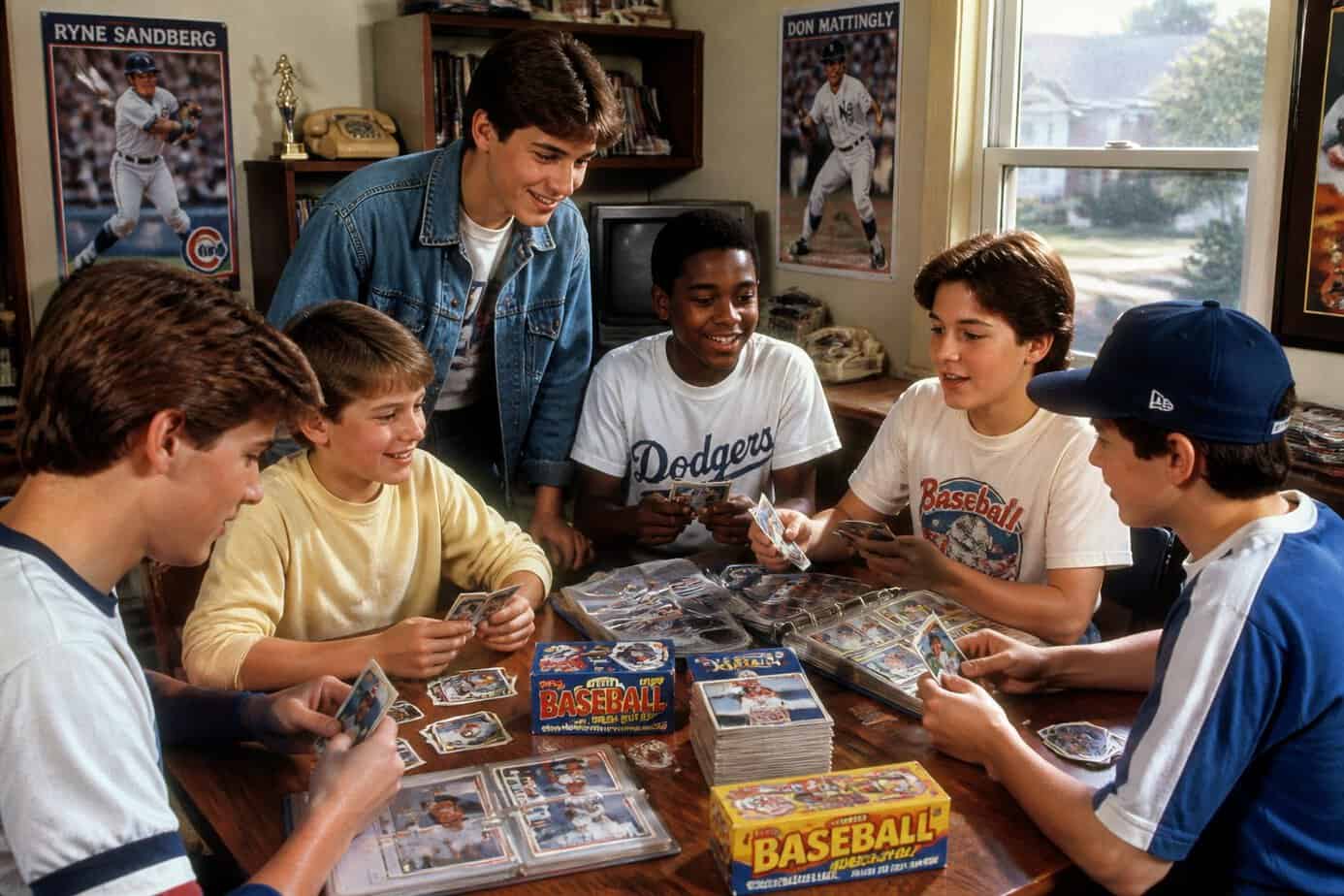
You’d ride your bike to the corner store with a few dollars, hoping to pull a rookie card from a fresh pack. The smell of bubble gum mixed with cardboard became synonymous with Saturday mornings.
Trading cards with friends turned your bedroom floor into a marketplace. You negotiated deals, compared stats, and debated player values with the seriousness of Wall Street traders.
Each card represented a frozen moment in baseball history. You carefully organized them in shoeboxes or binders, tracking your collection and identifying gaps you needed to fill.
The 1980s saw baseball card collecting transform from a casual hobby into a cultural phenomenon. Whether you were chasing specific players or building complete sets, the thrill of the hunt made every new pack an adventure worth savoring.
9. Listening to mixtapes on a Sony Walkman
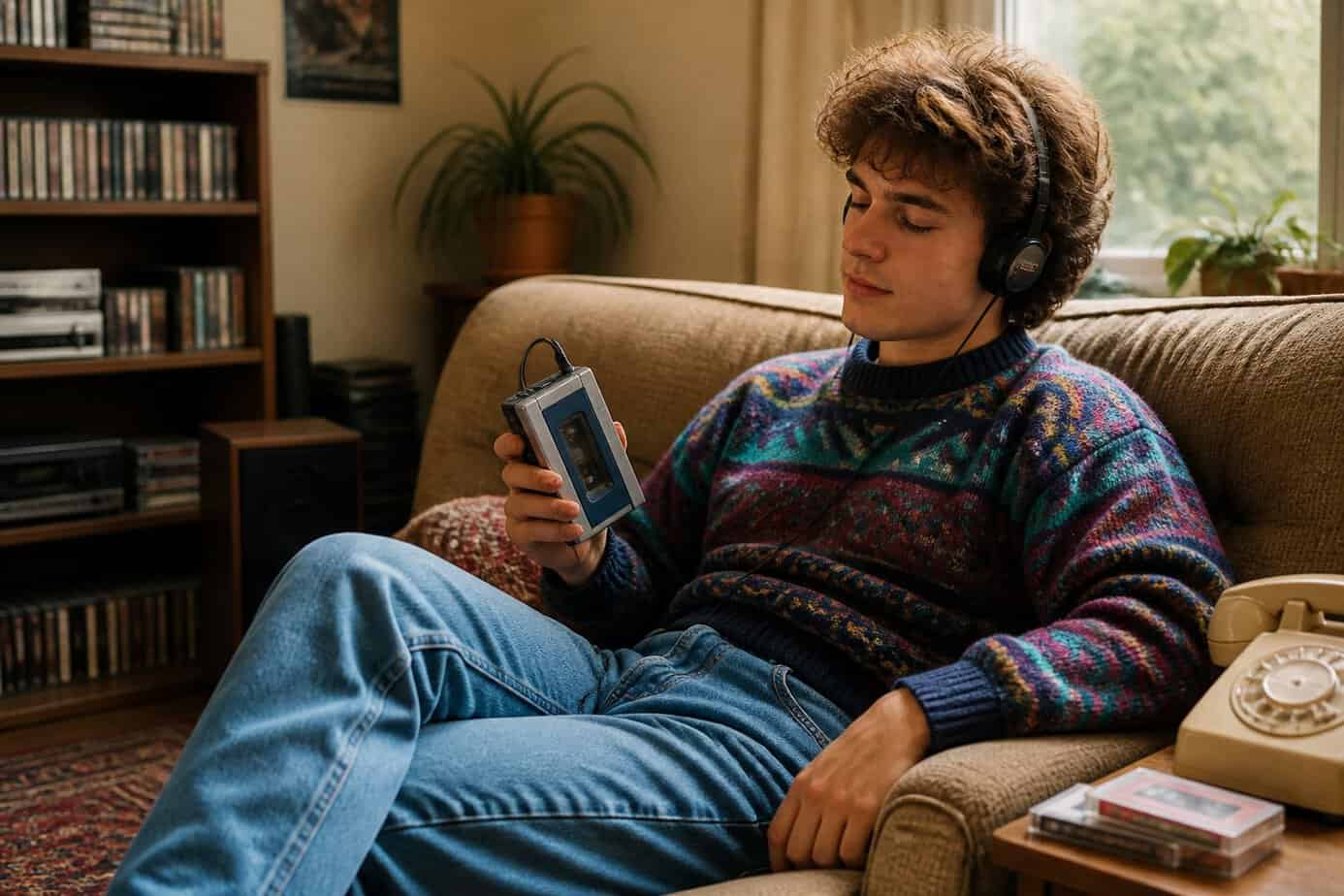
You clipped the Walkman to your belt and pressed play, transforming your weekend into a personal soundtrack. The foam headphones blocked out the world as you walked through your neighborhood or rode your bike to a friend’s house.
Making the mixtape took effort. You recorded songs from the radio or dubbed them from vinyl, carefully timing each track to fit the cassette’s length. The result was a curated collection that reflected your taste or expressed feelings you couldn’t put into words.
The Walkman gave you control over your listening experience in a way that wasn’t possible before. You could rewind your favorite song, fast-forward through a dud, or flip the cassette to side B. Your music went wherever you did, creating a portable escape that felt revolutionary at the time.
10. Calling friends from a corded landline with party-line stories
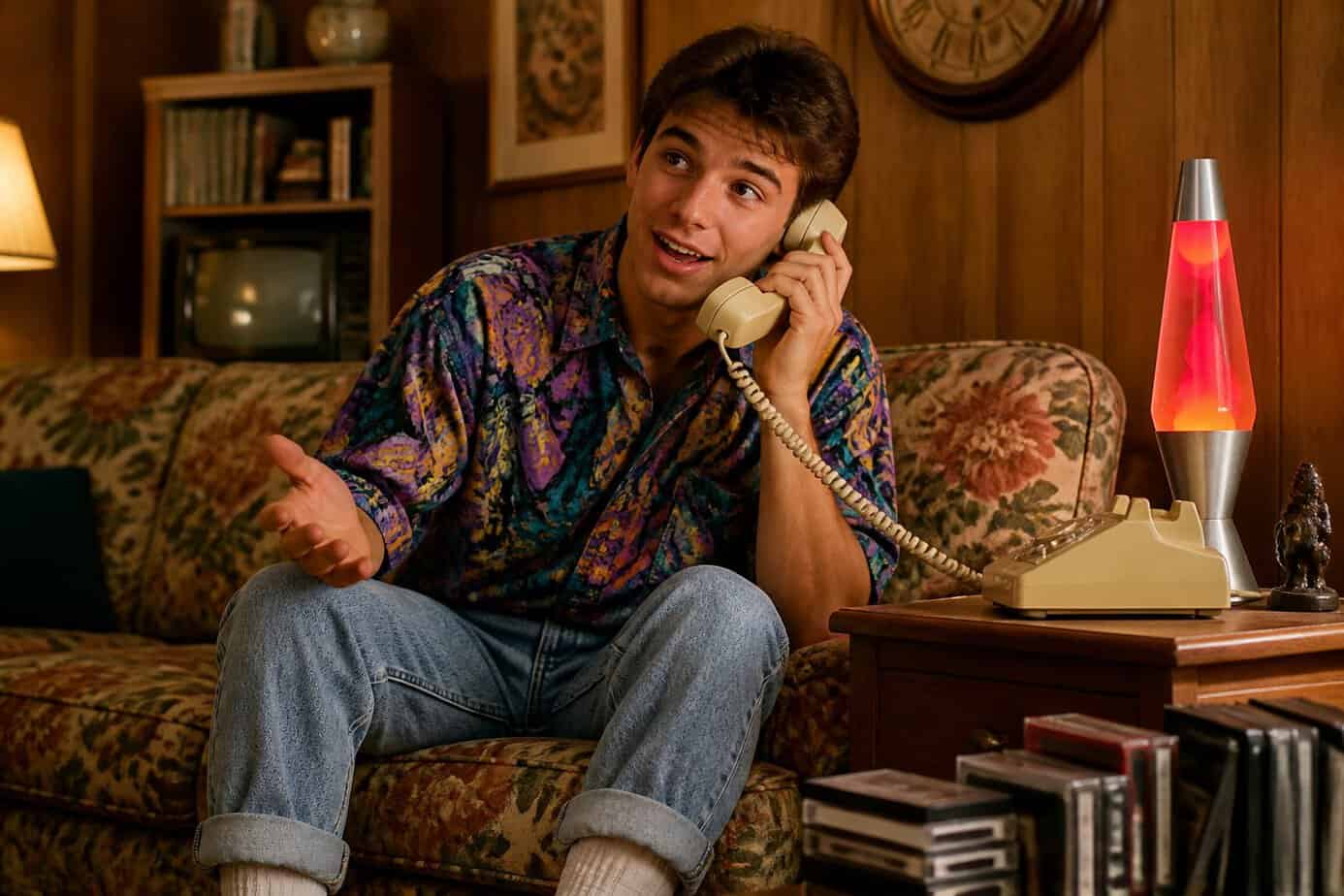
You picked up the phone and hoped no one else was using the line. In rural areas especially, party lines meant sharing one phone connection with several neighboring families. You learned patience waiting for others to finish their conversations before making your call.
The phone cord stretched across hallways as you tried to find privacy in another room. You spoke nervously when a friend’s parent answered, politely asking if they were home. These interactions taught basic phone etiquette that shaped how you communicated.
Some families paid extra for private lines, but many stuck with shared connections well into the 1980s. You mastered the art of keeping conversations brief when others needed the line. The ritual of dialing, waiting, and talking without digital distractions created a different pace of friendship that felt more intentional.
11. Playing backyard games like capture the flag
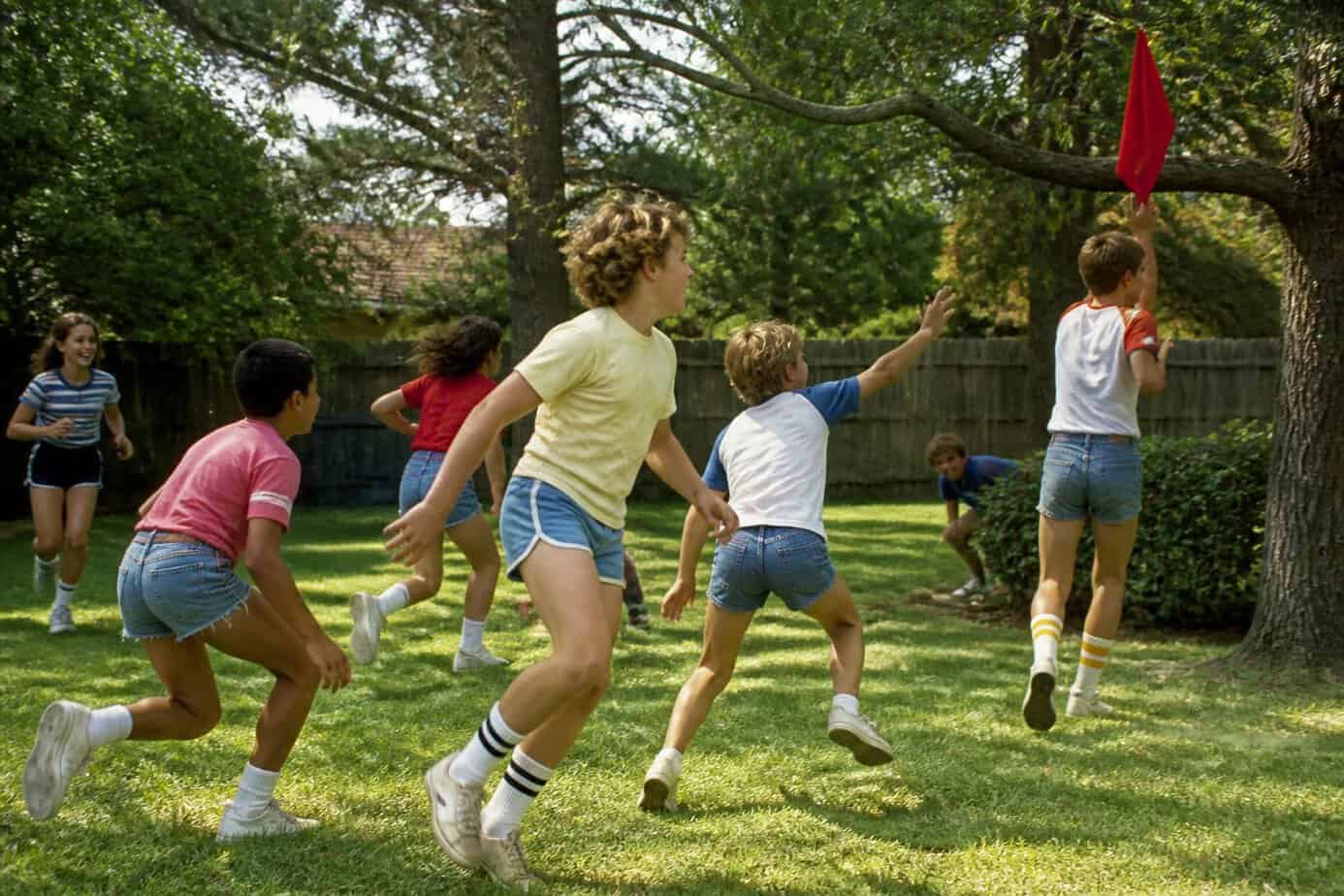
Your backyard transformed into a battlefield every weekend when capture the flag started. You and the neighborhood kids divided into teams, marked territories with sticks or old t-shirts, and planned elaborate strategies to steal the flag without getting tagged.
The game required nothing more than two pieces of fabric and a group of willing players. You developed skills in stealth, teamwork, and quick thinking as you navigated through bushes and around trees.
Summer evenings stretched longer when a game was underway. You’d play until parents called everyone home for dinner, already planning your strategy for the next match.
These simple backyard competitions brought kids together in ways that required no expensive equipment or organized leagues. Just space to run and friends ready to play.
12. Sunday afternoon backyard barbecues
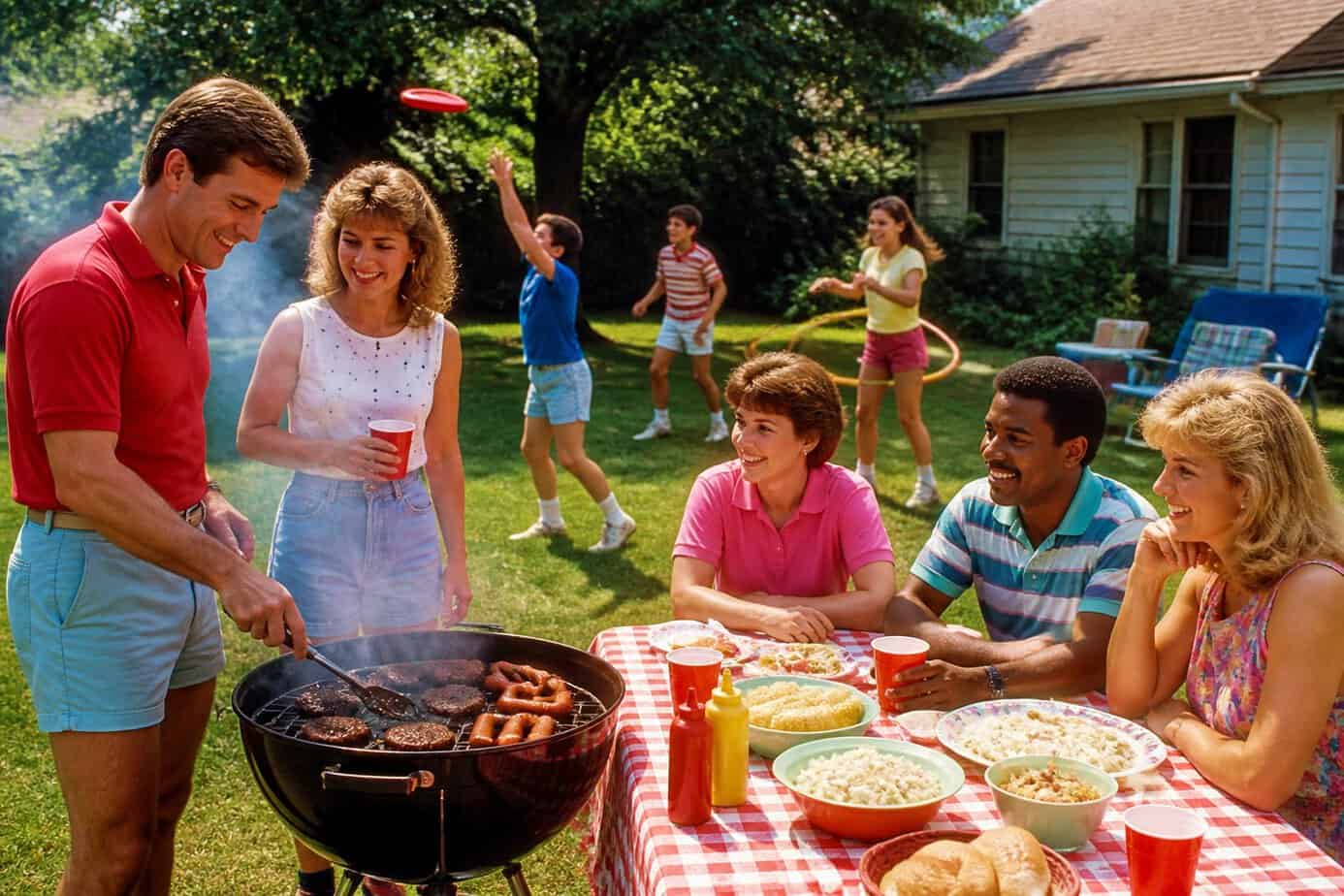
Your Sunday afternoons revolved around the charcoal grill smoking in the backyard. The ritual of lighting briquettes and waiting for them to turn gray became as familiar as setting the dinner table.
You gathered with family while your dad manned the grill, flipping burgers and hot dogs. The smell of charcoal smoke drifted through neighborhoods, signaling that weekend relaxation was in full swing.
These cookouts didn’t require elaborate planning or special occasions. You simply fired up the grill, set out folding chairs, and spent hours talking while food cooked slowly over the coals.
The backyard served as your social hub where conversation flowed naturally. No phones interrupted the meal, and no one rushed off to other commitments. You stayed outside until the coals turned to ash, making ordinary Sundays feel worth remembering.
13. Waiting for new comic books at the corner store
Would you like to save this?
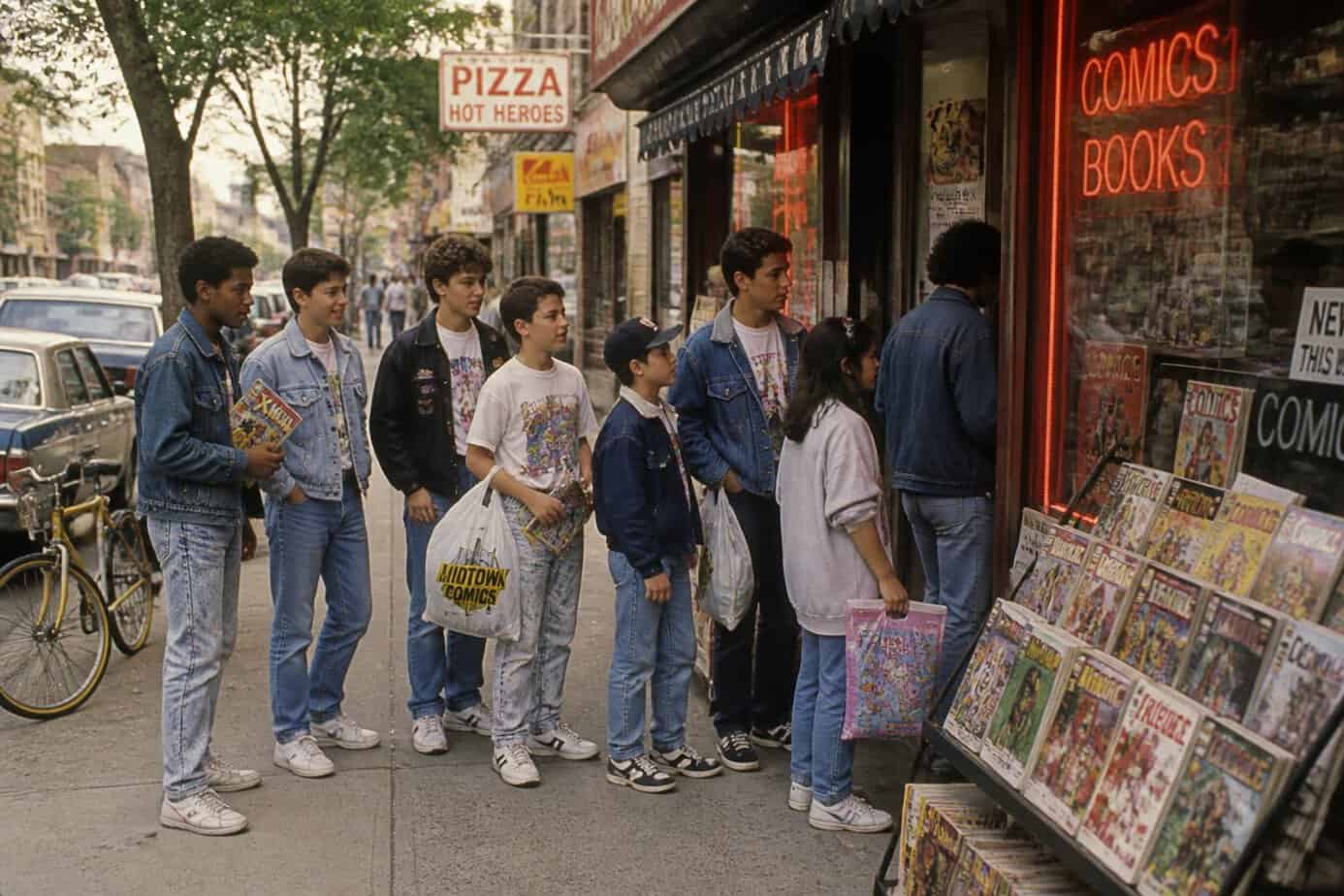
You’d walk into your local grocery or convenience store, making a beeline for the squeaky spinner rack near the checkout. New issues appeared unpredictably, so you checked regularly to avoid missing the next chapter of your favorite series.
The racks held comics in a way that made browsing difficult. You’d flip through each bundle, often bending the covers slightly as you searched for X-Men, Spider-Man, or Batman. Finding a copy without creased spines or dinged corners was nearly impossible since other readers had handled them first.
You grabbed whatever caught your eye that week, never knowing when the next shipment would arrive. By the mid-1990s, these racks quietly disappeared from most stores. Many readers didn’t notice until they were already buying their comics elsewhere.
14. Arcade nights playing Pac-Man and Space Invaders
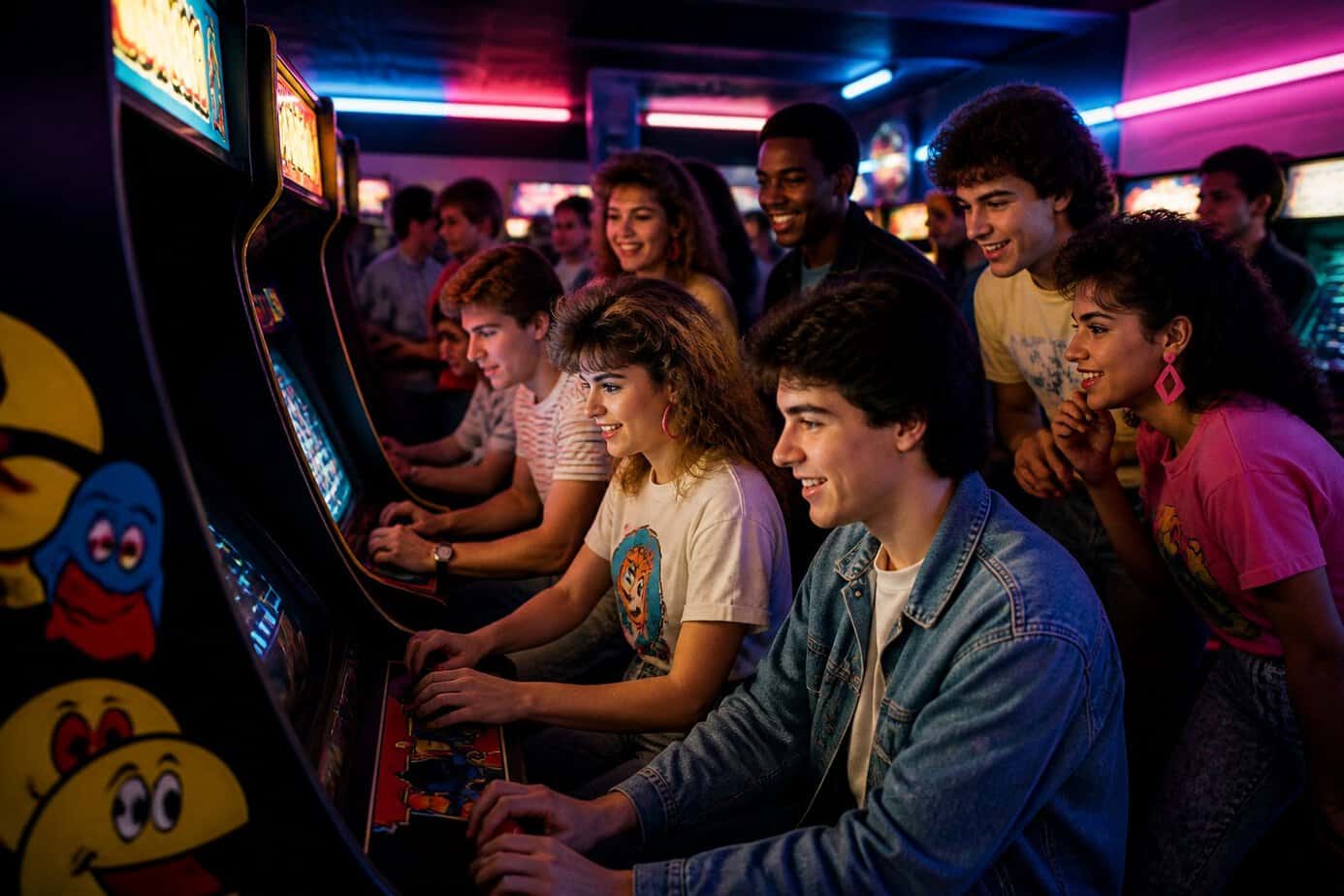
You stood in the dimly lit arcade with a handful of quarters, carefully choosing which game deserved your money. The sounds of beeping machines and electronic music filled the air as you waited your turn at the most popular cabinets.
Pac-Man and Space Invaders drew the biggest crowds. You watched other players’ techniques while standing in line, mentally planning your strategy for when it was finally your turn.
Each quarter bought you a few precious minutes of gameplay. You focused intensely on guiding Pac-Man through mazes or shooting down alien invaders, hoping to beat the high score displayed at the top of the screen.
The competition was real. Seeing your initials on the leaderboard meant something, even if they only lasted until someone else came along and topped your score.
15. Saturday morning paper route before school
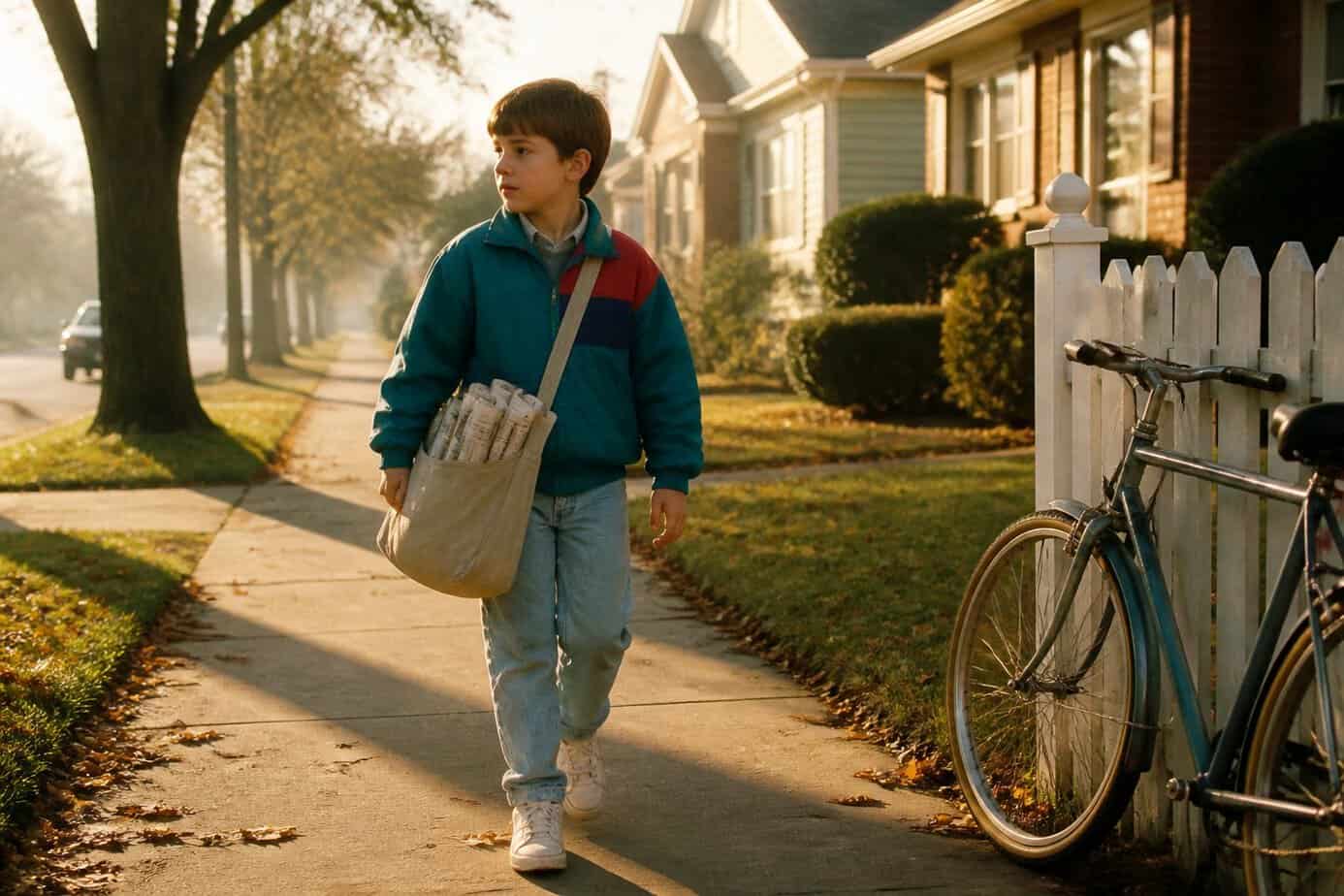
Your alarm went off around 3:00 am while the streets were still dark and quiet. You’d meet the delivery van at a designated spot, often an old filling station, where you and other kids would fold or wrap newspapers together under dim lights.
The papers went into your bike bag, heavy enough that balancing took real effort. You pedaled through empty neighborhoods, tossing papers onto porches with a practiced aim you’d developed over weeks.
Most routes took about an hour to complete. By the time you finished, the sun was just starting to rise.
The job taught you responsibility and time management. Collections at the end of the week meant knocking on doors and tracking payments in a small notebook you kept in your pocket.
16. Family board-game nights with Monopoly drama
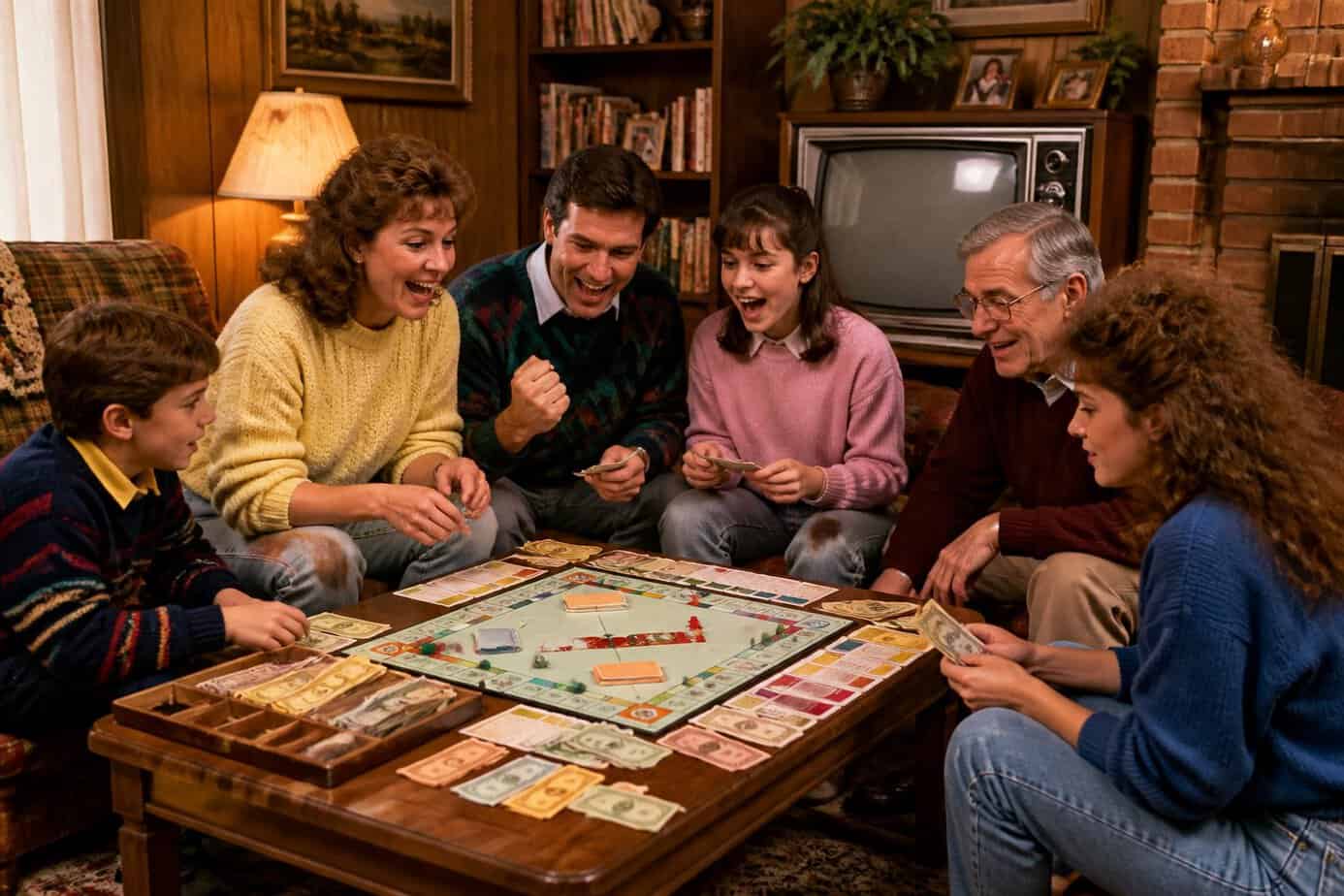
You gathered around the dining table on Friday nights, ready for the marathon that was Monopoly. The game box came out, and everyone had their favorite token already picked out before the board was even unfolded.
Arguments erupted over Park Place and Boardwalk. Your siblings accused each other of hiding money under the board. Someone always tried to negotiate their way out of bankruptcy with deals that bent the rules.
These games stretched on for hours, sometimes continuing across multiple evenings. You learned about money management, negotiation, and that landing on a hotel-loaded property could ruin your night. The competition was real, but so was the time spent together.
Your family’s unique house rules made each game distinctly yours, even if they weren’t in the official rulebook.
17. Wearing neon windbreakers and high-top sneakers
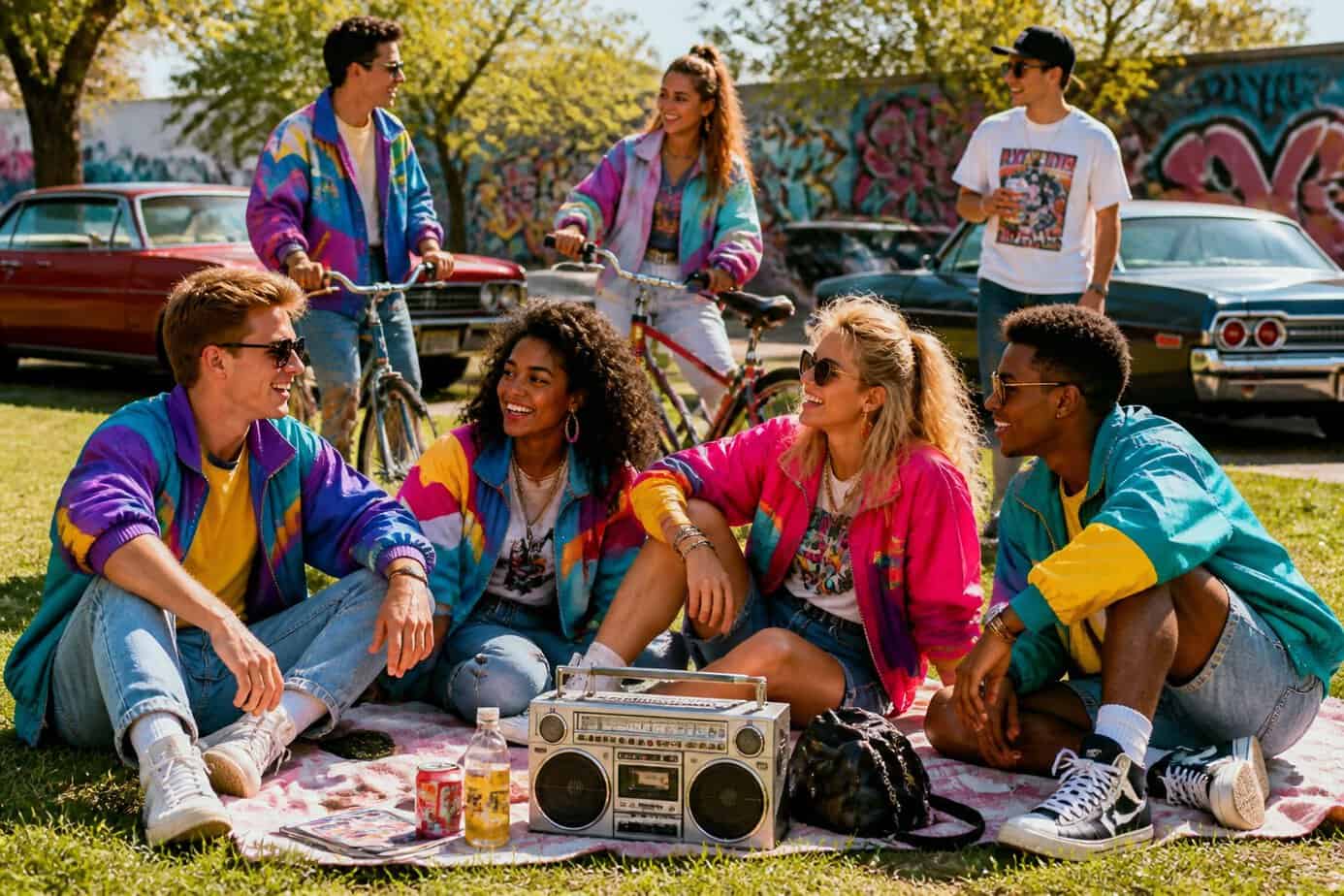
You couldn’t walk through a mall or school hallway without seeing someone in a bright neon windbreaker. These lightweight jackets came in electric shades of pink, green, yellow, and orange that practically glowed under fluorescent lights.
High-top sneakers completed the look. You’d pair them with scrunched-up tube socks in matching neon colors, creating a coordinated outfit that defined weekend casual wear.
The fitness culture of the decade made athletic wear acceptable for everyday activities. You wore these pieces to run errands, meet friends at the arcade, or hang out at the park. The brighter your outfit, the more on-trend you were.
This wasn’t just about following fashion. It was about expressing yourself through bold color choices that felt energetic and fun.
18. Polaroid snapshots developed instantly at home
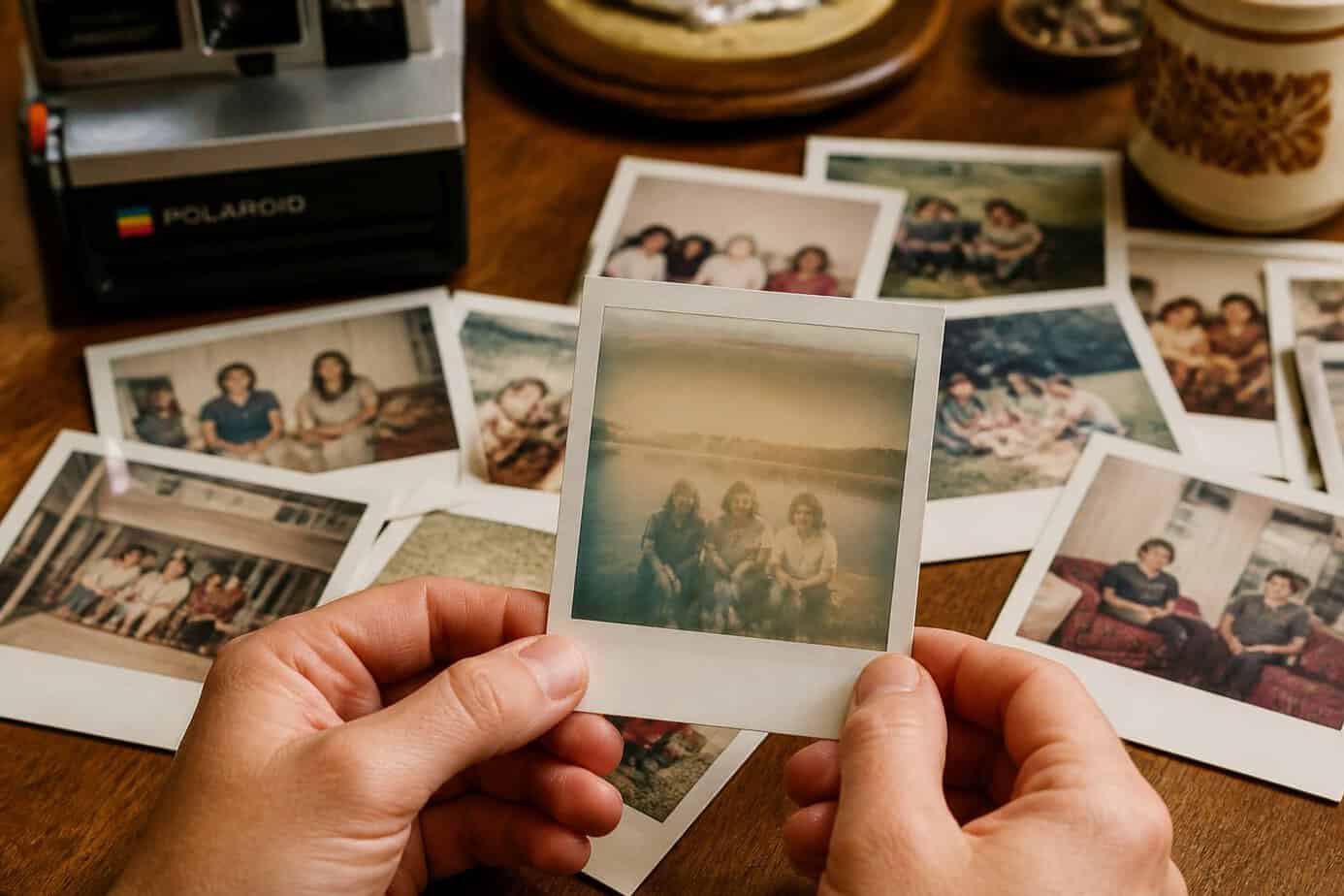
You shook the photo vigorously, watching the blank square transform into a visible image within minutes. Polaroid cameras eliminated the wait time and expense of traditional film development, bringing instant gratification to weekend photography.
Your family gathered around to see photos materialize before their eyes. Birthday parties, backyard barbecues, and casual moments became tangible memories you could hold immediately. The distinctive white border and square format became synonymous with authentic, unposed moments.
These instant prints weren’t perfect. The images had a unique quality with slightly muted colors and soft focus. But that imperfection added character to your snapshots.
You kept stacks of Polaroids in shoeboxes or stuck them on refrigerators with magnets. Each photo captured a specific weekend afternoon or family gathering, creating a visual record of everyday 1980s life that felt more immediate than traditional photographs.
19. Trading stickers and pins at school
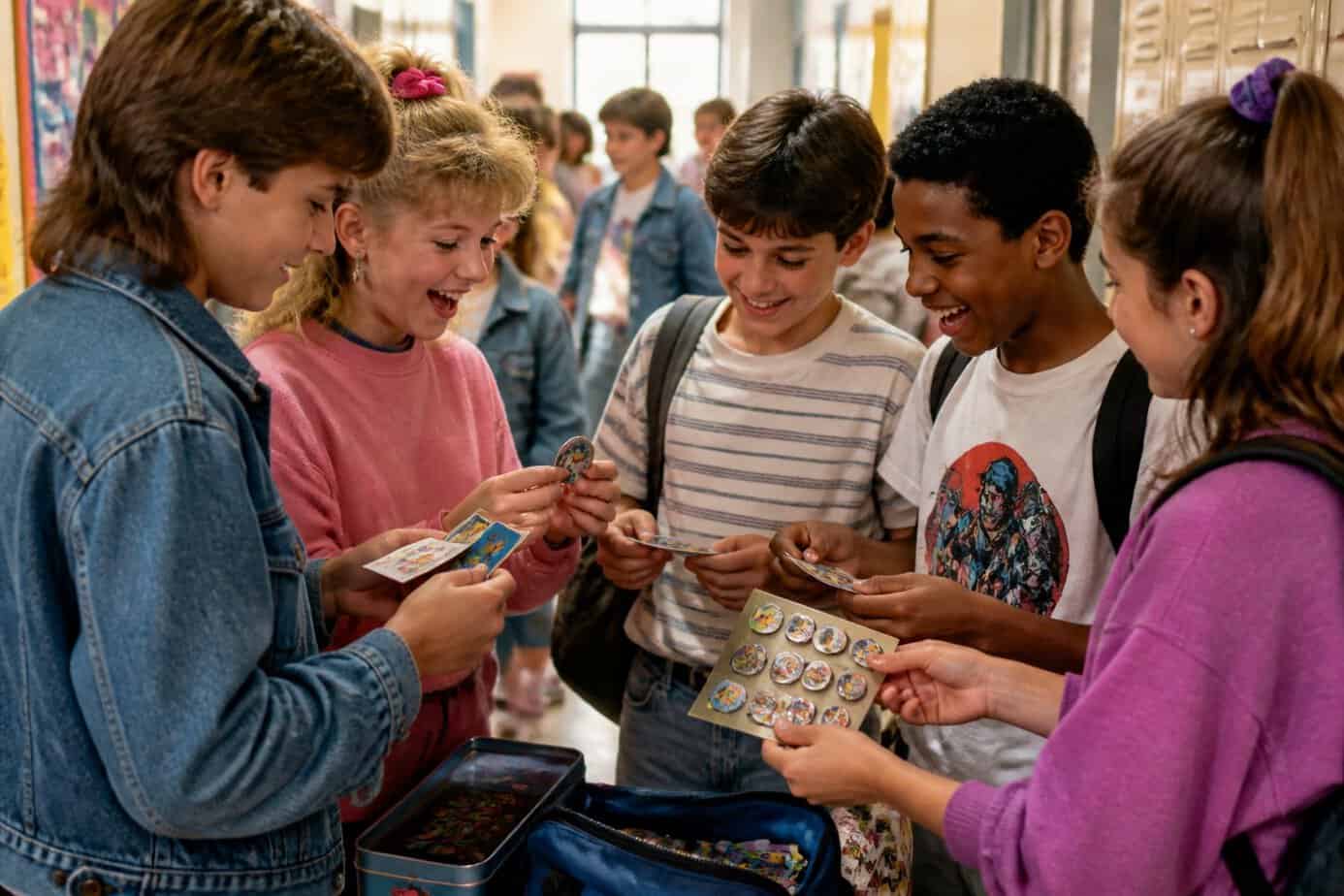
You’d spread your sticker collection across the lunch table, carefully negotiating trades with friends who eyed your holographic and scratch-and-sniff treasures. These weren’t just decorative items. They served as social currency in the school hallway.
Your sticker album was a prized possession, filled with organized rows of designs you’d swap during recess. Friendship pins worked the same way, clipped to shoelaces and backpack straps as badges of connection.
The rarest stickers held the most value. You’d guard your fuzzy stickers and puffy designs, only trading them for something equally special. Each successful swap felt like a victory, and your growing collection represented more than accumulated items—it showed your network of friendships and playground status.
20. Watching blockbuster trailers on TV with VCR recordings
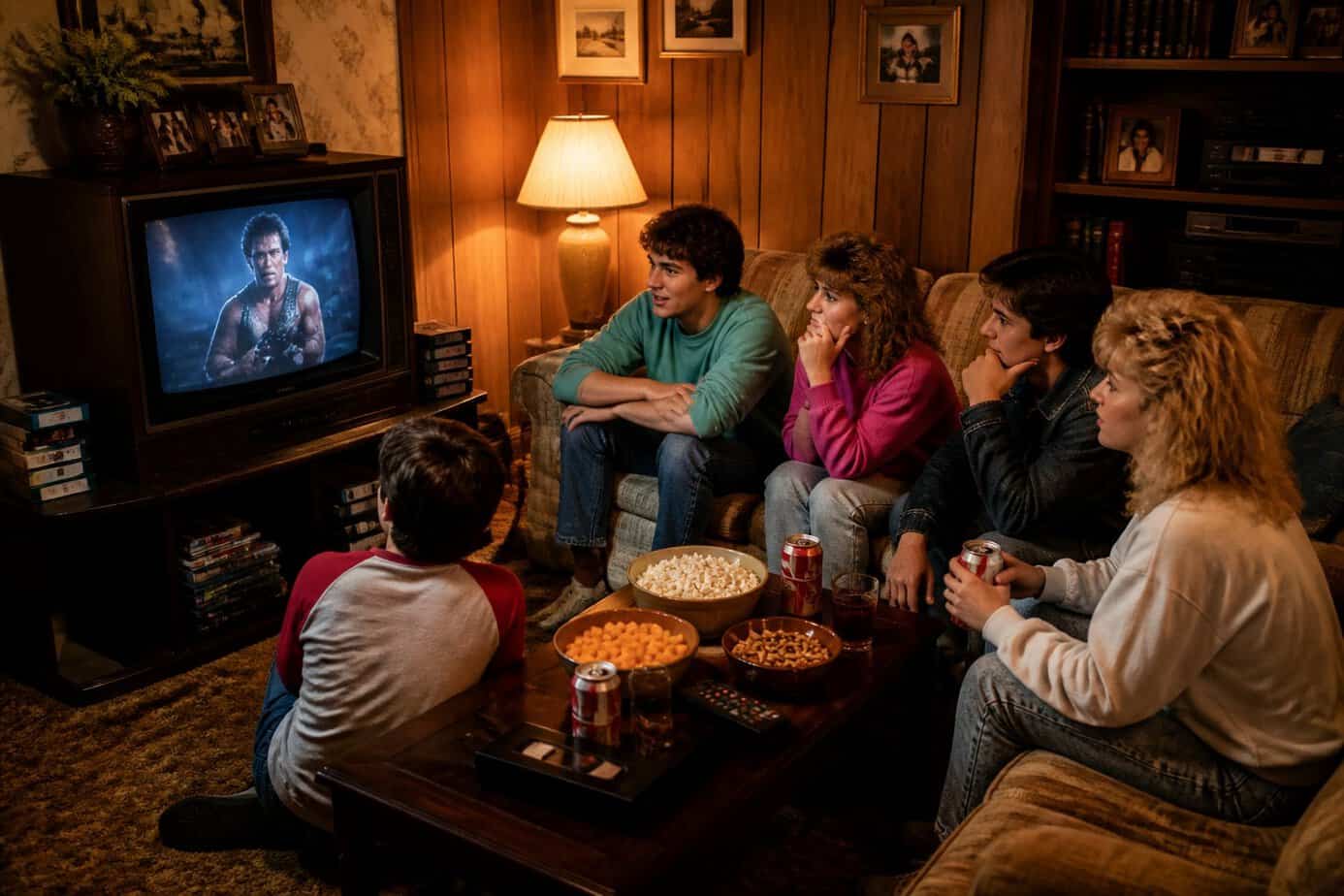
You’d hit record on your VCR whenever a big movie trailer aired during prime time. These precious recordings meant you could rewatch coming attractions for highly anticipated films whenever you wanted.
The trailers that appeared before rented VHS movies were equally treasured. You’d sit through every preview, even for films you’d already seen, because skipping them felt wrong. Those few minutes of upcoming releases built genuine excitement for your next trip to the video store.
Recording trailers gave you something to analyze and discuss with friends at school. You’d debate which movies looked worth seeing and rewind favorite moments from the previews. This simple act of capturing and rewatching trailers created anticipation that streaming algorithms can’t quite replicate today.
21. Riding to the roller rink with cassette tapes playing
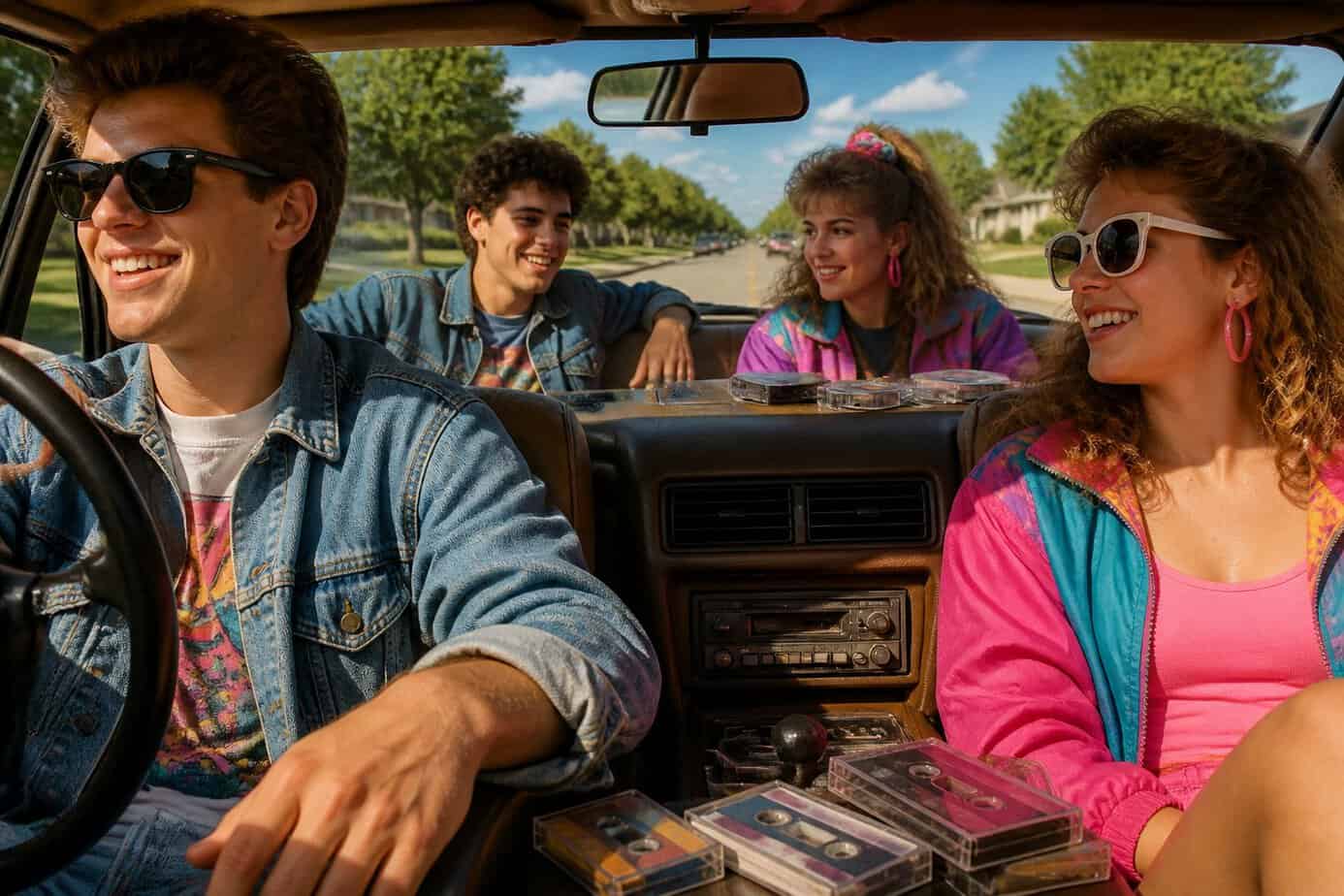
The drive to the roller rink started the whole experience. You’d slide a cassette into the car stereo, carefully chosen from your collection at home. The music set the mood before you even laced up your skates.
Your favorite songs played through tinny speakers while streetlights passed by the windows. You might have recorded these tapes yourself, capturing songs off the radio with perfect timing to avoid the DJ’s voice. Or maybe you bought a pre-recorded tape from the store.
The anticipation built with every track. By the time you pulled into the parking lot, you were already mentally skating to the beat. That car ride became as much a part of the ritual as the skating itself.
22. Library visits to read Goosebumps and chooseables
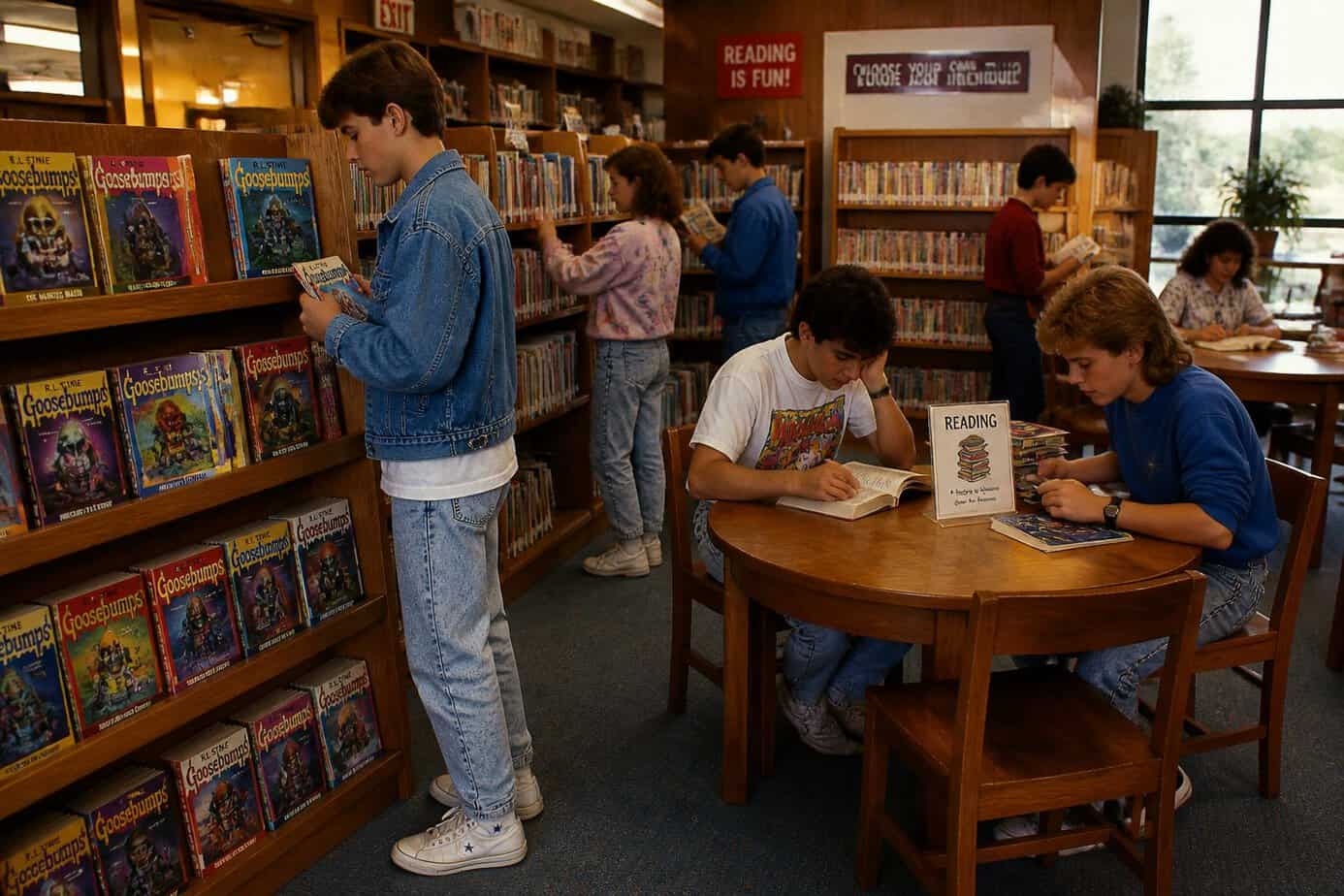
Your weekend library trips meant discovering the latest Goosebumps book on the shelf. You’d scan for that recognizable neon green slime font, hoping to find a title you hadn’t read yet.
The library gave you access to R.L. Stine’s growing collection without spending your allowance. You could read “Stay Out of the Basement” or “Monster Blood” for free, then return the next week for more.
Choose Your Own Adventure books occupied the shelves nearby. You’d flip through pages, holding your finger at decision points to explore different endings. These chooseable stories let you control the narrative in ways regular books didn’t.
The library’s quiet atmosphere made the scary moments feel more intense. You’d settle into a corner with your stack of books, spending hours lost in haunted houses and mysterious creatures before your parents called you home.
23. Building forts with blankets and cumbersome couch cushions
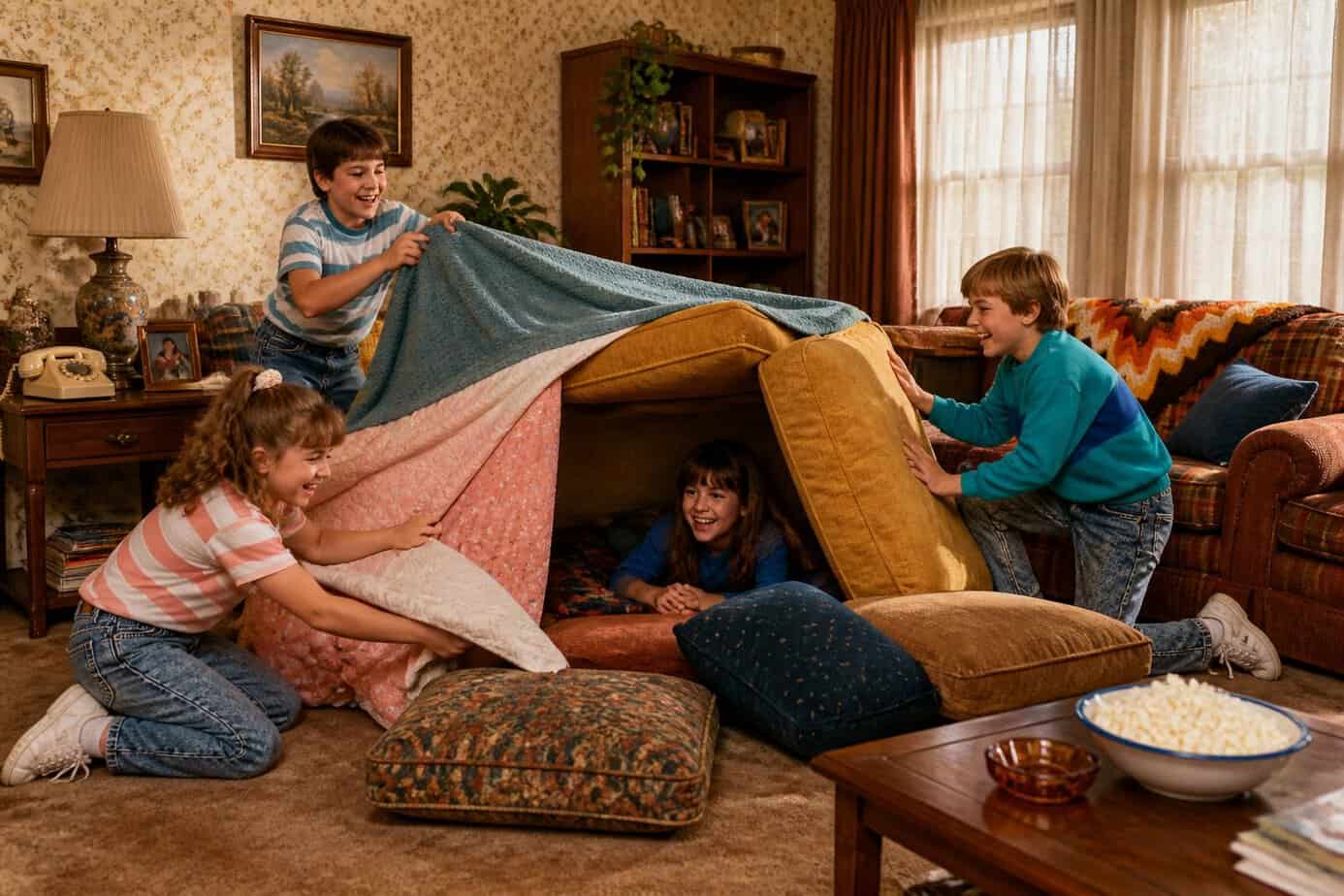
You pulled every cushion off the couch and dragged dining chairs across the carpet. The heaviest quilt became your roof, balanced precariously between furniture pieces while lighter blankets formed the walls.
Those couch cushions were bulky and awkward to maneuver. You wedged them between chairs and stacked them to create doorways, always fighting gravity as they slipped out of place.
Inside your fort, the world outside disappeared. You brought flashlights, books, and snacks into your private space. The dim light filtering through the blankets created a cozy atmosphere that made even your ordinary living room feel like an adventure.
Your parents eventually needed the cushions back, but for those few hours, you had transformed everyday household items into something magical.
24. Kids learning to drive on parents’ station wagon trips
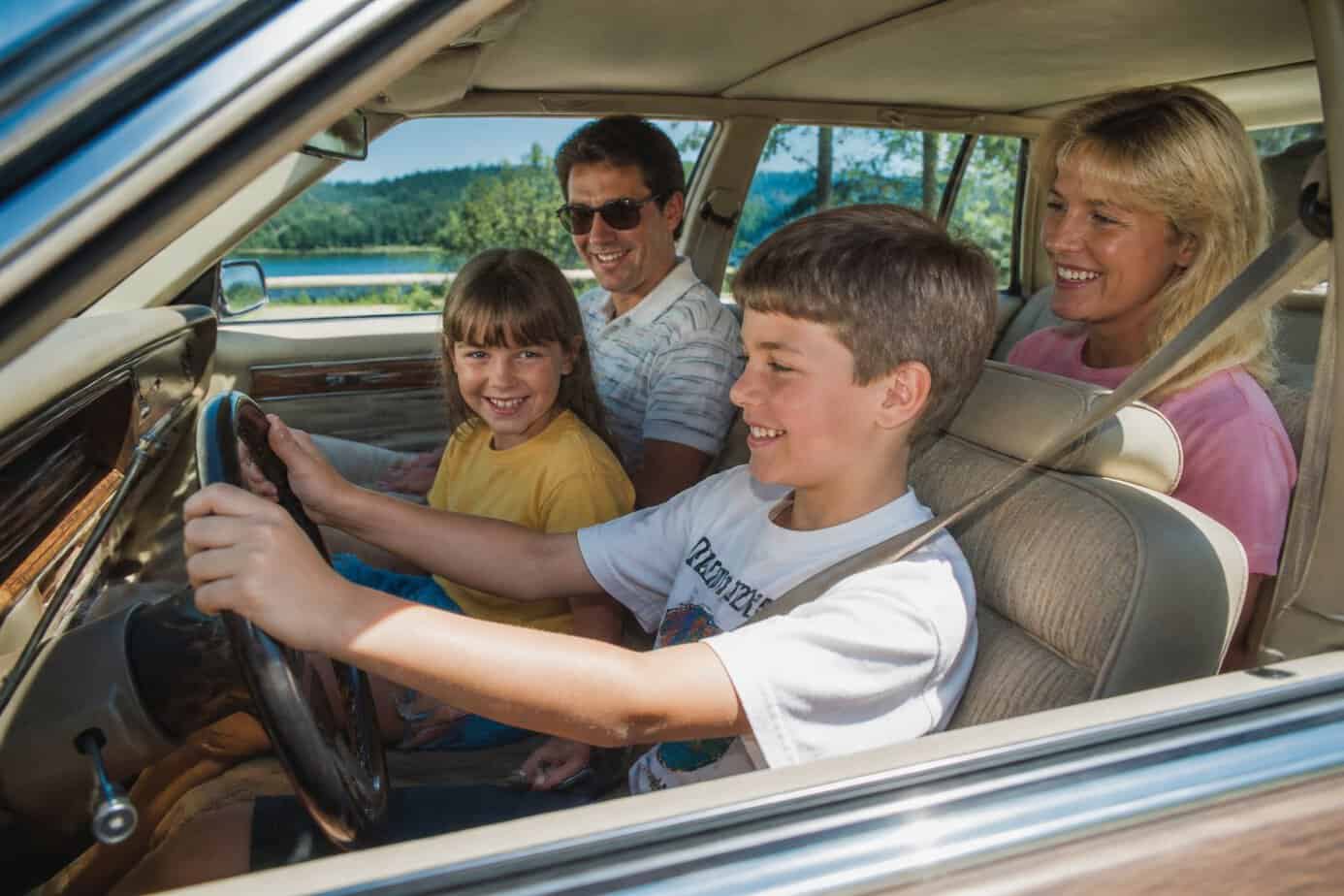
Your first driving lessons likely happened in the family station wagon, long before you reached legal driving age. Parents would let you steer from their lap in empty parking lots or quiet back roads. The station wagon’s size made it forgiving for beginners learning to judge distances and navigate turns.
By your early teens, you might have practiced actual driving on rural roads during weekend trips. The spacious interior gave parents room to sit comfortably while coaching you through gear shifts and lane changes. Many teenagers got their first real driving experience behind the wheel of these family vehicles.
The station wagon became your practice ground for parallel parking, highway merging, and handling a full-sized car. These informal lessons built your confidence before driver’s education classes ever began.
25. Collecting Cabbage Patch Kids and Care Bears
Would you like to save this?
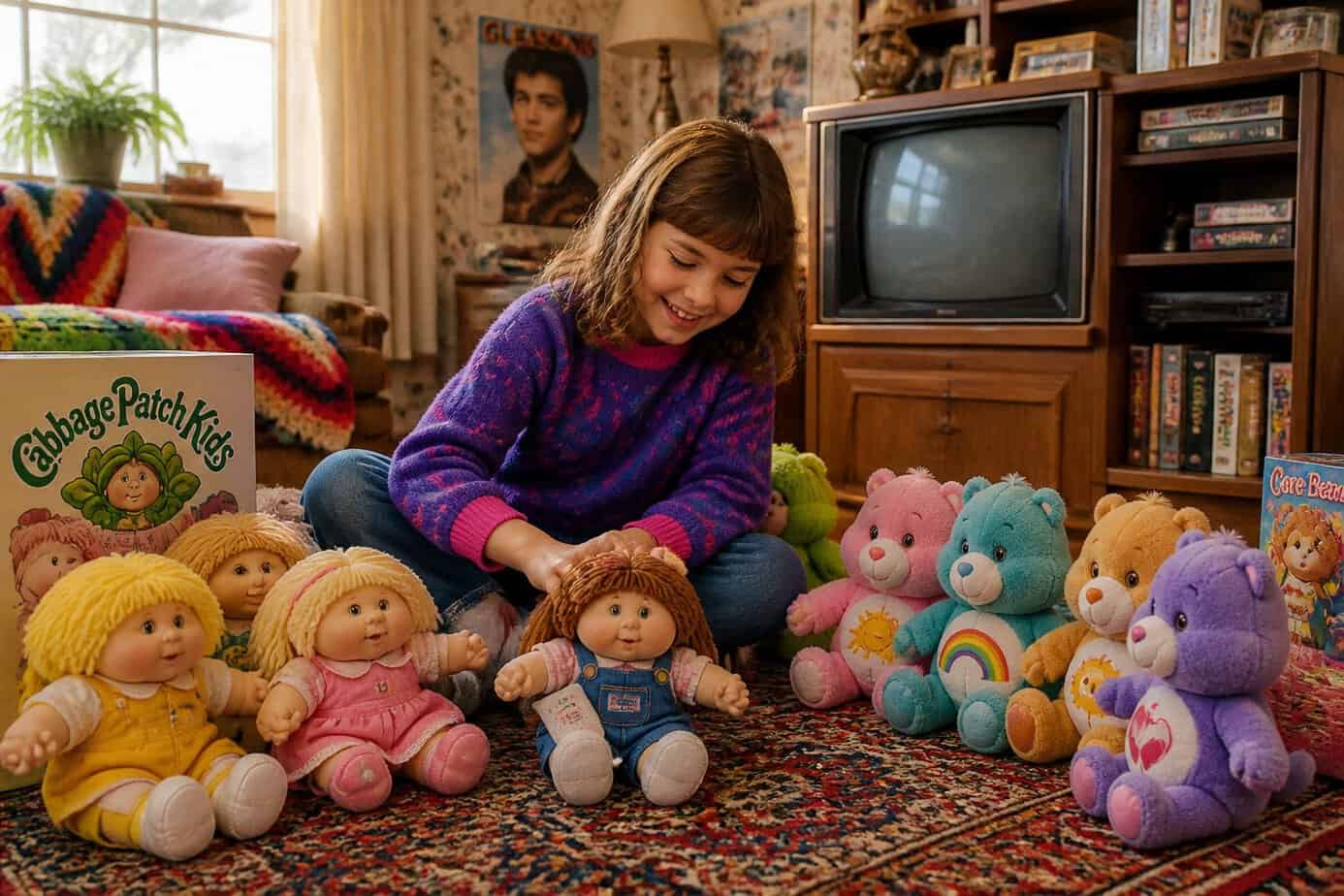
You begged your parents to take you to the toy store, hoping to find the perfect Cabbage Patch Kid with just the right hair color and outfit. Each doll came with its own birth certificate and adoption papers, making you feel like a real parent.
The hunt for these dolls became a weekend ritual. You’d check multiple stores, comparing faces and names before choosing your new companion.
Care Bears lined your bedroom shelves with their colorful bellies and different symbols. You probably had a favorite bear that matched your personality, whether it was Tenderheart or Grumpy Bear.
Trading outfits and accessories with friends extended the fun beyond the initial purchase. You kept the original boxes and certificates, not knowing some would become valuable collectibles decades later.
26. Saturday afternoon nap after a busy morning outside
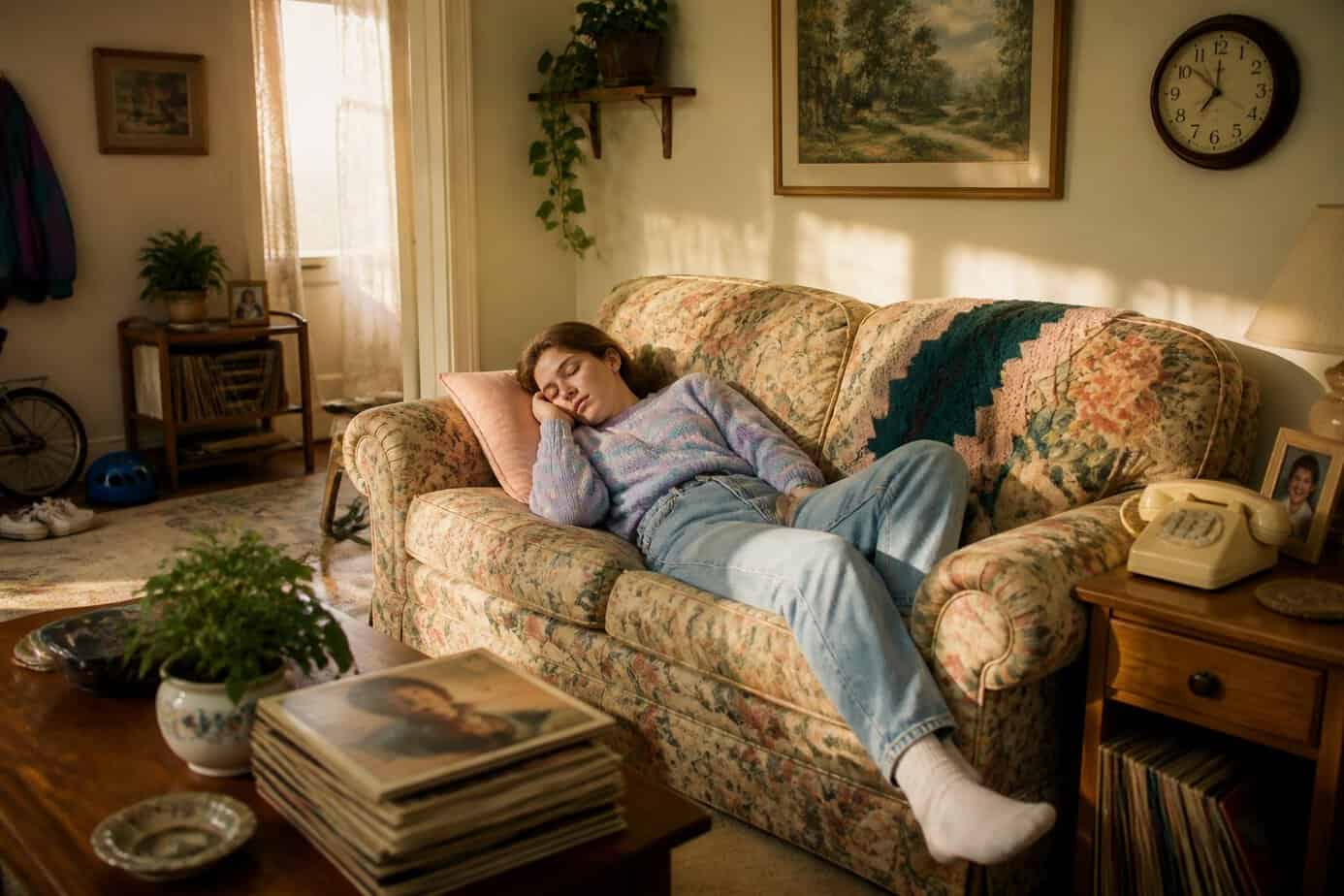
You spent the morning riding bikes through the neighborhood, playing pickup basketball, or helping with yard work. By early afternoon, that physical exhaustion caught up with you.
The couch became irresistible around 2 PM. You’d collapse there while the TV played quietly in the background, often tuned to a golf tournament or an old movie. The combination of warm sunshine streaming through the windows and your tired muscles made sleep inevitable.
These weren’t planned naps. They just happened naturally after hours of outdoor activity. You’d wake up disoriented, sometimes unsure what time it was without glancing at the clock on the VCR.
That grogginess felt different than morning sleepiness. It was the satisfied exhaustion of a body that had actually been used, earning its rest through real physical play rather than screen time.
27. Neighborhood block parties and potluck picnics
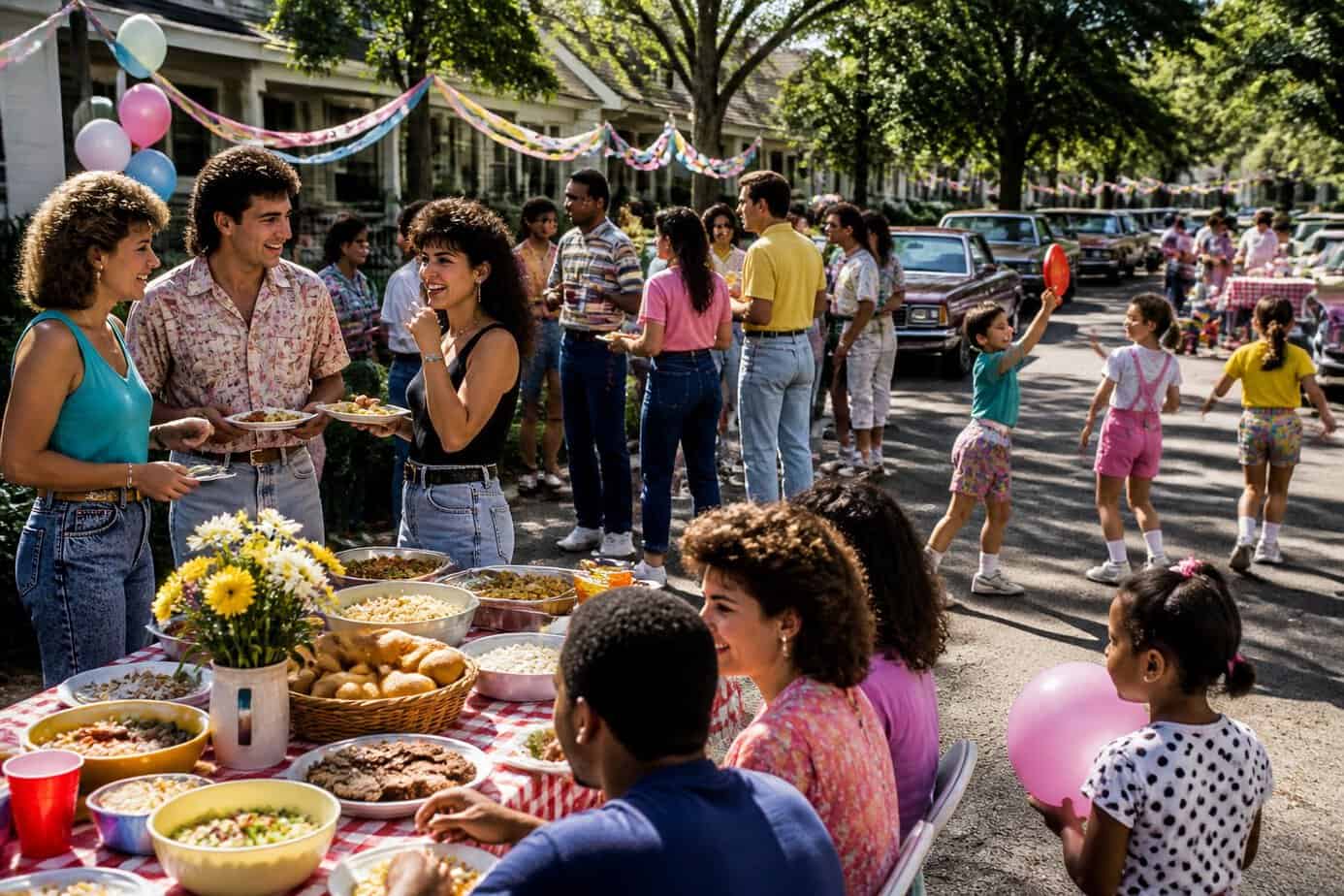
Your street transformed when folding tables appeared and neighbors closed off the road to traffic. Everyone brought their signature dishes, from casseroles to homemade desserts, creating an impressive spread that stretched down the block.
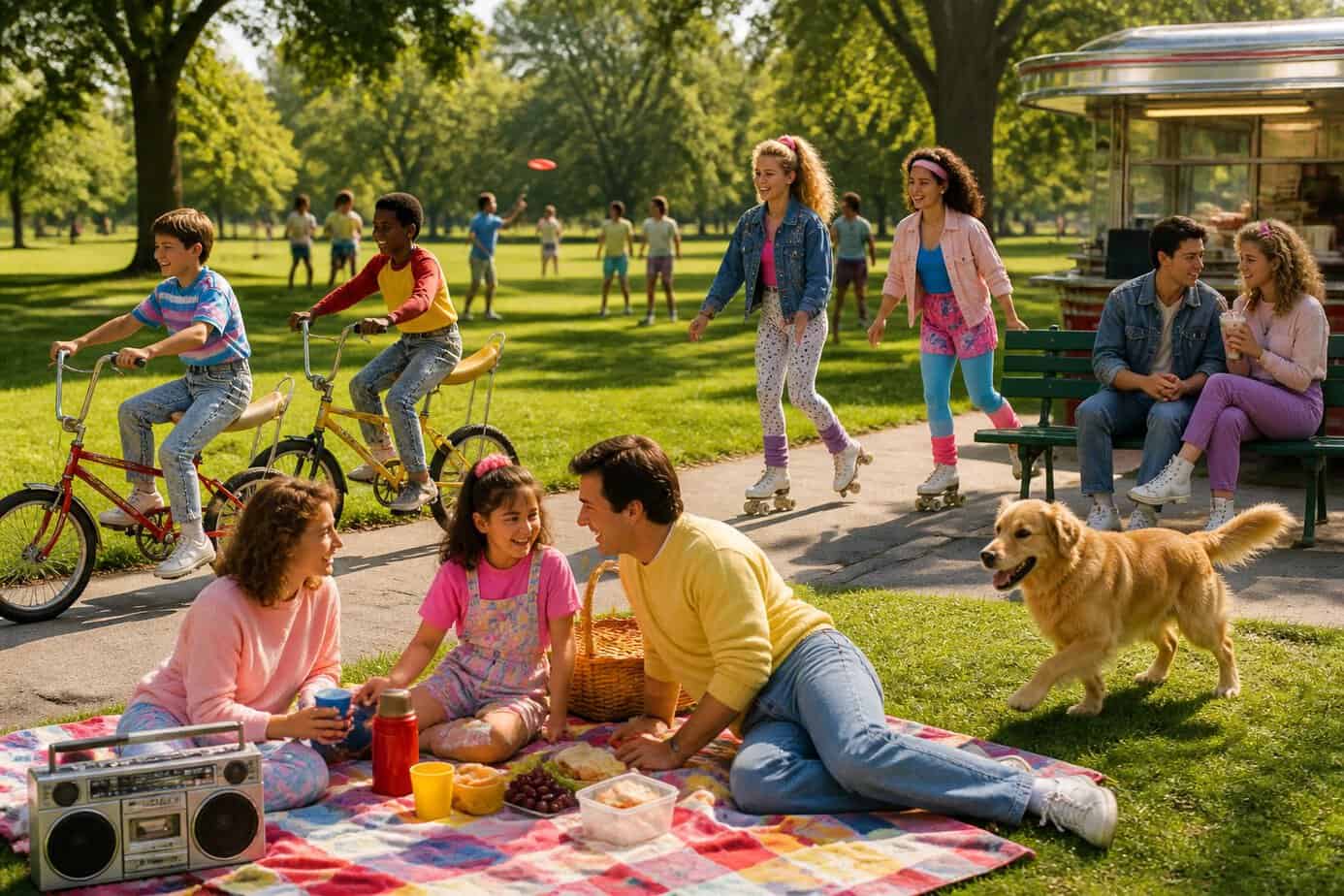
Kids claimed the street as their playground while adults arranged lawn chairs in conversation circles. The smell of grilled burgers mixed with the sounds of laughter and music from someone’s boom box.
You knew most families on your block by name back then. These gatherings weren’t planned months in advance through apps or group chats. Someone simply passed the word around, and people showed up with whatever they had to share.
The events lasted from afternoon into evening, with string lights appearing as the sun set. Your parents caught up with neighbors they saw regularly but rarely had time to talk with during busy weekdays.
28. Waiting in line for movie premieres at the local cinema
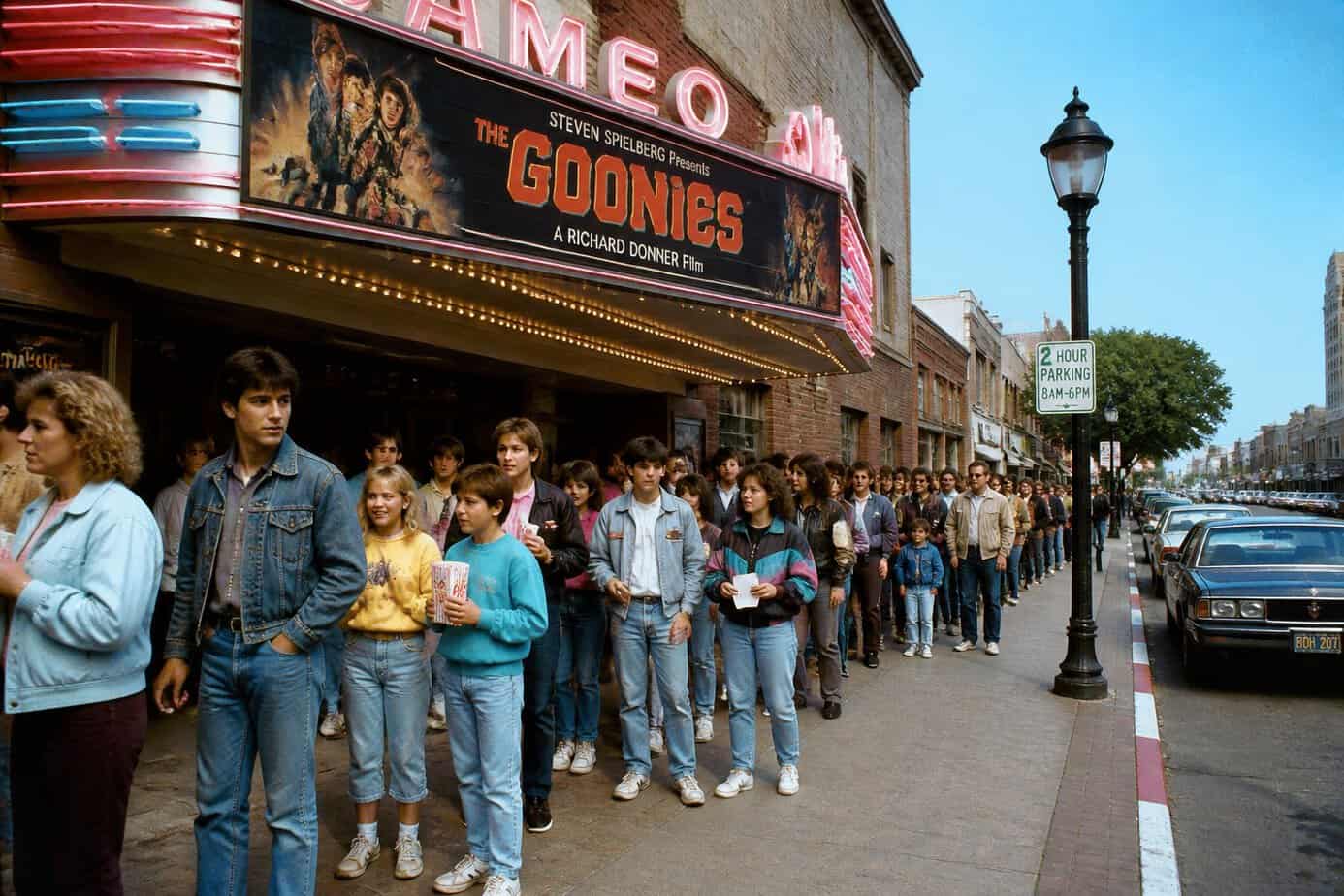
You showed up early on opening weekend, often finding yourself in a line that stretched around the building. The newspaper listings told you when the film started, and you claimed your spot hours before showtime.
Standing there with other moviegoers created a sense of shared anticipation. You talked about the previews you’d seen or debated what might happen in the sequel. The wait could stretch for 45 minutes or longer, but it felt worthwhile.
Weekend afternoons saw the longest queues, especially at popular theaters. You bundled up during winter months, standing outside even when it was cold. Everyone accepted this as normal because buying tickets in advance wasn’t always an option.
The line itself became part of the experience, turning a simple movie outing into something more memorable.
29. Making mix cassette swaps with handwritten liner notes
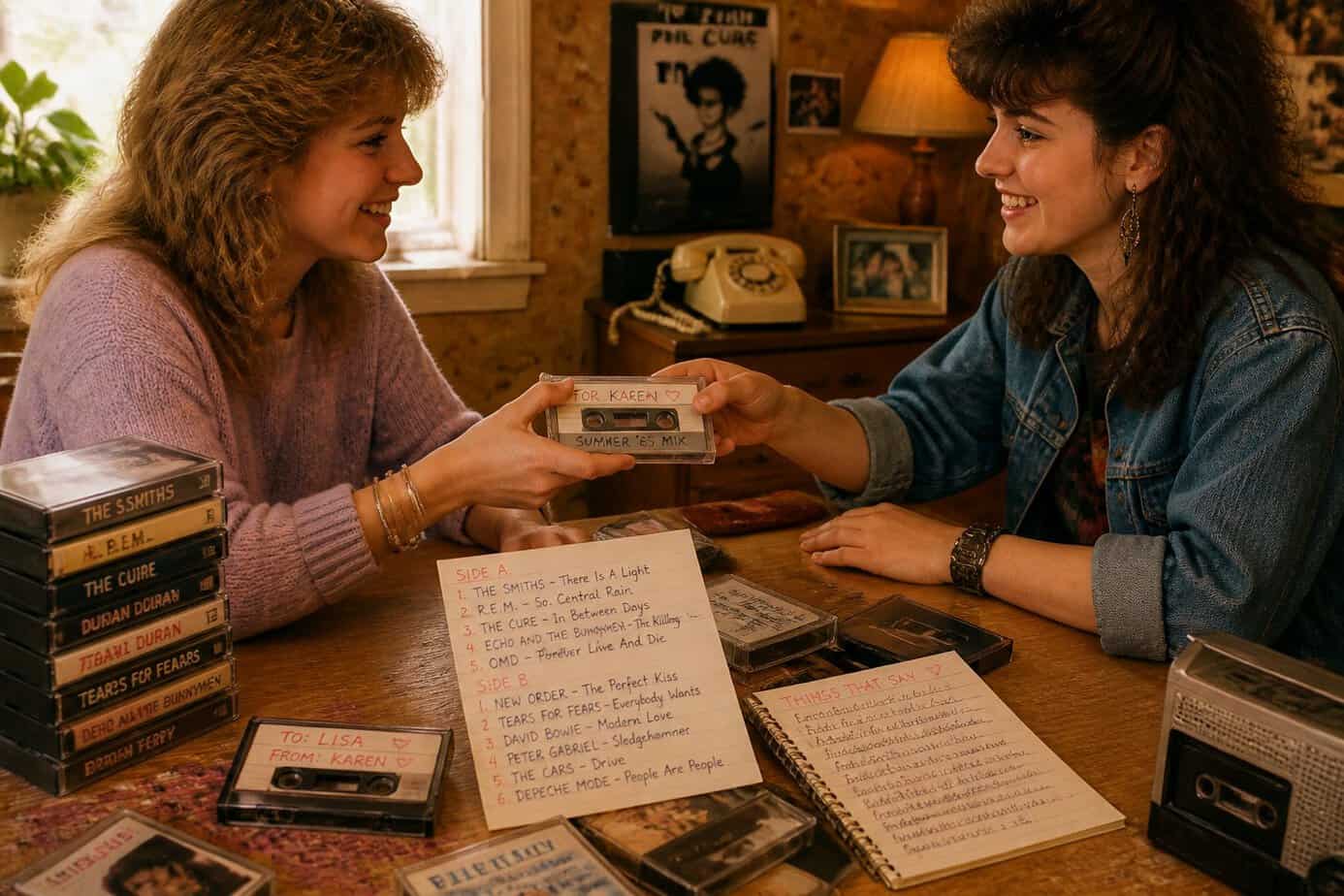
You spent hours selecting the perfect song order for friends who shared your taste in music. Each track needed to flow into the next, creating a journey that showed how well you understood their preferences.
The handwritten liner notes mattered as much as the music itself. You carefully wrote out song titles and artists on the cassette insert, sometimes adding personal messages or inside jokes. Your handwriting turned a blank J-card into something meaningful.
Trading these tapes with friends created a network of shared discoveries. You’d pass them around at school or during weekend hangouts, each exchange introducing you to bands you’d never heard on the radio.
Those decorated cases with their personalized track lists became artifacts worth keeping for years.
30. Saturday shopping trips to the mall arcade prize counter
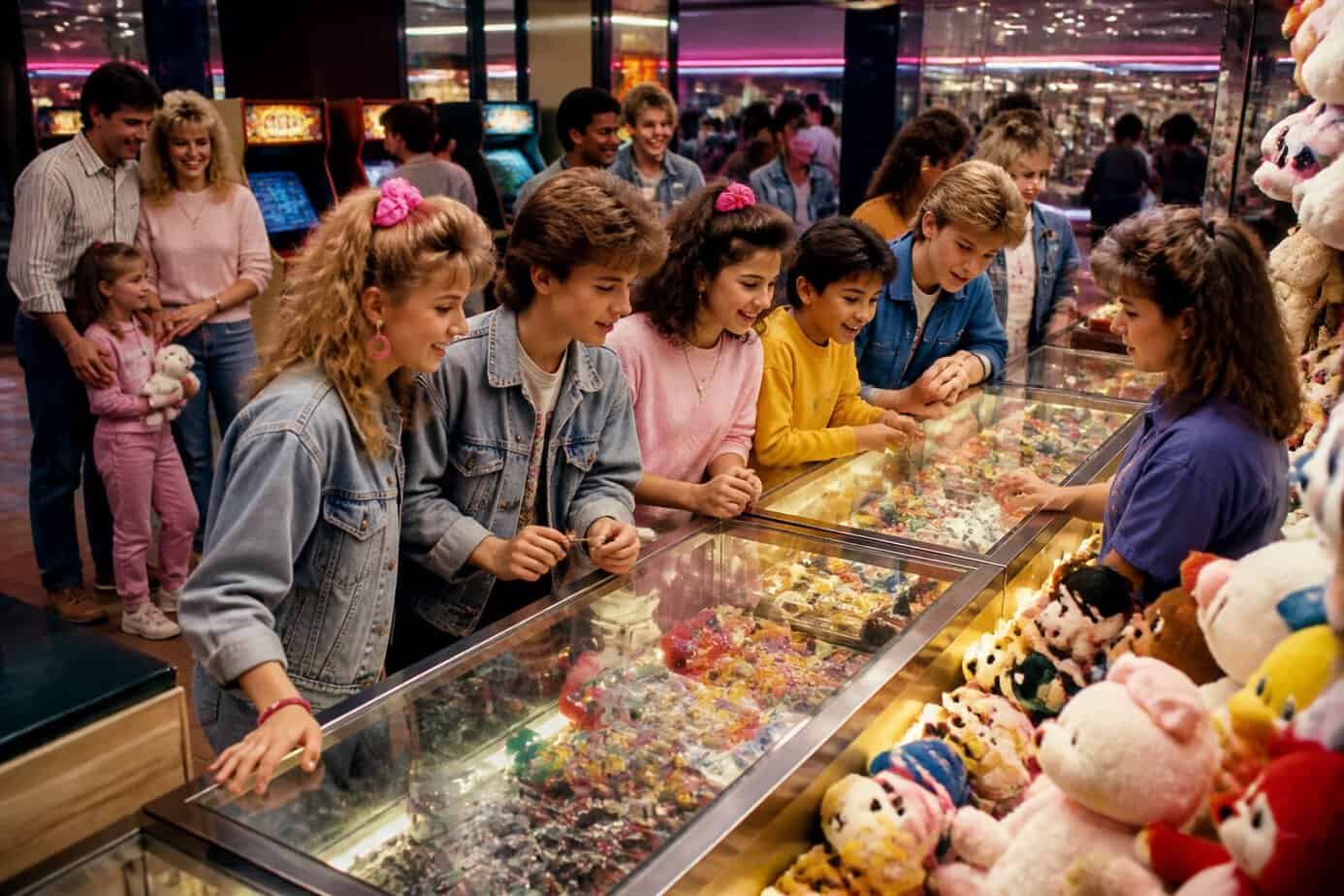
The arcade prize counter stood as the ultimate destination after hours of gaming. You clutched your tickets, carefully counted and straightened, while eyeing the rows of stuffed animals and gadgets behind the glass.
The attendant would help you tally your haul. Sometimes you’d pool tickets with friends to score something bigger than any of you could win alone.
The prizes ranged from small trinkets for twenty tickets to coveted items requiring hundreds. You weighed your options carefully, deciding between instant gratification with a handful of candy or saving up for that radio or basketball you’d been eyeing for weeks.
Walking out with your prize, even if it was just a rubber ball or plastic kazoo, felt like a genuine achievement. Those tokens and tickets represented your skill at the machines.
31. Participating in schoolyard jump-rope rhymes and chants
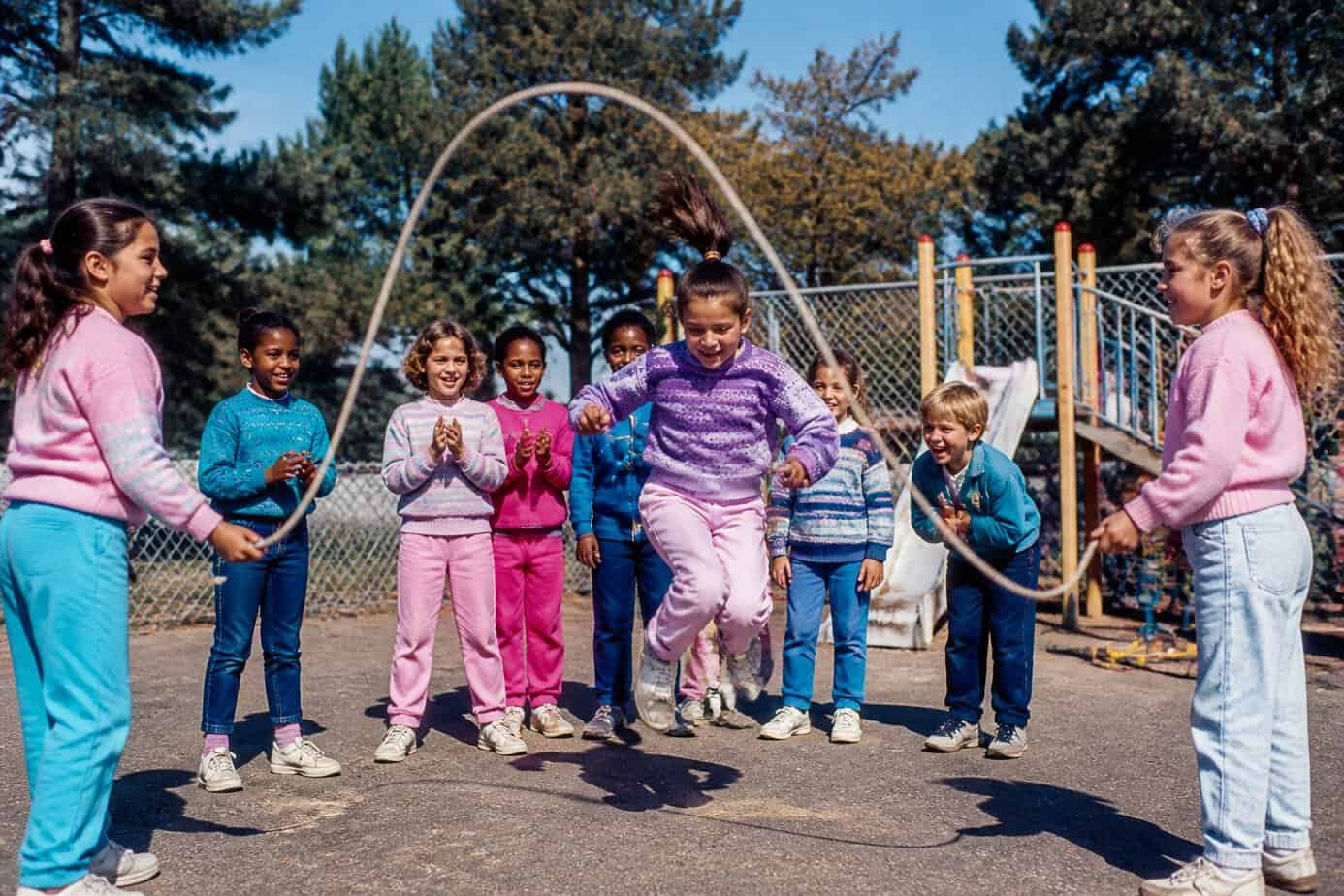
You gathered around the swinging rope during recess, waiting your turn while chanters kept perfect rhythm. The songs ranged from simple counting games to complex rhymes that tested your timing and coordination.
You learned classics like “Miss Sue” and “Down Down Baby” from older kids on the playground. These weren’t written down anywhere. You memorized them by listening and repeating, passing them along to younger students the same way.
The chants served a practical purpose beyond entertainment. They helped you time your jumps and know when to enter or exit the rope. You practiced these rhymes until they became automatic, building friendships through shared playground tradition.
Whether you were a skilled jumper or someone who tangled in the rope, you participated in this oral tradition that connected you to generations of schoolyard players before you.
The Cultural Context of 1980s Family Life
The 1980s represented a distinct shift in American household life, bridging traditional family routines with emerging technologies that would reshape entertainment and communication. Neighborhoods operated as extended social networks where children moved freely between homes and parents maintained close community ties.
Technology and Entertainment Shifts
Television dominated evening and weekend entertainment, but with significant constraints that shaped family behavior. Most households owned one or two television sets with three to four major networks plus local channels. The VCR revolutionized home viewing after 1983, turning Friday nights into trips to the video rental store.
Cable television expanded throughout the decade, introducing MTV in 1981 and CNN’s 24-hour news format. HBO and Showtime brought movies into homes, though many families couldn’t afford the additional monthly fees. By 1989, approximately 53% of American households had cable access.
Home computers entered middle-class households during this period, though primarily for children’s education and basic gaming. The Commodore 64, Apple II, and early IBM PCs cost between $500 and $2,000. Families often gathered around these machines for simple games or programming experiments, creating a new form of shared entertainment distinct from passive television watching.
Typical Weekend Routines
Saturday mornings followed a predictable pattern in most households. Children woke early for cartoon blocks that ran from 7 a.m. until noon, while parents used this time for household chores or extra sleep. Cereal boxes lined kitchen tables as kids sat cross-legged in front of screens.
Afternoons involved outdoor activities or errands. Families made weekly trips to grocery stores, shopping malls, or hardware stores. Many parents handled yard work while children played in neighborhoods without constant supervision. The dinner hour typically fell between 5:30 and 7 p.m., with families eating together at kitchen or dining room tables.
Sunday schedules often included religious services, extended family visits, or special outings. Evening television viewing centered around specific shows that families watched together, creating shared cultural touchpoints discussed at school and work the following week.
Social Dynamics in Neighborhoods
Neighborhoods functioned as interconnected communities where adults monitored all local children, not just their own. Parents felt comfortable allowing kids to roam within established boundaries, typically a few blocks from home. Front porches and driveways served as casual gathering spots for impromptu adult conversations.
Block parties, garage sales, and neighborhood barbecues occurred with regular frequency. Adults borrowed tools, ingredients, and favors without formal arrangements. Children formed large play groups that shifted throughout the day as kids moved between houses for snacks, bathroom breaks, or different activities.
Landline telephones connected households, with families sharing single phone lines. Teenagers monopolized phones during evening hours, while parents coordinated carpools and social plans through brief calls. Answering machines became common mid-decade, changing how people managed communication and availability.
How Nostalgia Influences Memory
Nostalgia functions as a psychological tool that strengthens memory recall while providing emotional benefits, and the shared nature of common experiences creates connections between people who lived through the same era.
Psychological Benefits of Reminiscing
Nostalgia operates as a built-in mechanism that regulates your mood and reinforces your sense of identity. Research shows that engaging with nostalgic memories boosts resilience and reduces feelings of loneliness. When you recall positive memories from childhood, your brain activates multiple structures that process both emotion and memory.
The experience creates a complex blend of happiness and sadness. Your nostalgic memories trigger more overall positive emotion than neutral memories, even as they become more bittersweet over time.
These memories enhance your feelings of social connection and self-esteem. Scientists have found that nostalgia makes life feel more meaningful by linking your past experiences to your current identity. This process helps you navigate present challenges by drawing on the emotional strength of remembered moments.
Shared Experiences Across Generations
Common experiences from specific time periods create bonds between people who lived through them together. If you grew up middle class in the 1980s, your weekend rhythms likely included school, dinner, TV nights, and outdoor play. These shared patterns shaped how you learned patience and handled boredom.
Sensory triggers like music, smells, and photos activate these memories across entire generations. The collective nature of these experiences transforms ordinary moments into cultural touchstones that resonate beyond individual recall.
Your generation’s inconveniences become another generation’s charming anecdotes. This transformation happens because nostalgia-inducing memories carry both personal significance and broader cultural meaning. The stories you share about visiting Blockbuster or watching specific TV shows connect you to others who recognize those same reference points.