
31 Toys Every Kid Begged for in the 1980s Before Birthdays Were All About Screens: The Ultimate Nostalgic Gift Guide
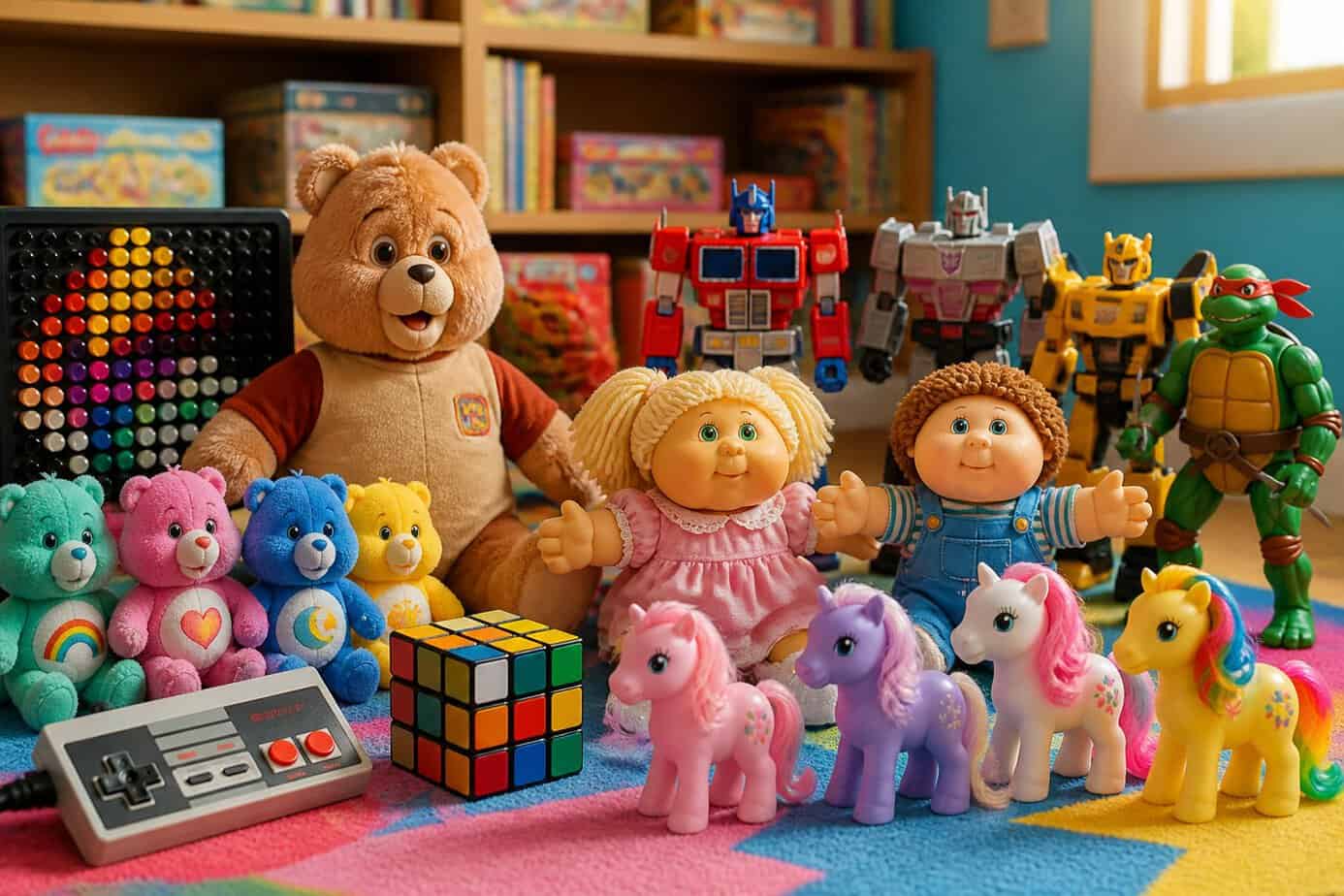
The 1980s represented a golden age of toys that sparked imagination and defined childhood for an entire generation. Before smartphones and tablets became the default birthday gift, kids spent months circling items in catalogs and rehearsing their best arguments for why they absolutely needed that new action figure or electronic game.
The toys of this era combined emerging technology with classic play patterns, creating a unique blend of innovation and hands-on fun that still resonates with nostalgia today.
From collectible dolls that sparked shopping frenzies to early gaming consoles that changed entertainment forever, the decade introduced toys that became cultural phenomena.
You likely remember the excitement of unwrapping one of these coveted items, or the disappointment when your birthday didn’t bring that must-have toy everyone at school was talking about. These weren’t just playthings—they were the currency of playground status and the fuel for countless hours of creative play.
The shift from physical toys to screen-based entertainment happened gradually, but the 1980s stood at a fascinating crossroads where both worlds coexisted. This list captures the items that dominated wish lists, inspired playground trades, and created memories that lasted far longer than the toys themselves.
1. Cabbage Patch Kids
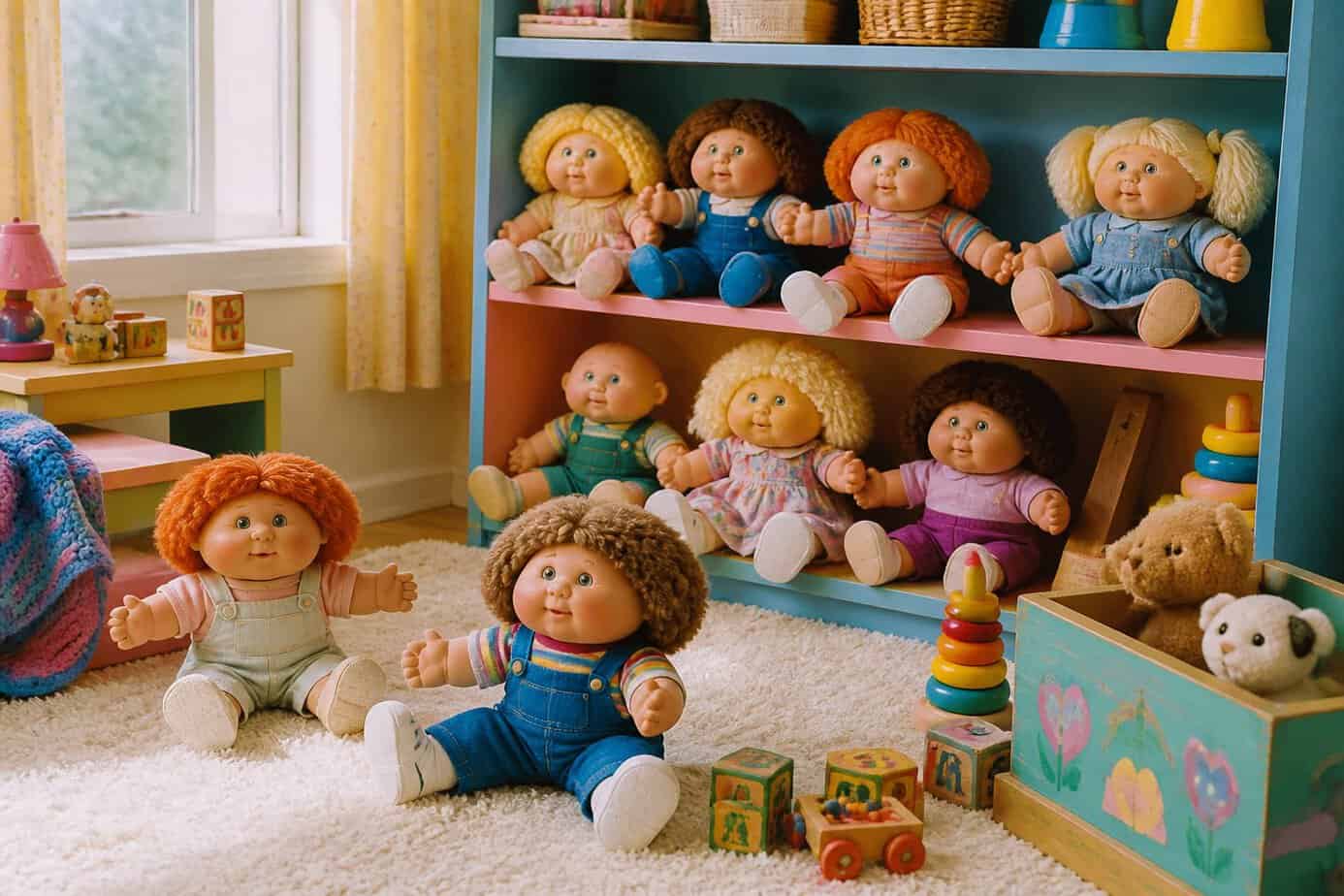
You couldn’t escape the Cabbage Patch Kids phenomenon in 1983. These soft-bodied dolls with their distinctive pudgy faces and unique adoption certificates became the must-have toy of the decade.
When Coleco released them nationally, the response was immediate and intense. Stores sold out within hours. Parents lined up in the cold and jostled through crowds, desperate to secure one for their children.
By the end of 1983, approximately 3 million dolls had been adopted. The frenzy was unlike anything the toy industry had seen before, with shoppers competing fiercely for limited stock.
Each doll came with its own name and adoption papers, making your Cabbage Patch Kid feel uniquely yours. This personalization was part of what made them so desirable to kids across the country.
2. Transformers (Autobot Optimus Prime)
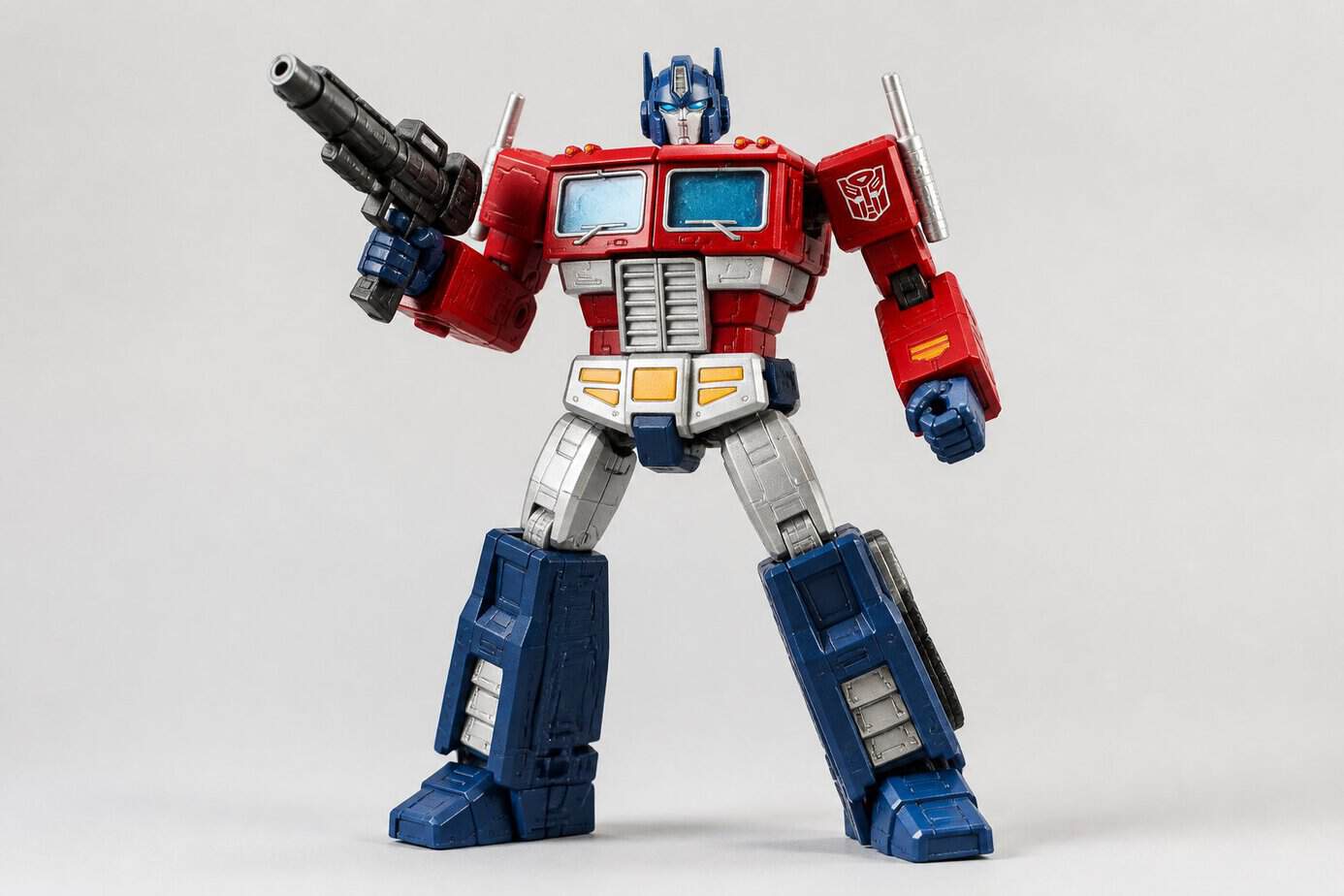
When the Transformers toy line launched in 1984, Optimus Prime quickly became the most sought-after figure. You couldn’t walk through a toy aisle without seeing kids clutching the iconic red and blue semi-truck that transformed into the heroic Autobot leader.
The original Optimus Prime was actually a redesigned Diaclone Battle Convoy toy that transformed into a Freightliner FL86 cab-over-engine truck. Your parents likely remember the detailed design and mechanical complexity that set it apart from simpler action figures of the era.
Optimus Prime has since received more toy releases than any other Transformers character, but that first Generation 1 version remains legendary. You begged for it because it combined two things kids loved: robots and vehicles, all in one transforming package.
3. He-Man and the Masters of the Universe (He-Man action figure)
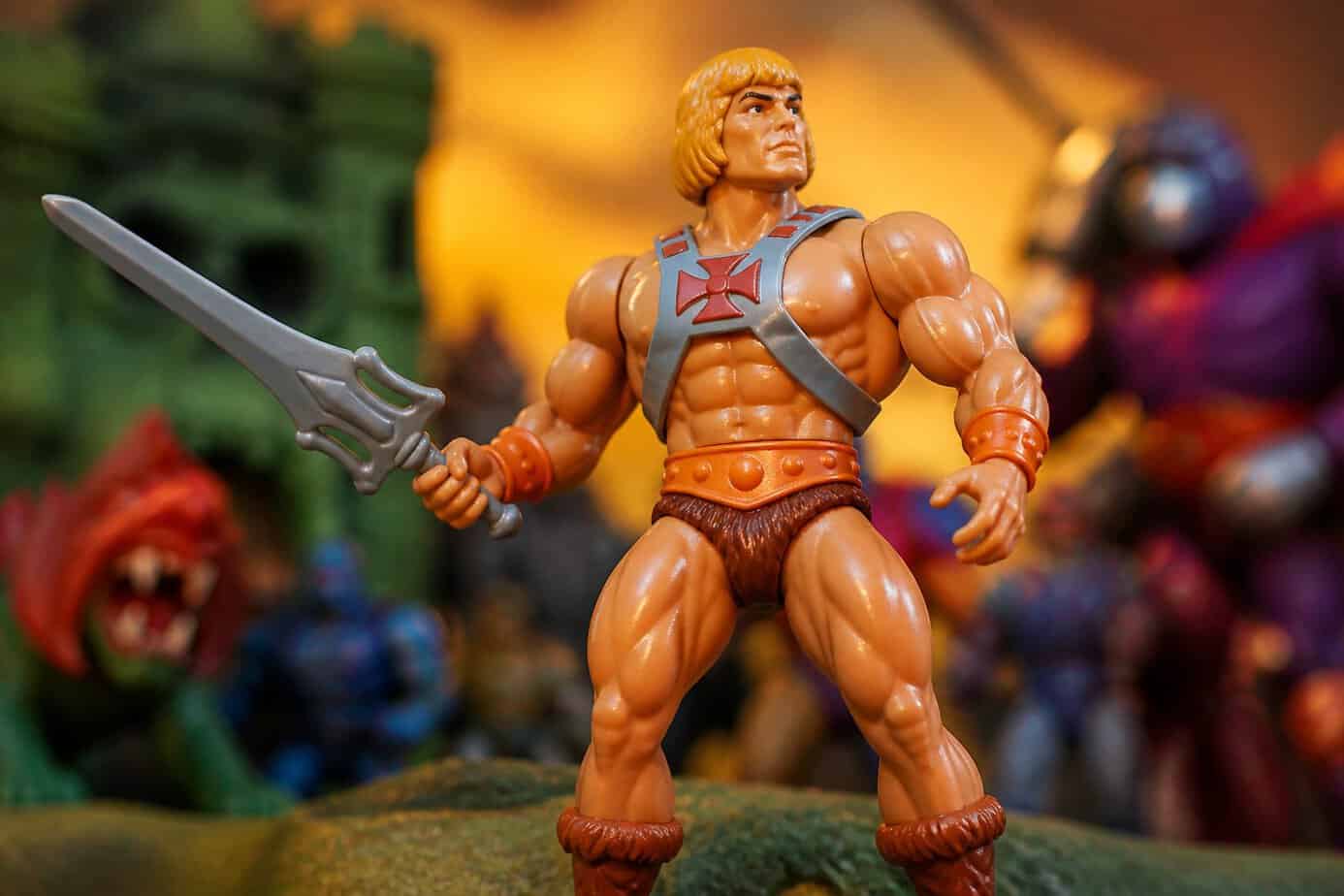
When Mattel launched Masters of the Universe in 1982, you couldn’t walk through a toy aisle without spotting He-Man’s muscular figure. The blonde hero with his power sword became an instant playground legend.
You begged your parents for the original He-Man figure, which came with his iconic half-sword and battle accessories. The toy line ran strong through 1988, giving you dozens of characters to collect. Each figure stood around 5.5 inches tall and featured multiple points of articulation.
The accompanying cartoon series made these toys even more desirable. You could recreate epic battles between He-Man and Skeletor right in your living room. The figures were durable enough to withstand your imaginative play sessions, whether you owned Castle Grayskull or just used couch cushions as mountains.
4. G.I. Joe: A Real American Hero (Snake Eyes figure)
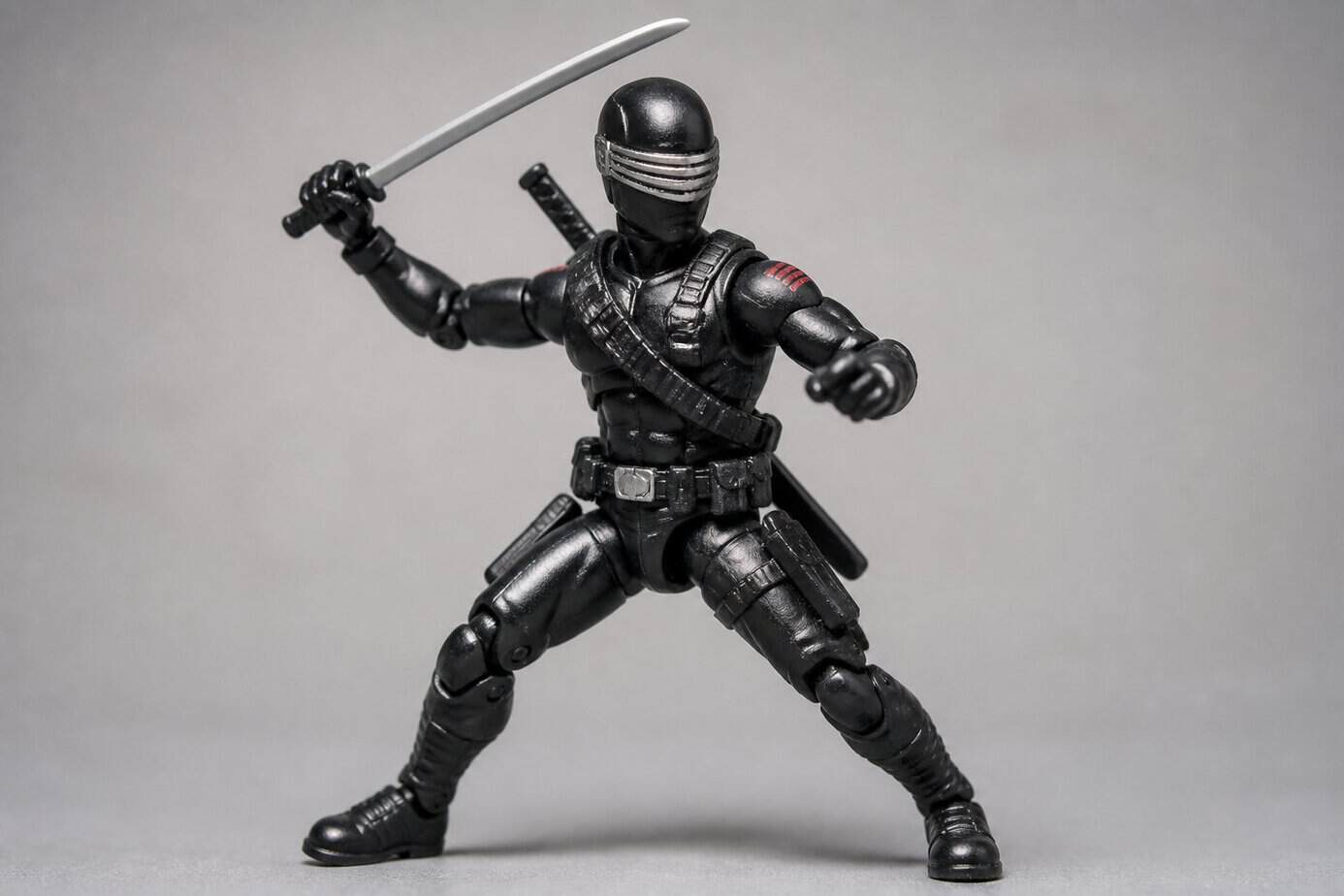
The Snake Eyes figure from 1982 became one of the most coveted toys in the G.I. Joe lineup. Released as part of the original Series One, this commando stood out with his all-black outfit and air of mystery among the “Original Sixteen” characters.
You begged your parents for Snake Eyes because he was different from other action figures. He had no face visible beneath his mask and no backstory printed on his card. This enigmatic quality made him incredibly appealing to kids.
The figure featured the classic straight-arm construction typical of early G.I. Joe toys. Despite its simple design compared to later releases, Snake Eyes remained a fan favorite throughout the 1980s. Hasbro released multiple versions through 1994, but that original 1982 figure held special significance for collectors and kids alike.
5. My Little Pony (Twilight/Magic-themed pony)
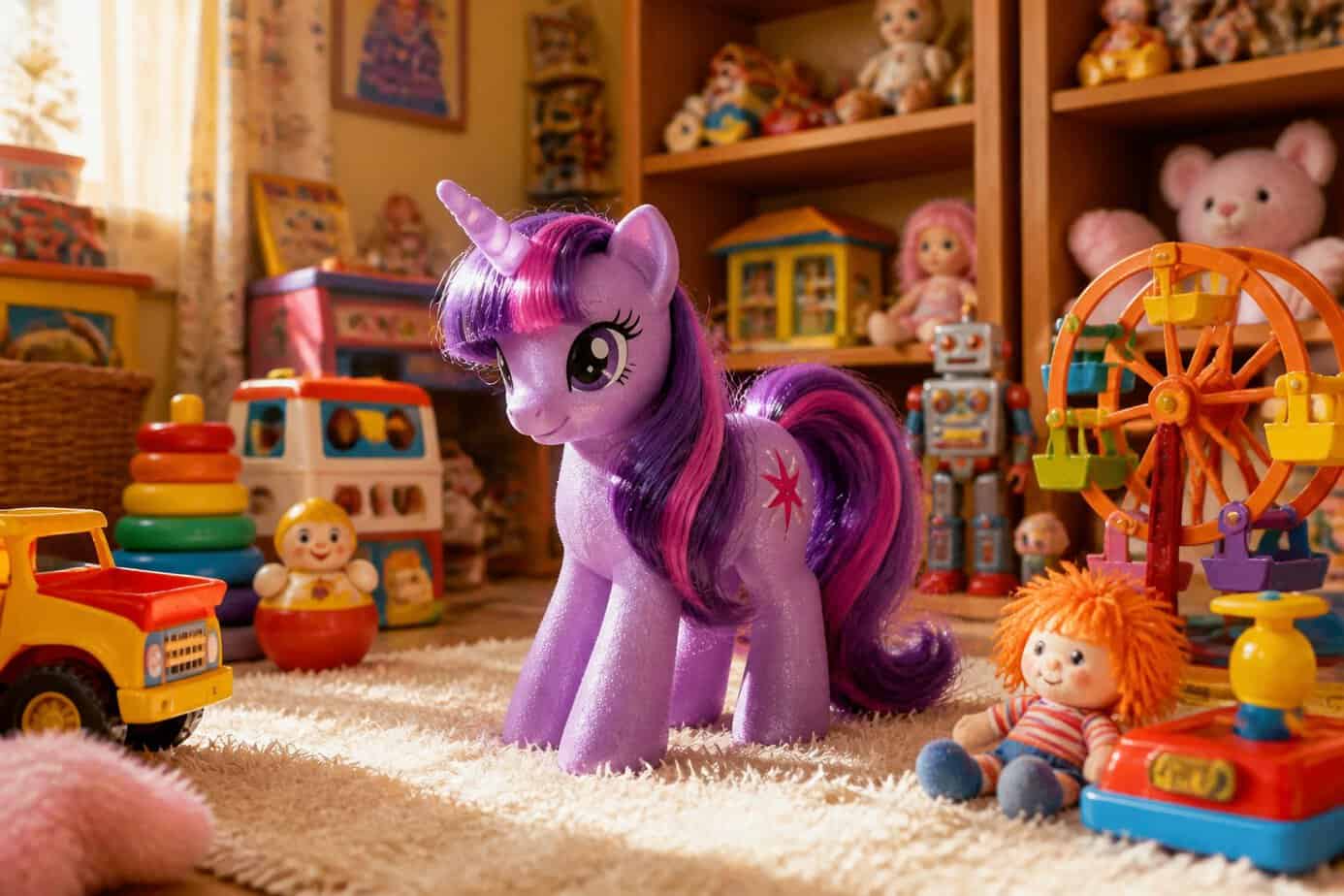
When Hasbro launched My Little Pony in 1982, six original ponies captured children’s imaginations. Twilight was among this foundational lineup, featuring a distinctive purple color scheme and star symbols that made her instantly recognizable.
You probably begged your parents for these collectible ponies, each with unique cutie marks and personalities. Twilight’s magic-themed design stood out with her celestial motifs. According to her backstory, she wished for stars to shine bright every year, creating special nights when ponies could make wishes.
The Generation 1 ponies ran from 1982 through 1992, giving you nearly a decade to build your collection. You could brush their colorful manes, display them on shelves, or create elaborate stories. These weren’t just toys—they were characters you connected with, long before screens dominated birthday wish lists.
6. Rubik’s Cube
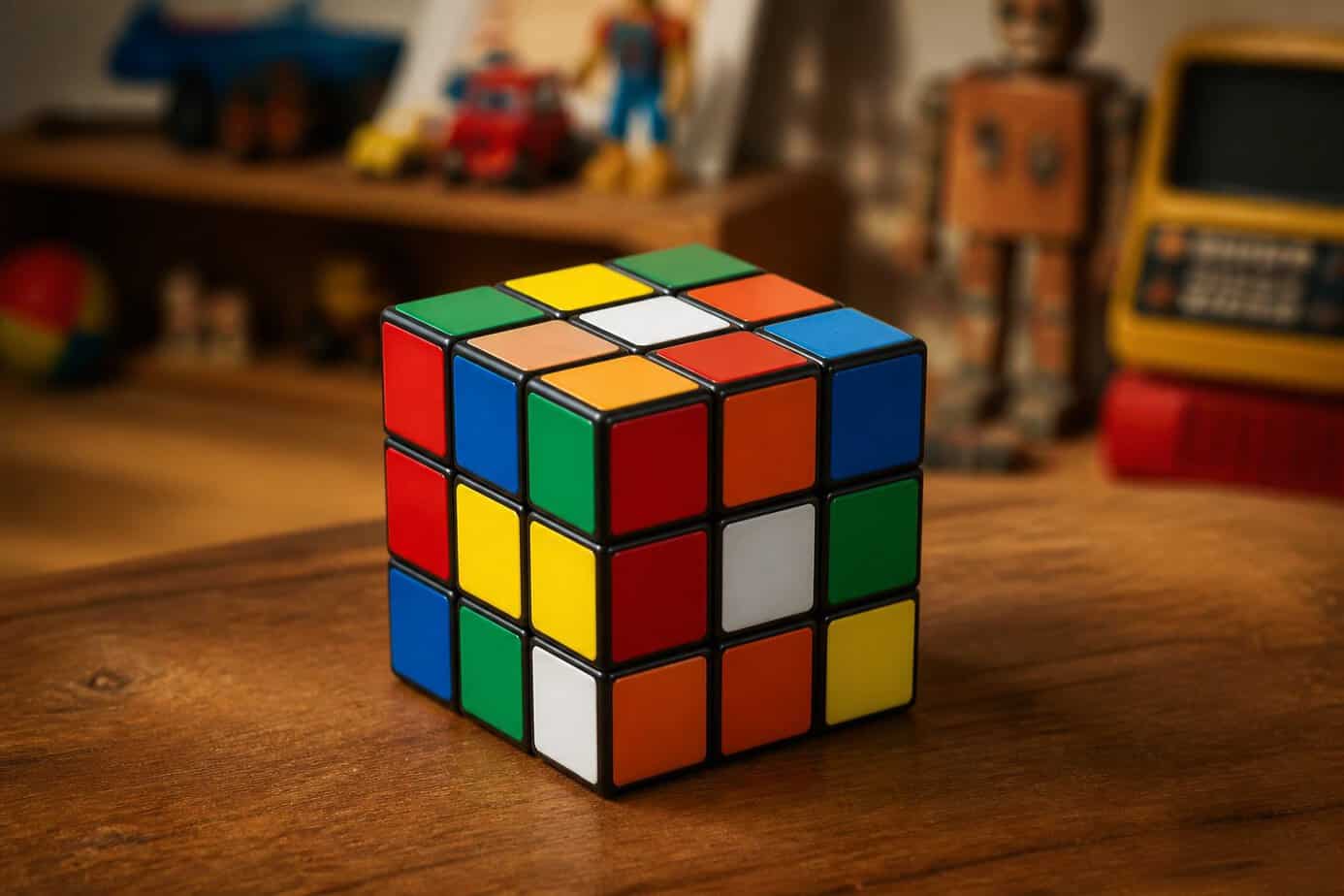
The Rubik’s Cube wasn’t just a toy in the 1980s. It was a cultural phenomenon that appeared on every store shelf and coffee table across America.
Invented by Hungarian professor Ernő Rubik in 1974 as a teaching tool for geometry, the puzzle exploded into mainstream consciousness when it launched globally in 1980. Over 100 million cubes sold in the early years of the decade alone.
You either mastered it or pretended you could solve it by peeling off the stickers. The colorful six-sided puzzle challenged kids and adults alike to align the colors on each face.
Its appeal was simple: the Cube was pocket-sized, required no batteries, and offered endless attempts at solving its 43 quintillion possible combinations. Your friends competed to achieve the fastest solve times, turning the puzzle into a legitimate skill to show off at school.
7. Nintendo Entertainment System (NES)
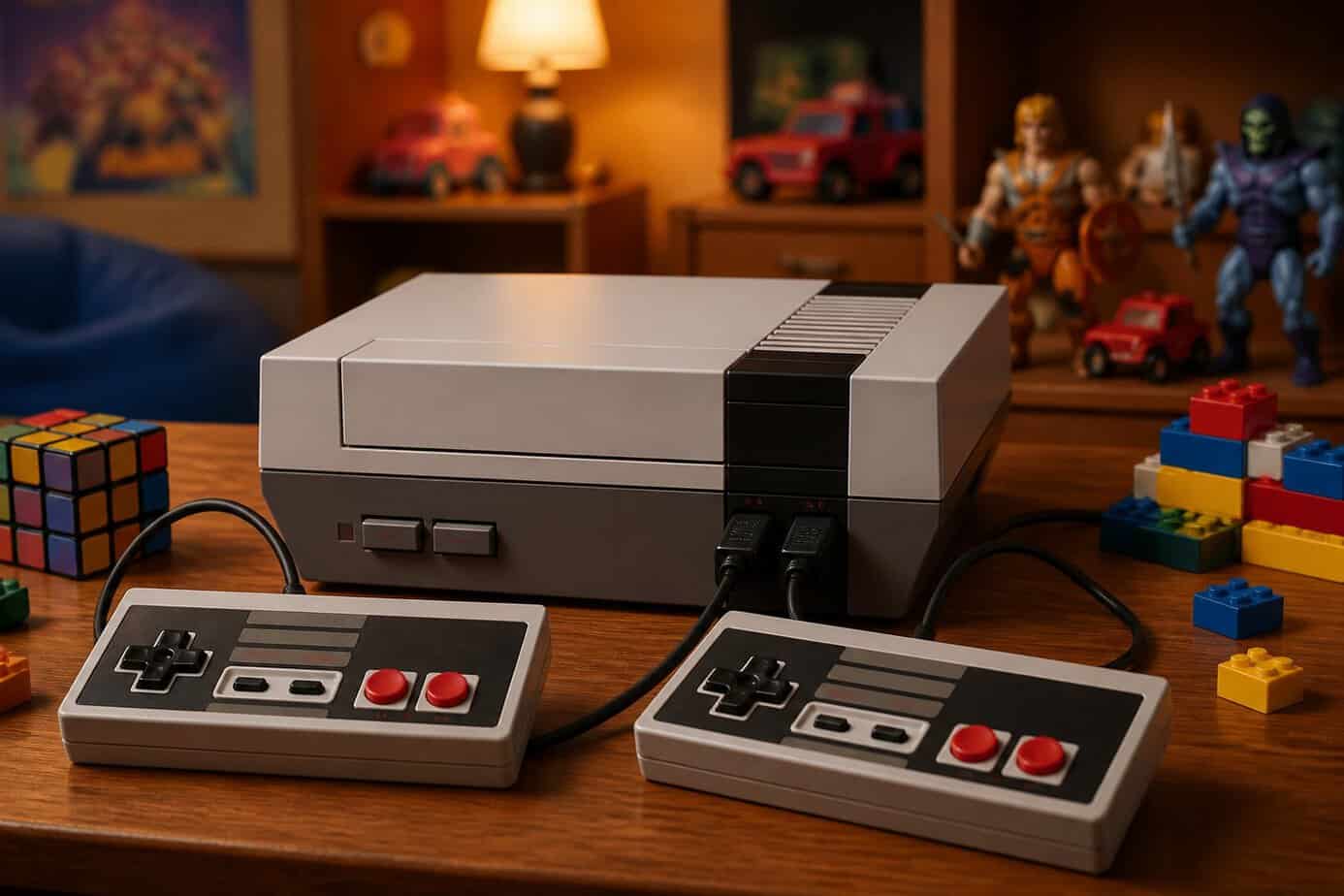
The Nintendo Entertainment System transformed home gaming when it launched in the United States in 1985. You couldn’t walk through a toy store without seeing kids clustered around the demo units, mesmerized by the graphics that brought arcade-quality games into living rooms.
The NES revitalized the video game industry after the early-decade crash. It introduced franchises that became cultural touchstones, from Super Mario Bros. to The Legend of Zelda.
Your wish list probably featured the gray console with its distinctive boxy controllers. The system came with games stored on cartridges you’d blow into when they didn’t work properly, a ritual every NES owner knew by heart.
At launch, convincing your parents to spend money on a gaming console required serious negotiation skills. The NES represented a significant investment, but it delivered countless hours of entertainment that made it worth every cent.
8. Atari 2600 Game Console
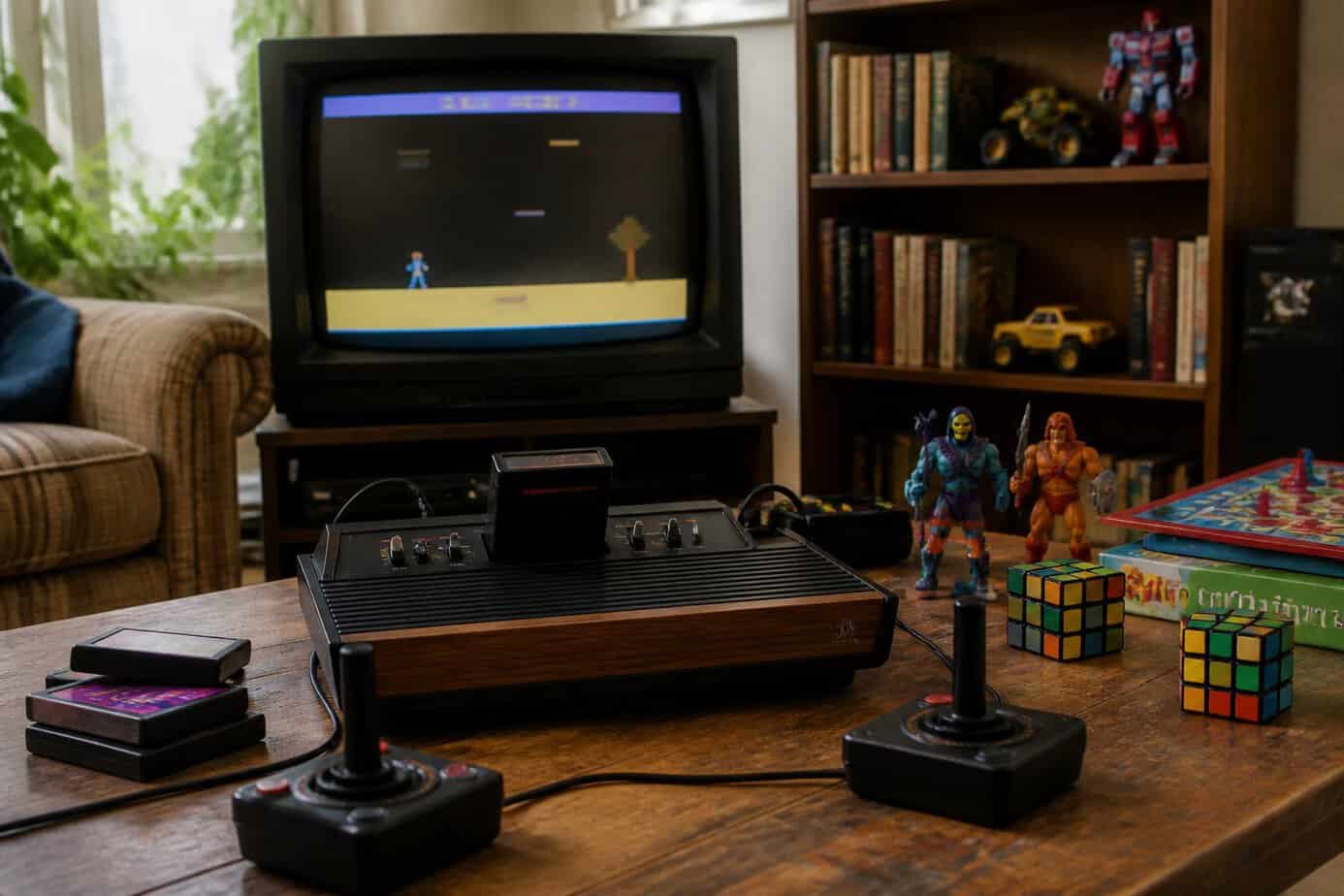
You begged your parents for an Atari 2600 because it was the gaming console that brought the arcade experience into your living room. Released in 1977 as the Atari Video Computer System, it became a household staple by the early 1980s.
The console used swappable game cartridges, letting you build a library of titles instead of being stuck with built-in games. When Space Invaders arrived in 1980, it quadrupled console sales and turned the Atari 2600 into a must-have item.
You spent hours playing Pac-Man, Pitfall, and Asteroids on your TV screen. The chunky joystick and single red button were all you needed to navigate pixelated worlds. Atari sold over thirty million consoles, making it one of the most successful gaming systems of its era and establishing video games as a mainstream form of entertainment.
9. Care Bears (Tenderheart Bear)
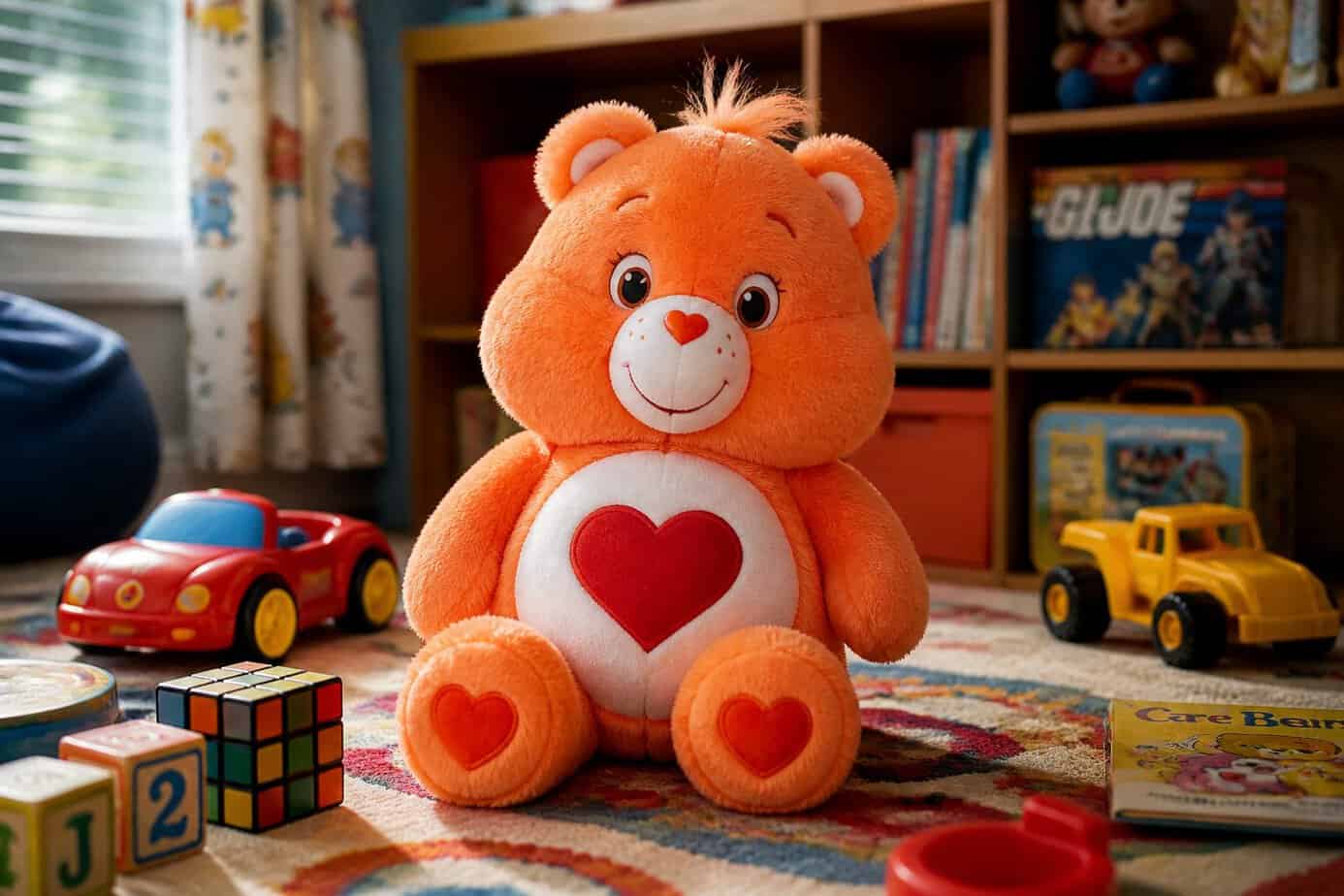
You couldn’t walk through a toy aisle in the 1980s without spotting these bears. Care Bears launched on American Greetings cards in 1981, and by 1983, plush versions filled store shelves everywhere.
Tenderheart Bear became the most recognizable of the original ten characters. You’d identify him by his light brown fur and the red heart on his belly. That heart symbol represented his role as the caring, compassionate leader of the group.
Your plush Tenderheart came with soft materials and vibrant colors that made him perfect for both play and display. The belly badge system made collecting appealing since each bear had a different symbol and personality.
These bears weren’t just toys. They came with animated series, movies, and countless merchandise options that dominated birthday wish lists throughout the decade.
10. Teenage Mutant Ninja Turtles action figures (Leonardo)
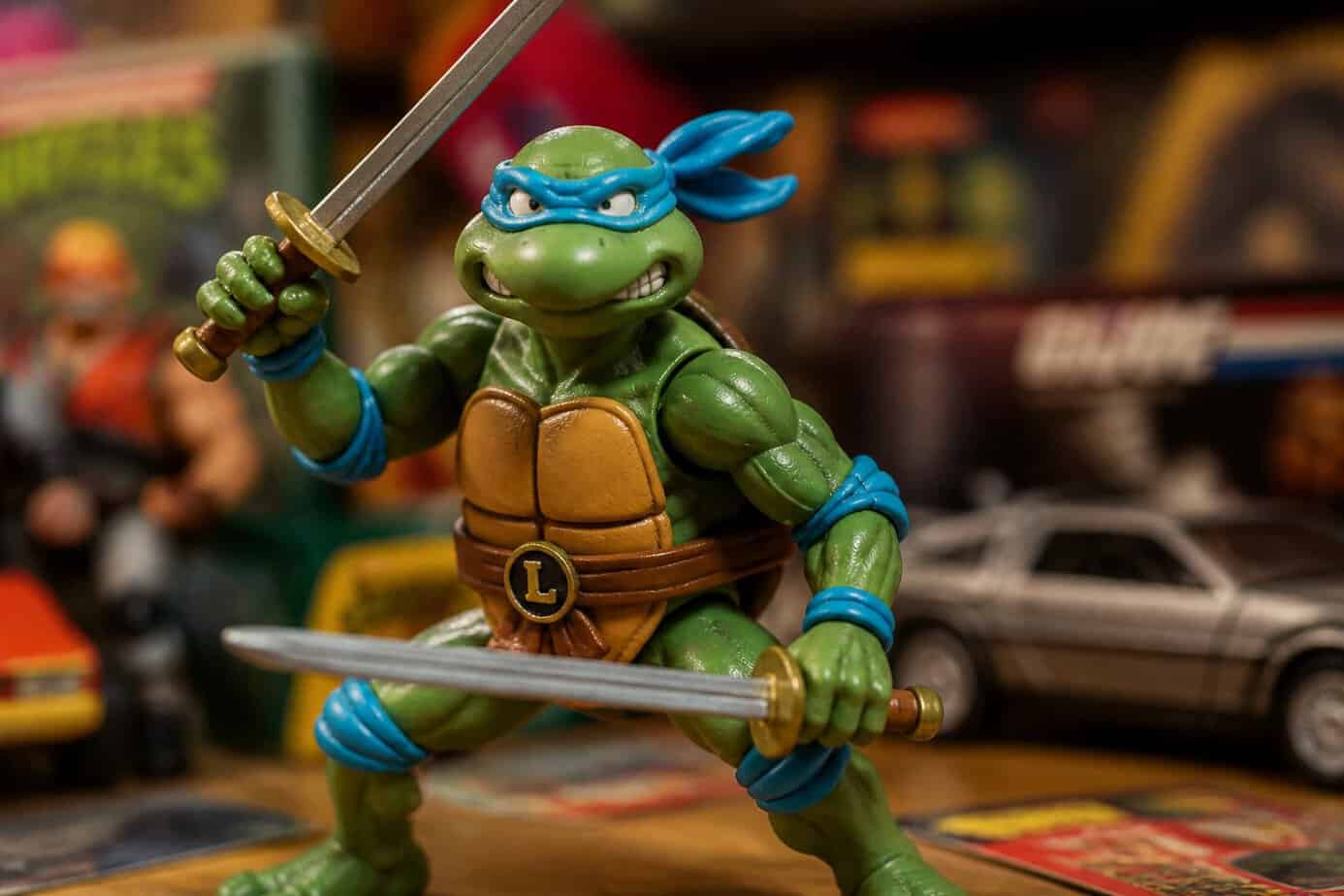
When Playmates Toys launched the Teenage Mutant Ninja Turtles action figure line in 1988, Leonardo became an instant favorite. The blue-masked leader wielded his twin katanas and stood ready to battle Shredder alongside his brothers.
You likely remember begging your parents for the original Leonardo figure, which featured his distinctive bandana and weapons. The character first appeared in comic books in 1984, but the action figures brought him into your hands.
Between 1988 and 1997, Playmates produced around 400 different TMNT figures. Leonardo appeared in numerous variations, from the basic figure to specialty versions with different accessories and themes.
The collectible nature of these figures meant you wanted every version. Trading with friends or searching store shelves for new releases became a regular ritual for young fans.
11. Fisher-Price Little People Playset (play family sets)
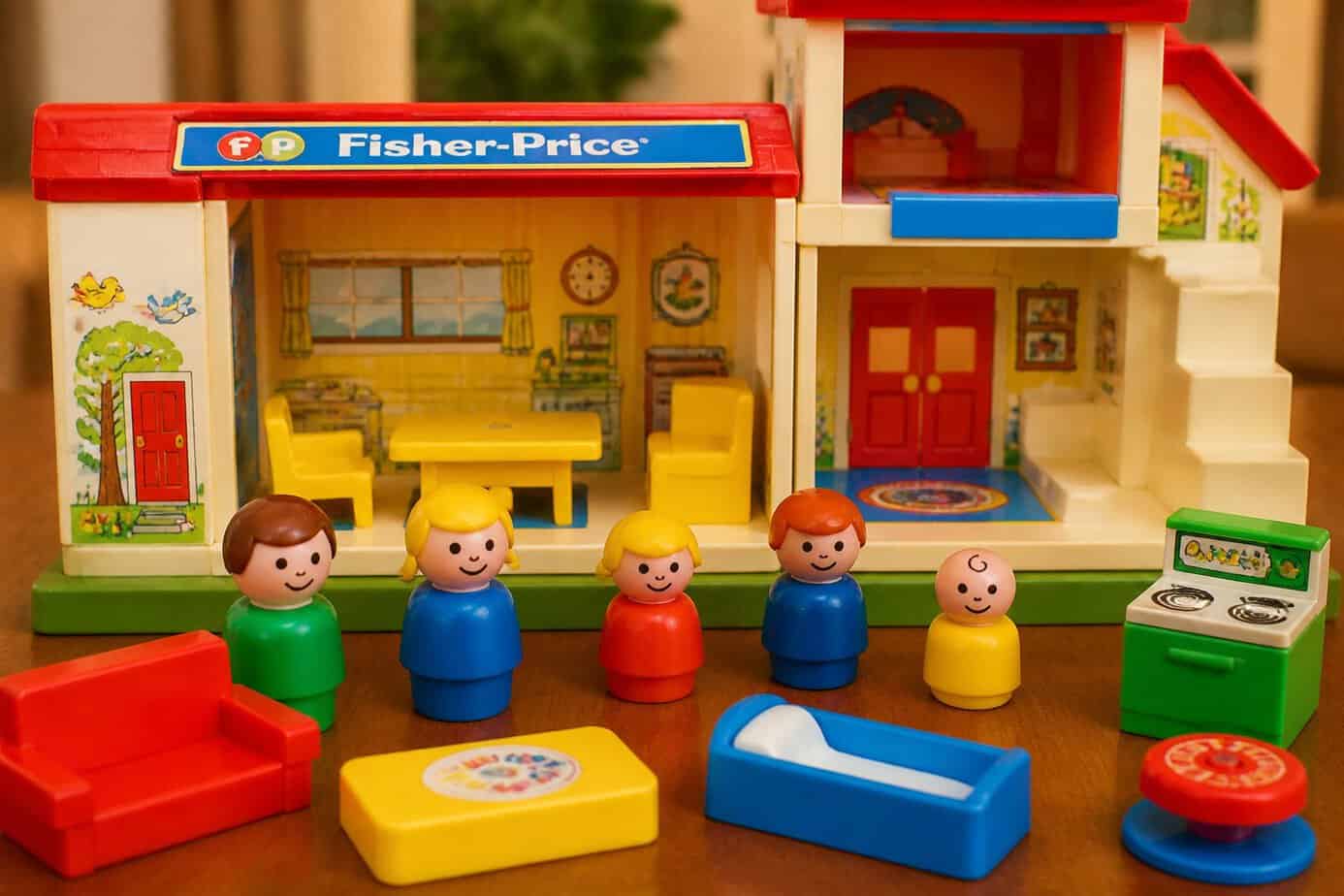
Fisher-Price Little People dominated playrooms throughout the 1980s with their chunky wooden figures and imaginative playsets. You probably begged your parents for the farm, schoolhouse, or main street sets that came with colorful buildings and accessories.
These toys were designed for children ages 6 months to 3 years and up, featuring sturdy construction that could withstand enthusiastic play. The sets included everything from barns with animal figures to houses complete with tiny furniture pieces.
Each playset encouraged creative storytelling as you moved the peg-shaped people through their miniature worlds. The figures were easy for small hands to grip, and the simple designs sparked hours of imaginative play.
You might remember collecting multiple sets to create an entire Little People neighborhood. The brand originally launched as Play Family People in the 1960s before becoming the Little People line you knew in the 1980s.
12. Lite-Brite
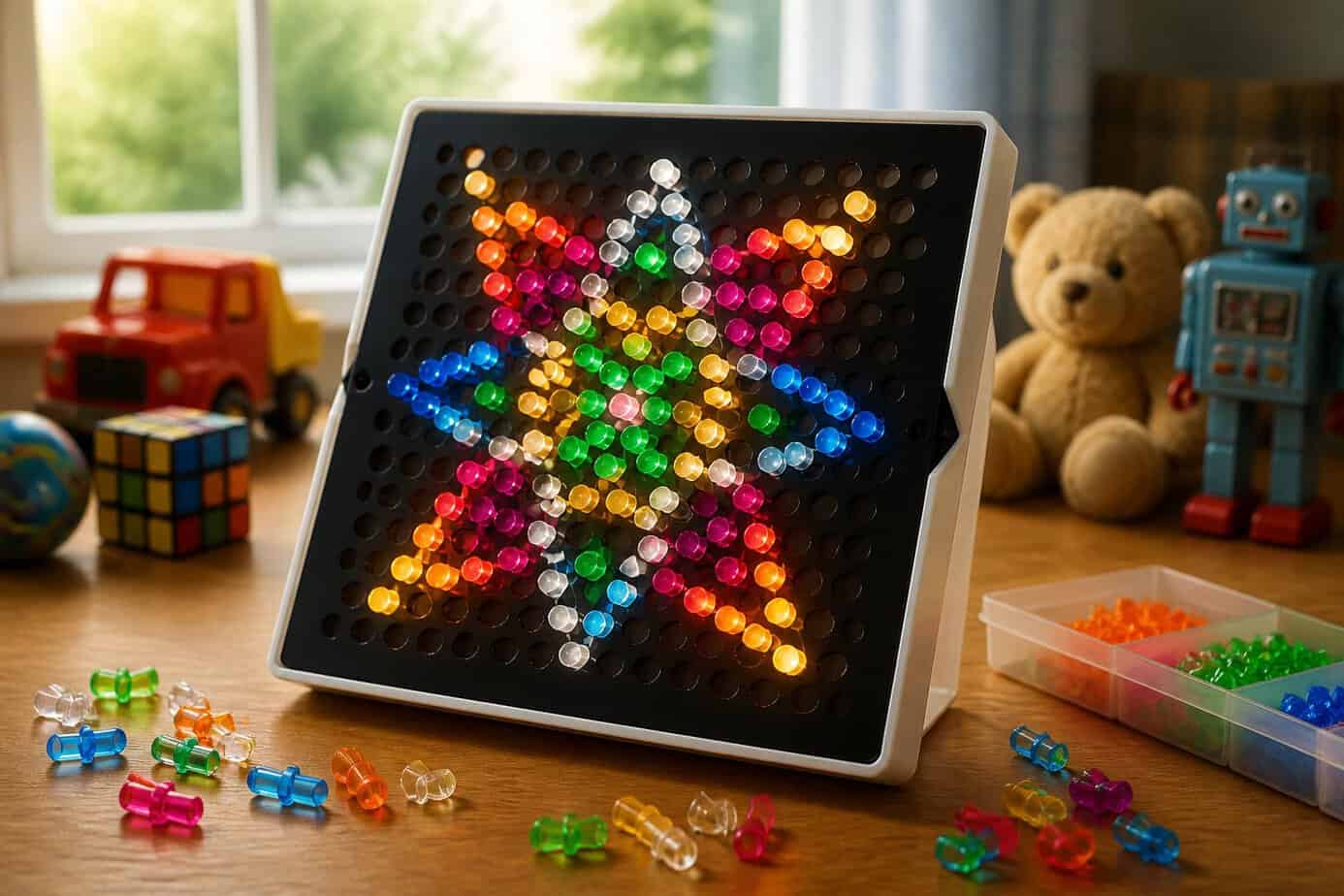
You couldn’t flip through a toy catalog without spotting Lite-Brite’s glowing rainbow display. This light box toy let you push colored plastic pegs through black paper templates to create illuminated pictures.
The concept was simple but captivating. Designer Joseph M. Burck created a grid of holes backed by a light bulb. You had eight peg colors to work with: red, blue, green, yellow, orange, pink, purple, and clear.
Your parents appreciated that Lite-Brite was mess-free compared to paint or markers. You could follow the included templates or create freeform designs on blank sheets. The toy launched in 1968 but remained hugely popular throughout the 1980s.
The experience of watching your creation glow in a darkened room felt magical. You could even keep playing after bedtime since the light box illuminated your designs.
13. Etch A Sketch
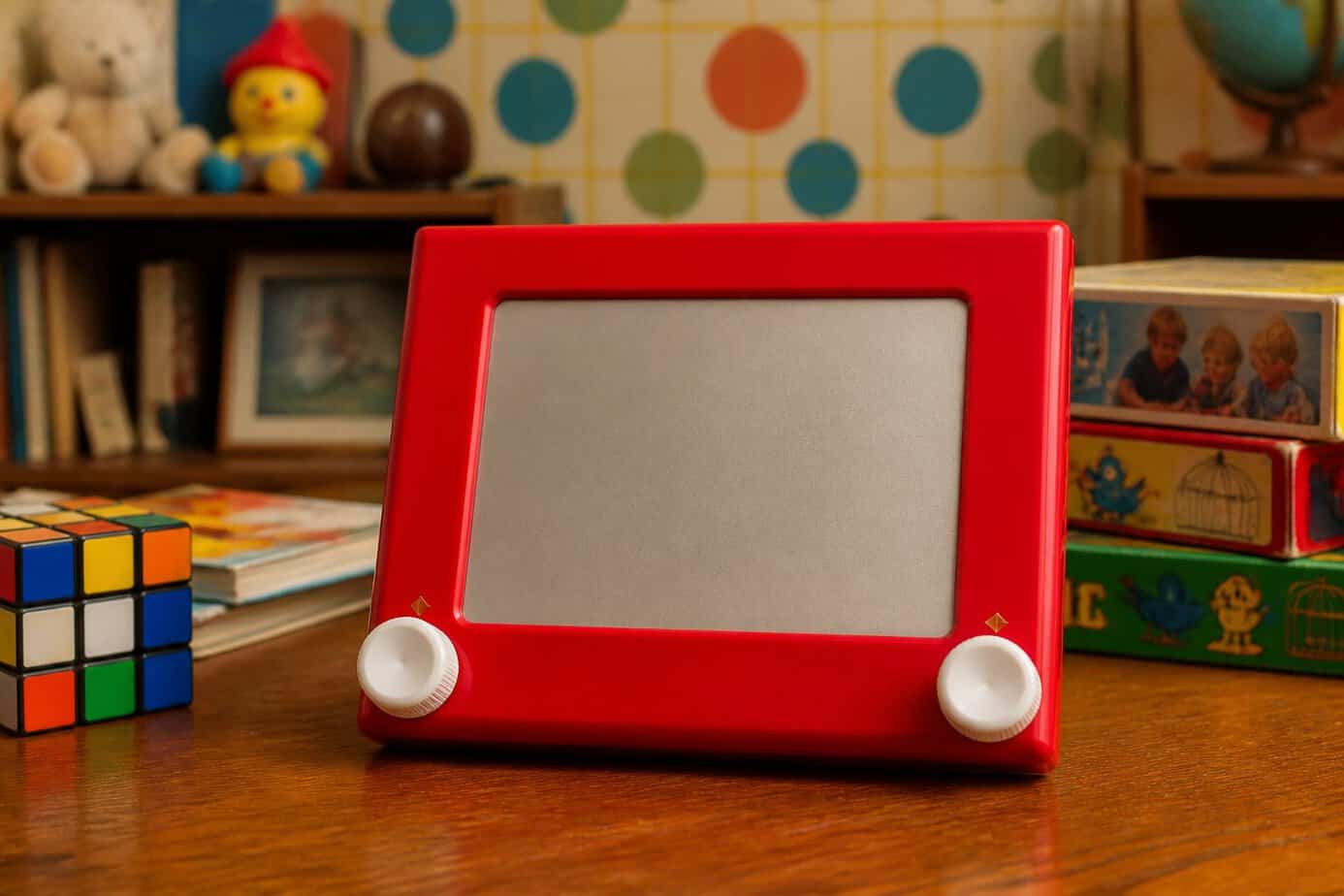
You twisted those two knobs for hours, trying to master the art of creating smooth curves and detailed drawings. The Etch A Sketch had been around since 1960, but it remained a constant fixture on wish lists throughout the 1980s.
The red plastic frame housed aluminum powder and glass, creating a simple yet engaging drawing experience. You controlled horizontal lines with one knob and vertical lines with the other, making straight lines easy but curves incredibly challenging.
When you made a mistake, you simply shook the toy to erase everything and start fresh. The satisfying sound of the powder resettling meant a clean slate for your next masterpiece.
Ohio Art Company manufactured this mechanical drawing toy, which required no batteries or screens. Your creations were temporary, but the entertainment value lasted for years.
14. Speak & Spell
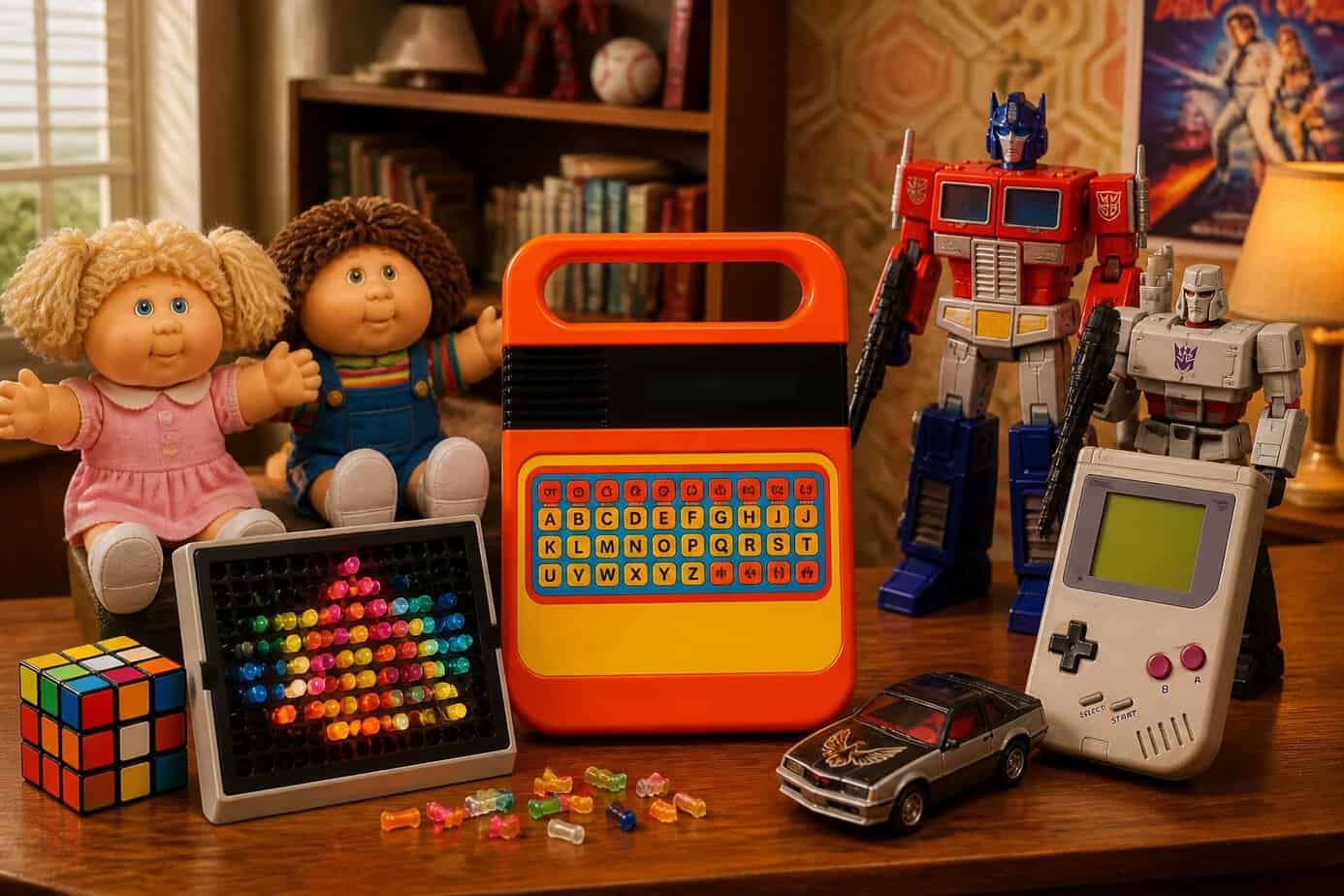
You couldn’t escape the robotic voice of the Speak & Spell if you grew up in the ’80s. Texas Instruments released this handheld learning device in 1978, and it quickly became a must-have item for kids and parents alike.
The toy featured a colorful keyboard and a blue vacuum fluorescent display that made you feel like you were using futuristic technology. It challenged you to spell words correctly after its distinctive synthesized voice called them out.
What made the Speak & Spell special was its status as one of the first consumer products to use digital speech synthesis. You could choose from different spelling games and difficulty levels, making it useful for various age groups.
The device spawned two siblings: Speak & Read for phonics practice and Speak & Math for arithmetic drills, both arriving by 1980.
15. Polly Pocket (original compact sets)
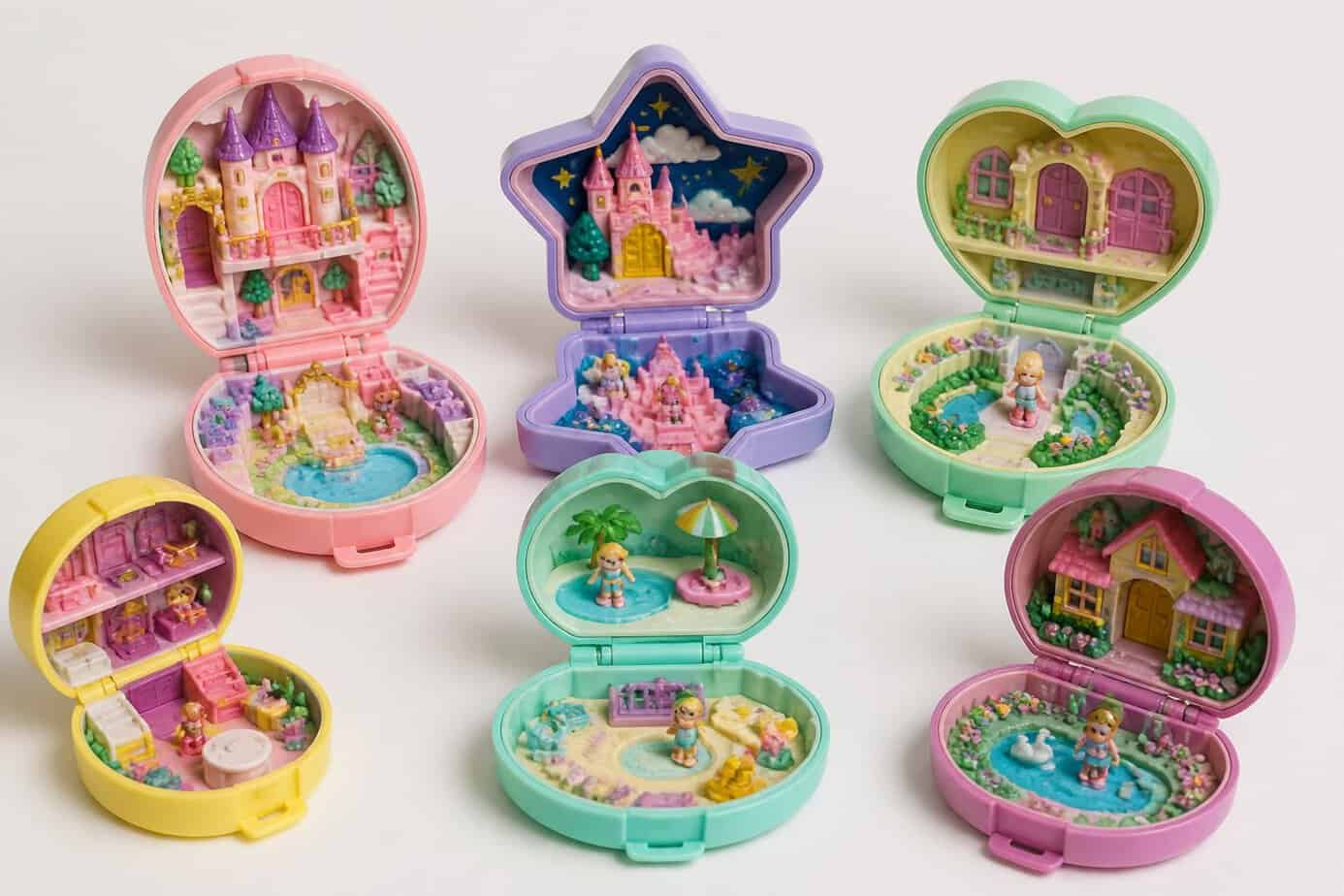
You might remember begging for these tiny treasures that fit right in your pocket. Chris Wiggs created the first Polly Pocket in 1983 using a makeup powder compact, designing it for his daughter Kate. Bluebird Toys licensed the concept and brought these miniature worlds to store shelves by 1989.
The original sets were compact cases that opened to reveal detailed dollhouses and playsets. The figurines inside measured less than an inch tall, making them perfect for on-the-go play. You could carry entire miniature worlds in your backpack or coat pocket.
These weren’t the larger Polly Pocket dolls you see today. The originals from Bluebird Toys featured intricate molded details, tiny furniture, and accessories that sparked hours of imaginative play. The compact design made them instantly appealing to kids who wanted their own secret, portable playsets.
16. Baby Alive (1980s doll)
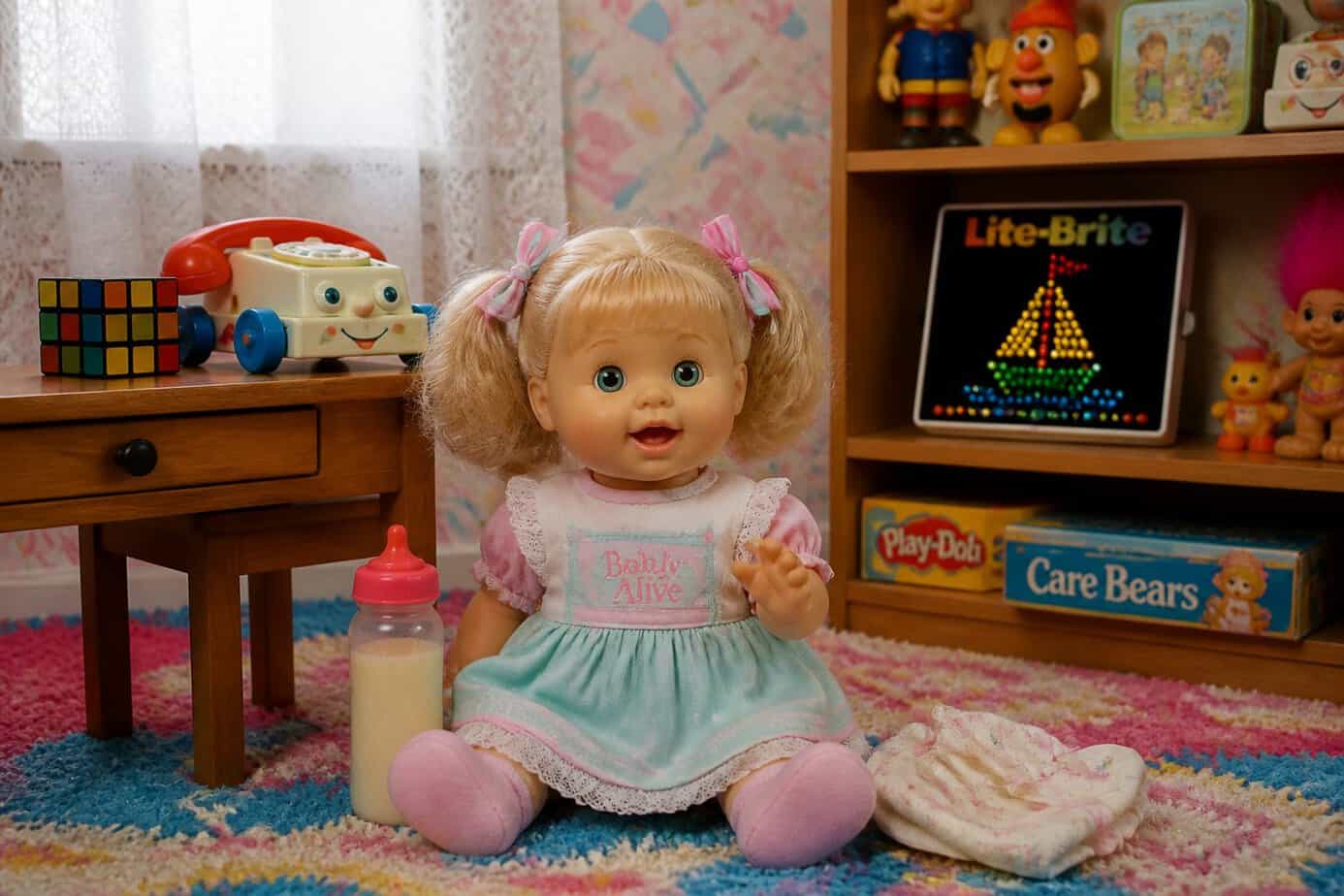
Baby Alive took pretend parenting to a whole new level in the 1980s. You fed this doll a special food mixture, and it actually came out the other end into her diaper.
Kenner Products originally introduced Baby Alive in 1973, but the doll hit peak popularity in the early 1980s when it sold up to 1 million units each year. The doll moved her mouth when you fed her the brightly-colored, nontoxic substance mixed with water.
Your parents might have called it the “eww factor,” but you probably thought it was fascinating. The doll came with everything you needed to play caregiver, including diapers, bottles, and that signature food mix. Baby Alive taught you about responsibility and infant care through hands-on play that felt surprisingly realistic for its time.
17. Masters of the Universe Castle Grayskull playset
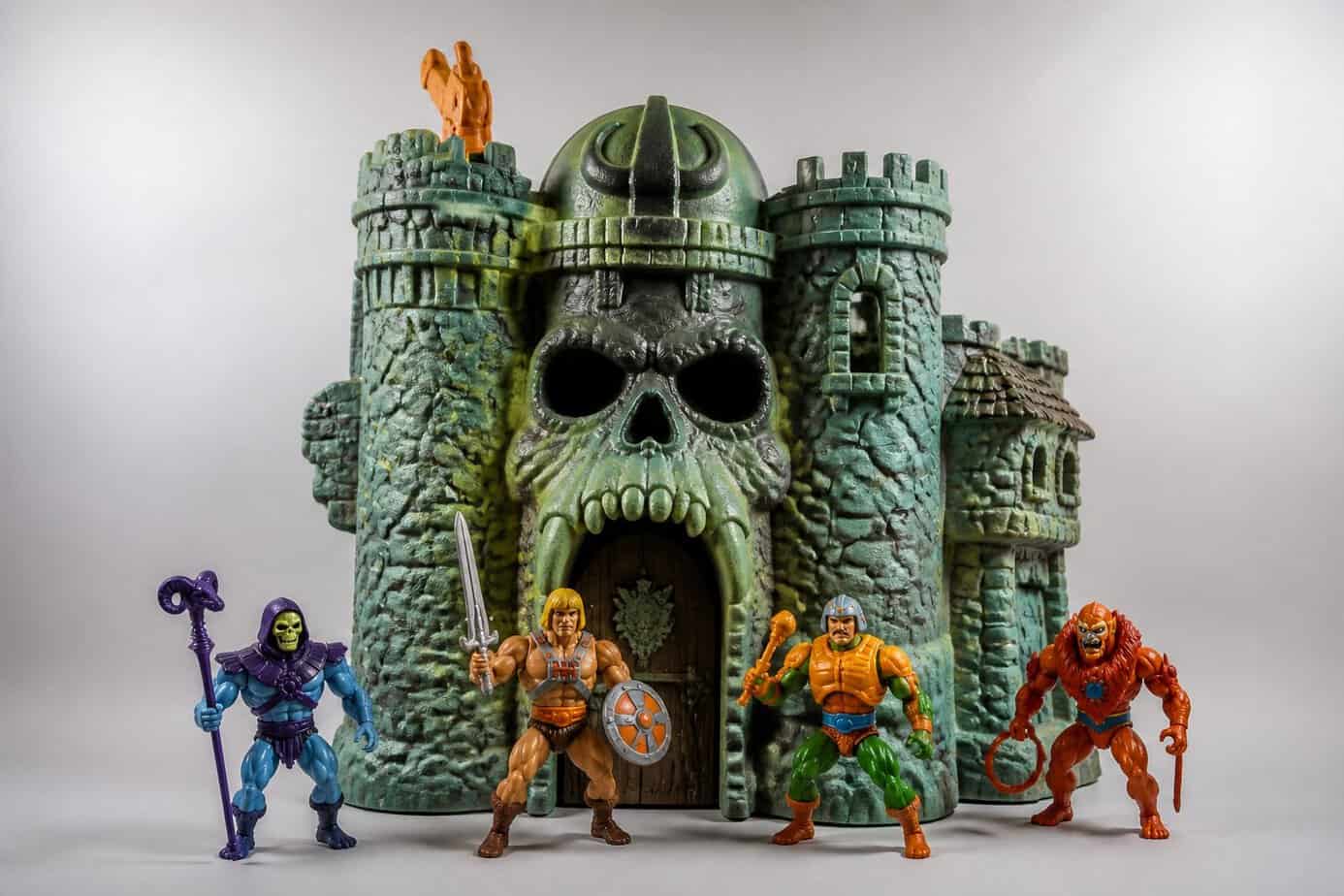
If you grew up in the 1980s, you knew Castle Grayskull was the ultimate playset to own. Released by Mattel in 1982, this fortress became the centerpiece of countless epic battles between He-Man and Skeletor on bedroom floors across America.
The castle’s distinctive skull-shaped facade made it instantly recognizable. Inside, you found multiple play areas, hidden compartments, and interactive features designed specifically for the 5-inch action figures.
Castle Grayskull was one of the most requested Christmas gifts for kids during the decade. The playset’s gray exterior and detailed design captured the mysterious power source from the Masters of the Universe universe. Your action figure collection felt incomplete without this iconic fortress where heroes and villains clashed.
18. Star Wars action figures (vintage Kenner)

When Star Wars hit theaters in 1977, Kenner’s action figures became the toys every kid wanted. The toy company released 96 different figures between 1977 and 1985, along with vehicles and playsets that brought the galaxy far, far away into your bedroom.
These 3.75-inch figures sold over 300 million units during their original run. You collected heroes like Luke Skywalker and Princess Leia alongside villains like Darth Vader and Boba Fett.
The figures came with character-specific accessories and fit perfectly with ships like the Millennium Falcon and X-Wing Fighter. Each new movie release meant fresh characters to add to your collection.
Your friends traded duplicates at school, and birthdays meant hoping for that one figure you were missing. These weren’t just toys—they were tickets to recreate your favorite movie scenes.
19. Sega Master System
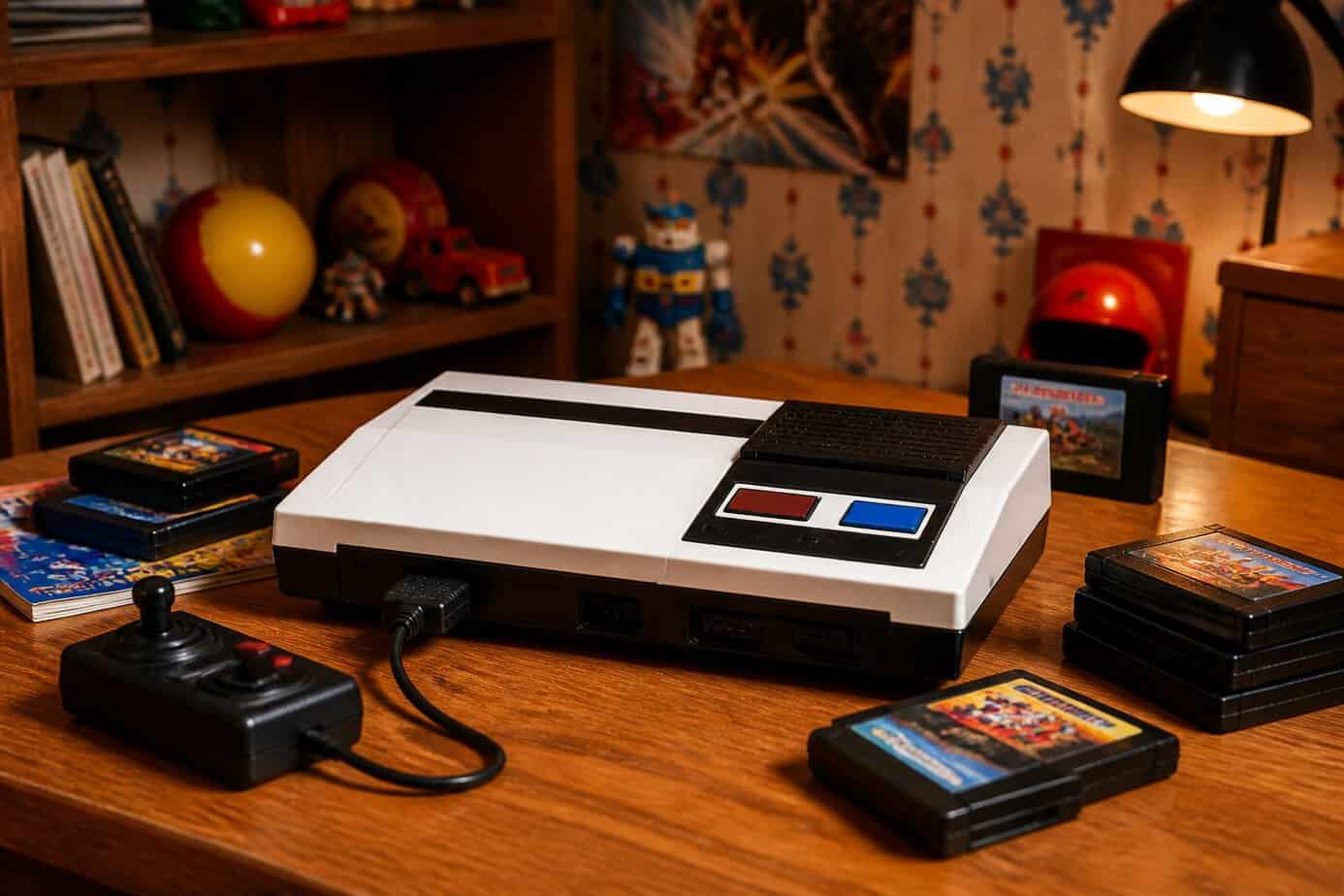
If you wanted to compete in playground gaming debates, you needed a Sega Master System. Released in North America in 1986, this 8-bit console challenged Nintendo’s dominance with superior graphics and a 64-color display that outshone its competition.
You could play games on both cartridges and credit card-sized Sega Cards, which offered a cheaper entry point for building your collection. The system came with accessories that felt futuristic, including 3D glasses and a light gun for compatible games.
While the Master System never overtook the NES in North America, it found devoted fans who appreciated its arcade-quality ports and exclusive titles. If you owned one, you defended it fiercely during console wars at school.
20. Smurfs figurine sets
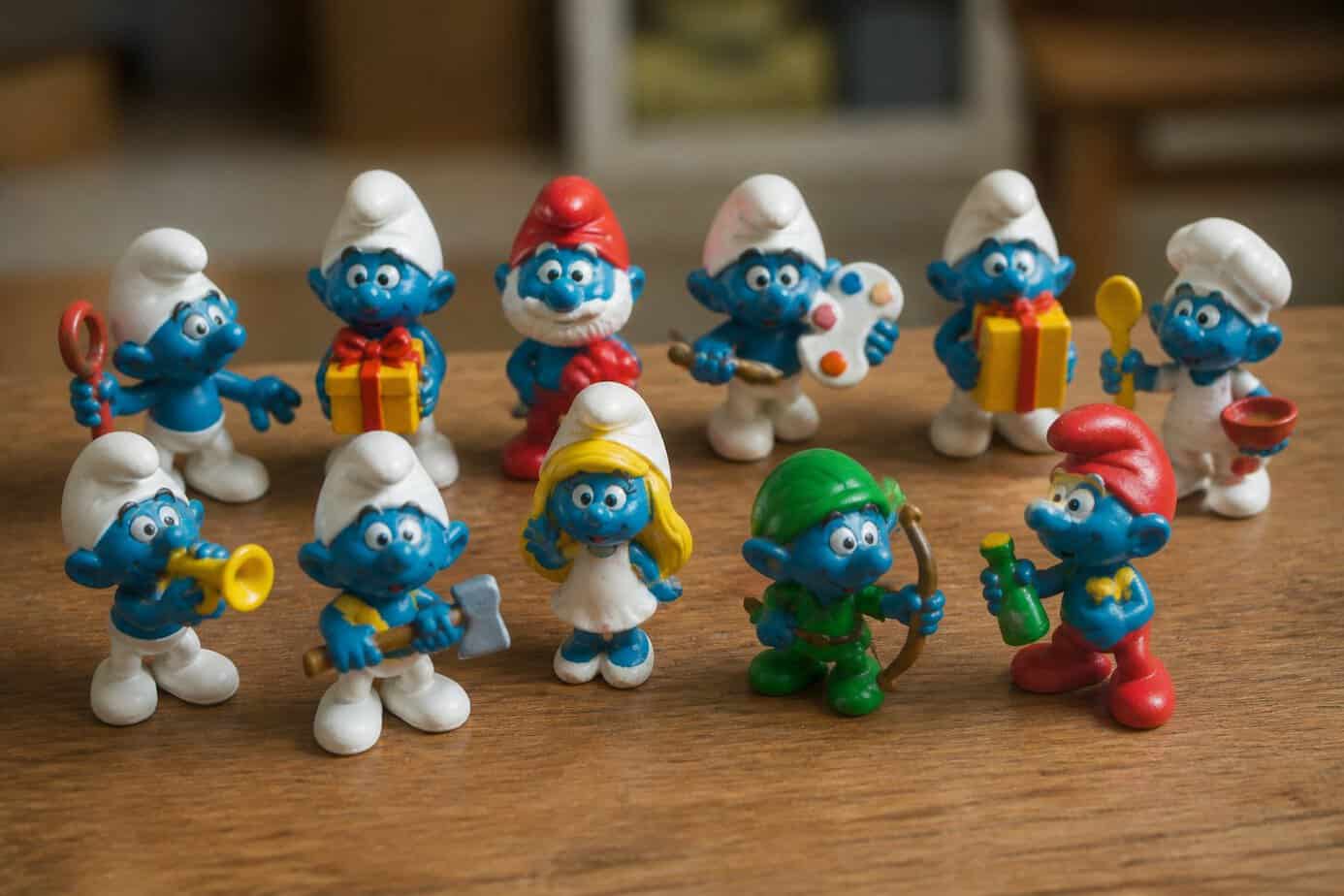
You couldn’t walk into a toy store in the 1980s without spotting those tiny blue Smurfs lining the shelves. Schleich produced the most sought-after PVC figurines, each hand-painted and standing just a few inches tall.
Your collection likely started with Papa Smurf and Smurfette, but soon you were begging for every character you could find. The figures featured different occupations and personalities, from Baker Smurf to Brainy Smurf, giving you endless options for imaginary village life.
These weren’t expensive toys, making them perfect for allowance money or small gifts. You could slowly build your Smurf community one figure at a time. The durability of these PVC toys meant your collection could withstand years of play, and many of those figurines still exist in attics and basements today.
21. Snoopy Sno-Cone Machine
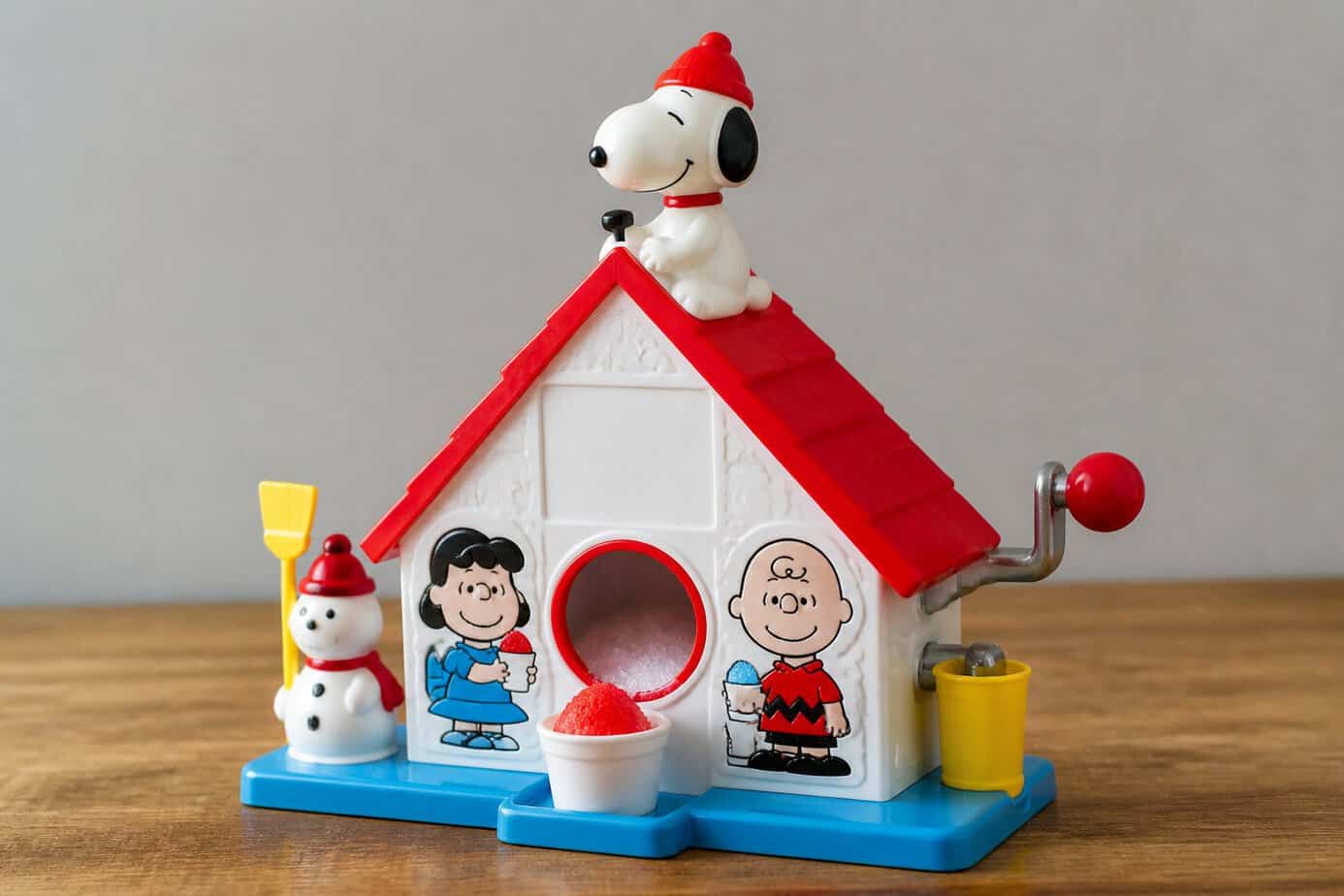
Hasbro introduced the Snoopy Sno-Cone Machine at the American International Toy Fair in February 1979. It quickly became one of the most requested toys of the early 1980s.
The machine was shaped like Snoopy’s doghouse and worked as a manual ice shaver. You cranked the handle to grind ice cubes into snow, then added flavored syrup to create your own sno-cones at home.
The toy capitalized on the widespread popularity of Charles M. Schulz’s Peanuts characters. It combined creative play with an actual edible reward, making it more appealing than toys that offered only imaginary results.
Your parents might have hesitated before buying it, knowing you’d need their ice cubes and would tire of cranking after a few uses. Still, the promise of running your own treat stand from the kitchen was irresistible to most kids.
22. Glo Worm
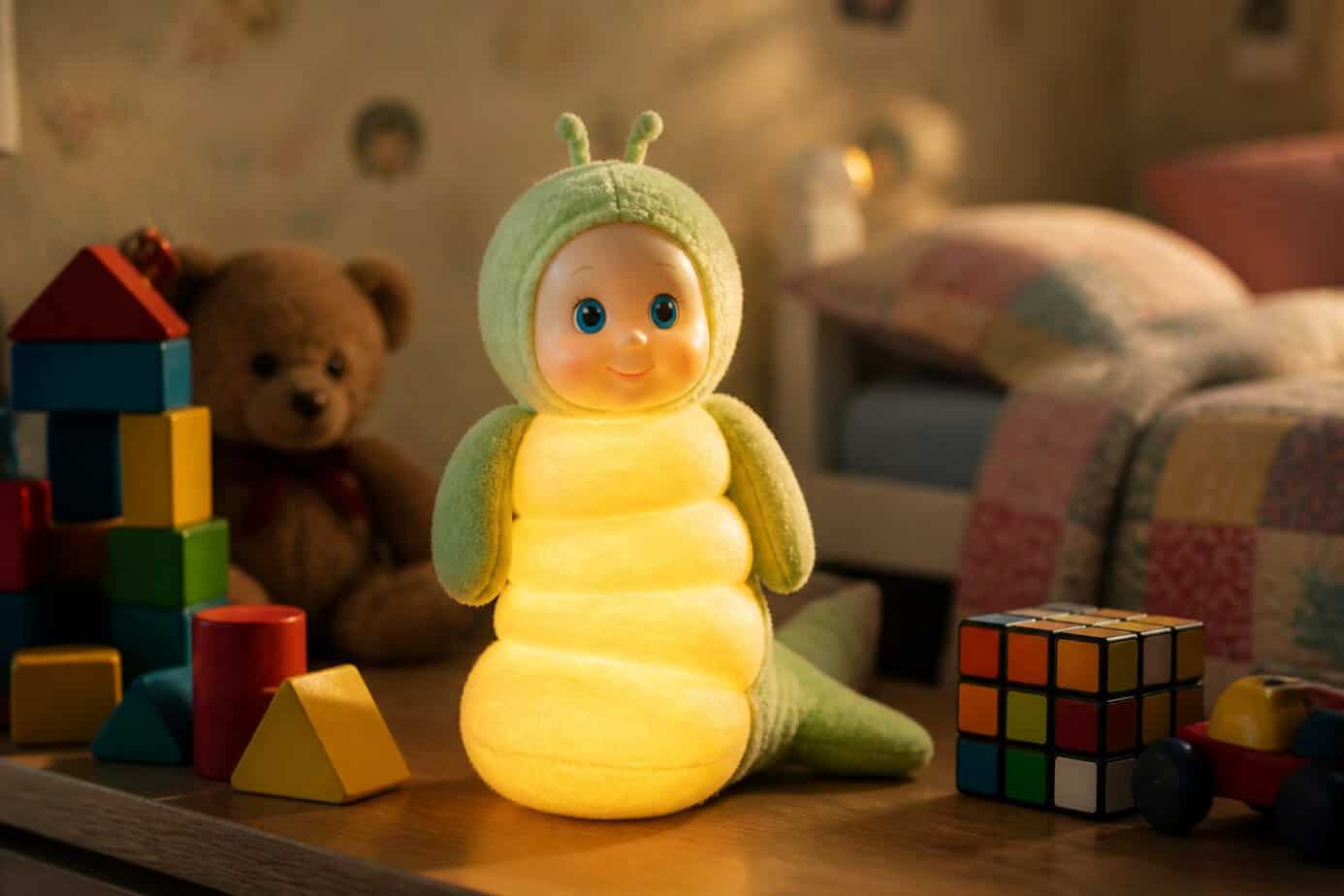
You squeezed its soft body, and its face lit up with a gentle glow that made bedtime less scary. Introduced by Hasbro’s Playskool in 1982, the Glo Worm became an instant hit as part plush toy, part nightlight.
The original version wore green pajamas with a nightcap, operating on two C batteries. When you pressed it, the circuit closed and illuminated the vinyl head from within. This simple mechanism created enough soft light to comfort you without keeping you awake.
By 1984, the design changed to feature purple striped pajamas, but the concept remained the same. You didn’t need to beg your parents to leave the hallway light on anymore. The Glo Worm gave you control over your own comforting nighttime glow, making it one of the decade’s most practical toys.
23. Troll dolls (Dam Toys/Funko-style)
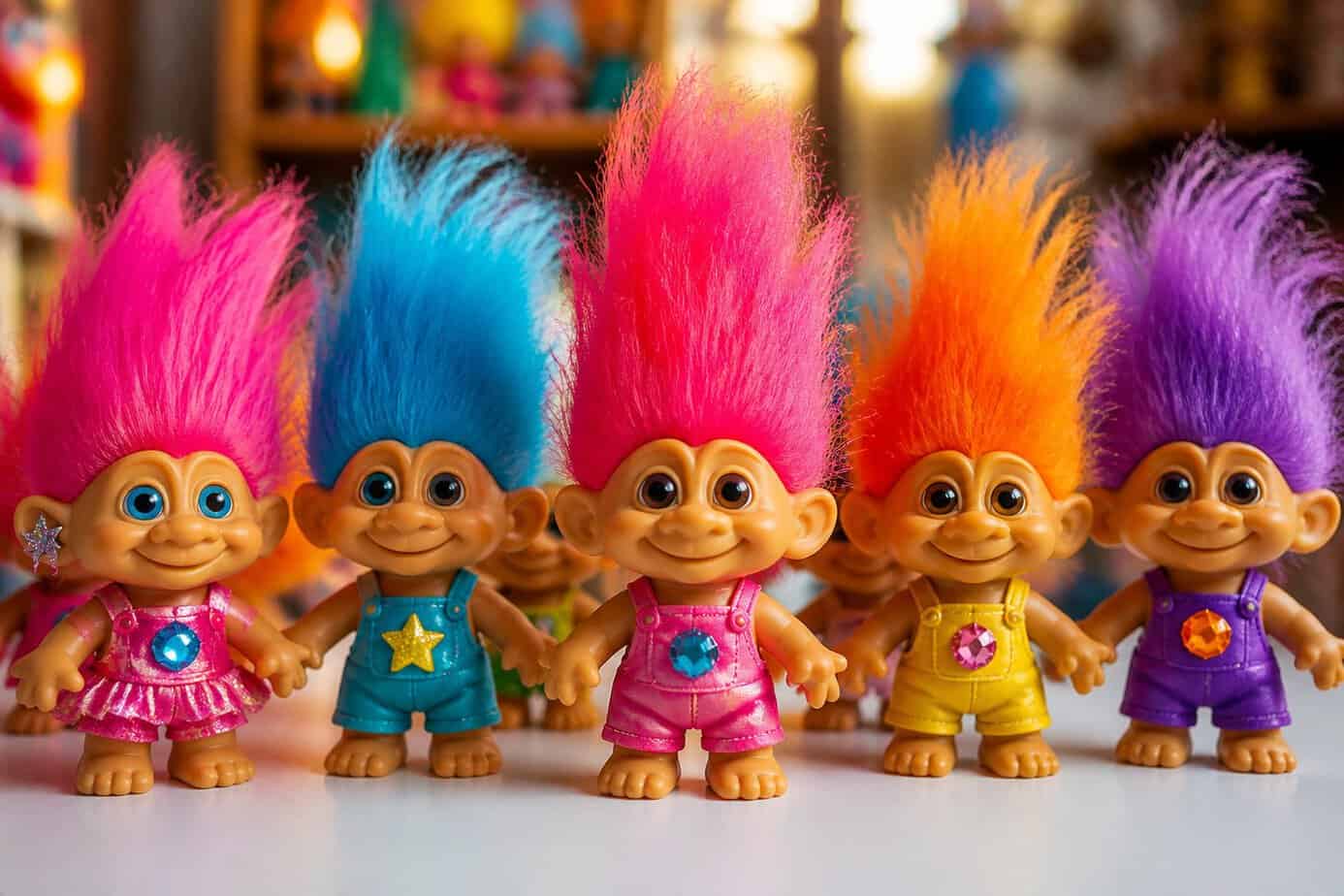
You probably remember these wild-haired characters standing proudly on your desk or bedroom shelf. Troll dolls originated in the 1950s when Danish woodcutter Thomas Dam created them, but they experienced a major revival in the 1980s.
Your troll collection likely featured dolls with bright, fuzzy hair standing straight up and colorful gems in their bellies. These small plastic figures were inspired by Scandinavian folklore and were marketed as good luck charms. You could find them in toy stores, gift shops, and even grocery store checkout aisles.
The 1980s versions came from various manufacturers, with Russ being one of the most popular brands during this era. You might have collected different sizes, outfits, and hair colors. Some of your friends probably had dozens of them lined up on their windowsills, each one supposedly bringing a bit of luck.
24. Micro Machines playsets
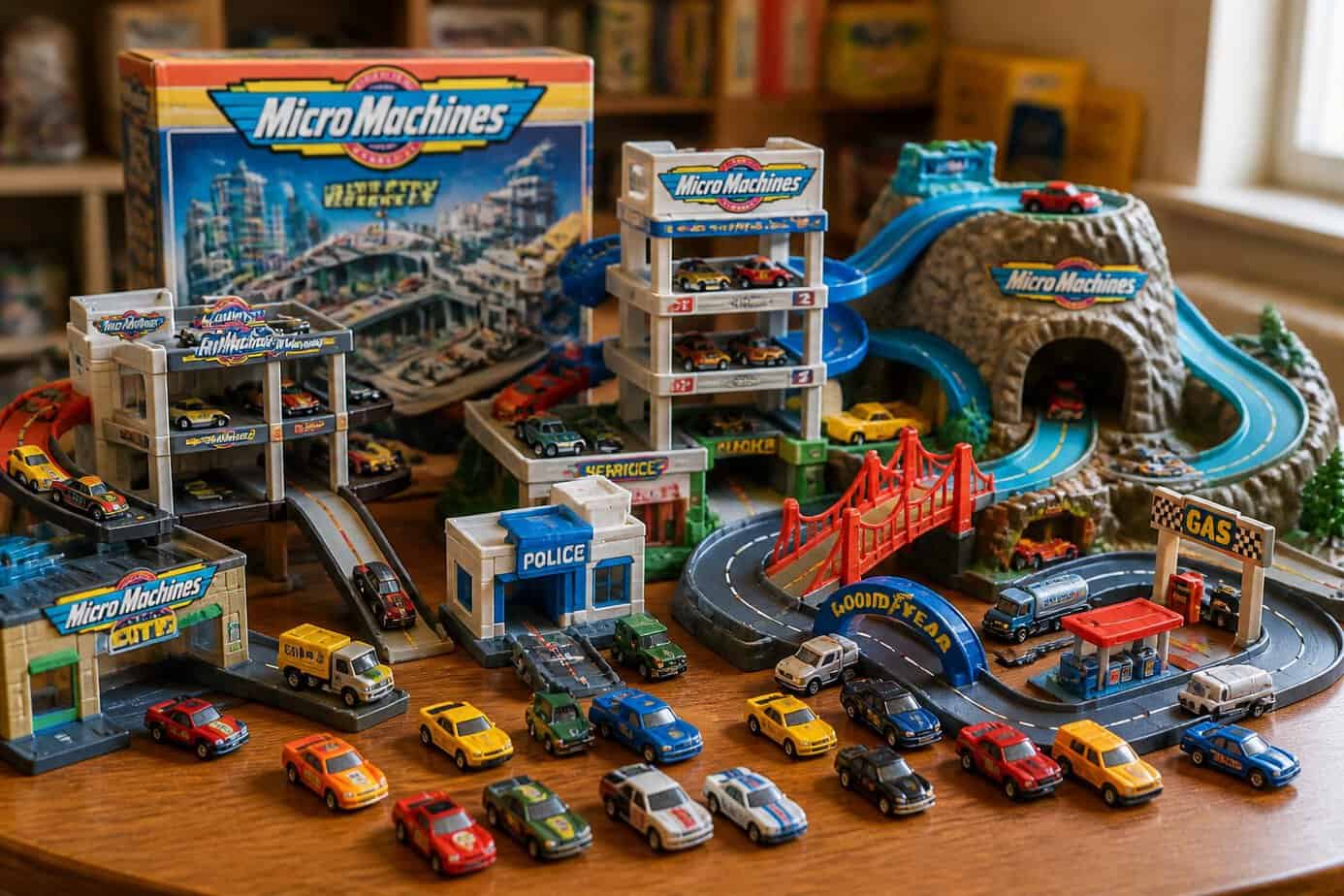
You begged your parents for these miniature worlds that transformed into entire cities. Galoob introduced Micro Machines in 1986, and by 1989, the playsets had become essential additions to your toy collection.
The Travel City playsets were particularly popular. These compact cases opened to reveal gas stations, fire stations, and car washes where your tiny vehicles could come to life. You could fit an entire playset in your backpack and take your miniature world anywhere.
The genius was in the scale. Each playset featured intricate details that made your 1.5-inch cars feel perfectly at home. You didn’t need a massive playroom to enjoy them.
Your friends likely had different sets, which meant trading and combining playsets to build even larger worlds. The portability and detail made these playsets stand out from bulkier toy lines of the era.
25. Hot Wheels Redline cars
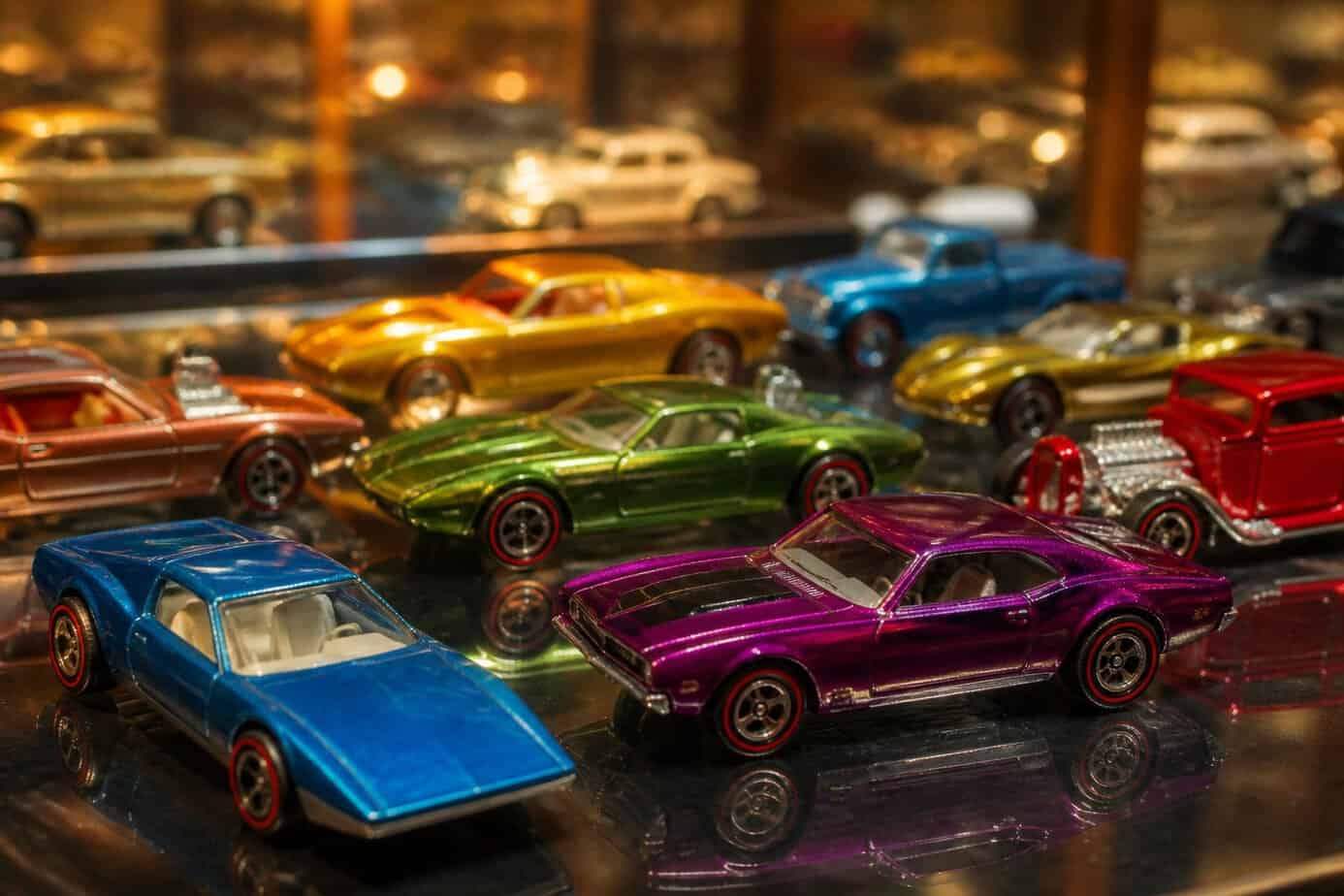
Hot Wheels Redlines earned their name from the distinctive red stripe painted on their tires. Mattel introduced these die-cast cars in 1968, but they remained highly collectible throughout the 1980s as kids hunted for rare models and variations.
The original Redline era officially ended in 1977 when Mattel switched to different wheel designs. However, you likely encountered these vintage cars at garage sales, in older siblings’ collections, or passed down from relatives during the 1980s.
Their low-friction axles made them faster than competitor brands, which gave Hot Wheels a significant edge in playroom races. The Spectraflame paint finishes created a metallic sheen that made each car visually striking.
Collectors valued certain colors and models more than others, turning playground trading sessions into serious negotiations. You learned quickly which cars held premium status among your friends.
26. Matchbox die-cast vehicles
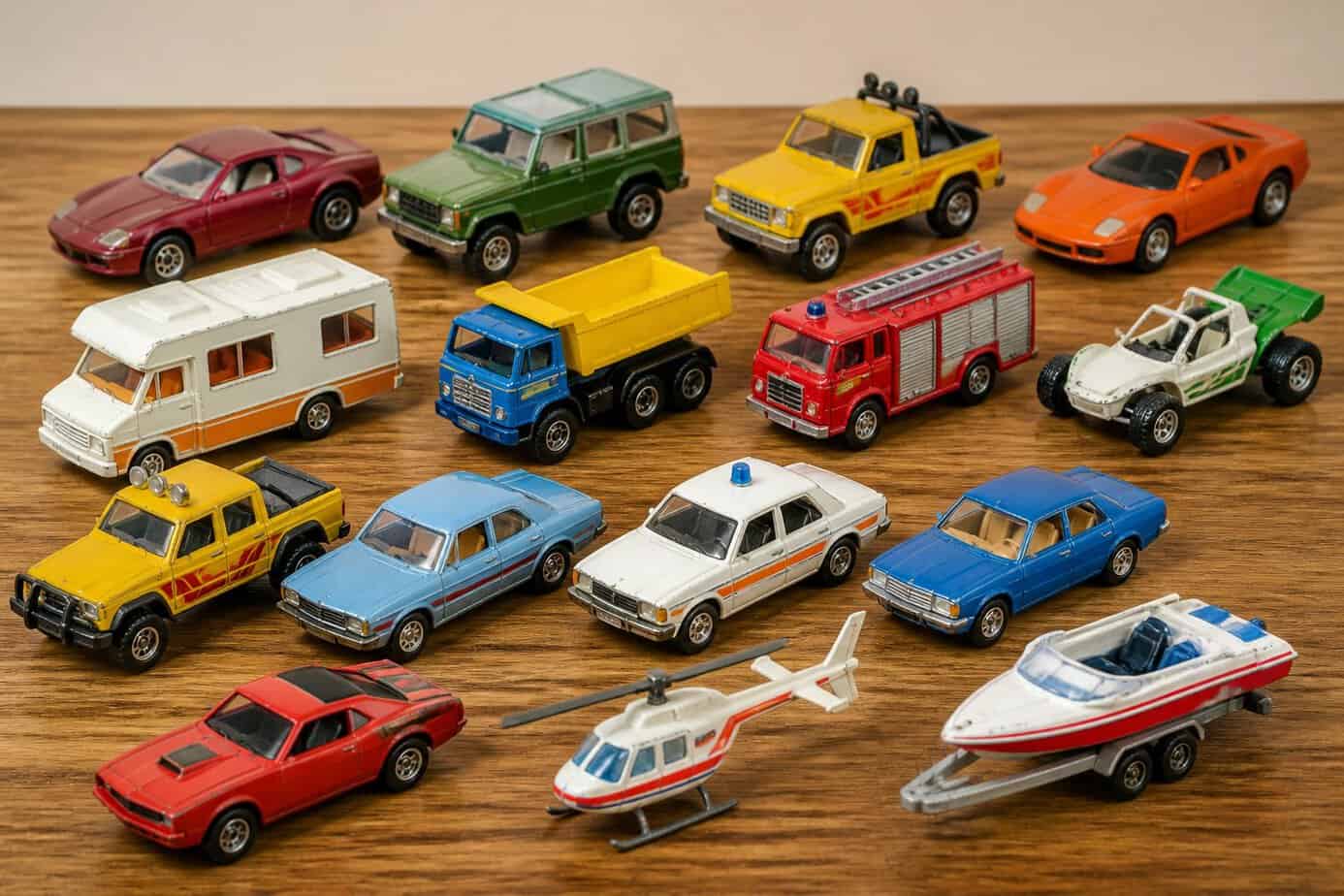
You could fit an entire fleet of Matchbox cars in your pocket, and that portability made them irresistible. These miniature die-cast vehicles offered incredible detail despite their small size, with each model serving as a precise replica of real-world cars, trucks, and emergency vehicles.
The 1980 series featured 75 different models, giving you plenty to collect and trade on the playground. You probably kept them in a plastic carrying case or shoebox, organizing your collection by type or color.
Matchbox cars cost just a dollar or two, making them affordable enough to add to your collection regularly. You raced them across makeshift tracks, crashed them into each other, and created elaborate scenarios in your imagination. The brand had been around since 1953, but the 1980s models you begged for represented decades of refinement in miniature vehicle design.
27. Simon electronic memory game
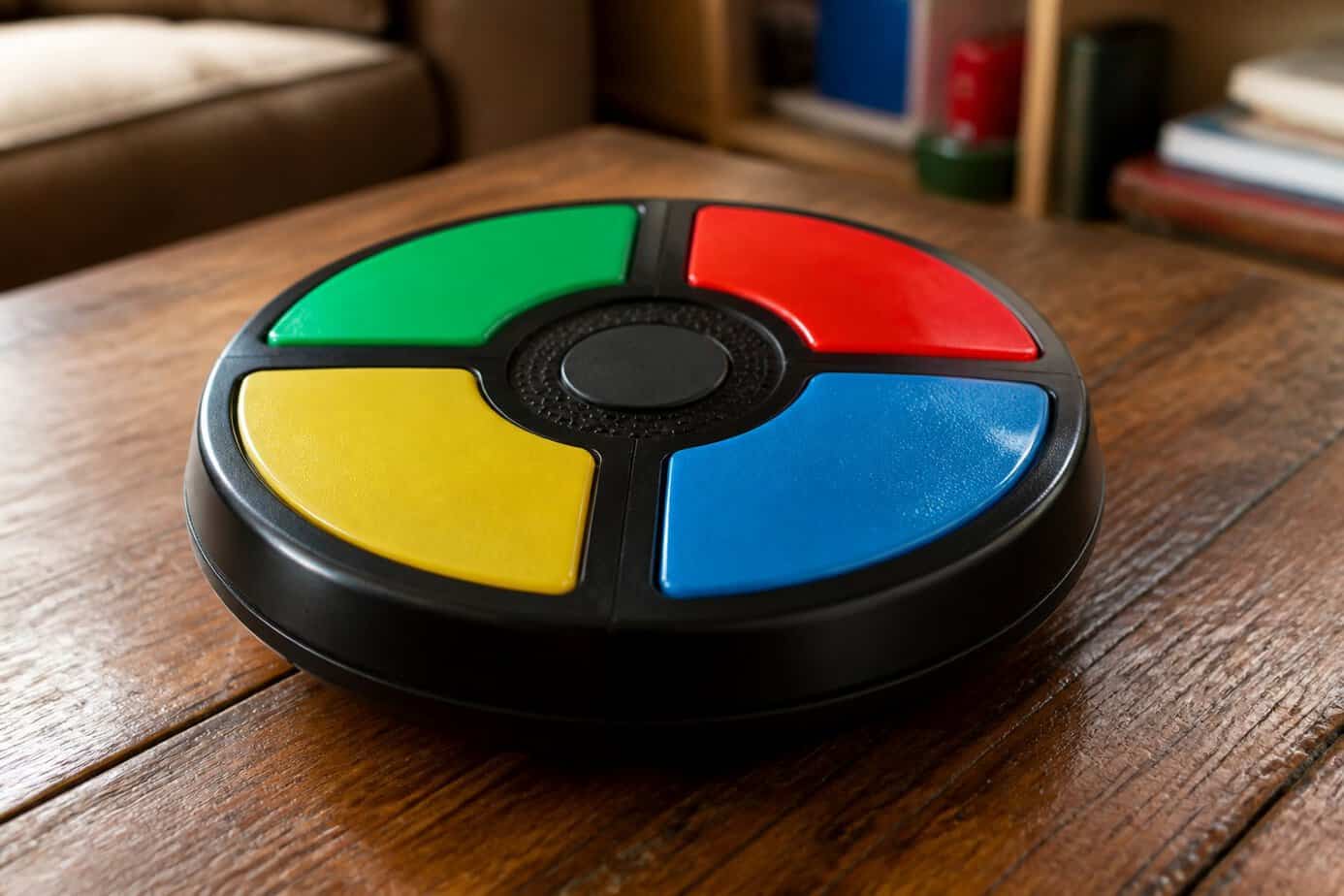
Simon arrived in 1978 and quickly became one of the most sought-after electronic toys of the era. Invented by Ralph H. Baer and Howard J. Morrison, this memory game featured four colored buttons that lit up and produced distinct tones.
The gameplay was straightforward. Simon created a sequence of lights and sounds, and you had to repeat it back correctly. Each round added another step to the pattern, making it progressively harder.
The disc-shaped game tested your short-term memory in a way that felt futuristic at the time. You begged your parents for one because everyone at school was talking about their high scores.
Milton Bradley manufactured Simon, and it remained popular throughout the 1980s and beyond. Its simple concept proved addictive, turning memory practice into genuine entertainment that didn’t require batteries of AA cells to drain in hours.
28. View-Master (stereoscope with reels)

The View-Master turned your living room into a gateway to anywhere. You’d hold the red plastic viewer up to your eyes and click the lever, advancing through seven stereoscopic images that appeared in stunning 3D.
Originally introduced in 1939, the View-Master gained massive popularity by the 1980s as a beloved childhood toy. You could collect reels featuring everything from cartoon characters to exotic travel destinations. Each cardboard disk contained tiny color photographs that created depth and dimension when viewed through the stereoscope.
While earlier decades focused on tourist attractions and educational content, 1980s reels catered directly to kids. You probably owned reels of your favorite TV shows, movies, or theme park attractions. The satisfying click of the lever and the surprise of each new image made the View-Master endlessly entertaining, long before screens dominated playtime.
29. Furby (note: later 1990s but often nostalgically grouped)
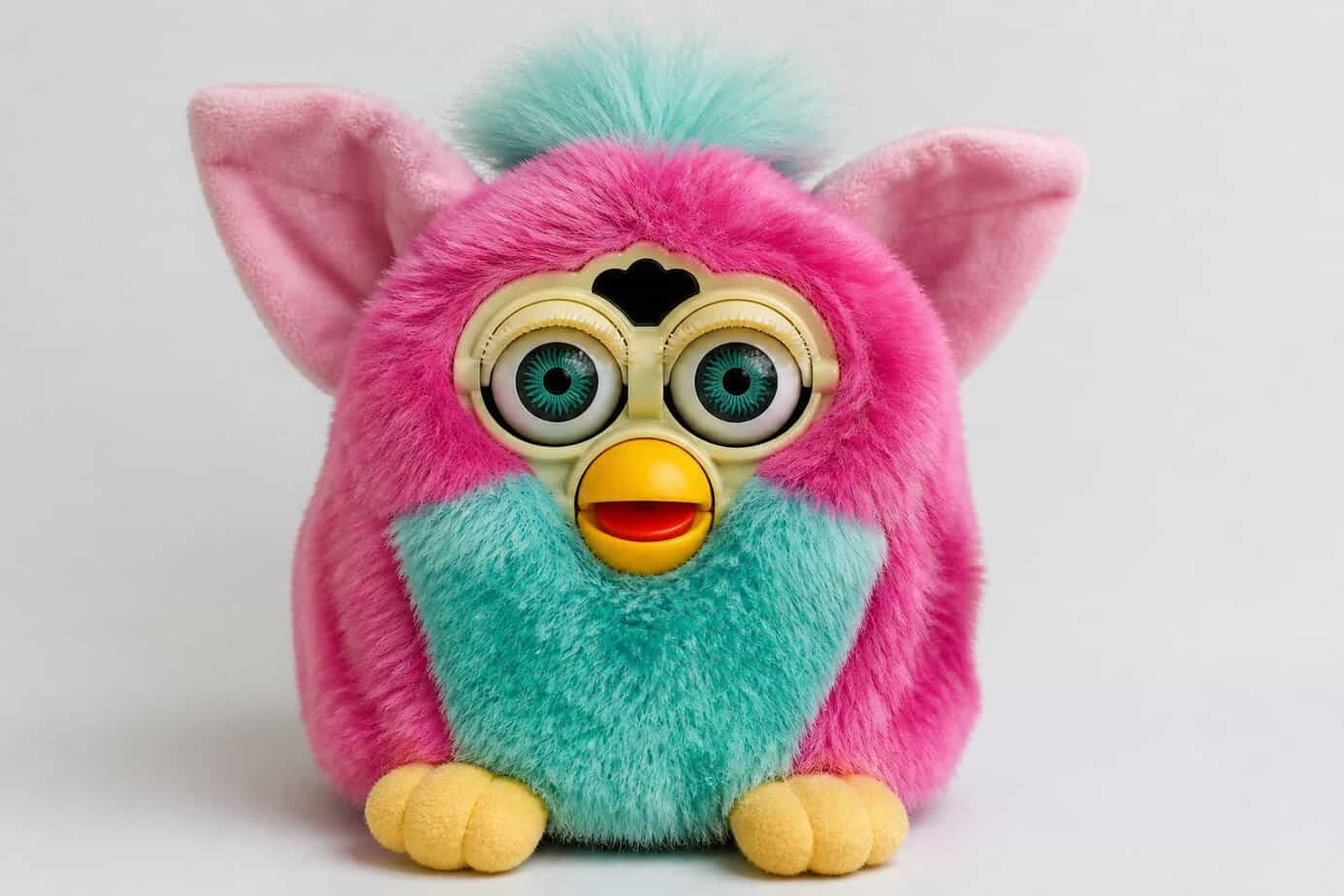
Furby arrived on store shelves in October 1998, technically missing the 1980s by over a decade. However, this electronic robotic toy became such a cultural phenomenon that it often gets grouped with earlier nostalgic favorites.
Created by Tiger Electronics, Furby resembled an owl-like creature with soft fur and expressive features. You likely remember begging your parents for one during the 1998 holiday season when it became a must-have toy. The appeal was its interactive personality and ability to “speak” Furbish, gradually learning English over time.
More than 40 million Furbies sold during its original three-year production run. If you were a kid in the late 1990s, you either owned one or desperately wanted to join your friends who did. The toy came in various colors and generations, making collecting them an additional draw for many families.
30. Speak & Spell Jr. (educational handheld)
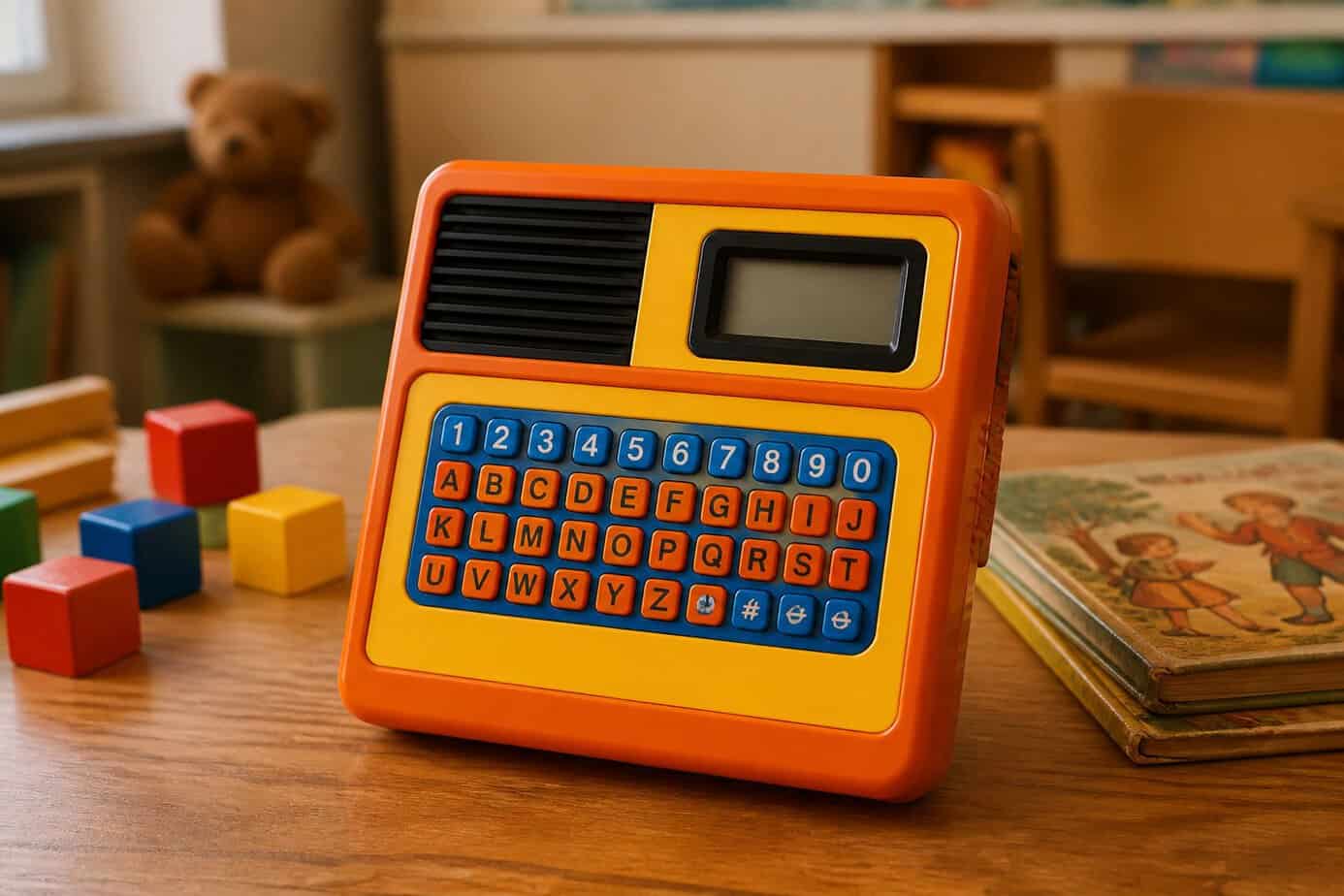
You probably remember begging your parents for this electronic learning companion. Texas Instruments released the Speak & Spell in 1978, and it quickly became one of the most sought-after educational toys of the early 1980s.
The handheld device featured a membrane keyboard, a blue vacuum fluorescent display, and synthesized speech that pronounced letters and words. You typed in spellings while the device challenged you with increasingly difficult words.
What made it special was the technology. It was among the first commercial products to use digital speech processing, making it feel futuristic to kids at the time.
The device was part of a larger family that included Speak & Math and Speak & Read. Each version targeted different skills but used similar technology. You likely saw it in E.T. when the alien used one to build his communication device in 1982.
31. Nintendo Game Boy (launch-era)
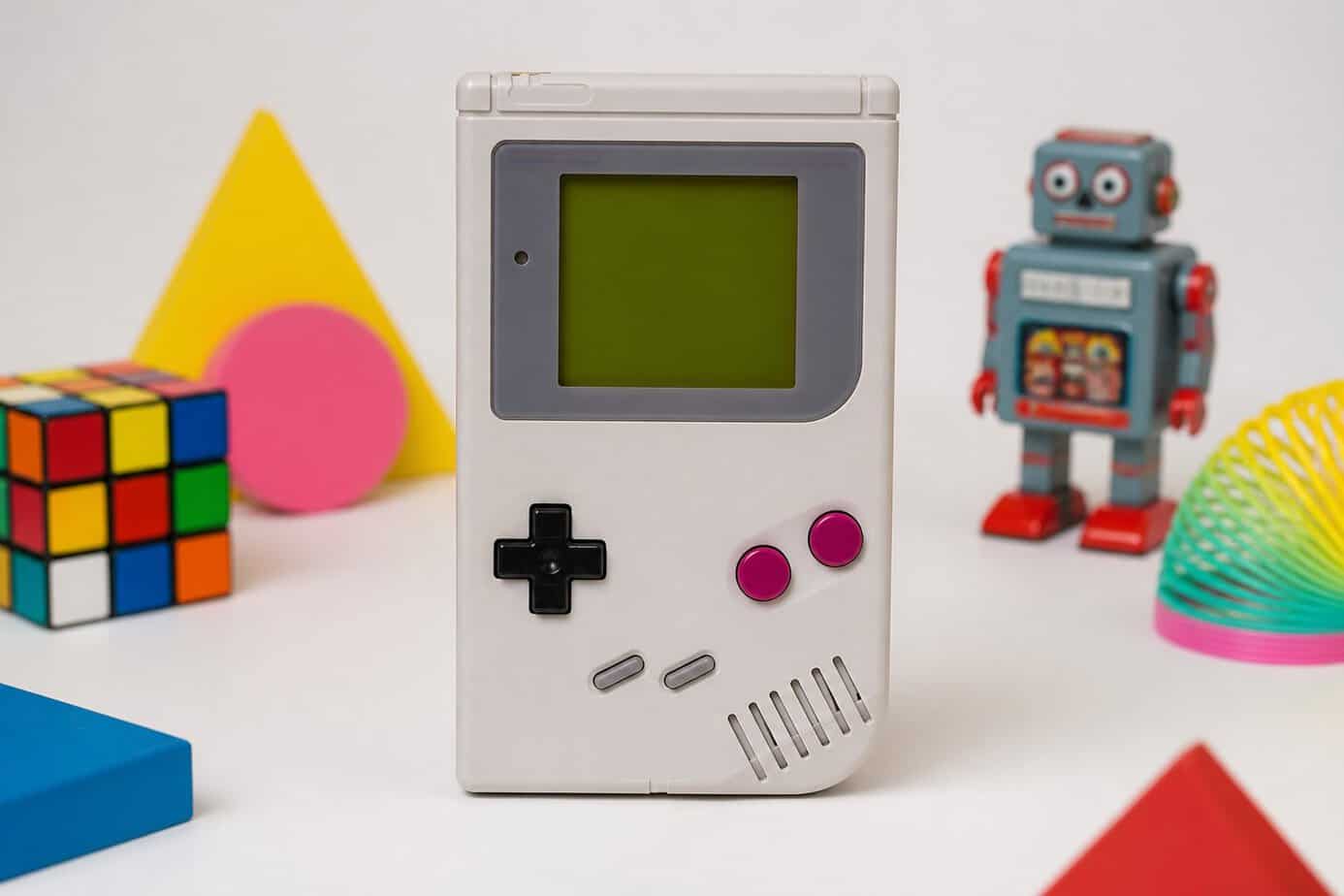
The Nintendo Game Boy arrived in Japan on April 21, 1989, and reached North America by July of that year. While it didn’t offer color graphics or cutting-edge technology, its simple design and reliability made it an instant success.
Nintendo’s Research & Development 1 team created the handheld after their earlier Game & Watch series began declining in Japanese sales. The Game Boy’s greenish screen and gray brick design became iconic, despite competing devices offering superior specs.
The system came bundled with Tetris in many markets, which proved to be a smart move. You could finally take your gaming experience anywhere—to school, on road trips, or to a friend’s house.
By the late 1980s, the Game Boy represented the future of portable entertainment. Kids everywhere added it to their birthday wish lists as the must-have toy.
Why 1980s Toys Captured Kids’ Imaginations
The 1980s toy market succeeded through a combination of aggressive television marketing, hands-on play experiences that supported child development, and the emergence of toy lines designed specifically to be collected. These three factors worked together to create lasting demand that kept kids asking for the next action figure, electronic game, or plush character.
The Role of Advertising in Toy Craze
Saturday morning cartoons became the primary battlefield for toy companies to reach their target audience. You watched commercials that made every toy look like it offered unlimited adventure and excitement. Networks aired programming blocks where animated series existed primarily to sell toys, creating a seamless connection between the stories on screen and the products in stores.
Toy manufacturers spent millions on these campaigns. The strategy worked because you saw your favorite characters come to life through animation, then found those same characters waiting on store shelves. Companies like Hasbro and Mattel created entire universes around their products, producing both the toys and the content that promoted them.
The holiday catalog from retailers like Sears and Montgomery Ward served as another powerful marketing tool. You circled items, dog-eared pages, and presented these catalogs to your parents as carefully curated wish lists. This print advertising complemented television commercials and created multiple touchpoints where toy companies could capture your attention.
Physical Play and Developmental Benefits
Toys from the 1980s required you to use your hands and imagination. Action figures didn’t come with digital interfaces or apps. You created the stories, built the worlds, and controlled every aspect of the play experience. This type of engagement helped develop motor skills and creative thinking.
Electronic toys like Speak & Spell and Simon challenged your memory and problem-solving abilities. These gadgets offered educational value while still feeling like games rather than lessons.
Building sets and construction toys taught spatial reasoning. You learned cause and effect through physical trial and error, not through reset buttons or restart options.
Collectibility and Fandom Culture
Toy lines in the 1980s released figures and accessories in waves, creating built-in scarcity and demand. You didn’t just want one Transformer or one Care Bear. You wanted the complete set. Manufacturers understood this psychology and designed their products accordingly.
Trading and showing off collections became social currency on playgrounds. You compared what you owned with friends and negotiated trades. Some toys came with unique birth certificates or adoption papers, like Cabbage Patch Kids, which added to their perceived value as collectible items.
Limited releases and regional exclusivity made certain toys harder to find. This scarcity drove demand higher and made owning rare items a source of pride among young collectors.
Shifting Trends in Children’s Play Over the Decades
Toys have consistently mirrored the cultural moments and technological capabilities of their eras, with children’s play evolving from outdoor physical activities and simple mechanical toys to screen-based entertainment and digital interactions.
Societal Influences on Toy Preferences
The toys children desired in each decade directly reflected the world around them. During the 1950s and 1960s, the space race inspired rocket ships and astronaut figures. The 1970s brought environmental awareness and counter-culture movements that influenced more natural, creative playthings.
In the 1980s, your toy preferences were shaped by Saturday morning cartoons, action films, and the rise of consumer culture. Manufacturers partnered with entertainment companies to create action figures tied to popular media franchises. G.I. Joe, Transformers, and He-Man emerged as must-have items because they connected to television shows you watched religiously.
Economic prosperity in many households meant parents could afford to buy more toys. The decade also saw increased marketing directly to children through commercials that aired during kid-focused programming. Gender-specific marketing intensified, with distinct toy aisles for boys and girls becoming standard in retail stores.
Your play patterns shifted indoors more frequently compared to previous generations. Working parents, changing neighborhood dynamics, and growing safety concerns meant supervised indoor play with manufactured toys became more common than unstructured outdoor exploration.
The Transition from Analog to Digital Entertainment
The 1980s marked the critical turning point when electronic entertainment began competing with traditional toys. Home video game consoles like the Nintendo Entertainment System (released in 1985) introduced a new form of play that kept you stationary in front of a screen rather than manipulating physical objects.
Early electronic toys combined traditional play with digital elements. Speak & Spell, Teddy Ruxpin, and handheld electronic games offered battery-powered experiences that felt futuristic. These toys bridged the gap between fully analog playthings and the completely digital entertainment that would dominate later decades.
By the late 1980s, you likely owned both traditional action figures and electronic games. The decade represented a hybrid period where physical toys remained dominant but digital alternatives were gaining ground. Children still engaged in imaginative play with dolls and building sets, yet screen time was becoming an increasingly attractive option.
This transition fundamentally changed how toy companies approached product development. They began incorporating lights, sounds, and simple computer chips into traditional toy formats to compete with the appeal of video games.