
27 Things Adult Children Who Grew Up in the 1980s Wish Their Parents Had Done Differently

Growing up in the 1980s came with a unique set of experiences shaped by the cultural norms and parenting approaches of that era. Latchkey kids, limited supervision, and a hands-off parenting style defined much of childhood during this decade.
As those who came of age in the ’80s reflect on their upbringing, many have identified specific areas where different guidance or support from their parents might have better prepared them for adult life.
The insights shared by adults who grew up during this time reveal common threads around emotional awareness, practical life skills, and open communication that were often missing from 1980s households.
From financial literacy and mental health discussions to creative encouragement and clearer boundaries, these reflections offer valuable perspective.
Understanding what felt lacking then can help inform more balanced approaches to raising children today, blending the independence many ’80s kids valued with the emotional support and practical knowledge they wish they’d received.
1. Allowed more unscheduled outdoor playtime

Starting in the 1970s and accelerating through the 1980s, children’s outdoor freedom began a sharp decline. You may remember having less autonomy than previous generations, even if you didn’t realize it at the time.
Your parents likely increased supervision due to heightened safety concerns and media coverage of risks. This shift meant more time indoors under watchful eyes and less time roaming neighborhoods freely.
The structured activities that replaced free play came with trade-offs. While organized sports and scheduled events had benefits, they reduced opportunities for self-directed exploration and unstructured social interaction.
Research shows children who engage in unsupervised play develop important problem-solving skills and independence. Many adults who grew up in the 1980s recognize they missed out on these developmental opportunities that earlier generations experienced naturally.
2. Taught basic car maintenance (oil changes, tire changes)

Many adults who came of age in the 1980s never learned fundamental vehicle maintenance from their parents. You might have received your driver’s license without understanding how to change a tire or check your oil level.
This gap in practical knowledge meant calling for help during roadside emergencies or paying mechanics for simple tasks you could have handled yourself. Learning these skills builds independence and saves money throughout your lifetime.
Basic car maintenance includes checking fluid levels, changing oil, inspecting tires, and replacing simple components like air filters. When parents take time to teach these tasks, they give their children confidence and self-reliance on the road.
You probably wish your parents had spent weekend afternoons showing you how engines work and explaining dashboard warning lights. These practical abilities remain valuable regardless of how much automotive technology advances.
3. Encouraged open conversations about mental health

Mental health wasn’t discussed openly in most 1980s households. Parents often dismissed emotional struggles as phases or signs of weakness, leaving children to navigate anxiety, depression, and other challenges alone.
Many adult children from this era wish their parents had created space for honest conversations about feelings. When parents validate emotions rather than minimize them, children learn that mental health matters as much as physical health.
Breaking down these barriers requires parents to listen without immediately offering solutions or inserting their own experiences. Adult children wanted reassurance that struggling didn’t mean failure.
Creating a supportive environment where mental health could be discussed openly would have helped normalize these experiences. This foundation would have made it easier for children to seek help when needed and develop healthy coping strategies earlier in life.
4. Set clearer expectations for household chores

Many adults who grew up in the 1980s recall confusion about their responsibilities at home. Chores were often assigned inconsistently or assumed rather than clearly communicated.
When expectations weren’t spelled out, you may have faced repeated conflicts with your parents. One week you were responsible for dishes, the next week someone else took over without explanation. This lack of clarity made it difficult to develop accountability and time management skills.
Clear household responsibilities teach children how to contribute to a shared space. You learn to plan your schedule around commitments and understand that maintaining a home requires everyone’s participation.
Written chore charts or regular family discussions about responsibilities would have eliminated guesswork. Knowing exactly what was expected, when tasks needed completion, and how to do them properly builds competence and reduces household tension.
5. Modeled and taught better financial literacy (budgeting, credit)

Many adults who grew up in the 1980s entered adulthood without basic money management skills. Your parents may have viewed finances as an adult-only topic, leaving you to figure out budgeting, credit cards, and saving through trial and error.
Financial literacy includes practical abilities like creating a budget, understanding credit scores, and managing debt. Research shows that when young people receive financial education early, they make more effective money decisions throughout adulthood.
You likely wish your parents had openly discussed household finances, explained how they made financial choices, and taught you to balance a checkbook. Learning these skills in real-time would have prepared you better for rent payments, student loans, and retirement planning.
The absence of this foundation meant learning expensive lessons firsthand, often accumulating debt before understanding its long-term consequences.
6. Offered guidance on healthy dating and consent

Many adults who grew up in the 1980s received little to no guidance about healthy relationships or consent. Parents rarely discussed what respectful dating looked like or how to recognize warning signs of unhealthy dynamics.
You may have learned about relationships through trial and error, media portrayals, or peer influence rather than open conversations at home. This lack of guidance left many unprepared to navigate dating relationships safely.
Today’s approach emphasizes teaching relationship skills before dating begins, typically around ages 11-14. Parents now have access to programs and resources designed to facilitate age-appropriate conversations about boundaries, respect, and consent.
If your parents had provided this foundation, you might have developed stronger skills for recognizing healthy versus unhealthy relationship patterns. Clear communication about these topics helps young people make informed choices and seek help when needed.
7. Provided consistent bedtime and sleep routines

Many adults who grew up in the 1980s experienced irregular sleep schedules that varied wildly between school nights and weekends. Your parents may not have understood how much consistent bedtime routines affect long-term sleep quality and overall health.
Research shows that going to bed at the same time each night makes it easier to fall asleep and improves sleep quality. A regular bedtime routine helps your body establish natural sleep patterns that can benefit you throughout your life.
Without these routines in childhood, you might struggle with sleep issues as an adult. Studies indicate that people who had consistent bedtimes as children often develop better time management skills and productivity habits.
Your parents likely didn’t realize that establishing these patterns during your developmental years could have made such a significant difference in your adult life.
8. Shared family medical history and genetic risks

Many adults who grew up in the 1980s never learned about their family’s medical history. Parents often kept health information private, viewing it as personal or too complex to discuss with children.
This silence created gaps in knowledge that became problematic later. When you visit your doctor today, they ask about family history of heart disease, cancer, diabetes, and other conditions. Without this information, your healthcare provider cannot develop a complete picture of your health risks.
Your family health history includes information from grandparents, parents, aunts, uncles, and siblings. This data helps identify patterns and genetic risks that run in families.
When parents share this information early, it enables preventive care and early screening. You can take action to reduce risks through lifestyle changes or monitoring. Having access to family medical history empowers better health decisions throughout your adult life.
9. Encouraged pursuit of creative hobbies (music, drawing) without pressure

Many adults who grew up in the 1980s wish their parents had fostered creative interests without attaching expectations to them. When creative activities like drawing or playing music became tied to performance goals or achievement metrics, the joy often disappeared.
You might remember putting down your guitar or sketchbook because practice felt like another obligation rather than an outlet for expression. Creative hobbies work best when they remain playful and pressure-free.
Parents who insisted on recitals, competitions, or constant improvement sometimes inadvertently crushed the intrinsic motivation that makes creative pursuits rewarding. The freedom to explore art forms without judgment helps children develop a lifelong relationship with creativity.
Having space to create badly, experiment freely, and enjoy the process matters more than producing polished results.
10. Taught practical cooking and meal-planning skills

Many adults who grew up in the 1980s left home without knowing how to prepare basic meals beyond boxed macaroni or ramen noodles. Your parents may have handled all the cooking while you watched TV or played outside.
Learning to cook isn’t about mastering gourmet techniques. It’s about understanding how to plan balanced meals, shop efficiently, and prepare food that sustains you. These skills directly impact your health, budget, and daily independence.
When you lack cooking knowledge, you rely heavily on expensive takeout or processed foods. This affects both your wallet and well-being. Basic meal preparation and planning are foundational life skills that make adult independence more manageable.
Having your parents involve you in grocery shopping, meal planning, and kitchen tasks would have prepared you better for living on your own.
11. Allowed kids to fail and learn from consequences

Your parents probably rushed to fix every problem before you could face the fallout. When you forgot your homework, they drove it to school. When you struggled with a project, they completed it for you.
This well-meaning intervention prevented you from developing resilience and problem-solving skills. You needed to experience the natural consequences of your actions to learn responsibility.
Failure teaches lessons that success cannot. When adults shield children from every setback, those children miss opportunities to build coping mechanisms and self-reliance.
You would have benefited from parents who stepped back and let you navigate difficulties independently. Making mistakes and recovering from them builds the kind of competence that carries into adulthood. Instead, constant rescuing left many 1980s kids unprepared for real-world challenges where parents couldn’t intervene.
12. Limited TV time and encouraged reading for pleasure
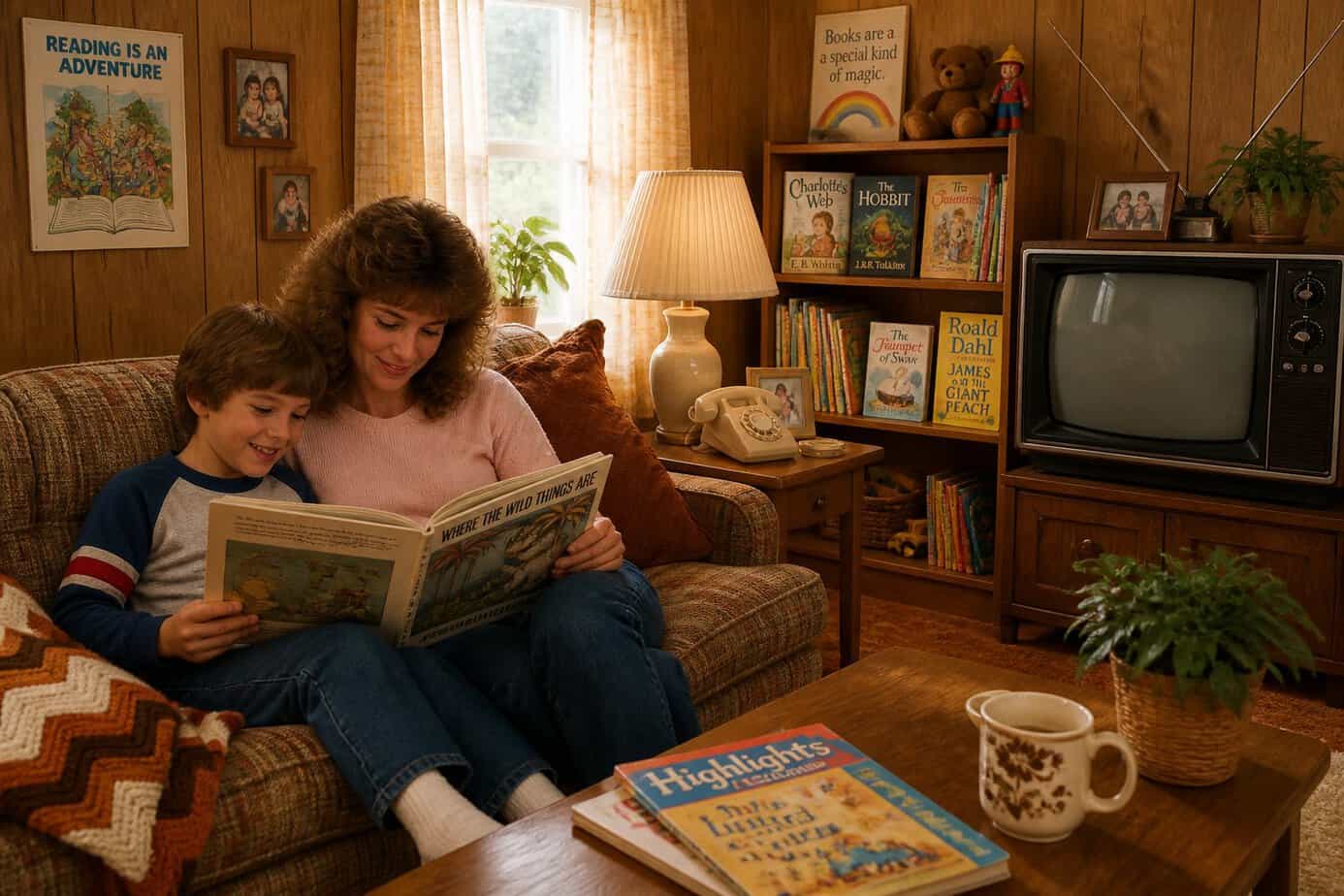
Many adults who grew up in the 1980s wish their parents had set clearer boundaries around television time. While Saturday morning cartoons were a cultural touchstone, unlimited screen access often replaced more enriching activities.
You might have benefited from designated reading hours instead of passive TV watching. Encouraging books for enjoyment rather than just homework could have fostered stronger literacy skills and imagination.
Parents who actively modeled reading behavior and made regular library visits created lasting positive habits. When your household prioritized stories and literature, you developed better concentration and vocabulary naturally.
The distinction matters because reading for pleasure builds different cognitive skills than watching television. Your parents didn’t always recognize that limiting screens while providing engaging books would have expanded your worldview and critical thinking abilities during those formative years.
13. Involved kids in age-appropriate decision-making

Many children of the 1980s recall having most decisions made for them without input or explanation. Parents often operated under the belief that children should simply follow instructions without question.
Research shows that involving children in age-appropriate choices helps them develop critical thinking skills and confidence. Simple decisions like selecting their clothes or choosing between activities can build autonomy in younger children.
As kids mature, they benefit from weighing in on more complex matters that affect them directly. This practice prepares them for adult responsibilities and teaches them to consider consequences.
When parents make every decision, children miss opportunities to practice judgment in low-stakes situations. They may struggle later with independence and self-trust as adults.
Allowing input doesn’t mean giving children unlimited control. It means respecting their growing capacity to participate in decisions that shape their lives.
14. Prioritized quality one-on-one time with each child

In many 1980s households with multiple children, family time meant everyone together or nothing at all. You might have wished your parents had carved out individual moments just for you.
Research shows that dedicated one-on-one time strengthens parent-child bonds and builds emotional security. These interactions don’t require elaborate plans or extended hours. Brief, focused moments throughout the day can make a significant impact.
When parents spend individual time with each child, it reduces sibling rivalry and helps children feel valued for who they are as individuals. You may have longed for occasions when your achievements, interests, or concerns received undivided attention.
This individual focus helps children develop confidence and strengthens their sense of self-worth. The absence of these moments can leave lasting impressions, even into adulthood.
15. Discussed substance use honestly and without shame

Many adults who grew up in the 1980s wish their parents had addressed alcohol and drug use more openly. Instead of silence or fear-based warnings, honest conversations could have prepared you for real-world situations.
Parents often avoided these topics due to discomfort or stigma. This left you without guidance when friends experimented or when you encountered substances yourself.
Research shows that shame-based approaches to substance use can create barriers to seeking help later in life. When parents discuss these issues clearly and without judgment, children develop healthier attitudes and coping strategies.
You needed factual information about risks alongside permission to ask questions. This approach would have empowered you to make informed decisions rather than learning through trial and error or peer pressure.
16. Taught how to self-advocate with teachers and employers

Many adults who grew up in the 1980s entered adulthood without knowing how to effectively speak up for their needs. Self-advocacy is the practice of representing yourself and your interests in situations where your voice needs to be heard.
Your parents may have handled most communications with your teachers, leaving you unprepared to navigate workplace dynamics. Learning to articulate your needs, ask clarifying questions, and negotiate accommodations are skills that require practice and guidance.
When you understand your rights and can clearly express your boundaries, you’re better equipped to handle challenging situations with authority figures. This skill directly impacts your ability to succeed in educational settings and advance in your career.
Developing self-advocacy takes time and involves learning effective communication strategies, problem-solving techniques, and understanding when to ask for support.
17. Exposed children to diverse cultures and viewpoints

Many adults who grew up in the 1980s experienced relatively homogeneous communities and limited exposure to different cultures. Your understanding of the world was often shaped by a narrow set of perspectives.
Exposure to diverse cultures during childhood enhances cognitive development by challenging your brain to process new information and make connections. Children who interact with different viewpoints learn to think more critically and adaptively.
Growing up with cultural diversity helps you recognize that different people have valid ways of living and thinking. This builds empathy and prepares you for success in an interconnected world.
Your parents may not have had easy access to multicultural experiences in the 1980s. However, limited exposure to diverse cultures and viewpoints left some adults feeling unprepared for the global society they would later navigate.
18. Set healthier boundaries around work and parenting stress

Many adults who grew up in the 1980s witnessed their parents struggle to separate work pressures from family life. Career demands often spilled into home environments without clear limits.
Parents frequently brought work stress into their interactions with children, creating tension that affected the entire household. You may remember sensing your parents’ workplace frustrations even when they didn’t explicitly discuss them.
Setting boundaries between professional and personal life would have allowed parents to be more present during family time. This separation helps create a more stable emotional environment for children.
When parents establish these limits, they model healthy work-life balance for their children. This teaches valuable skills about managing multiple responsibilities without letting one area dominate all others.
Clear boundaries also reduce the emotional burden children feel when absorbing their parents’ stress.
19. Encouraged STEM and tech curiosity without gender bias

Many adults who grew up in the 1980s remember when computers and technology were marketed almost exclusively to boys. If you were a girl interested in math or science, you may have faced discouragement or heard that those subjects weren’t for you.
Research shows that gender stereotypes about STEM abilities take root in elementary school. Girls often absorbed messages that they were less qualified for technical fields, even when they showed strong aptitude.
Parents who assumed their daughters would naturally prefer other subjects missed opportunities to nurture emerging interests in technology and engineering. You might have thrived with equal access to computers, science kits, and hands-on learning experiences.
The impact of these early messages extended well into career choices. Parental encouragement and challenging gender-based assumptions could have opened doors that seemed closed at the time.
20. Modeled respectful conflict resolution between adults

Many children of the 1980s witnessed their parents handle disagreements through avoidance, shouting, or silent treatment. These patterns shaped how they learned to navigate conflict in their own relationships.
You needed to see adults disagree without resorting to destructive behaviors. When parents demonstrated calm discussion, active listening, and compromise, they provided a blueprint for healthy communication. Instead, many witnessed arguments that ended with slammed doors or weeks of tension.
Conflict between adults is normal and inevitable. The issue wasn’t that your parents disagreed, but that they rarely showed you how to resolve differences constructively. This left you without essential skills for managing workplace disputes, romantic relationships, and even conflicts with your own children.
Watching respectful conflict resolution would have taught you that disagreements don’t have to damage relationships permanently.
21. Helped children build a resume and interview skills early

Many adults who grew up in the 1980s entered the workforce without formal preparation for job applications and interviews. Your parents likely assumed these skills would develop naturally through experience rather than structured practice.
Early communication abilities evolve into interviewing for a job or advocating for personal needs. If your parents had helped you craft a simple resume during high school or practiced mock interviews, you might have felt more confident during those first job searches.
Learning to present your accomplishments and speak professionally takes practice. Starting these conversations earlier would have made the transition into professional life smoother. You probably figured out these skills through trial and error rather than guidance, which made early career experiences more stressful than necessary.
22. Provided guidance on healthy body image and self-care

Many adults who grew up in the 1980s received little direction about developing a healthy relationship with their bodies. Comments about weight, appearance, or dieting were common in households, often without consideration for their long-term impact.
You might have benefited from parents who modeled body acceptance rather than criticism. When caregivers focus on health and function over appearance, children develop stronger self-esteem and body confidence.
Simple practices would have made a difference. Parents could have avoided making negative comments about their own bodies or others. They could have emphasized what bodies can do rather than how they look.
Guidance on basic self-care habits like nutrition, movement, and rest would have established a foundation for lifelong wellness. These conversations, approached with warmth and understanding, help children appreciate their bodies without tying worth to appearance.
23. Taught basic first aid and safety skills

Many adults who grew up in the 1980s were left to figure out emergency situations on their own. Your parents likely assumed you’d learn these skills somewhere else, or that emergencies wouldn’t happen to you.
Basic first aid knowledge can make a critical difference when someone needs immediate care. Skills like CPR, treating severe bleeding, and responding to choking incidents are straightforward to learn but weren’t commonly taught at home during that era.
You might have benefited from knowing how to properly clean and bandage wounds, recognize signs of serious injuries, or respond to burns. These practical abilities would have prepared you to handle emergencies calmly and effectively.
First aid training also builds confidence and reinforces helping behaviors that extend beyond emergency situations. Having these skills ready means you can assist others when professional medical help isn’t immediately available.
24. Encouraged volunteerism and community involvement

Many children of the 1980s wish their parents had introduced them to volunteer work and community service earlier. Volunteerism offers benefits both to communities and to the individuals who participate, creating connections that last a lifetime.
Your parents may have focused primarily on academics and extracurricular activities, overlooking opportunities for community involvement. Regular volunteer experiences teach empathy, social responsibility, and practical skills that classrooms often miss.
Research shows that volunteerism is a freely chosen commitment to helping others through sustained effort. When parents model this behavior, children learn the value of giving back naturally.
Simple family volunteer activities like food bank visits, park cleanups, or helping elderly neighbors could have shaped your worldview differently. These experiences build character and community awareness that benefit you throughout adulthood.
25. Limited use of fear-based discipline tactics

Your parents may have relied on intimidation and threats to enforce rules, but research shows approximately 75% of parents still use fear-based discipline despite evidence of its harmful effects. This approach created compliance through anxiety rather than understanding.
Fear-based tactics damaged trust between you and your parents. You learned to avoid punishment instead of developing genuine values and self-regulation skills.
Modern parenting emphasizes positive discipline methods that build connection and teach children why certain behaviors matter. When parents explain consequences and guide with empathy, children develop better emotional intelligence and decision-making abilities.
You deserved discipline that helped you learn and grow, not methods that made you fearful. Today’s understanding of child development shows that respectful, consistent boundaries work more effectively than intimidation ever did.
26. Invested in early savings or college funds

Many adults who grew up in the 1980s entered the workforce facing significant student loan debt. Starting a college fund or savings account when children are young gives investments years to grow through compound interest.
A 529 plan offers tax advantages specifically designed for education expenses. Parents who opened these accounts for newborns gained 18 years of potential growth before college costs arrived.
Even small, regular contributions add up over time. The earlier parents start saving, the less financial burden their children face as young adults.
Without early savings, many 1980s children had to choose between taking on substantial debt or limiting their educational opportunities. This financial strain often delayed other milestones like buying homes or saving for their own retirement. Parents who prioritized early investment in education funds gave their children a stronger financial foundation.
27. Discussed consent, boundaries, and bodily autonomy early

Many adults who grew up in the 1980s never learned about bodily autonomy or consent as children. These concepts weren’t part of mainstream parenting conversations at the time.
Teaching children that they control their own bodies provides important protection and sets the foundation for healthy relationships. Children who understand consent early are better equipped to recognize inappropriate situations and communicate their boundaries clearly.
Starting these conversations in age-appropriate ways during childhood normalizes respect for personal space and choice. Simple lessons, like not forcing children to hug relatives or respecting when they say no to tickling, teach fundamental principles about consent.
Picture books and direct conversations about bodies, boundaries, and respect began appearing more widely in later decades. Adults now recognize that these early lessons help prevent abuse and create a society that values mutual respect and bodily integrity.
Long-Term Impacts of 1980s Parenting
Children who grew up in the 1980s often developed specific patterns in emotional regulation and professional ambition that stem directly from their upbringing. These impacts shaped how they navigate relationships, handle stress, and approach career goals as adults.
Emotional Development and Mental Health
Many adults who grew up in the 1980s struggle with identifying and expressing emotions. The “children should be seen and not heard” mentality meant your feelings were often dismissed or minimized rather than validated.
You may find it difficult to ask for help or support because independence was prioritized over emotional connection. This self-reliance, while useful in some contexts, can lead to isolation when you face genuine challenges that require assistance.
The authoritative parenting style common in the 1980s emphasized obedience over understanding. You might notice difficulty setting healthy boundaries because you were taught to comply rather than communicate your needs.
Research in psychology and neuroscience has revealed that emotional validation during childhood plays a crucial role in adult mental health. Without it, you may experience challenges with anxiety, perfectionism, or difficulty forming secure attachments in relationships.
Attitudes Toward Work and Education
Your work ethic likely reflects the 1980s emphasis on achievement and performance over process. Many adults from this era push themselves relentlessly because love and approval were often conditional on accomplishments.
You might struggle with work-life balance, viewing rest as laziness rather than necessity. The message that “hard work always pays off” shaped expectations that dedication alone guarantees success, which doesn’t account for systemic factors beyond individual effort.
Educational achievements were frequently valued more than curiosity or creativity. This focus may have left you credential-oriented but hesitant to pursue learning for its own sake. You might also experience impostor syndrome despite objective success because praise was tied to results rather than effort or growth.
Shifting Parenting Trends Across Generations
Parenting approaches have transformed dramatically from the 1980s to today, particularly in how families communicate and navigate technology’s role in daily life. These shifts reflect broader cultural changes and new understanding of child development.
Communication Styles Then and Now
Parents in the 1980s typically relied on authoritative communication where instructions flowed one direction—from parent to child. Questioning parental decisions was often discouraged, and emotional conversations were less common in many households.
Today’s parenting culture emphasizes open dialogue and emotional literacy. Parents now validate feelings and encourage children to express themselves freely. This shift stems from research showing that two-way communication builds trust and helps children develop emotional intelligence.
Key differences include:
- Expression of emotions: 1980s parents often dismissed feelings as overreactions, while modern parents acknowledge and discuss emotions
- Decision-making: Authority-based directives versus collaborative family discussions
- Conflict resolution: “Because I said so” responses versus explanations and reasoning
The authoritative approach of the 1980s created efficient household management but sometimes left children feeling unheard. Your parents likely operated within the norms of their time, where structured discipline was standard practice.
Evolving Perspectives on Technology and Media
Screen time in the 1980s meant television watching, which parents often limited but didn’t actively co-view or discuss. Technology existed separately from family interaction, with clear boundaries between screen activities and real life.
Modern parents face complex decisions about smartphones, social media, and constant connectivity. They’re encouraged to engage with their children’s digital lives rather than simply restrict access. This includes understanding apps, discussing online safety, and modeling healthy tech habits.
The contrast is significant:
- 1980s parents set time limits without content discussions
- Current parents balance access with active digital literacy education
- Technology now integrates into learning, socializing, and family connection
Your parents couldn’t anticipate how central technology would become to daily life. The passive monitoring approach that worked for television doesn’t translate to today’s interactive digital landscape.