
27 Tiny Acts of Kindness Parents Did in the 1980s Without Thinking That Kids Rarely Experience Today: Simple Gestures That Shaped a Generation
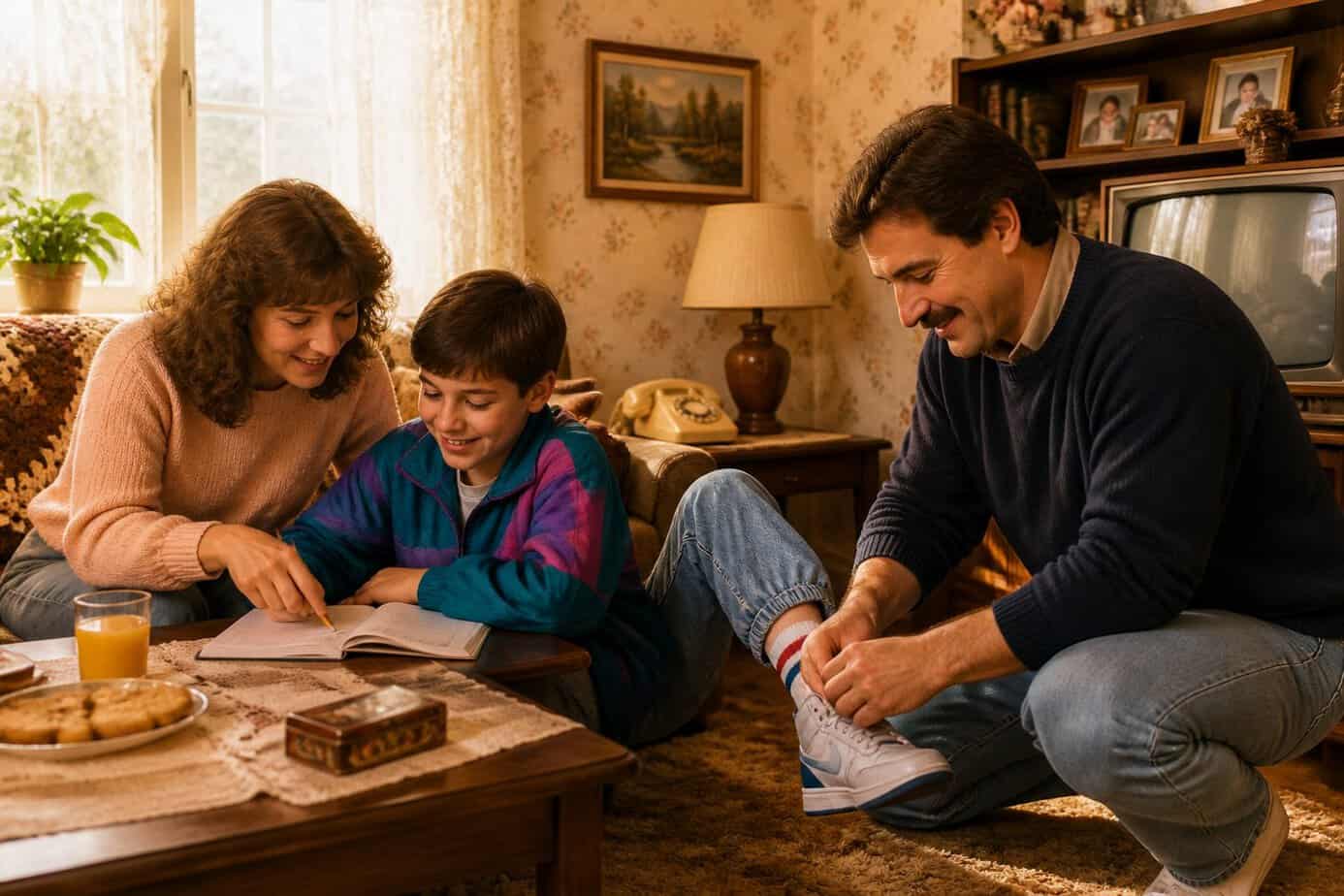
Growing up in the 1980s meant experiencing a different kind of childhood, one shaped by small gestures that parents wove into daily life without grand announcements or social media posts.
These were simple acts., a hug after a scraped knee, a handwritten note tucked into a lunchbox, or an invitation extended to a new kid on the block. They happened quietly, almost automatically, as part of how families and neighbors interacted with the children in their lives.
Many of these tiny moments of kindness taught children resilience, connection, and empathy in ways that today’s more structured and safety-conscious parenting culture rarely replicates.
The differences aren’t about whether parents today care less, but rather about how childhood itself has shifted. From the freedom to roam neighborhoods unsupervised to the practice of fixing broken toys instead of replacing them, the 1980s offered a distinct approach to raising kids that emphasized independence, community involvement, and everyday thoughtfulness.
1. Letting kids roam the neighborhood unsupervised to visit friends
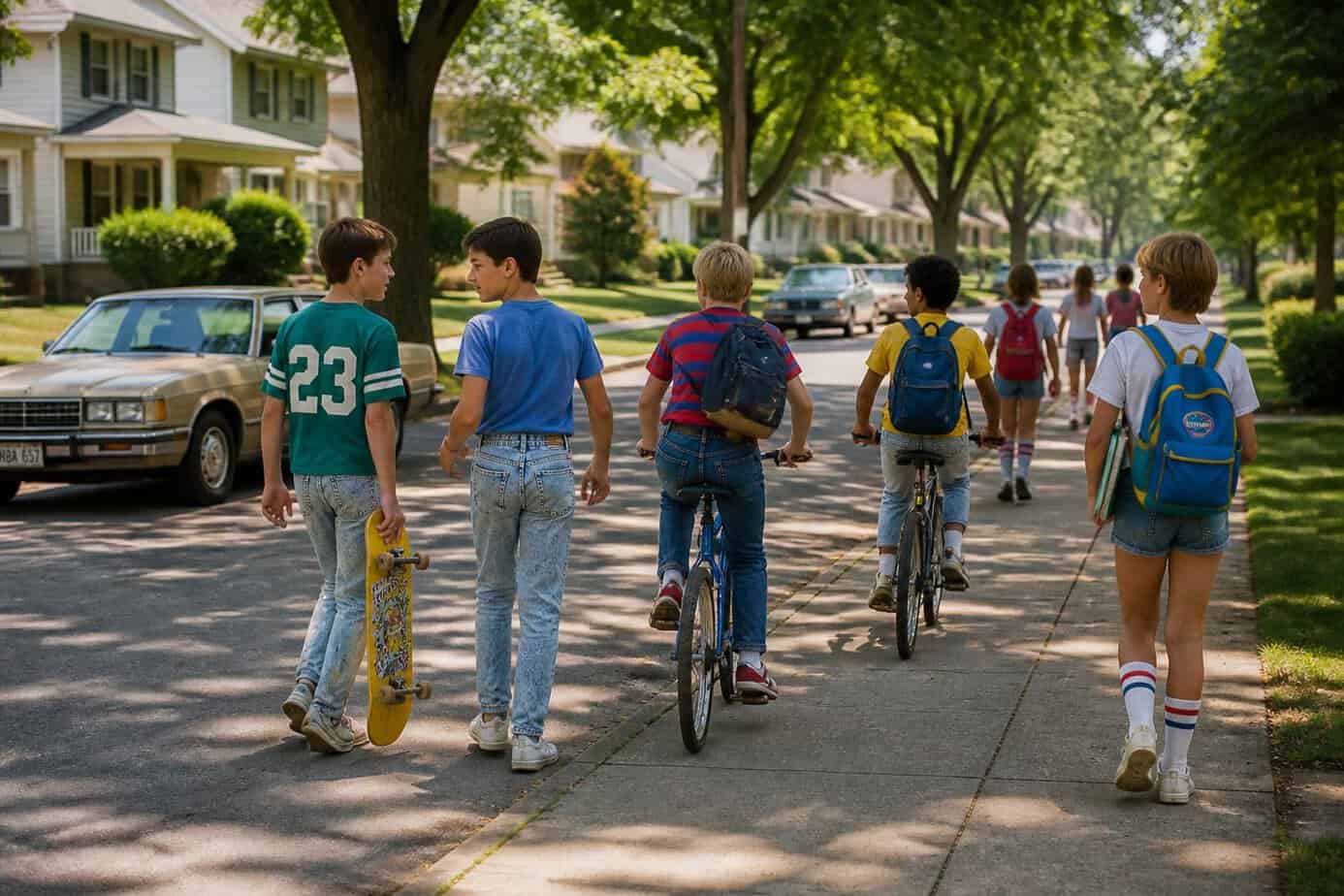
In the 1980s, parents routinely let their children walk or bike to friends’ houses without supervision. Kids as young as eight would navigate several blocks on their own, knocking on doors and making spontaneous visits throughout the day.
This freedom wasn’t considered risky or unusual. It was simply how childhood worked. Parents trusted their kids to know the route and return home by dinner.
Today, this same behavior often raises concerns about safety and supervision. Many parents now drive their children to playdates or require constant communication through phones. The unannounced neighborhood visit has largely disappeared.
What parents saw as normal independence then would spark judgment now. Yet for 1980s kids, those unsupervised trips to friends’ houses taught navigation skills, social confidence, and self-reliance without anyone thinking twice about it.
2. Leaving a plate of cookies on the porch for neighborhood kids

In the 1980s, parents regularly baked extra cookies and left them on the front porch for any neighborhood children passing by. This practice was common because kids spent most of their time playing outside, moving freely between yards and streets.
You didn’t need to know every child who took a cookie. The gesture was simply part of being neighborly, and parents trusted that the treats would be enjoyed safely.
Today, this practice has largely disappeared. Concerns about food safety and stranger danger make parents hesitant to accept homemade goods from people they don’t know well. Children also spend less time playing outdoors in their neighborhoods, which means fewer opportunities for these spontaneous exchanges.
The shift reflects broader changes in how communities interact and how parents approach their children’s safety.
3. Telling a child their scraped knee was ‘brave’ and hugging them without making a fuss

When you fell off your bike in the 1980s, your parents likely offered a quick hug and called you brave before sending you back out to play. This balanced approach validated your pain without amplifying it.
The response was practical. Your parents checked for serious injury, cleaned the scrape if needed, and moved on. They didn’t photograph the wound or create drama around minor accidents.
This middle-ground approach helped you develop resilience. You learned that bumps and scrapes were normal parts of childhood, not events requiring excessive attention. The brief acknowledgment taught you to assess situations realistically and recover quickly.
Today’s parents often swing between extremes, either dismissing injuries entirely or treating minor scrapes as major incidents. The 1980s approach of comfort plus encouragement created space for both validation and independence.
4. Inviting a shy classmate to join a backyard game

When neighborhood kids gathered for kickball or hide-and-seek in the 1980s, someone usually noticed the quiet child standing alone on the sidelines. Without prompting from adults, a parent would encourage their own child to extend an invitation to join in.
This simple gesture happened naturally during a time when backyard games were daily occurrences. Parents modeled inclusive behavior by suggesting their children make room for one more player or adjust team sizes.
The act didn’t require planning or formal playdates. It was a spontaneous moment of noticing someone left out and taking quick action to include them. Today’s scheduled activities and digital entertainment have reduced these organic opportunities for kids to practice inclusion during casual outdoor play.
5. Baking birthday cupcakes for an entire school class

When your birthday arrived in the 1980s, your mom often baked homemade cupcakes for your entire class. She’d wake up early, mix the batter from scratch, and frost two or three dozen cupcakes by hand. These weren’t store-bought treats in plastic containers.
Your parents viewed this as a normal part of celebrating your special day at school. The cupcakes were simple vanilla or chocolate, decorated with basic frosting and sprinkles. Teachers welcomed these homemade contributions without the concerns about allergens and food safety policies that exist today.
This practice created a sense of community in the classroom. Everyone got to share in the celebration, and your parent’s effort showed care for the whole class. Today’s schools often restrict homemade foods entirely, replacing this personal gesture with store-bought alternatives or non-food celebrations.
6. Teaching a child how to fix a bicycle flat tire together

Parents in the 1980s routinely sat down with their kids in the garage or driveway to fix flat tires together. This wasn’t scheduled as a special lesson. It happened naturally when the bike stopped working.
You learned by watching your parent remove the wheel, pry off the tire with simple levers, and locate the puncture in the inner tube. They showed you how to patch it or replace the tube entirely. You held the tools, worked the hand pump, and got your hands dirty in the process.
This hands-on experience taught practical problem-solving skills. Kids gained confidence knowing they could handle basic repairs independently.
Today, many parents outsource bike repairs to shops or simply replace damaged items. The tradition of fixing things together has faded, taking with it valuable learning moments that built self-reliance.
7. Stopping the car to help a hitchhiking kid get home safely (then calling parents)

In the 1980s, your parents probably wouldn’t have hesitated to stop for a young person with their thumb out, especially if they looked lost or stranded. This was considered normal community responsibility rather than a risk.
After giving the kid a ride, the driver would typically ask for their home phone number and call the parents once they arrived. This served two purposes: it verified the child got home safely and informed the parents about what happened.
Today, most parents teach their children never to hitchhike, and drivers rarely stop for young hitchhikers due to legitimate safety concerns on both sides. The practice has largely disappeared from suburban and urban areas.
What was once viewed as neighborly assistance is now seen through a lens of caution and liability.
8. Sharing leftover takeout with a hungry neighbor kid

In the 1980s, takeout meals were less common than today, making them special occasions. When your family ordered Chinese food or pizza, there was often enough to share.
Parents frequently offered extra portions to neighborhood kids who happened to be playing at your house during dinnertime. This wasn’t a formal arrangement or planned playdate meal. It was a spontaneous gesture when someone noticed an extra hungry face at the door.
The practice required no discussion or permission slips. Your mom simply grabbed another plate and divided the lo mein or added another slice of pizza to the table. These small moments of sharing food created bonds between families and taught kids about generosity without making it a lesson.
Today’s food allergies awareness, dietary restrictions, and structured mealtimes have made such casual food sharing less common between households.
9. Letting kids ring a neighbor’s doorbell to sell lemonade or cookies

In the 1980s, parents routinely sent their children door-to-door to sell homemade lemonade, cookies, or school fundraiser items. You didn’t need to accompany your child or worry about coordinating sales through group chats and online forms.
Kids would simply set up a card table on the sidewalk or walk the neighborhood with their product. Neighbors expected these visits and generally kept small bills on hand for such occasions.
Today, this practice has largely disappeared. Many parents hesitate to let children approach neighbors’ homes independently due to safety concerns. School fundraisers now often rely on digital platforms and parent-managed email campaigns rather than face-to-face sales.
The shift reflects broader changes in how communities interact. What was once a normal childhood experience that taught sales skills and independence has become uncommon in most neighborhoods.
10. Inviting a new family’s child to play right after they moved in

In the 1980s, parents typically sent their kids outside within hours of spotting a moving truck on the block. You didn’t need formal introductions or scheduled playdates. Your mom simply told you to go introduce yourself and ask if the new kid wanted to ride bikes or play in the yard.
This spontaneous welcome helped new children adjust quickly to their surroundings. They immediately had friends and felt part of the neighborhood before their first day at a new school.
Today, most families coordinate through parents first, often exchanging phone numbers and planning meetups in advance. The immediate, child-led approach has largely disappeared. Moving children now typically experience a longer adjustment period before making connections with peers in their new neighborhood.
11. Sewing a loose button or hem on a child’s clothing
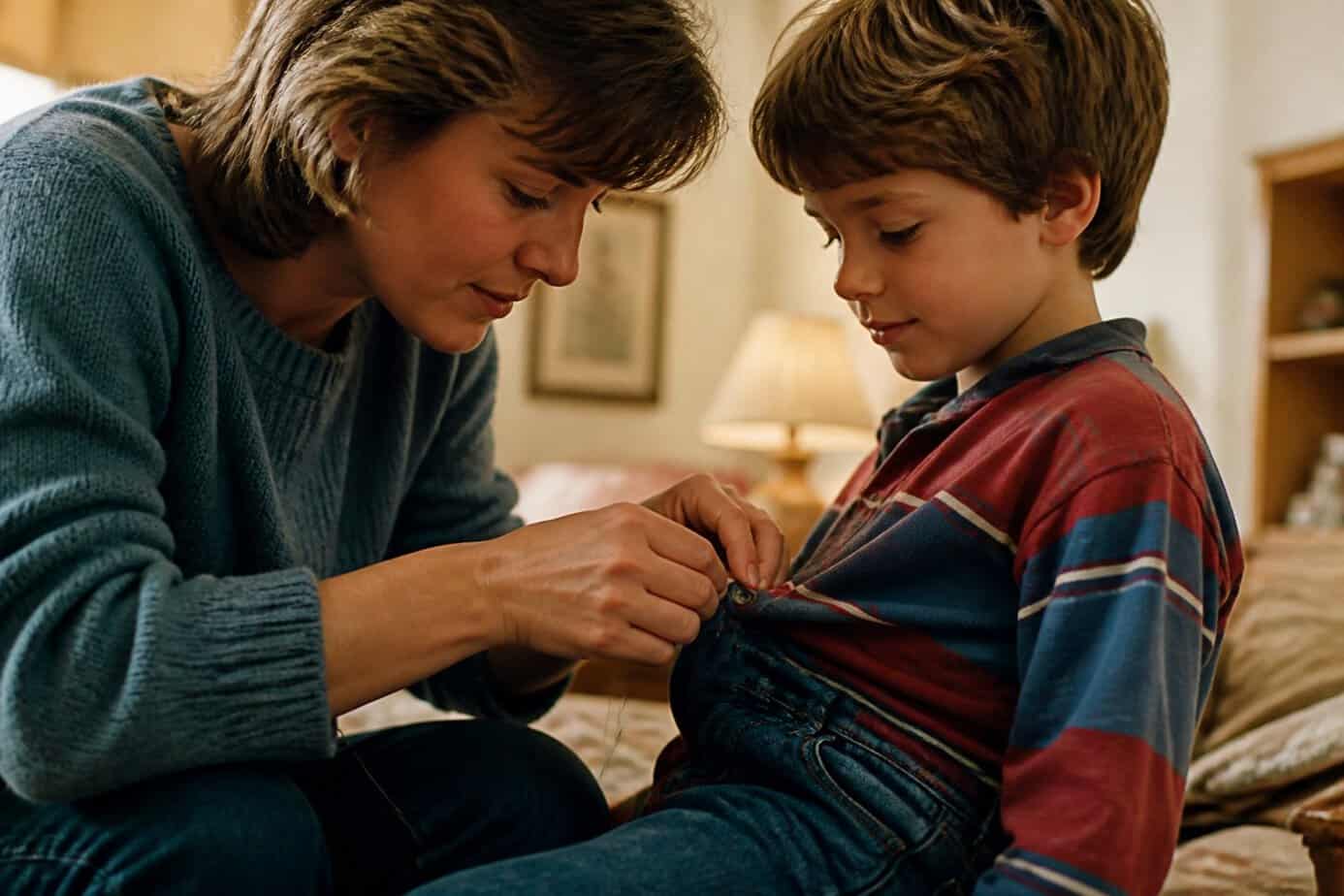
Your mom likely kept a sewing kit in a kitchen drawer and used it regularly. When a button popped off your school shirt or your pants hem came loose, she’d thread a needle and fix it within minutes.
This quick repair happened automatically, often while you waited or wore the item the next day. Parents viewed basic sewing skills as essential household knowledge, not an optional craft. They understood that a few stitches could extend the life of clothing significantly.
Today, many parents lack these fundamental sewing abilities. Missing buttons often mean discarding garments or paying for alterations. The quick, practical skill your parents exercised without fanfare has become increasingly rare, leaving modern kids without those immediate, casual repairs that once kept their wardrobes functional.
12. Passing down a favorite worn stuffed animal with a simple note
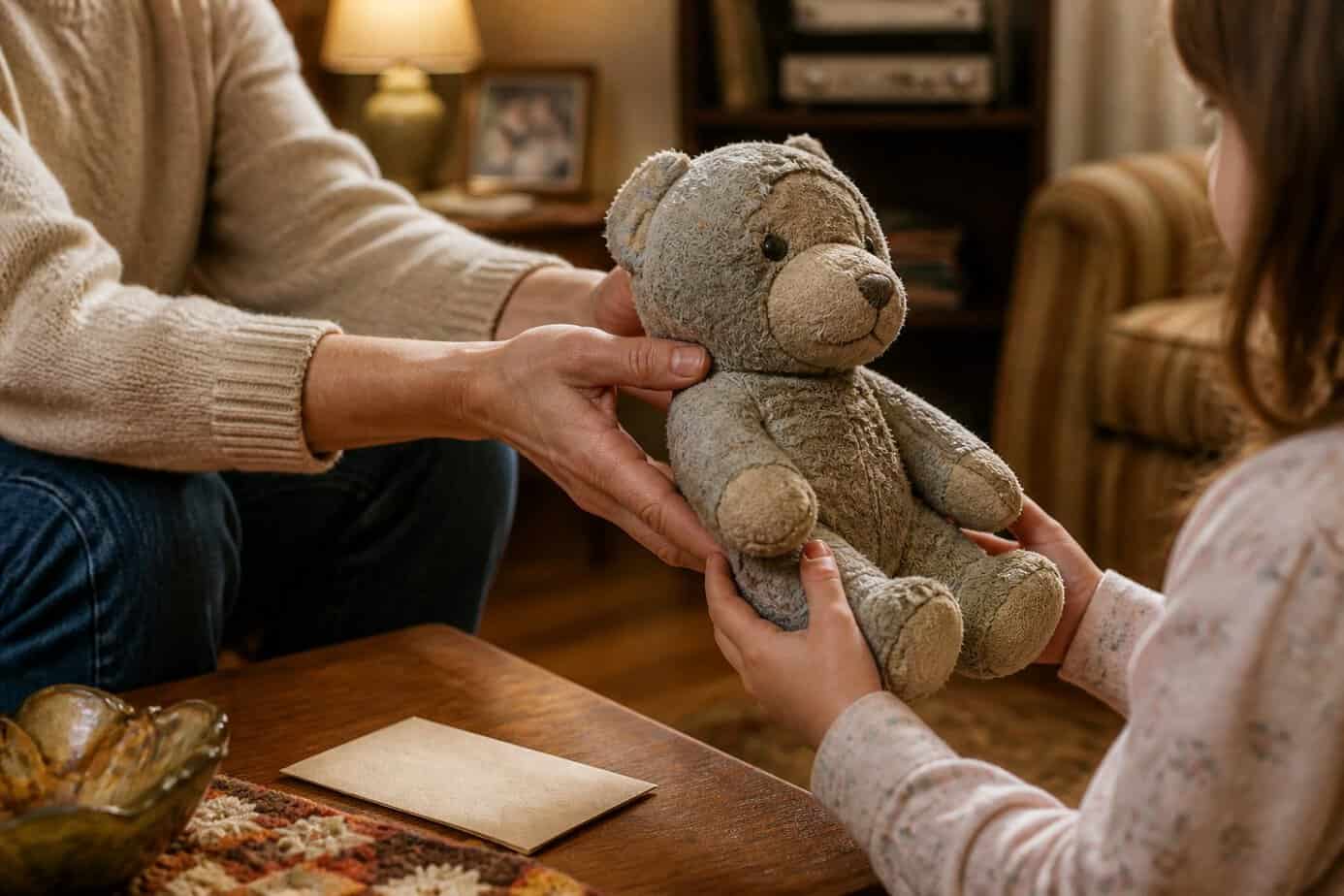
Your parents likely handed you their childhood stuffed animal without ceremony or fanfare. The toy arrived well-worn, with matted fur and missing button eyes, accompanied by a brief note or verbal explanation about its history.
This simple gesture created a tangible connection between generations. You received something that had been genuinely loved, not a pristine collectible kept in storage.
The worn condition told its own story. Each threadbare patch and faded spot represented actual childhood adventures and comfort during difficult nights.
Today’s parents often preserve childhood toys in perfect condition or dispose of them entirely. The practice of passing down visibly loved items has become less common. When it does happen, it frequently involves elaborate presentations or social media documentation rather than the quiet, personal exchange that characterized the 1980s approach.
13. Making time to listen to a child’s long story without interruption

In the 1980s, parents typically gave their children undivided attention during conversations. You would sit down and listen as your child recounted every detail of their day, from playground adventures to classroom observations.
This practice happened naturally because fewer distractions existed. Without smartphones or constant digital notifications, parents could focus entirely on their children’s words and expressions.
Listening without interruption meant maintaining eye contact and watching your child’s gestures as they spoke. You weren’t multitasking or checking devices while they shared their thoughts.
This uninterrupted listening helped children feel valued and understood. They learned that their experiences mattered and that they deserved attention when communicating.
Today, the pace of life and digital demands make this sustained attention less common. Many parents find themselves divided between multiple tasks while their children speak.
14. Writing a handwritten compliment on a school note to praise good behavior

Your parents in the 1980s often received handwritten notes from teachers celebrating your achievements and positive behavior. These weren’t formal report cards but quick, personal messages praising specific actions like helping a classmate or showing excellent effort on an assignment.
Teachers took time to write these notes by hand, making each one feel personal and meaningful. Your parents typically displayed them on the refrigerator, creating visible recognition of your good choices.
This practice strengthened the connection between home and school. When you brought home a positive note, it sparked conversations with your parents about your day and reinforced behaviors worth repeating.
Today’s communication often happens through emails, apps, or digital portals. While efficient, these methods lack the tangible, personal touch of a handwritten compliment that you could hold and your family could save.
15. Sneaking an extra piece of candy into a lunchbox on a tough school day
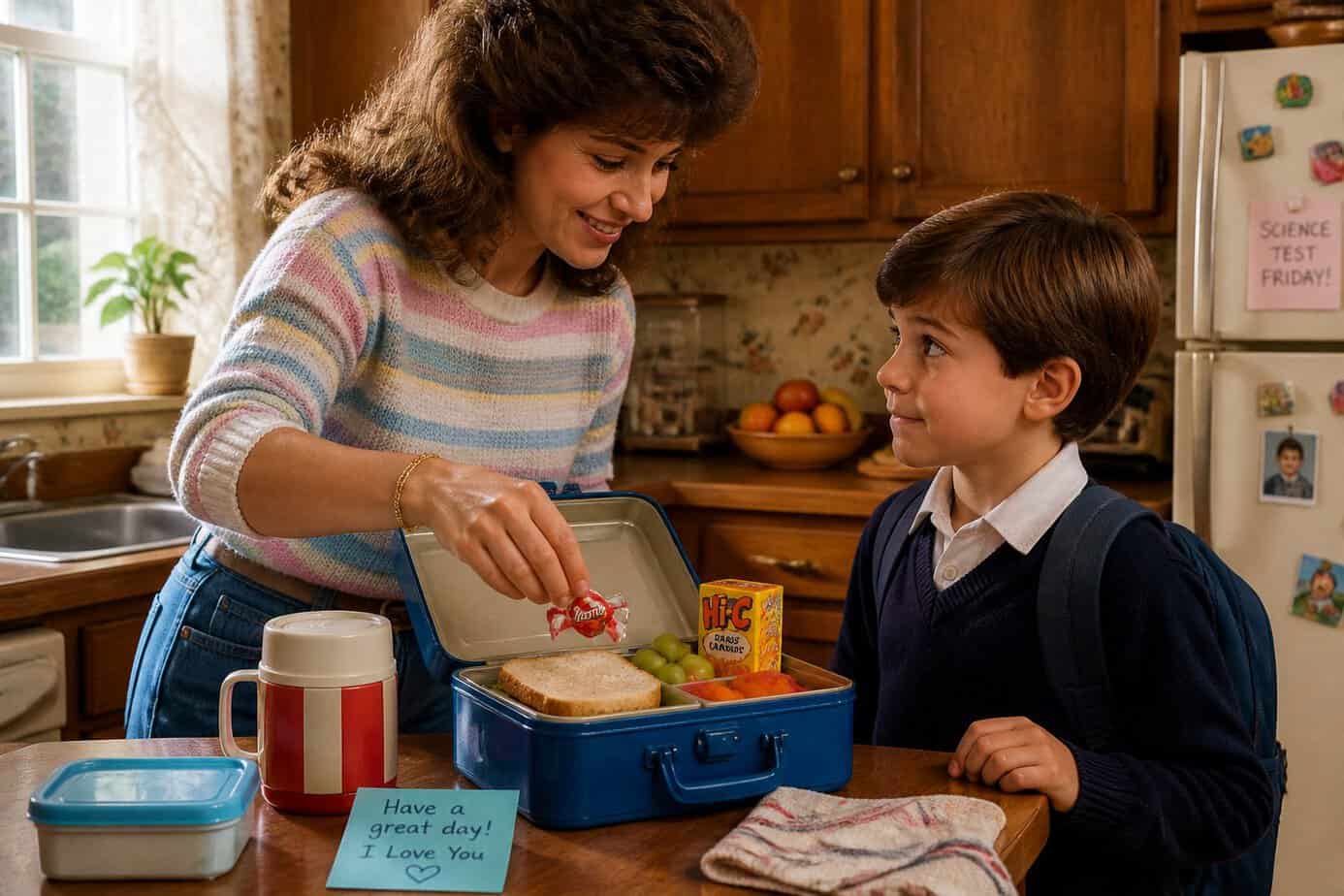
Your mom somehow knew when you had a big test or a difficult day ahead. Without making a big announcement about it, she’d slip an extra candy bar or a few pieces of your favorite chocolate into your lunchbox.
You’d discover it at lunch, tucked beside your sandwich or hidden under your napkin. There was no text message explaining it or checking in about how the test went. The candy itself was the message.
This small gesture happened quietly and required your parent to pay attention to your school calendar or remember what you mentioned at breakfast. Today’s parents often express support differently, through encouraging texts or after-school treats. The surprise element of finding that unexpected candy during the school day created a moment of connection that felt personal and timed exactly when you needed it most.
16. Driving a friendless child to a weekend sports practice so they wouldn’t miss out

In the 1980s, parents frequently noticed when a neighborhood child lacked transportation to sports activities. They’d offer rides without hesitation, knowing that missing practice could mean losing a spot on the team.
Your parents’ generation understood that participation mattered more than social status. If a child showed up alone at the field or pool, someone’s mom or dad would make sure they got home safely afterward.
These rides happened organically, without formal carpools or scheduled arrangements. Parents simply looked out for kids who needed help getting to soccer, Little League, or swim practice.
The act was straightforward and required no fanfare. Your parents recognized that sports provided structure and belonging for children who might otherwise spend weekends isolated at home.
17. Offering quiet encouragement before a recital with a private thumbs-up

Your parents knew when to skip the pep talk. Before your piano recital or school play, they’d catch your eye from the audience and flash a quick thumbs-up. No fuss, no pressure.
This silent gesture said everything without adding to your nerves. You didn’t need a long speech about doing your best or reminding you how much they’d spent on lessons. The simple acknowledgment was enough.
Today’s parents often feel compelled to verbalize every bit of encouragement. They worry silence means they’re not being supportive enough. But that wordless thumbs-up from your mom or dad in the 1980s carried real weight precisely because it was understated.
It told you they believed in you without making the moment bigger than it needed to be.
18. Fixing a child’s broken toy instead of immediately replacing it
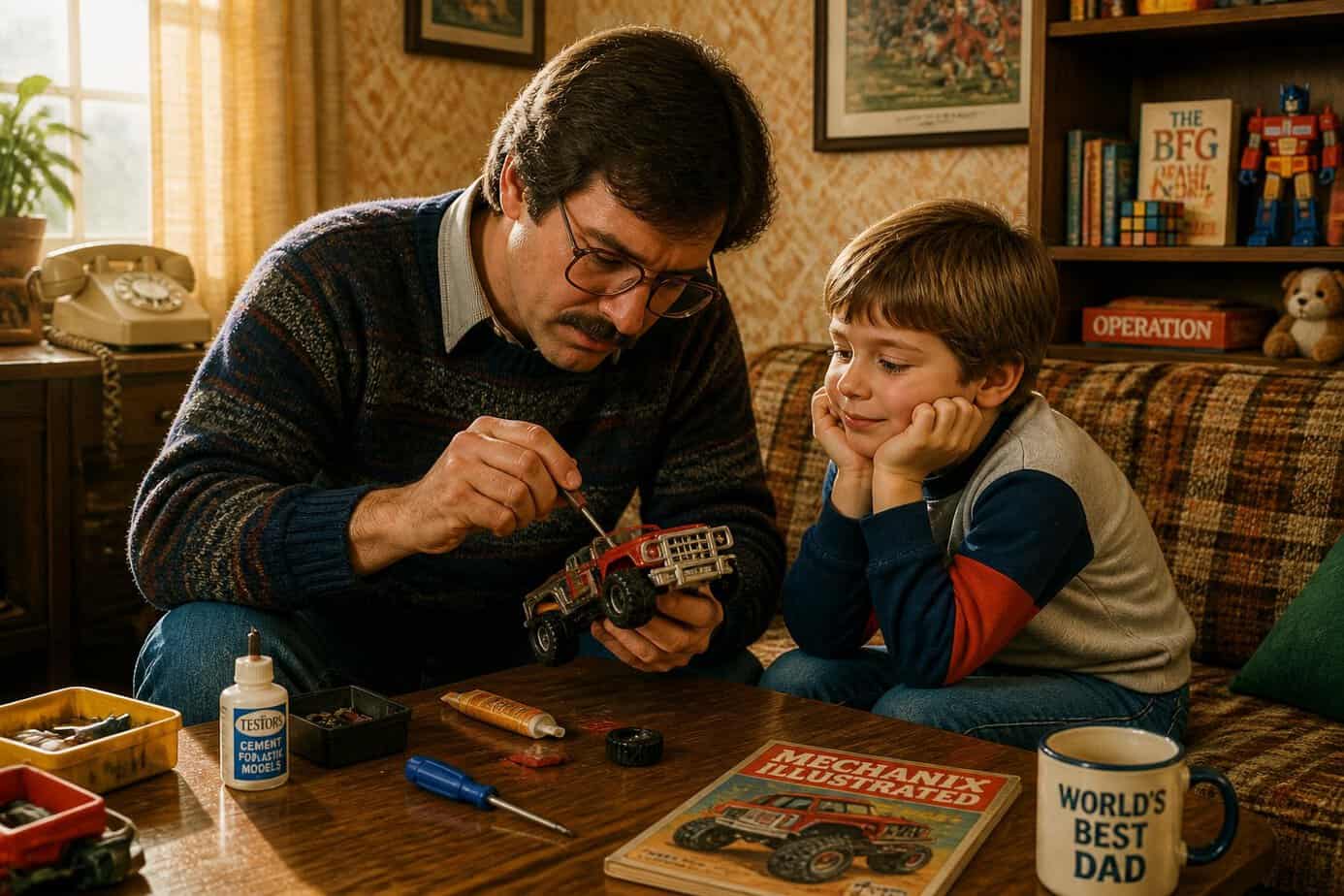
When your favorite toy broke in the 1980s, your parents would sit down with glue, tape, or a screwdriver to repair it. They rarely rushed to the store for a replacement.
This approach taught you patience and showed that broken things deserved a second chance. You learned to value what you owned and understood that not everything was disposable.
Your parents often involved you in the repair process. You watched them work through the problem and sometimes helped hold pieces in place. This hands-on experience built problem-solving skills and demonstrated that effort mattered.
The repaired toy carried new meaning. It represented care and resourcefulness rather than instant gratification. Today’s convenience culture makes this practice uncommon, but it once shaped how children understood value and responsibility.
19. Teaching a child how to read a paper map for a neighborhood scavenger hunt

Parents in the 1980s regularly spread paper maps across kitchen tables to teach their children navigation basics before sending them on neighborhood adventures. You learned to identify street names, understand symbols, and trace routes with your finger.
These lessons happened naturally when planning scavenger hunts or bike rides to a friend’s house. Your parents showed you how to orient the map, match landmarks to symbols, and estimate distances between locations.
Children gained spatial awareness and problem-solving abilities through this hands-on instruction. You developed confidence in finding your way around without constant adult supervision.
Today’s kids navigate primarily through GPS and digital maps on phones. The tactile experience of unfolding a paper map and plotting a physical route has become uncommon, replaced by turn-by-turn voice directions that require minimal map reading comprehension.
20. Letting kids trade small toys with each other to learn sharing
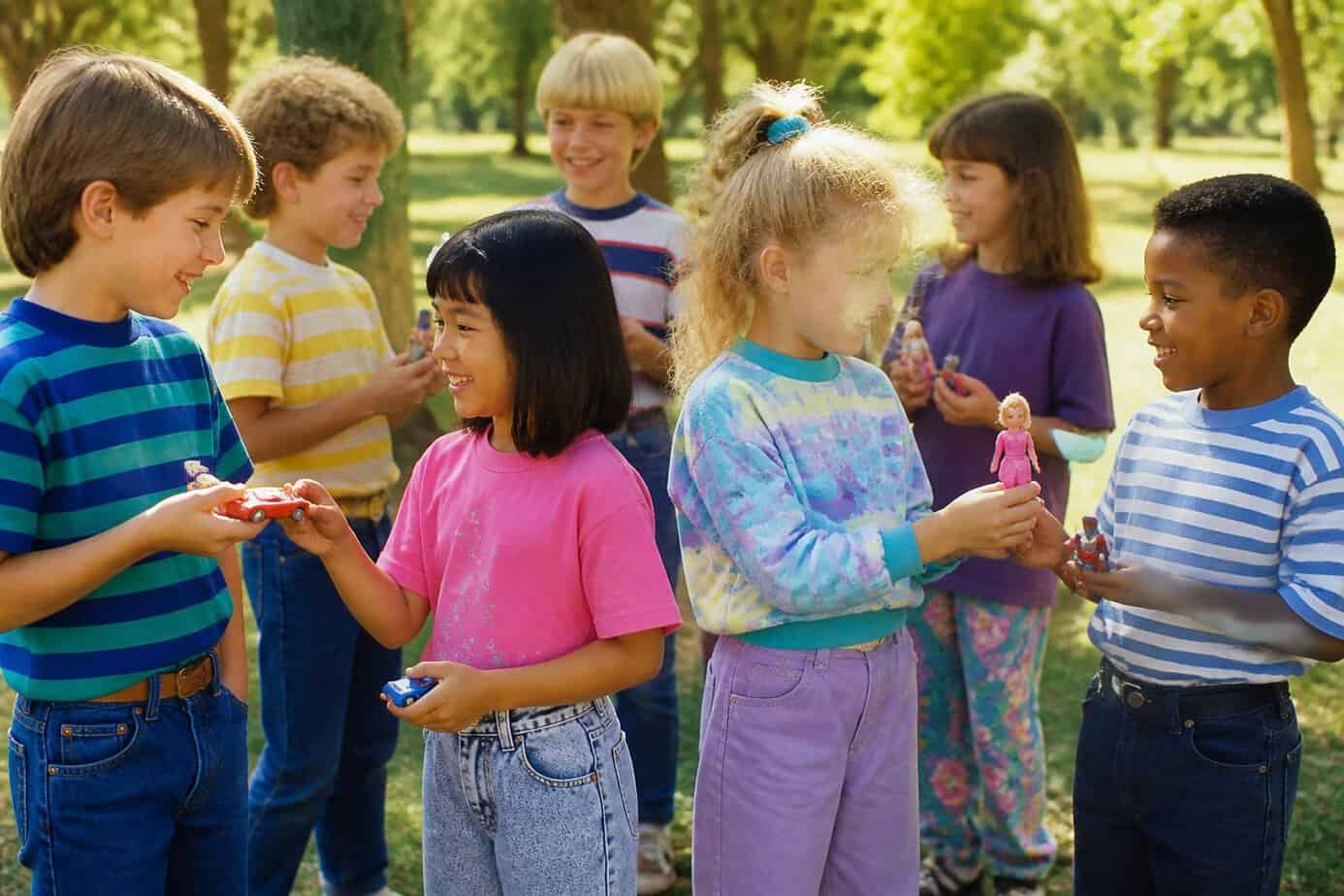
Your parents likely encouraged you to swap toys with neighborhood kids or siblings without much supervision. These informal exchanges taught you negotiation skills and the value of giving something up to gain something else.
Kids in the 1980s regularly traded baseball cards, small plastic figurines, and collectible items on playgrounds and in backyards. Your parents understood these trades were teaching moments for cooperation and compromise.
Today, many parents hesitate to let children trade possessions freely. Concerns about fairness, lost items, and potential disputes have reduced these spontaneous exchanges.
The practice helped you learn that sharing created opportunities for new experiences. You discovered how to assess value, communicate your wants, and accept when deals didn’t work in your favor. These small transactions built social skills that extended far beyond the toys themselves.
21. Inviting a struggling student over for homework help and snacks
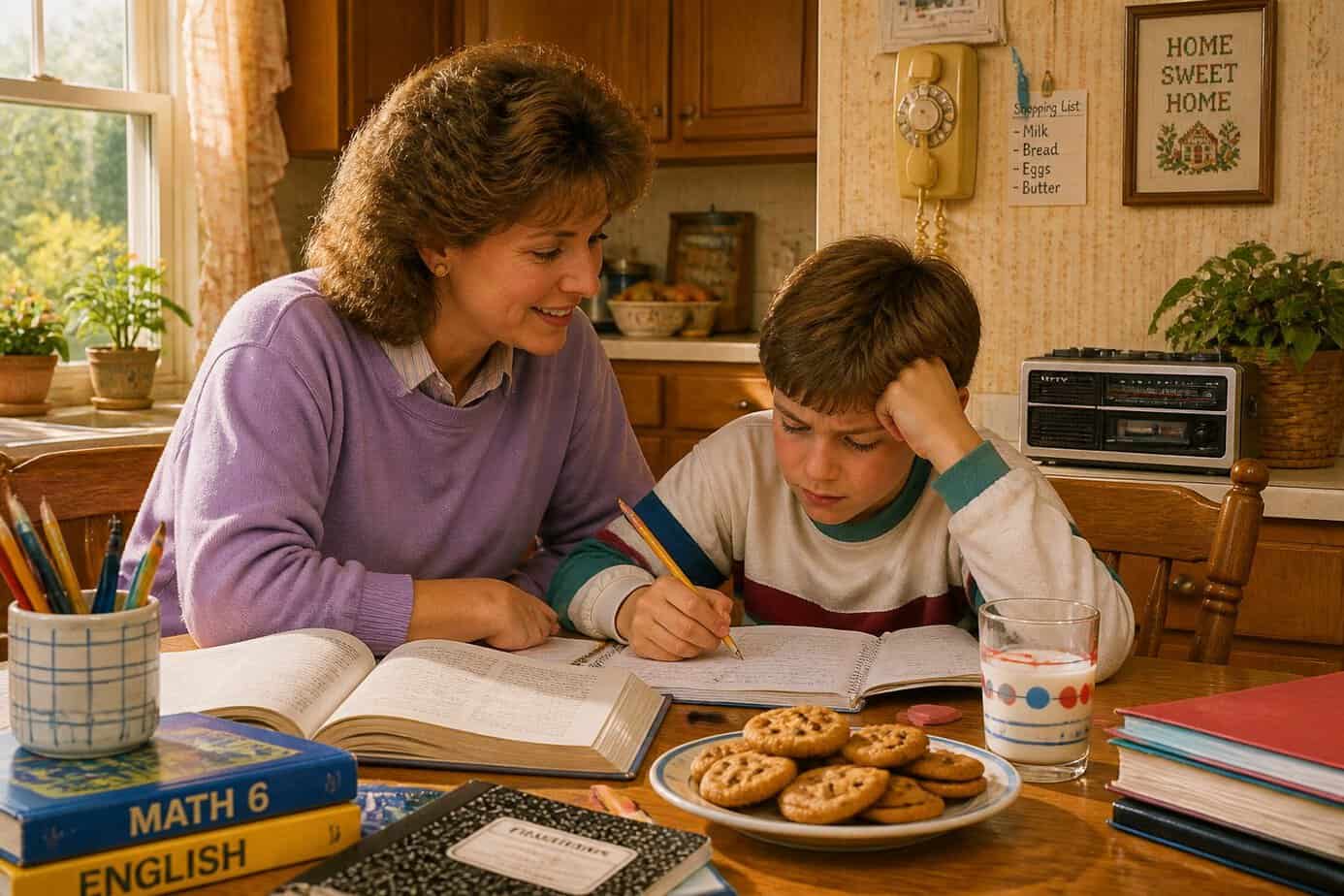
When your child mentioned a classmate was having trouble with math or reading, parents in the 1980s often extended a casual invitation. They’d call the other child’s parents and arrange an after-school study session at the kitchen table. There was no formal tutoring arrangement or structured program involved.
Your mom would set out cookies and juice while you and your friend worked through assignments together. The struggling student got help in a relaxed, pressure-free environment. These informal homework sessions happened spontaneously, driven by a simple recognition that a peer needed support.
Parents didn’t overthink logistics or worry about liability. They saw a need and responded with their time and pantry. The act required minimal planning but created space for academic help wrapped in genuine hospitality.
22. Surprising kids with an afternoon trip to the local library
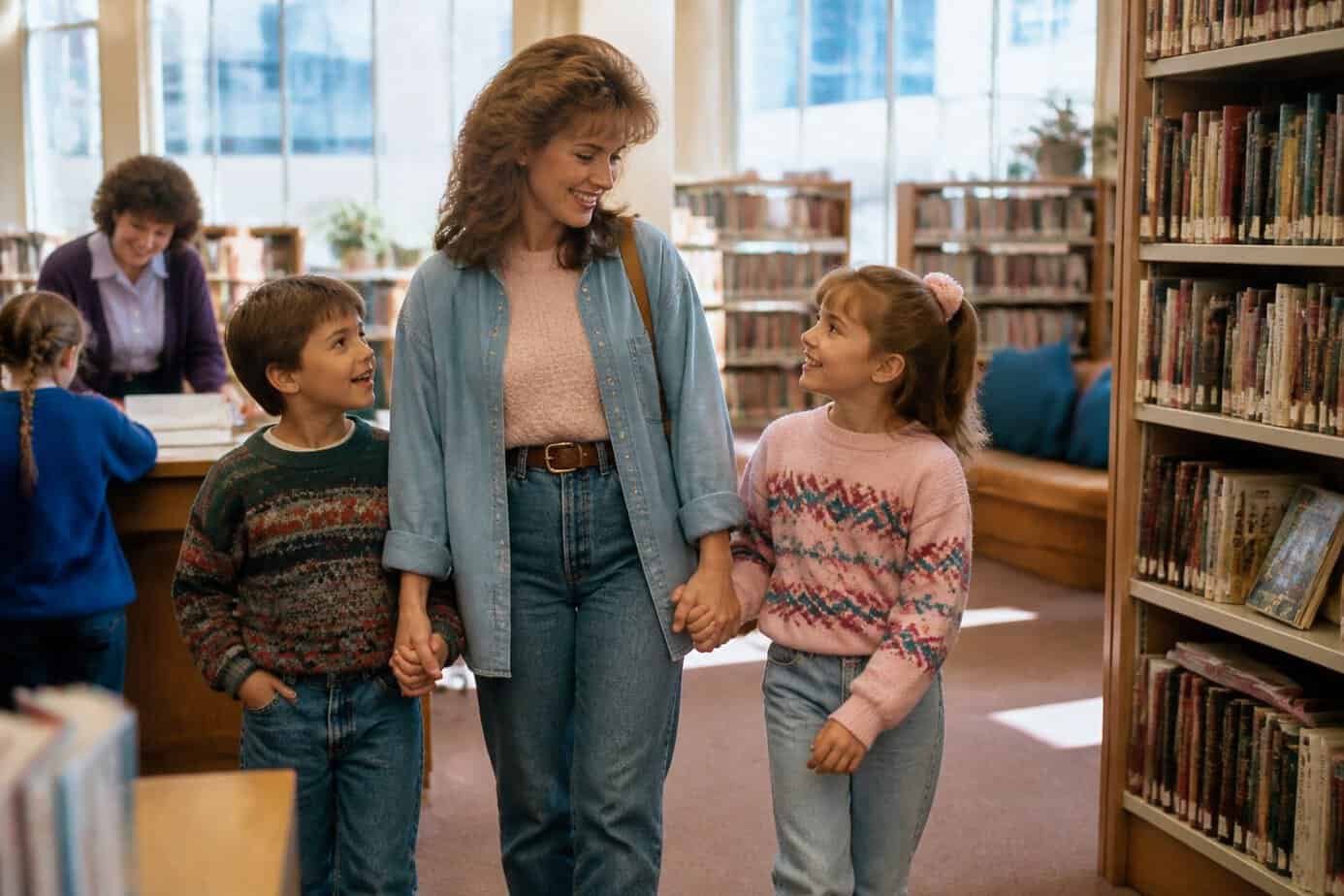
In the 1980s, parents would spontaneously load kids into the car and announce they were heading to the library. No planning required. It was treated as an exciting destination rather than a chore.
The library meant freedom to explore. You could spend an hour wandering the stacks, pulling books off shelves, flipping through pages to find something that caught your attention. Librarians knew the regular families and often set aside new arrivals they thought certain kids would enjoy.
These unplanned visits taught you that learning and entertainment didn’t require money or special occasions. Your parents valued reading enough to make it part of a regular afternoon. The trip often included checking out the maximum number of books allowed, creating anticipation for the weeks ahead.
Today’s scheduled activities and digital entertainment have largely replaced these spontaneous library adventures.
23. Walking a nervous child to the first day of school gate and giving a quick hug
In the 1980s, parents routinely walked their children right up to the school gate on the first day. They would crouch down to eye level, offer reassuring words, and give a quick hug before sending them off.
This simple gesture helped ease first-day jitters. The physical presence of a parent provided immediate comfort when anxiety peaked.
Today, drop-off procedures have changed at many schools. Carpool lanes and security protocols often prevent parents from walking children to the entrance. Some schools designate specific zones where parents must say goodbye from their vehicles.
While these changes serve practical purposes, they’ve reduced opportunities for that calming moment of physical reassurance. The quick hug at the gate was never planned as a grand gesture. It simply happened naturally when parents could walk their children to the classroom door.
24. Hosting spontaneous backyard campfires with roasted marshmallows

Your parents didn’t need weeks of planning to create memorable evenings. They simply built a fire in the backyard when the mood struck, gathered sticks, and called you outside.
No special equipment or store-bought roasting forks were necessary. You found branches in the yard, sharpened them with a pocket knife, and that became your tool for the night.
These impromptu gatherings happened on regular weeknights, not just special occasions. Your parents understood that simple pleasures didn’t require elaborate preparation or perfect timing.
The activity itself was straightforward. You roasted marshmallows until they turned golden, made s’mores with graham crackers and chocolate, and enjoyed the fire’s warmth. Sometimes neighbors joined without formal invitations.
Today’s families often schedule outdoor activities weeks in advance or skip them entirely due to safety concerns and busy calendars. The casual, last-minute nature of these backyard fires has largely disappeared from family life.
25. Letting kids earn extra playtime by helping an elderly neighbor with chores

In the 1980s, parents routinely sent their children next door to help elderly neighbors with yard work, grocery carrying, or simple household tasks. You might have raked leaves, swept porches, or brought in the mail for an older person on your street. This arrangement wasn’t formal volunteering but a neighborhood exchange that benefited everyone involved.
Parents used extra playtime as motivation for completing these helpful tasks. After spending an hour helping Mrs. Johnson pull weeds, you earned permission to stay outside until dinner. The practice taught work ethic while building connections between generations.
Today’s structured schedules and safety concerns mean children rarely interact with elderly neighbors independently. Many kids grow up without experiencing the satisfaction of helping older community members or learning from their stories and wisdom.
26. Giving a child permission to skip a scheduled activity to rest when they’re overwhelmed

In the 1980s, parents routinely let kids skip soccer practice or piano lessons when they seemed tired or stressed. This wasn’t seen as lazy parenting or failure to commit. It was common sense.
Today’s culture of achievement treats every scheduled activity as non-negotiable. Parents worry about letting coaches down or falling behind peers. Kids learn that pushing through exhaustion is expected, even when their bodies and minds signal they need rest.
Your parents in the 1980s understood that childhood wasn’t about optimizing every hour. When you dragged your feet about an activity, they might simply say you could stay home that day. No elaborate explanation needed.
This small act taught you to recognize your limits and trust that rest was legitimate. Missing one practice didn’t derail your development. It simply acknowledged you were human.
27. Leaving a note in a lunchbox with a silly doodle and ‘I love you’
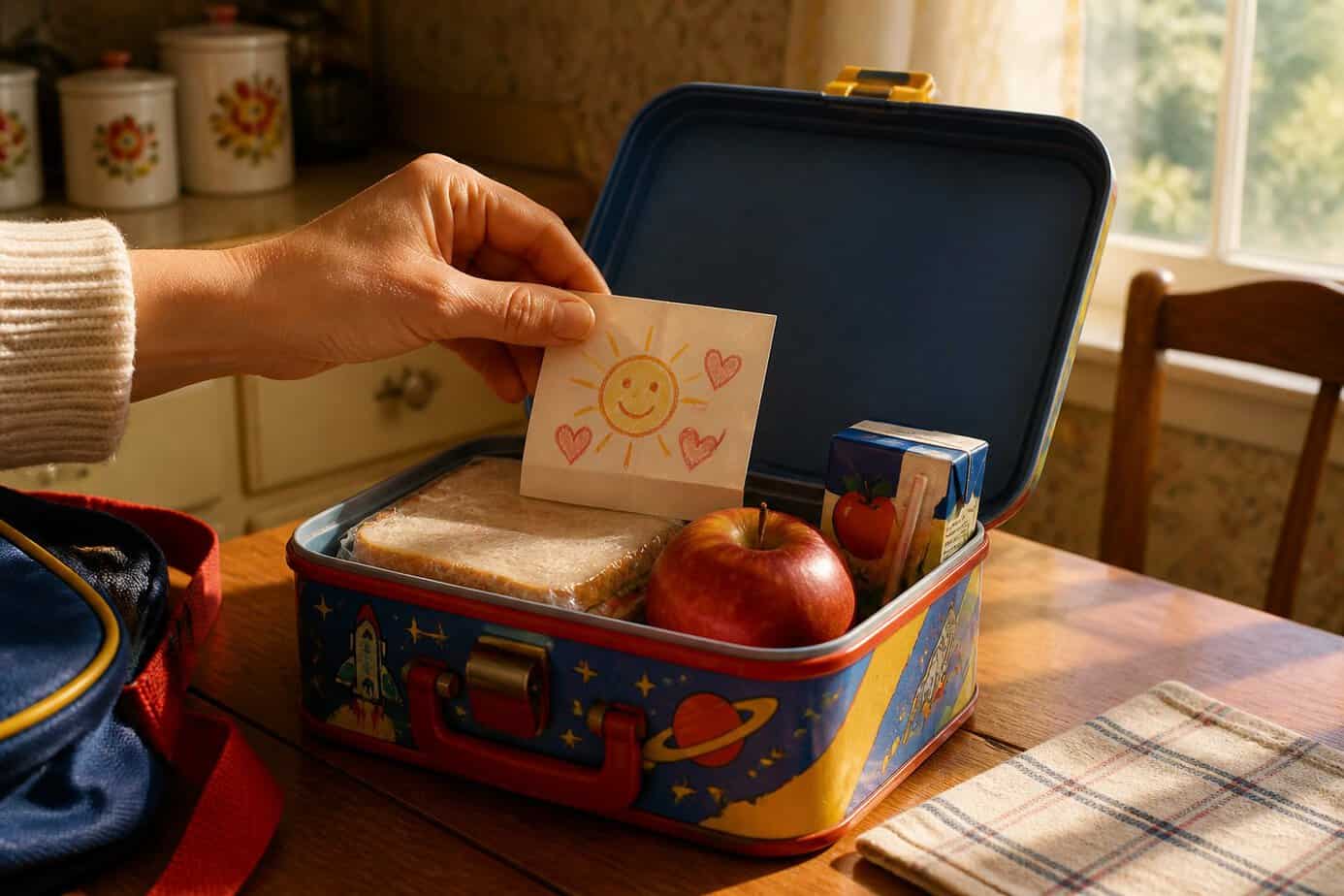
Your mom or dad probably scribbled quick notes on napkins before tucking them into your metal lunchbox. These weren’t elaborate or Pinterest-worthy. They were simple messages with stick figures, smiley faces, or basic hearts drawn in pen or pencil.
The notes said things like “Have a great day” or “I love you” in your parent’s everyday handwriting. Sometimes they added a goofy face or a terrible drawing of the family dog.
Today’s lunch notes often come as pre-printed cards or carefully designed printables. Parents can download themed collections or purchase boxed sets with professional artwork. While these modern options look polished, they lack the spontaneous, personal touch of those hastily drawn doodles from the 1980s.
Your parents didn’t think twice about these scribbled notes. They just grabbed whatever paper was nearby and wrote something quick before you headed out the door.
You might also enjoy 37 little things Mom did every day in the 1980s and 27 family traditions from the 1970s that quietly disappeared.
Parenting and Community Connections in the 1980s
Parents in the 1980s operated within tight-knit neighborhood networks where collective childcare was common and trust between families ran deep. Children moved freely between homes, and technology’s minimal presence meant face-to-face interactions dominated daily life.
Neighborhood Trust and Freedom
In the 1980s, your neighbors knew your children by name and felt comfortable correcting their behavior or offering help when needed. Parents routinely allowed kids to play at friends’ houses without advance phone calls or background checks. You simply knocked on a door, asked if your child could come out, and trusted other adults to keep them safe.
Common neighborhood practices included:
- Children walking to friends’ houses several blocks away without supervision
- Neighbors watching each other’s kids during outdoor play
- Parents relying on other adults to feed children lunch or snacks
- Kids moving freely between multiple homes in a single afternoon
This collective approach meant you rarely worried about your child’s exact location. The neighborhood functioned as an extended family unit where multiple adults shared responsibility. Parents operated on the assumption that someone was always watching, even without formal arrangements.
Unstructured Social Interactions
Your children spent afternoons creating their own entertainment without adult organization or intervention. They gathered in vacant lots, parks, or backyards to invent games and resolve conflicts independently. No one scheduled playdates weeks in advance or supervised every interaction.
Kids negotiated rules, formed teams, and managed disagreements without parental mediation. You expected them home by dinner but didn’t monitor their activities minute-by-minute. This freedom taught children social skills through trial and error, as they learned to cooperate, compromise, and communicate with peers of different ages.
Influence of Technology on Family Life
Television was the primary screen in your home, and most families owned just one set in a central location. You watched programs together rather than retreating to separate devices. Phones were attached to kitchen walls, making conversations semi-public events that the whole family could hear.
Without video games dominating leisure time, your children engaged in face-to-face conversations and physical activities. You didn’t text other parents about minor issues or photograph every moment of childhood. Communication happened in person, at school pickup, or during brief phone calls. This technological simplicity meant fewer distractions and more direct human connection between families.
Changing Dynamics in Childhood Experiences
Children growing up in the 1980s developed social skills, independence, and emotional resilience through vastly different mechanisms than today’s youth. The shift from informal neighborhood interactions to structured digital communication has fundamentally altered how young people learn to navigate relationships and challenges.
Differences in Social Skills Development
In the 1980s, your social skills developed primarily through unstructured face-to-face interactions. Children learned to read facial expressions, interpret body language, and resolve conflicts in real-time without adult mediation. These interactions happened spontaneously on playgrounds, in neighborhood streets, and during impromptu gatherings.
Modern children typically develop social skills through scheduled playdates and organized activities with significant adult oversight. The digital age has introduced screen-based communication as a primary social channel, which lacks the immediate feedback of in-person exchanges. While online communities provide connection opportunities, they don’t replicate the nuanced skill-building that occurred during the unsupervised social navigation of the 1980s.
The difference extends to conflict resolution. Children in the 1980s worked through disagreements themselves, learning negotiation and compromise without intervention. Today’s structured environments often involve adults stepping in to mediate, which can limit opportunities for independent problem-solving.
Shifts in Supervision and Independence
Children of the 1980s spent considerable time outside without direct adult supervision. You might have left home in the morning and returned only when streetlights came on, making independent decisions about where to go and what to do throughout the day.
This autonomy taught risk assessment, decision-making, and self-reliance. You learned to judge distances, evaluate strangers, and handle minor emergencies without immediately accessing parental help.
Contemporary supervision patterns emphasize constant contact and location tracking. Parents today typically know their children’s whereabouts through technology, and unsupervised outdoor time has decreased significantly. Structured activities have replaced free-range exploration, limiting opportunities for independent navigation and self-directed play.
Impact on Emotional Resilience
The 1980s approach to emotional development emphasized toughness and endurance. Emotional vulnerability was frequently discouraged, and you learned to handle disappointment and hardship without extensive emotional support. Success meant following rules and pushing through difficulties independently.
Modern parenting deliberately recalibrates this approach, prioritizing emotional awareness and expression. Today’s children receive more validation for their feelings and explicit teaching about emotional regulation. While this builds different strengths, it represents a fundamental shift from the sink-or-swim emotional landscape of previous decades.
Both approaches shape resilience differently. The 1980s model built tolerance for discomfort but sometimes at the cost of emotional literacy. Current methods foster self-awareness but may provide less practice with unmediated difficulty.