
35 After-Dinner Family Rituals from the 1980s That Quietly Disappeared Without Anyone Noticing: A Look at Lost American Traditions
Would you like to save this?
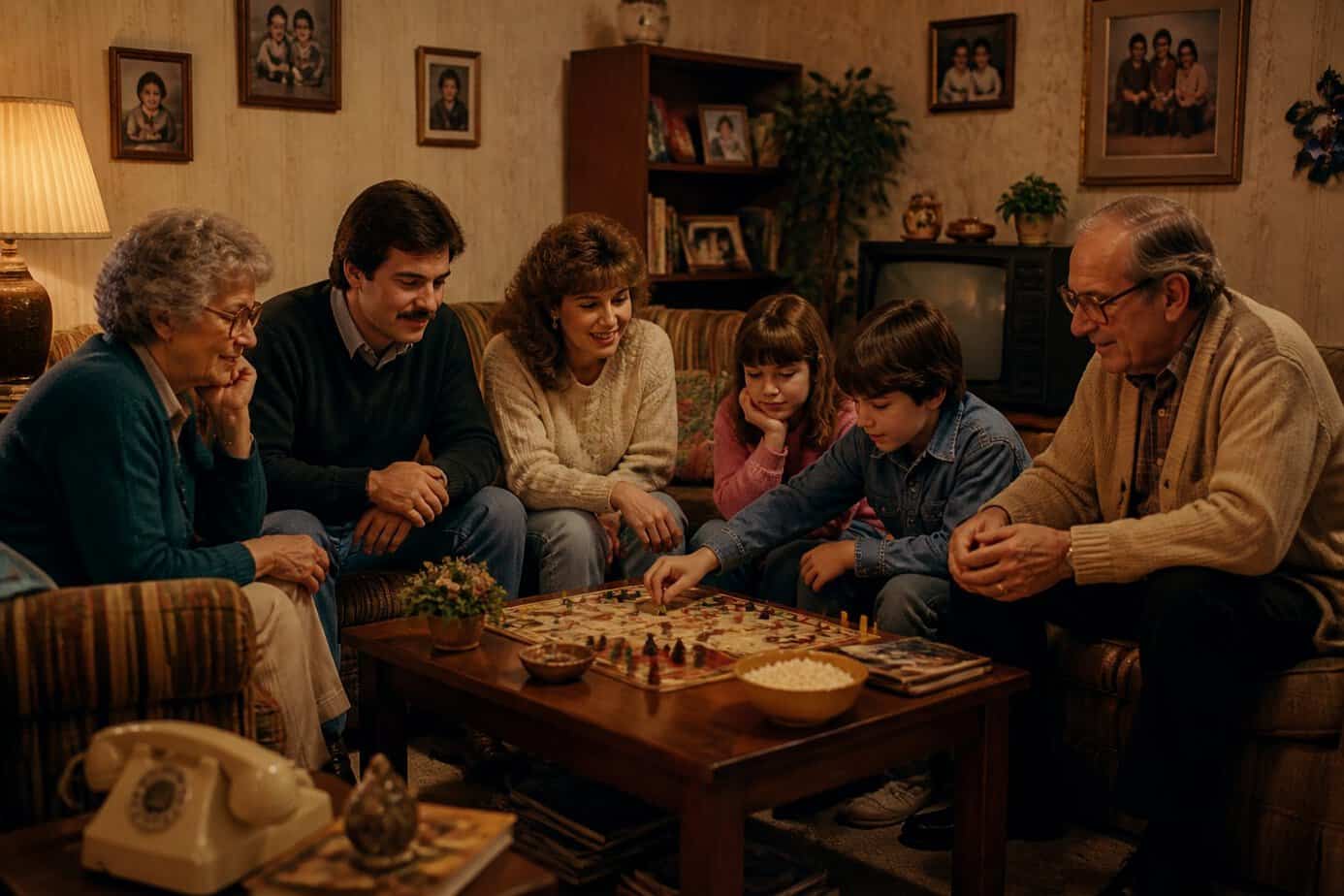
Family evenings in the 1980s followed a different rhythm than they do today. After dinner plates were cleared, households settled into shared routines that didn’t require screens, apps, or internet connections. These moments weren’t scheduled or documented—they simply happened as part of daily life.
The small rituals that filled the hours between dinner and bedtime have largely vanished from American homes, replaced by individual device time, streaming services, and fragmented schedules.
Most of these practices didn’t disappear because families consciously decided to stop them. They faded gradually as technology advanced, work hours extended, and the structure of household life shifted in ways that made spontaneous togetherness less automatic.
You might recognize some of these habits from your own childhood, or perhaps you’ve heard your parents mention them. What follows are the specific after-dinner traditions that once shaped family connection, from shared chores to collective entertainment, that have quietly slipped out of modern routines.
1. Clearing the table together as a family chore rotation
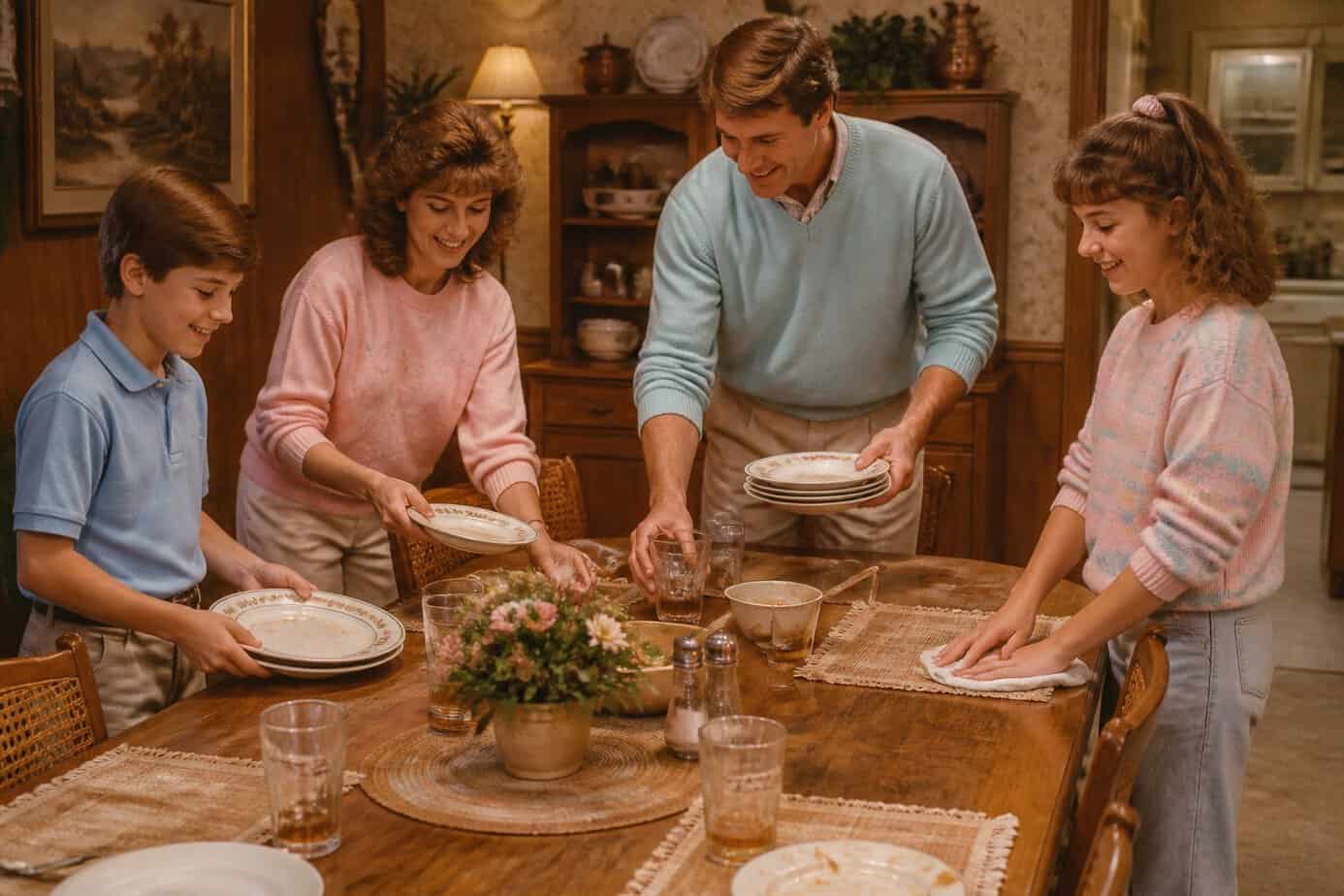
In the 1980s, clearing the dinner table wasn’t just one person’s job. Families operated on rotation systems where each member knew their turn without needing reminders.
Your older sibling scraped plates one night while you carried dishes to the kitchen the next. The system was simple and predictable. Everyone participated based on age-appropriate tasks, from the youngest collecting silverware to teenagers handling heavier serving dishes.
These rotations happened naturally after meals ended. You didn’t need charts or apps to track whose turn it was. The routine became second nature through daily repetition.
Modern families often skip this structured approach. Dishes go straight into the dishwasher without the coordinated effort that once marked the end of every family meal.
2. Passing around an after-dinner photo slideshow on a VCR camcorder
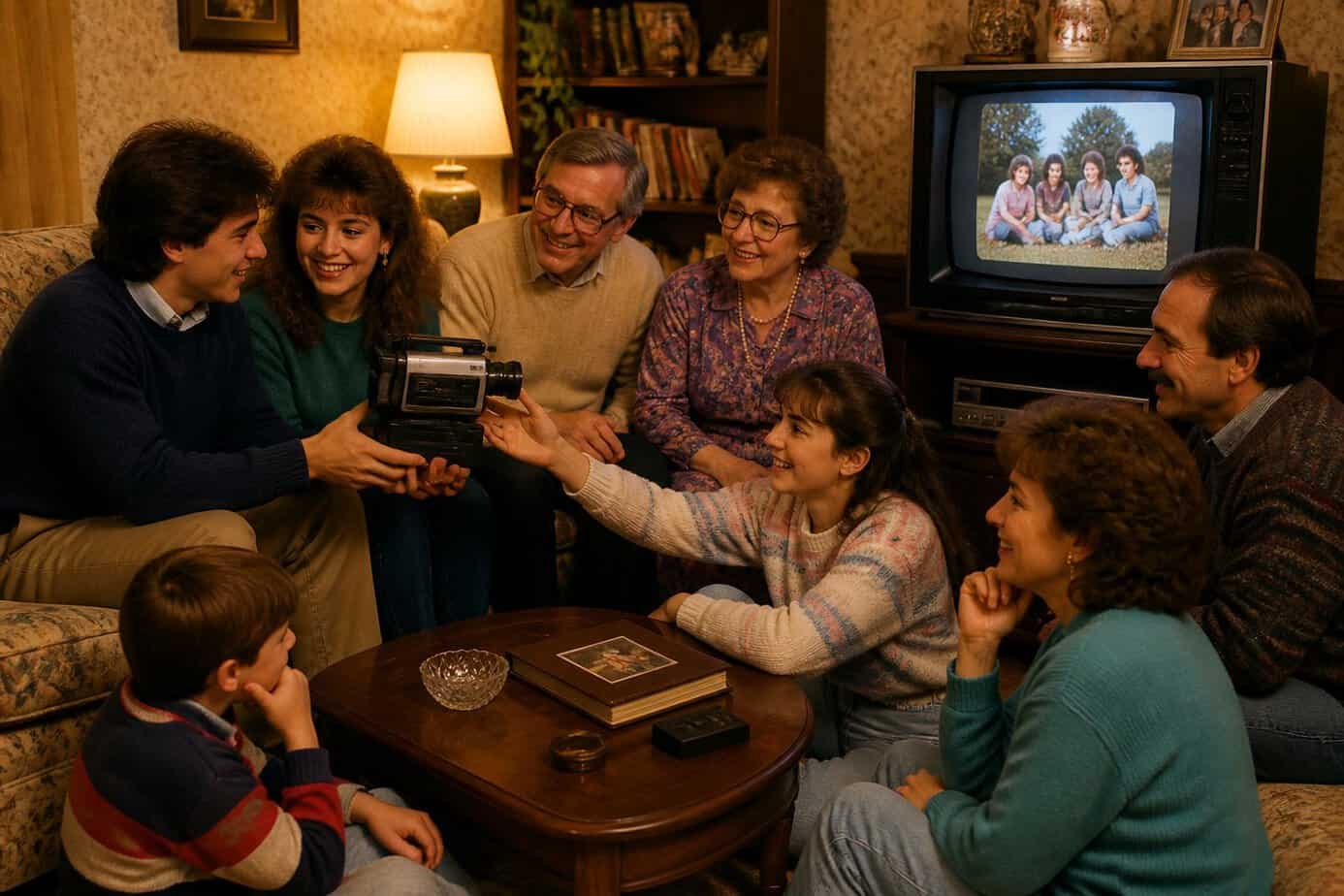
After clearing the dinner table, you would gather around while Dad rewound the camcorder tape to show footage from last weekend’s trip or birthday party. The bulky camera would get passed from person to person as everyone leaned in to view the tiny flip-out screen.
These impromptu viewing sessions happened right at the dining table or in the living room. You’d watch yourselves from just days earlier, laughing at someone’s awkward wave to the camera or a funny moment that had already become a family joke.
The ritual disappeared as camcorders became smaller and eventually replaced by digital cameras and phones. Without that immediate playback requirement and the shared tiny screen, families stopped gathering specifically to watch recent footage together. The videos themselves survived, but the communal after-dinner viewing experience faded away.
3. Sitting down for a board-game session like Monopoly or Scrabble
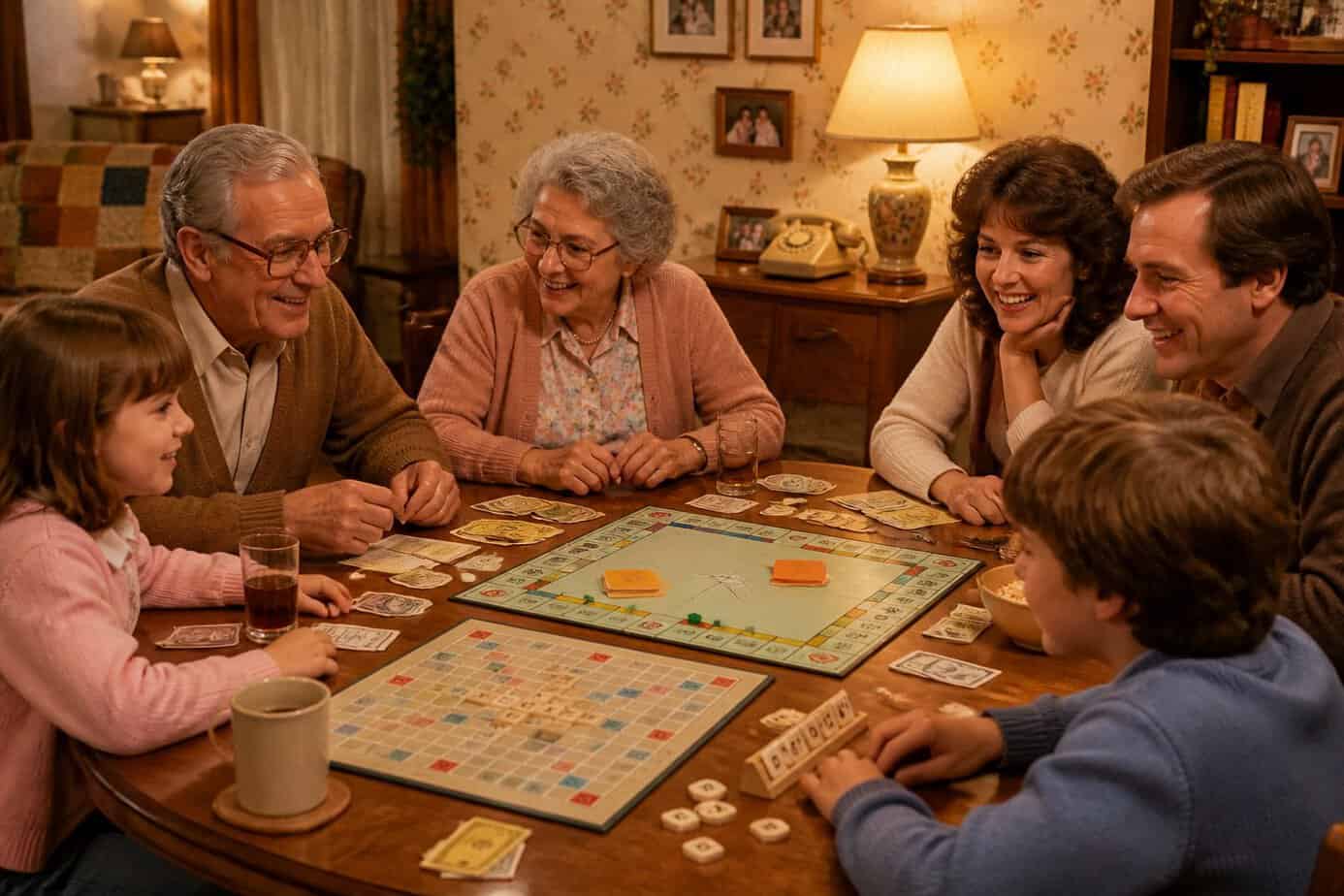
After dinner in the 1980s, your family likely cleared the table and pulled out a well-worn board game box. Monopoly and Scrabble were household staples that turned ordinary evenings into hours of entertainment.
You didn’t need screens or batteries. The games required nothing more than the pieces in the box and your willingness to participate. Your parents handled the banker duties while you negotiated property trades or challenged word spellings.
These sessions stretched late into the evening. You learned strategy, vocabulary, and how to handle both winning and losing gracefully.
The ritual faded as schedules became busier and digital entertainment more accessible. What once happened naturally after clearing dishes now requires deliberate planning that rarely materializes.
4. Listening to the evening radio news as a family
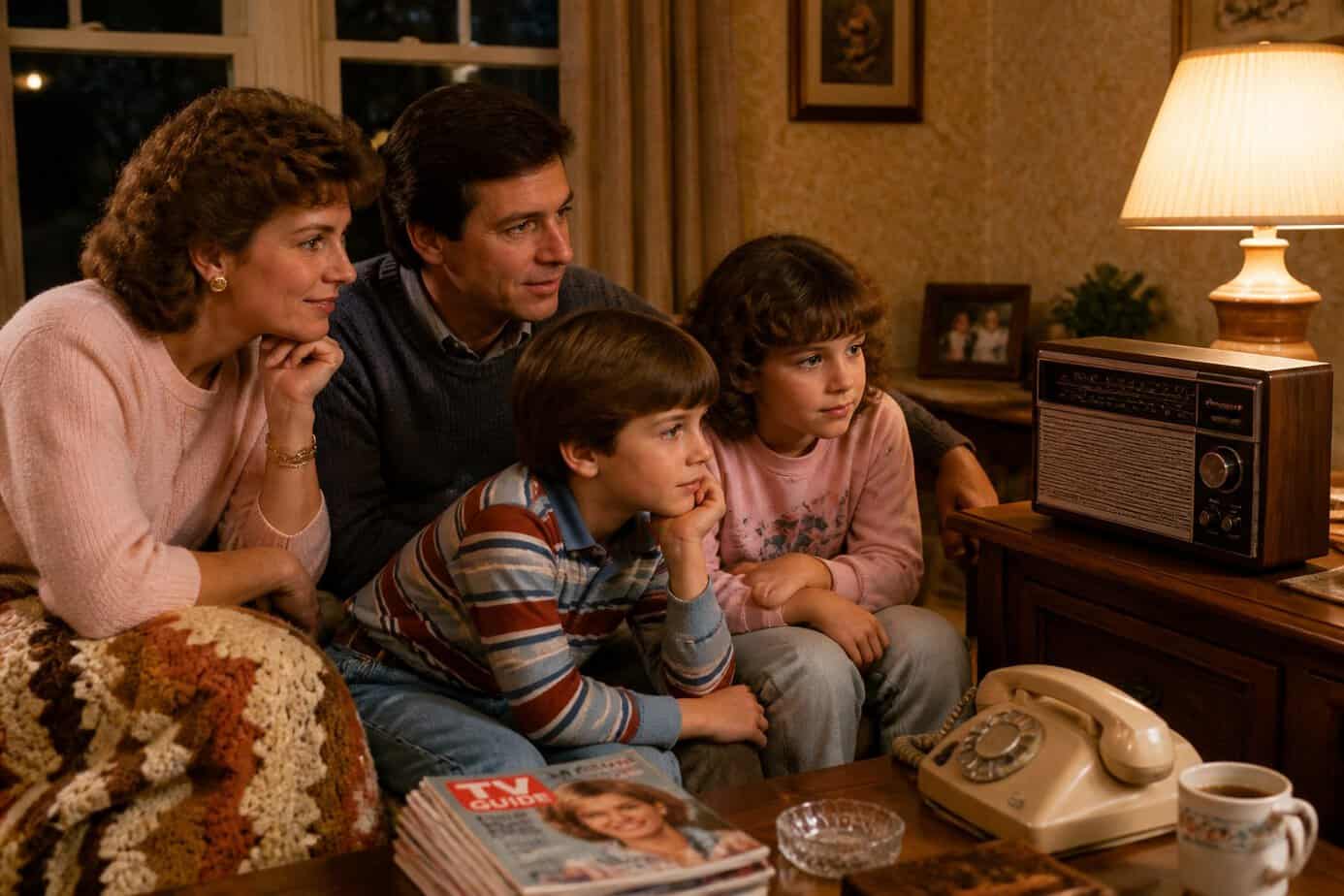
Before the internet and 24-hour cable news, families often gathered around the radio after dinner to hear the evening news broadcast. This ritual typically happened at a fixed time each night, creating a natural rhythm to the household routine.
You would sit together in the living room, listening to trusted anchors deliver the day’s headlines through a single source. The shared experience meant everyone heard the same information at the same time, often sparking family discussions about current events.
Radio news required focused attention since you couldn’t scroll back or look up details instantly. Children learned to listen carefully and ask questions about what they didn’t understand.
This practice faded as television became the primary news source, then disappeared almost entirely with the rise of personalized news feeds and smartphones.
5. Watching the 9 PM network family sitcom together
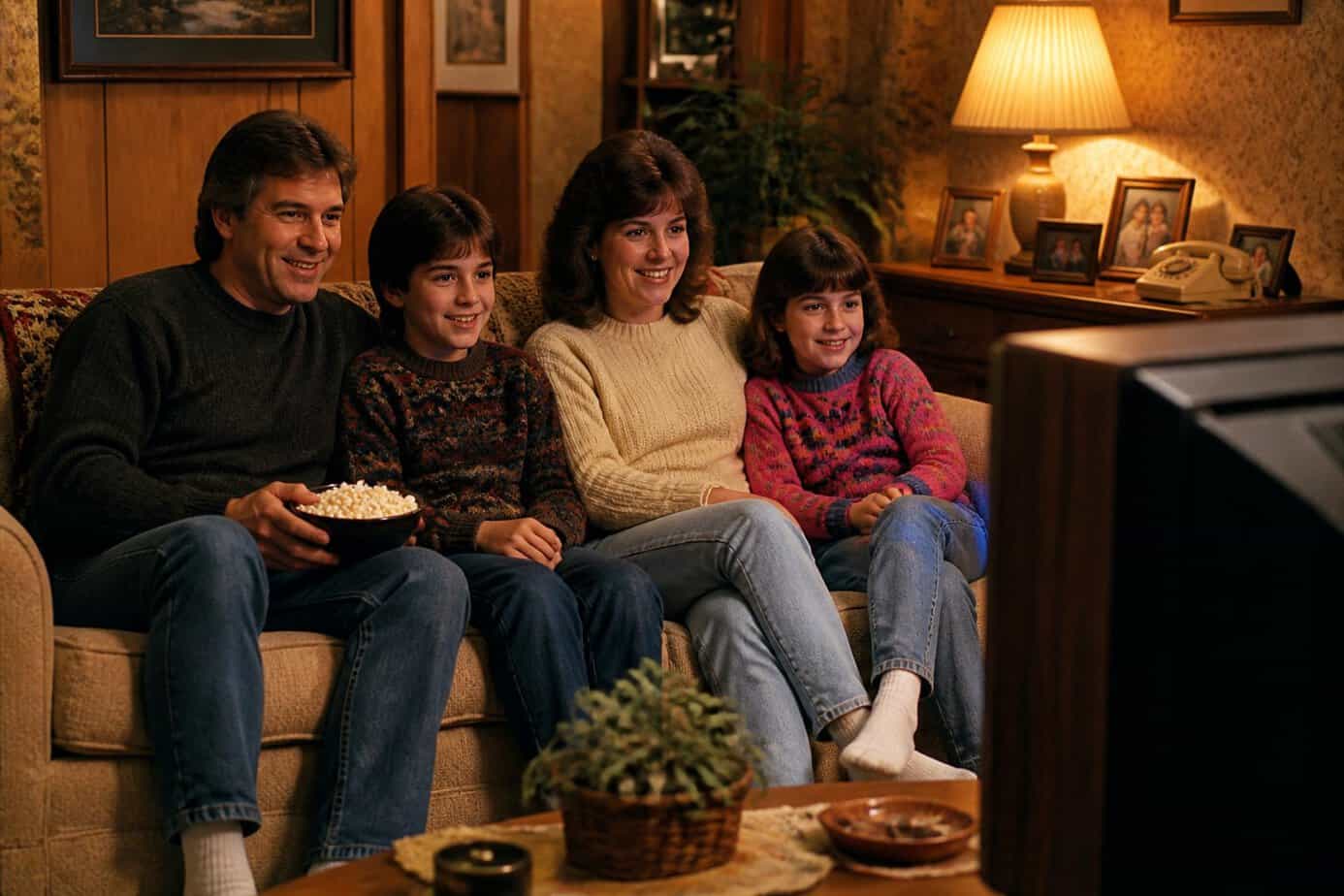
You gathered in the living room at a specific time because missing an episode meant waiting months for a rerun. The whole household sat together on the sofa, sharing the same screen and the same moment.
Networks scheduled their biggest family sitcoms for prime evening slots, creating appointment television that brought everyone together. You watched shows like Family Ties, Full House, and Cheers as they aired, with no pause button or streaming option available.
These shared viewing experiences sparked conversations that extended beyond the credits. You discussed the episode’s events, quoted favorite lines, and debated character decisions. The family television served as a natural gathering point, making entertainment a collective activity rather than an individual choice.
6. Family members sharing highs and lows from their day during dessert
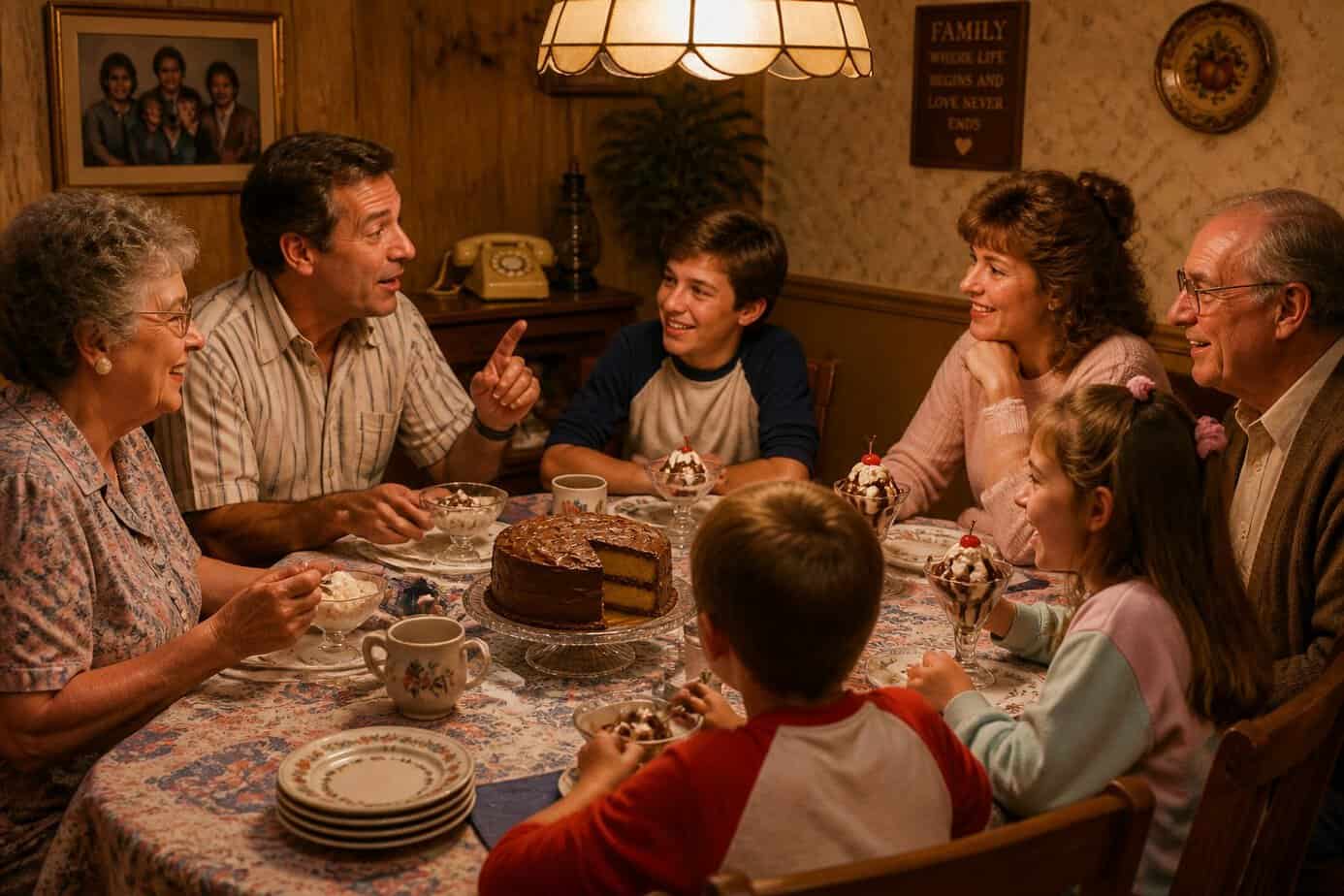
Dessert time in the 1980s often doubled as a casual check-in ritual. Parents would ask about the best and worst parts of everyone’s day while passing around cake or pie.
This simple practice encouraged kids to reflect on their experiences and express both successes and disappointments. It created a natural opportunity for emotional literacy without formal structure.
The ritual typically lasted just a few minutes but allowed each family member to feel heard. Unlike today’s quick debriefs, these conversations happened face-to-face without phones or screens present.
Parents could gauge how their children were really doing beyond the standard “fine” response. The informal dessert setting made it easier for kids to open up about friendship troubles or school challenges.
This nightly rhythm of sharing quietly faded as families began eating separately or rushing through meals.
7. Reading aloud from a family paperback novel before bed
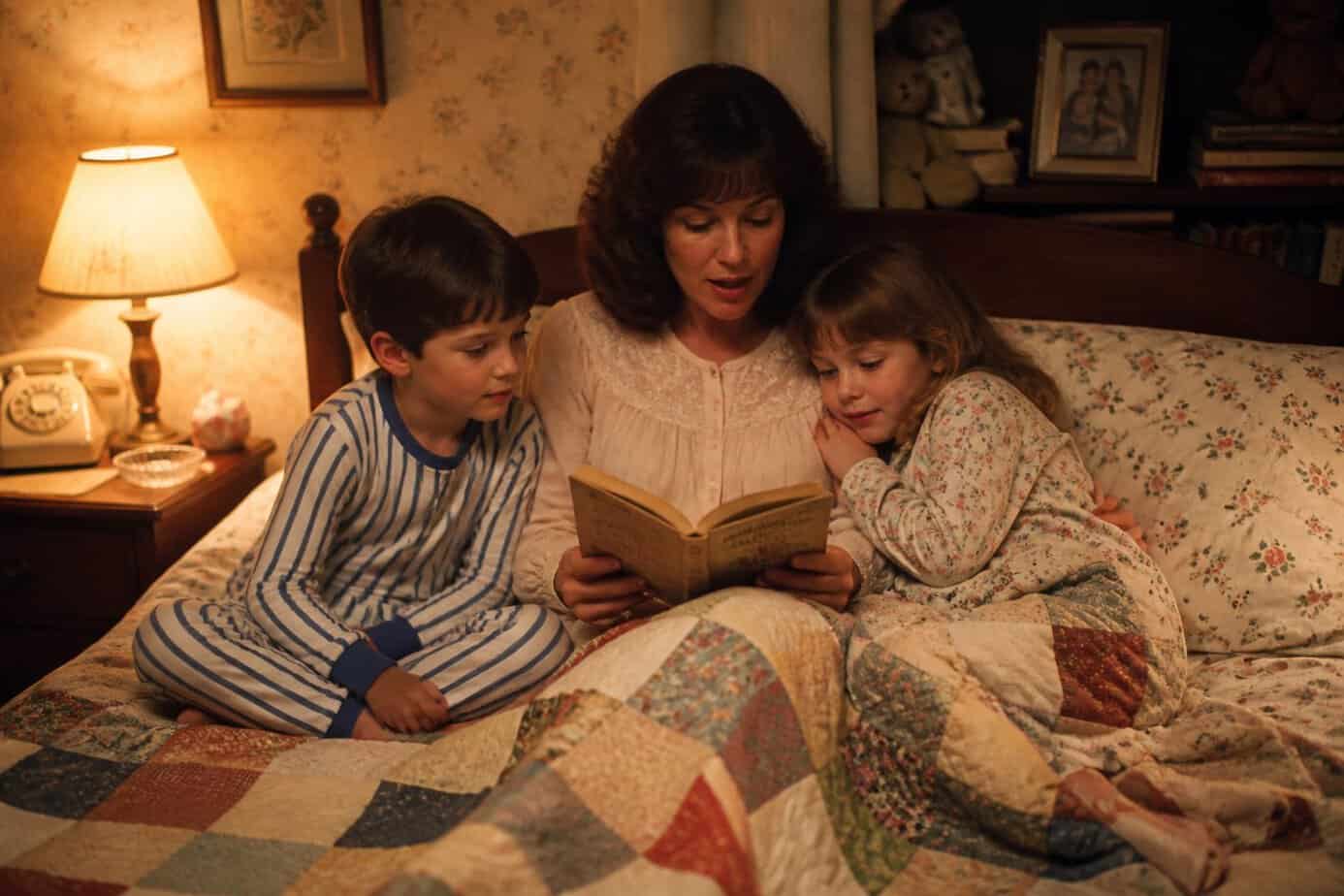
Your parents gathered everyone in the living room after dishes were done, pulling out a worn paperback to continue last night’s chapter. This wasn’t a quick picture book for toddlers. It was a full novel that took weeks to finish together.
The same book passed between your father’s and mother’s hands depending on who had the energy to read that evening. You listened to classics, mysteries, and adventures that were often above your independent reading level but perfectly suited for family listening.
The ritual created a natural endpoint to the evening. When the chapter concluded, everyone headed to bed without argument or negotiation.
This practice faded as individual bedrooms gained their own entertainment options and family schedules became less synchronized.
8. Dad telling a nightly tall tale or fishing story

After the dishes were cleared, many fathers would settle into their favorite chair and launch into an elaborate story. These weren’t just simple recollections. They were exaggerated tales of the fish that got away or unlikely encounters that may or may not have happened.
Kids knew the stories stretched the truth, but that was part of the charm. Your dad might describe a bass the size of a small car or recount how he outsmarted his entire high school class. The details would shift slightly with each retelling.
This ritual taught you about storytelling, timing, and humor without feeling like a lesson. It created a dependable rhythm to your evenings. The tradition faded as families scattered to different rooms after dinner, choosing individual entertainment over shared moments around a single voice spinning tales.
9. Mom leading a short after-dinner hymn or grace singalong
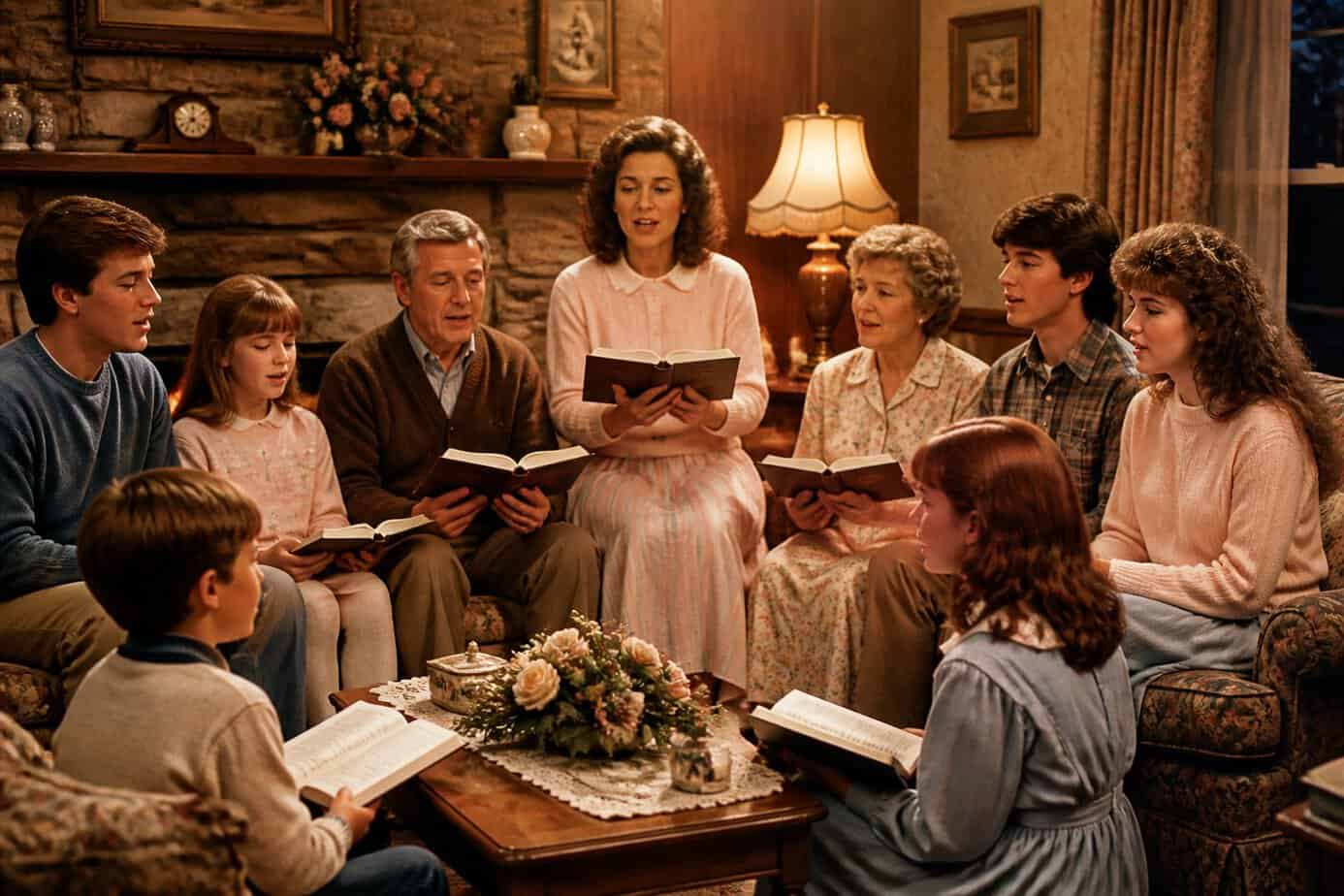
Your mom might have gathered everyone at the table for a quick hymn after clearing the dishes. These weren’t formal performances, just simple songs like “Amazing Grace” or other familiar tunes that everyone knew by heart.
The tradition blended faith with family time in a natural way. You didn’t need hymnals or special preparation. Your mom would start the first line, and voices would join in around the table.
These singalongs lasted just a minute or two but created a peaceful transition between dinner and evening activities. Some families sang graces before meals, while others saved their songs for after.
The practice faded as families spent less time at the dinner table together. Busier schedules and changing routines meant fewer opportunities for these spontaneous musical moments that once ended many family meals.
10. Making stovetop popcorn in a pan for family TV time
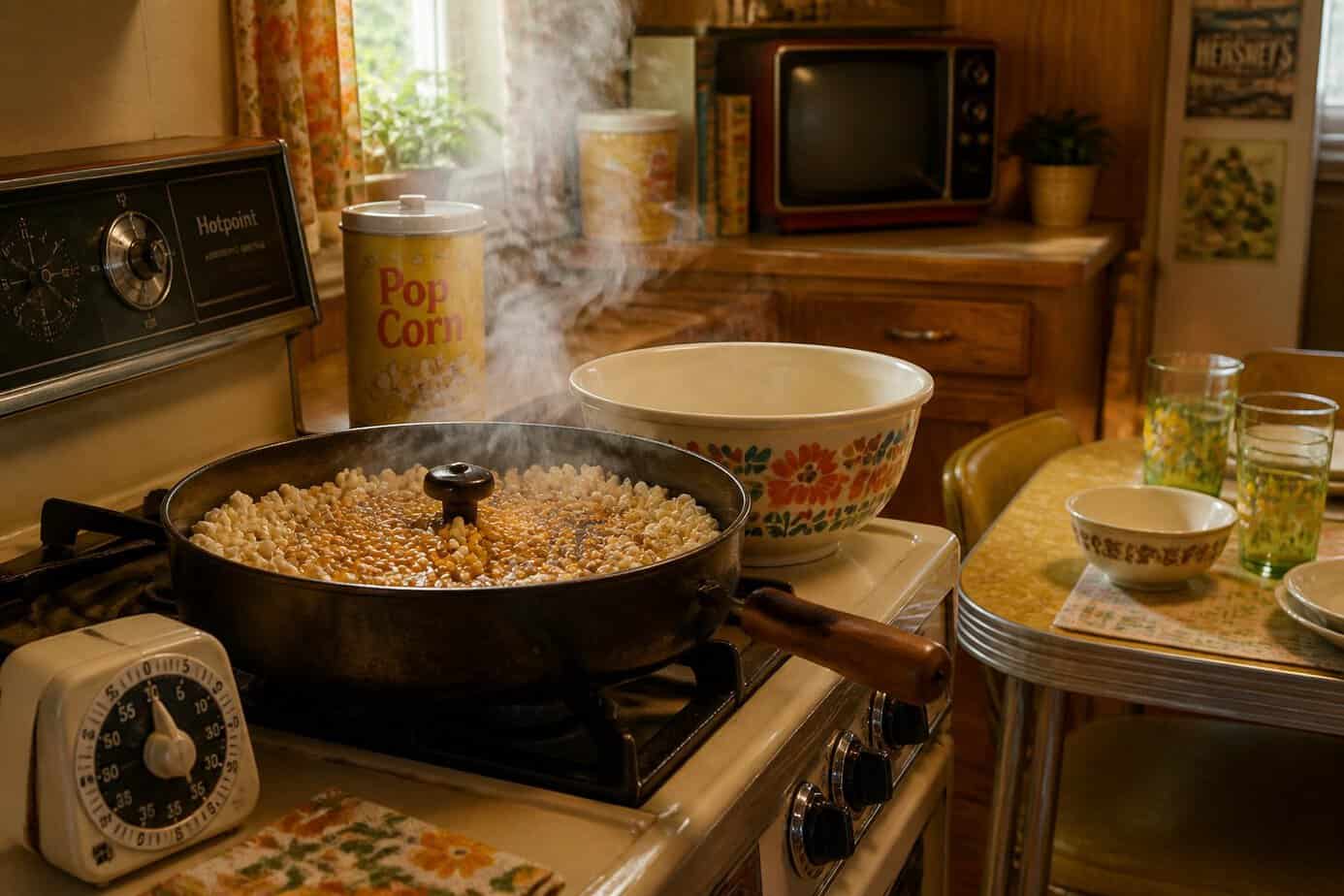
Before microwave popcorn became standard, you made popcorn the old-fashioned way on the stove. Your parents would heat oil in a large pot, add kernels, and shake the pan continuously over the burner. You’d hear the first few pops, then a rapid crescendo of popping that signaled the batch was almost ready.
The process required attention and timing. Someone had to stay by the stove, shaking the pot to prevent burning. The smell of fresh popcorn would fill the house as your family gathered for prime-time television.
This ritual disappeared as microwave popcorn offered convenience without the effort. The communal aspect of someone making popcorn for the whole family faded. Now pre-packaged options replaced the simple combination of kernels, oil, and salt that once brought families together.
11. Doing the crossword puzzle together from the newspaper
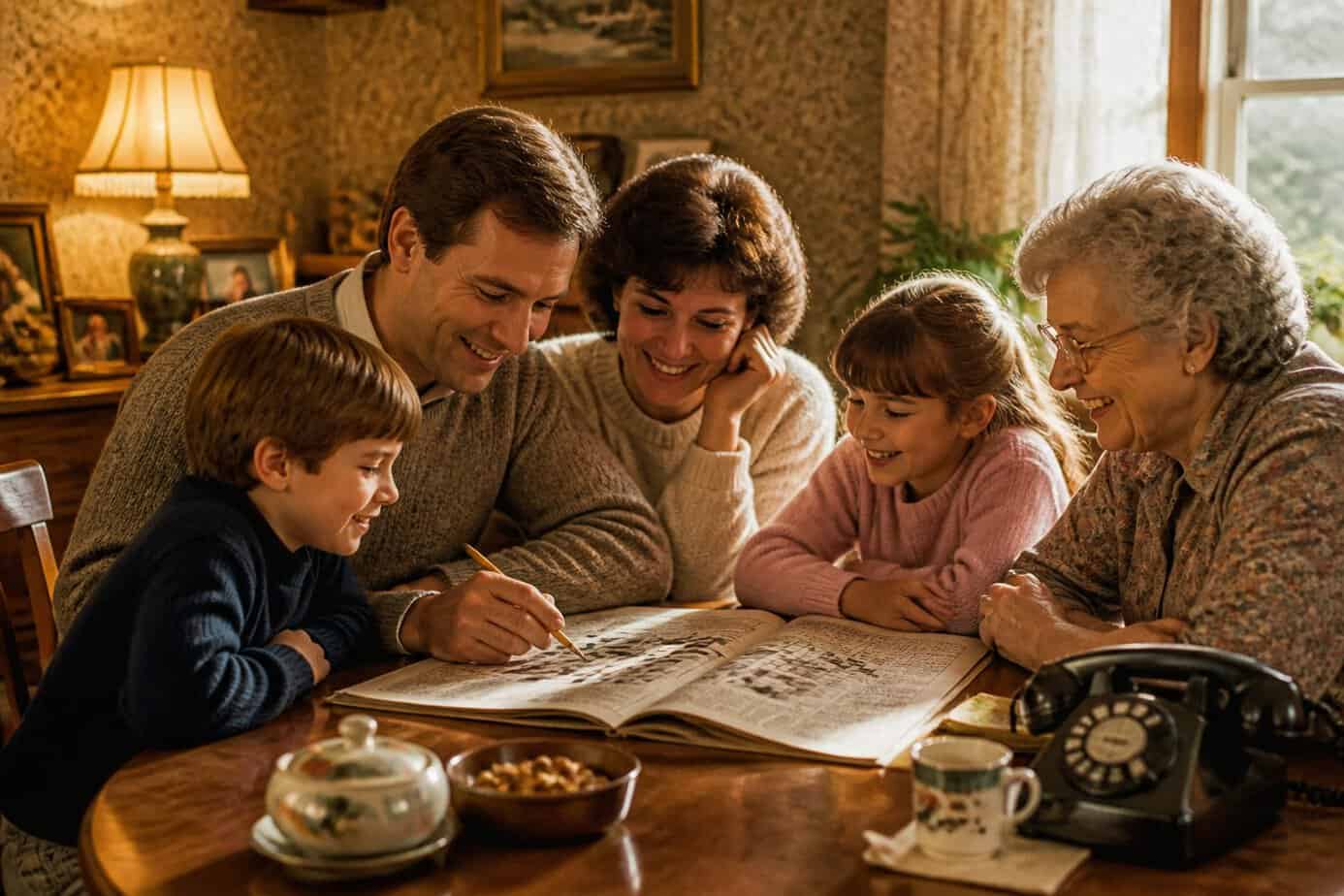
Your family likely gathered around the kitchen table after dinner, passing around the newspaper’s crossword section. Someone would read the clues aloud while others shouted out answers. The ritual created a natural space for conversation and friendly competition.
The daily newspaper crossword became a shared challenge that didn’t require any special equipment or planning. You might have kept a dictionary nearby to settle disputes or help with particularly difficult words. Ink smudges on fingers and crossed-out wrong answers marked the collaborative effort.
This routine faded as newspapers declined and individual smartphones offered solo puzzle apps. The communal aspect of solving clues together disappeared quietly, replaced by personal screen time. What once brought family members together after meals became another activity people do alone.
12. Polishing the family car in the driveway after supper

Summer evenings in the 1980s often meant heading outside with buckets, soap, and chamois cloths to wash and polish the family vehicle. This ritual typically happened after dinner when temperatures cooled and the sun hung lower in the sky.
Parents handed you rags and assigned specific sections of the car to wipe down. You worked alongside siblings, tackling wheels, bumpers, and windows while adults handled the hood and roof.
The activity doubled as quality time and practical maintenance. Your family took pride in keeping the car clean, and the driveway became a workspace where conversations happened naturally.
Neighbors frequently stopped by to chat during these sessions. The routine reinforced responsibility and contributed to the car’s longevity, something families valued when vehicles represented significant investments.
13. Teaching children cursive handwriting at the kitchen table
Would you like to save this?
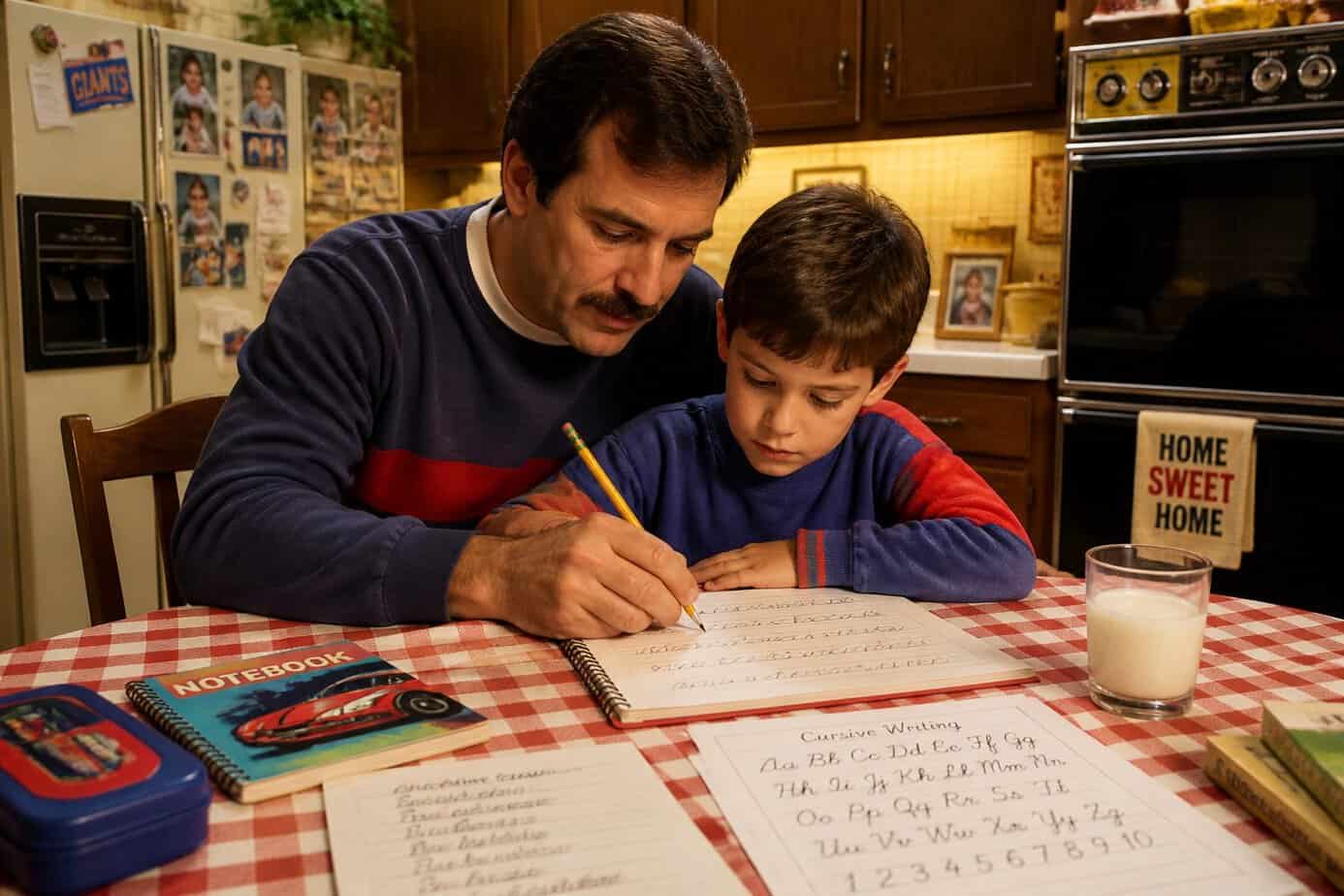
After dinner, many parents in the 1980s would sit with their children at the kitchen table to practice cursive writing. The kitchen became an informal classroom where flowing script was drilled with the same dedication earlier generations had shown.
Parents would guide small hands through loops and connections, teaching the rhythm of joined letters on lined paper. This practice helped develop fine motor skills and created a distinctive writing style for each child.
The ritual disappeared gradually as typing became prioritized in schools. After 2010, cursive instruction was dropped from many curricula entirely when it was omitted from Common Core standards.
Those evening sessions at the kitchen table represented more than penmanship practice. They were moments of focused attention between parent and child, creating connection through a skill once considered essential.
14. Sewing mending tasks together—patching socks or hems
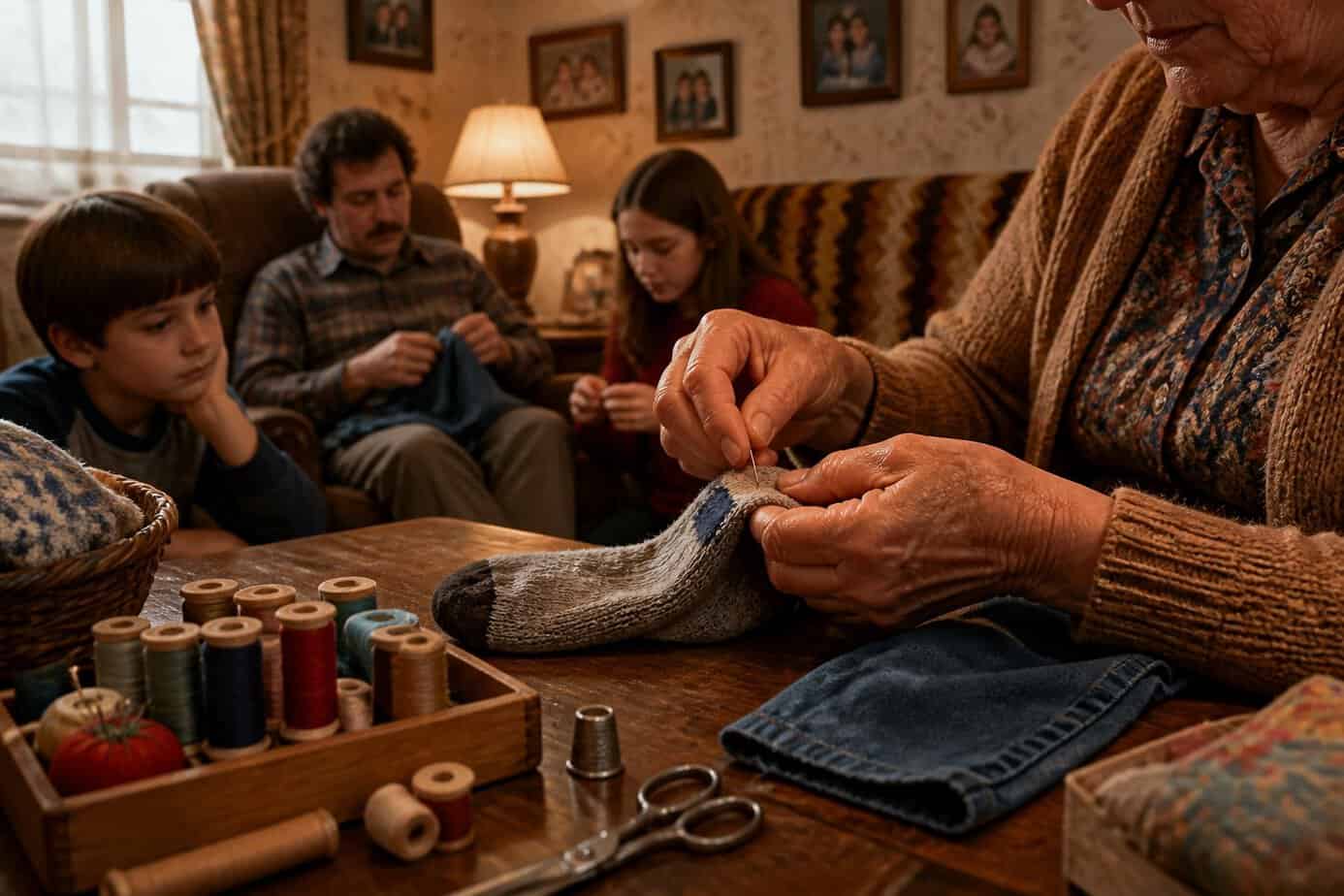
After dinner in the 1980s, you’d often find family members gathered in the living room with a sewing basket between them. Your mom might patch your jeans while your grandmother darned socks that had worn thin at the heel.
These evening mending sessions served a practical purpose when clothing was a larger part of household budgets. You learned basic stitches by watching and eventually joined in yourself.
The ritual disappeared as clothes became less expensive and disposable fashion took hold. Sewing boxes moved to closets and basements. Most families today replace damaged clothing rather than repair it.
Your skills transferred from one generation to the next during these quiet sessions. You discovered which thread matched best and how to reinforce a weak seam before it tore completely.
15. Sorting and folding laundry as a family ritual
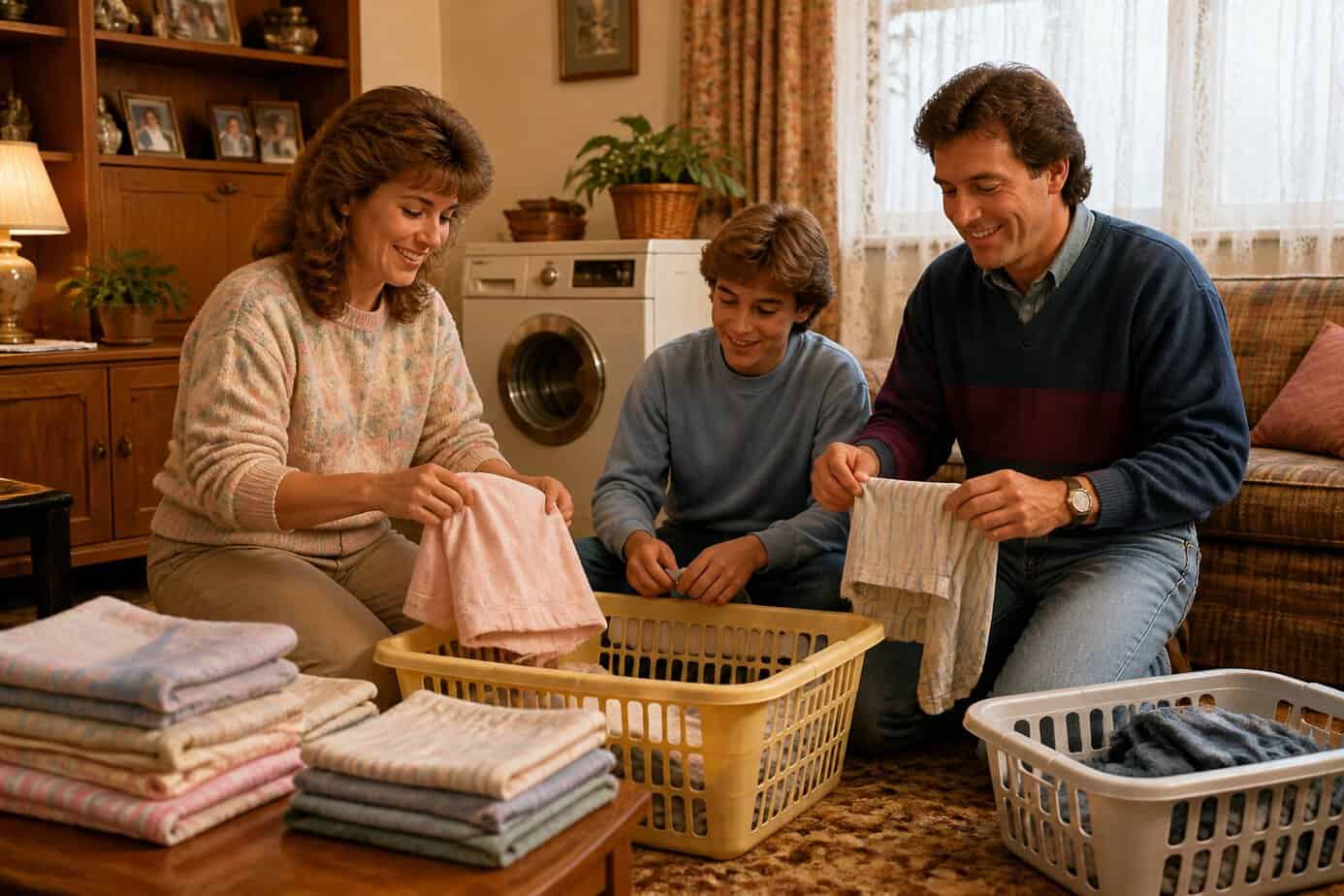
After dinner, many families would haul the warm laundry basket into the living room and fold clothes together. Parents and kids sat on the floor or couch, matching socks and smoothing out shirts while the TV played in the background.
This wasn’t planned as quality time, but it became a natural way to talk about school, weekend plans, or nothing in particular. The shared task kept hands busy while conversation flowed.
Kids learned to fold properly and sort clothes by person or room. Siblings sometimes competed to find sock matches fastest or argued over whose turn it was to handle towels.
Today, laundry happens individually whenever someone has time. Families rarely gather around a shared basket anymore, and the casual conversations that happened during those folding sessions have mostly moved elsewhere or disappeared entirely.
16. Scrapbook-night: arranging printed photos into albums
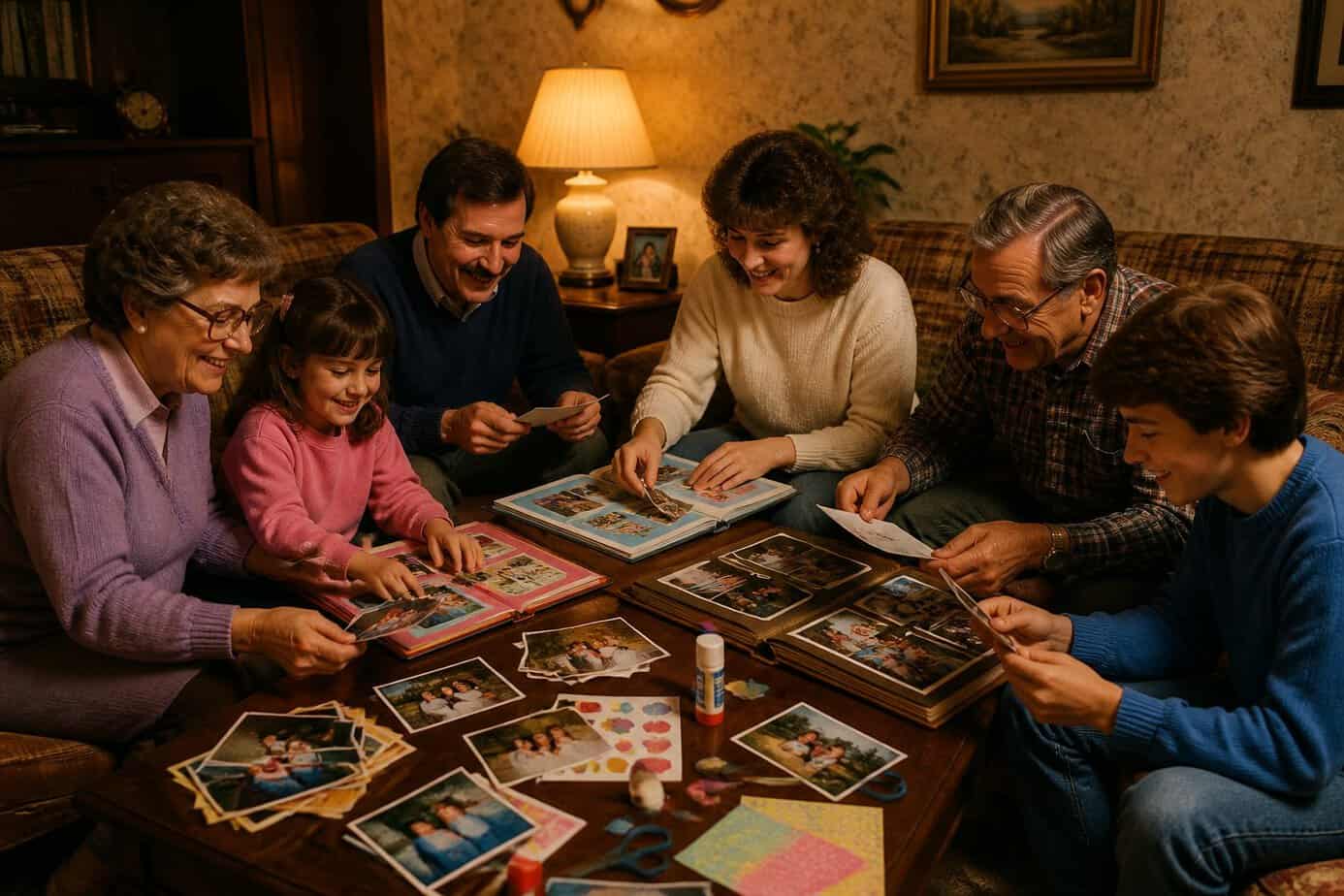
After dinner, your family would gather around the dining table with boxes of newly developed photographs. You’d sort through the prints, deciding which moments deserved a place in the family album. The smell of photo corners and the sound of pages turning created a distinct atmosphere.
Scrapbooking served as a method of preserving personal and family history, with albums often containing photographs, printed media, and handwritten captions. Your parents would write dates and names beneath each photo while you arranged them on the page.
These evenings turned photo organization into a shared activity rather than a solitary task. The physical albums lived on coffee tables and bookshelves, ready for browsing during visits. Digital photography and cloud storage eliminated the need for these dedicated sorting sessions, quietly ending the ritual.
17. Calling distant relatives on a landline for a Sunday check-in
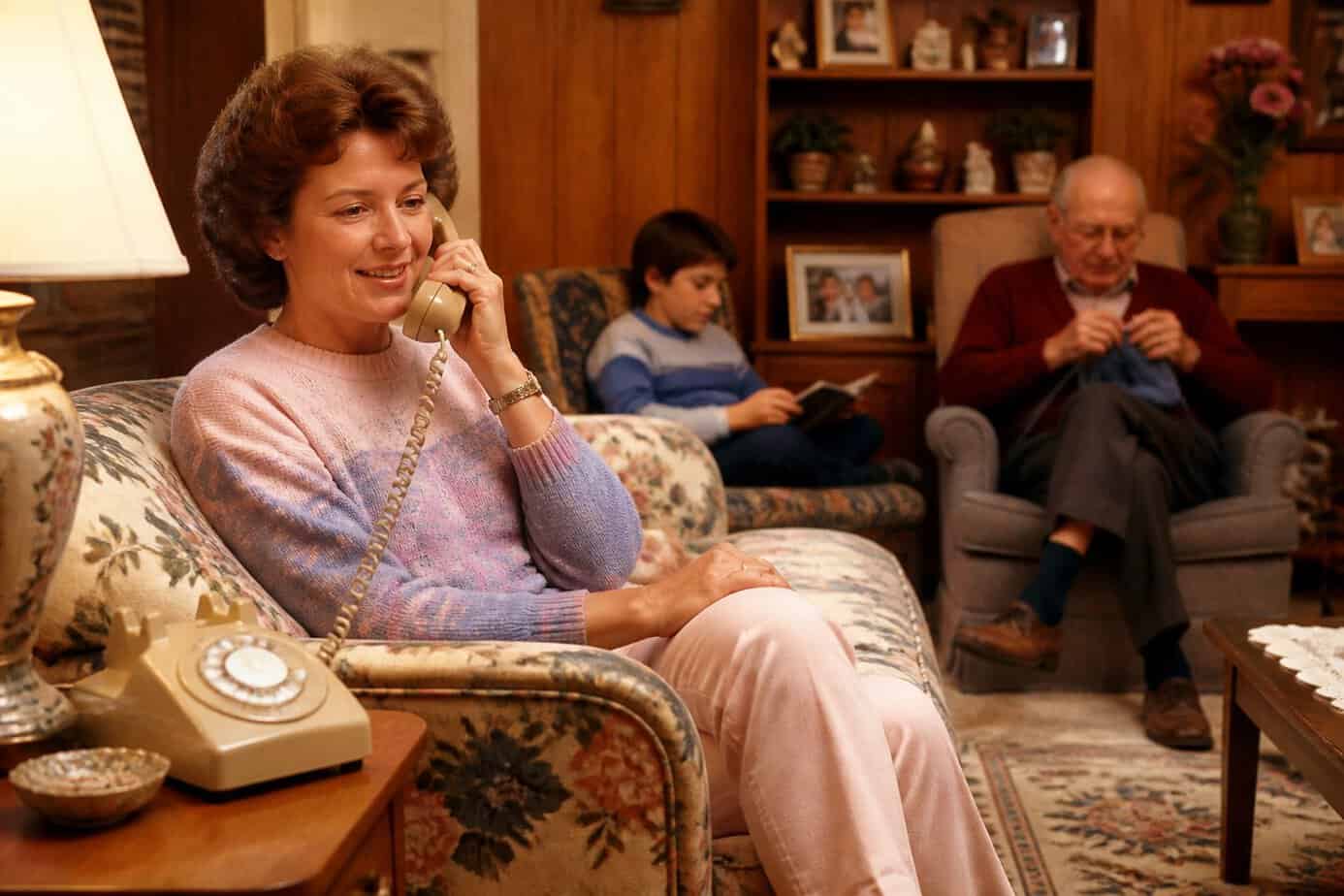
Sunday evenings meant gathering around the phone to call grandparents, aunts, or cousins in other states. These calls were scheduled events, not spontaneous conversations.
You watched the clock because long-distance rates charged by the minute. A ten-minute call could cost as much as a restaurant meal in 1980. Families kept conversations focused and efficient.
Everyone took turns talking. You’d update relatives on school, work, and family news in quick summaries. The phone passed from person to person while others waited nearby.
No one called before 9 a.m. or after 10 p.m. These unwritten rules governed landline etiquette. You planned what to say beforehand to make the most of expensive minutes.
These weekly check-ins maintained family bonds across distances when letters took days and instant communication didn’t exist.
18. Lighting the living-room cigarette and passing the ashtray (historical recall)
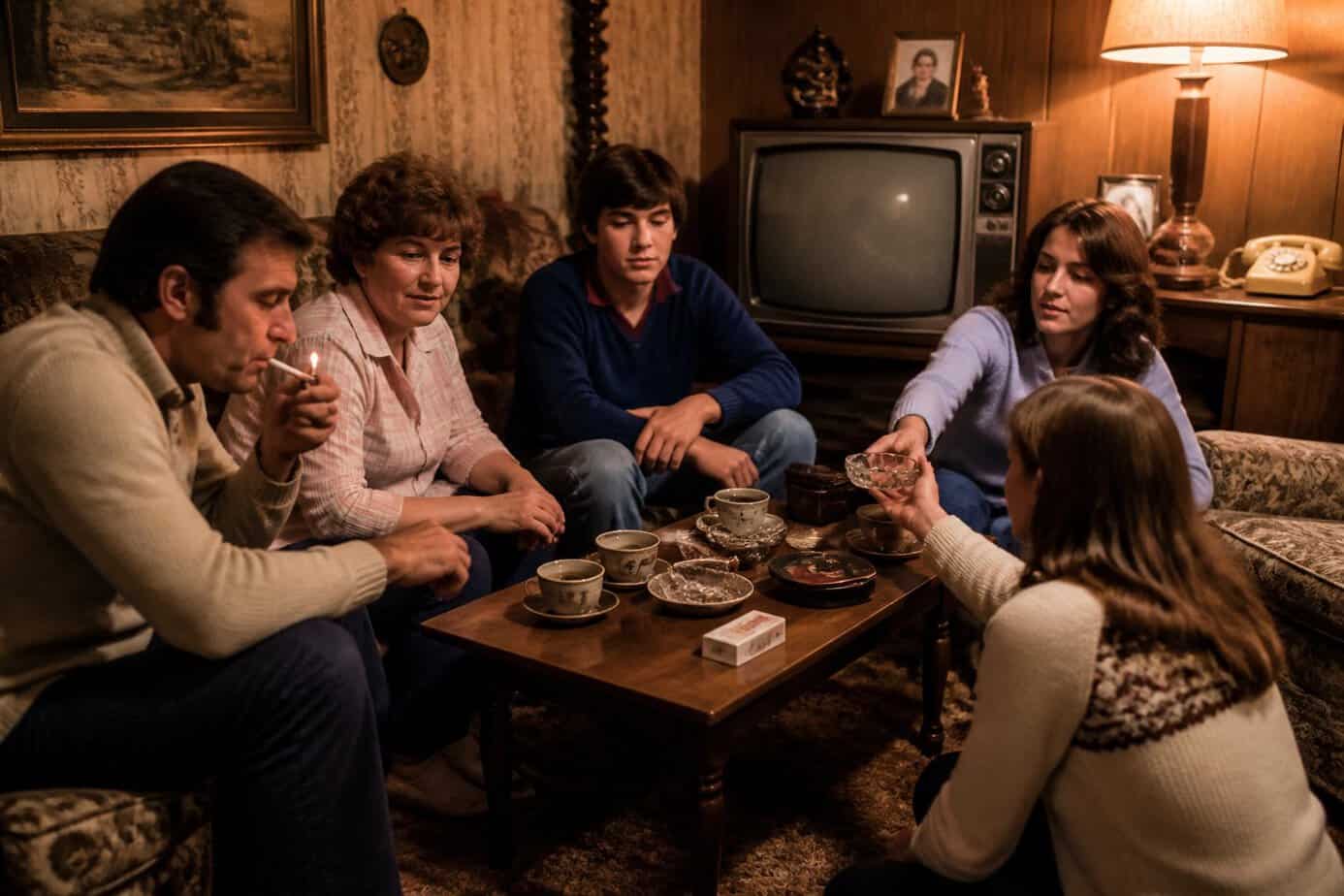
After dinner in the 1980s, many adults settled into their living rooms with a cigarette. You would see parents and relatives light up without much thought, often right there on the couch while the family gathered around.
Ashtrays were permanent fixtures on coffee tables and end tables in most homes. They were emptied daily, sometimes multiple times, as smoking indoors was simply part of the routine.
The ritual of passing a heavy glass or ceramic ashtray between family members who smoked was completely ordinary. You didn’t think twice about it happening in the same room where children played or watched television.
This practice faded as smoking regulations changed and awareness of secondhand smoke increased. What once seemed like a natural after-dinner habit became socially unacceptable relatively quickly, disappearing from most households by the mid-1990s.
19. Polishing shoes by the front door as a weekly ritual

Sunday evenings in the 1980s often included the familiar sight of family members gathered near the front door with shoe polish and brushes. You’d line up everyone’s dress shoes for the week ahead, preparing them for school and work. The ritual wasn’t just about maintenance.
Your parents taught you to care for leather shoes properly, applying polish in circular motions and buffing them to a shine. The smell of wax polish filled the entryway as you worked through each pair. This weekly task ensured everyone started Monday morning with presentable footwear.
The practice faded as casual footwear became more acceptable in workplaces and schools. Sneakers and synthetic materials replaced leather dress shoes in many households. The front door shoe-polishing station quietly disappeared from most homes.
20. Laying out tomorrow’s school uniforms together
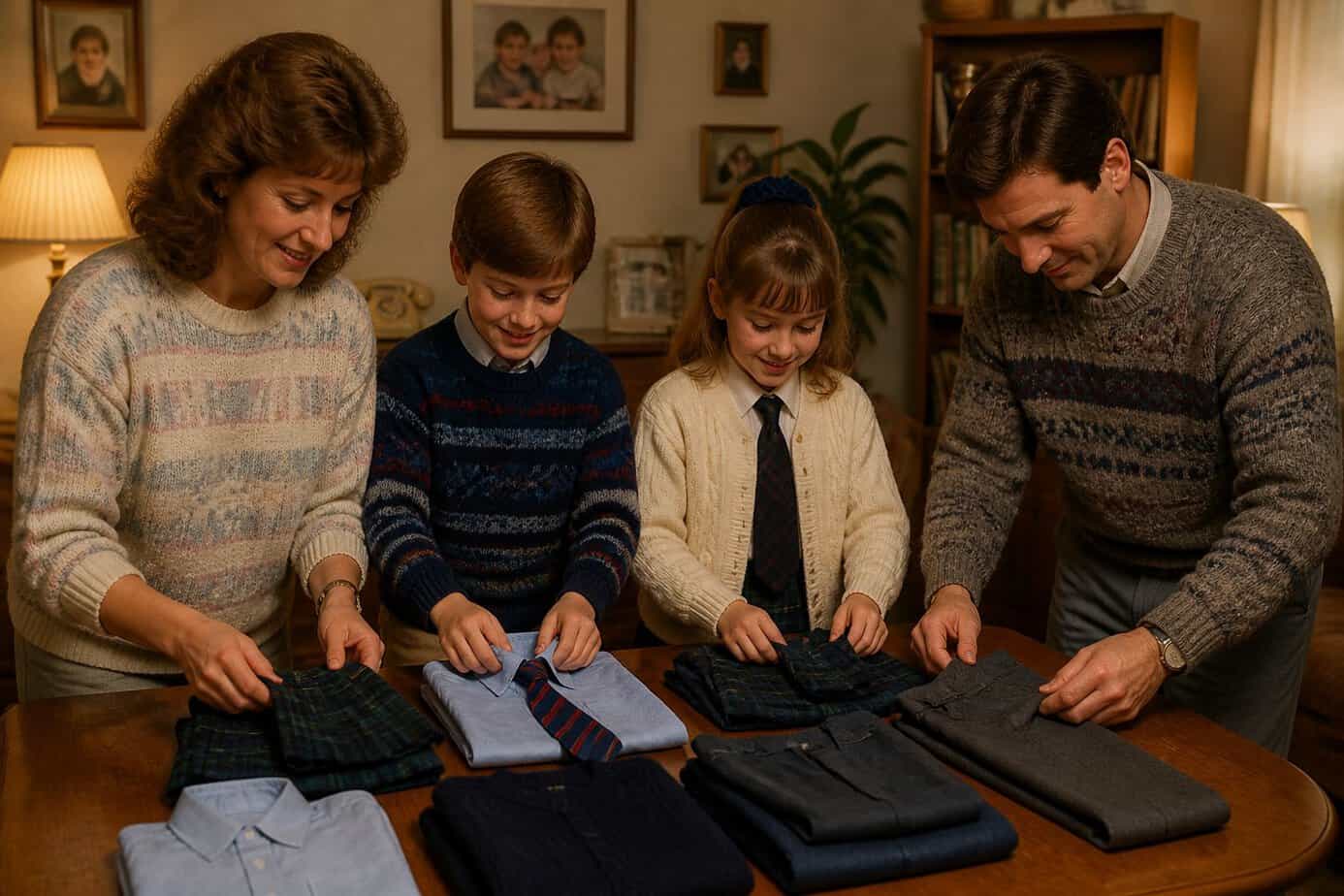
After dinner wrapped up, you’d head to your room with a parent to pick out the next day’s outfit. For families with school uniforms, this became a quick nightly checkpoint. You’d lay out your polo shirt, pants or skirt, and socks on a chair or the end of your bed.
Parents used this time to check that everything was clean and properly ironed. They’d inspect hems for damage and make sure buttons were all intact. You learned to take responsibility for your appearance and plan ahead.
This ritual disappeared as morning routines became more rushed and kids took over their own clothing choices. The simple act of preparing together created a moment of connection that most families don’t build into their evenings anymore.
21. Playing vinyl records on the hi-fi system after dinner
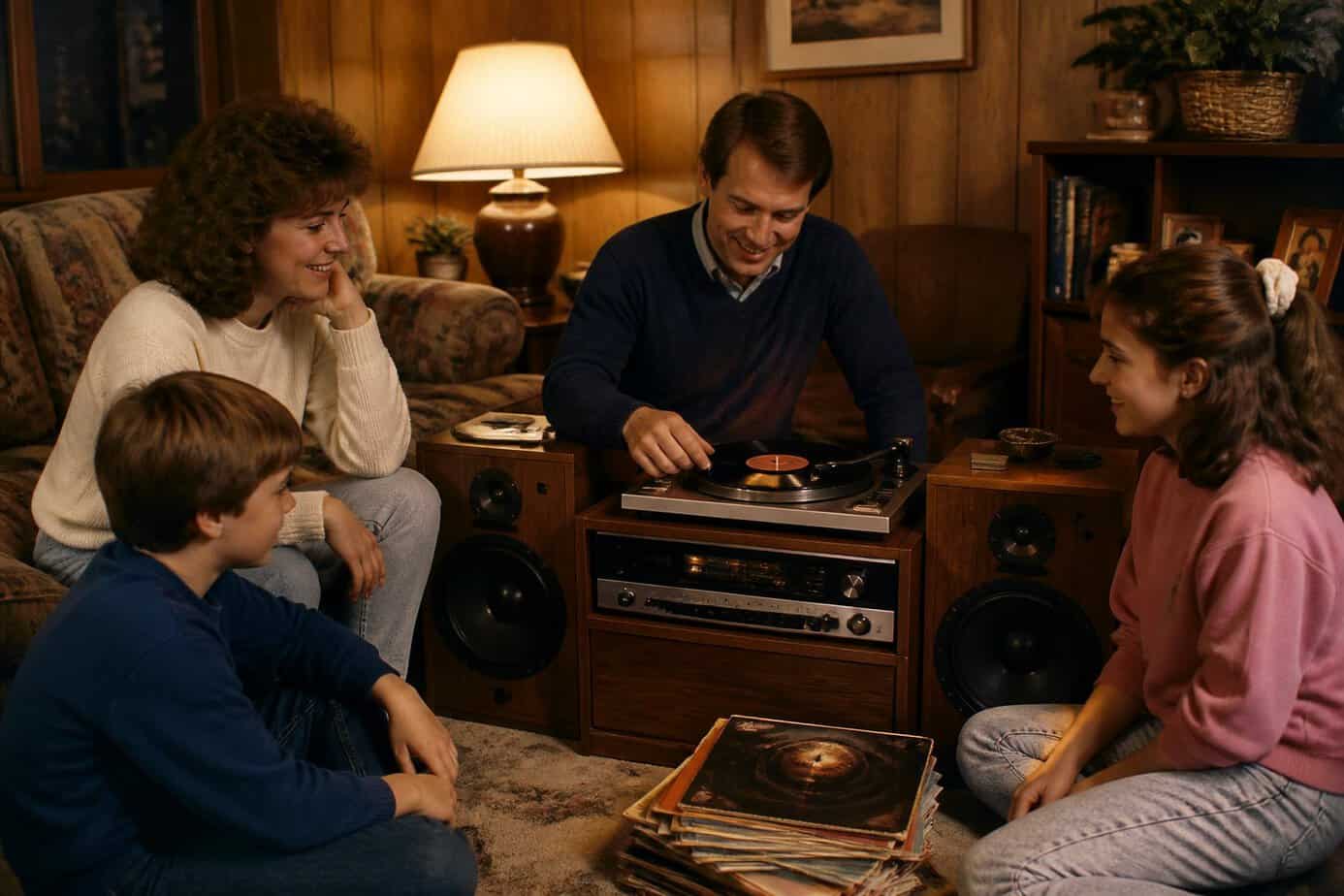
After clearing the dinner table, families gathered in the living room to select albums from their collection. Someone would pull a record from the shelf, slide it from its sleeve, and carefully place it on the turntable. The ritual involved wiping down the vinyl, positioning the tonearm, and lowering the needle onto the first track.
Everyone sat together listening to full albums from start to finish. When one side ended, someone got up to flip the record or choose something new. This shared experience meant actual conversation about the music and deliberate attention to what was playing.
The arrival of portable music players and personal headphones shifted listening from a communal activity to an individual one. Your family’s hi-fi system, once the centerpiece of evening entertainment, became less central to daily life.
22. Family coin-collecting or stamp-sorting sessions at the table
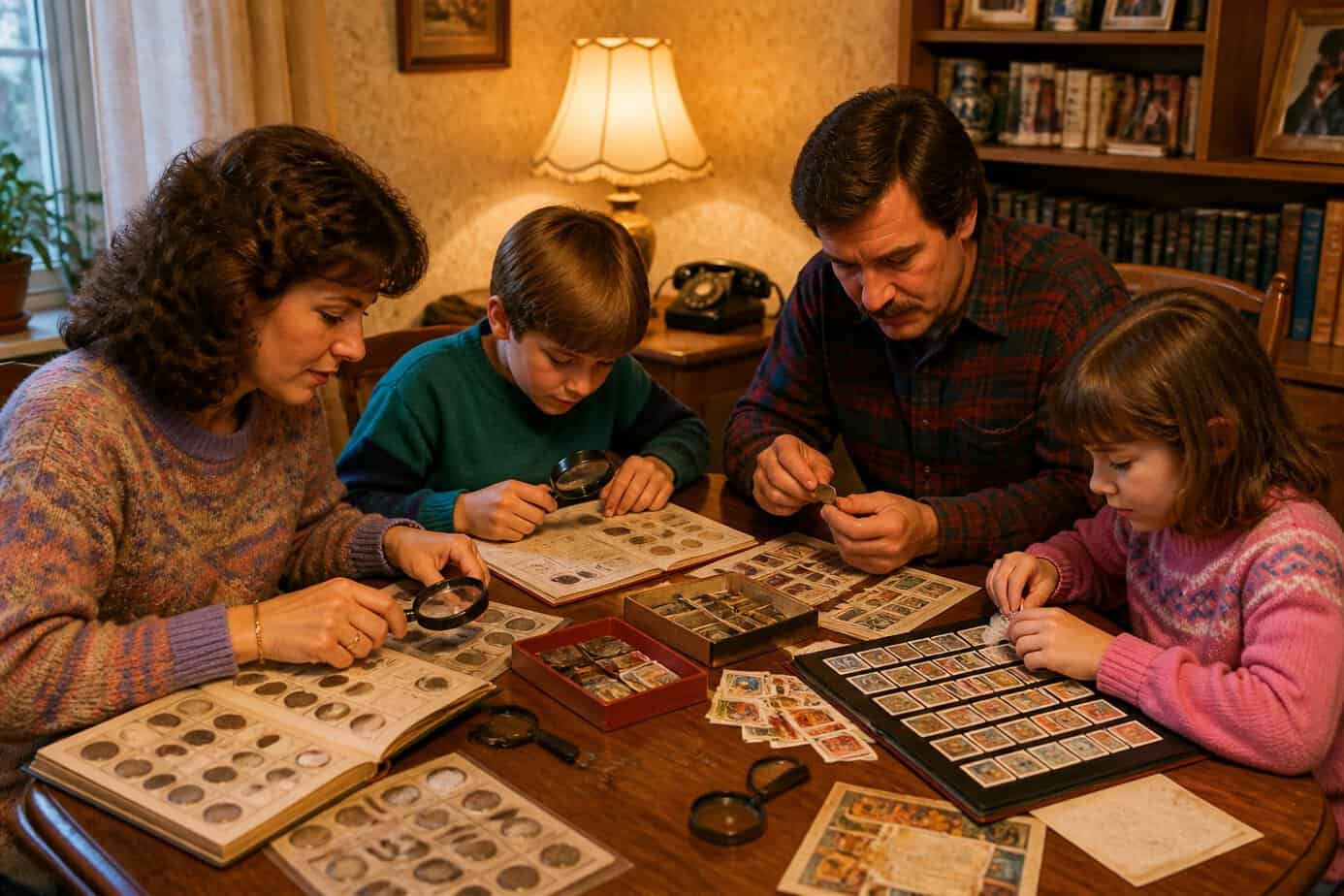
After the dishes were cleared, many families spread out coin albums or stamp collections across the kitchen table. You and your siblings would examine pennies for rare mint marks or soak stamps from envelope corners in small bowls of water.
These sessions weren’t necessarily about building valuable collections. They were about learning patience, developing attention to detail, and spending quiet time together. Your parents might have explained the history behind commemorative stamps or helped you organize coins by year and denomination.
The hobby required minimal investment but offered maximum engagement. You learned geography from international stamps and history from the dates on worn coins.
These collections often sat in closets or drawers, but the ritual of maintaining them created structured family time. The practice faded as digital entertainment offered easier ways to occupy evening hours.
23. Ritual of washing the dinner dishes together by hand
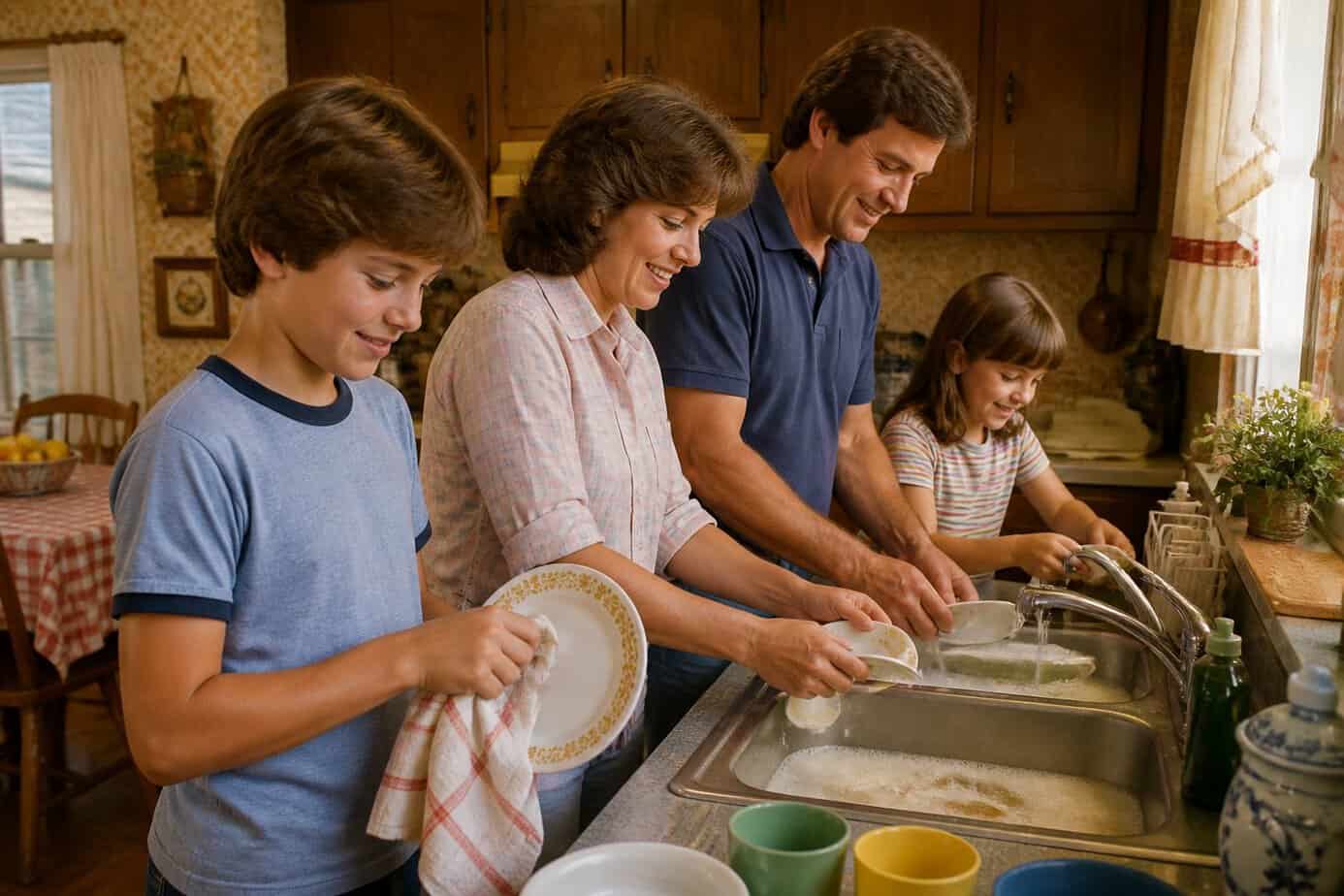
Before automatic dishwashers became standard in American homes, washing dishes by hand was a nightly family activity. Parents and children gathered at the sink with designated roles: one person washed, another rinsed, and someone else dried and put away. This routine created natural opportunities for conversation while working toward a common goal.
The ritual taught children responsibility and the value of contributing to household tasks. Younger kids might start by drying silverware, while older ones graduated to handling plates and glassware.
Standing side by side at the sink, families often had their most honest conversations. The repetitive nature of the task made it easier to discuss difficult topics or share details about the day. These moments of connection disappeared when dishwashers took over the cleanup duty, eliminating both the shared work and the casual interaction that came with it.
24. Preparing and labeling photo negatives in a basement darkroom
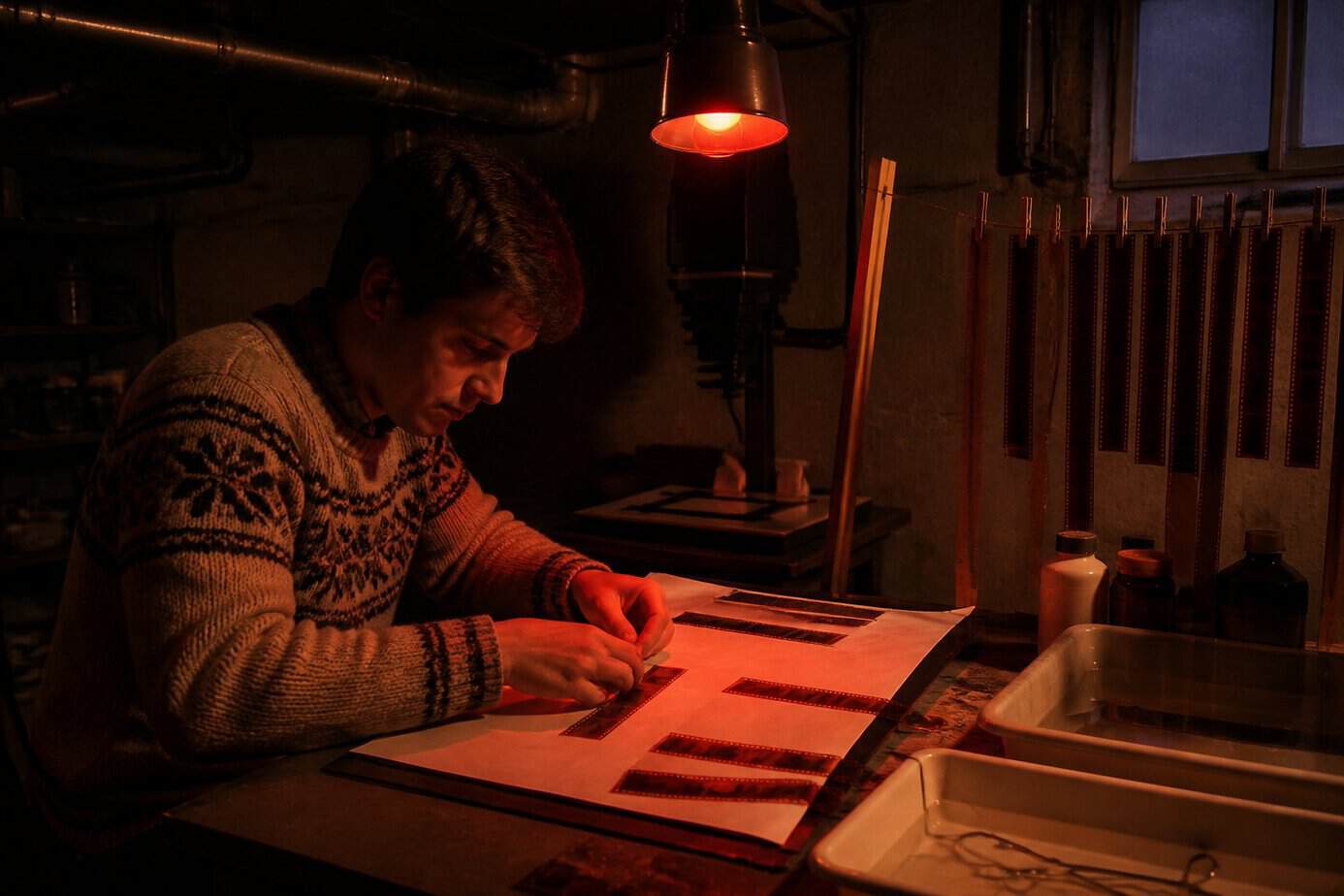
After dinner, many families headed to their basement darkrooms to process the day’s photographs. You’d carefully remove negatives from the enlarger carrier and prepare them for long-term storage. The shiny side would face upward as you inspected each frame under safe lighting.
Labeling was essential for organization. You used soft graphite pencils to mark information directly on negative sleeves, noting dates, events, and subjects. This made retrieval easier when you wanted to make prints later.
The process required patience and attention to detail. You’d organize negatives into archival sleeves and store them in dedicated boxes or binders. Each roll represented family memories worth preserving properly.
By the late 1980s, one-hour photo labs became common. Fewer families maintained home darkrooms, and the ritual of handling your own negatives gradually faded from after-dinner routines.
25. Performing bedtime lullaby rounds by a parent with a guitar
Would you like to save this?
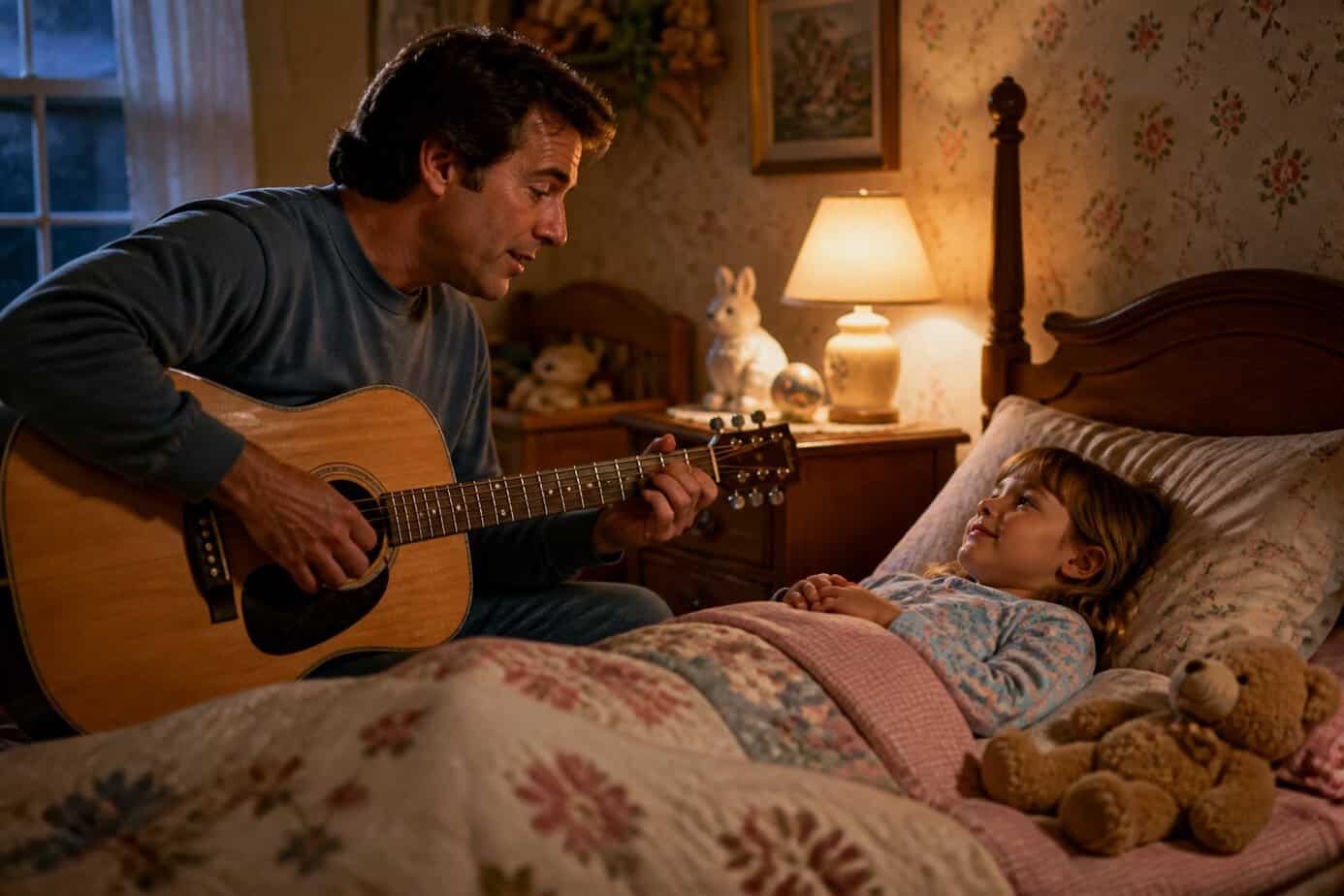
Your parents likely tucked you in with live guitar music during the 1980s. This nightly ritual involved a parent sitting at the edge of your bed, softly strumming familiar lullabies or folk songs.
The acoustic guitar served as the primary instrument for these intimate performances. Parents typically played simple melodies like “Twinkle, Twinkle Little Star” or popular folk tunes adapted for bedtime. The practice created a calming atmosphere that helped children transition to sleep.
This ritual gradually faded as families became busier with work schedules and extracurricular activities. Pre-recorded music and digital devices eventually replaced live performances. The personal connection of a parent playing guitar specifically for bedtime largely disappeared from regular family routines by the 1990s.
26. Grandparent-led storytelling of family history after meals
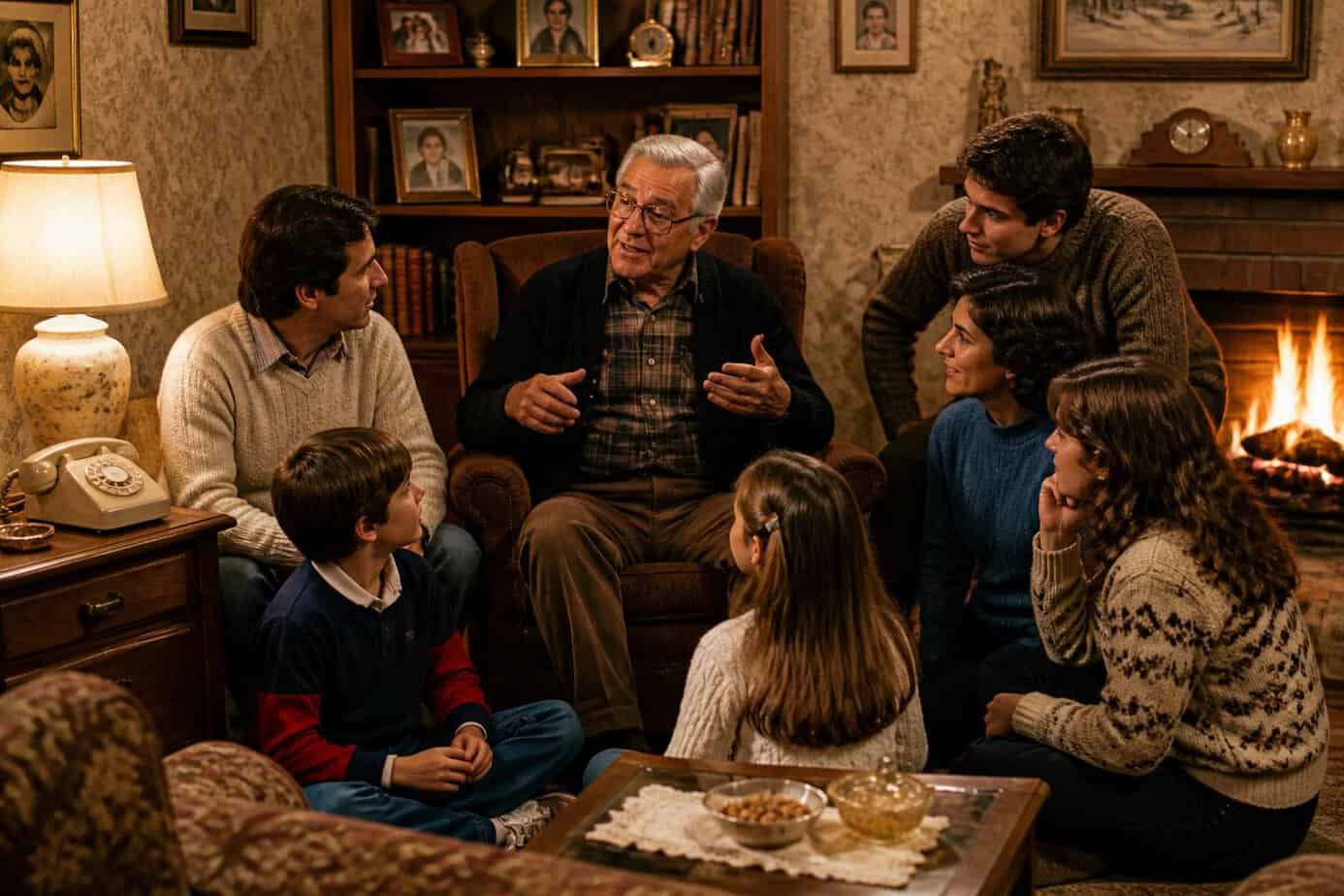
After dinner plates were cleared in the 1980s, grandparents often settled into their favorite chairs to share family stories. These weren’t planned presentations but natural conversations that emerged as everyone lingered at the table or moved to the living room.
Your grandparents recounted tales of their childhoods, how they met, and what life was like during different eras. They described relatives you’d never meet and explained how your family came to live where they did.
These storytelling sessions happened regularly because families had fewer competing distractions. Without smartphones or streaming services demanding attention, listening to an elder’s memories was evening entertainment that also preserved your family’s history.
The stories covered everything from small details like favorite recipes to significant events like immigrations and wartime experiences. You absorbed this oral history without realizing you were learning your family’s legacy.
27. Setting the tabletop centerpiece for next meal as a shared task
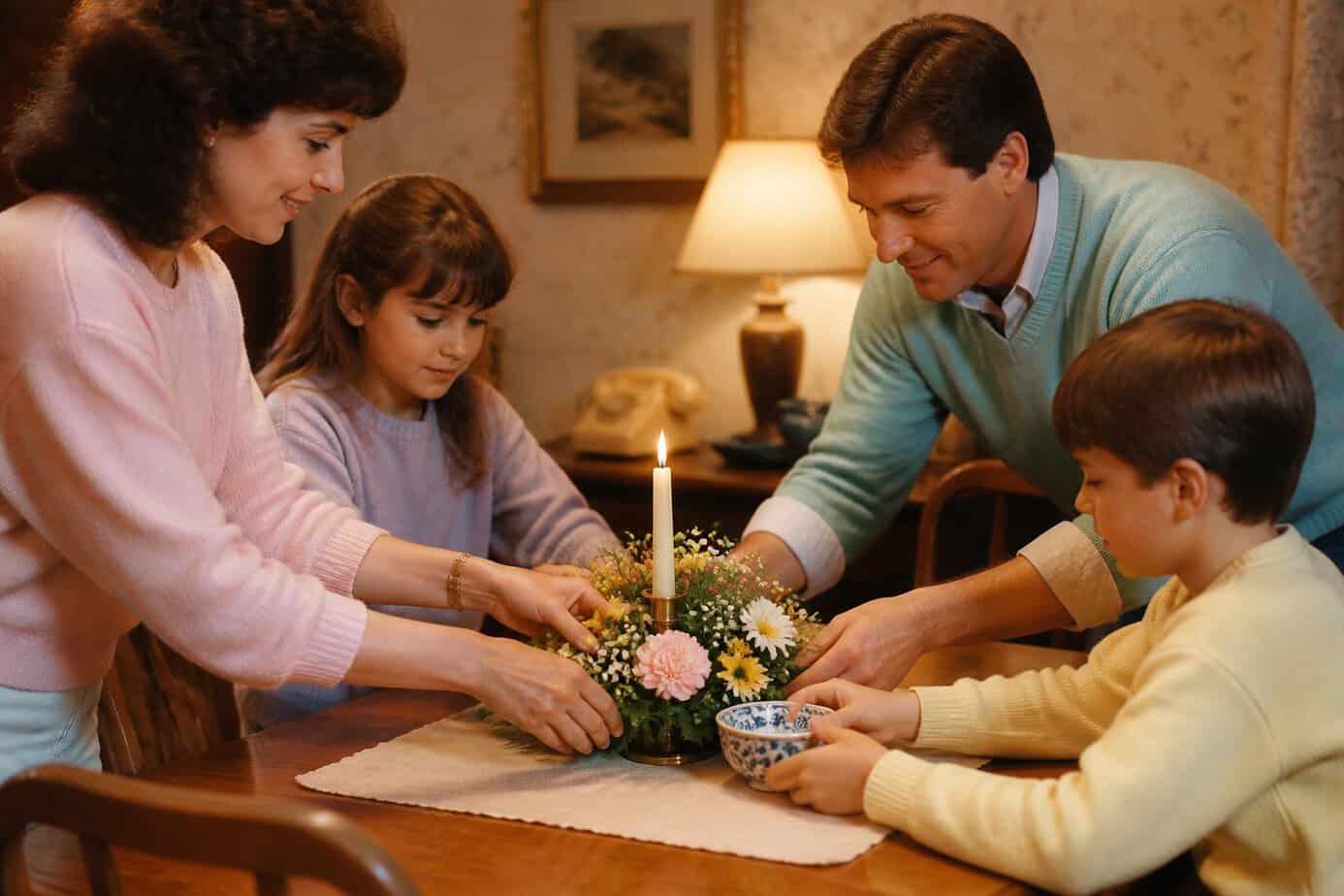
After clearing dinner dishes in the 1980s, families often worked together to prepare the table for the next day. You and your siblings might have arranged a simple bowl of fruit or positioned a vase of fresh flowers in the center while parents wiped down the table.
This small ritual taught responsibility and gave everyone ownership of the dining space. You learned which items worked as centerpieces and how presentation mattered, even for everyday meals.
The task took only a few minutes but created a sense of completion to the evening routine. Your table was ready and welcoming for breakfast the next morning.
Today, many families leave tables bare between meals or pile them with mail and devices. The practice of thoughtfully resetting the table as a group has largely faded from daily life.
28. Watching local evening news and weather as a family routine
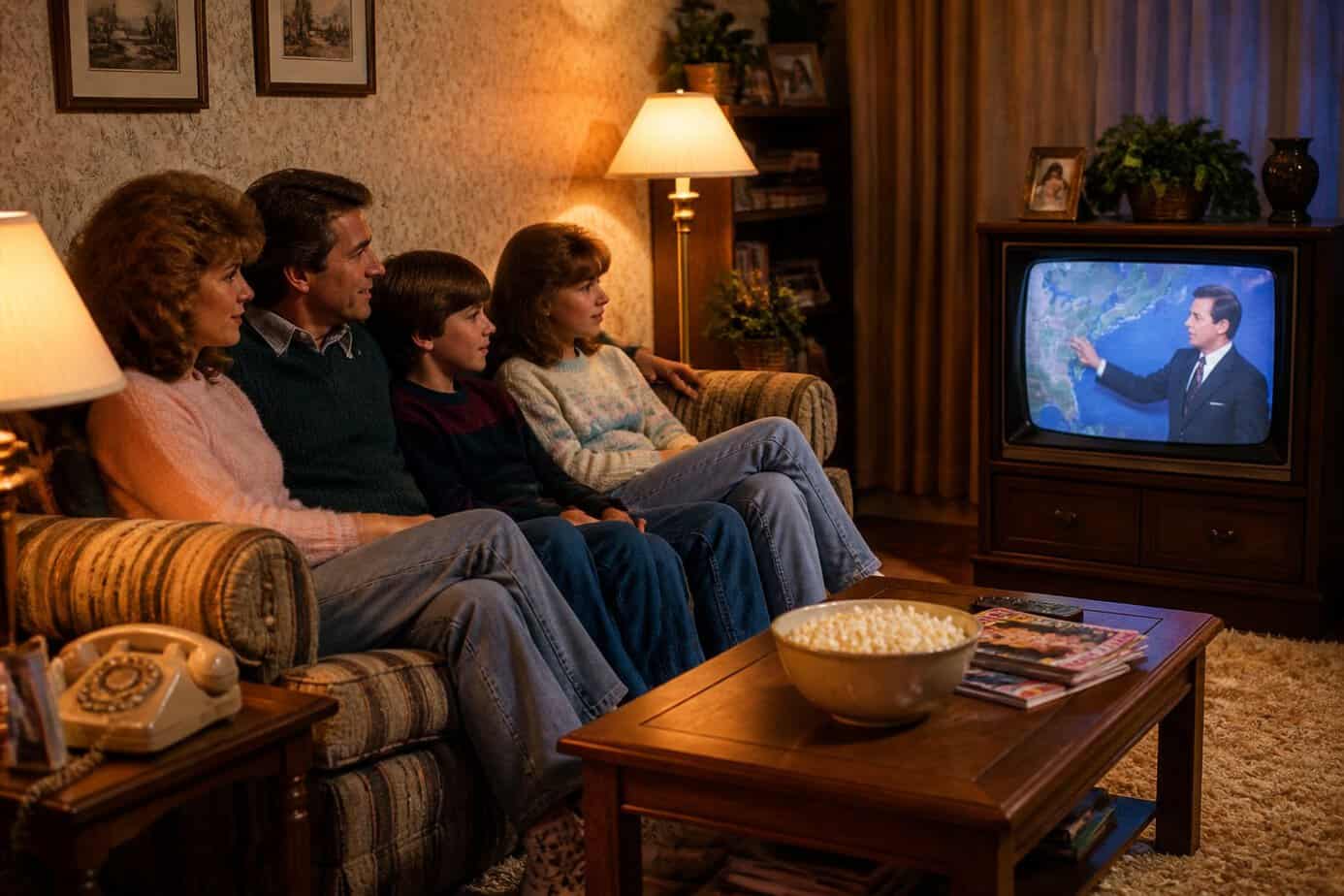
The 6 o’clock news wasn’t just background noise. It was an appointment your family kept together, usually right after dinner while clearing dishes or settling into the living room.
You’d gather around to hear the day’s headlines, local happenings, and most importantly, tomorrow’s weather forecast. There was no checking your phone for instant updates. The evening newscast was when you learned what happened in your community and what to expect the next day.
Your parents planned around that half-hour block. Kids did homework nearby or waited for the news to end before claiming the TV. The anchors became familiar faces you trusted, almost like extended family members visiting each evening.
This shared ritual meant everyone absorbed the same information at the same time, creating natural conversation starters around current events.
29. Lighting a single candle and sharing a calm five-minute reflection
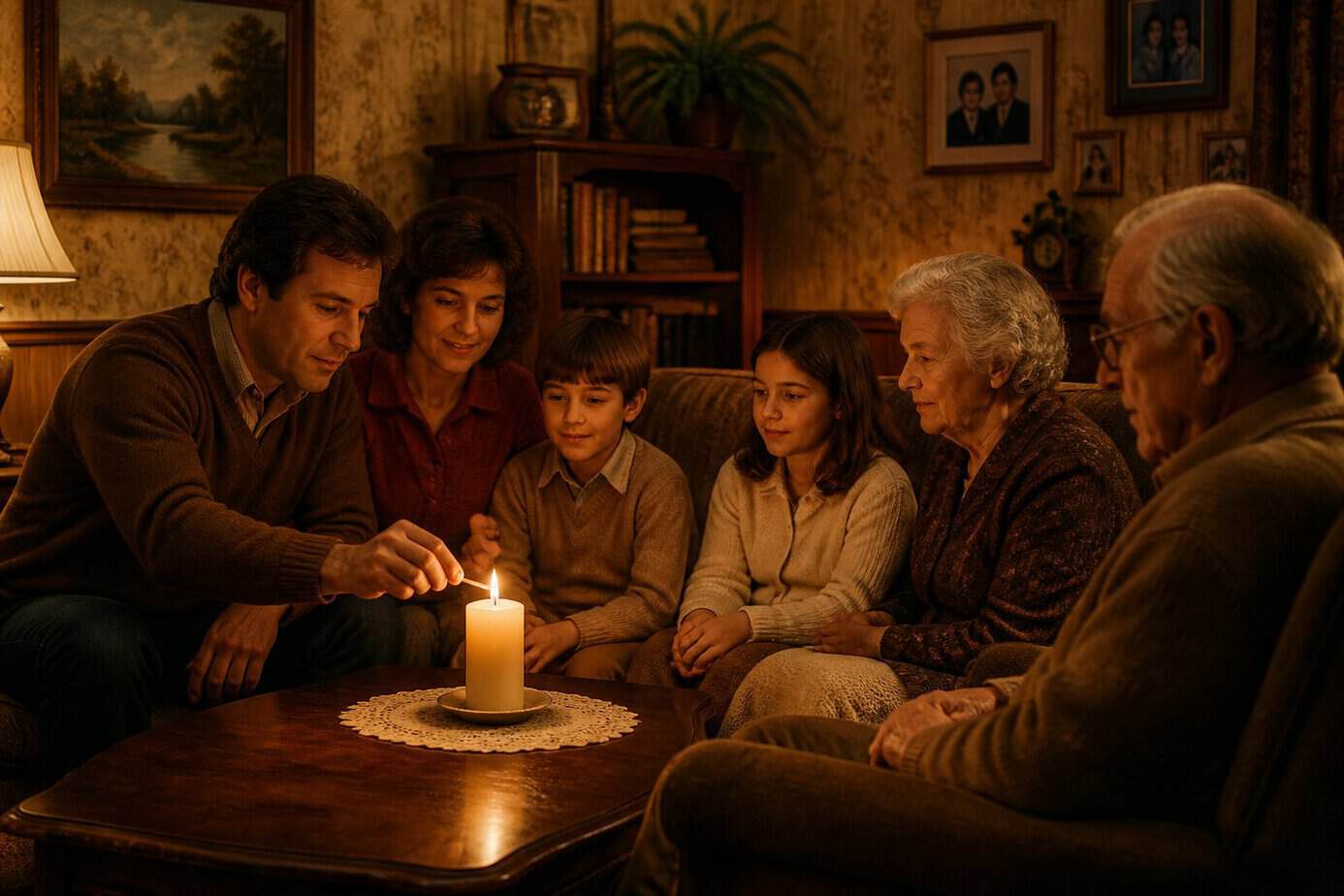
Before bedtime routines took over, many families would gather around the table after dinner with a single lit candle. This simple practice created a natural pause in the evening.
You would sit together in the soft glow, taking turns sharing thoughts about the day or sitting in comfortable silence. The ritual lasted just five minutes, yet it marked a clear transition from the busyness of dinner to quieter evening activities.
The candle itself became a focal point that discouraged interruptions. Your family likely abandoned this practice as schedules became more fragmented and individual activities took priority after meals.
The ritual required minimal preparation but offered a consistent moment of connection. It disappeared gradually as families stopped gathering at the table after eating.
30. Tuning the AM radio for late-night baseball or sports games
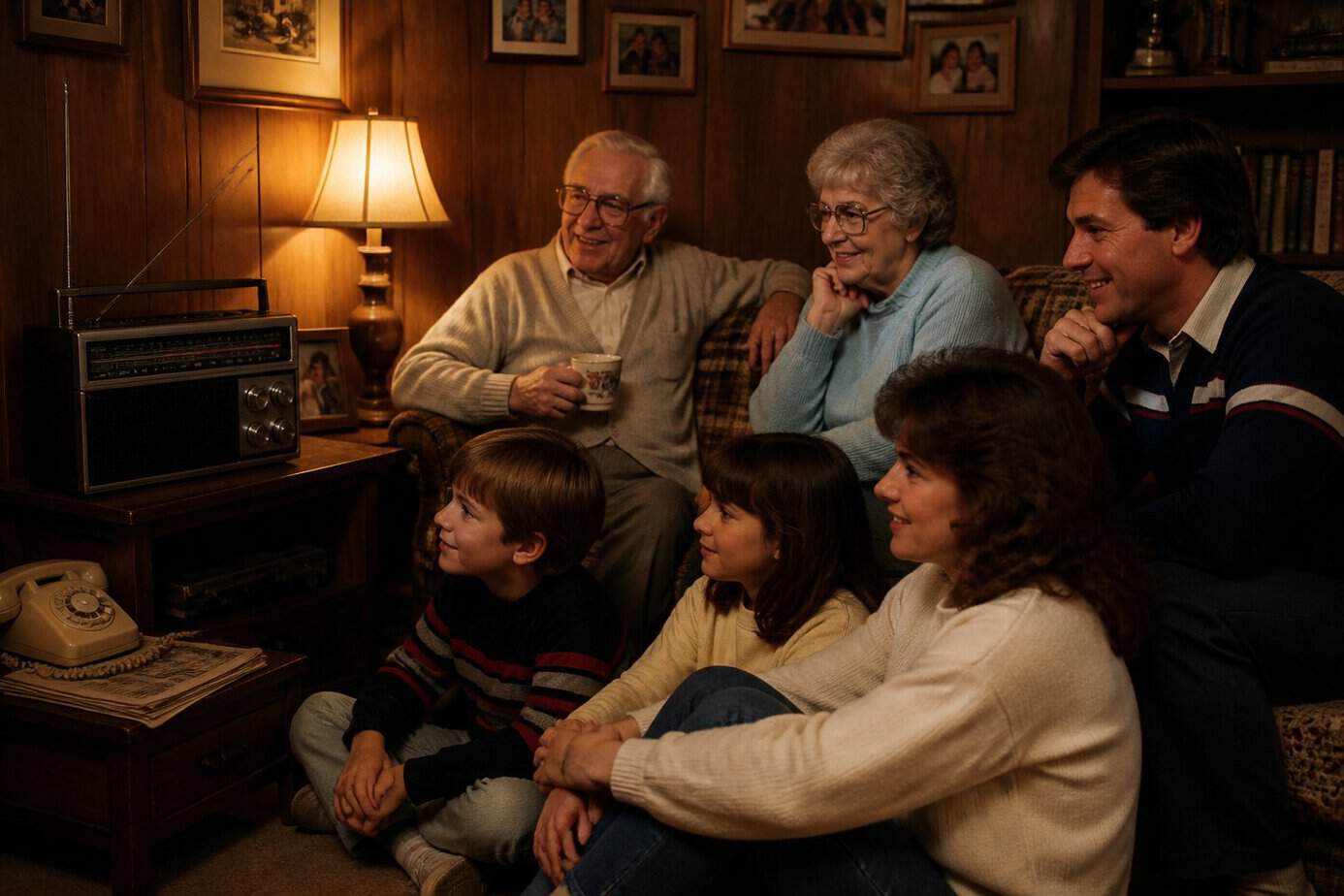
After the dinner dishes were cleared, you’d often find your dad or older siblings huddled around the AM radio, carefully turning the dial to catch distant baseball games. The crackling static and sudden clarity when you hit the right frequency became part of the experience.
Late-night AM signals traveled farther than daytime broadcasts, letting you pick up games from teams hundreds of miles away. You learned patience as someone slowly adjusted the antenna or rotated the radio to improve reception.
The voices of announcers like Vin Scully and Harry Caray filled living rooms across America. Baseball and AM radio created a summer rhythm that connected families to the national pastime. By the time you went to bed, you’d already heard several innings through that distinctive AM sound quality.
31. Making gelatin molds or Jell-O desserts together after dinner
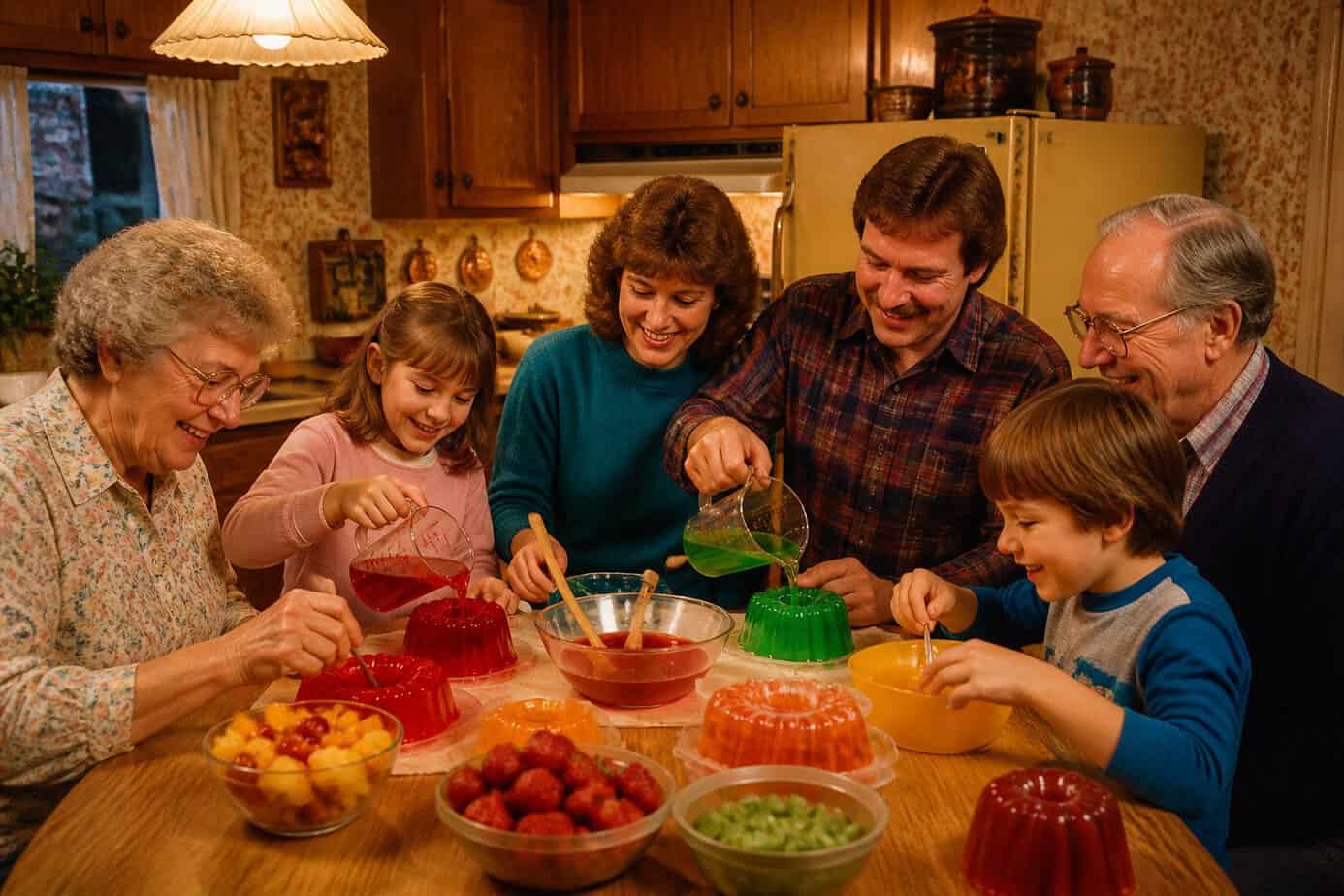
In the 1980s, families often gathered in the kitchen after dinner to prepare colorful gelatin molds for the next day’s meal or dessert. You would carefully mix the powder with hot water, add fruit or other ingredients, and pour the mixture into decorative molds.
These molded desserts required patience since they needed several hours to set in the refrigerator. Your family might prepare layered rainbow designs or fruit-suspended creations that would become centerpieces at weekend dinners.
The process was a hands-on activity where children could help measure ingredients and choose flavors. You learned to wait for each layer to partially set before adding the next.
As kitchen habits changed and ready-made desserts became more common, this evening ritual quietly faded. The decorative molds that once filled cupboards were eventually stored away or donated.
32. Planning the weekly grocery list collectively at the table
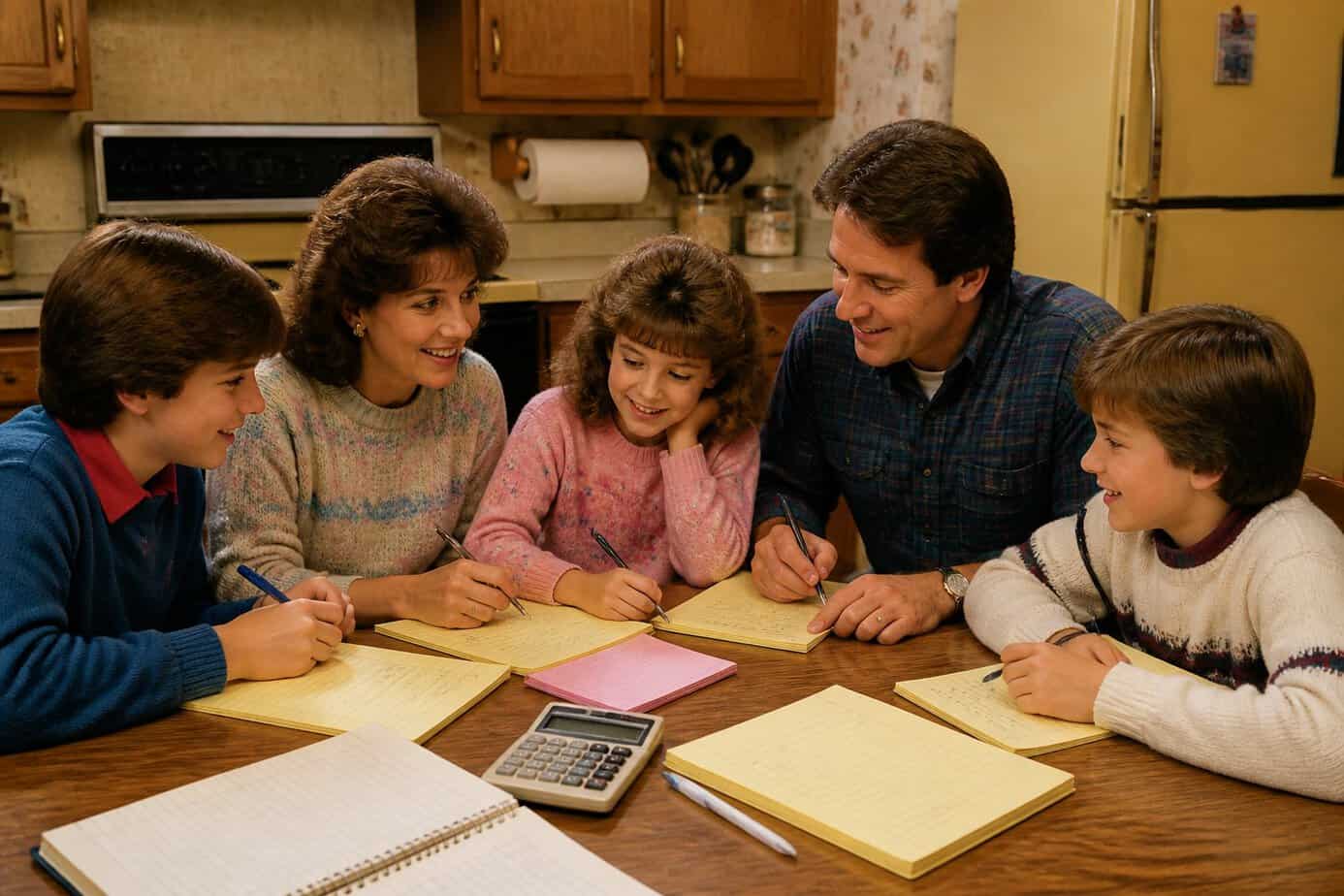
After dinner wrapped up in the 1980s, families often stayed at the table to plan the week’s grocery shopping together. You would flip through newspaper circulars, checking for sales while your parents asked what you wanted for lunches and snacks.
Each family member contributed to the handwritten list. Your input mattered, whether you requested specific cereals or ingredients for school projects.
This practice taught practical skills without formal instruction. You learned about budgeting as your parents compared prices and made trade-offs. You understood meal planning by seeing how individual items connected to complete dinners throughout the week.
The ritual disappeared as shopping shifted online and schedules became more fragmented. Pre-made lists and delivery apps eliminated the need to gather around the table with pen and paper, turning a collaborative family task into a solo activity completed on a phone.
33. Hosting neighborhood kids for backyard catch-up after supper
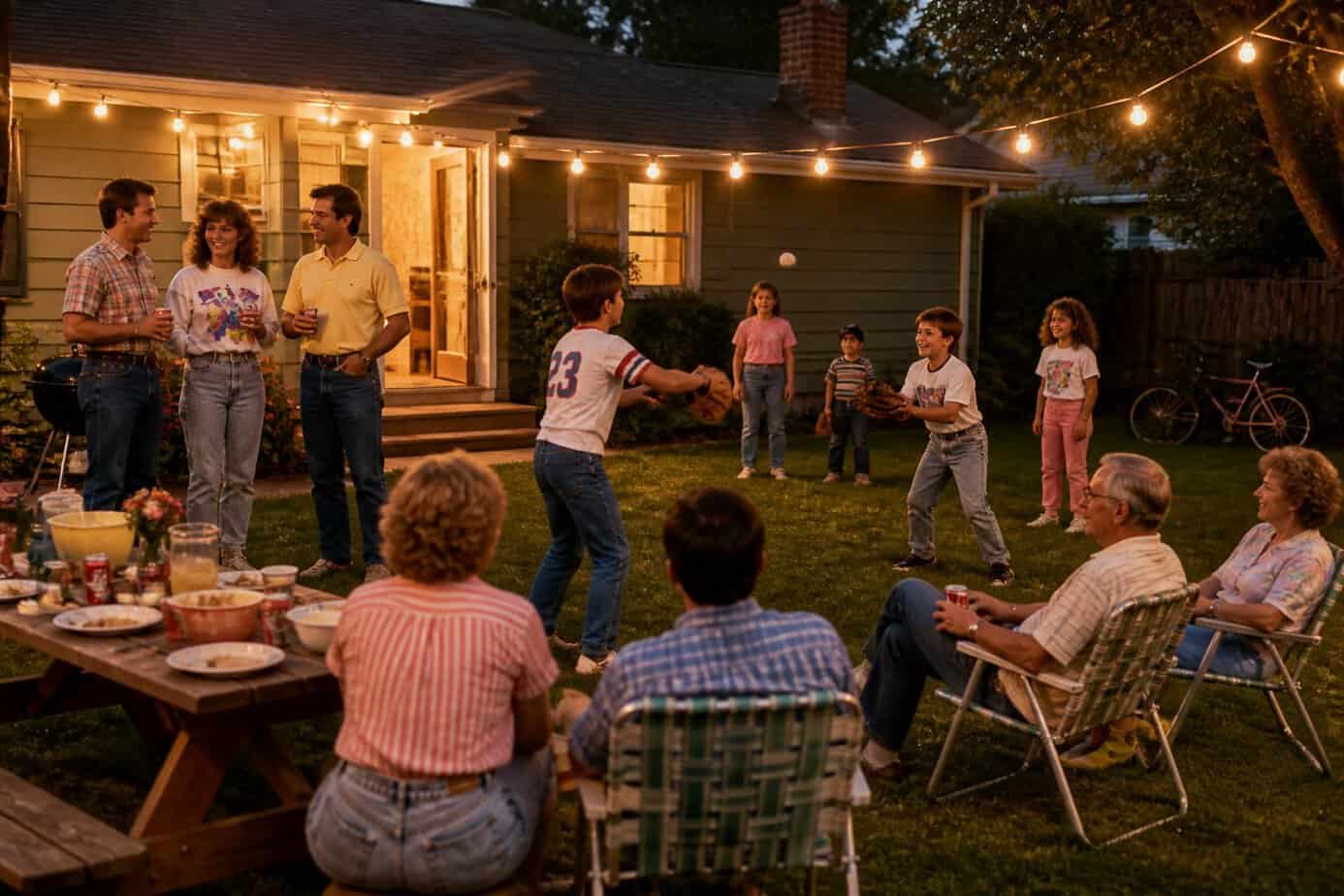
After dinner wrapped up, your backyard became an informal gathering spot for the neighborhood kids. Parents didn’t need to arrange playdates or send calendar invites. Kids simply showed up, drawn by the sound of voices or the porch light flickering on.
You’d finish clearing dishes and head outside to find half a dozen children already assembled. Someone brought a football. Another kid dragged over a frisbee.
These gatherings had no structure or adult supervision. You played until the streetlights came on or someone’s parent called them home. The conversations were simple, the games made up on the spot.
Your yard wasn’t special or particularly well-equipped. It just happened to be where everyone ended up that evening. Tomorrow night, it might be someone else’s turn to host.
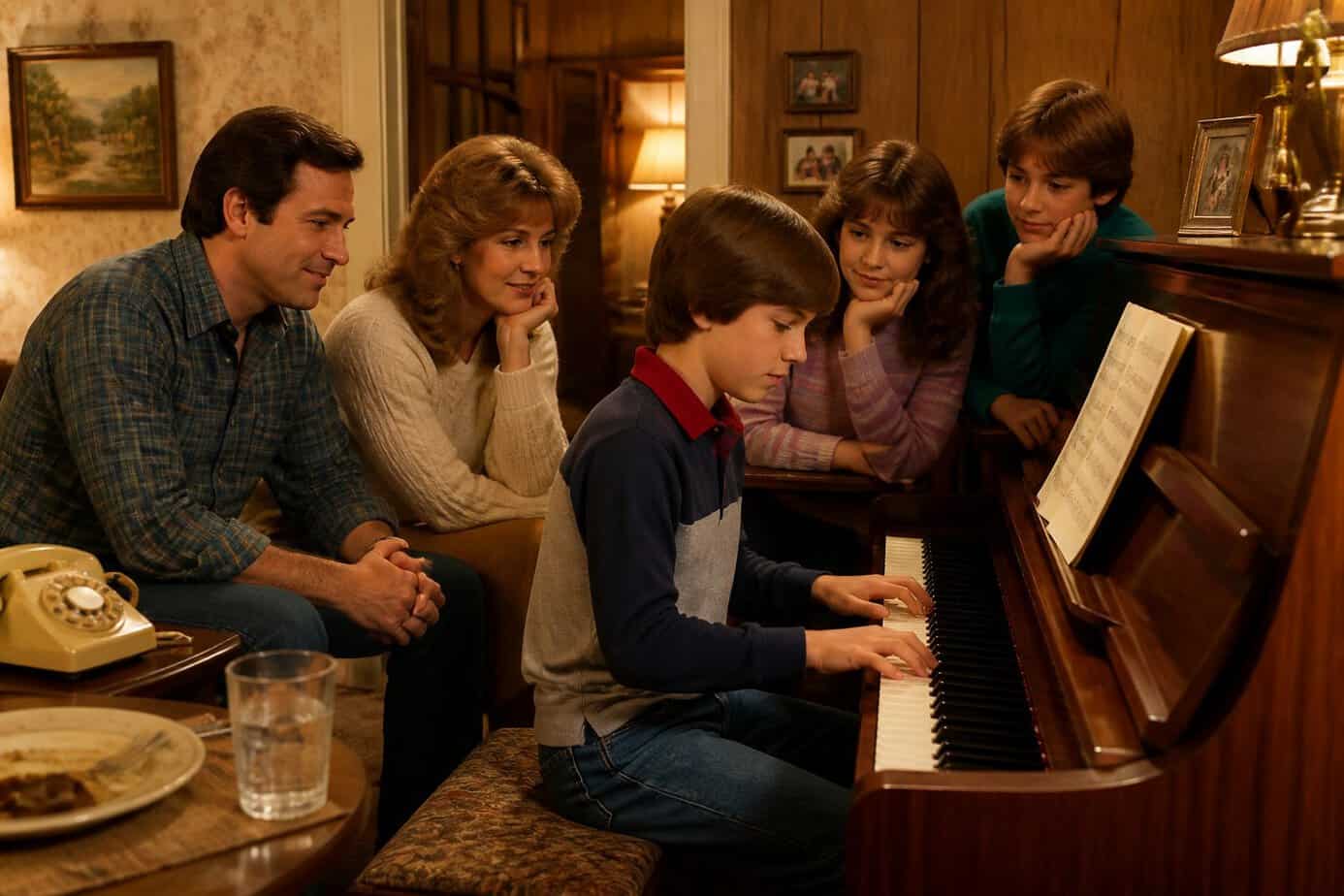
34. Practicing musical instrument scales around the piano after dinner
Would you like to save this?
After clearing the dinner table in the 1980s, families often gathered in the living room for musical practice sessions. Children would sit at the piano or tune their instruments while parents listened nearby, offering encouragement between commercial breaks on television.
This ritual turned technical practice into family time. Younger siblings might color or do homework within earshot, creating a shared atmosphere of productivity and creativity. Parents used these moments to check in on lesson progress without the formality of a recital.
The practice happened organically because evenings moved slower. Families stayed home more often, and the sounds of scales and simple melodies became part of the household’s evening rhythm. You practiced because everyone was already together, making it a natural extension of family time rather than an isolated chore.
35. Checking and sorting school permission slips and signatures
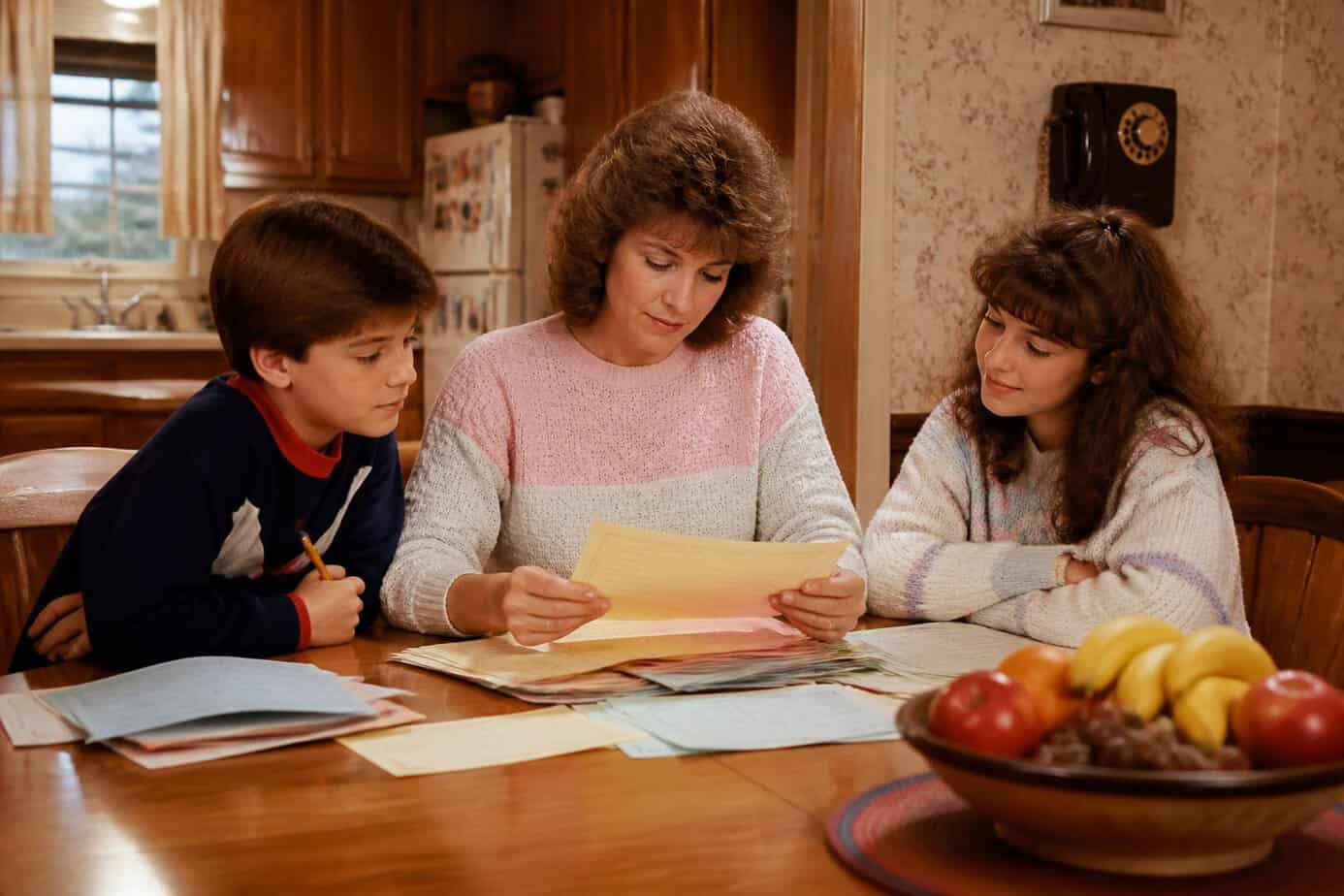
After dinner, parents would empty their children’s backpacks to hunt for crumpled permission slips buried beneath homework and lunch bags. These forms required signatures for field trips, school activities, and special events. You needed to read the details carefully, check the date, and sign before the deadline.
Many families kept a designated spot on the kitchen counter or refrigerator for these forms. Forgetting to sign meant your child might miss out on the zoo trip or class excursion. There were no email reminders or digital consent forms.
The ritual involved checking multiple children’s folders, finding a working pen, and sometimes writing checks for admission fees. Parents would remind kids to actually hand the forms to their teachers the next morning.
Cultural Shifts Shaping Modern Family Evenings
The transformation of American family evenings between the 1980s and today stems from three interconnected forces: workplace demands that extended beyond traditional hours, entertainment technology that fragmented shared experiences, and evolving definitions of what constitutes meaningful family time.
Impact of Changing Work Schedules
Your parents’ work schedules in the 1980s typically ended at 5:00 PM, creating predictable dinner times around 6:00 or 6:30 PM. By the 1990s, longer commutes and extended office hours disrupted this rhythm.
The rise of dual-income households meant both parents navigated conflicting schedules. Service industry jobs replaced manufacturing positions, bringing irregular shifts and weekend work into more households. Email and early mobile technology began erasing boundaries between work and home life.
Key schedule changes:
- Average commute times increased from 21.7 minutes in 1980 to over 27 minutes by 2000
- Two-income families became the majority rather than the exception
- After-school activities for children extended well into evening hours
- Retail and service jobs required non-traditional hours across weekdays and weekends
These scheduling pressures made synchronized family dinners increasingly difficult to maintain. You could no longer assume everyone would be home at the same time.
Rise of Digital Entertainment at Home
Cable television arrived in most American homes during the 1980s, offering 24-hour programming that competed with dinner conversation. VCRs allowed your family to watch movies on demand rather than gathering for scheduled broadcasts.
The shift accelerated through the 1990s and 2000s. Individual television sets replaced single family room TVs. Personal computers, gaming consoles, and eventually smartphones created separate entertainment experiences within the same household.
Your family members could now occupy the same physical space while engaging with entirely different content. The shared experience of watching one program together gave way to isolated screen time. Streaming services eliminated the communal aspect of appointment viewing that once brought families together.
Redefinition of Family Bonding Times
Family connection migrated from daily dinner tables to scheduled activities and outings. You began measuring bonding through organized events rather than routine interactions. Weekend trips, planned family nights, and structured activities replaced spontaneous nightly conversations.
This shift reflected broader cultural changes in parenting philosophies. Quality time became a buzzword, suggesting that intentional, planned interactions could substitute for daily presence. The informal transmission of family history and values that occurred naturally during regular meals required new venues.
Your family might attend events together while spending less time in unstructured conversation. Bonding became something you scheduled rather than something that emerged organically from shared routines.
Comparing 1980s and Today: Family Dynamics in Transition
The evening routines that defined 1980s households have transformed dramatically. Structured dinner times and shared activities gave way to individualized schedules, while parenting philosophies and societal expectations shifted toward different priorities.
Evolution of Shared Evening Activities
In the 1980s, your family likely gathered around a single television set after dinner, creating natural opportunities for shared experiences. Cable TV offered limited channels, which meant everyone watched the same programs together. Board games, card games, and outdoor play in the neighborhood filled the hours before bedtime.
Today, your family members scatter to different rooms with individual devices. Streaming services allow everyone to watch different content simultaneously. The 60 to 90 minutes that families once spent in collective activities now fragments into personalized screen time.
Common 1980s Evening Activities:
- Watching prime-time TV as a family
- Playing board games at the dining table
- Neighborhood kids gathering for street games
- Phone conversations on a shared landline
- Reading books or magazines together
Your children’s after-school calendars also changed significantly. Where 1980s kids had unstructured time after dinner, contemporary children often juggle multiple scheduled activities. Sports practices, tutoring sessions, and extracurricular commitments extend into evening hours.
Changes in Parenting Approaches
Your parenting style in the 1980s emphasized independence and unsupervised outdoor time. Children walked or biked to friends’ houses after dinner without constant adult oversight. Parents expected kids to entertain themselves until bedtime.
Modern parenting involves more direct supervision and structured engagement. You likely track your children’s locations through smartphones and coordinate playdates in advance. Safety concerns and changing neighborhood dynamics shifted expectations about children’s independent mobility.
The 1980s dinner table served as a primary venue for teaching manners, discussing daily events, and addressing behavioral issues. Parents used these moments to transmit values and family stories. Women, who were entering the workforce in larger numbers, still managed most meal preparation despite longer work hours.
Influence of Societal Values
The 1980s valued family cohesion through daily rituals, even as longer commutes and dual-income households became more common. Society still expected families to prioritize nightly dinners and weekend gatherings. Eating out remained an occasional treat rather than a routine convenience.
Your contemporary life reflects different priorities. Efficiency and individual achievement often supersede collective family time. Women today have fewer children compared to the 1970s and 80s, and more are having children without marriage. These fertility and relationship patterns reshape household dynamics.
Technology fundamentally altered what your family considers normal interaction. The 1980s family shared one telephone line and communicated face-to-face. Today, you might text family members in the next room. This shift from shared resources to individualized access changed how your household functions during evening hours.