
27 Things Adult Children Who Grew Up in the 1990s Wish Their Parents Had Done Differently

Would you like to save this?
Growing up in the 1990s meant experiencing a unique blend of analog childhood and the dawn of the digital age. Your parents raised you with the tools and knowledge they had, shaped by their own upbringings and the cultural norms of the time.
While they did their best with what they knew, many adults today can identify specific areas where a different approach might have better prepared them for modern life.
The parenting landscape has shifted significantly since the 1990s, with greater awareness of mental health, emotional intelligence, and the importance of open communication between parents and children.
Looking back at what you wish had been different isn’t about assigning blame. It’s about recognizing how parenting evolves across generations and understanding which experiences shaped who you are today.
This reflection offers valuable insights for current parents and helps you make sense of your own childhood experiences. By examining these common wishes among adults who grew up in the 1990s, you can better understand the gaps between then and now.
1. Talk openly about mental health and therapy options

Many adults who grew up in the 1990s wish their parents had normalized conversations about mental health. During that era, therapy and emotional struggles were often treated as taboo subjects that families avoided discussing.
Creating space for honest dialogue about mental health helps children understand that seeking support is a sign of strength, not weakness. When you openly discuss therapy as a valid option, you remove the stigma that prevents many people from getting help when they need it.
Parents who acknowledge their own mental health journeys make it easier for children to share their struggles. This transparency builds trust and shows that everyone faces emotional challenges at different points in life.
Introducing mental health resources early establishes a foundation for lifelong wellness. Your willingness to have these conversations can profoundly impact how your children approach their own mental health as adults.
2. Apologize when they were wrong and model accountability

Many 90s kids rarely heard “I’m sorry” from their parents. When adults refuse to apologize, children learn that admitting mistakes is weakness rather than strength.
Parents who could say “I was wrong” raised children with stronger emotional skills. These simple words taught accountability and humility in ways that lectures never could.
You may have watched your parents expect apologies from you while never offering their own. This double standard created confusion about responsibility and fairness.
When parents model sincere apologies, they demonstrate that everyone makes mistakes. Children learn that owning errors builds trust rather than diminishes authority.
The absence of parental apologies often leaves adult children struggling with their own accountability. They either over-apologize for things that aren’t their fault or resist admitting mistakes entirely, repeating patterns they witnessed growing up.
3. Explain family finances and budgeting basics

Many adults who grew up in the 1990s recall money being a taboo subject in their households. Your parents may have shielded you from financial discussions, believing they were protecting you from adult concerns.
However, this silence often left you unprepared for managing your own finances later. Without understanding how household budgets worked or how your parents made financial decisions, you entered adulthood lacking practical money management skills.
Learning about budgeting, saving, and spending priorities during childhood builds a foundation for financial literacy. When parents openly discuss age-appropriate financial topics, children develop stronger money management capabilities.
You might have benefited from knowing how your family allocated resources for housing, food, and savings. These conversations don’t need to include specific salary details, but understanding basic financial concepts helps children transition into financially responsible adults.
4. Respect boundaries around dating and relationships

Many adults who grew up in the 1990s wish their parents had given them more privacy regarding their romantic relationships. Parents often asked intrusive questions about dates, partners, and personal matters that felt uncomfortable to share.
Oversharing relationship details with parents wasn’t always desired or healthy. Young people needed space to navigate their own romantic experiences without constant parental commentary or criticism of their choices.
When parents got too involved in their children’s dating lives, it created tension and sometimes damaged trust. Setting boundaries around what gets shared about relationships should have been respected rather than pushed against.
The desire for autonomy in romantic decisions was normal, not a rejection of parental guidance. Adults now recognize that healthy boundaries in this area would have strengthened their relationship with their parents while allowing them to develop independence.
5. Encourage exploration of gender identity and sexuality without judgment

Many adults who grew up in the 1990s navigated questions about gender and sexuality in silence. The era’s limited dialogue around these topics left many feeling isolated or ashamed of their experiences.
Creating a safe environment for children to explore their identity requires active listening and open communication. Parents who approach these conversations without preconceived expectations help children develop confidence and self-acceptance.
Children can begin recognizing aspects of their gender identity as early as three years old. Early, age-appropriate conversations normalize diverse identities and reduce confusion.
When young people receive family support during identity exploration, they experience better mental health outcomes and stronger family connections. Your willingness to learn alongside your child demonstrates unconditional love. Educating yourself about gender identity and sexual orientation equips you to answer questions accurately and compassionately.
6. Avoid shaming bodies or using diet-focused language

Many adults who grew up in the 1990s remember hearing comments about weight, appearance, or food choices that stuck with them for decades. Parents often didn’t realize how phrases like “you shouldn’t eat that” or “you need to lose weight” could shape their children’s relationship with food and their bodies.
Research shows that focusing conversations on health rather than appearance helps children develop better self-esteem. Instead of discussing weight loss or body size, parents can talk about how different foods fuel the body and support energy levels.
Diet culture language was prevalent in the 1990s, and many children absorbed these messages at home. Creating an environment where bodies are respected at all sizes and food isn’t labeled as “good” or “bad” allows children to develop healthier attitudes that carry into adulthood.
7. Teach practical life skills: taxes, credit scores, insurance

Many adults who grew up in the 90s entered their twenties without understanding how to file taxes or what a credit score meant. These aren’t skills you intuitively know. They require direct instruction and practice.
Your parents may have assumed you’d learn these things in school or figure them out on your own. Instead, you likely faced penalties for filing taxes incorrectly or damaged your credit without realizing the long-term consequences. Understanding insurance policies, deductibles, and coverage types would have saved you from costly mistakes.
Financial literacy and practical money management skills dramatically improve independence and long-term success. When parents take time to explain these systems, their adult children make better decisions. You needed someone to walk you through reading a W-2, disputing credit report errors, and comparing insurance quotes before you were responsible for them.
8. Provide consistent emotional availability, not just material support

Many 90s kids received everything they needed materially but felt emotionally disconnected from their parents. You might have had the latest toys, school supplies, and a comfortable home, yet still felt unseen or unheard.
Research shows that emotional presence matters as much as physical provision. Clinical psychologist Dr. Jonice Webb notes that parents often focus intently on meeting physical needs while overlooking emotional availability. Your parents may have worked hard to provide for you without realizing you also needed their attention and understanding.
Adult children from this era often wish their parents had asked about their feelings, listened without judgment, or simply spent time together without distractions. Being present means engaging with your child’s inner world, not just their external needs.
This emotional foundation shapes mental health and relationships well into adulthood.
9. Normalize and discuss consent clearly

Many children of the 1990s grew up without clear conversations about bodily autonomy and consent. Parents often enforced hugs or kisses with relatives, teaching that politeness mattered more than personal boundaries.
You might remember being told to give Uncle Jim a hug when you felt uncomfortable. These moments sent confusing messages about your right to say no.
Adult children now recognize that early consent education shapes healthier relationships. When parents discuss bodily autonomy, children learn to respect their own boundaries and those of others. This includes teaching that consent applies to everyday physical contact, not just intimate situations.
Parents who avoided these conversations missed opportunities to build confidence and self-advocacy skills. Open dialogue about consent would have prepared their children to navigate complex social situations with clearer expectations and better communication tools.
10. Limit passive-aggressive guilt about career choices

Many 90s kids entered adulthood facing different career realities than their parents experienced. Traditional paths no longer guaranteed stability, yet some parents expressed disapproval through indirect comments and veiled criticism.
Passive-aggressive remarks about unconventional careers created unnecessary tension. Your parents might have suggested you were “throwing away potential” or made comparisons to more traditionally successful peers. These subtle digs undermined confidence during already uncertain times.
Adult children need support as they navigate their professional lives, not judgment disguised as concern. Direct, honest conversations about career concerns would have been more helpful than sarcasm or silent disappointment.
Setting aside generational expectations allows for genuine connection. When parents trust their adult children’s judgment and ask open-ended questions instead of offering unsolicited critiques, relationships strengthen rather than fracture.
11. Support higher education without assuming one path fits all

Your parents likely pushed for a traditional four-year college degree as the only acceptable route. Many 90s kids wish their parents had recognized that career and technical education, community colleges, or delayed education could be equally valid choices.
The assumption that everyone should attend university immediately after high school created unnecessary pressure and debt for those whose strengths lay elsewhere. Some needed work experience first, while others thrived in vocational programs.
Parents who supported education broadly rather than prescribing a single path gave their children room to find what actually worked for them. This meant valuing apprenticeships, certifications, and alternative credentials alongside traditional degrees.
The reality is that higher education encompasses many pathways. Your parents’ support would have been more meaningful if it focused on your growth and goals rather than checking a box they considered essential.
12. Foster independence by letting kids make age-appropriate mistakes

Many adults who grew up in the 1990s wish their parents had allowed them to stumble and learn from their errors. When you’re constantly prevented from making mistakes, you miss critical opportunities to develop problem-solving skills and resilience.
Small failures in everyday situations like chores, homework, or social interactions teach valuable lessons that lectures cannot. Letting you forget your lunch at home or choose the wrong approach to a school project would have built confidence through experience.
This approach doesn’t mean abandoning children to fail spectacularly. It means stepping back when the stakes are low and the lessons are safe. You develop independence and decision-making abilities when given space to figure things out yourself.
The discomfort of watching children struggle is natural for parents, but those moments of trial and error create capable, self-reliant adults.
13. Discuss political views respectfully and explain reasoning

Would you like to save this?
Many adults who grew up in the ’90s wish their parents had explained their political beliefs rather than simply stating them as facts. When families avoid discussing politics or present views as absolute truths without explanation, children miss opportunities to develop critical thinking skills.
Research shows that childhood environment significantly shapes political behavior and party affiliation. Parents who explained their reasoning helped their children understand how to form thoughtful opinions, even if those views eventually differed from the family’s stance.
You likely would have benefited from conversations that acknowledged multiple perspectives exist. When parents model respectful political discourse, they teach valuable skills for engaging with differing viewpoints throughout life.
The key wasn’t agreeing with your parents’ politics. It was learning how adults can discuss important issues thoughtfully while respecting those who think differently.
14. Model healthy conflict resolution instead of silent treatment

Many 90s kids watched their parents retreat into silence during disagreements rather than addressing issues directly. This pattern left children without the tools to navigate conflicts in their own lives.
When parents used the silent treatment, it sent the message that problems should be avoided rather than solved. You learned to fear conflict instead of viewing it as a normal part of relationships.
Healthy conflict resolution involves direct communication, active listening, and working toward solutions together. Parents who demonstrated these skills gave their children a valuable framework for managing disagreements.
Silent treatment often created anxiety and confusion, leaving children to guess what went wrong. Open dialogue, even when difficult, would have provided clarity and taught productive ways to handle tensions in future relationships.
15. Give explicit permission to pursue creative or nontraditional careers

Many 1990s kids grew up hearing that success meant becoming a doctor, lawyer, or engineer. When you expressed interest in art, music, or other creative fields, your parents may have dismissed these as hobbies rather than viable careers.
You needed clear validation that pursuing your passions was acceptable. Instead of redirecting you toward “safe” choices, explicit permission to explore creative paths would have made a significant difference.
Research shows that 55% of young adults believe their generation faces more difficulty finding work than their parents did. This disconnect often stems from parents not understanding modern career landscapes.
When parents acknowledge that creative and nontraditional careers can be legitimate, fulfilling paths, it removes unnecessary pressure. You would have benefited from encouragement to follow your interests rather than fighting against doubt and criticism while building your career.
16. Reduce pressure to be perfect or the best

Your parents may have pushed you to excel in everything, from grades to sports to extracurriculars. This constant pressure often stemmed from good intentions but created anxiety that followed you into adulthood.
Many adult children who grew up in the 1990s developed perfectionist tendencies as coping mechanisms. The need to always perform flawlessly can make it difficult to take risks or accept failure as part of growth.
You likely would have benefited from hearing that doing your best was enough, even when that best wasn’t perfect. Learning that mistakes are normal and valuable would have reduced the fear of falling short.
Parents who celebrated effort over outcomes helped their children build resilience. You needed space to fail, learn, and try again without judgment or disappointment hanging over each attempt.
17. Recognized the Impact of Comparison

Your parents may have compared you to siblings, cousins, or neighbors’ kids without realizing the lasting effects. These comparisons shaped how you viewed yourself and your accomplishments.
The 1990s emphasized academic and extracurricular achievement, leading many parents to use other children as benchmarks. You might have heard about how your cousin made honor roll or how the neighbor’s kid excelled at sports.
These comparisons created unnecessary pressure and damaged your self-esteem. You needed validation for your own unique strengths rather than being measured against others.
Understanding that each person develops differently would have helped you feel more secure in your identity. Your individual path deserved recognition without constant external measuring sticks.
Understanding 1990s Family Dynamics
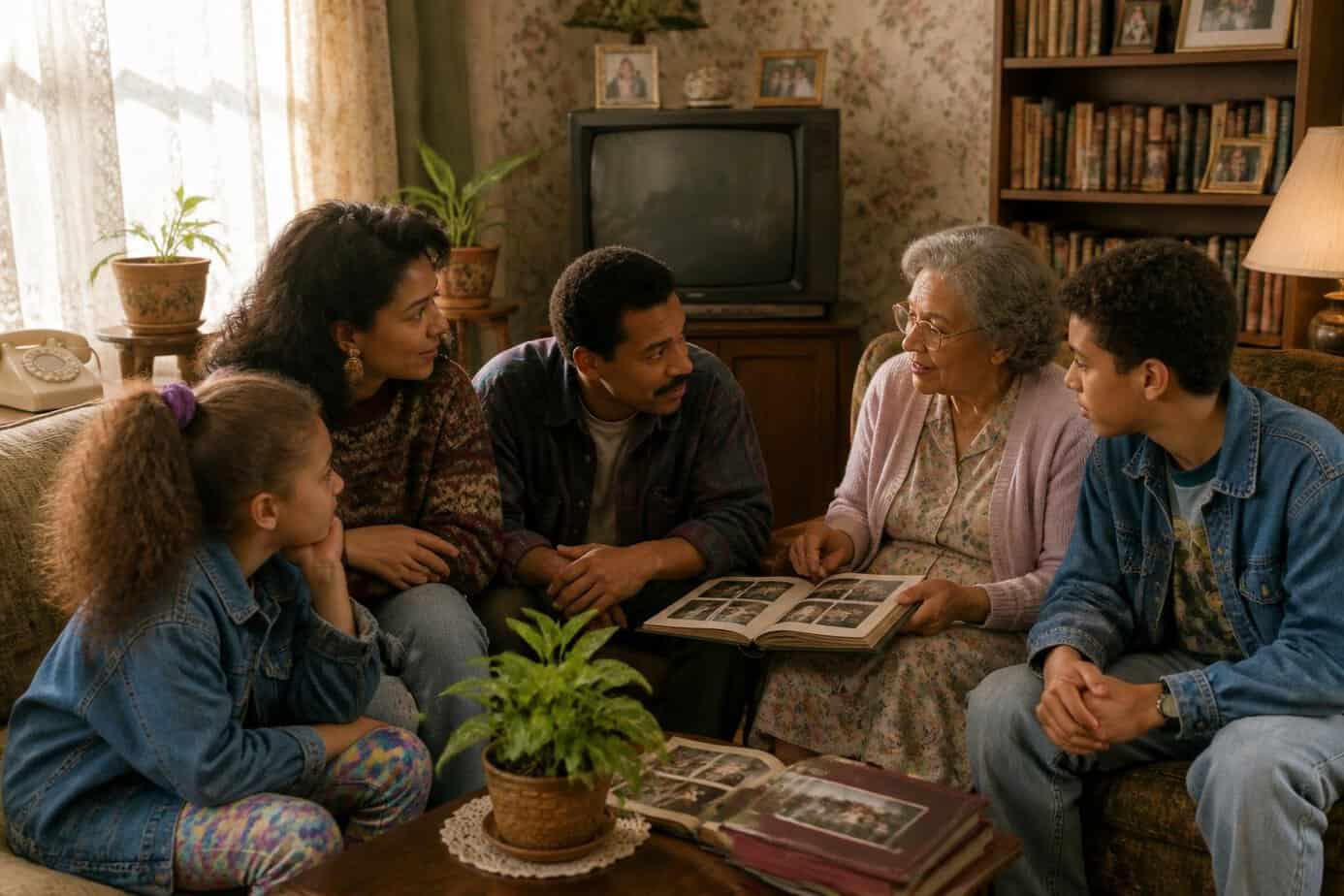
The 1990s shaped parenting through distinct cultural expectations around emotional expression and gender roles, while technology remained secondary to face-to-face interaction in most households.
Societal Influences on Parenting Styles
The 1990s maintained traditional family hierarchies where parents expected obedience without extensive explanation. Many households operated under the philosophy that children should be “seen and not heard,” treating parental decisions as final and non-negotiable.
Gender roles remained more rigid than today. Mothers typically managed emotional labor and household responsibilities, while fathers focused on financial provision and discipline. This division meant your emotional needs may have been addressed unevenly depending on which parent you approached.
Mental health discussions carried significant stigma during this decade. Your parents likely viewed therapy as appropriate only for severe problems rather than preventative care. Emotional struggles were often dismissed as phases or character weaknesses rather than legitimate concerns requiring professional support.
Privacy expectations differed substantially from modern standards. Your parents may have read your diary, listened to phone calls, or entered your room without knocking because these actions were considered normal parental oversight rather than boundary violations.
Communication Patterns of the Era
Direct conversations about feelings were uncommon in 1990s households. Your parents probably relied on indirect communication, expecting you to interpret their moods and unspoken expectations rather than engaging in explicit discussions about emotions or conflicts.
Authoritarian communication dominated, characterized by:
- One-way directives rather than collaborative problem-solving
- Minimal explanation of rules or decisions
- Dismissal of children’s perspectives in family matters
- Avoidance of topics like sex, money, or family problems
Difficult topics remained taboo. Financial stress, marital issues, and extended family conflicts were kept from children entirely. This created confusion when you sensed tension but received no context or reassurance about household stability.
Long-Term Impacts on Adult Children

The parenting styles and household environments of the 1990s shaped how adult children now manage their emotions and construct their worldview. These early experiences created lasting patterns in stress responses, relationship dynamics, and personal values that continue to influence daily life.
Approaches to Emotional Well-Being
Growing up in the 1990s often meant hearing phrases like “stop crying” or “you’re being too sensitive,” which taught you to suppress rather than process emotions. This approach to feelings can create challenges in adulthood when managing stress, anxiety, or relationship conflicts. Your brain developed specific neural pathways based on these early experiences, affecting how you regulate emotions today.
The limited focus on mental health during that era means you might struggle to identify or articulate your emotional needs. Many 90s parents emphasized achievement and external success over internal well-being, leading to patterns where you prioritize productivity over self-care. You may find yourself uncomfortable with vulnerability or seeking therapy, even when you recognize these would benefit you.
Common emotional patterns include:
- Difficulty setting boundaries without guilt
- Tendency to minimize your own problems
- Discomfort expressing needs directly
- Automatic emotional suppression during conflict
The good news is that neuroplasticity allows you to develop healthier emotional habits through targeted interventions and conscious practice.
Formation of Core Beliefs and Values
The messaging you received about money, success, relationships, and self-worth during the 1990s formed foundational beliefs you may still carry. If your parents emphasized material success or compared you to others, you might equate your value with achievement or external validation. These beliefs operate automatically, influencing career choices, relationship patterns, and how you define personal success.
Your understanding of what constitutes a healthy relationship often mirrors what you observed at home. If conflict was avoided or handled through silent treatment, you might replicate these patterns without realizing it. Similarly, beliefs about gender roles, work ethic, or family obligations absorbed during childhood continue shaping your decisions and expectations today.